




 Inglês (pdf)
 Artigo em XML
 Referências do artigo
 Tradução automática
 Enviar este artigo por email
 Citado por SciELO
  Similares em
SciELO
Similares em
SciELO 
 Permalink

Introduction
This study undertakes a qualitative content analysis to systematically explore the shifting behavioral patterns in Italy during the post-pandemic era, a phenomenon that, to date, lacks a comprehensive theoretical framework. We aim to understand how individuals adapt and reinterpret their social behaviors in the evolving landscape that follows a global health crisis. The central question guiding this research is: How have social interactions in Italy changed due to the covid-19 pandemic, and what are the implications for societal norms and vulnerabilities?
To explore these dynamics, we conducted 56 semi-structured interviews with individuals who had experienced covid-19, ensuring a participatory approach that allowed participants to contribute to the knowledge construction process actively. Conducted between August 2020 and April 2022, the interviews were designed to capture a wide range of personal experiences and insights, providing a rich basis for analysis. The attributes chosen for deeper investigation in the interviews are gender, age, and the interview collection period. The interviews are representative by gender, with the sample consisting of exactly 50% men and 50% women. The youngest interviewee is 23 years old, and the oldest is 91 years old. Additionally, the interviewees were spread across the entire Italian national territory. Each interview followed a protocol of 27 open-ended questions. The discussions were recorded, transcribed verbatim, and analyzed using nvivo software. This software facilitated the coding, classification, and aggregation of data, helping to distill the narratives into coherent themes and patterns.
Our methodology emphasizes a bottom-up approach, where empirical data drive the inferential process, which grounds the theoretical insights into actual lived experiences. The aim is to not only chart how the pandemic has reshaped social interactions but also to identify and address the emerging inequalities that disproportionately impact vulnerable populations ( Granovetter, 1973). By developing a clear and detailed picture of the current social dynamics, this study seeks to contribute to formulating effective strategies for societal recovery and resilience.
This introduction lays the groundwork for a detailed examination of the findings and their implications for both the empirical research that we will decry in the next section and the theoretical research, ensuring that this paper contributes significantly to the broader body of sociological knowledge on post-pandemic recovery.
Qualitative analysis: methodological perspective
This research aims to understand how individuals adapt and reinterpret their social behaviors in the evolving landscape following a global health crisis. By employing a phenomenological approach, we focus on the lived experiences and perceptions of individuals to explore the deeper meanings and transformations in social behavior. Our methodology employs a comprehensive research design to facilitate a concise sociological analysis of post-pandemic phenomena informed by data collected during our interviews. Through a meticulous process of labeling and coding, we identified 193 hierarchical nodes from the transcripts. Each node captures a specific aspect of the social reality under study, arranged into complex hierarchies that include both universal and singular experiences of the interviewees. These individuals, apart from absorbing their surroundings, also reinterpret them, contributing to a rich tapestry of personal narratives that we have organized into thematic areas using nvivo software. The collected data have been categorized into major thematic areas such as “Having covid,” “Awareness of the Virus,” “Consequences of the Pandemic,” “Emotions,” “Government,” “Information,” “Lockdown,” “Perception of the Virus,” “Health Policy,” “Return to Sociality,” “Responsibility,” “Ukraine-Russia War,” “All Italians (Italians all-knowing),” and “Facilitation.”
This study provides a comprehensive analysis of the evolving social interactions in Italy post-covid-19 through 56 semi-structured interviews, utilizing a phenomenological approach to capture the nuanced and complex social transformations occurring in real-time. The study’s methodological depth is demonstrated by employing nvivo software to systematically code and analyze the data, ensuring rigorous examination of the narratives. The interviews are representative by gender (50% men and 50% women) and span a wide age range (23 to 91 years old), with participants spread across the entire Italian national territory, adding geographical diversity. Conducted between August 2020 and April 2022, the interviews capture the immediate and evolving impacts of the pandemic, making the findings highly relevant to current social and public health discourse. This study builds on similar works by employing a phenomenological approach that emphasizes personal narratives and lived experiences, aligning with methodological perspectives discussed by scholars such as Maturo (2011) and Marmot (2015) on health, society, and inequality. It also explores the critical role of health communication, both socially fair and unjust, in shaping public behavior and perceptions during the pandemic, building on findings from Wellman (2018) and others who studied networked communities and digital communication. Furthermore, the study investigates the persistence of socio-economic inequalities exacerbated by the pandemic, echoing insights from Granovetter (1973) and Marmot (2015) regarding social ties and health disparities. Methodologically, the study makes significant contributions through its interdisciplinary approach, integrating sociological theories with qualitative research methods and demonstrating an innovative application of nvivo software for detailed thematic exploration. The grounded theory development process, transforming empirical observations into broader theories, contributes to the sociological understanding of post-pandemic social recovery and resilience. In summary, this work offers original and significant insights into the social impacts of covid-19 in Italy, contributing to the broader body of sociological knowledge by providing a detailed understanding of post-pandemic social dynamics, emphasizing health communication, the persistence of inequalities, and the importance of health equity.
The data in Table 1 encapsulate the multifaceted experiences of individuals who contracted covid-19. The nodes reveal a range of psychological and social dynamics, reflecting the complexity of living through the pandemic. The data in Table 1 reveal several central themes related to the experiences of individuals who contracted covid-19, highlighting the emotional, psychological, and social dynamics involved:
Psychological impact
Nodes such as “I am positive” anxiety (5 sources, 7 references), “Social anxiousness by untore” (6 sources, 7 references), and “Psycho-medical consequences” (16 sources, 29 references) illustrate the significant emotional toll of a covid-19 diagnosis. Anxiety, fear, and psychological distress were common among individuals, exacerbated by the uncertainty and stigma associated with the virus.
Stigma and social dynamics
The theme of stigma is evident in nodes like “Be stigmatized” (6 sources, 6 references) and “People close to the (former) positive stigmatized” (12 sources, 21 references). These highlight how social interactions were affected, with individuals facing stigmatization not only personally but also impacting their close contacts.
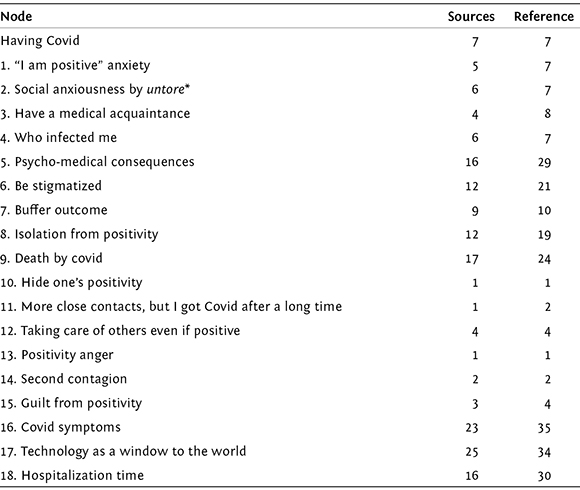
* As emerged from the interviews, during the covid-19 pandemic, this dynamic translated into anxiety about being labeled as an untore due to infection, non-compliance with restrictions, or simply belonging to groups perceived as more exposed to the virus (e. g., healthcare workers, foreigners, individuals with visible symptoms). Sociologically, this phenomenon can be analyzed through Goffman’s (1963) concept of social stigma and identity management in crisis contexts, which explores how individuals navigate social perceptions and the fear of exclusion in times of uncertainty. The concept of social anxiousness by untore refers to a specific form of social anxiety stemming from the fear of being perceived as a source of contagion or a violator of health regulations
Medical and physical consequences
Nodes like “Death by covid” (17 sources, 249 references) reveal the severe medical and physical consequences experienced by individuals.
These detailed insights from Table 1 reinforce the themes discussed in the introduction, particularly the emotional and psychological impact of the virus, the social dynamics influenced by infection and stigma, and the crucial role of technology in coping with isolation. The data underscore the necessity of comprehensive support networks and informed policies to address the multifaceted challenges faced by individuals during and after the pandemic.
The data in Table 2 provide insights into the level of awareness and understanding of the virus among individuals, highlighting various sociological perceptions. The fluctuation in contagion trends and the emergence of new variants underscore the dynamic and uncertain nature of the pandemic, contributing to widespread anxiety and vigilance. The node “A-normality” reflects the profound disruption of daily life, forcing individuals to navigate an unfamiliar social reality.
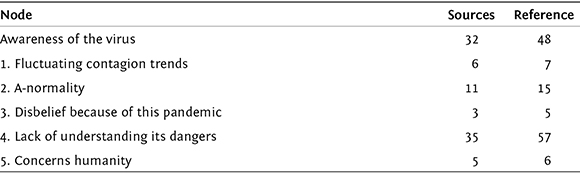
The theme of disbelief highlights initial challenges in accepting the pandemic’s severity, which may have been influenced by inconsistent information and the unprecedented nature of the situation. However, the eventual understanding of the danger and the significant concern regarding new variants indicate a shift toward a more informed and cautious approach among individuals.
In summary, the data emphasize the need for clear and consistent communication to help individuals navigate the complexities of the pandemic. Recognizing fluctuating trends, new variants, and broader humanitarian concerns points to the importance of comprehensive public health strategies that address both the immediate and long-term challenges posed by covid-19. This supports the argument that well-informed networks and policies are essential to mitigate feelings of confusion and fear and to help individuals cope with the evolving reality of post-pandemic life.
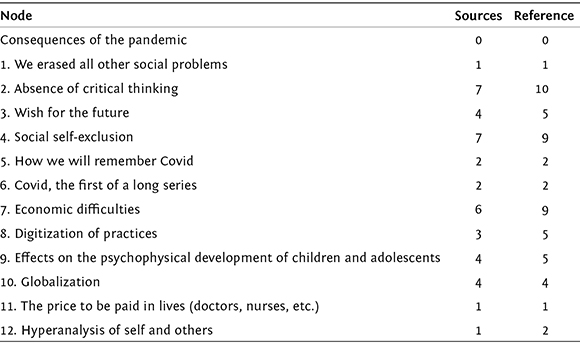
The data in Table 3 illustrate the multifaceted impact of the pandemic on society, highlighting existing issues and creating new challenges.
Neglect of other social problems
The global focus on the pandemic led to the neglect of other social problems, revealing a lack of critical thinking and influencing personal and collective memories. Social self-exclusion increased, and economic difficulties were widespread.
Digitization and inequality
The accelerated digitization of practices introduced new inequalities, while the pandemic significantly affected the development of children and adolescents. The crisis exposed globalization’s vulnerabilities and underscored the sacrifices made by healthcare workers.
Overall, analyzing these consequences is crucial for understanding ongoing social transformations and developing strategies to address both current and future crises.
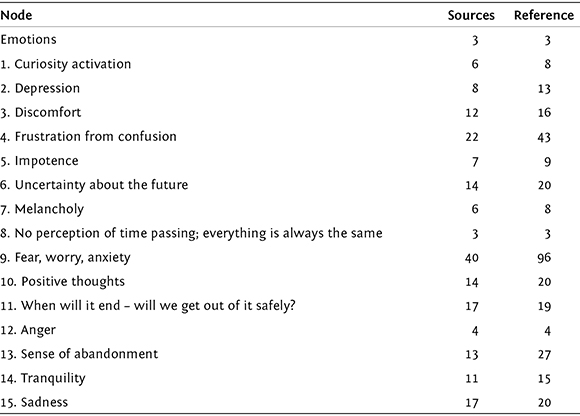
The data in Table 4 provide insights into the emotional landscape during the pandemic.
Range of emotions
The pandemic triggered a wide range of emotions, including curiosity, depression, discomfort, frustration, impotence, uncertainty, melancholy, and a distorted perception of time. Fear, worry, and anxiety were particularly prevalent, highlighting the emotional toll of the crisis.
Positive and negative thoughts
While there were moments of positive thoughts and tranquility, negative emotions like anger, a sense of abandonment, and sadness were also common. These emotional dynamics reflect the intense psychological impact of the pandemic and the challenges individuals faced in maintaining mental well-being.
Understanding these emotional consequences is essential for addressing the psychological and social impacts of the pandemic and for developing strategies to support mental well-being in future crises.
Table 5 outlines various aspects of governmental responses and public perceptions during the pandemic.
Regional disparities
Regional disparities in crisis management and travel restrictions had mixed impacts, particularly on tourism and the economy. A perceived absence of institutional support led to feelings of abandonment and increased reliance on law enforcement.
Public criticism
Extensive criticism of policies by both Conte and Draghi reflects public dissatisfaction and the contentious nature of political leadership. Efforts to ensure social distancing on public transport and other measures were often deemed insufficient, underscoring high public expectations.
Trust and distrust
Trust in government varied and with significant influence from perceptions of competence and transparency. Specific challenges, such as managing covid-19 in university residences and implementing workplace controls, highlighted the need for targeted interventions.
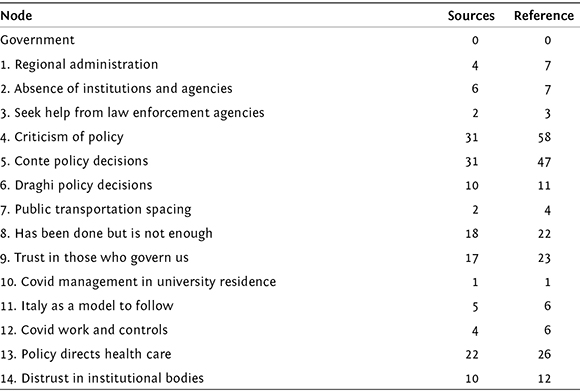
Overall, the government’s role in directing healthcare and the persistent distrust of institutional bodies emphasize the critical need for effective, transparent, and equitable crisis management strategies.
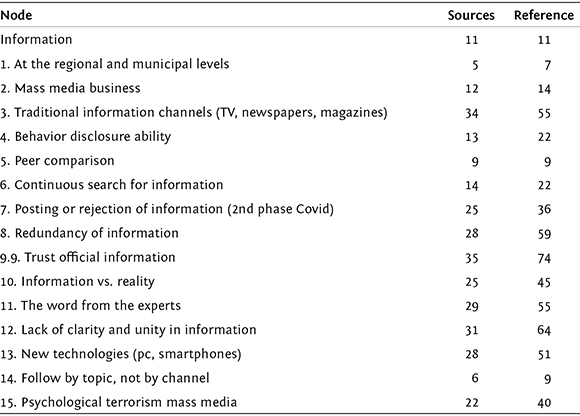
Table 6 provides insights into various aspects of information dissemination and public perceptions during the pandemic.
Local and mass media
Regional and municipal information played a crucial role in local communication. Mass media businesses and traditional information channels remained vital, significantly influencing public behavior and sentiment.
Information overload
The continuous search for information and the dynamic between accepting and rejecting data highlight the public’s struggle with misinformation and information overload. Trust in official information varied, with statistical bulletins often evoking negative emotions.
Expert contradictions
Contradictions among experts contributed to public confusion. A lack of clarity and unity in information from authorities exacerbated mistrust. New technologies, including social media, played a dual role as sources of both reliable and unreliable information, necessitating critical consumption.
Understanding these aspects is crucial for developing effective communication strategies and improving public trust and resilience in future crises.
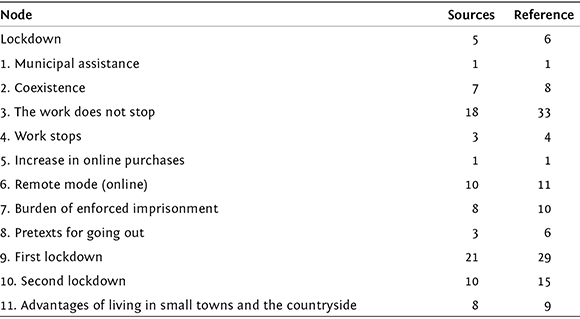
Table 7 provides insights into the sociological impact of lockdowns during the pandemic, highlighting various aspects of how people coped and the societal changes that occurred.
Adaptive behaviors
Municipal assistance was vital in supporting communities, while coexistence within households brought both unity and tension. Essential workers continued their duties despite risks, showcasing their resilience (Corsi, 2002). Many faced economic uncertainty as work stopped, leading to increased online purchases and a shift to remote activities.
Psychological stress
The lockdown felt like enforced imprisonment, causing significant stress, and people often sought pretexts to go outside. The first lockdown brought financial strain, eerie urban silences, youth migration, and international frustrations. However, it also saw people reclaiming their time, developing new routines, and fostering social interactions on balconies.
Hope and normalcy
The second lockdown sustained hope, with people looking forward to a return to normalcy. Living in small towns and the countryside offered advantages, highlighting the varying impacts of lockdown measures based on living conditions.
Understanding these diverse experiences is crucial for addressing the social and psychological effects of lockdowns and preparing for future crises.
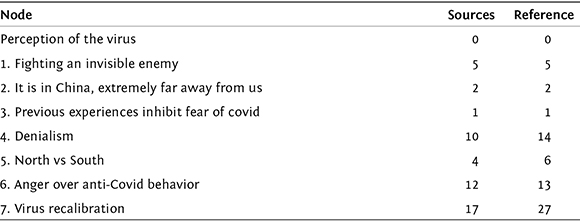
Table 8 provides insights into various perceptions of the virus during the pandemic, highlighting how these perceptions influenced behavior and societal attitudes.
Invisible enemy
The view of COVID-19 as an invisible enemy heightened fear and uncertainty, while initial perceptions of the virus as a distant threat delayed urgent responses.
Contrasting views
Some individuals’ previous experiences mitigated their fear, contrasting with widespread denialism that demanded immediate care and underestimated the virus’s severity. Regional disparities between the north and south influenced perceptions and responses to the pandemic.
Frustration and recalibration
Frustration emerged over anti-covid behaviors, particularly among younger individuals and workers seen as spreading the virus. Over time, a recalibration of perceptions occurred as the public gained a deeper understanding of the virus and its implications.
Grasping these perceptions is crucial for addressing public attitudes, enhancing compliance with health measures, and improving communication strategies in future health crises.
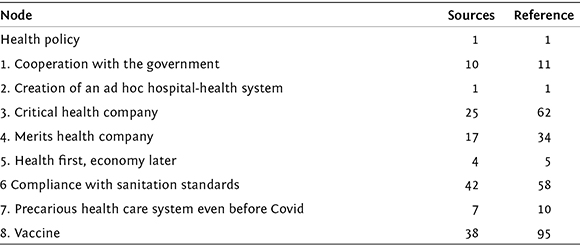
Table 9 provides insights into the various aspects of health policy during the pandemic, highlighting cooperation, challenges, and public perceptions.
Cooperation and conflict
Cooperation and conflict between health authorities and the government were evident, along with the creation of specialized health systems to manage covid-19. Criticism of health organizations was widespread, yet their efforts were also acknowledged.
Sanitation and compliance
Compliance with sanitation standards was critical, becoming habitual over time but also revealing limitations. The pandemic exposed pre-existing vulnerabilities in healthcare systems, highlighting the need for reforms.
Vaccine issues
Vaccine-related issues were prominent, with communication campaigns essential for public acceptance amidst concerns about side effects and political motives. The Green Pass and compulsory vaccination sparked significant debate, reflecting tensions between public health and personal freedoms.
Understanding these aspects of health policy is crucial for improving public trust, compliance, and the effectiveness of responses in future health crises.
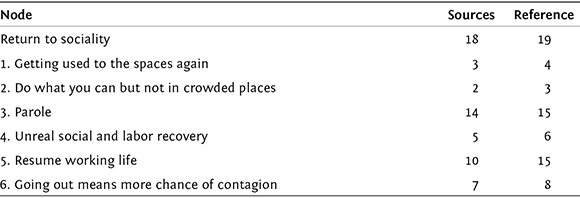
Table 10 provides insights into the different aspects of returning to social life during the pandemic, highlighting the challenges and adaptations faced by individuals.
Reacclimating to shared spaces was a significant challenge after prolonged isolation, indicating the psychological impact of the lockdown. People adapted their activities to avoid crowded places, balancing the need for social interaction with health precautions.
Gradual recovery
The notion of “parole” reflects the tentative and gradual steps towards normalcy, where moments of freedom were enjoyed cautiously. Despite efforts to resume normal activities, real recovery in social and work life was often incomplete, affected by ongoing restrictions and economic challenges.
Cautious engagement
Returning to work was a crucial step towards normalcy but involved new adaptations to health protocols and hybrid models. The awareness of increased contagion risk influenced people’s decisions to go out, leading to a cautious re-engagement with public life.
Addressing the social and psychological impacts of the pandemic and developing strategies to support individuals in their gradual return to normalcy hinge on understanding these aspects.
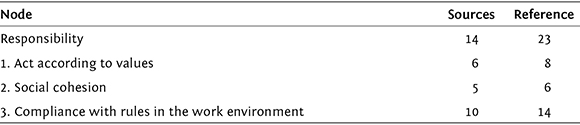
Table 11 provides insights into the theme of responsibility during the pandemic, focusing on how individuals and groups acted based on values, maintained social cohesion, and adhered to rules in work environments.
Values and ethics
Acting according to values guided individuals and groups to make ethical decisions, prioritize public health, and protect vulnerable populations.
Social cohesion
Social cohesion played a vital role in maintaining unity and mutual support, helping communities navigate the crisis more effectively.
Workplace compliance
Compliance with rules in the workplace was essential for ensuring safety and preventing the spread of the virus, requiring collective responsibility from all involved parties.
Fostering an environment of trust, cooperation, and ethical behavior during health crises and beyond hinges on understanding these aspects of responsibility.

The Ukraine-Russia war has had a significant impact on Italian public consciousness, intertwining global events with domestic concerns.
Global impact
This conflict has influenced perceptions of international relations, security, and humanitarian issues within Italy. The war has also spurred discussions about Italy’s role in global politics and highlighted the importance of solidarity with affected populations.
Understanding the impact of such global events is crucial for comprehending the broader socio-political landscape and its influence on national sentiment and policy.

The concept of “Italians all-knowing” reflects a cultural trait where Italians perceive themselves as well-informed and confident in their opinions on various topics.
Cultural trait: This perception is likely influenced by high media consumption and a strong sense of national pride. Understanding this cultural trait is important for appreciating the dynamics of public discourse in Italy, where individuals feel empowered to engage in discussions on a wide range of issues, from local concerns to international events.
Public sphere
This trait can foster a vibrant public sphere but may also lead to challenges in achieving consensus on complex issues.
Table 14 highlights two aspects of facilitation during the pandemic: the prioritization of facilities over antibodies and the allocation of resources based on roles.

Public health priorities
The first node reflects discussions on public health priorities, where immediate infrastructural support was sometimes emphasized over biological solutions.
Resource allocation
The second node highlights the importance of providing resources and facilities based on occupational roles, ensuring that critical workers had the necessary support to perform their duties effectively.
Understanding these aspects of facilitation is crucial for developing comprehensive strategies that balance immediate logistical needs with long-term health solutions and ensure that resources are allocated efficiently to those in critical roles during a crisis.
From the creation of the nodes, decisive elements emerge for each section, providing an initial description of how the pandemic phenomenon is experienced and perceived. Based on the experiences of the 56 subjects, it emerges that the will to overcome difficulties contrasts with surrendering to the virus; awareness of a pandemic world opposes the constant attempt to gauge its dangerousness; the perception of a state that tries, from the outset, to react to the unknown relates to the criticism leveled at it; trust in official information contrasts with the mistrust arising from the numerous contradictions among experts; and the attempt to maintain positive thoughts is set against the profound fear and concern of an endless pandemic.
By employing a phenomenological approach, this study delves into the lived experiences of individuals during the pandemic, providing a nuanced understanding of the social transformations and challenges they faced. The data underscore the necessity of comprehensive support networks, informed policies, and effective communication strategies to navigate the complexities of post-pandemic life and to prepare for future crises.
From data to theory: exploring insights
In conclusion, this study provides a comprehensive analysis of how social interactions in Italy have evolved following the covid-19 pandemic, directly responding to the central research question. The findings reveal that social interactions have become more cautious and selectively intimate, with a significant shift toward digital communication and virtual socialization (Wellman, 2018). The interviews highlighted three key themes: health communication, persistence of inequalities, and health equity.
Health communication
Both socially fair and socially unjust developments are scalable. Therefore, communities can learn to implement the best and most effective practices for socially fair development as a strategy for social progress. Exploring innovative strategies in health communication, including the use of digital platforms, social media, and community engagement to disseminate accurate and accessible health information, represents the most immediate and decisive application. This is evident in the nodes: economic difficulties, return to sociality, and health policy. Interviewees conveyed the impression of an experience on the margins of health communication that could be defined as understandable, coherent, and conveyed through channels, spaces, and methods that undermined the authority of health communication and its contents. The main task of sociologists in health communication planning consists of analyzing the social aspects of health, depending on the objectives, the diverse subjective conceptions of illness, and the communicative codes of the individuals targeted in the communication process.
Health communication is an extremely complex field of operational analysis. Referring to Maturo (2011), in the context of socio-health communication, the health sociologist can be attributed the role of a mediator between the institution (systemic sense) and the world of everyday life (objective sense). In circumstances like these, science could risk approximation by specialists, technicians, and experts in numerous problems and important issues. There is a risk of depleting citizens’ ability to understand the actual value of cognitive processes (Esposito, 2022). Therefore, it is urgent for disciplines to collaborate and acknowledge the inherent benefits of epistemological migrations, which can enhance the liberating nature of ideas, their independence, and continual progression. This aligns with data from Tables 1 and 6, where issues such as anxiety, social stigma, and difficulties in health communication were prevalent. The task of sociologists in health communication planning involves analyzing the social aspects of health, considering diverse subjective conceptions of illness and communicative codes of individuals involved.
Persistence of inequalities
Social rates are intimately intertwined with economic progress. Thus, socially fair and sustainable economic development can support the resilience of the entire system. Therefore, investigating the root causes and mechanisms perpetuating health disparities among diverse populations, with a focus on socioeconomic status, race, ethnicity, and geographic location, is crucial. This is highlighted in the nodes: consequences of the pandemic, responsibility, and facilitation. Moreover, within the field of sociology of health, we are well aware of the connection between illness and social inequalities through research ranging from Maturo (2009) to Marmot (2015). Sociological literature suggests that inequalities and poverty are embodied in people’s physiology. This means that it may be theoretically possible to infer a person’s socio-economic status by examining their physical characteristics. The underlying assumption is that these physical traits are influenced by lifestyle choices, which are, in turn, shaped by one’s social class. The data from our study reveal an increasing socio-economic divide between classes and countries in recent years. While the virus affects everyone, our findings clearly show that its consequences in terms of access to care and compliance depend rigidly on socio-economic variables. Social capital and health literacy emerge as essential factors in determining the consequences of infection at both individual and societal levels. This finding aligns with data from Tables 3 and 9, which discuss the socio-economic inequalities and the critical role of health policies in addressing these disparities. Understanding the mechanisms that perpetuate health disparities among diverse populations is crucial for developing strategies for socially fair and sustainable economic development.
Health equity
Knowledge processes construct and redefine social reality at the very moment of analysis, and disciplines establish the dimensions of this reality. This process reveals the real complexity of human action on the one hand and the limited and probabilistic nature of knowledge on the other. This is reflected in the nodes: government, information, lockdown, perception of the virus, Ukraine-Russia war, facilitation, and health policy. The analysis also revealed that while the physical contexts of social interaction have shifted towards private and controlled environments, there remains a strong desire for community and collective engagement. Navigating these changes requires not only structural adaptations but also a shared commitment to understanding and collaboration at both personal and societal levels. The pandemic has also highlighted the critical role of social sciences in understanding and addressing the complexities of social interactions and public health. By examining how individuals and communities adapt to crises, this study contributes to a deeper understanding of the resilience and adaptability of social systems. It also emphasizes the need for ongoing research to develop effective strategies for recovery and to prepare for future societal disruptions.
This is reflected in Tables 11, 13, and 14, which discuss the impact of the virus, perceptions of the war, and health policies. The pandemic has underscored the critical role of social sciences in addressing the complexities of social interactions and public health, highlighting the need for interdisciplinary cooperation.
Moreover, the theme of social adaptation and return to normalcy emphasizes the desire for community and the importance of support networks. Participants expressed the need for understanding and collaboration in both personal and public spheres. This aligns with data from Tables 7, 8, and 10, which highlight the adaptations during lockdown and the challenges of returning to social life. The pandemic has redefined social and relational behavior, affecting individuals and families, and underscoring the need for robust support systems and policies to mitigate societal vulnerabilities
Additionally, this study addresses the process of analyzing collected data, transforming empirical observations into broader theories and concepts ( Baraldi, 2003). The significance of the results obtained is discussed, reflecting on implications for understanding social interactions in the post-pandemic context. Therefore, according to the findings from the 56 interviews, physical contexts have become private arenas where there was a risk of not conveying scientific truth. This could suggest a lack of credibility in the content and associated elements. The data analyzed in this study clearly show that the community feels a strong need to understand, educate, and collaborate beyond the practical prophylactic actions it assimilated. The community seeks to feel more actively involved, both in private and public contexts, even in civic matters. The covid-19 emergency has redefined the rules of social and relational behavior, inevitably affecting individuals and families. This study collects and discusses interpretations of the main results of sociological research on how the covid-19 emergency has transformed the lifestyles, social relationships, and expectations of the Italian people. The pandemic has starkly highlighted how the origin and production of risks, unlike in the past, are not attributable to external causes but remain internal to society itself, and states of emergency are now the norm rather than the exception.
Therefore, it is the choice of a sociology capable of observing which social processes underway are radicalized, modified, or created in response to an extraordinary crisis that, in this case, takes on a sanitary characterization. Such a choice also responds to the belief that sociology is a unified discipline, formed by its own theoretical frameworks and empirical research methods, even when different fields of analysis are privileged - from politics to economics, from labor to education, from family to communicative dynamics, from culture to the environment, from religions to urban transformations. To effectively reconstruct and redesign organizational and institutional structures, it is essential to conduct careful, methodologically rigorous, and theoretically informed analyses. Such analyses will lay the groundwork for interventions aimed at fundamentally rethinking processes and regulatory mechanisms that have proven inadequate, especially in light of the challenges that emerged during the pandemic crisis.
Understanding a pandemic as a complex phenomenon requires analyzing its various determinants and their implications. Our research has focused on the connections between systems and actors, structures and practices, the reality of social conditions and existence, and the social construction of reality. This comprehensive approach clarifies common misconceptions in society (Elias, 1982) and encourages us to use sociological imagination (Mills, 1959). These conclusions are rooted in our data and form the core of our study, highlighting the intricate interplay between socio-economic factors and the pandemic’s impact.
By employing a phenomenological approach, our study deeply explores the lived experiences of individuals during the pandemic. This approach is particularly suited for understanding the profound impact of the covid-19 pandemic on social interactions, norms, and vulnerabilities. By capturing the first-person perspectives of individuals, we gain insight into their feelings, thoughts, and reactions to the pandemic. This method offers a nuanced and in-depth understanding of the social transformations and challenges faced during this time. It underscores the necessity of comprehensive support networks, informed policies, and effective communication strategies to navigate the complexities of post-pandemic life and prepare for future crises. This includes exploring how individuals navigate socio-economic challenges, access healthcare, and cope with the psychological effects of the virus. By examining how the pandemic has reshaped social constructs and realities, we can uncover the underlying social dynamics and the transformation of societal norms. Situating individual experiences within broader socio-economic and cultural contexts helps us see how systemic factors and social structures influence personal experiences and perceptions.
Conclusion
From the interviews, three overarching themes emerged: health communication, persistence of inequalities, and health equity. Social adaptation and the return to normalcy also played a pivotal role in shaping the discourse.
We conclude with broader observations on theoretical and empirical challenges. Some participants adopted theories from their specific fields, while others relied on the experience of collective trauma. This opens the horizon for further theoretical discussion on the concept of crisis, particularly for understanding the multiple mechanisms through which thoughts and actions are influenced. The coronavirus crisis has acted as a catalyst, accelerating some social processes and concluding others. It has revealed social tensions and divisions, inequalities, power imbalances, economic challenges, and our capacity for adaptation and resilience. In response to the research question, “How have social interactions in Italy changed due to the covid-19 pandemic, and what are the implications for societal norms and vulnerabilities?” our findings suggest that social interactions have become more cautious and selectively intimate. This highlights the need for robust support systems and policies to mitigate societal vulnerabilities.
The cautious approach to social interactions and the increased reliance on digital communication are significant changes in daily life, potentially long-lasting transformations influenced by the pandemic’s pervasive impact. The exacerbation of social and economic inequalities during the pandemic has brought to light vulnerabilities within society, emphasizing the necessity of targeted interventions. Policies aimed at improving access to healthcare, providing economic support, and enhancing digital literacy are vital to support marginalized groups and promote equity. The theme of social adaptation and the gradual return to normalcy emerged as a significant aspect of our findings. Individuals are navigating a complex landscape where pre-pandemic norms are being reevaluated and reshaped. This transition phase is critical for developing strategies that encourage positive social behaviors while mitigating adverse effects.
Our study underscores the indispensable role of the social sciences in understanding and addressing the multifaceted challenges posed by the pandemic. By integrating qualitative insights with sociological theories, we can better comprehend the underlying factors that drive behavioral changes and societal shifts. This comprehensive approach is essential for developing effective policies and interventions.
It is important to consider whether these findings can be generalized to the broader Italian population. The participants in our study represent diverse backgrounds and experiences, yet the conclusions drawn should be interpreted with caution. The specific cultural, social, and economic context of Italy during the pandemic has influenced our results, and while they provide valuable insights, further research is necessary to confirm their applicability across different regions and communities within Italy.
In conclusion, fostering a more resilient and equitable society requires a multifaceted strategy that incorporates health communication, addresses persistent inequalities, and promotes health equity. Future research should continue to explore these themes, providing a deeper understanding of post-pandemic dynamics. Policymakers and practitioners must leverage these insights to design and implement strategies that support societal recovery and resilience, ultimately fostering a more just and equitable society.

