




 Inglês (pdf)
 Artigo em XML
 Referências do artigo

 Tradução automática
 Enviar este artigo por email
 Citado por SciELO
 Similares em
SciELO

 Permalink


Highlights
The concept of Smart Cities has not been consolidated as a new urban policy in Chile.
The adoption of Smart Cities in Chile has been significantly influenced by Spain.
The study utilizes a combination of ethnography, social network analysis, and content analysis.
The National Plan for Intelligent Territories adapts the concept of Smart Cities to Chilean local contexts.
Introduction
The concept of Smart Cities (SC) has emerged as a global trend in contemporary urban development, promising more efficient, sustainable, and socially inclusive cities (Vanolo, 2014). This notion has positioned itself as a technological response to growing urban challenges, seeking to integrate advanced infrastructure, information and communication technologies (ICT), and data management strategies to optimize the operation and development of cities. However, the adoption and adaptation of this concept vary significantly across different geographic and socioeconomic contexts.
In Chile, the term SC has captured the attention of academia, the public and private sectors, generating increasing interest in understanding its meaning, origin, circulation, and implications. The existing literature suggests that while in the Global North the concept has been consolidated as an integral part of urban policies (Wathne & Haarstad, 2020), in Chile it still faces challenges in becoming a coherent and consolidated urban policy. This is partly due to governance and power dynamics between public and private actors, as well as the way in which SC ideas have been appropriated and reinterpreted in the local context.
This article seeks to contribute to recent works addressing how ideas inherent to the SC concept circulate in Chile (Tironi & Albornoz, 2021; Ulriksen, 2024) from a different perspective, focusing on how such ideas originated. Using Foucault's genealogical method and the policy mobilities approach (Cochrane & Ward, 2012; McCann & Ward, 2011, 2012; Temenos & McCann, 2013), it explores how ideas around the SC concept originate and mobilize, who the agents are in their birth and circulation, what processes of appropriation and adaptation occur, and identifies mobilities, immobilities, and mutations. Thus, this article aims to explore the genealogy and circulation of the SC concept in Chile, using a combination of mixed methods including ethnography of events, social network analysis such as Twitter, content analysis, and interviews with key informants.
The results indicate that the SC concept in Chile originates and circulates mainly through economic and technological actors, rather than from state urban planning. Innovation is the main driver and area from which the SC concept emerges and circulates, which is linked to specific public actors related to productive development and digital transformation, such as the Production Development Corporation (CORFO) and the Digital Country Foundation (FPD). In Spain, particularly events such as the Smart City Expo World Congress in Barcelona, has played a crucial role as an international reference, facilitating the introduction of the concept through the participation of Chilean authorities in such events. Additionally, certain local reappropriations of the concept are identified, such as the National Plan for Intelligent Territories (PNTI) promoted by CORFO, which seeks to integrate the SC vision at the territorial level, encompassing both urban and rural areas.
The study contributes to the understanding of how SC ideas originate, circulate, and transform in Chile, revealing the complex interactions between actors and the importance of international references in shaping urban policies and narratives. While some authors call it a "Smart City Policy" (Wiig, 2015) or "new urban policy" (Wathne & Haarstad, 2020), this article argues that the SC concept in Chile does not represent a new type of urbanism or a new "model" of urban development, but rather an urban narrative for the development of technological industries in the city.
The article begins by situating the SC concept in the current literature. It continues with a section dedicated to the mobility of policies in the study of SC. Then, the question of whether SC represent a new urban policy or an urban-technological narrative in the Chilean case is addressed. Following a methodology section, the main results of the research are presented, which are divided into three stages: ethnography of SC events, Twitter analysis, and content analysis, showing how the iteration between these tools has truly revealed where the concept emerges and circulates from. Finally, the conclusions reflect on the implications of the circulation of the SC concept in public policies in Chile, as well as pointing out the limitations of the study and possibilities for future research on the subject.
II. Theoretical framework
1. Smart Cities: Origins and Debates around the Concept
Research on the genealogy of the SC discourse (Wang, 2017) and its emergence in the public sphere through the media (Söderström et al., 2014) suggests that the idea of SC first appeared in the mid-1990s, associated with the introduction of Common Telecommunications Infrastructure, e-governance or high-tech industries to drive economic growth. However, the concept itself dates back to 2008, particularly to the talk "A Smarter Planet: The Next Leadership Agenda" by IBM's CEO, Sam Palmisano, in which he stated that cities should become smarter in order to become more sustainable and efficient. Then, in 2010, the "IBM Smarter Cities Challenge" event took place, with which the concept is commonly associated.
It is important to distinguish between the emergence of the specific term 'smart city' and the broader development of technology-driven urban initiatives that preceded it. While the explicit 'smart city' terminology gained prominence after IBM's 2008 initiative, the underlying concepts of technology-enhanced urban management emerged earlier through various iterations, including 'intelligent cities' in the 1990s. This evolution reflects not just a change in nomenclature but the progressive development of how technology's role in urban governance has been conceptualized.
Since then, the SC narrative has circulated through various channels, mainly seminars, fairs, and contests. The key question, however, is what enables ideas to take root and relationships to form, given that circulation occurs through the active appropriation of ideas by the actors involved (Robinson, 2011). Indeed, the idea of the SC is in constant transformation, being loaded with content and specificity by stakeholders according to their own agendas and needs (Tironi & Albornoz, 2021). In other words, it is a socially constructed phenomenon, and its understanding varies between what is disseminated and what is applied (Fariniuk, 2018). From this last point, it is possible to argue that the concept of SC has different origins, beyond its first appearance in 2008.
Linked to the above, a broad literature originating in recent years agrees that there is no common definition of SC (Angelidou, 2014; Cocchia, 2014; Grossi & Pianezzi, 2017), recognizing the ambiguity of the term (Anthopoulos, 2017; Wang, 2017). Referred to as an urban-technological utopia (Duque, 2016; Townsend, 2013) or an urban imaginary, slogan or leitmotiv (Söderström et al., 2014; Wiig, 2015), there is consensus that the concept of SC represents a contemporary discourse around the management and development of cities that promotes the use of technology to solve various urban problems, promising a healthier lifestyle for its inhabitants (Hollands, 2014; Jirón et al., 2021). Its advocates add that the benefits of adopting technologies are multiple, since they are scientific, objective, common sense, and apolitical in nature (Kitchin, 2015).
On the other hand, detractors of the SC discourse criticize its entrepreneurial and neoliberal vision of the city (Brenner & Theodore, 2002), as well as its technological reductionism (Greenfield, 2013; Hollands, 2014). In Smart Urbanism (Luque-Ayala & Marvin, 2015; Marvin et al., 2016), the driving force would be the increasing competitiveness between cities, which accentuates the global trends of capitalist restructuring of the 1990s that positioned cities as command-and-control centers of accumulation (Brenner & Theodore, 2005).
Moreover, critical studies highlight that the SC utopia often clashes with its aspirations when put into practice (Grossi & Pianezzi, 2017). In fact, the SC discourse may distract from structural urban problems (Wiig, 2015), a phenomenon that authors in Chile have referred to as the 'urban placebo effect' (Jirón et al., 2021). Watson (2014) has also noted the marked contrast between the image of African cities driven by the SC discourse and the real circumstances of the population, with the result of these fantasies being an increase in social inequalities and marginalization.
2. Policy mobility in the study of Smart Cities
Policy mobility is a theoretical and methodological approach that focuses on the circulation, adaptation, and recontextualization of policies, ideas, and models from one place to another. This approach is particularly relevant in the study of SC due to the globalized and multifaceted nature of the concept. SC, as a model adopted by various cities around the world, are not only implemented following a homogeneous pattern, but are adapted and transformed according to local contexts, pre-existing policies, and the specific needs of each city.
Policy mobility is based on the idea that policies are not static but are in constant flux and transformation. McCann and Ward (2011) point out that this approach allows us to understand how policies travel across different spaces and scales, how they are modified in the process, and how they are implemented in specific contexts. In the policy mobility approach (Cochrane & Ward, 2012; McCann & Ward, 2011, 2012), public policy formulation responds to the notion of assemblage, mobilities, and mutations of policies rather than linear transfers of models, as in policy transfer studies (Delpeuch, 2008; Dolowitz & Marsh, 2000). According to the policy mobility approach, public policies move through global circuits in which certain actors, their practices, and representations affect the production, adoption, and circulation of policy models (Temenos & McCann, 2013).
In the case of SC, policy mobility helps unravel how the concept, originated in Global North contexts, is reinterpreted and adapted in countries like Chile, where socioeconomic and political realities differ significantly. The relevance of policy mobility in the study of SC lies in its ability to reveal the power dynamics and transnational relationships that influence the adoption and adaptation of the concept. Peck and Theodore (2012) argue that the analysis of policy mobility allows for the identification of key actors, policy transfer mechanisms, and the networks through which ideas circulate. In the Chilean context, this approach is crucial to understanding how the concept of SC, initially promoted as an urban solution, is primarily appropriated by innovation and productivity agendas, and how international references, such as Spain, play a central role in this adaptation.
Moreover, policy mobility provides a critical lens to analyze the implications of policy transfer. Robinson (2011) highlights that not all policies travel with the same success or generate the same results in different contexts. In the case of Chile, the concept of SC has not resulted in a significant transformation of urban policies, as has occurred in the Global North, but has been reinterpreted as a strategy for the development of urban technology industries. The following section addresses this point, which leads to the question of whether SC in Chile represent a failure of urban policy.
3. Smart Cities: New Urban Policy or Urban-Technological Narrative?
While some authors directly refer to it as "smart city policy" (Wiig, 2015) or "new urban policy" (Wathne & Haarstad, 2020), they do not question whether it is pertinent to consider the concept of SC as an urban policy. This article argues, instead, that in Chile the concept does not represent a "model" of urban development, but rather an urban imaginary to promote technology industries. Authors such as González (2016, p. 4) even speak of "narrative myths of the Smart City", a discursive and practical imaginary that "refers to a series of theoretical concepts and assumed benefits with strong implications for the configuration of urban policies", but which fail to transform into urban policy, at least in Chile. Other authors, such as Ameel (2021), identify it as a narrative of urban planning and not in urban planning, noting that, although the term is used in Smart projects, it is not included in any relevant urban planning document.
On the other hand, there are two elements that characterize public policy. First, in policy decision processes, the heterogeneity of actors is fundamental. However, in the case of SC, although they propose creating inclusive, apolitical, and efficient governance, the actors involved in decision-making are far from diverse. The ones who participate the most are companies; citizens are absent from the discussion (Hollands, 2014; Jirón et al., 2021; Vanolo, 2014). The new "beyond the state" (Swyngedouw, 2005) model of urban governance of SC claims to be more efficient than traditional systems for governing public institutions, a process that would be carried out by companies whose agenda does not include problems such as social inequality, segregation, access to housing, etc.
Second, an urban policy is always the result of negotiations in a mosaic of conflicting interests and ideologies. The SC narrative, on the other hand, appeals to an objectivity offered by big data and technology, which transforms it into an exercise of depoliticization. Debate is obviated in the name of a pragmatism that values quick investments, agreements, and lack of information to citizens (González, 2016). As Hollands (2014) points out, citizens are often presented as barriers in the corporate race towards the SC and, rather, in that perspective, they need to be educated about the benefits that information technologies can provide.
The staging of the SC narrative has significant implications for urban governance, including invisible problems, the exclusion of social actors, and the sidelining of political debate. In this narrative, urban problems are treated from a post-political horizon and intelligent governmentality, since only those difficulties that are solvable by technology are considered. The governance defined by the SC is rather of a corporate nature (Harvey, 1989), according to which the city is built for a few, generally the citizens and local administrations that can pay for the offered technology. The underlying assumption of the SC paradigm is that "solving social problems is not simply a matter of developing good policies, but much more a matter of management, of organizing strong collaboration between government and other stakeholders" (Meijer & Bolívar, 2016, p. 394).
III. Methodology
The research methodology behind this article utilizes mixed methods. It combines ethnographic research on SC events with data mining and social network analysis, specifically on Twitter. The ethnography consisted of observation and attendance at events held between November 2018 and October 2019, as well as interviews, informal conversations, and other types of interactions with key informants. Content analysis was also utilized, collecting and analyzing information from invitations, websites, social networks, and various institutional documents.
To conduct the analysis, Foucault's genealogical method was used, which has allowed for the decomposition of the SC concept into its multiple origins and the analysis of the power relations that have influenced its formation and deployment (Foucault, 1977). In this sense, genealogy is not the search for a single origin, nor the construction of a linear development. Instead of this, it seeks to show the plural and sometimes contradictory past that reveals traces of the influence that power has had on truth (Bevir, 2008). As a result, it is possible to understand not only how the SC concept has spread in Chile, but also the economic and political forces that have shaped its implementation.
For its part, social media Big Data is a new digital method in the social sciences that allows for the capture and evaluation of people's perceptions, thoughts, critiques, and reflections, elements emptied in the form of posts on social networks (Yigitcanlar et al., 2021). In this study, SC concepts were identified and analyzed through social network analysis of Geo-Twitter messages (tweets). Data mining, machine learning, and analysis were developed jointly with two data scientists, with whom a methodology and analysis plan for their capture and filtering was established.
In a first stage of data capture, the process began with keywords related to SC in the content of tweets and then with the selection of on-topic users or those who tweet one or more keywords related to the SC concept. In a second stage, data cleaning was performed, which consisted of several iterations in which the robot was trained by modifying the algorithm. The criteria for selecting tweets were, first, to have one or more terms from the keyword file created for this purpose, which consisted of a total of 520 terms and accounts related to SC in Chile; and second, that the location of the account had to be Chilean. The 520 terms in the keyword file are divided into: "concepts" related to SC (such as cybersecurity, startup, ecosystem, sustainable cities, mobility, urbanism, etc.); SC "technologies" (examples such as Internet of Things (IoT), 5G, Blockchain, electromobility, etc.); SC "strategies" or "public policies" (examples such as digital government, Hackathon, Paseo Bandera, ERNC [Non-Conventional Renewable Energies], tactical urbanism, etc.); and user accounts (examples such as @fpaisdigital, @Corfo, @AmuchChile, @SeSantiagocl, @sebastiansichel, etc.). The construction of the keyword file was carried out by selecting terms from the data analysis, as well as concepts and accounts identified by the researcher during the ethnographic work and content analysis.
The data selection was conducted for three time periods: i) pre-social outbreak or "Normal" (March 2019 to October 18, 2019); ii) "Social Outbreak" (between October 18, 2019 and mid-March 2020); iii) and "Covid19" (mid-March 2020 to September 2020).
IV. Results
The research results behind this article refer to the question of how the SC concept emerges and circulates in Chile. The results are divided into three main stages, defined by the methodological tools used. A first stage, referring to the ethnographic study of SC events held in Chile; a second stage, in which an analysis of the social network Twitter was developed; and a third stage of content analysis of various documents and interviews, which complement the study through the social network Twitter.
1. Ethnographic Study of Smart Cities Events in Chile
In a first stage, an ethnographic study of ten events related to SC in Chile that took place between late 2018 and October 2019 was conducted 1, complemented by a series of interviews with key informants. The interest was to investigate how the SC concept emerges in Chile and how ideas around it circulate. Regarding where they take place, of the ten events, only one took place in a Chilean city other than the capital, Santiago. The vast majority took place in the high-income sector of Santiago, in places such as hotels, convention centers, institutional buildings, etc. Most of the actors involved come from private companies linked to the field of technology, specifically information technology and services, ride-sourcing, and other transportation companies. Multinational corporations also have a significant presence (such as Deloitte, ABB, Engie, Alstom, Transdev, Albemarle, and Uber).
The national "ecosystem" of SC is composed of actors that appear more frequently, either as event organizers, sponsors, or speakers. From the private sector, there are Enel X (a company focused on energy efficiency), Copec (a fuel distribution company), SQM (a lithium mining company), and Uber Chile; trade associations such as the Mining Council and the Society for Industrial Development (SOFOFA); and foundations such as País Digital (focused on developing a digital culture and economy); Recyclápolis (works around new trends in sustainability and environmental care); Fraunhofer (conducts applied research to meet the needs of industry and accelerate technologies in Chile and Latin America); and País Circular (an editorial project that promotes the circular economy and the development of sustainable businesses). From the public sector, the most important institution is CORFO, in its different scales and regional headquarters (CORFO promotes investment, innovation, and entrepreneurship, in addition to strengthening human capital and technological development, and is an institution under the Ministry of Economy, Development and Tourism).
From academia, the universities most present are Universidad del Desarrollo (UDD) and Universidad Técnica Federico Santa María (UTFSM), the latter promoting the concept of SC mainly through the areas taught, related to Information and Communication Technologies (ICT), IoT, etc. Finally, from international agencies, the Inter-American Development Bank (IDB) appears, not only as the organizer of one of the events but also in most occasions when the meaning of a SC is presented.
A smart city is one that puts people at the center of development, incorporates Information and Communication Technologies in urban management, and uses these elements as tools to stimulate the formation of an efficient government that includes collaborative planning processes and citizen participation. By promoting integrated and sustainable development, Smart Cities become more innovative, competitive, attractive and resilient, thus improving lives. (Bouskela et al., 2016) 2
Up to this point, the little or no presence of actors from the urban field, whether from the Ministry of Housing and Urbanism (MINVU) or the National Council for Urban Development (CNDU), is striking (this point will be taken up later in the Twitter analysis). Three key elements indicate that the urban aspect is neither a primary participant nor the focus of these SC events.
First, the specific way in which the roundtable discussions are composed - most of the time integrated by representatives from the private and public sectors, academia, a foundation or NGO, and a moderator - says a lot about the expected governance that the organizers are trying to create around the topic: public-private partnerships that allow for future business opportunities and match-making between public needs and private products and services.
Second, the participation of municipalities as "passive clients" and as "buyers" of such technological services stands out. This is reflected in the intervention of the former mayor of Vitacura (one of the highest-income municipalities in the country) at one of the SC events, where he mentions that they often receive "invitations to showrooms of different products, many of high quality, content and usefulness; others, of more debatable quality", to which he adds his concern that the concept will become a "travel agency" issue. In the opposite sense, the statements of the mayor of La Pintana (one of the lowest-income municipalities in the country) at another SC event stand out, where she states that "Smart Cities do not reach our municipality", alluding to the deep segregation suffered and the lack of both public and private services in that territory.
Third, regarding the topics addressed during the events, innovation and electromobility stand out. On the one hand, most events emphasize the innovation challenges to transform future cities into smarter ones, innovations that focus fundamentally on technological solutions. On the other hand, electromobility is the protagonist in all events, associated with one of the ways in which SC begin to materialize. However, it is primarily approached as a mechanism to meet commitments to reduce greenhouse gas emissions and improve air quality in cities. Other urban impacts of implementing such technology are not raised. Thus, part of the narrative that is repeated in each attended event refers to the needs of urban inhabitants and the problems of future cities, which will become increasingly dense, complex, and unmanageable; and in the face of this, it is proposed that the solutions that would allow for a better quality of life, more efficient and sustainable cities, come from innovation and technology, as well as strategic links between the public and private sectors. Long-term urban planning is not part of the discussion.
2. The concept of Smart Cities in Chile Based on a Twitter Network Analysis
As mentioned above, the data selection for the Twitter analysis was conducted for three time periods: i) pre-social outbreak or "Normal" (March 2019 to October 18, 2019); ii) "Social Outbreak" (between October 18, 2019 and mid-March 2020); iii) and "Covid19" (mid-March 2020 to September 2020). The results shown below correspond to the "Normal" period. This is because during the "Social Outbreak" period, there is increased activity on Twitter by users, but related to the political contingency at the time. On the other hand, during the Covid19 period, there is a significant decrease in Twitter activity linked to the pandemic, so the results fail to show trends as clear as in the first period.
As shown in Figure 1, the concept most frequently associated with SC is "innovation". Other prominent terms are "digital", "security", "cameras", and "technology". Terms related to urbanism and urban planning are not seen in this word cloud, being absent from the discourse of those tweeting about SC in Chile during that period.
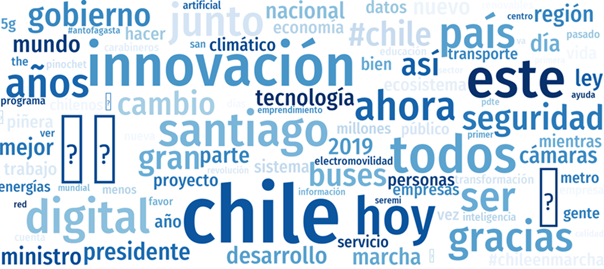
Figure 2 shows the relationship between users and the most frequent "SC concepts." First, it reveals the prominence of the concept of "innovation," which is strongly related to CORFO at both the central (@corfo) and regional levels, particularly in Arica, Tarapacá, and Aysén. The connection between CORFO and the concept of "technology" also stands out. Second, the centrality of the Fundación País Digital (FPD) (@fpaisdigital) is notable, as it is linked to several terms: "digital", "transformation", "innovation", "startups", "cybersecurity", "solutions" and "technology". According to this initial visualization, the concept of SC in Chile revolves around innovation, technology, and the digital domain, with FPD and CORFO as the main actors.
The results from the Twitter analysis align with the information gathered from the ethnography of SC events, indicating that the concept circulates primarily in the realm of innovation and technology. However, the question remains as to why these findings emerge from the Twitter analysis. While Big Data analysis shows us strong trends through thousands of tweets, its explanatory potential is limited regarding the reasons why these themes are predominant in the circulation of the SC concept. Therefore, the following section describes results from content analysis to clarify these overarching trends.
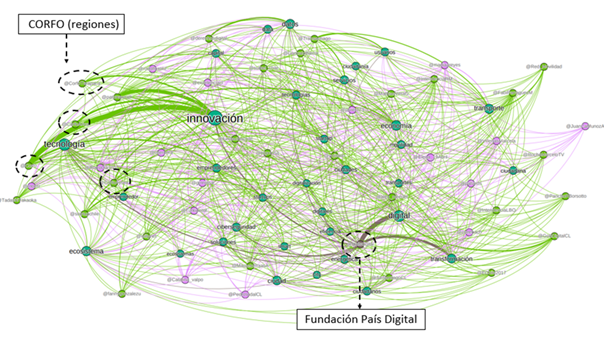
Fig. 2 Relationship between users and most frequent Smart City "concepts" for the "Normal" period 3.
3. Content Analysis on the Origin and Circulation of the Smart Cities Concept in Chile
3.1.1. National Ancestor of the Smart Cities Concept: The National Agenda for Productivity, Innovation, and Growth 2014-2018
Both the results of the SC event ethnography and the Twitter analysis indicate that innovation is the primary driver and domain from which the SC concept circulates in Chile. This concept is linked to specific public actors associated with productive promotion and digital transformation, such as the CORFO and the Fundación País Digital (FPD) (see fig. 2). Thus, the concept originates and circulates not through state networks related to urbanism, but through circuits with significant private sector participation, led by economic public institutions associated with innovation and digital transformation.
As shown in figures 1 and 2, innovation is a fundamental axis of SC in Chile. Indeed, qualitative information from the content analysis reveals that this impetus stems from public policies in the economic sphere, particularly the National Agenda for Productivity, Innovation, and Growth 2014-2018, launched by the Ministry of Economy, Development, and Tourism (2018). This Agenda, presented by former President Michelle Bachelet in May 2014, aimed to lay the foundations for a new phase of Chilean economic development, one that would not solely rely on the exploitation and export of natural resources but would also open possibilities for the emergence of sectors capable of producing new goods and services, developing industries, and creating innovation hubs (CORFO, 2016a). In summary, it sought to address the structural challenge of diversifying and sophisticating the country's productive matrix.
From this Agenda, the National Strategic Program for Smart Industries and the Regional Strategic Programs (PER) emerged, from which the main SC initiatives at the public policy level are derived: the Strategic Promotion Program “Enabling Infrastructure for Smart Cities,” led by CORFO’s Digital Transformation Committee (CTD-CORFO); and the Regional Strategic Program (PER) “Santiago Smart City,” led by Sé Santiago Smart City (a public-private initiative driven by CORFO’s Metropolitan Regional Directorate and FPD).
The National Strategic Program for Smart Industries, launched in 2016, aimed to become an enabling platform that would be “the engine of the industry’s digitalization in a vertical manner, focusing on the specific problems, requirements, and solutions of each productive sector” (CORFO, 2016a, p. 4). One of the sectors this program focuses on is cities, which, although not considered a productive sector in themselves, must be identified “as a fundamental area, both for their potential to improve citizens’ well-being and to unlock a significant potential market for companies providing technological solutions” (CORFO, 2016a, p. 7). In this context, the Strategic Promotion Program “Enabling Infrastructure for Smart Cities” (CORFO, 2019) was proposed to enhance the development of emerging markets based on digital solutions that, like cities, “do not yet present a clear scenario for the use of digital technologies, but that can become an important market for the digital industry”.
In particular, the enabling infrastructure program addressed the lack of IoT connectivity infrastructure that would facilitate the ubiquitous development of smart solutions, conducting a series of assessments of existing technologies, their applications, architectures, and open standards, in order to support municipalities when they needed to make investments in this area. In this sense, CORFO, through the CTD, served as the intermediary between digital technology providers seeking to market smart solutions and municipalities supposedly requiring those solutions. In concrete terms, the predominant enabling infrastructure that allows for the efficient management of a SC is sensorization and IoT.
On the other hand, the Regional Strategic Programs (PER) are part of the State’s systemic policy aimed at forging the Productivity Agenda to selectively promote innovation, the development of technological capacities, entrepreneurship, and competitiveness in strategic productive sectors at the national, mesoregional, and regional levels. In the case of the Regional Strategic Program “Santiago Smart City,” its mission is to promote the connection between the ICT industry and relevant sectors of the region, in order to provide technological solutions around mobility, security, and the environment (CORFO, 2016b). Given that it is a program driven by CORFO Regional, its focus is primarily on driving productive transformation, innovation, and economic development in Greater Santiago.
3.1.2. International References: Influence of Spain on the Adoption of the Smart Cities Concept in Chile
The international references for the concept of SC in Chile primarily have their roots in Europe, with Spain exerting a particularly notable influence. Since 2012, key figures like Pilar Conesa, one of the principal curators of the Smart City Expo World Congress in Barcelona, have played a fundamental role in this knowledge transfer. Conesa, through her platform, has facilitated the exposure of Chilean authorities to best practices and advancements in the field of SC.
The participation of Chilean public officials in international events has been a significant catalyst for the adoption of the concept in the country. For example, figures such as the former Undersecretary of Transport of Chile, Gloria Hutt, and the former Mayor of Peñalolén and current Governor of the Metropolitan Region, Claudio Orrego, were invited to participate and present at the Smart City Expo World Congress. These invitations not only allowed Chilean officials to familiarize themselves with innovations in urban management but also transformed them into ambassadors of the SC concept upon their return to Chile.
The Spanish influence has manifested in several dimensions of urban development in Chile. Firstly, the ideas and practices learned at events like the Smart City Expo World Congress have been incorporated into public policies and specific projects in Chilean cities. During his tenure as Mayor of Peñalolén and later as Governor of the Metropolitan Region, Claudio Orrego implemented various initiatives inspired by international experiences. These projects have ranged from optimizing public transportation to improving waste management and implementing sustainable energy solutions.
In her role as Undersecretary of Transport and later as Minister of Transport and Telecommunications, Gloria Hutt promoted the adoption of smart technologies in transportation infrastructure. These initiatives have included the integration of real-time traffic management systems, the promotion of electric vehicles, and the development of mobile applications to enhance urban mobility.
Furthermore, Spain's influence can be observed in the frequent invitation of Spanish experts to events in Chile. Notably significant is the role of Do! Smart City, a private institution that develops activities to promote the industry by activating the smart city ecosystem. Their actions include organizing Smart Cities-related events, which are characterized by the presence of international guests, primarily from Spain. One example is Alfonso Vergara, urban planner and president of the Spanish Metrópoli Foundation, who has been invited to various seminars and conferences in Chile focused on Smart Cities (including the "The Power of the City" Summit organized by Do Smart City and examined within the framework of this article). Another example is Xabier Arruza, a Spanish economist and coordinator of the Bilbao Urban & Cities Design Think Tank. In Chile, he first participated in the Do! Smart City summit in the city of Coquimbo, where he discussed the experience of Bilbao, one of the cities considered among the smartest in the world; this same Spanish expert later participated in the lecture "The Urban Transformation of Bilbao: A Concrete Case of How to Be a Smart City," organized in 2019 by Corfo Metropolitano, Sé Santiago, and Do! Smart City.
3.1.3. Local Reappropriations: Analysis of the "National Plan for Intelligent Territories"
An important mutation of the SC concept discovered through the ethnographic study refers to the National Plan for Intelligent Territories in Chile (PNTI). This project, driven by CORFO through its Digital Transformation Committee (CTD) at the end of 2018, aimed to create the conditions for advancing towards more sustainable, innovative, and competitive territories. This PNTI is identified as a mutation from the concept of "Smart City" to "Intelligent Territory", associating it with a more regional territory.
The evolution of “smart” to “intelligent” terminology in Chile presents an interesting contrast to global patterns. While in many parts of the world, particularly in the Global North, the concept of “intelligent cities” preceded and influenced the development of “smart cities” (Bunnell, 2015), in Chile the trajectory was reversed. The Chilean adoption of “intelligent territories” emerged as a post-smart city development, representing a conscious adaptation of global urban technology discourse to national territorial realities. This distinctive chronological and conceptual pathway illustrates how global urban concepts are not simply transferred but are transformed according to local contexts and needs, often following different trajectories than in their places of origin.
There are several reasons why this National Plan from CORFO was called "Chile Intelligent Territory" instead of using the more common term "Smart Cities". First, it was a broader approach than just the urban scope, encompassing not only cities but also rural areas, towns, metropolitan areas, and entire regions. This reflected a more holistic and integrative vision of intelligent development at the territorial level, not limited to urban areas. Second, it recognized the diversity of settlements in Chile, from large cities to small rural communities. The term "territory" aims to encompass this diversity of human settlements beyond cities. Third, it addressed specific territorial challenges, aiming to tackle connectivity issues, productive development, decentralization, and territorial balance across different areas of the country. Fourth, it attempted to avoid the ambiguity of the SC concept. "Intelligent Territory" sought to be a clearer and more defined concept for Chile.
In summary, the term "Intelligent Territory" reflected a more integrative, decentralized vision aligned with territorial development policies in Chile, without being confined solely to the urban realm. The initiative worked from the perspective of "territorial pertinence", identifying the opportunities and gaps of each territory, and seeking to create an ecosystem that promoted solutions around critical points such as mobility, security, the environment, and enabling infrastructures. Technology and digital aspects were, in the words of its former coordinator, “the third step”, preceded by the creation of urban-territorial governance and management, as well as human capital development (interview with former PNTI coordinator of CORFO, November 6, 2019).
V. Conclusions
The analysis of the concept of SC in Chile reveals a complex and multifaceted adoption, significantly influenced by international references, especially Spain. The research has demonstrated that the term SC in Chile has not managed to consolidate as a robust urban policy but rather as a narrative for the development of technology industries and digital modernization. This phenomenon is largely driven by economic actors and private companies rather than a state structure oriented towards urban planning.
The participation of key figures, such as Gloria Hutt and Claudio Orrego, in international events like the Smart City Expo World Congress in Barcelona, has been fundamental for the introduction and promotion of the concept in Chile. These actors have played the role of ambassadors for the concept, facilitating its dissemination and adaptation in the local context. However, the SC concept in Chile has also undergone a series of transformations and adaptations, notably with the initiative of the National Plan for Intelligent Territories (PNTI) promoted by CORFO, which broadens the focus towards a more inclusive and decentralized territorial vision, encompassing both urban and rural areas.
Through mixed methods, including ethnographic studies and social network analysis like Twitter, it has been evidenced that the origin and circulation of the SC concept are strongly linked to events, fairs, and seminars, where technology companies and economic institutions predominate. The lack of centralized governance and a clear focus on long-term urban planning has limited the ability of SC to become a consolidated urban policy in Chile.
The conclusions of this study suggest that, although the SC concept has managed to penetrate certain sectors and has driven specific technological modernization projects, it still faces significant challenges to transform into a coherent model of urban development. Governance, the participation of diverse actors, and adaptation to local realities emerge as critical factors for the future development of SC in Chile.
This study expands the debate on the reappropriation of global urban narratives, particularly in the Chilean context. On the other hand, this analysis of the origins and circulation of the concept of Smart Cities provides methodological tools that can contribute to studies on the origin and mobility of public policies, both through Foucault's genealogical method and Twitter analysis.
Finally, this study acknowledges its own limitations, particularly in the need to expand the analysis to other regions and local contexts to obtain a more comprehensive view. Future research could further explore the dynamics of governance and the interaction between public and private actors in the implementation of smart technologies, as well as the social and economic impacts of these initiatives in various territorial contexts in Chile.

