




 Inglês (pdf)
 Artigo em XML
 Referências do artigo

 Tradução automática
 Enviar este artigo por email
 Citado por SciELO
 Similares em
SciELO

 Permalink


Highlights
Traveling models’ failure is tied to the standardization process the original policy underwent.
Traveling models’ failure generates policy myopia.
Importers learn as they aim to correct this initial myopia and adapt the policy to local realities.
Policy learning doesn’t necessarily translate into obvious actions.
I. Introduction
The acceleration of standardized policy models’ international circulation, especially in the urban world, has led to the multiplication of academic works tackling the phenomenon. In their variety, all strands of the literature speaking to the movement of policy tend to tackle success and failure in relation to policy movement, seldom through different angles. While works in the early decades have largely showcased policies which were deemed successful, the question of failure of policies after they have been transferred has generated more and more analyses. It is a challenging topic to expand upon as failure has numerous definitions, but it encompasses policies “that fail to launch … that were thwarted, canceled, stalled, or otherwise prevented from reaching full implementation” (Temenos & Lauermann, 2020, p. 1110). While failure and learning have been addressed separately at length by the public policy analysis literatures, the aim of these works has often been to understand how to quantify, assess, or identify both phenomena. In contexts of policy transfer and policy mobilities, the conversation around failure has revolved around the inability to adapt or translate policy correctly, implying that failure stems from the importing actors’ incorrect understanding or assessment of the policy (Stein et al., 2017). While there have been major contributions from recent articles and books speaking to the challenges of managing the aftermath of policy import, I believe that there should be more works addressing occurrences of policy failure after transfer, and interrogating policy learning through this lens (Silvestre & Jajamovich, 2022). Among the various types of policies on the move, some stand out as standardized policy models. They are often labeled as best practices as the original iteration of the policy has encountered local success deemed worthy or replication. I use the term traveling model throughout the article after Jean-Pierre Olivier de Sardan and Richard Rottenburg’s works (Olivier de Sardan, 2021; Rottenburg, 2009). Many of these traveling models are studied through the lens of failure, but rarely ever in a comparative manner (Olivier de Sardan & Vari-Lavoisier, 2022). I argue that the rising number of standardized policies implemented offers unprecedented opportunities for comparative analyses for us to further our understanding of phenomena of failure in contexts of transfer, and I believe that studying the implementation processes of such policies in new contexts over the medium- term can shine new lights on policy learning.
This article is structured around a two-fold question. Is there specificity to policy failure in contexts of policy transfer and how do policymakers learn from said-failure when it occurs? The article’s demonstration departs from one of the most popular traveling models of the turn of the millenium: Bus Rapid Transit (BRT). This bus-based transport mode developed in South America relies on dedicated lanes and a set of technological advances to guarantee a reliable service and high average speed at a much lesser cost than rail-based transport modes. It has found great resonance among development banks and policymakers of the urban Global South as many cities faced demographic growth and insufficient public transport options. In 2013, over 120 cities had adopted BRT or a simpler form of bus corridor and expansion hasn’t stopped ever since (Hidalgo & Gutiérrez, 2013). However, they have not all encountered the great success recorded in Curitiba and Bogotá. This traveling model’s overwhelming presence in contemporary urban worlds, its identifiable features and strong epistemic community makes it the perfect policy object to interrogate failure after import, as well as ensuing learning comparatively. The article’s case studies are two cities which implemented their BRT system within a similar timeframe: Cape Town and Lagos. Both systems are extremely different, but both systems encountered challenges and are arguably in situations of partial failure. Using a qualitative methods toolbox, I analyze both implementation processes and make two central claims. Primarily, when an imported policy fails, failure is often tied to the transfer modalities and standardization processes the original policy underwent. There is a specific implementation gap that results from it, which in turn causes policy myopia. The second argument posits that over time, importers learn as they aim to correct this initial myopia and adapt the policy to local realities. However, policy learning doesn’t necessarily translate into obvious actions notably due to the high political stakes which surround such policies.
The article begins with a literature review stating that knowledges surrounding learning and failure in contexts of transfer are often disconnected from each other and would benefit from the creation of new bridges. The methodology and case studies of the articles are laid out in the following section. The first empirical section tackles the implementation gap and policy myopia resulting from the implementation of traveling models, and the second empirical section examines dynamics of learning in Lagos and Cape Town, inviting scholars to renew existing approaches of learning which are currently largely focused on quantifying learning rather than understanding its meanderings.
II. Literature review: learning, failure, transfer and how they’re connected
Policy failure and learning have generated rich literatures and adopted many angles to tackle both processes. However, many questions remain insufficiently addressed when they’re placed in the context of policy transfer. Works around failure and learning have one similar starting point (and first challenge): defining such processes is no easy task. Let’s start with learning. In many positivist literatures, scholars have attempted to identify learning by assessing the conditions under which information is acquired at individual and institutional levels, as well as the types of changes which might occur as a result of newly acquired knowledge (Dolowitz, 2017). Scholars from these schools of thought focused at large on the challenge of measuring or ascertaining that learning is occurring in a given situations and have focused on observable change: major theories such as John Kingdon’s multiple streams adopt such thinking as the acquisition of knowledge is notably spotted by its entrance in the policy stream, and its eventual implementation when policy windows open (Kingdon, 2014). Measuring learning is a fair and important quest in order to differentiate the various degrees of learning and their respective impacts (Hall, 1993), or in the hopes of fostering models with predictive power to better anticipate potential consequences of learning in the future (Glick, 2014). In literatures rooted in more constructivist ontologies, learning is defined as a transformative practice which goes beyond a set of practices and refers to the act of bringing sets of actors together. It is perceived as a political process which involves imbalanced cognitive labor from actors trying to convey meanings to each other. Both literatures agree: learning is hard to perceive and demonstrate, even though it happens in myriads of ways (Radaelli, 2004).
While several definitions of policy failure exist, it is fair to admit that it refers to policies ‘that fail to launch: policies that were thwarted, canceled, stalled, or otherwise prevented from reaching full implementation’ (Temenos & Lauermann, 2020) or policies that ‘have failed to deliver on their promises’, that produce ‘deleterious social outcomes’ (Davidson, 2020, pp. 5-6). Still, scholars qualify and approach failure differently: Cristina Temenos for instance distinguishes discursive failure from material failure (Temenos, 2024). A similar quest for quantification of failure can be found in the literature, and the same difficulties emerge than in the case of learning (Volden, 2016).
Links between failure and learning have been made. The main assumption is that governments learn after failure, but data proves that it isn’t always the case (Dunlop, 2017). Several studies have also shown that different types of failure led to different sorts of policy learning (O’Donovan, 2017). In contexts of policy import, failure and learning are discussed in a restricted set of terms. In policy transfer and lesson-drawing literatures rooted in positivist ontologies, learning leads to policy movement (Dolowitz, 2009; Dolowitz et al., 2019; Rose, 1993). Other attempts of linking learning to transfer have mushroomed since, but they have focused on understanding how learning manifests before leading to transfer or how local actors learn from experts before engaging in transfer (Dunlop, 2009). In policy mobilities, the conversation on learning and failure has been more political and scholars have noted how haphazard both processes can be, and how important it is to study both processes in longer timeframes (Duarte et al., 2011; Silvestre & Jajamovich, 2022; Temenos, 2024). Still, in both sensitivities, policy failure has mostly been portrayed as a failure to adapt a foreign policy to a new local context (Stein et al., 2017). Yet, this bias tends to prevent us from making an important link: failure which can be attributed to the traveling policy itself.
To elaborate on this bridge, I focus on a specific category of policies which has proliferated in all sectors: the traveling model. As theorized by Jean-Pierre Olivier de Sardan taking after Richard Rottenburg’s work, a traveling model is a standardized institutional intervention, often a policy, a project or a programme, designed to foster social and behavioral change on one or several categories of actors (Olivier de Sardan, 2021; Rottenburg, 2009). They rely on various mechanisms and dispositifs and are supposed to have intrinsic properties which make them efficient regardless of their context (Olivier de Sardan, 2018). This type of policy, designed to be ready-to-use in new cities or countries and are often labeled best practices. They stem from an initial iteration of a policy which is then standardized by a group of actors often akin to an epistemic community, and they are highly branded and promoted by persuasive practitioners and other policy entrepreneurs (Cook & Ward, 2012; Porto de Oliveira, 2016; Wood, 2014). In the process, important information about the policy’s initial success in its context of emergence is either hidden or relegated to the background and importing actors are only presented with an embellished narrative (Montero, 2017, 2019). This creates major knowledge asymmetries as importers are presented with a skewed conception of the policy and this can generate policy myopia. Policymaking is always an uncertain exercise involving a difficulty in assessing the challenges that the future holds. However, the standardization processes of traveling models tend to accentuate this uncertainty and cloud it in overwhelming positivity about the policy’s outcomes in its context of creation, and myopia can easily lead to failure (Nair & Howlett, 2017). This forms the starting point of my take on the conversation around the learning-failure nexus in the case of policy transfer, fueled by an investigation on an extremely popular traveling model: the BRT.
III. Case studies and methodology
Bus Rapid Transit, abbreviated as BRT, is defined as ‘a bus-priority mode featuring high-capacity vehicles with rubber tyres, often operating on dedicated rights of way (that is, segregated corridors) with busway alignment, intersection priority, off-board payment and level boarding’ (Ferbrache, 2019, p. 2). Curitiba is often identified as the BRT’s birthplace. From the 1960s onwards, the city aimed at developing a sustainable and integrated transport network to accompany its demographic growth (Lindau et al., 2010). Planners decided to focus on improved bus systems as opposed to rail, which would have been more expensive and less flexible: it turned out to be a winning bet. Soon enough, other South American cities caught on and implemented their own BRT, but the most impactful one was Curitiba’s TransMilenio. The city launched its new transport system in the year 2000, amidst a wide range of other urban reforms. A group of actors including then-mayor Enrique Peñalosa and organizations such as the Institute for Transport and Development Policy (ITDP) or the World Bank promoted the policy as a cheap, quick-to-implement, and operationally viable way of equipping cities of the Global South with mass transit systems (Wood, 2019).
Cape Town was among the dozens of cities which decided to implement their own BRT after it gained traction beyond the borders of Latin America. The transport system was adopted in the 2000s, as South Africa was preparing to host the 2010 FIFA World Cup and identified transport as a sector to focus its investments in. The nation-wide BRT policy drafted in 2007 by the central government was largely informed by recommendations of the ITDP. BRT was envisioned and presented as a modern urban mobility option to supplement flailing existing public transport supply. Most importantly, it was introduced as an instrument for reform targeting the unruly yet vital paratransit industry: drivers of minibus-taxis were offered to get trained as bus operators and owners had the opportunity to buy shares of BRT operating companies in exchange for putting an end to their previous operations. In Cape Town, which was then the only city managed by an opposition party, BRT appeared as an opportunity to affirm its status as a major metropolis capable of implementing solutions hailed at the global stage and do it better than other South African cities. Interim routes were launched in 2010 for the sporting event, but the first official trunk route started operating in 2013 along the West Coast.
Lagos was the first African city to implement BRT. It formed part of a city-wide revamp initiated by then-Governor Bola Ahmed Tinubu after the end of the country’s military rule in 1999. Tinubu aimed at making Lagos a world-class city and depart from a perception of the city as a lawless place and pathological form of urban organization conveyed by certain media and academics (Fourchard, 2010). Mobility was identified as a crucial sector for reform and the Lagos State Government (LASG) started a partnership with the World Bank to revamp the whole sector: the Lagos Urban Transport Project (LUTP) approved in 2003. Through this intervention, Lagos was equipped with a transport authority called LAMATA which planned and launched the first BRT route from Mile 12 to CMS in 2008 (LAMATA, 2013). As the city’s transport supply was predominantly ensured by paratransit operators, the BRT was designed to sanitize and modernize urban mobility.
To understand both implementation processes at play, I relied primarily on qualitative methods as I believed that actors’ voices and beliefs were crucial in providing me with a fine and precise picture of both projects’ histories and intricacies. I conducted several observations as well as 102 semi-structured interviews across Cape Town and Lagos during fieldworks spanning from 2019 to 2022. To retrace BRT-related events and grasp controversies in both cities I opted for a press review of articles published from 2000 to 2022 as well as a thorough archival analysis which helped map out the actors involved.
VI. Failing from imports
1. When failure finds root in standardization and transfer processes
The BRT is a typical example of a traveling model, due to its high degree of standardization and vast global popularity. I argue that it can also be a great illustration of how such policy objects can be particularly difficult to import and how they can lead to failure. Indeed, Olivier de Sardan focused on traveling models in the first place to try and explain why they were failing at such rates and came to the conclusion that their so-called intrinsic change-inducing properties are ineffective in contexts which are different from their original environments of creation (Olivier de Sardan, 2021). I make a more nuanced assessment: these models rarely yield similar results in their contexts of adoption because the standardization process, they go through generate asymmetries in the level of information available to all stakeholders. BRT owes a large share of its popularity to the positive evolutions observed in Bogotá and Curitiba, notably. However, many BRT advocates tend to omit the Brazilian city implemented and developed BRT over the course of decades and that the Colombian capital’s BRT only got implemented thanks to major administrative, political and fiscal reforms (Montero & Baiocchi, 2022; Rosário, 2016). Policymakers who are strongly encouraged to take part in urban solutionism and adopt globally hailed solutions are not always aware of the realities lying behind these miracle solutions. Instead, they are presented with an embellished reality through mediated study tours (Wood, 2015). The actors promoting their policy solutions often create a sales pitch relying on a few important features. BRT’s supposed advantage was its low cost and viability: cities would benefit from mass transit that requires little to no operational subsidy if they opted for the solution. While Bogotá had managed to have a viable BRT in the early years, it resulted from a set of various factors: an efficient planning of the transport system of course but also a dense urban form allowing for high seat replacement rates, a population used to commute by bus, great route locations, and a fairly favorable macroeconomic environment. The perspective of a viable, or at the very least cheap bus system had convinced many in Cape Town and Lagos as this quote from a policy entrepreneur in South Africa.
The whole sales pitch of BRT was that in South American cities it's feasible, it's a viable prospect. You put the infrastructure in and then operating costs are covered by the fare box and you get a lot of seat renewal, there’s a lot of intermediate stops along the way. (CEO of a civil engineering conultancy firm, Cape Town, 22 January 2019)
In both cities the BRT-based urban mobility policy is a partial failure: buses are running, but goals initially set for the policy aren’t met. I will focus on the costing aspect to demonstrate how many hiccups encountered in both projects result from a traveling model-specific implementation gap.
2. Cape Town: the price of a perfect BRT
Cape Town’s BRT system, the MyCiTi bus, is a major local project (fig. 1). It has been functional since its implementation in the early 2010s and provided some destitute Capetonians with a new transport option. In the early years of service, the BRT split travel time in half on the main trunk route for instance, and it undoubtedly set an important new standard in regards to service quality expectations in public transport (Sustainable Transport Award Cities, 2012). BRT was also a tool for institutional capacity building and undoubtedly a great engineering feat, with recognized innovations and great attention to the arts. However, it has also been heavily criticized on numerous aspects at various moments of its history.
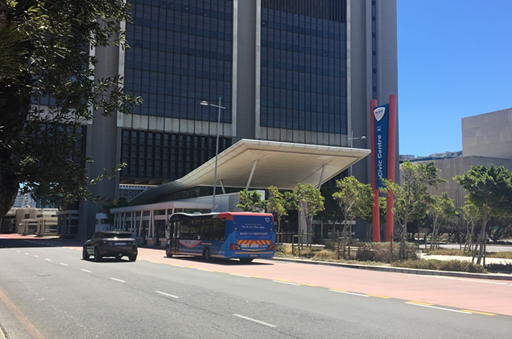
There have been important social challenges linked to the Capetonian BRT as certain members of the opposition and groups of citizens judged that the City prioritized affluent or touristy neighborhoods, implementation has been delayed multiple times and the fare system’s complexity has often been pointed as a factor deterring passengers from riding (Ehrenreich, 2014). The most concerning point of criticism remains the system’s cost for the City and its taxpayers. Early on, the system’s cost was largely underestimated. This is notably due to the involvement of a BRT advocate in the implementing team, used to selling BRT but with little experience actually implementing such systems (Wood, 2022). Once the operations started, the project proved extremely costly still. In the 2011/2012 fiscal year, MyCiTi revenue from ticket sales reached 34 million rands but operational costs exceeded 30 million rands (Wood, 2022). This speaks to the BRT’s inadequate service for a South African city which remained largely shaped by apartheid, as explained by a high-profile civil servant in a 2014 presentation.
Even with the introduction of a state-of-the-art service and related systems being introduced in a South African city, which is intrinsically inefficient and skewed as a result of Apartheid, the IRT would run without a subsidy and that the services and systems would collectively break even and even run at a profit. As a result, the revenue projections were escalated. It should, however, be noted that no public transport service in the world runs at a profit, let alone in a South African city where the poor are marginalized and placed far from places of employment, sometimes between 45-70km away. (Whitehead, 2014, p. 9)
Over the years, the financial unsustainability only worsened: in its latest budget document, the City of Cape Town noted that it contributed 4.2% of net rates to the MyCiTi bus service and that operations alone would cost 797 million rands (City of Cape Town, 2024). An interviewee noted that there was no overall costing of the project over its decade of existence and tried to make the calculation himself with available data: he puts it somewhere around 4.5 billion USD (Urban transport specialist formerly employed at the City of Cape Town, Virtual, 27 March 2022). The system creates a genuine dent in the City’s running budget, and some voices have evoked a potential underestimation of said-hole. This can be explained largely by the operational challenges evoked earlier which are a testament to the vast difference between the original site of invention of BRT and the realities of South Africa’s cities. A second factor is a complex infrastructure in place, which demonstrates Cape Town’s ambition to implement a state-of-the-art BRT under the counsel of its most visible advocates including the ITDP (Diallo, 2022). In Lagos, where a different route was taken, the transport authority also encountered challenges related to the cost of BRT and the expectations around it.
3. Lagos: the trials of the mythical self-sustaining BRT
The Lagos BRT was a flagship project of the city’s transition into the civilian rule (fig. 2). Its first route was implemented on a very busy axis, providing the system with impressive ridership figures. It was applauded and welcomed by numerous Lagotians as a symbol of progress and an improvement from existing transport options (BRT in Lagos, 2008). The city’s BRT system was recorded as one of the cheapest in history as it was delivered at a cost of 1.7million USD per kilometer (Mobereola, 2009; Peltier-Thiberge, 2015).
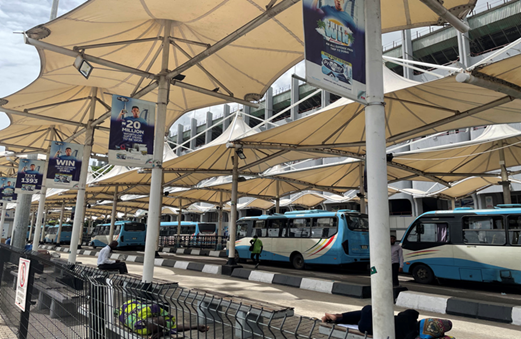
Fig. 2 BRT buses queuing at the Tafawa Balewa Square station, Lagos, Niger, April 2022. Source: Diallo (2019)
Indeed, rather than following BRT advocates’ guidelines regarding the appropriate way to implement BRT, the Lagos transport authority opted for a low-tech, stripped down approach to reduce implementation cost and focus on the most central features (Diallo, 2023). Still, BRT was swiftly criticized for its degrading service: the reliability decreased significantly, there was crowding, fares were fairly high and arose over time and passengers experienced a quick decrease in comfort (‘Lagos BRT’, 2020; ‘Please, Maintain These BRT Buses [Analysis]’, 2010; Odueme, 2009, 2010). These pitfalls can be attributed to several factors including issues with operators, lack of infrastructure maintenance and miscalculations of passengership. But overall, just like in Cape Town, these issues can be linked to the ambition and hope of implementing a cost-efficient, viable transport system, requiring no subsidy. This ambition and general philosophy which places the state and public authorities as mere referees managing private actors to bolster efficiency is legible through the Lagos Urban Transport Project (LUTP), which preceded BRT implementation. LUTP aimed at:
ensuring cost-recovery and sustainability: wherever possible, costs incurred on transport development and operations will be borne by the users. Funding for public goods will be from secure and sustainable user charges. (A Decade of Transforming Transport, 2013, p. 55)
Consequently, the BRT scheme in Lagos was ran with little to no subsidy except for occasional aids such as vehicle purchases for operators. The BRT was notably ran on a net-cost contrast which means that the risk is primarily borne by operators rather than the contracting authority: the contracting authority consequently has less power over its operators and the way they run BRT. Operators interviewed very often complained about the challenge of running BRT with no subsidy.
How do you expect us to provide a world class service? People complain and compare the services they get in Dubai, London and other parts of the world, and I always tell them, it is because their governments subsidize it. We have to do the same in order to get similar services. It is not rocket science. (…) Everyone wants AC buses, WiFi, and arriving at your destination in record time, even with the high cost of spare parts. Who will bear the cost? The government is not subsidizing it. You don’t pass the social responsibility of the state to a private company. You leave my cost to be determined by the market and it keeps going up even out of control and you leave my cost of operations to be determined by the market and it keeps going out of control. (Why You Can’t Get Away with Crime in BRT - Fola Tinubu, 2022)
So in order to survive - because we’re in survival mode now. You see that we have a lot of our buses parked. That’s because there’s no way we can fuel these vehicles anymore. We can’t do that. What have we resorted to? Streamlining operations. We’ve had to focus on the routes that return in better contribution and cut off the rest. All those loss-making routes that we used to cross-subsidise thanks to the routes that were doing well [are cut off]. And public transport is a social service at the end of the day, we're not doing it to make massive profits out of it, it is just a social need that is provided. But now we just can't do it because we don't receive any subvention or subsidy from the state. (Director of Technical Services and Asset Management and Executive Director of a bus operating company, Lagos, 27 April 2022).
As they both mention, it is almost impossible to run a viable bus system in most places in the world, and officials in Lagos know it.
Researcher: Does subsidy play a role in the long-term? Interviewee: That's a very good question. I'm not going to shy away from the fact that we're a poor country. (…) We know we don’t have the kind of money that is required to subsidize some of the operators, and that's why our subsidy comes in the form of infrastructure. (Commissionner for Transport at Lagos State Government, Lagos, 6 May 2022)
One of the underlying assumptions behind this aversion to subsidy, aside from the belief in a neoliberal understanding of public services, is that the paratransit industry manages to run without a subsidy, and that formal operators should also find a way to do so. (Former Managing Director at LAMATA and independent consultant, Lagos, 10 May 2022). However, another underlying assumption is that BRT is the closest thing to self-sustainability that exists precisely because this is a core argument in the spread of BRT, and its popularity. Due to the subsistence of this belief, BRT remains uncatered for and it is, objectively, in a dire situation in Lagos.
In both cities under scrutiny, the reputation and sales’ pitch preceding BRT has led implementing teams to make questionable choices leading to partial failure. What ensued was years of learning, even when said-learning wasn’t always so visible or measurable.
V. Learning from failures
Policy learning can often be equated to taking a step back and reflecting retrospectively on the policy decisions which were made in the past. In this present case, much of the learning consists in accepting the implementation gap and trying to correct the associated policy myopia. It can also mean accepting that the policy solution is not satisfactory and doesn’t work as intended but instead of directly modifying it or terminating it, focusing on finding new uses for the project. At times, the outcomes of policy learning are more straightforward and consist in modifying the project or finding new solutions to cater to the policy problem, as was the case in Cape Town.
1. Crafting new solutions
In Cape Town, BRT was implemented for an array of reasons but amongst them was the taming and replacement of minibus taxis which, according to some elected officials and a share of well-off citizens, reflected badly on the city. However, as years advanced, it became obvious that BRT could not achieve this objective: paratransit services offered an unmatched flexibility and were more accessible to many passengers. In response, the City’s transport department - which grew because of and was strengthened through the implementation of BRT - changed its stance. Primarily, many voices aimed at changing the logic behind BRT and involving more minibus taxis as feeder service for instance in upcoming phases (Diallo, 2022). Further, the municipality launched new projects aimed at supporting and strengthening minibus taxi operations. In 2017, a consultancy company was supported by the City to help a minibus taxi association in the reform and optimization of their operations in the aim of starting a scheduled service (Saddier et al., 2019). The project was a success. Its departure point was an outward recognition of BRT’s ill-adaptation to its African contexts.
A growing interest for the integration of paratransit services in urban transport systems is taking shape on the African continent - particularly in South Africa (Behrens et al., 2015; Salazar-Ferro et al., 2013; Schalekamp & Klopp, 2018). While the 1990's and early 2000's were dominated by BRT success stories from Latin America, the first African BRT was not launched until 2008 in Lagos, shortly followed by the introduction of BRT systems in Johannesburg and Cape Town. Beyond the initial enthusiasm, BRTs on the African continent have proven more difficult to implement and sustain than their overseas models. (Saddier et al., 2019, p. 2)
Of course, an important challenge resides in various actors’ differing opinions and understandings of the same situation: learning is mediated by the views of each actor in the process (Temenos & McCann, 2012). Indeed, learning is heavily political and considering the visible outcomes of a process of policy mostly means assessing the most powerful actors’ take regarding the most relevant way to correct policy failure and myopia. In Cape Town, other actors had very different takeaways from partaking in the same project. Some conservative transport planners and elected officials thought that BRT’s failure should not steer public authorities to turn to minibus taxis for instance. Several managers at the main operator for non-BRT bus services complained that focusing on minibus taxis was not a legitimate pursuit given that paratransit actors can be difficult collaborators and that their services are comparatively less dominant in Cape Town at the national scale.1 Regardless of the nuances and complexities of policy learning at work, the BRT has undoubtedly led to policy changes that can be traced to it in the medium-term. In Lagos, learning is more complicated to grasp and address.
2. Mitigating failure
At times policymakers learn from failure, but they cannot afford to change or terminate the policy, as is the case in Lagos. Indeed, stakeholders involved in the project knew that the project had its pitfalls, and half-expressed it. A high-profile LAMATA manager called the first BRT route the ‘lower-hanging fruit’ and highlighted that sober infrastructure choices resulted largely from budget constraints and the governor’s ambition to have it completed sufficiently quickly to reap political benefits. (Infrastructure engineer at LAMATA, Lagos, 12 March 2020) However, in spite of minor changes made to the BRT policy, the focus wasn’t necessarily to correct the policy myopia evoked earlier but rather keep up with appearances. For instance, while subsidy remains a major demand from operators, the most important change of the year 2022 was the introduction of smart cards. Would it mean that LAMATA, the transport authority, hasn’t learned? I’d argue against that, as many interviewees pointed out that the main takeaway from BRT has been learning for the nascent agency. However, BRT remains a flagship project: implementing large changes or terminating the BRT policy could largely jeopardize LAMATA’s hard-earned credibility, notably towards international donors and development banks. Besides, decisions need to be approved and championed by the gubernatorial team if not the governor themselves when it comes to large infrastructure projects, and recognizing failure could deter elected officials from investing in and championing large infrastructure projects. Failure can be costly, depending on the political regime in place or the dependency on aid, which is relatively important in Lagos. Still, the argument could be made that policy learning is visible through the diversification of transport policies: while two BRT routes are currently in place and many more appear in the 2010 Lagos Master Plan, Lagos has largely prioritized rail ever since. Heavy political stakes coupled with an important resistance to change can prevent learning from resulting in measurable consequences and it is crucial we account for this to better understand learning, especially in the case of globally hailed travelling models.
VI. Conclusion
This article calls to re-evaluate our common understandings of policy learning and policy failure when it comes to mobile policies. The existing literature provides important clues to shape it, but few works make the link between these three phenomena. Using the case of BRT projects in Cape Town and Lagos, I make two central arguments. Primarily, a specific implementation gap emerges from the import of a standardized policy as the standardization of policy by actors advocating for its replicating often involves concealment of information. Policy myopia often follows in the early years of the policy, leading to partial or complete failure. It was notably the case with BRT, which was dishonestly sold as a cheap transport mode and a scheme with high chances of financial viability. The second important point speaks to the learning following traveling models’ implementation. It is hard to measure because oftentimes, the consequences of learning are mostly measurable through the study of related policies in the same sector as was the case in Cape Town. At times, learning does not have visible impacts at all due to the highly political nature of traveling models: policymakers would rather mitigate failure and keep the scheme running rather than change it radically, as was the case in Lagos. Either way, fine qualitative investigations providing access to policymakers’ assessments of the situation are crucial to understand policy learning with more precision and depart from the assumption that learning involves acting on the policy directly.
Reframing policy learning and failure in contexts of policy transfer is crucial and it requires a complexification of our analyses, and more precision as different actors approach transfer trough their respective lenses. Hence, another lead to consider is that local actors with technical know-how are often very aware of the risks of failure associated with the implementation of a travelling policy, often much more than elected officials. Accepting that it is often factored in when the city decides to import the travelling policy mitigates the assumptions that local actors’ agency is limited and it can foster new avenues of exploration regarding the role of politics in policy transfer.

