




 Inglês (pdf)
 Artigo em XML
 Referências do artigo
 Tradução automática
 Enviar este artigo por email
 Citado por SciELO
  Similares em
SciELO
Similares em
SciELO 
 Permalink

Introduction
Pressures on emergency services have increased due to demographic, epidemiological, and social changes. Many countries have created emergency care systems, but there is no consensus on which model is most effective. In Brazil, this type of care reveals structural deficiencies, such as access difficulties, a lack of specialized beds, and gaps in the training of health professionals. To address these challenges, the Política Nacional de Atenção às Urgências (PNAU, National Emergency Care Policy) was proposed, aiming to improve funding, regionalization, professional training, and the expansion of the Sistema Único de Saúde (SUS, Unified Health System) emergency care network (Oliveira et al., 2022).
The PNAU defined the concept of “emergency” as cases with indicators requiring intensive care. Additionally, it established four priority levels: (1) absolute; (2) moderate; (3) low; and (4) minimal, for which guidelines are provided via phone consultations. The Serviço de Atendimento Móvel de Urgência (SAMU, Mobile Emergency Care Service) was the first component introduced to meet emergency demands in Brazil (O’Dwyer, 2010). At that time, mobile pre-hospital was defined as care that seeks to intervene in clinical, surgical, traumatic, and psychiatric situations that may result in suffering, sequelae, or death (Pereira et al., 2021).
SAMU emerged as a government response to meet public demand, with an emphasis on adopting broader concepts of emergency and providing user-centered care. In this context, the service performs a variety of actions before the patient reaches the hospital, ranging from on-site care at the accident location to transportation and arrival at the hospital (Maciel et al., 2022).
During this process, the activities carried out by SAMU teams present specific characteristics that pose health risks and require proper assessment and mitigation. However, research on the health of these workers is still in its infancy (Medeiros-Costa et al., 2023) for various reasons, including the lack of psychometrically valid instruments designed for emergency situations.
Diagnosing how emergency service workers assess their work environment poses a challenge for approaches in labor sciences. In this regard, capturing, processing, and analyzing individuals’ representations of their work context can be crucial and, to some extent, essential for implementing changes aimed at promoting well-being, efficiency, and effectiveness in work processes (Aydogdu, 2024; Azambuja et al., 2023; Ferreira & Mendes, 2008; Maciel et al., 2022; Medeiros-Costa et al., 2023; Mendes & Ferreira, 2007; Monteiro et al., 2023; Montero-Tejero et al., 2024; Zhang et al., 2023).
Committed to these issues, Ferreira and Mendes (2003) developed the Work Context Assessment Scale (Escala de Avaliação do Contexto de Trabalho - EACT), as part of the Work and Illness Risk Inventory (Inventário do Trabalho e Riscos de Adoecimento - ITRA). The ITRA consists of three additional interdependent scales: the Human Cost of Work Scale (Escala de Custo Humano do Trabalho - ECHT), the Indicators of Pleasure and Suffering at Work Scale (Escala de Indicadores de Prazer-sofrimento no Trabalho - EIPST), and the Work-Related Injury Assessment Scale (Escala de Avaliação dos Danos Relacionados ao Trabalho - EADRT) (Ferreira & Mendes, 2008; Mendes & Ferreira, 2007). Investigating the theoretical and empirical relationships between these scales could enhance the understanding of their interdependence and their applicability in different work contexts (Ferreira & Mendes, 2008; Mendes & Ferreira, 2007). However, it is important to note that the EACT is more frequently used than the other scales (Albuquerque et al., 2015; Antloga et al., 2014; Câmara & Faria, 2009; Ferreira, 2004; Lima et al., 2022; Maciel et al., 2022; Medeiros-Costa et al., 2023; Schmidt, 2020; Tessarini Junior et al., 2020; Veras & Ferreira, 2006).
The EACT was developed through dialogue between activity ergonomics and work psychodynamics. It is worth noting that these two approaches have “clear historical, conceptual, and epistemological affinities” (Ferreira & Mendes, 2003, p. 33). Moreover, both approaches share the concept of the Context of Goods and Services Production, also known as the work context, which encompasses three dimensions: working conditions, work organization, and socio-professional relationships (Albuquerque et al., 2015; Antloga et al., 2014; Câmara & Faria, 2009; Ferreira, 2004; Maciel et al., 2022; Medeiros-Costa et al., 2023, 2024; Veras & Ferreira, 2006).
Working conditions constitute the “material dimension”, encompassing structural elements, equipment, the physical environment, and the workspace itself. Work organization refers to the “organizational dimension”, covering regulations, prescribed elements, control, work pace, task division, and task content. In turn, socio-professional relationships comprise the “social dimension”, involving professional interaction with the hierarchy, the work collective, members of other teams, suppliers, users, customers, and/or patients (Antloga et al., 2014; Medeiros-Costa et al., 2024; Veras & Ferreira, 2006).
The EACT is a relatively recent instrument, originally named the “Scale for the Assessment of Working Conditions, Organization, and Relationships”, consisting of 37 items and initially validated in a study with 1.916 social security auditors in Brazil (Ferreira & Mendes, 2003). Later, it was validated with a sample of 3.385 federal public workers from the Federal District. In subsequent studies, the authors made adjustments to the scale (Ferreira & Mendes, 2008; Mendes & Ferreira, 2007).
However, most of these studies were conducted predominantly in the Midwest region of Brazil, using exclusively exploratory factor analysis and statistical methods that are considered outdated in the process of validating instruments, such as the principal axis analysis (PAF) method, oblimin rotation and correlation analysis. Furthermore, these studies did not confirm the theory underlying the scales. Despite its potential impact, the EACT has gaps in terms of validation in specific contexts, such as the SAMU. However, this study does not set out to validate or adapt the scale, but rather to explore its psychometric parameters in this setting.
Thus, this study aims to examine the psychometric properties of the EACT in samples represented by SAMU professionals. This effort seeks to fill a gap in the literature and support discussions on promoting the health and well-being of professionals working in emergency services.
Method
This study is characterized as quantitative research, based on data from two distinct studies that are part of a larger research project involving researchers from two universities in northeastern Brazil. Initially focused on the work process within the SUS, the project has, for the past 10 years, been dedicated to studying the working conditions of professionals in the SAMU.
Participants
The first sample comprised 229 SAMU professionals from Fortaleza, with an average age of 35.87 ± 10.52 years. The majority were male (60.3%), while 46.3% were married, and 57.2% had completed high school as their highest level of education. The most prevalent employment type was the Autonomous Person Regime (RPA) (46.3%). Ambulance drivers were the most prominent professional category (23.7%), with an average of 6.40 ± 7.61 years of experience in SAMU and a weekly workload of 20 to 30 hours (35.4%).
The second sample included 207 SAMU professionals from 16 Brazilian states, with an average age of 40.62 ± 9.35 years. The majority were female (58.5%), and 58% were in a stable union or married. Regarding formal education, 41.5% had technical training. The average length of service in SAMU was 7.78 ± 5.72 years, with 46.9% of participants being public employees. Nursing technicians were the most prominent category, representing 31.4% of the sample, with a weekly workload of 30 to 40 hours worked (44.8%).
The difference in gender distribution between the samples reflects occupational composition. In the first phase, in Fortaleza, there was a higher male participation, possibly due to the predominance of ambulance drivers, historically male. In the second phase, with nationwide coverage, the female presence was higher, following the greater participation of nursing professionals, predominantly women in Brazil.
In both phases, the inclusion criteria encompassed SAMU workers who were actively performing their duties.
Instruments
The instruments used were:
Sociodemographic Questionnaire: Information was collected regarding sex, age, marital status, educational background, level of education, number of weekly hours worked, and length of employment.
Work Context Assessment Scale: Comprised of three distinct factors: Work Conditions: containing 10 items, with a reliability of 0.89; Work Organization: composed of 11 items, presenting a reliability of 0.72; Socioprofessional Relationships: consisting of 10 items, with a reliability of 0.87. The assessment is carried out using a five-point Likert-type response scale, where 1 = Never, 2 = Rarely, 3 = Sometimes, 4 = Often, and 5 = Always (Ferreira & Mendes, 2003, 2008; Mendes & Ferreira, 2007).
Procedures
The study was conducted in two phases, with the second phase expanding nationwide during the COVID-19 pandemic. The first phase, pre-pandemic, involved in-person data collection with SAMU professionals in Fortaleza. The second phase, conducted remotely via social media and email due to social isolation, included participants from 16 Brazilian states, though some did not disclose their location.
To ensure anonymity and minimize response bias, participants were informed of data confidentiality, and the questionnaire avoided identifiable information or right/wrong answers. While the shift from in-person to online data collection may have influenced sample comparability, only actively working SAMU professionals were included in both phases.
Data were analyzed using SPSS 22 and JASP (0.18.3.0). To address common method bias (CMB), anonymity was maintained, item ambiguity minimized, and Harman’s single-factor test was applied through a unidimensional Exploratory Factor Analysis (EFA) (Kock et al., 2021).
EFA was conducted with the sample from the first phase of the research, composed of SAMU workers from Fortaleza. In the EFA, the adequacy of the sample was evaluated using the Kaiser-Meyer-Olkin (KMO) sphericity test and Bartlett’s test. Variables with communalities (h² ≤ 0.30), uniqueness (u² ≥ 0.70) and factor loadings (λ ≤ 0.35) below the established minimum threshold were excluded, as well as cross-loadings with similar values across more than one factor. To determine factor retention, three criteria were adopted: theoretical justification, considering that the EACT is composed of three dimensions (Ferreira & Mendes, 2003, 2008; Mendes & Ferreira, 2007); eigenvalues greater than 1, as suggested by the Guttman-Kaiser criterion and Parallel Analysis (PA). The Oblimin oblique rotation was chosen to examine the loadings among factors (Damásio, 2012).
Confirmatory Factor Analysis (CFA) was conducted with the sample from the second phase of the research, composed of SAMU workers across Brazil during the COVID-19 period. In the CFA, the diagonal least squares (DLWS) estimation method was used, which is considered ideal for samples with categorical data (DiStefano et al., 2019). The absolute fit indices included the chi-square over degrees of freedom (χ²/gl) and the root mean square error of approximation (RMSEA). RMSEA values below 0.06 indicate a good fit, while values between 0.06 and 0.08 indicate a reasonable fit (Xia & Yang, 2019). For fit indices such as the Comparative Fit Index (CFI) and the Tucker-Lewis Index (TLI), values close to or above 0.90 or 0.95 were considered adequate (Wang & Wang, 2019).
To establish convergent validity, the Average Variance Extracted (AVE) was considered, with values above 0.50 deemed acceptable (Hair et al., 2009; Valentini & Damásio, 2016). For factorial invariance testing, an appropriate model was first defined for each gender. After identifying the factors, a multigroup analysis was conducted to assess the instrument’s equivalence across subgroups (men and women). The tested invariance models included configural, metric, and scalar (Damásio, 2013).
The internal consistency of the EACT coefficients was verified using Cronbach’s alpha (α), Composite Reliability (CR), McDonald’s Omega (ω), and Greatest Lower Bound (GLB), as suggested by Rogers (2024). The CR was calculated manually, as JASP does not provide this value, considering the factor loadings. All methodological criteria of this study were chosen based on their popularity and satisfactory performance in previous psychometric studies, ensuring a comprehensive and accurate assessment of the adequacy of factor analysis models and consistency of the observed data.
Results
Exploratory factor analysis
Before proceeding with the EFA, the Harman test was carried out to check for common method bias. This test is widely used to assess whether a single factor dominates the variance of the data, which could compromise the validity of the results. The findings indicated that no single factor explained most of the variance (maximum 32.4%), suggesting the absence of this bias. As a result, it was possible to move on to EFA with greater methodological certainty.
After checking for the absence of common method bias using the Harman test, the initial EFA indicated a three-factor solution, as suggested by the parallel analysis. However, the high RMSEA indicated an inadequate fit, and the Work Organization factor showed a fuzzy structure, suggesting the need for a more detailed investigation. Therefore, alternative models were explored to improve the factor structure. In the subsequent EFA, the factors Work Organization, Socio-professional Relations and Working Conditions were analyzed separately, revealing that only Work Organization unfolded into two distinct factors. This division revealed independent dimensions, reinforcing the need for structural adjustments to the model.
EFA revealed that the four-factor model did not provide a satisfactory fit. Although the KMO (0.839) test indicated a favorable overall fit, items CT5, CT8, and CT9, belonging to the Work Organization factor, proved to be problematic, with low factor loadings and unsatisfactory correlations. These items compromise the integrity of the factor structure, which justifies the decision to exclude them from the analysis.
Another analysis was conducted, but item CT11 did not load significantly on any factor (λ ≤ 0.35). Given its weak contribution to the factor structure, its exclusion was deemed necessary to improve the overall model fit. Items CT6 and CT10 were excluded because they had factor loadings below the stipulated level. Item CT7 was also removed due to its instability in the factor structure, evidenced by cross-loadings. In addition, its migration to the Working Conditions factor suggests a diffusion in the structure of the Work Organization factor.
With these exclusions, the new EFA showed a KMO index of 0.872, confirming the suitability of the sample for factor analysis. Bartlett’s test was significant (p < 0.001), reinforcing the relevance of the factor structure. Parallel analysis indicated the retention of three factors, which explained 51.3% of the total variance. The factor loadings were adjusted, resulting in a more structurally organized model (Table 1).
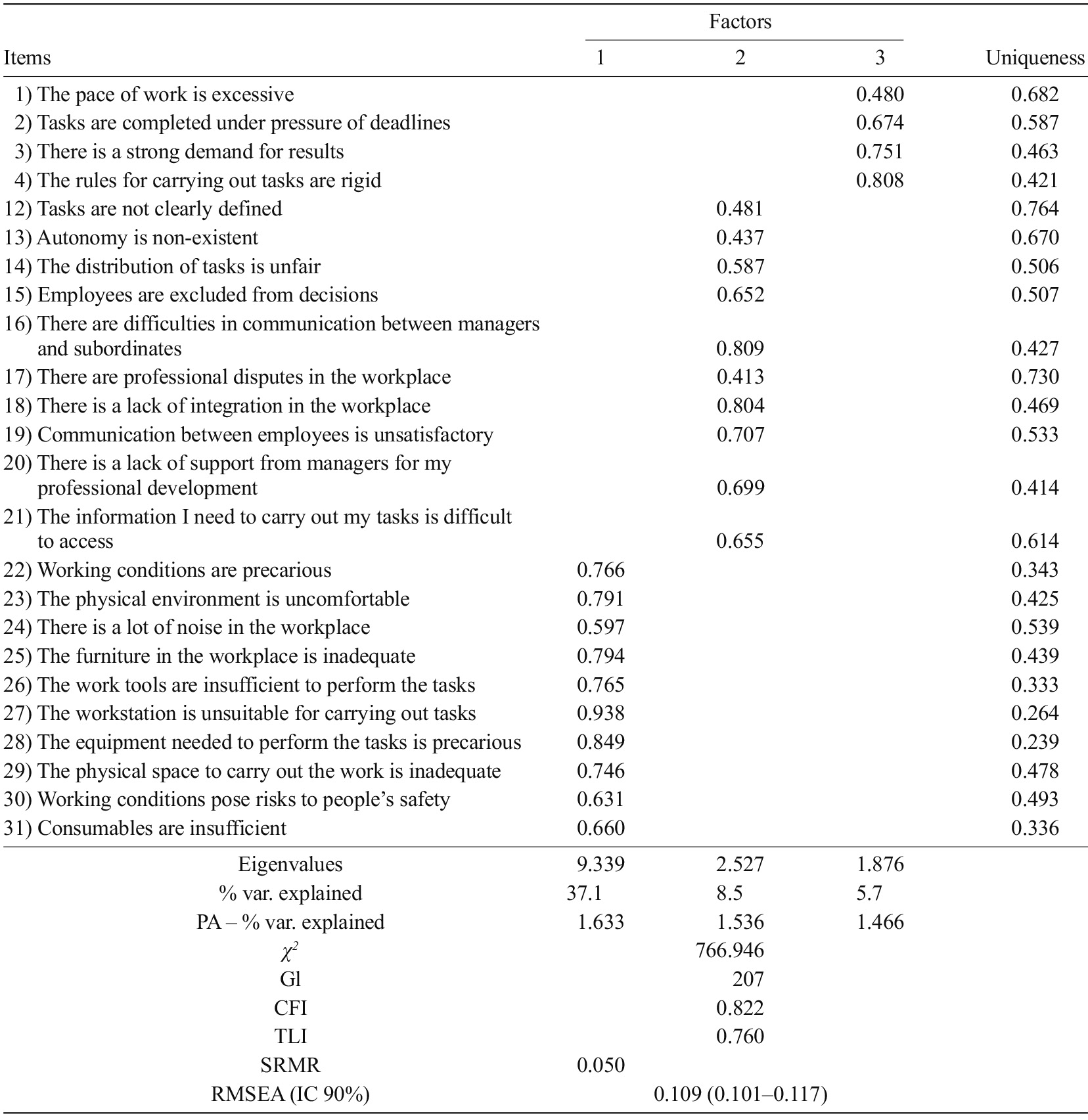
The parallel analysis suggested retaining up to three factors, but the RMSEA of 0.109 (90% CI: 0.101 - 0.117) indicates a reasonable fit, and the SRMR of 0.050 suggests an acceptable standardized root mean square residual. The TLI and CFI are 0.760 and 0.822, respectively, indicating an acceptable fit (Table 1), although there are opportunities for improvement. These indices allow for a critical evaluation of the EFA model’s performance, highlighting areas for potential refinement, which may be further investigated in a CFA.
Confirmatory factor analysis
This research aimed to conduct CFAs to compare the exploratory three-dimensional model with respect to its absolute, parsimony, and comparative fit indices. The CFA revealed excellent fit indices, with the following results: χ²(276) = 3049.792; CFI = 1.00; TLI = 0.99; SRMR = 0.059; and RMSEA (90% CI) = 0.000 (0.000 - 0.000) (Table 2).
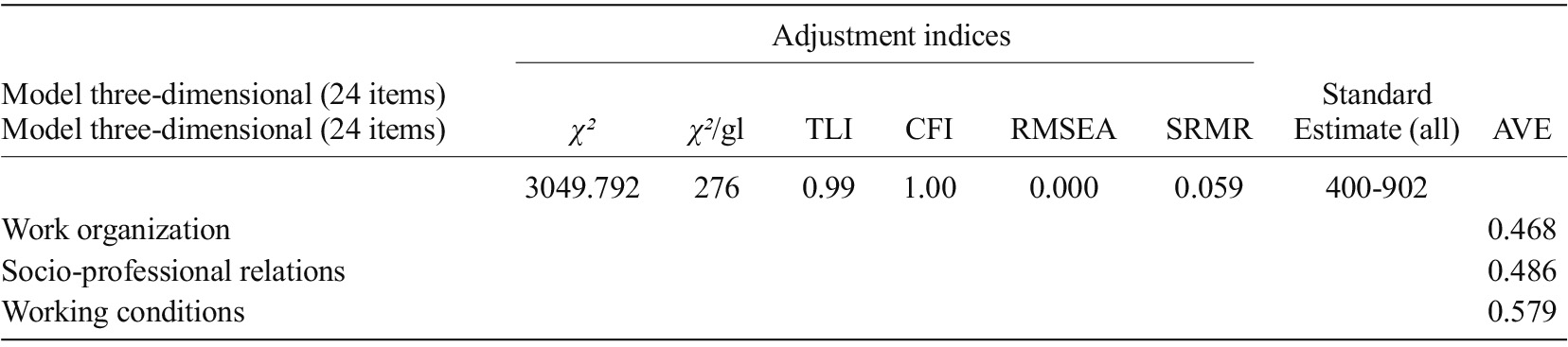
The standardized factor loadings ranged from 0.400 to 0.902, showing strong relationships between the observed variables and their respective latent factors, all of which were statistically significant (p < 0.001). The Working Conditions factor had an AVE of 0.579, indicating satisfactory convergent validity. On the other hand, the Work Organization (0.468) and Socioprofessional Relations (0.486) factors showed values slightly below the recommended level (Table 2).
The indicators for each factor showed factor loadings predominantly above 0.50, suggesting a strong relationship between the observed variables and their respective constructs. Item CT1, with a loading of 0.16, had low representativeness and was kept in the model to preserve the theoretical relevance of the Work Organization factor. The model also included measurement errors associated with each observed variable, reflecting the variance not explained by the latent factors. Overall, the factor structure was well identified, with adequate loadings and correlations that support the interdependence between the factors without compromising their conceptual distinction (Figure 1).
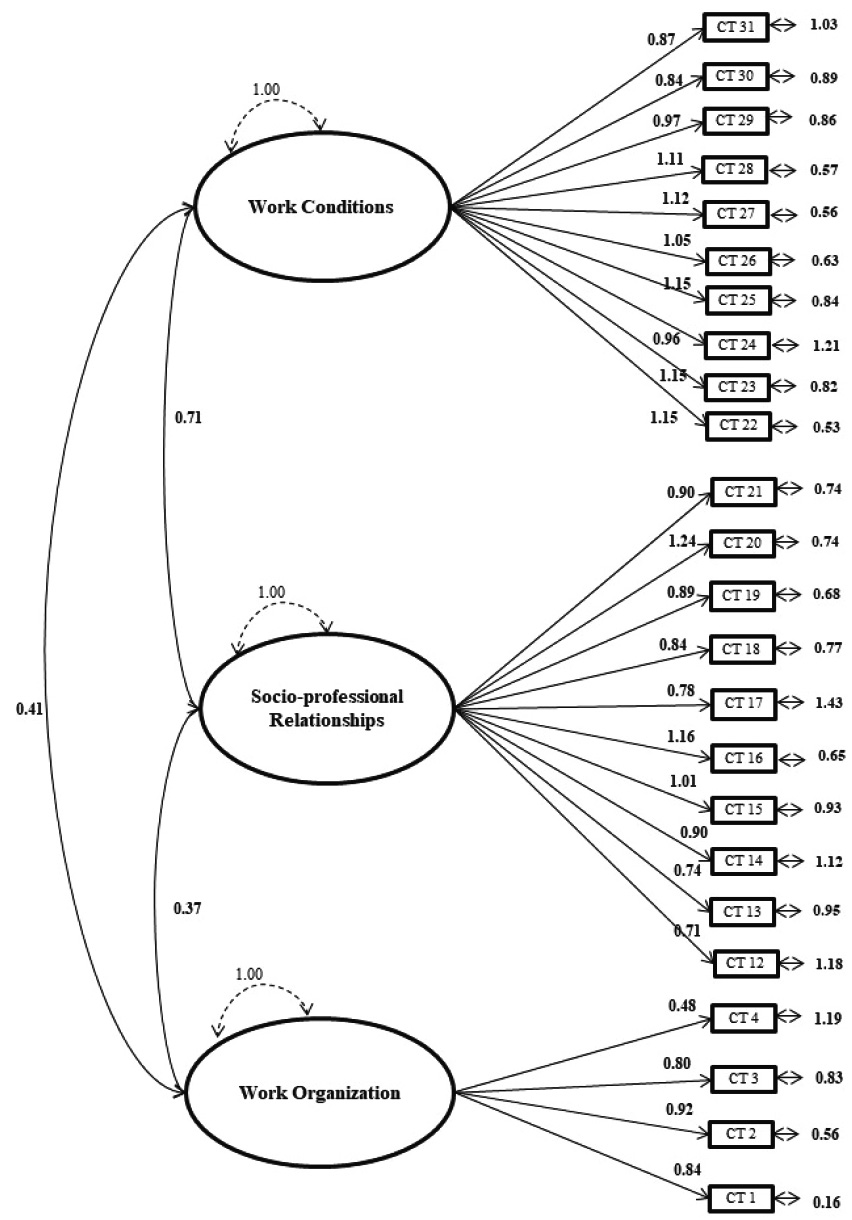
Figure 1 Factors and factor loadings from the confirmatory factor analysis of the Work Context Assessment Scale
Table 3 shows the distribution and reliability of the three factors analyzed. The Work Organization factor shows moderate asymmetry and kurtosis close to normal, with low residual errors, indicating good accuracy and reliability. The Socioprofessional Relations factor shows a symmetrical distribution and moderate dispersion, accompanied by excellent reliability and low residual errors. The Working Conditions factor shows a tendency for responses to be concentrated in low values and flatter distributions, maintaining good precision in measurements.
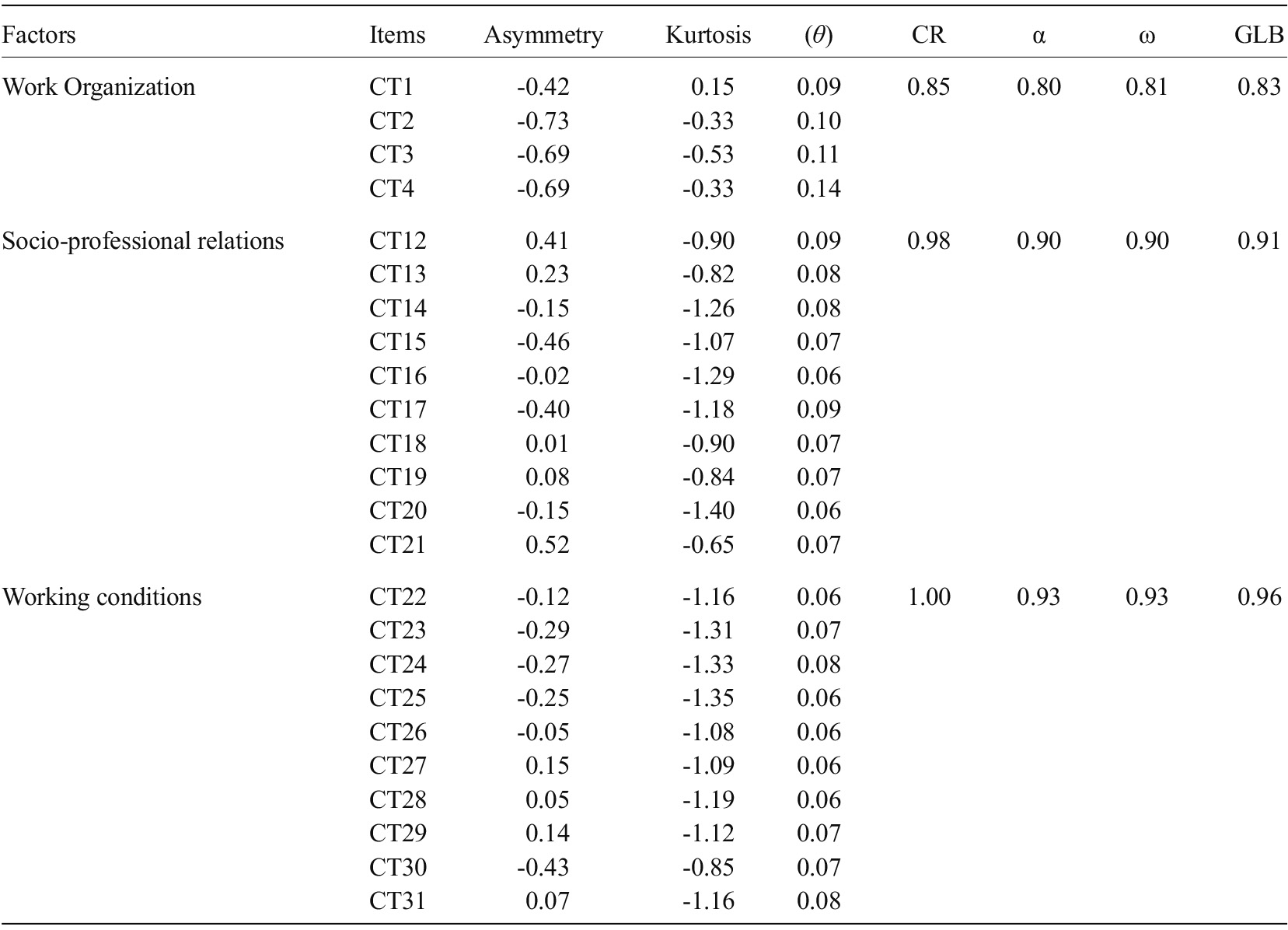
Work Organization shows good reliability, with a CR of 0.85, Cronbach’s Alpha of 0.80 and McDonald’s Omega of 0.81. Socio-professional Relationships has high internal consistency (CR of 0.98, Alpha of 0.90, Omega of 0.90), but the CR of 1.00 suggests a possible adjustment problem. Working Conditions also has high reliability (CR of 1.00, Alpha of 0.93, Omega of 0.93), but the CR indicates a possible failure to adjust the model (Table 3).
Given the robustness of the three-dimensional model and its theoretical suitability, it was important to investigate whether this structure remains consistent between different groups. To do this, we carried out the Multigroup Confirmatory Factor Analysis (MCFA), checking the factor invariance of the scale between the male and female groups. This procedure makes it possible to assess whether the dimensions of the construct are measured in an equivalent way in the two groups, guaranteeing the comparative validity of the instrument. The analysis followed a hierarchical model, starting with configural invariance and moving on to metric and scalar invariance (Table 4).
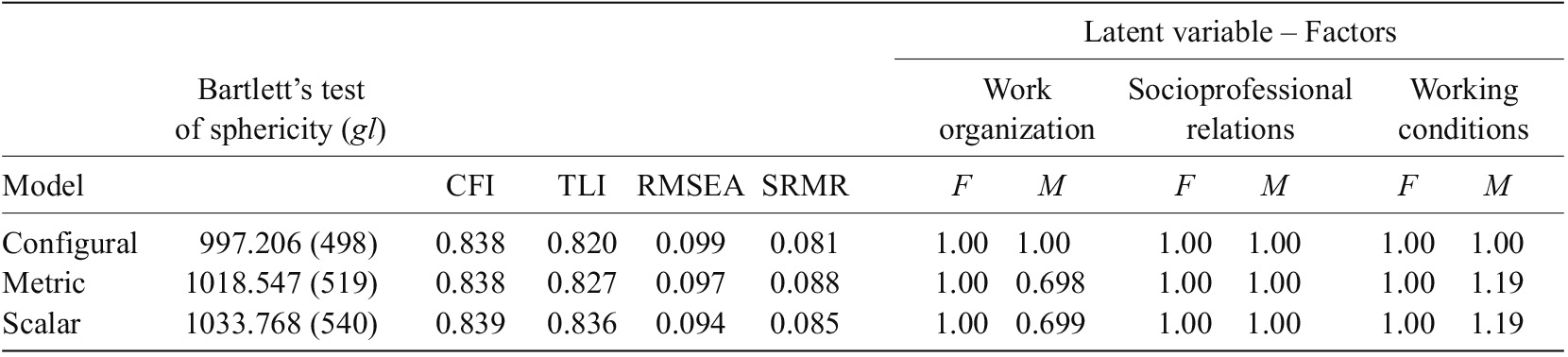
Bartlett’s test of sphericity showed high values for the three models, confirming the suitability of the MCFA by indicating that the correlation matrix differs significantly from an identity matrix. The fit indices indicate a moderate model, with CFI ranging from 0.838 to 0.839, TLI between 0.820 and 0.836, RMSEA between 0.094 and 0.099 and SRMR between 0.081 and 0.088. In the metric and scalar model, there was a variation in the factor loading of the Work Organization factor in the male group (λ = 0.698 and λ = 0.699, respectively), suggesting possible differences in the perception of this factor between the groups (Table 4). Thus, although the general structure of the model is maintained, the factor averages may not be directly comparable.
Discussion
The validation process of the EACT for emergency contexts involved rigorous methodological procedures to assess its psychometric parameters, focusing on creating a robust and valid theoretical model. The exclusion of items followed criteria for reliability, representativeness, and factorial load, ensuring a theoretically sound and statistically consistent model. Initially, Harman’s test was applied to detect common method bias. The analysis indicated that a single factor explained 32.4% of the data variance, below the critical threshold of 50%, suggesting the absence of significant bias (Kock et al., 2021).
The EACT proved to be a reliable tool for investigating work in emergency care contexts, presenting a three-dimensional structure composed of 24 items in the EFA. This solution was later subjected to CFA, which corroborated the 24-item model, indicating a good fit, as the factors explained the data variance.
However, fit indices should not be considered in isolation when deciding on factor retention (Brown, 2015). In such cases, PA plays a crucial role in identifying item exclusions, reducing the likelihood of overestimating retention, a common issue in factorial studies (Damásio, 2012). PA indicated the retention of up to three factors, corroborating previous findings that also identified a three-dimensional structure (Anchieta et al., 2011; Cunha et al., 2024; Ferreira & Mendes, 2003, 2008; Mendes & Ferreira, 2007).
The “Working Conditions” factor showed a satisfactory AVE value, indicating adequate convergent validity. On the other hand, the “Work Organization” and “Socio-Professional Relations” factors presented values slightly below the recommended level, which may suggest that some of the variance captured is still influenced by error or that the items do not have a sufficiently strong correlation with the constructo (Hair et al., 2009; Valentini & Damásio, 2016).
Although all factors presented adequate reliability (CR > 0.85), the “Working Conditions” factor had a CR = 1.00, suggesting potential inconsistencies in the model, such as excessive factor loadings. This requires further analysis to ensure data accuracy. Adjustments to this factor could strengthen the model and ensure that all dimensions are correctly represented (Kalkbrenner, 2023; Valentini & Damásio, 2016).
The invariance analysis of the EACT, conducted through MCFA, showed that the scale is equivalent for both groups, although differences in perception may arise due to the type of work, particularly in Work Organization in mobile pre-hospital care. Although men and women work together, the demands and nature of the work present distinct challenges, affecting perceptions of work organization in different ways. This result highlights the importance of a careful interpretation of metric and scalar invariance results.
It is worth noting that Work Organization occupies a central position in the scale structure, as it addresses the relationship between prescribed and real work, a theme widely discussed in the fields of Activity Ergonomics and Work Psychodynamics (Araujo & Oliveira, 2019; Lancman et al., 2021).
Therefore, it is necessary to revisit this dimension, possibly incorporating new items that better capture the specificities of work in emergency contexts, such as SAMU (Maciel et al., 2022; Medeiros-Costa et al., 2023). Although Work Organization was identified as the most prominent dimension in previous validations (Anchieta et al., 2011; Ferreira & Mendes, 2003, 2008; Mendes & Ferreira, 2007) and, more recently, in the adaptation of the scale for remote teaching work (Cunha et al., 2024), in this study, it emerged as the most diffuse factor.
The analysis revealed that most women in the sample worked in nursing, while men were mostly ambulance drivers. This suggests that differences in the perception of work organization are more related to the specificities of the roles than to gender. Since nurses and drivers face distinct realities in SAMU, their perceptions of autonomy, task division, and organizational demands tend to differ. This factor may explain the lower latent variance among men and the weaker correlations of this factor with the others in the male group (Araújo et al., 2023; Luchtemberg & Pires, 2015).
A more accurate analysis could have considered job position as the criterion for multigroup analysis, instead of gender. However, the study’s sample did not allow testing of invariance between different SAMU job positions, which could offer a more detailed view of the differences in the perception of work organization.
Another limitation refers to the change in data collection methods between research phases. The transition from face-to-face to online formats may have introduced differences in the samples, as remote data collection tends to reach participants with greater familiarity with technology or more availability to respond to the questionnaire. This may have affected the response rate and the interpretation of the questionnaires, compromising the comparability between the two data sets.
Although the sample is representative of some states, the lack of broader representation, especially in less populated or disadvantaged areas, limits the generalizability of the results to SAMU units facing specific challenges related to infrastructure and resources. Future studies should seek to include more diverse samples to reflect regional variables and their implications for working conditions and socio-professional relations (Malvestio & Sousa, 2022).
Moreover, the study did not address regional variations that may impact working conditions. Given Brazil’s diversity, it is important to explore these differences to understand how they affect SAMU professionals’ perceptions, particularly in relation to work organization and institutional support.
It is essential to conduct more studies to identify the best factorial solution and expand the use of MCFA to include other professional categories within the SUS, especially in emergency care. This will allow for a more accurate assessment in heterogeneous groups (Damásio, 2013). It is also important to establish correlations between the EACT and other instruments to achieve convergent validation (Freitas & Damásio, 2017; Hair et al., 2009). Additionally, analyzing inequalities in work, including factors such as gender, race, ethnicity, and other forms of discrimination, is crucial to improving the safety, well-being of professionals, and the quality of emergency services in SUS (Araujo & Oliveira, 2019; Carvalho et al., 2020; Maciel et al., 2022).
The application of the EACT results can serve as a foundation for the formulation of more effective public policies, focusing on improving the pre-hospital services provided to the population. By encompassing aspects such as work organization, socio-professional relations, and working conditions, the EACT highlights the challenges faced by SAMU professionals. This approach offers valuable insights for SUS managers and health policymakers, guiding interventions to improve work processes. The consistency of the EACT’s factorial structure also facilitates its application in future research, particularly in epidemiological studies.

