




 Português (pdf)
 Artigo em XML
 Referências do artigo
 Tradução automática
 Enviar este artigo por email
 Citado por SciELO
  Similares em
SciELO
Similares em
SciELO 
 Permalink

Introduction
Stress can be seen as a set of factors capable of destabilizing human functioning in the short or long term (McLoughlin et al., 2021). In sports, the negative effects of stress on athletes, such as suffering injuries, being hindered by referees, disappointing someone, or the possibility of not performing to the level expected, have been more widely studied, and research has shown that they can have an impact on athletes’ functioning (Arnold et al., 2017; Didymus & Fletcher, 2017). In addition, the way athletes react to stress has a strong impact on how they adapt to the demands of competition (Doron & Martinent, 2017; Gomes, 2014; Gomes et al., 2022; Lazarus, 2000b; Neil et al., 2016; Nicholls & Levy, 2016; Tamminen et al., 2014, 2018; Turner & Jones, 2014).
Despite the important efforts to comprehend the sources and effects of stress in athletes’ wellbeing and performance, some other variables must also be analyzed to better understand how athletes feel and react to sports. One such variable is cognitive appraisal that refers to the “process of categorizing an encounter, and its various facets, with respect to its significance for wellbeing” (Lazarus & Folkman, 1984, p. 31). In simple words, cognitive appraisal is the process of evaluating if a specific demand represents a threat to the person’s well-being or, on the contrary, if it represents a challenge to the person due to the feeling of having the necessary resources to meet the demands of the stressor. The development of Lazarus’ transactional model (1991, 2000a; Lazarus & Folkman, 1984) emphasized the importance of studying adaptation to stress in sports, highlighting the dynamic and longitudinal nature of a process in which cognitive appraisal assumes a central role (Didymus & Jones, 2021; Lazarus, 2000b). Given the relevance of cognitive appraisal in the context of adaptation to stress, this study followed similar research that used critical incident analysis (O’Driscoll & Cooper, 1996) based on critical incident methodology (see Flanagan, 1954; Viergever, 2019) to analyze the stressors, the coping and emotional responses of the individual, and the consequences of those responses. Although there are not many studies using critical incident analysis for studies with stress in athletes (Morais et al., 2025), it has been used in very distinct areas, as is the case of occupational stress (Stadin et al., 2020), sports management (Velasco & Jorda, 2020), and sports coaches (Nichol et al., 2021); thus, this technique can be adequate to analyze stress in sports due the evidence that sports is a very demanding context for athletes and includes very distinct sources of stress (Gomes et al., 2022; Lazarus, 2000b; Neil et al., 2016; Nicholls & Levy, 2016), making critical incident analysis a useful tool to understand in more detail the specific stressors that athletes face during their careers. In our study, we used critical incident analysis from a quantitative perspective to study the relationships between stress, cognitive appraisal, emotions, coping strategies, and coping effectiveness in the sports context. Specifically, stress was understood and measured in terms of intensity (i.e., the level of stress that athletes felt regarding a specific stressor); cognitive appraisal was understood as the process of evaluating the specific stressor (see the above definition), emotions were understood as “conscious or unconscious cognitively appraised responses to an event that elicit a cascade of response tendencies manifested across loosely coupled response systems, such as subjective experience, facial expression, cognitive processing and physiological changes” Fredrickson (2001, p. 218), as well as behavioral changes (i.e., e.g., action tendencies) (Russell, 2003); coping was understood as the “process of constantly change cognitive and behavioral efforts to manage specific external and/or internal demands or conflicts appraised as taxing or exceeding the resources of the person” (Lazarus & Folkman, 1984, p. 141); and coping effectiveness was understood as the person perception of whether coping strategies are successful in relieving negative responses to stressors (Lazarus, 1999). All the data about these dimensions were collected 24 to 48 hours before the next competition (e.g., critical event) done by the participants in our study and they were asked to report the level of stress of competition (namely the possibility of not achieving the desired performance in the next competition), how they evaluated the competition (cognitive appraisal), the emotions they felt regarding the competition (emotions), how they would cope with the possibility of not achieving the desired performance in the competition (coping), and how competent they felt regarding their potential strategies to cope with the possibility of not achieving the desired performance in the competition (coping effectiveness). Then, we analyzed how cognitive appraisal (as an independent variable) related to stress, emotions, coping strategies, and coping effectiveness (as a dependent variable), testing the pivotal value of cognitive appraisal in the athlete’s adaptation to a stressful event related to the next competition. In order to augment the possibility of the competition being potentially stressful to athletes, we collected data near the end of the sports season, where athletes were exposed to competitions that decided the final positions in the championship, and we also increased the perception of potential stress by asking athletes to think about a negative scenario regarding not achieving the desired performance in the competition. This is an important contribution to the literature, as we study the set of variables involved in adaptation to sports stress (e.g., the stressful event, the cognitive appraisal of the event, the emotions regarding the competition, the coping strategies to deal with the demands of competitions, and corresponded coping effectiveness). Also important, this study adopts a naturalistic perspective by collecting data in specific competitive moments where stress is expected to be present in the daily functioning of the athletes. In our study, the cognitive appraisal was analyzed in terms of threat perception (i.e., the extent to which the athletes feel that the sports activity is disturbing and negative for their personal wellbeing), challenge perception (i.e., the extent to which the athletes feel the sports activity is stimulating and exciting for their personal wellbeing) that are both part of primary cognitive appraisal. Literature in sports indicates that threat perception is mainly related to negative emotions, and challenge perception is mainly associated with positive emotions and the attribution of a more beneficial effect to emotions in general (Cerin et al., 2000; Meijen et al., 2020; Skinner & Brewer, 2004). In terms of secondary cognitive appraisal, we analyzed the coping perception (i.e., the extent to which the athletes feel they have the necessary skills to deal with the problem) and the control perception (i.e., the extent to which the athletes feel they have personal power to manage the situation) (Gomes, 2014; Lazarus, 1991, 1999). Research has shown that coping and control perceptions are more associated with positive emotions, as well as the attribution of a more positive effect of emotions on performance (Gomes, 2014; Gomes et al., 2022; Nicholls et al., 2014). Despite these interesting findings in the literature, our study improves actual knowledge by assuming an integrated view of stress adaptation by considering the complex relations of stress, cognitive appraisal, emotions, coping strategies, and coping effectiveness. In fact, there is still a long way to go to build an integrated view of how athletes adapt to stress (e.g., Doron & Martinent, 2017; Nicholls et al., 2014; Wong et al., 2015), as most studies have studied the adaptation to stress in sports by analyzing the different factors separately. For example, there are studies on stress and coping (e.g., Harwood et al., 2019; Thelwell et al., 2007), cognitive appraisal and emotions (e.g., Neil et al., 2016; Skinner & Brewer, 2004), cognitive appraisal and coping (e.g., Anshel et al., 2012; Dugdale et al., 2002), emotions and coping (e.g., Nicholls & Levy, 2016), or on coping and coping effectiveness (e.g., Nieuwenhuys et al., 2011). However, less evidence exists for studies analyzing stress, cognitive appraisal, emotions, and coping in an integrated way. With regards to emotions, in addition to studying the intensity of emotions, it is also important to analyze the potential benefits or detriments that emotions can have on sports performance, usually referred to as the direction of emotions (González-Garcia et al., 2020; Hanton et al., 2008). In this way, this study considered both the intensity and direction of emotions.
On the other hand, coping is the ability to eliminate or mitigate the negative impact caused by stressors (Lazarus, 1991, 1999). With regard to the classification of coping, despite the existence of various categorizations (for a review of the subject, see Skinner et al., 2003), we have opted to use dimensions that come from the distinction between strategies focused on problem-solving (e.g., active coping), which consists of active or passive efforts to change the stressful situation, and strategies focused on emotional regulation, centered on managing the emotional disturbance caused by the situation (e.g., mood, religion) (e.g., Lazarus & Folkman, 1984). A third category refers to emotional support, relating to seeking social support or support from others (Tamminen et al., 2018). In our study, we included a broad measure of coping strategies capturing all these dimensions of how athletes can deal with sports stress (i.e., “not achieving the desired performance in the next competition”). In addition, our study also included a measure of coping effectiveness because it is important to determine whether strategies successfully relieve negative responses to stressors (Lazarus, 1999). The data indicates that this dimension is associated with higher performance in elite athletes (Dugdale et al., 2002; Nieuwenhuys et al., 2011) and, conversely, ineffective use of coping has been associated with lower performance and dropping out of sports (Thelwell et al., 2007).
Considering these aspects, the main aim of this study is to analyze how athletes adapt to a stressful situation, taking cognitive appraisal as a central dimension (Gomes, 2014; Gomes et al., 2022; Jones et al., 2009; Lazarus, 1999; Meijen et al., 2020). In this way, our study can contribute to the literature by addressing the topic of cognitive appraisal as the central element of adaptation to stress, as proposed by several theoretical models dedicated to studying how individuals evaluate and react to stressful events (see, for example, Arnold et al., 2017; Gomes, 2014; Jones et al., 2009; Lazarus, 1999; Skinner & Brewer, 2004). In simple words, if it is demonstrated that cognitive appraisal is a pivotal element of stress adaptation, then theoretical models can progress by demonstrating how are processed the relations between cognitive appraisal and other important variables of adaptation to stress (as is the case of emotions and coping).
In sum, in our study, it was hypothesized that athletes with more positive patterns of cognitive appraisal (i.e., higher values in the challenge, coping, and control perceptions and lower values in the threat perception) will assume more positive experiences in terms of stress, emotions, coping strategies, and coping effectiveness compared to athletes that assume less positive patterns of cognitive appraisal (i.e., lower values in the challenge, coping, and control perceptions and higher values in the threat perception).
Method
Participants
The sample consisted of 383 athletes, 229 males (59.8%) and 154 females (40.2%), aged between 14 and 37 (M = 22.85; SD = 5.35). The inclusion of athletes aged under 18 was because they were part of senior teams. Athletes from four sports were considered: (a) swimming (n = 105; 27.4%), (b) athletics (n = 52; 13.6%), (c) handball (n = 125; 32.6%) and (d) volleyball (n = 101; 26.4%), divided into individual (n = 157; 41%) and team (n = 226; 59%) sports. The years of sports practice ranged from 3 to 27 years (M = 11.65; SD = 4.93). The majority of athletes (n = 234; 61.1%) were competing for national titles; 129 athletes (33.7%) were part of teams competing to stay in the main national championships, and 20 athletes (5.3%) were competing in European or world championships. Most of the athletes (n = 275 athletes; 71.8%) had national titles or records, while 108 (28.2%) had local titles or no titles at all. More than half of the athletes had already represented the national team (n = 210; 54.9%), with an average of 16.5 international caps (SD = 33.7).
Instruments
Demographic Questionnaire. This instrument was developed for this study and evaluated personal (e.g., sex, age) and sport (e.g., type of sport practiced by the athletes, years of sports practice, level of competition, sports records, representation of national team) variables of the athletes.
Primary and Secondary Cognitive Appraisal Scale (PSCAS) (Gomes & Teixeira, 2016). The PCAS evaluated primary and secondary cognitive appraisal being used for this study the anticipatory-specific version asking athletes to think about the next competition when answering this instrument. Primary cognitive appraisal included two dimensions: (a) challenge perception (3 items, α = .61 for this study): the extent to which competition is perceived as positive and stimulating for the athletes’ abilities and (b) threat perception (3 items, α = .64 for this study): the extent to which competition is perceived as negative and threatening to the athletes’ abilities. In the secondary cognitive appraisal, two dimensions were also evaluated: (c) coping perception (3 items, α = .84 for this study): the extent to which the athletes feel they have the ability to cope with the competitive demands, and (d) control perception (3 items, α = .86 for this study): the extent to which the athletes feel they have personal power in the face of the demands of competition. The scale items were answered on a seven-point Likert scale (e.g., 1 = Is not threatening to me; 7 = Is very threatening to me), and the scores for each dimension were calculated by averaging the items for each dimension. Higher scores mean higher levels in each cognitive appraisal dimension. The confirmatory factor analysis for this study gave positive indications for the expected factor structure (χ 2 = 165.850 (48 g.l.), p < .001; RMSEA = .080, 90% C.I. [.067; .094]; CFI = .928; NFI = .903; TLI = .901).
Sport Emotion Questionnaire (SEQ) (Jones et al., 2005; Translation by Gomes et al., 2022). This instrument was applied in an anticipatory-specific version asking athletes to think about five subjective feelings related to the next competition: (a) anxiety (5 items; α = . 86 for this study), (b) dejection (5 items; α = .88 for this study), (c) anger (4 items; α = .69 for this study), (d) excitement (4 items; α = .86 for this study), and (e) happiness (4 items; α = .93 for this study). The items were answered on a five-point Likert scale (0 = Not at all; 4 = Extremely) and the scores for each emotion were calculated by averaging the items for each emotion. Thus, higher values mean a higher intensity of the emotion in question. The confirmatory factor analysis for this study gave positive indications for the expected factor structure (χ 2 = 459.744 [198 g.l.], p < .001; RMSEA = .059, 90% C.I. [.052; .066]; CFI = .948; NFI = .913; TLI = .939). For the purpose of this study, the direction of emotions was also assessed, which refers to the facilitating or debilitating effects attributed by athletes to emotions regarding the next competition. Thus, a seven-point Likert scale was introduced for each item in the instrument (-3 = Very negative; 0 = Indifferent; +3 = Very positive). The following reliability values were found: (a) anxiety (α = .80 for this study), (b) dejection (α = .91 for this study), (d) anger (α = .72 for this study), (c) excitement (α = .88 for this study), and (e) happiness (α = .87 for this study). Thus, this instrument was applied in two versions (intensity and directions), asking athletes to think about their emotions regarding the next competition.
Reduced Coping Inventory (Coping-R) (Gomes, 2013). For the purpose of this study, athletes were first asked to indicate the Overall Stress Level caused by a stressful situation, defined as “not achieving the desired performance in the next competition”, answering on a five-point Likert scale (1 = Low stress; 5 = High stress). Next, it was applied the anticipatory-specific version of the Coping-R being asked to athletes to rate on a five-point Likert scale (1 = I will never use it; 5 = I will use it often) the use of four coping strategies to cope with the stressful situation in the next competition: (a) active coping (4 items, α = .81 for this study), (b) emotional support (4 items, α = .90 for this study), (c) humor (4 items, α = .83 for this study), and (d) denial (4 items, α = .65 for this study). These four dimensions integrate strategies centered on the problem (active coping), active emotional regulation (humor), passive emotional regulation (denial), and social support (emotional support), following indications in the literature (Carver & Scheier, 1994; Endler & Parker, 1990; Nicholls et al., 2014; Tamminen et al., 2018). Due the fact that the instrument was first used in this study, the structure of the instrument was tested with separate samples of this study with exploratory factor analysis, having obtained acceptable values (KMO = .89; Bartlett’s test =12526.7, g.l. = 1326, p = < .001; variance explained = 68. 7%) and confirmatory factor analysis which also showed acceptable results (χ 2 = 197.064 (98 g.l.), p < .001; RMSEA = .051, 90% C.I. [.041; .062]; CFI = .960; NFI = .925; TLI = .952; CMIN = 2.011). All factor loadings of tems were above 0.40, which may be considered acceptable (Clark & Watson, 1995).
Coping Effectiveness (CE) (Gomes et al., 2013). This instrument included one item to evaluate how athletes perceive the use of coping strategies in the face of the stressful situation described in the Coping-R, following similar instructions of literature to evaluate the effectiveness of coping (Dugdale et al., 2002). The effectiveness of the coping strategies was evaluated by formulating a single item, ranging from 0% (Not at all effective) to 100% (Completely effective), with the answer given on a Likert-type scale (intervals of 10 percentage points). The score results from the value attributed by the athlete, with higher scores signifying higher effectiveness in the use of coping strategies.
Procedure
This study was initially approved by the Ethics Committee of the University of Minho (CEUM 026/2014). Although we used a convenience sample for this sample, we tried to guarantee some conditions for integrating the participants in this study: (a) participants should be included in teams that had important competitive goals yet to achieve in the final stages of the sports season (i.e., they were competing for being national champions or to avoid being relegated to a secondary competitive season), and (b) we tried to equilibrate, as much as possible, the sample in terms of sex and type of sports because these variables seem important in the way athletes respond to stress (Dugdale et al., 2002; Hanton et al., 2008; Nieuwenhuys et al., 2011). Prior to data collection, authorization was sought from the team managers and coaches. The athletes were then informed about the nature of the study and their intended collaboration. Then, the evaluation protocol was applied to athletes within 24 to 48 hours of the next competition and the selected competitions included the final stage of the sports season, where athletes were competing for the final classifications of their championships or were included in the knockout stages of national cups (this option tried to guarantee that all athletes were exposed to highest levels of stress in terms of sports performance). There was a participation rate of 92.3%, which equates to receiving and validating 383 of the 415 protocols distributed. All the athletes signed an informed consent form. Underage athletes were also provided with a request for authorization from their parents or guardians.
Results
Data analysis
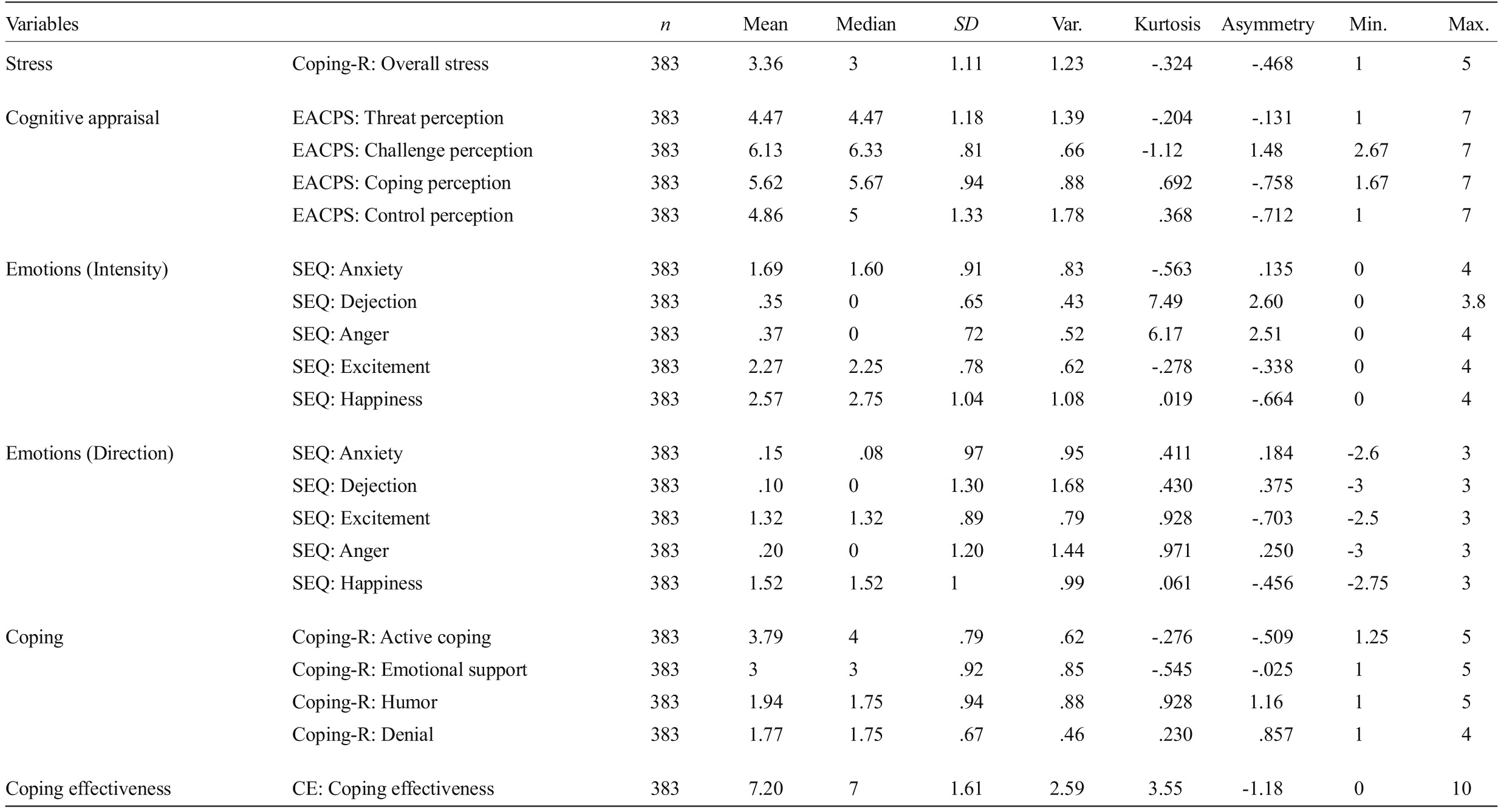
The data of this study was analyzed using IBM SPSS Statistics (version 25.0) and the confirmatory analysis of the instruments was done using IBM SPSS AMOS (version 25.0). In the first step of data analysis, it was calculated descriptive statistics to obtain the mean, standard deviation, asymmetry, and kurtosis for the study variables in order to analyze central tendencies, variability, and distribution of the data (Table 1). This first step was important to check the normality of the data, which is a prerequisite for the validity of the other parametric tests used in this study. Also important, all the instruments were analyzed in terms of factorial validity to evaluate the construct validity (see the section of instruments of this study). Finally, univariate and multivariate analyses of variance were performed to test the hypothesis of this study (i.e., differences between athletes in terms of emotions, coping strategies, and coping effectiveness according to their patterns of cognitive appraisal).
Descriptive analysis
Table 1 includes the mean values and dispersion of the variables in relation to overall stress level (i.e., “not achieving the desired performance in the next competition”), cognitive appraisal, emotions, coping, and coping effectiveness (see Table 1). Also important, skewness and kurtosis were analyzed, and no severe deviations from normality were found.
Sports adaptation: Constituting the groups of cognitive appraisal
The differences in psychological factors (overall stress, emotions intensity and direction, coping, and coping effectiveness) according to cognitive appraisal were analyzed using multivariate analyses of variance (two-way MANCOVA) for multidimensional instruments and univariate analyses of variance for unidimensional instruments (one-way ANCOVA). The assumptions of normality for the application of these tests were verified.
Comparison groups were established for each of the four types of cognitive appraisal, based on the median values, using the decimal values if necessary for cases where there were ties in the participants’ scores. A distinction was made between the groups with the highest (n = 195; 50.9%) and lowest (n = 188; 49.1%) threat perceptions; the highest (n = 211; 55.1%) and lowest (n = 172; 44.9%) challenge perceptions; the highest (n = 185; 48.3%) and lowest (n = 198; 51.7%) coping perceptions, and the highest (n = 220; 57.4%) and lowest (n = 163; 42.6%) control perceptions. The analysis was carried out taking into account the differences in the dependent variables (e.g., overall stress, emotions intensity and direction, coping, and coping effectiveness), analyzing the interactive and main effects on the primary and secondary cognitive appraisals, controlling as covariates the effects of personal and sports variables (e.g., sex, age, and type of sport) that had significant correlations with the psychological variables of this study. The strategy of analysis was the same for primary and secondary cognitive appraisal, by first analyzing the interactive effects (threat and challenge perceptions in conjunction and coping and control perceptions in conjunction) and then analyzing the main effects for each dimension of cognitive appraisal, always controlling the covariate effects.
Sports adaptation: Differences according to primary cognitive appraisal
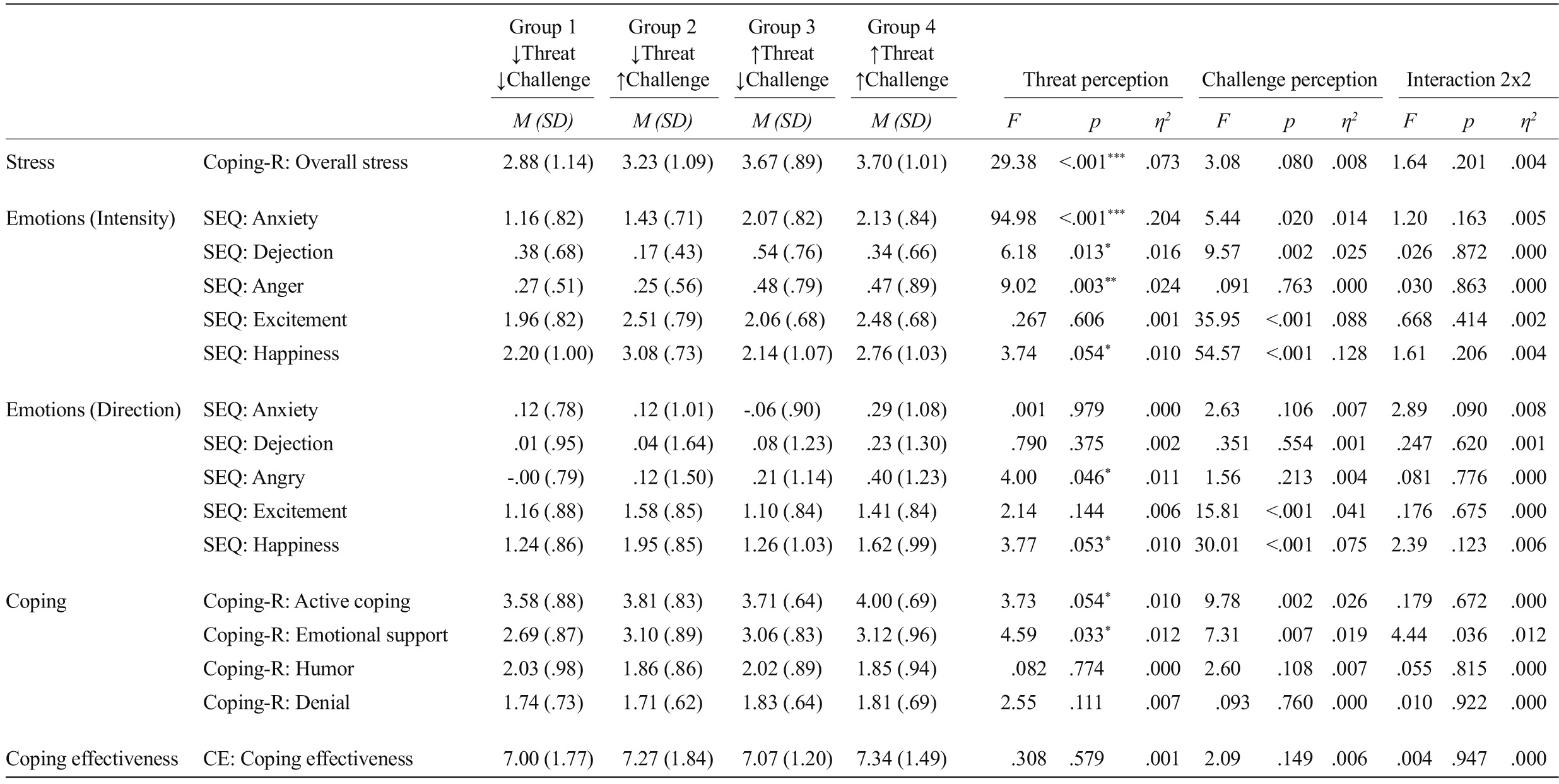
Regarding the primary cognitive appraisal, it was not found an interactive effect between the threat and challenge perceptions on overall stress (Wilks’ λ = 1.75, F(1,377) = 1.64, p = .201, η 2 = .004). However, it was observed one main effect showing that athletes with a higher threat perception (M = 3.68; SD = 0.97; n = 193) experienced higher levels of overall stress, compared with athletes with lower threat perception (M = 3.04; SD = 1.13; n = 185).
For the intensity of emotions, the multivariate test result was not significant (Wilks’ λ = .99, F(5,367) = .55, p = .720, η 2 = .010). However, it was observed main effects for threat and challenge perceptions. Regarding threat perception, athletes with higher threat perception experienced higher levels of anxiety (M = 2.11; SD = 0.83; n = 193), dejection (M = 0.41; SD = 0.70; n = 193), and anger (M = 0.48; SD = 0.85; n = 193) and lower levels of happiness (M = 2.33; SD = 0.71; n = 193), compared to athletes with lower threat perception that experienced lower levels of anxiety (M = 1.28; SD = 0.78; n = 185), dejection (M = 0.28; SD = 0.59; n = 185), and anger (M = 0.26; SD = 0.53; n = 185), and higher levels of happiness (M = 2.21; SD = 0.85; n = 185). Regarding challenge perception, athletes with a higher challenge perception experienced higher levels of anxiety (M = 1.85; SD = 0.86; n = 210 ), excitement (M = 2.49; SD = 0.73; n = 210), and happiness (M = 2.89; SD = 0.93; n = 210) and lower levels of dejection (M = 0.27; SD = 0.59; n = 210), compared to athletes with lower challenge perception that experienced lower levels of anxiety (M = 1.52; SD = 0.93; n = 168), excitement (M = 2.00; SD = 0.77; n = 168), and happiness (M = 2.18; SD = 1.03; n = 168) and higher levels of dejection (M = 0.44; SD = 0.72; n = 168).
For to the direction of emotions, the result of the multivariate test was not significant (Wilks’ λ = .98, F(5,367) = 1.17, p = .325, η 2 = .016). However, it was observed main effects for threat and challenge perceptions. Regarding threat perception, athletes with a higher threat perception attributed less benefit to happiness (M = 1.50; SD = 1.02; n = 193) and more benefit to anger (M = 0.33; SD = 1.20; n = 193), compared to athletes with lower threat perception that attributed higher benefit to happiness (M = 1.57; SD = 0.92; n = 185) and less benefit to anger (M = 0.05; SD = 1.17; n = 185). On the other hand, athletes with higher challenge perception attributed higher benefit to excitement (M = 1.48; SD = 0.85; n = 210) and happiness (M = 1.76; SD = 0.95; n = 210), compared to athletes with lower challenge perception that attributed lower benefit to excitement (M = 1.14; SD = 0.86; n = 168) and happiness (M = 1.25; SD = 0.93; n = 168).
As for coping strategies, the result of the multivariate test was not significant (Wilks’ λ = .98, F(4,368) = 1.67, p = .157, η 2 = .018). However, it was found an interactive effect between the threat and challenge perceptions on emotional support, with the group with higher threat and challenge perceptions (n = 126) reporting the intention to use this dimension of coping more regularly than athletes. Besides, it was found main effects showing that athletes with higher threat perception reported higher use of active coping (M = 3.90; SD = 0.69; n = 193) compared to athletes with lower threat perception who reported lower use of active coping (M = 3.60; SD = 0.86; n = 185). Also, it was found main effects showing that athletes with higher challenge perception reported higher use of active coping (M = 3.93; SD = 0.76; n = 210) compared to athletes with lower challenge perception who reported lower use of active coping (M = 3.63; SD = 0.79; n = 168).
As for the effectiveness of coping, it was not found an interactive effect between the threat and challenge perceptions and coping effectiveness (Wilks’ λ = .011, F(1,377) = .004, p = .947, η 2 = .000). Table 2 summarizes all the results for primary cognitive appraisal.
Sports adaptation: Differences according to secondary cognitive appraisal
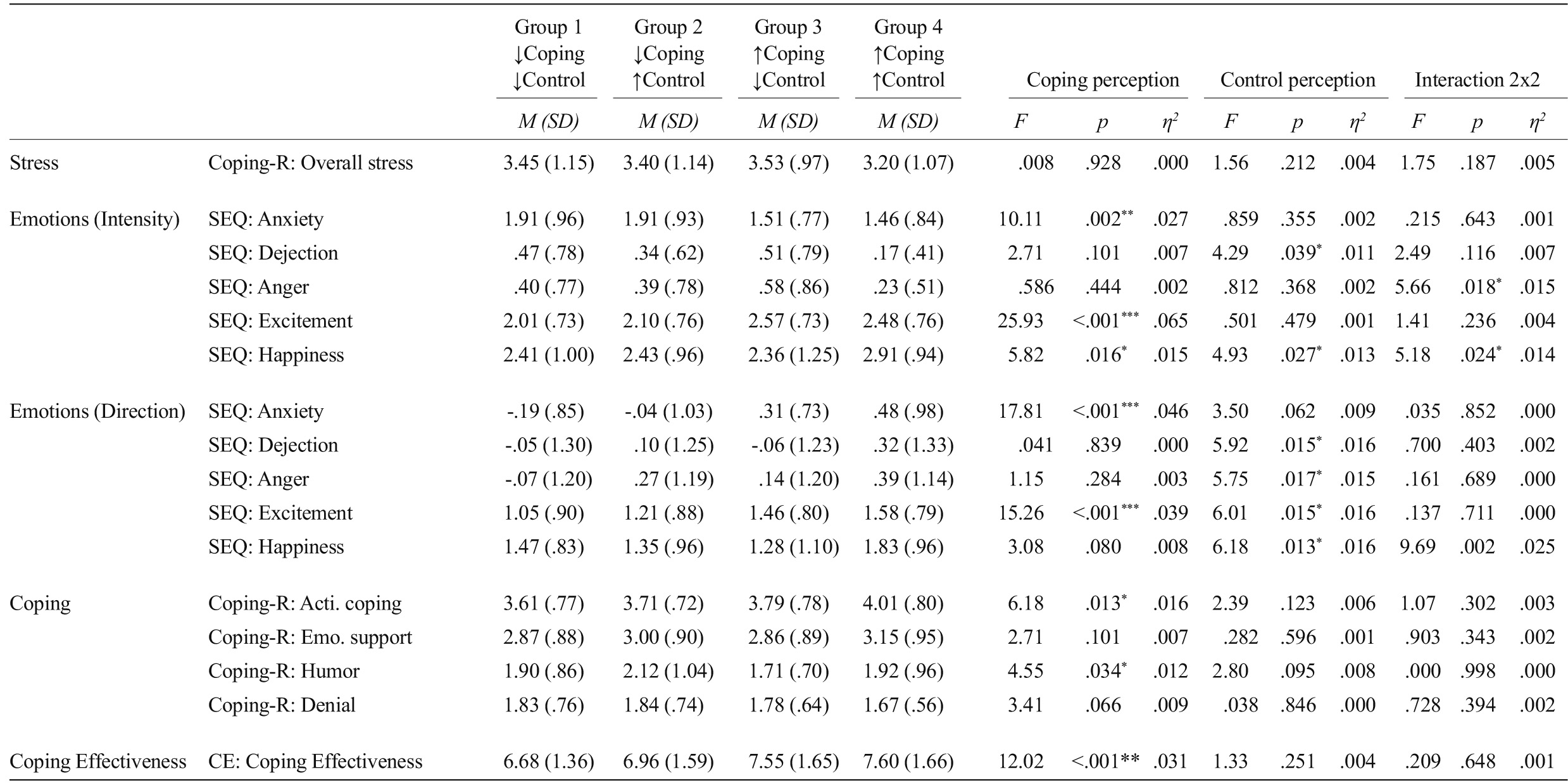
Regarding secondary cognitive appraisal, it was not found an interactive effect between the coping and control perceptions and overall stress (Wilks’ λ = 2.04, F(1,377) = 1.75, p = .187, η 2 = .005).
As for the intensity of emotions, the result of the multivariate test was significant (Wilks’ λ = 0.96, F(5,367) = 3.38, p = .005, η 2 = .044), existing interactive effects between coping and control perceptions on anger and happiness. Specifically, athletes with higher levels of coping perception and lower levels of control perception (n = 59) reported higher intensity of anger. Also, athletes with higher coping and control perceptions (n = 123) reported higher happiness. Besides these interactive effects, it was also found main effects, showing that athletes with lower coping perception exhibited higher anxiety (M = 1.91; SD = 0.94; n = 196) and lower excitement (M = 2.05; SD = 0.75; n = 196) compared to athletes with higher coping perception that exhibited lower anxiety (M = 1.48; SD = 0.81; n = 182) and higher excitement (M = 2.51; SD = 0.75; n = 182). It was also found a main effect for control perception on dejection, showing that athletes with lower control perception exhibited higher dejection (M = 0.48; SD = 0.78; n = 161) compared to athletes with higher control perception that exhibited lower dejection (M = 0.24; SD = 0.52; n = 217).
As for the direction of emotions, the result of the multivariate test was significant (Wilks’ λ = 0.96, F(5,367) = 3.47, p = .004, η 2 = .045), existing interactive effects between coping and control perceptions on happiness. Specifically, athletes with higher levels of coping and control perceptions (n = 123) attributes higher benefit to happiness. Besides these interactive effects, it was also found main effects, showing that athletes with higher coping perception attributed higher benefit to anxiety (M = 0.43; SD = 0.91; n = 182) and excitement (M = 1.54; SD = 0.79; n = 182), compared to athletes with lower coping perception that attributed lower benefit to anxiety (M = -0.12; SD = 0.94; n = 196) and excitement (M = 1.13; SD = 0.89; n = 196). It was also found main effects for control perception on dejection, anger, and excitement. Athletes with higher control perception attributed a more beneficial effect to dejection (M = 0.22; SD = 1.30; n = 217), anger (M = 0.33; SD = 1.16; n = 217), and excitement (M = 1.42; SD = 0.85; n = 217), compared to athletes with lower control perception that attributed lower benefitl to dejection (M = -.06; SD = 1.27; n = 161), anger (M = 0.01; SD = 1.20; n = 161), and excitement (M = 1.20; SD = 0.88; n = 161).
As for coping strategies, the result of the multivariate test was not significant (Wilks’ λ = .99, F(4,368) = .56, p = .690, η 2 = .006). However, it was observed main effects showing that athletes with higher coping perception reported to use more frequently the active coping strategy (M = 3.94; SD = 0.80; n = 182), and use less frequently humor (M = 1.85; SD = 0.89; n = 182) and denial strategies (M = 1.71; SD = 0.59; n = 182), compared to athletes with lower coping perception reported to use less frequently the active coping strategy (M = 3.66; SD = 0.75; n = 196), and use more frequently the humor (M = 2.01; SD = 0.95; n = 196) and denial strategies (M = 1.84; SD = 0.75; n = 196).
As for the effectiveness of coping, it was not found an interactive effect between the coping and control perceptions and coping effectiveness (Wilks’ λ = .507, F(1,377) = .209, p = .648, η 2 = .001). However, it was found a main effect in athletes with higher coping perception, who showed higher expectations of coping effectiveness (M = 7.58; SD = 1.65; n = 182), compared to athletes with lower coping perception (M = 6.81; SD = 1.48; n = 196). Table 3 summarizes all the results for secondary cognitive appraisal.
The covariates demonstrated some significant effects on the dependent variables. The data showed that men (M = 3.20; SD = 1.12; n = 229), compared to women (M = 3.59; SD = 1.05; n = 154), exhibited lower levels of overall stress (Wilks’ λ = 9.61, F(1,377) = 8.99, p = .003, η 2 = .024), reduced happiness (Wilks’ λ =6.61, F(1,382) = 6.76, p = .010, η 2 = .017; men: M = 1.41; SD = 1.02; n = 229; women: M = 1.68; SD = 0.93; n = 154), less frequent use of emotional support (Wilks’ λ = 2.86, F(1,382) = 3.39, p = .067, η 2 = .009; men: M = 2.92; SD = 0.92; n = 229; women: M = 3.10; SD = 0.92; n = 154), higher levels of dejection (Wilks’ λ = 1.38, F(1,382) = 3.23, p = .073, η 2 = .008; men: M = 0.40; SD = 0.69; n = 229; women: M = 0.27; SD = 0.60; n = 154), higher levels of anger (Wilks’ λ = 2.22, F(1,382) = 4.29, p = .039, η 2 = .011; men: M = 0.43; SD = 0.80; n = 229; women: M = 0.28; SD = 0.59; n = 154), perceived anxiety as having a higher facilitative effect (Wilks’ λ = 6.21, F(1,382) = 6.65, p = .010, η 2 = .017; men: M = 0.25; SD = 0.91; n = 229; women: M = -0.01; SD = 1.04; n = 154), relied more on humor (Wilks’ λ = 6.43, F(1,382) = 7.47, p = .007, η 2 = .019; men: M = 2.04; SD = 0.95; n = 229 women: M = 1.78; SD = 0.89; n = 154), relied more on denial (Wilks’ λ = 2.30, F(1,382) = 5.09, p = .025, η 2 = .013; men: M = 1.84; SD = 0.70; n = 229; women: M = 1.68; SD = 0.62; n = 154), and demonstrated higher confidence in the effectiveness of their coping strategies (Wilks’ λ = 16.28, F(1,377) = 6.47, p = .011, η 2 = .017; men: M = 7.40; SD = 1.59; n = 229; women: M = 6.89; SD = 1.60; n = 154).
Additionally, younger athletes experienced higher levels of anxiety (Wilks’ λ = 5.32, F(1,377) = 8.70, p = .003, η 2 =.023; younger athletes: M = 1.81; SD = 0.91; n = 202; older athletes: M = 1.57; SD = 0.90; n = 181), use less active coping (Wilks’ λ = 3.86, F(1,377) = 6.59, p = .011, η 2 = .017; younger athletes: M = 3.62; SD = 0.76; n = 202; older athletes: M = 3.89; SD = 0.75; n = 181) and assumed lower expectations of coping effectiveness (Wilks’ λ = 10.04, F(1,377) = 3.99, p = .047, η 2 = .011; younger athletes: M = 6.96; SD = 1.68; n = 202; older athletes: M = 7.46; SD = 1.48; n = 181).
Regarding the type of sport, the results indicated that individual sport athletes experienced anger (Wilks’ λ = 4.45, F(1,382) = 8.72, p = .003, η 2 = .022; individual sports: M = 0.24; SD = 0.47; n = 157; team sports: M = 0.42; SD = 0.75; n = 226) and dejection (Wilks’ λ = 2.96, F(1,382) = 7.03, p = .008, η 2 = .018; individual sports: M = 0.24; SD = 0.55; n = 157; team sports: M = 0.46; SD = 0.81; n = 226) with lower intensity and they perceived lower benefits from excitement (Wilks’ λ = 4.41, F(1,382) = 5.62, p = .018, η 2 = .015; individual sports: M = 1.19; SD = 0.89; n = 157; team sports: M = 1.41; SD = 0.88; n = 226) and they reported higher frequent use of emotional support (Wilks’ λ = 8.98, F(1,382) = 10.86, p = .001, η 2 = .028; individual sports: M = 3.18; SD = 0.94; n = 157; team sports: M = 2.87; SD = 0.89; n = 226) and humor (Wilks’ λ = 3.48, F(1,382) = 4.00, p = .046, η 2 = .010; individual sports: M = 2.05; SD = 1.00; n = 157; team sports: M = 1.86; SD = 0.89; n = 226).
Discussion
This study analyzed how cognitive appraisal (as the independent variable) relates to overall stress, emotions, coping strategies, and coping effectiveness (as a dependent variable), collecting data prior to a sports competition, putting into consideration to athletes the coping scenario of not achieving the desired performance in the next competition. The data highlighted five key aspects.
Firstly, it was confirmed that challenge perception was associated with positive emotions (e.g., excitement and happiness) while also promoting the attribution of higher benefits of anxiety to performance, in line with the indications in the literature (Martinent et al., 2018; Skinner & Brewer, 2004; Tamminen et al., 2014, 2018; Turner & Jones, 2014). Challenge perception was also linked to strategies more focused on problem-solving and active emotional regulation (Miles et al., 2016).
Secondly, the threat perception profile corresponded to a higher tendency for athletes to experience negative emotions (e.g., dejection and anger), as well as higher levels of stress and anxiety (Gomes et al., 2017; González-Garcia et al., 2020). Regarding the direction of emotions, it was observed that athletes with higher threat perception attributed less benefit to happiness and more benefit to anger which, the latter requires further investigation in future studies; nevertheless, one possible explanation for these results may be related to the fact that some participants included in sports where physical contact is allowed (as is the case of handball) may be using anger as mental strategy to increase their levels of physical and mental activation and, thus, enhance their aggression and commitment prior to competition (Campo et al., 2012). In terms of coping, higher threat perception corresponded to more use of active coping and emotional support.
Thirdly, coping perception was linked to psychological processes more likely to promote positive adaptation, being associated with positive emotions and the perception of higher benefits from negative emotions on performance, more active coping, and higher effectiveness in coping efforts, which is consistent with the literature (Nicholls et al., 2009; Nieuwenhuys et al., 2011). Conversely, the lower coping perception was associated with coping dimensions that literature has shown to be less beneficial for positive adaptation to stress (Doron & Martinent, 2017; Miles et al., 2016; Neil et al., 2016; Nicholls et al., 2014). This result can suggest a “vicious cycle” where athletes who perceive less ability to deal with competition stress may adopt ineffective coping strategies that, in turn, can worsen their stress adaptation, leading to negative emotions and reduced performance.
Fourthly, a positive profile emerged among athletes with higher control, associated with more positive emotions and lower intensity of negative emotions, which were perceived as less likely to negatively affect performance (Gomes et al., 2022; Jones et al., 2009; Meijen et al., 2020; Turner & Jones, 2014). These findings confirm that negative emotions can be interpreted by athletes as not necessary deteriorate performance, an idea supported in the literature (Doron & Martinent, 2017; Hanton et al., 2008; Lazarus, 2000b; Martinent et al., 2018). On the other hand, lower control perception corresponded to higher levels of anger, which is consistent with the literature (Campo et al., 2012; Sofia & Cruz, 2015). This highlights that higher levels of secondary cognitive appraisal tend to augment the possibility of athletes experiencing positive emotions (Cerin et al., 2000; Miles et al., 2016; Skinner & Brewer, 2004).
Fifthly, personal and sports variables, such as sex, age, and type of sport, when controlled as covariates, allowed for better comprehension of the differences found. Differences between men and women are documented in research, particularly regarding coping, which confirms that men less frequently use humor and denial and have higher confidence in the effectiveness of coping (Nieuwenhuys et al., 2011). Men also reported in our study lower overall stress levels and a more debilitating effect of anxiety (Dugdale et al., 2002; Hanton et al., 2008). Similarly, the fact that older athletes use more active coping and show higher confidence in the effectiveness of their coping efforts also finds validation in the literature (Nicholls et al., 2009). Interestingly, the results also suggest that individual sport athletes exhibit less intense negative emotions and attribute higher benefits to excitement and team sports athletes report less frequent use of less functional coping strategies (e.g., emotional support and humor); these results require validation in future studies.
In conclusion, the results of this study highlight the central role of cognitive appraisal in stress adaptation, being evident that threat perception corresponded to more negative emotions and higher levels of challenge, coping, and control perceptions corresponded to more successful adaptation to stress (Doron & Martinent, 2017; Martinent et al., 2018; Meijen et al., 2020; Tamminen et al., 2014, 2018; Turner & Jones, 2014).
Despite the interest of these findings, our study has some limitations. The Cronbach’s alphas for threat perception (α = .64) and denial (α = .65) were below the standards, an issue that was meanwhile not observed in recent studies (Gomes et al., 2022). Also, there is a need to confirm the factor structure of the Coping R because the same sample was divided to perform exploratory and confirmatory factor analysis. Also important, due to the cross-sectional nature of this study, it is not possible to make causal inferences between variables, being important that future studies collect data during the sports season; nevertheless, it should not be forgotten that the methodology used in our study (critical incident analysis) evaluated adaptation to stress into a specific and realistic scenario that could happen to all of the athletes (e.g., “not achieving the desired performance in the next competition”). Finally, in our study, we controlled as covariate three main variables (e.g., sex, age, and type of sport) because they assumed significant correlations with variables under study, but it can happen that other variables may be involved in how athletes adapt to stress, as is the case of years of sports practice, sports titles, among other variables.
In terms of research implications, studies should examine whether more positive adaptation patterns are associated with higher levels of performance (through objective and subjective measures). Another aspect for further exploration concerns how challenge perception might coexist with higher levels of stress and anxiety, which requires more comprehensive clarification. Our data also reinforces some practical implications; the main obvious is to analyze with athletes if they evaluate the competitions more positively or negatively (i.e., higher or lower levels of threat, challenge, coping, and control perceptions) and how they can augment their comprehension about the fact that their patterns of cognitive appraisal relate to their emotions and coping strategies. In this way, training cognitive and emotional strategies to regulate negative patterns of appraisal can indeed facilitate the way athletes respond to the constraints of competitions. Also important, our results suggest the need to intervene with athletes with low coping perception in order to augment their ability to deal with competitive stress, aiming to break the “vicious cycle” between increased perception of stress → low coping perception → increase of negative emotions → decrease of performance (i.e., negative adaptation do stress); one possibility is to train athletes with stress management strategies that help them to restore their perception of control over competitive demands.
In sum, the results from this study demonstrate the value of focusing on cognitive appraisal in athletes’ adaptation to competitive stress.

