




 Inglês (pdf)
 Artigo em XML
 Referências do artigo
 Tradução automática
 Enviar este artigo por email
 Citado por SciELO
  Similares em
SciELO
Similares em
SciELO 
 Permalink

Parenting is one of the most challenging responsibilities, due to the complex and multifaceted actions required to support children’s development, including their health, wellbeing, and socioemotional adjustment (Hoghughi & Long, 2004; Ruppaner et al., 2019). Hence, parents play a key-role in shaping children’s emotional socialization. This includes supporting them to recognize and identify their emotions, as well as guiding them on their emotional regulation (Eisenberg et al., 1998; Fabes et al., 2001; Larson et al., 2002). When parents express reactions of support towards children’s emotions, particularly the negative ones, they help them to better understand what they are feeling, contributing to emotional regulation. In contrast, when parents dismiss or punish children’s emotional expressions, they hinder children’s understanding of their emotional states, leading to greater emotional lability/negativity (Chora et al., 2019; Fabes et al., 2001; Shewark & Blandon, 2015).
Although empirical research has shown that parent’s unsupportive reactions to children’s negative emotions are associated with poorer emotional regulation, whereas supportive reactions are related to emotion regulation (Chora et al., 2019; Eisenberg et al., 1998; Fabes et al., 2001; Leerkes et al., 2009; Shewark & Blandon, 2015), there is a lack of studies examining the mechanisms explaining these associations. Parents’ competence may be an important aspect given its role on parental experiences and child development (Albanese et al., 2019; Diniz et al., 2021; Eldik et al., 2017). Positive parenting reflects greater parental competence, which in turn is reflected in greater ability to emotion regulation in children (Albanese et al., 2019; Morelli et al., 2020). However, the mediating role of parental competence in the association between parents’ reactions to children’s emotions and their emotion regulation is less explored, particularly in school early years (Ziv et al., 2020). This is a critical period since the transition to school is a challenging period for both children and their parents, as children are expected to begin regulating their emotions with grater independence and parents do not always feel capable of supporting them in this process (De Raeymaecker & Dhar, 2022; Hamzallari et al., 2022; Zimmer‑Gembeck et al., 2022). Hence, this study aims to examine the mediating role of parents’ perception of parental competence in the association between parent’s reactions to their children’s negative emotions and emotion regulation during elementary school period.
Parental reactions to children’s negative emotions
Parental responses to children’s emotions play a significant role in shaping their emotional development and socialization. Manage children’s negative emotions (e.g., anger, sadness) is more challenging for both the children and their parents than managing positive ones (Nelson et al., 2009; Ramakrishnan et al., 2019; Ramsden & Hubbard, 2002). The way parents react and assist their children in handling emotions reflects their beliefs about which emotions are acceptable to express and in what context. These reactions can be categorized as supportive or nonsupportive (Eisenberg et al., 1998; Fabes et al., 2002).
There is a common understanding that supportive parental reactions help children to manage their emotional experiences, namely by encouraging emotional expression, and offering strategies that promote children’s comfort and wellbeing (Eisenberg et al., 1998; Ramakrishnan et al., 2019). In contrast, nonsupportive reactions include minimizing children’s emotions or devaluing their emotional response (i.e., parents’ attempts to downplay the situation and related emotions), punishing the children for expressing their emotions, or showing distress in response to their emotions (Eisenberg et al., 1998; Ramakrishnan et al., 2019). These nonsupportive reactions, although they acknowledge children’s negative emotions and aim to help them tolerate and regulate them, reflect an underlying intolerance toward the expression of negative emotion (Jones et al., 2002; Ramakrishnan et al., 2019). Parents who support their children when they express negative emotions help them cope with challenging situations and contribute to better emotional regulation by encouraging children to explore their emotions and their meanings (Eisenberg et al., 1998; Gottman et al., 1996; Jones et al., 2002). In contrast, nonsupportive reactions (i.e., minimization, punishment, distress), as they can limit emotional expression and hinder the development of effective emotion regulation strategies, have been linked to maladaptive emotional strategies in children (Bariola et al., 2011; Jones et al., 2002; Ramakrishnan et al., 2019).
Emotion regulation
Children’s ability to regulate their emotions is a key developmental task, influencing the success to establish social relationships, academic acquisitions and lately mental health (Eisenberg et al., 1998; Robson et al., 2020). Children’s capacity to regulate the occurrence, duration, and internal states of both positive and negative emotions related processes, translates their emotion regulation (Eisenberg & Morris, 2002; Gross & Thompson, 2007). However, emotion regulation is a developmental process occurring over infancy and adolescence, in which parents are essential external sources to help children to understand and modulate their emotional states supporting them to adapt to contextual demands. Thus, children’s emotion regulation happens in the context of their interactions, particularly with their parents. Children who benefit from consistent and positive interactions achieve an autonomous emotion regulation process (Morris et al., 2017; Rutherford et al., 2015).
The tripartite model of emotion regulation (Morris et al., 2007) conceptualizes how children learn to manage their emotions by observing how others, particularly their parents, manage their own emotions and reactions, allowing them to learn how they should react in similar situations. Children also learn by experiencing parenting practices, reflecting how parents respond to their emotions, and finally the overall emotional climate of the family, including parents’ ability to manage challenging situations, reflecting their competence (Bariola et al., 2011; Morris et al., 2007; Ramakrishnan et al., 2019). Parents who show a variety of emotions in the multiple episodes of daily routine will transmit which emotions are more suitable for specific contexts and events, providing multiple skills to children to better understand the adaptative emotions for a specific life event (Bariola et al., 2011; Morris et al., 2007; Ramakrishnan et al., 2019).
Previous work has described how parents’ supportive reactions to children’s emotions acknowledge their emotional expression, allowing them to better identify and respond to specific emotions, which is related to more effective emotion regulation strategies (Bariola et al., 2011; Morris et al., 2017). On the contrary, parents who dismiss or punish children’s emotions may limit their emotional expression, by invalidating their feelings. This can lead to a maladaptive emotional regulation, namely by the fear of emotions, reflecting emotional lability/negativity (Chora et al., 2019; Morris et al., 2017). Still, parents’ ability to understand the children’s needs and to respond them in a contingent way - i.e., parental competence, may play an important role in this association (Albanese et al., 2019; Jones et al., 2002; Morris et al., 2017; Robson et al., 2020).
The mediating role of parental competence
Parental competence translates into parents’ sense of competence to perform parenting tasks, including identifying their child’s needs and responding to them accordingly (Bandura, 1982; Gilmore & Cuskelly, 2009). Parental competence includes two positively correlated dimensions: perceived self-efficacy and satisfaction derived from the parenting role (Ferreira et al., 2011; Ohan et al., 2000).
Parental competence is linked to positive parenting behaviors, reflecting parents’ greater ability to respond to their children’s needs with warmth and responsiveness, which in turn supports the development of children’s self-regulation, particularly in managing emotions (Robson et al., 2020; Gilmore & Cuskelly, 2009). In opposition, parents who lack competence tend to exhibit harsher behaviors toward their children and often withdraw from interactions, which can contribute to difficulties in the development of children’s self-regulatory skills, such as the emotion regulation processes (Albanese et al., 2019; Jones et al., 2002; Robson et al., 2020). Hence, parental competence is a key-aspect for parenting functioning and child development. A growing body of research has described the role of parental competence in various domains of child development, namely children’s emotion regulation (Albanese et al., 2019; Bariola et al., 2011; Morelli et al., 2020). However, parental competence is influenced by multiple aspects related to parenting. For instance, parents may feel challenged in their parenting competence as children grow older, as they become more autonomous and with new reference figures, as happens in early school years. In addition, children may require more parenting support in school-related demands, which may decrease parents’ perception to be effective in their role, particularly among less educated ones (Ferreira et al., 2014; Hamzallari et al., 2022; Zimmer‑Gembeck et al., 2022).
The role of parental competence to parenting and child adjustment has been described in previous reviews (Albanese et al., 2019; De Raeymaecker & Dhar, 2022), but its mediating role is less explored, particularly in the association between parenting behaviors (i.e., reaction to children’s negative emotions) and children’s emotion regulation, which will be sought by the current study. By focusing on these relations, this study contributes to shed light on how parents perception of their reactions and competence on parenting influence their perception of children’s emotion regulations, which can be incorporated into prevention/intervention programs targeting parenting and child development, namely by informing how parents’ skills may enhance children’s abilities to regulate their emotions.
Method
Participants
Parents (129 mothers (74.1%) and 45 fathers; 25.9%) of a child (n = 174) who attend the first cycle of elementary education equally distributed across the four years of education. Children were aged between 5 and 11 years-old (M = 7.89; SD = 1.32), and 50.6% were girls. Most of the parents were married/ cohabiting (81%) and hold a university (53%) or college degree (47%). Parents who reported a significant medical or psychological diagnosis to themselves (e.g., depression) or their children (e.g., autism) were excluded from the study.
Measures
Sociodemographic Questionnaire. A set of e questions was developed by the research team, aiming to collect information about parents (e.g., age, marital status, education) and their child (e.g., age, gender).
Parenting Sense of Competence Scale (Jonhston & Mash, 1998; Portuguese version, Ferreira et al., 2011). It is a 16-items scale assessing parental satisfaction (9 items; e.g., “Being a mother/father makes me feel anxious”; reversed score) and self-efficacy (7 items; e.g., “If there’s someone who can tell when something is wrong with my child, it’s me”) answered on 6-point scale varying from “1 = Strongly disagree” to “6 = Strongly agree”. Mean scores of each dimension were computed and higher scores indicate a higher sense of parenting competence. In the current study acceptable reliability was obtained (α = .73 for satisfaction and α = .69 for self-efficacy).
Coping with Children’s Negative Emotion Scale - short version (Fabes et al., 1990; Portuguese version, Melo, 2005). Evaluates parental responses to children experience and expression of negative emotions through 8 scenarios (from the original 12) representing typical situations in which children may experience distress or negative emotions (e.g., “If my child loses something they really like and reacts by crying, I...”). For each scenario six possible parental reactions, including supportive reactions - i.e., expressive encouragement (e.g., “I tell her/his it’s okay to cry if s/he feels sad”), emotion-focused reactions (e.g., “I distract her/his by talking about happy things”), problem-focused reactions (e.g., “I help her/his think of places s/he hasn’t looked yet”), and unsupportive behaviors - i.e., distress reactions (e.g., “I get upset with s/he for being so careless and then crying about it”), punitive reactions (e.g., “I tell her/his that this is what happens when you’re not careful”), and minimization reactions (e.g., “I tell her/him s/he is exaggerating her/his reaction”). Parents reported their typical reaction to each scenario ranking each option on a 7-point scale ranging from “1 = very unlikely” to “7 = very likely”. Sub-scales for supportive and nonsupportive parental reaction were computed by averaging their respective items and good internal consistency values were obtained (α = .95 for supportive parental reaction and α = .88 for nonsupportive parental reaction).
Emotion Regulation Checklist (Shields & Chichetti, 1997; Portuguese version, Melo et al., 2005). Parents answered to 24-items assessing two dimensions: Emotion Regulation, corresponding socially appropriate emotional expressions (8 items; e.g., “S/he responds positively to friendly or neutral overtures from peers”); and Emotional Lability/Negativity, assesses the child’s mood changes and reactivity to negative emotions (15 items; e.g., “Shows significant mood swings: it is difficult to anticipate the child’s mood because it quickly shifts from positive to negative). Higher scores in which dimension correspond to greater emotion regulation/emotional lability. Parents answered on 4-points scale (“1 = never, 2 = sometimes, 3 = often, 4 = almost always”). In the current study both dimensions presented good internal consistency levels (Emotion Regulation: α = .75; Emotional lability/negativity: α = .88).
Procedures
The study was approved by the University Ethics Committee. The study was later presented to administrative boards of schools to obtain the necessary authorizations for data collection. Schools that agreed to participate shared the study link (created using Qualtrics) through their mailing lists, targeting parents of children enrolled in the 1st to 4th grades of elementary school. The link was also disseminated through social media platforms (Facebook and Instagram). Parents were informed about the study and their procedures and signed a consent form. Parents were invited to individually report about their demographics and a set of measures assessing their perception about: their reactions to children’s negative emotions, parental competence, and children’s emotion regulation. The measures, except for the sociodemographic questionnaire, were presented at random. All procedures were conducted in accordance with ethical standards for research involving human participants.
Data analysis
Data was analyzed using SPSS (version 28; IBM, SPSS Inc., Chicago, IL). Firstly, descriptive and correlational statistics were performed among study variables to ensure their statistical requirements. The variables with significant Pearson correlations (p < .05) were included in the mediation models. Children’s age and parental education were tested as covariates but due to their non-significant correlations with dependent and independent variables they were not included in the mediation. Also, due to the higher proportion of mothers in the sample (74%), parents’ gender was not included as a covariable in the mediation model.
The Macro Process for SPSS model 4 (Hayes, 2018) was used to test the mediation models. The two dimensions of parental reactions to negative emotions (i.e., supportive reactions and unsupportive reactions) were included as independent variables. The dimensions of emotional regulation (i.e., emotional regulation and lability/negativity) were included as the dependent variables. Finally, the dimensions of parental competence (i.e., satisfaction and self-efficacy) were included as the mediators. The indirect effects were tested using bootstrapping with 5.000 samples, and were considered significant when the confidence intervals did not include value zero (Hayes, 2018).
Results
Descriptive and correlational analysis
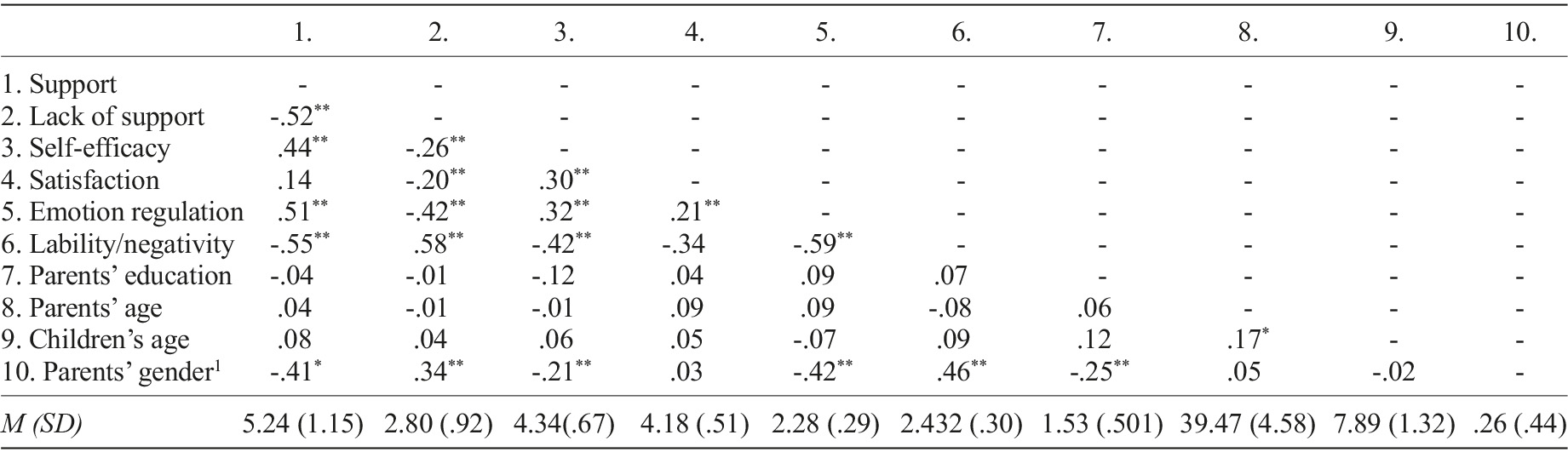
The means and the standard deviations of the studied variables are presented in Table 1, as well as the correlations among them. Parents’ reactions supporting children’s negative emotions were related to children’s greater emotion regulation, parent’s self-efficacy and satisfaction, but lower emotional lability/negativity in children. On the contrary, reactions lacking support were related to lower emotion regulation on children and higher emotional lability/negativity, as well as to lower parental self-efficacy and satisfaction. Concerning parental competence, greater perception of self-efficacy and satisfaction were related to a greater perception of emotion regulation in children and lower perception of their emotional lability/negativity.
Mediation analysis
Mediation analysis were performed to examine the association between parenting reactions of support to children’s negative emotions and children’s emotion regulation, and the mediating role of parental competence. A summary of the significant results is represented in Figure 1.
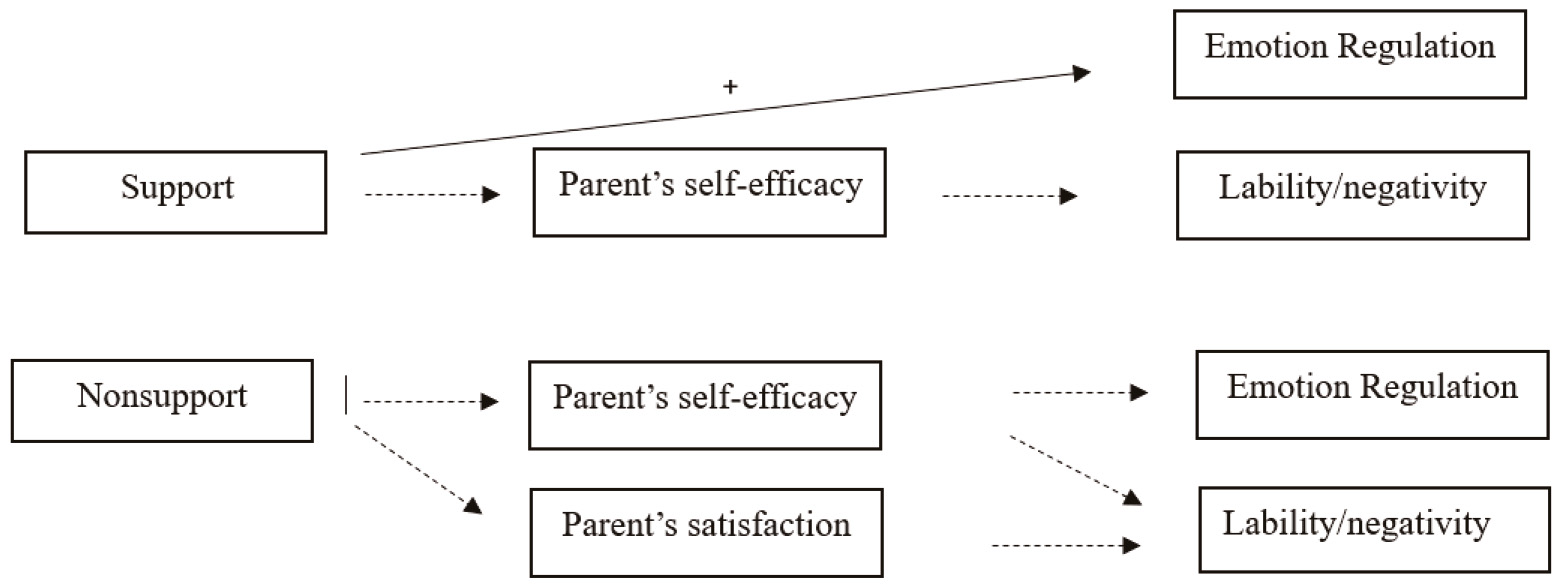
Figure 1 Summary of significant results in the relation between parent’s reactions to child’s negative emotions and children’s emotion regulation abilities and the mediating role of parent’s competence
Significant associations were found between parents’ support and parental self-efficacy (B = .43, SE = .01, t(174) = 6.03, p < .001), but not between parent’s self-efficacy and children’s emotion regulation (B = .12, SE = .08, t(174) = 1.62, p = .11). The mediation analysis revealed a significant direct effect (B = .46, SE = .01, t(174) = 6.21, p < .001), but the mediating role of parent’s self-efficacy was not significant (see Table 2).
Table 2 Total, direct and indirect effects of the associations between parental reactions of support and children’s emotion regulation through parental self-efficacy
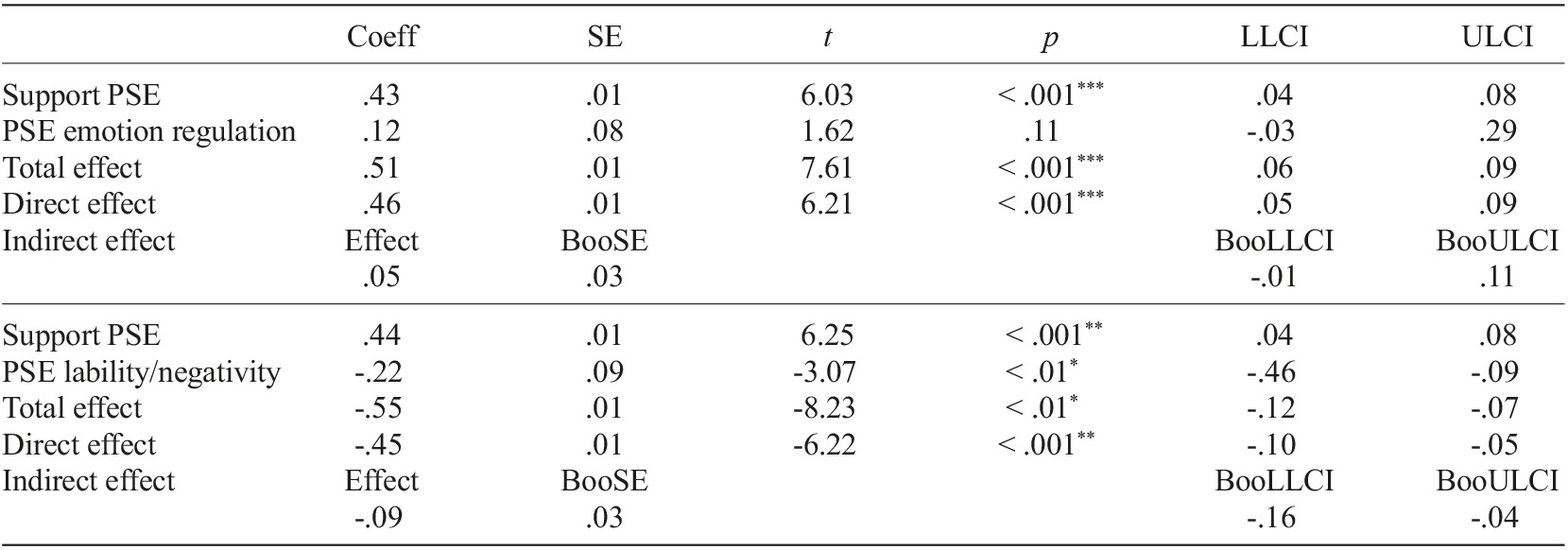
Note. Coeff = Coefficient, SE = Standard Deviation, LLCI = lower limit of the 95% confidence interval, ULCI = upper limit of the confidence interval 95%; Boo = Bootstrap results, PSE = Parental self-efficacy; *p < .01, **p < .001.
The model revealed that 27% of the variance in parents’ supportive reactions to children’s negative emotions was explained by children’s emotion regulation. However, the model examining the association between parent’s support and children’s lability/negativity revealed the mediating role of parental self-efficacy, with both significant direct and indirect effects and explained 34% of the variance (see Table 2).
Concerning the mediating role of parents’ self-efficacy in the association between parents’ lack of support to children’s negative emotions and emotion regulation, a significant indirect effect was obtained both for children’s emotion regulation and lability/negativity, explaining 23% and 41% of the variance, respectively (see Table 3).
Table 3 Total, direct and indirect effects of the associations between parent’s nonsupportive reactions and children’s emotion regulation through parental self-efficacy
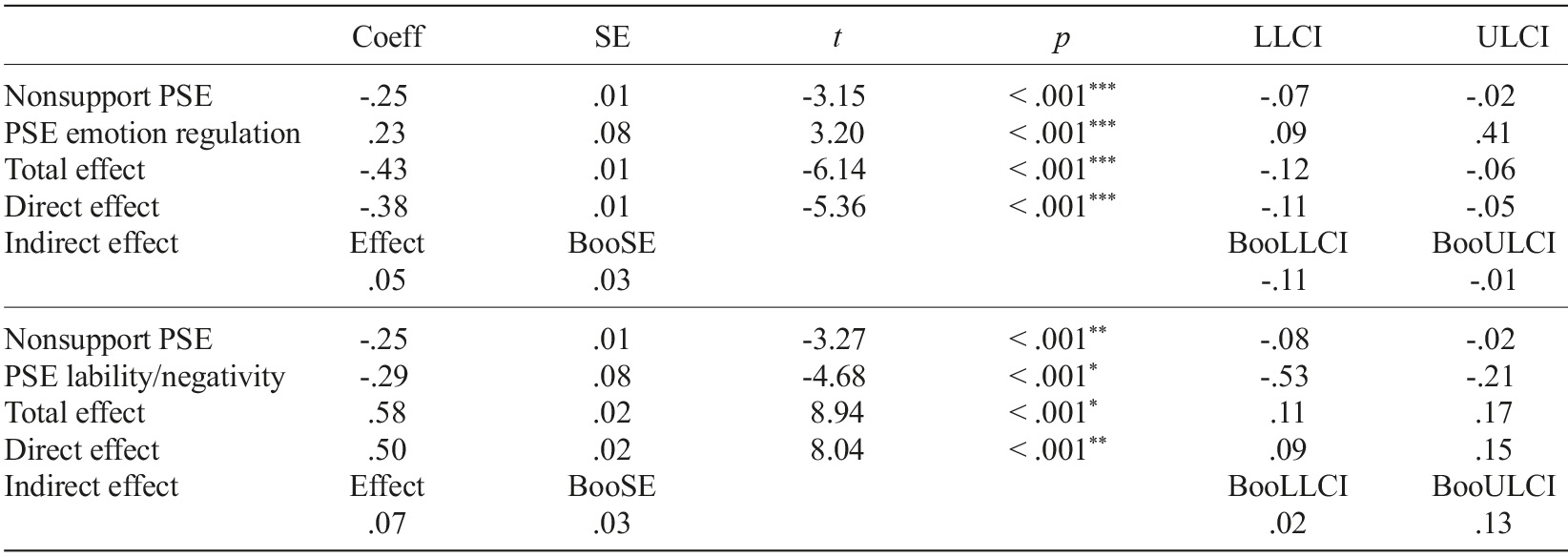
Note. Coeff = Coefficient; SE = Standard Deviation; LLCI = lower limit of the 95% confidence interval, ULCI = upper limit of the confidence interval 95%; Boo = Bootstrap results, PSE = Parental self-efficacy; *p < .01; **p < .001.
Finally, the mediating role of parents’ satisfaction on their role in the association between parent’s lack of support to children’s negative emotions and children’s emotion regulation and lability/negativity was examined. Findings revealed a direct effect in the relation between parents’ lack of support and children’s emotion regulation, but it was not mediated by parents’ satisfaction (Table 4). The model explained 20% of the variance. However, parent’s perception of satisfaction on parenting mediated the association between parents’ lack of support and children’s lability/negativity, explaining 39% of the variance (Table 4).
Table 4 Total, direct and indirect effects of the associations between parents’ nonsupportive reactions and children’s emotion regulation through parental satisfaction
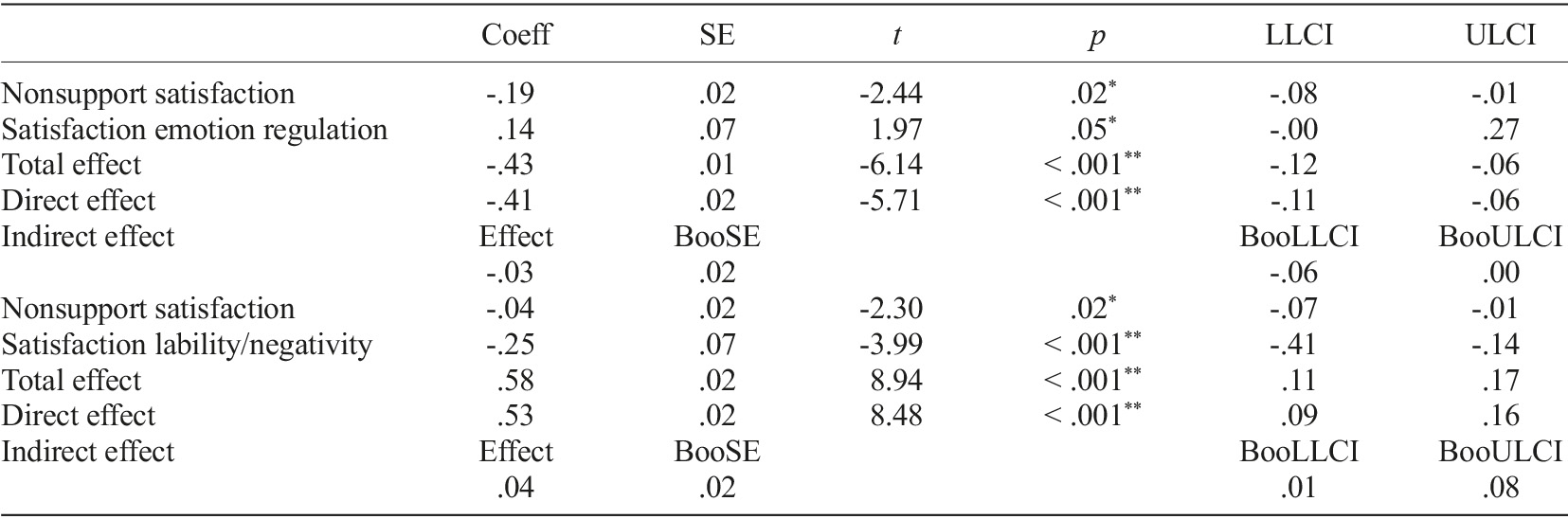
Note. Coeff = Coefficient, SE = Standard Deviation, LLCI = lower limit of the 95% confidence interval, ULCI = upper limit of the confidence interval 95%; Boo = Bootstrap results; *p < .05; **p < .001.
Discussion
Parents’ are responsible for fostering children’s emotional expression, which can be particularly challenging when managing their negative emotions. The way how parents react and manage children’s emotional expression may influence their ability to parents emotion regulation (Eisenberg et al., 1998; Morris et al., 2007). This study contributed to uncover the mediating role of parental competence in the association between parents’ reactions to children’s negative emotions and their emotion regulation. Findings highlighted how parents’ reactions to their children’s emotions are both directly and indirectly related to children’s emotion regulation abilities, with parental competence playing a significant mediating role (Figure 1).
Specifically, parental reactions of support were related to greater emotion regulation and lower lability/negativity in children, whereas nonsupportive reactions were related to greater emotional lability/negativity. These results align with previous studies showing that parents’ ability to help children identify and accept their emotions is critical for their development of effective strategies of emotion regulation (e.g., Eisenberg et al., 1998; Morris et al., 2017). Thus, supportive reactions are essential for helping children learn to identify, understand, and appropriately respond to emotions by acquiring strategies that help them to cope with challenging situations, which is reflected in lower emotional lability and greater emotion regulation (Bariola et al., 2011; Ramakrishnan et al., 2019).
In opposition, nonsupportive reactions were related to lower emotion regulation and greater lability/negative. These associations may suggest that parents who struggle to support their children’s negative emotions may feel overwhelmed by them, lacking skills to their management. Thus, they may choose to dismiss children’s emotions, minimizing the situation, presenting distress reactions, or even punishing their children for expressing negative emotions. Although these reactions differ, they all convey that negative emotions should be avoided and their expression suppressed, limiting children’s opportunities to cope with challenging situations and related (negative) emotions. This inability to cope with emotions was associated with poorer emotion regulation strategies and greater emotional lability or negativity (Chora et al., 2019; Jones et al., 2002; Ramakrishnan et al., 2019).
Overall, these results reflect how the quality of parenting and early relationships is critical for fostering children’s healthy socioemotional development (Bariola et al., 2011; Diniz et al., 2021; Eisenberg et al., 1998; Robson et al., 2020). In this sence, parent’s perception of their ability to manage the challenges related to parenting - i.e., parental sense of competence - played an important mediating role. Our findings revealed that self-eficacy and satisfaction play distinct roles in the association between parent’s reactions to their children’s negative emotions and emotion regulation.
Parental self-efficacy significantly mediated the association between parent’s supportive reactions and children’s lower levels of emotional lability/negativity. This finding suggests that supportive reactions to negative emotions may reflect a greater ability to manage challenges related to parenting, namely those involving the arousal of children’s negative emotions, contributing to reduced emotional lability/negativity in children (Morelli et al., 2020; Robson et al., 2020). Self-efficient parents are more able to face children’s needs with warmth and responsiveness, avoinding children’s distress to manage challenings situations, contributing to more regulated emotional processes (Albanese et al., 2019; Eisenberg et al., 1998; Robson et al., 2020).
On the contrary, parent’s self-efficacy negatively mediated the association between parental nonsupportive reactions and children’s emotion regulation. Nonsupportive reactions to children’s negative emotions involve dismissing their emotions, or responding in a way that suggest they should be suppressed (Eisenberg et al., 1998; Morris et al., 2017; Ramakrishnan et al., 2019). This may reflect parent’s dimished skills to manage challenging parenting tasks - i.e., lower self-efficacy - contributing to children’s difficulties in developing self-regulatory skills and emotion regulation processes, reflected in greater lability/negativity (Albanese et al., 2019; Jones et al., 2002; Robson et al., 2020). Moreover, lower parental satisfaction mediated the association between nonsupportive reactions and children’s greater lability/negativity. This finding may suggest that parents’ inability to offer supportive reactions to children’s emotions is reflected in their lower parental satisfaction, which may compromise the quality of interactions with their children. Hence, children’s emotional expression may be challenged by the limited opportunities to explore and recognize the role of emotions in specific life events, reflecting greater emotional lability/negativity (Albanese et al., 2021; Bariola et al., 2011; Morris et al., 2007; Ramakrishnan et al., 2019).
The findings highlight the importance of parental quality - i.e., ability to respond supportively to children’s negative emotions and parental self-efficacy - in children’s emotional development and adjustment (Albanese et al., 2019; De Raeymaecker & Dhar, 2022; Morris et al., 2017). This is particularly relevant during early school years, when parents are confronted with additional challenges in their role, such as children’s increasing autonomy and the emergence of other influential figures, as well as the need to support children in their school related activities (e.g., homework), requiring additional skills in their role (Hamzallari et al., 2022; Zimmer‑Gembeck et al., 2022). Therefore, findings are important to illuminate how parental competence play a crucial role in children’s emotional adjustment.
Despite the relevance of the findings, some empirical limitations must be acknowledged. Firstly, the reliance on self-reported measures may have biased our results. Moreover, the lack of external family sources (e.g., teachers) reporting on children’s emotion regulation introduces additional bias, as parents’ reports may be influenced by their relationship with their children (e.g., Bjork et al., 2024). Secondly, the lack of a greater proportion of fathers in the study limited our understanding of how fathers and mothers may differently contribute to their children’s emotion regulation (e.g., Shewark & Blandon, 2015; Ziv et al., 2020). Bearing these limitations in mind, future research should make efforts to include multi-informants approach. In the third place, most of our participants were middle-class and intact families, limiting our understanding about how these processes may happen in vulnerable backgrounds and different family arrangements - areas that future studies should examine. Finally, the cross-sectional design of the study limits the ability to interpret findings from a causal perspective. Thus, longitudinal studies are crucial to establish the direction of the associations.
Despite these limitations, findings highlight the importance of parent’s supportive reactions to their children’s negative emotions and their parental self-efficacy in reducing children’s emotional lability/negativity. Therefore, counseling and intervention programs targeting parenting quality and children’s socioemotional development should not disregard the role of parent’s reactions to children’s negative emotions and parental competence.

