




 Inglês (pdf)
 Artigo em XML
 Referências do artigo
 Tradução automática
 Enviar este artigo por email
 Citado por SciELO
  Similares em
SciELO
Similares em
SciELO 
 Permalink
Introduction
Recently, MS employment as construction material in industries’ applications, such as refining crude oil, acid descaling and pickling, petrochemical processes and industrial cleaning, has become a great challenge for corrosion researchers. Corrosion is an Ec process in which a metal surface reacts with the environment, thereby leading to the loss of its material property, due to deterioration. CI utilization is one of the most practical and cost-effective means of protecting metals against corrosion, especially in acidic media 1.
The most efficient and effective inhibitors are inorganic compounds such as nitrite, dichromate, chromate, and organic compounds with heteroatoms (O, P, S and N). A suitable inorganic CI must easily oxidize the metal, to form impermeable layers preventing its direct interaction with ions, thus retarding its dissolution rate in a given corrosive medium. However, most of these compounds have been recently banned, due to the negative effect they have on the environment 2,3.
Therefore, developing novel non-toxic CI from natural sources has been considered of utmost importance. Besides being ecologically acceptable and environmentally friendly, plant products are readily available, renewable and inexpensive, as they may be extracted by a simple procedure. Investigating the corrosion-inhibitive performance of flavonoids, saponins, tannins, pigments, alkaloids, organic dyes and amino acids of plants origin is relevant.
The preference towards developing eco-friendly CI encompasses several pharmaceutical research goals, such as to develop or discover molecules with the required biological performance. Attempts to achieve this aim are strongly driven by the molecular similarity notion, since akin molecules generally tend to perform in a comparable way 4. Drugs are also an ideal replacement for conventional toxic inhibitors, and have been reported widely as effective CI for metals in different corrosive media. Rings of aziridine in mitomycin, cyclopropane in ciprofloxacin, benzene and heterocycles, such as isoxazoles, thiophenes, furans, pyridines and imidazoles are usually found in drugs structures. 5-16.
To enhance inhibitors effectiveness on metal corrosion, extensive research was reported to identify the synergism effects of other chemical additives 17-19. These studies have reported that synergism provides ways of advancing inhibitors performance, decreasing their amounts and expanding their application in corrosive media.
Therefore, the present work reports the inhibitive effect of expired CPM and CAE for MS in a HCl solution.
Materials and methods
Materials preparation
In this study, flat sheets of MS with the composition (wt.%) of 0.05 C, 0.13 Ve, 0.05 Si, 1.13 Mn, 0.85 S, 0.91 P, 0.15 Pb, 0.08 Mo, 0.09 Cu and Fe balance, were used. Upon purchase from a local retailer, the samples were sectioned using an automatic cut-off machine at 2700 rpm, having been mechanically press-cut into coupons of 10 x 10 mm dimensions.
Then, to remove any rust or impurities on the MS samples surfaces, due to natural oxidation processes, they were polished using different grades of silicon carbide paper, degreased, air dried, and stored in moisture-free desiccators, before use.
The corrosive solution of 0.5 M HCl was prepared from 98% analytical grade, supplied by Sigma-Aldrich. To prepare all reagents, distilled water was used.
CAE was cut open, and its liquid was extracted into a small bottle, which was stored at room temperature.
CPM was extracted from a medicinal bottle, and added to the HCl solution via a medical syringe. The drug was purchased as-expired from a pharmacy, since there was no need for a prescription from a doctor, and used as-pure in the experiments. CR and resulting properties of the MS substrate were tested in HCl, with inhibitors various Ct. Table 1 details each of the bath compositions and their parameters. The experiment was carried out at room temperature.
Table 1: Design of experiment for MS in 0.5 M HCl with different Ct of CAE and CPM.
| CAE (mL) | CPM (mL) |
|---|---|
| 0 (control) | 0 (control) |
| 2 | 0 |
| 0 | 2 |
| 2 | 2 |
| 2 | 4 |
| 2 | 6 |
| 2 | 8 |
Ec measurements
Ec experiment was performed using an AUTOLAB potentiostat, with a conventional three-electrode glass cell. MS samples with a 1 cm2 exposed area were used as working electrodes, and graphite rods as counter electrodes. Saturated Ag/Cl silver chloride electrodes were used as reference electrodes, connected with a Luggin capillary. The experiments were carried out in a stagnant aerated solution, at 30 ± 1 ºC. The working electrodes were immersed in the test media, to attain stable OCP. Polarization studies were carried out from cathodic potentials of -250 mV to anodic potentials of +250 mV. The linear Tafel segment of cathodic and anodic curves was extrapolated to Ecorr, to obtain Jcorr. The experiments were conducted thrice for repeatability, and the Ec parameter average value was reported.
Surface morphology
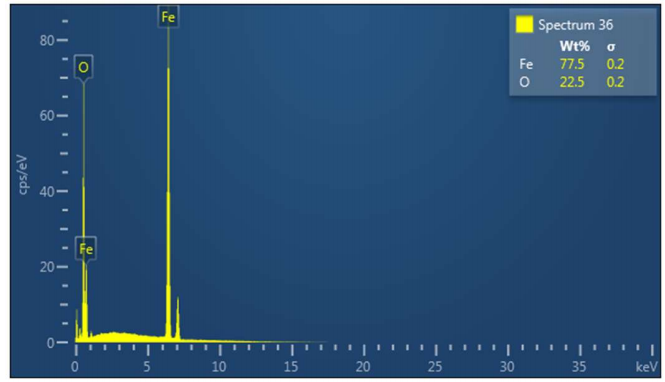
MS surface analyses were conducted with SEM, operated in contact modes, at ambient temperature, via TESCAN VEGA3 SEM. The specimen’s images were recorded in a 0.5 M HCl solution with and without inhibitors various Ct, after the corrosion test. MS samples EDX was performed, to ascertain their composition.
Results and discussion
PDP of MS in a 0.5 M HCl solution with CAE and CPM
OCP measurement
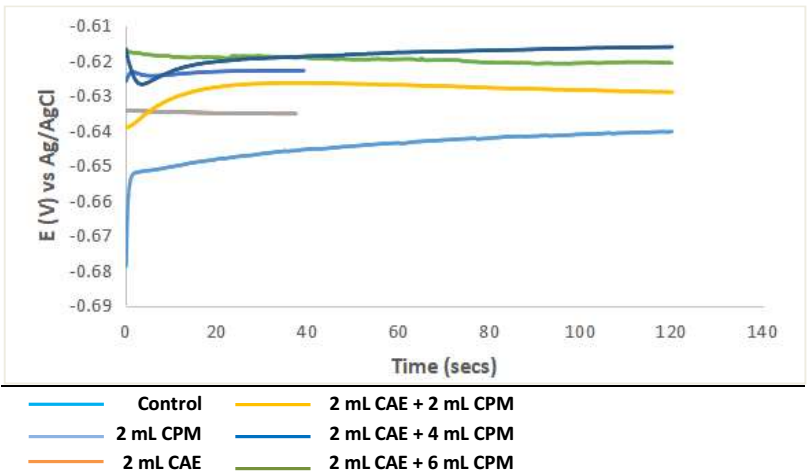
OCP measurement is vital to evaluate various Ec processes. Fig. 1 shows potential (V) against time (s), for MS samples immersed in HCl. 2 mL CAE and 2 mL CPM were separately tested. Then, CPM was tested together with CAE, increasing the drug Ct from 2 to 8 mL. Results (Fig. 1) showed that the samples potential shifted towards positive values. However, at around 40 s, they reached a plateau that changed dramatically. The control sample appeared to have the highest change in value, as expected 20, of which initial and final potentials were -0.68 and -0.64 V, respectively. The sample with a drop-in potential, after 40 s, was the bath with 2 mL CAE and 2 mL CPM.
LSV
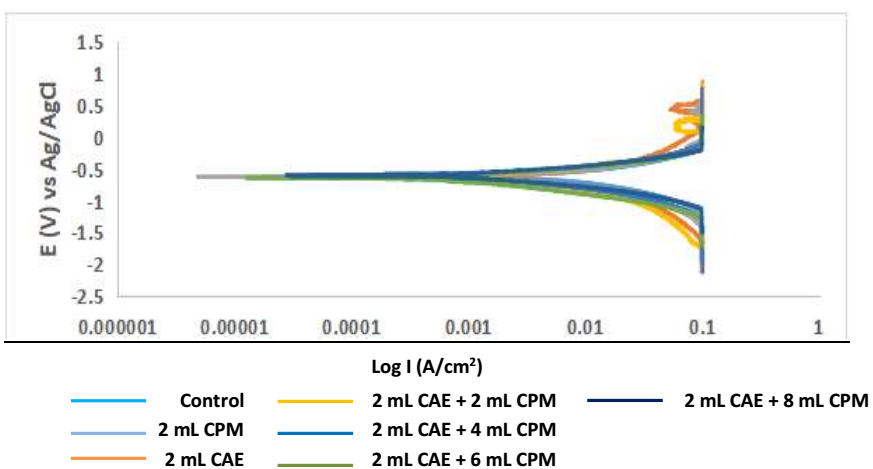
LSV was also recorded with the measured working electrode (MS sample). Fig. 2 shows LSV plot of MS in a HCl solution with CAE and CPM, which were incrementally added and recorded. Similar to OCP measurements, all experiments were carried out at room temperature. The double-sided curve in Fig. 2 shows that the inhibitors affected MS anodic and cathodic parts.
LPR
During the simulation conducted via ANOVA software, to obtain OCP and LSV values, LPR figures were obtained for MS in a 0.5 M HCl solution with CAE and CPM. PDP curves of MS in HCl with various Ct of CAE and CPM are shown in Fig. 2. CAE and CPM affected MS cathodic reduction reactions and anodic dissolution, which means they could be classified as mixed-type inhibitors 21).
Corrosion parameters, such as Ecorr, Jcorr, CR and Rp, deduced from the curves for 0.5 M HCl, are presented in Table 2. The increase in inhibitors Ct decreased Jcorr value.
CAE and CPM addition to the HCl solution did not cause any appreciable shift in Ecorr value, which implies that they were of the mixed type 22,23, and influenced both HER and MS dissolution. Rp obtained values from LPR show an increase from 9.5054 ohm/cm2, for the control solution, to 1176.9 ohm/cm2, for HCl with 2 mL CAE and 8 mL CPM. Maximum IE(%) of 97.87, using Jcorr values, was obtained from eq. 1.
 (1)
(1)
Table 2: LPR values of MS in a 0.5 M HCl solution.
| Samples | Ecorr (V) | Jcorr (µA/cm2) | CR (mm/year) | PR (Ω) | IE(%) |
|---|---|---|---|---|---|
| HCl (control) | -0.61937 | 0.0029515 | 34.296 | 9.5054 | 0 |
| HCl + 2 mL CAE | -0.63438 | 0.00037768 | 4.3886 | 18.277 | 87.20 |
| HCl + 2 mL CPM | -0.62567 | 0.0004998 | 5.8076 | 25.225 | 83.07 |
| HCl + 2 mL CAE + 2 mL CPM | -0.61056 | 0.00042391 | 4.9258 | 33.178 | 85.64 |
| HCl + 2 mLCAE + 4 mL CPM | -0.60261 | 0.0001933 | 2.2461 | 39.495 | 93.45 |
| HCl + 2 mLCAE + 6 mL CPM | -0.65355 | 0.00012402 | 1.4411 | 80.062 | 95.80 |
| HCl + 2 mL CAE + 8 mL CPM | -0.60176 | 6.39E-05 | 0.74206 | 1176.9 | 97.87 |
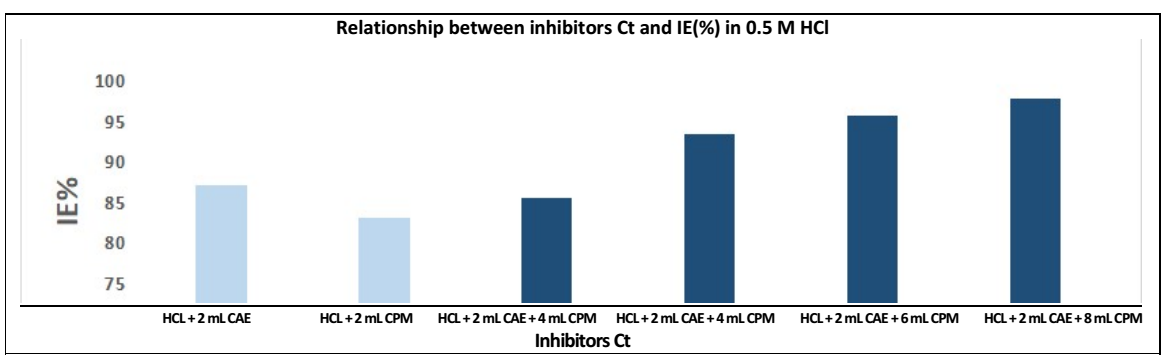
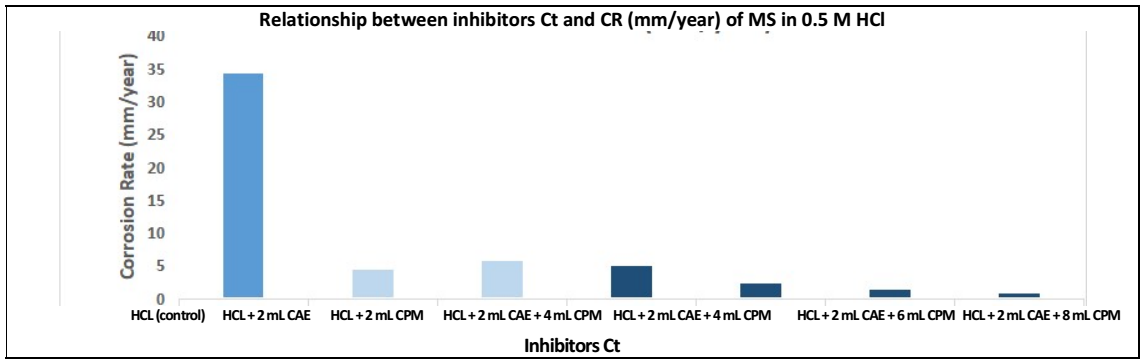
Table 2 shows that Ct of CI in HCl is linearly proportional to their IE(%). From the results, CAE was more efficient than CPM, when separately compared. 2 mL CAE in 0.5 M HCl were 4.2% more efficient than 2 mL CPM. Figs. 3and 4 show the relationship between the inhibitors Ct and IE(%) on MS in HCl solutions. The graphs (Fig. 3) show CR of MS in HCl with and without CAE and CPM.
The uninhibited sample had 34.296 mm/year CR, which drastically decreased with 2 mL CAE, leading to a much slower value of 4.38 mm/year. The inhibitors synergy gave an inverse correlation between Ct and CR. Similar results have been reported elsewhere 14.
Adsorption isotherm study
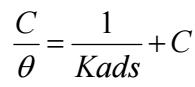
The primary step in most organic CI action in acidic media has been considered to be adsorption at the metal-solution interface. There are various adsorption isotherms, such as Freundlich’s, Langmuir’s, Hill’s, Khan’s, Flory Huggins’s, El-Awardy’s and Frumkin’s. They allow to understand the inhibitor's mechanism during the corrosion process. To comprehend the relationship between the inhibitors CT and SC (θ) in 0.5 M HCl solutions, Langmuir’s adsorption isotherm was utilized in deducing whether there are insoluble complex layers formation on the MS surface that act as barriers between it and HCl: usually termed as physisorption. Langmuir’s adsorption isotherm following eq. 2 was reported.
 (2)
(2)
where θ is SC and C is the inhibitor Ct.
Table 3 shows CAE and CPM adsorption parameters at various Ct, including their SC:  and
and .
.
Table 3: MS adsorption parameters in a 0.5 M HCl solution.
| CAE and CPM Ct | SC (θ) | Ct/SC (θ) | SC (1-θ) |
|---|---|---|---|
| 2 mL CAE + 2 mL CPM | 0.86 | 4.67 | 5.96 |
| 2 mL CAE+ 4 mL CPM | 0.93 | 6.42 | 14.27 |
| 2 mL CAE+ 6 mL CPM | 0.96 | 8.35 | 22.80 |
| 2 mL CAE+ 8 mL CPM | 0.98 |
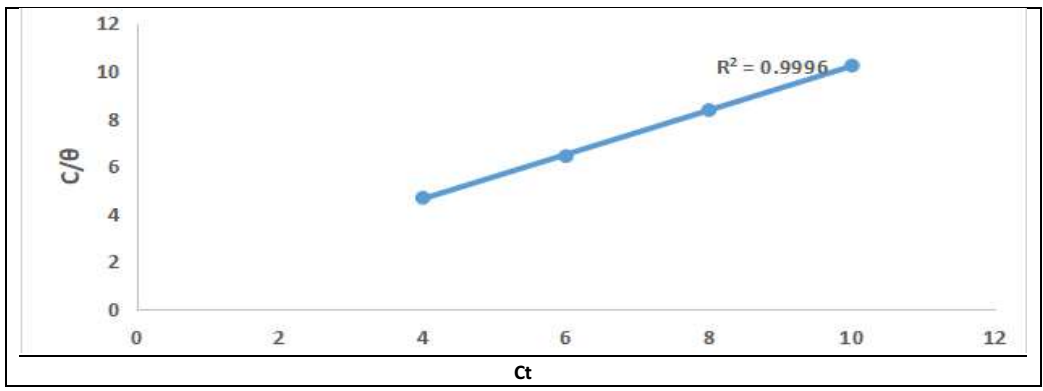
Fig. 5 shows Langmuir’s isotherm for CAE and CPM adsorption onto the MS surface in a 0.5 M HCl solution. The plot shows a linear line, as. It 5 denotes straight lines of Langmuir’s adsorption isotherm plot with a slope of 1.44 and R2 of 0.9996, which was proximate to unity.
SEM/EDX analysis of MS
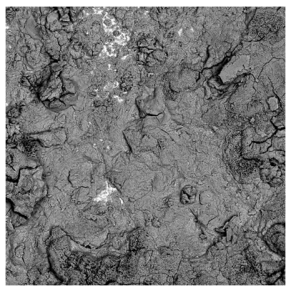
MS surface morphology, changed by CAE and CPM inhibition activity, was investigated by SEM/EDX, of which results are shown in Figs. 6-9.
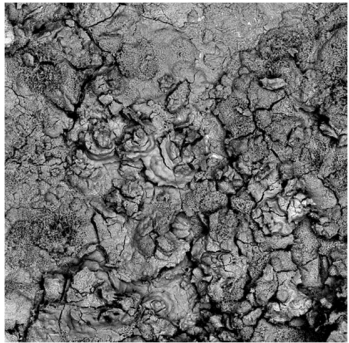
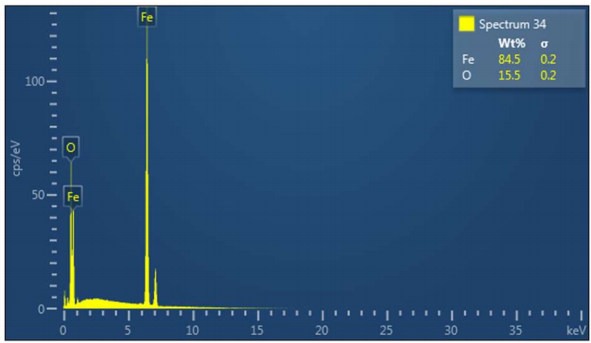
The images clearly show that corrosion reactions did not occur homogeneously over the MS surface in HCl. However, the MS surface in HCl with CAE and CPM was more protected than the sample without it.
Conclusions
IE(%) of CAE and CPM on MS corrosion was assessed by Ec technique, and the former was found to be the most effective inhibitor. Synergistic effects were observed for CAE and CPM, and the highest one was found for 2 mL CAE mixed with 8 mL CPM, which obtained 97.87 IE(%). IE(%) increased with higher inhibitors Ct. Adding the inhibitors to HCl solutions resulted in the formation of films on the MS surface, effectively protecting it from corrosion. The inhibitors performance was ascribed to the physical adsorption of their compounds onto the MS surface. Thus, Langmuir’s adsorption isotherm was obeyed.
Authors’ contributions
O. S. I. Fayomi: project administration, resources, supervision, funding acquisition. J. Akpoborie: investigation; writing-original draft, data curation. O. Sanni: conceptualization, validation, supervision, writing-review and editing. J. Ren: project administration, resources, supervision, funding acquisition. K. E. Ogunsola, J. O. Ojediran: methodology, writing-review and editing. All authors read and contributed to the manuscript.
Abbreviations
ANOVA: analysis of variance
CAE: citrus x aurantiifolia extract
CI: corrosion inhibitor
CPM: chlorpheniramine
CR: corrosion rate
Ct: concentration
Ec: electrochemical
Ecorr: corrosion potential
EDX: energy-dispersive X-ray spectroscopy
HCl: hydrochloric acid
HER: hydrogen evolution reaction
IE(%): percentage inhibition efficiency
Jcorr: corrosion current density
LPR: linear polarization resistance
LSV: linear sweep voltammetry
MS: mild steel
OCP: open circuit potential measurement
PDP: potentiodynamic polarization
R2: correlation coefficient
Rp: polarization resistance
Rpm: rotation per minute
SC: surface coverage (θ)
SEM: scanning electron microscopy

