




 Inglês (pdf)
 Artigo em XML
 Referências do artigo
 Tradução automática
 Enviar este artigo por email
 Citado por SciELO
  Similares em
SciELO
Similares em
SciELO 
 Permalink
Introduction
LcB is the most common and least expensive feedstock. It aids in the preservation of plant structural integrity. It is made up of three separate components: cellulose, hemicellulose and lignin. Fossil fuels are running out due to overuse in energy conversion, industrial, residential and transportation sectors. Natural gas is now a precious and valuable resource that will be depleted in the next 50 years, while fossil coal will be totally worn-out in the next 114 years 1. Aside from the supply issue, typical fossil fuel combustion pollutes the atmosphere and ecosystems. Climate change occurs due to CO2 emissions into the atmosphere during fuel burning. Because burning exposes N and its oxides, rainfall becomes more acidic 2. Although greenhouse gases primary function is to keep the earth T stable, their growing quantities are causing the climate cycle to collapse. Tonnes of LcB are produced each year from the vast amounts that exist on the earth. To meet the expanding chemical and energy needs in a climate-constrained context, the way these services are rendered must undergo significant change. Renewable resources play an important role in this context as a sustainable source of chemicals and fuels, leading to substantial regulatory and industrial developments. There are several applications for lignin, the second most common natural polymer and the only source of renewable aromatic chemicals 3. LcB is a renewable resource that is becoming a potential precursor to the C cycle 4,5. Recent research has focused on a variety of agricultural byproducts as potential sources of LcB due to its abundance, low initial costs and rapid biomass buildup. The third major component of LcB is lignin. Due to its high calorific value, lignin has historically been employed for power and heat in paper and pulp industries. During the pretreatment process, cell wall connections are broken down, making cellulosic and hemicellulosic fractions more accessible for subsequent applications, and eliminating lignin fractions as insoluble residues. Various pretreatment methods have been created based on the varieties and traits of biomass sources. The utility of lignin, an abundant organic polymer, is discussed in this review study, along with its composition for biofuel and bioproducts, applications and potential future development. Neem and Babul trees barks are two examples of biomass that have antibacterial potential and characteristics 6. Green plants are the best source of LcB, and between 60 and 90% percent of the plant debris is used in the extraction procedure. Nearly every part of a green plant, including leaf, root, stem and bark contains lignocellulose 7. A green plant produces two billion tonnes of LcB annually. There are three LcB categories: virgin, energy and waste sources. There are a lot of trees, bushes and green grasses to choose from allaronud. Energy biomass, which includes Panicum virgatum and Miscanthus gigantes, is a ground-breaking LcB source that yields an exceptional amount of secondary biofuel 8. Secondary byproducts or waste from numerous industries are valuable. Litter dumped and gathered on land and adjacent to water sources needs to be to treated in order to develop a bioeconomy. This refuse includes municipal, agricultural, vegetable, maize and corn waste. Biomass is produced using these byproducts 9. LcB pretreatment for its separation, of which major goals are lignin removal and opening up of cellulose to make cellulosic sugar available for fermentation, is an high-impact step in biohydrogen synthesis process. This step, which costs 30% more than the previous stage, makes up the majority of the production process. Lignin is extracted using a variety of techniques, such as thermal, mechanical, chemical and biological methods 10. Uniquely built apparatus, trained workers and high energy sources are required for physical and mechanical approaches. Hazardous and pricey chemicals are used in the chemical process. The generation of lipids is increased during the subsequent hydrolysis process, which also employs biotreatment to decrease hazardous components. The viability, dependability and highly commercial character of biological technologies for pretreatment and hydrolysis have led researchers to advocate them for use in mass production 11. The main challenges of this extraction technique are: separating lignin; creating the conditions for cellulose and hemicellulose hydrolysis; optimizing pressure and T; appropriately bio-fermenting sugar; and increasing production without the use of hazardous boosters 12. In general, the effectiveness of LcB pretreatment accomplishes economic and environmental goals of cost-reduction, environmental concerns and sustainability, which lead to: an increase in the specific surface area and porosity; cellulose digestibility by disrupting the rigid carbohydrate-lignin matrix; reduction of particle sizes; and removal of hemicellulose/lignin content. 13.
Properties and composition of LcB
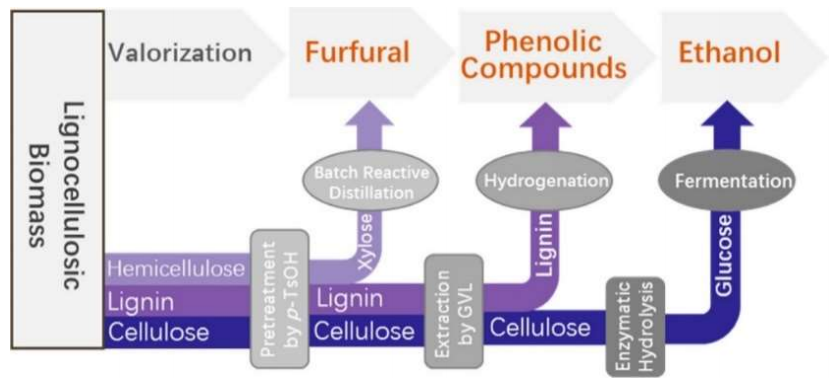
Wooden biomass, also known as LcB, is easily acquired from forests and green waste. In the modern world, 820 million tonnes of dry biomass are generated. As previously stated, LcB bulk is composed of cellulose, hemicellulose and lignin, with tiny quantities of phenolic and acetyl groups, as well as minerals depending on where it originates 14. Figs. 1 and 2 show the steps of LcB conversion to biomass, and lignin and biofuels composition. Around 50% LcB is made up of cellulose. Asignificant crystalline-shaped molecule disaccharide A repeating unit of the cellulose chain, called cellobiose, is tightly joined to glucose by powerful hydrogen bonds. Along with these three main components, there are traces of proteins, pectin, amino acids, metals and ashes 15.
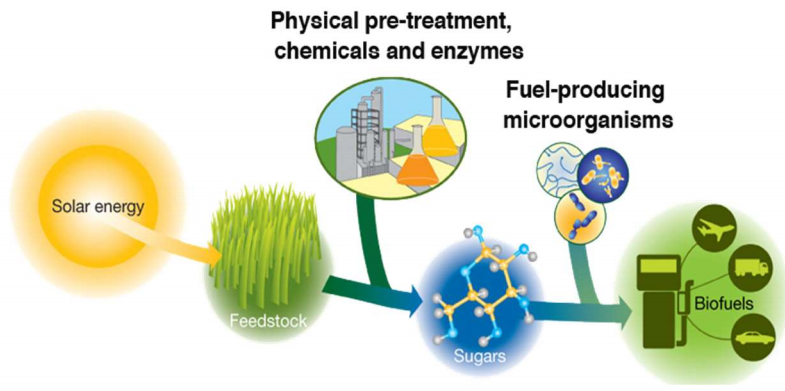
Wide range of physicochemical approaches available for delignifying LcB
LcB biochemical conversion is significantly hampered by the refractory nature of lignin present in this substance. Since lignin prevents enzymes from accessing hemicellulose and cellulose during saccharification, purifying LcB by pretreatment is an important step. Lignin can be recovered from biopolymers using a variety of chemical solvents, including alkaline reagents, ammonia, organosolv, DES and IL. To achieve a cost-effective bioenergy process, an efficient pretreatment procedure with less carbohydrates loss and maximum delignification is preferred 14. However, since each component needs a particular set of reaction conditions to be depolymerized, it is difficult to me, et all the aforementioned parameters in a single pretreatment step. Thus, for effective solubilization, multi-stage pretreatment techniques are frequently used. This section gives an overview of a number of delignification treatment techniques, covering both standalone and combined approaches.
Pretreatment methods for LcB
To separate lignin and hemicellulose parts of LcB, there are several pretreatments classified as advanced, biological, microbiological, chemical, physical-chemical or chemical-physical. Fig. 2 shows various LcB pretreatment methods.
This process is a very important preliminary step to hydrolysis. The following pretreatments considerations are important: low cost and energy consumption with high feedstock yield; no harm to sugars; cellulosic compounds preference for non-hazardous chemicals and low pollution emitting treatments; absence of chemicals or agents that prevent fermentation and hydrolysis; and minimal equipment and labour requirements. The types of pretreatment, environmental factors and bioconversion methods for generating hydrogen from LcB are shown in Fig. 3 and Table 1 15.
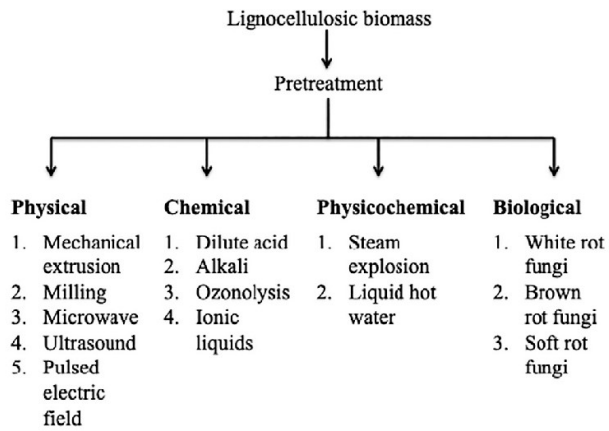
Table 1: Type of pretreatment, environmental factors and bioconversion procedure for LcB to produce hydrogen 15.
| LcB Fs | Pretreatment type | Pretreatment condition | Inoculum | Bioconversion process | |||||
|---|---|---|---|---|---|---|---|---|---|
| Ferment type | pH | T (ºC) | Time (h) | H prod rate | Ref. | ||||
| MW | Alkaline | Agent: NaOH; T: 85 ºC; t: 2h | Clostridium l. | Dark fermentations | 7.6 | 56 | 2 | 5.429 mL/g | 15 |
| Sw | Thermal | T: 121 ºC; Yield: releases | Ascophyllum n. | Anaerobic digestion | 4.480 | 41 | 4 | 5.8 mL/g | 15 |
| WS | Acid | Agents: diluted acid | Escherichiacoli | Batch dark fermentations | 8.3 | 30 | 3 | 23.3 mL/g | 16 |
| Corn | Milling and grinding | Bead size: 0.2-2 mm; room T; t: 2 h | Candida g. | Dark anaerobic fermentations | 6-8 | 38 | 24-48 | 34.17 g | 16 |
| SW | Chemical | Agent: NaOH or H2O2; T: 80 ºC; t: 24 h | Pachysolen t. + Wickerhamomyces | Batch fermentation dark | 4.8-6 | 31 | 23 | 13.82 ±0.20 g | 16 |
Chemical pretreatment method
The pretreatment method using chemicals such as alkalis, acids and various mixtures of chemicals is more efficient.
Alkaline treatment method
Alkaline treatment process successfully uses the base solution to treat and break down the lignin component. LcB swells as a result of this approach, while crystallinity and polymerization rate are reduced. When CaOH, KOH and NaOH are utilized as chemicals to treat the amorphous surface area, the method to reduce lignin amount is more effective. Even when bases prevent it, hydrolysis is used to treat agricultural, corn and sugarcane waste 17. The alkaline approach basic operating premise is cellulose propensity to swell when immersed in an alkaline solution. The technique produces the highest biomass when lignin is absent. When breaking C atoms bonds in green biomass, they are highly selective. At 30 ºC, where 73% of the product is made, even gaseous ammonia performs better throughout delignification process 18.
Acid treatment procedure
Acid pretreatment dissolves hydrogen bonds and van der Waals forces in hemicellulose and xylan content. HCl and H2SO4 are frequently employed because they accelerate the hydrolysis of cellulose and other organic materials, and reaction speed. Rarely dissolved, lignin is severely harmed by high pH and T conditions. After H2SO4 and HNO3 treatment, glucose output increases. However, these chemicals also release sulfate or nitrate hazardous compounds. Acid therapies are employed to stop recalcitrance reaction, which cleaves Vander wall attraction by deteriorating C bonds and breaking carbohydrates. The initial step in biohydrogen synthesis is pretreatment, by which 77.5% of it is produced 19.
Polymeric substances based on lignin
Lignin, which takes up between 15 to 40% of the dry biomass weight in plant cell walls, is the second most common biopolymer 20. Given that it is a complex, highly branching polymer with several aromatic moieties and functional groups, including hydroxyl, methoxyl, carbonyl and carboxyl groups, it has the potential to be used in a variety of polymeric materials. For lignin to be reactive, aliphatic and phenolic hydroxyl groups in particular are required 21. Still, they are thought of as reactive zones, including open ortho locations, C5 positions on guaiacyl units and C3 positions on p-coumaryl type units on phenolic rings of phenylpropane units. Due to the numerous stiff aromatic groups found in lignin, it has a reinforcing effect, and can provide stiffness and strength 22. Lignin has frequently been used in the past as a filler or physical blending component in plastic composites. We will focus on complex chemical processes in polymers made from lignin 23. Table 2 summarises lignin materials.
Table 2: Hemicellulose, cellulose and lignin composition of common agricultural residues and wastes 23.
| LcB | Cellulose(%) | Hemicellulose(%) | Lignin(%) |
|---|---|---|---|
| Corncob | 25-45 | 35-55 | 10-35 |
| WH | 30 | 55 | 10 |
| WnS | 20-35 | 25-35 | 30-40 |
| Leaves | 10-25 | 85-90 | 0 |
| Cotton seed hairs | 80-95 | 5-20 | 0 |
| Newspapers | 40-55 | 25-40 | 20-35 |
Polyesters derived from lignin
Common methods for producing polyesters include polyesterifying hydroxycarboxylic acids on their own or dicarboxylic acids with diols or dihalides, and ring-opening polymerization of lactones and cyclic esters. The polymer backbone of polyesters has repetitive ester bonds 24. Grafting polymer chains to lignin hydroxyl group is a standard technique for creating lignin-based copolymers. This method includes grafting-from and grafting-to 25.
Lignin-based epoxy resins
Epoxy resins are thermosetting polymers containing an oxirane ring. They may need extra curing agents, most often amines, or they may self-crosslink on their own. They have a wide range of applications such as in adhesives, high-performance composites, coatings for electronics, due to their highly tuneable characteristics and generally great heat resistance 26. Due to the presence of aromatic rings in its molecular structure, lignin can serve as an appealing bio-based substitute for the vast majority of commercial epoxies made from BPA, which is harmful to human health and environment 27. There are several methods for adding lignin to epoxy resins. The two most frequently used methods are; producing epoxy prepolymers directly from lignin; or making curing agents from lignin or modified lignin 28.
Phenolic-formaldehyde resins based on lignin
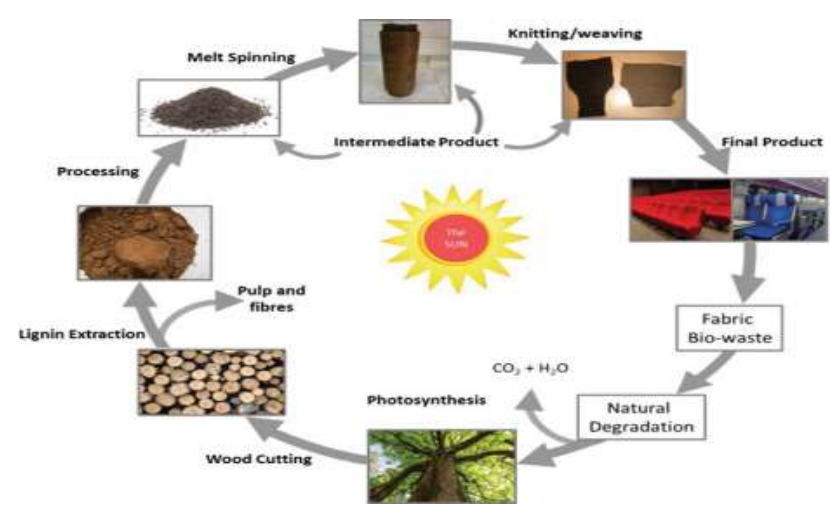
When phenol and formaldehyde step-growth polymerize in the presence of an acid or base catalyst, PF resins are created. Due to their many advantageous qualities, such as strong adhesion, thermal stability and resistance to water and chemicals, PF resins are widely utilised in wood industry as a bonding medium for plywood, oriented strand boards and other engineered wood products. Some research look for bio-based substitutes for crosslinkers in lignin-based PF resins, since formaldehyde is a recognised carcinogen. In a recent work, 29 created PF resins through glyoxal, a dialdehyde derived from a range of natural resources, as a replacement for formaldehyde in a ratio of 50%. In OLPG resins that were employed as wood adhesives in plywood samples, up to 50 wt% phenol were substituted with organosolv lignin. In comparison to market PF wood adhesives, plywood made with 50% OLPG showed noticeably greater tensile strength and modulus of elasticity in both dry and wet circumstances. Another biobased substance that is frequently utilised in PF resins as a formaldehyde substitute is an organosolv HMF. It is an aromatic aldehyde generated from lignocellulose and cellulose that is employed to make several compounds 30. Fig. 4 shows a brief overview of lignin applications, according to 31.
Importance of agricultural waste in a circular economy
With the expansion in global population and demand for agricultural products, there is also an increase in agricultural waste. This agricultural waste generation has become a concern that must be addressed. In China, annual agro-waste amounts to roughly 0.9 billion ton. The simple disposal of this agrowaste has the potential to harm the ecosystem by polluting soil and water sources. Various options for using agricultural wastes for energy generation are being studied. Non-renewable fossil fuels have met the world enormous energy need in contemporary era. As an alternative, emerging renewable fuel sources are among the most pressing research priorities today 32.
Among the renewable energy sources, biomass has been proposed as a viable replacement for crude oil-based refineries. C biomass, as is well known, is a C-neutral, readily available and most crucially renewable feedstock for the production of various chemicals and fuels. Circular economy is a new industry paradigm that aims for long-term growth. This new business model is centred on the economy and the environment, as it promotes development, profit and environmental conservation. Industrial residues, e.g., are not wasted; rather, they can be turned into raw materials for new products. Circular economy is defined by two guiding principles: it raises the value of raw materials by improving their conversion to products, and it reduces service time loss via responsible product design. The closed loop concept (circular) attempts to improve the continuous flow of technical and biological resources, such as agricultural waste, by maintaining products, components and resources at their highest value, at all times, and reducing waste to the bare minimum. As well known, circular economy is a developing idea with no consensus on its theoretical formulation in academia or literature 33, because it is the product of changes in governmental frameworks and laws, rather than academic study. Recycling and reprocessing a product ingredients allows the material utility to be extended even further. In other words, rather of squandering a material potential, it is fully utilised. As a result, companies seek for materials with endless features such as recyclability and reusability, which may be achieved by using circular economy concepts.
According to a recent IEA 2017 estimate, biomass accounts for 9% of overall energy supply 34.
Agricultural activities have produced a variety of biomasses, including animal manure and slurries, postharvest plant residues, non-marketable products, products with no market value, waste from low or unprocessed vegetables, waste from olive and grape processing lines, and milk-based waste, among others 35. The absence of an appropriate reuse strategy leads to unrestricted exploitation of these bioresources for manufacturing and consumption, halting economic restoration. However, the world leading economies are presently shifting their production policy frameworks from unsustainable to more sustainable, eco-friendly and resource-conserving 36.
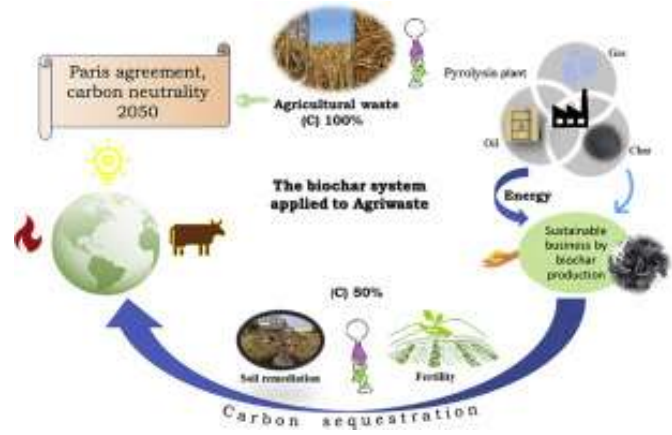
Fig. 5 shows how agricultural waste streams may be used as a resource in circular economy.
Conclusion
This study covers recent advances in chemical pretreatment strategies for LcB. Biochemical pretreatment breaks down lignocellulose and increases lignin yield production. Due to their low production costs, green biomaterials are more popular than ever. Lignin has stabilising properties and is a component in newly developed green materials. The utilisation of previously regarded by-products, such as LcB from agricultural side streams, is vitally significant for the global economy and environmental preservation, aiming to maximise the use of natural resources and thus promoting the practice of circular economy. Currently, there is a surge in investment in the development of LcB-related products and technology. The overall goal of this article was to report a whole biohydrogen synthesis from waste LcB, starting with pretreatment techniques and ending with the final product. Several pretreatment techniques, as well as outdated and best economically safe procedures, were herein discussed. Future perspectives with real-world issues were highlighted, as well strategies to boost yield rates by 20-30%. Lignin can be recovered using organosolv and alkali pretreatments, which need fewer unit operations. It can subsequently be valorized employing thermochemical and biological platforms for use in beneficial applications.
Acknowledgment
The authors are extremely grateful to the staff in the department of chemical engineering, coal resource and research laboratory, MUET, Jamshoro, Pakistan.
Authors’ contributions
M. Asif: wrote the paper. M. Laghari : made the tables. K. C. Mukwana: made the figures. I. Bashir: helped in setting of paper. M. Siddique: made the abstract and conclusion. S. Hussain: reduced plagerism. N. Karamat: worked with Oracle Data Integrator. A. Abass: corrected references.
Abbreviations
AC: agricultural crop
BPA: bisphenol A
CPM: chemical pretreatment method
DES: deep eutectic solvents
Fs: feedstock
H2SO4: sulfuric acid
HMF: hydroxymethylfurfural
HNO3: nitric acid
IL: ionic liquid
LcB: lignocellulosic biomass
MW: municipal waste
PF: phenol-formaldehyde
OLPG: organosolv lignin phenol glyoxal
Sw: seaweed
SW: sawdust willow
T: temperature
WH: wheat husk
WnS: walnut shell
WS: wheat straw

