




 Inglês (pdf)
 Artigo em XML
 Referências do artigo
 Tradução automática
 Enviar este artigo por email
 Citado por SciELO
  Similares em
SciELO
Similares em
SciELO 
 Permalink
Introduction
Various researchers have focused on improving the corrosion resistance of new advanced engineering materials such as MMC. Introducing foreign particulates into metal matrices alters their corrosion resistance 12,26.
Notably, the importance attached to the derivation of light-weight materials that could find applications in automobiles to obtain more energy-efficient vehicles brought about MMC 17.
In developing advanced engineering materials, one of the metal matrices of interest that have been widely researched is Al. Al has a broad spectrum of applications, such as in industry and technological advancement, due to its good physical and mechanical properties 3,8,13,22,23,25.
However, Al exposure to the natural environment may lead to the self-generation of a thin oxide layer on its surface, and to later development of pitting or crevice corrosion in seawater 7,24, at imperfections in the oxide layer. Hence, there is a negative economic impact when Al and its alloys corrode in chloride solutions. This ultimately may cause more severe corrosion cracking on the alloy 7,25, with immeasurable consequences.
AMC development has taken a new phase, since the shift from the use of monolithic reinforcements to the incorporation of both industrial wastes and agricultural residues as reinforcements in the matrix alloy 5,11,13. Therefore, many studies have obtained different results in connection with the sources and types of reinforcements employed in creating various hybrid Al composites 1,2,9,26,27. Some results showed improved corrosion resistance in corrosive environments such as acidic and NaCl media. These experiences had urgency in finding generally acceptable ways and manners to inhibit the corrosion of these MMC on metals and their alloys.
Studies have shown the applications of green (organic) inhibitors, usually obtained from plants, since they contain phytochemicals such as flavonoids and tannins 18,21.
Another form of hindering corrosion is through the use of inorganic inhibitors. Employing these two forms of inhibitors helps avoid the cathode reaction occurrence by effectively controlling corrosion rates 25.
Other methods of mitigating corrosion include paints, cathodic protection and engineering coatings 20. Engineering coatings may be obtained through CCC, primers and top coats 17-19,25. CCC on MMC helps improve the corrosion resistance of the metal and enhances the adhesion ability of subsequently applied organic finishes 18,19. Hence, the popularity of CCC utilization in industries such as roofing and aviation 18,25. 24 reported that using CCC technique resulted in an excellent, stable and uniform passivation layer that had immense corrosion resistance, and a golden-yellow color. 25 reported that CCC contains Cr6+, which helps repair imperfections and defects in the coatings, making them more effective as corrosion protectors.
However, the use of hexavalent Cr, which is present in CCC, is known to have high toxicity, to be carcinogenic in the environment and raise manufacturing costs 6,16,17,24.
As a result, many studies have researched alternative new chemical CC 7,18,24. These new coatings are majorly applied to Al and its alloys. As 17 reported, PPCC is notably a promising alternative to CCC. Hence, this present study focused on this direction for its application on hybrid reinforced AMC.
This study used PPCC on MMC produced using Al6063 as a matrix, and PKSA and SiC as hybrid reinforcements. Its performance was compared to that of CCC. CC samples were subjected to atmospheric and simulated seawater environments. The surfaces of CC samples were examined visually and through an optical photographic technique. This study is useful for applying these non-rinse chemical coatings to control corrosion and enhance the adhesion of top coats of paints when used on treated substrates. Thus, further theoretical and experimental insights into the development of basic research on surface treatments for AMC would be established, which, in the present instance, is lacking.
Materials and methods
Materials and composite production
The materials employed were AMC, PKSA and SiC. PKSA reinforcement was obtained, as illustrated in the study by 12. Al 6063 alloy has the following chemical composition: Mg (0.48%), Si (0.43%), Fe (0.17%), Mn (0.04%), and the remaining Al. PKSA chemical composition contains oxides such as SiO2 (66.9%), Al2O3 (6.46%), Fe2O3 (5.72%), CaO (5.52%), K2O (5.20%), P2O5 (3.78%), MgO (3.14%) and TiO2 (0.53%). The loss on ignition content was 2.75%. The average particle sizes were 30 and 40 µm for SiC and PKSA reinforcements, respectively. Table 1 shows the nomenclature and mixing proportion of the matrix and reinforcements.
Table 1: AMC/PKSA/SiC composite samples.
| Sample | Al (wt.%) | PKSA (wt.%) | SiC (wt.%) |
|---|---|---|---|
| A0 A1 A5 A6 A9 | 100 98 90 98 90 | 0 0 8 2 2 | 0 2 2 0 8 |
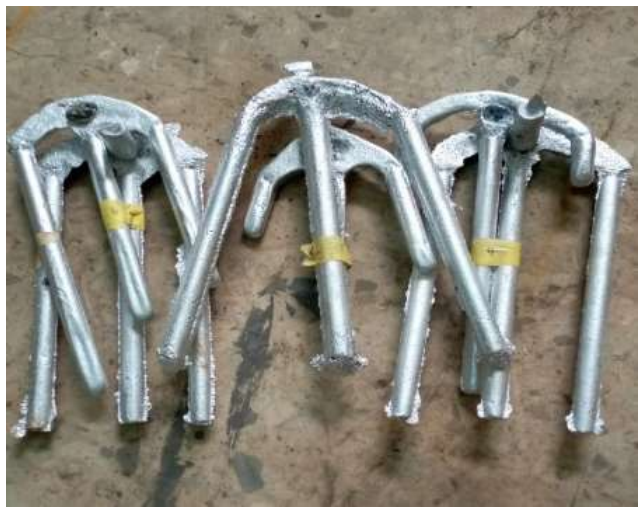
The production route employed in this study was the double-stir casting method, which is a liquid production route 1,10. The required particulates and matrix quantity for each designated composition were determined using the charge calculation. PKSA and SiC particulate reinforcements were preheated for the removal of inherent moisture, and to improve wettability when charged into the matrix. This preheating was performed at a T of 250 ºC. With the aid of a gas-fired crucible, AMC ingots were charged and melted at 750 ºC, known to be above its liquidous T, for its complete melting. During AMC semi-solid state, the preheated particulate reinforcements were charged into the molten matrix, as appropriate for each composition. Then, the formed slurry was manually stirred during 10 min. For proper and homogenous mixing, the slurry was raised to a superheated T of 800 ºC. A mechanical stirrer at a speed of 400 rpm was used to mix the slurry, for the second time, during 10 min. Finally, the slurry was poured into an already prepared sand mold, until solidification was achieved. Fig. 1 shows a typical solid product of composites.
Preparation of the substrate
Table 1 presents the sample composition. The produced samples were cut into dimensions of Ø 30 mm x 3 mm. The samples were then abraded with SiC paper of varying grit sizes (240 to 1000). They were later cleaned in acetone and rinsed with distilled water before drying. A digital electronic balance was used to measure the samples weight, while vernier was used to obtain the thickness values of the samples.
CC experiment
Samples were obtained from the developed AMC, and made into spade-like electrodes, according to 17. The electrodes from each sample were etched in a 10% NaOH solution. The specimens were rinsed in water before desmutting in 50% v/v nitric acid solution. The desmutting was done during about three minutes for each sample. Afterwards, they were again rinsed in water. The specimens were weighed before immersion into the prepared coating solutions. The prepared samples were then immersed in separate solutions of 4 g/L KMnO4 and chromate, at ambient T, for 24 h. The initial immersion tests revealed that the coatings did not fully develop to gain a golden yellow coloration until after 24 h treatment. The solution pH was obtained using a HI 2210 pH meter (Hanna Instruments). The specimens were then rinsed with water and allowed to dry. The samples weight was taken after immersion and drying. Lacquer was applied on some CC specimens, while others were left without a top LC. These samples were exposed to atmospheric conditions for seven days to examine corrosion effects on them. All the specimens (uncoated, CCC, PPCC and composite LC/CC) were cross-scratched, based on the Japanese industrial testing method 17, prior to exposure in a simulated seawater environment, for 168 h. After that, there was a firm application of transparent cellophane adhesive tapes on each of the exposed sample. These tapes were speedily withdrawn from the specimens, with rapid motion. The samples surfaces were examined visually, and photographs of them were taken.
Surface profilometry
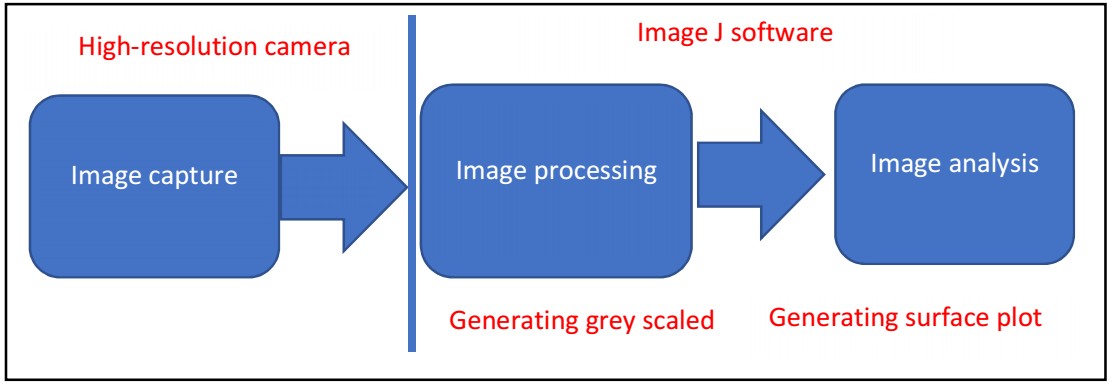
The surface profilometry method has been used for studying metals surfaces to establish the impact of treatment 15. The analysis used Image J software (bounded with Java version 8). The procedure was adapted from 14,22,23, and is presented diagrammatically in Fig. 2. The images of the various treatment samples were imported into the Image J software. The first step was to process the image into an 8-bit image. One method of doing that was converting the image into a threshold image displayed in black and white, to reveal the areas affected by the coating treatment. After that, analyses, such as a surface plot, can be performed to reveal the extent of the treatment.
Results and discussion
CC results
Using AMC components in inclement environments and long-term serviceability requires adequate corrosion protection. Different protection methods have been advocated for Al and its alloys. Given protection methods for Al alloys, there has been increased knowledge about shielding AMC with effective standard corrosion protection methods 4, including CC.
Development of coatings on the specimen
On immersion of the samples in the chromate solution, their color gradually changed from a shiny metallic to deep yellowish brown, after about 15 min of treatment in the solution (Fig. 3a).
Although the specimens immersed in the PPCC solution did not rapidly change color, to the naked eye, there were indications of coating development. The surfaces turned dull greyish, with time, and developed to a yellowish tan after 20 min immersion. However, after 24 h, a light golden color was observed (Fig. 3b). These color changes indicated the formation and development of the coatings on the samples. Based on the observation in this study, CCC rate of development was faster than that of PPCC. However, this was expected, since the MnO − 4 solution was a near neutral (pH = 7.96), while the chromate bath was acidic (pH = 3.23).
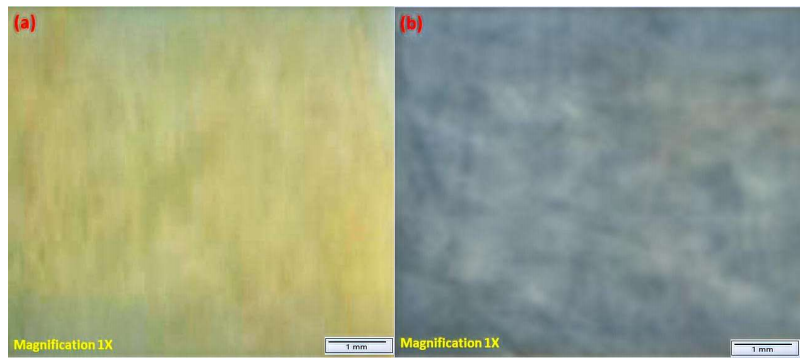
Figure 3: Photographs of samples CC - (a) chromate solution after 15 min of treatment in the chromate bath -(b) MnO - 4 solution after 24 h of treatment in MnO - 4 bath.
The images of the CC samples in chromate and MnO − 4 solutions, after immersion in lacquer, are shown in Figs. 4a and 4b, respectively.
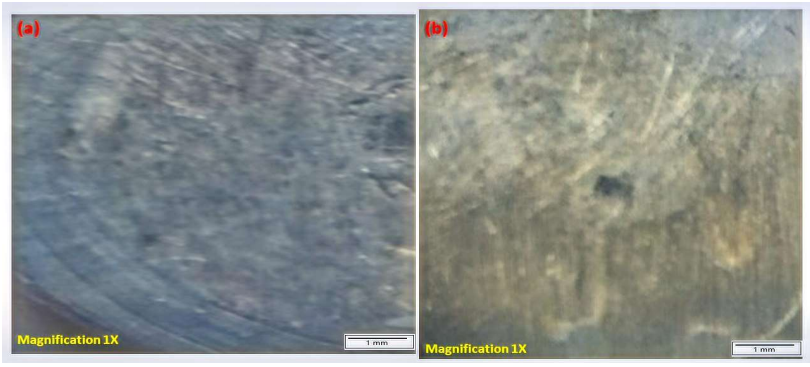
Figure 4: Photograph of CC samples in -(a) chromate solution and -(b) MnO - 4 solution, for 24 h, with top LC.
All the specimens were relatively featureless, and the colors imparted by CC on them indicated the coating development. However, in some instances, the scratch marks inflicted on the samples through abrasion with SiC were visible in the background, showing relatively transparent/thin coatings on their surfaces.
Corrosion and adhesion
During atmospheric exposure of the bare CC samples, a lighter shade of golden yellow was observed on the samples. After 72 h, no corrosion product was seen on all the specimens after exposure to the natural atmosphere (Figs. 5a and 5b). Likewise, Figs. 5c and 5d revealed the corrosion aftermath when the NLC samples were subjected to the corrosion environment.
The samples were examined every 24 h, and corrosion events were not seen over 168 h exposure. Thus, the specimens with CC performed well during atmospheric exposure. However, upon the samples exposure to a 3.5% NaCl solution, for 168 h, mounds of corrosion products were observed over their surfaces.
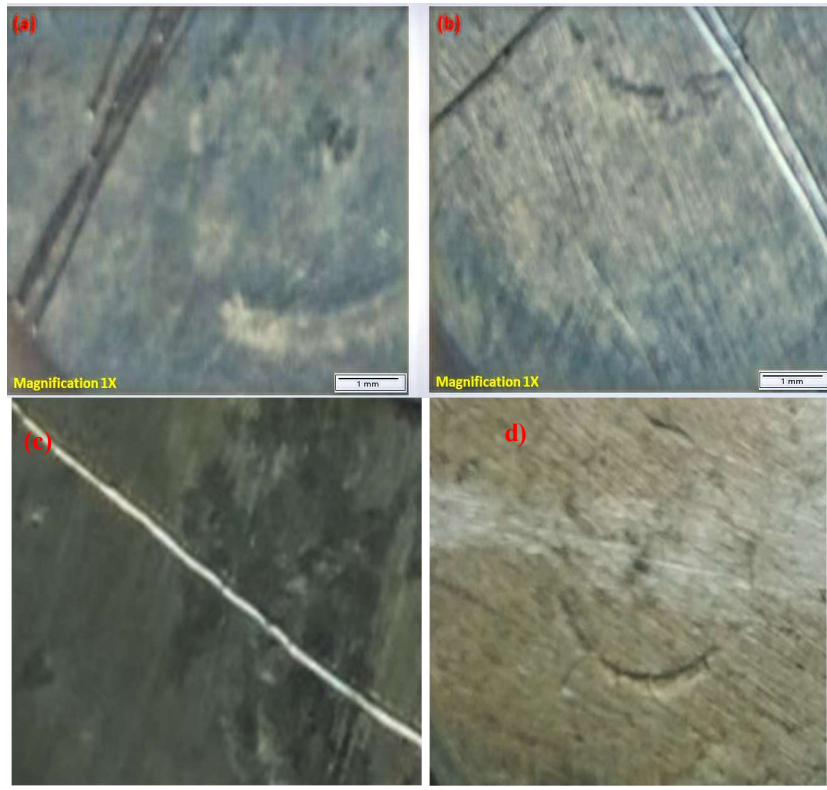
Figure 5: Photographs of CCC and PPCC samples -(a, b) LC -(c, d) and NLC in atmospheric conditions, after 168 h.
Some pitting corrosion was observed at various regions on the CCC and PPCC specimens (Figs. 6a and 6b). However, less pitting corrosion was observed on the CCC samples than on PPCC ones. This implied the superiority of CCC over PPCC. Figs. 6c and 6d revealed the corrosion defects on the surface of the LC samples. 19 reported that CCC with Al alloy 6000 series showed a surface void of apparent signs of corrosion. However, in the present study, corrosion events were observed on the samples after 72 h immersion in a NaCl solution. This was due to the influence of various reinforcing materials added to strengthen the metal matrix and probably the production method of the samples and the volume fractions, which altered the physic-chemical properties of the matrix.
The pitting corrosion observed on the LC samples was relatively lower than on the bare CC samples. In these instances, the plain specimens were visible to the naked eye. The adjacent regions of the reinforcements, wherever they intersected the specimen’s surfaces, are preferential sites for pitting corrosion. The inhomogeneous MMC structure must be considered when designing a corrosion protection system, because a proven coating system for an Al alloy may not be suitable for its MMC. Al proven system inhibited by the chromate solution was observed to be less effective for the MMC, due to the difference in the electrochemical properties of the alloy 4.
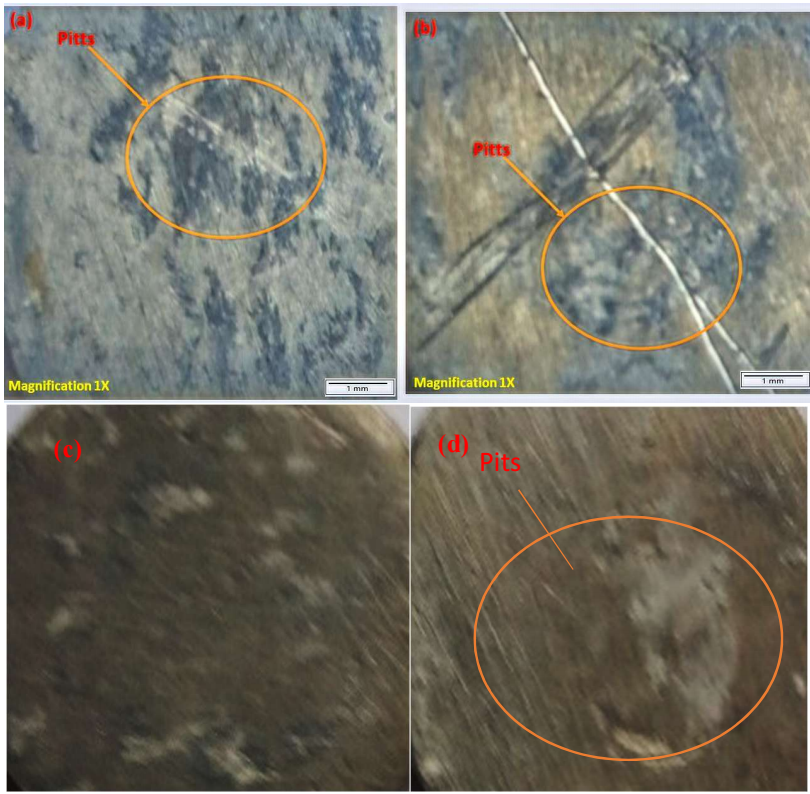
Figure 6: Photographs of CCC and PPCC samples -(a, b) LC and -(c, d) NLC in a NaCl environment, for 168 h.
The application of surface treatments on MMC is challenged by reinforcement particles that tend to disrupt any protective coatings and hinder the passive coatings effectiveness 4. For the adhesion tests carried out on the LC samples, the lacquer did not peel off, suggesting that the CC prevented paint delamination. This further indicated limited corrosion activities on the substrates.
Figs. 6a and 6b showed that corrosion did not spread from these deliberately inflicted scratches, suggesting that the CC components, such as chromates and manganates, stifled corrosion reactions in such areas. However, a closer examination of the surfaces revealed dark, irregularly shaped carpet-like regions, which can be described as partially corroded regions.
Surface profilometry
Fig. 7 shows the image analysis of the various samples subjected to different coating treatments. The grey scale shows the effect of the various treatment on the materials surface, while the surface plot shows the extent of the coating development. The white portions of the pictures show the areas affected by the treatment, while the black sections represent the base metal surface. The results show CCC development was faster in the chromate bath than in the MnO − 4 bath; however, when the top surface of the metal was LC, Figs. 7c and 7d show that perm PPCC development showed a good comparison with the chromate coating development. The surface plots in Figs. 7a-d show gradual coating development on the substrates.
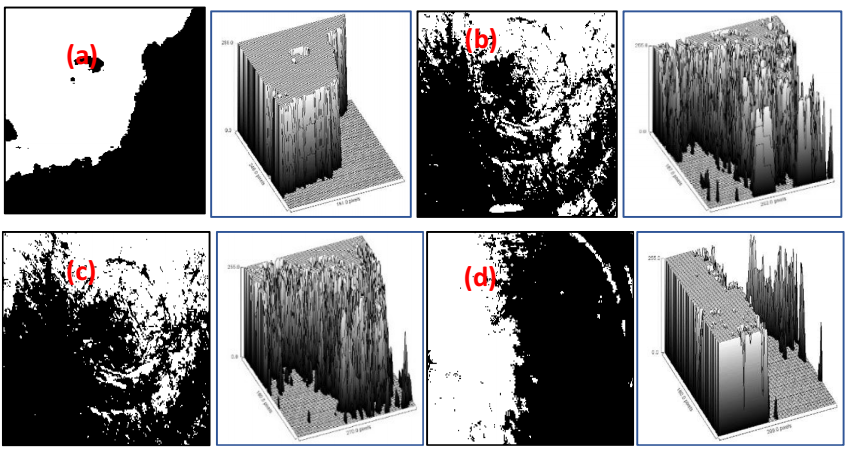
Figure 7: Image analysis of samples coating development in solutions of -(a) chromate, for 15 min, in a chromate bath, -(b) MnO - 4, for 24 h, in a MnO - 4 bath, -(c) chromate, for 24 h, with top LC -(d) MnO - 4, for 24 h, with top LC.
Meanwhile, the corrosion behavior of the composites, when subjected to atmospheric conditions and NaCl environment, for 168 h, is depicted by the image analysis shown in Fig. 8. The surface plot shows the presence of some pitting corrosions in all samples. Meanwhile, the images suggest more corrosion activities in the NaCl environment than in the atmospheric condition.
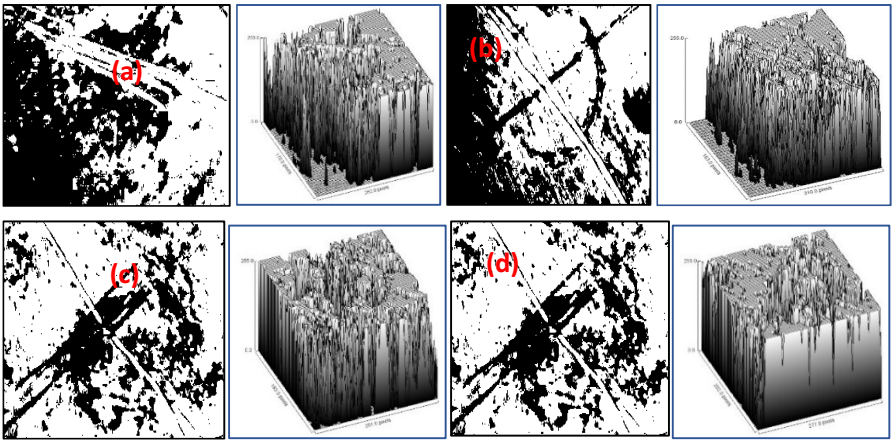
Figure 8: Image analyses of CCC and PPCC samples -(a, b) with LC in atmospheric conditions, for 168 h -(c, d) with LC in a NaCl environment, for 168 h.
The images in Figs. 8a and 8b showed that CCC were more resistant to the atmospheric environment than PPCC composites. Meanwhile, Figs. 8c and 8d showed that CCC composites corroded more in NaCl than PPCC composites.
Conclusion
CCC and PPCC on MMC using chromate with lacquer, to reduce corrosion activities on the substrate, have been studied. Corrosion tests revealed that the composite LC/CC applied on the substrates inhibited the formation of pits and prevented paint delamination better than the untreated specimens. After corrosion tests, observations revealed that CCC and PPCC performed relatively at par. Hence, the environmentally friendly PPCC is a viable alternative to the carcinogenic CCC. The 24 h treatment is rather lengthy, considering industrial applications. Thus, coating solutions require further activation in one manner or the other.
Acknowledgment
The management of Landmark University is appreciated for providing a conducive environment to carry out this research.
Authors’ contributions
P. P. Ikubanni, M. Oki.: conceptualization; data curation; methodology; formal analysis; writing-original draft; supervision and resources; project administration. A. A. Adeleke: data curation; formal analysis; writing- original draft review and editing. T. A. Orhadahwe.: software; writing - reviewing and editing. A. A. Samuel, J. A. Okolie, P. O. Omoniyi, T. C. Jen: methodology; writing - original draft, reviewing and editing. All authors contributed to the scientific discussion of the manuscript, and have read and agreed to the published version of the manuscript.
Abbreviations
Al2O3: aluminum oxide
AMC: aluminum 6063 matrix composite
CC: conversion-coated/coating
CCC: chromate conversion coating/coated
Fe2O3: iron(III) oxide
K2O: potassium oxide
KMnO4: potassium permanganate
LC: laquer-coated
MMC: metal matrix composite
MnO - 4: permanganate
NaCl: sodium chloride
NaOH: sodium hydroxide
NLC: non-laquer-coated
P2O5: phosphorus pentoxide
PKSA: palm kernel shell ash
PPCC: potassium permanganate conversion coating/coated
rpm: rotation per minute
SiC: silicon carbide
SiO2: silicon dioxide
T: temperature

