




 Inglês (pdf)
 Artigo em XML
 Referências do artigo
 Tradução automática
 Enviar este artigo por email
 Citado por SciELO
  Similares em
SciELO
Similares em
SciELO 
 Permalink
Introduction
Polymer nanoparticles have demonstrated promiss for addressing problems in a several domains, such as biology, engineering, biotechnology and natural sciences 1,2.
Due to the depletion of fossil fuels and the need for sustainable development, a significant amount of research is being done to develop the concepts of green chemistry. This entails investigating novel and substitute polymer nanoparticles produced using sustainable resources 3,4. The move toward renewable and sustainable materials represents a major advancement in the promotion of eco-friendly methods in a variety of scientific and technological fields.
Lignin is an amorphous polyphenolic structure that is present in plants and is the second most prevalent polymer in Bm, behind cellulose. It is notable for being a plentiful and renewable resource 5,6. Industrial lignin is widely available and mostly obtained as a byproduct of paper and pulp industries, as well as bio-refinery operations.
Nonetheless, historically, a sizable Ct of roughly 98% lignin has been burned to provide heat and energy. Remarkably, a significant Ct of this is alkali lignin. In 2014, only 100,000 tons alkali lignin were estimated to be available for purchase 7.
The restricted use of lignin in different applications might be ascribed to its intrinsic difficulties, such as complex structure and low solubility. The intricate composition of lignin is due to its random microstructure and broad range of molecular weights 8.
Unlocking lignin’s full potential for a range of industrial and sustainable applications requires addressing these issues. Lignin is very prone to chemical modification or polymerization, due to its abundance of functional groups, which include both phenolic and aliphatic hydroxyls. Given these characteristics, lignin could have an important role in the development of high-value chemicals such as surfactants, binders, additives and dispersants 9.
Phenylpropanoid units that make up lignin, a complex aromatic polymer, are provided by conifers, sinapyl and mixed p-coumaric alcohols. Before initiating research on lignin-based products, it is vital to thoroughly examine their physicochemical and thermal characteristics 10, which is crucial in developing novel and useful materials for a range of industrial uses.
This initial investigation lays the groundwork for this understanding. Many approaches, such as organosolvents, ionic liquids and hydrotropic processes, have been employed to comprehensively investigate the extraction and separation of lignin from various feedstock resources. Furthermore, lignin is commercially manufactured using soda, a cell and kraft pulping processes, which give it unique chemical properties.
Due to extensive condensation T that occur under this process, kraft lignin, with a high Ct from S in the shape of thiol groups, and a restricted quantity of cleavable O-four linkages, is created 11.
This chemical difference emphasizes how crucial it is to comprehend the origin and process of production when thinking about using lignin in different applications. Alcell lignin, on the other hand, is more favorable for additional depolymerization procedures, since it has a larger Ct of β-O-4 linkages and a relatively lower Ct from S. As a result, different extraction conditions alter the structure of lignin, which affects the methods and processes used in subsequent depolymerization 12.
To convert lignin into valuable products, depolymerization is an essential process that has been studied using a variety of methods throughout the years, including pyrolysis, gasification and liquefaction. The kind of employed lignin will determine which depolymerization method is best. Since there are many different sources of cellulose and lignin, such as wood pulp, hemp, cotton and jute, selecting the right feedstock is important when determining the best depolymerization strategy 13. This emphasizes how crucial it is to modify depolymerization techniques to the particulars of lignin supply. Indeed, depending on its source and the extraction technique used, lignin’s physical and chemical properties can greatly vary. As a result, these formulations may affect how well lignin works in different applications. For instance, lignosulfonates, which are produced by sulfite pulping process, represent a conventional lignin type distinguished by high Ct of sulfonic acid functional groups. This characteristic gives them superior binding and emulsifying qualities 14.
In the study by 15,16, organosolv treatment was used to extract lignin from flax fiber, alfalfa, wheat straw and pine straw. This method enables to investigate thermal characteristics and functional groups of the resultant organosolv lignin, offering insights into its possible uses. These researches lead to a more thorough comprehension of lignin behavior, to customize applications in a variety of domains.
Materials and methods
Renewable resources of Bm were obtained from fields around Quetta, Jinnah Road and Sindh Jamshoro. Substances required for lignin extraction, such as NaOH, H2SO4 and distilled water, were acquired from a scientific shop in Haidar Chowk, Hyderabad.
Materials selection and process
Different agricultural waste feedstocks (AS, BTB, NTB and WnS) were employed in this study. NTB and BTB were purchased from Tandojam Sindh, Jamshoro. NaOH, H2SO4, beakers and funnels were found in a scientific supply store near Jamshoro.
Fresh Bm samples were cleaned and baked for 10 days, to reduce their water Ct. Then, the material was cut into various sizes and taken to a grinding machine (universal UMS Dec mill). The auto balance mechanism and the operator handling the grinder ensured tiny particle components were obtained. Several particle sizes were obtained by sieving the samples. The ideal particle size was 250 nm.
Before being employed for experiments, the Bm material was dried in the oven for 24 h, at 70 °C. For the test, distilled water was used. All samples were weighed, filtered with filter paper and stored in bottles until further processing. The designed methodology in Fig. 1 proved effective to extract lignin from Bm.
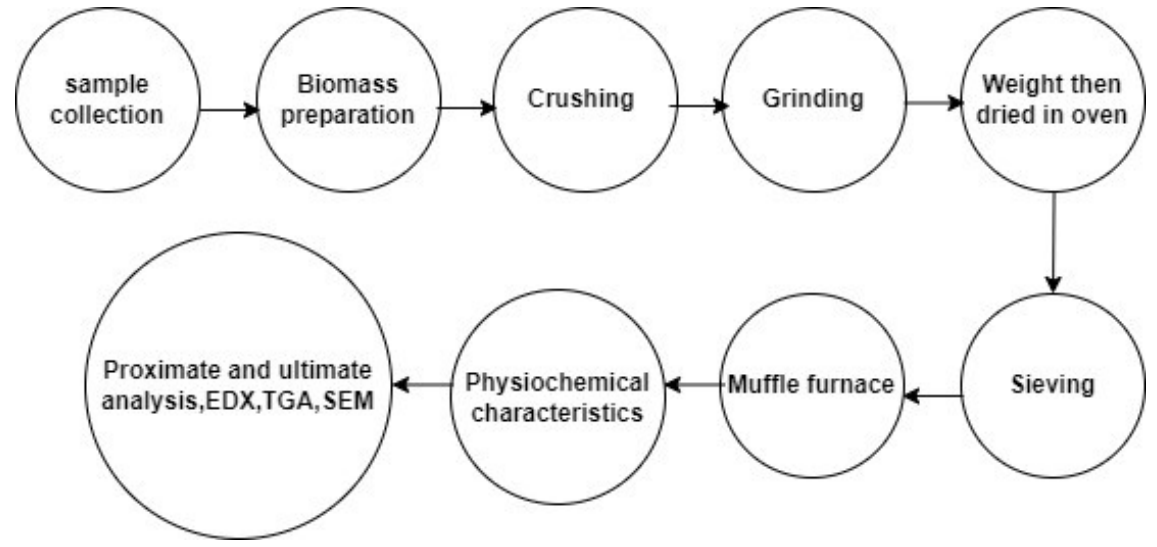
Extraction of lignin for feedstock
In the extraction of lignin from four distinct Bm types, temperature, duration, solid-to-liquid ratio and solvent selection were relevant in ensuring high value and purity. While solid-to-liquid ratio was standardized at 1:15 in all tests, the approach employed a two-weight-percent NaOH solution. Thus, 20g NaOH were combined with 1000 mL distilled water, and oven-dried for 5 h, at 100 °C, with various changes made to the specifications.
The next step was to combine Bm samples from AS, BTB, NTB and WnS with the liquor solution at a 1:20 ratio. It involved using an oven, at 100 °C, to dry 45 g Bm and 1000 mL liquor. Following that, a sample of Bm was added to the beaker, and lignin was removed from the combined liquid with filter paper. Filtration was used to recover the pretreated Bm. All tests were consecutively performed using a hot plate stirrer and H2SO4, after the Bm was washed with distilled water, to remove excess alkali. It was then stored in soft bags for further testing. TGA was used to characterize extracted lignin.
Results and discussion
Analysis of lignin extraction
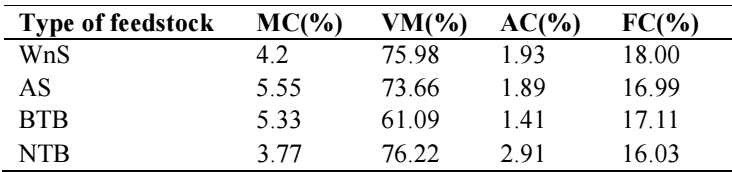
In the laboratory, proximate and ultimate analyses were done to examine the feedstock. Tables 1 and 2 depict the results, which show that AS, BTB, NTB and WnS are suitable as sustainable sources for feedstock. Through proximate analysis, it was possible to determine the Ct of material that was transformed into gaseous (VM), solid (FC) and inorganic (AC) waste forms. This was accomplished by the use of standardized techniques that measured AC, FC, MC and VM. The successful implementation of Bm in energy applications requires this thorough understanding. The laboratory setting emphasizes why AS, BTB, NTB and WnS are suitable for use as Bm, given their advantageous properties (Table 1).
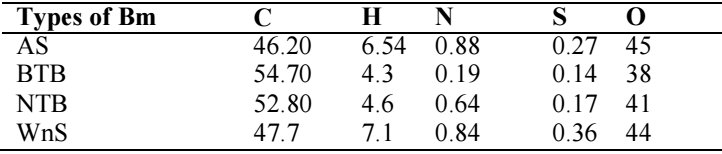
The last evaluation comprised determining Ct from C, H, N, O and S using a specific procedure. Notably, it was discovered that NTB and BTB had higher Ct from C than WNS and AS, which produced higher heating value. S was carefully handled, since it releases SOx into the environment. Also, N can result in higher quantities of NOx. Laboratory tests were performed on AS, BTB, NTB and WnS samples, to obtain Bm, which was treated with alkali. AC, FC, MC and VM of those Bm were investigated (Table 2). These analyses provided important new information on the potential uses of these Bm in different contexts.
Spectroscopic characterization of lignin
Catalysis deoxygenation is a biofuel production promotion technology that employs minerals such as Al2O3, CeO2, SiO2, TiO2 and ZrO2. It reduces the Ct of O, which can cause instability and corrosion. Using certain Al2O3-TiO2 metal oxide catalysts is necessary to produce the required Ct of biofuel. To achieve the ideal hemicellulose levels, a two-step pretreatment procedure using alkali and acids was employed. The study’s conclusion delves into the restrictions, obstacles, commercial prospects and potential for developing cost-effective and eco-friendly ways for long-term value use of lignocellulose materials. Hydroxyl groups in phenolic and aliphatic structures cause the wide band between 3410 and 3460 cm-1 in all lignin’s samples. Table 3 shows that a 4 h period produced 12% BTB, which is a good outcome.
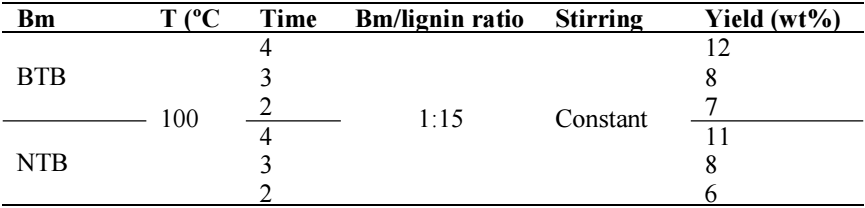
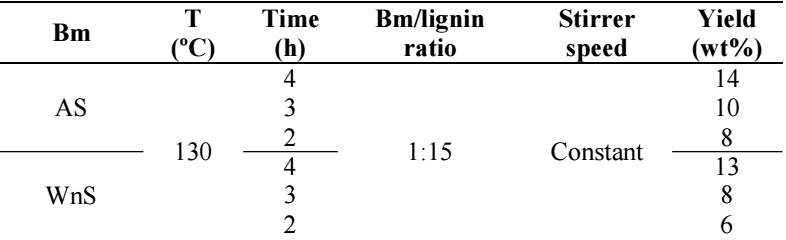
In Table 4, an AS yield of 13%, at 130 °C, after 4 h, was also considered a satisfactory result. With higher temperatures, yield increased.
Based on various Bm-to-liquor ratios, lignin extraction findings, including yields and time, are illustrated in Fig. 2(a) and (b).
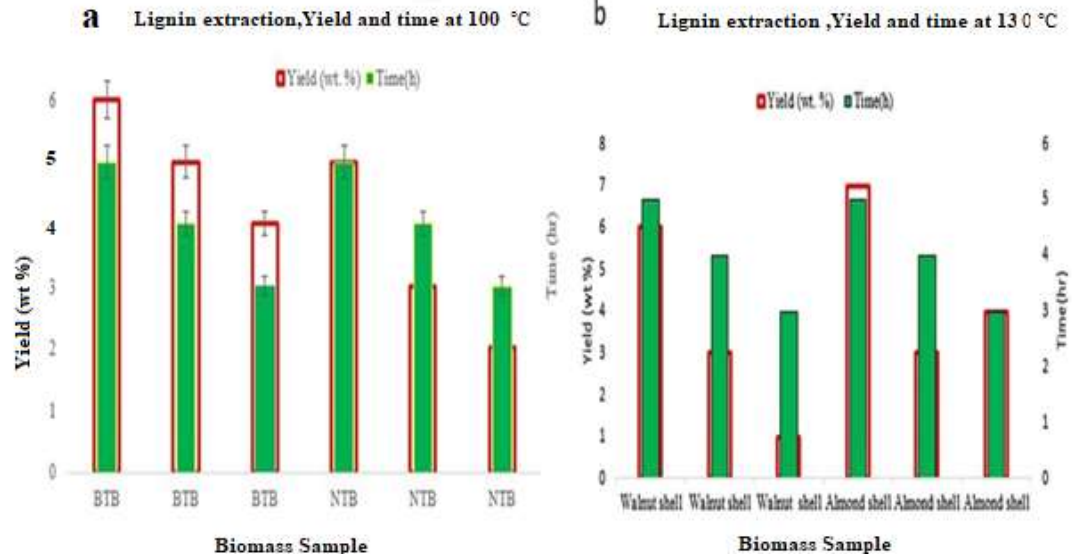
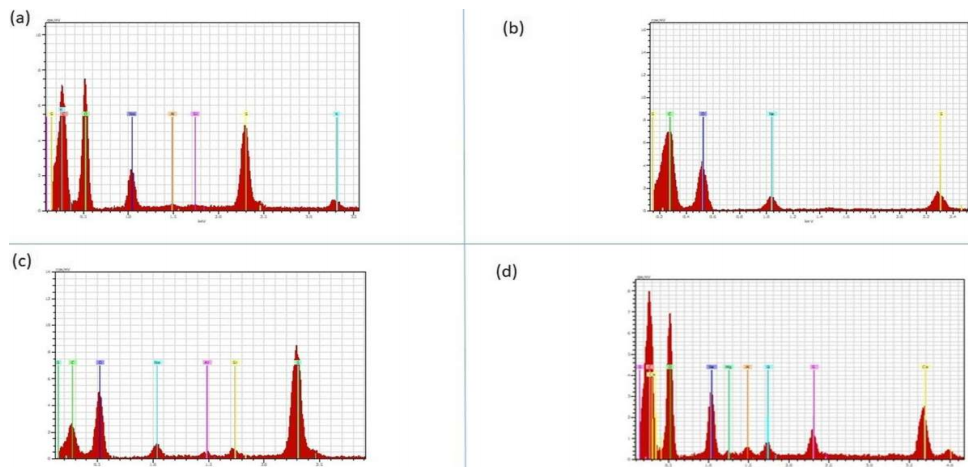
Ct from S in lignin was determined by EDX analysis. For lignin from WnS, it was 7.46%, whereas for AS it was 2.82%. Figs. 2(a) and (b) show these changes in Ct from S. A yield analysis was performed for every experimental condition, offering a summary of the attained outcomes.
EDS
Fig. 3 shows EDS of all Bm samples. The bands at 2938 and 2842 cm-1 were mostly due to CH stretching, which comprises methyl/methylene groups along the side chains, and fragrant methoxyl compounds. Strong bands in this location are notably visible in hemp, which is jute, and wheat lignin, with peaks at 2917 and 2847 cm-1. These peaks were caused by CH stretching in aromatic methylene groups, which might be derived from fatty acids that are detected in lignin compositions.
TGA
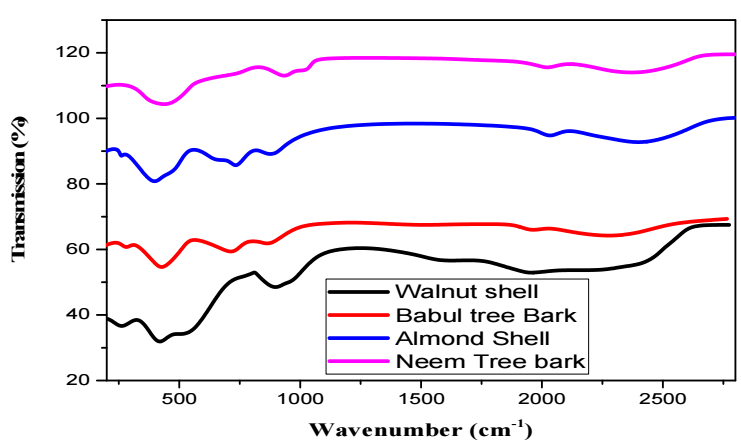
TGA was conducted on Bm isolated from AS, BTB, NTB and WS lignin. Fig. 4 shows that, in a TGA curve plot, when the sample Ct decreased with increasing temperatures, it implied mass loss or breakdown. A negative TGA curve can represent a multitude of environmental conditions.
SEM
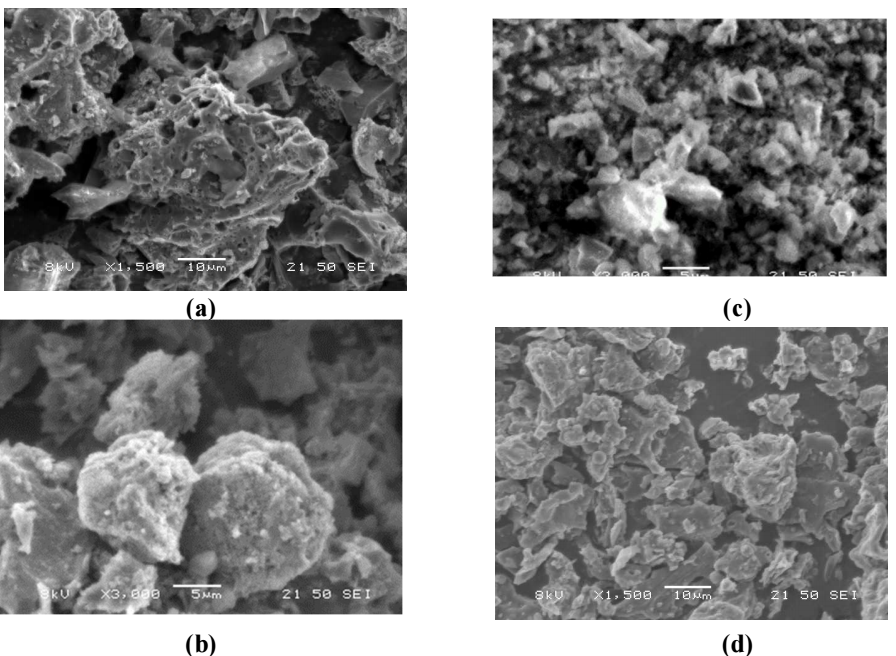
Fig. 5 shows SEM images of lignin in several substrates. SEM uses an electron beam to create a high-resolution picture of the sample surface morphology. For acylating agents, erosion and with the side chain length contributed to the surface layer. The thickness of several components found in AS, BTB, NTB and WNS, such as cell walls, fibers and structures, were herein quantified using SEM.
Challenges and perspectives
Lignin is a naturally existing chemical material that may be used to synthesize biofuels. Priorities should be given to tackling the urgent problem of shifting away from fossil fuels, towards more eco-friendly Bm options, given the growing demand for sustainable energy sources. Current renewable energy sources show significant promise for producing biofuels. Thus, it is critical to examine the characteristics of lignin Ct assessment method within the technology development framework.
With that in mind, this study explored various lignin conversion pathways, addressing important problems in the biofuel manufacturing process. Catalytic deoxygenation is a process that produces biofuel by using materials like SiO2, ZrO2, CeO2, TiO2 and Al2O3, and lowers Ct from O, thus minimizing instability and corrosion. Using certain Al2O3-TiO2 metal oxide catalysts is necessary to produce the required Ct of biofuel. To achieve the ideal hemicellulose levels, a two-step pretreatment procedure utilizing alkali and acids was herein used.
Conclusions
Lignin can be used in different applications, such as adhesive, plastics, rubber, coatings, and aromatics materials. This work involved the extraction of lignin from AS, BTB, NTB and WnS sources of Bm. Varying parameters such as time and temperature had more effect on the yield of lignin extracted from lignocellulose material. Lignin yields were: for AS, 8%, at 2 h, and 14%, at 4 h; for BTB, 8% yield, at 3 h, and 12%, at 4 h; for NTB, 6%, at 2 h, and 11%, at 4 h; for WnS, 13%, at 4 h. Solid lignin value influenced extraction yield, with very low Ct from AS and NTB. Alkali and acids were employed in the procedure. TGA, EDX and SEM were used for characterizing extracted lignin.
Abbreviations
AC: ash content
AS: almond shell
Bm: biomass
BTB: Babul tree bark
C: carbon
Ct: content
EDX: energy dispersive spectroscopy
FC: fixed carbon
H2SO4: sulfuric acid
MC: moisture content
N: nitrogen
NaOH: sodium hydroxide
NTB: neem tree bark
O: oxygen
S: sulfur
SEM: scanning electron microscopy
TGA: thermo gravimetric analysis
VM: volatile matter
WnS: walnut shell

