




 Inglês (pdf)
 Artigo em XML
 Referências do artigo
 Tradução automática
 Enviar este artigo por email
 Citado por SciELO
  Similares em
SciELO
Similares em
SciELO 
 Permalink
Introduction
Aza non-steroidal anti- inflammatory medications include benzotriazine-1,3-dione 1-4. By inhibiting cyclooxygenase, which transforms arachidonic acid into cyclic endoperoxides, precursors of prostaglandins, they prevent prostaglandins production. These drugs also have analgesic, antipyretic, platelet-inhibitory and anti-inflammatory effects, which are explained by the inhibition of prostaglandin synthesis. However, additional mechanisms may also be involved in their anti-inflammatory properties, Gold Shield produces it under brand name Rheumox 1.
British National Formulary 60 no longer includes Aza. Scheme 1 provides its molecular structure. It has a powerful anti-inflammatory effect by inhibiting the production of oxygen radicals that damage tissue, interleukin-1 produced by synovial tissue, the accumulation and possibly degranulation of leukocytes, and the release of autolytic enzymes from lysosomal bodies 5.
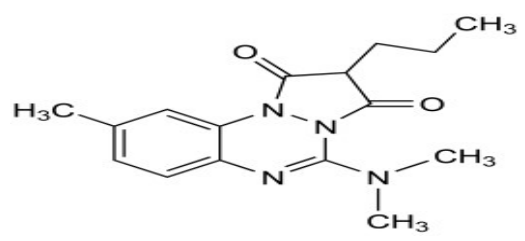
Aza undergoes hepatic metabolism where it is transformed into its 8-hydroxy form (Mi307), in the same reactivity sequence as the parent molecule. There is a growing interest in using pharmaceutical substances for treating diseases and improving body functions. Huge numbers of new drugs are annually introduced, and up to date, more than 100,000 dosage forms and 10,000 medicinal substances are registered worldwide 6-9. Monitoring the drug residues in pharmaceutical formulations, and their metabolites in bodily fluids, is of utmost importance for many research studies 10. Different methods have been reported for the Aza drugs determination, including TLC 3) and HPLC 11-16. While electrochemical approaches have shown to be particularly sensitive for the detection of organic compounds, including medicines and related chemicals in pharmaceutical dosage forms, and their oxidizeable properties, the majority of these technologies are either difficult to use or unavailable. Carbon electrodes, particularly GCE, are frequently used in electrochemical experiments, due to their low background current, large potential windows, chemical inertness, low cost and suitability for the detection of numerous organic and biological chemicals. They have been widely used, because of their distinct qualities, including their adaptability to chemical manipulation. To the best of our knowledge, there are no electrochemistry experiments on Aza at the Au electrode in an aqueous BRB solution as an impartial electrolyte. Aza examination employing CV, ConvV and DSM is therefore herein described. Experimental work was done to determine chemical and electrochemical parameters, and DSM was used to verify them. Thus, this article presents an electrochemical study of Aza at an Au electrode in a mildly acidic medium of a universal BRB solution with pH 4.0, using CV, ConvV-DeconvV transforms and DSM at various SR values.
Experimental
Chemicals
Aza was purchased from Egypt-based Delta Pharma Pharmaceutical Co. As-dried; the sample’s purity was 99.8%. Aza was dissolved in 10 mL methanol, and the mixture was then completed to 50 mL in a measuring flask with bidistilled water, to yield 5 x 10⁻⁴ M stock solutions. For a week, the solutions were kept in a fridge. A universal BRB solution with pH 4.0 17 was employed as supporting electrolyte. Analytical-grade reagents were used to create the solutions in bidistilled water. Prior to each electrochemical measurement, Au electrode was manually polished with 0.5 μm alumina powder on a smooth polishing cloth. Then, it was cleaned with double-distilled water and methanol, before being dried with tissue paper.
Instrumentation
Micro-Autolab type III systems were used to conduct electrochemical tests in a conventional 3-electrode cell (Eco Chemie, NL). An Au electrode disc, Ag/AgCl and Pt wire were employed as working, reference and counter electrode, respectively, with 3 M KCl. BRB pH was measured using a glass combination electrode and a digital pH/mV meter (JEANWAY 3510). Through the use of finite difference techniques, EG and G condesim software, data were examined by DSM. DSM software’s algorithms were coded and applied. All measurements were performed at ambient temperatures.
Results and discussion
CV behaviour
CV experiment was conducted to understand voltammetric behaviour of Aza redox reactions on Au disc electrode. CV images of 5.0 x 10⁻⁶ M Aza on Au electrode at SR of 360 mV/s in a BRB with pH 4 are shown in Fig. 1.
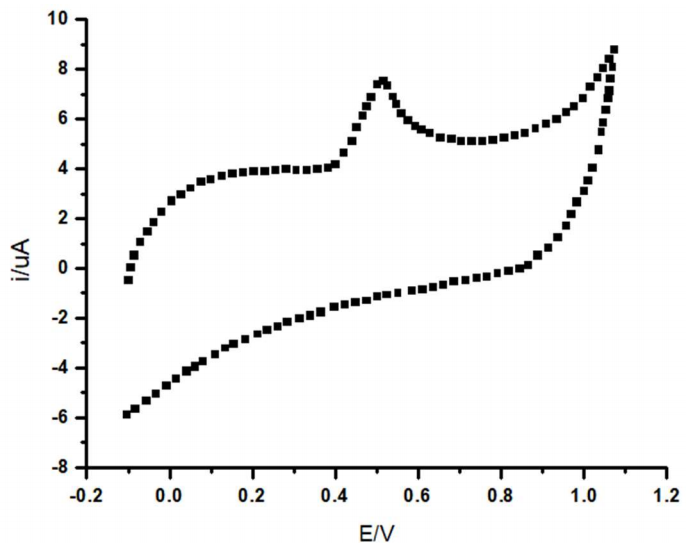
Aza revealed to be an electroactive drug during the initial scan. It was oxidised at Au electrode between 0.0 and 1.1 V, yielding one distinct, irreversible oxidation peak that could be seen at 0.544 V on the anodic scan. The absence of a reductive peak in the reverse scan established an irreversible electrochemical process paired with a quick chemical reaction immediately after electron transfer process.
Effect of SR
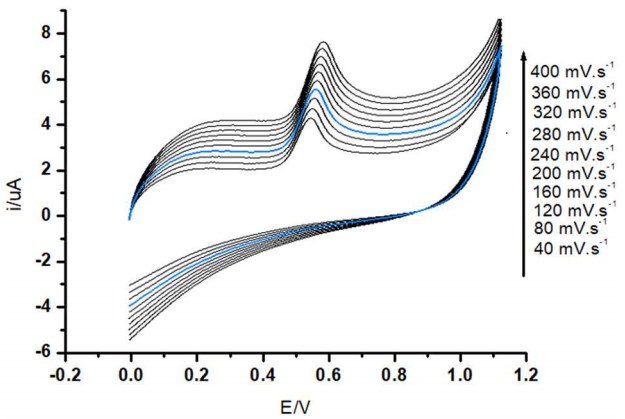
Fig. 2 shows that when SR rose, anodic i p location shifted towards more positive potentials, and i p height rose, which could be due to the somewhat quick electron transfer rate of the oxidative process at Au electrode. To understand the behaviour and reversibility of electrode reactions, the influence of SR potential on the electrochemical process was examined.
A representation of anodic ip obtained from a CV of 5 x 10⁻⁶ M Aza with pH 4.0 at the Au electrode using SR square root “(v)1/2” and SR “(v)” is shown in Fig. 3.
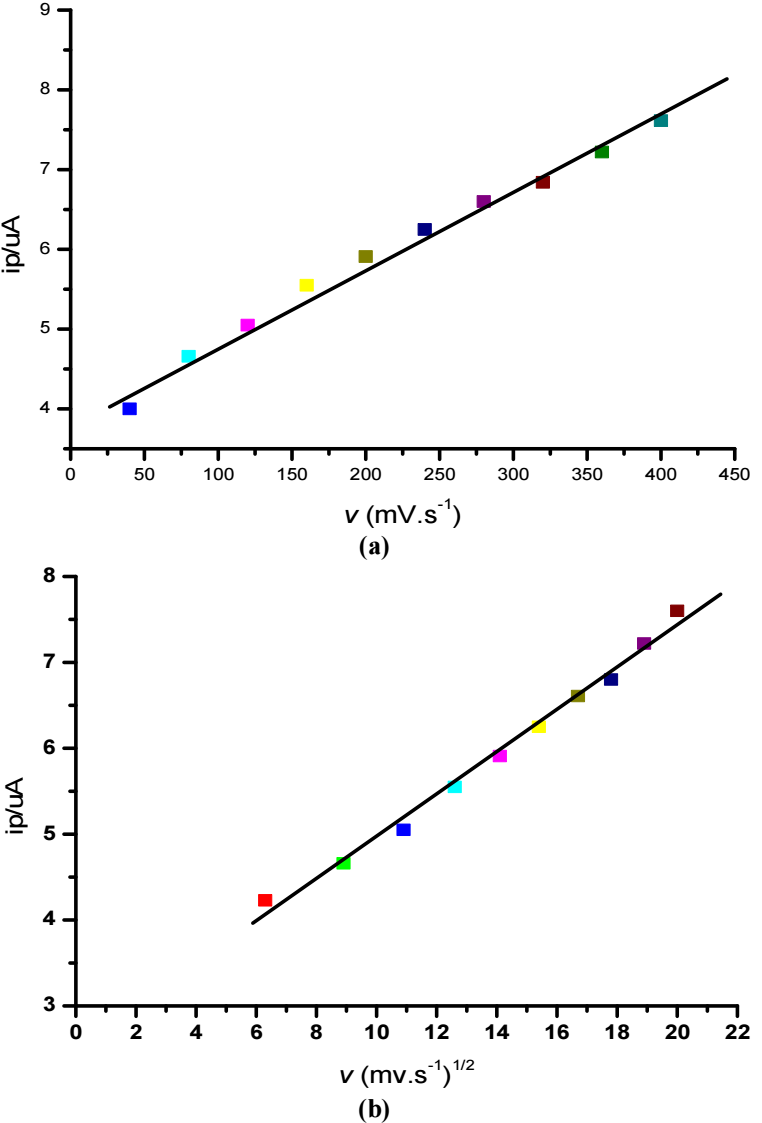
Oxidation i p height was observed to grow with SR, as “(v)1/2’’ and “(v)” of Aza had a good linear relationship. This behaviour was consistent with the notion that Aza species are transported in large quantities on Au electrode by a process that is mostly controlled by diffusion, with some adsorption 18.
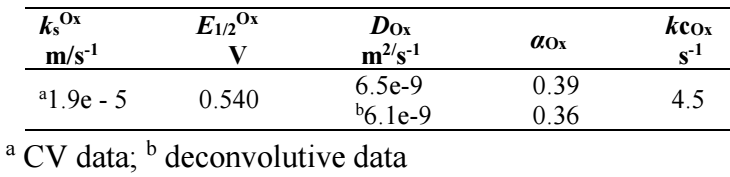
According to the slope of i p vs. v 1/2, Table 1 shows values of D.
Table 1: Values of electrochemical parameters obtained from ordinary Au electrodes.
a CV data; b deconvolutive data
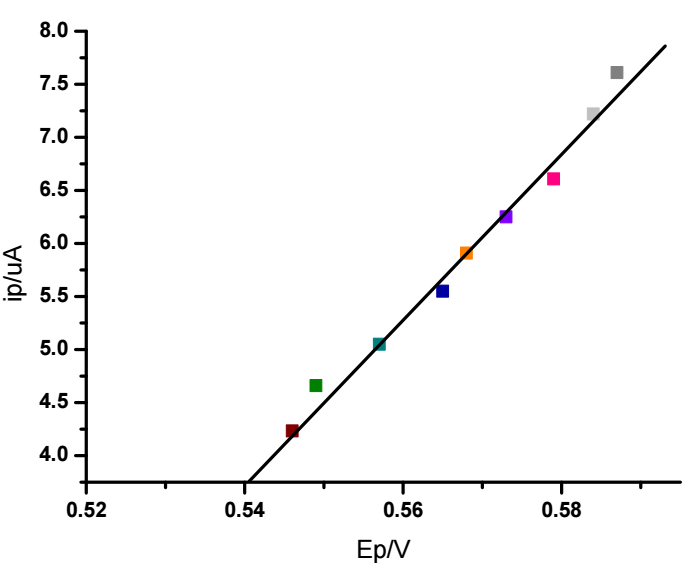
It was found that faster SR (v) increased current and shifted E p to more positive values. E p and i p were highly correlated, although there have been few quantitative studies on this connection. E 1/2 should be approximately equal to the extrapolation to zero current potential for each straight line 19.
Oxidative transfer coefficients were determined using Eq. (1) 20.
 (1)
(1)
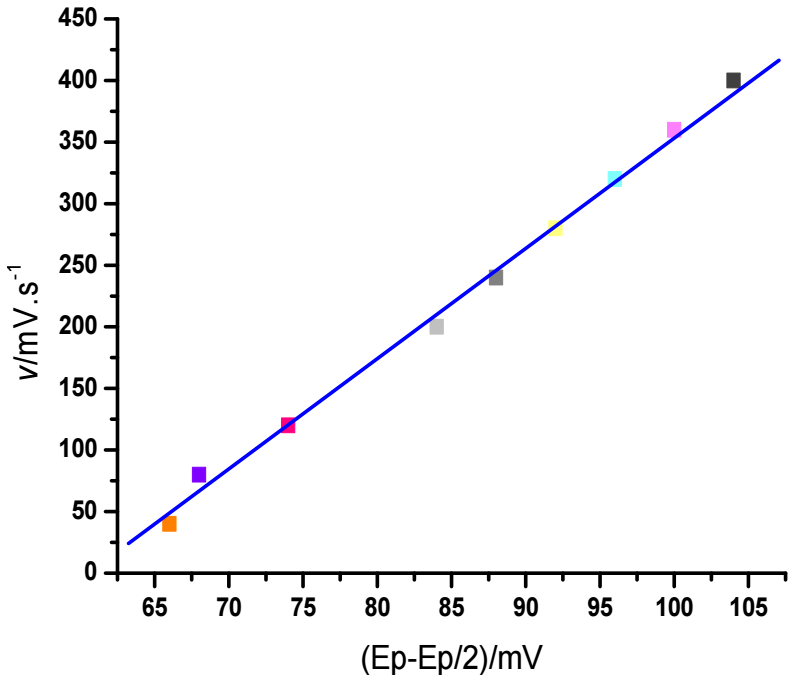
Additionally, D values were calculated using i p equation and ’v 1/2’ 20 (Table 1). Heterogeneous rate constant k s values were determined from 'E p-E p/2' vs. dimensionless parameter ‘’ψ’’, as established in literature 21.
E p-E p/2 values were in the range from 68 to 103 mV, for the chosen SR. They increased with higher SR, as seen in Fig. 4, which led to Aza’s redox reaction having a quasi-reversible system for k s rate.
Plotting i pa against E p, as seen in Fig. 5, is one method for assessing potential shift.
ConvV
CV examination was followed by convolutional mathematical transformation. The method is relatively insensitive to iR decrease and yields quantities that are directly connected to the concentration of electroactive species at the electrode surface (as opposed to the flux of a compound, as in original approaches).
In the event of a straightforward electron transfer mechanism for electroactive species A, it was discovered that Fick's Second Law might be expressed as 20:
 (2)
(2)
This equation may be solved at the electrode to provide
 (3)
(3)
where I 1 signifies current semi-integration, which is defined as in 22:
 (4)
(4)
Under pure diffusion-controlled situations [i.e., when C (0,t) = 0], I 1(t) gives its limiting value, I lim:
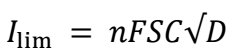 (5)
(5)
Semi-integration changes the shape of the cyclic curve (i-E) into an S-shaped plot of I(t)-E curve, which results in a steady-state curve and, in some situations, is more adaptable for data processing 20. To accurately assess I 1(t), Eq. (6) was employed 20:
 (6)
(6)
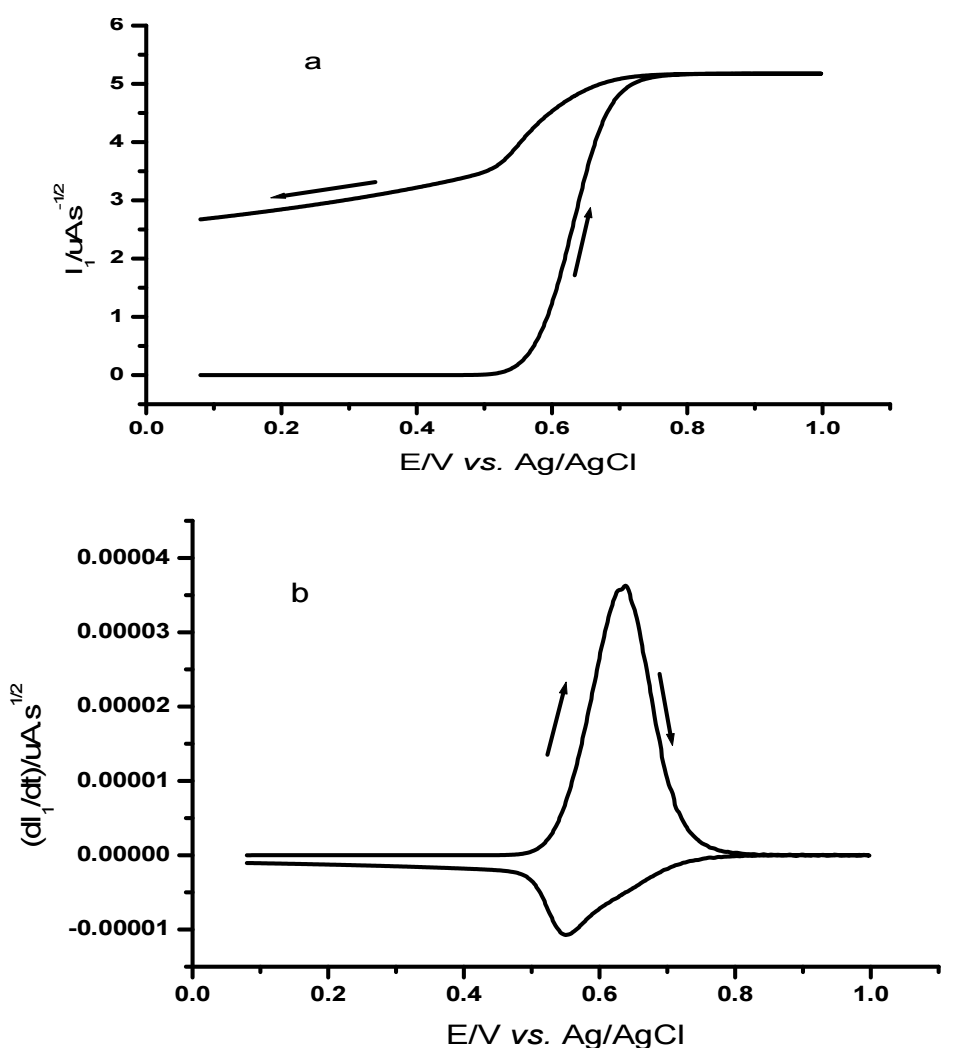
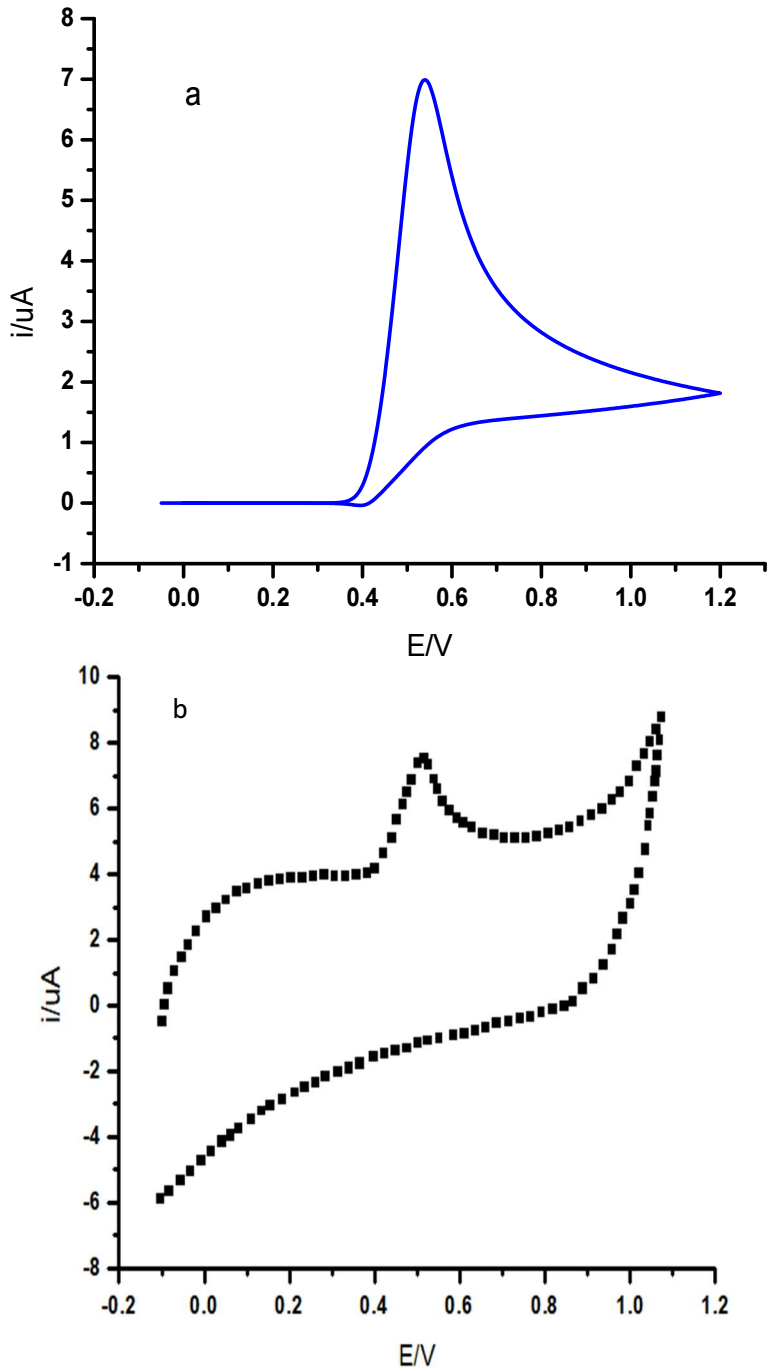
The current at equal intervals of time is represented by i(jΔt), while gamma function of x is represented by Γ(x). Aza’s I 1 convolution curve at the Au electrode is shown in Fig. 6a, which clearly distinguishes forward and backward sweeps, when driven in the opposite direction 21,22. The slow electron transport rate may explain these phenomena. Furthermore, the inclusion of a chemical step in the redox pathway of Aza molecule at the Au electrode surface was confirmed by the fact that the backward scan of I 1 convolution could not return to zero.
DeconvV was defined as by 23,24:
 (7)
(7)
The symbols a and ζ are defined as follows:
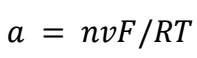 (8)
(8)
 (9)
(9)
DeconvV curve at an ordinary Au electrode with v = 320 mV/s-1 is displayed in Fig. 6b. The half-width of the deconvoluted peak should be 19:
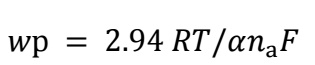 (10)
(10)
Experimental measurements showed that half-width of the deconvoluted peak at half of its own height (w p) was 95 mV, indicating that the electron transport of Aza at the Au electrode surface appeared to be moderate. Table 1 contains the values of symmetry factor (α), as determined by Eq. (10). Additionally, the absence of a deconvolutive peak in the reverse direction indicates and validates the conclusion of a quick chemical reaction that followed Aza’s electro oxidation.
The DeconvV peak height was used for calculating D via Eq. (11) 24 (Table 1).
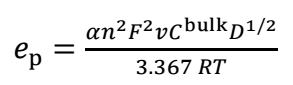 (11)
(11)
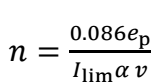
The remaining parameters have their recognized meanings, while the symbol e p stands for E p (in amperes). Table 1 lists D values that were established using Eq. (11). The number of electrons engaged in the mechanistic pathway was also determined using Eq. (12).
 (12)
(12)
For the electrode reaction of Aza, the calculated number of electrons, n, involved in the electrode reaction via Eq. (12), was found to be 2.01. As demonstrated, the aforementioned equation offers an effective and straightforward technique for figuring out how many electrons were spent in the electrode reaction without knowing its surface area. I 1 vs. E and (dI 1/dt) vs. E curves were found to be easier to understand and establish the electrode reaction’s nature based on the aforementioned data.
DSM
DSM is a crucial and effective tool for understanding the type of mechanistic pathway of electrode reactions and for theoretic calculation of kinetic parameters 25,26. For anodic electrode reactions, the transfer coefficient, E 1/2, D and heterogeneous rate constants were experimentally calculated and verified by DSM 21,23,26. Electrochemical parameters that showed the least amount of variation between the numerically simulated curves and the experimental plots were compared between experimental and theoretical curves. Wave parameters shown in Table 2 support the proposed mechanism and the reliability of Aza compounds’ determined electrochemical properties.
Table 2: simulated and experimental wave parameters.

aSimulated wave parameters; bExperimental wave parameters.
Theoretical and recorded experimental CV, as shown in Fig. 7, support the validity of EC mechanistic route of the electrode reaction and the precision of electrochemical parameters experimentally derived.
Conclusion
In this article, we studied the 5 x 10⁻⁶ M Aza electrochemical behaviour at Au electrode in a pH 4.0 universal BRB solution. This behaviour proves that a chemical process took place after the charge transfer. The accuracy of the electrochemical parameters found experimentally was confirmed, and the mechanistic pathway of the electrode reaction was determined, using the good agreement between theoretical and experimental CV. The observed results suggested that the electrode reaction’s mechanistic route should function as an EC mechanism.
Authors’ contributions
Ibrahim S El-Hallag: suggested the idea of the article and performed the experimental part. Ahmed A. Al-Owais: wrote the article and elucidated the obtained results. El-Sayed H. El-Mossalamy: did DSM, revised the article and provided the compound under consideration. H. M. Hendawy revised the article and proof version.
Statements and declarations
The authors declare that they have no known competing financial interests or personal relationships that could have appeared to influence the work reported in this paper.
Conflict of interests
The authors declare no conflict of interest.
Abbreviations
Ag: silver
AgCl: silver chloride
Au: gold
Aza: Azapropazone (5-dimethylamino-9-methyl-2-prop-2-enylpyrazolo)
BRB: Britton-Robinson buffer
ConvV: convolution voltammetry
CV: cyclic voltammetry
D: diffusion coefficient
DeconvV: deconvolution voltammetry
DSM: digital simulation method
E1/2: half-wave potential
Ec: electron transfer followed by chemical reaction
EC: electrolysis mechanism
ep: height of deconvolution voltammetric peak
Ep - Ep/2: half-peak potential width
GCE: glassy carbon electrode
HPLC: high-performance liquid chromatographic method
I1: convolution current
ip: peak current
ir: decrease in effective potential applied to the electrochemical double layer.
KCl: potassium chloride
Ks: heterogeneous electron transfer
Redox: reduction/oxidation reactions
S: surface electrode area
SCE: saturated calomel electrode
SR: scan rate
SWV: square wave voltammetry
TLC: thin-layer chromatography
wp: half-width of the deconvoluted peak

