




 Inglês (pdf)
 Artigo em XML
 Referências do artigo
 Tradução automática
 Enviar este artigo por email
 Citado por SciELO
  Similares em
SciELO
Similares em
SciELO 
 Permalink

Introduction
Population ageing has intensified in recent decades, placing increasing pressure on healthcare systems and on continuing and long-term care structures. It is estimated that by 2050, more than 30% of the European population will be over 65 years of age (Eurostat, 2022), which translates into greater demand for long-term care facilities (LTCFs). These institutions largely accommodate individuals with multiple comorbidities, functional dependence, immunological frailty, and high exposure to invasive devices - factors that significantly increase the risk of healthcare-associated infections (HAIs) (Montoya & Mody, 2011).
Unlike previous reviews that mainly addressed the prevalence and microbial etiology of HAIs in LTCFs (e.g., Nicolle, 2014; ECDC, 2019), this study focuses on the temporal dimension of infection onset, questioning the adequacy of the traditional 48-hour definition for identifying HAIs in post-acute and long-term care contexts. By mapping evidence on infections manifesting between the 3rd and 5th day after admission, this review highlights the need to reconsider current surveillance parameters that may inadvertently attribute pre-existing infections to LTCFs.
This distinction is crucial for infection-prevention policy and quality-of-care monitoring, as it supports more accurate case attribution, enhances the validity of surveillance data, and informs tailored control strategies aligned with the clinical trajectories of institutionalized older adults.
1. Theoretical framework
HAIs are a significant clinical and epidemiological challenge, as they are one of the main causes of morbidity, mortality, and prolonged use of antimicrobials in LTCFs (ECDC, 2019). However, a critical and often overlooked aspect of surveillance for these infections is the timing of symptom onset. According to classic definition criteria, an infection is considered healthcare-associated if symptoms appear within 48 hours of admission (CDC, 2022). However, this approach becomes problematic in elderly residents, as many infections may be in the incubation period at admission, or result from previous colonization, manifesting only between the 3rd and 5th day of hospitalization (Lessler et al., 2009; Falsey, 2005).
For example, common etiological agents such as Escherichia coli, Klebsiella pneumoniae, Staphylococcus aureus, and respiratory viruses (such as influenza and RSV) have average incubation periods of between 2 and 5 days (Lessler et al., 2009), which means that obvious symptoms may only appear after the second or third day of hospitalization - even if the infection was acquired before admission to the institution.
In addition, studies show that prior colonization by multidrug-resistant microorganisms is highly prevalent upon admission, especially in residents with recent hospitalizations, catheter use, or antibiotic use in the previous weeks (Cassini et al., 2019; Arons et al., 2020). This colonization increases the risk of progression to active infection in the first few days, without necessarily being an infection acquired in the LTCF (Weber et al., 2018).
The automatic classification of any infection that manifests after 48 hours as SSI may thus result in institutional overdiagnosis, skewing quality indicators, and compromising the correct allocation of infection prevention and control resources (Stone et al., 2012). This is particularly serious in LTCFs, where surveillance protocols are often adapted from hospital criteria without considering the clinical and epidemiological particularities of institutionalized elderly people.
In view of this problem, there is a need for a critical analysis of the available evidence on the timing of infection onset in elderly residents. Specifically, it is essential to understand the extent to which the onset of symptoms between the 3rd and 5th day after admission should or should not be considered as HAIs, based on updated clinical, microbiological, and epidemiological criteria.
2. Methods
This scoping review was conducted following the updated methodology of the Joanna Briggs Institute (JBI) and reported according to the PRISMA extension for scoping reviews (PRISMA-ScR). Although the protocol was not prospectively registered in the Open Science Framework (OSF) or JBI Systematic Review Register, all methodological steps were strictly followed by the JBI guidelines for scoping reviews. The choice of a scoping review is justified by the need to map the existing literature on healthcare-associated infections (HAIs) in institutionalized older adults, especially regarding the manifestation of symptoms between the 3rd and 5th day after admission, an area that is still under-explored and with scattered evidence.
The main objective of this review was therefore to identify and map the available evidence on the occurrence and classification of HAIs in elderly residents of long-term care facilities, with an emphasis on the interval between the 3rd and 5th day after admission.
In addition to peer-reviewed publications, grey literature such as institutional reports, theses, and national surveillance documents was considered in the initial search strategy, although not systematically analysed due to heterogeneity in reporting formats.
Eligibility criteria defined
Inclusion criteria:
Population: Older adults (≥ 60 years);
Concept: HAIs diagnosed in the context of LTCFs;
Context: Long-term care facilities (LTCFs);
Type: Original articles, systematic reviews, and clinical guidelines.
Exclusion criteria:
Studies in acute hospital or home settings;
Non-elderly populations;
Opinion articles, comments, letters to the editor.
The search was conducted in the PubMed, Scopus and CINAHL Complete databases between February and April 2025. The following MeSH terms and keywords were used in combination with Boolean operators: (‘Aging’ OR ‘Elderly’) AND (‘Healthcare-Associated Infections’ OR “HAIs” OR ‘Nosocomial Infections’) AND (‘Long-Term Care Facilities’ OR ‘LTCF’).
The search was limited to studies published in English and Portuguese, which may represent a potential language bias.
Study selection was carried out in two stages: (1) title and abstract screening and (2) full-text reading. Both stages were independently performed by two reviewers, and discrepancies were resolved through discussion or consultation with a third reviewer.
This methodological transparency aims to enhance reproducibility and rigour in the identification of evidence related to healthcare-associated infections in LTCFs.
3. Results
Data from the included studies were extracted using a standardized form, covering information on: authors, year of publication, country, type of study, population, type of infection, incubation period, and relevant conclusions. Additionally, study design, sample characteristics, country of origin, and main limitations reported by the authors were systematically recorded to enhance comparability and transparency. Data analysis was performed descriptively, grouping studies by type of infection and time of symptom onset. The results were summarised in tables and narratives, highlighting the main evidence on the occurrence of HAIS in institutionalized elderly people and the relevance of the time of symptom onset for their classification.
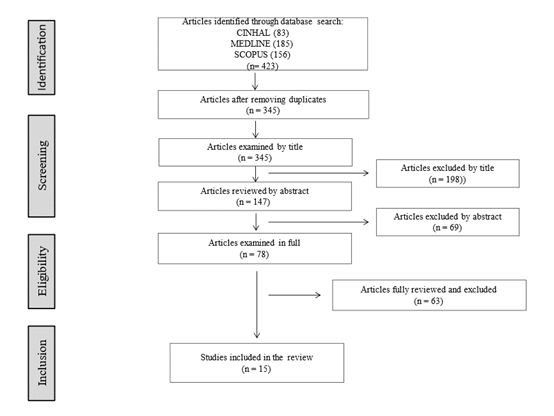
Most studies were identified in PubMed (44%), followed by Scopus (37%) and CINAHL (19%). Approximately 18% of the initial records were duplicates. Exclusion by title (indicator of immediate thematic irrelevance) was the most eliminatory step. During full-text screening, studies were excluded primarily for one of the following reasons: (i) population not meeting the inclusion criteria (non-elderly or community-dwelling adults); (ii) absence of information on incubation period or infection onset; (iii) context unrelated to long-term care facilities. The 15 final articles represent the studies most aligned with the issue of infection onset between 3 and 5 days after admission to LTCFs (Figure 1). The studies included systematic reviews, observational studies, technical guidelines, and surveillance analyses.
The studies revealed that many infections that manifest between the 3rd and 5th day after admission may have a pre-institutional origin, either from incubated infections or previous colonisations.
Montoya & Mody (2011) highlight that urinary tract infections (UTIs) and respiratory infections in older adults often present with subtle symptoms and are underdiagnosed or detected late. Cassini et al. (2019) report that the most common etiological agents in LTCFs - such as E. coli, S. aureus, and K. pneumoniae - have incubation periods of 2 to 5 days, with clinical manifestations occurring only after the third day.
Lessler et al. (2009) conducted a systematic review of respiratory viruses, concluding that the incubation periods for influenza, parainfluenza, and RSV vary between 2 and 7 days, with an average of 3 to 5 days, which corroborates the possibility of incubation at admission. Similarly, Falsey (2005) observed that RSV in the elderly has an incubation period of 4 to 6 days.
Arons et al. (2020) described a COVID-19 outbreak in LTCFs in the USA where residents developed symptoms up to 5 days after admission, but epidemiological analysis suggested infection acquired previously in the community. Studies such as that by the ECDC (2019) show a high rate of colonization by MRSA and ESBL upon admission to LTCFs, with implications for the risk of infection in the first few days.
Stone et al. (2012) question the strict use of the ≥48h criterion for defining HAIS, proposing surveillance adapted to the reality of LTCFs. The CDC (2022) admits that this criterion was designed for acute care hospitals and should be used with caution in geriatric settings.
Weber et al. (2018) show that environmental contamination in LTCFs can precipitate early symptoms without constituting a true nosocomial infection. The WHO (2021) also reinforces the importance of assessing clinical and epidemiological history before classifying an infection as HAIs.
Peters et al. (2020) advocate the use of scoping reviews precisely in areas where clinical and epidemiological criteria are contested, as in the case of HAI surveillance in the elderly. Tricco et al. (2018) add that these reviews are suitable for mapping divergent practices and gaps. A summary of the main results is presented in Table 1.
Table 1 Summary of the findings of the included studies
| Author/Year | Study Design | Country | Population | Type of Infection / Theme | Main Findings | Key Limitation |
|---|---|---|---|---|---|---|
| Montoya & Mody (2011) | Observational | USA | Older adults in LTCFs | UTI, respiratory | Atypical symptoms hinder early diagnosis and delay treatment | Limited sample; single-center |
| Cassini et al. (2019) | Surveillance analysis | Europe | LTCF residents | Various HAIs | Incubation period of 2-5 days common, onset may occur post-admission | Aggregated data; no age stratification |
| Lessler et al. (2009) | Systematic review | Multinational | Adults (including elderly) | Respiratory viruses | Average incubation 3-5 days; infection may precede admission | Heterogeneity of included studies |
| Falsey (2005) | Observational | USA | Older adults | Respiratory Syncytial Virus (RSV) | Incubation 4-6 days; late symptom onset frequent in elderly | Small cohort; no control group |
| Arons et al. (2020) | Outbreak analysis | USA | LTCF residents | COVID-19 | Symptoms up to day 5 suggest prior community infection | Pandemic-specific context |
| ECDC (2019) | Surveillance report | Europe | LTCF residents | MRSA / ESBL (colonization) | High colonization rates at admission; increased early infection risk | Non-comparative data; no follow-up |
| Stone et al. (2012) | Narrative review | UK | Staff and residents in LTCFs | Surveillance / HAI criteria | Advocates revision of ≥48h criterion for LTCFs | Conceptual discussion; no empirical data |
| Weber et al. (2018) | Observational | USA | LTCF residents | Environmental infection | Environmental contamination may trigger early symptoms without true HAI | Lack of longitudinal environmental control |
| WHO (2021) | Technical guidance | Global | LTCFs / geriatric institutions | Infection prevention and surveillance | Emphasizes contextual clinical-epidemiological assessment | Guidance document; non-empirical |
| Peters et al. (2020) | Methodological review | Canada | N/A (methodological) | Scoping reviews in health research | Scoping reviews suited for areas with debated criteria | Theoretical discussion |
| Tricco et al. (2018) | Methodological review (PRISMA-ScR) | International | N/A (methodological) | Reporting standards | Highlights need to map divergent practices and gaps | No empirical data |
| Ariza-Heredia et al. (2020) | Observational | USA | Older adults with bacterial infections | Bacterial infections | Variable incubation often exceeding 72h | Heterogeneous population |
| Nicolle (2020) | Observational | Canada | Older adults in LTCFs | UTI | Urinary colonization often precedes clinical infection | Single-center data |
| Dosa et al. (2021) | Prospective study | USA | Older adults in LTCFs | Pneumonia | Late symptoms may reflect infections incubated prior to admission | Challenges in early diagnosis |
| Haenen et al. (2019) | Longitudinal surveillance study | Netherlands | LTCFs in national program | Respiratory and gastrointestinal infections | Continuous surveillance linked to sustained HAI reduction | Self-reported data; inter-facility variability |
4. Discussion
The classification of infections that manifest between the third and fifth day after admission to long-term care facilities (LTCFs) as healthcare-associated infections (HAIs) has been the subject of debate in scientific literature. However, several studies indicate that part of these infections may originate from colonisation or pre-existing incubation processes prior to admission, particularly among frail older adults. This evidence challenges the traditional 48-hour threshold used to define healthcare-associated infections, suggesting the need for a more context-specific interpretation in LTCFs.
Common pathogens in these facilities - such as Escherichia coli, Klebsiella pneumoniae, Staphylococcus aureus and respiratory viruses - have incubation periods that can extend beyond 48 hours. Consequently, symptoms appearing between the third and fifth day of stay may reflect infections already in progress at the time of admission rather than newly acquired cases. This distinction is crucial, as it directly influences case attribution and surveillance indicators, potentially leading to an overestimation of institutional infection rates.
Stone et al. (2012) argue that such definitions should be adapted to the specific vulnerabilities of institutionalised geriatric populations, taking into account comorbidities, use of invasive devices, and prior hospital exposure. Such adaptations could improve the accuracy and fairness of infection reporting within LTCFs.Evidence also shows that structured infection surveillance and prevention programmes in LTCFs are effective in reducing infection incidence. Haenen et al. (2019) reported sustained decreases in respiratory and gastrointestinal infections in Dutch facilities participating continuously in national surveillance systems. These findings highlight the importance of continuous monitoring and adaptive prevention policies tailored to the clinical and epidemiological realities of long-term care settings.
In summary, reconsidering the temporal definition of HAIs in LTCFs is not merely a terminological issue but a methodological and policy necessity. Expanding the temporal window to include infections manifesting between the third and fifth day after admission may enhance the reliability of surveillance data, support fairer institutional benchmarking, and improve infection control practices across long-term care systems.
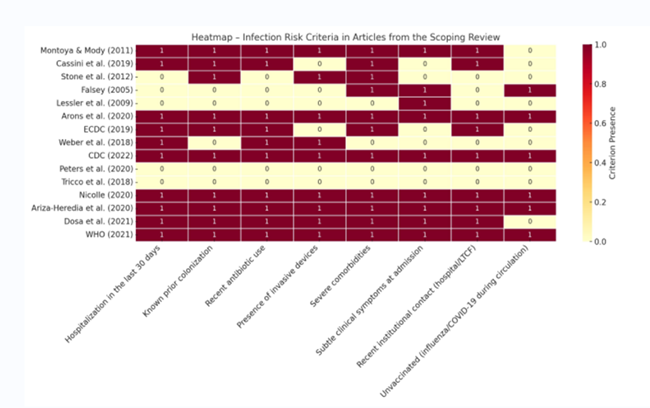
The discussion on the classification of infections that arise between the 3rd and 5th day after admission to LTCFs as HAIs should consider the complexity of the environment of these institutions and the specific characteristics of the elderly population (Figure 2). Current evidence indicates that a more holistic approach, going beyond strict temporal criteria, is necessary for an accurate and effective assessment of HAIS in LTCFs.
4.1. Study Limitations
Although this scoping review followed internationally recognised methodologies (JBI and PRISMA-ScR), it is important to acknowledge some limitations that affect the generalisation of the results.
Firstly, the search was restricted to studies published in English and Portuguese, which may have excluded relevant evidence in other languages. Secondly, despite the inclusion of articles from three widely used databases (PubMed, Scopus, CINAHL), grey sources, such as institutional reports or dissertations, which could provide complementary contributions, were not considered.
Another limiting factor is the methodological heterogeneity of the included studies, with variations in the definition of healthcare-associated infections (HAIs), the type of infection studied, and the temporal criteria used. This diversity made it difficult to directly compare results and prevented a quantitative synthesis (meta-analysis) from being performed. In addition, most studies did not specifically address the manifestation window between the 3rd and 5th day after admission, requiring indirect extrapolation of data based on known incubation times.
It is also important to clarify that HAIs (or IACS, in Portuguese terminology) are defined by a causal relationship with the provision of healthcare, regardless of the setting where care is delivered. This differs from nosocomial infections, whose criteria were originally developed for acute hospital settings. In long-term care facilities, the profile and dependency level of residents require adapted criteria that account for chronic exposure, comorbidities, and prior colonisation.
Finally, it should be noted that data on previous colonization of residents were not always reported systematically, which limits the accurate interpretation of the origin of infections.
4.2. Gaps identified in the literature about HAIS in LTCFs
The issue of early and sometimes hasty classification of HAIS in LTCFs requires a more robust approach that is tailored to the reality of geriatric care. Based on the evidence identified, we identify the following gaps for future research and practical improvements:
1. Development of specific criteria for LTCFs: There is an urgent need to review the current criteria for defining HAIs, including variables such as incubation time, resident medical history, and documented colonisation upon admission.
2. Individual risk prediction models: We propose the development of clinical tools based on risk algorithms that integrate age, previous hospitalisations, comorbidities, and recent antimicrobial exposure to estimate the probability of incubated infection.
3. Prospective multicenter studies : Prospective observational trials are needed to monitor the clinical evolution of newly admitted residents in LTCFs, from the moment of admission to the first 7 days, with systematic microbiological collection.
4. Integration of laboratory data with epidemiological surveillance: The coordinated use of molecular biology techniques (such as PCR and genotyping) may help to distinguish between colonisation and active infection, as well as to trace the source of infection (community-acquired vs. institutional).
5. Training of healthcare professionals and reassessment of quality metrics: Raising awareness among professionals of the limitations of temporal criteria and the adequacy of institutional infection indicators is essential to avoid misclassification and undue penalties.
4.3. Implications for Practice, Research, and Policy
The findings of this scoping review have significant implications for infection surveillance and control in long-term care settings. Firstly, they underscore the need to strengthen Epidemiological Surveillance (ES) Programs specifically tailored to long-term and post-acute care units, with infection control specialists and trained nursing staff responsible for prevention, monitoring, and timely reporting of IACS. Secondly, the evidence highlights the importance of developing clear operational definitions that distinguish between infections acquired due to care delivery and those incubating prior to admission, avoiding misclassification and unjustified institutional accountability. At the research level, integrating microbiological and epidemiological surveillance using molecular tools (PCR, genotyping) may enhance the precision of case attribution. From a policy perspective, establishing mandatory ES programs across all LTCFs would support harmonized data collection, strengthen infection control networks, and guide national indicators of safety and quality of care for institutionalized older adults.
Conclusion
This scoping review allowed us to map and critically analyze the available literature on the occurrence of infections in institutionalized elderly people, with an emphasis on the window of manifestation between the 3rd and 5th day after admission to long-term care facilities (LTCFs). The data collected consistently point to the possibility that many of these infections are not truly associated with the care provided in the institution, but rather the result of previously incubated infections or previous colonizations.
The rigid application of classic temporal criteria, such as defining nosocomial infection as occurring after 48 hours of hospitalization, has proven inadequate in this context. This approach can lead to the misclassification of infections such as HAIs, negatively affecting epidemiological indicators, surveillance programmes, and the reputation of long-term care institutions. The specific characteristics of the elderly population - namely, frailty, immunosenescence, multiple comorbidities, and frequent hospitalizations - make a more careful and individualized assessment essential.
It is crucial to emphasize that HAIs, or IACS in Portuguese terminology, are defined by their causal relationship with the provision of healthcare, regardless of the setting. In contrast, nosocomial infections are restricted to acute hospital environments according to temporal criteria. In long-term and post-acute care facilities, the heterogeneity of residents and their prolonged exposure to care justify adapted definitions and surveillance parameters.
The evidence analyzed also reveals that etiological agents frequently implicated in LTCFs, such as Escherichia coli, Staphylococcus aureus, and respiratory viruses, have average incubation periods compatible with the onset of symptoms between the 3rd and 5th day. This fact supports the importance of considering the epidemiological, clinical, and microbiological history of each resident before categorising them as a carrier of a healthcare-associated infection.
Therefore, the criteria for the surveillance and definition of HAIs should be revised and adapted to the geriatric LTCF context, with emphasis on establishing continuous Epidemiological Surveillance (ES) programmes led by professionals with specific infection control training. Future research should explore innovative tools - including digital monitoring systems and artificial intelligence algorithms - as potential aids for data integration and predictive analysis, but these technologies should be interpreted as exploratory avenues rather than consolidated evidence.
The integration of individual risk indicators, colonization data, incubation times of the involved pathogens, and pre-admission exposure history remains essential for accurate classification and effective infection prevention.
Authors' contribution
Conceptualization, V.B., R.B. and A.R.; data curation, V.B. and R.B.; formal analysis, V.B., R.B. and A.R.; investigation, V.B., R.B. and A.R.; methodology, V.B., R.B., S.P. and A.R.; project administration, V.B., R.B. and A.R.; resources, V.B., R.B., S.P. and A.R.; software, V.B., R.B., S.P. and A.R.; supervision, V.B., R.B., S.P. and A.R.; validation, V.B., R.B., S.P. and A.R.; visualization, V.B., R.B., S.P. and A.R.; writing- original draft, V.B., R.B., S.P. and A.R.; writing- review & editing, V.B., R.B., S.P. and A.R.

