




 Inglês (pdf)
 Artigo em XML
 Referências do artigo
 Tradução automática
 Enviar este artigo por email
 Citado por SciELO
  Similares em
SciELO
Similares em
SciELO 
 Permalink

Introduction
The implementation and use of Traditional and Complementary Medicine has been encouraged by the World Health Organization (WHO) since the Alma-Ata Conference in the 1970s, as one of the perspectives for changing the prevailing health care paradigm. The terms complementary, alternative, and integrative are also used to differentiate this approach from the biomedical model (Antunes & Fraga, 2021; Chung et al., 2023).
Integrative and Complementary Practices in Health (PICS) have been adopted both in Brazil (Garcia-Cerde et al., 2023; Medeiros et al., 2025) and globally (Chen et al., 2015; Zeliadt et al., 2020). These encompass a range of therapeutic practices that promote holistic care (Seifert et al., 2020; Hansen et al., 2021; Harasim et al., 2021) and have proven effective in managing pain and relieving symptoms such as anxiety, depression, and sleep disorders (Zeliadt et al., 2020; Basu et al., 2021). They contribute to expanding the scope of health care services and interventions (Brasil, 2018a; Medeiros et al., 2025).
In Brazil, PICS were implemented in the Unified Health System (SUS) through the National Policy on Integrative and Complementary Practices (PNPIC), established in 2006. The PNPIC defines concepts, objectives, guidelines, and institutional responsibilities for implementing PICS within health systems, listing 29 practices (Brasil, 2018b). While PICS can be implemented across all levels of care within the SUS, the PNPIC prioritizes their integration into Primary Health Care (PHC), as it serves as the entry point for users into the system (Brasil, 2018a; Medeiros et al., 2025).
The database of the National Program for Improving Access and Quality of Primary Care (PMAQ-AB) is a valuable and robust source for evaluating PHC at the national level (Fonseca et al., 2024). According to data from the now-defunct PMAQ-AB, only 20% of PHC teams offered some form of integrative practice during the first and second evaluation cycles, increasing to 31,5% in the third cycle (Brasil, 2018b). A study conducted in the state of Santa Catarina (Brazil) revealed that only 17,1% of municipalities had implemented PICS (Losso & Freitas, 2017).
The heterogeneous capacity of municipalities to sustain or expand the implementation of the PNPIC - despite the formal advancements in public policy - can be explained by understanding policies not as linear or prescriptive instruments, but rather as the reflection of assemblages and networks of actors that shape multiple contextual configurations of their effective realization (Melo et al., 2022).
The persistence of this dynamic heterogeneity and several barriers still hinder the widespread provision of PICS in health services. These include the lack of additional federal funding (Tesser & Sousa, 2012; Losso & Freitas, 2017; Macena & Oliveira, 2022), inadequate professional training (Barros et al., 2020), workforce overload (Medeiros et al., 2025), the dominance of the current biomedical model (Macena & Oliveira, 2022), and isolated or fragmented implementation experiences (Losso & Freitas, 2017; Antunes & Fraga, 2021).
Given this context, monitoring and investigating the provision of PICS (Medeiros et al., 2025) is a crucial management tool to strengthen the SUS through the institutionalization of evaluation (Lucas et al., 2022). Health evaluation, defined as the analysis of a policy or program to support decision-making (Champagne et al., 2016), is essential for strengthening the SUS. Our study adopts the structure-process-outcome framework (Donabedian, 1966), which is foundational for assessing health quality (Padilha et al., 2025) and aligning with implementation analysis goals (Silva et al., 2020; Guimarães et al, 2013).
This study is justified by the need to strengthen PICS within the SUS (Amado et al., 2018; Antunes & Fraga, 2021) and to identify their implementation status in the state of Minas Gerais, as existing literature does not provide comprehensive data on this issue in the region. The objective of this study was to assess the degree of implementation of PICS within PHC in the state of Minas Gerais, Brazil.
1. Methods
This is an evaluative research study, specifically a type 1-b implementation analysis. Evaluating the implementation of an intervention such as PICS in the SUS enables a better understanding of its operation, including its activities, expected effects, and explanatory factors for any discrepancies between planned and actual actions (Champagne et al., 2016).
The study was developed in three stages:
development of a logical model and a multidimensional evaluation matrix (covering structure and process dimensions) for assessing the implementation of PICS;
validation of the logical model and the evaluation matrix by experts;
Assessment of the implementation of PICS in PHC in Minas Gerais through a cross-sectional study using secondary data from the PMAQ-AB.
1.1 Stage 1 - Development of the Logical Model and Evaluation Matrix
The logical model and the evaluation matrix were developed based on a literature review, legal frameworks, and technical documents identified from 2006 (PNPIC approval) to 2018. Key documents outlining major events in the implementation process of PICS and the third cycle of PMAQ-AB evaluation were identified (Table 1).
Table 1 Documents analyzed for the development of the logic model and the analysis and judgment matrix, 2022
| DOCUMENT | YEAR OF PUBLICATION | DESCRIPTION |
|---|---|---|
| Ordinance No. 971, of May 3, 2006 (Brasil, 2006a) | 2006 | Approves the National Policy on Integrative and Complementary Practices (PNPIC) in the Unified Health System (SUS) and includes five integrative and complementary practices: phytotherapy, homeopathy, traditional Chinese medicine/acupuncture, and thermalism/crenotherapy. |
| Ordinance No. 1.600, of July 17, 2006 (Brasil, 2006b) | 2006 | Approves the creation of the Observatory of Anthroposophical Medicine Experiences in the Unified Health System (SUS), as a complement to Ordinance No. 971/GM, of May 3, 2006. |
| Analysis and judgment matrix for the implementation of the Live Birth Information System (Sinasc) proposed by Guimarães et al. (2013) | 2013 | This matrix was used to support the construction of the implementation degree scores. The author proposed a two-step analysis: (i) for each component, observed values were determined (Σ of the indicator points) and the implementation degree was calculated (Σ observed / Σ maximum points × 100); and (ii) for the total implementation degree, the sum of the components was divided by the maximum score × 100. |
| Ordinance No. 1.645, of October 2, 2015 (Brasil, 2015) | 2015 | Regulates the National Program for Improving Access and Quality of Primary Care (PMAQ-AB). |
| Instructional manual for primary care teams and NASF - National Program for Improving Access and Quality of Primary Care (PMAQ) - 3rd cycle (Brasil, 2017a) | 2017 | Provides guidance on the 3rd cycle of PMAQ-AB. |
| External evaluation instrument for Primary Care, Oral Health, and NASF teams (Family Health or parametrized) - 3rd cycle (Brasil, 2017b) | 2017 | External evaluation instrument for Primary Care, Oral Health, and NASF teams (Family Health or parametrized). Indicators from this instrument related to the theme of integrative and complementary practices were used, collected during the 3rd PMAQ-AB cycle. |
| Ordinance No. 849, of March 27, 2017 (Brasil, 2017c) | 2017 | Includes art therapy, Ayurveda, biodance, circular dance, meditation, music therapy, naturopathy, osteopathy, chiropractic, reflex therapy, Reiki, Shantala, integrative community therapy, and yoga in the National Policy on Integrative and Complementary Practices. |
| Ordinance No. 702, of March 21, 2018 (Brasil, 2018c) | 2018 | Amends Consolidation Ordinance No. 2/GM/MS, of September 28, 2017, to include new practices in the National Policy on Integrative and Complementary Practices (PNPIC): aromatherapy, apitherapy, bioenergetics, family constellation, chromotherapy, geotherapy, hypnotherapy, laying on of hands, ozone therapy, and flower essence therapy. |
| Implementation manual for integrative and complementary practice services in SUS / Ministry of Health (Brasil, 2018a) | 2018 | Provides guidance on the implementation of integrative and complementary practices (PICS) in SUS. |
The logical model considered the dimensions of structure, process, and outcomes (Donabedian, 1966), based on the components of care and management, to illustrate how the intervention is theoretically expected to function. For each component (care and management) and subcomponents (human resources, material resources, PICS offerings, health education in PICS, implementation of PICS, and continuing education in PICS), inputs and resources used (structure), services or products delivered through the professional-user interaction (process), and short and medium-term expected results were defined. These results are related to both outputs and changes in individual and population health status, along with the presumed causal relationships among components (Figure 1, presented in the Results section).
Based on the logical model, a multidimensional evaluation matrix was developed (Medeiros & Lanza, 2025). This matrix was composed of evaluative questions extracted from the "External Evaluation Instrument for Primary Care, Oral Health, and NASF Teams (Expanded Family Health Center" used in the third cycle of PMAQ-AB, specifically from Modules I and II (Brasil, 2017a):
Module I: Questions I.13.1 to I.13.6; I.15.16.1; I.15.16.4; I.15.16.5
Module II: Questions II.29.1 to II.29.6
1.2 Stage 2 - Validation of the Logical Model and Evaluation Matrix by Experts
To validate the evaluation material, the second stage involved presenting the logical model and evaluation matrix to experts (judges) during individual virtual consensus workshops. Judges were selected by convenience based on the following criteria:
experience in local, state, and/or national management of the PNPIC; and/or
research experience in integrative and complementary practices within the SUS and/or in health evaluation, with scientific publications in the field within the past two years.
Experts were invited via email and, upon agreement, sessions were scheduled according to the availability of both the participants and the researchers. Prior to each session, participants received the material (logical model and evaluation matrix) and a digital informed consent form (via Google Forms®) to register their agreement to participate. They also completed a characterization form.
The validation process occurred in two rounds. In the first round, the experts evaluated the logical model and the evaluative questions used in the matrix. These questions were extracted verbatim from the External Evaluation Instrument of the third cycle of the PMAQ-AB, a nationally validated tool; therefore, they were not created or reformulated by the authors. This stage occurred between November and December 2021, when workshops were held synchronously on Google Meet® and lasted between one and two hours. The logical model was first presented and discussed, followed by a review of the evaluative questions using a four-point Likert scale: 1 - Strongly disagree; 2 - Disagree; 3 - Agree; 4 - Strongly agree. Space for suggestions was provided.
In the second round, the experts attributed weights to each indicator according to the relevance of the items for measuring the degree of PICS implementation. Participants received the evaluation matrix in Word® format via email and, asynchronously, assessed each indicator’s relevance using the following scale: not relevant (NR) = 0 points; slightly relevant (R) = 10 points; relevant (RR) = 15 points; highly relevant (RRR) = 20 points. This step took place between February and March 2022. Consensus was reached qualitatively through iterative feedback until full agreement was obtained among the reviewers.
The finalized consensus-based evaluation matrix was used to assess the degree of PICS implementation in Minas Gerais (Medeiros & Lanza, 2025). The scoring of the indicators followed the relevance rating given by the judges, assigning 75 points to the structure dimension and 115 to the process dimension, totaling 190 points. Each evaluative question received a score of 5 points, with the weighting defined by the experts according to its relevance: questions classified as RRR (highly relevant) received a weight of 4, RR (relevant) received a weight of 3, and R (slightly relevant) received a weight of 2.
The process dimension is composed of 6 indicators (5 indicators with a weight of 4 and 1 indicator with a weight of 3), totaling 115 points, and the structure dimension is composed of 4 indicators (3 indicators with a weight of 4 and 1 indicator with a weight of 3), totaling 75 points .
1.3 Stage 3 - Evaluation of PICS Implementation in PHC in Minas Gerais
A cross-sectional epidemiological study was conducted to evaluate the implementation of PICS in PHC in Minas Gerais in 2018. Minas Gerais is located in Southeastern Brazil and has 88% PHC coverage, with 77,53% provided by Family Health Strategy (FHS) teams (Brasil, 2021). Regarding PICS, the National Monitoring Report on Integrative and Complementary Practices in Health indicates that these practices began in the state in 1991, and by 2018, 626 municipalities offered PICS (Minas Gerais, 2020).
The study sample consisted of one PHC team from each of the 846 municipalities in Minas Gerais that participated in the third cycle of PMAQ-AB in 2018.
Information sources included:
PMAQ-AB: External evaluation data from Modules I and II related to the 846 municipalities, extracted from publicly available Excel® spreadsheets at https://aps.saude.gov.br/ape/pmaq/ciclo3/ under the "microdata" tab.
E-gestor Primary Care: Public report on PHC coverage history and population data for each participating municipality, as of December 2018.
Brazilian Institute of Geography and Statistics (IBGE): Excel® file with the Human Development Index (HDI) of each municipality for 2010, available at https://cidades.ibge.gov.br/pesquisas.
After downloading the relevant spreadsheets (Modules I and II), data consistency analysis was performed to identify errors or duplications. The Excel® files were merged using a unique identifier (CNES adhesion), and unmatched records were excluded. Each municipality was represented by one PHC team, specifically the team with the best experience in PICS (i.e., the highest total implementation degree score). We chose to select the unit with the best experience in PICS to represent each municipality, considering that this unit constitutes a benchmark for good practices and a potential diffuser of the municipal PICS policy for local management and for the other teams. Although there are no specific references supporting this choice, the criterion is based on the principle of the best representativeness of successful experiences.
The implementation degree (ID) was calculated as: ∑ observed scores / ∑ maximum possible scores x 100. Municipalities were categorized into five implementation levels: adequate (80-100%); partially adequate (60-79,9%); inadequate (40-59,9%); critical (0.1-39,9%); and not implemented (0%). This categorization was based on Silva et al. (2020), with the addition of the "not implemented" category.
To analyze the association between external context variables - PHC coverage (80% or higher vs. below 80%) (Silva et. al, 2020); HDI (very low: 0-0,499; low: 0,500-0,599; medium: 0,600-0,699; high: 0,700-0,799; very high: 0,800-1,000) (Instituto Brasileiro de Geografia e Estatística, 2010a); and population size (up to 5,000; 5,001-10,000; 10,001-20,000; 20,001-50,000; 50,001-100,000; 100,001-500,000; over 500,000) (Instituto Brasileiro de Geografia e Estatística, 2010b) - and the PICS implementation score, Pearson’s chi-square test was used. Data were analyzed and tabulated using the Statistical Package for the Social Sciences (SPSS), version 20.
2. Results
To validate the logic model and the analysis and judgment matrix, invitations were sent to ten judges. Of these, three declined, and seven participated: two experts working at the Minas Gerais State Department of Health (SES-MG); two involved in teaching, research, and outreach in the field of health evaluation; two in teaching, research, and outreach in PICS; and one manager of PICS policies and projects. Regarding their undergraduate degrees, three held degrees in nutrition, three in medicine, and one in physical education-all of whom had graduated more than ten years prior. As for academic qualifications, two held specialization degrees, one had a master’s degree, two held doctoral degrees, and two had postdoctoral training. In terms of professional experience, one had between two and five years of experience, and the remaining six had over ten years.
The logic model (Figure 1) summarizes the main components of the PICS, providing a visual representation of how the practices are ideally expected to function. It enables the identification of components/subcomponents and presumed causal relationships (Champagne et al., 2016). The model is structured into two components and four subcomponents: care (PIC offering, health education in PICS, and implementation of PICS) and management (continuing education for the team in PICS), which are necessary to achieve the desired impact. The structure is subdivided into two subcomponents (human resources and material resources), which are essential for the operationalization of PICS in PHC. Activities represent the means used in each subcomponent to achieve specific outcomes, leading to short-, medium-, and long-term results, the latter being considered the impact of PICS within the Unified Health System (SUS).
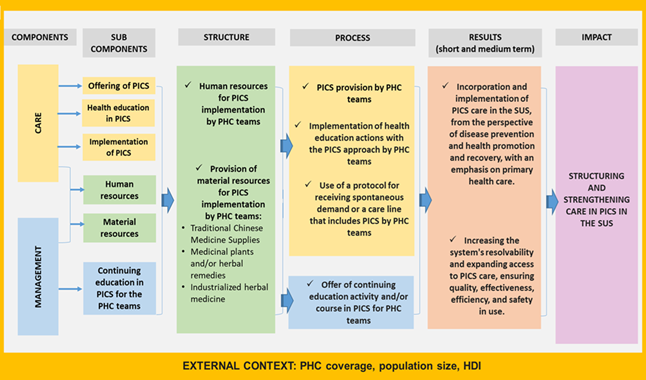
Figure 1 Logic model for assessing the degree of implementation of PICS in PHC, 2022. Legend: PICS = Integrative and Complementary Practices in Health; PHC = Primary Health Care; SUS = Unified Health System; HDI = Human Development Index
The analysis and judgment matrix (Figure 1) consisted of 18 evaluative questions (nine in the structure dimension and nine in the process dimension) and ten indicators (four for structure and six for process), assigning 75 points to the structure dimension and 115 to the process dimension, totaling 190 points.
An analysis of the ID (Implementation Degree) of the 846 municipalities in PHC revealed a critical level of implementation in the state of Minas Gerais (mean ID = 19,1%). Critical (ID = 28,4%) and inadequate (ID = 49,5%) implementation levels were observed in 33,8% of the municipalities. Only 0,2% of the municipalities presented adequate implementation (ID = 82,9%). It is noteworthy that 59,5% of the municipalities had not implemented PICS in PHC (Table 2).
Table 2 Classification of the Implementation Degree (ID) of PICS in PHC in Minas Gerais, Brazil (n = 846)
| Classification | N | Percentage (%) | Mean ID |
|---|---|---|---|
| Minas Gerais | 846 | 100 | 19,1 |
| Adequate | 2 | 0,2 | 82,9 |
| Partially adequate | 55 | 6,5 | 67,1 |
| Inadequate | 198 | 23,4 | 49,5 |
| Critical | 88 | 10,4 | 28,4 |
| Not implemented | 503 | 59,5 | - |
Note: ID = Implementation Degree
The process dimension received a better evaluation than the structure dimension, with an ID of 23,8% and 11,8%, respectively. Within the care component, the subcomponents implementation of PICS (26,9%) and offering of PICS (25%) achieved the highest scores. The human resources subcomponent achieved the highest score across all subcomponents (35,2%) (Figure 2).
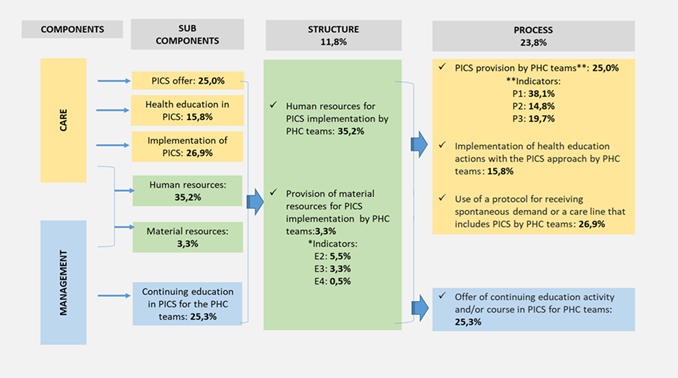
Figure 2 Distribution of the ID of PICS in PHC in Minas Gerais according to structure and process dimensions and subcomponents. Minas Gerais, 2022. Legend: PICS = Integrative and Complementary Practices in Health; PHC = Primary Health Care.
Table 3 shows that the two municipalities with adequate implementation had PHC coverage ≥ 80%. Those with a higher municipal HDI had a higher average overall ID for PICS (64.2%), as did municipalities with over 500,000 inhabitants (65,4%). Associations were found between the external context variables-PHC coverage (p = 0,014), HDI (p<0,001), and population size (p<0,001) -and the degree of PICS implementation.
Table 3 Classification of the ID of PICS in Minas Gerais according to external context variables: PHC coverage, HDI, and population size, stratified by ID classification
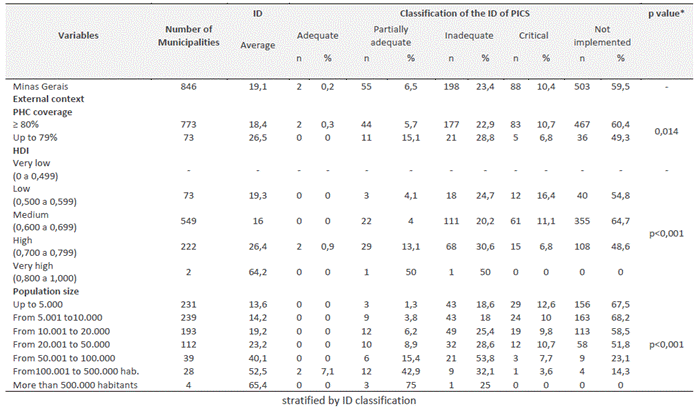
Legend: PICS = Integrative and Complementary Practices in Health; PHC = Primary Health Care; HDI = Human Development Index; ID = Implementation Degree. Note. *Chi-square test
3. Discussion
The central finding of this evaluation is the critical level of PICS implementation in Minas Gerais, reflecting persistent challenges in translating national health policies into effective municipal practice. This study represents the first large-scale evaluation of PICS implementation in the State of Minas Gerais using secondary data from the third PMAQ-AB cycle. The validation process of the logical model and the analysis and judgment matrix, utilized in implementation degree study (Losso & Freitas, 2017), allowed for the exchange of ideas and perceptions on the topic among managers and researchers with diverse backgrounds and experiences, thereby enhancing its credibility (Vitorino et al., 2017).
In the structure dimension - which encompasses both the care component and management - the human resources subcomponent achieved a better performance (35,2%) compared to material resources (3,3%), although both demonstrated a critical level of implementation.
Regarding human resources, it is known that healthcare professionals are the main actors responsible for the expansion of PICS in Brazil (Tesser & Sousa, 2012; Barbosa et al., 2020). The superior performance of this subcomponent suggests a level of individual engagement, as shown by a study where professionals often self-fund their training and develop PICS in health units, motivated by the limitations of biomedicine, belief in alternative practices, and the results obtained with PICS (Barbosa et al., 2020).
However, the low performance in the remaining structure indicators suggests that individual initiative is not supported by adequate managerial infrastructure. The lack of managerial support for the development of PICS may be explained by limited knowledge and difficulties related to PICS, such as the shortage of material and human resources (Medeiros et al., 2025). If provision remains unsupported by management, the PNPIC will continue to be implemented only sporadically by teams where professionals are PICS-sensitive, thereby limiting equitable access for all economic groups (Ee et al., 2020).
The stark shortage in the material resources subcomponent aligns strongly with a known structural barrier: the lack of additional financial investment by the federal government for implementing the PNPIC (Tesser & Sousa, 2012). This scarcity contrasts with the global increase in demand for complementary medicine, even in countries like Australia (McIntyre et al., 2021). The lack of inputs and materials is a recognized barrier to the expansion of PICS and to users’ access (Medeiros et al., 2025). Supporting the findings of this study, a prior evaluation of PICS implementation in PHC in Santa Catarina (Brazil) similarly found that the material resources dimension was rated as regular or poor in 92.4% of surveyed municipalities (Losso & Freitas, 2017).
In this study, the provision of PICS by PHC teams - a subcomponent of the process dimension - showed an ID of only 25%. Although PICS constitute a strategy capable of transforming the predominant healthcare model by shifting the focus from disease to health, strengthening care and self-care, and promoting autonomy and health promotion among individuals and communities (Antunes & Fraga, 2021; Losso & Freitas, 2017; Lucas et al., 2022; Pereira et al., 2022), it remains essential to strengthen health education initiatives that incorporate PICS into the routine practices of PHC teams (Schwartz et al., 2021).
The low score thus suggests the urgent need to integrate PICS into community outreach activities (Boccolini et al., 2022) and expand educational strategies for professionals (Sousa & Shimizu, 2021; Silva et al., 2021). Considering the accessibility and acceptance of technologies, the use of social media could significantly strengthen and disseminate PICS knowledge within PHC users (Silva et al., 2022). Recent population-based studies indicate that the prevalence of PICS use by the adult population in Brazil is approximately 6%, with consumption predominantly associated with individuals of higher socioeconomic status (Garcia-Cerde et al., 2023).
The subcomponent "continuing education in PICS for the team" is a local condition for provision. While training is offered through various initiatives (federal, municipal, professional councils) or even professional self-initiative, the overall low ID in the Process dimension suggests this training is either insufficient, poorly distributed, or not translated into systematic service provision. The literature posits that greater Family Health Strategy (FHS) coverage generally leads to higher investment and qualified care options, but our findings suggest that even where FHS exists, the structural mechanisms to convert knowledge (training) into action (implementation) are critically deficient.
A key local condition for the provision of PICS is the presence of at least one professional qualified in one of the therapeutic practices included in the PNPIC, which was evaluated in the subcomponent “continuing education in PICS for the team.” Training that enables professionals to offer PICS within PHC is delivered through initiatives promoted by federal and municipal governments, professional councils (Silva et al., 2021; Medeiros et al., 2025), and, in some cases, through the professionals’ own initiative (Sousa & Shimizu, 2021). The overall low ID observed in this subcomponent indicates that such training is either insufficient, inconsistently structured, or not widely accessible across PHC teams.
The strong positive associations found between the degree of implementation and contextual factors - namely higher PHC coverage, higher municipal HDI, and larger population size - underscore that successful PICS implementation is fundamentally linked to a robust structural capacity and socioeconomic development. This is supported by studies elsewhere, where the number of PICS visits correlates positively with population size and the HDI (Sumiya et al., 2022). However, our findings contrast with the evaluation done in Santa Catarina (Brazil), where municipalities with fewer than 5,000 inhabitants showed better implementation results (Losso & Freitas, 2017).
Although the data for this evaluation reference the 2018 cycle of PMAQ-AB, it is essential to frame these results against the backdrop of subsequent policy developments. This systemic gap observed in the structure and process dimensions highlights the persistent challenge of institutionalizing PICS. Enabling implementation requires administrative, political, and institutional planning by municipal managers, involving professionals and civil society, grounded in participatory management (Brasil, 2018a).
From an implementation-science perspective, the institutionalization of PICS depends on a wide network of heterogeneous elements that must interact to give materiality to the policy. The PNPIC only becomes operational when it is woven together with its own legal framework, as well as with managers, health professionals, service users, physical infrastructure, therapeutic materials, professional councils, political arrangements, financial resources, and the clinical conditions that give meaning to therapeutic practices. In other words, the policy does not exist as a static normative document but as a dynamic configuration of actors and materialities that sustain or constrain implementation at the local level (Melo et al., 2022).
This structured process must encompass defining proposals, conducting situational diagnoses, and developing implementation plans that crucially include continuing education and active participation in municipal health councils (Brasil, 2018a; Santos & Tesser, 2012).
Based on the evidence presented, this study offers concrete recommendations for state and municipal health managers to strengthen PICS implementation. Firstly, in terms of professional training, it is essential to prioritize and finance continuous professional training programs for PHC teams, moving beyond initial certification to effectively incorporate PICS into routine care protocols. Secondly, regarding resource allocation, managers must ensure dedicated municipal financing and budget allocation for PICS. Thirdly, focused on monitoring and evaluation, there is a clear need to implement robust monitoring tools within municipal health information systems to track service provision, user demand, and the outcomes of PICS. Finally, promoting social engagement is crucial, requiring managers to promote the active involvement of Municipal Health Councils in the planning and oversight of the PICS policy, thereby ensuring social accountability and alignment with community needs.
Limitations and Future Research
A key limitation of this research is its cross-sectional design and exclusive use of secondary data. Additionally, the methodological choice to select only the team with the "best experience" in PICS serves as a proxy for the municipality's maximum capacity but may overestimate the true average implementation degree across all local teams.
Given these limitations, future investigation is recommended, including: qualitative studies focusing on barriers and facilitators experienced by managers and professionals at the local level; and comparative analyses between states of Brazil to identify high-performing regional models for PICS implementation.
Conclusion
The study revealed that more than half of the municipalities had not implemented PICS, and among those that had, only two municipalities demonstrated adequate implementation. The findings of this study are fundamental to advancing the PNPIC in PHC in the state, as they allow managers to understand the current state of PICS implementation and become sensitized and prepared to lead and influence the operationalization of these practices.
Various pathways for improving PICS implementation can be suggested, including professional qualification, availability of inputs and materials, PICS provision, health education and promotion activities, service structuring, and managerial support.
Future studies are recommended that include on-site data collection in healthcare services to determine the current degree of PICS implementation in Minas Gerais-not only in primary care services but also in other PICS settings within the SUS.
Acknowledgments
This research was funded in part by the Coordination for the Improvement of Higher Education Personnel (CAPES), Brazil, finance code 001. The funding source had no involvement in the conduct of the research and/or preparation of the article.
Author’s contribution
Conceptualization, A.M. and F.L.; data curation, A.M. and F.L.; formal analysis, A.M., E.G. and F.L.; investigation, A.M. and F.L.; methodology, A.M., E.G. and F.L.; project administration, F.L.; supervision, F.L.; validation, F.L.; writing- original draft, A.M., T.S., M.B., S.V., E.G. and F.L.; writing- review & editing, A.M., T.S., M.B., S.V., E.G. and F.L.

