




 Inglês (pdf)
 Artigo em XML
 Referências do artigo
 Tradução automática
 Enviar este artigo por email
 Citado por SciELO
  Similares em
SciELO
Similares em
SciELO 
 Permalink

Introduction
Adolescence, a critical phase of transition to adulthood, is characterized by profound physical, cognitive, emotional, and social transformations (Papalia et al., 2001; Papalia & Feldman, 2013). During this period, the regular practice of physical exercise, or its absence, exerts a decisive influence on both physical and mental health (Papalia & Feldman, 2013). These authors also highlight that sleep deprivation can compromise motivation to practice sports, increase irritability, and significantly impair concentration and school performance.
Physical Education classes play a key role in promoting healthy lifestyles among students, contributing significantly to physical health, mental well-being, and the development of social skills (Bailey et al., 2009; Narayana, 2024). Scientific evidence shows that students who adopt healthy lifestyle habits, including a balanced diet and adequate sleep patterns, have better academic performance (Chacón-Cuberos et al., 2018; Sánchez-Hernando et al., 2021; Trigueros et al., 2019).
1. Theoretical framework
The interaction between sports motivation, sleep, physical activity, and nutrition in adolescence is recognized as a fundamental pillar for healthy development (Cachón-Zagalaz et al., 2023; Pinho et al., 2024). However, the scientific literature shows a complex interaction between motivation to practice sports, sleep habits, and physical activity (Brand et al., 2010; Dantas et al., 2023; Zhou et al., 2024), with studies reporting significant associations between physical activity and sleep parameters that directly influence the physical and intellectual performance of adolescents (Kurniawan et al., 2023; Larrinaga-Undabarrena et al., 2023; Roy et al., 2023). In parallel, recent research highlights the impact of diet on sleep quality, demonstrating that nutritionally balanced diets rich in essential nutrients promote healthier sleep patterns (Gonçalves & Haas, 2020; Sejbuk et al., 2022). Legnani et al. (2015), reinforce this relationship, verifying that adolescents with adequate sleep patterns (>8 hours/day) tend to be more physically active, and the daily practice of 60 minutes of physical exercise significantly improves sleep quality.
However, gaps in understanding these dynamics remain. On the one hand, Gavela-Pérez et al. (2023) identified that irregular eating habits - including late meals, higher caloric intake at dinner, and lower morning intake - negatively influence body mass index and, consequently, the practice of physical activity. On the other hand, Martínez-de-Quel et al. (2021), in a longitudinal study conducted during the COVID-19 lockdown, observed that physically active individuals experienced steeper declines in physical activity levels, sleep quality, and well-being compared to inactive individuals. These dynamics can be framed in the biopsychosocial model and self-determination theory (Ryan & Deci, 2002). Studies reveal that more self-determined students are more involved in physical exercise (Jankauskiene et al., 2022; Wang & Chen, 2022). Autonomous motivation for sport promotes healthy behaviors, such as conscious food choices, that directly facilitate restful sleep (Malm et al., 2019; Yang et al., 2024).
Although studies such as those of Kiebuła et al. (2020) suggest that more active students demonstrate greater food awareness, and recent research has explored associations between sleep quality, meal times, and exercise (Faris et al., 2022; Mozaffari-Khosravi et al., 2021), the results remain inconclusive and sometimes contradictory. This lack of consensus, associated with the scarcity of studies that jointly analyze the three variables (diet, sleep, and sports motivation) in Portuguese school populations, justifies the need for the present study. In this sense, the following research hypotheses were formulated:
H1 - There is a relationship between sociodemographic variables, practice of school/federated sports, eating habits, motivation for sports activities, and sleep patterns.
H2 - There is a significant relationship in eating habits, motivation for sports activities, and sleep quality.
H3 - There are significant differences between gender, eating habits, motivation for sports activities, and sleep quality.
H4 - There are statistically significant differences between primary/secondary education, eating habits, motivation for sports activities, and sleep quality.
H5 - There are statistically significant differences between students who practice federated sports, their eating habits, motivation for sports activities, and sleep quality.
2. Methods
A quantitative, cross-sectional, and correlational study was carried out.
2.1 Procedures
The present study followed all the ethical and deontological guidelines regarding an investigation, and the Individual Training Plan was presented to the Pedagogical Council, which obtained a positive opinion. Subsequently, authorization was requested from the directors of Paulo da Gama’s basic school and Doutor José Afonso’s high school, and the respective Ministry of Education to make this study possible. Finally, the legal representatives were asked to authorize the students to participate in the study through free and informed consent. The sample size calculator considered: confidence level, 95%; margin of error, 5%; population proportion, 50%; and population size, ( 3000. The inclusion criteria are students in grades 5 through 12 who obtain informed consent from their parents or guardians and their own consent. The questionnaires were organized on the Google Forms platform, and a test of the application was carried out with the three questionnaires on a sample of 21 elementary school students (not included in this sample). To check if they had adequate literacy levels to answer the items autonomously, the instructions were read, any doubts about filling in were removed, and only then the students begin to fill out the questionnaire. Anyone who had doubts would call the physical education teacher next to them to remove the doubt. Finally, the online questionnaire was applied, published on the CLASSROOM platform, ensuring the confidentiality of the answers, and the non-existence of right or wrong answers was reinforced to the students. The study was approved by the institution's Scientific Committee and conducted in accordance with the international ethical standards established by the Declaration of Helsinki.
2.2 Sample
This study includes 344 students from two public schools in the municipality of Seixal (Portugal). They were aged between 11 and 19 years (M=15.61; SD=1.70), of whom 52% (n=179) were male and 48% (n=165) were female. Regarding education levels, 29 participants were in the second cycle of schooling, 40 participants were in the third cycle of schooling, and 275 participants were in secondary education. Asked about the practice of school and federated sports, only 25.9% practiced school sports, while 46.8% practiced federated sports.
2.3 Data collection instruments
A Sociodemographic Questionnaire was developed to obtain information about the characterization of the participants. Data on age, sex, year attended (primary and secondary education), practice of school sports, and practice of federated sports were collected.
The Eating Habits Scale (EHS) developed and validated by Marques et al. (2011) evaluates eating habits through a scale consisting of 40 items dis-tributed in 4 dimensions [Food Quantity (α = 0.50), Food Quality (α = 0.72), Food Variety (α = 0.66) e Dietary Adequacy (α = 0.62)], on a Likert scale with five possible response alternatives [Never (0 times a week); Rarely (1 to 2 times per week); Sometimes (3 to 4 times a week); Often (5 to 6 times a week); Always (7 or more times per week)]. The original scale had a Cronbach's alpha considered good (α = 0.82).
The Motivation for Sports Activities Questionnaire (MSAQ), a translation of the original version of the Participation Motivation Questionnaire (PMQ), was developed by Gill et al. (1983)version adapted by Serpa (1992). This questionnaire consists of 30 items distributed across 6 dimensions [Statute (α = 0.90), Technical Learning (α = 0.92), Extrinsic Influence (α = 0.74), Teamwork (α = 0.85), Free Energy (α = 0.75), Socialization (α = 0.70), describing, each of them, reasons for the sporting activity, to which they were attributed, on a Likert scale (from 1 to 5), the following levels: (1 - Nothing important; 2 - Unimportant; 3 - Important; 4 - Very important; 5 - Totally important).
The Children Sleep Habits Questionnaire (CSHQ), developed by Goodlin-Jones et al. (2008) it was adapted for the Portuguese population by Silva et al. (2014). The questionnaire is an instrument that evaluates habits and problems related to sleep, it consists of 33 questions distributed in 8 dimensions [Resistance to going to bed (α = 0.70), Sleep duration (α = 0.60), Sleep-Associated Anxiety (α = 0.70), Night awakenings (α = 0.67), Parasomnias (α = 0.78), Respiratory disorder (α = 0.79), Daytime sleepiness (α = 0.68)]. The original scale has a Cronbach's alpha that is considered good (α = 0.78).
2.4 Statistical analysis
The collected data were analyzed using the SPSS 30.0.0 (Statistical Package for the Social Sciences) software, and descriptive statistics and Cronbach's alpha were analyzed. By performing the normality test, it was found that the data do not follow a normal distribution (p < 0.001). In this sense, the Spearman coefficient was calculated (-1 ≤ RS ≤ 1) to analyze possible relationships, and the Mann-Whitney test was used to evaluate statistically significant differences between dichotomous variables.
3. Results
The analysis of internal consistency allowed us to verify that all scales have adequate reliability. The present study found adequate reliability for the EHS (α = 0.73) and its dimensions: Food Quantity (α = 0.56), Food Quality (α = 0.65), Food Variety (α = 0.74), and Dietary Adequacy (α = 0.42). Likewise, adequate reliability was verified for MSAQ (α = 0.96) and its dimensions: Statute (α = 0.90), Technical Learning (α = 0.92), Extrinsic Influence (α = 0.74), Teamwork (α = 0.85), Free Energy (α = 0.75), and Socialization (α = 0.70). Finally, adequate reliability was found for the CSHQ (α = 0.87) and their dimensions: Resistance to going to bed (α = 0.70), Sleep duration (α = 0.60), Sleep-related anxiety (α = 0.79), Night awakenings (α = 0.67), Parasomnias (α = 0.78), Sleep-disordered breathing (α = 0.79), Daytime sleepiness (α = 0.68). Regarding the question of sleep onset, 47.7% (n = 164) of the participants reported that they usually (5 to 7 times a week) took more than 20 minutes to fall asleep, 29.4% (n = 101) reported that sometimes (2 to 4 times a week) and 23% reported rarely (1 time a week or never) that they took a long time to fall asleep.
Table 1 shows the intensity of the association between the sociodemographic variables and the questionnaires that assess eating habits, motivation to practice sports activities, and sleep habits. The cycle of studies presents a moderate and significant relationship with the practice of school sports (rs = -0,25; p < 0,001) a weak, negative and significant relationship with the practice of federated sport (rs = -0.24; p < 0.001) a weak, significant relationship with eating habits (rs = 0.14; p = 0.009) and a significant weak relationship with sleep habits (rs = 0.11; p = 0.034). There was a moderate, negative, and significant relationship between the practice of federated sports and motivation for sports activities (rs = -0.35; p < 0.001); a moderate and significant relationship between eating habits and sleep habits (rs = 0.31; p < 0.001).
Statistically significant differences between gender, study cycle, school sport practice, federated sport practice, eating habits, motivation to practice sports activities and sleep habits were assessed using the Wilcoxon-Mann-Whitney non-parametric test. According to the U test, through Figure 1, it is verified that the sex presents significant differences in eating habits (U = 12350,5; p = 0.009) and motivation for sports activities (U = 12350,5; p = 0.004), and there were no statistically significant differences in sleep habits (U = 12350,5; p = 0.388).
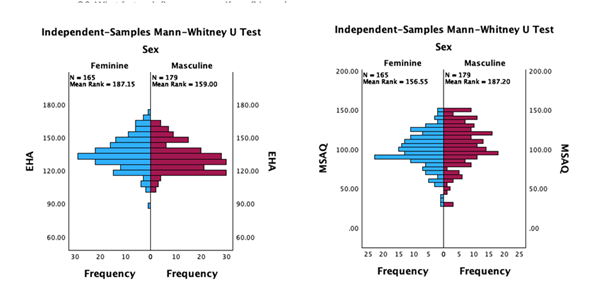
Figure 1 Statistically significant differences between Gender and the variables Eating Habits and Motivation for sports practice
Figure 2 shows statistically significant differences between the study cycle, the eating habits (U = 11419; p = 0.009) and sleep habits (U = 11419; p = 0.034), There were no significant differences in motivation to practice sports activities (U = 11419; p = 0.058).
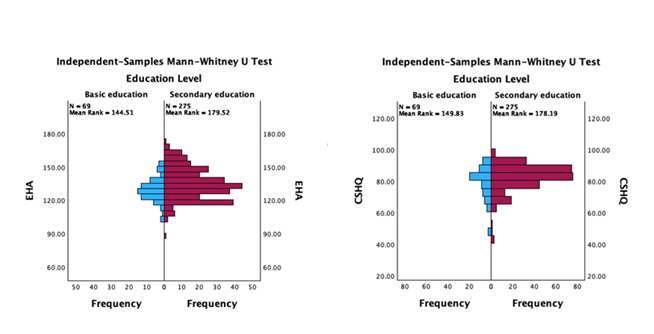
Figure 2 Statistically significant differences between the Level of Education and the variables Eating Habits and Motivation for sports practice
After analyzing the possible differences between the practice of school sports, eating habits, motivation for sports activities and sleep habits, there were no statistically significant differences (U = 12142; p > 0.05). However, statistically significant differences (Figure 3) were found between the practice of federated sports and the motivation to practice sports (U = 13809; p < 0.001), and no statistically significant differences were found in the variable eating habits (U = 13809; p = 0.316) and sleep habits (U = 13809; p =0.492).
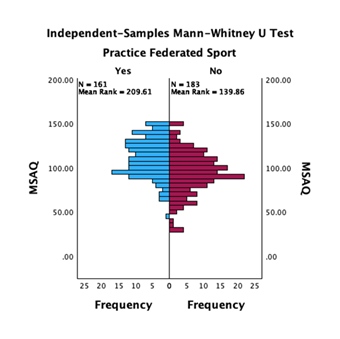
Figure 3 Statistically significant differences between Federated sports practice and the Motivation to practice sports variable
Table 1 Correlations between Sociodemographic Variables, Eating Habits Scale (EHA), Motivation for Sports Activities Questionnaire (MSAQ), and Children Sleep Habits Questionnaire (CHSQ)
| 1 | 2 | 3 | 4 | 5 | 6 | 7 | 8 | |
|---|---|---|---|---|---|---|---|---|
| 1. Age | __ | 0.01 | 0.62*** | 0.16** | 0.01 | 0.11* | -0.02 | 0.01 |
| 2. Sex | __ | -0.01 | -0.05 | -0.28** | -0.14** | 0.15** | 0.05 | |
| 3. Education (Basic/Secondary) | __ | 0.25*** | -0.24*** | 0.14** | 0.10 | 0.11* | ||
| 4. School Sports Practice | __ | -0.09 | 0.05 | 0.03 | -0.03 | |||
| 5. Federate Sports Practice | __ | -0.05 | -0.35*** | -0.04 | ||||
| 6. EHA | __ | -0,01 | 0.31*** | |||||
| 7. MSAQ | __ | -0.01 | ||||||
| 8. CHSQ | __ |
Note: * p<0.05; **p<0.01; ***p<0.001.
4. Discussion
Through the calculation of Cronbach's alpha coefficients, it was possible to verify that the reliability of the measurement scales indicates their precision, presenting indicators of internal consistency considered good [0.70 e 0.90] to very good ( > 0.90 (Marôco & Garcia-Marques, 2006; Néné & Sequeira, 2022).
To test the first hypothesis (H1), which postulates the existence of a relationship between sociodemographic variables and the other variables under study, the results indicate a statistically significant moderate association between the gender of the participants and the practice of federated sports. In addition, weak but significant associations were observed between gender and eating habits, as well as with motivation to practice sports activities. The analysis of the interactions between sociodemographic variables, sports practice, eating habits, motivation, and sleep patterns shows a complex system of bidirectional influences, transcending simplistic conceptions of linear causality (Castro-Jiménez et al., 2020; Kaplan et al., 2015).
Hypothesis H2 was analyzed, which predicted a significant relationship in eating habits; motivation for sports activities, and sleep quality was partially confirmed. The results reveal a moderate and significant relationship between sleep habits and motivation to practice sports activities. Studies reveal that the presence of adequate sleep habits is associated with higher energy levels, mood regulation, and optimized physical recovery, factors that, together, significantly enhance the development and sustainability of motivation for training (Doherty et al., 2021; Nobari et al., 2023; Rutkowska et al., 2024). Regarding the variables related to the practice of sports, there was only a moderate relationship between the motivation to practice sports activities and the practice of federated sports. This relationship may be since sports practice going beyond motivational factors (Antunes et al., 2024). For these authors, the dimension of technical training can be a significant factor for the practice of federated sports, highlighting the importance of family and friends.
The results partially confirmed hypothesis H3, verifying the existence of statistically significant differences between the variable sex and the variables eating habits and motivation to practice sports activities. Figure 1 shows that the average eating habits of females are higher than those of males. However, males have greater motivation to practice sports activities. These results are in line with studies that reveal that the quality of diet in females is due to external motivations (e.g., being thin) that influence a healthier diet, when compared to males (Deslippe et al., 2023; Yeung, 2010). On the other hand, there are studies that demonstrate the existence of significant differences in the recommended sports practice among students, in which the female sex feels less motivated to practice sports activities (Armstrong et al., 2018; Romero-Parra et al., 2022).
The statistical tests performed support hypothesis H4, demonstrating that there is a significant relationship (p < 0.001) between the level of education and the propensity to practice school and federated sports. Secondary education revealed a higher average of eating habits and greater motivation to practice sports activities compared to basic education. Muñoz et al. (2024) reveal that the practice of federated sport can be perceived by parents as an excellent opportunity for education in values. On the other hand, students who participate in federated sports have greater academic success (Gené-Sampedro et al., 2021). In this sense, Sierra-Díaz et al. (2019) support the incorporation of pedagogical strategies that promote student motivation and the development of motor and sports competence. For these authors, these types of strategies promote active habits throughout their lives. Considering the eating habits and sleep habits of the participants, there is a relationship with the study cycle, demonstrating statistically significant differences between primary and secondary education. Participants in secondary education reveal a higher average of eating habits and reveal greater motivation to practice sports activities. These results may be related to the considerable evidence of parental responsibility in children's eating habits and sleep habits (Cruz et al., 2024), thus requiring parents to pay greater attention to their children's food choices and diet (Mahmood et al., 2021).
The analysis of the variables related to sports practice revealed that only the motivation for sports activities presented a statistically significant difference as a function of the practice of federated sports, thus confirming hypothesis H5. No significant associations with school sport were observed. A study by Portela-Pino et al. (2019) demonstrates that adolescents feel motivated to practice sports activities due to social recognition, challenge, fun, and well-being. Studies show that federated sports practitioners demonstrate higher levels of intrinsic motivation when compared to students who do not practice federated sports (Folgar, Boubeta, Cristobal, et al., 2015; Folgar, Boubeta, & Vaquero-Cristóbal, 2015). Lamoneda-Prieto and Huertas-Delgado (2017) demonstrate a decline in motivation levels affecting individual sport practice during the transition from primary to secondary education. Curiously, the results are not in line with the study carried out by Kiebuła et al. (2020), which identified that students who practice sports have better eating habits when compared to less active adolescents. These authors also reveal that those who practice sports are more aware of the principles of healthy eating.
Analyzing these results, it is important that physical education teachers adopt strategies that promote autonomy and improve students’ motivation to practice physical education (Fin et al., 2019). They should be aware that students' external factors may be associated with better nutrition and healthy lifestyle habits for better sports performance (Chacón-Cuberos et al., 2018).
The results should be analyzed with some care, because the limitations in the present study are that the sample is not representative and the possible answers of the students (e.g., social desirability; lack of national representativeness, restricted geographical scope, sample size, self-report bias). Another limitation it is the fact that the questionnaires were aimed only at adolescents in primary and secondary education. In the future, mixed studies are suggested to evaluate external factors such as the influence of parents and physical education teachers in the promotion of healthy lifestyle habits, as well as to explore the impact of school policies on students’ quality of life. Physical education teachers have a fundamental role in identifying risk situations (eating habits, sleep habits, and physical exercise). Physical education teachers can promote education for the acquisition and maintenance of healthy lifestyles in a school context.
Conclusion
The main objective of this study was to analyze the relationship between eating habits, sleep habits, and motivation for sports practice in primary and secondary school students. Based on the literature review and discussion of the results of this study, significant differences between genders are highlighted, in which some students have healthier eating habits compared to others. On the other hand, students demonstrate greater motivation to practice sports, corroborating other studies that indicate less female impairment in physical activities. It should also be noted that the differences between the levels of education, since basic education demonstrates a lower motivation to practice physical exercise, as well as a lower quality of eating habits. If the practice of federated sports is associated with greater school success, it is important that physical education teachers promote strategies so that primary school students feel motivated to practice sports activities. This study has practical implications, contributing to a reflection on gender differences (promotion of women's sport); specialized programs for basic education on health education (food, sleep, and physical exercise), and the implementation of partnerships between schools and sports clubs that influence the motivation of students to practice physical activity.
Acknowledgements
The authors would like to thank all the participants in this study and thanks to the physical education groups from the Paulo da Gama school and Dr. José Afonso school.
Authors' contribution
Conceptualization, J.M.R. and M.B.; data curation, J.M.R. and J.M.; formal analysis, J.M.R., J.M. and M.B.; investigation, J.M.R. and M.B.; methodology, J.M.R. and M.B.; resources, J.M.R. and M.B.; software, J.M.; supervision, M.B. and J.M.; validation, M.B. and J.M.; visualization, J.M.R. and J.M.; writing-original draft preparation, J.M.R. and J.M.; writing-review and editing, J.M.R., M.B., and J.M.

