




 Inglês (pdf)
 Artigo em XML
 Referências do artigo
 Tradução automática
 Enviar este artigo por email
 Citado por SciELO
  Similares em
SciELO
Similares em
SciELO 
 Permalink

INTRODUCTION
Physical Literacy (PL) is defined as an individual’s motivation, confidence, physical competence, knowledge and understanding to value and take responsibility for engaging in physical activity throughout life (International Physical Literacy Association, [IPLA], 2017; Whitehead, 2010, 2019). The definition’s foundations include monism, which rejects Cartesian dualism and views the human being as an integrated whole, without independent divisions (Stubenberg & Wishon, 2023); existentialism, which argues that identity is shaped through unique, context-based interactions with the world (Merleau-Ponty, 2018); and phenomenology, which suggests that each individual perceives the world in a unique way based on past experiences (Pot et al., 2018).
Building on these philosophical foundations, PL is recognised as a critical factor in fostering engagement in physical activity, which is consistently linked to a wide range of health benefits (Carl et al., 2022; Van Sluijs et al., 2021). Although the complexity of the PL construct seems to hold promise for improving our comprehension of and ability to explain why people engage in physical exercise, this complexity makes it challenging to operationalise its assessment. According to Barnett et al. (2019), there is no “ideal” measurement for assessing PL, particularly in a school setting. They offered suggestions to help educators and researchers make decisions about how to do this, considering their goals, needs, and defining resources available at the research/intervention site (Barnett et al., 2019). From a systemic developmental relational approach (Lerner et al., 2013; Overton & Lerner, 2014), the setting in which PL is measured is crucial, along with the examination of all domains of PL.
Physical literacy is a broad term that encompasses four main domains: the affective (motivation and confidence), physical (motor competence, physical fitness), cognitive (knowledge and comprehension), and behavioural (participation in physical activities for life) domains (Cornish et al., 2020; Whitehead, 2010). While an earlier systematic review identified only three comprehensive tools that addressed all physical literacy domains (Shearer et al., 2021), a more recent review has found 14 assessment instruments specifically designed for school-aged children, with questionnaire-based tools proving to be the most practical for school settings, although objective measures may be necessary for a thorough physical domain assessment (Barnett et al., 2023). Notably, both reviews highlight the predominance of Canadian-developed instruments, which present potential challenges for researchers who need to adapt these tools to different climatic, cultural, and educational contexts.
In the evaluation of various physical activities, the examples provided were predominantly winter activities, characterised by the presence of snow, specific motor skills, and sports typical of temperate regions, which differ significantly from those in tropical regions. Therefore, several critical points can be observed in these tools: (a) the use of context- specific skills questions, which fails to be universal; (b) the failure to address sedentary behavior - activities that need less than 1.5 metabolic equivalents (MET) of energy to perform while seated or lying down throughout the awake period (Santos et al., 2021; Tremblay et al., 2011) - a behavioral issue that is unquestionably getting worse due to the COVID-19 pandemic’s constraints and social isolation; (c) due to their text-heavy layout and few illustrations, some previous tools may not be as child-friendly (Adcock et al., 2012). Furthermore, since the practice of physical activities can be enhanced through intentional motor learning, measuring organised physical activity appears to be an appropriate component for consideration in the behavioural domain of PL. Organised physical activity refers to the regular and systematic practice of physical activities aimed at improving performance, under the supervision of a teacher or coach, that culminates in a public presentation (competition or exhibition) (Campos et al., 2017).
In recent years, Physical Literacy has gained increasing attention in developing countries due to its potential to address challenges such as low physical activity engagement and high rates of sedentary behaviour among youth. In Brazil, recent studies indicate that only 28.5% of children and adolescents meet recommended physical activity levels, while sedentary behaviour time has increased significantly in recent years, especially after the COVID-19 pandemic (Victo et al., 2025). Research in other developing countries reveals similar patterns: studies in India have reported that only 42% of young people demonstrate adequate levels of Physical Literacy (Lokhande & Afle, 2024), while in South Africa, research has identified that only 35% of public schools have structured programs for Physical Literacy development (Burnett, 2021) In the Brazilian context specifically Barbosa Filho et al. (2021) highlighted the absence of validated instruments to assess Physical Literacy, reporting that 78% of physical education teachers experience difficulties in evaluating and promoting the holistic development proposed by the concept. This gap is particularly relevant considering Brazil’s unique sociocultural characteristics and the need for contextually appropriate tools to assess and promote Physical Literacy.
In addition to the requirements for measuring PL, such as the use of rigorous methods aligned with the adopted definition of PL and its corresponding elements, Shearer et al. (2021) also emphasized that it is important to examine the feasibility of these tools in the context where they will be applied, such as school settings. Previous literature has presented a descriptive checklist to examine the feasibility of PL tools (Klingberg et al., 2019; Shearer et al., 2021). Therefore, it is crucial to research the PL in all its domains, considering the context where it will be utilized, using more appropriate and robust methods. This study aimed to create the first version of the Assessment for Brazilian Children’s Physical Literacy (ABC-PL) scales/questionnaire and evaluate its content validity, reliability, and feasibility.
METHODS
The current study is one component of a broader research project investigating ABC-PL as a complete tool, including physical motor assessments and accelerometry to measure physical activity (Feitoza, 2023). This study presents the creation, content validation, reliability testing and feasibility classification of five ABC-PL tools (four scales and one questionnaire) which were developed in accordance with established literature (Borsa et al., 2012; Echevarría-Guanilo et al., 2017, 2019; Pasquali, 2009; Shearer et al., 2021). The methodological progression of this study is summarised in Figure 1.
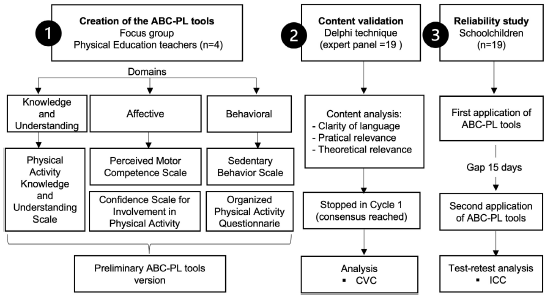
Figure 1. Flowchart of the creation and testing of validity and reliability of instruments for Assessment for Brazilian Children’s Physical Literacy tools.
Participants
The Delphi method was selected for content validation due to its systematic approach to achieving consensus among experts (Nasa et al., 2021). The expert panel (n = 19) was intentionally structured into three groups: Motor Behaviour researchers (n = 6), teachers (n = 4), and students (n = 9). This tripartite composition was designed to ensure comprehensive validation from theoretical, practical and user-based perspectives. The researchers, all holding PhDs and having publications in the field, provided theoretical expertise. The teachers, each with at least two years of experience in physical education, contributed with practical insights from the educational environment. The inclusion of students as judges was a methodological innovation that recognised them as key participants in the evaluation process. The panel size was determined based on literature recommendations suggesting 10-20 participants as the ideal number for achieving reliable consensus (Hsu & Sandford, 2007; Nasa et al., 2021). For the reliability study, a convenience sample of 19 healthy schoolchildren (mean age = 11.49 years; SD = 1.45; CI95% 10.17-12.19) from a public school in Recife, Brazil, was employed. This study was approved by the local ethics committee (no.: 2.630.04/ CAAE: 87632218.8.0000.5192). All participants were included if they or their parents completed the free and informed consent form, and they did not have any physical or mental impairments that would preclude them from participating in the study.
Instruments and procedures
Creation of instruments
The process of instrument creation followed a rigorous methodological approach and a systematic procedure widely recognised in the literature for the development of scales and questionnaires (Borsa et al., 2012; Echevarría-Guanilo et al., 2017, 2019; Pasquali, 2009). Initially, an extensive theoretical review was conducted on the domains of interest related to Physical Literacy, including affective, cognitive, physical, and behavioural aspects. Following this review, a team of experts defined the variables to be measured and developed a preliminary list of items grounded in theoretical concepts and pre-existing instruments.
In the Item Construction phase, two distinct approaches were used for instrument development. In the first approach, items were selected and adapted from pre-existing instruments, leveraging the accumulated and validated knowledge from previous studies. The second approach involved developing novel instruments that adequately addressed the cultural context and needs of Brazilian children. For this second approach, theoretical review and expert consultation processes were conducted to ensure that the variables were properly defined and operationalised to capture the specific characteristics of the target population.
Domain knowledge and understanding tool
The Physical Activity Knowledge and Understanding Scale was created to assess knowledge and understanding of health, safety, and opportunities for physical activity. The original scale comprised 20 items, with response options categorised as “true”, “false”, and “I don’t know”. Each item was scored from 0 to 2, providing a total score range of 0 to 40 points.
Domain affective tools
The ABC-PL’s Perceived Motor Competence Scale aimed to assess the perception of motor competence in fundamental motor skills (running, horizontal jumping, kicking a stationary ball, and throwing a ball) commonly evaluated in motor tests; it was inspired by the Pictorial Scale of Perceived Movement Skill Competence (Barnett, Ridgers, et al., 2015; Barnett, Robinson, et al., 2015). The scale portrays two children (matched to the respondent’s sex) side by side: one child competent in a certain skill and another who is not competent. To complete the scale, children first choose the image that most closely resembles themselves. Then, they focus on the chosen image and indicate whether it is “completely true” or “more or less true.” The score for each item ranges from 1 to 4 (1 = “really not good at skill”; 2 = “not so good at skill”; 3 = “very good at skill”; 4 = “really very good at skill”), providing a total score range of 4 to 16 points.
The Confidence Scale for Involvement in Physical Activity was developed as part of the ABC-PL to assess children’s confidence in participating in physical activities within and outside the school context. The scale consists of eight items, with scores ranging from 1 to 5 (1 = “not at all confident”, 2 = “rarely confident”, 3 = “sometimes confident”, 4 = “almost always confident”, 5 = “always confident”). The total score ranges from 8 to 40 points. Higher scores indicate greater confidence in physical activity participation.
Domain behavioural tools
The ABC-PL’s Sedentary Behaviour Scale was designed to quantify participants’ time spent in sedentary behaviours. The scale assessed six different contexts of sedentary behavior: (1) passive transportation (e.g., by car, bus, or train); time spent lying or sitting while (2a) watching television, (2b) using a computer, (2c) using a mobile phone, smartphone, or tablet, (2d) using a video game console; and (3) sitting (e.g., in the classroom, studying at home, playing board games) during a typical week (both during and after school hours) and on weekends. Response options ranged from 1 to 5 (1 = “0h (zero)”; 2 = “Less than 1h”; 3 = “1-2h”; 4 = “2-4h”; 5 = “More than 4h”). Calculations were performed separately for each context of sedentary behaviour. For instance, about the passive displacement context,
Passive displacement score = ((weekday value*5) + (weekend value*2)) / 7
and total score:
Total score of Sedentary Behaviour = sum of all context scores (it can vary from six to 30).
The ABC-PL’s Organised Physical Activity Questionnaire was designed to identify patterns of organised physical activity participation among children and adolescents (excluding Physical Education classes), inspired by Campos et al. (2017). Participants reported all types of organised physical activities (e.g., swimming, soccer, ballet, martial arts training) in which they had engaged during the previous 6 months. Based on this information, both weekly frequency and session duration were documented for each reported activity.
Content validation
The Delphi technique, a systematic method for evaluating content through expert consensus, served as the basis for content validation. This technique involves iterative cycles of expert review to determine which elements should be retained or removed until consensus is reached (Hsu & Sandford, 2007; Nasa et al., 2021). The Delphi process typically involves two to three cycles (Wright & Giovinazzo, 2000). In the present study, after completion of the first cycle, the experts reached a consensus value above the predetermined cutoff point (> .80), despite some divergent opinions and suggestions. For this purpose, experts were provided with a questionnaire containing all proposed instrument items and space for comments regarding language clarity, theoretical pertinence, and practical relevance. Experts rated each item on a five-point Likert scale, and these ratings were used to calculate the Content Validity Coefficient (CVC) (Hernández-Nieto, 2002). A separate section was provided where experts could suggest modifications to enhance the items’ language clarity, practical pertinence, and theoretical relevance. The criteria for modifying the items were established based on an agreement between experts ≥ 80% (Cassepp-Borges et al., 2009).
Reliability testing (test-retest)
Students completed the instruments twice with a two-week interval. The questions maintained the same structure, order, and sequence at both time points, without modifications. This standardized procedure ensured that response variations could be attributed to the temporal aspect rather than changes in question presentation (Vilagut, 2023). Test-retest reliability was analyzed using Pearson’s correlation coefficient (r) and was calculated and classified according to established criteria (Cohen, 1988), with values > .1 considered weak, > .3 moderate, and > .5 strong. Additionally, Intraclass correlation coefficients (ICC) were calculated and classified according to established criteria (Koo & Li, 2016), with values > .5 considered moderate, > .75 good, and > .9 excellent. The analysis was carried out in IBM SPSS Statistics Version 21.
Feasibility classification of instruments
The feasibility assessment of the ABC-PL tools employed cost efficiency and acceptability criteria from previous studies, which establish that an instrument’s feasibility increases with simplicity of use, minimal requirements for time, space, equipment, and training, and positive reception by end users (Klingberg et al., 2019; Shearer et al., 2021). Feasibility analyses were conducted during the second administration of the ABC-PL tools (Figure 1).
Collection data procedures
The scales and questionnaires were administered through face-to-face interviews by trained researchers. To reduce participant anxiety, four steps were implemented: (1) “ice breaking,” which involved asking the child to give examples of what research is; (2) informing children that the activity was an inspection rather than a test; (3) emphasizing that there were no right or wrong answers; and (4) using an example to demonstrate how to respond to the items. Data collection took place in school settings during scheduled Physical Education classes.
The scales were presented to participants via smartphone screens, leveraging digital technology to enhance engagement with youth while reducing paper waste and minimizing data collection time and entry errors. Data collection was facilitated through SurveyMonkey¹, a customizable survey platform that enables data import, export, integration, and cross-platform collaboration. Each instrument was presented individually on researchers’ smartphones. The feasibility of ABC-PL tools was assessed during the second time point.
RESULTS
Creation and testing of the tools
A questionnaire and four scales were built, which addressed three PL domains. The Perceived Motor Competence Scale (4 items) and the Confidence Scale for Involvement in Physical Activity (8 items) related to the PL affective domain; the Physical Activity Knowledge and Understanding Scale (20 items) related to the PL understanding domain; and the Sedentary Behavior Scale (6 items) and the Organized Physical Activity Questionnaire (4 items) related to the PL behavioral domain. In the Supplementary Material 1, examples of the ABC-PL scales and questionnaire are shown, highlighting their names, theoretical definitions, and number of items.
Content validity test of Assessment for Brazilian Children’s Physical Lit tools
Table 1 reports the results of the CVC, calculated according to the literature (Hernández-Nieto, 2002). Overall, the instruments achieved values above the .80 cutoff point for language clarity, practical pertinence, and theoretical relevance, indicating positive expert evaluation. However, this consistency did not hold when examining the judge groups separately. Specifically, the group of teachers presented values below the cutoff point (0.80) for the criterion “Language Clarity” in the Knowledge and Understanding on Physical Activity Scale, Perceived Motor Competence Scale, and Sedentary Behavior Scale. Additionally, the same group assessed the practical pertinence of the Knowledge and Understanding on Physical Activity Scale with a value of 0.77, below the cutoff point, suggesting that the teachers considered this instrument less suitable in terms of practical applicability.
Table 1. Content Validity Coefficient for clarity of language, practical relevance and theoretical relevance of Assessment for Brazilian Children’s Physical Literacy instruments, considering each group of experts.
| CVC | Expert groups | Knowledge and understanding on physical activity scale | Perceived motor competence scale | Confidence scale for involvement in physical activity | Sedentary behavior scale | Organized physical activity questionnaire |
|---|---|---|---|---|---|---|
| Clarity of language | Res | .83 | .81 | .90 | .92 | .90 |
| T | .74 | .66 | .90 | .79 | .90 | |
| Ch | .83 | .89 | .88 | .87 | .84 | |
| All | .81 | .82 | .89 | .87 | .87 | |
| Practical pertinence | Res | .89 | .89 | .92 | .97 | .93 |
| T | .77 | .86 | .90 | .85 | .94 | |
| Ch | .80 | .86 | .86 | .82 | .89 | |
| All | .82 | .87 | .89 | .87 | .91 | |
| Theoretical relevance | Res | .88 | .83 | .93 | .95 | .97 |
| T | .90 | .82 | .95 | .86 | 1 | |
| Ch | .81 | .83 | .82 | .81 | .86 | |
| All | .85 | .83 | .88 | .87 | .92 |
T: Teachers; Res: PhD researchers of Motor Behavior; Ch: children and adolescents.
Note: The criteria for modifying the items were established based on an agreement between experts ≥ 0.8 (Cassepp-Borges et al., 2009).
Reliability test of Assessment for Brazilian Children’s Physical Lit tools (test-retest)
Table 2 presents the descriptive statistics of the characteristics of the sample of students and their performance on the ABC-PL instruments. The test-retest analysis of the ABC-PL tools revealed changes in scores across the components. Knowledge and Understanding scores increased from 26.42 (± 3.95) to 27.26 (± 3.99); Sedentary Behavior scores increased from 15.69 (± 4.70) to 17.08 (± 4.38); Perception of Motor Competence scores increased from 11.26 (± 3.80) to 12.21 (± 3.38); and Confidence for Involvement in Physical Activity scores slightly decreased from 29.05 (± 7.72) to 28.89 (± 8.34). Overall, these correlations indicate strong test-retest reliability for the ABC-PL components (r ranging from 0.55 to 0.87, p < .05).
Table 2. Means, Standard Deviations, and bivariate correlations of the anthropometric sample characteristics and performance on Assessment for Brazilian Children’s Physical Literacy tools.
| Test Mean (SD) | Retest Mean (SD) | r | |
|---|---|---|---|
| Anthropometric data (n = 19) | |||
| Age (years) | 11.49 ± 1.45 | - | - |
| Mass (Kg) | 47.18 ± 15.77 | - | - |
| Height (cm) | 148.79 ± 12.43 | - | - |
| ABC-PL scales | |||
| Knowledge and Understanding (pts) | 26.42 ± 3.95 | 27.26 ± 3.99 | .60** |
| Sedentary Behavior (pts) | 15.69 ± 4.70 | 17.08 ± 4.38 | .87** |
| Perceived Motor competence (pts) | 11.26 ± 3.80 | 12.21 ± 3.38 | .55* |
| Confidence to involvement in PA (pts) | 29.05 ± 7.72 | 28.89 ± 8.34 | .69** |
PA: Physical Activity; pts: points. * p < .05, ** p < .001; r = Pearson correlation; r = > .10 considered weak; > .30, moderate; and> .50, strong.
Table 3 reports the test-retest reliability results through the calculation of the Intraclass Correlation Coefficient. The evaluated instruments showed varying classifications regarding consistency. Among those classified as “good,” the Physical Activity Knowledge and Understanding Scale, with an ICC of 0.751 (p = .003), and the Sedentary Behavior Scale, with an ICC of .804 (p < .001), stand out. In contrast, the Confidence Scale for Involvement in Physical Activity, with an ICC of .695 (p = .006), was classified as “moderate.” Finally, among the instruments classified as “excellent,” the Perceived Motor Competence Scale achieved an ICC of .933 (p < .001). These results reflect consistency ranging from moderate to excellent, depending on the instrument analyzed.
Table 3. Intraclass correlation coefficient (test-retest) of the Assessment for Brazilian Children’s Physical Literacy scales.
| Instrument | ICC | p | Classification |
|---|---|---|---|
| Knowledge and Understanding on Physical Activity Scale | .751 | .003 | Good |
| Sedentary Behavior Scale | .804 | .000 | Good |
| Perceived Motor Competence Scale | .933 | .000 | Excellent |
| Confidence Scale for Involvement in Physical Activity | .695 | .006 | Moderate |
ICC: Intraclass correlation coefficient; > .5 considered moderate; > .75, good; and > .9, excellent.
Feasibility of Assessment for Brazilian Children’s Physical Lit tools
Scale administration required 15-20 minutes per participant, using approximately 5 m² of classroom space. The only equipment required was a smartphone, which was supplemental to standard school resources. Administration could be conducted by any school staff member with minimal training needed for smartphone-based assessment.
The instruments demonstrated high acceptability, with participants responding readily to items and maintaining full engagement throughout the assessment. No incomplete responses were recorded. Taking in account the Shearer et al.’s feasibility classification (Shearer et al., 2021), the ABC-PL instruments were considered simple to use, with good or excellent cost-effectiveness and acceptance (Table 4), reaching a feasibility score = 26.
Table 4. Feasibility classification and score of the Assessment for Brazilian Children’s Physical Literacy scales/questionnaire.
| ABC-PL scales/questionnaire* requirements | Feasibility classification (score)# | ||
|---|---|---|---|
| Cost efficiency | Time | < 30 min | Good (3) |
| Space | < 6 m. | Excellent (4) | |
| Equipment | Only an extra equipment | Good (3) | |
| Who can manage the tests | Anyone at school with training | Excellent (4) | |
| Training to manage | Little training required | Excellent (4) | |
| Acceptability | Participants’ understanding | Full understanding of participants | Excellent (4) |
| Incomplete tests | There were no incomplete tests | Excellent (4) |
* Knowledge and Understanding on Physical Activity Scale, Perceived Motor Competence Scale, Confidence Scale for Involvement in Physical Activity, Sedentary Behavior Scale, Organized Physical Activity Questionnaire. #In accord to Klingberg et al. (2019) and Shearer et al. (2021).
DISCUSSION
The current study created and tested five tools to assess the affective, cognitive, and behavioral aspects of Physical Literacy in Brazilian youth. The instruments - Organized Physical Activity Questionnaire, Scale of Knowledge and Understanding of Physical Activity, Perceived Motor Competence Scale, Confidence Scale for Engaging in Physical Activity, and Sedentary Behavior Scale - demonstrated contend validity, test-retest reliability, and feasibility for this Brazilian sample. It’s crucial to remember that the full ABC-PL battery (Feitoza, 2023) comprised this questionnaire and these scales, along with accelerometry and motor skills assessments as direct measures of physical competence and physical activity.
The creation and the content validity of instruments
Instrument development requires rigorous methodological, theoretical, and practical considerations. Pasquali (2009) emphasizes that a well-constructed scale must contain sufficient items to capture all facets of the target construct while avoiding measurement bias. Following these principles, the ABC-PL instruments were systematically developed to ensure comprehensive coverage of each construct dimension, accurately reflecting their underlying complexity.
The Organized Physical Activity Questionnaire (OPAQA) and Sedentary Behavior Scale (ASB_Q) were developed based on previous work by the same research group, ensuring methodological consistency. These instruments were adapted from tools originally designed for adolescents (Campos et al., 2017; Guimarães, 2019), requiring modifications for use with younger populations, including children and pre-adolescents targeted in this study. The OPAQA was developed to assess comprehensive physical activity participation patterns. Although previous physical activity experiences contribute to Physical Literacy development, this study focused on recent physical activity assessment to better align with participants’ current developmental needs and contexts. The ASB_Q underwent significant structural modifications from its initial descriptive questionnaire format, which did not permit calculation of a global sedentary behavior score. Its transformation into a scaled instrument enables total score computation, facilitating statistical analyses and identification of sedentary behavior patterns and their relationship to Physical Literacy.
The ABC-PL’s Perceived Motor Competence Scale was adapted from the Pictorial Scale of Perceived Motor Competence ([PSPMC]; Barnett et al., 2015, 2016). This selection was based on multiple factors: alignment with current motor competence literature emphasizing congruence between perceived and actual competence, established psychometric properties, and widespread use across diverse contexts (Feitoza et al., 2018). Additionally, our research group’s previous applications of the PSPMC with Brazilian samples demonstrated its cultural appropriateness (Cavalcante et al., 2023; Feitoza et al., 2018), enabling result comparability across studies.
Following established instrument development principles (Borsa et al., 2012; Echevarría-Guanilo et al., 2017, 2019; Pasquali, 2009), the scale was streamlined to balance comprehensive construct measurement with practical administration concerns. The original twelve items were reduced to four fundamental motor skills (running, horizontal jumping, kicking, and throwing a ball), minimizing respondent fatigue while maintaining construct validity.
The methodological approach ensure that each instrument is aligned with the specific characteristics of the evaluated construct, providing culturally appropriated measures for the target audience, which consists of Brazilian children and adolescents. Different strategies were employed in the development of the Physical Activity Knowledge and Understanding Scale and the Confidence Scale for Involvement in Physical Activity. Novel instruments were created that not only accurately reflected the characteristics of the evaluated constructs but were also culturally adapted to the Brazilian context. The development of these new scales was justified by the lack of existing tools in the literature capable of adequately capturing children’s knowledge and confidence for participating in physical activities while respecting the educational and sociocultural context of Brazil.
The Physical Activity Knowledge and Understanding Scale employs a tripartite response format (“True,” “False,” and “Don’t Know”) selected for its accessibility across varying comprehension and reading abilities. True/false questions help reduce cognitive load, making it easier for younger participants (Pasquali, 2009). Another key point is the inclusion of the “don’t know” option, which helps minimize response bias (guessing), encouraging respondents to be more honest about their level of knowledge. The number of 20 items was designed to provide a comprehensive measure of knowledge and understanding about physical activity, including topics related to health, safety, and opportunities for participation. This item quantity aligns with scale development guidelines recommending sufficient breadth to ensure thorough construct assessment while avoiding measurement gaps (Borsa et al., 2012).
The Confidence Scale for Involvement in Physical Activity employs a 5-point Likert scale (1 = “not confident at all” to 5 = “always confident”). This format enables assessment of confidence gradients and captures subtle variations in self-perception that dichotomous scales cannot detect, aligning with established psychometric principles for self-confidence assessment (Bandura, 1997; Pasquali, 2009). The eight-item structure balances comprehensive assessment with practical implementation constraints, particularly for school-based administration (Borsa et al., 2012). Items assess confidence across both curricular and extracurricular physical activities, providing comprehensive coverage of children’s perceived competence in diverse activity contexts.
A systematic review by Shearer et al. (2021) identified investigated 52 Physical Literacy assessment tools, with only three (CAPL-2; PLAYfun; and PFL - all Canadian) evaluating all domains of Physical Literacy. The ABC-PL development contributes to comprehensive Physical Literacy assessment and expands the contextual diversity by assessing Brazilian children and adolescents who have socioeconomic characteristics and inhabit very different geographic and climatic locations from others assessed samples. All tools proposed in the present study proved to be valid, reliable, and feasible.
The content validity, also known as face or apparent validity, focuses on the examination of the operational contents that constitute the phenomenon being tested; this process verifies whether the content represents the phenomenon’s essential characteristics (Echevarría-Guanilo et al., 2019). This process, implemented in this study, was based on expert panel judgements, which traditionally include only researchers with advanced and/or specialized academic training. However, this traditional approach has limitations as it disregards the knowledge of other social actors who directly engage with the phenomenon. Therefore, it is preferable that the panel includes representatives from various social groups involved in the phenomenon (Phillips, 2000). This inclusive approach was implemented in the current study when teachers, children, and adolescents were enrolled as judges.
The expert panel was tasked with evaluating and reaching consensus on three aspects of the items: theoretical pertinence, practical relevance, and clarity of language. Multiple rounds of evaluation may be required before reaching consensus (Feitoza & Cattuzzo, 2022). In this study, data collection was stopped after the first round because, despite some disagreements and recommendations from the experts, the results showed that all ABC-PL scales and questionnaire met the criteria for content validity (CVC 80%) (Hernández-Nieto, 2002) across all three dimensions: theoretical pertinence, practical relevance, and clarity of language.
The teachers’ CVC values for the clarity of language dimension fell below the cutoff point for two scales: the Perception of Motor Competence (0.66), and Knowledge and Understanding of Physical Activity (0.74). Additionally, within the same group of specialists, the CVC values for the practical relevance dimension of the Knowledge and Understanding of Physical Activity scale were slightly below the cutoff point (0.77). Teachers, who are directly involved in students’ overall academic development, may have a distinct perspective on the scales’ practical applicability, particularly regarding the domain Knowledge and Understanding of Physical Activity, this area may not be the primary focus of their teaching practice. This difference in perspective highlights the importance of a multidisciplinary approach in the tool’s development and validation process. However, even though the teachers’ opinion of the CVC fell below the cutoff limit, the tools met the recommended values when the expert panel’s overall judgment was considered. Following that, the scales were applied, and their feasibility and reliability evaluated.
Feasibility
How feasible an instrument is to use depends on a number of factors, including the forms (printed or digital) in which it is presented, the characteristics of the applicants (such as their level of education or required preparation), and the time and effort to complete the instrument; a tool is more feasible if it is well welcomed by those being evaluated and takes little time, space, equipment, or training to use (Klingberg et al., 2019; Shearer et al., 2021).
The ABC-PL tools demonstrated higher cost efficiency and acceptability scores compared to other available instruments (Table 3). The ABC-PL tools demonstrated good cost efficiency and acceptability compared to other available instruments (Table 3). According to Barnett et al. (2023), survey-based tools, such as the CAPL-2, require between 20 and 30 minutes to complete, which can be a limitation in schools with time constraints. In contrast, the PL-C Quest has an application duration of less than 20 minutes (Barnett et al., 2022), being widely used in Australian schools due to its simplicity and speed. The application time for the ABC-PL scales (15 to 20 minutes) falls within an acceptable range, suggesting a realistic time commitment.
Furthermore, the minimal space and equipment requirements of the ABC-PL instruments (requiring only a smartphone) align with the results observed with the Passport for Life (PFL), which was also highlighted for its high feasibility in schools, requiring only standardized and widely accessible resources (Shearer et al., 2021). The simplicity of administering the ABC-PL instruments, which require minimal training, reflects the practical approach found in the Portuguese Physical Literacy Assessment Questionnaire (PPLA-Q), where any school staff member can conduct the assessment after brief guidance, maximizing accessibility and acceptance among educators (Mota et al., 2021).
Therefore, the ABC-PL scales not only demonstrated superior feasibility but also aligned with recommended practices for physical literacy assessments in school settings. The combination of reduced time, minimal resource requirements, and high acceptability suggests that the instruments are suitable for large-scale implementation in educational contexts.
Reliability
Measurement reliability is a key indicator of quality; however, multiple factors can affect this consistency. When assessing reliability, researchers verify a construct’s stable patterns; however, certain aspects of the construct may fluctuate across different time periods (daily, weekly), potentially decreasing reliability. The reliability of measuring physical literacy is particularly challenging because the construct’s behavior can change abruptly in a short period of time. For example, an individual’s confidence may fluctuate significantly before a football match, based on various situational factors.
The Intraclass Correlation Coefficient (ICC) results confirmed the reliability of the ABC-PL tools tested in this study, with ratings ranging from good to excellent. These results are consistent with other studies, such as the PL-C Quest, which reported high ICCs (> .80), indicating strong temporal consistency and stability in assessments for children (Barnett et al., 2022). Similarly, the Portuguese Physical Literacy Assessment Questionnaire (PPLA-Q) showed ICCs ranging from .66 to .92, reinforcing its reliability across various contexts and participant groups (Mota et al., 2021).
Reliability estimates are influenced by both the statistical methods used for verification and various sources of variation, including rater and sample characteristics, equipment type, and administration procedures (Heale & Twycross, 2015; Kottner et al., 2011). The Guidelines for Reliability Reports and Concordance Studies (Kottner et al., 2011) recommend the inclusion of detailed information on the study’s design, execution, and data collection methods. The ABC-PL satisfies most of these criteria, including a comprehensive description of the methodology, population characteristics, and measurement procedures.
In terms of sample size, while specific recommendations for reliability studies are not found in the literature, the high ICCs of the ABC-PL scales suggest that the sample size was adequate for reliability testing. Instruments such as the PPLA-Q reported similar sample sizes, with robust ICCs supporting the validity of the tested samples (Mota et al., 2021).
In summary, the reliability results represent a critical component in determining the use of the ABC-PL tools, but they should not be considered in isolation. A comprehensive evaluation must also consider additional factors, such as feasibility and validity.
Strengths, limitations, and future directions
To our knowledge, this study is the first to develop novel methods for evaluating Physical Literacy among Brazilian youth. This study aims to overcome the fragmentation in Physical Literacy assessment by examining all domains comprehensively. These methods provide a foundation for future studies in this field. A key strength of this study is the diverse composition of the expert panel, which included various stakeholders involved in Physical Literacy: academics, teachers, children, and adolescents.
Some limitations of this study should be acknowledged. The study lacks sex-specific stratification, and the convenience sample, collected from a single Brazilian state, limits the national representativeness of the data. To address these limitations, future studies should include broader and more diverse samples, representing various regions of Brazil, to better reflect the country’s cultural and socioeconomic variability. Additionally, future research should conduct detailed analyses of gender differences to examine their potential influence on physical literacy. Despite these limitations, results from a healthy, typically developing sample demonstrated success in testing the content validity, feasibility, and reliability of the ABC-PL tools. As instrument development and refinement are ongoing processes, we anticipate that future research will address these limitations, ultimately contributing to a more comprehensive and robust understanding of physical literacy among Brazilian youth.
CONCLUSIONS
The five tools developed in this study - the Organized Physical Activity Questionnaire and Sedentary Behavior Scale, the Perceived Motor Competence Scale, the Physical Activity Knowledge and Understanding Scale, and the Confidence Scale for Involvement in Physical Activity - demonstrated validity, reliability, and feasibility. The validation of these tools represents a significant advancement in Physical Literacy assessment by addressing contextual differences not captured by existing PL tools, moving beyond location-specific activities (e.g., snow-based motor actions). This study incorporates essential dimensions, particularly sedentary behavior and organized physical activities, which are often neglected in traditional PL tools. By providing an accessible assessment tool for school contexts, these instruments enable comprehensive PL measurement, facilitating more effective interventions tailored to the needs of Brazilian youth.
This study expands the global scientific agenda on Physical Literacy research by offering evidence of content validity, feasibility, and reliability of a new tools for assessing Physical Literacy for a healthy schoolchildren sample. As the development procedure and validation evidence are cumulative, this initial version may be improved and updated in the future.

