




 Inglês (pdf)
 Artigo em XML
 Referências do artigo
 Tradução automática
 Enviar este artigo por email
 Citado por SciELO
  Similares em
SciELO
Similares em
SciELO 
 Permalink

Introduction
Although much of the debates in heritage studies and management focus on conservation, preservation and continuity, the experiences of loss and grief stemming from a sense of change are, in fact, also fundamental for heritage (Holtorf, 2006). A shared experience of loss typically emerges after a major shift in a community or society, emphasising general awareness of what was before and what is now. Some basic communal or societal functions which were typical of the previous state of affairs have ceased, yet they have left behind tangible or intangible traces. They no longer serve their old purpose for the community or society and thus become potential items of heritage. If they are not recognised as heritage, they will simply be lost. A case in point is the heritageisation of modern housing complexes, industrial sites, infrastructure, stations as well as stadiums and other venues of entertainment left behind during the transition from industrial to postindustrial societies (e.g., Hammami, & Uzer, 2017; Sivula, 2017; Szabó, 2019; Sokołowicz, & Przygodzki, 2020). Many 20th-century structures have reached a point in their lifecycle where they have become functionally obsolete, do not meet the present standards for aesthetics, living conditions, structural integrity or sustainability, or need extensive renovations. An example of such features not becoming protected heritage is the Alaskan Way Viaduct, which carried a section of State Route 99 through the centre of Seattle. It was constructed in 1953 and demolished in 2019 (Piper, 2019). In contrast, the High Line, a defunct freight railroad in New York (LaFarge, 2024), became valued as heritage and successfully integrated into the urban landscape.
The loss of items considered locally as heritage can stir up long-lasting negative emotions, yet heritage professionals and other administrators are not well equipped to deal with them, even when the loss of heritage is anticipated (however, e.g., Szalay, & Moravčíková, 2021 point to the notion of ‘environmental grief’ in the context of modernist heritage). This is the case with a number of churches of the Evangelical Lutheran Church in Finland which were built in the 1960s and 1970s and are planned to be demolished (Hynninen, & Jutila, 2024). The anticipated loss of these buildings lies in the intersection of extensive scholarly discussions about, on the one hand, the heritageisation of modernist architecture and infrastructure (see, e.g., Cunningham, 1998; Prudon, 2008; Armağan Doğan, 2020; Żmudzińska-Nowak, Krause, & Bródka, 2021; Tostões, 2022; Kalakoski, 2023), and, on the other, the reuse and abandonment of religious buildings (see, e.g., Lindblad, & Löfgren, 2017; Tamma, & Sartori, 2017; Lo Faro, & Miceli, 2021; Longhi, 2022; Niglio, 2022; Lindblad, 2023; Weir, & Wijnia, 2024). Despite their relatively young age and financial interests overriding their aesthetic, historical or scholarly values, many of these modernist churches have already become heritage for locals, and their removal is felt as a significant loss. In this article, we analyse the decision-making about the abandonment of modernist churches from the perspective of anticipatory grief. How has the loss been acknowledged, and how does it become expressed in the process? We argue that heritage professionals and other administrators could prepare better for the feelings of loss and help with the grief of letting go. This kind of anticipatory heritage grief could activate local communities and perhaps even alleviate the experienced pain.
Not surprisingly the presence of loss is palpable in heritage discussions (e.g., Lundahl, 2014; Holtorf, 2015). To provide a more analytical approach to the phenomenon, Caitlin DeSilvey and Rodney Harrison (2020) differentiate three different ways in which loss functions in heritage: inevitability, politics, and potential. The first, inevitability, refers to the fact that a lot of heritage is destined to be destroyed by human and natural processes, and this leads communities to react and mourn what they have lost. The second, politics, brings out the necessity of making decisions about which heritage is allowed to vanish and what is maintained and protected, while the third, potential, pertains to the generative and emancipatory possibilities present in the destruction of heritage. The loss of heritage initiates new processes and opens novel prospects.
The central concept for our approach to the loss of modernist churches is anticipatory grief. Erich Lindemann (1944) introduced the concept in 1944 to name a syndrome in which a person adjusts to the loss of their own life or family members by going through any or all of the phases of grief prior to their death. The concept refers to ‘any grief occurring prior to a loss, as distinguished from the grief which occurs at or after a loss’ (Aldrich, 1974), and it constitutes a form of accepting the impending loss (Sweeting, & Gilhooly, 1990; Fulton, Madden, & Minichiello 1996; Shore et al., 2016; Coelho, & Barbosa, 2017; Fan, 2020). Bringing the notion of anticipatory grief into heritage discourse makes it possible, firstly, to show the consequences of individual and collective bereavement that the loss of heritage often entails. Although the destruction of heritage can be a generative event, stating that does not lessen the grief felt for the lost sites, buildings, objects and traditions. Grief requires other kinds of remedies. Secondly, anticipatory grief has been of interest to medical professionals, who try to analyse the processes of pre- and post-loss bereavement and thus develop ways to alleviate the pain of loss. However, heritage management and other related administrative processes often lack procedures to deal with collective loss and grief which are paramount for all heritage. The loss of heritage needs to be taken seriously and incorporated into decision-making processes and community and heritage work from the very beginning.
In this article, we start with the heritage policy, or rather heritage strategy, of the Evangelical Lutheran Church of Finland, and discuss how it frames the question of ecclesiastical heritage, its ownership and loss. We then focus on the reasons leading to the threat of modernist churches being demolished, conditioned by legal and financial concerns. However, since these factors do not reveal all the aspects of loss, we also engage in a media analysis. We want to see what kind of values have been attributed to modernist churches, and how the variety of values is related to the idea of losing the buildings. We distinguish different actors in the media representations ranging from heritage experts to anonymous local people and examine the values they identify in modernist churches. To structure the value analysis, we have followed Burra Charter’s differentiation between aesthetic, historical, scientific, social and spiritual values (e.g., Avrami, & Randall, 2019; Mackay, 2019). How these values are discussed expresses different senses of loss and subsequent anticipatory grief. We then proceed to compare the results of the media analysis with the official heritage policy. We argue that although the decision whether a local church is demolished is ultimately based on financial factors, this does not diminish the importance of integrating the concept of anticipatory grief into decision-making, community work and heritage management. We conclude that the concept of anticipatory grief helps in revising heritage policies and administrative procedures to fully acknowledge the consequences of heritage destruction and the emotional upheavals, even traumas, which the loss of heritage can generate.
The Evangelical Lutheran Church of Finland, and challenges to its heritage
The Evangelical Lutheran Church of Finland has been the dominant denomination in the country since the Protestant Reformation in the 16th century. Of the present population of 5.6 million, 3.6 million or over 65% are members. The Church is relatively tolerant and liberal; for example, it adopted the ordination of women in 1986 and is currently discussing how to acknowledge same-sex marriages. The organisation is divided into 354 parishes, and depending on how one defines a church and chapel, there are around one thousand such buildings in the country (Table 1). Most of these were constructed over a century ago, and even the majority of the churches built in the 20th century date to the earlier part of the century. Yet the decades from the 1950s to the 1970s were a relatively intensive period of church construction. It was an era of rapid economic growth, the establishment of the welfare state, urbanisation, and the construction of new suburbs. The demand for new ecclesiastical buildings plummeted after 1980 and has remained minimal. In addition to sacral spaces, the parishes also own a significant building stock related to their other tasks and responsibilities, such as vicarages, parish halls, archives, offices, technical facilities, and summer camp centres.
The motto of the cultural heritage strategy of the Evangelical Lutheran Church of Finland from 2017 till 2024 was ‘ecclesiastical heritage belongs to all’ (The National Church Council, 2017), which is the same sentiment as expressed by the Church of Sweden (Lindblad, 2023). The document was very attentive to latest developments in heritage discourse and shifted the understanding of ecclesiastical heritage from a monument-centred view to a wider conception where intangible heritage as well as heritage communities occupy a more central role. In addition, the strategy stated that ‘[t]he systematic preservation and protection of ecclesiastical cultural heritage contributes to the goals of sustainable development and preserves and transmits nationally valuable cultural heritage to future generations.’ It also emphasised the role of ecclesiastical heritage as a resource for local communities and individuals. ‘Christian cultural heritage creates a sense of community’, and thus the aim of the Church is to ‘develop rooted work, where localism and a sense of belonging are common denominators.’ The strategy proceeded to acknowledge the value of intangible heritage in allowing a sense of control in a changing society. The strategy did not mention the loss of heritage, or the negative feelings it raises, but the mindset was transformed in the renewed heritage strategy for 2025-2030 (The National Church Council, 2025). It continues along the progressive lines of the previous strategy, but introduces also the theme of abandoning items of ecclesiastical heritage:
‘One of the key elements of the strategy is to strengthen participation, so that everyone’s right to ecclesiastical cultural heritage is realised and ecclesiastical cultural heritage is seen as an asset. This includes the disposal of parish property, which can be a painful, divisive and disruptive process, but if successful can address significant challenges for the future of the community.’ (The National Church Council, 2025.)
The table is based on data provided by the National Church Council.
Today the Evangelical Lutheran Church of Finland is facing multiple challenges which also affect its heritage. The administrative process of separating the Church from the State of Finland has been a long one (Martin, 2005). At present they are independent entities but closely linked because of their long joint history, and most Finns being members of the Church. One indication of this relationship is that the state financially supports the maintenance of officially protected ecclesiastical heritage. According to the Act on the Evangelical Lutheran Church of Finland (2023), ecclesiastical buildings and interiors constructed before 1917 are automatically protected. Church buildings constructed after 1917 can also be protected by a decision of the National Church Council, and even if an ecclesiastical building is not officially protected but still older than 50 years, a special statement from the Finnish Heritage Agency, the central government authority for collecting, studying and protecting national heritage, is required before alterations or demolition. As a result, although parishes are very independent in making decisions, the management of ecclesiastical heritage is shared between church officials and the state’s heritage experts (cf. Nyström, 2024).
Although the state financially supports the Church so that it can take care of its heritage, the changes in Finnish society are making it more difficult to maintain the large body of ecclesiastical buildings. The country is experiencing another wave of rural flight to cities, which decreases the number of young families with children in rural parishes. Although the population profile in Finland is gradually getting older, the effects of this development are particularly challenging in the rural areas, where the retired and elderly are becoming the dominant age group. Even more crucially, membership in the Church is decreasing steadily in the whole country due to secularisation and immigration. The diminishing number of parishioners and tightening public budgets have led the Evangelical Lutheran Church of Finland, or rather the parishes, into a predicament: How to maintain the huge building stock stretching from the Middle Ages up to the 21st century? Usually, like in other Northern European countries, Finnish parishes will first seek, as a matter of priority, to dispense with all non-sacral premises, but ultimately even chapels and churches have come under threat.
The status of modernist churches as part of Finnish ecclesiastical heritage
The destruction of church buildings, whether by natural causes or human hand, has not been an uncommon occurrence in Finland. Since most church buildings up to the 20th century were built of wood, fires started by, for instance, thunderstorms and arsonists have quite frequently taxed the corpus of surviving church architecture. Moreover, it was not exceptional to demolish an old church to make way for a new one when the old building had become too dilapidated or too small for the congregation. However, the 21st-century demolitions differ from these pre- and early modern circumstances, since they are no longer done to replace the building with a new one but to cut expenses. There are also other significant differences between the older ecclesiastical building stock and modernist churches, and they affect the management of modern church architecture.
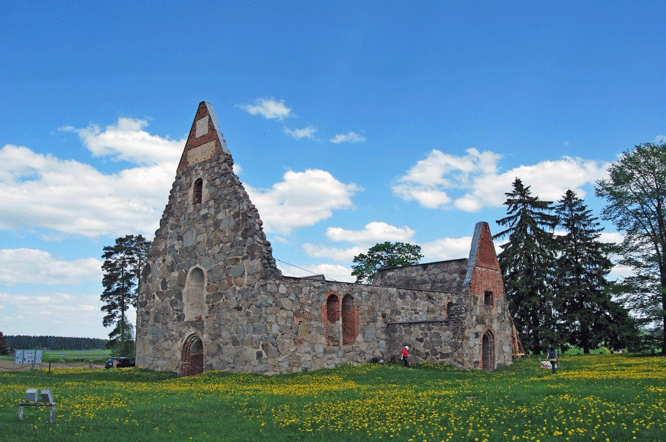
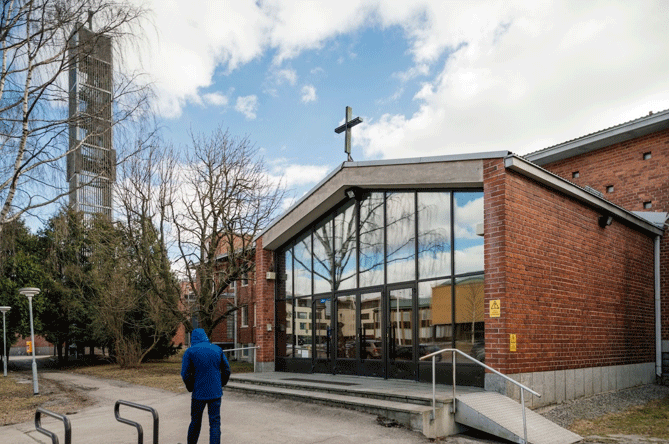
The appearance of modernist churches is distinctive. As R. Kevin Seasoltz (2005) summarises, churches built before the middle of the 20th century are regular and enclosed in form, supported by thick walls and relatively generous in their ornamentation. Modernist churches, in comparison, are spatially irregular or otherwise unconventional, and their supporting structures are often visible. The surfaces are plain and minimally decorated. These characteristics do not fulfil the usual expectations for a church, and this is a factor which also affects how their heritage values are judged. Typically, experts in architecture can appreciate their aesthetic and historical qualities, but many laypeople consider them to be cold, industrial and inhumane (e.g., Goad, 2013). As places of gathering and memories, modernist churches can, however, become locally cherished items of heritage. On a similar note, the common mental image of dilapidated and demolished churches usually consists of brick-built or wooden remains in a park-like setting. This image matches a few Finnish medieval stone churches preserved in their ruined state, such as the Church of St Michael in Pälkäne. It was built in 1495-1505 and abandoned in the earlier part of the 19th century (Figure 1). In contrast, the churches presently under threat of ruination and demolition are steel-reinforced concrete constructions, like the Old Church of Tikkurila in Vantaa, Helsinki Metropolitan area, which was built in 1956 and demolished in 2018 (Figure 2).
The church was constructed in 1495-1505 but abandoned when a new church was completed in 1839. The roof collapsed in 1890
Kaisa Ansami, Vapriikki Photo Archive (CC BY 4.0)
Figure 1 The ruins of the Church of St Michael in Pälkäne
The bell tower stands on the left behind the trees. The building was designed by architects Kalle and Leena Niukkanen and completed in 1956. The church was demolished in 2018-2019
Antti Yrjönen, Vantaa City Museum (CC BY 4.0)
Figure 2 The main entrance of Tikkurila Church in Vantaa
Financial problems are not so acute in maintaining the churches built before 1917, because of the state’s economic support. The churches built after the Second World War are also, however, reaching an age when they require complete renovations. This requires considerable resources from the parishes, because modernist buildings were often built without a prospect of ever being repaired. Since ecclesiastical buildings constructed after 1917 are not automatically protected, and no evaluation by the Finnish Heritage Agency is necessarily required for churches younger than fifty years, they can be more easily altered and demolished than older buildings. This gives parishes more leverage in deciding on the buildings’ future. Some churches have been sold. Vaarala Chapel (formerly Church) in Vantaa, Helsinki Metropolitan area, was built in 1960. It was considered ready for demolition over a decade ago. Eventually, however, it was sold in 2012 to a local entrepreneur who renovated the building (HS, 17 October 2019), and it is still standing. A similar case is Paloheinä Church, built in Helsinki in 1963 (Oranen, 2020). In 2010, the highest decision-making body in the parish, the local Church Council, decided to demolish the building. Yet residents put up a strong resistance and lodged an official complaint against the decision. Both the regional authority overseeing land use and the Finnish Heritage Agency rejected the complaint, but because the local defiance still continued, the building was eventually sold to a private owner and transformed into a care home.
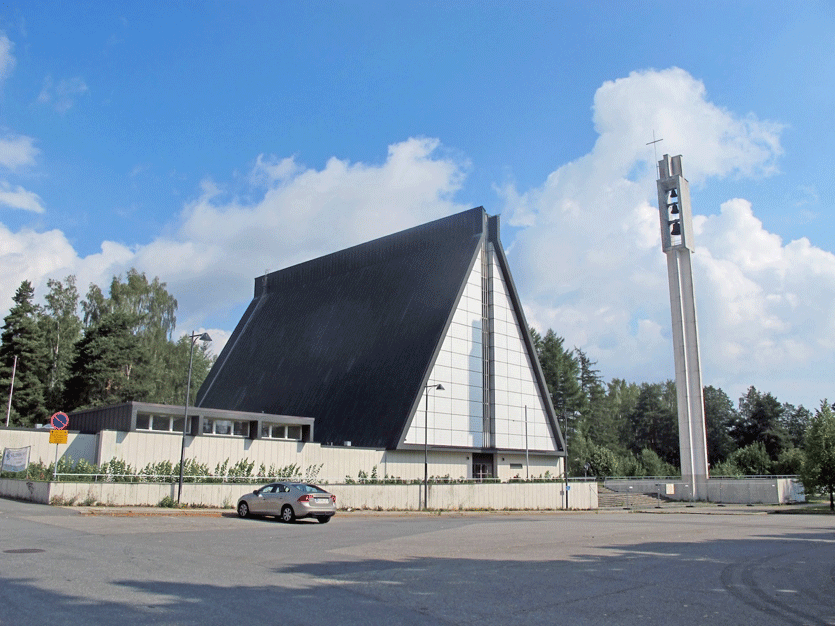
Besides renovating and selling, the third option is to demolish modernist churches. So far in the 21st century, six such buildings have been demolished (Table 2), and six await demolition, but there are many more churches that simply lack the final decision on demolition, like Kouvola Central Church (built 1977) in Kouvola (Yle News, 10 February 2025), and Salpausselkä (built 1972) and Joutjärvi Churches (built 1962) in Lahti (ESS, 14 January 2020). However, since the demolitions are so contested, even what looks like a final decision might turn out to be one. A ‘final decision’ regarding the demolition of Valkeakoski Church was made in 2018 (Figure 3) but reversed after a long process. At the moment it seems that the church might not be demolished after all (Yle News, 21 November 2023). All these churches under threat of demolition were constructed during the period from the 1950s to the 1970s, and six of them are in the Helsinki Metropolitan area. Not surprisingly, the distribution of these churches shows that they were built in rapidly urbanising areas where newly established neighbourhoods needed churches. The number of demolished modernist churches is thus still rather small, but the buildings waiting for demolition indicate that such decisions will become more common in the near future. In fact, it can be predicted that this is only the beginning of a wave of demolitions.
Miinu Mäkelä, Vapriikki Photo Archive (CC BY 4.0)
Figure 3 Valkeakoski Church in Valkeakoski was designed by architect Veikko Larkas and completed in 1969
If the year of demolition is marked as ‘Awaits’, it means there is an official decision to demolish the building, but the church still exists.
Media coverage of the demolition of modernist churches
Next, we will discuss how the issue of church demolition was presented in Finnish news media from January 2018 to April 2023. In the close reading of the coverage, we were interested in differing views of ecclesiastical heritage and its value, and how demolishing or selling parish buildings was framed as both an administrative process and source of emotions. Was the grief over the loss of churches expressed individually, collectively or at all in these media? Our selection of media for analysis includes two national news outlets. The first is the largest newspaper in the country, Helsingin Sanomat, which prioritises the Helsinki Metropolitan area, and the second is the online news service of the publicly owned Finnish Broadcasting Company, or Yle News. In addition, we looked at the prominent tabloid size evening newspaper, Ilta-Sanomat, which is also the second largest newspaper in Finland, but it had only two news items on the topic. They were re-publications of articles from Helsingin Sanomat. We furthermore went through one regional newspaper, Satakunnan Kansa, and one local newspaper, Valkeakosken Sanomat. The former did not have any items related to the dismantling of churches, which is probably explained by the fact that there were no active plans to demolish churches in that region. In contrast, we selected the local newspaper for analysis based on the plans to demolish a modernist church in its main distribution area. The question of dismantling Valkeakoski Church was topical over the whole period of our study, and therefore the number of news items is overwhelmingly high compared with the two national media outlets.
Table 3 The number of analysed articles in the three media categorised according to their type and style
Not surprisingly, in statistical terms, most of the news items on church demolitions concentrate on Valkeakoski and after that, the Helsinki Metropolitan area. The absence of relevant articles in the regional Satakunnan Kansa shows that demolitions attract mostly local interest and are not necessarily considered newsworthy beyond the affected region, which is supported by the large number of items that appeared in Valkeakosken Sanomat.
The media coverage of demolitions was limited to urban areas, and no news items related to rural churches appeared at all. All the news items in Valkeakosken Sanomat dealt with the local church, although in some texts the situation was compared with other churches. In contrast, Helsingin Sanomat focused on churches in the Helsinki Metropolitan area (17 items) but had a few items (6) discussing other parts of the country as well, while Yle News published most of its news items on Pallivaha Church in Turku (11) and Valkeakoski Church (6 items). In addition, it also covered two churches in the Helsinki Metropolitan area (3 items) and published one text on Mutala Church in Joensuu.
The approaches of the media outlets differ markedly in terms of the types of news articles. The national media presented brief accounts of the decision-making or demolition, while the opinions and views of various interest groups were surveyed only occasionally. The articles emphasised expert views and associated values, and did not discuss issues of anger, anxiety, or grief. In contrast, the local newspaper was a medium for voices stemming from everyday life, reflecting social and emotional connections with the buildings. Over a half of the published items were letters to the editor written by locals, although the authors came mostly from a rather small circle of active discussants involved in the church administration, either as members of the permanent staff, like the vicar, or as elected members of the local Church Council. Accordingly, there was a marked increase in the number of letters to the editor just before parish elections were held nationwide. The second most common article type in Valkeakosken Sanomat was brief reports on how the official decision-making progressed. This formed a contrast with the national media which presented more general overviews, but there was also a difference between the approaches of Yle News and Helsingin Sanomat. While the former had a more official tone in its reporting, the latter also published two letters to the editor and one editorial on the topic. It also had more articles written from a conversational perspective. In general, the three media outlets provided a highly varied coverage of church demolitions from brief statements of fact to more opinionated views.
The set of voices in the media
Despite the variety of items the three news outlets published, they all presented a rather uniform set of voices commenting on the demolitions. The coverage was dominated by representatives of the National Church Council and parish administration, and especially the two national media frequently consulted various experts with a background in building conservation or architecture. The presence of locals and activists was surprisingly small and, apart from a few isolated cases, locals or parishioners and their opinions were mentioned only in passing alongside the dialogue with the authorities. Even Valkeakosken Sanomat published only one text in which locals not involved in church administration were interviewed. The media debate can thus be summarised as being primarily authority- and expert-oriented, and this in turn determined the framing of the debate and the sentiments of loss.
Those residents or non-experts who presented their views were generally reported to either understand the financial difficulties parishes face, to be annoyed by the demolition of their beloved church, or to have participated by signing petitions for protection. The letters to the editor in Valkeakosken Sanomat show that the views for and against were rather polarised, and there were a series of official complaints made against the decision-making at every stage. Much of the local debate was not so concerned with the consequences of the possible demolition, but rather whether the demolition should take place at all, and whether due democratic process had been followed. In 2022, the Parish of Sääksmäki, where Valkeakoski Church is located, organised a parish election debate with a focus on the demolition issue (VS, 7 November 2022). The parish had prepared for the event by hiring a security guard, which is quite exceptional for Finnish church events, and three members of the audience staged a walkout during the debate. The arguments in Valkeakosken Sanomat were thus overtly political, whereas Yle News’s reporting only mentioned councils and their representatives voting on demolition and the rezoning of church sites. Hence, the reporting did not present a strong party-political tone. In Helsingin Sanomat the details of the local politics were largely absent.
The media reports selected for the survey clearly show a wide interest in the demolition of the churches, making the topic important from a media point of view. This is apparent in Helsingin Sanomat in terms of the stylistic diversity of articles, and in Valkeakosken Sanomat in the number of brief news items and letters to the editor. The news coverage of Yle News, on the other hand, was predominantly more matter of fact reporting on decision-making, or the progress of demolitions, but since even the minor administrative steps were reported, it appears that the topic was perceived as worthy of heightened and sustained media attention.
To renovate or demolish?
Based on the media representations, the starting point for the debate on a church’s demolition was each time the same. The churches discussed in the media were mostly built in the 1960s, with two being completed in the last years of the 1950s and one in the mid-1970s. A modernist church had become dilapidated, suffering especially from poor indoor air quality which caused a varying degree of health complications for staff and visitors. Minor renovations had been postponed so long that eventually only three possibilities remained: a complete and expensive renovation, a less resource-demanding demolition, or selling the building. Since the tiny market for modernist churches made selling difficult, the parish administration tended to opt for the most affordable option, i.e. demolition, justifying this by the poor financial prospects. When the worsening financial situation of parishes was examined by the media, the anticipated decline in the parish’s tax revenues due to declining membership was mentioned frequently. In many cases, however, according to the National Church Council and other church representatives, tax revenues had not yet fallen, and occasionally they had even risen (HS, 10 December 2019). The reason was that younger parishioners with lower income tended to leave the church, while older people with higher income or a steady pension wanted to remain members. However, the church representatives assumed this trend would reverse in the near future, and the tax revenue from older generations would no longer compensate for the absence of younger parishioners.
Property expenditure on ecclesiastical buildings was mentioned in several texts to already constitute around a quarter of the total parish expenditure. It was nevertheless not sufficient for both an expensive renovation and maintaining the church after that. Some texts contrasted this with the projected decline in financial resources, making it sensible to prepare for such a scenario by reducing the number of buildings to be maintained. It was frequently stated that when the diminishing finances are considered, parishioners are more important than walls (e.g. HS, 5 May 2018; VS, 23 February 2018, 8 November 2018, 22 December 2020, 29 September 2022). This point was taken up, for instance, in an editorial in Helsingin Sanomat and several letters to the editor in Valkeakosken Sanomat. In a letter to the editor, the Chief Architect of the National Church Council Kristiina Koskiaho stated that ‘any decisions to demolish are always taken only after careful consideration and inquiry’ (HS, 20 December 2019). Conversely, in Valkeakosken Sanomat, many arguing for the preservation of the church claimed that the expert appraisals of the current condition of the church were intentionally too negative, and the decision-making had not been transparent.
In some cases, demolition was justified on the grounds that construction in the modernist period was intended to last only for a limited period, usually a few decades. This raised the counterargument that the buildings would last a long time if they had been or were to be renovated correctly and at the right time. In some cases, the ecological impact of renovation and demolition was also raised, since demolishing the old building did not follow the ideal of sustainability. Moreover, it was claimed that Finns do not appreciate the value of their local environment, including modernist monuments, until an outsider comes to point it out (HS, 27 July 2020). The most vocal advocates of renovation were, in fact, the various heritage or architectural experts who stressed the aesthetic and historical value of the buildings or their significance as central elements in the cityscape.
The representatives of parishes and local Church Councils mostly stressed that the buildings were already beyond repair, often suspecting that costly renovation would ultimately be futile and that the same problems would only persist in the future. It was also suggested that extensive renovations tend to approach rebuilding, which was not desirable. For instance, in an interview, the Vicar in Valkeakoski argued that ‘[i]f the church is to be preserved and renovated, the building should in the future contain more than just the ecclesiastical space. In practice, this means that new types of spaces would need to be built, which would increase the cost estimate even further’ (VS, 22 February 2018). In conclusion, decisions on demolition were won or lost by using appropriate financial arguments.
Values and emotions
The news coverage was mostly a dialogue between different authorities, including heritage professionals, church representatives, and architects. This is reflected in the media debate on the value of modernist churches, which largely highlighted their architectural, cultural or historical values, or the significance of the building as part of the surrounding cultural environment or as a landmark. Architectural values were repeatedly presented and reviewed in comments made by architects and conservation experts or supported by positioning the church within the oeuvre of the architect who designed it. In addition to the architects and heritage professionals, nonfiction author Mikko Laaksonen took a stand and claimed that Finns do not value Finnish modernism, which is ‘globally our most important cultural asset’, and more significant than ‘the works of Jean Sibelius’ (HS, 17 February 2023). The sense of anticipatory grief was expressed over vanishing aesthetic and historical values and justified by referring to national art historical importance and international reputation.
Locals and other lay people, by contrast, emphasised the social and spiritual values of modernist churches, such as their use as communal centres or status as places of collective and individual memories. Such sentiments were recounted in a minority of the media reports and articulated by parish representatives and members of the national or local Church Council who referred to parishioners lamenting the loss of their local church. In an overview article, it was stated that ‘[d]ecisions to demolish churches always cause a stir, because people have an emotional relationship with the churches where they were baptised, confirmed and married (HS, 10 December 2019). Another text, titled ‘Demolition of the church makes Vantaa residents wistful’, recounted the beginning of the demolition of Tikkurila Church and presented a collection of the residents’ memories (HS, 23 September 2018). The demolition of ‘one of Tikkurila’s main landmarks, the church’, and especially the removal of its bells, was stated to have ‘made Vantaa residents recall with nostalgia’ their memories and experiences of the church. In an article on the plans to raze the Children’s Church of St Anne in Vantaa, local activist Paavo Jämsä considered the building as ‘a treasury of art which means a lot to the identity of the village’ (HS, 11 October 2018).
Valkeakosken Sanomat sets itself apart from the national media by reporting frequently on local reactions to the threat of demolition. They were mixed. In a report in which a few residents were interviewed, one respondent said that the church ‘has become my home church and as a building, it is beautiful,’ while another exclaimed ‘[l]et’s just demolish it’ (VS, 17 March 2018). In an article titled ‘The communal mourning for the church began immediately and people could vent their feelings to listeners’, it was reported how people felt at the Sääksmäki Parish meeting place after the demolition decision had been made:
Irma Lehtola, who was there as a volunteer hostess, admits that emotions have been running so high that she has found people really distraught.
‘When people are upset and agitated, it can be so painful that you don’t want to talk anymore. But talking makes it easier and mourning is something the congregation needs to do,’ says Lehtola. (VS, 19 March 2018.)
When the 50th anniversary of Valkeakoski Church was celebrated outside the closed building, the article quoted a resident:
‘It’s been over 40 years since my husband and I stepped before the pastor in this church. This is the church where I and my children were confirmed. There are so many cherished memories of this church.’
People shared their memories animatedly as they waited for the celebration to begin. Many brought a candle and placed it next to the church fence. Several bouquets of flowers and even greeting cards for the 50-year-old church were also attached to the fence. (VS, 15 December 2019.)
Three years later, a candidate in the local Church Council elections talked about the emotions Valkeakoski Church aroused in a letter to the editor (VS, 13 October 2022): ‘For most of my life, Valkeakoski Church has been my home church. Closing the church, not to mention the decision to demolish it, has been one of the hardest things in my life.’ This manner of connecting the events of one’s life with the church is a typical reaction by residents appearing in the media and differs sharply from the arguments presented by administrators and experts. The sense of loss was felt in the context of social and religious spiritual values and framed as a personal or collective experience, yet these emotions were a mixture of strong feelings for and against demolition. Here anticipatory heritage grief was more ambiguous, even contradictory, than the loss conceptualised in terms of aesthetic, historical or economic values.
Preparing for demolition
Much of the attention in the media was focused on the decision-making, and the technical aspects of architecture. Similarly, architects and heritage professionals mostly commented on the legal framework of heritage protection and its requirements. The memories and emotions which the local residents might have were acknowledged, but they remained only thinly connected to the heritage discussion.
If preparations for the loss of heritage that went beyond technical issues were mentioned, it was done by the representatives of the parish, especially the vicars, and journalists who haphazardly collected and published the residents’ oral histories. For instance, after Tikkurila Church had been demolished, Helsingin Sanomat published an article conveying recollections from the locals (HS, 23 September 2018). The article also stated that the parish was collecting memories connected with the church.
Because the demolition of Valkeakoski Church was quite thoroughly documented in the local newspaper, there were also more details about the preparations made before for the loss of heritage, managed by the parish. The Vicar noted that the planning had taken into account the ‘need for bereavement work to deal with the loss of the church’ (VS, 9 September 2019). He emphasised that if the demolition was to go forward, the parish would bid farewell in a dignified way at a memorial service. Moreover, ‘[s]acred objects will be removed before any structural demolition work is carried out and detailed consideration will be given to where each object can be moved’ (VS, 19 March 2018, 25 October 2018). The church would also be photographed so that a digital memory of the church is left for the later generations (VS, 16 June 2018). Some years later all the buildings in the parish were scanned and 3D models prepared (VS, 1 July 2021).
Discussion and conclusions
The most endangered ecclesiastical buildings in Finland are modernist churches built from the 1950s to the 1970s in growing urban areas. They are not necessarily protected by heritage legislation, and thus their renovations do not receive financial support from the state. Moreover, the status of these churches as expressions of modernism, a movement rather aggressive towards older architecture, renders their heritage value even more controversial when discussed locally, regionally or nationally. They are not universally held in high esteem, especially when financial factors do not favour their maintenance. Yet for many parishioners or other members of the local community they have become monuments with which their lives and emotions have become intertwined.
Both national and local media show clear interest in vanishing ecclesiastical heritage. While national media emphasises the views of the administrative, architectural and heritage professionals, in local media the scope is wider, giving more space to residents’ conflicting views and the heated debates they generate. From the point of view of anticipatory grief, local media are more important than national news outlets, and this observation is important when designing media strategies and engagement with local communities.
The analysis of the media representations shows that the church as a building carries a plethora of values, some more acknowledged by heritage management than others. Heritage experts tended to underscore aesthetic and historical values as the most important ones, but they were aware of the residents’ personal histories and social as well as spiritual values associated with the building. These values and emotions, nevertheless, have a miniscule impact on the legal and administrative framework. The representatives of the parish, like vicars, gave more weight to such everyday aspects, which is not surprising considering the importance of loss and mourning in Christian theology and pastoral care. The residents’ perspective cannot, however, be reduced just to emotions and memories, but the locals also voiced very practical concerns: Where will the parishioners meet after the church is lost? Can the residential area be attractive and lively anymore if it does not have a church?
The media reports bring out the different values connected with church buildings, as well as a hierarchy of these values. The views of architects and heritage professionals are given more space than the emotional and autobiographical considerations, enforcing the assumed value hierarchy where aesthetic, historical and scientific values and impersonal loss are emphasised. In contrast, social and spiritual values were usually referred to by local church administrators and parishioners. Nevertheless, the interviewees, whether heritage experts or lay people, displayed awareness of the wide spectrum of these views. Based on the media representations, the most conflicting position in terms of values fell, however, on the representatives of the parish administration. They were troubled by financial concerns but also by the significance of the church to the parishioners.
The threat of demolition creates a situation which disrupts the normal life in a parish, and this generates new social activities and emphasises the significance of the older ones (Oranen, 2020). In our analysis, we were particularly interested in the preparations made for the loss of heritage, and these activities were initiated either by journalists or the parish administration. While media published articles where locals were asked to tell their memories of the endangered church, parishes were ready to organise memorial events, collect residents’ memories, document the church, and plan carefully the reuse of its liturgical and other artefacts. These grief-related heritage practices were not on the agenda of the heritage professionals involved, and they were not considered as part of formal decision-making processes. In a similar vein, the cultural heritage strategy of the Evangelical Lutheran Church for 2017-2024 emphasised the positive aspects of heritage, and its use as a resource for the community. The attitudes are changing, however, and the renewed heritage strategy for 2025-2030 discusses also grief and letting go of ecclesiastical heritage.
In line with Henrik Lindblad’s (2023) discussion of ecclesiastical heritage in Sweden, heritage legislation and management in Finland also follow a traditional heritage discourse interested primarily in the preservation of tangible manifestations of heritage. Based on the media reports, it is parish representatives who were most concerned with the experience of heritage loss expressed by the parishioners. They had found a set of practical ways to address this grief. However, it is not only parishioners, or the members of the Evangelical Lutheran Church, who have associated their emotions and life events to the local church buildings. In fact, also other, non-Christian or non-religious residents may have done so, and their feelings of loss should be acknowledged as well (Löfgren, & Wetterberg, 2024, p. 275). In other words, the meaning of ecclesiastical heritage is not based only on its Christian sacred character, but also on mundane events and habits, and these broader social and heritage meanings should be analysed in parallel with aesthetic, liturgical and financial factors.
Heritage experts and other officials involved in the decision-making can standardise, systematise, and professionalise the anticipatory grief work required. For instance, those with ethnological or folkloristics training have competence to conduct interviews, collect memories, process the material and archive it properly. Moreover, heritage professionals can contextualise the loss of the local church as part of heritage discourse. Since identifying and naming something as heritage can already be considered a form of giving that tangible or intangible item value, applying heritage terminology is a sign of appreciating and acknowledging the loss. By affirming the importance of anticipatory grief, administrators can help local communities to realise the value of heritage in the process of letting go of the cherished parish church and become more involved in their own grieving. This might also help those for whom the local modernist church is not so significant to understand the sense of loss others are experiencing. Nevertheless, the integration of anticipatory grief into heritage policies is not solely the domain of experts, but it involves and brings together different agents in the process: decision-makers and administrators, media, and local parishioners. It is a concept that can create bridges between the stakeholders.
From the perspective of anticipatory grief, the loss of heritage is experienced differently depending on social and historical realities. There are many heritage views and traditions, apparent also in the church demolition debates, and often these talk past each other, fragmenting the heritage discourse. Ecclesiastical heritage is often divided into tangible and intangible heritage, or its uses categorised as religious or secular, and there are also aesthetic, historical, biographical, economic, social and legal values which ecclesiastical heritage carries. This calls for creating heritage practices which deal with the transition from utilisation and maintenance of heritage to its abandonment in the framework of anticipatory grief. Based on the analysed cases, there is already a set of practices which stem from the notion of anticipatory grief. They range from acknowledgement of the sense of loss to establishing a dialogue with different stakeholders on the sense of loss, relocating liturgical and other objects in the church, documenting tangible heritage (by photography and 3D modelling) as well as intangible heritage (including oral histories, memories, and everyday routines), and planning such communal events as memorial services for the demolished church. Further ideas of effective solutions can be found in the demolition and abandonment of other modern constructions, like the Alaskan Way Viaduct, the remains of which were offered as mementos to those who wished to commemorate the destroyed structure (Lindblom, 2019).
Integrating anticipatory grief into decision-making and heritage work does not necessarily alleviate the pain of loss in a therapeutic sense but nonetheless allows an individual or a heritage community to socially work through the pain by showing appreciation of the emotions and personal and shared histories connected with heritage. In addition to such grief expressed for past and present losses, preparing for a future loss and its aftermath are also significant in the context of church demolitions. The decision-making involved is usually difficult, and it can take a long time and be somewhat unpredictable, as with the case of Valkeakoski Church, but the community should still be able to continue with their lives and social interactions. Anticipatory grief provides a future orientation for heritage work.
Anticipatory grief is a reminder of the importance of the local perspective and community involvement when heritage policies and professional work are planned. It re-introduces the notions of loss and grief, which are fundamental for all heritage, but frequently neglected at the expense of protection, maintenance, and other technical issues. The absence of future-oriented heritage policies on letting go of ecclesiastical heritage leads to local news media partly acting as an outlet for anticipatory grief, and parishes provide communal help in the mourning process as well. In this article, we have not formulated an opinion on whether the modernist churches should be renovated, sold, or demolished. Instead, we want to point out the lack of heritage policies, codes of conduct, and established practices which outline what happens when a demolition takes place. Even if the long administrative process ends in a solution other than demolition, such as drastic renovations or selling the property, these changes still have major consequences for the heritage status of the church building and justify the facilitation of anticipatory heritage grief.

