




 Inglês (pdf)
 Artigo em XML
 Referências do artigo
 Tradução automática
 Enviar este artigo por email
 Citado por SciELO
  Similares em
SciELO
Similares em
SciELO 
 Permalink

1. Introduction
Many organisations and destinations are implementing green practices in response to the severe sustainability issues facing our contemporary world (Gong et al., 2023; Kement, 2023; Silva, 2022; Streimikiene, 2023). Green advertising campaigns are promotional initiatives designed to influence consumers' behaviour regarding sustainable and eco-friendly practices (Ummar et al., 2023; Ya-Hsin Cheng et al., 2022; Soto Maior et al., 2022). In advertising, visuals and verbal text serve as two of the most powerful tools in tourism marketing. However, a growing trend in contemporary green advertising is replacing text with visuals (Dehay & Landwehr, 2019). Effectively using images in tourism advertising can significantly alter the opinions and perceptions of potential visitors (Chen et al., 2024). Visual metaphors are often employed to convey content more resourcefully without sacrificing the intended context, thus efficiently communicating a clear message (Ding et al., 2022; Rudenko & Morozova, 2024). This advertising type frequently uses symbols, figures of speech, and symbolic imagery to transmit messages. Recently, videos featuring visual metaphors have emerged as a successful approach in content advertising (Sweetser, 2017). Since visual metaphorical language can evoke personal interpretations and unconscious connections, it allows advertisers to explore consumers' emotions more deeply (Beard et al., 2024). According to Meijers et al. (2019), this heightened emotional engagement may lead to more favourable attitudes towards the advertised product, service, or behaviour.
Research by Forceville and Jeulink (2019) highlights the persuasive power of metaphoric marketing in inspiring sustainable behaviours by appealing to clients' values and emotions. In the context of sustainable tourism practices, metaphorical green ad campaigns could enhance the memorability of advertising messages (Rudenko & Morozova, 2024). Landau et al. (2021) reported that incorporating visual metaphors in green ad campaigns promoting sustainability can improve people’s behaviours and encourage them to consider the sustainability message. Furthermore, researchers have emphasised the influence of metaphorical ad campaigns on encouraging more environmentally accountable consumer behaviour (Meijers et al., 2019). Despite previous studies on sustainable advertising and marketing, examining visual metaphors in advertising campaigns remains limited, particularly in the tourism and travel sector, which grapples with unsustainable practices (Kong et al., 2021). Some tourists still consume excessive amounts of water and electricity while on holiday at various destinations and resorts, negatively impacting local infrastructure and ecosystems (Gössling et al., 2012). Moreover, despite growing awareness of plastic pollution, travellers continue to disproportionately use plastic items, such as water bottles and luggage, leading to contaminated beaches, oceans, and coral reefs (Buckley, 2012).
Previous research has primarily focused on how green marketing affects consumers’ behaviours, such as loyalty (Jung et al., 2020), satisfaction (Vafaei et al., 2019), and purchase intentions (Kong et al., 2021; Gong et al., 2023). Other studies have examined the cognitive aspects of metaphorical advertising aimed at developing brand relationships, particularly in relation to consumer targeting. For instance, Lazard et al. (2016) investigated the impact of metaphorical advertising on shaping customers' perceptions and emotional connections with brands. However, criticism has arisen regarding the emphasis on environmentally friendly products rather than promoting sustainable behaviours (Gordon et al., 2011). Green marketing initiatives frequently overlook the inclusion of metaphorical advertising and rhetorical appeals that align with environmental principles and effectively communicate the importance of environmental preservation. Consequently, research into incorporating visual metaphors in green advertising campaigns for sustainable tourism remains scarce, especially in Egypt.
Thus, the main purpose of this research is to address this gap by exploring the potential for implementing visual metaphors in campaigns that encourage sustainable tourism in Egypt. The current study focuses on the creative ad campaign recently introduced by the Ministry of Tourism and Antiquities in 2021, entitled "A Civilisation Inspired by Nature.” This campaign features metaphorical scenes and aims to promote sustainable tourism in Egypt. The analysis centres on the implied messages contained in the visual metaphors of the video advertising. Additionally, the current study investigates how viewers interpret the implicit messages conveyed by the metaphorical ad campaign within the context of sustainable tourism, taking into account the influence of expertise from various fields in understanding these metaphorical messages.
On this premise, the current study addresses the following questions: a) How are visual metaphorical ad campaigns used to promote sustainable tourism? b) To what extent do viewers recognise the implicit messages conveyed by these campaigns within the context of sustainable tourism? c) How does the level of expertise affect the understanding of these implicit metaphorical messages? Through an examination of Egypt's "A Civilisation Inspired by Nature" campaign, the current study offers unique perspectives on the approaches employed by Egypt to advocate for sustainable tourism through visual metaphors. Additionally, it explores the extent to which viewers perceive the underlying themes communicated through metaphorical advertising campaigns in the context of sustainable tourism. The research provides insights into how audiences receive and interpret these messages, shedding light on their engagement with sustainability-themed advertising. Moreover, the current study investigates the impact of expertise on comprehending implicit metaphorical signals, offering significant insights into how audience characteristics influence the interpretation of sustainable tourism advertising. Employing this approach could be beneficial for developing targeted strategies for sustainability advertising. Furthermore, this research provides recommendations to marketers on using visual metaphorical ad campaigns to attract visitors' attention and encourage their participation in sustainable activities, thus promoting safer tourism practices.
2.Literature review
2.1 Using visual Metaphors in advertising campaigns
According to Metaphor Theory (MT), human interactions with social environments are the primary factors shaping conceptual metaphors. Due to their powerful perception-inducing, persuasive, and interpretable effects, visual metaphors are widely utilised in modern advertising (Vakhovska, 2017). Visual metaphors are commonly employed to enhance visually conveyed communications without losing context (Djafarova, 2016). A visual metaphor is a phrase or image that typically denotes one thing while symbolising the connection or similarity between two different entities (Hendrokumoro et al., 2023; Chen et al., 2024). Ding et al. (2022) noted that metaphors are effective rhetorical devices that can link seemingly unrelated ideas or situations. Visual metaphors serve as tools for language (Lakoff & Johnson, 1980). Advertisements that utilise visual metaphors become increasingly important for conveying intangible concepts like sustainability, as they effectively clarify complex themes (Beard et al., 2024). Metaphorical ads extensively employ figurative imagery or symbols to foster deep levels of cognitive and emotional understanding (Landau, 2016). Visual metaphorical advertisements can elicit emotional responses from consumers by using metaphorical language, resulting in better ad retention and a more favourable attitude towards the advertised product or behaviour (Kim et al., 2012; Rudenko & Morozova, 2024).
Metaphorical ads extensively use figurative imagery and symbols to foster deep levels of cognitive and emotional understanding (Landau, 2016). Visual metaphorical advertisements can elicit emotional responses from consumers by employing metaphorical language, leading to better ad retention and a more favourable attitude towards the advertised product or behaviour (Kim et al., 2012; Rudenko & Morozova, 2024). The current study uses Relevance Theory (RT) to explore how visual metaphors function in advertising campaigns and how they are interpreted. According to Relevance Theory, people's prior knowledge and ability to draw conclusions influence their understanding of vague metaphors (Djafarova, 2016). Therefore, advertisers can effectively capture the audience's attention and enhance message retention by utilising visual metaphors to create vivid and memorable narratives (MacInnis & Price, 1987; Hendrokumoro et al., 2023). According to Landau (2016) and Beard et al. (2024), the visual metaphors employed in advertising campaigns can result in powerful, sticky messages that establish an unforgettable bond with the intended customers. Many ads that convey their message through visual metaphors will likely persuade the audience more effectively across various contexts (Ding et al., 2022).
2.2 Rhetorical elements in the metaphorical ad campaign
According to Aristotle, there are three types of appeals: ethos, pathos, and logos, which determine the success of an argument (Meyer, 2017). Distinct from one another, these three appeals provide different ways for speakers to win over their listeners or viewers and persuade them to agree on a specific point. The skill of a rhetor in persuasion depends on a well-rounded use of all three appeals.
Rhetorical appeals include the speaker's credibility and authority (ethos), the audience's emotional and sensory reactions (pathos), and the logical reasoning of the argument (logos) (Amoako, 2020). According to Amjad and Hashmi (2023), to understand ethos, one must establish credibility and trust with the audience by presenting evidence, drawing conclusions based on that evidence, and making compelling arguments. In contrast, pathos appeals to the target audience's emotions, utilising elements such as music, images, voice-over narration, and other forms of digital multimedia. The goal of the logos appeal is to provide logical reasoning. To effectively employ logos, a researcher must offer substantial evidence (Amoako, 2020).
2.3 Metaphoric Advertising Campaigns and Sustainability
According to Pekerşen and Canöz (2022), recent advertising and marketing psychology studies have demonstrated that metaphors can enhance cognitive engagement with sustainability messaging. For instance, a non-governmental organisation in America launched a campaign entitled "Give a Hoot, Don’t Pollute" in the 1970s. The advertisement featured a human-like owl named Woodsy Owl and a memorable slogan: “Give a Hoot, Don’t Pollute”. Ukaga et al. (2010) maintain that this campaign was successful because it effectively communicated environmental stewardship and the importance of pollution prevention through metaphorical imagery that portrayed Woodsy Owl as a guardian of the environment. Additionally, Keep America Beautiful developed another metaphorical ad campaign promoting sustainability with their “Crying Indian” public service advertisement (PSA) in the 1970s. This ad featured an actor portraying a Native American man who cried for his endangered environment suffering from pollution. The image of the crying Native American became a powerful expression that conveyed the potential impact the public might have on the Earth, depicting them as environmentally accountable and obliged to conserve nature (Lowman, 2020).
In these instances, using metaphors helped create narratives with a strong emotional impact, making the audience more engaged and ensuring they remembered the content vividly (Burgers et al., 2015). Advertisements that employ visual metaphors succeed in making otherwise complex sustainability themes memorable and easy to understand. They craft stories that resonate with people's emotions (Burgers et al., 2015). By using metaphors, advertisers can make sustainability messaging stand out and become more impactful, potentially inspiring viewers to take action regarding environmental protection. As Huang et al. (2022) argued, advertisers can encourage environmentally friendly behaviours by using visual metaphors to frame sustainability challenges. Metaphors can significantly impact the development of sustainable tourism practices, influencing tourists' sense of responsibility towards the environment. Metaphors such as "nature as heritage to be protected" or "the Earth as a life" can inspire tourists to feel more accountable for protecting the environment and tourist attractions (Landau et al., 2021) while also suggesting that sustainability is a moral duty. These analogies can effectively encourage travellers to adopt more environmentally friendly habits, such as reducing waste, conserving natural resources, and promoting eco-tourism (Rudenko & Morozova, 2024).
Lorenzoni et al. (2007) found that using visual metaphors in advertising campaigns may enhance feelings such as sympathy, optimism, happiness, and enthusiasm related to environmentally friendly values. Additionally, visual metaphors in advertisements can be used to warn individuals about the detrimental effects of unsustainability, which must be curbed to induce behavioural changes concerning the environment (Cohen et al., 2011). Many researchers have noted that people often struggle to establish a clear connection between their activities and the far-reaching environmental effects of complex issues like climate change. This difficulty arises from perceiving these issues as intangible and remote (Lorenzoni et al., 2007). Consequently, there are suggestions to develop methods that allow individuals to experience the impact on the environment more directly (Lazard et al., 2016). One example of such a method is a metaphor with a strong visual effect. For instance, Rettie et al. (2012) examined how advertisements that employ metaphors influence consumer perceptions of eco-friendly products. They found that using metaphors may heighten consumers' emotional attachment to sustainability messages, leading to stronger beliefs and intentions to adopt sustainable practices. According to Huang et al. (2022), sustainability marketing should utilise visual metaphors, particularly in brand storytelling. They highlighted the potential for cohesive narratives and emotional connections to convey sustainability ideas effectively. Hence, Pekerşen and Canöz (2022) and Cheng et al. (2022) stated that sustainable behaviours and sustainable marketing are connected by their common goal of promoting responsible practices. Additionally, Siddiqui et al. (2023) emphasised that sustainable marketing focusses on offering value to consumers, the community, and the environment. Effective marketing campaigns highlighting the benefits of eco-friendly practices could persuade consumers to adopt sustainable habits and make greener choices by emphasising the positive environmental impacts, thereby creating a market where sustainable consumer behaviour becomes the norm.
3.Methodology
3.1. Sampling and procedures
Phase One: Interpretivism Approach
This phase involved analysing the 2021 campaign 'A Civilization Inspired by Nature' using a checklist and rhetorical analysis, guided by an interpretivist approach. The campaign was purposefully chosen after browsing the websites of the Egyptian Tourism Authority (ETA) and the Egyptian Ministry of Tourism and Antiquities (EMTA), the official authorities responsible for promotional tourism campaigns. The campaign's title suggests that metaphors have been used to highlight the deep bond between the ancient Egyptians and nature. It aims to foster an appreciation for the environment and encourage conscientious environmental practices among travellers by using metaphorical scenes that link ancient Egyptian civilisation to present-day environmental issues. Additionally, it seeks to raise awareness of sustainable tourism in Egypt among tourism markets, including Arab and overseas nations (Hamdy, 2022).
Checklist
Checklists assist researchers in ensuring that every relevant aspect of the data is thoroughly examined, thereby bolstering the reliability of their conclusions. After analysing the video metaphorical campaign, the researcher identified fundamental themes that are vital for understanding (Maxwell, 2013). This method aligns with Maxwell's assertion from 2013 that qualitative analysis relies heavily on identifying key themes and elements to enhance the comprehension and interpretation of the data. The checklist presented in Table 1 addresses the second research question: "To what extent do viewers recognise the implicit messages that metaphorical ad campaigns convey within the context of sustainable tourism?" This methodology is consistent with qualitative research approaches, including thematic analysis and content analysis, as it aims to systematically gather participants' interpretations of the video content (Maxwell, 2013). Through a systematic analysis of the video's fundamental themes, researchers can gain a more comprehensive understanding of the implicit metaphors at play and their role in conveying the overarching message to viewers. By employing this methodical approach, researchers can effectively identify opportunities for improvement within the metaphorical structure of the video.
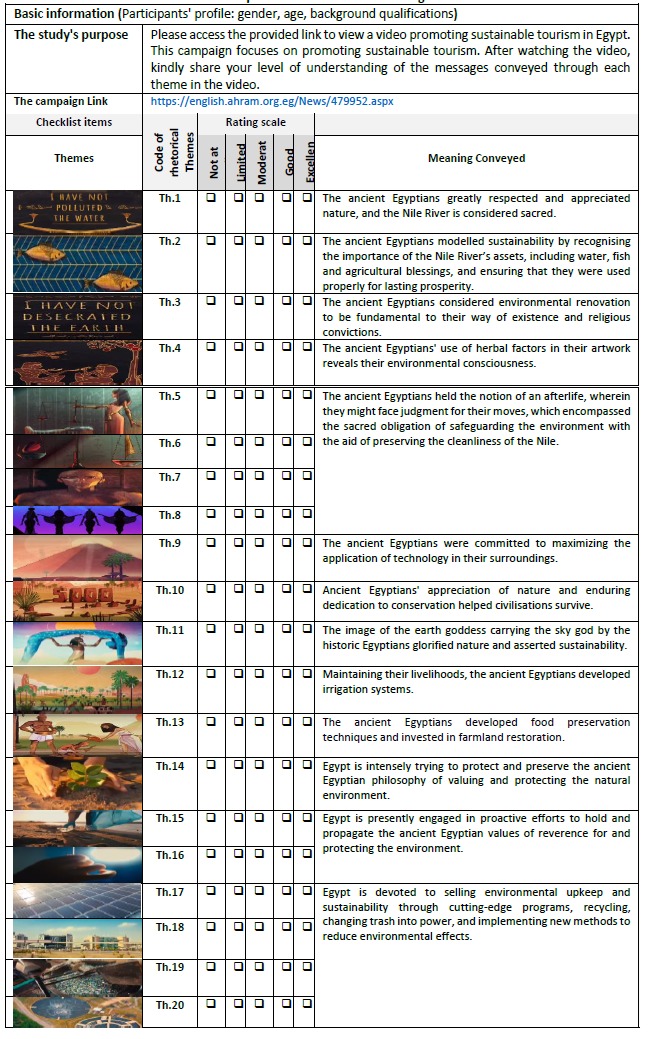
The items were evaluated using a scale adapted from Heap and Waters (2019), ranging from 5 (Excellent) to 1 (Not at all), as shown in Table 2. This rating scale accommodates responses that range from minimal cognition to profound comprehension, allowing for a nuanced understanding of the participants' grasp of the material. The evaluation form was designed to assess the respondents' understanding of the allusions and rhetorical devices employed.
Table 2 The rating scale for the checklist
| Rate | Definition |
| Not at all | The participant exhibits minimal to negligible comprehension of the theme. |
| Limited | While the participant shows some comprehension, it remains insufficient or ambiguous. |
| Moderate | The participant exhibits a rudimentary comprehension of the theme. |
| Good | The participant exhibits a thorough and unambiguous comprehension of the fundamental theme. |
| Excellent | The participant exhibits remarkable comprehension, offering perceptive and subtle answers. |
Rhetorical Analysis
As Stiles (2012) described, rhetorical analysis is the systematic examination and evaluation of the persuasive elements used in communication, such as phrases, images, language, style, and structure. It evaluates the degree to which the advertiser, speaker, or performer has effectively convinced the viewers by utilising rhetorical elements such as written text, images, spoken words, animation, and graphic representations (Shea,2016). A review of earlier literature (Meyer, 2017; Amoako, 2020) found that performing rhetorical analysis involves the stages illustrated in Table 3.
Table 3 Rhetorical analysis process
| 1-Select the Text or Video | Pick something to analyse, which might be a piece of writing, a speech, a video, an image, a theme, a kind of advertising, etc. Then, check that it has a singular unique persuasive aim and is full of rhetorical or metaphorical elements such as images, symbols. etc. |
| 2-Rhetorical analysis purpose | Explain the purpose of rhetorical analysis. |
| 3-Identification of Rhetorical elements in the metaphorical ad campaign | Initially, recognise the speaker’s goal, as evidenced by the video’s design and framework, including introduction and conclusion as well as the primary body content, considering the three parts of rhetoric: ethos, pathos, and logos. |
| 4-Audience Response | Examine how these structures and numerous visual representations may make the message more persuasive. |
| 5- Critical evaluation | Provide a thorough assessment of the work. |
| 6- Conclusion | Eventually, provide a short summary of the major findings from the rhetorical analysis. |
Phase Two: Positivism Approach
In the second phase, a positivist approach was employed to collect quantitative data by statistically evaluating the responses provided by participants on the checklist. Two distinct groups were purposefully chosen: individuals with diverse knowledge backgrounds and experts in history and heritage. The selection of individuals was based on various criteria, leading the research to utilise a purposive sampling method (Neuman, 2014). Initially, since the interpretation of metaphors often necessitates a higher level of understanding, the audience consisted of those holding a bachelor's degree or higher. Moreover, the campaign included metaphors that symbolised ancient Egyptian civilisation. Thus, the inclusion of individuals with expertise in archaeology and historical research allowed for a comparative evaluation of their comprehension of the video campaign's metaphors and themes related to ancient Egyptians in comparison to individuals with varied educational backgrounds.
To meet the checklist's requirements, participants were asked to view the video and subsequently respond to questions or express their opinions regarding each item included in the checklist. The entire checklist was uploaded to a Google Form along with the video link. This framework aimed to assist viewers in assessing their own levels of understanding concerning the meanings communicated through each visual metaphor shown in the video. A total of 264 participants voluntarily completed the online survey. After gathering data via the checklist, the researcher performed a statistical examination of the participant responses using SPSS to determine which metaphorical theme best conveyed its implicit messages. An independent T-Test analysis was then conducted to address the third research question: "To what extent do viewers recognise the implicit messages that metaphorical ad campaigns convey within the context of sustainable tourism?" The independent sample T-test is a vital statistical analysis tool that helps identify significant differences between the means of the two groups. This study employed an independent sample T-test to explore the difference between the first group of experts in history and archaeology and those with knowledge across various fields regarding their understanding of the metaphorical themes conveyed through the ad campaign. This evaluation helps conclude the campaign's efficacy and identify potential areas for improvement.
4.Results and discussion
Following the rhetorical analysis process, particularly the first three steps, can help answer the first research question: "How does Egypt use visual metaphorical ad campaigns to market sustainable tourism?"
Step (1): Selecting a Video or Text:
The research focuses on the ad campaign conducted by EMTA in 2021 to promote sustainability during the 27th United Nations Climate Change Summit (COP27), which took place after the Covid-19 pandemic. The campaign was launched under the slogan "A Civilization Inspired by Nature."
Step (2): Determining the Purpose of Rhetorical Analysis:
To determine the purpose of the rhetorical analysis, the researcher should consider the following inquiries: a) What was the campaign’s message? and b) What rationale did the campaign's design use to effectively convey its intended message? Analysing the campaign’s video revealed that it introduced a compelling appeal to highlight the importance of environmental preservation and encourage sustainable practices, particularly within the tourism industry.
The campaign aims to foster a sense of commitment to nature and the environment by communicating a message that integrates the ancient Egyptian respect for nature with contemporary initiatives for environmental preservation. It likely employed rhetorical strategies, including imagery, symbolism, and language reminiscent of the ancient Egyptians’ exaltation of nature, to instill a sense of respect for the natural environment.
This approach provides evidence that the ancient Egyptians were among the first to consider sustainability and environmental preservation. The campaign established a narrative that stirs the audience's emotions by creating connections between contemporary environmental issues and ancient Egyptian beliefs. This strategy was likely chosen to encourage the audience to reconsider their perspectives and actions towards the environment and motivate them to make positive adjustments in their daily routines, such as minimising waste and promoting sustainable tourism practices. Therefore, the campaign's message emphasises the importance of implementing sustainable practices, particularly within the context of tourism.
Step (3): Identification of Rhetorical Elements in the Metaphorical Ad Campaign:
According to Meyer (2017), there are three factors of persuasion: logos, ethos, and pathos. Logos involves using logical reasoning to convince someone; ethos pertains to the speaker's trustworthiness and pathos relates to the emotions people experience. The campaign under study employs various rhetorical elements, such as metaphors and references to ancient Egyptian beliefs, to influence the audience's attitude towards environmental preservation and encourage them to choose sustainable tourism. The story begins in Theme 1 with the proclamation of an ancient Egyptian, affirming “I have not polluted the water.” This statement serves as a metaphor that illustrates the profound reverence the ancient Egyptians had for protecting nature and maintaining a pristine environment, particularly regarding water, which was vital for existence and fertility in the Nile Valley (Wilkinson, 2003). Additionally, the depiction of fish in the Nile on tomb walls in Theme 2 acts as a metaphor that highlights the ancient Egyptians’ dependence on the Nile, suggesting that their enduring relationship with the environment ensured constant access to resources. The ancient Egyptian declaration, "I have not desecrated the earth," in Theme 3 insinuates that the sanctification of nature was a significant aspect of ancient Egyptian culture.
The video sheds light in Theme 4 on the ancient Egyptians' use of herbs, birds, and plants in their artwork. By incorporating natural elements, including land, trees, plants, flowers, and animals, the ancient Egyptians validated their respect for their surroundings. The video then displays the ancient Egyptians' spiritual and cultural beliefs and practices related to their esteem for the natural environment in Themes 5, 6, 7, and 8, presented as pictorial metaphors. Based on their firm faith in resurrection and the hereafter, the ancient Egyptians expected to be punished for their actions and any damage they may have caused to the environment. Refraining from polluting the River Nile and committing to not desecrating the planet were two of the good deeds acknowledged (Kemp, 2018) during their posthumous rites, where they compared the worth of a person's soul to a feather from the goddess Ma'at (the goddess and personification of justice and truth), as noted by Chebahtah (2019). Any contamination of the Nile's waters would provoke the wrath of the gods on Judgement Day; thus, the ancient Egyptians regarded the preservation of the river's purity as a sacred duty. These metaphorical themes convey the idea that the ancient Egyptians prioritised ecosystem purity and sustainability because they deeply understood the connection between their practices, divine wrath, and the protection of nature. Consequently, their spiritual beliefs stressed environmental preservation and sustainability.
Theme 9 shows the deep connection between the ancient Egyptians' love of nature and their capacity for long-term planning, illustrating how this mindset helped their civilisation thrive. The ancient Egyptians possessed a profound respect for the environment, encompassing water, sun, soil, and sea. Theme 10 demonstrates that the ancient Egyptians set a precedent for sustainable development in Egypt by prioritising the environment and incorporating sustainable practices into their agricultural techniques, water management, and production methods. As a result, their civilisation has endured to the present day. This message is conveyed through the appearance of the number 5000, surrounded by green plants, serving as a metaphor for the ancient Egyptians’ interest in nature and respect for the environment, which led to the establishment of a flourishing civilisation that lasted for thousands of years. Furthermore, the ancient Egyptians believed that their gods had special powers associated with nature. According to Pinch (2002), the Egyptian goddess Nut, representing the sky, is depicted bending over the god Geb, representing the Earth, in a protective embrace. Theme 11 represents the idea of the sky embracing the Earth in art and temple reliefs, acting as a metaphor that reflects the significance of the harmony between the ground and the sky in sustaining life, as well as the interdependence of the natural environment. The ancient Egyptians demonstrated their commitment to sustainability through their irrigation systems. This is evident in the metaphorical image in Theme 12, which shows ancient Egyptians irrigating land and raising animals. They constructed a wide network of canals to divert water from the River Nile and utilise it to farm the valley's arable land. Shadufs, water wheels, and aqueducts were part of the irrigation systems they developed to transport water to areas far from the riverbanks (Ahmed et al., 2020). These agricultural methods allowed farmers to sow crops year-round, making food production in the region more sustainable. By employing these techniques, the Egyptians conserved the Nile's natural balance and fostered long-term sustainable development.
Then the video employs a metaphorical image in Theme 13, depicting an ancient Egyptian practicing farming. This image represents the ancient Egyptians’ interest in agriculture to maintain a lasting foundation of food resources. The present era is illustrated in Theme 14, which begins with a green plant symbol and a visual representation of soil surrounded by human hands. This serves as a metaphor for the green transformation that Egypt has witnessed in recent years, transitioning towards sustainability and encouraging environmentally friendly behaviours. In Theme 15, an image shows a person collecting trash from the beach, serving as a metaphor for beach preservation, particularly in the context of the tourism industry. This image highlights the importance of environmental hygiene and the need to address concerns related to beaches and the marine environment. In Theme 16, another pictorial metaphor appears, portraying a hand turning off a lamp to convey an implicit message about the importance of reducing consumption and conserving electricity. These scenes reflect Egypt's efforts to uphold the ancient Egyptian values of preserving and appreciating the surrounding natural environment to ensure sustainability. Egypt's recent initiatives and projects demonstrate its commitment to enhancing sustainability, preserving biodiversity, and inspiring environmentally friendly behaviour. These practices are showcased in Themes 17, 18, 19, and 20, which highlight renewable energy projects such as solar and wind farm operations, waste recycling, converting waste into electricity and heat, and green transportation to reduce carbon emissions, along with other innovative initiatives aimed at minimising environmental impact and promoting sustainable practices.
Next, moving on to address the second research question (i.e., "To what extent do viewers recognise the implicit messages that metaphorical ad campaigns convey within the context of sustainable tourism?"). This question will be examined through the results of the checklist. The findings from this section will help clarify the fourth step in the rhetorical analysis process, which involves understanding the audience’s response.
Step (4) Audience response:
The initial section of the checklist includes the demographic profiles of participants, such as their gender, age, and educational background. Most participants were women (60.2%), while men constituted 39.8%. An examination of participants’ qualifications revealed that 43.6% had expertise in archaeology, history, and heritage, indicating that a significant portion of respondents possessed relevant skills for the study. In contrast, the remaining 56.4% came from a diverse range of educational disciplines, including tourism, science, medicine, engineering, literature, teaching, and business.
Regarding age, approximately 50.8% of participants were aged between 25 and 40, while 33.3% were 41 years or older. Those under the age of 25 comprised the smallest proportion at 15.9%.
As shown in Table 4, participants found Themes 14, 15, 16, 17, 18, 19, and 20 to be the most understandable. These overarching themes illustrate the Egyptian government's recent green transformation towards sustainable development plans and projects. Themes 9 and 10 followed, indicating a modest degree of comprehension among participants. However, Themes 2, 3, 7, and 8 reflected a lack of understanding regarding their implicit messages. Themes 1, 6, 4, 5, 11, 13, and 12 demonstrated some comprehension, but this remained insufficient or ambiguous, as indicated by their mean scores leaning towards the "2 - limited" category.
Table 4 Checklist results
| Code | Mean | Std.Deviation | Code | Mean | Std.Deviation |
| Th.1 | 2.0379 | 1.359 | Th.11 | 2.0038 | 1.280 |
| Th.2 | 1.9394 | 1.292 | Th.12 | 2.2576 | 1.388 |
| Th.3 | 1.9659 | 1.203 | Th.13 | 2.1894 | 1.465 |
| Th.4 | 2.068 | 1.203 | Th.14 | 3.4545 | 1.369 |
| Th.5 | 2.0985 | 1.397 | Th.15 | 3.1477 | 1.512 |
| Th.6 | 2.0152 | 1.428 | Th.16 | 3.1288 | 1.595 |
| Th.7 | 1.837 | 1.288 | Th.17 | 2.8977 | 1.291 |
| Th.8 | 1.8447 | 1.390 | Th.18 | 2.9886 | 1.439 |
| Th.9 | 2.4735 | 1.280 | Th.19 | 3.0304 | 1.447 |
| Th.10 | 2.5076 | 1.472 | Th.20 | 2.9773 | 1.287 |
Subsequently, the results of an independent t-test analysis addressed the third research question of the current study: “Does the level of expertise affect the understanding of the implicit meanings of these metaphorical messages?” To evaluate whether there are statistically significant differences among participants in their understanding of figurative metaphors in the ad campaign, the following procedures were implemented:
First, we compared the mean understanding of the metaphorical themes between two distinct groups: the first group comprising experts in history and heritage, and the second group consisting of individuals with knowledge across various fields, in three separate cases:
Case 1: All 20 themes in the promotional video encompassing the overall idea of the campaign.
Case 2: The themes that convey the campaign's idea using pictorial metaphors related to the history and practices of the ancient Egyptians (from Themes 1 to 14).
Case 3: The themes that express the campaign's idea through pictorial metaphors related to contemporary efforts to promote sustainability (from Themes 15 to 20).
Second, the results of independent sample T-tests were examined to determine the statistical significance of these differences. The results of these tests are shown in Table 5, which explains the outcomes of the three comparisons described before.
Table 5 Groups' Mean Score on understanding the metaphorical video campaign's messages
| Groups | N | Mean | Std-deviation | Std-Error Mean | |
| Case 1: All themes (from Th.1 to Th.20) | 1st Group | 182 | 2.3492 | 0.86247 | 0.06393 |
| 2nd Group | 82 | 2.6518 | 0.99723 | 0.11013 | |
| Case 2: From Th.1 to Th.14 | 1st Group | 182 | 2.0883 | 0.94533 | 0.07007 |
| 2nd Group | 82 | 2.4233 | 1.09827 | 0.12128 | |
| Case 3: From Th.15 to Th.20 | 1st Group | 182 | 2.9579 | 0.83951 | 0.6223 |
| 2nd Group | 82 | 3.1850 | 0.91737 | 0.10131 |
It is clear from Table 5 that the level of understanding of the implicit messages conveyed by the metaphorical themes among participants in the second group (experts in history and heritage) is higher than the average for the first group (individuals with knowledge across various fields) in all three cases. We examined the independent samples t-test results (see Table 6) to determine whether this difference is statistically significant.
Table 6 Resuts of independent sample T-test
| Levene’s Test for Equality of Variance | t-test for equity of Means | 95% Confidence interval of the Difference | ||||||||
| Understanding of metaphorical themes | F | Sig. | t | Df. | Sig.(2-taile) | Mean Difference | Std.Error Difference | Lower | Upper | |
| Case1 | 4.960 | .027 | 2.37 | 137.7 | .019 | .3026 | .12734 | .0508 | .554 | |
| Case2 | 4.5831 | .033 | 2.39 | 137.3 | .018 | .3350 | .14007 | .0580 | .612 | |
| Case3 | 1.232 | .268 | 1.91 | 144.4 | .056 | .227 | .11889 | -.007- | .462 | |
The results of Levene's test, presented in Table 6, revealed a statistically significant difference among participants regarding cases (1) and (2) as follows: (f = 4.960, Sig = .027, t = 2.51, df = 262, p = 0.019) and (f = 4.583, Sig = .033, t = 2.39, df = 137.3, p = 0.018). These findings indicate a greater understanding of the metaphorical messages conveyed among participants in the second group (experts in history and heritage), who achieved the highest averages.
Step 5 Critical evaluation:
Considering the above, the ad campaign highlights the ancient Egyptians' perspective on environmental sustainability. However, the results of the checklist indicate confusion in understanding some themes, particularly among those with limited experience in ancient Egyptian history and civilisation. Findings revealed that certain scenes were incomprehensible to these viewers, such as Theme 12, in which the Earth god carries the sky god, as well as Themes 5, 6, 7, and 8, which relate to resurrection and the ancient Egyptian belief in accountability for environmental pollution. Despite the voice-over aiming to convey the campaign's message, the interpretation of the implicit meanings in some scenes was unclear. Viewers unfamiliar with ancient Egyptian culture may have felt disconnected from the representations presented in the campaign.
As a result of their ability to interpret implicit meanings, participants with extensive knowledge of ancient Egyptian history outperformed others in both their average comprehension of the scenes related to ancient history and their overall understanding of all themes. This demonstrates that the audience's level of experience significantly influenced the effectiveness of the advertising campaign's visual metaphors. To engage a broader audience, the campaign should have employed pictorial metaphors that viewers could easily relate to, allowing them to grasp the campaign's message and implicit meanings without requiring specific expertise in any particular field.
On the other hand, while the campaign's primary goal is to promote sustainable tourism, the focus of the scenes is primarily on the general concepts of sustainability and environmental preservation. This lack of clear connection to sustainable tourism practices and activities diminishes the campaign's effectiveness in this regard.
Conclusion
The current study presents a comprehensive investigation of the use of visual metaphors in advertisements aimed at promoting sustainable tourism. To the best of the author's knowledge, no prior study conducted in Egypt has examined green advertising campaigns that utilise metaphors to promote sustainability, despite the increasing attention these strategies receive in the context of tourism marketing. Furthermore, our consumer-focused study explores how individuals with various educational backgrounds understand and interpret these metaphorical themes, particularly those related to ancient Egyptian history.
In conclusion, the campaign under study utilised metaphors and references to ancient Egyptian heritage to a) establish credibility and make the message more believable, b) evoke emotional responses, c) encourage the conservation of natural resources, and d) emphasise the importance of protecting the environment. This metaphorical ad campaign highlights the ancient Egyptians' cultural inclination towards sustainability for the benefit of both present and future generations. The campaign aims to build trust and promote sustainable tourism by illustrating the significance of the environment to the ancient Egyptians, hoping to inspire individuals to adopt their perspective and safeguard nature. The ancient Egyptians’ deep appreciation for the natural world-including the River Nile, plants, animals, and agriculture-alongside their efforts to restore agricultural land demonstrates their commitment to environmental development. The natural environment was a vital source of life for them, and they revered and preserved it in their daily lives and practices. Thus, the campaign endeavours to convey that the ancient Egyptians were pioneers of sustainability and environmental preservation, advocating that modern generations should regard them as role models.
The video successfully illustrates how the past and present intertwine in humankind's relationship with nature, using ancient images alongside contemporary photographs that highlight current environmental issues and Egypt's efforts to preserve the environment through modern projects. Recent scenes aim to protect natural resources and inspire sustainability. The current study also evaluates audiences' ability to understand advertising messages and discern the implicit meanings conveyed through metaphorical themes. An analysis of the questionnaire responses reveals that the campaign effectively employs rhetorical metaphors drawn from ancient Egyptian culture to communicate the importance of respecting nature and advocating for sustainable tourism in Egypt. However, some participants found certain metaphorical images unclear or difficult to comprehend.
Experts in history and heritage who responded to the survey demonstrated a clear understanding of the campaign's intended message regarding themes related to the traditions of ancient Egyptians and their connection with nature. Moreover, the inclusion of concrete examples of Egyptian environmental initiatives enhances the campaign's credibility and emphasises the tangible measures being implemented to address sustainability issues. Thus, the ad can effectively communicate its intended message of promoting sustainable tourism and encouraging responsible behaviours in Egypt. However, clarification is needed regarding certain metaphors associated with ancient Egyptian culture and the inclusion of specific and clearly defined behaviours related to tourism.
Theoretical Implications
The current study emphasises that visual metaphors can offer several benefits, such as enhancing the memorability and appeal of advertisements, fostering positive consumer attitudes, and facilitating an enjoyable interpretative experience. Generally, green advertisements for sustainability that employ metaphors are a clever and effective way to convey complex environmental issues to the public.
Considering the above, the present research proposes a framework for assessing the efficacy of visual metaphors in advertising campaigns (see Figure 1). This framework accounts for elements such as the audience's ability to perceive, understand, and interpret these metaphors. By drawing on relevant theories, the study aims to enhance marketers' understanding of how visual metaphors influence consumer behaviour, ultimately leading to improved advertising campaigns.
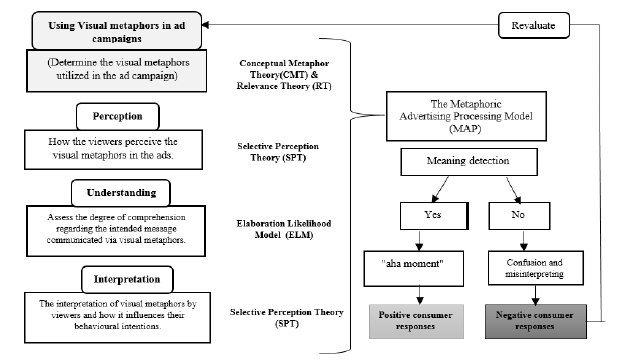
Figure 1 Integrated model for effective use of visual metaphors in advertising. Source: Own elaboration
According to Relevance and Conceptual Metaphor Theories, marketers use visual metaphors to make intangible concepts-such as attitudes or morals-more relatable and memorable by associating them with tangible visuals or situations. Eysenck and Brysbaert (2018) noted that perception precedes understanding, and understanding often comes before interpretation in cognitive processes.
In terms of perception, the Selective Perception Theory suggests that individuals' interests and past experiences shape how they interpret their surroundings (Taylor, 2006). Applying this to advertising campaigns, individuals may focus on visual metaphors that resonate with their desires, values, or experiences while ignoring others. Regarding understanding, the Elaboration Likelihood Model (Kim et al., 2017) posits that viewers are more likely to grasp the meaning of visual metaphors in ads if they are interested in and capable of actively engaging with the advertisement.
Similarly, the ELM can be used to examine how visual metaphors are interpreted and how they influence behavioural intentions. People are more inclined to develop positive attitudes and intentions towards marketed products or behaviours if they carefully consider the visual metaphors presented. Conversely, the MAP model proposed by Dehay and Landwehr (2019) posits that effective advertisements lead viewers to experience an "aha moment" when they grasp the hidden meaning of the advertisement. This realisation can enhance brand recall and foster positive attitudes among consumers.
On the other hand, if visual metaphors are misunderstood or confusing, consumers may respond negatively, exhibiting ignorance or scepticism. Therefore, marketers should reconsider using visual metaphors if they find that their campaigns are not resonating with consumers. To achieve this, it is essential to analyse viewer feedback, conduct surveys or focus groups, and test different metaphors to determine the most effective ones.
5.2 Practical Implications
The current study offers practical implications for visual metaphors in advertising campaigns promoting sustainable tourism practices. By doing so, these campaigns can effectively convey their messages to a wide audience and ensure comprehensive understanding.
Marketers should incorporate visual metaphors that align with the cultural heritage and values of the tourism location. This can include symbols, sites, or historical figures that evoke a sense of pride and connection among both residents and tourists. Additionally, it is essential for marketers to highlight environmental conservation within tourism activities to promote sustainable tourism and encourage responsible behaviour and respect for the environment and local cultures.
One effective approach is to employ visual metaphors that emphasise the significance of conserving natural resources, such as lush green scenery, pristine blue waterways, and flourishing wildlife. These metaphors can powerfully communicate the message of sustainable tourism practices. Responsible tourism behaviours can also be illustrated through visual storytelling, showcasing travellers engaging in activities like recycling, using eco-friendly transportation, and preserving wildlife.
Furthermore, marketers should use pictorial metaphors to illustrate negative practices that should be avoided during travel and tourism activities. This could include depictions of marine organisms harmed by littering, vandalism of historical and cultural monuments, fishing in protected areas, or camping in prohibited zones-practices that endanger both wildlife and the environment. The inclusion of such pictorial metaphors can significantly enhance the message for both local and international tourists.
In addition, marketers must ensure that visual metaphors are clear, easily understandable, and accessible to diverse audiences. They should avoid overly complex or ambiguous images that may confuse viewers, opting instead for universal symbols that transcend language barriers. Marketers can also provide explanations or narratives that offer background information and clarify the intended significance of the visual metaphors, ensuring that viewers grasp the messages conveyed by the images and their relevance to sustainable tourism practices. Finally, marketers should evaluate and measure the effectiveness of visual metaphors in promotional campaigns for sustainable tourism through opinion surveys, using this data to refine future advertising campaigns and communication strategies.
5.3 Limitations and Future Research
The current study can serve as a starting point for numerous future research ideas in this area. It focusses on people's perceptions of metaphorical advertisements within the context of sustainable tourism rather than on their actual practices. Given that this study employed a purposive sampling technique, future researchers should aim to target a larger random sample size to reduce bias and enhance the validity and generalisability of the findings. Future studies could explore the tangible impact of these advertisements on travellers' sustainable behaviours through experimental or long-term research. A comparative study examining metaphorical versus non-metaphorical ads in the context of sustainable tourism in Egypt would be valuable. Further research should investigate the extent to which individuals’ demographic characteristics influence their acceptance and perception of metaphorical advertising messages related to tourism in general and sustainable tourism in particular. Examining various samples of metaphorical ads advocating sustainability would also contribute to generalising the findings. Moreover, future research could assess the challenges and opportunities that marketers face when using metaphors in advertising campaigns and develop strategies to overcome these barriers.

