




 Inglês (pdf)
 Artigo em XML
 Referências do artigo
 Tradução automática
 Enviar este artigo por email
 Citado por SciELO
  Similares em
SciELO
Similares em
SciELO 
 Permalink

1. Introduction
Technological growth has brought significant changes, with Artificial Intelligence (AI) emerging as a crucial component for developing marketing strategies (Cui et al., 2022). AI-driven technologies such as Google Assistant and Amazon Echo have amplified the performance of companies like Google, Spotify, and Amazon, enhancing consumer interaction and improving market forecasting and automation (Vlačić et al., 2021). Further, disruptive technologies, such as the Internet of Things (IoT), blockchain, big data analytics (BDA), and AI, have changed consumer behaviour, societal expectations, and the way businesses operate (Verma et al., 2021). AI market has a current value of approximately $100 billion and is anticipated to flourish twenty times by 2030, approaching $2 trillion (Bloomberg, 2022).
1.1 Background of AI in Marketing
AI can transform operational marketing activities and lead to successful marketing and sales strategies by translating big data into useful information and knowledge (Paschen et al., 2020). AI’s importance in marketing is evident as it enables scalable personalised consumer relationship management and effective decision-making, maximising the use of technology and information to provide consumer satisfaction and generate new “AI-designed” products (Stone et al., 2020). While research on digital and technological evolution has rapidly evolved, only recently has research analysed the intersection of AI and Marketing (Davenport et al., 2020). Big data and AI became a top priority for developing the marketing industry, especially after 2017, when it began to experience exponential growth in adoption by marketing managers (Mariani et al., 2022). AI is highly relevant to modern marketing. Academics acknowledge AI as a critical element not only in advertising dimensions (advertising process, advertising operation, advertising design, advertising production, and advertising execution) (Lee et al., 2020) but also in each phase of digital marketing (e.g., programmatic advertising) (Kietzmann et al., 2018). Further, AI in marketing research has generated comprehensive insight into its application in marketing. For instance, AI-driven chatbots can improve consumer experience (Nguyen et al., 2022). The accelerated growth of intelligent advertising was driven by big data, cloud computing, and algorithms, which can orient large-scale personalised activities (Esch et al., 2021). AI can also create innovative retail stores, which enhance consumer experience (Sujatha et al., 2019). AI precision, efficiency, and effectiveness are the key aspects that leverage accurate marketing activities.
1.2 Review-on-review analysis on AI in Marketing
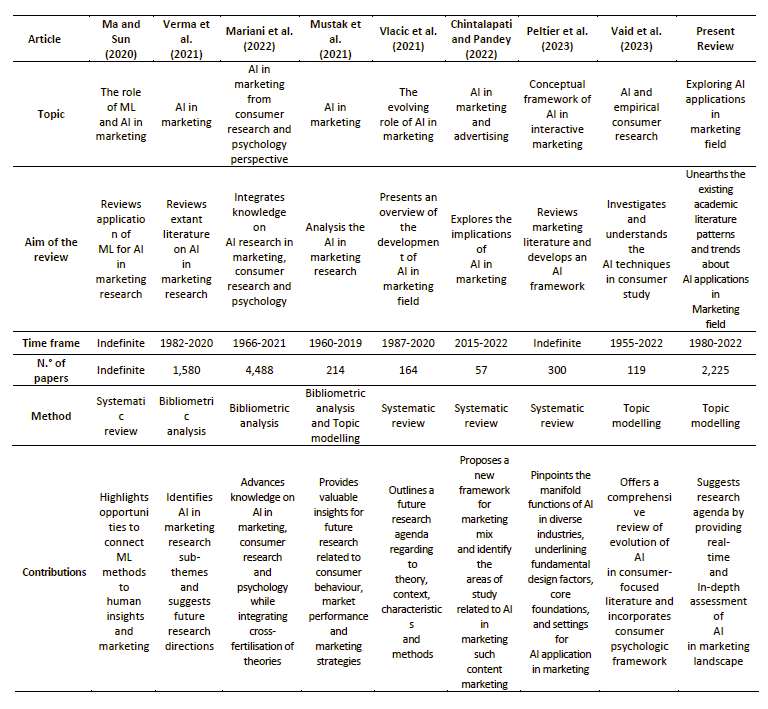
Prior reviews contributed significantly to applying AI in marketing by investigating the effectiveness of Machine Learning (ML) and bringing up issues with model transparency (Ma & Sun, 2020). They also analysed sentiment analysis and advertisement optimisation (Verma et al., 2021). The rapid advances of AI in marketing research revealed ten themes applicable to the current business environment in a multifaceted manner (Mustak et al., 2021). The research only offered insight into the possibilities of using AI and not real-world examples. However, the ability of AI to mimic human actions and mannerisms was investigated to unveil potential uses when conducting intelligent operations (Vlačić et al., 2021). Further, more researchers established the necessity for thorough evaluations of AI solutions while acknowledging limitations in their review (Chintalapati & Pandey, 2022). Others clustered AI facets and connected research across areas, but they needed a thorough, real-time overview (Mariani et al., 2022). Discovery of the different AI tools and techniques that assist consumers to make better decisions without revealing the model that can be implemented to achieve that, limiting their detailed analysis to AI techniques applied to consumer-related issues (Vaid et al., 2023). The revealing of the mystery of AI through understanding its history, current boundaries, and its effect on interactive marketing is facilitated by Peltier et al. (2023). However, they failed to present the results from over 300 empirical research studies that could have elaborated on AI core elements and interactive marketing. A synthesis of the previous literature reviews is listed in Table 1.
Our study presents a comprehensive analysis using Latent Dirichlet Allocation (LDA) for topic modelling, expanding beyond previous reviews focusing on psychology, sentiment analysis, and ML. By incorporating insights from diverse fields, our approach addresses the oversight of essential perspectives that contribute to a comprehensive understanding of AI applications in marketing. We provide interdisciplinary insights that surpass traditional marketing or AI-specific contexts, identifying key topics and revealing latent patterns. This analysis offers practical advice, emphasises cross-disciplinary uses, and highlights the importance of developing trustworthy AI systems. Additionally, we detail AI's practical effects and marketing professionals' challenges and offer actionable recommendations.
1.3 Importance of the current research synthesis
The study enhances AI in marketing literature, offering unique insights and practical advice for the multi-disciplinary use of AI in marketing. It addresses key topics, including ethical implications and the need for trustworthy, explainable AI (XAI). The paper outlines AI’s practical effects and challenges in modern marketing applications. It contributes significantly to the AI in marketing debate by identifying issues and proposing solutions. Additionally, it serves as a step-by-step guide for marketing professionals navigating the evolving AI landscape.
Therefore, this study attempts to fill the gap through an automated literature analysis on AI in the marketing research domain and answering the following research questions:
2. Method
2.1 Selecting Articles
Scopus is one of the most reputed publication databases for discovering relevant literature, has broader coverage, and includes more than 20,000 peer-reviewed journals from different publishers (Fahimnia et al., 2015). Due to the broader coverage, advanced search filters, and data analysis grids, it is considered the most organised database with the highest quality standards for data collection, justifying the preference for this study (Kumar et al., 2020; et al., 2024; Ramos et al., 2024) It is internationally recognised as one of the most relevant indexed researched publication databases in social sciences (Biscaia et al., 2024; Ramos et al., 2019).
Researchers utilised the keywords "marketing" and "artificial intelligence." Additionally, synonyms (e.g., machine learning, deep learning, natural language processing) were used for AI (Chintalapati & Pandey, 2022; Martínez-López & Casillas, 2013; Verma et al., 2021; Vlačić et al., 2021). Researchers operated the search query in the Scopus database on January 26, 2023, to retrieve the AI in Marketing published research. In the first screening, the researchers limited the search query to "title, abstract, and keywords" fields; initially, 5,861 documents were returned, and subsequently, focused the search on articles written in English. Articles are considered the most current and advanced knowledge sources (Rojas-Lamorena et al., 2022). This restriction reduced the search results to the final dataset. In total, 2,255 articles were selected for analysis.
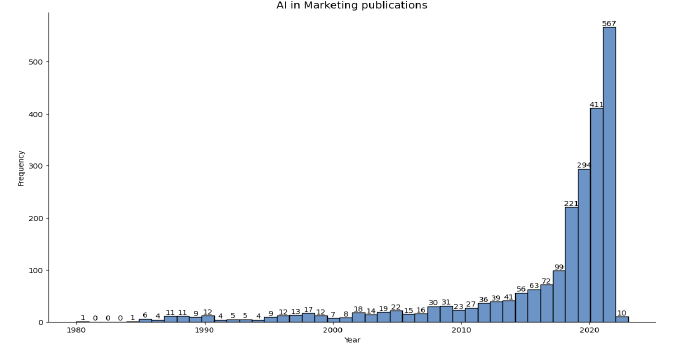
Figure 1 reflects the publication trend under AI and Marketing. Since 1980, 2,255 articles have been published, an average of 51.25 articles per year. However, between 2019 and 2022, 1,493 articles were published, an average of 373.25 articles per year. These results reveal the increasing interest of researchers in this topic.
2.2 Data analysis
Automated literature analysis uses text mining to parse documents and extract text contents into an organised structure (term matrix). This term matrix comprises two dimensions, the words/terms (composed of n- words) and the documents. The intersection of each word pair and document reveals the frequency of a word in the document (Delen & Crossland, 2008). Such an approach permits us to analyse extensive bodies of literature, efficiently detecting underlying thematic structures, trends, and emerging concepts (Moro et al., 2023). However, automated methods rely on statistical patterns and cannot fully capture qualitative judgments, contextual subtleties, or the richness of diverse perspectives presented in the dataset.
Topic modelling was performed for data analysis, particularly LDA. It permits gathering massive amounts of textual information on topics (Ramos et al., 2019). As an input, the text mining structure contains the relevant terms with their frequency in an organised structure where the documents are categorised by topic (Blei, 2012). To conduct the topic modelling analysis, we built a corpus that included the abstract of every article collected. This approach is consistent with other literature analyses using Topic Modeling (Moro et al., 2023). Preprocessing was implemented to reduce subjectivity (Ribeiro et al., 2024). The preprocessing involved eliminating stopwords, articles, and adverbs, transforming all words to lowercase, applying stemming, and lemmatisation to reduce similar words into one.
Furthermore, we used the coherence score evaluation in this study, which calculates each category score by measuring the semantic similarity degree between the most likely words, which means that when more words in each category appear in the same texts together higher, the coherence score (Abdi et al., 2021). The Model uses the Coherence score as a metric to vary alfa and beta to train the Model and get the best accuracy possible. We started with a DA coherence score of 0.417 and, at the end of the model training, with a coherence score of 0.431, representing a 1,4% improvement over the baseline model when setting the alpha to 0.2. Finally, we adopted an Intertopic Distance Map (IDM) to visualise the topics in a two-dimensional space, where the area of each topic circle is proportional to the number of words belonging to each subject. This map is conceived using a multidimensional scaling algorithm that converts a considerable number of dimensions to a reasonable number of dimensions. It places the more strongly correlated topics (Bing-Xin Du, 2021).
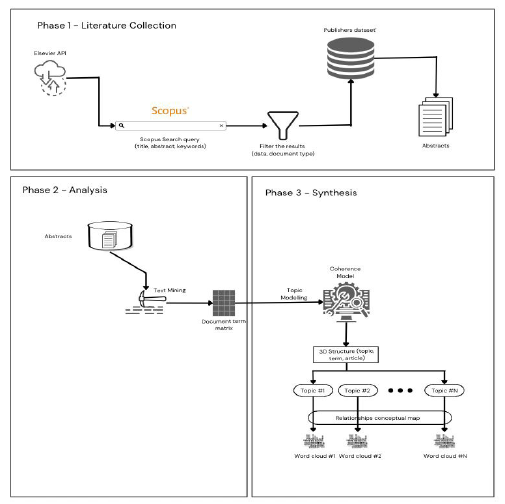
Figure 2 consists of a visual scheme of the adopted approach in this study.
All experiments were conducted in Python (programming language). Python is widely used for data science and statistical analysis. It includes a vast collection of data analysis and visualisation packages and can analyse many data to solve complex problems (Calderón-Fajardo et al., 2024; Song et al., 2021). Python Natural Language Toolkit package was used to conduct the preprocessing, and the Sklearn package was used for the LDA analysis (Bird et al., 2009). For the coherence, score evaluation used the Gensim and the pyLDAvis packages for the IDM (Shetty & Ramesh, 2021).
3. Results and Discussion
3.1 RQ1: Marketing research topics and relationships among them
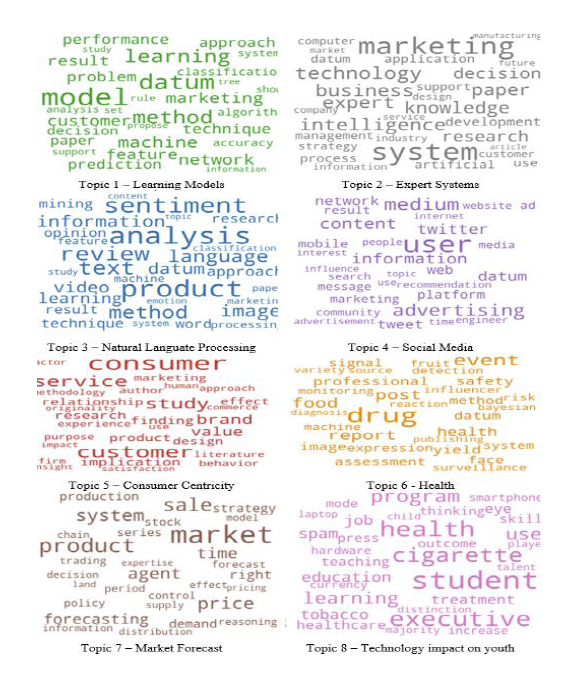
To acknowledge the research topics under the interest of researchers and answer RQ1, topic modelling, notably the LDA algorithm, was performed. We tested the outputs to find optimal topics until a reasonable number of aggregated documents by topic was attained (Ramos et al., 2019). The model was trained by applying several alpha and beta values to get the best coherence score without creating a cognitive load regarding the number of topics. Figure 3 represents a visual representation of the eight topics uncovered by the analysis. The size of each word indicates its relative frequency and importance within a given topic, with larger words appearing more frequently in the analysed abstracts. This allows for a quick interpretation of the central themes and key terms associated with each topic.
For each topic, associated risks, challenges, ethical considerations, and practical implications were discussed.
Learning models (Topic 1) represent 28% of the tokes and 732 articles, emphasising terms like “model,” “data,” “method,” and “prediction” linked to ML applications in marketing (Wang & Lin, 2023). Advances in data availability and hardware drive their evolution, with developments with attack models, domain adaptation, and complex neural networks adapting to modern AI demands (Ma & Sun, 2020). Generative AI enables highly personalised content and advertisements, dynamically responding to consumer behaviour in real time, as seen in BERT and GPT applications (Hamacher & Buchkremer, 2022). Reinforcement learning refines decision- making, improving consumer journey mapping and product recommendations, as implemented in Amazon’s recommendation engine and dynamic pricing models (Ruiz-Lacaci et al., 2024). Data clustering and analysis further enhance consumer insights and targeted strategies. However, such models risk limiting product diversity by proposing similar options (Amariles & Baquero, 2023). Despite their strengths, learning models face limitations in capturing consumer behaviour complexities, including emotions and cultural factors, undermining prediction consistency in dynamic real-world conditions (Blomster & Koivumäki, 2022; Christen et al., 2022). Bias from unrepresentative data can lead to unfair outcomes, as seen in Amazon’s recruiting tool (Kasem et al., 2023). Scalability is constrained by the need for highly skilled professionals, and transparency issues erode trust, particularly in targeted advertising (Biswas et al., 2023). Domain adaptation and advancements in human-robot interaction reduce errors and improve automated retail experiences (Licardo et al., 2024). Smaller companies lacking AI access risk exacerbating inequalities (Amariles & Baquero, 2023). To address these issues, learning models should enhance explainability, ensure ethical compliance (e.g., GDPR, CCPA), and avoid unfair advantages while fostering inclusivity (Ferrario et al., 2020). Combining data science, marketing expertise, and ethical oversight can improve customer trust. Tools like Google Analytics 4 provide insights while adhering to ethical standards (Omran et al., 2024). Ensuring high-quality, diverse datasets, robust training techniques, and continuous feedback systems enhances reliability. Regular audits and interactive refinements maintain trust and model accuracy.
Expert systems (Topic 2) account for 22.5% of tokens and 639 articles, highlighting terms like “expert,” “system,” “marketing,” and “intelligence,” reflecting their role in decision-making based on preset rules and specialised knowledge (Kanchanapoom & Chongwatpol, 2023). Their evolution has been driven by integrating AI, including hybrid models combining expert systems and deep learning for tasks like consumer lifetime value prediction (Huang & Rust, 2022). AI-powered frameworks like IBM’s Watson enable real-time, adaptative marketing strategies by merging predictive and prescriptive analytics for content optimisation and campaign automation. These systems enhance decision-making by automating segmentation, pricing, and personalised recommendations, boosting campaign precision and ROI (Flament et al., 2022; Schiessl et al., 2022). However, expert systems struggle to adapt to rapidly changing behaviours and markets, relying on static rules that limit creativity and uniqueness in strategies (De Bruyn et al., 2020; Paschen et al., 2019). Their dependency on data quality can lead to ethical and contextual risks, as seen in Target’s sensitive data misuse (Paschen et al., 2019) and Kodak’s inability to adapt to digital trends (Mortara et al., 2010). High costs and integration challenges, such as those faced by Procter & Gamble (Schafermeyer & Hoffman, 2016) and L’Oreal (Flament et al., 2022), further limit accessibility for smaller enterprises. Bias in training data can perpetuate discriminatory practices, making transparency and explainability vital for trust and compliance (Brkan & Bonnet, 2020; Malthouse & Copulsky, 2023). Building trustworthy AI requires ethical standards that balance efficiency with fairness, ensuring inclusivity and avoiding manipulative practices (Schmidt et al., 2020). Brands can enhance performance by using tools like real-time ad optimisation, AI chatbots (e.g., Sephora’s Visual Artist), predictive analytics (e.g., Starbucks), and fraud detection systems (e.g., PayPal), tailoring offerings to consumer trends while maintaining trust.
Natural Language Processing (NLP) (Topic 3) represents 12.2% of tokens across 246 articles, focusing on terms like “sentiment,” “analysis,” “product,” “text,” “image,” and “review.” Advances in computational power, datasets, and algorithms have driven NLP’s growth, enabling efficient textual and visual data analysis to uncover consumer insights. Transformer models like GPT and BERT enhance sentiment analysis and contextual understanding, improving consumer feedback interpretation and targeted marketing (Shankar & Parsana, 2022). Companies like Salesforce use NLP to analyse social media interactions and boost engagement. Integrating NLP with visual recognition enables multimedia content analysis, providing deeper insights into consumer attitudes and enhancing campaigns (Choo & Kim, 2023; Nadeem et al., 2019). NLP also supports multilingual markets, bridging language gaps and expanding global reach (Liu et al., 2021). However, limitations persist. NLP struggles with vague or out-of-context responses, algorithmic bias, and ethical issues, such as manipulative consumer influence (Liu et al., 2021; Wu et al., 2022). For instance, biased training data in chatbots can produce offensive outcomes (Rajesh, 2023). Addressing these concerns requires transparent processes, inclusive datasets, and explainable AI (XAI) technologies to enhance trust and accountability. Ethical practices should prioritise meaningful interactions and avoid over-optimization, which harms consumer-brand relationships (Gloor et al., 2022; Meskó & Topol, 2023). Innovative approaches like integrating NLP with IoT devices and leveraging quantum computing improve data gathering, analysis, and application efficiency. Real-time data from IoT sensors enhances sentiment analysis, while quantum computing accelerates processing, boosting NLP’s marketing effectiveness.
Social Media (Topic 4) accounts for 10.7% of the topics and 183 articles, focusing on terms like “user”, “advertising”, “content”, and “network.” This topic highlights AI applications in social media, enabling sophisticated analysis of user-generated content (Ghouri et al., 2022). AI-powered sentiment analysis detects emotions in social media posts, helping marketers tailor strategies to consumer preferences (Nichifor et al., 2023; Taherdoost & Madanchian, 2023). AI integration with AR/VR, as seen in Instagram and Snapchat’s AR filters, creates immersive advertising, boosting engagement and insights into user interactions (Omran et al., 2024). Content creation tools generate customised ads and posts, improving engagement while saving time and resources (Schiessl et al., 2022). AI also refines campaigns by comparing strategies and optimising content performance (Alsayat, 2023). AI enhances storytelling and forecasts patterns, enabling marketers to develop forward-looking strategies, improve satisfaction, and build brand loyalty (Gao et al., 2020). However, biases in training data can lead to discriminatory practices, and insensitive content may harm reputations (Akter et al., 2022). Transparency in data collection is essential, with tools like XAI improving algorithm accountability and GDPR ensuring data protection. Protecting user data through anonymisation and encryption further enhances trust (Amariles & Baquero, 2023). Trustworthy AI prioritises content quality and avoids exploiting emotional triggers or fostering platform dependency (Čartolovni et al., 2022). Ethical strategies include tools like Sprout Social and Brandwatch for behavioural insights and leveraging IoT devices for real-time personalisation. Regular algorithm updates ensure alignment with consumer trends and market conditions, as exemplified by fashion brands using AI to analyse preferences and boost sales.
Consumer Centricity (Topic 5) accounts for 10.3% of tokes and 196 articles, focusing on terms like “consumer”, “service”, “brand”, and “value”, emphasising consumer-focused marketing strategies (Meyer-Waarden et al., 2023). AI-driven personalisation engines, like those used by Amazon and Netflix, employ deep learning to predict preferences and provide intuitive recommendations (Nazir et al., 2023). AI-powered sentiment analysis assesses public sentiment in real-time, enabling brands to adapt strategies quickly (Ying et al., 2022)- Dynamic pricing models, such as those used by Uber and Airbnb, adjust prices in real-time based on demand, behaviour, and competition, maximising profitability while maintaining perceived value (Huang & Rust, 2022). Brands like IKEA and Sephora use AR to enhance the shopping experience, fostering engagement and loyalty (Berman & Pollack, 2021). Integrating AI into consumer journey planning creates seamless, personalised experiences, enhancing satisfaction and fostering long-term loyalty. However, hyper-targeting risks consumer fatigue, eroding confidence and autonomy (Bedenkov et al., 2021; Latinovic & Chatterjee, 2019). Algorithmic bias, such as Amazon’s recruitment tool exhibiting gender bias, highlights fairness and discrimination concerns, potentially harming brand reputation. When perceived as unfair, dynamic pricing can alienate consumers and impact trust (Nunan & Di Domenico, 2022). As seen with Meta, data privacy issues underscore the importance of GDPR compliance and transparency in AI-driven marketing (Binns, 2017). Trustworthy AI should balance personalisation with fairness, strengthen consumer trust, and prioritise ethical practices, such as using XAI for transparency and ensuring unbiased decision-making (Panch et al., 2019; Shaban- Nejad et al., 2018). Advanced applications include integrating multimedia data for enhanced targeting, predictive analytics for inventory management, AR for immersive shopping experiences, and continuous feedback loops to refine strategies dynamically.
Health (Topic 6) accounts for 6.7% of tokens and 110 articles, highlighting terms like “drug,” “health,” “report,” and “safety.” This topic reflects AI applications in consumer health. This topic reflects AI applications in consumer health. AI advancements enable precision marketing based on genetic data, exemplified by 23andMe’s personalised health recommendations (Secinaro et al., 2021). Dynamic health risk assessments, such as Apple Health’s heart rate monitoring, forecast health issues early, while emotion AI detects consumer emotions during health interactions for real-time strategy adjustments (Ellahham et al., 2020). Behavioural modelling, used by forms like Novo Nordisk, predicts responses to interventions, and virtual health assistants like DeepMind provide personalised health guidance (Lommatzsch, 2024; Shannon et al., 2019). These developments enhance targeting in wellness and pharmaceutical campaigns, aligning marketing with consumer needs (Panch et al., 2019). However, challenges persist. AI-driven marketing can blur informative and persuasive content, raising data privacy concerns and ethical issues (Gaczek et al., 2023). Sensitive health data is at risk of misuse, and biases in training data can exacerbate inequities, limiting access to fair treatment (Al Kuwaiti et al., 2023). High costs and skill requirements further create disparities in AI adoption for health marketing (Secinaro et al., 2021). Transparency is essential as consumers often lack awareness of how their data is used, undermining trust (Vollmer et al., 2020). Insufficient consent, algorithmic bias, and opaque decision-making processes highlight the need for explainable XAI to ensure fairness and accountability (Felzmann et al., 2019). Ethical AI health marketing should prioritise informed decision-making, avoid exploiting anxieties, and emphasise consumer well-being over manipulation. Data protection measures like encryption and anonymisation, adherence to GDPR, regular bias audits, and resource allocation for model updates are crucial. Collaborations and cloud-based solutions can improve cost efficiency while supporting responsible, transparent, and trustworthy AI-driven health marketing.
Market Forecast (Topic 7) accounts for 6.6% of tokens and 113 articles, emphasising terms like “market,” “sale,” “strategy,” and “forecasting.” This topic highlights AI’s role in predicting sales and shaping marketing strategies (Yim et al., 2023). AI-driven market forecasting supports decision-making by offering insights into consumer trends, demands, and market fluctuations, optimising resources, sales strategies, and campaigns (Akter et al., 2022; Gera & Kumar, 2023). Advanced AI models enable precise consumer behaviour and market pattern predictions, streamlining marketing efforts (Habel et al., 2023; Sohrabpour et al., 2021). However, reliance on historical data limits adaptability to sudden shifts, such as geopolitical events, and fosters uniform strategies, reducing market differentiation (Ferreira et al., 2021; Kempitiya et al., 2020). Integrating diverse datasets like satellite imagery and social media sentiment is crucial for accurate forecasts but presents challenges in reliability and data provenance (De Bruyn et al., 2020). Compliance with international laws such as GDPR complicates cross-border data handling (Anshari et al., 2023). Ethical concerns include manipulative predictions, exploitation of vulnerable groups, and opaque decision-making, undermining trust (Stone et al., 2020). To ensure fairness and transparency, AI models should balance predictive precision with adaptability and social considerations (Shaban-Nejad et al., 2018). Generative and quantum AI can simulate market scenarios and process complex datasets for strategic planning, as platforms like Kavout and Numeria demonstrate, providing businesses with actionable insights for sustainable growth.
Technology Impact on Youth (Topic 8) accounts for 6.6% of tokens and 113 articles, focusing on AI’s influence in marketing to youth. Frequent terms include “market”, “sale,” “strategy,” and “product,” emphasising AI’s role in predicting sales and shaping strategies (Yim et al., 2023). AI has shifted from simple content targeting to complex strategies that personalise experiences, enhance engagement, and shape youth behaviour and preferences. For example, Nike’s Training Club app uses AI for customer fitness programs, boosting brand loyalty, while Amazon’s recommendation systems improve shopping experiences (Gera & Kumar, 2023). AI significantly influences youth culture and consumption habits, necessitating continuously adapting marketing approaches to novel platforms. However, large-scale data collection poses misuse risks, as seen in the Cambridge Analytica scandal, emphasising the need for robust privacy laws (Kim & Song, 2023). Concerns also arise about promoting harmful behaviours, such as e-cigarette ads and targeting teens, which can exacerbate health issues (Popova et al., 2021). Ethical frameworks are critical to prevent exploiting young consumers’ vulnerabilities, as demonstrated by Google’s reduced unhealthy food ads in children’s programming (Lara-Mejía et al., 2022). Trustworthy AI in youth marketing should enhance positive engagement while avoiding manipulation. Ethical policies must promote informed decision-making, discourage passive consumption, and support mental health and knowledge growth (Olstad & Boyland, 2023). Transparency in data usage is vital, as exemplified by Apple’s privacy controls. Educational initiatives should foster digital literacy (Calderón-Fajardo et al., 2024), enabling youth to evaluate online content critically. AI tools like DreamBox Learning personalise learning experiences in education but must be balanced to avoid reducing physical and social activities. Responsible AI integration should prioritise youth development and well-being.
IDM (Figure 4) illustrates the link between marketing and AI and the topic’s similarity. Circles represent the topics, and their proximity reveals their degree of similarity (Shetty & Ramesh, 2021). The size of each circle reflects the predominance and number of articles associated with each topic (Bing-Xin Du, 2021). The IDM divides the topics into Principal Component 1 (PC1) and Principal Component 2 (PC2) to describe the differences and resemblances between topics. Axis X represents PC1, and axis Y represents PC2. Each topic is mapped at a point in the bi-dimensional dispersion graphic, and its position is determined by its PC1 and PC2 score. According to their distribution, the topics can be grouped into clusters. These clusters can help to identify patterns and relationships between the topics under analysis.
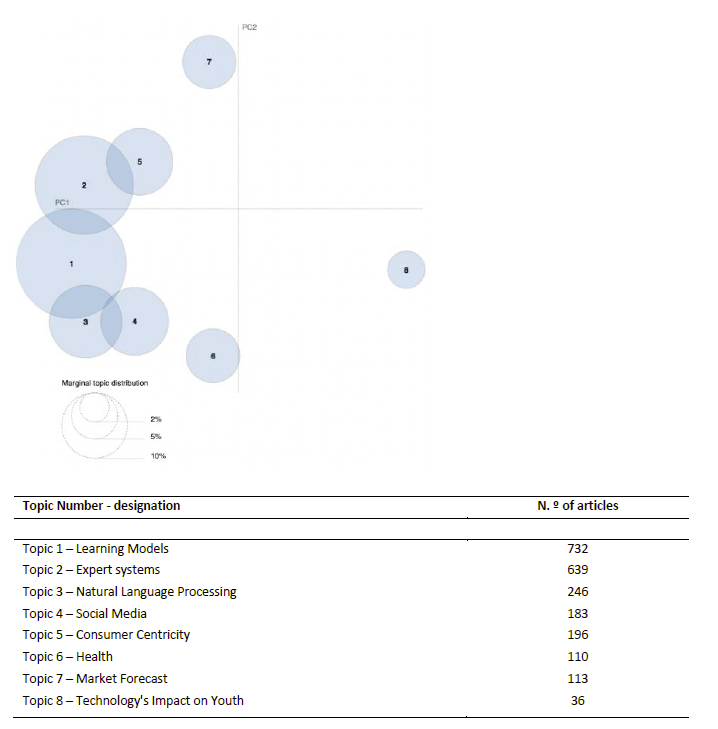
In turn, topics 6, 7, and 8 reveal a low association with other topics and are outliers in this analysis. This result suggests areas that have been of interest to researchers. However, they have been understudied, suggesting potential gaps and future research opportunities (López-Duarte et al., 2016).
The IDM results provide valuable insights for researchers and industry, guiding future research directions.
3.2 RQ2: Trends and opportunities for future research
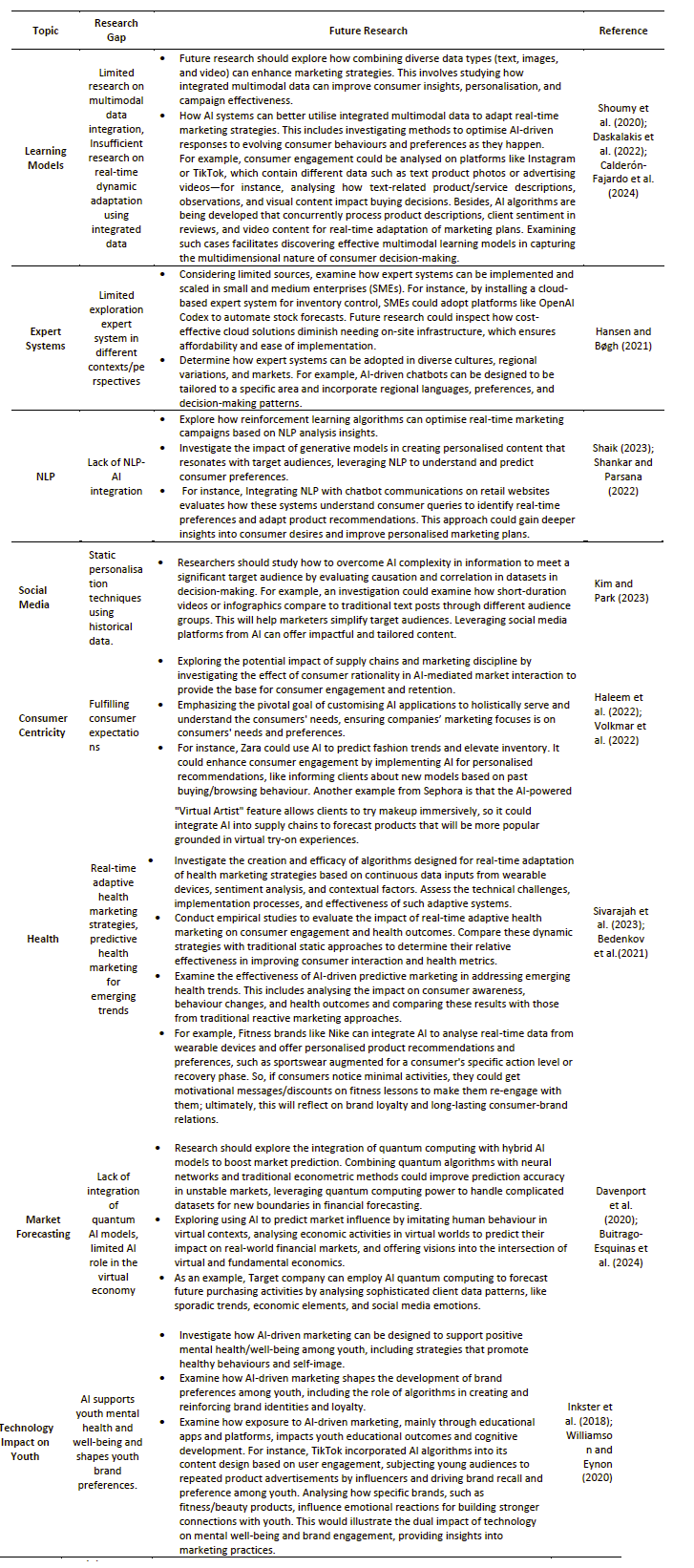
The topic modelling and the IDM have allowed us to identify directions for future research and answer RQ2. Considering that a comprehensive research agenda should encourage researchers to endeavour in new directions to contribute to the literature (Hulland & Houston, 2020), we suggest different future research directions (Table 2).
4. Conclusion
Integrating AI into marketing activities is multifaceted and requires a nuanced interpretation to understand how AI can fully influence contemporary marketing activities. Insights gained from this research on the implications of integrating AI modelling topics like learning models, expert systems, NLP, social media, consumer centricity, health, market forecast, and technology's impact on youth in marketing, together with their impact, challenges, and risks associated with each topic, will shape, and transform the marketing landscape used in brand promotion. The present research evaluates the scope of AI in marketing research topics and the potential influences of these AI research topics on marketing activities. The study also establishes AI's existing trends and future opportunities in marketing activities. While the integration of AI in marketing is promising, it is essential to consider the risks associated with each topic and plan accordingly how these risks can be circumnavigated effectively. Data privacy concerns risks, user security, ethical considerations, and the susceptibility of these AI systems to algorithmic bias necessitates future research to ensure AI systems do not pose severe threats to brand reputation following their integration into marketing activities. Conversely, integrating AI modelling topics in marketing will shift the original marketing approach from rule-based expert systems to data driven. AI systems in marketing will redefine the theoretical marketing landscape by providing marketers with a nuanced understanding of market dynamics that impact marketing activities, including target market segmentation, data-driven marketing strategies, and hyper-personalization marketing insights. AI will foster the customisation of marketing activities to resonate with consumer preferences. It will also allow marketers to use algorithmic reasoning to navigate the dynamic landscape of marketing trends and increase the brand's organic reach to other target audiences. In addition, integrating AI in marketing will undoubtedly impact the organisation's development and training marketing activities, boosting the brand’s reach to consumers through data- informed marketing strategies.
4.1 Theoretical Implications
Integrating AI in marketing will undoubtedly redefine the marketing landscape by enhancing marketers' theoretical understanding of their consumers and providing them with informed insights, hyper-personalisation strategies, and market segmentation initiatives. Additionally, this incorporation will inform the development of well-established marketing theories of making informed marketing decisions based on data-driven feedback, enabling them to engage in agile marketing strategies. AI in marketing promotes the generation of deeper consumer insights for researchers. These insights help in the development of innovative and strategic imperatives. Deeper consumer insights will also become relevant in shaping advanced marketing theoretical frameworks for allocating resources efficiently for marketing activities. The insights will help implement necessary adjustments to the ever- changing dynamics of the target market. The theoretical implications associated with AI usage in marketing will be redefined by resourceful research that minimises algorithmic bias, enhances the privacy concerns related to the use of AI, and improves the transparency metrics of AI usage in marketing activities. The paper's findings provide a better understanding of the mechanisms behind AI applications. It calls for restructuring marketing theories to mirror the effective combination of data and algorithms in developing better insights.
4.2 Limitations
The literature analysis methodology used in this study does not have the objective of substituting the critical analysis of the literature because it does not cover different perspectives on the same topic nor the qualitative judgment of the literature. Although it has a large-scale potential for literature delimitation, pinpointing the main topics and keywords and even potential multidisciplinary overlaps and research rigidities help discover possible remedial actions. Hence, in the present moment of big data, where there are many sources of information online to analyse, this method is more efficient in terms of performance than an in- depth critical analysis. This method's concern was to develop a holistic approach to augment the trust of the no dictionary usage and its appropriateness to complex multidisciplinary research fields, as shown in its application to AI in marketing. Also, conceiving an IDM provides a better perception of the trends and eventual problems in literature. Additionally, the dataset was limited to the Scopus database. Future studies could be extended to other databases (e.g., Web of Science). However, it should be mentioned that every database has its limitations (Falagas et al., 2008). Finally, a dictionary creation can help limit the analysis to a managerial list of terms (Ramos et al., 2019), allowing the focus of the study on a particular topic under AI in marketing research.

