




 Inglês (pdf)
 Artigo em XML
 Referências do artigo
 Tradução automática
 Enviar este artigo por email
 Citado por SciELO
  Similares em
SciELO
Similares em
SciELO 
 Permalink

1. Introduction
The competitive nature of the industry, coupled with customer expectations, particularly within the service sector, heightens the importance of efficiency and productivity for enterprises. The accommodation sector, one of the most dynamic service sectors, is heavily influenced by customer expectations. Meeting these demands to the highest degree is a key determinant of organisational performance. Employee engagement and task performance are essential in achieving high levels of customer satisfaction, organisation competitiveness and efficiency (Bhardwaj & Kalia, 2021; Dai et al., 2021; Ncube & Jerie, 2012; Sadiqe, 2014). While work engagement reflects employees' commitment and passion for their jobs, successfully providing solutions and services to shape the customer experience is what creates task performance. However, presenteeism has become a significant phenomenon affecting work engagement and task performance, particularly in the accommodation and tourism sector (Ashour et al., 2023; Knani, 2022; Lohaus & Habermann, 2019).
Presenteeism in the hospitality industry occurs when an employee comes to work despite being physically or mentally ill (Aronsson et al., 2000; Baeriswyl et al., 2017). This can have negative consequences for businesses, both directly and indirectly. Working while distressed or ill can lead to more mistakes, interfere with work-life balance, and result in burnout and lower job satisfaction (Arslaner & Boylu, 2017; Haque, 2023; Karanika-Murray et al., 2015; Miraglia & Johns, 2016; Rainbow et al., 2019). Due to presenteeism, existing health problems that employees ignore can trigger negative results and cause long-term issues such as increased health expenditures, low productivity, and decreased customer satisfaction (Johns, 2010). In fact, according to some sources, presenteeism is a serious issue that is increasingly affecting productivity in accommodation businesses, causing up to 90% productivity losses, in contrast to absenteeism (Arjona-Fuentes et al., 2019; Knani, 2022; Lohaus & Habermann, 2019). Some studies have shown that presenteeism directly reduces work engagement, which is crucial for businesses to achieve their goals (Ashour et al., 2023; Côté et al., 2021). Work engagement reflects an employee's desire and determination to contribute to the organisational goals with their full effort, and it also affects organisational performance, which is a general indicator of the organisation's managerial effectiveness (Ashour et al., 2023). In the context of the service sector, high employee engagement and performance play a key role in customer satisfaction and the sustainable competitive positions of accommodation businesses (Shuck & Wollard, 2010; Siddiqi, 2014; Miraglia & Johns, 2016; Park et al., 2019; Said & Kamel, 2024). Therefore, the issue of presenteeism comes to the forefront as an issue that should be emphasised.
Understanding why presenteeism is the preferred approach for employees, especially in sectors like hospitality, is important. In such sectors, where teamwork and customer satisfaction are paramount, and task interdependence is high, employees feel pressure to be physically present at work. This pressure is further intensified during periods of increased customer density, such as long working hours in the summer season. The industry's work-family conflict, excessive workload, work-related stress, long working hours, job insecurity, and commitment to assigned shifts (Ariza-Montes et al., 2017; Arslaner & Boylu, 2017; Chia & Chu, 2017; Teo et al., 2020) are more abrasive stressors compared to other sectors. They constitute a burden in every decision made by the employee. Among similar stress factors, workplace bullying and employee cynicism are the primary triggers for presenteeism in the accommodation sector, where social interaction is high (Ariza-Montes et al., 2021; Conway et al., 2016; Deng et al., 2020). Workplace bullying can lead to negative workplace experiences, such as psychological distress and burnout (Odunjo-Saka et al., 2024). Employees combat these negative stress factors by exhibiting presenteeism. Similarly, employee cynicism can make employees feel worthless, think that their contribution is insignificant, exhibit low motivation and engagement, and be carelessly inefficient in their work (Topsakal et al., 2024). The hospitality industry will suffer devastating consequences if an employee's cynicism causes poor customer experience. In such a stressful and pressured work environment, which can be created by workplace bullying and employee cynicism, an employee might prefer to be physically present at the workplace rather than resting or initiating the treatment process. This situation creates a mechanism that triggers devastating results in terms of sustainable customer satisfaction and employee satisfaction, especially in the hospitality sector. Workplace bullying and employee cynicism are insidious risk factors that can silently harm an organisation. Therefore, it is essential to carefully examine this invisible danger (Neto et al., 2017).
Furthermore, it is necessary to conduct more studies outside of Western countries, where the mechanism between presenteeism, workplace bullying, and employee cynicism is not well addressed, and to understand the motivations that lead to presenteeism (Ariza-Montes et al., 2021; Conway et al.,2016; Deng et al., 2020). The labour-intensive nature of the tourism and accommodation sector, along with excessive workload, long working hours, time pressure, sleep problems, job insecurity, and direct customer interactions, create a higher likelihood for employees in this sector to experience presenteeism compared to other industries (Ariza- Montes et al., 2017; Teo et al., 2020). Regrettably, few studies have focused on this particular phenomenon. There have been calls for more research to address this widely experienced issue, as it threatens the well-being and performance of individuals and organisations (Arslaner & Boylu, 2017; Chia & Chu, 2016, 2017; Knani, 2022). It is important to understand the mechanism related to the formation of this concept (Arjona-Fuentes & Ariza-Montes, 2019; Knani et al., 2018). The literature reveals that employees, particularly in 4 and 5-star hotels, experience significant presenteeism (Uygur et al., 2018). In response to calls in the literature and to address a research gap, this study aims to examine a model that considers employee cynicism and workplace bullying as factors leading to presenteeism. Additionally, the model investigates the negative impact of presenteeism on task performance and work engagement. In line with this objective, the findings of the analyses based on the data were presented, followed by recommendations for businesses and future research. The study presents an empirical investigation revealing how workplace dynamics lead to presenteeism among accommodation and hotel employees. It also raises awareness of presenteeism as a significant threat to sustainable competitiveness and performance, making important contributions to effective hospitality and hotel management processes.
2. Literature review
2.1 Presenteeism in the Hospitality Industry
The hospitality sector is a complex network of relationships where customers come into close contact with employees in many ways, such as hotels, restaurants, fast food or coffee shops, where services or simultaneous services and products are offered. Tourism plays a vital role in this sector. The hospitality sector has a high proportion of young workers, with a diverse workforce consisting of individuals from various backgrounds and qualifications. In this sector, the interactions between employees and customers are crucial in determining customer satisfaction and perceived service quality. These interactions' effectiveness significantly impacts customer loyalty and brand image (Tsui et al., 2013). The quality of interaction between the customer and employee is crucial for the performance of both the employee and the organisation. However, this interaction can suffer if the employee's physical or psychological health is compromised. In cases where the employee has a viral health condition or is unable to concentrate due to illness, presenteeism can lead to risky and costly consequences. Not only can such employees create a perception of poor service quality, but staying in the establishment can also be seen as a threat and a health risk for the customer (Hemmington, 2007; Leal & Ferreira, 2020).
Presenteeism is a complex phenomenon influenced by individual and organisational factors. It occurs when employees work despite health issues, potentially impacting productivity and well-being. While some argue that it can boost self-confidence and employability capacity (Steinke & Badura, 2011), others highlight its adverse effects on performance and health, as well as its potential to increase the rate of employee mistakes (Cassie, 2014; Haque, 2023; Rainbow et al., 2019; Skagen & Collins, 2016). Social Cognitive Theory (S.C.T.) and Goal Achievement Theory explain presenteeism as a behaviour influenced by self-efficacy, outcome expectations, and goals (Cooper & Lu, 2016; Lohaus & Habermann, 2019). Employees may choose presenteeism to appear strong or avoid exclusion. Dialectical Theory suggests that the employee-supervisor relationship affects presenteeism decisions (Baxter, 1990; Halbesleben et al., 2014). Presenteeism may be used as a strategy to maintain workplace harmony and avoid conflict. Individual factors such as age, gender, over-commitment, and family structure (Gosselin et al., 2013; Johns, 2011; Robertson et al., 2012), as well as organisational factors like workload and job insecurity (Baeriswyl et al., 2017; Miraglia & Johns, 2016), contribute to presenteeism. Given its significant impact on individuals and organisations, presenteeism remains essential for further research and management consideration.
Some features of the hospitality industry can lead to presenteeism among employees. The primary causes are high psychological demands and a high level of customer interaction and contact. Direct interaction with customers leads to long working hours, increased workload, multitasking, and task interdependence among employees, resulting in a lack of work-life balance and low quality of work-life (Aynalem et al., 2016; Lantican, 2021; Li et al., 2013; Peshave & Gupta, 2017; Piso, 2022). In addition, the high work pressure (Balaji, 2022; Mohamed & Mahmoud, 2022) and job insecurity (Abbas et al., 2021; Darvishmotevali et al., 2017; Vujicic et al., 2015) in the hospitality industry cause employees to carry out their work with significant concerns. Consequently, employees prefer to act with the understanding of continuing their work without experiencing conflict as much as possible. Effective customer interaction and high-quality expectations from employees in the accommodation sector contribute to the experience of presenteeism (Chia & Chu, 2016).
Although presenteeism is an alarming factor in working conditions and employee relations in the hospitality sector, there is limited research on presenteeism among hotel employees, as emphasised by Chia and Chu (2016). The lack of awareness about this widely spread phenomenon has resulted in a limited number of studies and a delay in understanding it (Johns, 2010). It is important to note that ignoring this issue will jeopardise the hospitality sector's competitive advantage and high productivity goals (Gill, 2006). There is a need for studies on presenteeism, especially in the hotel sector and in developing collectivist cultures with limited job security (Chia & Chu, 2016). Johns (2012) suggests that more studies are necessary to develop the theoretical background and understand the relationship between employees' productivity levels and attendance. Again, Arslaner and Boylu (2017) recommended developing policies and managerial practices to prevent presenteeism in the accommodation sector. They also highlighted the need for more comprehensive studies that include employees from 3-star and 4-star hotels, not just 5-star hotels, to assess the situation accurately. Arjona-Fuentes et al. (2019) described presenteeism as a silent threat in the accommodation sector, emphasising the lack of scientific literature despite its significant contributions to GDP and employment. They suggested that more research is needed, considering factors such as direct customer interaction, job insecurity, and uncertain work schedules. Knani (2022) called for more studies on individual and organisational motivations that lead to presenteeism, particularly in the accommodation sector, which is common due to intense shifts, long working hours, and constant customer interaction. Moreover, it has been found that employees in 4 and 5-star hotels in the hospitality sector experience presenteeism with significant and increasing momentum (Uygur et al., 2018). These findings underscore the importance of addressing presenteeism in detail, especially in the accommodation sector and hotel businesses, for sustainable management.
2.2 Employee cynicism and workplace bullying as antecedents of presenteeism
Presenteeism refers to an employee being physically present on the job and participating in the required processes despite having poor physical or mental health. However, this negative behaviour can harm both individual and organisational interests. Employees exhibit presenteeism to avoid conflict within the scope of goal achievement, S.C.T. (Cooper & Lu, 2016), and dialectical (Baxter, 1990; Halbesleben et al., 2014) theories. They may also do so to avoid tension in the supervisor-employee relationship or to avoid being excluded by others. Workplace bullying is essential to this decision process (Naseem & Ahmed, 2020; Notelaers et al., 2019). Workplace bullying is characterised by repetitive social exclusion, resentment towards the employee in the work environment, and exposure to undesirable behaviours, including bullying, for a certain period (Einarsen et al., 2011). This type of bullying can negatively impact the employee and the organisation, especially work-related. According to Einarsen et al. (2009), this causes employees to experience high stress levels and significant decreases in their commitment to organisational goals and job satisfaction. It has been reported that employees who are subjected to workplace bullying in the hospitality sector for an extended period may experience physical and mental health problems (Presti et al., 2019; Skuzi´nska et al., 2020; Van der Wal et al., 2021), low wellbeing (Hayat & Afshari, 2021; Hsu et al., 2019; Jung & Yoon, 2018; Sprigg et al., 2019), and high burnout (Anasori et al., 2020; Said & Tanova, 2021). In addition, presenteeism has been found to reduce employees' job performance (Khalique et al., 2018), lower their level of organisational citizenship and job satisfaction (Al Hashimi & Azmin, 2021; Mendiratta & Srivastava, 2021), and cause them to exhibit counter-productive work behaviour by reducing their ability to cope with negative situations (Jung & Yoon, 2018; Kim et al., 2020; Roh et al., 2023). Employees who want to avoid these negative consequences may exhibit presenteeism and apply effective coping strategies in their own way (Janssens et al., 2016). The employee's decision to adopt this strategy is motivated by a desire to prevent future losses resulting from workplace bullying (such as being viewed unfavourably by a supervisor or being excluded by colleagues), in line with the Conservation of Resource Theory (Conway et al., 2016). In a two-year comprehensive study, Conway et al. (2016) investigated the relationship between workplace bullying and presenteeism in 1,331 employees from various sectors. The study found that employees who were periodically exposed to workplace bullying exhibited presenteeism for more than eight days. A study focused specifically on the accommodation sector yielded more comprehensive results. Ariza-Montes et al. (2021) empirically demonstrated a positive effect of workplace bullying on presenteeism in 218 cruise ship employees.
The J D-R model proposes that an employee's organisational environment affects many aspects of their work, from motivation to health and productivity (Bakker & Demerouti, 2007). In other words, the employees' psychosocial situation, job demands, and resources can influence their behaviour and lead to presenteeism (Claes, 2011; Deery et al., 2014; McGregor et al., 2016). Job demands require employees to focus on the requirements of their jobs, putting forth physical and psychological effort with continuous and increasing momentum. When necessary, they may even ignore their illness and engage in presenteeism behaviour. In this context, another factor that may cause the employee to exhibit presenteeism is employee cynicism. Employee cynicism causes employees to adopt withdrawal behaviour, creating distance from the job and themselves and putting them under high stress and work pressure (Schilpzand et al., 2016; Shapira-Lishchinsky & Rosenblatt, 2010).
Due to the intensive work, aggressive organisational climate, and limited career prospects within the hospitality sector (Jenkins, 2001; Sliter et al., 2010), employees may experience significant levels of employee cynicism. A study of restaurant chefs found that employees exhibit presenteeism, choosing to work despite illness due to fear of causing their colleagues to work more, losing out on potential benefits such as promotions, or even being fired (Hadi et al., 2018). Within the J D-R model framework, high job demands and performance expectations can cause employees to burn out over time. Additionally, the lack of resources may lead employees to experience cynicism and negative feelings, causing them to distance themselves from their jobs (Demerouti & Bakker, 2011; Schaufeli et al., 2009). Employees who experience cynicism will likely continue to exhibit presenteeism to maintain business continuity and meet the demands of their jobs despite a decrease in their commitment and desire. This is due to the pressure from their colleagues or supervisors to work within a bureaucratic and chaotic work structure with high job demands. In a study conducted in the accommodation sector, it has been empirically shown that cynicism and depersonalisation lead to presenteeism as dimensions of burnout (Chong, 2022).
The literature states that there are limited studies on the concept of presenteeism and its effects, and there is a need for studies in various sectors and locations beyond Western countries (Deng et al., 2020). In a comprehensive review study on presenteeism, Ruhle et al. (2020) emphasise the need to identify the factors contributing to presenteeism in the modern work environment, particularly in specific professions, by examining workplace dynamics. It is crucial to thoroughly examine the mechanisms within hospitality business environments to gain a comprehensive understanding of the conditions that contribute to the development of presenteeism. Workplace bullying and employee cynicism are identified as significant factors, and the study aims to provide insights into their interplay in the hospitality sector. Drawing upon various calls for research in the existing literature, this study has formulated several hypotheses to investigate these relationships. These hypotheses aim to shed light on the connections between presenteeism, workplace bullying, and cynicism, specifically within the hospitality industry.
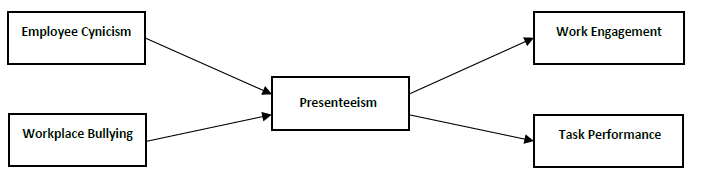
H1: Workplace bullying positively affects presenteeism for hotel employees.
H2: Employee cynicism has a positive effect on presenteeism for hotel employees.
2.3 Task Performance and Work Engagement as Consequences of Presenteeism
Although presenteeism, defined as being at work while unwell, is often seen as a sign of dedication, it can be detrimental to both the employee and the organisation. Research shows that employees who come to work while unwell reduce organisational productivity and performance more than if they had stayed home (Collins et al., 2018; Goetzel et al., 2014). This is especially true for employees who are physically or mentally unwell. Presenteeism can even lead to adverse financial outcomes (Aysun & Bayram, 2017; Lohaus & Habermann, 2019). Therefore, organisations need to encourage employees to take time off when they're unwell rather than coming to work and potentially causing harm to themselves and the organisation (Junça-Silva et al., 2022; Pei et al., 2020). Employees who work while dealing with physical or mental illnesses tend to make more mistakes and exhibit limited performance and workability (Niven & Ciborowska, 2015; Skagen & Collins, 2016). In the accommodation industry, where the customer and employee interact closely, customers expect a friendly, energetic, and effective employee experience (Kaya & Karatepe, 2020). Despite being ill, the employee's attendance can negatively impact task performance, which is defined as meeting customer expectations and effectively fulfilling job requirements (Netemeyer & Maxham, 2007). If employees come to work even when sick, it can result in mistakes that can harm both themselves and customers. This can lead to poor performance and customer service quality due to fatigue and weakness (Arjona-Fuentes et al., 2019; Baeriswyl et al., 2017; Demerouti et al., 2009). Collins et al. (2018) conducted a study on 552 employees and discovered that those who preferred presenteeism in the workplace showed lower performance levels. According to Johns (2011), task significance, task interdependence, and ease of replacement motivate employees to opt for presenteeism. In a study conducted by Agina and Abuelnasr (2021) on 440 personnel working in fine dining restaurants, it was found that employees who exhibit presenteeism cannot complete their tasks at a sufficient level of performance. This situation leads to a decrease in the quality of production and service delivery, as well as financial losses. The study also noted that employees who exhibit presenteeism have reduced organisational commitment, negatively affecting their commitment to organisational goals and objectives, ultimately leading to poor performance and financial outcomes.
The presenteeism strategy, where employees come to work despite being sick, affects their job attitudes as much as their health and productivity. According to the Effort-Recovery Theory (Meijman & Mulder, 2013), an employee's effort to meet work expectations can decrease energy and motivation, creating a need for recovery. This situation causes employees who expend intense effort to engage in recovery activities at the end of the workday, utilising their internal and external resources. Recovering resources that are depleted due to short-term processes can be managed quickly. However, when an employee is sick, they may adopt the presenteeism strategy and come to work despite their low motivation and energy levels. They may need to exert a lot of effort in a job that requires high demand, intense overtime, workload, and high satisfaction. Due to these job demands and stress factors, which require a long and intense effort, the employee's recovery process may be interrupted, negatively affecting their well-being (Van Hooff et al., 2018). The effects of presenteeism on an employee's health and psychology can accumulate over time, leading to an inability to perform at expected levels or limited workability due to illness. This, in turn, can cause negative feelings toward their work and work environment (Admasachew & Dawson, 2011; Baker-McClearn et al., 2010; Karanika-Murray et al., 2015). These negative emotions and stress can ultimately result in low work engagement (Admasachew & Dawson, 2011; Baker- McClearn et al., 2010). Work engagement is related to employees' displaying positive emotions such as pride, belonging, and dedication toward their work (Bakker & Demerouti, 2008). However, the negative situations experienced by the employees due to presenteeism will cause them to adopt negative feelings towards their work and decrease their dedication to it. A comprehensive study conducted on Health Service Staff found that presenteeism experienced by employees reduces work engagement (Admasachew & Dawson, 2011). De Beer (2014) conducted a study on 3387 manufacturing employees, which revealed that work engagement decreases in employees who suffer from presenteeism. A study by Karanika-Murray et al. (2015) on 158 office workers empirically revealed that presenteeism reduces work engagement and job satisfaction among employees. In a study conducted by Ashour et al. (2023) on 388 employees of 5-star hotels, it was empirically demonstrated that hotel employees who exhibited presenteeism behaviour experienced a certain level of stress, which in turn reduced their work engagement. As can be seen, for workers who face high job demands, long working hours, and high task interdependence, experiencing a lack of motivation, skills, and resources due to presenteeism may cause negative emotions and low work engagement.
The success of businesses in the hospitality sector largely depends on their employees' quality of service and task performance. Task performance refers to the employee's ability to exhibit the necessary behaviours and outputs within the framework of their assigned role to fulfil the enterprise's goals (Motowidlo & Van Scotter, 1994). Therefore, it directly relates to the enterprise's performance (Behrman & Perreault, 1982). Customers can have positive experiences with high-quality service from employees who transfer their energy and efforts to their work in a friendly manner. Any decrease in employee task performance and work engagement can lead to direct or indirect losses for accommodation businesses. Employees with reduced work engagement can negatively impact job satisfaction (Saks, 2006), organisational citizenship behaviours (Choo, 2016), and various performance- related factors (Bakker & Demerouti, 2009; Karatepe, 2015; Li, Sanders & Frenkel, 2012). This decrease in work engagement can also lead to lower task performance (Shantz et al., 2013). High performance and employee engagement are critical for sustainable management and service delivery. In a comprehensive review study conducted by Ruhle et al. (2020) on the concept of presenteeism, there is a call for studies on the short- and long-term consequences. These consequences are among the areas that should be focused on and studied, including the impact of presenteeism in the modern work environment from a social perspective and within specific professions. In response to calls from the existing literature, the following hypotheses have been formulated to describe the adverse effects of presenteeism on task performance and work engagement.
H3: Presenteeism has a negative effect on work engagement for hotel employees. H4: Presenteeism has a negative effect on task performance for hotel employees.
The research model presented in Figure 1 was developed based on the existing literature.
3. Methodology
3.1 Data and Sample
After deciding to conduct the research, the necessary ethical permissions were obtained from the Ethics Committee of the World Peace University (WPU-ETK-2023-02). The universe of the research consists of employees in hotel enterprises. The motivation for selecting four and five-star hotels as the focus of this study stems from several factors. Firstly, these high-end establishments exhibit greater operational processes and service delivery complexity, necessitating a more extensive and specialised workforce (Okumus et al., 2020). Secondly, they maintain higher standards for customer service, which requires more sophisticated human resource management practices (Baum, 2015). Additionally, these hotels provide a more substantial dataset for analysis (Jones & Lockwood, 2004 ). In contrast, hotels with 3, 2, and 1-star ratings typically feature simpler operations, fewer amenities, and smaller staff sizes. These establishments' complexity is generally lower than their higher-rated counterparts (Hayes & Ninemeier, 2016 ). Given these considerations, 4- and 5-star hotels constitute this study's primary focus and sample. The complexity of their business processes justifies this choice, as the diversity of their human resources and their role as determinants of service quality in a highly competitive environment. According to the Ministry of Culture and Tourism records, there are five 5-star and 20 4-star Tourism Management Certified hotels in Trabzon. For the research, an e-mail describing the purpose of the research was sent to the communication e- mails of these hotels and permission was requested for the study. A questionnaire was prepared in an electronic format and sent to four businesses (three 5-star hotels and one 4-star hotel) that positively responded to the email. They were asked to distribute the questionnaire to their employees. The first page of the questionnaire contained instructions for filling it out and the purpose of the research. The scales were included on the subsequent pages. After a two-week waiting period, 381 questionnaires were received. Upon examination, 20 questionnaires were either filled out incorrectly or randomly excluded from the study. Thus, 361 valid survey data were obtained in the study.
Out of the participants, 187 were men and 174 were women. Among these participants, 179 are married, and 182 are single. Additionally, 80 participants have a high school education or below, 224 participants have an associate/undergraduate degree, and 57 have postgraduate education. As for the age distribution, 49 participants were 25 years old or under, 112 were aged between 26 and 35, 103 were between 36 and 45, and 97 were 46 or older.
3.2 Measurement Tools
The measurement tools used in this study were taken from previous literature. All statements in the questionnaire were translated into Turkish using the method suggested by Muñiz et al. (2013).
Employee Cynicism: Employee cynicism was measured using a scale developed by Leung et al. (2002) and used by Quratulain and Al-Hawari (2021) in hotel businesses. The 5-point Likert-type scale consists of 4 statements, such as "Powerful people tend to exploit others" and "Generous people are easily taken advantage of".
Self-Rated Task Performance: The scale used by Aguiar-Quintana et al. (2021) in their research on hotels was used to determine the self-rated task performance of the participants. There are three statements in the 5-point Likert-type scale. Expressions; “I carry out the tasks that the Hotel expects from my job”, “I undertake the tasks that my job formally demands of me” and “I fulfil the responsibilities specified in my job position”.
Presenteeism: To identify presenteeism in participants, the Stanford Presenteeism Scale (SPS-6), which is jointly owned and permitted to be used by the Stanford University School of Medicine, was used (Koopman et al., 2002). The 5-point Likert-type scale has six statements. Example items are “At work, I was able to focus on achieving my goals despite my (health problem)” and “Because of my (health problem), the stresses of my job were much harder to handle.”
Work Engagement: The Utrecht Work Engagement Scale-9 (UWES-9) was used to measure work engagement in participants (Schaufeli et al., 2006). Participants were asked to rate each item between 0 (Never) and 5 (Always) in terms of the frequency of occurrence. There are nine items in the 5-point Likert-type scale. Sample items; “At my job, I feel strong and vigorous” and “When I get up in the morning, I feel like going to work”.
Workplace Bullying: The Negative Acts Questionnaire was used to detect workplace bullying (Einarsen et al., 2009). This questionnaire measures the frequency of exposure to negative behaviours that can be conceptualised as bullying in the past six months (1: never, 2: sometimes, 3: once a month, 4: weekly, 5: every day). There are 22 statements in the 5-point Likert-type scale. Sample items; “offensive remarks about your personality, attitude, or private life” and “physical or actual abuse”.
4. Results
The research data were analysed using S.P.S.S. 27 and A.M.O.S. 22 software. First, validity and reliability analyses were conducted. In determining reliability, we considered the scales' internal consistency values (Cronbach's Alpha) and composite reliability values (CR=Composite Reliability). We examined the factor loads and the Average Variance Extracted (AVE) values to determine validity. Table 1 presents the results of the analysis.
Table 1 Results of Validity and Reliability for Variables
| Variables | Factor Loadings | Cronbach's Alpha | CR | AVE |
|---|---|---|---|---|
| Employee Cynicism | 0,524 - 0,825 | 0,795 | 0,814 | 0,530 |
| Self-Rated Task Performance | 0,682 - 0,821 | 0,777 | 0,800 | 0,573 |
| Presenteeism | 0,608 - 0,926 | 0,825 | 0,904 | 0,617 |
| Work Engagement | 0,638 - 0,901 | 0,793 | 0,909 | 0,527 |
| Workplace Bullying | 0,519 - 0,896 | 0,726 | 0,821 | 0,635 |
Source: Own Elaboration.
Upon examining the values presented in Table 1, it can be observed that the factor loads of the constructs range from 0.519 to 0.926. According to the literature, if these values are 0.5 or higher, the items in the scale are indicative of the relevant factor (Sürücü & Maslakçı, 2020; Sürücü, Şeşen, & Maslakçı, 2023). In addition, Cronbach Alpha and Composite Reliability (C.R.) coefficients greater than 0.70 and AVE values of 0.50 or higher are considered acceptable values. While the Cronbach Alpha coefficients of the research constructs are between 0.726 and 0.825, their C.R. values are between 0.800 and 0.909. These values show that the research constructs are internally consistent and reliable (Sürücü et al., 2023).
Sürücü et al. (2023) state that if the C.R. value is above 0.70, it is sufficient for the AVE value to be above 0.40, and the construct has convergent validity. Accordingly, C.R. values are 0.800 and above, while AVE values are 0.527 and above. These values show that the constructs have convergent validity. Finally, Fornell & Lacker (1981) state that validity is ensured if the square root values of AVE are higher than the correlation coefficients found between the constructs used in the research. The values in parentheses in Table 2 represent the square root values of AVE. Upon examination, it is evident that the square root values of each of the construts used in the research are higher than the correlation coefficients between them and the other structures used. These findings confirm the validity of the constructs in the study.
4.1 Correlation analysis
Normality tests were performed first to determine which analyses to use. Kurtosis and Skewness values, which are commonly used in the literature, were examined to determine whether the data show a normal distribution (Sürücü, Şeşen, & Maslakçı, 2023). To discuss the normal distribution of data, the kurtosis and skewness values should fall between -1.5 and +1.5. (Sürücü et al., 2023). The normality tests indicated that the Kurtosis and Skewness values of the research data fell within the acceptable range, and the data exhibited a normal distribution (Table 2).
Table 2 Results of Correlation Analysis
| Variables | 1. | 2. | 3. | 4. | 5. |
|---|---|---|---|---|---|
| 1. Employee Cynicism | (0,728) | ||||
| 2. Workplace Bullying | 0,331** | (0,757) | |||
| 3. Presenteeism | 0,472** | 0,210** | (0,785) | ||
| 4. Work Engagement | -0,318** | -0,489** | -0,518** | (0,726) | |
| 5. Self-Rated Task Performance | -0,583** | -0,487** | -0,508** | 0,549** | (0,579) |
| Kurtosis | -0,280 | -0,395 | -0,953 | -0,851 | -0,646 |
| Skewness | -0,754 | -1,150 | 0,770 | 1,105 | -1,247 |
**p <0,05. Source: Own Elaboration.
The correlation analysis revealed a positive and significant relationship between employee cynicism (r=0.472, **p<0.05) and workplace bullying (r=0.210, **p<0.05) with presenteeism. Furthermore, a significant negative correlation was found between presenteeism and work engagement (r=-0.518, **p<0.05), as well as self-rated task performance (r=-0.508, **p<0.05).
4.2 Regression Analysis
After establishing the relationship between the structures in the research, hierarchical regression analysis was conducted to test the hypotheses. The results of the analysis are presented in Table 3.
Table 3 Results of Regression Analysis
| Hypothesis | Effect Path | Coefficients | t | Sig. | |
|---|---|---|---|---|---|
| ß | Std. Error | ||||
| H1 | E.C. → Pr | 0,282 | 0,092 | 3,076 | 0,002 |
| H2 | W.B. → Pr | 0,427 | 0,084 | 5,097 | 0,000 |
| H3 | Pr → WE | -0,436 | 0,046 | 9,535 | 0,000 |
| H4 | Pr → STP | -0,397 | 0,044 | 9,115 | 0,000 |
| EC: Emplyee Cynicsm, WB: Workplace Bullying, Pr: Presenteeism, WE: Work Engagement, S.T.P.: Self-Rated Task Performance |
Source: Own Elaboration.
The results of the regression analysis showed that employee cynicism (β=0.282, p<0.05) and workplace bullying (β=0.427, p<0.05) have a positive effect on presenteeism. On the other hand, the effect of presenteeism on work engagement (β=-0.436, p<0.05) and self-rated task performance (β=-0.397, p<0.05) is significant but negative. These findings support hypotheses H1, H2, H3, and H4.
5. Discussion
This study examines the antecedents and consequences of presenteeism in the hospitality industry, particularly in terms of service quality and sustainable management. The empirical results support the proposed model of the study. In particular, the results show that workplace bullying and employee cynicism directly affect presenteeism among hotel employees. Furthermore, it has been shown that presenteeism directly and negatively affects employees' task performance and employee work engagement. The study's findings, specifically focused on 4- and 5-star hotels in the accommodation sector, are discussed in detail below. This study adds to the existing literature by providing empirical evidence on the impact of presenteeism within the context of accommodation businesses. Specifically, the study responds to previous research that has called for further examination of stressful hotel work environments. This study advances the tourism and hospitality literature by shedding light on this topic. Working conditions and high customer satisfaction expectations in the accommodation and hotel industries create stress for both employees and top management. Long working hours, high job demands, performance-based bonuses, and low employee salaries contribute to a stressful work environment. This environment fosters negative behaviours among employees, which can adversely affect their well- being and the business's overall performance. Presenteeism is a primary issue which has become more prevalent due to the recent economic climate and the rise of alternative workforces. Presenteeism is an important problem that reduces the effectiveness and efficiency of businesses and is fed by the climate and employee experience within the organisation (Leal & Ferreira, 2020; Tsui et al., 2013; Uygur et al., 2018). In this framework, the results of this study are consistent with those of previous studies.
Management science literature frequently discusses employee work engagement and performance as key elements of organisational effectiveness and performance. In the hospitality sector, the interaction between employees and customers and the quality of these interactions is vital for organisations to achieve their goals and continue their activities successfully. (Al-Ababneh et al., 2018; Al-Ababneh, 2021). Employee work engagement, which refers to the employee's intention to contribute to their role and responsibilities with all their mental and physical strength, is closely linked to task performance. A decrease in work engagement can lead to a decrease in task performance (Tensay & Singh, 2020). On the other hand, an employee's commitment, dedication, pride, and sense of belonging to their job can increase their task performance and improve results (Motowidlo & Van Scotter, 1994). Numerous studies have demonstrated the relationship between employee engagement and task performance among hotel employees. These two outcomes are significant issues for businesses in the hospitality industry (Zainol et al., 2016). Success in the hospitality industry depends on customer satisfaction and happy customers (Bhardwaj & Kalia, 2021). Having employees with high productivity and dedication offers a competitive advantage (Li et al., 2021; Üngüren, 2019; Üngüren & Arslan, 2021; Wu & Ko, 2013). To achieve this, it is necessary to develop employees’ work engagement and task performance and consider in detail the issues that may prevent this. Previous studies have shown that presenteeism in the hospitality industry can negatively impact employee work engagement and task performance (Agina & Abuelnasr,2021; De Beer, 2014; Karanika-Murray et al., 2015; Miraglia & Johns, 2016; Netemeyer & Maxham, 2007). In his review study on presenteeism, Johns (2010) highlights that the factors leading to presenteeism can vary based on organisational and individual factors and how the employee perceives the illness. He also points out that employees objectively assess presenteeism and absenteeism. He notes that both absenteeism and presenteeism lead to a loss of productivity and may decrease employee performance. Additionally, a study by Ashour et al. (2023) involving 388 5-star hotel employees found that those who exhibited presenteeism behaviour experienced stress, which in turn reduced their work engagement. In addition to the limited results found in the literature, this study empirically reveals that presenteeism has a negative effect on hotel employees' work engagement and task performance. However, especially in terms of productivity loss, the only view is not that presenteeism has a negative effect. As Arjona Fuentes et al. (2019) emphasise, there are two perspectives on this issue. While some researchers argue about the negative effect of presenteeism (Bergström et al., 2009; Robertson et al., 2012; Strömberg et al., 2017), others emphasise that the situation may vary depending on the employee's job and the severity of the illness (Lohaus & Habermann, 2019; Miraglia & Johns, 2016). Therefore, if the employee shows reduced performance instead of not coming to work, it will have positive results for both the organisation and the individual (Lohaus & Habermann, 2019; Miraglia & Johns, 2016; Saksvik et al., 2017). The authors discuss two primary schools of thought in the studies on presenteeism. Researchers from the U.S.A. focus on the negative impact of the cost and productivity loss caused by employees working while sick, while researchers from Northern Europe study why employees choose to go to work instead of staying at home when unwell. In the context of the accommodation sector, a sick hospitality employee coming to work may have adverse consequences, including compromised work quality, reduced customer satisfaction, lower customer experience, and failure to meet hygiene expectations. Even though some researchers may interpret presenteeism as a positive trait where employees come to work and add value, the study emphasises that presenteeism can reduce employee performance and engagement. This challenges the notion that presenteeism could create added value and highlights the potential for more destructive results. Therefore, this study contributes to expanding the existing literature on presenteeism.
Even when employees are suffering from physical or mental illness, they are often driven to come to work. Understanding the factors that motivate employees to choose presenteeism over absenteeism is crucial in preventing negative organisational outcomes. Stress factors can be intense and strongly felt, making it difficult for employees to stay home and rest despite their pain, lack of motivation, and low energy. Examining this phenomenon can help mitigate the negative consequences of presenteeism. Workplace bullying (Naseem & Ahmed, 2020; Notelaers et al., 2019) and employee cynicism (Cong, 2022) are the leading factors that drive employees to exhibit presenteeism. Workplace bullying, which involves exclusion from the work environment and exposure to extreme behaviours like bullying (Einarsen et al., 2011), is the first of these factors. Employees in the accommodation sector exposed to such behaviours experience high stress, decreased job satisfaction, and health and burnout problems (Presti et al., 2019; Said & Tanova, 2021; Skuzi´nska et al., 2020; Sprigg et al., 2019). Studies by Khalique et al. (2018) and Roh et al. (2023) show that presenteeism causes performance decline and counter-productive work behaviours in accommodation businesses. It also triggers negative situations for both individuals and organisations.
The hospitality and tourism sector experiences workplace bullying and its negative consequences, but there have been very few studies on this issue (Ariza-Montes et al., 2017; Bloisi, 2021). Miraglia and Johns (2016) highlight the importance of workplace bullying as a risk factor for presenteeism, but there is limited research on this topic. Neto et al. (2017) found that workplace bullying decreases productivity and presenteeism among service sector employees. Additionally, exposure to workplace bullying in various sectors has been linked to increased levels of presenteeism (Conway et al., 2016; Naseem & Ahmed, 2020; Notelaers et al., 2019). To avoid the individual consequences of presenteeism and workplace bullying, employees may adopt a coping strategy of coming to work despite their illness. This is done to protect their current gains and resources within the scope of The Conservation of Resource Theory (Janssens et al., 2016). Despite experiencing negative situations due to illness, employees still come to work. They do this to avoid being excluded by their supervisor and colleagues and to maintain a high level of commitment to their work in the eyes of others. In their study examining the factors contributing to presenteeism, Knani et al. (2021) state that employees adopted the presenteeism strategy to avoid social isolation. A study conducted specifically for the hospitality industry has revealed that workplace bullying has a negative effect on presenteeism (Ariza-Montes et al., 2021). In this framework, the results of this study are consistent with those of previous studies. The rise in workplace bullying within hotel accommodation businesses leads to increased presenteeism among employees. Hospitality employees see presenteeism as a strategic option: coming to work even when sick to avoid risking the resources they will lose and their image in the eyes of other employees and managers when they are exposed to workplace bullying. This study's result responds to calls for examining the effect of workplace bullying, a significant risk factor, on presenteeism. Additionally, it contributes to the existing literature by focusing on the hospitality sector and highlighting the importance of this issue in the success of management practices.
Employee cynicism is the second issue behind adopting presenteeism as a coping strategy due to negative stress factors experienced at work. Employee cynicism is related to the employee's experience of distance, coldness, and work stress between themselves and their job due to various factors (Schilpzand et al., 2016; Shapira-Lishchinsky & Rosenblatt, 2010). Employees in the hospitality industry with high job demands, intense work tempo, and high-performance expectations are expected to experience employee cynicism (Jenkins, 1998; Sliter et al., 2010). Cynicism, or depersonalisation, is a strategy that involves suppressing intense emotional attachment and arousal toward one's work and organisation in order to conserve energy and resources (Maslach et al., 2001). However, this tactic only provides a rare or short-term advantage and may lead to high job demands in the long run (Bakkeret al., 2000). In other words, although an employee's current experience of cynicism may seem to cause more absenteeism at first, suppressing emotional and cognitive involvement strategies (Lutgen-Sandvik & Sypher, 2010; Maslach et al., 2001) and the possibility of experiencing an increase in job demands expected of him/her in the long run (for example, the possibility of a more demanding or increased workload) may cause the employee to go to work despite being sick. Employees who isolate themselves from their jobs and their goals may not care about the negative consequences of being at work. Instead of dealing with job demands that may increase in the medium and long term or stress factors that may arise from supervisors and colleagues, they prefer to be at work despite being sick. Although few studies have directly examined the effects of depersonalisation or cynicism, and mostly the holistic effect of burnout was examined, a positive correlation has been found between presenteeism and cynicism (Lu et al., 2014; Song et al., 2021).
Similarly, two studies on furniture and plastic businesses and employees working in S.S.I. found a positive relationship between cynicism and presenteeism (Bölür, 2018; Zengin & Kaygın, 2016). Again, Cong (2022) discovered that hospitality employees experienced burnout due to cynicism and depersonalisation, which led to presenteeism. This study empirically demonstrates the effect of employee cynicism on presenteeism, supporting the results of a limited number of previous studies with available data. When hospitality employees experience cynicism, they become less committed to their jobs. They start to believe that their workload will increase if they take time off, leading them to come to work even when sick. This behaviour can have adverse effects on both the employees and the organisation. This study's result expands the other studies that have explained the limited mechanisms of cynicism and presenteeism in the hospitality sector.
5.1 Theoretical Implications
The study has important theoretical implications. First, from a theoretical perspective, the study addressed the literature's calls regarding the phenomenon of presenteeism and expanded the existing literature. Despite the hospitality sector's significant position in the economy of many countries and the widespread experience of presenteeism due to job demands, studies addressing presenteeism in the hospitality sector are limited in the literature (Arjona Fuentes et al., 2019; Arslaner & Boylu, 2017; Chia & Chu, 2016, 2017; Knani, 2022). The study contributed to filling this gap in the literature by focusing on the accommodation sector as a specific industry. Secondly, in their comprehensive review study, Ruhle et al. (2020) urged an investigation into the workplace factors that encourage prioritising presenteeism over individual well-being in the short and long term. They also highlighted this situation's social consequences for individuals and organisations within a specific profession and sector. According to Johns (2010), presenteeism can vary depending on the specific work environment and industry, how illness is perceived within that industry, and whether the other employees consider illness as significant. These variables could influence the outcomes of presenteeism to some extent. Arjuna Fuentes et al. (2019) also point out that presenteeism is common in the accommodation sector but has not been extensively studied in the hotel sector. They call for more attention to be given to understanding the causes and effects of presenteeism for hotel employees. Knani et al. (2021) stress that presenteeism can be a coping strategy and may have negative and positive consequences. They suggest that studies should consider differences in workplace contexts and the specific organisation in which individuals work. There are significant differences between hotel types in terms of management and the factors contributing to presenteeism. 4- and 5-star hotels have more complex business processes, higher quality expectations, and competition levels. They also differ significantly in terms of service offerings and workforce compared to other hotels (Baum, 2015; Okumuş et al., 2019). Addressing these differences, the current study expands the literature by focusing on the antecedents and consequences of presenteeism, specifically for employees in 4- and 5-star hotels. Thirdly, the study examines workplace bullying and employee cynicism as antecedents of presenteeism, which are important workplace stress factors and negative job resources that reduce employees' resources within the scope of C.O.R. and Job D-R theories. Although workplace bullying is prevalent in the accommodation and tourism sectors, limited studies exist on this subject (Ariza-Montes et al., 2017; Blosi, 2021). The current study examines the effects of workplace bullying and employee cynicism experiences on presenteeism, an important risk factor. This research increases awareness of these concepts and expands the literature on C.O.R. and Job D-R theories with empirical results. Finally, the study contributes to existing literature by examining the impact of presenteeism on work engagement and task performance in the hospitality sector, particularly in 4- and 5-star hotels.
5.2 Practical Implications
The study has important practical implications. To prevent negative outcomes such as reduced work engagement and task performance caused by presenteeism, measures should be taken against antecedents such as workplace bullying and employee cynicism, particularly for employees in the accommodation sector. One effective approach to this is adopting effective horizontal and vertical communication techniques within the organisation, which can help prevent employees from feeling stressed or pressured. By building strong horizontal relationships, employees in the accommodation sector can avoid burdening their colleagues, while effective vertical communication ensures they maintain a positive relationship with their supervisors. This approach helps break down prejudices that the accommodation sector may experience extreme behaviours, which can lead to exclusion and exacerbate stress factors. In turn, this reduces the likelihood of presenteeism, which can have negative consequences for both employees and the organisation, ultimately affecting the quality of service. To improve vertical communication, managers in the accommodation sector can receive special awareness training to increase their knowledge of workplace bullying and employee cynicism. Supervisors can then analyse the current situation and recommend how employees in the accommodation sector should regulate their behaviour among themselves. During this analysis, it's important to remember that employees are valuable members of the organisation, serving an important role in the accommodation sector and influencing the organisation's overall performance through their customer service skills. Additionally, the level of cynicism among employees should be taken into consideration. Again, to prevent workplace bullying and employee cynicism, supervisors can establish inclusive communication with hospitality sector employees. They can organise events to help everyone understand each other's life challenges and future expectations related to work and personal life after work hours. This approach and an open-door policy can foster close interaction with employees inside and outside the organisation, helping prevent potential issues. In the hospitality sector, where employees directly interact with customers, and the quality of these interactions determines business performance and service quality, Employee Engagement Initiatives should be implemented with consideration for the negative impact of presenteeism on employee work engagement. To enhance employees' work engagement, as emphasised in the literature, providing opportunities for "self- efficacy, self-esteem, and autonomy," along with a supportive organisational environment and supervisory coaching, will significantly contribute to maintaining a positive workplace climate (Côté et al., 2021; Salanova et al., 2010). To meet the future expectations of employees, organisations should offer opportunities for personal and professional development, empowerment at work, and autonomy with an expanded understanding of duty in various jobs. Within the framework of employee-focused H.R. policies, it's important to thoroughly examine the positive aspects of other businesses and raise employee awareness through practical training sessions conducted company-wide. This can be achieved through benchmarking and adopting best practices. H.R.'s policies should include kindness and tolerance-based communication methods in employee training. Effective communication and engagement that starts in the business environment will evolve into job-employee happiness, customer- employee happiness, and, ultimately, an effective and efficient management process in the accommodation sector.
Presenteeism, which results from increasing workloads, intense competition, and various job-related stress factors such as workplace bullying and employee cynicism, can negatively impact work engagement and task performance. This is particularly concerning for the accommodation business, as it can harm customer satisfaction. Policymakers in the sector must prioritise addressing this issue. To prevent presenteeism and its negative consequences, a governance approach that involves all stakeholders and encompasses the aforementioned action styles should be established.
6. Conclusions
The study's results have led to important determinations for effectively managing human resources, which play a crucial role in the hospitality sector, and preventing negative organisational outcomes that may occur directly or indirectly. Presenteeism significantly impacts employees' work engagement and task performance. When employees in the accommodation sector choose the presenteeism strategy and come to work mentally or physically ill, high job demands and long working hours, despite low energy and motivation, can cause negative feelings towards their businesses. Presenteeism, or working while sick or unwell, can reduce work engagement and negatively impact task performance. To achieve high employee performance and ensure customer satisfaction in the hospitality industry, it is crucial to understand presenteeism and its underlying causes. Workplace bullying and employee cynicism have been found to significantly influence the choice of presenteeism strategy, even when an employee in the accommodation business is sick and tired. Hotel employees may choose to work while ill to avoid workplace stress, exclusion, or extreme behaviours, and to maintain their achievements and place among colleagues and supervisors in the medium and long term.
It is essential to closely monitor the factors that lead to presenteeism, as it can impact the performance of hospitality sector employees who interact directly with customers, as well as the overall performance of the organisation. This is crucial for maintaining sustainable competition and high customer satisfaction in the accommodation sector. Both senior managers and human resources professionals in the sector can make significant contributions to sustainable management through preventive policies and training to raise awareness.
6.1. Limitations and Recommendations For Future Research
Despite the valuable insights this study provides to the existing body of literature, it is important to acknowledge its limitations. The cross-sectional nature of the study limits the ability to identify causal inferences. Conducting a longitudinal design study would be beneficial in obtaining more robust results and explaining causal associations between variables in the study. Additionally, the sample of the study is limited to 4-5 star hotels in Trabzon, Turkey. 4- and 5-star hotels differ from other hotels in terms of operational execution, the importance of the workforce in the work process, implemented H.R. policies, and workforce diversity (Baum, 2015; Hayes & Ninemeier, 2016; Okumus et al., 2020).
Additionally, the cultural context in which employees are situated significantly affects their perspectives on work and their adoption of presenteeism strategies. Indeed, in collectivist societies, developing countries, and societies with relatively limited job security, the perception of presenteeism differs compared to Western countries. In these contexts, presenteeism is sometimes viewed as a necessity rather than a choice. Consequently, further investigation of presenteeism's effects and outcomes in these areas is needed (Chia & Chu, 2016). To obtain more inclusive and generalisable results and to reduce the impact of regional culture, it is recommended that the study be repeated with wider geographical coverage and to include other types of hotels and accommodation businesses. Thirdly, the variables were only assessed through self-reported measures at a single point in time, which may have increased the relationship between them to a certain extent (MacKensie & Podsakoff, 2012). This raises the possibility of common method variance. Therefore, in order to validate the model, a longitudinal approach with objective measures should be taken. Fourthly, gender and age are significant factors that affect employees' presenteeism preferences (Cho et al., 2016; Gustafsson et al., 2016). These differences are substantially influenced by employees' perceptions of socialisation and social roles. Gender stereotype characteristics play a role in shaping these preferences. For instance, male employees tend to be more competitive, focused on earning money, and concerned with social responsibilities. They are also more likely to ask for help and strive to appear strong. On the other hand, female employees often face diversifying social roles and work-family conflicts. The perception that "work for piles up" when absent further differentiate their preferences and the mechanisms related to these preferences (Bracewell et al., 2010; Fridner et al., 2012; Gustafsson et al., 2016). A study by Luksyte et al. (2023) found that women are more concerned about their health and less likely to engage in presenteeism than men. The study didn't include gender and age as moderator variables, but future research that incorporates these variables could enhance the existing literature on presenteeism.
Finally, this study discusses possible antecedents and consequences of presenteeism in the context of workplace bullying, employee cynicism, work engagement, and task performance. To prevent negative consequences of presenteeism, future studies in accommodation establishments should examine variables such as organisational culture, expectations for work-life balance, and working hours. In particular, since the relationship between presenteeism and task interdependence may vary based on organisational size, it is worth examining this relationship in smaller and less than 4-star enterprises. The possible consequences of not going to work in a small business can create more stress on the employee, making this an important area for future research (Hansen & Andersen, 2008; Knani, 2022).

