



 Inglês (pdf)
 Artigo em XML
 Referências do artigo
 Tradução automática
 Enviar este artigo por email
 Citado por SciELO
  Similares em
SciELO
Similares em
SciELO 
 Permalink

1. Introduction
The use of innovative technologies, such as VR, has been explored by tourism companies as a strategy to boost and enhance the visitor experience, providing significant advantages for the tourism industry (Beck et al., 2019). This immersive and interactive technology allows tourism companies to deliver memorable and unique tourist experiences (Balakrishnan et al., 2024). Through VR, companies can transport visitors to remote destinations, offer virtual tours of historical and cultural sites, and create engaging environments that stimulate all senses (Buhalis et al., 2023). This ability to create immersive virtual experiences allows tourism companies to expand their offerings and reach a broader audience, regardless of geographical restrictions or physical limitations (Gretzel & Koo, 2021). Furthermore, VR has the potential to overcome accessibility barriers to access tourism, enabling people with reduced mobility, health restrictions, or other limitations to participate virtually in tourism experiences (Folgado-Fernández et al., 2023; Godovykh et al., 2022). This increases inclusivity (Henríquez et al., 2022) and opens new business opportunities for tourism companies by catering to previously unmet demand (Beck et al., 2021).
In the specific context of wine tourism, VR can provide visitors with a unique immersion into the culture and wine production process (Wen & Leung, 2021). Tourists can be virtually transported to picturesque vineyards, learn about winemaking techniques, and even participate in virtual tastings (Sigala, 2023). This innovative approach allows wine tourism companies to offer a competitive edge and increase tourist engagement, resulting in higher customer satisfaction and loyalty (Santos et al., 2022). Although there is a growing body of research on VR in tourism in general (Cham et al., 2024), there are significant gaps regarding the determinants of this technology’s adoption by wine tourism companies (Sigala, 2023).
In fact, only a few studies have investigated managers' intention to adopt VR strategies and the benefits this technology can bring to wine tourism (Maumon & Bédé, 2023). In addition, the study by Folgado-Fernández et al. (2023) concludes that tourism destination managers need to implement new positioning strategies based on VR experiences. Therefore, it is essential to understand the factors that influence the intention of wine tourism company managers to adopt VR and to determine whether the sector is open to including this type of innovative mechanism in its business models. Based on this understanding, this study aims to explore the intention of managers of wine tourism companies to adopt VR. Interviews were conducted with managers in the sector to understand their perspectives, challenges, and potential benefits related to the adoption of this technology. By analysing the responses obtained, we aim to identify the factors that influence managers’ intention to adopt VR and clarify the role of this technology in this specific segment.
As such, this study distinguishes itself by being one of the first to investigate the adoption of VR in wine tourism specifically, a topic rarely discussed in the literature (Amaral et al., 2024). By focusing on the intentions and perceptions of managers, we aim to offer a unique contribution to understanding the challenges and opportunities of this technology in the sector. Accordingly, the results of this study can provide important guidelines for both companies in the sector and for researchers interested in exploring the intersection of technology, tourism, and wine culture. By understanding the factors influencing managers’ intention to adopt VR, we can provide companies with the knowledge necessary to make more informed decisions about including this type of technology in their business strategies, ultimately enhancing the visitor experience and stimulating the sector’s development.
2. Theoretical framework
2.1 VR in the tourism sector
The use of VR technology in the tourism sector has been growing in recent years (Omran et al., 2024). Its ability to create immersive and engaging experiences allows tourists to experience destinations and attractions virtually (Losada et al., 2022). This innovative approach has captured the interest of companies and tourist destinations, as they see VR as a way to attract and retain visitors by offering unique and memorable experiences (Leung et al., 2022). One of the main advantages of VR in the tourism sector is its ability to overcome physical and geographical barriers (Yung & Khoo-Lattimore, 2019). Travellers can explore distant destinations, visit iconic landmarks, and even participate in events, expanding their choices and access, thus making tourism more inclusive and accessible to a broader audience (Wang et al., 2022). This approach provides a high degree of realism and engagement, which can positively influence tourists' decision-making when choosing a destination to visit (Beck et al., 2019).
The adoption of VR in the tourism sector has been significant due to technological advancements that have made VR equipment more accessible and affordable for both companies and tourists (Ball et al., 2021). VR devices are becoming more sophisticated, portable, and user-friendly, allowing companies to incorporate this technology into their marketing and customer experience strategies (Omran et al., 2024). Moreover, the demand from tourists for more immersive and personalised experiences has driven the adoption of VR (Huang et al., 2023). Travellers increasingly seek authentic and exciting experiences, and VR offers a unique way to meet these expectations (Shen et al., 2022). Tourism companies are beginning to realise the importance of innovation and differentiation in the market, and the adoption of VR is seen as an effective strategy to achieve this goal (Laurell et al., 2019). VR has indeed provided tourism companies a unique opportunity to stand out from the competition by offering differentiated experiences and adding value to their products and services (Escandon-Barbosa & Salas-Paramo, 2024).
The global COVID-19 outbreak has significantly impacted the tourism sector, increasing demand for virtual solutions (Ball et al., 2021). Many tourists have had to cancel or postpone their trips due to travel restrictions, border closures, and health concerns (El- Said & Aziz, 2022). In this context, the adoption of VR has emerged as an appealing alternative for tourists to explore destinations and attractions from the comfort of their homes (Huang et al., 2023). Tourism companies have realised the importance of adapting their strategies to meet this demand and have used VR as a tool to maintain tourists' interest and continue promoting their offerings (Lu et al., 2022). As social distancing and safety measures have limited the number of visitors in physical spaces, virtual experiences enable companies to reach a larger audience without these constraints (Shen et al., 2022). Therefore, the increasing interest of companies in adopting VR in the tourism sector can be attributed to both the pursuit of differentiation and tourist engagement and the needs and demands imposed by the COVID-19 pandemic (Huang et al., 2023). This technology has proven to be a way for tourism companies to adapt to constantly changing circumstances and continue to meet tourists' expectations and preferences (Corbisiero & Monaco, 2021).
2.2 Perspectives about VR on the Wine Tourism Sector
Emerging tourism segments, such as wine tourism, are starting to explore the potential of VR to enrich the visitor experience (Wen & Leung, 2021). Although existing studies do not conclusively establish the necessity of implementing VR in wine tourism businesses, there is growing consensus that this type of technology can play a pivotal role in advancing the sector (Sigala, 2023). Wine tourism benefits greatly from sensory and immersive dimensions, which revolve around wine production and tasting, and VR can function as a complementary tool in the wine tourist’s journey (Leri & Theodoridis, 2019). Through VR, visitors can virtually witness wine production processes, from grape harvesting to fermentation, and even participate in wine tastings in a virtual setting (Wen & Leung, 2021).
By providing an immersive and interactive experience, VR can create a sense of presence, allowing visitors to virtually explore vineyards, interact with winemakers, and immerse themselves in the atmosphere and landscapes of the vineyards (Maumon & Bédé, 2023). This can arouse tourists' curiosity, increase their emotional engagement, and create a deeper connection with wine culture and tradition (Leri & Theodoridis, 2019). Moreover, VR helps overcome certain practical limitations associated with physical visits to wineries. Through this technology, visitors can access distant or renowned wineries that would otherwise be challenging to reach (Maumon & Bédé, 2023). In this way, wineries can present their history, production techniques, and products more comprehensively, reaching a global audience and circumventing spatial or geographical constraints of in-person visits (Qesja & Bastian, 2023).
2.3. Theoretical approaches to VR adoption in the tourism sector
The intention to adopt VR has been widely studied from the perspectives of tourists and company employees; however, little has been studied about this intention among managers in the tourism sector (Sigala, 2023). Regardless of the nature and characteristics of the samples considered in studies on the adoption of VR, it is known that these studies have used a set of fundamental theories to explain their methodological and empirical options, helping to identify the factors that determine the adoption and the understanding of managers’ behaviour, in this case, that of wine tourism company managers.
According to the literature, some theories can help meet this study's objective. In this sense, the technology-organisation- environment (TOE) framework is particularly relevant, as it provides a holistic approach to the adoption of technologies by companies, considering technological, organisational, and environmental factors (Liu & Jiang, 2024). In this context of wine tourism, the perceived usefulness of VR can be influenced by technological factors, such as ease of integration with existing practices. In contrast, organisational factors, such as financial resources and training, can mediate the willingness to invest.
On the other hand, the technology acceptance model (TAM) is also widely used to understand the acceptance of emerging technologies (Iftikhar et al., 2023). According to this model, perceived usefulness and perceived ease of use determine the attitude towards VR and, consequently, the intention to adopt it (Escandon-Barbosa & Salas-Paramo, 2024). In the case of tourism, it is believed that companies that perceive VR as an effective tool for attracting and engaging tourists may demonstrate greater investment intentions, and if they perceive that tourists share a positive attitude towards VR, this may also contribute to their intention to adopt VR within their companies.
The theory of planned behaviour (TPB) explains how the intention to adopt VR can be influenced by psychological and social factors, which shape tourists’ behavioural attitudes (Huang, 2023). In this context, business managers’ attitudes towards VR are believed to be shaped by market trends such as consumer acceptance, financial resources, or technical knowledge, which may directly affect their willingness to invest in VR.
Finally, the diffusion of innovation theory explains the spread of new technologies in the market (Al Breiki et al., 2023). According to this theory, the adoption of VR depends on factors such as the relative advantage of the technology and its compatibility with existing practices. In other words, it is believed that tourism businesses that perceive a high return on investment and a significant competitive advantage may be more inclined to adopt VR.
3. Methodology
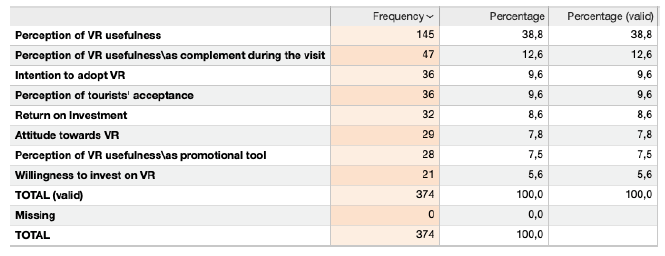
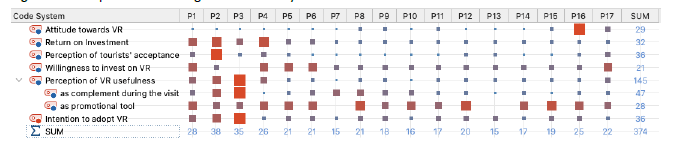
This research adopted a qualitative methodological approach, applying Qualitative Data Analysis (QDA). According to Lee's study (2022), QDA is an effective method for rigorously exploring specific research questions in tourism. The entire methodological process was conducted with MAXQDA20 Analytics Pro software to facilitate the analysis and obtain accurate results. This tool is widely recognised and frequently employed in qualitative studies that explore the adoption of technologies in the tourism sector, highlighting its importance and contribution to advancing scientific knowledge in this field (Paunovic et al., 2022). In this study, all identified and coded units of meaning were deemed valid for analysis (Figure 1). This approach ensured that no relevant data were overlooked by the software, thus ensuring that all presented results reflect the entirety of the content considered important for the research.
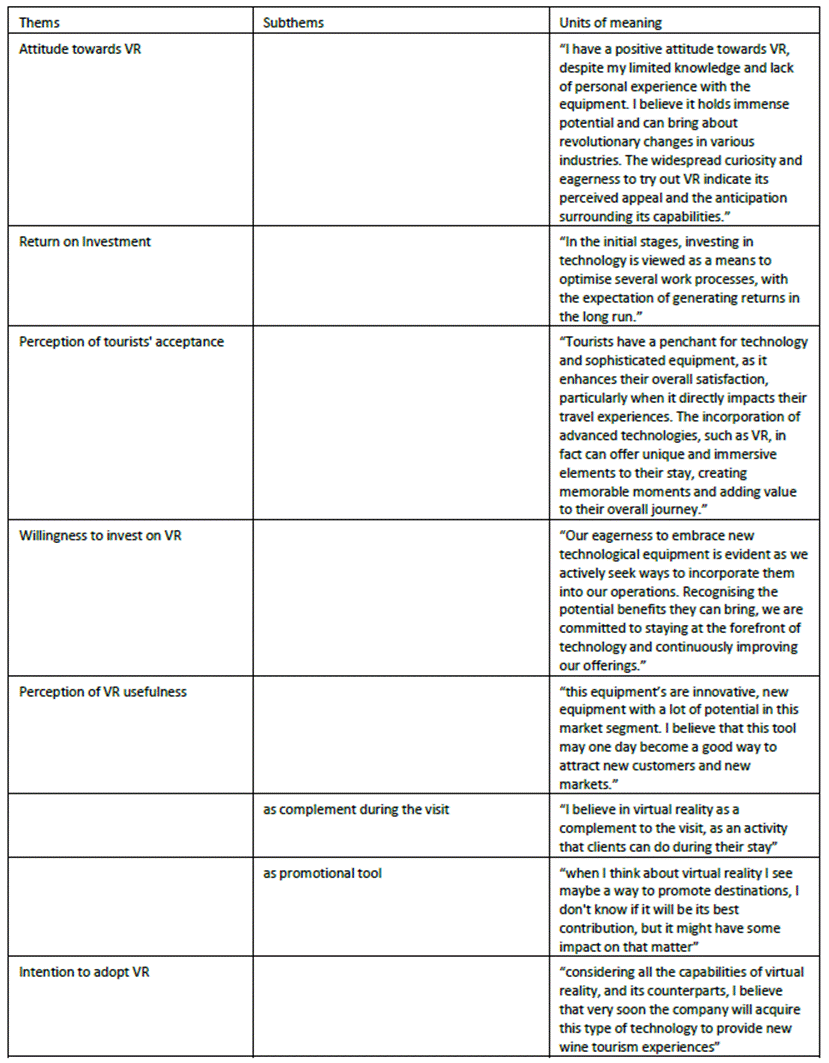
When applying the coding of units of meaning (Annexe 1 - Appendix), specific measures were taken to preserve data integrity. All deemed relevant information was carefully handled and incorporated into the analysis, ensuring a comprehensive representation of participants' responses and a thorough understanding of the expressed perceptions and opinions. By avoiding excluding any significant data, it was possible to explore the breadth and depth of participants' responses fully. As a result, the analysis encompassed a variety of perspectives and valuable contributions, ensuring a complete representation of the relevant content for the study. This rigorous methodological approach strengthens the results' validity and credibility. By considering all coded units of meaning, we can have confidence that the conclusions and interpretations derived from the data faithfully reflect the relevant content for the research in question.
3.1 Participants
In this study, 17 managers of wine tourism enterprises in Portugal with over 10 years of experience in the tourism industry participated. The participants were selected through non-probabilistic convenience sampling and invited to participate in the study via phone. The inclusion criteria were that participants should be managers of tourism companies and possess knowledge about the adoption of technological equipment. The validity of the sample was justified based on the principle of saturation, which is widely recognised in qualitative studies (Guest et al., 2006). After 17 interviews, it was observed that the collected data reached thematic saturation. As Saunders et al. (2018) refer, this means that additional participants would not add substantial or relevant information to the study since the emerging themes and patterns are consistently repeated among the interviewed participants.
3.2 Instruments
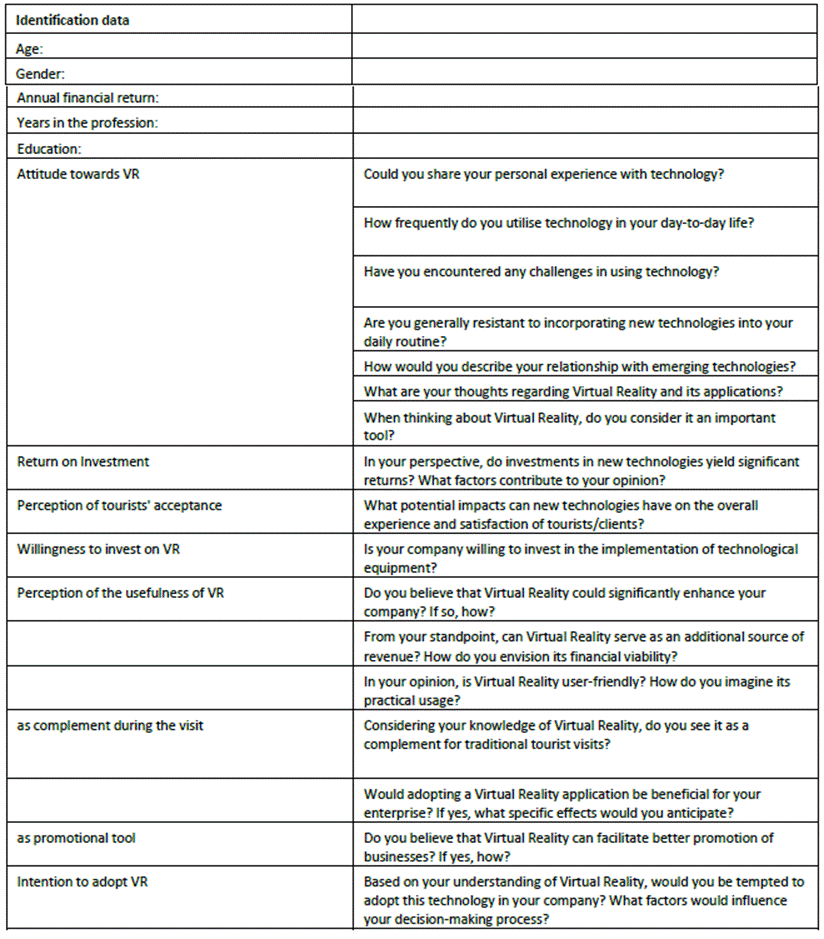
As a data collection instrument, we utilised a semi-structured questionnaire (Annexe 2 - Appendix). Before administering the questionnaire, a pre-test was conducted with two wine tourism enterprise managers to assess the questions' clarity, understanding, and relevance. The interviews were supported by audio recording using a recorder. The interview content was subsequently transcribed to simplify the data analysis process.
3.3 Procedure
3.3.1 Data collection
The interviews were conducted descriptively and narratively, formulating research questions based on the typology of QDA questions to deeply investigate the essence of each participant's experience (Gizzi & Rädiker, 2021). The interviews had an average of 55 minutes per participant and were scheduled in advance and conducted in the most suitable format for each participant, whether in-person or online. The interviews were conducted in Portuguese and recorded with the consent of the participants for their exclusive use in this study. All the interviews were recorded using a tape recorder and then transcribed in full to capture all the information collected.
3.3.2 Data analysis
The content analysis of the interviews was conducted following the QDA, allowing for the identification of patterns and underlying meanings in the participants' responses. The transcriptions were carefully reviewed and organised into units of meaning, also known as units of meaning. These units were later grouped into thematic categories, enabling a deeper understanding of the data. MAXQDA20 software was used to transcribe, organise, and analyse the participants’ reports, enabling information to be coded and categorised according to the study’s objectives. This systematic approach allowed for rigorous examination of emerging themes, patterns, and trends in the responses and facilitated the interpretation of relationships among those themes. As a result, the study gained deeper insights into the factors driving tourism businesses to adopt VR mechanisms, culminating in relevant and reliable findings (Gizzi & Rädiker, 2021; Kuckartz & Rädiker, 2019).
The results were presented clearly and organised, using tables and graphs that provided a descriptive analysis of the collected data. Additionally, relevant participant quotes were included to enrich the understanding of the results. The main conclusions were derived from participants' responses and the analysis of the collected data. Figure 2 illustrates the various phases of the analysis and treatment process of the collected data, providing an overview of the steps taken. These steps included interview transcription, data review and organisation, coding, categorising relevant information, and identifying emerging patterns and trends. The analysis was conducted systematically, ensuring the results' reliability and validity.
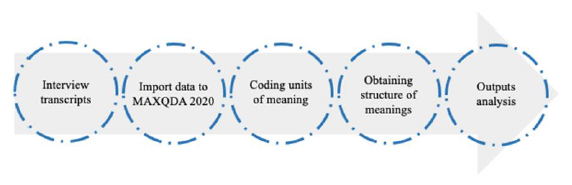
Figure 2 Description of the seven-step data analytical process. Source: adapted from Kuckartz and Rädiker (2019).
4. Results and discussion
In this section, we present and discuss the results obtained from the interviews conducted with managers of wine tourism companies regarding their intention to adopt VR mechanisms. The collected information was thoroughly analysed, allowing for a deep understanding of the participants' perceptions, opinions, and experiences. Table 1 shows the characterisation of the sample used in this study. Most participants are male. In addition, it was found that participants are predominantly aged between 30 and
40. In terms of professional experience, most participants have between 10 and 20 years of experience in the wine tourism sector. In terms of academic background, more than 70 per cent of participants have a higher education degree. In terms of business, it was found that, in general, the companies typically have an annual financial return of up to 2 million euros.
Table 1 Participants' characterisation
| Items | Description | N (17) | % |
|---|---|---|---|
| Position | CEO | 17 | 100 |
| Gender | Male | 12 | 70.6 |
| Female | 5 | 29.4 | |
| Age | 30-40 | 9 | 52.9 |
| 41-50 | 2 | 11.8 | |
| 51-60 | 5 | 29.4 | |
| > 60 | 1 | 5.9 | |
| Annual revenue | < 1 M | 7 | 41.2 |
| 1 M - 2 M | 7 | 41.2 | |
| > 2 M | 3 | 17.6 | |
| Experience | 10-20 | 6 | 35.3 |
| 21-30 | 7 | 41.2 | |
| > 30 | 4 | 23.5 | |
| Academic level | High school | 5 | 29.4 |
| University | 12 | 70.6 |
In terms of the dynamics and themes that contribute most to the understanding of the intention to adopt VR (Figure 3), we can highlight "Perception of VR usefulness" (145) and VR "as complement during the visit" (47). According to our results, "Perception of VR usefulness" refers to the belief among managers that VR can bring tangible benefits and added value to tourism experiences. This perception is crucial in driving the intention to adopt VR by managers of wine tourism companies. When managers realise that VR can offer tourists an immersive, interactive, and enriching experience, they are more likely to consider implementing this technology in their business strategies. This awareness of VR usefulness has been frequently identified as a determining factor in the adoption of technologies in the tourism industry (Kim & Hall, 2019).
From the participants' perspective, VR is recognised as a complement to the in-person tourist visit. Managers acknowledge that the technology can enhance the visitor experience by providing additional resources and expanding possibilities for interaction. For example, VR can allow tourists to explore restricted or inaccessible areas of wineries, experience special events, or participate in exclusive activities. This broadens the options available to visitors and enriches their wine tourism journey. According to a study by Yuan and Hong (2024), VR has increasingly been used as a complementary tool for tourist visits, thus confirming its ability to recreate valuable tourist activities.
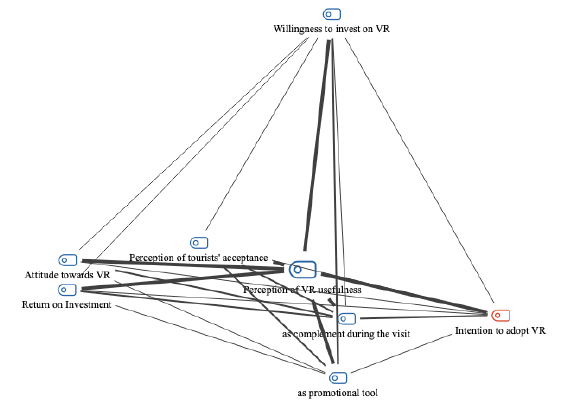
A rigorous analysis of the formation of intention to adopt VR requires not only observing the weight and frequency of emerging themes but also understanding the interconnections among them (Kuckartz & Rädiker, 2019). As illustrated in Figure 4, multiple factors collectively shape managers’ intentions to adopt VR in the wine tourism sector. These factors include the perception of VR’s usefulness, managers’ attitudes toward the technology, their perception of tourists’ acceptance of VR devices, the potential return on investment (ROI), and the willingness of companies to invest. The following sections detail how these factors interrelate and influence managers’ decisions.
The results suggest that perceived usefulness is a primary driver of managers’ intentions to adopt VR. This notion aligns with Tavitiyaman et al. (2022), who define perceived usefulness as the belief that a specific system will enhance the performance of a process. Managers who recognise VR as a tool capable of providing immersive tourist experiences and boosting customer satisfaction are more inclined to consider its acquisition.
According to Participant 2 (P2): “The fact that Virtual Reality can provide impactful and realistic wine tourism activities makes me want to acquire this type of equipment.”
These findings mirror prior research by Alam et al. (2021), underscoring that managers’ positive perception of VR capabilities plays a decisive role in fostering adoption intentions.
Another influential theme pertains to managers’ attitudes toward VR. This factor aligns with the work of Yuen et al. (2023), who found that a positive attitude toward technology predicts its eventual uptake. Managers in this study consistently viewed VR as an innovative tool with the potential to enhance tourist experiences and differentiate their offerings.
Participant 4 (P4) stated: “I have a very positive attitude towards VR because I am fully aware of its potential and believe that this type of technology can enhance tourist experiences in general.”
Managers’ perception of tourists’ acceptance of VR is an equally important determinant. Respondents indicated that if they believe visitors are open to more innovative activities, they become more likely to consider VR adoption.
As Participant 7 (P7) noted: “If our visitors show interest in engaging in more innovative activities, and if that demand is growing, then I will try to meet that demand.”
These perspectives align with Alaskar et al. (2021), who propose that managers are more inclined to implement new technologies if they expect positive outcomes for their business.
A critical factor repeatedly highlighted by participants is the potential ROI associated with adopting VR. Managers stressed that the perceived ability of VR to generate positive financial returns is essential in motivating technology acquisition.
Participant 11 (P11) explained: “What determines my willingness to acquire VR is the financial return I can achieve with its implementation in the company. If VR can generate more revenue, then I am likely to acquire it.”
Such sentiments echo Alford and Page (2015), who emphasise that tangible financial benefits can stimulate confidence in deploying new technologies to enhance tourism experiences and maintain competitiveness.
The results further indicate that managers most commonly view VR as a complementary component to the wine tourism visit- rather than a standalone promotional tool. This perspective is consistent with Omran et al. (2024), which highlights the effectiveness of VR in enriching the visitor experience.
As Participant 15 (P15) elaborated: “I believe that VR is capable of recreating highly engaging experiences and works best as a complementary activity to wine tourism visits. It would be an innovative way to provide our customers with additional activities to do while visiting us. Since they are not present year-round, it would be interesting to offer a virtual activity that immerses them in the entire wine production process over the various months of production.”
This preference underscores managers’ interest in seamlessly integrating VR into existing offerings, expanding and diversifying the tourist experience.
Finally, according to Figure 4, the companies’ willingness to invest in VR equipment appears to have less influence on the intention to adopt VR than the other determinants under study, which seems consistent with previous research suggesting that VR acquisition is not typically linked to a company’s financial capacity (Nave et al., 2021; Melović et al., 2023). However, this willingness appears to depend primarily on the perception of VR usefulness. Although such perceptions have been noted in prior studies, they were mainly examined from the perspectives of tourists and employees (Tavitiyaman et al., 2022; Cimbaljević et al., 2024). By contrast, the present findings indicate that, for wine tourism managers, the decisive factor is not their current ability to invest but rather the perceived relevance and benefits of VR in enhancing offerings within this specific sector.
Participant 9 (P9) clarified: “If I realise that Virtual Reality is indeed crucial to improving our wine tourism offerings and thereby enhancing our financial results, then we will be genuinely interested in investing in such virtual activities. Even if the company currently lacks the availability to invest, there are many alternative financing options that we have resorted to and can help us in this case.”
Hence, the deciding factor is not merely the company’s present financial capacity but rather the manager’s conviction that VR can substantively improve and innovate the wine tourism experience.
Overall, these results reinforce the idea that an interrelated set of determinants drives the intention to adopt VR among managers of wine tourism companies: perceived usefulness, attitude, tourist acceptance, ROI, and willingness to invest. While financial constraints might not always directly inhibit adoption, managers’ belief in VR’s capacity to enhance their offerings and generate tangible returns plays a decisive role in the decision-making process.
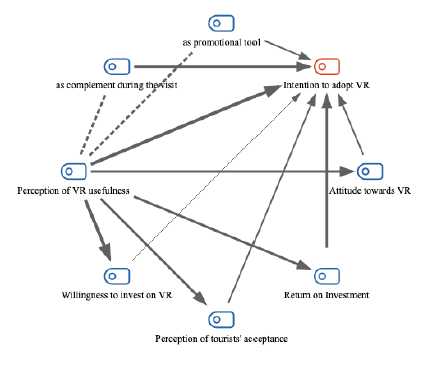
Analysing the origin of the relationships among the determinants highlighted by the software in Figure 5 allows us to understand how these relationships are established. Based on this approach, we can perceive the effect of these determinants on the intention to adopt VR, including relevant indirect relationships that may also exert influence (Figure 5). This process confirms the importance of various factors in the adoption of VR in this sector. Firstly, the perceived usefulness of VR emerged as a key determinant in this context, significantly influencing managers’ intentions to adopt VR mechanisms in wine tourism companies. In addition, attitudes toward VR proved to be a crucial factor, as managers recognised VR’s potential to differentiate their businesses in a competitive wine tourism market. These findings confirm that both the perception of usefulness and a favourable attitude toward VR effectively encourage the adoption of this technology, aligning with the notion that the TOE and TAM frameworks can play a decisive role in explaining managers’ perceptions and attitudes in this sector (Iftikhar et al., 2023; Liu & Jiang, 2024).
Another relevant factor was the positive perception of VR device acceptance among tourists. Managers believed travellers were increasingly open and receptive to integrating VR into their experiences. This perception further incentivised managers to adopt VR in wine tourism, as they anticipated their customers would be willing to try and enjoy virtual offerings. This outcome aligns with the arguments set forth by TAM and TPB (Iftikhar et al., 2023; Huang, 2023), emphasising the importance of user and market acceptance when innovating business models in wine tourism. Furthermore, willingness to invest depends primarily on managers’ perceptions of VR's usefulness in this sector. Managers who recognised VR’s capacity to enhance visitor experiences and generate positive returns on investment demonstrated a stronger inclination to invest in this technology, viewing VR as a strategic opportunity to drive growth and success in a competitive wine tourism environment.
In addition, the perceived ROI for VR technologies was confirmed as a predictor of the intention to adopt VR. It is important to emphasise that this perception of ROI is largely formed based on the perceived usefulness of VR. In other words, managers only recognise the commercial value of VR if they perceive its usefulness in the wine tourism sector. Therefore, we confirm the importance of combining the TOE framework with the Diffusion of Innovation Theory to understand and explain the relevance of perceived ROI in adopting new technologies (Al Breiki et al., 2023; Liu & Jiang, 2024). According to the results, for the perception of ROI, as proposed by the Diffusion of Innovation Theory, to materialise, there must be a perception of investment usefulness, as predicted by the TOE.
Finally, willingness to invest depends primarily on the perceived usefulness of VR in this sector. Managers who recognised VR’s potential to enhance visitor experiences and generate positive returns on investment showed a higher inclination to invest in this technology. For these managers, VR is viewed as a strategic opportunity to drive the growth and success of their companies in the competitive wine tourism market. In other words, the relevance of the TOE framework and TPB to managers’ intention to invest in VR is confirmed. Apparently, for the favourable behaviour predicted by the TPB to occur, a positive perception of VR’s usefulness, supported by the TOE, is required.
These findings thus underscore the significance of VR’s perceived usefulness, the attitude toward VR, and a favourable perception of tourist acceptance of VR devices in shaping the intention of wine tourism managers to adopt this technology. Identifying and understanding these factors can help companies make informed decisions about implementing VR, bearing in mind its usefulness, acceptance, and potential benefits.
5. Implications and Relevance of Findings
By focusing on the intention of wine tourism managers to adopt VR mechanisms, this study contributes to the literature on technology adoption in the wine tourism sector. Addressing a gap in the existing research expands theoretical knowledge about technology adoption in this context and offers illuminating insights into the motivations, challenges, and considerations associated with implementing VR in wine tourism. In investigating the intention to adopt VR, the study provides empirical support for key principles and variables of relevant theoretical models, underscoring their value in understanding technology adoption within wine tourism. In addition, it explicitly addresses the research needs identified in prior studies (Maumon & Bédé, 2023; Sigala et al., 2023).
A notable contribution of this research is identifying factors that influence managers’ intentions to adopt VR, which had previously been unclear and required examination (Piras, 2024). These factors encompass perceived advantages, such as improved customer experiences, market differentiation, and increased visitor engagement, while also acknowledging constraints like cost concerns, implementation complexities, and limited technological awareness. The findings deepen our understanding of the drivers and barriers that wine tourism companies encounter when considering VR adoption. This study offers practical guidelines for wine tourism companies interested in adopting VR, emphasising the importance of adequate training and support, establishing technological partnerships, and developing targeted marketing strategies. Such insights highlight the study’s theoretical contribution, demonstrate the relevance of applying key models, identify influential factors, and underscore practical recommendations for wine tourism companies.
Furthermore, based on the results, implementing VR in wine tourism can effectively enhance the customer experience, an idea previously acknowledged in the literature (Sigala et al., 2023) but lacking the perspective of wine tourism managers. By offering immersive and interactive virtual tours of wineries, companies can provide an enriched experience for visitors, allowing them to explore facilities, learn about wine production processes, and even participate in virtual tastings (Martins et al., 2017). In addition, according to Maumon & Bédé (2023), this innovative approach can broaden a company’s geographic reach, improve convenience for potential visitors, and elevate overall customer satisfaction. The literature also suggests that adopting VR serves as a competitive differentiator for wine tourism companies (Livat & Song, 2024). By delivering unique and memorable experiences, VR technology can help them stand out in the marketplace, communicate brand values, and spark interest among potential visitors (Maumon & Bédé, 2023). Participants in this study likewise believe that VR can propel growth and enhance the reputation of wine tourism enterprises.
Another essential practical implication of such immersive devices is their potential to heighten visitor engagement (Sears & Weatherbee, 2023). Companies can encourage deeper visitor involvement by creating immersive interactive environments that integrate the wine production process, the history of wineries, and various sensory experiences. According to our findings, this approach can arouse curiosity, support learning, and deliver a unique and memorable experience. From managers’ perspectives, increased engagement can foster a stronger emotional connection with the brand, deepen interest in wine culture, and boost visitors’ likelihood of recommending and returning to wineries.
6. Conclusion
This study offers important insights into the intention of wine tourism managers to adopt VR. The findings reveal several key conclusions about what may drive managers’ decisions to integrate this technology into their business models. VR adoption in the wine tourism sector appears to be influenced by a specific set of individual perceptions, including perceived usefulness, managers’ attitudes, the favourable perception of tourist acceptance of VR devices, ROI, and the willingness to invest in new technologies.
Managers demonstrated a solid grasp of VR’s value as a complement to the visitor experience, acknowledging that VR can enrich winery visits by offering virtual immersion in the production process and even virtual tastings. This awareness of VR’s usefulness plays a crucial role in the sector’s adoption of the technology; managers informed about VR’s capabilities in wine tourism see the relevance of modernising their business models to include innovative products.
Regarding VR equipment, managers expressed a positive attitude, viewing it as an innovative and engaging tool to enhance the visitor experience. They believed that tourists are increasingly receptive to virtual devices during their travels, and this favourable perception encourages the adoption of VR as a strategy to attract a broader audience. In terms of willingness to invest in VR and the positive perception of its impact on customers, both are largely contingent on managers’ understanding of VR’s usefulness in wine tourism and the ROI generated by commercialising VR activities. Managers who perceive clear benefits for the wine tourism sector are more likely to invest, anticipating new revenue streams and appealing to customers seeking innovative experiences.
Finally, managers who recognised VR’s potential to improve the visitor experience and secure positive returns on investment exhibited a stronger inclination to adopt this technology. While profit remains a priority, wine tourism managers must see tangible evidence that new technologies will function successfully as a tourism product and guarantee financial returns rather than implementing them simply for novelty.
7. Limitations and Advancing Future Research
Despite the valuable insights obtained in this study regarding the intention of managers of wine tourism companies to adopt VR, it is important to recognise and address some limitations and identify possible directions for future research. A significant limitation of this study lies in the sample size used. Although we conducted interviews with 17 wine tourism companies, it is important to acknowledge that this sample may not fully represent all companies in the sector and may contain some bias inherent in its selection. Therefore, future studies with larger and more diverse samples would be beneficial to obtain a more comprehensive understanding of VR adoption intentions in the context of wine tourism.
Another limitation is the qualitative nature of this study, which relied on semi-structured interviews and is based on some subjectivity inherent in interpreting the results. While this approach provided rich and detailed insights into the perceptions and intentions of wine tourism managers, it may be helpful to combine qualitative and quantitative methods in future studies. This would allow for a deeper analysis and more systematic data comparison, reducing possible bias in the results. Additionally, this study focused on the perspective of wine tourism managers, leaving out tourists' opinions. It would be interesting to explore tourists' perspectives on VR adoption in wine tourism, investigating their attitudes, expectations, and experiences with this technology. This could provide a more comprehensive and balanced view of the feasibility and effectiveness of VR as a complement to the visitor experience.
Future research should investigate the impact of VR on the promotion of wine destinations by assessing its influence on travel decisions and the overall image of the destination. In addition, it would be valuable to examine how VR can be integrated into wine and oenology education, evaluating its effectiveness in enhancing visitors’ knowledge and experiences. Another essential avenue is the analysis of immersive tasting experiences, determining how VR can replicate or complement traditional sensory experiences in wineries. Furthermore, future research should explore personalisation in digital environments to ascertain whether adapting VR experiences to individual visitor profiles increases engagement and satisfaction with wine tourism companies.
Finally, it is advisable to evaluate VR’s effectiveness in attracting and engaging particular market segments, such as international tourists, millennials, and advocates of sustainable wine tourism. For example, quantitative studies could measure the technology’s impact on these groups’ intention to visit, while qualitative methods might uncover barriers and opportunities associated with VR adoption in these contexts.