




 Inglês (pdf)
 Artigo em XML
 Referências do artigo
 Tradução automática
 Enviar este artigo por email
 Citado por SciELO
  Similares em
SciELO
Similares em
SciELO 
 Permalink

1. Introduction
This study examines whether artificial intelligence (AI) can exhibit the characteristics of several leadership styles previously defined as CEO archetypes (Lovelace et al., 2018)-namely, Creator, Transformer, Rebel, and Saviour-in crisis scenarios. Tourism can be vulnerable to natural disasters, security threats, pandemics, and political issues (Chevtaeva & Guillet, 2021; Liu-Lastres, Kim & Ying, 2020). Furthermore, crises may slow down or halt the operational processes of tourism businesses, damage their image, and cause a loss of trust among stakeholders. In such situations, crisis communication can prevent the deterioration of relationships with both tourists and investors (Huertas & Girotto, 2020; Martínez-Sala, Huertas, Ferrer-Rosell & Marine-Roig, 2024; Ruan, Cheng, Zhang & Li, 2024). Accordingly, the communication style adopted by CEOs-who play a critical role in the crisis management process-can considerably enhance organisational resilience, reduce uncertainty, and help rebuild trust (Scheuerlein, Chládková & Bauer, 2018; Su, 2024).
In crisis communication, social media that can rapidly deliver messages and establish direct contact with tourists and stakeholders are a particularly effective tool (Christensen, Lovett & Curiel, 2022; Islam et al., 2020). Platforms such as Twitter, in particular, can influence public perception and shift the image of businesses in a positive direction to rebuild trust (Ketter, 2016; Kwok, Lee & Han, 2021; Obembe, Kolade, Obembe, Owoseni & Mafimisebi, 2021; Yook & Stacks, 2024). Conversely, social media platforms may also lead to the spread of misinformation, thereby creating negative perceptions of businesses and damaging their reputation (Barbe & Pennington-Gray, 2018; Möller, Wang & Nguyen, 2018; Renadia, 2022).
For effective crisis management, tourism businesses need a communication style that would incorporate originality, emotional expression, transparency, and credibility (Choudhury, Vanneste & Zohrehvand, 2024; Men, Qin, Fitzsimmons, DiStaso & Heffron, 2024; Riggio & Newstead, 2022). Advances and updates in the field of AI offer certain opportunities for such communication styles.
During crisis periods, AI is frequently preferred for decision-making processes, forecasting, and the analysis of large-scale data (Farrokhi, Shirazi, Hajli & Tajvidi, 2020; Harika et al., 2024; Karinshak, 2024; Li, Wang & Wang, 2023; Renadia, 2022). However, the use of sincerity, emotional expression, and symbolic language-all of which are key elements of leadership communication-by AI in crisis contexts, as well as its capacity to generate messages aligned with CEO archetypes, remains a largely under-explored area in leadership communication (Farrokhi et al., 2020; Essien & Petrounias, 2022).
This gap in the literature is significant, as the communication established by CEOs does not merely involve the transmission of information; rather, it also encompasses symbolic meanings essential to leadership communication, trust building among stakeholders, and perception management (Hambrick & Lovelace, 2018; O'Reilly, Cao & Sull, 2023; Choudhury et al., 2024). To fill this gap in the literature, we used a model developed by Lovelace et al. (2018) that examines different CEO typologies and personality traits in the present study. The model categorises CEOs into Creator, Transformer, Rebel, and Saviour, emphasising that each typology possesses unique characteristics. This provides a framework within which AI can explore the features of different typologies in various crisis scenarios.
Furthermore, the present study takes into account certain criticisms regarding the credibility and authenticity of AI-generated messages (Ao, 2023; Narteni, Orani, Vaccari, Cambiaso & Mongelli, 2022; Umoh, 2024). Accordingly, we examine AI's ability to imitate and investigate the extent to which it can reflect the emotional and symbolic meanings specific to CEO archetypes. In the tourism sector, where emotional interaction and trust building are of great importance, people may be hesitant to accept AI as a leader. This creates uncertainty about whether AI, despite mimicking leadership communication styles during the message creation process, can directly influence perception management, emotional depth, and trust building in the way a real CEO does. Therefore, in this study, we also evaluate the limitations of AI and address the corresponding ethical debates.
The specific research questions addressed in this study are as follows: (1) Can AI establish communication compatible with different CEO characteristics during times of crisis in the tourism sector? (2) What is the potential of AI-generated communication in fostering organisational resilience and stakeholder trust? and (3) Can AI-based CEO communication transform crisis communication strategies and leadership practices in the tourism sector? The results contribute to the literature by jointly addressing leadership theories, tourism crisis management, and AI's communicative capabilities. Moreover, in this study, we do not regard AI merely as an analytical tool, but also associate it with qualities typically attributed to human leaders, such as emotional communication and authenticity.
The Situational Crisis Communication Theory (SCCT), which emphasises timely, accountable, and transparent communication to gain stakeholder trust during crisis situations, is significant for the Saviour CEO archetype in terms of the "accountability" characteristic in communication. In addition, the Extended Parallel Process Model (EPPM; Liu, Pennington-Gray & Krieger, 2016), which is associated with fear and risk perceptions, reflects the emphasis the Saviour CEO archetype places on security and proactive messaging. Furthermore, Prospect Theory (Kahneman & Tversky, 1979), which posits that stakeholders respond according to gain or loss framing, may serve as a communication tactic for Creative and Rebel CEOs who emphasise urgent change or innovation.
With their characteristics of "identifying unforeseen challenges and long-term thinking," Transformer CEOs can adapt their communication according to the temporal distance of crises, thereby contributing to the understanding of Construal Level Theory (CLT; Li, Zhou & Zhou, 2009). In addition, Selective Exposure Theory (Moore, Dorison & Minson, 2023) supports the notion that Creative, Transformational, and Rebel CEOs develop visionary and innovative messaging beyond conventional narratives or adopt communication styles aligned with the values of specific target audiences. Synthesising this perspective emphasises that AI's capability extends beyond merely mimicking the content of communication styles to adapting to target audiences' cognitive and psychological factors. By combining behavioural leadership characteristics with evidence-based communication strategies, this interdisciplinary approach may reveal AI-CEOs' potential to act as persuasive crisis communicators.
Finally, the results of the present study contribute to the ongoing theoretical discussions in leadership and communication and provide important practical insights for tourism businesses by enhancing organisational resilience and building stakeholder trust. The model used in this study (Lovelace et al., 2018) does not view CEOs solely as rational decision makers-rather, CEOs are understood as emotional leaders shaped by public influence. Accordingly, the present study provides a multidimensional contribution to the literature by analysing how an AI-CEO can imitate human-specific qualities in the context of crises in the tourism sector.
2. Literature review
2.1 Artificial Intelligence and CEOs’ Crisis Communication
In recent years, Artificial Intelligence (AI) has initiated considerable advances in decision-making and communication during crisis situations. With its high-ranked analytical capabilities, this technology can identify potential risks and subsequently collaborate with humans to generate crisis communication strategies (Li et al., 2023). In doing so, AI contributes to organisational resilience and creates actionable predictions and recommendations (Karinshak, 2024). It also enables businesses to pre-test intervention methods to be implemented in times of crisis. For instance, by analysing all data from business-related emails, AI can predict crises and facilitate appropriate response strategies (Farrokhi et al., 2020).
As exemplified by Tesla CEO Elon Musk’s posts and direct interventions on Twitter, AI can enable real-time communication during crises, particularly through social media platforms. However, for communication to be effective, CEOs must first take ownership of the problems, maintain transparent communication, and offer viable solutions (Prahl & Goh, 2021). One advantage of AI during crisis periods is its ability to analyse and understand customer needs; accordingly, AI can enhance customer loyalty (Chaudhuri et al., 2023). Using natural language processing (NLP) technology, AI can also rapidly analyse large-scale data and thus improve the efficiency of crisis management. This capability allows AI to analyse consumer reactions and guide resource allocation accordingly (Harika et al., 2024).
Considering that communication styles shaped by CEOs’ personality traits can have a decisive impact during crises, CEO communication plays a critical role in the crisis management process. These styles can influence corporate culture and positively guide the outcomes an organisation may achieve (O'Reilly et al., 2023). However, while AI has the potential to mimic the communication styles of CEOs, AI-generated messages can only be effective if they convey a sense of sincerity and trust (Choudhury et al., 2024). Moreover, such messages should inspire trust and align with socially accepted norms (Hambrick & Lovelace, 2018).
AI-supported applications, particularly large language models (LLMs), offer several advantages in crisis communication. These systems can generate adaptable messages based on the nature of the crisis and analyse public reactions to the business on social media. In this way, crisis communication can be delivered faster, and response efforts can be effectively facilitated (Imran, Castillo, Lucas, Meier & Vieweg, 2014; Lamsal, Read & Karunasekera, 2024). Furthermore, LLMs can imitate the communication style of a CEO and assist in delivering real-time messages to large audiences via social media platforms (Lee, Suh, Zhan, Li & Ong, 2024; Sreedhar & Chilton, 2024). While LLMs facilitate content production, they can also reduce certain communication costs during crisis periods. This convenience allows CEOs to more efficiently manage resources and thus save time in the crisis communication process (Matz, Teeny, Vaid, Peters, Harari & Cerf, 2024; Pokhrel & Banjade, 2023).
Crisis communication is of central importance in the tourism sector, which is sensitive to crises (Huertas & Girotto, 2020). Several theories can be used to understand the crisis communication processes in this sector. First, the Situational Crisis Communication Theory (SCCT) emphasises that the communication style during crises should be in line with stakeholders' expectations. According to this theory, businesses should share accurate information in a timely manner and ensure transparent communication (Barbe & Pennington-Gray, 2018). Second, the Extended Parallel Process Model (EPPM) examines the communication process by focusing on individuals’ perceptions of risk and fear. This theory specifically highlights the importance of considering the public's or target audience's risk perceptions in health-related crises and determining the communication style accordingly (Liu et al., 2016). Third, the Prospect Theory states that individuals change their preferences depending on whether a situation is framed as a gain or a loss. According to this theory, people take risks when a sense of loss is created, whereas they avoid risks when a sense of gain is presented (Hameleers, 2021). Leaders' communication styles during crises can considerably affect risk perceptions (Idoiaga, Gil de Montes & Valencia, 2016). Yet another relevant theory, Construal Level Theory (CLT), argues that individuals’ perceptions of crises vary depending on their mental representations. According to this theory, people tend to evaluate potential crises in the near future from a more rational and concrete perspective, while considering long-term effects more abstractly (Li, Zhou, & Zhou, 2009). Finally, the Selective Exposure Theory emphasises that individuals are inclined to accept messages that align with their own beliefs and behaviour patterns, while they tend to ignore information that contradicts their beliefs (Moore, Dorison & Minson, 2023). In most cases, AI can effectively generate messages compatible with these theories.
AI applications like large language models can synthesise information from these theories. While SCCT directs artificial intelligence toward establishing transparent and accountable communication, CLT can encourage it to adapt content according to the temporal distance of crises. However, along with the opportunities that SSCT provides for artificial intelligence in crisis communication, it also carries risks such as detection and evaluation errors, the complete absence of human intervention, the risk of misinterpreting information, and the potential for increased costs and cybersecurity threats, depending on the crisis type (victim, accidental, or intentional) (Coombs, 2004; Zhai, Wibowo & Li, 2024). Furthermore, EPPM and Prospect Theory can enable AI to establish communication that incorporates appropriate assurance and urgency by considering emotional and anxiety states. Through adaptive algorithms, AI can enhance personalised messaging that is aligned with the selective exposure theory. In this way, AI remains compatible with individual theories and mediates between them, dynamically adjusting the tone, framing, and content of messages across multiple cognitive and emotional dimensions of stakeholder perception.
While AI is frequently cited as facilitating communication during crisis situations, several previous studies highlighted significant limitations and risks that may diminish AI's effectiveness in this context. For instance, when AI systems are trained on historical or insufficiently diverse datasets, they may exacerbate existing inequalities during crises by overlooking certain groups (e.g., minorities), which may lead to erroneous decision-making or inadequate attention to specific populations (Cheng, Lee, & Qiao, 2024). Furthermore, the deployment of AI may result in privacy violations. In addition, understanding how AI systems make decisions can be challenging, as these systems frequently operate as "black boxes." The lack of transparency makes questioning or challenging automated decisions difficult, decreasing accountability (Visave, 2024).
Particularly during crises, AI’s natural language processing (NLP) capabilities may prove to be inadequate. For instance, AI systems can misinterpret the context of a message, irony, or cultural nuances, leading to misunderstandings and the oversight of critical information (Hohenstein et al., 2023). Individuals’ excessive reliance on AI-generated outputs is referred to as automation bias. This condition may result in people ceasing to verify critical information and failing to question AI decisions (Horowitz & Kahn, 2024). Consequently, crisis interventions may become detached from actual circumstances. There is an urgent need for ethical guidelines, the development of transparent algorithms, monitoring biases, and, most importantly, human oversight to address these challenges. Through these measures, AI can genuinely support crisis communication in tourism rather than impede it.
Although the potential of AI in leadership roles has recently come to be extensively investigated in the literature, there is scarce research on the extent to which AI systems can conform to specific leadership archetypal frameworks such as "Creative," "Transformer," "Rebel," or "Saviour" as defined by Lovelace et al. (2018), or how they might conflict with these archetypal characteristics. On the one hand, considering AI's capacity to process large datasets and generate complex communication strategies (Buitrago-Esquinas et al., 2024; Visave, 2024), there exists potential for effectively emulating the innovative messaging of "Transformer" leaders or the solution-oriented approaches of "Saviour" leaders. This suggests that, compared to human leaders, AI can provide more consistent and rapid responses in data analysis and pattern-based decision-making processes.
However, on the other hand, it remains uncertain to what extent AI can reflect the abstract qualities exhibited by human leaders, such as emotional intelligence, understanding of cultural nuances, empathy, or intuitive leadership. This situation may complicate AI's ability to fully embrace the aspects of "Rebel" leaders who challenge societal norms or "Creative" leaders who develop entirely original and unexpected strategies. Indeed, the limitation of AI algorithms to historical data presents a potential conflict with the radical change or out-of-context thinking capabilities required by archetypal leadership. Consequently, AI's capacity to reflect the characteristics of a particular archetype will largely depend on the complexity of AI learning algorithms and the depth of human behaviour it attempts to simulate. Accordingly, while AI may achieve full alignment with an archetype in certain crisis scenarios, it may also experience conflicts due to the absence of specific human qualities.
2.2 Crisis Communication in Tourism and Social Media
Considering both communication opportunities offered by social media and the theoretical approaches (SCCT, EPPM, CLT, Prospect Theory, and Selective Exposure Theory) briefly reviewed above, there is a clear need for a multi-channel, transparent crisis communication style capable of effectively managing perceptions. Integrating AI’s analytical capabilities with the real-time communication potential of social media can significantly contribute to crisis management (Park, Kim & Kim, 2022; Liu, Kim, and Pennington-Gray, 2015). Effective use of social media can enhance the power of real-time and strategic interventions while helping to mitigate the damage caused by crises (Zhai, Zhong & Luo, 2019). In addition, CEOs’ use of social media during crisis periods to provide transparent communication, share apology messages, and publish visual content may strengthen stakeholder trust (Yook & Stacks, 2024).
Messages that include emotional support and elements of trust were previously reported to reduce the uncertainty caused by crises and enhance stakeholder confidence (Hang, Aroean & Chen, 2020; Kwok et al., 2021). Trust-based messages shared by CEOs were found to be effective in crisis management, particularly during the COVID-19 pandemic (Im, Kim & Miao, 2021). During this period, tourism businesses that emphasised social distancing and hygiene provided real-time health updates and implemented flexible booking policies, succeeded in gaining customer trust and mitigating the impacts of the crisis (Chevtaeva & Guillet, 2021; Kim, Kim & Choi, 2023). These practices highlight the role of transparency, empathy, and real-time communication in building customers’ trust during crisis situations (Riggio & Newstead, 2022; Liu-Lastres, 2022).
However, while social media enables speedy access to wide audiences, spreading misinformation poses a significant risk on these platforms (Christensen et al., 2022; Islam et al., 2020). Therefore, sharing accurate information quickly throughout the crisis is essential for building trust (Zhai et al., 2019). During crisis periods, tourists’ perceptions related to public health have a strong impact on destination choices. In this context, perception management through social media has also become important for destinations (Martinez-Sala et al., 2024). Moreover, it should also be noted that international media outlets and press releases can also influence the perception of trust regarding destinations (Avraham, 2015).
Messages delivered as a result of organisational learning through social media can strengthen long-term organisational resilience (Obembe et al., 2021). A balanced combination of analytical and emotional content during crisis periods can result in a more effective crisis management (Park, Kim & Kim, 2022; Ruan et al., 2024; Men et al., 2024). For instance, sincere and flexible messages may contribute to organisational resilience (Mwandembo, 2024; Wong, Ou & Wilson, 2021). Multi-channel communication strategies help organisations reach target audiences more effectively (Capriello & Splendiani, 2019). Therefore, social media platforms enable the dissemination of information and facilitate stakeholder participation in the communication process (Burhan, Salam, Abou Hamdan & Tariq, 2021). Concrete examples of the effectiveness of social media in times of crisis include the efforts of Destination Management Organisations in Fiji via Facebook during tropical cyclone periods, along with the quick responses provided by hotels in Orlando through Twitter (Möller et al., 2018; Barbe & Pennington-Gray, 2018).
To date, businesses operating in sectors such as cruise tourism, health tourism, and the sharing economy (e.g., Airbnb) have employed various communication techniques through digital platforms to manage risk perception during times of crisis (Beck, Foster, Kenney & O’Rourke, 2016; Liu-Lastres, Schroeder & Pennington-Gray, 2019; Mason Flores, Liu, Tims, Spencer & Gire, 2019). More specifically, strategies such as sentiment analysis have been widely used to understand the societal impact of crises (Obembe et al., 2021; Park et al., 2022). Furthermore, the effectiveness of communication during crises and their impact on the behaviour of target audiences can be enhanced using methods like hashtags (Carvache-Franco, Carvache-Franco & Carvache-Franco, 2022).
However, while AI enables delivering sentiment-based messages to target audiences through social media (Li et al., 2023; Lee et al., 2024), CEOS’ personal and direct communication may be perceived as more trustworthy than AI-generated messages (Choudhury et al., 2024). In this context, AI can represent data analysis and content generation, social media can represent speed and interaction, while the CEO can represent leadership and trust. Accordingly, in this study, we highlight the multidimensional structure of crisis communication in the context of the tourism sector by evaluating these three components together.
3. Methodology
This study aims to determine how AI simulates the behaviours of CEOs in response to different crisis scenarios, based on the types of CEOs operating in various businesses within the tourism sector. Accordingly, AI was tasked with acting as the CEO of tourism enterprises across multiple crisis scenarios, including composing a written press release, drafting a Twitter post, and proposing solutions to these crises.
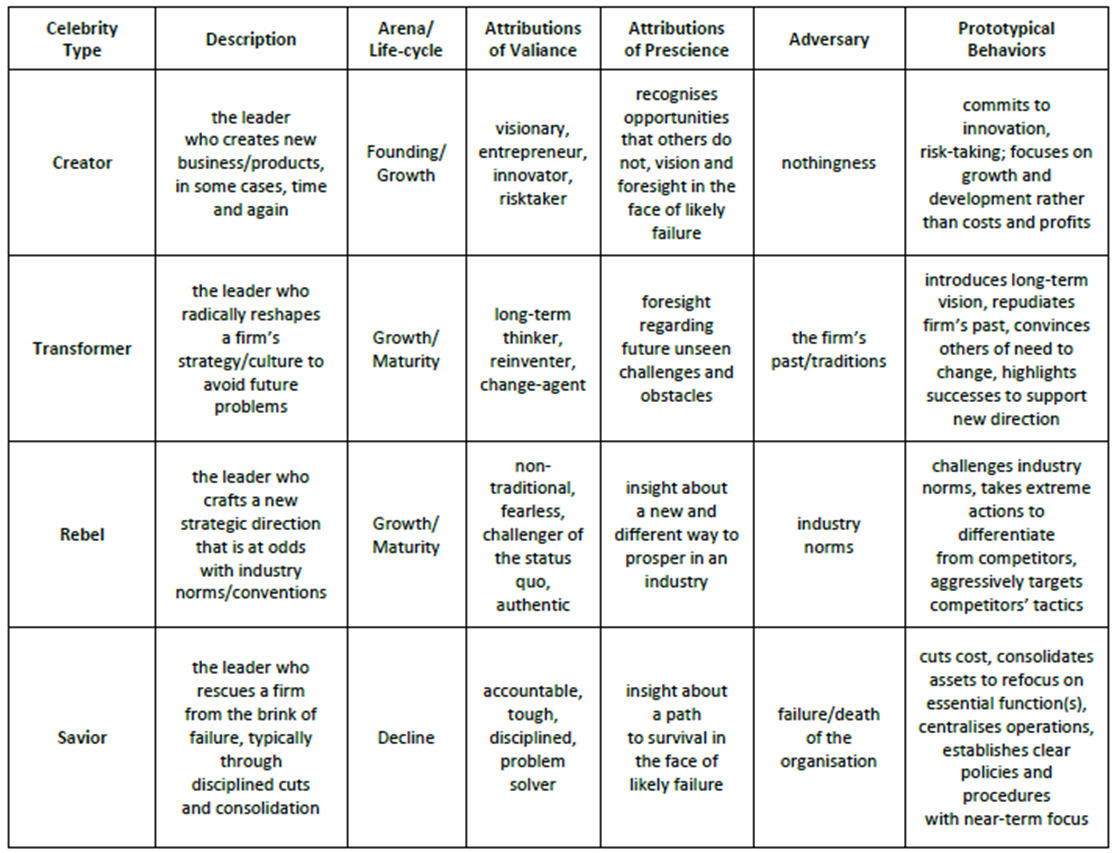
To this end, we first identified CEOS’ behaviours and characteristics (see Figure 1). To this end, we used the CEO typology developed by Lovelace et al. (2018), who categorised CEOs into the following four types: creator, transformer, rebel, and saviour (see Table 1). These CEO types stand out for their behaviours during critical business periods, such as their inception, growth, and decline phases. CEOs play a key role in advancing their organisations to significant stages through their decisions and implementations. The CEO models developed by Lovelace et al. (2018) were preferred, as this framework provides valuable insights into understanding how leaders behave and are perceived during times of crisis. This model offers significant advantages for sectors such as tourism by capturing not only what leaders communicate but also how they communicate. Lovelace et al.’s (2018) classification illustrates how each type might respond during a crisis, thereby enabling the assessment of whether an AI-supported CEO can exhibit leadership qualities, i.e. act beyond merely providing information. This model also enables observing clear distinctions in the AI-CEO’s approach during a crisis-whether it acts boldly or cautiously and adopts a solution-oriented or radical stance. In this way, the present study acquires a higher degree of realism and greater relevance for sensitive sectors, such as tourism.
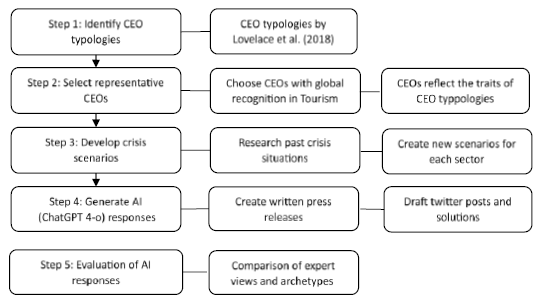
In the next step, we selected CEOs of tourism enterprises reflecting the characteristics of the CEO types identified by Lovelace et al. (2018). Each enterprise was selected based on key activities in tourism, including global hotels, international passenger airlines, food and beverage (specifically, second-generation coffee and food), and short-term home rentals. The original names of these companies were not disclosed; instead, alternative naming was used to avoid making positive or negative attributions about the companies. The short-term home rental company is referred to as “The Platform,” the international hotel chain as “The Hotel,” the coffee-restaurant chain as referred to as “The Coffee Shop,” and the global airline passenger transportation company is mentioned as “The Airlines.” The primary reason for focusing on these enterprises was the behaviour of their CEOs in advancing their businesses to a distinctive level during key phases such as establishment, development, operations, entrepreneurship, and crisis periods. Another reason was that these enterprises are globally recognised in their respective operating areas.
Next, to identify the crises CEOs faced, we reviewed relevant news articles, academic papers, social media posts, and web content related to crises experienced by the selected enterprises. Diverse and unique crisis scenarios (e.g., hygiene issues, data breaches, labor rights, insufficient support for social responsibilities) were created. Developing various scenarios minimises or eliminates AI’s ability to replicate responses to previously known scenarios (Choudhury et al., 2024). This approach encouraged AI to generate newer, better solutions as a CEO rather than merely imitating past responses. Our prior experiences with AI also influenced the development of these scenarios. Each crisis scenario created in this study was specifically tailored to the operational fields of enterprises.
In the fourth step of the study, AI (ChatGPT 4o) was tasked with generating separate analyses to predetermine scenarios by considering the descriptions, attributions, and behavioural characteristics of the four CEO types developed by Lovelace et al. (2018) (see Figure 2).
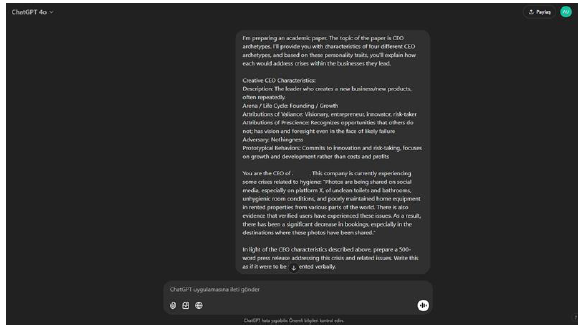
These analyses included a written press release (maximum 500 words), a Twitter post (maximum 250 words), and solution proposals (maximum 500 words) for each crisis scenario. All commands were requested in detail by providing commands aligned with the CEOs’ typologies. This process ensured that the outputs generated by AI specifically took into account the characteristics of both the CEO and the enterprise. To achieve results and solution proposals, AI’s outputs in its CEO role were compared with the outcomes of potentially similar past scenarios. Different results were considered among the AI responses to prevent one-to-one imitation.
Furthermore, we implemented a hybrid validation and expert review process to ensure the reliability of AI outputs. Specifically, three experts (two academics and two managers) evaluated the AI-generated crisis responses with experience in tourism management, leadership, and crisis communication. The experts analysed the responses' alignment with the identified CEO archetypes and their applicability in the context of the crisis (see Table 2). Furthermore, the AI outputs were compared with public responses (e.g., press releases, media interviews) given by CEOs of companies in similar sectors, whose names were not disclosed for ethical considerations (Claeys & Cauberghe, 2012; Coombs, 2015). With this validation method, we sought to increase the reliability of the study.
During the qualitative analysis process, we developed a coding framework based on the CEO archetypes proposed by Lovelace et al. (2018). Each AI output was analysed according to behavioural and linguistic indicators specific to these archetypes. For instance, the key indicators were innovative and visionary language for the "Creator" type; change-oriented strategies for the "Transformer" type; anti-normative and aggressive attitudes for the "Rebel" type; and, finally, short-term solutions, cost reduction, and centralised discourses for the "Saviour." In this process, conducted using a thematic analysis approach (archetypes of celebrity CEOs), two independent researchers conducted content evaluations. To evaluate inter-coder consistency, we resolved differences in interpretation through discussion until consensus was reached. This process systematically disclosed how closely AI outputs aligned with each CEO type's distinct psychological and communication profiles.
4. Results
Based on ChatGPT data, all the CEOs (AI) accepted and embraced crisis scenarios, taking decisive and immediate steps in response. They first expressed their concerns regarding these crisis scenarios in their press statements. Although press releases and Twitter posts generally contain similar content, the expressions were different.
The AI-CEO of “The Platform,” who demonstrates characteristics of the Creator CEO archetype, was found to emphasise new industry standards, innovation, and significant changes in response to crisis scenarios. The content included information about the timeline for implementing crisis solutions and restructuring industry standards. Importantly, the AI-CEO highlighted change for the business and the entire industry, emphasising innovation and advocating for solutions such as full refunds and investments without prioritising costs. These behaviours are related to the Creator CEO archetype. Examples of innovative and solution-oriented approaches to potential threats include the CEO’s proposed AI-driven solutions and participation in current global action plans, such as the Global Tourism Plastics Initiative. Instead of taking quick measures to resolve the situation, it proposed long-term solutions by renewing existing standards through AI-supported monitoring systems and suggestions for labour rights. Furthermore, AI advocates change and benefits from technology. In doing so, it demonstrated the traits of the Creator CEO typology, such as being innovative, promoting long-term development, and taking risks. However, AI did not fully present the characteristics of the creator CEO typology of recognising opportunities others may not see. Accordingly, while LLMs are skilled at synthesising content, they cannot replicate the nuanced behaviours associated with human leadership, such as generating intuitive innovations and questioning critical norms (Yin et al., 2023). The compatibility levels of AI with specific attributes of CEO archetypes are provided in Table 2.
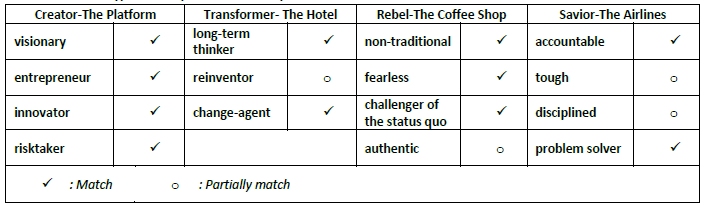
Furthermore, the AI-CEO of “The Hotel,” embodying the characteristics of the Transformer CEO archetype, emphasised radical change, transformative action, and reshaping policy. It also highlighted the company’s leadership in the global industry by highlighting the core values contributing to its brand value. The AI-CEO noted that these crises are inconsistent with the company’s service philosophy, highlighting that long-term measures should be taken. These responses coincide with the transformer CEO archetype, characterised by a long-term vision, radically reshaping organisational strategies, and the ability to devise new solutions. Focusing on the future, the AI-CEO consistently emphasised the changes implemented with a forward-looking perspective, rather than addressing immediate concerns. AI also stressed that the proposed solutions will be applied globally, using AI support while maintaining market leadership as part of the solutions. Another characteristic of the Transformer CEO archetype is having a vision of future problems and solutions. This is evident in suggestions from AI, such as “…conduct real-time checks and identify high-risk areas before they become problems.” The solutions were designed to address issues before they arose, i.e. preventively, as well as to generate effective responses. In addition, transparency was found to be strongly emphasised in both operations and the proposed solutions. However, the Transformer CEO’s traits of questioning past practices and traditions were not apparent. Instead of implementing radical changes, AI suggested a more gradual approach to change.
Next, the AI-CEO of “The Coffee Shop” exhibited characteristics aligned with responsibility, taking bold measures, and redefining industry standards, often stepping outside conventional norms. In this context, the actions and measures proposed in response to crises reflect a revolutionary approach within the industry. While some changes and new standards may be perceived as radical confrontation from certain groups, the AI-CEO emphasised that collaboration with customers and employees could facilitate their implementation. A policy of transparency regarding the adjustments and the importance of real-time feedback were also highlighted. The AI-CEO’s behaviour also underscored an unconventional, extraordinary, yet necessary focus on change. This change was framed as an internal company effort, a collaborative endeavour involving all stakeholders, urging them to adopt and support the industry-wide transformation. The AI-CEO further invited other stakeholders to participate in the proposed measures. While acknowledging the unacceptable nature of the crises and the company’s firm disapproval of such issues, the solutions were framed with the term “industry-leading change.” This approach reflects behaviours typical of a rebel CEO archetype, characterised by a rejection of standard norms and a fearless, innovative approach. The AI-CEO’s commitment to non-traditional methods, which challenges conventional industry regulations, and implementing extreme actions exemplifies the behaviours of a rebel CEO. However, although AI generally reflected many traits, it did not fully deliver messages targeting the strategies and methods of competitor businesses.
Finally, the saviour CEO archetype, identified as a “rescuing leader” during times of crisis, emphasised traits such as problem-solving, discipline, and deriving insights from failure. Another key characteristic of this CEO type is their ability to take decisive and sharp measures. According to the study's data, these leaders focus on confronting the crisis while emphasising the importance of rebuilding trust. The AI-CEO of “The Airlines,” unlike other AI-CEOs, highlighted a desire to conduct a detailed investigation into the root cause of the problem, insisting that the company identifies and addresses the source of the issues. This underscores the problem-solving nature of this CEO type, along with a strong focus on diagnosing the cause to devise effective solutions. Furthermore, reflecting the Saviour CEO’s sharp and short-term decision-making approach, the company discontinues relationships with stakeholders who fail to meet its service standards. This AI-CEO type placed significant importance on communication and feedback.
Furthermore, the saviour AI-CEO projected a message of solving crises while positioning the company as an industry leader, consistently emphasising innovation and leadership in every solution proposed. Relevant updates regarding changes and implementations were promised to be shared in real time. The AI-CEO also underscored a commitment to innovation, valuing customer feedback, and prioritising collaboration with various public or private institutions to support solutions. However, while AI advocated for long-term strategies in this CEO typology, short-term survival recommendations-a key characteristic of the Saviour CEO-remained somewhat limited.
5. Discussion
In this study, we investigated AI’s capacity of to generate communication and propose solutions in crisis situations that tourism businesses may face. To this end, we employed four CEO typologies (Lovelace et al., 2018) and asked AI to produce communication styles and solutions in alignment with these typologies. Despite certain limitations, AI was able to effectively generate relevant solutions for the tourism businesses identified in the study. Furthermore, AI also reflected the personality traits of CEOs and produced messages capable of engaging stakeholders. However, although we found that AI can imitate various leadership styles, several limitations should be pointed out. For one thing, AI may not fully understand the cultural, social, and emotional nuances that are essential for effective crisis communication (Moura et al., 2024). Furthermore, since large language models are trained on historical data, they might unintentionally perpetuate existing biases and fail to challenge established norms (Yin et al., 2023).
In addition, AI was found to be able to mimic the characteristics of the Creator CEO typology; however, certain shortcomings were also observed. AI demonstrated this CEO's innovative approach through solutions such as the "AI-Supported Quality Monitoring System" and the "Green Accommodation Certificate." Moreover, it emphasised issues such as safety, human rights, hygiene, the environment, and social responsibility, and aimed to establish a balance between the actors of the sharing economy, namely guests and hosts. For instance, in short-term accommodation platforms, which have gained significant attention in recent years, most services are provided by hosts, which may lead to issues in maintaining standardised operational practices. AI also addressed these issues and proposed solutions to mitigate potential problems arising from them.
Furthermore, as the Transformer CEO (The Hotel), AI offered innovative, technology-oriented solutions. Initiatives proposed by AI, such as the "Exceed Clean Initiative" and "Unity Forward," reflected a future-oriented perspective, demonstrating a key trait of the Transformer CEO as a long-term entrepreneur. AI emphasised the need to reevaluate organisational strategies, advocated for internal change, and highlighted the importance of adapting to potential threats or difficulties. For hotel businesses requiring rapid solutions, AI has developed innovative tools for real-time guest complaint monitoring. In addition, AI stressed the necessity of preserving the brand image that the business has built over many years and emphasised the importance of guest satisfaction and trust. Finally, AI also offered change-focused recommendations to improve employee satisfaction.
In the Rebel CEO (The Coffee Shop) role, AI attempted to go beyond the traditional structure of the sector and focused on innovation. Suggestions like “Reusable Cup Rental” and the “Transparent Cleanliness Score System” emphasised the necessity of transformation in the sector. Treating crises as opportunities, AI suggested that change should be driven through crises and attempted to take bold steps against the risk of receiving negative feedback. Hygiene is of great importance for food and beverage businesses, and innovations outside of commonly accepted practices in this area may pose certain risks. In line with the characteristics of the Rebel CEO, AI proposed innovative and risk-bearing solutions, thereby successfully reflecting many traits of this archetype. Through these solutions, AI demonstrated an approach fully aligned with the fundamental qualities of the Rebel CEO, who challenges tradition and critically evaluates the current situation.
Finally, in the Saviour CEO (The Airline) role, AI addressed problems in detail, adopted a transparent communication style, and exhibited a solution-oriented approach. The Saviour CEO viewed crises as opportunities to evaluate internal challenges within the business and transform them into positive outcomes. In addition, AI displayed a bold and solution-driven attitude by proposing actions such as re-evaluating stakeholders and terminating services that did not adopt a customer-focused approach. AI also supported crisis communication strategies aimed at reassuring customers and stakeholders. Overall, in the results, we observed that AI was able to mimic the pragmatic and principle-driven approaches of the Saviour CEO archetype.
That being said, we also observed some differences and similarities between AI's responses to crisis scenarios and those of CEOs in real crises. For example, the reaction of the CEO of a vacation rental company (Creator) to allegations of racism highlighted the company's history of cultural respect, efforts to develop a monitoring system against discrimination, acknowledging the possibility of internal incidents, and emphasising reporting and international collaboration. In addition, the CEO's speech also had explicit themes such as trust, addressing prejudice, new product development, and dialogue (Airbnb, 2022). The AI CEO aligned with the real CEO's approach in addressing crises by proactively proposing innovative solutions and advocating for long-term change. In the real-life example of the data breach crisis (Shepardson, 2019), the AI CEO (Transformer) approached crises with a broad, visionary, and transformative perspective, thereby highlighting fundamental changes and proactive solutions to future problems. The CEO of a world-renowned international hotel chain responsibly and effectively responded by managing the current crisis, taking responsibility, and enhancing operational security. Therefore, while the CEO focused on improving the current situation and finding immediate solutions, the AI CEO viewed the crisis as an opportunity to reshape the future and the industry.
In the Saviour CEO archetype, during a racism crisis (Reuters, 2020), the CEO of an international airline took a strong social stance and emphasised respect for diverse cultures, geographies, and beliefs. In addition, the company's sustainability policy highlighted the importance of more sustainable travel for the future, net-zero carbon emissions, short-term carbon reduction measures, and an innovative approach to air transportation. The AI CEO focused on identifying the root causes of crises and taking explicit, decisive action. By contrast, the real CEO demonstrated a more comprehensive and transformative leadership approach. Specifically, while the AI CEO assumed a more "repairing" and "healing" role, the real CEO sought to contribute to social and environmental transformation.
The results briefly outlined above suggest that while AI can provide consistent responses to leadership styles, there may be situations where these strategies fail in real life. For instance, Prahl and Goh (2021) noted that AI-generated crisis responses frequently lack emotional nuance and accountability. Similarly, Lu and Mojir (2021) showed that the use of AI in banking during the COVID-19 pandemic unintentionally resulted in decision-making biases, such as favouritism toward large clients, when human judgment was ignored. This caused a decline in institutional fairness and trust. These examples highlight the need to combine AI-generated outputs with human oversight, particularly during complex and emotionally charged crisis situations.
The results of the present study make several important contributions to the literature. Specifically, while several previous studies examined AI's contributions to crisis processes in areas such as providing predictive data (Farrokhi et al., 2020), conducting real-time analysis (Karinshak, 2024), offering solutions tailored to target audiences (Harika et al., 2024), enhancing the effectiveness of corporate messages (Prahl & Goh, 2021), and making decisions with human support (Essien & Petrounias, 2022), the potential of AI to act and communicate like a leader during crises has not been sufficiently explored in the literature.
The integration of CEO typologies (Lovelace et al., 2018) into crisis communication enabled the customisation of AI-generated responses and provided a new perspective. This aligns with previous studies offering recommendations for crisis communication strategies (Reyes, Bisbey, Day & Salas, 2021). While earlier research (O’Reilly et al., 2023; Riggio & Newstead, 2022) focused on human leaders' communication styles, we explored the potential of AI to behave like human leaders in the present study. One relevant example is the Rebel CEO’s attitude of challenging tradition and taking risks. Similarly, the Saviour CEO’s focus on change during crises and their approach to protecting brand reputation demonstrate AI’s potential to imitate human leadership.
The results of the present study contribute not only to crisis periods but also to non-crisis contexts, thus offering value for both businesses and researchers. For instance, our findings may support research on how businesses manage and enhance their competitive advantage during crises. Leadership also requires relational support and adaptation to dynamic processes (Riggio & Newstead, 2022). By integrating AI into this process, the study demonstrates that human leaders can potentially adapt AI-generated messages. Moreover, the potential of AI in crisis communication can strengthen corporate reputation and increase stakeholder trust. Furthermore, the use of AI raises important ethical considerations within communication processes (Prahl & Goh, 2021; Choudhury et al., 2024). The results of the present study contribute to leadership theories by demonstrating that, with ethical and well-designed prompts, AI can generate communication that aligns with leadership styles. The findings suggest that AI can effectively adapt to different communication styles, thereby contributing to changing the traditional understanding that such behaviours are exclusive to humans.
5.1. Practical Implications
The results of the present study also provide meaningful practical insights. Specifically, our findings may encourage tourism businesses to seek AI support and reconsider their crisis communication processes. They also suggest that CEOs can adopt a new perspective and an innovative communication approach through AI. Tourism CEOs can generate rapid, leadership-aligned solutions in times of crisis with the help of AI. Legal and ethical regulations (Lu & Mojir, 2021; Prahl & Goh, 2021) concerning AI-generated content may facilitate these platforms' adaptation and wider acceptance. In addition, tourism businesses may gain speed and effectiveness in ensuring organisational resilience through AI. Human-AI collaboration can help move beyond standard service practices and accelerate the transformation process. Traditional service practices in tourism frequently rely on reactive customer service, manual crisis coordination, and delayed public responses. AI can help transition these practices towards proactive reputation management, automated guest communication, and real-time crisis monitoring systems. By providing quick solutions during a crisis, AI ensures real-time communication and service continuity and aids long-term strategies through data-driven decision making, predictive risk analysis, and improved crisis preparedness.
5.2. Theoretical Implications
The method used in the present study may offer a new perspective on research related to human leadership. The Situational Crisis Communication Theory (SCCT) emphasises the importance of adapting crisis communication to specific contexts. The findings demonstrate that, when properly guided, AI can generate transparent and empathetic messages tailored to various crisis scenarios. While the AI-CEO model produced messages aligned with crisis theories, it also went beyond traditional approaches. Based on this evidence, it can be argued that a leadership style driven by AI was integrated into theories that traditionally examine and explain human behaviour. Along with incorporating elements commonly highlighted in traditional theories, such as information delivery, message framing, concrete or abstract behaviour, and risk perception, AI also partially reproduced communication elements associated with societal perception and leadership styles. Furthermore, AI’s ability to imitate different leadership styles offers a more flexible understanding of crisis management compared to traditional theories.
5.3. Further studies
Because of deficiencies in crisis communication strategies, tourism organisations may fail to meet customer expectations (Liu, Fu, Hua & Li, 2021). In further research, examining the long-term effects and benefits of AI-generated communication styles would be necessary. As argued by Choudhury et al. (2024), stakeholders’ perceptions of AI-generated messages may develop over time, potentially impacting organisational reputation. Accordingly, future studies could investigate whether stakeholders can distinguish between human and AI-generated communications and how this affects trust in the long term. Similarly, further studies can examine how Trust Repair Models can rebuild damaged trust in AI-based communication, especially during times of crisis. Another important thing that needs to be examined is the cross-cultural suitability of AI in leadership communication. Available evidence suggests that leadership expectations and crisis responses differ across cultures (Liu-Lastres, 2022). Therefore, prospective studies can analyse how AI-generated communications are compatible with these cultural differences and how leadership archetypes are perceived in different cultural contexts.
Following Prahl and Goh (2021), who underscored the importance of using AI within ethical theoretical accounts, evaluating the moral and legal dimensions of AI-generated communication styles for tourism businesses is necessary. The accountability of AI-supported decisions could also be a topic for further study. Previous research highlighted that crisis strategies could develop through cooperation between AI and humans (Essien & Petrounias, 2022). Analysing the dynamics and outcomes of this cooperation after implementation will provide valuable insights. Finally, future research could focus on integrating AI into internal communication processes during crises and potential consequences. In this respect, Lee and Dong (2023) emphasised the importance of effective internal communication. Further studies could analyse how AI-generated communication styles change employee morale and alignment with organisational culture according to Affective Events Theory or Organisational Identification.
5.4. Conclusion
The results of the present study revealed that AI was largely able to align with the personality traits of different CEO typologies and successfully imitate CEOs while generating crisis communication messages. As the Creator CEO, it demonstrated a visionary attitude, advocated transformation, and focused on innovation. Moreover, the benefit-oriented solutions it proposed were found to be long-term in nature. As the Transformer CEO, AI emphasised structural changes, argued that systematic reforms were necessary, and stated that these could be implemented through audits and training. While focusing on current crises, AI also aimed to strengthen the business against potential future crises. However, it did not fully demonstrate the tendency to question traditional practices within the business, which is one of the defining features of the Transformer CEO.
As the Rebel CEO, AI rejected traditional methods and proposed bold actions. Suggestions such as composting materials and implementing reusable cups reflected an intention to transform existing standards. With its bold stance, AI also invited stakeholders to participate in redefining these standards. However, AI failed to demonstrate the characteristic of directly targeting competitors' practices. In the Saviour CEO typology, AI focused on stakeholder trust and emphasised transparency, proposing strict inspections and mandatory training programs. Furthermore, while AI advocated for organisational resilience and developed solutions in that direction, it did not fully reflect measures such as cost reduction, which are specific to this archetype.

