




 Inglês (pdf)
 Artigo em XML
 Referências do artigo
 Tradução automática
 Enviar este artigo por email
 Citado por SciELO
  Similares em
SciELO
Similares em
SciELO 
 Permalink

1. Introduction
Today, companies offer telecommuting to reduce overall operating costs and travel expenses (Thompson, 2019), increase job satisfaction (Šímová, 2022), improve performance, and increase attracting extraordinary employees (Demaj et al., 2021) from different parts of the world (Garro-Abarca et al., 2020; Marques et al., 2022). Although it is important to clarify that many studies refer to remote work (Ficapal-Cusi et al., 2023), it is known that this does not always mean working from everywhere in any place, due to work or visa restrictions and even work culture (de Almeida et al., 2021), so it may happen that people work remotely but always from home or another fixed alternative space. The development of digital media and the growth of digital services allow the emergence and realization of jobs regardless of the place or time in which they are developed, so public administrations are promoting the creation of entrepreneurial and collaborative networks (Bergan et al., 2021). This shows that interconnections between entrepreneurs, digital platforms, governments, and users are becoming increasingly important (Ács et al., 2022).
For a little more than a decade, it has been reflected that we are in a society where the acceleration of social and technological change, globalization, and innovation (Brazo et al., 2024), is accompanied by knowledge nomads (Moravec, 2013; von Zumbusch & Lalicic, 2020). Digital nomadism has driven product and service innovation (Chevtaeva & Denizci-Guillet, 2021). Companies have modified their business model to compete in more demanding markets and have made labour relations more flexible with the use of personal terminals connected to the Internet standing out (Druta et al., 2021; Garro-Abarca et al., 2021; Palos-Sanchez et al., 2022). Digital nomadism is becoming increasingly professionalized and institutionalized ((Andrade et al., 2023; Aroles et al., 2020). While it is true that the COVID-2019 pandemic meant crisis and risk for companies, organizations, and countries (Carvache-Franco et al., 2022; Sharma et al., 2024), the restrictions of mobility and agglomeration boosted remote work despite legal limitations for companies to allow more flexible labour relations (Šímová, 2022). By 2023, 35 million people worldwide would call themselves digital nomads (De los Ríos, 2023). In the United States alone, digital nomads grew by 11% post-pandemic (MBO Partners, 2023).
Nowadays, people seek to develop new skills or have new leisure experiences while mixing work and travel (Mohanty & Mohanty, 2014; Šímová, 2022; von Zumbusch & Lalicic, 2020). However, it is well-known that digital nomadism is not always associated with autonomy and freedom. Rather, it sometimes represents a challenge as it requires self-discipline in one's life(Cook, 2020). Many young people enter working life and productive activity (Hannonen, 2020) looking for flexible forms of work although if certain care is not taken, they could reach precarious conditions (Parreño-Castellano et al., 2022).
Academic research on the digital nomad phenomenon has been growing in recent years. Although it has been evolving, initial studies of digital nomads reflected that mobility, interactivity, collaboration, and location independent of a place helped to exploit knowledge with the help of mobile technology (Bean & Eisenberg, 2006; Patokorpi, 2006). Moreover, new media and new technologies are used for the construction of cultural (Willment, 2020) personal and collective identities (Al-Zobaidi, 2009), and collaboration in virtual teams (Bjørn & Ngwenyama, 2009). There is still no clarity on what digital nomadism is; although so far it has been accepted that some people self-identify as such, others consider themselves to be self-employed, and still others work remotely or are independent entrepreneurs (Aroles et al., 2020).
Recent studies indicate that it is necessary to explore the link between digital nomadic lifestyles and culture (Chevtaeva & Denizci-Guillet, 2021). Furthermore, considering the impact that digital nomads have on countries Demaj et al. (2021), suggest research on digital nomads and local strategies, technological climate, factors associated with tourism and business elements in different countries. For his part, Reichenberger (2018) mentions that there is a need to know aspects related to digital nomads' travel and their contribution in tourism mobilities. In addition, Cook (2020) is more specific, indicating that the characteristics and practices of digital nomads who use coworking spaces and those who do not must be identified.
To date, two studies have been published using a bibliometric methodology. The first was by Šímová (2022) whose aim was to explore the latent concepts of digital nomadism and to recognise the main countries and authors, as well as the evolution of research on this topic. This study analyses articles indexed in the Web of Science database and its period covers up to the year 2022. The results find three central research clusters: first, on conceptualisation and daily life of digital nomads; second, on lifestyle and location independence of digital nomads; finally, on factors associated with digital nomads. Šímová (2022) acknowledges that more bibliometric analysis needs to be done considering other publications in other databases, as well as not limiting the analysis to author keywords.
Therefore, this article proposes the inclusion of two databases, with a broad search in the criteria to include literature that has probably been excluded in previous works and also aims to deepen with the lexicometric study that provides relevant information on what has been studied to date.
For this study we proposed three research questions:
RQ1 How has research on digital nomads evolved?
RQ2 What issues related to infrastructure and mobility have been of interest to digital nomad research?
RQ3 Which socio-economic and labour issues have been of interest to academic research?
RQ4 What are possible areas of future research related to digital nomadism?
The first section of this article introduces the topic and purpose. The second section contains a review of the literature on digital nomads. Next, the methodology of the study is described. The bibliometric and lexicometric results are shown in the fourth section. Finally, the discussion, conclusions, and future research are presented.
2. Literature review
In the late 1990s, business leaders envisioned the possibility offered by technology to combine travel and work that would lead to digital nomads (Makimoto & Manners, 1997). Since then, research has used different terms to refer to digital nomads. Moravec (2008) considers them as a new type of tourist-worker in the 3.0 society, highlighting the creativity and innovation they develop and that they can reconfigure their work environments with greater mobility. Hartmann (2009) mentions that they are also considered urban bums or the precarious class. Furthermore, O’Brien (2011) uses the term digital bohemians and indicates that they can be mobile with the whole family. Moravec (2013) mentions the terms digital nomads and neo-nomads. Particularly Philippou (2013) refers to neo-nomads because they are constantly migrating and have the ability to enjoy free location with digital technologies, specifically local and global networks, but have the problem of merging work and leisure so much that the delocalization and dematerialization of work infringes on their free time.
More recently, Orel (2019, 2020) describes digital nomads as flexible workers with high mobility. Bozzi (2020) defines digital nomads as remote workers with Internet connectivity and who even in their free time are highly productive. Furthermore, studies add that they are young professionals who work solely online while leading a location-independent but increasingly travel- and leisure-dependent lifestyle (De Sousa et al., 2025; Reichenberger, 2018). Additionally, Richter & Richter (2020) indicate that these people are looking for jobs that, in addition to travel, allow them to have flexibility of schedules and a non-traditional environment. Nash et al. (2021) are more emphatic in showing that they are highly independent digital workers, with almost no link to companies, who have extreme forms of mobility.
Mancinelli (2020) indicates that they are people who work while exploring the world and take advantage of the Internet and information technology. Other studies report that knowmads are developing skills, competencies, and knowledge that allow them to be autonomous, innovative, resilient, and entrepreneurial, which enable them to survive in global markets (Iliescu, 2021). Therefore, it is interesting that Bergan et al. (2021) state that digital nomads have an uncertain employment future because they have frequent job changes, so they are forced to self-employment to survive economically.
de Almeida et al. (2021) distinguish three groups of digital nomads according to lifestyle: a first group of traditional employees, a second group of freelancers who value becoming digital nomads, and a last group, which are people willing to learn the nomadic lifestyle; other studies mention migrant entrepreneurs linked to super digitization and digitization (Andrejuk, 2022).
Studies indicate that nomadic work can be analysed from two points of view: the mobile social habits linked to the work and the technical methods used (Al-Hadi & Al-Aufi, 2019). In the first case, studies indicate that digital nomads can contribute to sociocultural diversification and economic contributions (G. Hall et al., 2019). Other studies have explored how mobile devices affect travel, mobility, work-family balance (Dal Fiore et al., 2014), and effectiveness in highly virtual teams (Gilson et al., 2013).
3. Methodology
3.1. Method
This research employs bibliometric and lexicometric analysis with the intention of measuring, reviewing, and analysing the academic research that has been developed so far on digital nomads, deepening with the analysis of the body of the articles studied.
To analyse several authors, topics, reviews of a large volume of scientific papers, bibliometric analyses have been used (Blanco-Mesa et al., 2017; De Oliveira et al., 2019; Martínez-López et al., 2018; Mas-Tur et al., 2019; Lechuga Sancho et al., 2020; Mejia et al., 2021). This analysis allows to measure the productivity, impact and other factors of academic publications on a topic (Koseoglu et al., 2016; Martín-Navarro et al., 2023; Ogutu, 2023). In addition to different analyses to discover relationships between studies, authors, affiliations (Benckendorff & Zehrer, 2013; M. Hall, 2011), this study used the Bibliometrix application of the R program, based on scientometrics, taking into account citations and keywords (Arenas Escaso et al., 2022), which allow mapping a topic, (Aria & Cuccurullo, 2017; Mora-Cruz & Palos-Sanchez, 2023) and whose results are shown in tables and graphs (Palos-Sanchez et al., 2022).
Lexicometry is used to analyse large texts (Barats et al., 2016), and it allows quantifying the content and examining the corpus by extracting concept communities, patterns, structures and trends in the linguistic data (Azan & Li, 2022; Krippendorff, 2018). For this study, the IRaMuTeQ software is used because it has a favourable reputation among researchers (Lavissière et al., 2020). This software lemmatizes the corpus and groups the data according to the lexicon and associated tags (Azan & Li, 2022). The results of the IRaMuTeQ software are referred to as "forms" (Adil et al., 2022). The first step was to perform top-down hierarchical classification (DHC), which identifies a limited number of clusters that characterize the text corpus. The result applying this classification process is shown in a dendrogram (Loubère & Ratinaud, 2014). Correspondence factor analysis (CFA) was then applied, which organizes the data grouped and displayed on a two-dimensional plane with two orthogonal factors (Politi et al., 2023).
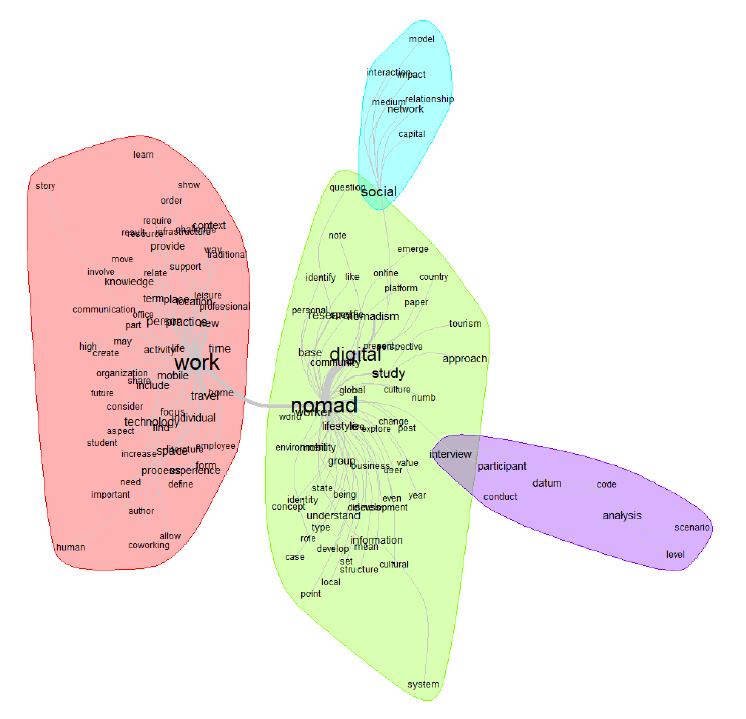
Similarity analysis is used to generate clusters from patterns found in a corpus, limiting the researcher's bias (Illia et al., 2014; Macke et al., 2018). IRaMuTeQ fragments the text into segments and these, in turn, are clustered considering the distribution of words, where the proximity of words and their occurrence are indicated in a concept map (Adil et al., 2022). Greater overlap between concepts means that there is greater proximity between words in the segments. Furthermore, (Adil et al., 2022) clarify that if two concepts appear frequently in a segment, it is possible that there is an intersection between the concepts even if they belong to different lexical fields. Finally, to show in more detail the concepts reflected in the articles studied and to compare against the results of the bibliometrics, we generated a new word cloud from the forms.
3.2. Search strategy
The choice of articles to be included in this study began with the selection of the SCOPUS and Web of Science databases. SCOPUS is characterized as one of the most relevant and allows easy and simultaneous downloading of a large number of references that can be integrated with Bibliometrix, in addition to having quality indexes (SJR) and covering 20% more than Web of Science (Falagas et al., 2008; Lezcano-Calderón, 2023; Rojas-Sánchez et al., 2023). Web of Science was chosen for having quality indexes (JCR) and for covering publications with a sufficient period of time (Durán-Sánchez et al., 2019; Rojas-Sánchez et al., 2023).
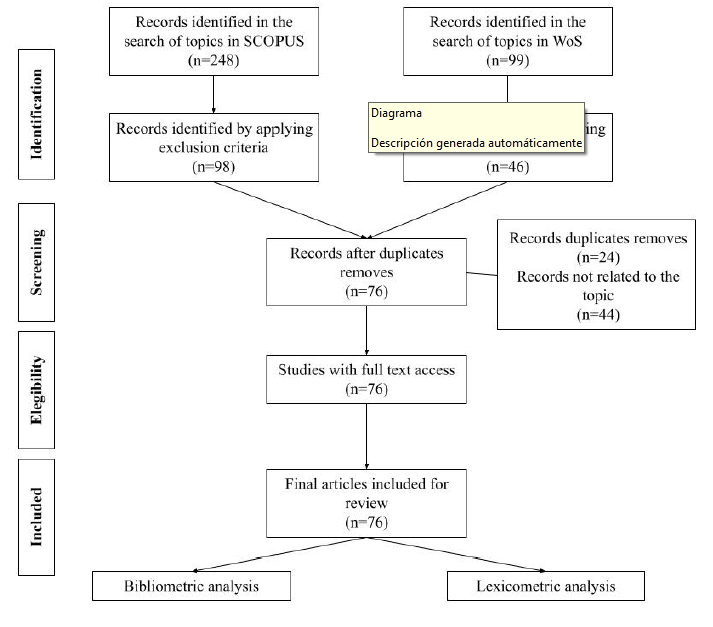
Like Lizano-Mora et al. (2021)we used the same search protocol in both databases; first in the fields: title, abstract and keywords, for which the keywords "digital nomad*" OR "neo-nomad*" OR "neo nomad*" OR "nomad* work*" OR "knowmad*" were used as a search string. The protocol included a series of inclusion and exclusion criteria (Abarca et al., 2020), starting with a filter to cover the last two decades as the search period (March 2023 inclusive). In addition, given that research is still incipient and has been conducted in different areas, the search was limited to research fields in SCOPUS such as (1) Social science, (2) Computer science, (3) Business, management, and accounting, (4) Decision science and (5) Economics, econometrics, and finance, while in Web of Science the fields were (1) Social sciences other topics, (2) Business economics, (3) Information Science library science, (4) Computer science, and (5) Social issues. In addition, it was limited to documents published in English. Finally, only articles were considered for this study. Subsequently, a manual review was performed to ensure that the articles used for the analysis effectively addressed the subject matter. Since both databases allow downloading the records but in different formats, a mixture of the articles found in each database was made (Lizano-Mora et al., 2021; Palos-Sánchez et al., 2022), discarding duplicates (Lizano & Palos Sánchez, 2020). The process followed to select the articles to be studied is shown in Figure 1.
4. Results
4.1. Bibliometric results
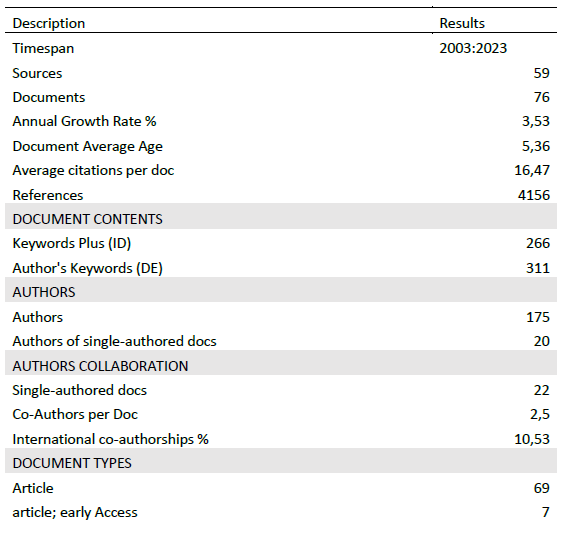
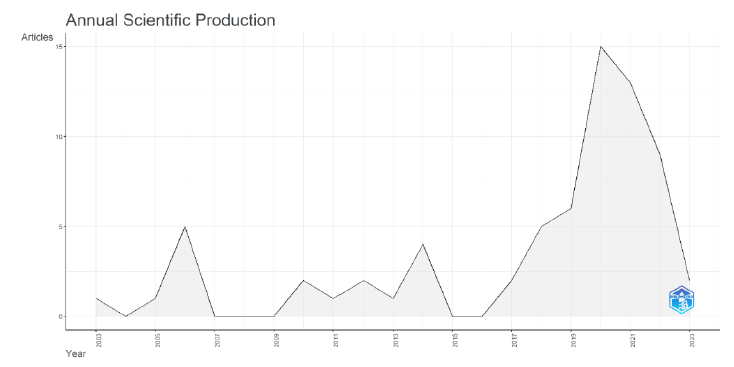
Table 1 shows the main relevant information from the 76 articles chosen between 2003 and 2023. We found 59 major sources that have been published on this topic. It shows that the number of keywords that appear frequently in article titles or so-called "key plus" is three times the number of articles. Moreover, Figure 2 shows that the growth of research on digital nomads has not been constant, but rather that in 2006 there was a peak, with decreased interest until 2009, some interest between 2009 and 2014, renewed interest in 2017, and an all-time high peak in 2021 during the pandemic years, with the last five years reporting the largest number of studies.
4.1.1. Identification of sources
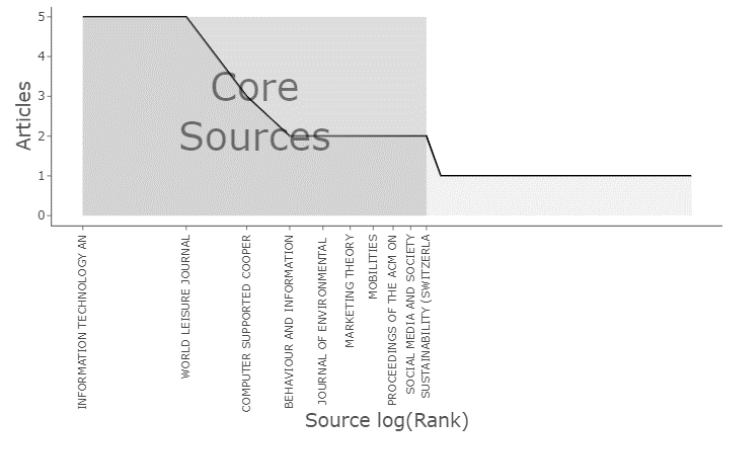
In terms of sources, it was found that Information technology and tourism (h_index=5) and World Leisure Journal (h_index=1) have published the most, each with five articles. They are followed by Computer Supported Cooperative Work (h_index=3) with three publications. The remaining sources with at least two publications are Annals of Leisure Research (h_index =1), Behavior and Information Technology (h_index =2), Journal of Environment Management and Tourism (h_index =1), Marketing Theory (h_index =1), Mobilities (h_index =2), Proceedings of the ACM on Human-computer Interaction (h_index =2) and Social Media and Society (h_index =2). The most relevant journals can be identified through the analysis of Bradfords Law (Bradford, 1976; Brookes, 1985) shown in Figure 3, where the journals Information Technology and Tourism and World Leisure Journal are observed in zone 1 "core sources" journals (Mahi et al., 2021). These journals should be considered by researchers for future research on digital nomads.
4.1.2. Identification of authors
It is important to know which authors have done most research on the subject in order to determine the authors’ keywords, impact factor, and total citations per author (Campra et al., 2022). Table 2 identifies the 10 authors with the highest relevance, where Jarrahi stands out with four articles and an h_index=3, followed by Sutherland with three publications and an h_index=3, then Aroles and Orel with three publications and an h_index=2. In terms of citation, Jarrahi, Sutherland, and Bean are the most cited although the latter has only two articles.
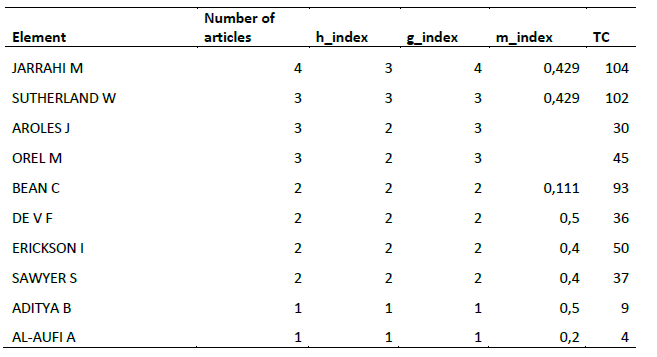
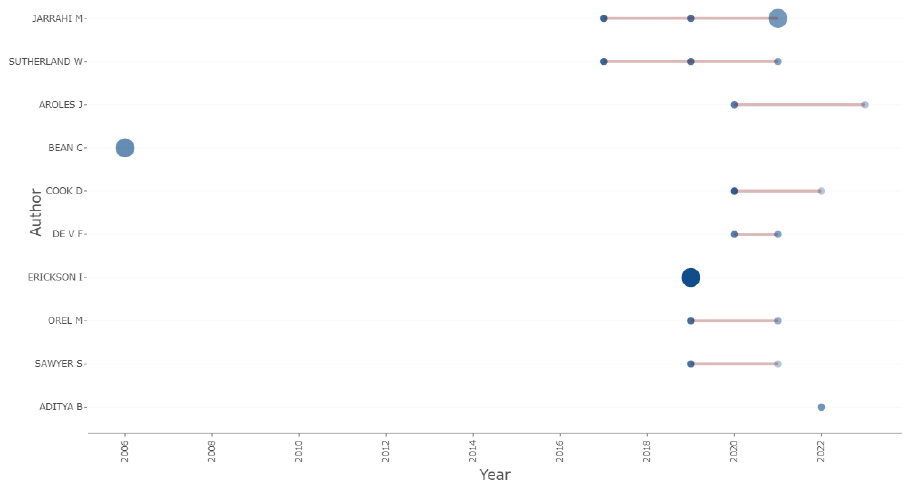
Figure 4 shows that Bean is one of the first authors to address the subject in 2006 and one of the most cited, but his publications were made in 2006 and then he did not continue publishing on the subject. In addition, the same figure shows that authors such as Jaharri and Sutherland began to publish on digital nomads in 2017, a year later Orel, Sawyer, and Erickson began to address this topic although Erickson does not show interest in continuing with studies of this phenomenon.
4.1.3. Identification of documents and topics
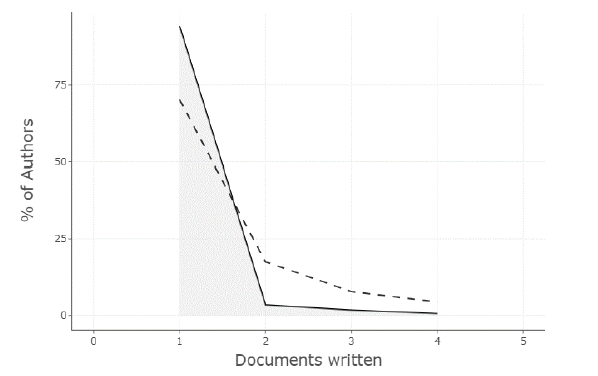
For any given field of research, Lotka’s law determines frequency of publications per author; it suggests that there is an unequal distribution of productivity, and it also suggests that most authors have fewer papers and that few authors publish many papers on the topic (Lotka, 1926). Of the 175 authors who have published on this phenomenon, Figure 5 confirms that many of them have only one paper related to digital nomads and very few researchers have two or more papers.
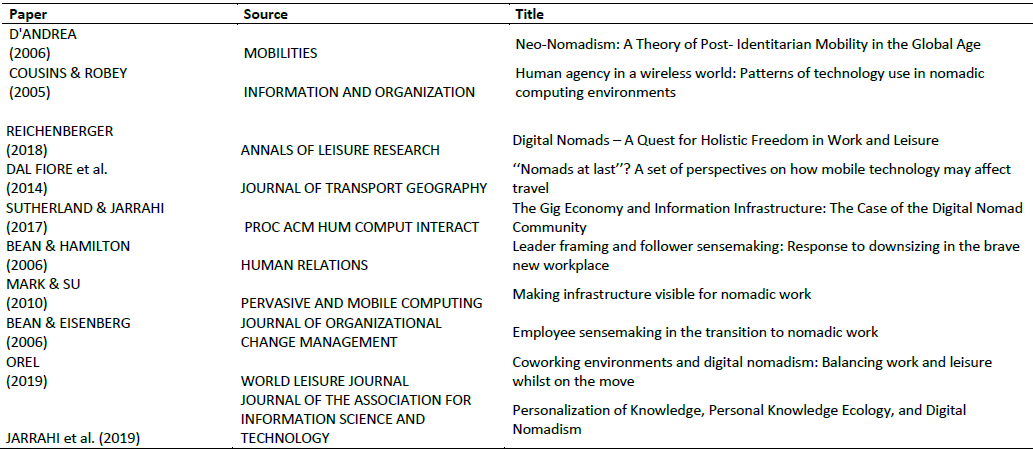
In terms of papers, Table 3 shows that D’Andrea (2006) and Cousins and Robey (2005) are the most cited, with 120 citations in total. The second place is Reichenberger (2018) with a total of 77 citations, who stands out with 12.83 total citations per year.
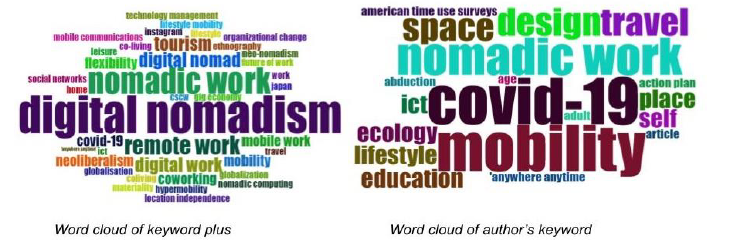
The author's keywords are those that the researchers define as decisive to contextualize and locate the article. The plus keywords are those that are repeated in the titles of the articles studied. Figure 6 shows on the left side the Word cloud of keyword plus where digital nomadism, nomadic work, remote work, digital nomad, digital work tourism, coworking, among others stand out. On the right side, the figure shows the Word cloud of author's keywords that includes words such as covid-19, mobility, nomadic work, space, design, travel, and others.
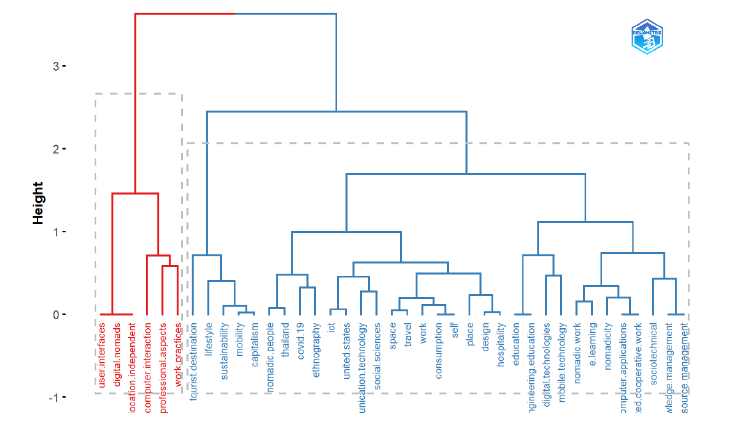
The dendrogram is a representation of the keywords plus grouped in clusters and with a hierarchical order, where each cluster is weighted and the linkage and distance between them is measured (Campra et al., 2022). Figure 7 shows two clusters. The first cluster is shown in red, and it is related to the professional practices of digital nomads. It includes words such as user interfaces, digital nomads, location independent, human computer interaction, professional aspects, among others. The blue cluster is related to the sustainability of digital nomads; it includes words such as climate change, developing world, climate impact and resilience, food security, coping mechanisms, environmental policy, food production and supplies, small island, developing states, and tourism.
The articles that contribute the most in clusters are two. First, there is Sutherland and Jarrahi (2017), whose analysis of online forums and interviews explore the role of technologies in distributed, community-oriented, and gig work practices. They find that technologies facilitate professional practice, including job search, marketing training, and collaborative work. On the other hand, Lee et al. (2019) know the perceptions of digital nomads' co-spaces according to lifestyles, through a study of the corpus of publications made in an online forum, finding that digital nomads rely on coliving and coworking spaces. In addition, there is no clarity in the boundary between life and work. They also concluded that there is no social support in the co-spaces to reduce the tensions generated between personal and work times. Patokorpi (2006) analyses how ICT-enhanced learning and abductive reasoning allow the emergence of a new model of communication and digital technology that allowed digital nomadicity. Parreño-Castellano et al. (2022) analyse information from web portals and platforms aimed at digital nomads to explore what the destinations are like and the relationship between the nomads' profile and the chosen locations. They find that digital nomads choose locations for the possibilities of leisure and socializing with other digital nomads and low prices. Additionally, they find that digital nomads assume costs that in regular jobs are assumed by companies so these people lower their rates to access more work options and avoid falling into precariousness. Green (2020) conducts an ethnographic study to understand how digital technology influences the work and leisure of nomads who are highly mobile, finding that tourist destinations with adequate infrastructure for their lifestyle are increasingly necessary.
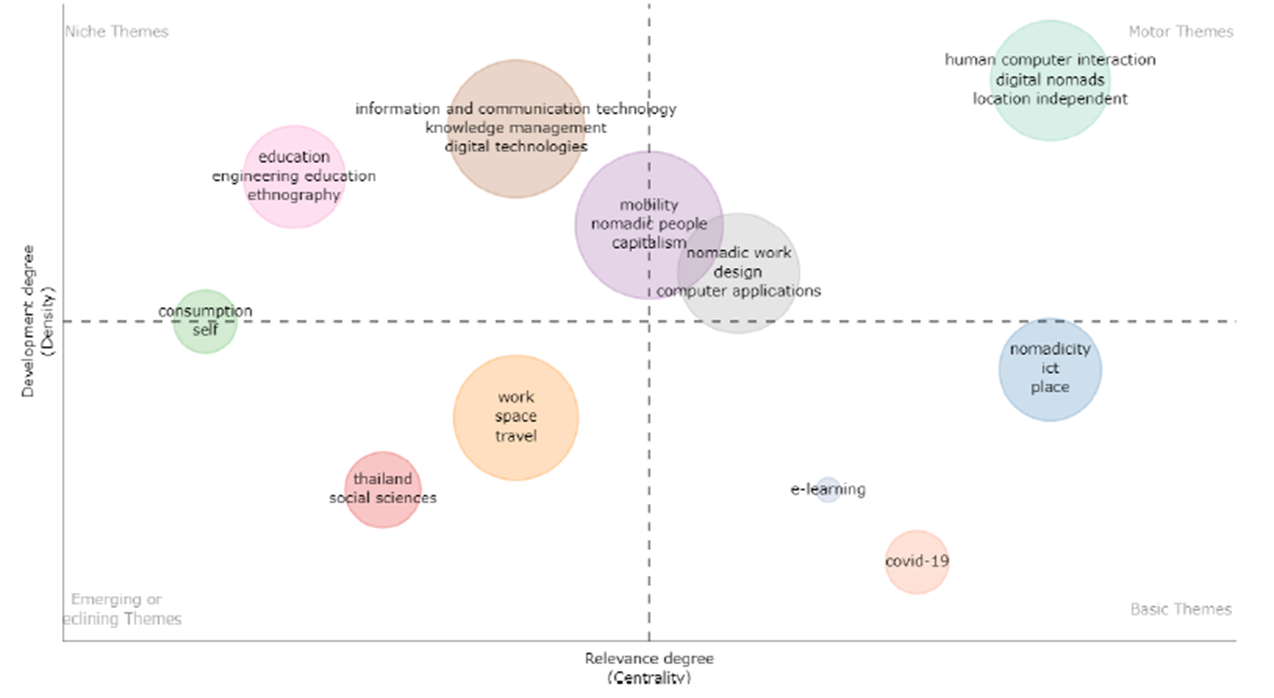
The thematic map is used to determine the relevance of a given field of research, and it is positioned along the horizontal axis called centrality and the degree of development of a topic, called density, which is positioned along the vertical axis. According to Parreño-Castellano et al. (2022), the driving themes are located in the upper right quadrant, and they are important themes for the development of the scientific field. Peripheral themes are those that develop internally, but in isolation, and they are in the upper left quadrant. Emerging themes are in the lower left quadrant. Base and transversal themes, relevant and stable for the field, but little developed, are in the lower right quadrant. The position of each theme in the quadrants should be analysed to determine its degree of importance and density.
Figure 8 shows that human computer interaction, digital nomads, location independent, nomadic work, design, and computer applications are driving themes. In addition, the peripheral themes are education, engineering education, ethnography on the one hand, and information and communication technology, knowledge management and digital technologies on the other. Thailand and social science stand out as emerging themes, although this can be interpreted as a trend of research on them, so future research can focus on themes on work, space, and travel. The base themes are nomadicity, ICT (information and communication technology), place, e-learning, and covid-19. It is important to note that mobility, nomadic people, and capitalism are themes that have been developed in isolation but have become driving themes as well.
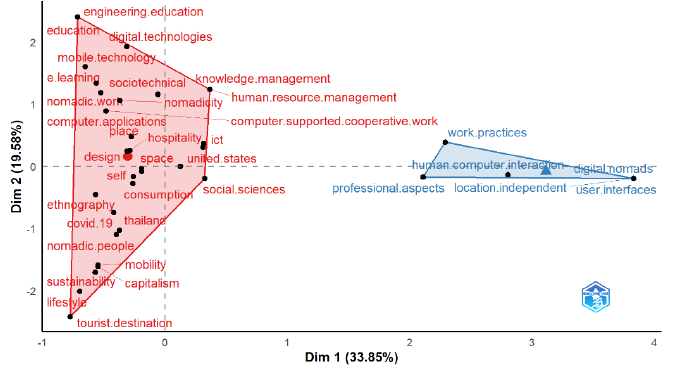
Analysing new research trends in digital nomad research is important for researchers to assess possible future research studies. In our study, we applied a factor analysis, using the multiple correspondence analysis (MCA) method to examine the relationship between keyword papers (Cuccurullo et al., 2016), with the aim of finding new latent variables (Greenacre & Blasius, 2006). These data are summarized and plotted as two or more underlying categorical variables, although they are also considered a general form of principal components analysis when the variables are not quantitative but categorical (Weller & Romney, 1990). The keywords are represented as points on the map (Mora-Cruz & Palos-Sanchez, 2023).
The most important dimension is always on the first axis. In our study, we show on Figure 9 a conceptual structure map with two relevant clusters, where dimension 1 represents 33.85%, and dimension 2 represents 19.58%. The red cluster covers the four quadrants, having a higher position on the left quadrants. In the upper left quadrant, there is nomadic work and its relationship with the places where it is developed. The lower left quadrant shows that there are studies that have focused on mobility and sustainability of lifestyle, without leaving out tourist destinations. The right quadrant has a cluster with six words, which shows that at the top there are studies that are interested in the working practices of digital nomads. While the lower right quadrant shows professional aspects such as user interfaces and location independence.
4.1.4. Identification of networks
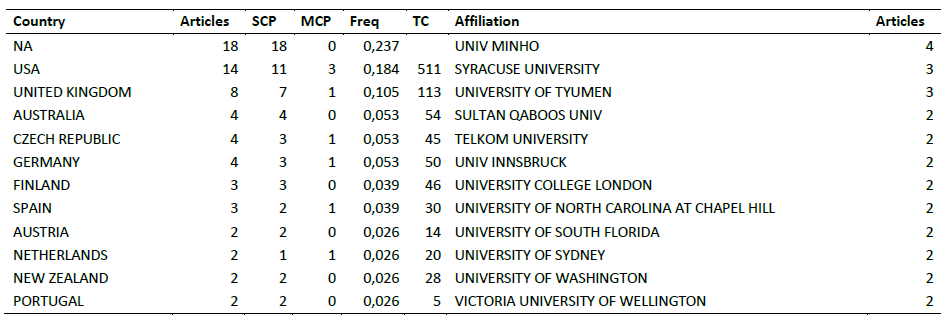
Table 4 shows the authors’ countries with publications from a single country (SCP) and with publications from multiple countries (MCP). It is noteworthy that 18 articles are not associated with a particular country. In addition, it is noted that USA has 14 articles of which 11 do not have a co-author from another country, and in three, there was at least one international collaborator. This is followed by United Kingdom, which has eight publications, seven of which are SCP. Australia has four publications, all SCP. Czech Republic and Germany have four publications each, of which three are SCP and one MCP. As for the most cited countries, it is found that USA and United Kingdom were the top with 511 and 113, respectively. In addition, affiliations that have published at least two articles on digital nomads are shown, of which the University of Minho has produced four papers, followed by Syracuse University and Tyumen University, both with three publications.
Citation analysis allows the identification of fundamental scientific papers in a specific field (Zitt & Bassecoulard, 1994). When two papers are cited together in one or more published articles, they become co-cited (Small, 1973). The number of citations becomes an indicator to show the most representative researchers in the field of study and the interrelationships between them (White & McCain, 1998), and they are displayed on a map with a centre of gravity (Small, 1973).
Figure 10 shows the networks found. In the upper left quadrant, the network of co-citations is shown. The red cluster is the most important, where Reichenberg and Thompson stand out as the authors with most co-citations, but it also shows authors such as Nash, Müller, and Makimoto. The blue cluster has authors such as D'Andrea, Korpela, Bradotti, Creswell, and Urry. The upper right quadrant shows the authors’ collaboration network with eight clusters, most of them showing a collaboration between two authors. There is the main cluster, blue, with Jarrahi as the referent author and the red cluster where Aroles stands alone; both clusters have five authors and are the largest.
The lower left quadrant shows the affiliation network, with small clusters, most being composed of two affiliations. The light green cluster is composed of the University of Washington, Syracuse University, and the University of North Carolina at Chapel Hill. The second cluster in terms of relevance is shown in red and is made up of Victoria University of Wellington, Massey University, and Auckland University of Technology. The lower right quadrant reflects three clusters in the countries network. The green cluster shows that the USA has many relationships with Japan, Italy, and Norway. The red cluster is made up of Canada, France, Germany, the Netherlands, and United Kingdom, the latter country leading the relationships. Interesting to note is that the red cluster is related to the blue cluster. The blue cluster is formed by Czech Republic, Spain, and Chile.
4.2. Lexicometric results
Lexicometric analysis is a technique for studying the frequency, distribution, and relationships of words within a text or corpus in order to discover patterns, trends, and linguistic structures that facilitate the comprehension of documents (Krippendorff, 1989; Mandják et al., 2019). In this study, we have carried out a lexicometric analysis of a corpus with 76 texts (research articles included in this SLR) was performed. This corpus contained 177,548 word occurrences. These occurrences comprise 10,307 forms, including 4,362 words with a single occurrence in the corpus (haptaxis), of which 42.32% corresponds to forms and 2.49% to occurrences. Active forms were used for the analysis.
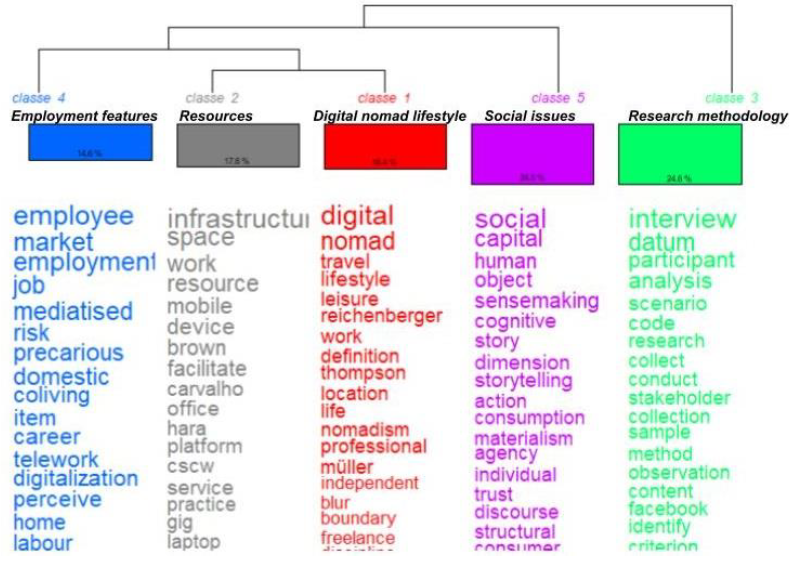
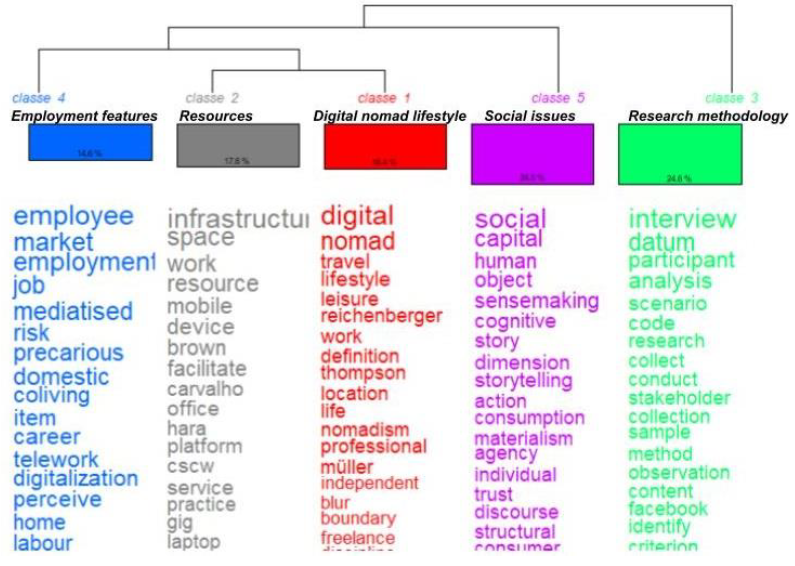
The Descending Hierarchical Classification (DHC) allows the discovery of recurrent themes, generating classes grouped according to their frequency and proximity that facilitate the analysis of the corpus, in this case of the studies that have been carried out on digital nomads. DHC results of the Reinert method show five clusters (Figure 11). Cluster one groups words related to digital, nomad, travel, leisure, work, life, and nomadism and was named Digital nomad lifestyle (18.4%). The second identified cluster includes words such as infrastructure, space, work, resources, mobile, device, and office and was named Resources (17.6%). Cluster three encompasses words about research and analysis methods, and it includes words such as interview, datum, participant, observation, scenario, and sample, and it was named Research methodology (24.8%). The fourth cluster was called Employment features (14.6%), and it includes words such as employee, market, employment, job, risk, precarious, domestic, and coliving. Finally, the fifth cluster includes words such as social, capital, sensemaking, cognitive, story, and human; this grouping was called Social Issues (24.5%).
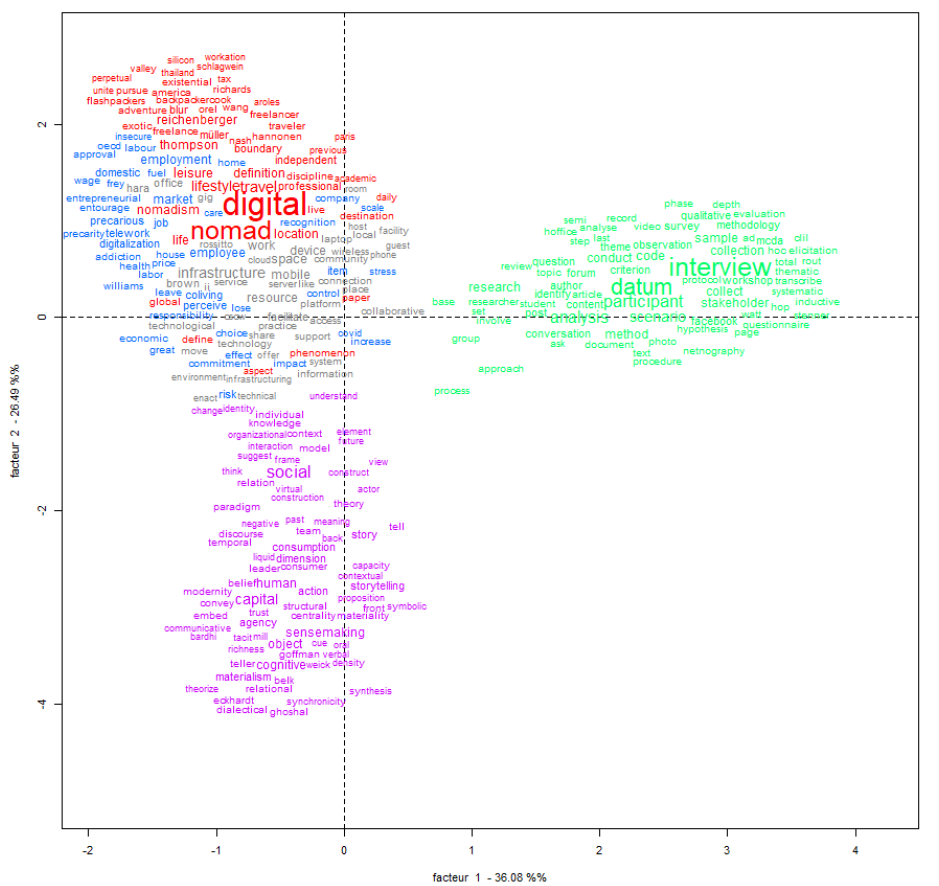
Correspondence factor analysis allows to graphically represent how words are distributed in relation to the texts, allowing to discover groups of words that tend to appear together in the studies. The plan shows the position of the forms in relation to each other. Figure 12 shows that. factor 1 explains 36.08% of the variance, factor 2 explains 26.49%, for a cumulative total of 62.57%. Our study also shows three helices, one of them groups the forms related to research methods. The other helix contains forms on social issues, and the largest helix has overlapping cluster forms on employment features, resources, and digital nomad lifestyle.
In the similarity analysis, the existence of an underlying conceptual field is determined, considering that the closer the words are between segments, the greater the indication of the conceptual field (Mandják et al., 2019). Figure 13 shows the four conceptual fields identified. Our study finds a core conceptual field related to digital nomad that includes forms such as nomad, digital, global, community, culture, nomadism, lifestyle, world. A close group is related to social, including forms such as capital, network, interaction, relationship, impact, among others. In addition, there is another group close to the central group, which includes aspects of research methodology, including words such as interview, conduct, participant, code, analysis, scenario, and others, and finally, we discovered a group related to nomad work, which includes words such as knowledge, time, mobile, organization, professional, communication, office, technology, coworking, among others.
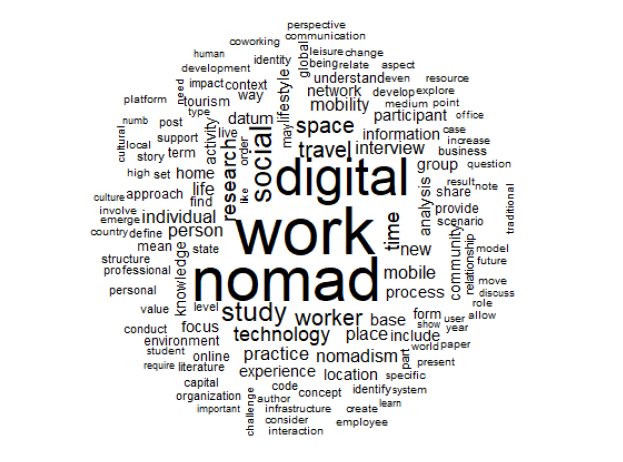
Taking advantage of the fact that IRaMuTeQ generates word cloud of document content forms (Beaudouin & Pasquier, 2017), this analysis was generated to know the active forms with occurrence higher than 100. Figure 14 shows that the words work, nomad, digital, study, social, worker, technology, space, space, travel, time, practice, nomadism, place, and research stand out.
2. Discussion
This study reveals that research on digital nomads is growing. Between 2003 and 2019, 30 scientific articles were published. Since the Covid-19 pandemic, more than half of all articles on this phenomenon have been published. In terms of sources, only three have published more than two articles. Only 12 countries have researched digital nomads. In addition, the US is in first place, and the UK is in second place with the number of articles published. These countries constitute the largest networks. On the other hand, there is a growing interest among researchers in delving deeper into various topics related to this phenomenon.
Research on digital nomads has evolved. In answering RQ1 it is noted that, in the early 2000s, studies showed how technological advances and mobile work environments drove out-of-office work, mobility between locations, and the notion of digital nomads, redefining identity, territory, and community. From the 2010s onwards, studies began to focus more on exploring the characteristics of digital nomadism, linked to connectivity needs and technologies conditioning travel and hosting practices (Dal Fiore et al., 2014; Sutherland and Jarrahi, 2017). The research generated during and post-pandemic has been very diverse, delving into technological resources, the characteristics of coworking and coliving, and more traditional options such as hotels, as well as the socializing activities they engage in during their travels. Their lifestyles, socio-psychological characteristics, and knowledge management have also been studied in recent years and have revealed how they are becoming central to labour relations and business policies (Jarrahi et al., 2019; Orel, 2019, 2020; Reichenberger, 2018).
Concerning RQ2, our research shows that much attention has also been paid to the physical and infrastructural resources associated with digital nomads, including concepts such as mobile devices, and technology as primary inputs to being a digital nomad. The office conditions, coworking, and coliving spaces required by digital nomads have also been studied, including complementary spaces and activities that make leisure time more enjoyable and work time more efficient (Chevtaeva and Denizci-Guillet, 2021; Cook, 2020; Orel, 2019, 2020; Shukla and Khatri, 2022; von Zumbusch and Lalicic, 2020). This becomes fundamental because it must be considered when establishing urban development strategies, including co-spaces, public transport options, and various forms of mobility, as well as options for socialization activities.
As for RQ3, we found there has also been a growing interest in understanding how the nomadic lifestyle is understood and what it entails, with concepts such as travel, leisure, pleasure, location, independent work, cognitive, and social (Hannonen, 2020; Luise, 2022; Orel, 2019, 2020), finding the need to establish strategies for balancing leisure and work time, involving freedom, responsibility, time management, and various social factors they consider when locating in one place (Chevtaeva and Denizci-Guillet, 2021; Shukla and Khatri, 2022). There has been a trend of studies on job characteristics, work practices, and location (Aroles et al., 2020; Cook, 2020; Nash et al., 2021; Orel, 2020). Evidencing that this lifestyle impacts enterprise practices, research is beginning to shed light on structural and organizational adjustments that have been made and need to be made to find a balance between the interests of businesses and digital nomads. Human resources and human talent management departments need to rethink how they attract and retain qualified staff who prefer the nomadic lifestyle.
In terms of possible future research, we find that there is a need to study the travel patterns and characteristics of coworking and coliving spaces that digital nomads prefer (Chevtaeva and Denizci-Guillet, 2021). In addition, more research is needed on work practices and their relationship to how companies are organized, including psycho-emotional aspects of what skills and knowledge become critical for digital nomads to maintain their lifestyles while successfully collaborating with companies (Hannonen, 2020; Shukla and Khatri, 2022). Our study shows that more research is needed on the culture of digital nomads, what habits are prevalent, and what socio-environmental conditions they seek (Chevtaeva and Denizci-Guillet, 2021; Shukla and Khatri, 2022). Finally, there is still a lack of research on the socio-economic and environmental impact of digital nomads on territories (Foley et al., 2022; Hannonen, 2020; Parreño-Castellano et al., 2022; Santos et al., 2022).
3. Conclusions
Our study shows that the phenomenon of digital nomads is of great interest to researchers. In the beginning, studies aimed to understand how technologies became a tool for nomads to work from anywhere. They also began to distinguish between regular tourists and digital nomads. And over time, they have begun to delve deeper into the different technological and infrastructural factors that digital nomads use. In addition, the areas of interest in the lifestyles of digital nomads and their social and work practices have broadened.
Theoretical implications
Our study contributes to existing research published in two high-quality databases: Web of Science and Scopus. This study reflects the growing interest in studying digital nomadism despite the lack of studies on countries' policies and regulations on these phenomena. We found that, in terms of networks, there is high collaboration among authors to address this topic but low collaboration across affiliations and countries, which may be an opportunity for future research.
We summarized the themes that have been addressed: mobility, digital technologies, nomadicity, and emerging themes such as spaces and travel. Our findings revealed that it is important to review the characteristics of the designs, spaces, places, and travels of digital nomads in addition to aspects related to computer interaction, resources and infrastructure, and nomadic work. While mobility has been a topic studied in isolation, it has become a driving theme that is important to investigate further.
Our study provided lexicometric analysis as a good complement to bibliometric analysis, as it allowed for a deeper examination of the content of the research conducted. In addition, this research will help researchers to make decisions about future research.
Practical implications
Our findings showed that destination managers must rethink the characteristics required for coliving, coworking, and coworking spaces in general. Technological aspects, infrastructure that responds to a professional environment, networking spaces, and good internet speed are essential to attract and satisfy the needs of digital nomads. In addition, they should consider spaces and activities that allow socializing, exchange of ideas, and culture, which are increasingly important for digital nomads. These socializing activities should not only be limited to co-spaces but also to nearby tourist destinations. In addition, tourist sites must have public transport options and mobility alternatives for digital nomads. Policymakers and urban developers should also consider these factors to attract digital nomads to territories that can dynamize the economy.
This study finds that it is important for companies to consider factors such as the working practices and professional aspects of digital nomads. Flexible working hours and project or performance-based work are clauses that should be considered in new employment contracts. Knowledge management is also a factor that companies should consider in the employment relationship with digital nomads. In addition, time management for a balance between leisure and work is fundamental to be considered by the digital nomad and the company; meetings and schedule changes can be key factors.
Policymakers in more countries need to consider digital nomads as a tourism option, and, therefore, better regulate the phenomenon of digital nomadism, through visas and other conditions that allow them to attract digital nomads and take advantage of the economic benefits that this activity implies. In addition, they should establish strategies to ensure elements of sustainability in terms of co-spaces, mobility, and other factors, responding as far as possible to sustainable development objectives.
Future research agenda
Future research can more comprehensively examine issues related to education, the skills and competencies of digital nomads, and the knowledge management associated with digital nomadism. In addition, this study reflected on the importance of employment characteristics as a future line of research to be addressed.
Moreover, it is suggested that future research should consider emerging issues such as the characteristics of the different leisure and workspaces sought by digital nomads, as well as aspects of travel and tourist destinations. Finally, it is also suggested that future research be conducted on the policies and regulations of countries and territories about digital nomads.

