




 Inglês (pdf)
 Artigo em XML
 Referências do artigo
 Tradução automática
 Enviar este artigo por email
 Citado por SciELO
  Similares em
SciELO
Similares em
SciELO 
 Permalink

Introduction
The integration of digital technologies and data into daily life has profoundly transformed goal- and relationship-oriented behaviours in areas such as information access, communication and interaction with others, commerce, administrative tasks, culture, leisure and entertainment, or healthcare. This progressive digitalisation has brought social, cultural, and economic effects, presenting opportunities and challenges for societal and individual growth and well-being (Organisation for Economic Co-operation and Development [OECD], 2017a). Among the opportunities, digitalisation holds the potential to fostering more inclusive, participatory, and fair societies, empowering individuals for healthier and more fulfilling lives (European Commission, 2020a). As for the challenges, digitalisation amplifies the risk of digital exclusion (Ragnedda et al., 2022), particularly among those with limited or no access to digital connectivity or infrastructure (van Deursen & van Dijk, 2015), and those unable to utilise digital technologies and data due to a lack of digital literacy competences (DLC) or motivation (Olphert & Damodaran, 2013; van Deursen & van Dijk, 2015). Such circumstances limit individuals’ ability to benefit from services, products and information provided in the digital space. Another pressing challenge involves the lack of safety, security and trustworthiness of digital environments, as this poses serious threats to individuals and societies (OECD, 2019), through, for example, exposure to illegal or harmful content or the manipulation of information.
Digital progression: opportunities and challenges for older adults
The opportunities and challenges related to the use of digital technologies are also widely discussed in the context of aging, with their importance being recognized for both active aging and healthy aging. With respect to the first, a systematic review by Chen and Schulz (2016) showed that the digital technologies facilitate older adults’ connection to the outside world by helping them to maintain existing relationships and form new ones, pointing to digital interactions as an important source of social inclusion and support. This review also highlighted the role of digital technologies in the practice of pleasant and stimulating hobbies and activities, without restrictions of time or location, which contributes to the acquisition of new competences and encourages critical thinking and decision-making, positively impacting on older adults’ feelings of self-confidence, self-efficacy, and control over their life.
In the context of healthy aging, digital technologies have contributed to redefining the health model by emphasising individual and collective agency in health promotion and disease prevention and monitoring. They also underscore the importance of ensuring continuity of care across different settings to achieve meaningful health outcomes (De Santis et al., 2023). Digital technologies are also recognized as facilitators of ageing in place. First, they make homes and living environments more adapted, more accessible, safer, and more comfortable for older adults, allowing them to maintain an independent and high-quality life. Second, they improve the older adults’ experience of care and reduce the needs and/or costs of long-term care (Kim et al., 2017; Marshall et al., 2022).
Although the share of older adults who use digital technologies has increased over the years, there are still many people who are unable to take advantage of the digitalisation-related opportunities. For example, among Europeans aged 50 and over, less than 60% use the Internet (European Union, 2020; König & Seifert, 2020). The gap in reach, besides increasing with age, is particularly pronounced in women, persons with lower education, and rural residents (König & Seifert, 2020). Employment and income situation, health conditions, prior experience with technology, and social context are also relevant conditions that must be considered in analysing Internet usage rates (König & Seifert, 2020).
Even among Internet users, older adults often lack the necessary DLC. In 2019, only 35% of Europeans aged 55-74 years had at least basic digital competences, and just 7% of those aged 65-74 years demonstrated digital knowledge and skills above the basic level (European Commission, 2020b; European Union, 2020). Still, it is important to note that older adults tend to have particularly extensive learning needs when it comes to competences of using the Internet as a medium, an area that largely depends on their previous experience with digital technologies (van Deursen & van Dijk, 2011). In contrast, competences related to obtaining and using digital content appear to be more strongly influenced by the level of formal education than by prior digital experience (van Deursen & van Dijk, 2011).
Reported rates do not keep pace with the digitalisation of information, products, and services (European Commission, 2020b), which puts older adults at risk of being excluded from the benefits of digitally driven social, cultural, and economic transformation (van Deursen et al., 2017).
Digital progression: promotion of digital literacy competences
Digital literacy, along with media literacy and information literacy, encompasses a range of competences acquired through media education, which are translated into observable media-related actions and practices (Wuyckens et al., 2022). Although these three literacy concepts intersect, they have traditionally been distinct. Information literacy refers to the ability to use information search tools effectively and to understand the processes of locating, evaluating, creating, and sharing information (Wuyckens et al., 2022). Media literacy describes the knowledge and skills necessary to move critically, informedly, and responsibly in a multimedia communicative environment (Petrella, 2012). Digital literacy refers to the knowledge and skills associated with using digital tools and moving in digital environments (Buckingham, 2007; Hobbs, 2010). The increase and diversification in the use of digital technologies for communication purposes, along with the convergence of various media into single digital platforms, have made the distinction between the three literacy concepts (and especially between media literacy and digital literacy) less clear (Matos et al., 2016; Wuyckens et al., 2022). As a result, it became necessary to review traditional definitions, which has given rise to new integrative conceptual frameworks that more effectively reflect technological evolution and better accommodate changes in media use practices and actions (Buckingham, 2007; Ferrari & Punie, 2013; Ferrés & Piscitelli, 2012; Vuorikari et al., 2022). One such example is the Digital Competence Framework for Citizens, which offers structured and technology-neutral guidelines for digital upskilling and reskilling (Ferrari & Punie, 2013; Vuorikari et al., 2022). Informed by scientific evidence, it defines the types of knowledge, skills and attitudes required across different competence areas and proficiency levels and identifies the respective support resources, constituting a valuable tool for promoting and assessing digital literacy.
In general, the new frameworks describe media literacy and digital literacy as a set of competences that encompass access to and use of media, as well as critical reading and critical expression of information, regardless of whether it is professionally produced or user-generated, and regardless of the context and purpose of its sharing (European Commission, 2009; Ferrari & Punie, 2013). Media use competences involve technical and operational knowledge and skills for instrumental manipulation of the media (Matos, 2024), as well as attitudes oriented towards the safe, responsible and sustainable media use (Ferrari & Punie, 2013). Critical reading includes analysing, evaluating, and understanding the messages conveyed by the media, considering their representation, languages and the associated production and interaction processes. Critical expression refers to communicating and expressing, but also creating and sharing content, and collaborating through digital technologies, considering the representation and languages of the message to be conveyed and the production and interaction processes (Buckingham, 2007; Ferrari & Punie, 2013; Ferrés & Piscitelli, 2012). All these competences (technical-operational, of critical reading and of critical expression) are considered in the context of legal and ethical principles that guarantee compliance with netiquette and responsible management of digital identity. Another transversal characteristic relates to problem solving, which involves identifying technical issues when using devices and navigating digital environments, implementing tailored solutions, and leveraging digital tools to innovate processes and products in line with ongoing technological developments (Ferrari & Punie, 2013; Vuorikari et al., 2022).
The growing complexity of digital ecosystems has also prompt shifts in educational paradigm. To enable all adults, including the older population, to participate actively and fully in a technologically advanced society and contribute to its sustainable development, targeted initiatives to promote DLC have been undertaken. These initiatives have covered formal, informal, and non-formal educational settings (Hobbs, 2010), achieving remarkable reach (European Commission, 2020b), although not having equal impact on all target populations and communities (UNESCO Institute for Lifelong Learning, 2022). To maximize the benefits arising from informal education and non-formal community-based initiatives, the revised European Reference Framework of key competences for lifelong learning (European Council, 2018) recommended, in line with the United Nations Incheon Declaration (United Nations Educational, Scientific and Cultural Organization [UNESCO], 2015), designing and implementing competence-oriented programs that respect individual diversity and contextual specificity. Simultaneously, the existing offer of up- and reskilling programs was expanded, accommodating the needs of socially excluded, vulnerable, or at risk of marginalization groups, based on the principle of supporting the right to inclusive and quality education throughout life and for all (European Commission, 2020c; UNESCO, 2015). Despite these efforts, older adults’ participation in digital education programs (DEP) remains insufficient, particularly among those with limited prior formal education (UNESCO Institute for Lifelong Learning, 2022). Concerns also persist about the outcomes of DEP targeting older adults, as evidence suggest that the generalized, proactive, and transformative uptake of learned competences in everyday activities remains limited. Low participation in the programs and difficulty to take advantage of them result from the influence of several variables. These variables are commonly clustered into individual, situational, institutional, and contextual factors (OECD, 2017b).
Individual factors encompass learners’ emotions, attitudes, and behaviours toward the learning process, shaped by previous experience or perceptions of the benefits of learning. Situational factors reflect life circumstances at a given time, such as time constraints, family or work commitments, financial problems, and the availability of support. Institutional factors refer to the conditions provided by educational organizations, encompassing material aspects, such as program costs, access to learning resources, and availability of information about learning opportunities, as well as human aspects, including the preparedness of administrative staff and educators to effectively work with specific populations. Contextual factors involve the presence of supportive networks within the community that can assist learners throughout their learning process (OECD, 2017b). While these factors are widely recognized in the literature, their specific impact on the processes and outcomes of DEP for older adults remains underexplored, highlighting the need for further investigation.
To address this gap, the present review aimed to map the available evidence on the individual, situational, institutional, and contextual factors - both facilitators and barriers - that influence the successful implementation of education programs designed to promote DLC in older adults from the community. Accordingly, the review was guided by the following research question:
What individual, situational, institutional, and contextual facilitators and barriers influence the implementation of education programs promoting digital literacy among older adults living in the community?
A deeper understanding of these factors is essential for developing recommendations that can guide professional practice and significantly improve the success of such programs.
Materials and methods
This scoping review was conducted following the methodological guidance of the Joana Briggs Institute (Peters et al., 2020), which is appropriate for mapping broad areas of research and identifying knowledge gaps. In addition, the review adhered to the Preferred Reporting Items for Systematic Reviews and Meta-Analyses Extension for Scoping Reviews (PRISMA-ScR) checklist (Tricco et al., 2018), to ensure transparent and comprehensive reporting of the methods and findings. The chosen approach was informed by the need to deepen understanding of facilitators and barriers related to promoting DLC among older adults, and to establish a foundation for effectively addressing these factors across diverse policy and practice contexts (Anderson et al., 2008).
Inclusion criteria
The inclusion criteria for this review were defined in alignment with the research question, using the Participant-Concept-Context framework (for details, see Table 1) to ensure consistency and clarity in the selection process. The information was searched in published and unpublished sources, encompassing primary research studies (qualitative, quantitative, and mixed-method nature), literature and systematic reviews, text/opinion articles, and guidelines, written in English, Portuguese, and Spanish. The inclusion of unpublished literature, such as reports, dissertations, and thesis, was justified by its potential to provide significant evidence not covered in commercial publishing and to mitigate publication bias by complementing findings from published sources (Aromataris et al., 2024).
Table 1: Review inclusion criteria
| Inclusion criteria | |
|---|---|
| Participants | This review included persons considered older based on a broad, socially informed definition of ageing. This included those aged 60 years or more, as well as those who were retired or receiving non-residential institutional support specifically intended for older population - both of which are socially and contextually grounded indicators of ageing. Participants could be part of any type of community setting and reside in any geographical location. |
| Concept | This review considered facilitators and barriers related with implementing education programs promoting digital literacy competences for population of interest. These facilitators and barriers could be identified based on the feedback provided by older adults, but also by their family members, digital education trainers or facilitators, or other relevant stakeholders. |
| Context | This review considered education programs designed to enhance digital literacy competences, including digital media use and/or critical reading and/or critical expression. The programs should specifically target the population of interest for this review. |
Search and selection strategy
The search for relevant material included electronic databases pertinent to this review objective. Databases for published studies comprised Web of Science, Science Direct, SciELO, and Communication Source via EBSCO. For unpublished studies, ProQuest, the Scientific Open Access Repository of Portugal, and the Catálogo de Teses e Dissertações (CAPES), from Brazil, were consulted.
The search process began with a restricted preliminary search in SciELO to identify relevant papers and analyse the text words commonly used in titles and abstracts. Based on this search, the following final set of keywords was established: “media literacy”, “digital literacy”, “media education”, “digital education”, “old*”, “elder*”, “aged”, “geriatr*”, “train*”, “program*”, and “intervent*” (Table 2). The keywords were used to search all databases, applying Boolean operators OR and AND within the abstract field. Only studies published between January 2000 and September 2020 were included. The starting date was selected to reflect the wider availability of Internet access, which accelerated digital transformation by facilitating the shift from analog to digital formats and supporting the integration of digital technologies into everyday activities (OECD, 2019). This year also marked a pivotal moment in advancing discussions on the role of media education in exercising citizenship (Buckingham, 2000), as well as in promoting debates on the digital divide and its implications for democracy, social inclusion, and economic equality (Bucy, 2000). The end date was selected to distinguish pre-pandemic and pandemic contexts of digital empowerment, as these periods were shaped by different circumstances and motivations. After identifying relevant material, the reference lists were manually reviewed to relevant additional relevant sources.
All citations identified through database searches were collated and uploaded into Rayyan, a research collaboration platform that facilitates the organisation and management of records for literature reviews (Ouzzani et al. 2016). These citations were then screened for relevance. Initially, the titles and abstracts were assessed against the inclusion criteria. Records that appeared to be relevant to this review objective, or that lacked sufficient information for a reliable relevance assessment, were considered for further analysis. Later, the full-text versions of the retrieved records were examined in detail to determine whether they met the inclusion criteria. Studies that clearly fell outside the scope of the review were excluded at this stage. For studies with insufficient or unclear information regarding the population, concept or context, the authors were contacted to obtain additional details. All reasons for exclusion were documented to ensure transparency. The screening process was conducted by two independent reviewers. Any disagreements were resolved through discussion to achieve consensus. The full-text records meeting the inclusion criteria underwent data extraction and synthesis.
Data extraction and synthesis
Data extraction was conducted using a tool specifically designed by the review authors to capture variables aligned with the review objective. Extracted data included articles details, aligned with the review’s inclusion criteria, structured according to the Participant-Concept-Context framework, as well as key findings relevant to the review’s objective. To ensure consistency, data-charting form was piloted on the first five papers, and the suitability of the extracted information for the research objective was verified (Levac et al., 2010). After confirming the suitability of the data-charting form, data extraction was performed by one reviewer and independently verified by a second reviewer. When necessary, the authors of the included studies were contacted to obtain additional information or clarify specific data.
Table 2: Search strategy
| Search ID # | Search formula |
|---|---|
| S1 | ABSTRACT (“media literacy” OR “digital literacy” OR “media education” OR “digital education”) |
| S2 | ABSTRACT (old* OR elder* OR aged OR geriatr*) |
| S3 | ABSTRACT (train* OR program* OR intervent*) |
| S4 | S1 AND S2 AND S3 |
The extracted data were analysed inductively using qualitative content analysis, employing a bottom-up approach guided by the methodological principles outlined by Bingham (2023). Two independent reviewers conducted a thorough and repeated reading of the data to explore the material openly. Relevant patterns related to the review’s objectives were then identified based on what emerged from the data. These patterns were manually matched and critically compared to explore areas of convergence, divergence and complementarity. Any conflicting interpretations or ambiguous data points were resolved through discussion. Subsequently, the patterns were grouped and aggregated based on their contextual relevance, which resulted in the formation of distinct categories representing facilitators and barriers to the implementation of DEP. Throughout the entire analysis, the reviewers continuously cross-checked their findings to ensure validity and reliability.
Finally, the findings on facilitators and barriers were synthesised and presented in a detailed narrative format to provide a comprehensive understanding of the factors influencing successful implementation of education programs promoting digital literacy among older adults.
Findings
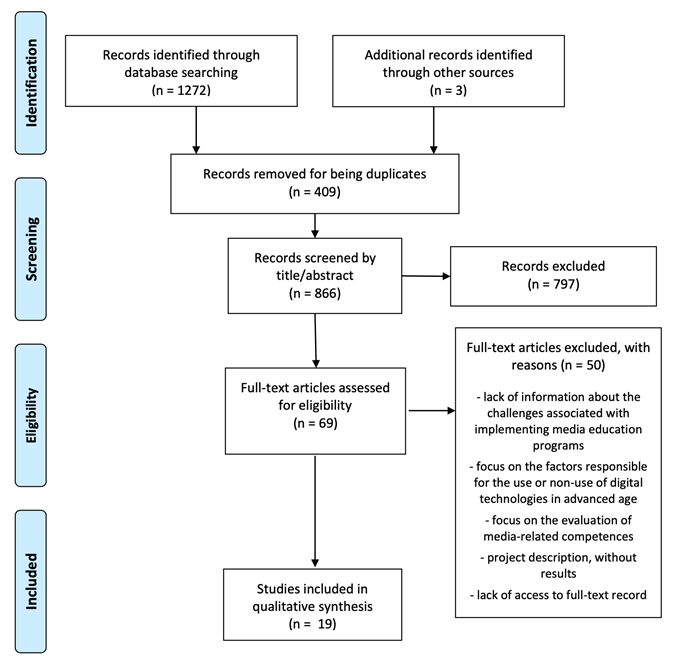
During the search process, 1275 potentially relevant records were identified. Of these, 409 duplicates were removed. From the remaining 866 records, 797 were excluded after title and abstract screening, and an additional 50 were excluded after full-text analysis for not meeting the inclusion criteria. The main reasons for exclusion were related to the lack of information about the facilitators and barriers associated with the implementation of DEP for older adults. For example, some of the analysed papers focused on the diverse opportunities created by digital technology or on their relevance to the performance of personal, professional, or social activities; however, without mentioning DEP and reflecting on factors that influence their successful implementation. Other excluded studies aimed to identify the factors responsible for the use or non-use of digital technologies by older adults or intended to establish the level of digital literacy competences in older adults using objective assessment procedures or exploring individual perceptions. Finally, one paper was excluded due to the impossibility of accessing its full-text version and the lack of study authors’ response to the request to make that version available. Therefore, 19 papers were included in this review and underwent data extraction and synthesis (Figure 1).
The publication dates of the included papers ranged from 2011 to 2020, suggesting that digital education for older adults is a relatively recent area of interest. Four papers described secondary research studies (Abad Alcalá, 2016; Berkowsky & Czaja, 2018; Rasi et al., 2021; Steelman et al., 2016), while the remaining 15 reported primary research studies. Of these 15, nine employed a qualitative research approach (Anguita-Martínez et al., 2019; Arthanat et al., 2019; Blažič & Blažič, 2020; Cunha et al., 2019; Lantela, 2019; Navarrete & Luján-Mora, 2016; Patrício & Osório, 2011; Prodromou et al., 2019; Schreurs et al., 2017), three used quantitative methods (Ma et al., 2020; Martínez-Alcalá et al., 2018; Tirado-Morueta et al., 2020) and three adopted a mixed-methods approach (Castilla et al., 2018; Rivinen, 2020; Tyler et al., 2020).
Characteristics of secondary research studies
Among the four secondary research papers, three were literature reviews that examined the factors influencing older adults’ experiences when exploring new technologies. The first review analysed how these factors impact on the effectiveness of online searches (Berkowsky & Czaja, 2018). The second explored their influence on older adults’ learning processes (Abad Alcalá, 2016), while the third emphasised the role of these factors in the adoption of new technologies and digital exploration, contextualising the findings within Social Cognitive Theory (Steelman et al., 2016). All three reviews offered practical recommendations for overcoming the identified barriers. The fourth paper was a systematic review (Rasi et al., 2021) that examined pedagogical approaches in DEP for older adults, exploring digital literacy dimensions and outcomes covered by these programs and discussing their practical implications for digital education.
Characteristics of primary research studies
Of the 15 primary research studies, three had an international scope: one was conducted in the United Kingdom, Slovenia, Austria, and Macedonia (Blažič & Blažič, 2020); another in Belgium, Italy, Cyprus, Greece, Croatia, and France (Prodromou et al., 2019); and a third study explored open educational resources for lifelong learning programs aimed at older adults, using two large-scale websites without geographic limitations (Navarrete & Luján-Mora, 2016). The remaining 12 studies were conducted within a national context: Spain (Anguita-Martínez et al., 2019; Castilla et al., 2018; Tirado-Morueta et al., 2020), Finland (Lantela, 2019; Rivinen, 2020), Portugal (Patrício & Osório, 2011), the United States (Arthanat et al., 2019), Canada (Schreurs et al., 2017), Brazil (Cunha et al., 2019), Mexico (Martínez-Alcalá et al., 2018), Australia (Tyler et al., 2020) and Hong Kong (Ma et al., 2020).
In all but one of these studies, the facilitators and barriers related to DEP were identified based on feedback provided by older adults. Among these, eight studies specified the age range of participants (57-91 years), three reported minimum age limits (54 or 60 years), one provided the average age (70 years and 8 months), and two did not include detailed age data. Participant gender was reported in 12 studies, with most involving predominantly female participants, except in one study where men outnumbered women. Eight studies applied inclusion criteria based on participants’ prior experience with digital media (DM). The requirements varied, including little or no experience (n=2), limited use (n=1), good familiarity (n=2), or current/past enrolment in related courses (n=3).
In six studies, facilitators and barriers were identified based on the perspectives of various stakeholders, including higher education students (n=2), adult education experts (n=2), community care providers (health professionals, family members, and informal carers; n=2), researchers (n=1), professionally active adults (n=1), and children and grandchildren (n=1).
Factors interfering with successful implementation of digital education programs for older adults
The studies reviewed suggest that the success of DEP for older adults is shaped by various interconnected factors. These include characteristics of the programs’ beneficiaries, reflecting both individual and situational perspectives. Other factors relate to educators’ profiles, as well as organizational and pedagogical aspects of the DEP and design of educational resources and digital technologies used, together representing the institutional perspective. Finally, community support for the application of digital competences in daily activities is considered, referring to the contextual perspective.
Individual perspective
The individual perspective refers to the older adults’ dispositions that influence their willingness and ability to engage in learning process. It that can be shaped by previous experiences with DM or by perceptions of the potential benefits associated with DM use. The individual perspective was approached by 15 of the included studies.
Barriers related to older adults’ characteristics - The most critical barriers to the success of DEP arise from ageist assumptions that older adults are not interested in DM or cannot be their effective consumers (Arthanat et al., 2019). While their patterns of DM use may differ from those of younger adults, adolescents, or children, these differences are not necessarily due to limited interest or ability. In some cases, older adults may exhibit reluctance toward innovation or resistance to adopting new digital trends, often perceiving a lack of alignment between new technological products, services or functionalities and their current life needs or daily routines (Arthanat et al., 2019; Berkowsky & Czaja, 2018; Prodromou et al., 2019; Schreurs et al., 2017). Others may feel that innovative technology-driven solutions are not suitable for their age or disease-related sensory or motor limitations, or that these tools demand excessive cognitive effort, making widespread adoption less feasible (Berkowsky & Czaja, 2018; Blažič & Blažič, 2020; Lantela, 2019; Patrício & Osório, 2011; Schreurs et al., 2017; Steelman et al., 2016). Some may also avoid using technologies autonomously, fearing exposure to online hazards and abuses (Arthanat et al., 2019; Steelman et al., 2016).
Limited prior experience with DM was also identified as a significant barrier, as it tends to make the learning process more time-consuming and effortful than expected (Schreurs et al., 2017). A perceived lack of efficacy in the learning process may trigger negative feelings (such as uncertainty, frustration, averseness, embarrassment, and dissatisfaction with technology) or fears (of getting lost, appearing ridiculous, being unable to learn new things, or damaging equipment) that, in turn, lead to loss of self-confidence and adoption of anxiety-based exploration behaviours (including restriction of the DM use only for specific purposes and limitation or even avoidance of spontaneous or structured practices of exploring new functionalities, services, or devices), limiting the possibility of having new experiences with DM (Abad Alcalá, 2016; Arthanat et al., 2019; Patrício & Osório, 2011; Prodromou et al., 2019; Schreurs et al., 2017; Steelman et al., 2016).
Facilitators related to older adults’ characteristics - With regard to factors that facilitate the success of DEP, the most important are related to the perception that DM-related competences can bring practical benefits to real life, have a relevant impact on the performance of household, occupational, and leisure activities, and contribute to the satisfaction of personal and social needs and to extending active life (Abad Alcalá, 2016; Arthanat et al., 2019; Lantela, 2019; Ma et al., 2020; Martínez-Alcalá et al., 2018; Patrício & Osório, 2011; Rasi et al., 2021; Schreurs et al., 2017; Steelman et al., 2016; Tirado-Morueta et al., 2020). By linking the learning process to real-life challenges, older adults can more easily appreciate the potential offered by DM, recognizing that the effort required to learn them has a significant and even long-term return (Abad Alcalá, 2016; Tyler et al., 2020).
Other important facilitators are curiosity about DM and the desire to improve the competences of these media use, as well as previous DM-based experience that involves the elements of play and which therefore spark and sustain the interest, reinforcing these motivation feelings (Arthanat et al., 2019; Blažič & Blažič, 2020; Prodromou et al., 2019; Schreurs et al., 2017). Equally important is having engaging experiences with DM that result in positive emotions and that increase the sense of competence and self-efficacy and the ability to be creative and innovative (Abad Alcalá, 2016; Arthanat et al., 2019; Berkowsky & Czaja, 2018; Blažič & Blažič, 2020; Castilla et al., 2018; Patrício & Osório, 2011; Rasi et al., 2021; Steelman et al., 2016).
The findings show that individual-level factors play a pivotal role in the implementation of DEP. These factors may act as facilitators or barriers depending on older adults’ prior experience with DM, their perception of DM relevance to their lives and their confidence in using DM efficiently in daily life. DEP that are responsive to this heterogeneity, by acknowledging learners’ values, emotional landscapes and lived realities, are more likely to succeed in promoting sustained and meaningful engagement with DM.
Situational perspective
The situational perspective considers the practical conditions and everyday responsibilities that shape older adults’ ability to engage in learning, including competing demands on their time, financial pressures, and the presence or absence of support networks. The situational perspective was discussed by nine of the included studies.
Barriers related to older adults’ characteristics - The main barriers in this domain are related to the lack of conditions to effectively apply DM-related competences outside the classroom. This may be due to financial constraints and lack of access to updated equipment (Abad Alcalá, 2016; Arthanat et al., 2019); it may be related to living alone or having limited access to support networks (Arthanat et al., 2019; Schreurs et al., 2017); it may also result from lack of time (Prodromou et al., 2019), and low literacy levels (Berkowsky & Czaja, 2018). Other barriers are related to a lack of knowledge about what type of training should be taken to meet older adults’ specific needs or interests (Rivinen, 2020).
Facilitators related to older adults’ characteristics - Among facilitators, engaging experiences fostered by family members, peers (Anguita-Martínez et al., 2019; Ma et al., 2020; Prodromou et al., 2019; Rasi et al., 2021; Rivinen, 2020; Schreurs et al., 2017) and educators (Arthanat et al., 2019) stand out. Success of learning processes also seems depend on the relationship between the educator and the older person, as long as there is mutual respect and trust, and points of convergence in their backgrounds and personalities (Arthanat et al., 2019).
The findings indicate that everyday circumstances can significantly shape older adults’ opportunities to engage with DM. While these factors can act as barriers when conditions are unfavourable, they may also facilitate learning when older adults are supported by trusted educators, peers, or family members in a respectful and engaging environment.
Institutional perspective
The institutional perspective focuses on the broader conditions established by educational institutions that affect older adults’ participation and learning but also the successful integration of program outcomes into everyday practice. These cover material, human and organizational dimensions. The institutional perspective was addressed by all included studies.
Barriers related to educators’ characteristics - The most relevant barriers to the success of DEP arise from the reduced experience of educators in working with older adults. These barriers can be manifested in difficulties in designing and implementing activities that are both adapted to the learners’ specific needs and supportive of group dynamics (Anguita-Martínez et al., 2019). Another barrier can be seen in challenges to manage session time productively, often accompanied by feelings of inability in effectively facilitating the teaching-learning processes (Anguita-Martínez et al., 2019; Berkowsky & Czaja, 2018; Prodromou et al., 2019). The perception of educators and older adults that there are incompatibilities in learning-teaching styles and values constitutes another relevant barrier (Arthanat et al., 2019), with its influence being observed in the lack of patience to promote self-directed learning, overvaluation of age-related internal barriers to learning about DM, or low motivation to create a favourable environment for the achievement of learning goals (Arthanat et al., 2019; Prodromou et al., 2019). In this context, generational, linguistic, and cultural gaps between educators and learners need also to be mentioned, as they may hamper the creation of satisfactory educational interactions (Prodromou et al., 2019).
Facilitators related to educators’ characteristics - The preparation to work with older adults, resulting either from educational training or previous professional experience, is considered a potential facilitator of the success of education programs (Blažič & Blažič, 2020; Tirado-Morueta et al., 2020). The engagement of educators in the educational process, their creativity and proficiency in the use of new technologies, and their skills to communicate effectively are also of great importance, as they can guarantee the adequate and comprehensive resolution of practical issues related to the learning processes (Abad Alcalá, 2016; Arthanat et al., 2019; Blažič & Blažič, 2020; Prodromou et al., 2019; Tirado-Morueta et al., 2020).
Barriers related to digital education programs - With regard to the DEP themselves, a key barrier to successful implementation lies in the absence of teaching methodologies specifically tailored to the needs and learning styles of older adults (Martínez-Alcalá et al., 2018; Prodromou et al., 2019; Rivinen, 2020). Poorly defined learning objectives also appear to be decisive for the limited success of these programs, particularly when they fail to ensure the applicability of learned content to everyday challenges (Prodromou et al., 2019) or when they focus narrowly on developing competences with a single type of technology, hindering the generalization of these competences to other supports and limiting their transfer to other activities (Arthanat et al., 2019).
Facilitators related to digital education programs - Among the factors facilitating the success of DEP, the careful and flexible preparation of learning sessions stand out. This preparation should be grounded in a thorough contextualization and evaluation of the target population. Identifying the internal and external characteristics of learners, as well as their previous experience with DM, is essential for defining learning-teaching priorities and objectives and for informing the selection of pedagogical approaches, methodologies, strategies, and activities (Abad Alcalá, 2016; Anguita-Martínez et al., 2019; Arthanat et al., 2019; Berkowsky & Czaja, 2018; Blažič & Blažič, 2020; Lantela, 2019; Martínez-Alcalá et al., 2018; Patrício & Osório, 2011; Rivinen, 2020; Tyler et al., 2020). Another key aspect of preparing learning sessions involves creating conditions that favour the acquisition of knowledge and skills that learners perceive as meaningful for their everyday lives (Anguita-Martínez et al., 2019; Arthanat et al., 2019; Berkowsky & Czaja, 2018; Blažič & Blažič, 2020; Lantela, 2019; Rasi et al., 2021). These sessions should also encourage familiarization with various dimensions of DM (Abad Alcalá, 2016; Rasi et al., 2021), preferably incorporating a range of devices to help learners to keep up with technological evolution and extend the lasting impact of their learning (Arthanat et al., 2019; Martínez-Alcalá et al., 2018).
Facilitating potential is also discussed in the context of teaching-learning strategies. These strategies should encourage self-guided/self-directed learning, and promote autonomous, creative, and transformative exploration of DM (Abad Alcalá, 2016; Arthanat et al., 2019; Cunha et al., 2019; Martínez-Alcalá et al., 2018; Rivinen, 2020; Steelman et al., 2016), adapting flexibly to the learners’ profiles (Berkowsky & Czaja, 2018; Rivinen, 2020). About the latter, it is important to consider each individual’s learning pace and ability to absorb new content, while still including more challenging tasks with increasing levels of complexity to support competences development (Abad Alcalá, 2016; Arthanat et al., 2019; Rasi et al., 2021; Rivinen, 2020). Another facilitator involves encouraging self-observation and self-evaluation behaviours among learners, as these behaviours can help establish habits of continuous and independent monitoring, ultimately improving learners’ performance (Abad Alcalá, 2016; Cunha et al., 2019; Steelman et al., 2016). Equally important is the creation of respectful and friendly learning environment (Abad Alcalá, 2016; Rasi et al., 2021), where learners have multiple opportunities to engage through observation, practical exercises, and social interaction, supported by ongoing face-to-face monitoring and pedagogical and technical assistance (Abad Alcalá, 2016; Anguita-Martínez et al., 2019; Arthanat et al., 2019; Martínez-Alcalá et al., 2018; Prodromou et al., 2019; Rivinen, 2020; Steelman et al., 2016; Tyler et al., 2020).
Other facilitators considered in the context of DEP are related to the organization of teaching-learning settings. It was recognized that education programs are more likely to be successful when they are guided by the principles of continuous learning, extending over a long period, and including a number of short learning sessions, each of which offering a reduced amount of content to learn (Abad Alcalá, 2016; Anguita-Martínez et al., 2019; Rasi et al., 2021; Rivinen, 2020). The potential to facilitate DEP success has also been linked to learning sessions conducted in small groups of participants with similar levels of digital competence and experience, led by a team of at least two members, and, whenever appropriate, supported by facilitators such as family members, peers, or representatives of younger generations (Abad Alcalá, 2016; Anguita-Martínez et al., 2019; Rasi et al., 2021; Rivinen, 2020; Steelman et al., 2016). The success of DEP is also more likely when the use of devices owned by older adults for learning purposes is promoted (Rivinen, 2020) and when learning sessions take place in the morning (Abad Alcalá, 2016) and in locations known to the participants (Rivinen, 2020), with internet access (Prodromou et al., 2019).
Barriers related to educational resources - An important barrier to the success of DEP is related with difficulty to elaborate materials that efficiently support the achievement of learning objectives and that, simultaneously, are adjusted to the needs, preferences, or limitations of the target population (Navarrete & Luján-Mora, 2016; Prodromou et al., 2019). For example, when it comes to using print or digital resources, older adults prefer more traditional formats as these help them to attend learning sessions more efficiently; while educators advocate the adoption of digital formats to allow learners to become familiar with these formats and gain practice in using them (Prodromou et al., 2019). Another case worth mentioning is related to open-access digital resources aimed at older adults that often do not meet quality standards, exhibiting information overload and complex presentation, as well as a lack of accommodations for age-related cognitive, sensory, and motor changes (Navarrete & Luján-Mora, 2016). Finally, the success of DEP can be hampered by the scarcity of educational materials outside the classroom and the time and effort required to find them, as these conditions significantly limit the exploration and use of these materials at home (Navarrete & Luján-Mora, 2016; Prodromou et al., 2019).
Facilitators related to educational resources - The success of DEP can be enhanced by using educational resources elaborated from a prior evaluation of learners’ interests and limitations, and in accordance with the defined learning objectives (Abad Alcalá, 2016). To ensure efficient use, these resources should combine printed and digital materials with clear step-by-step instructions. They should also include a manual organized into short units that present a limited amount of information with gradually increasing complexity, and contain a lesson plan, reference materials, practical exercises, and a structured guide to adapt these exercises when necessary to accommodate aging-related limitations (Abad Alcalá, 2016; Anguita-Martínez et al., 2019; Berkowsky & Czaja, 2018; Blažič & Blažič, 2020; Ma et al., 2020; Tyler et al., 2020). Practical exercises should be suitable to support individual and group-based learning, with the mediation of educators or facilitators (such as family members, peers, or younger generations representatives) working outside the classroom (Abad Alcalá, 2016; Berkowsky & Czaja, 2018; Prodromou et al., 2019; Rasi et al., 2021; Rivinen, 2020). Using reminders to ensure further exploration of learning content at home was also considered to be facilitator of DEP success (Cunha et al., 2019).
Barriers related to digital media design - The primary barrier in DM design is the high complexity and abstraction required for effective use, which often makes these DM unfriendly for older adults (Abad Alcalá, 2016; Castilla et al., 2018; Navarrete & Luján-Mora, 2016; Schreurs et al., 2017; Steelman et al., 2016). Other barriers are related to frequent changes in DM functionalities and interfaces (Steelman et al., 2016), and to reduced suitability of DM for use by persons with sensory and motor changes or cognitive limitations (Berkowsky & Czaja, 2018; Castilla et al., 2018; Patrício & Osório, 2011).
Facilitators related to digital media design - Easy-to-learn and easy-to-use design, which can be embraced by users with different profiles, seems to be one of the greatest facilitators of the education programs’ success (Berkowsky & Czaja, 2018; Castilla et al., 2018; Martínez-Alcalá et al., 2018; Steelman et al., 2016). Facilitating potential is also linked to the introduction of DM specifically designed for older adults, incorporating reminder systems and just-in-time guidance tailored to the program’s features and the user’s previous activity (Cunha et al., 2019; Steelman et al., 2016).
The findings point to the institutional perspective as a source of both facilitators and barriers to the success of DEP for older adults. Facilitating factors include the presence of skilled, empathetic educators who are responsive to learners’ diverse backgrounds, and the alignment of pedagogical and organizational approaches with learners’ profiles, interests, and needs. Well-defined and meaningful learning objectives, along with supportive environments that foster autonomy and self-efficacy, also contribute to program success. Conversely, barriers arise from the absence of appropriate teaching methodologies, inadequate learning resources, and digital tools that are overly complex or poorly adapted to age-related changes, which reinforce the importance of accessible, easy-to-use, and inclusive solutions.
Contextual perspective
The contextual perspective, rooted in the community environment, highlights the influence of family and social networks in offering material, technical and emotional support to foster older adults’ active and broad engagement with DM. It also considers the impact of societal beliefs and stereotypes regarding older adults’ capacity to interact with digital technologies. The contextual perspective was explored by 11 of included studies.
Barriers related to community - Among the barriers related to the community context, the lack of a community network that encourages and accompanies the exploration and application of new competences by older adults, and that provides technical support whenever necessary, stands out (Abad Alcalá, 2016; Schreurs et al., 2017; Tirado-Morueta et al., 2020). Other barriers are related to the limited transgenerational share (Abad Alcalá, 2016) and the preconceived and generalized ideas circulating in society, according to which older adults have a limited ability to learn about DM and are not interested in their proactive use (Arthanat et al., 2019).
Facilitators related to community - There are several factors that enhance the success of DEP. One of them alludes to the application of DM-related competences outside the classroom, with the support of people with whom the older adults have an affective relationship or who are part of their social circle, such as family, friends, peers, and young persons (Anguita-Martínez et al., 2019; Castilla et al., 2018; Ma et al., 2020; Prodromou et al., 2019; Rasi et al., 2021; Rivinen, 2020; Schreurs et al., 2017). Another facilitator involves collaborating with community entities familiar to learners (e.g., seniors’ centres, public libraries, museums, schools) and engaging professionals with experience in working with older adults (Rasi et al., 2021; Rivinen, 2020; Tirado-Morueta et al., 2020; Tyler et al., 2020). The active participation of the referred stakeholders is essential to expand access to support networks that provide social and technical assistance and to increase opportunities for regular use of DM in everyday life, making it more effective and satisfying. This, in turn, can have a beneficial impact on maintaining learning effects in the long term. Bringing social and technical support to older adults’ homes (especially to the homes of the oldest-old adults and homebound seniors) to meet their specific needs is also considered a facilitator of the success of DEP (Rasi et al., 2021; Rivinen, 2020; Schreurs et al., 2017; Tyler et al., 2020). Among the facilitating factors, greater involvement of decision-makers is also emphasised, particularly their support in elaborating DEP tailored to the target population and in providing services that help apply newly acquired competences, thereby reducing inequalities among older adults and fostering digital inclusion (Rasi et al., 2021; Tirado-Morueta et al., 2020).
Discussion
This literature review aimed to map the available evidence on factors influencing the successful implementation of education programs designed to promote DLC among older adults from the community. The factors identified were categorized as facilitators and barriers and analysed within the individual, situational, institutional and contextual perspectives.
Principal findings
The evidence highlights multiple facilitators and barriers influencing the DEP processes and outcomes, each playing a distinct role in shaping these programs’ success.
The individual and situational perspectives concern the older adults themselves. The individual perspective reflects the diversity in motivations and attitudes towards DM and their integration into daily life. It recognizes the heterogeneity of personal characteristics that shape perceptions and values attributed to DM use, influencing the effort and commitment to learning. It also recognizes the variety of personal and social needs that shape perceptions of the DM functional benefits, driving goal-oriented exploration and application across diverse contexts. The situational perspective highlights the impact of sensory, motor, or cognitive limitations on participation and learning outcomes, whether resulting from temporary health problems or arising from progressive age-related changes. It also underscores the importance of everyday circumstances that can either favour or limit active participation in DEP and the broader enjoyment of its benefits. The institutional perspective encompasses educators, education programs, educational resources and DM design. Within the educator’s context, the presence of skilled, emphatic educators capable of addressing the learners’ diverse experiences and competences is critical. This includes sensitivity to generational, linguistic, and cultural differences. The context of DEP emphasises the importance of tailoring pedagogical and organizational approaches to learners’ profiles, including their prior digital experience, interests, preferences, and needs. Well-defined learning objectives that are meaningful, attainable, and effort-appropriate are essential, alongside the creation of environments fostering autonomy, self-efficacy and creative exploration of DM. Regarding educational resources and DM design, the availability, adaptability, and simplicity of tools play a vital role. Once again, the need to respect the heterogeneity of participants is highlighted, gaining special prominence in the debate on the search for solutions to mitigate the impact of age-related changes and reduce the perceived effort-benefit disparity. The preference for easy to learn and easy to use digital products, which can be easily adopted by all, is also underlined.
The contextual perspective represented by the community, emphasises the role of family and society in providing material, technical, and social support to encourage proactive and widespread DM use. It also addresses societal stereotypes and assumptions about older adults’ ability (or inability) to engage with digital innovation. These preconceived notions can hinder the sharing of digital experiences and limit the conversion of those experiences into practical, applicable knowledge.
Understanding these factors can inform the design of educational programs and resources, guide the training of educations and encourage the involvement of the broader community, thereby improving older adults’ engagement with learning, fostering deeper and more sustainable acquisition of digital competences, and supporting their generalisation across different devices and contexts, their application in daily life, and their objective-oriented, proactive and transformative use.
The findings align with international recommendations for lifelong learning (OECD, 2009; UNESCO, 2015; UNESCO Institute for Lifelong Learning, 2020), emphasising its holistic and future-oriented nature. They advocate placing learners at the centre of the teaching-learning process, fostering self-guided and self-directed learning. They also highlight the importance of creating diverse learning opportunities that address personal, economic, social, and cultural goals and that comprise different forms and contexts of short to long-term formal, informal and non-formal learning. Furthermore, the involvement of stakeholders in designing and implementing education programs and resources is seen as vital for improving access, quality, and equity in the opportunities offered. However, despite these broad recommendations, specific guidance tailored to older adults is lacking. This review offers a unique source of evidence to inform the development of initiatives aimed at digital empowerment of older adults.
The findings also contribute to the broader discussion on digital inclusion by addressing the second and third levels of the digital divide, which relate to the lack of DLC and digital engagement (van Deursen & van Dijk, 2015). Studies show that older adults with prior experience of using digital technologies recognize their utility for a variety of purposes (Álvarez-Dardet et al., 2020; Llorente-Barroso et al., 2015). In this sense, experience, whether self-initiated or facilitated by others, is fundamental to identifying the advantages of DM, serving as an empowering and motivating factor for their more active, safe and responsible use. Over time, the increase and diversification of DM use leads to a multiplier effect, further encouraging exploration of new media, in new activities and across new contexts, whether for consumption or for production purposes, contributing to the sustained digital engagement.
The goal-oriented and engaged use of DM positively impacts older adults’ quality of life and well-being (Álvarez-Dardet et al., 2020; Llorente-Barroso et al., 2015; Olphert & Damodaran, 2013). It enables the achievement of relevant economic (e.g., access to e-commerce), cultural (e.g., access to cultural capital and cultural possessions), social (e.g., attachment to supporting networks or participation in civic and political initiatives), and personal (e.g., access to public services available online) outcomes (Van Deursen & Helsper, 2018). Moreover, by mitigating the effects of declining health and age-related limitations, digital engagement supports healthy and active ageing (Chen & Schulz, 2016; De Santis et al., 2023; Llorente-Barroso et al., 2015).
Implications for future research
The success of DEP for older adults seems to depend on several factors, which should be explored deeper in future research to enable the delivery of a more person-centred (e.g., tailored to individual preferences and needs) and context-adapted (e.g., aligned with available resources and constraints) offer. To achieve this, we propose adopting iterative and collaborative methodological approaches that actively engage potential beneficiaries (older adults) and key stakeholders (e.g., educators, educational facility managers, developers of digital and educational resources, and significant others who support participation in the learning actions and encourage adoption of the learning effects) at every stage of the process, from need assessment, through planning and designing program components, to implementation and evaluation (Yardley et al., 2015). For implementation, we recommend considering diverse learning environments to expand experiences, foster peer engagement, and amplify learning outcomes, thereby clarifying the mechanisms that drive successful teaching-learning activities for older adults, especially in informal and non-formal contexts. Regarding evaluation, it should encompasses both process and outcomes, using indicators such as feasibility (organizational, economic, and usability considerations), appropriateness (adequacy of the program to the context in which it is given), meaningfulness (opinions, values, beliefs and interpretations of the program), and effectiveness (evidenced by change in attitudes, motivations, and behaviours), as outlined in the Joanna Briggs Institute framework for evidence-based practice (Jordan et al., 2019). Evaluation should also incorporate perspectives from all key stakeholders involved in the teaching-learning process.
To address barriers and enhance the impact of facilitating agents, program design should be informed by research on determinants of disparities in DM access and use (Scheerder et al., 2017). As an example, we highlight sociodemographic (e.g., living environment), economic (e.g., household income or work circumstances), and material (e.g., availability and diversity of digital technologies) determinants, which shape initial digital experience and future engagement. While these determinants are well-documented in the literature, their specific influence on DEP processes and outcomes remain unclear, requiring further exploration.
Equally important are individual and culturally shared values and meanings associated with digital transformation. Understanding them can provide insights into the motivational processes that drives the acquisition of digital competences (Hareven, 2018), helping to identify ways to active and sustained intentional learning and shedding light on how older adults transfer their learning effects to new domains. Such insights will be crucial to offer frameworks explaining paths that older adults are willing to go through to tackle digital transformation-related demands, facilitating the definition of necessary measures to promote digital equity.
Finally, further research should prioritize the contextual perspective, identifying socio-cultural, economic, and political agents that influence inclusive education policies. These policies can play a pivotal role in empowering older adults through digital education and fostering their digital inclusion.
Implications for practice
This literature review findings provide valuable insights for developing person-centred and context-adapted education programs aimed at promoting DLC among older adults in the community. The comprehensive analysis of barriers and facilitators incorporates multiple perspectives, allowing for shifting the angle from which digital empowerment in advanced age is approached. Notably, the review considers voices of both learners and educators involved in the teaching-learning process. It also highlights the contributions of indirect agents who provide essential resources for successful program implementation. Furthermore, the pivotal role of the community is emphasised, acknowledging their influence on the program’s outcomes.
This holistic approach is critical to reaching a broader audience than has been achieved to date. By encouraging the widespread, proactive, and transformative uptake of the learning effects in everyday activities, these programs can significantly expand opportunities for meaningful engagement and decision-making. Over time, this will not only grow the community of digitally included individuals but also positively impact health, well-being, and quality of life at both individual and societal levels.
Limitations
The present review has several limitations. First, searches were conducted in a limited number of databases, potentially excluding relevant studies indexed elsewhere. Second, the review included only studies written in English, Spanish, and Portuguese, the languages known by the reviewers. Excluding studies published in other languages could limit access to studies developed in cultural and socio-economic contexts different from those described here, restricting the diversity of perspectives included and potentially overlooking findings that could enrich the analysis and discussion.
Additionally, this review focused exclusively on pre-pandemic literature. The COVID-19 pandemic required rapid and profound changes in daily routines, including the adoption of digital technologies to meet various needs. While older adults with at least basic digital competences may have capitalized on pandemic-driven learning opportunities to respond successfully to pandemic-related challenges, many others were forced to struggle with a double burden of social and digital exclusion during this period (Moore & Hancock, 2020; Seifert et al., 2021). This review deliberately excluded discussions about the pandemic’s impact on the adoption of new digital habits and the compounded effects of social and digital exclusion. These topics required dedicated analysis to ensure that older adults who have not yet embraced digital and technological progress are not overlooked by decision-makers and programs designer in the future. Addressing these issues in detail could lead to targeted strategies that bridge these gaps and promote equitable digital inclusion.
Conclusion
This literature review identified several factors influencing the successful implementation of education programs designed to promote DLC among older adults from the community. These factors may act as facilitators or barriers, affecting participation in these programs or the transformative adoption of their learning outcomes in everyday activities.
Digital empowerment plays a crucial role in ecosystems where essential services and formal and informal support networks are progressively transitioning to virtual spaces, making decisions and actions more reliant on technology use. First, it helps meet individual and social needs and supports the achievement of significant social, cultural and economic outcomes, thus impacting well-being and quality of life. Second, it ensures the exercise of individual rights and obligations. For older adults, digital empowerment is particularly critical, as this population tends to have very low rates of technology use. This literature review findings offer comprehensive insights for developing evidence-based guidelines to create and implement context-adapted and personalized DEP for older adults in the community. By incorporating diverse perspectives on these programs, they can be made more feasible, appropriate to the challenges addressed, meaningful, and effective, with the potential for scalability and replicability. The large-scale implementation of such education programs is essential to enhancing older adults’ generalized adoption of digital technologies and fostering their goal-oriented and engaged use in various activities and contexts. In this perspective, this review findings provide a significant contribution to narrowing the outreach gap and advancing digital inclusion.

