




 texto em
  Inglês (pdf)
 Artigo em XML
 Referências do artigo
 Tradução automática
 Enviar este artigo por email
 Citado por SciELO
  Similares em
SciELO
Similares em
SciELO 
 Permalink

1. Introduction
According to estimates, the volume of data created and stored on the internet is growing five times faster than the global economy, with an average production of approximately two megabytes per person per second (Andre, 2023). A significant portion of this data originates from social media, which has become an important source for scientific research. This shift presents researchers with the challenge of adopting new approaches to analyze and interpret the world through data.
For an understanding of the human and socio-historical dimensions of social media content, qualitative research has emerged as a valuable advancement beyond purely quantitative approaches (Lanka et al., 2021). In this context, the grounded theory (GT) method has gained increasing popularity across various fields of study, as it enables the investigation of social phenomena and the development of comprehensive explanatory theories on how these phenomena occur (Corbin & Strauss, 2015). GT serves as both a methodological approach for constructing theories and a technique for theory elaboration (Murphy et al., 2017). The use of GT in qualitative research is justified by its foundational principle that theoretical concepts emerge from data collected during the research process rather than being predetermined. Furthermore, data collection and analysis are interdependent.
GT has become important in this field, as research on social media is relatively new and lacks new theories that explain and account for its diversity (Bittencourt, 2017). According to Strauss and Corbin (1998), this approach provides a distinctive methodological framework not found in other qualitative research, balancing flexibility and rigor to develop substantive theories that emerge directly from the analyzed data or content.
This theory enables the development of new theories and goes beyond merely collecting and analyzing data to verify or falsify theoretical models or pre-existing theories. Instead, it facilitates the rigorous construction of theories with strong explanatory power for the phenomena under study (Tarozzi, 2008/2011). Its procedures allow researchers to explore topics and related behaviors from multiple perspectives, leading to the development of comprehensive explanations (Corbin & Strauss, 2015).
The new discourses, habits, concepts, and products emerging on social media, as well as the increase in interaction that occurs within them, may not align with or be supported by existing theoretical models (Bittencourt, 2017). Therefore, given the growing influence of social media platforms, it is essential to establish a research framework that incorporates a qualitative approach and leverages GT to understand the phenomena associated with social media data and content. In this context, the proposed research question is: how have studies on social media applied the GT method?
The objective of this study was to classify the use of GT in research involving social media within the investigation process. We conducted data searches using the Web of Science (WoS) and Scopus databases. We categorized the studies into three groups - “hard”, “medium”, and “light” - based on the methodological level of detail provided. Our aim was not to critique the selected studies or align with a specific epistemological stance (interpretivist or constructivist) within GT but rather to analyze and classify the extent to which the works describe the use of the method. The proposed classification emphasizes the application of GT rather than discussions on social media, which serves as the scope for this investigation. This classification framework can also be applied to assess GT usage across various research fields.
Based on this classification, the study provides a comprehensive overview of the application of GT in social media research and offers suggestions to improve the method’s transparency and rigor. These suggestions draw on discussions of key processes and essential steps for the effective application of GT and provide valuable support for researchers exploring the dynamics of social media. This study offers a robust framework for developing new theories, advancing the understanding of social media phenomena, and contributing to the continuous refinement and dissemination of the method.
The classification presented in this article helps clarify the use of GT by assessing the level of transparency in academic studies that claim to employ the method in social media research but fail to outline its procedural steps clearly. This approach enhances qualitative research by promoting methodological rigor and distinguishing between studies that applied GT for theory development and those that used it as a research technique inspired by or supported by its analytical procedures. Misrepresenting the use of GT may create confusion in the literature about what genuinely constitutes research based on this method, weakening its application and allowing studies that do not adhere to its fundamental principles to be mistakenly regarded as references. Thus, this study clarifies the distinction between GT as a theory-building methodology and its use as a set of methodological techniques (a toolbox), encouraging greater transparency and accuracy in its application and the communication of results. Finally, we present reflections on methodological choices and provide recommendations for researchers.
2. Literature Review
2.1. Grounded Theory and Social Media
Qualitative research is a multi-method inquiry that employs an interpretive and naturalistic approach when studying phenomena within their natural environments (Gephart, 2004). The choice to conduct qualitative research is driven by the intent to go beyond existing knowledge, immerse oneself in the participants’ experiences, observe their world from their perspective, and, in doing so, make discoveries that contribute to the development of empirical knowledge (Corbin & Strauss, 2015).
GT is a comparative analysis method designed to develop a theory grounded in systematically collected and continuously analyzed data, with the aim of constructing a theory rooted in empirical evidence. GT procedures are conducted to build a well-integrated set of concepts that provide a comprehensive view of the social phenomena under study (Corbin & Strauss, 1990). The method originated in 1967, and while its fundamental structure has remained unchanged since its initial application, specific procedures have been adapted at certain stages as the method evolved in practice. Several researchers have established different approaches based on new interpretations, with the main ones being the classic approach by Barley Glaser, the Straussian by Anselm Strauss, and the constructivist by Kathy Charmaz (Tarozzi, 2008/2011). The primary distinction among these approaches lies in the researcher’s level of engagement and the influence of their theoretical framework during the theorization process (Correa & Gosling, 2020). The first approach, introduced by Glaser and Strauss (1967), marks the origin of the method and stipulates that researchers should refrain from adopting pre-existing theoretical concepts when constructing GT, allowing for a more objective analysis uninfluenced by prior literature. The second approach, proposed by Strauss and Corbin (1998/2008), argues that grounded theorization should not be developed in isolation from professional and academic literature but rather used to enhance and advance the theory construction instead of limiting it. The third and final approach, by Charmaz (2006/2009), considers the role of theoretical grounding in shaping the researcher’s perspective and adopts a philosophical, constructivist stance, advocating for the integration of literature at all stages of the research to support theory construction.
The evolution of the method can shed light on new perspectives regarding the object of study, fostering the refinement and/or transformation of established theoretical views (Locke, 2001). This enables fresh insights into longstanding problems while also facilitating the exploration of emerging areas requiring investigation (Corbin & Strauss, 2015).
GT follows systematic, though flexible guidelines for collecting and analyzing data to construct theories “grounded” in this data (Charmaz, 2006/2009). The result of research using GT is a theory - a well-reasoned, comprehensive, coherent, and systematic interpretation that effectively explains the studied reality (Tarozzi, 2008/2011). Theories developed using GT can be classified as either “formal” or “substantive”. Formal theories are broader and more abstract, making them less specific to a particular group or place (Corbin & Strauss, 2015). In contrast, substantive theories are closely tied to empirical or substantive areas of investigation, providing explanations within a specific context (Glaser & Strauss, 1967).
Researchers must approach GT with caution, adhering to flexible rather than rigid or structured guidelines (Corbin & Strauss, 1990, 2015; Morse et al., 2016). When employing this design in research, it is crucial to follow specific procedures, as their implementation can determine whether the method is being appropriately implemented (Suddaby, 2006; Timonen et al., 2018), directly influencing the research’s rigor and overall quality (Corbin & Strauss, 1990, 2015).
The main characteristics of GT are: (a) data collection and analysis are interrelated processes; (b) sampling proceeds on theoretical grounds; (c) concepts are basic units of analysis; (d) categories must be developed and related; (e) analysis makes use of constant comparisons; and (f) writing theoretical memos (Corbin & Strauss, 1990, 2015). Additionally, GT is characterized by the exploration of processes, theoretical sampling, the simultaneous collection and analysis of data, constant comparison at all levels of analysis, coding through data, concept development, and memo production (Tarozzi, 2008/2011).
Figure 1 provides an overview of GT processes based on the main approaches.
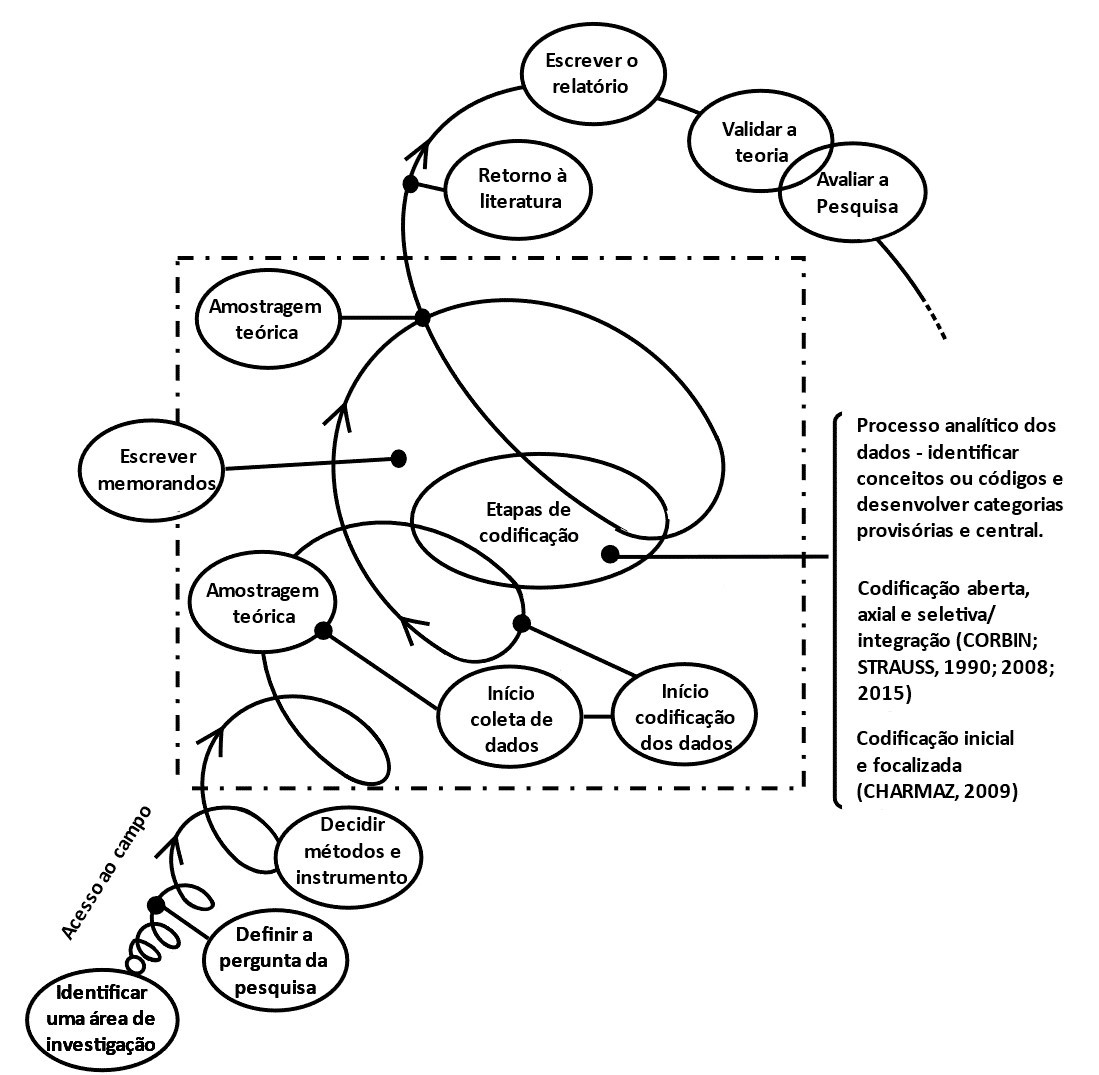
Note. Adapted from Tarozzi, 2008/2011, p. 60, based on Strauss and Corbin (1998/2008), Corbin and Strauss (2015) and Charmaz (2006/2009)
Figure 1 Grounded theory process
The process of constructing a GT is fluid and dynamic (Corbin & Strauss, 2015). It begins with identifying a research area and formulating an initial research question, followed by determining the appropriate data collection instruments. Once these steps are completed, field access leads to theoretical sampling, which involves seeking and gathering data relevant to the development of the emerging theory while creating and refining categories (Charmaz, 2006/2009).
Data collection and analysis are interrelated processes. As soon as the first data are collected, analysis begins, initiating the stages of data coding (Strauss & Corbin, 1998/2008). The analysis process relies on constant comparisons to identify patterns and variations within data, allowing for the extraction of concepts and the development of categories (Corbin & Strauss, 2015).
Memoranda - written records of analyses - should be maintained throughout the analysis process and are essential for theory development (Strauss & Corbin, 1998/2008). These records can vary in type and format, including coding notes, theoretical reflections, and operational memos. They capture the products of coding stages, reflections, considerations, and other issues related to the data, as well as directions and operational reminders relevant to theoretical construction (Corbin & Strauss, 2015; Strauss & Corbin, 1998/2008).
In the final stages of the investigation, as the results are written, the researcher returns to the literature to make comparisons and confirm (or challenge) the interpretation of the data (Corbin & Strauss, 2015). This phase allows for assessing whether a concept derived from the data aligns with or contradicts existing literature. Based on the research findings, the study can extend, validate, and refine knowledge within the field (Corbin & Strauss, 2015).
The final procedures of GT involve validating and evaluating the developed theory by integrating it into the analytical process, which seeks to verify and confirm data interpretations (Corbin & Strauss, 2015). There is no single standard for executing this stage. Researchers may present the findings to informants for feedback on whether they accurately represent their reality or if any important aspects are missing. Additionally, they can compare the theory with raw data and conduct comparative analyses, among other validation methods (Corbin & Strauss, 2015).
Several areas have adopted GT, utilizing different data sources, with interviews being the most common. In social media, analyses have gained traction due to the volume of available data, its accessibility, and growing academic interest. Social media presents both a valuable research opportunity and a rich source of insights (Sharma, 2022), as findings derived from its content can open avenues for further exploration (Syrdal & Briggs, 2018).
The advent of web 2.0 gave rise to social media, fundamentally transforming how software developers and end users interact with the world wide web (Nicolas Alarcón et al., 2018). According to Kaplan and Haenlein (2010), social media encompasses “a group of Internet-based applications that build on the ideological and technological foundations of Web 2.0, and which allow the creation/exchange of user-generated content” (p. 61).
Social media can be understood as a network linking the internet with channels of instant communication, enabling people to express their thoughts and share them collectively. It encompasses a broad spectrum of online communication forms, including blogs, discussion forums, company-sponsored chat rooms, emails, websites (created by users and companies), news platforms, download sites, collaborative platforms (e.g., Wikipedia), social networking sites (e.g., Facebook, MySpace, etc.), professional networks (e.g., LinkedIn), content-sharing platforms (e.g., YouTube), photo-sharing sites (e.g., Instagram, Flickr), and microblogging services (e.g., X; Nicolas Alarcón et al., 2018).
Using social media as a data source in GT presents a significant challenge due to the vast amount of accessible and shareable data and the potential to generate theory-based insights that enhance the understanding of emerging phenomena and possible transformations of previously studied ones. According to Bonfim (2020), little attention has been given to the applications of GT in the new digital era. This underscores the importance of qualitative research that leverages the opportunities provided by data available on the internet, offering a distinct approach by utilizing social media as a source of information.
Halaweh (2018) and Bonfim (2020) proposed a series of steps to integrate social media and digital sources into the GT method. According to the authors, effectively incorporating these resources requires careful consideration of key steps to ensure the robustness of the research, given the diverse opportunities and challenges inherent in theoretical construction within this specific scenario.
3. Method
We conducted this research using the Scopus and WoS databases in November 2023. The search criteria included only peer-reviewed scientific articles with no restrictions on the publication period. For the title or keyword fields, we used the descriptors: (“social network” or “social media”) and “grounded theory”. In Scopus, we limited the research area to business, while in the WoS, we focused on business economics and social sciences. We considered only empirical articles, as theoretical studies did not operationalize GT during the research process and, therefore, provided no elements for analysis. Additionally, the selected studies had to incorporate social media as part of their investigation.
The search yielded 47 articles - 19 from WoS and 28 from Scopus - with 10 duplicates, resulting in 37 articles for review. We imported the data into BibTex (.bib) format for processing in bibliometrix using RStudio (https://www.r-project.org/). Thus, we were able to leverage Biblioshiny, a free statistical and graphical computation software that provides a suite of tools for quantitative bibliometric research (Aria & Cuccurullo, 2017). In the next step, we downloaded the articles for reading and analysis; however, six articles remained inaccessible through any available means, even after contacting the authors.
After reading and analyzing the 31 articles, we excluded nine of them: one theoretical article and eight that did not use social media in the investigation process, leaving 22 articles for analysis. The study focused on the application of the GT method in research involving social media, and we classified the studies as “hard”, “medium”, or “light” (Table 1). In constructing quality criteria focused on transparency and replicability in qualitative research, Aguinis and Solarino (2019) proposed procedures for assessing the potential to replicate studies based on the available information. In this line and drawing inspiration from their model, we established criteria to classify the studies using GT, referencing Corbin and Strauss (1990, 2015), Strauss and Corbin (1998), Charmaz (2006/2009), and Tarozzi (2008/2011).
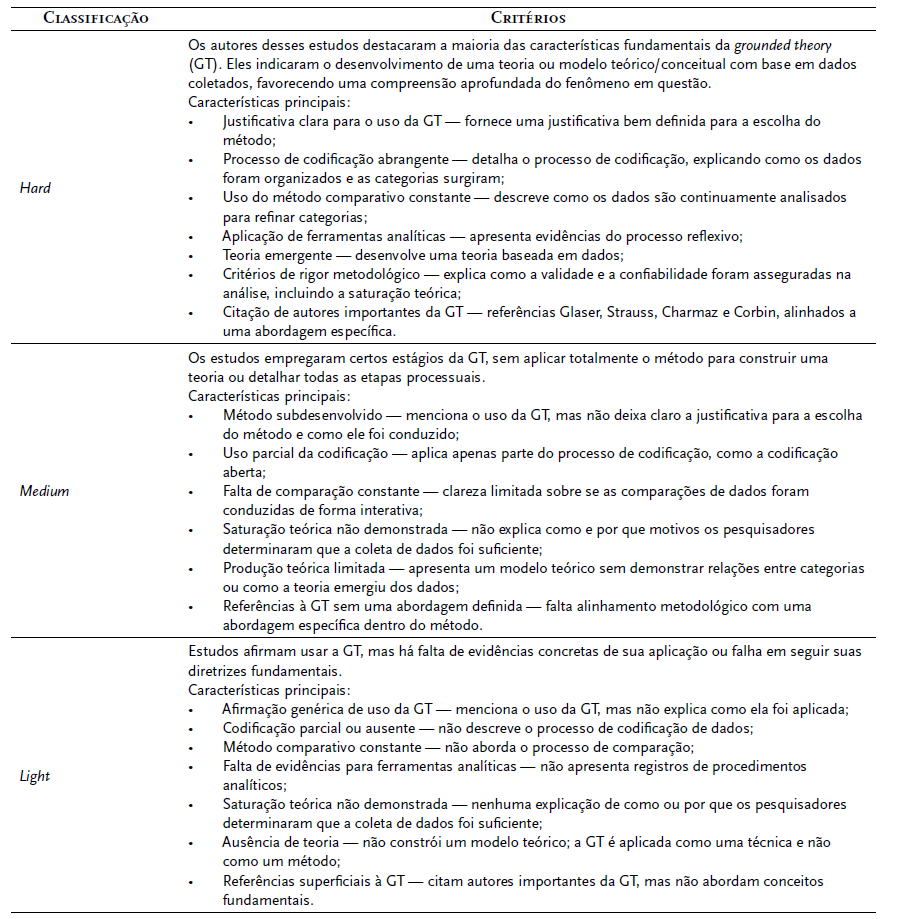
Given that the goal of GT is to develop a theory based on empirical data, the hard classification is appropriate for studies that demonstrate theory development. In contrast, the medium and light classifications do not indicate theory development, often focusing instead on describing the investigated phenomenon using GT tools. The distinction between these latter classifications lies in the level of methodological detail presented in the selected papers.
Although replication is contradictory in qualitative research, transparency in the application of the method is important, particularly regarding the level of detail. After presenting the proposed classification, we outline the most commonly used approaches, key findings, and recommendations for researchers.
4. Results
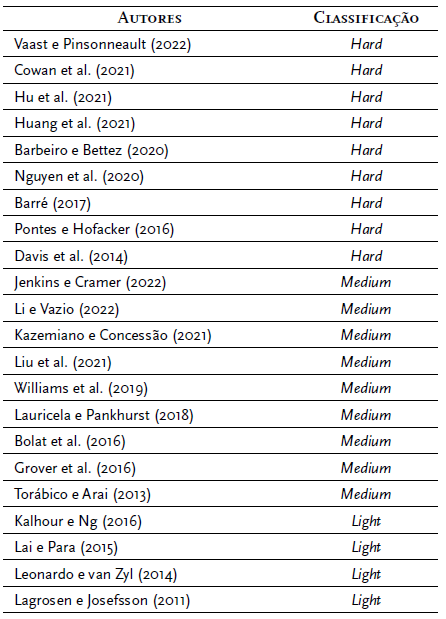
The 22 papers were published between 2011 and 2022, with the highest number in 2021 (six) and 2022 (three). Based on their methodological application of GT and content related to social media, we classified them as “hard”, “medium”, or “light” (Table 2).
4.1. Hard
Nine articles qualified as “hard”. Among them, Barré (2017), Hu et al. (2021), and Vaast and Pinsonneault (2022) were the only studies indicating theory development, though without specifying whether it was substantive or formal. The remaining studies developed frameworks, models, or theoretical concepts. They explored different themes and contexts using GT to deepen the understanding of phenomena related to social media.
Hu et al. (2021) adopted GT procedures for qualitative data collection through interviews, followed by data coding and content analysis. As a result, they developed a theory on how individuals evaluate value both rationally and non-rationally when making decisions regarding the use of social media.
Barber and Bettez (2020) identified behavioral patterns and communicative techniques used by lawyers when in instant messaging. The authors applied GT procedures, such as open, axial, and selective coding, as well as constant comparison and process coding, to integrate emerging concepts into categories and constructs. Their analysis aligned with previous findings in existing literature, expanding on prior findings and revealing behavioral patterns. Consequently, they developed a theoretical model representing the investigated phenomenon.
Bridges and Hofacker (2016) sought to understand how the adoption of innovative technologies in service organizations impacts interactions between individuals in information technology and other functional areas. The authors noted that GT helped clarify the research need more effectively. Their adopted method included in-depth interviews, followed by open, axial, and selective coding, culminating in theoretical saturation. The results identified five distinct categories, led to the formulation of propositions, and resulted in the development of a theoretical model.
Barré (2017) developed a theory to identify the potential determinants of conformity within the close networks of young respondents. The author emphasized that comparing different populations enabled the identification of conformity determinants common to these groups, resulting in theory generation. As part of the research, informants responded to a survey interview entitled Facebook: Its Sources of Satisfaction and Consumption. The author underscored that theory production involves a theoretical interpretation of empirical results, which remains open to discussion within the existing literature.
Huang et al. (2021) investigated donation behavior in medical crowdfunding as a charitable practice in China across the WeChat, Facebook, and X platforms. They conducted interviews with the donors and adopted the GT approach to collect data, code responses, and develop key categories. This process led to the creation of a theoretical model identifying the factors influencing users’ donation behavior on social networks.
Nguyen et al. (2020) conducted semi-structured interviews with Vietnamese women who maintain active accounts on Facebook. After reaching data saturation, they developed a model and theoretical concepts to understand how the audience perceives and presents itself on the platform. The authors termed the main category that emerged from the interview analyses as “self-presentation techniques”, highlighting the highly strategic approaches adopted by participants when presenting themselves on Facebook.
Cowan and Horan (2021) applied the constructivist approach of GT to develop a model for understanding the use of information technologies in romantic relationships in the workplace. The authors detailed the interviews and analyzed the data. During the process, they generated memos, conducted constant comparisons (identifying categories, comparing them with new data, adjusting and refining emerging categories based on new data, and comparing again), and applied open and axial coding.
Davis et al. (2014) used the GT approach to develop a conceptual model called the “five sources model”. This model consists of a set of propositions that explain consumers’ motivations when interacting with brands in a social media community. The authors employed techniques such as constant comparison, data triangulation, and the use of theoretical memos to create categories at the conceptual level.
Vaast and Pinsonneault (2022) developed a new theory on social media and work by conducting a qualitative single-case study using the constructivist method of GT. They did not specify whether the theory they developed was substantive or formal. According to Charmaz (2006/2009), each of the criteria for GT must be in the investigation: credibility, originality, resonance, and utility. The analytical process included various interactions between the data and theory development.
4.2. Medium
Nine articles employed GT procedures, and we identified specific characteristics of the method that provided a certain level of detail regarding their application, enabling replication. However, there is no indication of theory or theoretical/conceptual model development.
Williams et al. (2019) employed GT tools to explore men’s perceptions and reactions on Pinterest, such as constant comparative analysis and line-by-line coding. The authors provided details of how they selected the participants. However, they did not aim to generate a theory and highlighted that certain tools, such as sampling and theoretical saturation, were not applied in the study. By employing only some tools specific to GT, Williams et al. (2019) identified three main categories, revealing men’s perceptions and reactions to participating in an online consumption space dominated by women.
Lauricella and Pankhurst (2018) investigated firefighters’ use of social media to educate the public on fire safety and prevention. They noted the use of both inductive and deductive processes, incorporating initial, axial, and theoretical coding. The rigorous practice of GT revealed seven overarching themes.
Bolat et al. (2016) explored how business-to-business companies use mobile social media in the advertising and marketing sector in the United Kingdom. They conducted interviews and subsequently performed visual and thematic analyses of the content presented on company blogs, Facebook pages, and X. They employed three stages of coding: constant comparison, theoretical sampling, and simultaneous data collection and analysis, using NVivo software. The study provides insights into social media practices using mobile technology for business-to-business companies.
Liu et al. (2021) employed GT procedures for data analysis. The study explored data security in crowdsourcing projects and examined the role of trust theory in its management. They adopted simultaneous data collection and analysis, comparative incident studies, the development of analytical categories, memo writing, and theoretical sampling.
Grover et al. (2016) investigated the impact of social media on women’s self-image perception. The authors used GT to analyze the data obtained through focus group discussions. By adopting open coding, they categorized the statements and established relationships through constant comparison, resulting in emerging findings. Further refinement of the data led to the identification of patterns, contributing to the development of emerging themes aligned with existing theoretical literature.
Torabian and Arai (2013) analyzed posts on international travel blogs to understand tourists’ perceptions of souvenir authenticity. They used the constructivist approach for data analysis, providing details on the process of initial (line-by-line), axial, and focused coding, as well as theoretical sampling and saturation. The data analysis revealed seven key themes.
The study conducted by Kazemian and Grant (2021) investigated the factors influencing the use of enterprise social networking systems by seekers and providers of knowledge. GT was employed to analyze empirical data from posts obtained in Microsoft Yammer and a focus group. The researchers used detailed initial, focused, and theoretical coding processes.
Li and Voida’s (2022) investigation aimed to understand how nonprofit organizations are incorporating social media into their public relations practices. They used GT to analyze data from the interviews. The authors emphasized their involvement in an iterative analytical process of GT, alternating between interview data and research literature.
Jenkins and Cramer (2022) used GT to analyze tweets posted on the Racism Watchdog account. The authors examined the nature of the content by employing screenshots as a digital and antiracist surveillance tool, detailing the process of analyzing tweets through GT. They identified four themes as a result of the case study.
4.3. Light
Four articles provided limited details regarding the use of GT, making replication unlikely. There is no indication of theory development or the creation of a theoretical/ conceptual model.
Lai and To (2015) employed GT to identify Macau’s destination image. The authors did not detail the specific GT procedures adopted, focusing on the content and lexical analysis of the data.
Similarly, Kalhour and Ng (2016) used the GT approach to explore the virtual consumption behaviors of gamers on social networks. Although they provided details on how they conducted the interviews, the only specific procedure mentioned was related to theoretical sampling for selecting participants, with no reference to other GT procedures.
Leonard and van Zyl (2014) employed GT exclusively for document analysis, focusing on identifying concepts and categories. They did not provide information on other GT procedures, such as the approach adopted or the type of coding used. As a result, the authors developed a conceptual framework incorporating data from previous research by other authors. The creation of a conceptual framework under these conditions did not allow for a “hard” classification.
In conducting empirical research to investigate social media marketing from the perspective of entrepreneurial learning, Lagrosen and Josefsson (2011) conducted in-depth interviews with 10 companies of various sizes and sectors. They analyzed the collected data using methods inspired by GT by employing a constant comparison technique. The authors did not provide additional details on how they conducted GT-based analysis.
4.4. Main Approaches Adopted
Another result of the analysis pertains to the most prominent authors of GT and the most commonly utilized approaches in the sample of analyzed articles (Table 3).
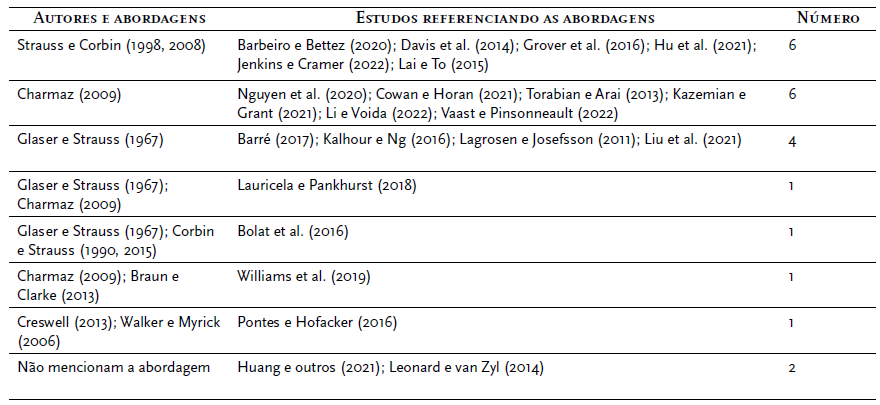
The most frequently employed approaches in six articles each were Strauss and Corbin (1998, 1998/2008), also known as “full conceptual description” (Tarozzi, 2008/2011), and Charmaz’s constructivist approach. Subsequently, we identified the classic approach by Glaser and Strauss (1967) as having a significant incidence (four articles). Three of the analyzed studies did not explicitly mention the adopted approach.
5. Discussion
In the panorama of the analyzed studies, interviews and focus groups were present in 14 as part of the data collection or as a complement to social media data. Procedures not commonly associated with GT were used; Hu et al. (2021) delineated the use of GT tools and indicated the application of content analysis, as did Lai and To (2015). Liu et al. (2021) and Leonard and van Zyl (2014) considered case studies a research strategy.
The studies utilized numerous social media platforms, with Facebook (11) and X (nine) being the most frequently used and often associated with other media. Grover et al. (2016) and Leonard and van Zyl (2014) did not specify which media they used in their investigations; however, the theme of social media and social networks remains central to the research. There is a recognition of the vast potential for expanding the use of social media data as a resource for GT development, especially for theory generation. The analyses revealed a limited adoption of software for qualitative data analysis, with only four studies reporting the use of specific tools for this purpose.
Regarding the operationalization of the method, there is a recognized need for a more thorough discussion of methodological aspects to ensure scientific rigor, particularly when employing a qualitative approach with GT. The predominance of medium and light classifications reflects this practice. Given the use of GT use, the rigor of qualitative research depends on the clarity, detail, and transparency of the actions undertaken throughout the study, assuring the qualification and validation of each stage and, ultimately, the GT model. Furthermore, a lack of transparency in the GT processes remains evident, as highlighted by Aguinis and Solarino (2019) in their discussion of qualitative research.
Other studies have referenced this method at various stages. The coding stage was the most frequently employed process, spanning the classical, Straussian, and constructivist approaches. Approximately half of the studies highlighted a constant comparison of the data and theoretical sampling. Barré (2017), Hu et al. (2021), and Vaast and Pinsonneault (2022) stand out for the clarity and rigor in executing the GT process.
Analysis of the studies revealed numerous challenges for researchers in conceptualizing and applying GT. Although established procedures for GT contribute to standardization and rigor, superficially, superficial application can compromise research integrity. The studies reference Strauss and Corbin, indicating the use of the Straussian approach, followed by the classic approach developed by Glaser and Strauss and Charmaz’s constructivist perspective. Notably, two studies did not specify the GT approach employed.
GT has also aimed to develop theories in psychosocial contexts through comparative analyses, enabling the construction of a theory solely driven by the desire to explore a specific area or context without presenting a preliminary hypothesis. A defining feature of GT is the continuous and systematic process of data collection and analysis to generate and verify results (Bittencourt, 2017). However, most of the analyzed studies did not clarify how this process unfolded. The data used in the research reflect the knowledge and behavior of individuals within a particular context, requiring the researcher to apply precise criteria in data collection and analysis, thereby representing lived experiences through a theory.
This research does not aim to adhere to a specific epistemological stance (interpretivist or constructivist) associated with GT but rather seeks to provide an analysis and classification based on the transparency of information in the methodological description, particularly regarding the processes of analysis and result construction. Some of the analyzed studies demonstrated the use of the method in partially way, mentioning only some necessary procedures for its application. In research employing the GT method to build theory, it is expected that, upon completing the analysis of results and revisiting the literature, existing gaps will be identified and explained (Corbin & Strauss, 1990).
Based on these analyses, we highlight several reflections on this method. The first pertains to the time required for its development, as GT demands extensive work without strict time constraints. The second concerns the method’s operationalization. While GT yields rich and in-depth results through a deductive, inductive, or abductive process, its lengthy and iterative stages can cause anxiety for researchers. However, abstraction is essential for the data to mature.
The third reflection concerns the researcher’s role in the process. The researcher plays a fundamental role in selecting study elements, exercising patience throughout the method’s execution, demonstrating sensitivity during analyses and category identification, and upholding ethical standards. The final reflection addresses the method’s potential and inherent risks (Corbin & Strauss, 1990). In terms of potential, GT enables a closer alignment between empirical data and reality, offering new perspectives by allowing researchers to look beyond existing theories without being confined to predefined frameworks. However, the method also presents risks, particularly in its complex operationalization, from defining research elements to developing a theory grounded in the data. This process demands significant time and dedication from researchers. Another critical risk factor is the researcher’s ethical stance throughout all phases. As Harley and Cornelissen (2020) argue, rigor is an emergent quality of reasoning; qualitative researchers derive inferences from data and establish criteria to reflect on and enhance rigor in their work.
5.1. Final Thoughts and Recommendations
The application of GT requires a detailed procedure to ensure rigor, transparency, reliability, and quality in research - an aspect that several studies in this review did not adequately address. GT is a systematic research method structured in multiple steps, employing an iterative process of constant data comparison to describe and explain a phenomenon. While researchers have flexibility in developing this method, they carefully follow key steps outlined in the main GT approaches.
One possible strategy is to adopt structured frameworks for conducting GT studies in social media research, such as those proposed by Halaweh (2018) and Bonfim (2020). Regarding GT as a method, the guidelines presented by Corbin and Strauss (1990, 2015), Strauss and Corbin (1998), Charmaz (2006/2009), and Tarozzi (2008/2011), among others highlighted in Figure 1, are recommended. The method allows for the application of its procedures and stages both in developing a formal or substantive theory and in the early stages of research, relying solely on the coding process to systematize categories without formalizing a theory.
To enhance the rigor of qualitative research, the model proposed by Gioia et al. (2013) provides a structured protocol outlining a series of coding steps that enable researchers to derive GT from qualitative data. Ketokivi and Mantere (2021) applied Toulmin’s argumentative structure model to empirical management research, identifying four types of assurances: theoretical, inferential, procedural, and contextual. According to the authors, explicitly articulating these assurances and their underlying supports paves the way for a more comprehensive understanding of how to structure and justify arguments, ultimately contributing to greater research rigor.
Aguinis and Solarino (2019) addressed transparency-related issues that may compromise research development and provided recommendations through 12 transparency criteria and their corresponding measures. According to the authors, these criteria can serve as a framework for evaluating previously published qualitative research and as a guiding tool for future research employing qualitative methods.
Rigor in data analysis is a widely discussed topic in social media studies, and GT provides methodological rigor when applied comprehensively. This method aims to understand a given context by identifying, developing, and relating concepts within a specific research phenomenon. The discussions presented seek not only to fulfill the research objective but also contribute to the broader dissemination of GT as a method for investigating social media.
GT is well-suited for understanding how actors construct meaning through intersubjective experiences (Suddaby, 2006). Its primary objective is to explore social processes and examine how the multiplicity of interactions generates variations within these processes (Heath & Cowley, 2004). These aspects underscore its significance and relevance in research, provided that the methodological rigor and transparency recommended in the GT literature are upheld. Moreover, GT provides structured steps that facilitate the systematization of information, the hierarchical organization of data, and a meticulous description that ensures transparency in data collection and analysis (Corbin & Strauss, 2015).
This method offers a structured approach to establish relationships between studied phenomena that lack theories or explanations, thereby contributing to knowledge development in a given field. Accomplishing this goal requires adherence to specific procedural steps, as outlined in Figure 1. Researchers employing GT are encouraged to document the steps undertaken clearly, specify whether the objective is to construct theory or code data, and explicitly define the chosen approach to enhance transparency.
Previous studies have highlighted both recommendations and limitations related to using social media content. A positive aspect is the credibility of raw data, as direct access from the social media platform eliminates transcription bias. However, ethical considerations are crucial, particularly regarding users and post anonymity and whether the researcher should inform social media users about data collection. Another limitation concerns restricted access to data, which may affect the representativeness of the analysis corpus in relation to the studied phenomenon.
Regarding the use of social media content in research, few studies effectively leverage data from social media as a source for GT development. Instead, researchers frequently rely on user interviews and other techniques, such as visual content analysis and focus groups. Additionally, most studies did not mention the use of software during the analysis stage. Employing appropriate qualitative analysis software can enhance transparency and provide a more structured approach to data analysis.
The limitations of this study include the choice of only two databases, which restricts the analysis to the content of the selected articles and reflects the epistemological positions of the journals regarding the qualitative method.
We hope that this study encourages researchers to reflect on the GT process and promotes the method’s application in social media research by discussing processes and needs. We recommend expanding future studies to other databases and exploring different areas with varied epistemological stances. Additionally, this study aims to inform researchers about the challenges of applying GT in social media-related research. By providing a robust alternative framework for criteria analysis, we seek to support the development of new substantive or formal theories and systematic data coding, fostering future studies that contribute to the dissemination of GT as a method. Finally, given the advancements in artificial intelligence tools, we suggest incorporating data-linked content to broaden discussions on this topic while addressing the challenges and limitations identified.

