




 texto em
  Inglês (pdf)
 Artigo em XML
 Referências do artigo
 Tradução automática
 Enviar este artigo por email
 Citado por SciELO
  Similares em
SciELO
Similares em
SciELO 
 Permalink

1. Introduction
In Spain, during the Second Republic (1931-1939), the suffragette and emancipatory ideas associated with feminism were materialised through publications edited by women, which became spaces for democratising debate and promoting political mobilisation. This context allowed “the advance of Spanish women into the ‘public sphere’” (Ramos Palomo & Ortega Muñoz, 2020, p. 37). However, this parenthesis of liberation came to an end with the beginning of Franco’s dictatorship (1939-1975). From 1939 onwards, women’s social role was once again confined to the private sphere as wives, mothers, and caregivers, without full access to civil rights reserved exclusively for men.
In this sense, López (2020) describes Franco’s regime as a return to the “virilisation of State and society” (p. 170), in which men monopolised control of the main spaces of political and public power. Women were stripped of their civil rights, married women were practically considered a minor or legally incompetent, with the correspondent authority vested in them: “this was reflected in the former Article 1263 of the Civil Code, concerning the provision of consent in contracts, which equated married women with minors, the insane and illiterate deaf-mutes” (Torralbo Ruiz, 2011, p. 11).
The democratic transition (1975-1978) marked a revival for the feminist movement, which had remained invisible and repressed for decades. The Spanish Constitution of 1978 implicitly prohibited gender discrimination, but women’s mobilisation and debate about the place they wanted to occupy in the new democratic order had begun years earlier. Coinciding with the dictator’s death, 1975 was declared International Women’s Year by the United Nations, and the first National Women’s Liberation Days were held in Spain. Subsequently, events such as the “Primeres Jornades Catalanes de la Dona” (First Catalan Women’s Conference; Barcelona, 1976) and the “II Jornadas Estatales de la Mujer” (Second National Women’s Conference; Granada, 1979) addressed issues relevant to the feminist movement of the transition (Pérez Fernández, 2016).
Among the most controversial debates was the relationship that feminism should have with political parties. While one sector defended the need for a strategic alliance to ensure the inclusion of feminist demands on the political agenda, another sector was clearly sceptical of the parties’ genuine interest, which were mainly composed of men. This disagreement led some activists to create their own organisations, such as the Madrid Feminist Collective, promoted by Cristina Alberdi, or the Feminist Party, founded by Lidia Falcón (Fernández Fraile, 2008).
With the gradual abolition of laws that underpinned gender inequality, a new legal and political framework emerged that promoted women’s greater participation in the public sphere. The inclusion of women in the paid labour market, the assumption of responsible roles in institutions and organisations, and the increase in university enrolment rates were crucial factors in advancing gender equality in the 1980s and 1990s (García, 2022; Huber et al., 2009).
The aim of this research is to analyse developments in the photographic representation of women on the front pages of newspapers during and after the transition. Although significant differences in media treatment by gender have been documented (Matud et al., 2012; Van der Pas & Aaldering, 2020), analyses of graphic material have been more frequent in non-news genres (Hernández Herrera, 2019). Therefore, the present study adopts a novel approach, selecting a 20-year (1977-1997) longitudinal period to investigate the presence of women and the roles attributed to them on the front pages of national newspapers.
The research includes the front pages of ABC and El País, two of the leading national daily newspapers in Spain, to avoid biases stemming from specific editorial lines. ABC, founded in 1903, is traditionally conservative and monarchist, while El País, created in 1976 during the democratic transition, is considered progressive and centre-left. Both are distributed nationwide and address a broad readership. A quantitative analysis was conducted using a codebook designed to classify female roles into categories based on the existing literature. The purposive sampling covers each month of March, coinciding with International Women’s Day, to compare whether newspaper coverage of women increases around this significant date. This analysis is in the tradition of previous works (Aznar et al., 2017; Fernández García, 2016; Gómez y Patiño, 2011) that have studied the representation of women in the media, but broadens the perspective by incorporating a systematic analysis of cover images, which contributes to documenting the evolution of gender stereotypes in Spanish media discourse.
2. Theoretical Framework
Numerous authors who have addressed the journalistic treatment of women in the media have justified their research by considering the media as “a key indicator of progress towards gender equality and the achievement of women’s human rights” (Gallagher, 2015, pp. 1-2), “powerful instruments of social change” (Gallego-Ayala, 2015, p. 19) and “notaries of social reality” (Gómez y Patiño, 2011, p. 120). The analysis of visual and textual discourses is crucial for a complete understanding of media power. The media not only reconstruct reality but also shape it, playing a central role in shaping public opinion and legitimising specific interpretations of political and social reality (Schiller, 1976; Smythe, 1977). According to Schiller (1976), the media are tools at the service of economic and political elites who use media control to maintain the status quo and existing social inequalities.
During the transition in Spain, the press played a crucial role due to widespread support for the restoration of democracy and its institutions (Gaitán Moya, 1992). In this context, issues such as the monarchy, the unity of Spain and the army were treated with particular care to avoid disorder in a convulsive political and social moment (Montero et al., 2008). A distinction is made between the newspapers of the time, which are classified as “old”, such as ABC or La Vanguardia, and “new”, such as El País or Diario 16 (Montero et al., 2008). The former, heirs to the Movement’s conservative press, were not opposed to democracy, but they did not strongly support it. The latter defended freedom and civil rights (Orduña Prada, 2019). It is worth highlighting the case of El País, which, soon after its foundation, became the most widely read newspaper in Spain, achieving news standards comparable to those of the leading European newspapers.
However, the advances in women’s representation and freedom did not always have positive consequences. Some media, taking advantage of the new social context, resorted to the objectification and sexualisation of the female body as a strategy to increase sales (Goldman et al., 1991). A paradigmatic example of this was the so-called “hybrid publications”, which combined political news coverage with sensationalist or sexual content. Among these, Interviú, founded in 1977, reached a circulation of 3 million copies per week in 1979 by presenting political interviews together with provocative images of naked women (Gunther et al., 1999).
Studies carried out with a gender perspective in the Spanish media have so far focused on two different issues. On the one hand, the scarce presence of women in decision-making positions in the press (De-Miguel et al., 2017; Suárez-Romero & OrtegaPérez, 2019) and, on the other hand, the representation of women in the news content itself (Aznar et al., 2017; Gómez-Escalonilla Moreno et al., 2008). Fagoaga de Bartolomé and Secanella (1984), in an analysis of El País, ABC, La Vanguardia, Diario 16 and El Periódico, concluded that the low percentages of mentions of women in the written press were primarily due to their absence from the agenda of foreseeable events, in spokesperson roles or as traditional news sources. This situation has not changed significantly in contemporary contexts, as Prieto-Sánchez (2018) notes, highlighting that photojournalism and media coverage continue to favour schemes dominated by male voices and relegate women’s opinions and experiences to the background.
In this framework, longitudinal studies analysing the photographic representation of women on the main front pages of national newspapers are necessary for several reasons: (a) front pages usually reflect the issues of most significant interest; a low presence of women compared to men could be evidence of a situation of discrimination; (b) a prolonged analysis over time allows us to identify whether women acquire greater political, economic and social relevance with the advance of democracy; and (c) news photography constitutes a little studied field in Spain, despite its capacity to reflect aspects such as clothing, posture, facial expression, framing or setting, which are not usually perceptible in textual analyses. Kress and van Leeuwen (2006), through their multimodal model, propose an analytical approach that seeks to overcome the traditional barriers between the disciplines that study language and images separately. From their perspective, both modalities not only coexist but also interact and influence each other in the construction of meaning.
In the field of photography, the authors identify three fundamental aspects for analysis: (a) informative value, determined by the positioning of elements in the composition. Specific informative meanings are assigned to the different “zones” of the image: left and right, top and bottom, as well as centre and edge; (b) visibility, associated with factors such as the placement of elements in the foreground or background, their relative size, contrasts in tonal value or colour, variations in sharpness, among others; and (c) framing, identified by actual framing lines or by the presence of visual elements that act as dividers. These lines can connect or separate components within the image, indicating whether they belong to the same semantic space (Kress & van Leeuwen, 2006).
In this sense, journalistic photography is a powerful means of influence because it shapes readers’ perceptions in a less obvious way than texts do. Soria Ibáñez and María del Mar (2016) analysed the treatment of women in the Spanish press and concluded that:
most of the photographs in which women appeared had a sexual focus ( ... ). Given that these are the digital versions of the two most widely read newspapers in Spain, the practice of placing half-naked women on the front pages as advertisements is also worth reflecting on. (p. 162)
When parties were legalised, in the June 1977 elections, the percentage of women in the Senate was 2.4%. And in all the elections between 1979 and 1989, the percentage in Congress was 6%. In 1987, the Spanish Socialist Workers’ Party (Partido Socialista Obrero Español, PSOE) proposed a minimum quota of 25% for women. This increased the number of women in the party organisation at the regional level and in the regional executive committees from 8% to 22.4%, a system also applied by other parties such as the People’s Party (Partido Popular, PP) and United Left (Izquierda Unida). In the 1989 general elections, the number of women candidates for the Congress of Deputies rose from 21% in 1986 to 30.5%, and for the Senate from 15% to 23.9% (Fernández Fraile, 2008).
One might think that more women in politics would lead to more media coverage. However, a study comparing media coverage of government members in 1996, 2004, and 2011 found that although the number of women in government increased in 2004, reaching a gender-balanced administration for the first time, coverage of female ministers remained lower than that of male ministers (Fernández García, 2016).
In recent years, gender studies focusing on the image of women in the media have shifted their attention to the digital sphere, with researchers examining how women are portrayed online and the consequences of this representation (Amores et al., 2020; García Orosa & Gallur Santorum, 2019; Jia et al., 2016; Taha & Fahmy, 2023). In their report on gender representation in Spain’s leading online media outlets, Soto et al. (2004) analysed more than 26,000 gendered mentions in Spanish online newspapers and found that when proper names were used, nine out of 10 references corresponded to men. Amores et al. (2020) analysed 500 photographs of refugee women in European digital newspapers, including El País and El Mundo. They found that women were underrepresented, and more likely to be associated with religious symbols and the role of victims than men, who were more often portrayed in contexts of burden or threat.
García Orosa and Gallur Santorum (2019) studied the presence of gender stereotypes as news values in European digital press articles published between 2013 and 2014 in The Times, El País, Le Monde, Jornal de Notícias and Corriere della Sera. According to their research, in the production and discourse of information, women in unfavourable situations are given priority, reinforcing traditional female roles and stereotypes. Likewise, Fernández García (2015) found that these differences extend beyond the ideological orientation of the media: both liberal and conservative newspapers exhibit biases in their coverage of women politicians. Such findings underscore that gender representation in the press is shaped not only by political ideology but also by structural and cultural factors, which justifies the need for a methodological approach attentive to both quantitative patterns and interpretative dimensions.
3. Methodology
The aim of this paper is to conduct a longitudinal analysis of images on the front pages of El País and ABC, documenting the progress in the representation of women on these newspapers’ front pages, in correspondence with the progress of democracy in Spain. The choice of the front page as the object of study responds to its function as “the showcase in which a newspaper displays its information mechanism and serves to present the most important current events quickly and directly” (Argiñano & Goikoetxea Bilbao, 2020, p. 3).
The sample covers the period from 1 March 1977, the first issue of El País published in that month, to 31 March 1997, the period after the introduction of quotas for the presence of women in government institutions, reflected in the changes observed after the victories of the PSOE in 1993 and the PP in 1996. The choice of March is justified by the celebration of International Women’s Day, which allows us to analyse whether there is an increase in press coverage around 8 March. According to Gómez y Patiño (2011):
the day itself, its celebration and the space it occupies in the media could be an item on the journalistic agenda, with a professional obligation to cover the celebration by giving it the day’s own content, or by recalling what happened on that day in previous years. (p. 120)
The selected research method is visual content analysis (Neuendorf, 2017), which “is a research technique designed to formulate, from specific data, reproducible and valid inferences that can be applied to their context” (Krippendorff, 1980/1990, p. 28). This method “may be conducted on written text, transcribed speech, verbal interactions, visual images, characterisations, nonverbal behaviours, sound events, or any other message type” (Neuendorf, 2017, p. 24). In this regard, visual content analysis has been employed in different research papers to examine how various social groups are represented in news images (Bell, 2001; Castillo, 2014; Hernández Herrera, 2019; Zafra-Arroyo & Öksüz, 2025). Beyond the quantitative dimension of counting and categorising occurrences, the analysis also considers the interpretative aspects of visual representation, such as the symbolic roles assigned to women, the emotional or hierarchical framing of their presence, and the implicit meanings conveyed through context. This dual approach not only allows the measurement of frequencies but also an understanding of the cultural and ideological implications of the portrayals.
The corpus comprises all front pages published in March of each year between 1977 and 1997, amounting to approximately 651 issues per newspaper (around 1,302 in total). A minimal number of issues, especially from earlier years, were unavailable, but they represent a minority that does not affect the overall results. Across these issues, a total of 242 photographs portrayed women (126 in ABC and 116 in El País). The units of analysis were obtained from the digital newspaper archives of both newspapers, in the “front page archive” sections. The design of the codebook was based on previous work in gender studies (Gómez y Patiño, 2011; Hernández Herrera, 2019; Larrondo Ureta, 2019; Leyton et al., 2024), as well as on a pre-test prepared by the author before the data analysis.
Finally, the following categories were established to determine the role of women in the images or news items: (a) artist/celebrity (professions related to film, dance, theatre, or recognisable faces from the tabloids of the moment); (b) victim; (c) spouse/companion; (d) queen; (e) worker; (f) model (representation of the woman as an object of beauty, although without any special informative interest or function in the image); (g) mother; (h) political/activist/trade unionist (social, political, protest or rights movements as well as formal representation in the institutions); (i) tourist; and (j) athlete.
Subsequently, during analysis, the category “other” was added to classify images that did not fit into any of the predefined categories. The category “secondary” was also added, grouping images in which women appear in distant shots, with their backs turned or in marginal positions. Underage girls were not included in the count.
4. Analysis and Results
4.1. Comparative Analysis of Frequency by Decade
Figure 1 shows how frequently women appeared in different categories on the front pages of both newspapers between 1977 and 1987.
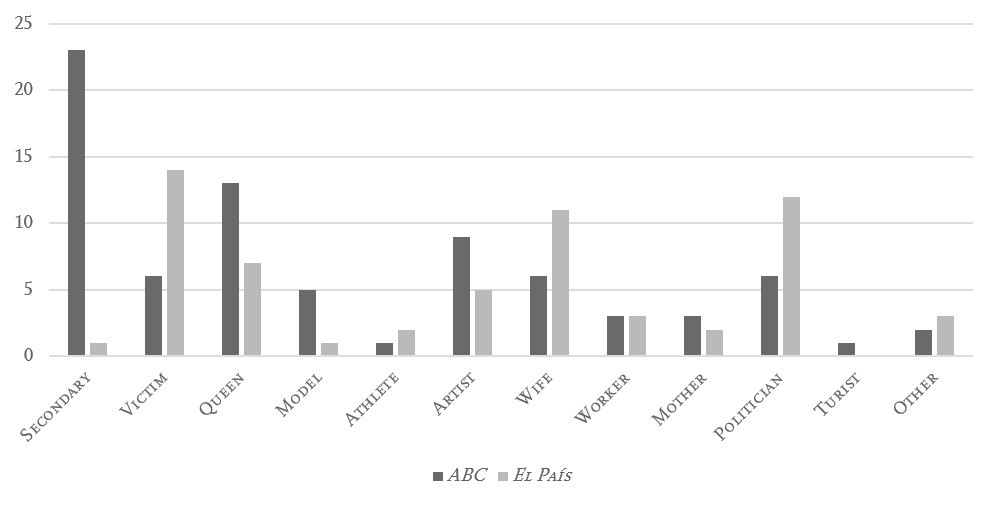
In ABC, the high number of appearances by women in secondary roles stands out. As explained in the methodology, these are “distant shots, with their backs turned or in marginal positions”. The next most common category is “queen”, which is understandable for a pro-monarchy newspaper. This reflects the context of a political transition, in which ABC accords the Spanish Queen a prominent role, reinforcing her image by featuring her on numerous front pages. The categories “victim”, “wife”, “artist” and “politician” are relatively similar in terms of quantitative importance, while the rest barely reach five appearances throughout the analysed period.
El País’ presentation of photographs includes fewer images featuring women, though their presence as secondary figures is nearly eliminated. The category “politician” appears particularly frequently, suggesting a greater effort to reflect women’s presence in emerging spheres during the Spanish transition. However, this category is closely followed by the “wife” category and slightly surpassed by the “victim” category, which positions women in vulnerable and caring roles. “Queen” appears on six occasions, but nowhere near as frequently as in ABC.
Figure 2 shows the representation of women on the front pages of the ABC and El País ewspapers between 1988 and 1997.
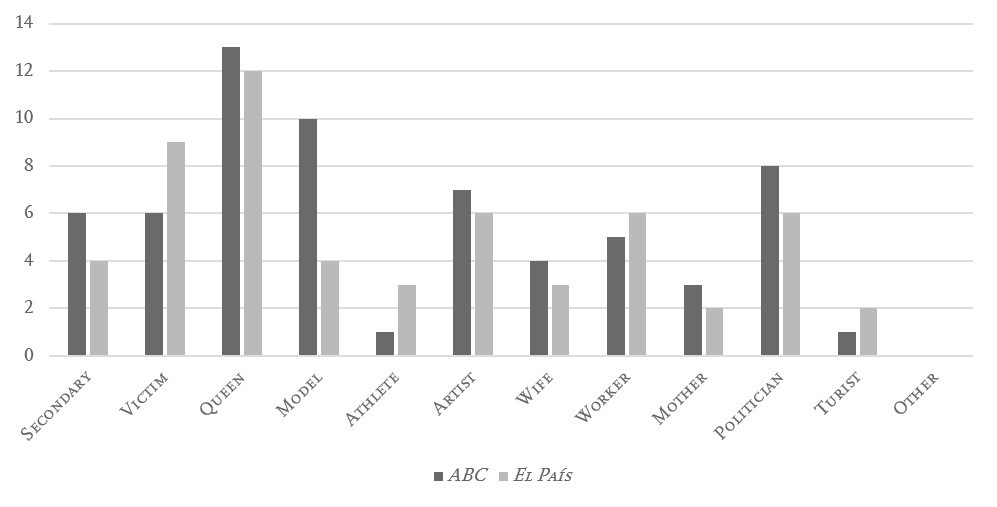
In ABC, women in secondary roles are less common, and the “queen” category appears most frequently. Interestingly, the figure of the “model” follows closely behind. This objectifies women as it does not contribute anything to the front page of the newspaper. Traditional roles such as “wife” or “mother” are underrepresented, while roles associated with more modern behaviours, such as “politician” or “artist”, appear more frequently than those associated with more traditional categories, such as “victim”. El País also shows a wide range of representations, with “queen” being the most prominent, followed by “victim”. The categories “artist”, “worker” and “politician” have very similar frequencies, while the rest lag behind.
4.2.1. Queen
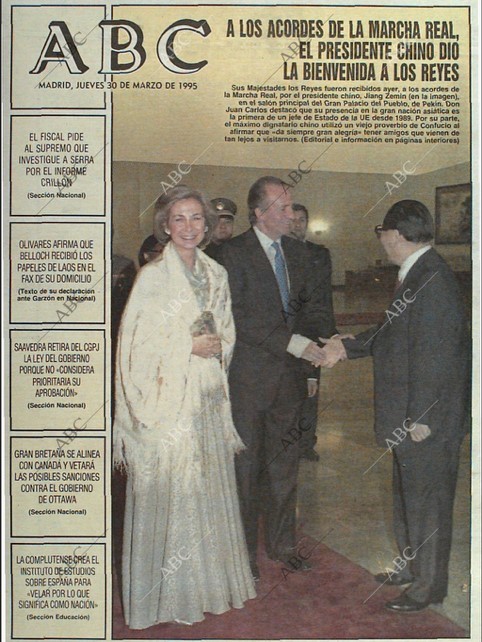
ABC, a monarchist publication, published 26 images of Queen Sofía of Spain between 1977 and 1997 (see Figure 3, Figure 4 and Figure 5). Other monarchs are also featured, including the Queen of Sweden and Empress Farah Pahlavi. The protagonist of most of the images in this category is Queen Sofía, who usually appears alongside the retired Juan Carlos de Borbón at diplomatic events, on international trips, and in family settings. This category is closely related to that of “companions” or “wife”, since Queen Sofía rarely appears alone. When she does, she is photographed smiling, waving and looking elegant. The presence of women associated with the monarchy symbolises continuity, tradition and historical legitimacy. However, this visibility is constrained by an institutional and conservative framework that emphasises women’s ornamental and ceremonial roles.
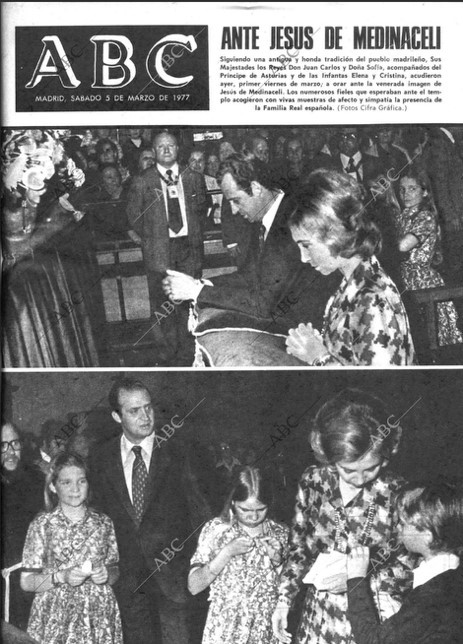
Credits. ABC, 1977
Figure 3 ABC, 5 March 1977: Queen Sofía participates in a religious act with King Juan Carlos and their daughters
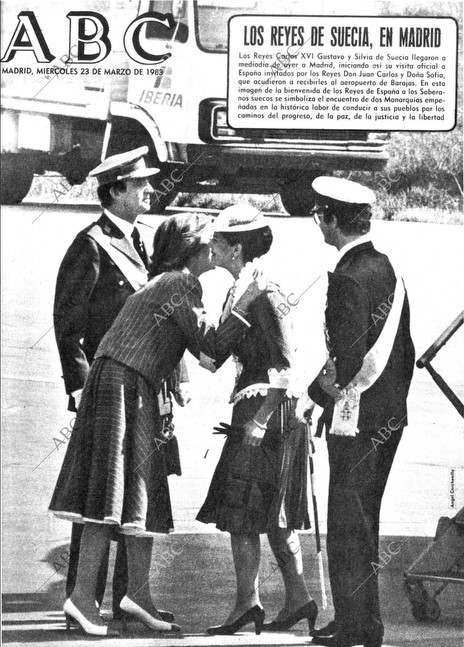
Credits. ABC, 1983
Figure 4 ABC, 23 March 1983: Queen Sofía greets Queen Silvia of Sweden on her official visit to Madrid
4.2.2. Victims
This category is present throughout the study. In particular, El País frequently features images of women affected by attacks, accidents, military conflicts, natural disasters and general violence (see Figure 6, Figure 7 and Figure 8). These representations are associated with an image of suffering and mourning, as seen in photographs of women mourning the death of children, husbands or partners, and of victims of terrorist attacks, fires, police violence and traffic accidents, as well as refugees in contexts of war in the Balkans, Palestine and Iraq. Women who have survived abduction or violence are also included. These representations emphasise female vulnerability, often portraying women as helpless or being helped by men. This approach gives them visibility based on their vulnerability, perpetuating the association between femininity and fragility.
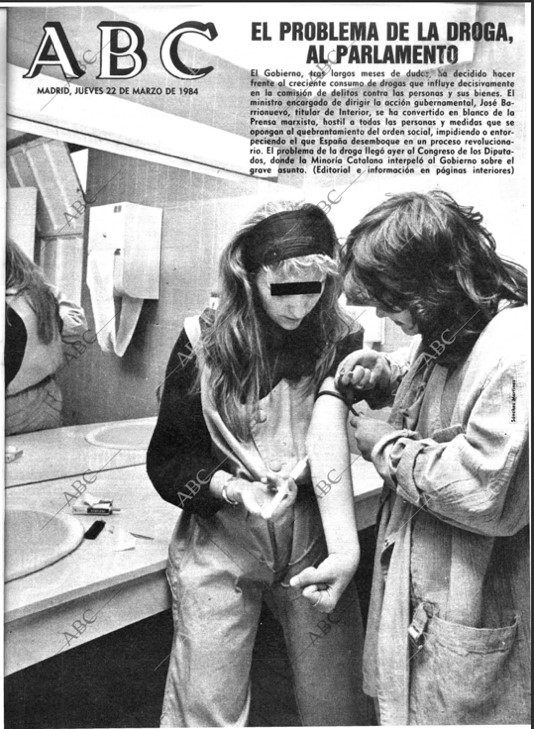
Credits. ABC, 1984
Figure 6 ABC, 22 March 1984: two young women are portrayed as victims of drug addiction
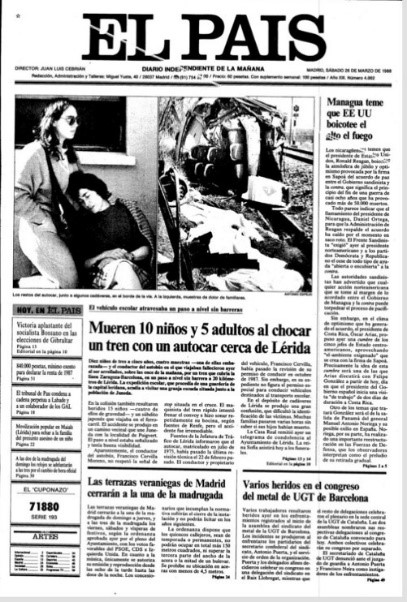
Credits. El País, 1988
Figure 7 El País, 26 March 1988: two women mourn next to the remains of a bus crash that killed 15 people
4.2.3. Wives or Companions
This category shows women in the role of wives or companions of power figures, such as diplomats or politicians at official events (see Figure 9, Figure 10 and Figure 11). This is very common, especially in El País, where women are represented through their links to male figures. Prominent examples include President Carter’s wife, John F. Kennedy’s wife, Nancy Reagan (Ronald Reagan’s wife), Gorbachev’s wife and Felipe González’s wife, among others. Female figures are sometimes shown without being specifically identified, as in the case of a woman presenting Tierno Galván’s candidacy. The representation of these women is sometimes framed in emotional and vulnerable situations, as in the case of the artist and activist Yoko Ono, who was photographed crying in a tribute to her deceased husband, John Lennon. In these images, women are represented as extensions or complements of the male protagonists, lacking any discursive or informational autonomy. This visual framing perpetuates the ideas of dependence and subordination, portraying their relevance as deriving exclusively from their connection to the male figure. Consequently, the notion that women’s public visibility hinges on their relationships with men is reinforced, thereby limiting their image as autonomous individuals.
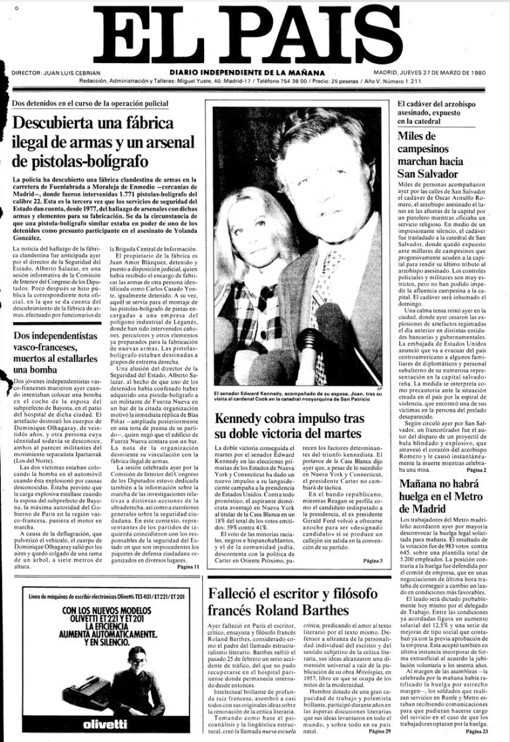
Credits. El País, 1980
Figure 9 El País, 27 March 1980: Jacqueline Kennedy accompanies Senator Edward Kennedy during his political campaign
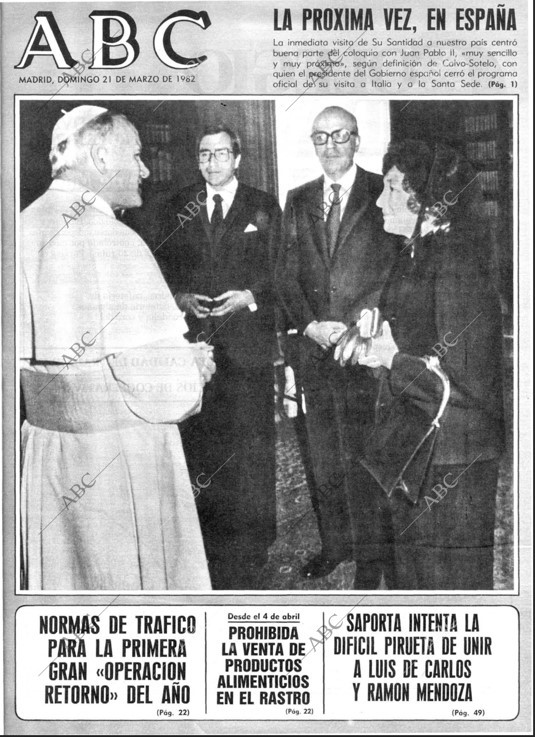
Credits. ABC, 1982
Figure 10 ABC, 21 March 1982: Pope John Paul II meets Spanish officials, accompanied by Pilar Ibañez, wife of Prime Minister Calvo Sotelo
4.2.4. Model
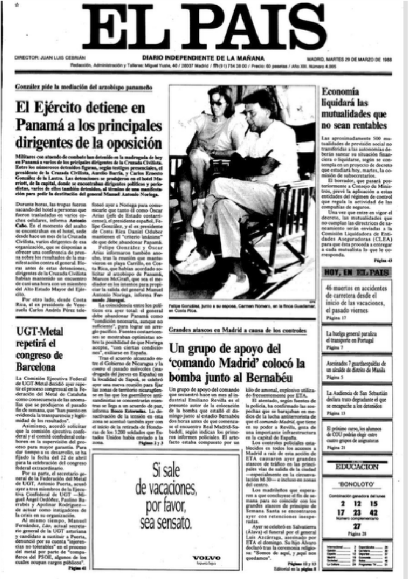
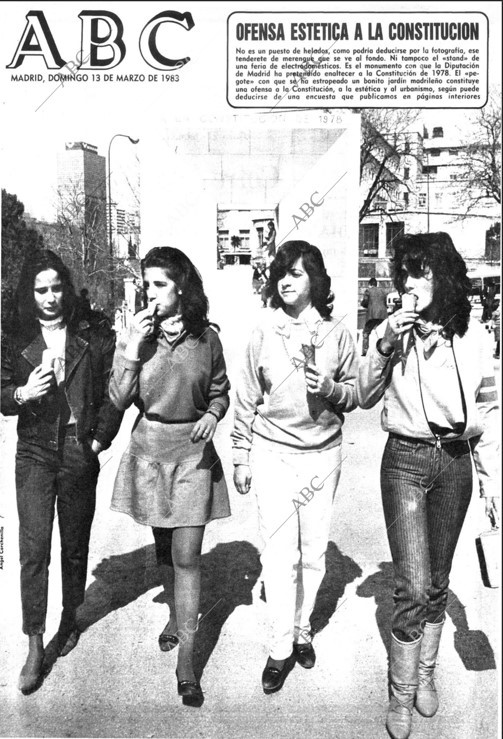
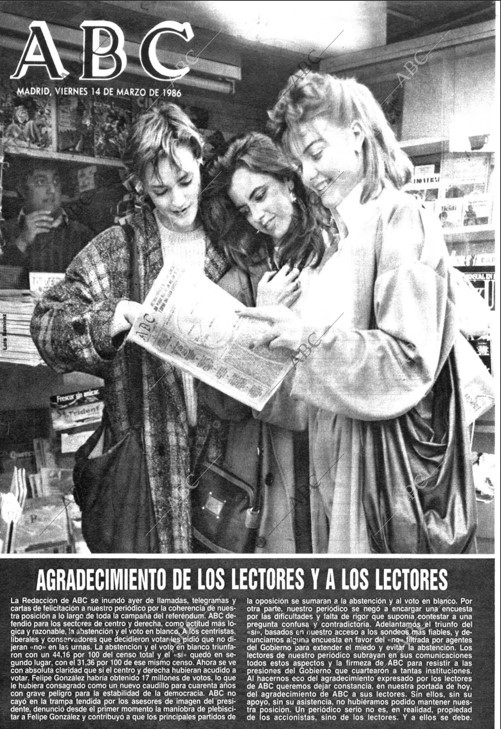
Unlike the “artist” category, women do not play a relevant or informative role in the “model” category. They are simply images of young, attractive women used to convey messages unrelated to the photographs’ content (see Figure 12, Figure 13 and Figure 14). Examples include a picture of three women eating ice cream, another of them buying the ABC newspaper, and one in which a woman is being pointed at with a petrol pump, alluding to high fuel prices. This category is more prevalent in the ABC newspaper. These images resemble advertisements more than newspaper front pages, and they reinforce the objectification of women. Being represented as a model is a form of objectification, reducing women to aesthetic or sexualised objects whose primary function is to adorn the front page. This type of framing instrumentalises women, using them as a commercial lure for a predominantly male audience.
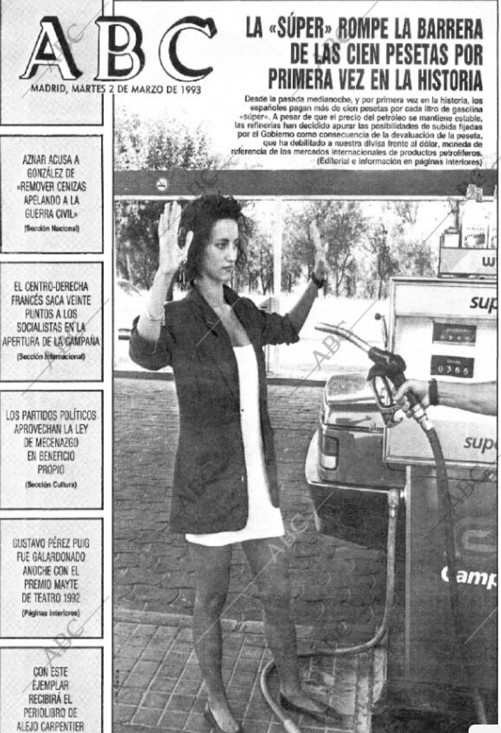
Credits. ABC, 1993
Figure 12 ABC, 2 March 1993: a woman at a gas station, presented in a stylised and submissive pose
Credits. ABC, 1983
Figure 13 ABC, 13 March 1983: a group of young women photographed walking and smoking
4.2.5. Artist
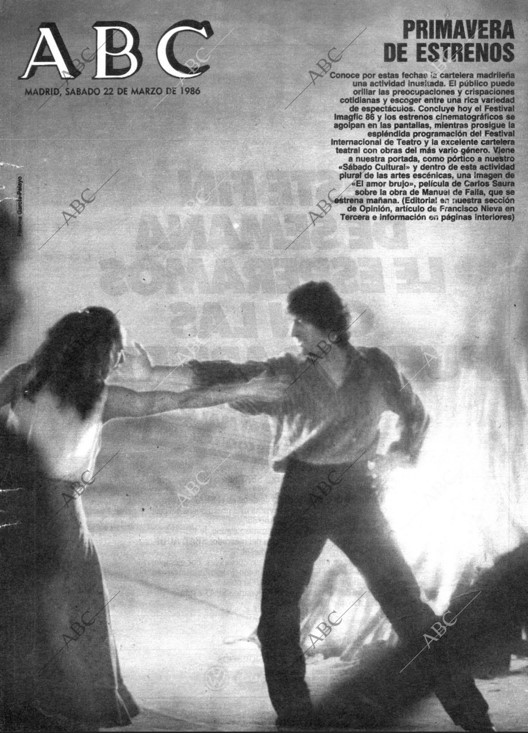
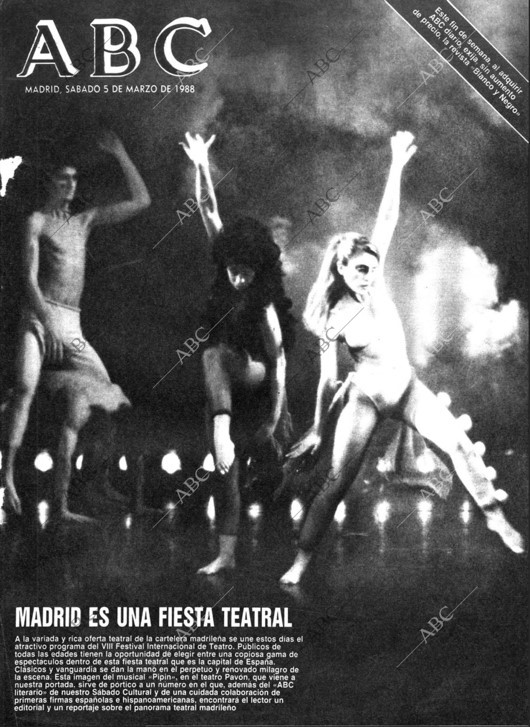
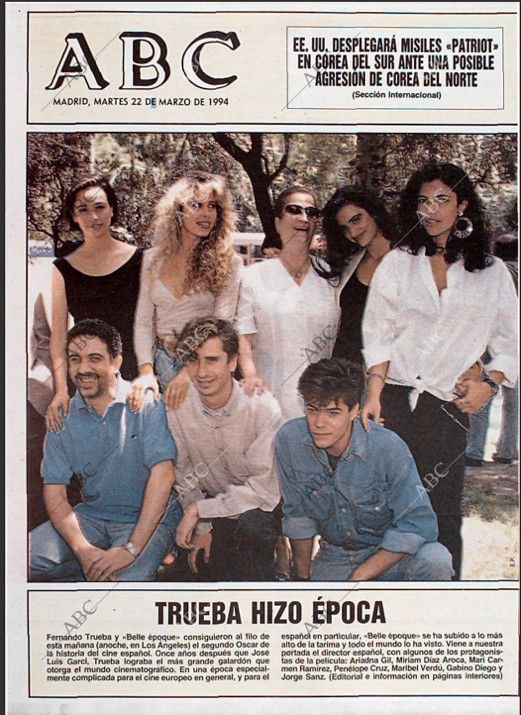
The majority of women who appear without male accompaniment are in the “artist” and “model” categories. This category is most prevalent in El País, where women in the arts and celebrity spheres are depicted with greater autonomy (see Figure 15, Figure 16 and Figure 17). Most of these women are film actresses, including Lauren Bacall, Melina Mercouri, Jessica Lange and Juliette Binoche, who are photographed at awards ceremonies. However, as with ABC, the artist Lola Flores receives front-page attention, albeit not for her artistry but for a tax offence. Her image appears three times in connection with her legal proceedings, including in court. The lack of coverage of her artistic career suggests a tendency to give greater visibility to women in controversial contexts than to recognise their talent. Women’s participation in the cultural sphere is recognised through representation as artists, actresses or singers. However, this recognition is often mediated by stereotypes of glamour or sensationalist gossip rather than by their intellectual or creative output. As a result, the recognition is limited in terms of its deeper meaning. In recent years, gender studies focusing on the image of women in the media have shifted their attention to the digital sphere, with researchers examining how women are portrayed online and the consequences of this representation. On the one hand, researchers have observed an increasing trend among streaming video platforms such as Netflix and HBO to offer inclusive and feminist content featuring strong female characters and narratives.
4.2.6. Politician
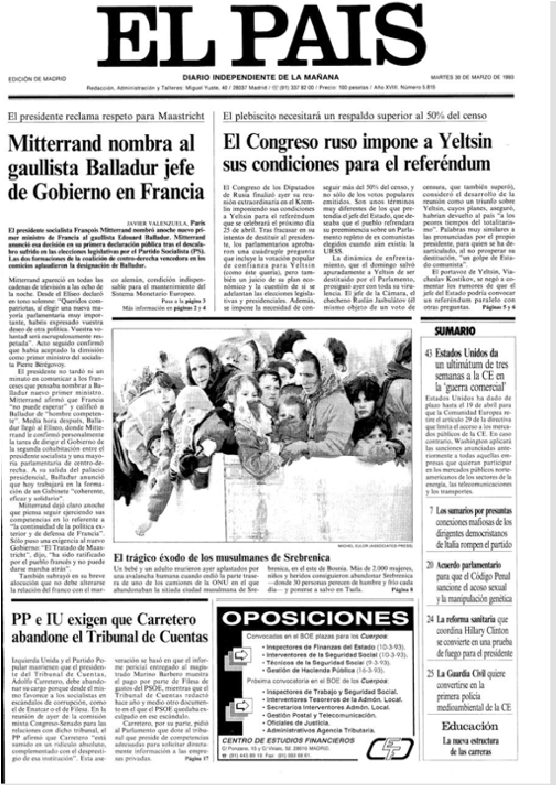
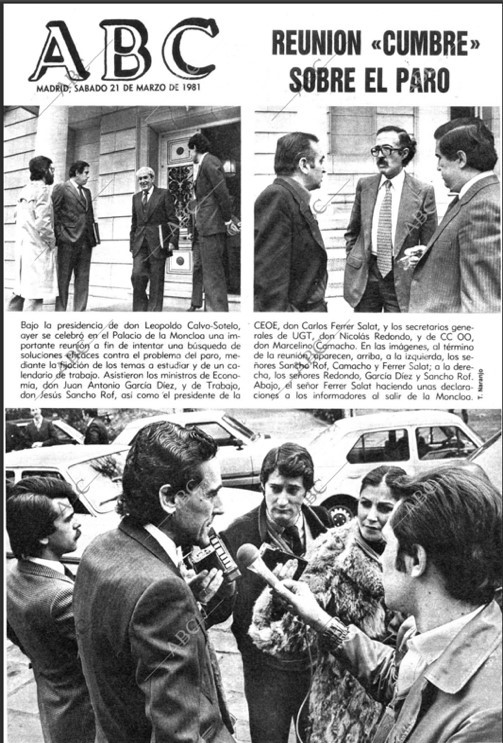
Since the 1990s, the representation of women in politics has increased in ABC. Although the first appearances in the analysis are of international leaders such as Margaret Thatcher and Indira Gandhi, women occupying institutional positions tend to appear in secondary roles or in a markedly minor capacity within government teams dominated by men. For example, in the meeting of Felipe González’s cabinet on 12 March 1991, Matilde Fernández (Social Affairs) and Rosa Conde (Government spokesperson) appear at the far ends of the photographic composition. Similarly, on the front page of 19 March 1992, a female parliamentarian appears in the background with five men. On 10 March 1993, Minister Matilde Fernández appears in a small side picture under the headline “she is campaigning in favour of the abortion pill”. At the PSOE Council of Ministers meeting on 9 March 1996, two women can be identified among more than a dozen men, and on 25 March of the same year, a female minister appears alongside six men as they leave the Moncloa Palace. This category also includes women involved in political activism or trade unionism, as in the Altos Hornos de Sagunto strike on 6 March 1984. However, in ABC, the presence of women leading protests was limited and concentrated mainly on demonstrations against ETA terrorism or against the abortion law passed at that time.
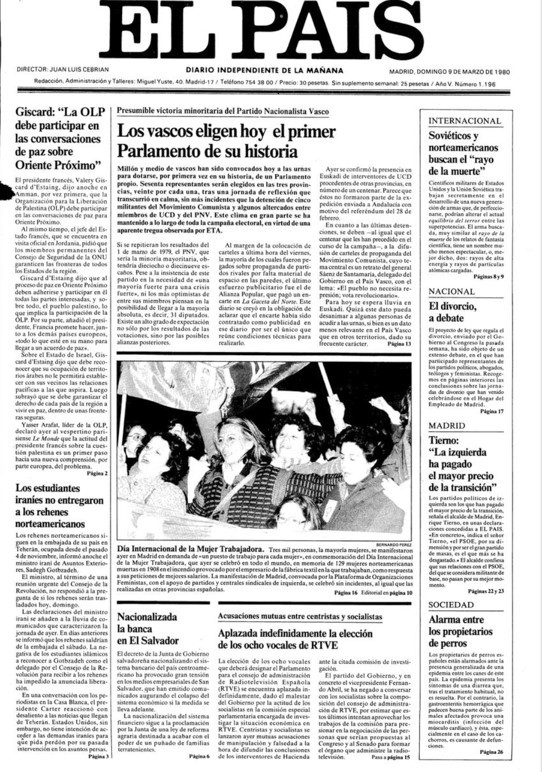
As for the representation of women in politics, El País depicts women’s presence in political activism and trade unionism as significantly higher, and their participation in the public sphere as more visible. In 31 images, and since the late 1970s, it has documented images of women chained together in defence of labour rights (1979) and participating in demonstrations against the Arab veil in Madrid. The newspaper’s coverage also includes international political figures such as Margaret Thatcher, the Prime Minister of the United Kingdom. Feminist mobilisations are also documented, including the demonstration on 8 March 1980, which was featured on the front page of the newspaper the following day, and the protests in favour of abortion rights in 1982.
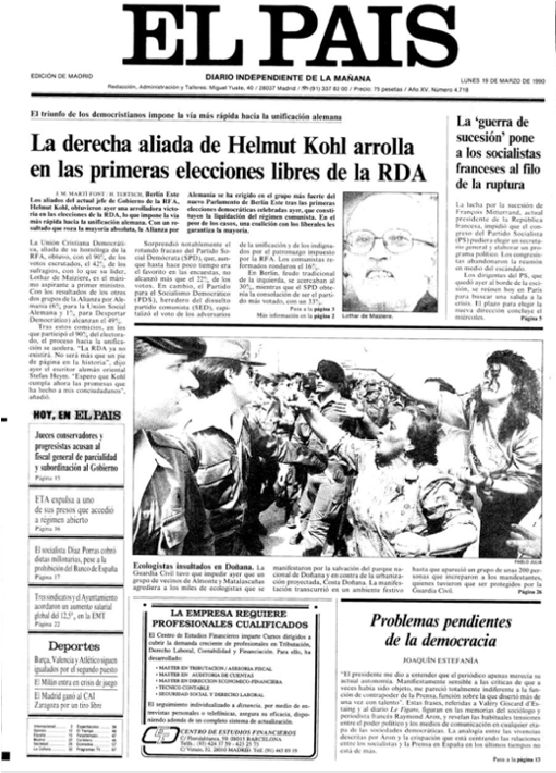
There are images of strikes by women hospital workers and protests against the increase in personal income tax, mainly by women. During the 1980s and 1990s, the press continued to reflect women’s participation in politics and social mobilisation (see Figure 18, Figure 19 and Figure 20). Examples of this are the protests in defence of public health care (1987). In the institutional sphere, the presence of women ministers in the Government of Felipe González is documented. The case of Carmen Romero stands out, not only as the Prime Minister’s wife but also as an active deputy and trade unionist. In addition, women deputies of the PP in Congress are also represented. The media coverage also records the resistance of women in environmental protests in Doñana, mobilisations against redundancies in Santana and the participation of French student activists in confrontations with police repression. Internationally, images of women at protests in the Balkans, Serbia and Russia, including supporters of Boris Yeltsin and demonstrators in front of the Kremlin, stand out.
Credits. El País, 1980
Figure 19 El País, 9 March 1980: women participating in the International Women’s Day demonstration
4.2.7. Worker
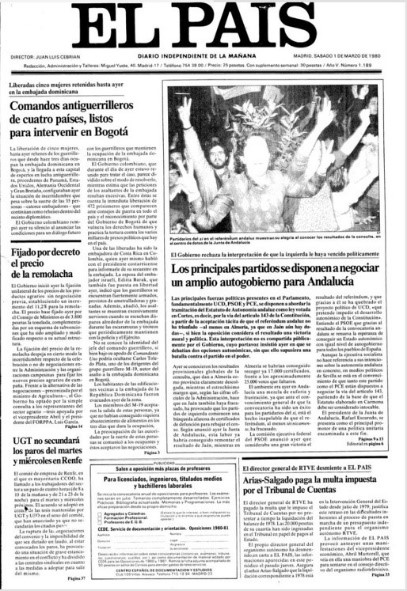
In the first decade, finding these kinds of images is rare, but it becomes increasingly common between 1988 and 1997. This category reflects the visibility of women in productive and professional spheres, as well as recognition of their participation in economic and social life (see Figure 21, Figure 22 and Figure 23). In El País, this category appears more frequently, but women are mostly featured in relation to fortuitous or anecdotal events, such as winning the lottery or particular administrative situations, rather than their professional performance. Examples include a female radio announcer, a group of female workers who won a lottery prize, and the first woman in Spain to aspire to work in civil aviation. Nevertheless, the newspaper demonstrates a clear interest in the progress of women within traditionally masculine professions. In this vein, the “worker” category includes a front-page photograph from 3 March 1988 showing several policewomen dealing with cases of gender-based violence. This illustrates the newspaper’s recognition of this type of progress. Other images include one from 1990 showing a polling station president warning a Muslim citizen that he cannot vote with his wife’s identification card, and one showing a judge leaving the courtroom after a controversial trial.
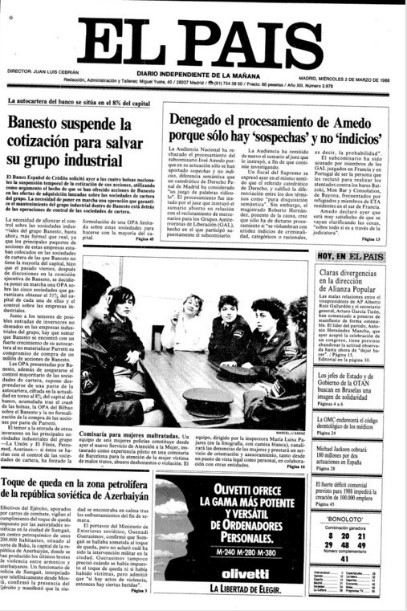
Credits. El País, 1988
Figure 21 El País, 2 March 1988: specialised female police officers addressing gender-based violence
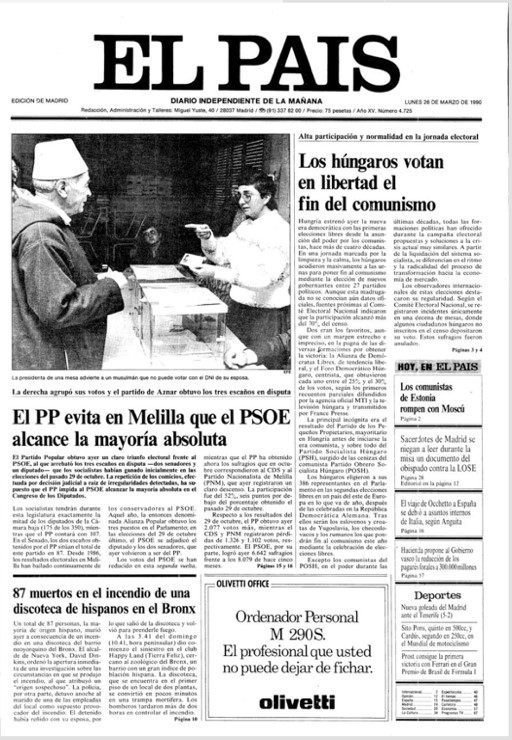
Credits. El País, 1990
Figure 22 El País, 26 March 1990: the president of an electoral board explaining voting regulations to a citizen
5. Conclusions and Discussion
As mentioned in the introduction, differences in coverage between the two newspapers were to be expected given their different editorial lines. ABC gives greater importance to the monarchy and traditional female roles, tends to portray women as decorative figures (“models”) and has a much lower presence of women in the political sphere than El País. On the other hand, this progressive media offers a greater variety of representations, more coverage of women in politics and activism, and a “worker” category that highlights the feminist achievements of the time. However, El País is characterised by the predominance of the “victim” role, which creates an image of vulnerability and dependence on male figures.
These categories are not just quantitative distinctions; they also have relevant visual meanings. For example, representing women as “queens” or “wives” reinforces symbolic associations with family, tradition and dependence. In addition, the category of “model” reduces women to their bodies, emphasising beauty and ornamentation. On the other hand, the categories of “worker” and “politician” indicate access to areas of influence and public significance, despite these groups comprising a minority. Despite the democratic advances documented in this paper, women’s presence on the front pages remains a minority compared to that of men’s, often not exceeding 10-15% of the images for many years. These results align with those of Fernández García (2016), who concluded that greater inclusion of women in political life has not been accompanied by proportional media coverage.
All of this, coupled with the paucity of images of women in professional contexts and the absence of women in scientific contexts, prompts reflection on whether the media in the 1970s, 1980s, and 1990s did enough to portray women as drivers of change. Research shows that many gender stereotypes are internalised by women themselves through media exposure, thereby affecting their self-perception and ambitions (Santoniccolo et al., 2023). Again, this study, like others, concludes that the mainstream media is often dominated by traditional gender interpretations that promote sexism as a matter of course in framing news coverage. This ends in women being less prominent and their issues being marginalised (Bachmann, 2022).
Relating the results of this historical analysis to the present, both continuities and transformations can be observed. Digitalisation and the emergence of online platforms have significantly increased opportunities for women to be seen and heard, amplifying feminist claims and movements such as #MeToo in 2017. However, according to the United Nations Programme for Gender Equality and the Empowerment of Women (UN Women, 2025), although women make up half of the world’s population, they appear in only a quarter of the news, being visible or heard in just 26% of broadcast, radio, and print stories.
In addition to the scarcity of their appearances, when women are represented in the media, stereotypical portrayals persist. Research on both mass and online media reveals that hypersexualisation and the beautification of women remain just as prevalent in contemporary Western societies (Carlsson et al., 2024; Tankosic et al., 2020; Ward, 2016) as they were in past Spanish magazines like Interviú (Gunther et al., 1999) which, under the banner of women’s liberation, featured well-known artists in a sexualised manner on their covers. As a result, behaviours such as self-exposure and obsession with aesthetics are still portrayed on social media as empowering and a form of freedom of choice (Gill, 2012). This can be linked to the concept of “commodity feminism” (Goldman et al., 1991), which describes a form of feminist representation that appropriates values such as empowerment and independence while ultimately serving the logic of consumerism and market-driven interests.
Current algorithms and the young age at which girls access social media prevent them from developing sufficient critical awareness to question whether such self-exposure is truly the result of free personal choice or whether it is conditioned by the factors discussed in this study. At the same time, although hashtags and accounts promote feminist awareness, the rise of far-right movements on social media has fostered the spread of disinformation about legislative advances in gender equality (Gehrke & Amit-Danhi, 2025). These movements have also fostered trends such as #StayAtHomeGirlfriends on TikTok (Tirocchi & Taddeo, 2024), which portray women in traditional domestic roles and criticise aspects such as women’s participation in the labour market. Such trends act as an informal learning environment for gender roles, with content creators acting as educators and provoking radical debate against feminist practices in modern societies.
Moreover, initial research on gender and artificial intelligence has yielded concerning findings. Image-generating artificial intelligence platforms have been criticised for perpetuating harmful gender stereotypes by producing idealised representations of women that reproduce traditional beauty standards (Locke & Hodgdon, 2024). And women are also frequently underrepresented or depicted in disempowering contexts in artificial intelligence-related news imagery, thereby reinforcing conventional gender stereotypes (Chen et al., 2024). These preliminary findings should therefore be further investigated through in-depth case studies to promote media literacy and to develop legislative initiatives to regulate the use of artificial intelligence in this domain. Finally, as this study covers the period 1977-1997, future research could consider a comparative analysis with media outlets that have more recently embraced the feminist cause in their style guides. In this way, it will be possible to check whether the display of this commitment improves the proportion of women on the front pages of newspapers, or whether it remains yet another frustrated aspiration.

