



 Inglês (pdf)
 Artigo em XML
 Referências do artigo
 Tradução automática
 Enviar este artigo por email
 Citado por SciELO
  Similares em
SciELO
Similares em
SciELO 
 Permalink

Introduction
In oncology, where therapies evolve rapidly, evidence-based practice is essential. Intravesical instillation, a key treatment for non-muscle invasive bladder cancer, is subject to significant variability in clinical practice, impacting its safety and effectiveness. A national round table of experts identified discrepancies across clinical settings, prompting the formation of a working group to review and standardise best practice recommendations for intravesical instillation.
Background
Bladder cancer is the 10th most common cancer worldwide, with approximately 573,000 new cases and 213,000 deaths annually. It is more prevalent in men, with an incidence rate of 9.5 per 100,000, nearly four times higher than in women 1.
In Portugal, bladder cancer is a significant health concern, particularly among males. According to the Global Cancer Observatory's 2022 data, bladder cancer ranks as the fourth most common cancer in Portuguese men, following prostate, colorectal, and lung cancers. Specifically, there were 2,660 new cases reported among males, accounting for 7.0% of all male cancer diagnoses. In contrast, bladder cancer is less prevalent among females, not appearing in the top five cancers for women in Portugal. When examining mortality, bladder cancer does not rank among the top three causes of cancer-related deaths in Portugal for either sex. However, its incidence remains notable, underscoring the importance of targeted prevention and treatment strategies 2.
Intravesical instillation is a key treatment for non-muscle invasive bladder cancer (NMIBC), which accounts for 70-80% of bladder cancer cases. Administering therapeutic agents directly into the bladder via a catheter ensures high local drug concentration with minimal systemic absorption, significantly reducing tumour recurrence and progression. This localized treatment minimizes side effects and maximizes efficacy, improving patient outcomes and quality of life 3,4.
The primary agents used in intravesical instillation are Bacillus Calmette-Guérin (BCG) and Mitomycin-C. BCG, an immunotherapy, activates the immune system to attack bladder cancer cells, reducing recurrence and delaying progression, and is the gold standard for high-risk NMIBC5. Mitomycin-C, a chemotherapeutic, inhibits DNA synthesis, effectively reducing recurrence in intermediate-risk NMIBC, especially when BCG is unsuitable6. Together, these agents provide a comprehensive approach to treating bladder cancer.
Variability in practice directly affects outcomes, with studies showing that deviations from standard protocols increase tumour recurrence, progression, and complications such as infections and bladder irritation 3,7. Inconsistent use of personal protective equipment (PPE) and preparation areas also exposes healthcare workers to hazardous drugs, posing occupational health risks8. Standardizing practices is essential to ensure high-quality care and protect both patients and providers.
Standardized guidelines for intravesical instillation are essential to address the variability in clinical practice. Evidence-based guidelines, like those from the European Association of Urology Nurses (EAUN), offer comprehensive recommendations for preparation, administration, and monitoring of intravesical therapy 9. These guidelines aim to harmonize practices across healthcare settings, ensuring consistent, high-quality care for all patients. They also facilitate provider training, improving competency and confidence in administering treatments 4. Adherence to these guidelines enhances treatment efficacy, reduces adverse events, and protects both patients and staff.
Research Question
This study aims to adapt the Nursing Best Practice Recommendations for Intravesical Instillation of Antineoplastic Therapy, developed by the EAUN9, for use in Portuguese oncological care. The objectives are I) to translate and culturally adapt the recommendations for the Portuguese context, and II) to evaluate them through expert review in Portuguese urological oncological care. The goal is to preserve the integrity of the original guidelines while ensuring their relevance and applicability for nurses and oncology patients in Portugal, addressing the research question: how can the EAUN Best Practice Recommendations be adapted and evaluated for effective use in Portuguese oncological care?
Methodology
This methodological multi-method study follows the adapted ADAPTE approach (Amer et al., 2015), consisting of 12 steps to ensure the recommendations’ integrity and applicability in Portuguese oncological care. A working group of expert nurses in intravesical antineoplastic therapy (with 3 to 20 years of experience) from five clinical contexts across mainland Portugal conducted the study.
Translation and Adaptation Process
Preparation Phase
A search for best practices in intravesical instillation of antineoplastic agents yielded no national results, but the European Association of Urology Nurses (EAUN) Best Practice Recommendations were identified internationally9. Developed by a multidisciplinary team, these guidelines followed a rigorous process involving specialist nurses, urologists, and safety representatives. The recommendations, based on the Oxford Centre for Evidence-based Medicine's grading system, integrate scientific knowledge, nursing experience, patient perspectives, and available resources into evidence-based practice.
Before this study began, permission was obtained from the original authors to adapt the recommendations for Portuguese oncological care. An update of the document is planned for 2025.
Adaptation Phase
This phase involved translating the document from English to European Portuguese while ensuring semantic and conceptual equivalence and occurred February to September 2024. Two working group members both fluent in English and native Portuguese speakers, shared the translation task. To ensure accuracy, all group members individually reviewed the translated version in a shared document, assessing its congruence with the original version and the relevance and applicability of the recommendations within the Portuguese context. They identified ambiguities and inconsistencies, which were systematically analysed in multiple joint meetings. Through these discussions, cultural, structural, and health policy barriers and facilitators were identified, and consensus was reached. An external review of the recommendations that did not reach consensus among working group members was conducted using the Delphi method in March and April 2024.
Finalisation and Documentation
The modified recommendations were reviewed for relevance and accuracy, ensuring alignment with the originals, and then integrated into the final document. A plan for implementation, evaluation, and monitoring was developed. The finalisation and documentation occurred from October to December 2024.
Delphi Methodology
The external review followed the Delphi method for its structured and iterative approach to gathering expert perspectives 10.
Expert nurses in intravesical antineoplastic therapy were invited to participate in the review panel through intentional snowball sampling. Each working group member reached out to their professional network to identify potential participants with relevant expertise, ensuring a diverse representation of professionals actively engaged in this field. The selection of experts was guided by established principles. Benner 11 defines expertise as the ability to intuitively grasp complex problems, distinguishing essential elements without being distracted by irrelevant details. Complementarily, the Portuguese Nursing 12 emphasizes that expert knowledge is fundamentally derived from clinical experience, reinforcing the practical competencies essential for high-quality care in intravesical instillation.
Participants were selected based on their direct involvement in intravesical instillation and their ability to to provide meaningful contributions to the adaptation process, ensuring both representativeness and competence for valid results. Professional or academic degrees were not criteria for inclusion or exclusion. As recommended, we aimed to include 10 to 15 experts from diverse clinical contexts across Portugal, ensuring a breadth of professional experience and institutional representation.
Nurses who accepted the invitation received a confidential and anonymous link to the questionnaire, which compiled the recommendations that lacked consensus. No incentives were provided. Participants answered demographic questions and rated their agreement (0-10) and each recommendation's relevance/applicability (1-5). An open field allowed suggestions, ensuring both quantitative and qualitative feedback. The threshold for expert consensus was set at 75% agreement (votes ≥8) for acceptance, acknowledging the iterative nature of Delphi rounds in refining and validating the adapted recommendations10,13.
Responses were analysed using descriptive statistics to identify consensus and divergence. Based on the first round's feedback, recommendations were revised for a second round. To quantify expert consensus on relevance and applicability, the mean (M) and standard deviation (SD) for each recommendation’s scores were calculated in both rounds. To assess the reliability of expert ratings, an Intraclass Correlation Coefficient (ICC: Two-Way Mixed Model, Consistency) was computed in Round I, where multiple recommendations were rated. This model was selected as it is appropriate when a fixed group of raters evaluates multiple items, aligning with established methodologies for inter-rater reliability assessment14. ICC values were interpreted following established thresholds15, where ICC < 0.50 indicates poor reliability, 0.50-0.75 represents moderate reliability, 0.75-0.90 indicates good reliability, and values ≥ 0.90 represent excellent reliability. These categories provide a standardized approach for evaluating the consistency of expert ratings.
The final Delphi phase provided panel members with a summary of the collective opinions, including justifications for decisions. This allowed participants to review their responses considering the group consensus, resulting in the final, adapted recommendations.
Results
Translation and Cultural Adaptation
The two working group members fluent in English and native Portuguese speakers, who shared the translation task, had 38 years old and 40 years old, and 12 and 4 years of experience in oncology nursing. After reviewing the entire document, the Working Group integrated comments into the final version, ensuring linguistic and content coherence. Terminology was standardized (e.g., paciente to utente), and elements misaligned with the Portuguese context were excluded.
Bladder cancer incidence and NMIBC risk categorization were updated1, along with procedure norms following EU-OSHA guidelines16. Discussions also addressed administration times, therapeutic regimens, and drug preparation methods.
Sections specific to the USA and other European contexts were removed to create a document tailored to the needs and clinical practice of nurses in Portugal, promoting its effective implementation.
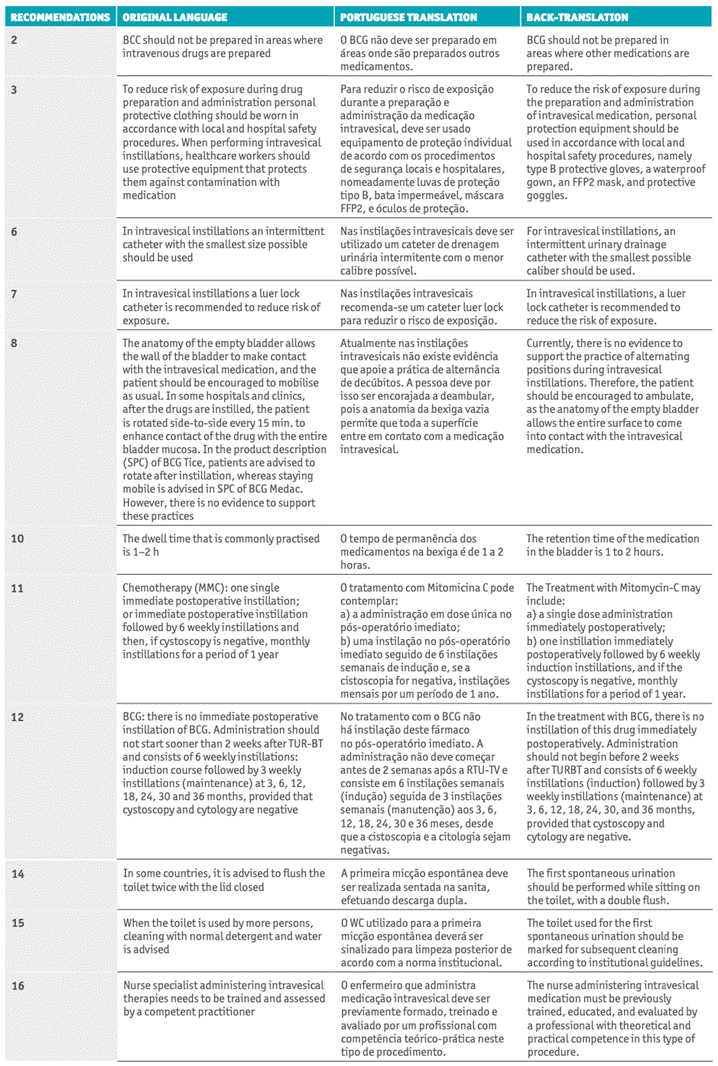
The recommendations were adapted for the Portuguese oncological context, addressing medication preparation, protective equipment, treatment schemes for Mitomycin C and BCG, patient positioning, and professional training. Among these, sixteen recommendations did not reach consensus among working group members and were subsequently evaluated using the Delphi methodology (Table 1 - supplementary file).
eDelphi
In the first Delphi round, 19 experts participated: 63% were nurses, 21% were specialist nurses, and 16% were nurse managers (Table 2). Regarding academic qualifications, 74% held a bachelor's degree and 26% a master's degree (Table 3). Nurses had a mean professional experience of 22.26 years (SD = 6.95), with a median of 20 years and a mode of 19 years. Their experience in the current clinical context had a mean of 14.05 years (SD = 6.53), with a median of 13 years and a mode of 19 years. The range of professional experience spanned 13 to 42 years, while experience in the current clinical context ranged from 4 to 30 years (Table 4).
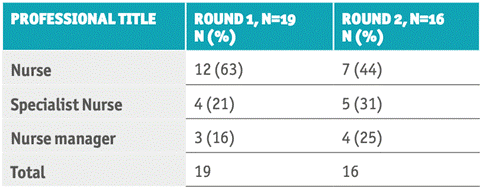
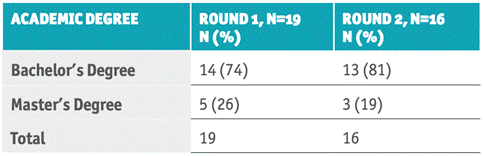
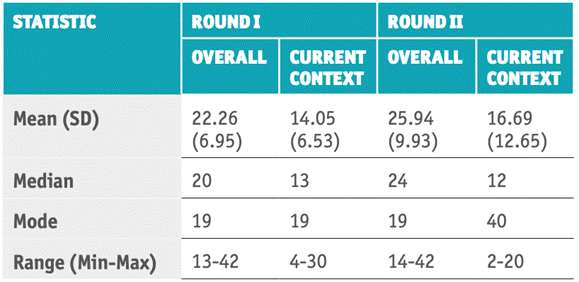
In the second round, 16 nurses participated: 44% were nurses, 31% specialist nurses, and 25% nurse managers (Table 2). Academically, 81% held a bachelor's degree and 19% a master's degree (Table 3). Nurses had a mean professional experience of 25.94 years (SD = 9.93), with a median of 24 years and a mode of 19 years. Their experience in the current clinical context had a mean of 16.69 years (SD = 12.65), with a median of 12 years and a mode of 40 years. The range of professional experience spanned 14 to 42 years, while experience in the current clinical context ranged from 2 to 40 years (Table 4).
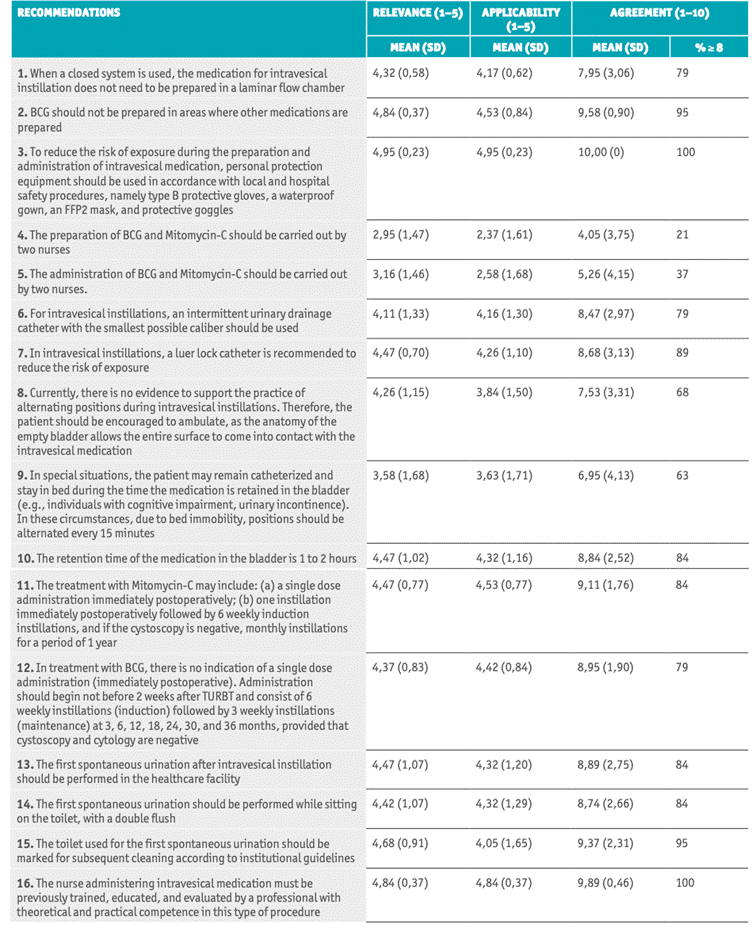
In the first round, significant contributions led to consensus on 12 recommendations, with discrepancies in four (Table 5, see supplementary file). Except for recommendations 4 and 5, all received applicability and relevance ratings above 3.5, with a minimum agreement of 63% for recommendation 9. Recommendations 4 and 5 were eliminated due to a lack of consensus above 75%. The reliability analysis yielded ICC = 0.898, 95% CI (0.189 - 0.559), p < 0.001, indicating good to excellent reliability in expert evaluations. One item was removed from the analysis due to zero variance in ratings.
Recommendation 4 (21%), suggesting that BCG and Mitomycin-C be prepared by two nurses, did not reach a consensus due to varied opinions. Discussions raised concerns about efficiency, safety, and resource limitations. Some experts argued that two nurses were unnecessary, as Mitomycin-C is prepared by pharmacy technicians and BCG often arrives pre-prepared. The emphasis shifted toward the importance of double-checking patient data rather than requiring two nurses.
Recommendation 5 (37%) on the administration of BCG and Mitomycin-C by two nurses also generated divided opinions, like Recommendation 4. While two nurses could enhance safety by reducing errors, experts acknowledged the practical limits of human resources. With proper protective equipment and a closed system, one nurse could safely manage administration, though dose validation and patient verification might still require two nurses. A well-trained nurse following proper procedures could perform the administration alone.
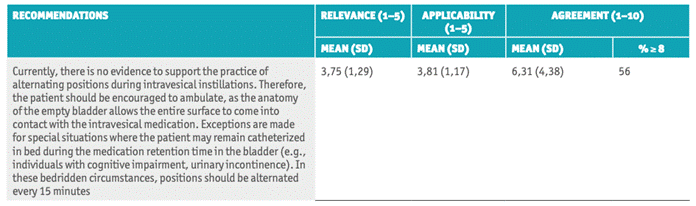
Based on open-response comments, recommendations 8 and 9 were merged and reformulated for the second round of expert scrutiny (Table 6, see supplementary file). Experts agreed with the statements but noted their interconnection, prompting the consolidation. As only one recommendation was rated in Round II, it was not possible to compute the ICC, as this measure requires multiple items to assess reliability.
Recommendation 1 (79%), stating that intravesical medication does not require preparation in a laminar flow chamber when using a closed system, generated productive comments. While BCG practices were accepted, Mitomycin-C was noted as requiring a laminar flow chamber due to handling needs.
Experts agreed that antineoplastic agents should be prepared in a laminar flow chamber, with differentiation between medications based on safety requirements. They emphasized strict protection during cytostatic handling and recognized closed systems for improving safety and reducing aerosol exposure. Additionally, process simplification was noted to save time and enhance treatment efficiency. This recommendation received a mean relevance score of 4.32 (SD = 0.58) and a mean applicability score of 4.17 (SD = 0.62).
Regarding Recommendation 2 (95%), the experts agreed on the need for dedicated BCG preparation areas. Preventing contamination was deemed crucial, with unanimous support for separating BCG from other medications. Experts emphasized protocols for safe use, including inactivity periods and decontamination, to prevent cross-contamination. This recommendation received a mean relevance score of 4.84 (SD = 0.37) and a mean applicability score of 4.53 (SD = 0.84).
Recommendation 3 (100%) emphasized minimizing exposure risk during intravesical medication preparation and administration using personal protective equipment. Experts reinforced the importance of strict adherence to protective measures to ensure healthcare professionals' safety. This recommendation received a mean relevance score of 4.95 (SD = 0.23) and a mean applicability score of 4.95 (SD = 0.23).
Recommendation 6 (79%), advocated using the smallest possible intermittent urinary catheter for intravesical instillations, reaching clear consensus. Experts agreed that catheter size should be personalized based on patient conditions, with smaller sizes preferred to minimize trauma. Larger catheters may be necessary for patients with a history of leaks. It was also agreed that keeping the catheter clamped during treatment preserves a closed system, reducing contamination and injury risks. This recommendation received a mean relevance score of 4.11 (SD = 1.33) and a mean applicability score of 4.16 (SD = 1.30), indicating moderate to strong expert agreement on its importance and feasibility.
Regarding Recommendation 7 (89%), advocating for luer lock catheters to minimize exposure risk during intravesical instillations, was widely accepted. Experts supported making it a standard, recognizing that the luer lock system reduces therapeutic leakage and enhances safety by providing a secure connection, minimizing accidental disconnections and exposure to hazardous substances. This recommendation received a mean relevance score of 4.47 (SD = 0.70) and a mean applicability score of 4.26 (SD = 1.10), reflecting strong expert agreement on its importance and feasibility.
Experts had differing views on Recommendations 8 and 9, particularly concerning bladder fullness and premature urination. Some felt positional changes were unnecessary unless discomfort required the patient to lie down. The consensus emphasized patient comfort, access to appropriate sanitary facilities, and continuous monitoring to manage potential complications. Proper waste management was also highlighted. The final reformulated recommendation received a mean relevance score of 3.75 (SD = 1.29) and a mean applicability score of 3.81 (SD = 1.17), indicating moderate consensus among experts. With over 50% agreement and supporting scientific evidence, the working group included both recommendations in the final document.
Recommendation 10 (84%) on bladder medication retention, specifying one hour for Mitomycin-C and two hours for BCG, was accepted. This aligns with clinical best practices and patient-specific conditions, with retention duration determined by the physician based on the patient's tolerance. This recommendation received a mean relevance score of 4.47 (SD = 1.02) and a mean applicability score of 4.32 (SD = 1.16)
Recommendations 11 (84%) and 12 (79%) on Mitomycin-C treatment regimens were widely accepted without major suggestions for modification. Experts emphasized that administration and treatment regimens should follow medical guidance and the usual practices of healthcare services and professionals. Recommendation 11 received a mean relevance score of 4.47 (SD = 0.77) and a mean applicability score of 4.53 (SD = 0.77), while Recommendation 12 received 4.37 (SD = 0.83) for relevance and 4.42 (SD = 0.84) for applicability, reflecting strong expert consensus on their importance and feasibility.
Recommendation 13 (84%), suggesting the first urination after intravesical instillation occur in the clinic before discharge, was considered with practical and safety concerns. Experts emphasized following hospital norms for urine elimination, including catheter drainage and closed-system waste disposal, to control drug-containing urine and ensure proper waste treatment.
While some experts suggested that home care guidelines could make in-clinic urination unnecessary, most agreed it reduces splashing and contamination, providing a safer environment for patients and cohabitants. This recommendation received a mean relevance score of 4.47 (SD = 1.07) and a mean applicability score of 4.32 (SD = 1.20).
Recommendation 14 (84%) suggesting the first spontaneous urination be performed sitting and followed by a double flush, was widely accepted. Experts highlighted this practice as crucial for minimizing splashing and contamination from the drug present in the urine after intravesical instillation. This recommendation received a mean relevance score of 4.42 (SD = 1.07) and a mean applicability score of 4.32 (SD = 1.29).
Recommendation 15 (95%), on marking the toilet used for the first urination after intravesical instillation for cleaning per institutional norms received consensus. It was recognized as important for reducing contamination risk.
However, some professionals raised concerns about the feasibility of dedicating a specific toilet due to high patient volume, making control and monitoring challenging. This recommendation received a mean relevance score of 4.68 (SD = 0.91) and a mean applicability score of 4.05 (SD = 1.65).
For recommendation 16 (100%), comments unanimously highlighted the importance of specialized training for nurses administering intravesical medication. Training was considered essential as part of the nurse's professional integration and a necessary practice for any new procedure. This recommendation received a mean relevance score of 4.84 (SD = 0.37) and a mean applicability score of 4.84 (SD = 0.37).
Discussion
The adaptation of the EAUN Best Practice Recommendations to the Portuguese context yielded key findings aligned with best practices in oncology nursing. Standardised procedures, as noted in prior studies, are essential for reducing variability in clinical practices, directly impacting the safety and efficacy of treatments 17.
The process of terminological standardisation was critical for ensuring clarity and relevance to Portuguese healthcare professionals, facilitating easier implementation and adherence to best practices. High levels of consensus among the expert panel indicate that the adapted guidelines are well-suited to the specific needs of Portuguese oncological care.
For instance, recommendations on the use of closed systems for BCG preparation and the mandatory use of individual protective equipment highlight a strong emphasis on safety and infection control 18,19.
The use of closed systems for medication preparation and administration, as recommended in the current guidelines, is supported by studies highlighting their effectiveness in reducing contamination risks and improving safety outcomes 20. Additionally, the focus on individual protective equipment and specific preparation areas for intravesical medications is consistent with best practices identified in prior studies. Research has shown that stringent infection control measures, including the use of personal protective equipment and dedicated preparation areas, are essential for preventing healthcare-associated infections and protecting healthcare workers from hazardous exposures 21,22.
Moreover, the adaptation process highlighted the importance of tailoring guidelines to accommodate local practices and resources. This includes recognising the distinct handling requirements for different antineoplastic agents and adjusting practices accordingly. For example, while closed systems were recommended for BCG to reduce exposure risk, Mitomycin-C was noted to require preparation under a laminar flow chamber, acknowledging its specific safety demands. Such distinctions are crucial for maintaining high standards of care and ensuring the safety of both patients and healthcare providers 23-25
The recommendations that did not initially achieve consensus provided valuable insights into the practical challenges faced by healthcare providers. For example, the proposal that the preparation of Mitomycin-C and BCG should be conducted by two nurses was met with concerns regarding resource availability and efficiency. These discussions highlighted the need for evidence-based and practically feasible guidelines within the constraints of local healthcare settings 24.
These practical challenges identified in the current study, such as the resource constraints for having two nurses prepare or administer medications, mirror findings from other settings. Studies have reported similar issues, where the availability of trained personnel and the allocation of sufficient resources are critical factors influencing the implementation of clinical guidelines 23. The adapted recommendations' flexibility in allowing for single-nurse administration under certain conditions is a pragmatic solution that balances safety with practical feasibility, ensuring that the final recommendations are both effective and implementable 25,26.
The study has some constraints that might limit the interpretation and generalization of the results. The translation process was conducted by two working group members rather than independent translators. However, all group members individually reviewed the translated version, identifying inconsistencies and discussing them in multiple meetings until consensus was reached. This approach was considered a viable alternative to enhance conceptual equivalence and maintain methodological rigor. Additionally, the Delphi process was conducted asynchronously, limiting real-time dialogue and the richness of feedback, though this approach was necessary to accommodate nurses' varying schedules. Additionally, the relatively small expert panel may not fully reflect the diversity of perspectives across Portuguese healthcare settings, and the reliance on subjective judgments introduces potential bias. Lastly, the recommendations were adapted to current Portuguese practices and resources, which may limit their applicability in different settings. Ongoing review and updates will be necessary to keep the guidelines relevant as medical knowledge evolves.
Conclusion
The adapted guidelines strengthen established oncology nursing practices, adding to the evidence supporting standardised care to improve patient outcomes and healthcare safety. By aligning with previous studies, these recommendations offer a solid framework for optimising intravesical instillation practices in Portugal.
The adapted guidelines have significant implications for clinical practice in Portuguese oncological care. Standardising intravesical instillation is expected to improve the consistency and quality of care for non-muscle invasive bladder cancer patients. Following evidence-based recommendations reduces treatment variability and enhances patient safety. Additionally, the successful adaptation of these guidelines can serve as a model for other countries, allowing Portugal to contribute to global efforts to standardise and improve oncological care by sharing lessons and best practices. Future research should focus on longitudinal studies to assess the implementation and long-term impact of the guidelines on patient outcomes, worker safety, and treatment efficacy. These studies would provide valuable data on real-world effectiveness and areas for improvement.