




 Inglês (pdf)
 Artigo em XML
 Referências do artigo
 Tradução automática
 Enviar este artigo por email
 Citado por SciELO
  Similares em
SciELO
Similares em
SciELO 
 Permalink

Introduction
Young adults with cancer are a particularly vulnerable population, about which there hasn't been much research. Even though the importance of adequate care to this age group is internationally recognized, there is still a lack of evidence on the best care practices and communication methods with young people.
Despite there not being a universal definition, young adults in oncology can be defined as individuals between the ages of 18 and 39 years 7. This is a life stage in which various changes and big life transitions occur, both on personal, relational and professional levels. This is the stage when it’s expected that young adults start having jobs, leave their parents’ houses and earn their independence and autonomy, establishing relationships and forming their own families.
However, when it comes to young adults with cancer, a rupture in the normal experience of this life stage happens, with a complete disturbance of normal development (emerging independence, self-image, social relationships, transitions between school and work, career establishment, and families) 1. Thus, we may safely state that this is a distinct population within the oncology community, for the unique challenges in their disease trajectory: related with diagnosis, treatment, advanced care planning and survivorship 4. This becomes even more notorious when we address young adults with cancer receiving palliative care and/or end of life care, since they face a particularly vulnerable situation, because of the threat that advanced cancer represents. 1
In the above-mentioned population, perspectives of a “normal” life are affected, and individuals feel forcefully removed from the stream of life 2. Facing cancer, the expected conquests of this life stage such as establishing autonomy, social relationships, education or career goals and forming a family are suspended. Consequently, these individuals may feel a lack of control over their own lives. and there might come up existentialist questions about the meaning of life and the time they have left.
In the face of disease progression or the inability to effectively manage their symptoms, the concept of palliative care is often introduced. Yet, this can be a conflicting experience due to the impact that the term “palliative” has on young adults, who associate it with death and dying 3. Therefore, it’s important to distinguish palliative and end of life care, since the two can coexist but their purposes are fundamentally different.
Palliative care can be defined as care that improves the young adult’s quality of life facing a life-threatening illness.8 This type of care is not only necessary at the end of life but also at any stage of the disease in which needs related to symptom management where identified (such as pain, dyspnea, tiredness, among others), giving support on physical, psychological, social or spiritual level. The identification of this need and the anticipatory introduction of palliative care has been proven as a useful tool in lowering the number of unnecessary hospitalizations and health services use. There is an approach by a multidisciplinary team, alongside the young adult and its family, to focus on the specific needs and preferences of each individual 5, that can go from daily living activities to bereavement support. However, being a recipient of this type of care doesn’t mean the cessation of curative treatments 4.
On the other hand, end of life care focuses on helping those suffering from advanced, progressive and incurable illness to live as well as possible, until their death 5. It covers physical, emotional, social and spiritual strands, supporting all during the period (days, weeks or months) the young adult has left to live. It might mean ceasing ongoing treatments and shifting the care focus to an exclusively palliative approach, in which the main objective is to help the individual reach their goals. Deep down, it’s centered around the dignification of death, considering the wishes and preferences of the one being cared for.
Following that, the objectives for this integrative review are summarize the experience of young adults with cancer in palliative and/or end of life care, realizing what their needs are, their care preferences and the unpleasant aspects of the experience, keeping in mind the context in which they’re inserted (mostly, familial); it’s also an objective to understand in which way nurses can intervene in this population. This way, this study’s relevancy is to center around the fact that this is an understudied population so far, and only by knowing more about it we’ll be able to know how nurses can best intervene in supporting it.
Methodological Procedures of an Integrative Review
To answer the previously formulated objectives, we opted to conduct an integrative literature review. This review was conducted following the model detailed by Dhollande et al. (2021) 12.
The starting point to this investigation emerged from a reflection on the daily practice and the observation that there’s no studies or guidelines regarding this specific population. Therefore, the following starting question emerged: “What is the experience of young adults with cancer in palliative care and/or end of life care?” As secondary questions, we have: “What are their needs and care preferences?”; “What are the aspects of the experience?”; and, at last, “How to better intervene as a nurse?”
To structure this question, the “PICo” strategy was invoked, as seen on Table 1.
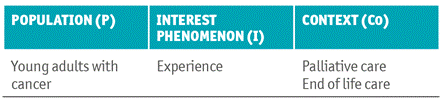
Thereby, having formulated the research question, we established the inclusion and exclusion criteria (Table 2) for the selection of studies being included in the investigation. This was done in a way to guide both the research and the selection of scientific literature.
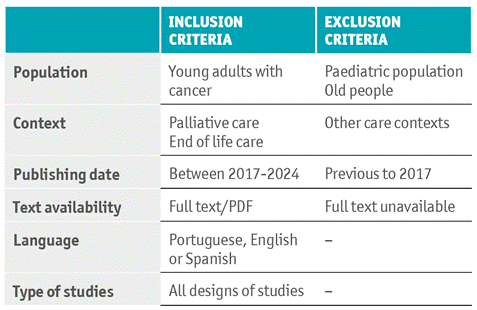
At this point, the descriptors to be used on the research were determined. We used both MeSH descriptors and natural language terms, to gather the most compatible results with the research question. This was followed by combining the corresponding boolean operators, coming up with the following boolean phrase: ((Young adult) AND (Cancer)) AND (Palliative care)). This was the starting point to the evidence research, that was initiated on December 15th 2023, and finished in January 19th 2024.
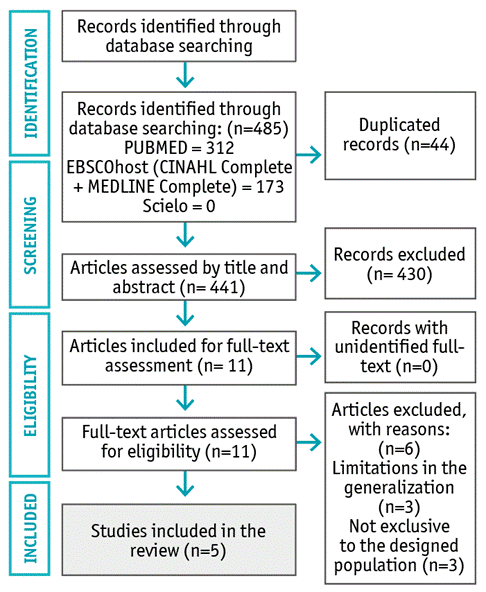
Research was conducted electronically, through the databases: PUBMED®, CINAHL® Complete and MEDLINE® Complete (via EBSCOhost®) and Scielo®. The article identification and inclusion process went accordingly to Figure 1, through PRISMA (Preferred Reporting Items for Systematic Reviews and Meta-Analyses).
Once finished the critical appraisal of research results, we read the scientific articles and selected the most relevant information in each, according to the methods of an integrative review, therefore, not distinguishing quantitative, qualitative or another kind of study. Then, we proceeded to extract the data and reduce it, analyzing it, and drawing conclusions and implications for clinical practice in nursing.
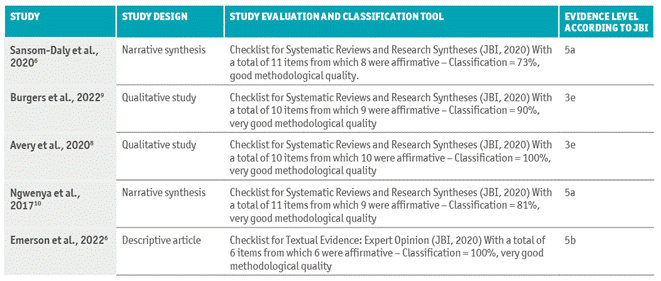
To better evaluate the methodological quality of the selected studies, we resorted to the Joanna Briggs Institute’s Critical Appraisal Tools (2020), classifying the items in its checklist, as seen in Table 3. Studies classifying under 25% were considered as being of low quality, between 26% and 50% were considered as being satisfactory, between 51% and 75% were considered as good quality and studies classifying above 76% were considered as being very good quality.
The research, selection and scientific literature analysis process was conducted by both authors that, in the absence of a consensus, reunited to obtain unanimity in their evaluation, trying to keep as little bias as possible.
Results
After the analysis, following the criteria established and as illustrated in Figure 1, five articles were included in this integrative review, all of which have been published between 2017 and 2024. All articles are in English, encompassing various research methods (narrative synthesis, qualitative studies and a descriptive article). We excluded studies whose limitations (limited to a country, per example) didn’t allow a generalization of their results or studies that didn’t center exclusively on our selected population. It is worth to mention that, within this selection, we have studies from journals published by organizations such as the European Society for Medical Oncology or the American Society of Clinical Oncology, as well as scientific journals within the subjects of oncology, palliative medicine and adolescent and young adult oncology.
The results of our research were organized and separated into different themes, those being: care preferences, negative aspects of the experience, needs, familial and social context, and the nurses’ experience.
Care preferences
Regarding the preferences of young adults with cancer in palliative care and/or end of life care, these pass by promoting normalcy, which might translate into receiving the same treatment as their “healthy” peers, normalizing the situation they are living in a way to decrease the discrimination felt and, therefore, enhance their coping. It might also mean the maintenance of routines and habits, pursuing activities they led before the diagnosis and remaining in contact with others, thus allowing an improved sense of self and identity 10.
Another key aspect is opening the dialogue about end of life - here, it is preferred that the healthcare professional takes the lead, since their experience can lead the conversation in an open, honest and culturally sensitive way 11, helping ease feelings of impotence on the young adult 10.
Lastly, another main theme regarding this population’s preferences is the advanced directive of will. Advanced care planning is a critical step to accepting and preparing the death of a young person and covers both ethic and legal matters and simple tasks such as making a wish list that can be checked out short-term 11. This same study points out the contribution that advanced directives of will give to better decision making by both healthcare professionals and family, decreasing emotional burden and regret, and improving the patient’s quality of life by aligning their medical decisions and their values and preferences.
Negative aspects of the experience
Considering that the experience of young adults with cancer is never positive we can, still, highlight some of the negative aspects that stand out according to the literature. Henceforth, as previously mentioned, there’s a rupture in the stage of life, completely upsetting what a typical development should be 8, that is now contemplating a situation that poses an imminent risk to their life, instead of focusing on building a future.
Another aspect that is particularly referred to in a study 8 is the conflicting experience of being categorized as young and palliative, simultaneously. This occurs because of the perception of young adults as being strong and healthy and the expectation that they’ll be able to overcome a cancer diagnosis, which causes some resistance and distress, who then feel obligated to delay or limit conversations around end of life, pain or depression. These social expectations not only apply to those around the young adult, as they themselves feel it’s hard to accept the transition, initially associating the word palliative with death, dying and disease progression. These conceptions have been kept, even after healthcare professionals informed them that palliative care is not a synonym of end of life, representing a challenge to their will to get better and survive cancer. Consequently, this is an emotionally difficult experience that most participants feel too young to face, believing they have not yet lived enough to comprehend or accept the possibility of dying.
Still on a psychological level, this situation primarily represents a loss of “self”, that leads to a sense of loss of control and feelings of helplessness, as their autonomy decreases and their dependency on others increases 10. These feelings were more prevalent in the age group between 25 and 40 years, whose individuals often go back to depending on their own parents’ care - this represents a change of roles that isn’t always well accepted. The lack of control over symptoms and daily tasks leads to feelings of insecurity.
When it comes to physical symptoms, young adults feel these as a bigger burden - such as higher levels of complex pain once compared to other age groups, with a consequent increase in suffering and lower quality of life 8. Medication and treatments such as palliative chemotherapy or radiotherapy can help manage symptoms, reducing incidence and intensity of symptoms such as pain, breathlessness, cough, swelling, ulceration, bleeding, neurological deficits, and decreased mobility 11.
Needs
The needs of young adults with cancer in palliative care and/or end of life care can be divided into the following categories: clarification of how they’d like to live the end of their life, psychosocial needs, existential needs, developmental needs and needs for health care.
One of the main needs of young adults with cancer in palliative care and/or end of life care is the clarification of how they would like to live the end of their lives. In this sense, it is highlighted the importance and potential benefits of an early introduction of palliative care within the course of the illness, as to better symptom management and the incorporation of a patient-centered communication 11. This is relevant to ease communication around end-of-life situations, both in early stages and when it’s needed to support a patient with an incurable disease. However, the ideal timing for this approach and the factors that influence young adult’s preferences regarding palliative care remain unknown, there being little research on the individual or familial aspects that influence the wish for or preparation of this kind of dialogue, and the existing biases that might have conditioned the results.
Relatively to who might introduce this communication, it’s considered that it should be a multidisciplinary team that’s vast, confident and capable of conducting conversations about end of life 11. These should be professionals that have established a good relationship with the young adult and their family, and that are able to understand their psychosocial needs, values and priorities. They should be comfortable in exploring tough and sensitive subjects. The nurse’s role on these teams stands out, but also the one with elements such as priests or other religious leaders.
Dialogue should be individualized, approaching key aspects identified as important, such as physical, psychological and existential ones. It should allow the expression of the young adult’s preferences from an early stage, while they are susceptible to change. It’s not possible to develop guidelines on what should be addressed in these conversations and how, once each young adult has their livingness, and should be approached as such. Yet, we can resort to advanced care planning tools to explore this dialogue, and to make communication between young adults, their family and members of the multidisciplinary team clearer.
Still on this population’s psychosocial needs we find out the need for psychological support and specialized monitoring (that, ideally, should be available for all people near the end of life), addressing in this way negative feelings associated with their clinical situation, such as fear and uncertainty. Besides, it’s also important to promote relationships between peers - allowing them to belong to a group of people that can identify with their experience - and building a legacy. Legacy building consists in a set of activities that allow patients to review their life and its meaning while creating a lasting memento that can be appreciated by family and friends and has been shown effective in improving communication between parents and children at the end of life 11.
When it comes to existential needs, we have the conceptualization of disease and suffering, the spiritual beliefs and the existence of a faith community 11. In this regard, psychotherapy (and meaning centered psychotherapy, particularly) has a relevant role by allowing the young adult to process personal issues and feelings related to their illness, easing into a better understanding of what brings meaning to their lives and assisting them in maintaining that meaning, facing disease progression 11. It’s also important to promote the presence of religious leaders, according to the person’s wish.
Developmental needs are essentially centered in maintaining independence and autonomy, as much as possible, and promoting activities suitable for the age group 11. A cancer diagnosis interrupts the normal living of this age bracket, so crucial as it’s a phase in which young adults start new journeys on occupational, educational and interpersonal levels 11, interrupting the normal trajectory of their lives and the achievement of developmental milestones such as establishing autonomy, social relationships, educational or career goals and building a family. Especially in patients between the ages of 18 and 24 years old, the role of independence and social support should be emphasized, as they are critical in this period.
Relatively to need for health care, we have the care preferences (hospital setting versus home setting, per example) and symptom management. As for the last one, it’s pointed out a prevalence of the following physical symptoms: fatigue (57-96%), lowered mobility (76%), pain (73%), anorexia (71%) and dyspnea (6-21%) 6. However, in the last week of life pain and dyspnea are the most common symptoms 6. As for psychological symptoms in the last month of life, it’s sadness or grief, anxiety, fear (of being alone, death, and/or pain), and guilt that stand out 11.
In conclusion, care initiatives that are centered on the person should be developed aiming for the medical, psychological and support needs that are unique to each patient, granting them a meaningful end of life 9.
Familial and social context
Familial and social context is of the utmost importance when we talk about young adults with cancer in palliative care and/or end of life care, since it’s not rare that the informal carers are parents or partners, there being a dependency relationship. And in the cases in which this doesn’t check they are, still, the support network of the one going through this tough situation.
So, it's necessary to include these people in the care provided. On one hand, it’s needed to understand how willing they are in establishing dialogue around end of life, acknowledging their concerns and empowering them regarding the rhythm and shape of each given conversation 11. On the other hand, it’s essential to align expectations regarding to prognosis, outcomes and decision making on the care that is to be provided, given that, per example, young adults tend to prefer a death at home instead of the hospital, yet their parents fear that it might create traumatic memories associated with the physical space, the impact that this experience might have on the siblings and doubt their ability to effectively manage the symptoms at home 11.
A different aspect about which the multidisciplinary approach to the family is essential is the grief associated with end of life, since this coping process happens distinctly in each family member and it’s frequent that it begins simultaneously with the transition to exclusive palliative care, when there aren’t more curative treatments to offer11. Bereaved parents that didn’t have the chance to talk about end of life with their child regretted it and expressed the ways it could’ve helped them to prepare for child’s death and the bereavement process 10. This way, palliative care represents an opportunity for the family to look for support, be included in care and pose questions privately (without the young adult’s presence)8. Families have a central role in this phase of the young adult’s life, but for that need to be supported, wishing to be involved in the decision-making process10.
Generally, it’s apparent the young adult’s concern over not burdening their families, that being one of their main priorities 8. To safeguard their health, a few young adults in one of the studies 8 went so far as to avoid talking about certain parts of their illness with their parents/romantic partners which ultimately led to rifts in their relationships.
The nurse’s intervention
The nurse’s involvement with the cancer-stricken young adult in palliative care and/or end of life care involves a variety of factors. Yet, it seems to be consensual in literature that optimal care combines the best evidence to culturally sensitive care, using for that language that is also sensitive to the subject. It’s necessary to recognize each person as a unique individual, with preferences that can change throughout the delivery of care, being important to contradict the concept of “one size fits all”, since care should be individualized to each patient.
The nurse’s main tasks consist in giving voice to the young adult, helping them achieve short-term goals, assisting the building of a legacy and guaranteeing physiological comfort. Therefore, it’s relevant to achieve the management of physical symptoms, which should comprise not only behavioral and environmental interventions but also managing the medication (using, per example, WHO’s pain ladder) and the establishment of treatments such as palliative chemotherapy or radiotherapy 11.
However, not only physical symptoms are deserving of attention. The nurse should also intervene in promoting coping for the “lost” life - both the one not being fully lived through the illness, and the one that might not be lived given the prospect of bad prognosis -for example. facilitating adaptive coping strategies. Therefore, it is necessary to prepare for grief and bereavement, promoting family support and finding purpose in life. Additionally, it's necessary to enhance the young adult's quality of life by encouraging them to be active and spend time in comforting environments surrounded by their loved ones, exploring and identifying preferences in relation to the place of death.
Just so happens that health care professionals too face challenges while taking care of this population, and nurses are included in this. A study9 catalogues these challenges, grouping them in four categories: emotional confrontation, questioning professional attitude and skills, navigating uncertainty and obstacles in the healthcare organization to provide age- and disease-appropriate care.
Emotional confrontation consists mainly of transference and countertransference phenomena, and the impact on the healthcare professional (especially when the patient and the professional are emotionally close due to both being around the same age, or when the professional has children the patient’s age). It leads to feelings of helplessness and sadness related to a bigger sense of empathy and compassion for this population compared to older age groups. Ultimately, it can lead to a bigger emotional burden 9.
Questioning professional attitude and skills can be defined by the thin balance between caring versus meddling; it can as well be defined as the uncertainty felt when the recipient of care isn’t very communicative or the professional doesn’t know them that well, or in the presence of the triad healthcare professional-young adult-parents (that represents an added challenge, mainly when there’s a disagreement between the young adult and their family) 9.
Navigating uncertainty refers to subjects such as communication around prognosis (in which healthcare professionals have reported feeling doubt and difficult emotional management), or communication around end of life (in which aspects such as uncertainty about the right moment to approach or fear of causing hopelessness by doing it were highlighted) 9.
Discussion
During this study, it was possible to answer the research question, as it was possible to deepen the particularities of the experience of young adults with cancer in palliative care and/or end of life care.
Certain recurring themes were identified, intertwining amongst each other. That is the case of the difficulties felt facing the concept of “palliative”8, or those related to the autonomy loss that the disease progression often implies8,9,10. We can then understand the importance of the life stage and the individual life cycle in how this population experiences this situation, and the singularity of their needs in comparison to the pediatric population or the general adult population. There’s a need for holistic care that includes not only symptom management but also emotional support9, psychological counseling, and opportunities for young adults to express their wishes and concerns about the end of life6,11.
Regarding care preferences, in one study8 the participants mentioned appreciation on having time and space to express their feelings and concerns about having cancer at a young age, which was facilitated by palliative care. This was especially crucial due to the existential challenges of being categorized as palliative8, and the connotation that the term holds.
In another study 6, participants felt that their loved ones didn’t always understand what they were going through, and that the opportunity to talk to experienced professionals or people in the same situation was beneficial. Groups on social media or direct contact with other young adults with cancer in palliative care and/or end of life care were solutions found by those who felt more isolated, to find comfort.
For some of the participants in the first study 8, being associated with palliative care has positively affected their will to live, leading them to focus on what they have yet to live, to challenge their prognosis. However, it wasn’t like this for all, since there were participants who considered not starting new life projects due to the possibility that this might be interrupted. It acted as a reminder to every one of the seriousness of their disease and its mortality.
Regarding the negative aspects of the experience, participants in a study felt that hospitalization represents a deterioration in their disease progression, seeing this space as a place to die 10. Participants in end-of-life reported feeling that other needs such as existential concerns weren’t addressed in the current health system, and that there was little referral to specialized support 10. It was also mentioned by informal caregivers of young adults who were dying, the inadequacy of health services, neither pediatric nor adult services being appropriate to end of life care, not existing, therefore, a health system available for them 10.
Their needs were also identified and set as the following categories: clarification of how they’d like to live the end of their life, psychosocial needs, existential needs, developmental needs and needs for health care.
The role of family and support network is highlighted8,10,11. It’s also highlighted the importance of communication (towards the young adult/family and among the interdisciplinary team) as a care tool6,9,11. This should be open and initiated by the healthcare professional10, promoting better outcomes for the young adult (less anxiety, bigger sense of control, among others); it’s important that the young adult feels they have time and space to go through this health-disease transition8. Family involvement and decision making alongside the patient, family and multidisciplinary team (in formal or informal moments) are other aspects of major importance. It becomes, then, obvious the need for an early introduction of palliative care in the illness trajectory, and the benefits of it6,8.
Lastly, as elements of a multidisciplinary team, this study underlines the crucial role of nurses in providing holistic palliative and end of life care, suitable for this age gap. This can be done through the nurse’s intervention, in aspects such as assisting in the achievement of short-term goals, building a legacy, guaranteeing physiological comfort through the management of physical symptoms (through behavioral and environmental interventions, medication and palliative treatments), managing psychological symptoms (such as the ”loss” of their lives as they were/could be, grief/bereavement and the lack of purpose in life), supporting the family, and some others.
Only through these interventions will the care be truly holistic and suitable for this age category. However, nurses also face many challenges when caring for young adults in palliative care and/or end of life care, that can be categorized in the following way: emotional confrontation, questioning professional attitude and skills, navigating uncertainty and obstacles in the healthcare organization to provide age- and disease-appropriate care.
As limitations of this study, it can be considered that the circumstantial age/particular life cycle of each individual cannot be studied, due to its specificity. Gaining a greater understanding of the specific care needs of this population is necessary, however, the lack of studies around this subject didn’t allow us to reach this goal in full. The research in full text can also be considered a limitation.
As recommendations for clinical practice, we highlight the early introduction of palliative care in the illness trajectory, allowing better control over the disease and better outcomes. The individualization of care is another aspect of paramount importance.
Regarding recommendations for future investigation, we propose the future realization of studies with broader populations, which methods include both qualitative and quantitative data. We also suggest the establishment of nursing interventions that are specific to this population, according to the ICNP taxonomy, and the development of studies on their effectiveness.
The knowledge of the experience of young adults in these circumstances opens the doors to the development of specifically adapted models of care that allow the provision of more individualized and, therefore, more approachable healthcare (and, specifically, nursing care). However, it’s necessary to consider that there is still a lack of knowledge about the differences in the experience of young adults upon different diagnosis, prognosis and sociocultural backgrounds.
Conclusion
In this integrative review we investigated the experience of young adults with cancer in palliative care and/or end of life care, exploring in detail their needs and care preferences, the negative aspects of their experience, the importance of familial and social context and, lastly, the nurse’s intervention.
Through this research, it was possible to clarify that this is, indeed, an extremely vulnerable situation which requires the intervention of a multidisciplinary team that is competent and capable of discussing topics around advanced illness and end of life and intervene on those. These young adults present very distinct care needs, with unique preferences, valuing above all the promotion of normalcy and autonomy even in illness and requiring time and space to process what they’re going through. Many felt that they were too young to face such a threat to their lives, evoking negative feelings associated with the experience.
Family and social networks represent a pilar in supporting young adults with cancer in palliative care and/or end of life care. It’s essential that an intervention with this population takes into consideration the particularities of the stage of life they’re at, given that it’s a critical moment in development in which reaching personal, professional and familial goals is suspended by cancer. The nurse is a central figure throughout the process, intervening over maintaining the quality of life, familial support, promoting coping and bereavement and legacy building. However, healthcare professionals also face challenges while practicing along with this population, that should be tackled through more training and support.
This study meets the premises of existing literature, bringing contributions to a theme that has been, so far, briefly explored.
Therefore, it becomes necessary to support healthcare professionals and enable them for a practice that is more reflexive and based on evidence. This can be done by providing practical tools and inserting them in the health system - some guidelines have already been published, and specific training has started to be developed worldwide.

