




 texto em
  Inglês (pdf)
 Artigo em XML
 Referências do artigo
 Tradução automática
 Enviar este artigo por email
 Citado por SciELO
  Similares em
SciELO
Similares em
SciELO 
 Permalink

1. Introduction
In 2023, while cinemas around the world were packed to see Barbie, the National Museum of Kenya opened an exhibition dedicated to African dolls. The Dolls of Good Hope exhibition not only showcased a collection of African dolls from various regions and traditions but also aimed to highlight the cultural and social significance of these creations in contemporary African narrative. We can view the Kenyan dolls in those showcases as symbols of cultural identity and resistance against colonial hegemony. However, before the English arrived in these lands, Turkana, Samburu, Pokot, Masai, Mijikenda dolls, and others contributed to shaping the “womanhood” of girls from each ethnic group. These dolls passed down from generation to generation, embodied cultural values such as fertility, beauty, sexuality, and transcendence, revealing the vital role of women in ancestral societies, whose identities were intricately linked to the preservation of community and culture. Dolls always tell a story - mainly about what society expects from women - but also about migration, struggle, love, and hope.
My commitment to this research is grounded in my life experience in Kenya, where I have resided for nearly a decade and have a settled family with my Ugandan husband and our three children born in Kenya. This personal connection has deepened my understanding of the cultural and social complexities that shape women’s perceptions and experiences in these diverse and vibrant communities. I fully recognize that, despite this integration into Kenyan daily life, my perspective as a European researcher carries certain inherent limitations and challenges. Understanding the perspectives and experiences of Kenyan women regarding dolls involves navigating with sensitivity within this historical and cultural context, mindful of the possibility that my presence and research may be perceived as intrusive, given Kenya’s painful history of colonization. Therefore, this study was conceived with the intention of respectfully and meaningfully contributing to the understanding of how dolls influence the construction of female identities in Kenya, acknowledging the cultural complexity and diversity of experiences within this context. My goal is not to represent or speak for Kenyan women but rather to broaden global understanding of a topic that has thus far been underexplored.
The methodology employed in this research is based on a multidisciplinary approach, combining literature review and documentary review. Visits to libraries, archives, and museums in Kenya, as well as interviews and questionnaires with women from various communities and age groups in the country were undertaken as part of the research. Visits to institutions such as Strathmore University, United States International University, The Aga Khan University, and the University of Nairobi provided access to valuable resources such as books, historical documents, and photographic archives. Visits to the Kenya National Archives were crucial as they provided detailed insights into the country’s history. The research was also enriched by visits to various museums in search of pre-colonial dolls, such as the African Heritage House, Nairobi Gallery, Uhuru Gardens Museum, and Nairobi National Museum. These cultural repositories offered a deeper understanding of the visual representation of women through art exhibitions, crafts, and historical artifacts. However, it was disappointing to find that, except for the Nairobi National Museum, these institutions lacked information about dolls, highlighting the relevance of doll analysis as an emerging area of study in Kenyan cultural history.
To structure this analysis, I followed the model proposed by Corona et al. (2023), which emphasizes a systematic evaluation of both primary and secondary sources. Key stages in this process involved selecting relevant documents, coding the information into categories such as gender representation, identity, and cultural symbolism, crossreferencing the documentary findings with field data to identify patterns and insights, and synthesizing the documentary evidence with interviews and surveys to construct a coherent narrative about dolls and womanhood in Kenya.
To capture the voices of women across Kenya between 2017 and 2023, I conducted a series of semi-structured interviews with women from diverse ethnic communities, exploring the relationship between gender, identity, and culture. The flexibility of semistructured interviews, as outlined by Kvale (2012), allowed for a more in-depth exploration of sensitive topics, particularly the dynamics of gender and the legacies of colonialism, while also considering the significance of dolls in cultural transmission. The sociodemographic data of participants was carefully documented, including age, ethnicity, education level, and geographic location, to provide context for the responses. The sample consisted of 36 women aged between 19 and 92, predominantly from Turkana, Samburu, Maasai, Luo, and Kikuyu communities, who were interviewed in person at different times. The interviews were conducted in both urban and rural settings, ensuring a wide representation of Kenyan women’s experiences with dolls across different socio-economic backgrounds. In addition to the interviews, an online questionnaire was distributed to expand the research’s scope, reaching an additional 60 women. The questionnaire included open and closed-ended questions, focusing on topics such as the role of dolls in their childhood and their connection to cultural identity. As Patton (2014) suggests, the use of mixed methods like interviews and questionnaires helps triangulate findings, enhancing the reliability and depth of the research. The interdisciplinary analysis of the collected data, using hermeneutic approaches and combining disciplines such as anthropology, history, and cultural studies, allowed for a comprehensive approach to the research objectives and offered a holistic view of the role of dolls in the construction of female identities in Kenya.
Dolls are not mere playthings; they are the megaphone telling us a snippet of the history of women in this country, thus challenging the narratives imposed by colonialism and globalization. This study traces the evolution of traditional dolls, examining their role in pre-colonial society and the subsequent impact of British colonization on their production and significance. By exploring the interplay between tradition and modernity, this research highlights how the rise of capitalism and the influx of Western dolls have influenced beauty standards and cultural identities among Kenyan women and children.
I can easily imagine - especially after the engaging reading of The Clan of the Cave Bear (Auel, 2002) - that, in the dawn of humanity, a mother observed the special bond between her daughter and caring for babies and, intuitively, to foster her emotional development and maternal skills, this mother likely decided to craft a small representation of a baby for her daughter. This one could have been the first doll in history (Ursache et al., 2017). From our early years, the toys we interact with play a crucial role in shaping who we are. Through these playful experiences, we learn to relate, to imagine, and to construct our own identity. Dolls have always been mirrors of our societies, instruments of ideological formation, designed with social expectations, cultural norms, or stereotypes that, in the innocent everydayness of play, influence how we perceive and express ourselves. The construction of female identities is closely related to the representation of women in images and cultural discourses, and the doll is one of the main images received by women in their childhood, an ideological image and, above all, imbued with power, speaking of the cultural from its materiality and immateriality. Dolls have proven to be tools of control to impose gender roles on children, but also objects of play that have allowed them to explore their identity and express themselves freely through their own imagination recreated in another body (Gutiérrez, 2019). Playing with dolls creates experiences and fantasies, which help us develop a deeper awareness of our surroundings (Huizinga, 1949).
We commonly associate the term “doll” with a toy representing the human figure, and if its purpose is purely decorative, it could be considered more appropriate within the realm of sculpture (Kurażyńska & Contreras, 2018). However, dolls have encompassed a wide range of meanings and uses throughout different times and cultures.
2. Traditional Dolls
In pre-colonial Kenya, dolls had a variety of meanings and functions: they served as playmates for girls, were considered connections to spiritual forces, symbols of fertility, and also representations of deceased children, especially twins, who were cared for and attended to as if they were alive (Cameron, 1996). These functions varied according to specific cultures. Esther Dagan’s (1990) book, African Dolls, for Play and Magic, explores the variety of dolls from the African continent and distinguishes between dolls for girls’ play and magical dolls for women. The latter are fertility dolls, which relied on sympathetic magic and, on some occasions, not only symbolized the idea of having children but also emulated the shape of male genitals, like the Engol or Hyphaene of the Turkana.
The Turkana people are a Nilotic ethnic group inhabiting the Lake Turkana Basin. Their lifestyle revolves around pastoralism, with cattle, camels and donkeys being their primary livestock. Their diet consists mainly of dairy products, blood and meat. They engage in minimal agriculture, primarily cultivating millet after the rainy season. The meager diet affects women’s reproductive health, and births follow one of the most seasonal distributions ever recorded in a human population, with more than half of all births occurring between March and June. Conception rates appear to be highest during the first dry season when the food supply has been at its best for some time and when women are at their peak nutritional status (Leslie & Fry, 1989).
Access to Turkana dolls is relatively easy today due to their isolated location in a dry and inaccessible region of northern Kenya, which facilitated the preservation of their cultural identity against the crushing colonial wave (Schlee & Shongolo, 2012). Unlike many other African communities subjected to forced displacement, cultural suppression, and economic exploitation, the Turkana managed to safeguard their pastoral lifestyle and traditions. The British administration, primarily focused on more fertile and accessible regions, paid relatively less attention to the Turkana. This inadvertent isolation allowed the Turkana to maintain their traditional social structures, economic practices, and belief systems with minimal external interference (Semplici, 2021). Consequently, it is plausible to suggest that the Turkana’s cultural heritage, including their doll-making traditions, remained largely intact.
“Hyphaene” is the scientific term for the doum palm, whose three-lobed nuts are used in the creation of the Engol dolls. Generally interpreted as a phallic symbol, they transform into female symbols when adorned with beads (see Figure 1) arranged around the lobes and hanging from them, often accompanied by a piece of skin that takes the form of an apron. In some of these dolls, one lobe stands out as the head of the figure, with fibers or leather strips emulating hair and embedded beads resembling eyes (see Figure 2).
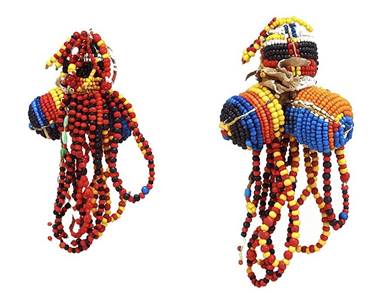
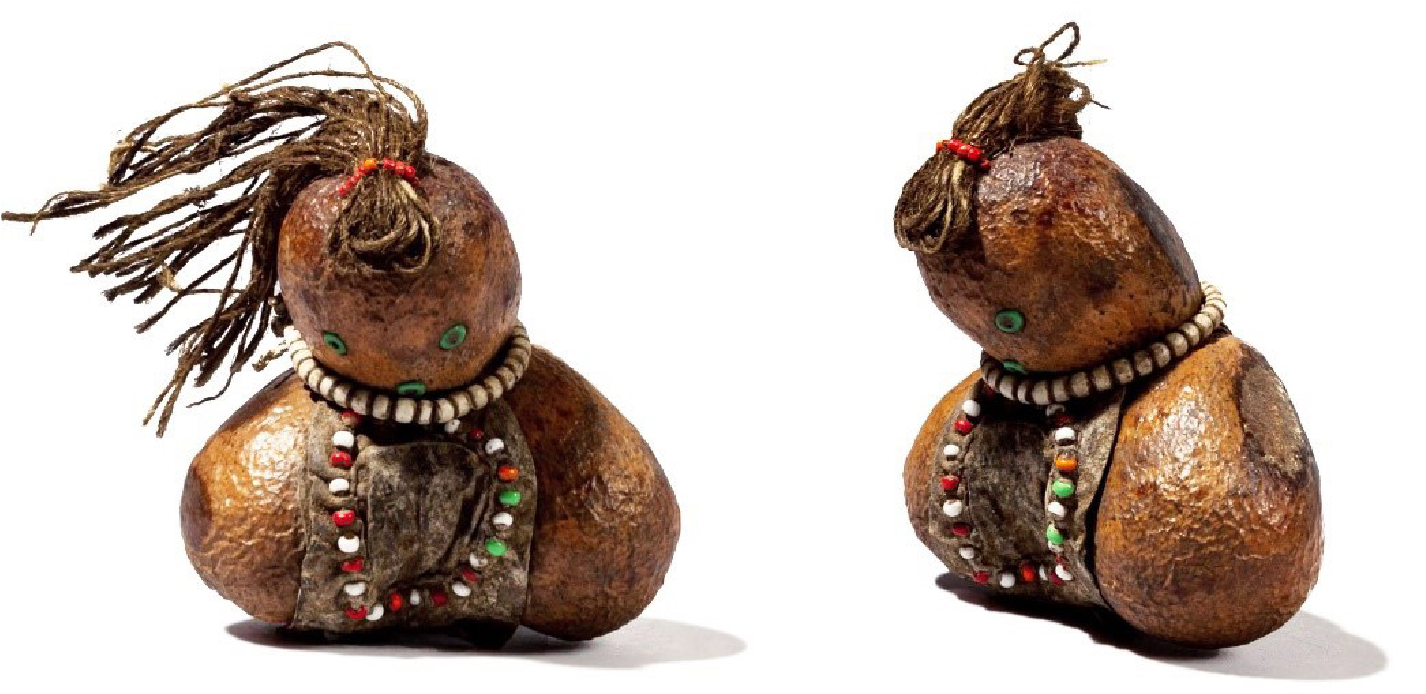
Engol dolls emphasize the interaction between a woman and her husband rather than the traditional mother-child relationship of a doll. The mother of a teenage girl crafts them using beads provided by the girl’s suitor’s best friend. The doll is named after this friend and becomes the fictitious child of the young couple. During the day, the woman wears it as a fertility amulet, either around her neck or over her shoulder. At night, she securely hangs it inside her manyatta (traditional house). During festivities, when a woman calls out her “son’s” name while dancing, her lover must respond by joining her in the dance (Cameron, 1996). After the couple’s first child is born, the doll is no longer carried around and may be kept as a childhood memento or gifted to a daughter or sister. This time, as a toy, as to call upon fertility, each woman must follow the described steps and possess her own Engol doll (F. Ejore, personal communication, August 10, 2023).
This symbolic representation of male genitals underscores the importance of sexual education in this culture; thus, these dolls are not merely talismans but educational tools that explore the interaction between lovers. This reveals the power of art as a means to address delicate, taboo topics in society. In this context, the dolls act as mediators between generations, transmitting knowledge about sexuality in a way that is culturally meaningful and acceptable. Furthermore, the representation of male genitals that later transform into adorned female symbols is an interesting manifestation of how Turkana culture addresses gender. Men are represented through genitals, women through decorations. Additionally, this process of transformation suggests a transition from masculine to feminine, which can be interpreted as an affirmation of gender interdependence. It is an intriguing example of how visual representations can go beyond anatomy to convey broader concepts about identity and gender roles.
The Turkana also have anthropomorphic dolls, known as Ikoku dolls, which symbolize the transition of girls to adult women and motherhood. These dolls are approximately 30 cm tall and are carved from wood without joints. They feature a slender torso, short arms, and long legs (see Figure 3). In line with Turkana women’s tradition, the dolls often mimic their style, characterized by shaved heads on the sides but with a striking crest of hair made from fibers, unraveled and darkened rope threads, or even natural hair. Their eyes are inset beads, while the mouth, nose, and ears are carved with simplicity. Men are responsible for carving and sculpting small breasts and a navel protrusion on the dolls, symbolizing youth and fertility. Women handle the beadwork decorations and the attire, usually an apron1.
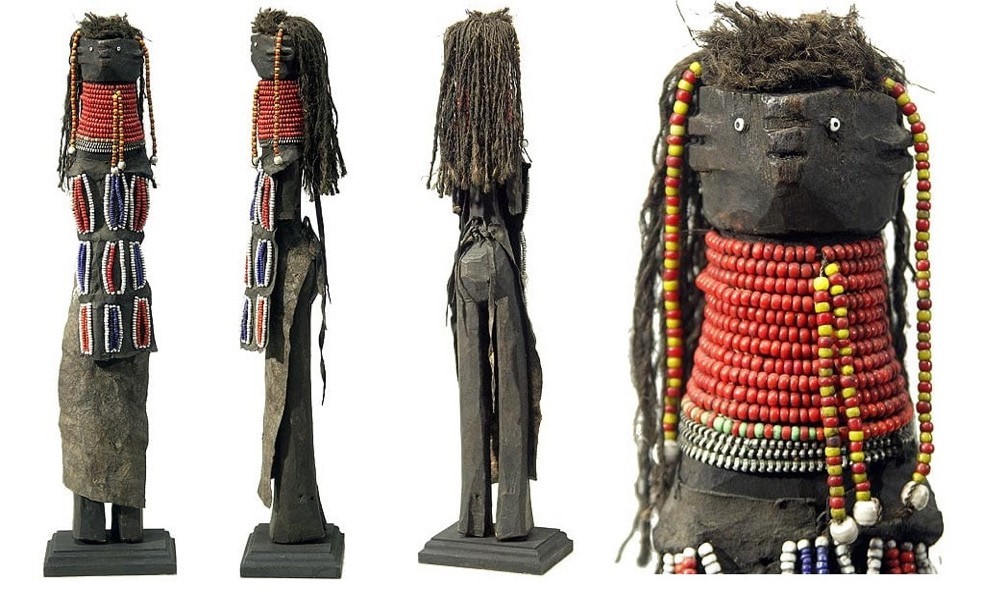
Credits. Hamill Gallery of Tribal Art (https://www.hamillgallery.com/TURKANA/TurkanaDolls/TurkanaDoll01.html)
Figure 3 Turkana Ikoku doll
The Ikoku dolls represent a special gift presented to girls, around the age of six. This tradition fervently believes that if a girl tends to her doll with the same care as a real baby, she is destined for success in her future role of giving birth to a new generation (Cameron, 1996). Essentially, this act symbolizes the transition of girls into a world of responsibility and care. Consequently, these dolls acquire profound significance as representations of motherhood and the future roles of Turkana young women as wives and mothers. The close relationship between these dolls and fertility highlights the relevance of women as bearers of life and guardians of the continuity of culture.
The preservation of Turkana doll-making traditions offers a unique lens through which to examine the decolonization of knowledge in the contemporary world. These dolls, their symbolism, and their profound cultural significance represent a knowledge system that has endured and thrived outside the dominant Western epistemological framework. The Engol and Ikoku dolls embody concepts of sexuality, gender, motherhood, and community in ways that are profoundly different from Western perspectives. The Engol doll, for instance, challenges the Eurocentric notion of dolls primarily as children’s toys, instead positioning them as vehicles for sexual education and relationship building. Similarly, the Ikoku doll inverts the Western idealization of childhood innocence, emphasizing the early preparation of girls for their adult roles. While both cultures utilize dolls as tools for socialization, the age at which this preparation begins and the explicitness of the message conveyed through the doll differ significantly. This distinction highlights a key point about decolonization: it is not about denying similarities or shared practices but about recognizing the unique cultural contexts within which these practices occur and the different meanings they hold.
3. Dolls in Colonial Times
Unlike the Turkana, who were largely isolated from the direct impacts of colonial administration, most Kenyan communities experienced significant disruptions to their traditional practices. A series of powerful forces greatly shaped them: the era of colonization, the subsequent struggle for liberation, and the attainment of political independence (Wamwara, 2019). British colonization of Kenya2 began in 1895 and lasted until independence in 1963 (Lonsdale & Berman, 1979). The British colonial administration employed a “divide and rule” strategy, creating an ethnic-based administrative system that fragmented indigenous communities. This rule was marked by the forceful seizure of land from local populations, often through coercive methods. Taxation systems were introduced, compelling natives to abandon their land and seek work on British-owned farms. In parallel, the British invested in infrastructure, such as railways and ports, and established large-scale agricultural plantations, particularly for coffee and tea. These infrastructure projects not only facilitated the extraction of resources but also triggered significant internal migration. Tens of thousands of Kenyans were forcibly displaced from their ancestral lands, particularly during the development of the “White Highlands”, where European settlers claimed vast tracts of fertile land, forcing communities to relocate to less arable, colonizer-controlled areas (Moindi, 2023). The social and economic impact of colonialism was immense, causing tensions and conflicts while disrupting traditional social and economic structures. Colonial authorities further tightened their control through the implementation of the kipande registration system, which restricted the freedom of movement for Africans. Additionally, the British assigned different roles to each ethnic group, further exacerbating tensions and divisions between communities. The legacy of British colonialism in Kenya continues to have a significant impact on the country’s social, economic, and political landscape (Branch, 2011).
In the years 1952-1960, Kenya’s Mau Mau uprising challenged British colonial rule, sparking a violent conflict that paved the way for the nation’s independence in 1963. The British response to the Mau Mau was brutal, marked by mass detentions, torture, and extrajudicial executions. Concentration camps were created where thousands of suspects were confined, living in terror with constant false executions, forced to crawl on their knees over rocks, while Captain Gerald Griffiths walked shooting at every Kikuyu he encountered under the motto “the only good Kikuyu is a dead Kikuyu” (McWilliams, 2009). Researcher Caroline Elkins (2005) has written a book that sheds light on the horrors of British concentration camps in Kenya, explaining that although only men were officially detained in the camps, women and children were also held in some 800 closed villages scattered throughout Kikuyu territory. These villages, surrounded by barbed wire trenches, concertina wire, and watchtowers, were heavily patrolled by armed guards. They were detention camps in everything but name. Almost the entire Kikuyu population was caged and there were several murdered. Although the Mau Mau were defeated, their resistance and struggle laid the groundwork for Kenya’s independence, stirring nationalist sentiment and catalyzing the movement towards freedom. However, once the long-awaited independence was achieved, politics in Kenya became immersed in ethnic divisions and an unrelenting power struggle.
The dolls bore witness to this historical narrative. Through in-person interviews conducted with the elderly generation who experienced life in the colony, three predominant themes emerge: the persistence of tradition, creativity in scarcity, and the complex relationship with Western white dolls.
For many Kenyan women, traditional dolls represented a tangible connection to their heritage and culture, which were being stripped away from them. These dolls, symbols of cultural continuity and ancestral values, became imbued with power as they strengthened the identity of their communities in a context of change. It is inspiring to examine this phenomenon through the lens of postcolonial and feminist theory by Indian scholar Gayatri Chakravorty Spivak. Spivak’s (1988) work on the representation of subaltern voices provides a theoretical framework for understanding how Kenyan women clung to traditional dolls as a form of cultural resistance amidst colonial influence. This act of preserving tradition can be interpreted as a decolonization of the mind, a concept explored in Ngũgĩ wa Thiong’o’s (1992) seminal book of the same name. As argued by Spivak (1988), those silenced often resist dominant cultural narratives through everyday practices. In this context, Kenyan women’s attachment to traditional dolls can be viewed as a way to reclaim their agency. Those dolls were not just toys but also symbolic vehicles through which Kenyan women could express their cultural identity and rebel against the cultural assimilation policies of colonial authorities and missionaries.
The small dolls hung around the neck, shoulder, or waist inspired fear among the colonizers, who deemed them profane and primitive (M. Kamau, personal communication, February 3, 2023). Amulets represented African cultural identity and concealed deeper meanings, such as, in the case of the Kikuyu, potential oaths of loyalty to the Mau Mau (Koster, 2016). These fertility symbols challenged the cultural hegemony imposed by the colonizers regarding “civilized” attire and decoration; hence, they posed threats to the colony. However, despite the British attempts to discredit and destroy everything they did not understand, the profound significance of these figures in the worldview of each ethnic group and their role in Kenyan cultural resistance persisted among some of the communities as a testimony to the strength of Indigenous culture in colonial times. Applying Spivak’s (1988) concept of subaltern resistance, these dolls could be described as a materialized subalternity crafted by families asserting their right to cultural identity in a context that tended to silence it.
I have called the second point “creativity in scarcity” because not every family had the opportunity to maintain their traditions. Ethnicities were divided and mobilized, and families were fragmented. Traditional dolls ceased to be in the hands of many children due to the racist gaze of the West, which did not assign them any value. One of the most ironic and painful aspects is how the same colonialism that stripped Kenyans of their cultural heritage then argued that they lacked culture. This manipulation of African cultures and identities by colonialism illustrates how power can control a community’s perception (Cabecinhas & Macedo, 2019). Postcolonial authors and philosophers, such as Frantz Fanon (1963, 1952/1967) and Edward Said (1993), have explored how colonial power structures not only suppressed local voices and cultures but also influenced the self-perception and sense of belonging of colonized people.
In the cultural and physical uprooting of the colonial context, some children used their ingenuity to create improvised dolls using available materials, such as leftover corn cobs, bananas, or other natural resources3. The act of playing with dolls bringing objects to life, has deep roots in the essence of childhood, regardless of culture or environment. Girls find an intimate connection with dolls, symbolizing care, communication, and creativity. Nevertheless, making dolls out of banana fiber should not be solely interpreted or applauded as a creative act born out of a lack of resources to acquire those white dolls with bright eyes brought by the Europeans, but also as an act of resistance, of aesthetic resistance. Play as a form of aesthetic resistance challenges the notion that beauty and aesthetics can only be defined through predetermined standards. By subverting colonial expectations of what constitutes a “pretty” or “suitable” doll, these women actively challenged imposed norms and redefined beauty from their own perspective. By using their land, their food, and their roots, these women expressed their independence and individuality. Even when their traditions were threatened, play persisted. Kenyan women moved forward on their land, highlighting their connection to it.
Finally, the introduction of Western white dolls into colonial Kenyan society created a complex relationship between local girls and these foreign objects, marked by mixed feelings: love, hate, and resistance. On the one hand, the white dolls were appealing for their novel aesthetics and polished materials, in contrast to the local traditional or improvised dolls. These imported dolls had fine features, fair skin, and straight hair, embodying a beauty standard different from local physical characteristics. In a society where colonialism had imposed a hierarchy of Western values and aesthetics, many Kenyan children began to idealize these dolls as representations of what was desirable and modern (Abdi & Munene, 2022). This aspiration for Western features, often reflected in adulthood by the desire for wigs that imitated mzungu4 hair or the use of dangerous products like “snow”, a popular bleaching cream in the 20th century, speaks to the influence of images - and specifically dolls - that colonialism brought to perceptions of beauty and identity (Donovan, 2021). The dominant Eurocentric gaze5 created a dynamic where what was Western was considered superior while African characteristics and features were devalued. This devaluation continues to influence beauty standards today (De Andrés-Del-Campo & Chaparro-Escudero, 2022).
Moreover, the introduction of these Western dolls coincided with the spread of capitalist ideologies under colonial rule. Capitalism not only facilitated the mass production and distribution of these dolls but also promoted them as symbols of affluence and modernity. In Bellas Para Morir (Beautiful to Die), Esther Pineda (2014) argues that capitalism has constructed and widely disseminated a pre-packaged aesthetic and sells women the idea that beauty is essential for social, economic, and romantic success. Power structures and social norms, as outlined by Simone de Beauvoir (1949) in Le Deuxième Sexe (The Second Sex), shape one’s perception of oneself and others. In the context of white dolls in Kenya, we see how the imposition of Western aesthetics as the beauty ideal supported a division between the “desirable” and the “undesirable”, reinforcing a hierarchy based on skin color and facial features. In this context, philosopher bell hooks’ reflections on the impact of oppression and racism on perceptions of beauty and identity are also relevant. Hooks (2008) criticizes the way the dominant system imposes a “gaze of domination” that defines what is considered beautiful and valuable, perpetuating the marginalization of non-White and non-Western people. She highlights how this internalized gaze leads to self-denial and the pursuit of validation through the adoption of standards that are not one’s own. This internal struggle to reach a beauty standard imposed by a dominant culture contributed to the complex relationship that Kenyan children had with white dolls.
Not all the elders I interviewed adored the white doll. Another form of resistance was the rejection of them. In Toni Morrison’s (1970) powerful novel The Bluest Eye, set in 1941 Ohio, Pecola Breedlove wrestles with a complex relationship with her dolls. Each year, Pecola receives a white baby doll as a gift, and unlike other children who cherish their dolls, Pecola does not nurture hers. She may even destroy them, reflecting her frustration and anger towards these objects that embody what she believes she can never have. The doll represents the unattainable beauty standards that fuel Pecola’s rage and feelings of inadequacy. “She dismembered the white baby dolls which represented not only the white standard of beauty but also the white domination of society over the black community” (Kohzadi et al., 2011, p. 1311). Both Toni Morrison and Alice Walker, pioneers of Black feminism, have frequently pointed out the association between admiration for the beauty of porcelain dolls: white, beautiful, and expensive, and the repulsion that these girls felt towards such dolls in which they did not see themselves reflected (Katz-Hayman & Kym, 2011). In these contexts, the pale dolls that had to be carefully cared for, sewn clothes for, and dressed reinforced social roles based on gender and race (Colleen, 2022).
Girls, aware of the disconnect between the reality of their lives and the beauty representation embodied by white dolls, challenged preconceived perceptions by refusing to idealize these toys. This situation likely prompted some mothers, noticing the negative effects on their daughters’ self-esteem, to initiate conversations promoting the appreciation of the intrinsic beauty of African physical characteristics. This act of resistance in the individual and everyday sphere is still today the main driving force contributing to undermining the aesthetic narrative imposed by colonialism and Western supremacy.
Resistance does not have to manifest as a struggle of opposites. Michel de Certeau, a French theorist known for his contributions to cultural studies and social theory, addressed the notion of resistance from the perspective of everyday practices used by subordinate individuals to resist power structures (de Certeau, 1990). He suggests that forms of resistance often manifest at the margins, in the tactics people employ to navigate established norms. Instead of directly confronting institutions or dominant powers, resistance occurs subtly and creatively in everyday life. Frantz Fanon (1952/1967), in Black Skin, White Masks, reflects on how many people of African descent yearn for acceptance and seek to conform to imposed White norms, even if it means rejecting their own physical and cultural characteristics. Internalized racism can lead to alienation and self-denial among individuals influenced by dominant cultural norms. This desire to acquire Western traits undermined women’s self-esteem and acceptance of their cultural identity, ingraining itself in the mindset of the colonized, prompting profound reflections on the quest for identity and resistance against the influence of Western oppression long after achieving independence.
As Audre Lorde (1978), renowned American poet and feminist theorist, argued in The Uses of the Erotic: The Erotic as Power, oppression based on race and gender intertwines in women’s lives, generating a constant struggle to reconcile their identity with imposed expectations. In a world that seeks to impose a distorted image of beauty and worth, Lorde asserts that the path for women to empower themselves is to recognize and embrace their differences, redefining their own concepts of beauty.
Women in Kenya during this era grew up under the influence of images imposed by colonialism and demonstrated the ability to adapt, resist, and dream in adverse conditions. However, they were caught in an intricate paradox: they wanted to be seen as beautiful and valuable according to the standards imposed by the Eurocentric gaze while also desiring to celebrate their cultural identities and characteristics.
4. The Dolls of the New Kenya
With independence came a natural desire to reclaim and celebrate cultural identity (Joanguete, 2020). This could have led many women to view the traditional dolls that survived with renewed significance, seeing them as symbols of their heritage passed down through generations. They were no longer merely objects of play, magic, or tourist trinkets but rather embodiments of a cultural legacy that remained alive despite the cultural upheaval to which the territory had been subjected.
However, the rural exodus and migration to large cities like Nairobi and Mombasa - once driven by colonial interests and now by the pursuit of better job and educational opportunities - have transformed the cultural landscape and disrupted the preservation of traditions (Brankamp & Daley, 2020). It is striking how increasingly common it is for a Luo educated in Nairobi not to speak Luo, or for a Kikuyu not to speak Kikuyu, or a Kamba not to speak Kamba, and so on with the now more than 40 cultures connected in the capital (Kimani, 2019). This situation reflects the intricate linguistic and cultural dynamics characterizing post-independent Kenya (Bore, 2019). Internal migration has long shaped Kenya’s socio-cultural fabric, with a particularly profound impact on girls and young women (Clark & Cotton, 2013). While migration can bring opportunities for improved living standards, it also presents significant challenges, such as limited access to resources, urban poverty, and a growing disconnect from cultural roots. Studies reveal that women and girls migrating internally are at heightened risk of violence and exploitation. Lacking stable housing, employment, or community support, some are forced into sexual exploitation to survive, a fate not chosen freely but imposed by structural inequalities and vulnerabilities that disproportionately affect young women (Zulu et al., 2002). The disconnection from their homeland, language, and community has led the girls to a diminished relationship with traditional dolls, which have lost their significance in the urban context. They are unfamiliar to both millennials and Generation Z, who grew up primarily with plastic blonde dolls, like the popular Barbie, in their not-sodistant childhoods (Abdi & Munene, 2022). This shift highlights the complex realities these children face as they navigate urban life while struggling to maintain a connection to their cultural identities.
The historical oppression of the black community worldwide has affected their self-image, and skin tone has played a crucial role in defining beauty standards (Hunter, 2002). The notion of beauty based on skin color has translated into lighter skin carrying connotations of advantage (Wolf, 1991). A study by African-American feminist Margaret Hunter (2005) points out that having lighter skin implies access to a specific type of social capital. In Kenya, this valorization of such capital has driven the dangerous trend of skin lightening through chemicals as a method to enhance beauty and, consequently, increase opportunities and success (Okango, 2017). Research conducted in Tanzania, a country bordering Kenya with a history of European colonialism, asserts that the main motivations behind skin-lightening practices are related to the desire to adopt a “white, beautiful and European-style” appearance (Lewis et al., 2011, p. 33). These motivations reflect the persistence of historical and cultural influence in the perception of beauty and its relation to skin tone.
In spite of that, several Kenyan entrepreneurs, aware of the power of the doll given to the growing girl, have created dolls that represent the diversity of skin tones, facial features, and hair types typical of Kenyan women, such as Nancy Schürch’s Mimi Authentic dolls or Olivia Mengich’s Swahili Princess dolls (Maina, 2019). By exposing girls to a diverse range of images and role models from a young age, it is hoped that they will embrace their own identity without succumbing to the pressure to adhere to limited and discriminatory Western beauty standards.
Before European influence, dolls symbolized motherhood and sexuality (Cameron, 1996), aspects that, in many ways, reduced and constricted women’s roles. Traditional dolls represented women’s ability to give life and care for future generations. These figures conveyed teachings about the importance of family, community, and connection with nature. They also addressed female sexuality, predominantly influenced by male desires.
The new dolls, although Kenyan and not directly following tradition, have evolved in form and material, but their symbolism still touches on essential aspects of life. They speak of the destiny of women. There are two main types: baby dolls, whether plastic or fabric, continue to represent the mothers’ and caregivers’ roles, reminding us of the importance of nurturing and the need for loving care; and fashion dolls, like Barbie, whose play often revolves around beauty and self-image, still relating to sexuality in contemporary society.
A recent study by researcher Joyce Okango (2017) asserts that in Kenya, 50% of children choose to play with white dolls, while only 5% opt for black dolls. The remaining 45% of children, unable to afford commercial toys, resort to making their own dolls using home materials out of necessity. However, this same study points out that this small option for the dark ones is often short-lived, as their interest tends to fade in favor of identifying with characters portrayed on television and across digital media. These characters, still predominantly White, capture more of their attention through continuous exposure and interactive narratives. Unlike dolls, which are passive objects, television shows and digital content bombard children with images and messages that can perpetuate stereotypes and narrow beauty standards. These statistics reflect the ongoing challenge of dismantling the normalization of products centered around Whiteness.
In the inclusive online market, where local Kenyan small businesses proliferate, it is easy to find dolls of African or even Kenyan origin, indicating efforts both to distribute these dolls and a demand to acquire them. However, the supermarket chains in this country work to support the abovementioned statistics. White dolls on the shelves are always the majority and are more affordable than the locally-made dolls available online. A similar situation occurs in the popular second-hand markets, where a multitude of used dolls, sold at very low prices, are all white (Nzau, 2023). These contrasts highlight the interconnection between global economic inequality and cultural perceptions of beauty and identity. Developed countries with higher purchasing power often discard lightly used toys as part of an unsustainable consumption cycle. These toys travel to developing countries, where they become an affordable option for local families. This, in turn, underscores the economic gap between nations and the imbalance in access to resources and opportunities. However, the reflection extends beyond economics. African dolls in small online stores in Kenya attempt to promote ethnic and cultural diversity, celebrating Kenyan identities. Nevertheless, the predominant presence of white dolls in supermarkets or affordable second-hand markets is a persistent influence of Western beauty standards in a developing society like Kenya’s, where small businesses have limited resources to compete with the decisions of large fortunes.
5. Final Considerations
Although Kenyan traditional dolls are now primarily visible in exhibitions such as Dolls of Good Hope, held in September 2023, or within remote rural settlements, they hold significant potential as tangible symbols of mnemonic activism. As highlighted by Cabecinhas and Brasil (2019), collective memory serves as a crucial arena for symbolic conflict among groups, as it has the power to validate both current and future agendas. In this regard, traditional dolls embody much more than mere playthings; they encapsulate the cultural identity of entire communities. They are powerful symbols that navigate tradition, resist oppression, and reflect the complexities of identity. The enduring significance of traditional dolls lies in their ability to transmit cultural knowledge and values across generations. During colonial times, even the act of clinging to traditional dolls became a form of resistance against the imposition of Western aesthetics. In an increasingly globalized world, where external influences threaten to erode traditional ways of life, these dolls serve as powerful reminders of the richness and importance of safegarding local cultural practices. In rural settlements where artisans continue to craft these dolls, the creation process becomes an act of resistance against cultural homogenization. These dolls, in their miniature form, emerge as activists, embodying the spirit of cultural resistance. Artisans who meticulously mold and decorate these figures do so with a profound sense of pride and purpose, thereby imparting knowledge and skills from one generation to the next. ‘’Craftsmanship and commitment are two terms that go - or should go - hand in hand’’ (Diez, 2023, p. 94). Clara Diez’s observation in Leche, Fermento y Vida (Milk, Ferment and Life) highlights the critical role of artisans as cultural custodians. By continuing to create these dolls, they ensure the survival of not just a craft but a vibrant tapestry of traditions, memories, and values.
Furthermore, the resurgence of interest in these dolls in exhibitions like Dolls of Good Hope demonstrates a hunger for cultural awareness in this society. As more people recognize the value of these pieces as historical artifacts and symbols of identity, support grows for valuing and promoting the traditions they represent. Throughout this century and in the changing landscape that defines Kenya, these dolls could find their place by being reinterpreted and contextualized in urban environments. In this way, they gain the ability to be powerful reminders of Kenya’s rich history. In the words of Fanon (1963), “each generation must out of relative obscurity discover its mission, fulfill it, or betray it” (p. 206). The journey towards a more diverse and positive perception of beauty continues, but these dolls serve as a reminder of women’s resilience and their ability to transform their surroundings and forge their own identity amidst historical and cultural challenges.
Kenya faces a new challenge this century: dismantling the lingering influence of Eurocentric beauty standards perpetuated by mass-produced dolls. While initiatives by Kenyan entrepreneurs to create dolls reflecting diverse Kenyan ethnicities are commendable, these efforts require broader support. Increased accessibility and affordability of these dolls in local markets is crucial. The future of the Kenyan doll industry lies in its ability to evolve and celebrate the richness of Kenyan culture. Imagine a future where shelves overflow with dolls in vibrant fabrics and decorations, representing the spectrum of skin tones and features found throughout the country. These dolls would not only entertain children but also serve as powerful tools for cultural preservation, fostering pride in Kenyan heritage and empowering young girls to embrace their beautiful and unique identities. By nurturing a thriving doll industry that celebrates Kenyan culture, the nation can rewrite the narrative of childhood play and empower future generations to dream boundlessly.

