




 Inglês (pdf)
 Artigo em XML
 Referências do artigo
 Tradução automática
 Enviar este artigo por email
 Citado por SciELO
  Similares em
SciELO
Similares em
SciELO 
 Permalink

Introduction
In contemporary media, significant attention is often devoted to the topic of “people on the move.” Although the causes and dynamics of these movements vary greatly, it is essential to recognize that migration and displacement have been intrinsic to human history. Documented evidence of human mobility spans across time and geography, just to name a few - from the mythical exodus of the Jews from Egypt to the Indo-Aryan migration in Asia around 1500 BCE (Baghele, 2020), as well as the movements of classical civilizations such as the Greek expansion throughout the Mediterranean (Klemenčič, 2007) and the Arab conquests and reconquests (Morris, 2020).
While these historical movements hold undeniable significance, the roots of contemporary migration are more directly tied to colonial expansion - both through voluntary European settlement in the so-called "New World" (Zahra, 2016; Zavala, 2016) and through forced migrations such as the transatlantic slave trade (Mayblin & Turner, 2020). The industrial era further intensified global mobility, illustrated by large-scale emigration from countries like Italy to destinations such as Brazil and the United States or the potato crisis that forced the Irish to emigrate en masse.
Then fundamental shift occurred after World War II, particularly in the post-colonial period, when decolonization gave rise to newly independent states. These transitions were often marked by revolutionary upheaval, the departure of white settler populations, the collapse of productive infrastructure, to which it can be added the pre-existent and disruptive imposition of artificial borders shaped by colonial interests (Truett, 2019), that since remained flashpoints for ongoing conflicts.
This post-colonial “reflux” of migration is the first defining characteristic of contemporary international mobility. The second distinctive feature is that, for the first time in history and in a significant and impactful way, a set of intergovernmental and governmental organizations was established to address the socioeconomic challenges arising in this context (the United Nations system and national development agencies) and non-governmental organizations (with the exception here of the Red Cross (1863) and Save the Children (1919)) that were created after the war - along with a comprehensive body of legislation and technical documentation - aimed not only at guaranteeing the rights of displaced people but also at creating the conditions for a dignified and prosperous life.
A third critical dimension in understanding modern migration involves human-made disasters - including climate change, famine, and armed conflict - which increasingly drive mass displacement.
Building upon these structural and historical developments, this article will analyze the paradigm shift in migration and refugee movements, considering the interplay of colonial legacies, institutional responses, and emerging global challenges.
Once the framework for 'people on the move' is established, the methodology in use will then be addressed.
1. Methodology
The methodology adopted will be delineated through the following topics:
The research question: this corresponds to the publication's objective, namely: What is the state of the art in practices and theories in “people on the move”?
Object of Analysis: this encompasses the interactions, interrelations, and impacts resulting from the holistic approach to the elements comprising the phenomena “people on the move”.
Research Objective: building upon document analysis, the aim is to identify and systematize both the origins and patterns of theoretical-practical relationships established among the aforementioned phenomena.
Search Strategy and Sampling: the sample selection and research strategy align with the principles of the adopted MA&TM model (Bandeira, 2023), with a change in approach, instead of focusing the analysis exclusively on scientific articles, a mix of documents was used - half articles, half reports - since, given the nature of the object under study, it was considered appropriate to include grey literature produced by intergovernmental institutions and reputable NGOs.
The document search for establish the sample was conducted in January 2025 and restricted to documents published 2015 onwards. To streamline the retrieval of scientific articles, the software Publish or Perish (Harzing, 2023) was used with the search criteria “people on the move”. Based on the “total citations” indicator provided by the software, a set of the 20 most cited documents was selected, accounting for 72% of the total citations of the set of 100 documents retrieved. For the reports, Google Scholar served as the research tool, using the search term “’people on the move’ reports”, with results sorted by the “Sort by relevance” function. As a result, the final sample consisted of 20 scientific articles and 20 reports. All documents in the sample were analyzed, eliminating the need for inclusion or exclusion criteria.
Additionally, articles and reports are listed in different groups in the bibliography and preceded by the letters A followed by a number (e.g. A1) in the case of articles and by an R (e.g. R1) in the case of reports. This nomenclature will be used in the tables throughout the text to identify the texts linked to the themes.
-
Data Processing: data processing followed the prescribed procedure of the MA&MT model (Bandeira, 2023).
Theoretical Framework for “people on the move”: This section focuses on identifying key themes emerging from the corpus that serve as dominant theoretical and practical foundations.
Text Mining/Co-occurrences: text mining is a multifaceted concept that defies simple definition, encompassing a range of techniques and methods (Desai, 2015). However, it is commonly understood, following IBM's approach, as "the process of transforming unstructured text into a structured format to identify meaningful patterns and new insights by applying advanced analytical techniques." (IBM, n/a). This process can be executed using various tools, and for this study was utilized, an open-source application, KH Coder (Higuchi, 2015).
KH Coder offers a plethora of features, and for the objectives of this chapter, it was considered that co-occurrence/random walks networks are the most suitable. Co-occurrence can be broadly defined as "the adjacency of two word forms in sentence formation" (Liu, Cong, 2013, p. 1140) and random walks, introduced by the French mathematician Louis Bachelier, involve "a series of discrete steps an object takes in some direction... the future position is entirely independent of the current position of an object" (Datta, 2023). In text analysis, co-occurrence random walks are employed to understand the relationships between terms and concepts, elucidating how connections can be made among concepts within a field of knowledge.
Once the methodology is established, the sample documentation will be used to analyze the concepts and trends related to practices and theories on 'people on the move.'
2. Systematization of theories and practices on 'people on the move' traced from the documentation
When one reflects on the heartbreaking image of little Aylan Kurdi, a 3-year-old Syrian refugee with his face buried in the sand after losing his life on a beach in Bodrum, Turkey (2015), we cannot help but ask what drove his father, Abdullah Kurdi, to risk his family's lives by crossing the Mediterranean - aware that it was a deadly sea for refugees. In this instance, the answer is clear: they were fleeing the ravages of war. However, this is not always the case, in other situations, it could be hunger, thirst, climate change, ecological disasters, beliefs and so forth.
With this research, an attempt will be made to understand the phenomenon in its causes and consequences.
2.1. People on the move main dynamics
The documentation explores the various dimensions of the impact of conflict on displaced groups, emphasizing that while armed conflicts - especially full-scale wars - tend to be the most visible due to their scale, methods, and media coverage, there are many other forms of conflict driven by ethnic, religious, or economic motivations. These, though often less visible, can be equally devastating, resulting in serious human rights violations that frequently go unnoticed.
Contrary to the common perception that conflict follows a linear path from cause to consequence, the documentation highlights the complex interconnections between climate, health, conflict, and displacement. In some cases, displacement itself generates environmental impacts and triggers new conflicts, illustrating a feedback loop rather than a one-way trajectory.
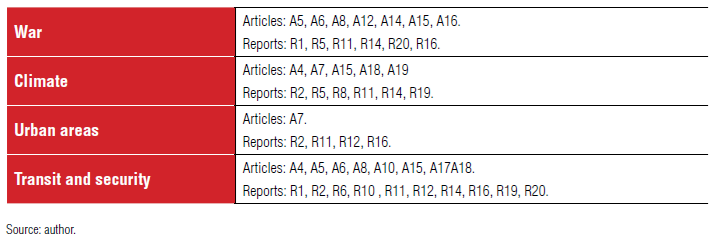
In such contexts, the most persistent and urgent needs are the basic necessities: food, water, sanitation, and shelter. Following these are the protection needs of particularly vulnerable populations, such as women and children, who face risks including violence, trafficking, sexual and gender-based violence (SGBV), forced labor, expropriation, and loss of livelihoods.
The documentation also makes it clear that conflict situations often foster violence and illegality. This includes the rise of trafficking networks, exploitation of displaced populations, the formation of gangs among people in transit, and various other forms of criminal activity both within and outside displaced communities.
Human rights are addressed from multiple perspectives - as both a cause and a consequence of conflict. Displaced persons and the organizations advocating for their rights (whether national or international) face intense pressure and persecution, this issue of persecution is particularly noteworthy and while the Geneva Conventions related to armed conflict receive limited attention in the documentation, the 1951 Refugee Convention is scarcely mentioned.
The post-conflict period is also addressed, particularly the need to tackle root causes and manage challenges related to return, repatriation, identification, and the lasting effects of humanitarian crises. Long-term displacement camps, the struggle to rebuild livelihoods, lack of essential services, reintegration challenges, landmines, and unresolved ethnic tensions are highlighted as ongoing concerns. Notably, the situation of soldiers and veterans - who are often victims themselves - is not mentioned.
Climate and climate change are also key factors influencing the large-scale movement of people. In this regard, the concept of the climate change-mobility nexus has gained increasing attention in academic and policy circles. Terms such as climate migrants, climate refugees, and climate-induced displacement (CID) have become more prominent in the discourse.
The corpus often conflates climate change with other natural phenomena such as earthquakes, landslides, and volcanic eruptions. While these are not caused by climate change, they produce similar humanitarian crises and are often discussed in parallel.
A distinction is made between sudden-onset climatic events (which occur without leadtime) and slow-onset events (that develop gradually over time), each producing different impacts and conducing to different patterns of human mobility. Sudden-onset events tend to have intense but localized impacts, requiring urgent responses, though their long-term effects may dissipate over time. In contrast, slow-onset events typically have more widespread and enduring consequences, demanding long-term, planned interventions.
Within this context, the importance of climate simulation and forecasting models, as well as risk assessments, is emphasized for their role in prevention and the development of strategies to mitigate climate-related impacts on populations.
Notably, corpus lacks references to the role of animals - whether wild or domestic - in these dynamics. This omission contrasts with the growing recognition of the One Health approach, which integrates human, animal, and environmental context impacts on health, and is increasingly acknowledged by both academic and intergovernmental organizations as essential to addressing climate-related challenges.
Displaced urban populations represent a unique challenge due to the complexity of their circumstances and the wide range of influencing factors. Notably, they often make up more than half of the total displaced population. As such, they hold a central place in the Sustainable Development Goals, particularly in Goal 11: Sustainable Cities and Communities, and Goal 13: Climate Action.
Displaced individuals - whether internally displaced persons, migrants, or refugees - tend to move to cities first, seeking better access to employment opportunities and essential services. However, it is often overlooked that cities themselves can generate displacement, producing homeless populations or those affected by unemployment, forced evictions, or environmental disasters.
The corpus frequently highlights several key strategies, including integrated cooperation among international, national, and local organizations; the promotion of intercity collaboration; and the development of inclusive urban planning. These efforts are particularly important in urban areas identified as being at risk of significant migration or refugee influx.
In this process of urban integration, it is vital not to overlook the contributions and perspectives of displaced people themselves. Their involvement is essential in fostering inclusive, non-discriminatory urban environments and ensuring that decision-making processes reflect their needs and experiences.
At the same time, the importance of data collection and evidence-based policymaking must be emphasized to effectively address the challenges associated with urban displacement.
In the documentation, traffic and mobility - particularly in the case of the European Union - are identified as major challenges faced by people on the move. Migrants and refugees are frequently exploited by criminal gangs or human smugglers, who charge exorbitant fees to facilitate illegal border crossings. These journeys often involve extreme danger and, in many cases, result in death.
Family reunification presents another significant challenge, particularly for children, many are entrusted to third parties during transit and arrive at their destination without any guardians or relatives to receive them, while others experience forced separation from their parents, force by legal constraints.
Transit conditions are often dire, with severe shortages of basic necessities such as hygiene facilities, clothing, food, and water. These hardships further exacerbate the vulnerability of individuals, many of whom are already ill, malnourished, exhausted, or suffering from post-traumatic stress disorder.
Europe, along with other so-called “Western countries,” faces substantial pressure from incoming migrants and refugees. However, Europe presents specific characteristics that are frequently highlighted in the corpus. It remains an economically attractive region where, despite challenges, human rights are largely respected. The legal framework of the Schengen Area, which permits free movement among member states, that encourages displaced persons to enter peripheral countries first and then travel to more desirable destinations - often those with established diaspora communities, such as Germany or the Nordic countries. This pattern contributes to dysfunctions in managing migration flows. Moreover, in recent years, the strategic use of migration corridors has emerged as a tool of political leverage.
Documents also highlight several additional issues associated with displacement. These include the ecological footprint left by large-scale human movement and the social tensions that arise in regions migrants pass through. In Europe, local populations frequently express concerns about economic strain and cultural clashes. Particularly sensitive matters, such as the repatriation of deceased individuals, are also addressed in the documentation.
Another critical dimension of the corpus concerns the security and legal protection of displaced persons at both national and international levels. Given the complex and transnational nature of displacement, international cooperation is essential to address key challenges. These include the need for standardized policies that respect human rights; effective search and rescue operations across maritime and land routes; the prevention of trafficking and smuggling; and the facilitation of legal identity and documentation, such as birth registration and digital IDs. Additional concerns include the identification of deceased migrants through forensic systems, family notifications, and the provision of legal and psychosocial support to families of missing migrants.
Border management and territorial sovereignty also constitute major areas of debate, encompassing issues such as the establishment of regular migration pathways to manage the entry of economic migrants, detention and deportation policies, pushbacks, asylum procedures, temporary visas, and alternatives to immigration detention, including community-based approaches.
A related issue is the externalization of borders, as seen in recent practices by the UK, Europe, and the United States. This has generated widespread debate regarding its legal basis, its implications for individual rights, and its moral and humanitarian justifications.
On a more transversal level, the question of the rights, security and protection of "people on the move" must be considered. This includes the need for policies that combat segregation, promote social cohesion, and foster resilience and humanitarianism, particularly in displacement settings such as camps. These efforts should support self-reliance, empowerment, and community-building, especially for vulnerable groups such as children, women, LGBTQ+ individuals, and trafficking victims. Within this vulnerable population, the issue of statelessness also demands attention, as stateless individuals often lack access to state protection and face severe restrictions on their rights.
The principle of state security is another recurring theme in corpus, often framed in terms of the tension between sovereignty and humanitarian access, or between securitization and human security. A further source of tension lies in the relationship between state control and the operations of humanitarian organizations, which advocate for access based on principles of neutrality and non-political engagement.
A contrario, demographic decline in many destination countries has prompted a reassessment of migration policy, leading to legal reforms aimed at liberalizing access to both low-skilled labor and highly specialized workers, particularly in technology-driven economies.
A dual risk associated with these groups must also be considered, as it manifests in various forms - violence, robbery, trafficking, drug use, prostitution, and gang formation. Beyond the inherent danger and the social alarm these issues generate, there is also the risk of political exploitation by extremist groups, who may amplify these statistically marginal phenomena to provoke public outrage.
2.2. Heath importance for “people on the move”
If climate change is the leading driver of displacement, health is where its consequences are most deeply felt. From a humanitarian perspective, health can be approached through various lenses, beginning with clinical medicine.
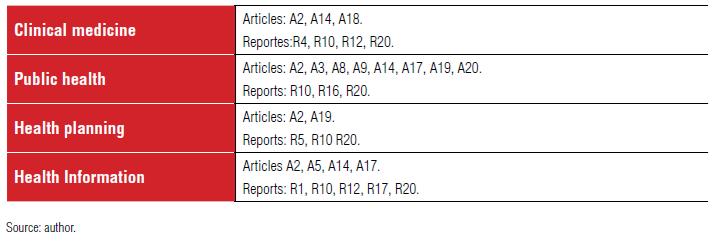
Clinical medicine focuses on diagnosing and treating individual patients. It involves procedures such as medical assessments, prescribing tests and medications, and includes fields like internal medicine, general practice, and surgery.
Displaced populations are particularly vulnerable. The health challenges faced by the general population are often more severe for them, compounded by additional risks linked to displacement. Some of the most critical health concerns include:
Sexual and Reproductive Health (SRH): Migrant women and girls face distinct SRH challenges, including limited access to contraception, safe abortion services, and care for gender-based violence (GBV). GBV is one of the most serious health concerns in displacement contexts, as conflict and forced migration significantly increase the risk of sexual violence, trafficking, intimate partner violence, and rape.
Mental Health and Psychosocial Support (MHPSS): Trauma, insecurity, and unstable living conditions have a profound impact on the mental health of displaced populations, often leading to stress, anxiety, depression, and post-traumatic stress disorder (PTSD). Women, in particular, may experience heightened vulnerability due to exposure to sexual violence and gender-specific trauma.
In regard to nutrition and food security, displaced populations often suffer from poor and unbalanced diets due to limited resources, disrupted food systems, and, at times, religious or cultural dietary restrictions. These conditions are frequently compounded by the consumption of expired or unsafe food, further increasing health risks.
Issue mentioned is the maternal and child health, pregnant women among displaced populations require specialized healthcare, but harsh travel and living conditions heighten the risk of miscarriage and complications. Children - especially newborns - are particularly susceptible to disease, malnutrition, and other life-threatening conditions due to their increased physiological vulnerability.
Orthopedics and rehabilitation, often supported by nursing care, are also high-demand specialties among displaced populations. These services address injuries, disabilities, and physical strain commonly experienced during migration and in overcrowded or unsafe living conditions.
In contrast to clinical medicine, which focuses on individual care, public health addresses issues that affect entire populations - from transnational challenges like pandemics to more localized concerns within specific nations or vulnerable groups such as interbnal displaced people. The corpus emphasizes that population movement significantly affects not only the health of migrants but also the public health of host communities. These impacts include changes in disease patterns, barriers to healthcare access, and broader social and environmental determinants of health.
Among the most pressing public health challenges are vector-borne and communicable diseases such as malaria and dengue fever. While not always the most prevalent, these diseases are among the most critical due to their potential for rapid spread and severe outcomes. Additionally, there is a growing need for healthcare systems capable of managing chronic conditions, including HIV, cancer, and kidney failure.
The Water, Sanitation, and Hygiene (WASH) nexus is also a recurrent concern in public health. Access to clean water, adequate sanitation, and basic hygiene is essential for preventing disease outbreaks - particularly in crowded or temporary settlements where displaced populations often live. These factors are fundamental to safeguarding health and dignity in humanitarian contexts.
A third critical area of public health is palliative care and the management of death in crisis contexts. Displacement often results in tragic outcomes - such as miscarriages, violence, and outbreaks of infectious diseases - highlighting the urgent need to ensure that those affected are treated with dignity. This includes preventing disease spread, arranging for the repatriation of remains when appropriate, and establishing palliative care networks. These services are especially important for elderly individuals whose medical conditions often deteriorate under extreme stress. Palliative care should aim to improve the quality of life for people facing serious, life-threatening, or advanced illnesses, even in humanitarian settings.
In addition to specific healthcare services, the corpus emphasizes the need to strengthen structural and strategic planning within health responses for displaced populations.
Effective planning calls for adaptive, culturally competent, and mobile healthcare services that are context-specific and responsive to the diverse needs of migrants. These services should promote social cohesion, dialogue, and inclusive policies, moving beyond narrow approaches focused solely on disease prevention - such as vaccination and sanitation - to embrace a broader understanding of health. This includes addressing socioeconomic, political, and structural determinants that shape health outcomes.
Planning must also tackle system inefficiencies, such as excessive bureaucracy, and promote better coordination across international, national, and local levels. Integration of services should be accompanied by integrated financing mechanisms, scaled appropriately to meet the needs of displaced populations effectively.
Planning must also consider the human resources dimension, particularly in defining the transdisciplinary composition of healthcare teams. Professional training should not only equip personnel with the technical skills needed to address the complex health needs of displaced populations, but also emphasize teamwork, coordination, and culturally sensitive care. Effective team functioning is essential to delivering integrated and responsive services in humanitarian contexts.
Another key theme is the importance of evidence-based decision-making, which is often hindered by a lack of reliable data. This gap affects both medical interventions - such as the surveillance, vaccination, and control of communicable diseases among mobile populations - and the management of non-communicable diseases, including chronic illnesses that require sustained care.
Given that health is a cross-cutting and systemic issue, it must be addressed through a comprehensive framework. In addition to robust, disaggregated medical databases, planning should incorporate other critical dimensions such as demographic data, geographic information systems (GIS), and redundant supply capacities to ensure resilience in times of crisis.
2.3. Socio-economic dimensions of “people on the move”
The final dimension that emerges from the corpus is the socio-economic one, encompassing a range of interconnected aspects.
Beginning with the social dimension, there is often a misguided perception that the issue of migration primarily concerns the individuals on the move. However, the corpus reveals that much of the focus is, in fact, on the societies through which migrants travel or in which they settle.
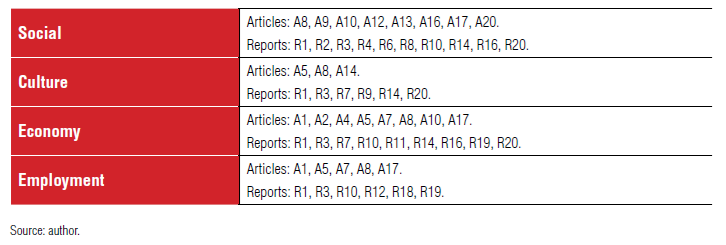
A key element is the role of the state, where tensions between state sovereignty, humanitarian responsibilities, and international obligations frequently arise. Within this context, recurring themes include inequality, social justice, access to social protection, justice, and education, particularly for children.
The community level also plays a critical role, both in terms of protection and security - with local humanitarian organizations advocating for vulnerable groups despite governmental constraints - and in facilitating the integration of migrants into host communities.
Another significant topic is the realm of symbolic and social representations, often captured through the metaphor of “narratives.” These narratives encompass widespread fears and stereotypes, including xenophobia and the criminalization of migrants and refugees - such as beliefs that they take jobs, exploit public services, or pose threats to public safety. These fears can lead to social unrest and moral panics.
At the same time, it is important to acknowledge that certain behaviors among displaced populations, such as queue-jumping or disregard for social norms, can create tension and are understandably criticized by host societies. This is particularly evident in areas where public behavior and legal enforcement intersect, such as during the Covid-19 pandemic, when violations of public health regulations were a concern.
The urban dimension is another critical area, as cities are the primary destinations for many migrants. While urban areas often provide more liberal and diverse environments, they are also sites where social challenges become more acute. The integration of migratory flows adds complexity to issues such as housing, creating excessive demand for affordable housing and increasing the risk of ghettoization and spatial segregation. This, in turn, poses significant challenges for urban planning, which must seek to avoid segregation by implementing models of mixed housing and inclusive public spaces. On the other hand, the phenomenon of gentrification is also noted - while it may bring certain benefits, it often pushes migrant populations into even more precarious situations. This makes it increasingly urgent to deploy, harmonize and coordinate policies at the local, regional, and national levels.
Finally, the social impacts of post-conflict situations in countries of origin, the social fabric emerges deeply weakened and fractured, marked by polarization and division - often stemming from deeply rooted ethnic, religious, or political divides - which lead to persistent tensions between groups. At the same time, conflict situations frequently cause the breakdown of social and community networks, particularly at the family and communal levels. In many cases, this is compounded by the erosion of trust in institutions, as corrupt governments - often themselves parties to the conflict - leave populations skeptical of formal institutions. Furthermore, the prospects for return and reintegration present serious challenges, as refugees and displaced persons who attempt to return often face hostility or lack the necessary resources to rebuild their lives.
The cultural dimension complements the social dimension and is essential in discussions of migration and integration. As the corpus consistently highlights, it is important to consider two key perspectives: that of the people on the move and that of the societies they impact. Within this framework, it is argued that cultural sensitivity must be prioritized, particularly with respect to differing practices, beliefs, ethical systems, and values in the context of cultural diversity and integration.
Host societies often benefit significantly from the cultural richness brought by migrants. However, the legacy of post-colonial histories must also be acknowledged, as these continue to shape perceptions of ethnocentric superiority, raising complex questions rooted in centuries of power dynamics and historical injustices. Religious practices also represent a significant area of cultural tension. These can challenge secular norms, particularly when associated with proselytism, gender-based restrictions - often affecting women - extremism, or behaviors that may be deemed illegal or culturally inappropriate within host societies.
Additionally, deep-seated symbolic threat often resurfaces in the form of fear or suspicion of the "other." In this context, borders take on powerful symbolic meaning. For displaced individuals, host countries may be viewed as either promised lands or, increasingly, as sites of suffering and death - captured poignantly in the term "black Mediterranean".
Another very important theme is the economic dimension associated with displaced people, which is addressed in the corpus from different perspectives, the social cost in host societies, the contribution of displaced people to the economy, the impact on countries of origin, etc.
Perhaps the first idea when referring to this problem is the scarcity and allocation of resources. In increasingly scrutinized societies, consistently justifying how scrace funds are applied and, above all, the options underlying each choice is essential for positive attitudes towards supporting these groups.
On the other hand, it is not only states that fund these activities; philanthropy and large corporations also contribute significant resources to their implementation on the ground. As a result, there is often competition among NGOs to secure these funds in order to carry out their programs. At the same time, the corpus highlights a lack of regulatory and registration mechanisms in many countries, which undermines accountability and oversight of these organizations.
In recent times, humanitarian financial instruments have been developed, which on the one hand focus on financial citizenship, such as mitigating barriers to banking, loans, and social protections or financial barriers, and on the other hand focus on investment and development actions blended finance (public and private mixes).
The documentation refers to the financial priority given to flexible and long-term actions along with the impact and dimension of multi-year funding to reduce waste of resources.
In economic logic, resources must obey a cost-benefit analysis, thus starting with the opportunity cost, with multiple studies proving that investment in displaced people is worthwhile, these groups move the "third sector" of the economy, in addition to minimizing threats such as the spread of diseases, social integration, etc.
With integration, these groups end up participating in productive activity and contributing taxes and consumption, although there is a risk that they will become structurally dependent on subsidies.
It is also reported the contribution of successful displaced to the economies of the countries of origin in the form of remittances and productive investments.
On another level, the case of the costs of post-war reconstruction to rebuild infrastructure and restore economic stability in former conflict zones is also mentioned. Aid development funding, where it is acknowledge the importance of the transition from humanitarian relief to development assistance (Linking Relief, Rehabilitation, and Development (LRRD)).
Although closely tied to the broader economy, employment holds particular significance for displaced populations. When managed effectively, employment can restore dignity and foster integration; when neglected, it risks entrenching undignified conditions and further marginalizing these vulnerable groups.
In considering employment, it is essential to examine both the perspective of the displaced and that of the surrounding system. From the latter viewpoint, two key dimensions emerge: the human resources and training needs of NGOs, and the impact displaced people have on the labor market.
NGOs have undergone significant changes in recent years, both in their modes of intervention and in their organizational structures. These shifts introduce new demands for professional skills. International organizations increasingly delegate operational responsibilities to NGOs, resulting in several implications for their workforce. These include a transition from volunteer-based models to professionalized roles; the emergence of competition for funding, which necessitates dedicated advocacy and branding skilled specialists; growing bureaucratic requirements for accountability and reporting; and an expanding scope of operations that calls for diverse expertise across fields such as medicine, engineering, education, finance, and project management.
For displaced individuals - particularly migrants - their contribution to host societies is often substantial, yet their labor conditions remain precarious. Many face serious vulnerabilities, including human trafficking, forced labor, child labor, exploitation, and job insecurity. Beyond these visible abuses, more subtle issues persist, such as the underemployment of skilled migrants and the existence of racialized labor hierarchies. Non-white migrants, for example, are often subjected to stricter enforcement measures, including detention and deportation, compared to white EU migrants.
Disadvantages are not confined to the labor market alone. State policies can also undermine the position of migrants through mechanisms such as conditional legal status, barriers to credential recognition, and the denial of labor protections and social security for undocumented workers.
Despite these challenges, positive developments are emerging that aim to uphold the rights and dignity of displaced workers. These include the promotion of rights-based labor migration policies, fair recruitment practices that eliminate unethical fees and exploitation, the enforcement of safe and equitable working conditions, initiatives to recognize and validate migrant skills and qualifications, and the extension of labor protections to all workers, regardless of legal status.
With the analysis of the constraints associated with employment in the context of “people on the move”, this chapter concludes. It was a synchronous approach to the themes under analysis, since each theme was treated on its own, although as much as possible the different approaches emerging from the corpus were considered. In the next chapter, using dataming methods, a diachronic analysis will be carried out with a view to understanding the dynamics and patterns that emerge from the documents when considered simultaneously in their entirety.
3. Datamining of the 'people on the move' corpus
In the previous chapter, the corpus was analysed from a segmented perspective. In this chapter, a diachronic and holistic approach will be adopted using data mining techniques. The aim is to understand how concepts relate to one another and aggregate into clusters. This will be accomplished through the use of the following indicators:
Modularity, which “represents the ability of the network to decompose into meaningful modules” (Radhakrishnan et al., 2017, p. 2, our translation).
Degree Centrality, defined as “the number of links incident upon a node (i.e., the number of ties that a node has)” (Tanaka, Takahashi, and Tsuda, 2013, p. 38, our translation).
These indicators are applied to a co-occurrence network, which, as described in the methodology, reveals relationships between nodes based on Jaccard distance. This metric measures the proximity of terms within sentences and is instrumental in constructing a conceptual map. Such a map enables a better understanding of how the core concepts of the corpus are interconnected and how associative paths between them can be identified. In essence, this allows for the simulation of random walks that capture the dynamics of the knowledge embedded within the corpus.
Before proceeding with the network analysis, it is important to clarify the terminology used, as the literature referers various terms when discussing networks. For the purposes of this study, the following definitions will apply:
Nodes: represent individual concepts (e.g., relief, logistics).
Clusters: group of nodes, typically identified by the most prominent concept within the group (e.g., MIGRANT - displacement).
Edges (or links): represent the relationships between nodes.
Following this methodological framework, the analysis of the networks will proceed.
3.1. Modularity Network for People on the Move Theories and Pratctices
As previously mentioned, modularity is an approach aimed at revealing the network’s potential to decompose into meaningful modules (clusters).
As shown in Figure 1, from a quantitative perspective, the most significant cluster is the one in which Migrant and Refugee are the predominant nodes. It is worth noting that stateless does not appear in the network, despite being a distinct “on the move” group, and that the term does not emerge as quantitatively relevant in the corpus. Within this same cluster, it is also important to highlight the nodes access and healthcare, which, by belonging to the most relevant cluster, reinforce the central role they played in the systematization presented in the previous chapter.
From a qualitative perspective, the cluster with Displacement as its dominant node appears to be the most representative, as it concentrates several of the most prominent dimensions identified in the systematization, such as climate change, camp management, disaster risk, and emergency response, thereby assuming a unique conceptual density.
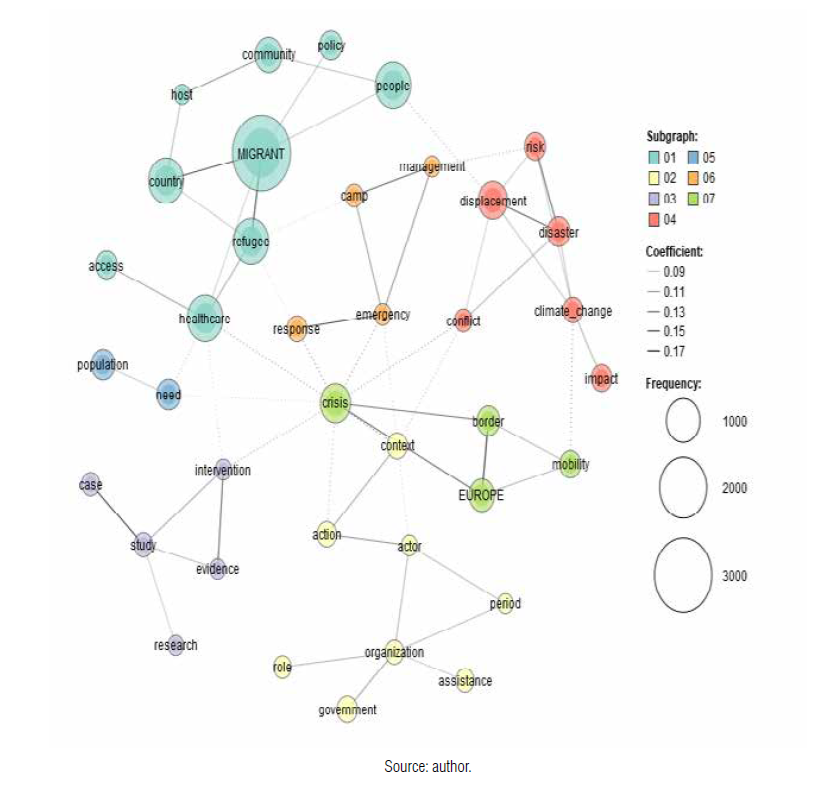
Next in order of importance is the cluster with Europe as the predominant node. It is interesting to note that, although significant displacement crises occur across various regions, Europe appears to approach the phenomenon in a more balanced, integrated, and rational manner, which gives it a prominent place in the problematics of practice and theory.
Another noteworthy cluster centers around the node Study. This emphasis stems from both scientific articles and institutional reports, as evidenced by the presence of nodes such as Intervention and Evidence. These documents advocate for in-depth knowledge of the situation on the ground, both to support intervention and to inform policymaking and the development of guidelines.
Finally, the Organization cluster deserves mention. Within it, the relationships between Action and Context stand out, highlighting the importance of contextual factors in initiating any form of action. Additionally, the links between Organization, Government, and Assistance reflect the core areas of governmental engagement.
It is not possible to discuss modularity - as a function that reveals the network’s ability to decompose into meaningful modules - without considering the number and diversity of bridge nodes within each cluster.
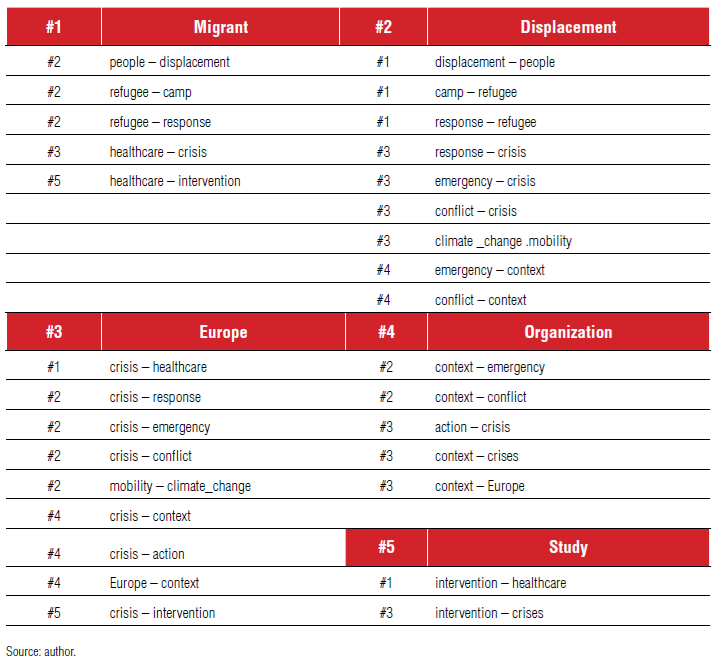
As shown in the Table 4, the clusters with the highest number of bridge nodes (10) and the greatest number of inter-cluster connections (4) are cluster #2 (Displacement) and cluster #3 (Europe). As such, these two clusters exhibit the greatest capacity for enabling conceptual "transit" - that is, they function as central hubs for connecting concepts and integrating theory with practice. Despite its overall relevance, cluster #1 (Migrant) is relatively less prominent in this respect, with only 5 bridge nodes and 3 inter-cluster connections. The remaining clusters - #4 (Study) and #5 (Organization) - demonstrate more modest levels of interconnectivity.
It is worth emphasizing that one cluster #3 (Europe), establishes connections with all other clusters. This indicates that it is possible to traverse the entire network starting from any single node, underscoring the explanatory richness of the documentation analysed.
Following the analysis of the cluster structure, the specific value of each node will subsequently be evaluated.
3.2. Degree Centrality for People on the Move Theories and Pratctices
As previously mentioned, Degree Centrality is used to determine the importance of nodes based on the number of links incident upon them.
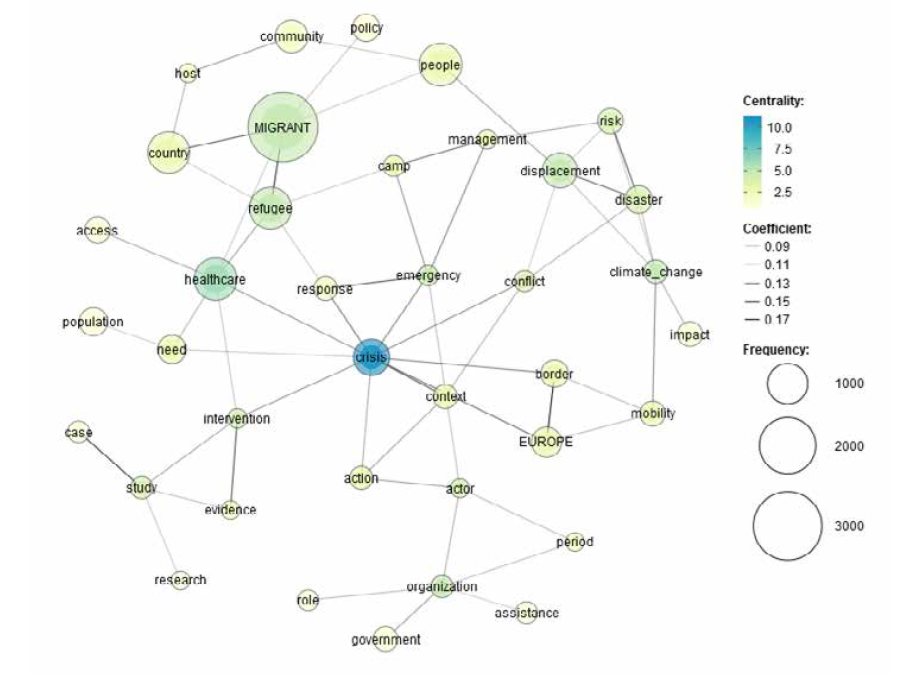
As shown in Figure 2, the results are unequivocal: although the node Crisis does not have the highest frequency, it is foundational to the entire network. To a large extent, the network's explanatory and relational capacity radiates from this concept. The second most important node is Healthcare, which reinforces the significance attributed to this topic in the analysis, particularly regarding the health impacts and the possibilities for Intervention in that domain.
At a third level, though still with notable relevance, a set of nodes - Migrant, Refugee, Emergency, Displacement, Risk, Disaster, and Climate_change - form the essential framework of the network. The remaining nodes, while playing a less prominent role, are nonetheless important as they provide the key connections that ensure the network’s cohesion and navigability.
The community level also plays a critical role, both in terms of protection and security - with local humanitarian organizations advocating for vulnerable groups despite governmental constraints - and in facilitating the integration of migrants into host communities.
Once the analysis of the importance of the nodes as key elements in constructing the potential emergent rationalities within the corpus is completed, the data mining approach comes to an end. It can be noted that some of the detail achieved in the previous chapter's analysis has been lost. However, what was lost in detail was gained in a holistic perspective and in a new approach that highlights the underlying dynamics and patterns of the emergent theories and practices in the corpus.
Conclusion
The methodology employed, as well as the analytical model, proved to be well-suited to fully addressing the central research question: What is the state of the art in practices and theories regarding "people on the move"? The document sample used was pertinent, as it captured the various dynamics and nuances inherent in the “on the move” phenomenon.
The analytical chapter enabled the identification of the multiple dimensions driving the phenomenon - including conflict, climate, health, and socio-economic variables - and how these drivers manifest in both theoretical and practical dimensions. It also allowed for the recognition of the weaknesses and challenges that societies face in relation to “people on the move,” such as lack of security, insufficient data and information, planning difficulties, and limitations in fundamental human rights, including access to employment, healthcare, dignity, and respectful treatment. However, not everything is negative; the very identification of these issues has led many states and NGOs to adopt more proactive approaches. On the other hand, there was no evidence in the documents reviewed of any legal, normative, or regulatory vacuum - either national or international - that would prevent differentiated treatment of this group.
A second methodology used was data mining. This approach made it possible to produce a conceptual and graphical “snapshot” of the “on the move”, highlighting how theory and practice intersect, and identifying the rational paths that help comprehend the research object in its full complexity.
While the research addressed the phenomenon in its broadest sense, it became clear that there is significant potential and added value in developing further detailed and specific analyses focused on the subthemes identified throughout the text.
“People on the move” is a dynamic and constantly evolving reality, acquiring new dimensions and shifts every day. It is believed that in the near future, the ongoing crisis of the post-war international order will give rise to a different order - the early consequences of which are already visible. Therefore, it is essential to monitor these developments and perhaps even anticipate them.
Moreover, the challenges are not only political. Technology is reshaping all aspects of human activity, and thus, the use of tools such as blockchain, artificial intelligence, big data, and sensors will undoubtedly reshape the research and debate around “on the move” issue among all interested in knowing and acting on the phenomenon.

