




 Inglês (pdf)
 Artigo em XML
 Referências do artigo
 Tradução automática
 Enviar este artigo por email
 Citado por SciELO
  Similares em
SciELO
Similares em
SciELO 
 Permalink

Introduction
Central Asia as the connecting geographic space between Europe, Russia, Caucasus and Asia is mainly addressed with the lens of the Silk Road and history, with less attention to the region’s rich ethnic landscape and people. Few scholars have examined the cultures, identities and practices that have enabled these trading routes and related organizations to evolve over time (Cooper, 2012; Levin, 2014; Elo & Vemuri, 2016). Historically, Bukharan Jews are considered as one of the oldest Jewish diaspora groups that dates back to the Babylonian exile. They are considered as a branch of Persian Jewry and represent of the oldest ethno-religious groups in the context of Central Asia (Bukharian Jewish Community Center, 2025). Thus, it is a theoretically interesting community contributing to the understanding of diaspora resilience, identity, and the diversity within Jewish diaspora and its ethnic sub-groups (Ray, 2008; Meijer et al., 2023).
Bukharian Jews trace their origins back to ancient times, with significant influences from Persian, Turkic, and Jewish cultures. Marten-Finnish (2019) examined the context of steppe and Bukhara, suggesting that the arrival of Islam in the region during the 7th century facilitated interactions between Jewish communities and local Muslim populations. Along the silk road, Bukharian Jews became prominent traders helping to connect Asia and Europe while maintaining their unique cultural practices and religious traditions (Marten‐Finnis, 2019). This emphasizes the merchant style diaspora element, expanding the diaspora lens from a religious diaspora to the actual activities and livelihood patterns that explain also the geographic spread continuing in modern times (Cohen, 2008; Elo, 2016; Loy, 2017). While often reflected through the victim diaspora lens (see more in Cohen, 2008), Jewish diasporas are not a homogenous population but represent diverse groups of people with distinct characteristics.
Cohen (2008) points to the classic view on diaspora underlining the loneliness and sadness of the diasporic experience of the Jews, which is visible in psalms and literature. This is a commonly applied lens that employs characterizations of diasporas emphasizing their catastrophic origins, mass nature and disruptive, negative effects. Here, Cohen (2008) notes that the idea of diaspora implied forcible dispersion as written in Deuteronomy (28: 28) and in Old Testament. Recent work on diaspora (Cohen, 2008; Elo & Minto-Coy, 2018) highlight the newer and more broader lenses on the concept of diaspora. Specifically, the group of Bukharian Jewish diaspora has instrumental value due to its multifaceted nature and diverse characteristics, geographically, culturally and in terms of identity and the respective diasporic sensemaking (Levin, 2014; Elo & Dana, 2019; Elo, 2024).
This diasporic cultural plurality, geographic dispersion makes the role of Bukharian Jewish diaspora interesting as the contemporary extension of the Silk Road culture that connects countries and regions where inter-regional and international relations across different populations remain less understood. Hence, by developing a better understanding of this unique diaspora with its culturally hybrid elements and nuances, valuable insights in reflecting such valuable shared elements can be generated. Understanding culture and identity as shared values is particularly relevant in the world, where currently geopolitical tensions and polarization prevail.
The paper contributes by introducing the Bukharian Jewish diaspora as a distinct diaspora and an ethnic group (Ray, 2008). It explores and presents elements related to culture, society and economy. First, it presents key research literature on this Central Asian diaspora spread regionally and internationally and second, its offers insights from ethnographic field work with illustrations. Finally, it concludes with a summary and future research recommendations.
Literature on Bukharian Jews
History, Demography and Geography
Historically, the context of this diaspora spread from Babylon across Central Asia, Persia and beyond. This historical context is crucial for understanding the Bukharian culture and identity, as it has been shaped by centuries of migration, trade, and cultural exchange, making it a mosaic of various influences (Skvirskaja, 2022, 2023). In terms of population, the majority of the Bukharian Jewish population resided in the context of Soviet Union before 1991, specifically in Uzbekistan and Tajikistan, while Israel also hosted a historical Bukharian population. (Baldauf, Gammer & Loy, 2008).
As Tolts (2008) shows, in Uzbekistan the largest number of Bukharan Jews were in the capital - the city of Tashkent with approximately 29 per cent. The most prominent region of their concentration outside the capital of Uzbekistan was the Ferghana oblast’ with 23 per cent. He notes that the recorded numbers of Bukharan Jews were also rather high in their traditional places of residence - the Bukhara oblast’ 18,5 per cent and the Samarkand oblast’ 20 per cent. His study illustrates that most of the Bukharan Jews in Uzbekistan were urban, reaching 99.6 per cent (Tolts, 2008, p. 79).
As Tolt (2023) notes, there is also an issue of how data is recorded, he found census recordings of Jews separated to diasporic categories such as Georgian Jews, Mountain Jews, Central Asian (Bukharan Jews), and Krymchaks. There was only 3,394 Mountain Jews, 53 Georgian Jews, 54 Central Asian (Bukharan) Jews, and 157 Krymchaks reported in 2002 in the Russian census (Tolt, 2023), illustrating the diminishing numbers in Russia. This is a relevant concern as Russia, specifically large cities like Moscow and St. Petersburg, had functioned as one of the target markets for many post-Soviet Jews to consider. Additionally, Tolt (2023) pointed to the differences within the Jewish diaspora that exist between urban and provincial areas, these relate specifically to education showing spatial divides.
Tolts (2008) analysed data from the 1989 Soviet census, in which Bukharan Jews in Uzbekistan exhibited distinctive household and family patterns that set them apart from other Jewish populations in the USSR. The average size of Bukharan Jewish family households in Uzbekistan was notably large, exceeding that of Jews recorded without a specified subgroup and standing in sharp contrast to Jewish households in the Russian Federation. While the average Jewish household size in Russia was relatively small, Bukharan Jewish households were comparable in size to those of Mountain Jews in Dagestan, indicating shared demographic characteristics among some non-European Jewish groups.
The census also revealed a significantly higher proportion of large households among Bukharan Jews. Approximately one in ten Bukharan Jewish households in Uzbekistan consisted of seven or more persons, a figure that far exceeded the corresponding share among Jews in the Russian Federation, where such large households were extremely rare. This difference underscores the persistence of extended family structures among Bukharan Jews at the end of the Soviet period, in contrast to the predominantly nuclear or fragmented household patterns observed among other Soviet Jewish populations.
In terms of ethnic composition, Bukharan Jews in Uzbekistan showed a strong tendency toward endogamy. The overwhelming majority lived in ethnically homogeneous family households, reflecting very low levels of mixed marriage. This pattern was particularly striking when compared with broader urban trends in Uzbekistan, where a substantial proportion of the population lived outside of any family household Tolts (2008, p. 84). It also contrasted significantly with conditions in the Russian Federation, whereby the late Soviet period only slightly more than half of Jews lived in mono-ethnic households. When summarized, these census indicators presented by Tolts (2008) highlight the demographic distinctiveness of Bukharan Jews in Uzbekistan. Larger household sizes, a higher prevalence of extended families, and strong ethnic homogeneity point to a community that maintained traditional family structures and boundaries well into the late Soviet era, even as other Jewish populations experienced higher rates of assimilation and demographic fragmentation.
In modern times, due to the Soviet Union and Russia’s role in the region, this context has been rather important for the further spreading of the diaspora while the broader Asian context and trade routes played a more significant role earlier (Loy, 2017). After the second World War and Stalin’s population placements, ethnic tensions intensified in the region. These concerns and the collapse of Soviet Union triggered a notable outmigration of Soviet Jews, like Bukharians, to countries like the USA, Israel, Austria and Germany.
Levin (2014) examined how complete families and clans of the Bukharian Jews migrated, taking their traditions and livelihoods to new contexts. Historical and migratory socio-environmental dynamics have significantly impacted Bukharian culture. Yang et al. discuss how the historical geography of Bukhara influenced the social and cultural practices of its inhabitants (Yang et al., 2019). The agricultural traditions stemming from ecological contexts shape not only the community's lifestyle but also their cultural expressions, including culinary practices and artisanship.
Unfortunately, Tolts’ concern on census and reporting practices can be echoed; as many host countries are not providing reliable data on the further dispersion of this diaspora population it is not feasible to track its further development. For example, the migratory flows to other Asian countries are not easily identifiable due to different migratory systems and reporting, despite Jewish diaspora activities in China, India and beyond.
Cultural and Ethnic Identity
The interplay between environmental factors and cultural identity further emphasizes how Bukharian Jews have negotiated their existence within various socio-environmental frameworks. This adaptability underscores the continuous evolution of Bukharian culture as it has interacted with external influences while holding onto its core traditions (e.g. Itzhak, 1988; Kaganovitch, 2008).
The historical and socio-environmental dynamics along the Silk Road played a crucial role in shaping Bukharian identity. Marten-Finnis (2019) elaborates on how the ecological divisions experienced by the region's populations - between nomadic and sedentary lifestyles - hold historical significance in understanding the cultural narratives of Bukhara. Ethnographic accounts have been instrumental in registering these cultural exchanges and adaptations, framing Bukharian identity within a broader context of Eurasian migrations and cultural hybridization in further diaspora (Skvirskaja, 2022, 2023). Therefore, the term identity here is reflected mainly from the ethnic and cultural perspective, not from a sociological or psychological view. Cultural capital can be seen as an ethnic asset here, a shared capital (Light & Dana, 2013).
This ethnographic context emphasizes the importance of environment in cultural identity formation and development. As different cultures interacted across the Silk Road, they shared knowledge, traditions, and practices, contributing to the complexity of Bukharian cultural identity (Marten‐Finnis, 2019). The engagement in such intercultural exchanges reflects a longstanding tradition of resilience and adaptation within the community, where environmental factors shaped both their cultural practices and identity (Meijer et al., 2023).
The cultural identity is closely intertwined with the ethnic identity in the case of the Bukharian Jews (Gitelman, 1991). Today, the Bukharian culture forms a blend of Central Asian traditions and Jewish customs, distinguished from other Jewish communities by unique rituals, music, language, and culinary practices. These are experienced, lived, and dispersed in different locations where Bukharian Jews reside, but also online sharing and practicing cultural elements transnationally takes place. Yet, despite hybrid cultural elements, the ethnic identity here is very particular as Bukharian Jews are considered as one of the oldest ethnic or ethno-religious groups in Central Asia (Ochildiev et al., 2007; Bukharian Jewish Community Center, 2025). Hence, it can be perceived as an ethnic sub-group with its distinct characteristics (Ray, 2008).
Entrepreneurship also plays a critical role in shaping Bukharian identity. Many Bukharian Jews engage in family-owned businesses that not only provide economic sustenance but also reinforce communal cohesion by tying families together through shared business practices (Elo & Dana, 2019). This entrepreneurial spirit resonates deeply with the historical precedence of Bukharian Jews as traders and craftsmen, enabling them to adapt their cultural practices even in diasporic settings. Moreover, the role of Bukharian women as economic and cultural actors deserves further research attention over history (Goldstein & Sharot, 2017).
Language and Traditions
Bukharian Jewish population is polyglot. They have their own ethnic language Bukhori, but typically they also use a range of other local languages. In Central Asia, they often speak Russian, Uzbek, Tajik, Kazakh and other local languages. Bukhori speakers may communicate with Persian language Farsi speakers due to the linguistic commonalities as Farsi and Tajik share similarities.
The language spoken by Bukharian Jews, Bukhori, is a significant marker of identity. It reflects their Central Asian heritage, incorporating various influences from Persian and Tajik languages. It is often suggested that Bukhori is a Judeo-Tajik language or even a Tajik dialect. Yet, Bukhori serves as a vital tool for cultural expression, allowing for the transmission of folktales, proverbs, and religious texts that enrich Bukharian cultural life (Marten‐Finnis, 2019).
The Bukharian Jewish diaspora across the world is even more linguistically diverse. The diaspora speaks languages such as Hebrew, Russian, English, German, Spanish, French and other languages depending on the locations. Hence, the role of language as a central cultural element is complex, Jewish studies highlight the meaning of Hebrew and Jiddish, but Bukharians have the additional ethno-linguistic layers of Bukhori in their identity (Elo & Ivanova-Gongne, 2020).
In short, Bukharian Jews represent a unique community defined by their historical roots, cultural practices, language, and communal identity that is carefully preserved as part of their ethnic heritage. This rich heritage, shaped by millennia of interaction with various cultures along the Silk Road and their strong familial and communal ties, form a basis to their resilience and adaptability, also linguistically and psychologically (Meijer et al., 2023). Understanding the identity of Bukharian Jews is crucial for reflecting their contributions and role to the broader tapestry of Jewish culture and history and that of their home and host regions. Especially their rich linguistic heritage represents an underexplored capacity and potential, but also a concern as the diversity increases and the fluent shared language (Bukhori) speakers diminish.
As Aron Aronov, the Executive Director of the Bukharian Ethnographic Society and Bukharian Jewish Heritage “MEROS” museum, noted, New York’s notion of being a cultural melting pot implicitly poses a certain danger for linguistic heritage and identity, while the notion of being a mosaic of diverse cultures - and languages - is more appropriate to reflect such diaspora minorities.
Entrepreneurship and Historical Identity
The Bukharian Jews, is a distinct community also in terms of entrepreneurship. It has a rich cultural heritage with economic influence in trade and as merchant families (Rybakov, 2024). This ethnographic context emphasizes the importance of environment in cultural identity formation. As different cultures interacted across the Silk Road, they shared knowledge, traditions, and practices, contributing to the complexity of Bukharian cultural identity, but also to its entrepreneurial characteristics (Marten‐Finnis, 2019; Elo & Dana, 2019). The engagement in trade and intercultural exchanges underlines their longstanding tradition of resilience and adaptation in the context, while nurturing the ethnic community. This aligns with the opportunity driven entrepreneurial strategies found in Jewish diasporas (Elo, Täube & Volovelsky, 2019). Yet, multiple institutional and environmental factors have shaped both their cultural and entrepreneurial practices and identity, not just business (Elo, 2016; Elo & Dana, 2019).
The cultural identity of the Bukharian community as merchants is shaped and expressed by the institutional settings, that have largely limited or influenced their roles and activities (Ochildiev et al., 2007). These entrepreneurship traditions, historical narratives and diasporic experiences help in maintaining and developing new entrepreneurial skills and capabilities (Elo et al., 2019).
A significant aspect of Bukharian culture is the entrepreneurial spirit that has emerged within the diaspora, often building on particular skills, crafts and trades (Elo, 2016; Rybakov, 2024). Their diaspora embeddedness - comprised of extended family ties, ethno-religious affiliations, and cultural networks - creates dynamism that fosters an entrepreneurial identity among Bukharian Jews even today (Elo & Dana, 2019). This entrepreneurial identity is not just a means of subsistence but serves as an essential component of their cultural expression in the diaspora, reflecting both connection to heritage and adaptation to new environments (Elo & Dana, 2019).
The Bukharian community draws on its historical traditions and communal bonds to navigate contemporary challenges in business and in their livelihoods. The essence of Bukharian cultural identity is often enacted through entrepreneurship, where members of the community engage in business practices that resonate with their cultural values and social structures. Here, the women’s role and participation as entrepreneurs in notable, partly explained by the earlier programs (see more in Levin, 2008a). Hence, there is an interconnection between entrepreneurial behaviours and the ongoing evolution of cultural and social identity within the Bukharian community (Elo & Dana, 2019).
A significant aspect of Bukharian culture is the entrepreneurial spirit that has emerged within the diaspora. Elo and Dana explore how diaspora embeddedness - comprised of extended family ties, ethno-religious affiliations, and cultural networks - creates dynamism that fosters an entrepreneurial identity among Bukharian Jews. This entrepreneurial identity is not just a means of subsistence but serves as an essential component of their cultural expression in the diaspora, reflecting both connection to heritage and adaptation to new environments (Elo & Dana, 2019).
The authors also highlight that the Bukharian community draws on its historical traditions and communal bonds to navigate contemporary challenges in business. The essence of Bukharian cultural identity is thus enacted through entrepreneurship, where members of the community engage in business practices that resonate with their cultural values and social structures. This highlights a critical nexus between entrepreneurial behaviours and the ongoing evolution of cultural identity within the Bukharian community (Elo & Dana, 2019).
Ethno-Religious Perspectives
The Bukharian Jews represent one of the oldest ethno-religious groups of Central Asia and represent as a very particular Jewish group due to their limited relationships with other Jewish communities in their history and this extended isolation (Arlk, 2006). According to Arlk (2006) the Bukharian Jews have embodied the experience of living together with the Muslim people under the Islamic domain in Central Asia over time, as they have been influenced culturally, socially and politically by the dominant culture in the region.
The historical and socio-environmental dynamics along the Silk Road played a crucial role in shaping Bukharian identity also religious-wise as one of the most isolated Jewish communities in the world. Marten-Finnis (2019) addresses the context of steppe and how the ecological divisions experienced by the region's populations - between nomadic and sedentary lifestyles - hold historical significance in understanding the cultural narratives of Bukhara. Ethnographic explanations have been instrumental in chronicling these cultural exchanges and adaptations (see e.g. Levin, 2008a,b; 2014) and help in framing Bukharian identity within a broader context of Eurasian migrations, cultural and religious hybridization.
Religious practices among Bukharian Jews also inform their identity. They adhere to Sephardic Jewish customs while also incorporating unique Bukharian rituals. Religious observances, such as Yom Kippur and Passover, are often celebrated with distinctive regional traditions, further differentiating Bukharian Jews from other Jewish communities worldwide. Levin (2008a) argues that the two communities of Bukharan and Ashkenazi Jews remained separate already in the home countries in Central Asia and continue to do so in the diasporic host countries. The fact that they prayed in separate Synagogues where available, lived in different quarters, and spoke different languages demonstrated this distinct identity separation.
Interestingly, the Bukharian identity contains a rich cultural heritage that combines specific religious observances with local customs and Jewish traditions. Bukharian Jews are often characterized by their strong familial bonds and communal ties that reinforce their cultural and religious identity. Weddings, festivals, and other communal gatherings serve as focal points for expressing their heritage and ensuring intergenerational transmission of cultural values (Elo & Vemuri, 2016; Elo & Dana, 2019).
Ethnographic insights
Ethnographic observations, field notes, interviews and photographic data form the base for this interpretivist reflection on Bukharian Jewish culture and identity, as this allows a qualitative account of this group (Kaye, 2022). This study is part of a larger project where both primary and secondary data have been collected. The data collection has taken place both in Central Asia as well as in diaspora locations. Primary ethnographic data collection involves three field trips to Israel in 2011, 2014, 2018, 2022, an 11-day field trip to Uzbekistan in 2012 and several field trips to the USA in 2013-2023, including a lengthier stay of 5 months in 2017. Diaspora ties helped creating rapport and co-habiting with a Bukharian Jewish family for a while provided a more emic and detailed understanding of the everyday culture.
Participation in meetings, discussions, social and cultural events and business visits complements the insights on everyday life. A unique visit and interview of Mr. Aron Aronov provided in-depth views to the museum, its evolution and role in nurturing the cultural heritage and identity. The Bukharian Jewish diaspora and its communities across the world continue to nurture shared elements of their culture and identity also online, hence, insights were combined with data from social media such as Facebook, which illustrates many of the Bukharian discourses.
An ethnographic approach is considered appropriate as it allows addressing aspects such as reflexivity, ethics, interpretation, collaborative views, and diverse visual elements also in sensitive settings (Pink, 2013). Here, the photographic images serve as instruments to disclose practices, social arrangements, and cultural-material conditions, for example, on history or clothing. Employing photography in ethnographic fieldwork is considered highly effective for capturing complex socio-economic and contextual dynamics that may be more difficult to convey through interviews or document analysis (e.g. Pink, 2013).
Findings
The following exhibits visualize and illustrate distinct features that relate to Bukharian culture. This section shows contextual, historical, social and economic features that relate and explain Bukharian Jewish diaspora and its culture and identity evolution over time and place.
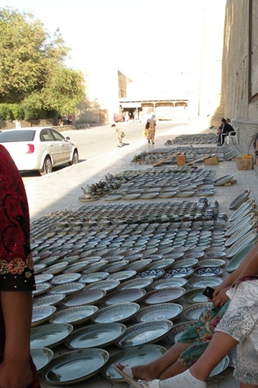
Source: the author ©
Exhibit 1 There is a rich culture of crafts in Central Asia, here are traditional plates and bowls in the market in Bukhara, Uzbekistan. Similar kitchen items were used in Bukharian houses
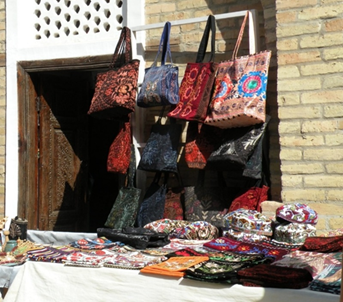
Source: the author©
Exhibit 2 As part of the Silk Road, there is a strong tradition in textiles and handicrafts. These bags, hats and pillowcases represent typical local style and skillsets from Bukhara. Bukharian textiles use similar patterns and techniques
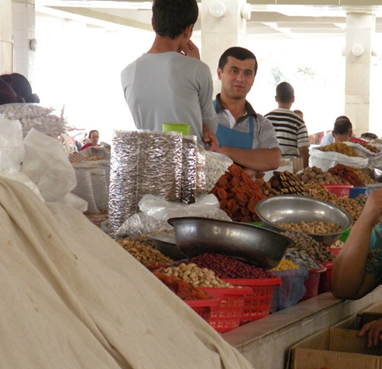
Source: the author ©
Exhibit 3 A covered food bazar area in Uzbekistan. The area has a rich food culture which includes various local products, such as vegetables, nuts and dried fruits. Bukharian food culture includes similar products and tastes
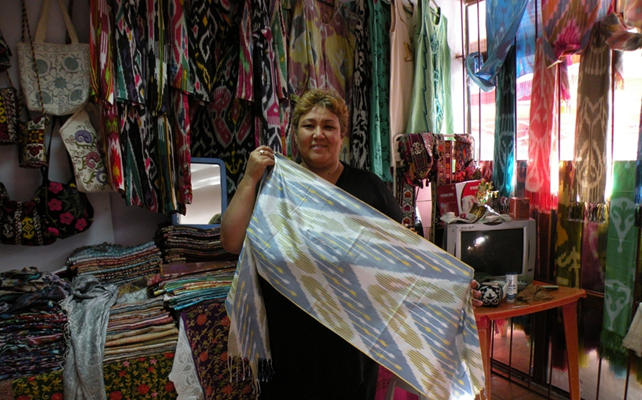
Source: the author ©
Exhibit 4 A silk shop in Bukhara. Uzbekistan is famous for its silk Ikat textiles and embroidered Suzanis. These materials, patterns and techniques have mixed and crossed over to the Bukharian culture

Source: the author ©
Exhibit 5 The Bukharian diaspora has its capital in New York in the USA. The community is well organized and publishes a newspaper targeting the Bukharians dispersed across the world. Bukharian Times uses multiple languages from Russian to English to reach its readership. The editor, Mr Rafael Nektalov, curates Bukharian cultural elements next to the language plurality while publishing the newspaper

Source: the author ©
Exhibit 6 The cultural and identity heritage of the Bukharian Jewish diaspora is supported and maintained by a range of different social and cultural instruments, from religion to media. Here is an article regarding the diasporic radio called Bat Kol Radio in the USA. This radio broadcasts in Russian and in English serving the Bukharian Jewish community

Source: the author ©
Exhibit 7 Bukharian social and cultural heritage around family and religious aspects is rich and multifaceted depicting a range of hybridized traditions. For example, the table decoration in a Bukharian wedding illustrates a mix of different styles and traditions. An example in New York
Source: the author ©
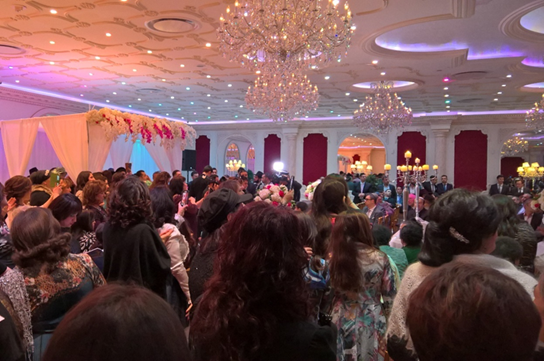
Exhibit 8 A Bukharian wedding in New York. Bukharian Jewish weddings are famous for the festive ceremonies, food, music and dance with distinct Bukharian features

Source: the author ©
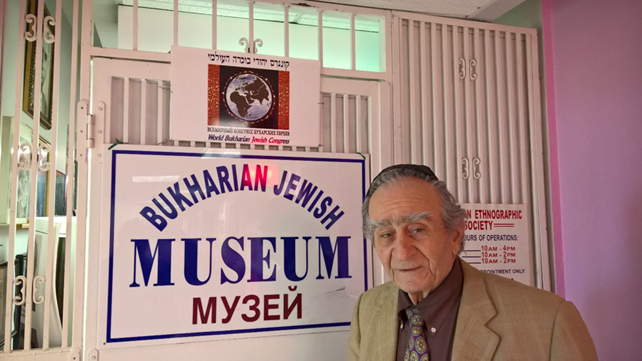
Exhibit 9 Bukharian culture has strong collectivist and social elements. Taking care of children and elderly continues also in diaspora as part of Bukharian culture and social practice. This picture shows the entrance to a Bukharian elderly day care centre in New York. The centre provides food, entertainment and cultural programs. It also includes a synagogue under one roof making it easy for the elderly to participate in Bukharian social life
Source: the author ©
Exhibit 10 Mr. Aron Aronov is the Executive Director of the Bukharian Ethnographic Society and Bukharian Jewish Heritage “MEROS” museum. He is the founder of the museum and has personally collected numerous exhibits from Central Asia. The museum showcases Bukharian Jewish traditional clothing, textiles, art, household items, books, posters, photographs and various other artifacts
Source: the author ©
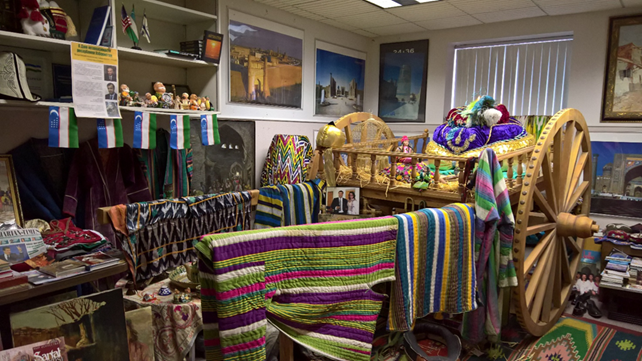
Exhibit 11 The museum showcases diverse artifacts of Bukharian everyday life in Central Asia. The wagon is the largest object. On the walls numerous illustrations and information are presented
Source: the author ©
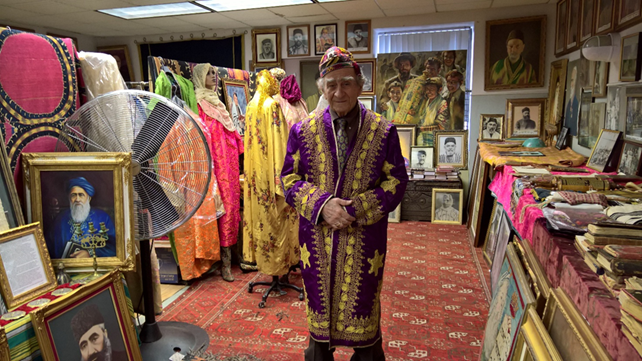
Exhibit 12 Mr Aronov wearing a traditional male Bukharian clothing and headcover. In the background female clothing is presented. A large collection of paintings and photographs of Bukharian personalities and families are showcased
Source: the author ©
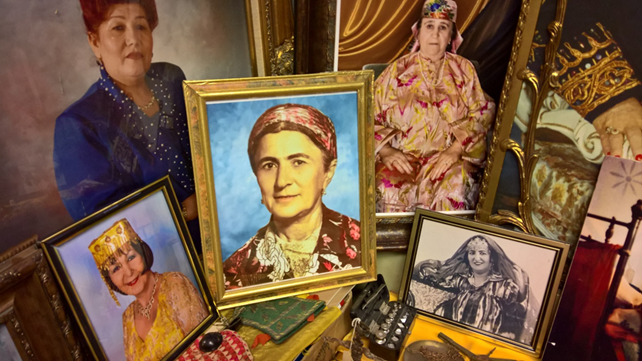
Exhibit 13 The museum has a specific section for famous Bukharian women. Many of them were artists, singers, musicians or actors which aligns with the key elements of the Bukharian culture
Source: the author ©
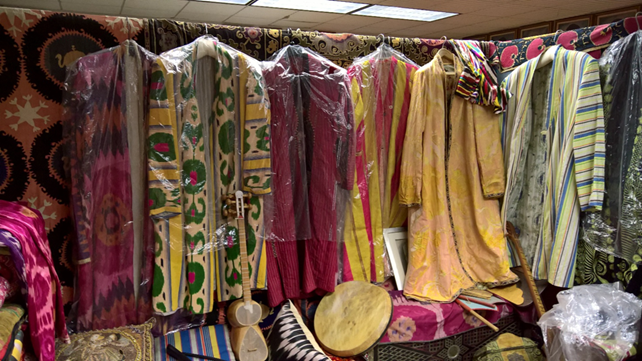
Exhibit 14 The museum contains a large range of different textiles from clothing to household items. The Ikat patterns and the Suzanis are dominant in the historical Bukharian textile culture, showing hybridization of the textile culture and fashion. Silk is a common material used
Source: the author ©
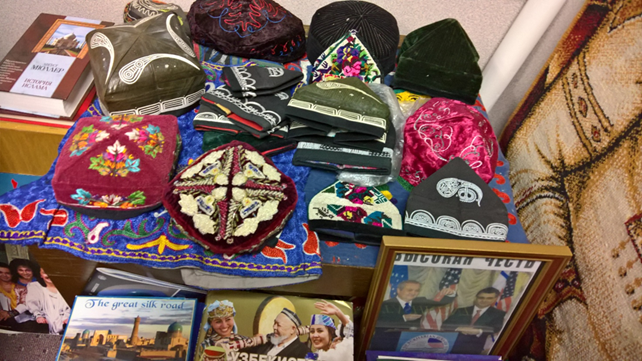
Exhibit 15 Bukharian Jewish headcovers differ per region and groups. Traditional male headcovers have similarities with local Central-Asian headcovers of other ethno-cultural groups and serve to identify also regional identities. As clothing and household textiles, also the traditional headcovers are typically handmade and combine complex techniques of embroidery

Source: the author ©
Exhibit 16 Bukharian Jewish food culture is a rich mosaic of different ingredients and recipes. The picture shows traditional cooking utensils of a Bukharian household

Source: the author ©
Exhibit 17 Bukharian Jewish food culture has adapted numerous regional features and practices. In Central Asia, the Bukharian Jewish bread culture is similar to the local one. The bread resembles the South Asian bread in terms of the baking process, but the thickness and ornaments on the bread differ
Discussion
Identity Development, Maintenance and Organizations
The identity of the Bukharian Jews is a multifaceted construct that is deeply intertwined with their historical diaspora experience and resulting cultural traditions and entrepreneurial aspirations. It also involves multiple layers from the individual’s social, linguistic, cultural and religious identity to the ethnic and national identity on a more aggregated level. Identity of a Bukharian Jew is a complex and superdiverse mix of identity elements from language to religion -and contexts-, but Bukharians are also perceived as an ethnic group with a distinct ethnic identity despite their global dispersion. Today, there are diasporic Bukharian communities across the world with shared identity elements.
The development takes place on multiple levels. The traditional practices observed emerge from a rich historical background, characterized by significant cultural- and socio-environmental dynamics and communal bonds that nurture and maintain their own cultural boundaries and idiographies. As Bukharian Jewish diasporas navigate their existence in new contexts and nurture their culture, they continue to adapt their cultural identity through economic practices, thus ensuring the survival and evolution of their unique heritage. Building upon their past while embracing modern entrepreneurial identities, the Bukharian community exemplifies the interplay of tradition, adaptation, and resilience in cultural identity formation (Meijer et al., 2023).
Bukharian Jewish identity and culture is well organized as a globally spread transnational diaspora. It has its own organizational structure from institutions, such as the “Congress of Bukharian Jews of the USA and Canada” in New York, USA. For communication and cultural purposes, very early on they have organized “yellow pages” and a Bukharian calendar with business advertisements, radio programs later also online channels, programs and groups, as well as cultural exchange. Furthermore, the cultural work has included professional book publishing documenting Bukharian history, people, culture, and related world events to codify the heritage. For example, authors like R. Pinkhasov, D. Ochildiev, I. Kalantarov, I. Rybakov have created a library for Bukharian Jewish codified knowledge. Another organizational strength supporting the identity and heritage in diaspora is the Community Scientific Center Club Roshnoyi- Light, by supporting the Bukharian Jewish World Conference and its publishing (Ochildiev et al., 2007). Additionally, the community as a whole continues to care for its members and strategically organize resources, also in mobility phases (Elo & Vemuri, 2016).
Economic and Entrepreneurial Dynamics
A defining aspect of Bukharian culture is the community's strong entrepreneurial and merchant spirit, which has evolved significantly over time in the diaspora. Their entrepreneurial traditions are deeply rooted in family ties and cultural networks (Rybakov, 2024; Elo & Dana, 2019). The authors emphasize that the diaspora's embeddedness - characterized by extended family, ethno-religious as well as regional bonds, and cultural affiliations - creates an environment conducive to entrepreneurship. This process reflects their shared cultural identity and strong social capital that thrives on communal support and resource sharing, allowing Bukharian Jews to successfully navigate the challenges of their new surroundings (Elo & Dana, 2019).
The socio-environmental dynamics in Central Asia that have defined the Bukharian experience cannot be overlooked. Yang et al. illustrate the interactions between human populations and their environments along historical trade routes, which were crucial in shaping cultural and economic exchanges. The influence of geography on socio-cultural practices is paramount, as environmental factors dictate diverse practices, livelihood choices, and community structures. These adaptations reflect a deep-rooted relationship between the Bukharian Jews and their environmental contexts, demonstrating how ecological considerations weave into the fabric of their cultural identity (Yang et al., 2019). Yet, as Ochildiev et al. (2007) note, not all transformations and adaptations have been positive as there has been several dark eras and “black years” for Jewish people.
Exodus and Mobilities Over Time
Through migration and adaptation, the Bukharian Jews have integrated various cultural practices from the regions they have settled in while retaining core elements of their identity, also in the newer diasporas. This blend illustrates a dynamic interplay between tradition and modernity, essential for understanding the resilience and continuity of Bukharian culture (Yang et al., 2019). In short, the construction of Bukharian identity is an intricate process influenced by historical, cultural, and social dynamics that have shaped the experiences of Bukharian Jews over centuries. This identity is not static; rather, it adapts continuously through cultural exchanges, historical narratives, and socio-economic practices, particularly in the context of diaspora living.
Mobility phases are important as identities need to be renegotiated in the new context. Bukharian strong family ties, extended family and kin networks suggest that social ties and capitals create an environment that assists resilience and fosters entrepreneurial identities among Bukharian Jews (Meijer et al., 2023). This entrepreneurial spirit is seen as both a vital economic strategy and a mechanism for maintaining cultural continuity (Elo & Dana, 2019). The ability to operate businesses in new markets reflects a resilient identity that is adaptable to changing socio-economic landscapes and markets, also during hostile periods, “black years” and exodus (Rybakov, 2024; Ochildiev, Pinkhasov & Kalantarov, 2007). The notion of embeddedness is crucial here; it emphasizes how community members leverage their social and cultural ties to reinforce their entrepreneurial activities, thereby also shaping their collective identity. This interconnectedness serves to maintain their distinctions as a unique group within a multicultural setting (Elo & Dana, 2019).
The historical narrative of Bukharian Jews links to the Central Asian and Asian geographic context. Marten-Finnis explores how the geographical landscape of Bukhara - including the ecological divisions between steppe and sown areas - has shaped the cultural and social practices of its inhabitants. This ecological perspective reveals that historical migrations and regional interactions along trade routes contributed to the hybridization of cultures and collective identities, also those of Bukharians (Marten‐Finnis, 2019). Especially, the sedentary and nomadic lifestyles combined with centuries-old migration patterns along the Silk Road, have infused Bukharian culture with diverse influences (Marten‐Finnis, 2019). The synthesis of various cultural elements from neighbouring communities resulted in a rich tapestry of traditions that characterize the Bukharian identity and culture today. For example, in music and food, such crossing over can be found.
This historical context is fundamental in understanding how the experiences of displacement and adaptation have influenced aspects of Bukharian identity. The legacy of being at the crossroads of major trade routes and the exchanges that accompanied such positioning facilitated the incorporation of diverse cultural elements into their identity, which aligns with the richness and dynamism of Bukharian culture and their superdiversity in modernity (Marten‐Finnis, 2019). As noted by Yang et al. (2019) socio-environmental factors are highly relevant in transnational-regional diaspora mobilities and in the construction of Bukharian identity. The interrelationship between cultural dynamics and environmental contexts demonstrate how historical ecological changes impacted settlement patterns and social structures. Thus, also the surrounding physical environment shapes culture and identity, e.g. clothing, livelihoods, etc. (Yang et al., 2019). This intersection of geography and identity links to the ongoing negotiations that communities undergo as they assimilate or resist external influences (Yang et al., 2019).
Communal Traditions and Social Structures
The communal aspect of Bukharian culture is an interesting resilience element, often characterized by tight-knit family structures and social networks, but also by transferrable skills and capabilities (Meijer et al., 2023; Ochildiev et al., 2007). Traditionally, the Bukharian Jewish community has emphasized the importance of family and collective responsibility representing a collective culture. This feature may explain the preservation of their cultural heritage. Events such as weddings, communal gatherings, and religious celebrations serve as vital contexts for the expression of Bukharian cultural practices, fostering a sense of unity and belongingness among community members. The visual material on Bukharian Jewish diaspora shows a rich and lively cultural interaction and identity that has not been overwritten by adaptation despite new identities, e.g. as “New Yorkers”. The social structure nurture a collective memory, reinforcing shared narratives that contribute to communal identity. This is particularly visible in the youth work and intergenerational exchange. Also, the practice of maintaining close familial and community bonds is a strategy through which cultural continuity is fostered. Interestingly, despite the challenges posed by migration and adaptation to new cultural landscapes there is a sense of value in investing in one’s own ethnic culture. This becomes noticeable for example in language, music and food.
Conclusion
Exploring and understanding different cultural and identity components provides valuable insights into the resilience and dynamism of the Bukharian Jewish diaspora, in both historical and contemporary contexts. These features are necessary in understanding diasporic identities that connect transnational and diverse diaspora communities across regions and the world. This particular group could be seen as a merchant or Jewish diaspora (cf. Cohen, 2008), yet, both concepts fall short in accommodating its characteristics due to its hybrid and superdiverse nature.
The identity of the Bukharian Jews is not just some Jewish minority group, it is a distinct ethnic identification that is deeply intertwined with their culture, traditions and history (Gitelman, 1991). As they navigate their existence and make sense of their identity in new contexts, Bukharian Jewish diaspora has adapted their cultural identity through economic practices, hence ensuring the survival and evolution of their unique heritage. The inherent value on tradition evidenced, for example, by music, culinary practices or arts forms cultural capital and simultaneously ethnic economic capital and engagement. The Bukharian Jewish diaspora may leverage upon their past while they embrace also modern entrepreneurial and professional identities, which exemplifies the interplay of tradition, adaptation, and resilience in cultural identity formation that is multilayered and rich.
In short, Bukharian culture is a complex construct shaped by entrepreneurial practices, historical influences, and socio-environmental dynamics. The community's rich traditions, reinforced by strong communal ties and adaptive strategies in the diaspora, reflect an enduring cultural identity. Recognizing these elements is vital for understanding how Bukharian culture not only persists today but continues to evolve in response to contemporary challenges and opportunities. The key elements of Bukharian identity that deserve attention revolve around their entrepreneurial and merchant traditions, their cultural heritage and diaspora community, their historical narratives as part of the Silk Road culture, their geographical diversity and new global dispersion, but also call for attention to their particular identity- and cultural resilience as an ethnic group. Finally, understanding such elements is important as these elements not only serve to maintain a sense of cultural continuity but also act as a bridge connecting past experiences to present identities amidst shifting cultural landscapes (Marten‐Finnis, 2019).
This short reflection on the Bukharian Jewish diaspora has multiple limitations, focusing mainly on English language sources and limited visual ethnography. Its provides only some preliminary reflections, thus, future research should engage in deeper longitudinal work in addressing the roles of dynamic capabilities, cultural and social capital, and entrepreneurship in diasporic identity formation of the Bukharian Jewish diaspora in different regions of the world.

