




 Inglês (pdf)
 Artigo em XML
 Referências do artigo
 Tradução automática
 Enviar este artigo por email
 Citado por SciELO
  Similares em
SciELO
Similares em
SciELO 
 Permalink
Introduction
The COVID-19 pandemic and its consequent confinement has caused a major impact on people’s lives worldwide 1. Patients living with dementia (PLD), a particularly vulnerable population, may suffer the consequences of routine changes during confinement. These changes include prolonged time not being able to go outside and social isolation, adding to difficulty understanding the reasons for that situation 2.
Social isolation during the COVID-19 pandemic has been associated with an increase in severity of neuropsychiatric symptoms in PLD, such as irritability, anxiety, and apathy 3-5. Increasing rates of agitation have also been described 1,6,7.
The onset of new behavioural symptoms has been reported 5,6, although the most frequent description concerns to worsening of the behavioural symptoms present before confinement 1,6. Changes in the pattern of behavioural symptoms in PLD during the pandemic may be related with dementia type, disease severity and gender but, so far, we lack the full understanding of the reasons 1,8. Prevalence of new onset/worsening behavioural symptoms was not associated with dementia severity 6.
On the other hand, confinement is associated with a reduction of stimuli due to restriction of contacts with the outside world and increased time with a personalized informal caregiver or family member, which may not be so negatively lived by some patients 2. A recent work has shown that support from family and friends is strongly related with less feelings of loneliness in PLD 9.
Antipsychotics are frequently used to manage behavioural symptoms in PLD, with an association with worse prognosis. Its use must rely on good and experienced clinical reasoning as these drugs may be related with worse outcomes in this group of patients 10. A regular review of the need for this medication in PLD is warranted to avoid antipsychotic overuse 11. There are few data available concerning use of antipsychotics and psychotropics in general in PLD, and the reason for their use.
Although few publications have described behavioural symptoms in PLD during confinement, little is being described about how and if medication prescription, including antipsychotics, was changed 6,12,13. The aim of this study was to evaluate the use of antipsychotic therapy during confinement in a group of Portuguese PLD due to behavioural symptoms.
Materials and Methods
Subjects
We conducted a retrospective observational study including PLD followed on a dementia’s outpatient clinic at Unidade Local de Saúde (ULS) de Santa Maria located in Lisbon, Portugal. The ULS cooperates with the Faculty of Medicine of the University of Lisbon and covers a geographic referral area of 322,344 patients. The dementia’s outpatient clinic is under exclusive responsibility of the Neurology Service, Department of Neurosciences and Mental Health. Due to the area’s dimension, only a part of PLD is followed in the dementia outpatient clinic, with the remaining being followed in a general neurology outpatient clinic setting. Primary referral to both clinics is made by the primary care outpatient clinic or via intra-hospital requests. Referral to the dementia outpatient clinic includes criteria such as early onset dementia, difficult clinical diagnosis, and behavioural problems due to dementia. Clinical diagnosis is based on the best usual practice and following Portuguese national norms 10. Inclusion criteria for the study consisted of: being regularly followed in the dementia outpatient clinic; having a clinical diagnosis of dementia; having at least one valid contact made by the neurologist, with a clinical interview.
Methods
We retrospectively collected clinical data from individual patient file notes from consecutive appointments from two different confinement periods, between March 2020 and May 2020 and between January 2021 and March 2021. The first period of data collection occurred immediately after the beginning of the first confinement due to the pandemic worldwide (confinement period 1 - CP1, March-May 2020), when medical appointments were exclusively through telephone calls. The second period (confinement period 2 - CP2, January-March 2021) occurred when confinement was again mandatory in Portugal, approximately 1 year after the beginning of the pandemic (going out was only possible for specific matters), but in-person clinical appointments were possible. All patients had one appointment, either during CP1 or CP2. There was no overlap between both periods.
We also collected pre-confinement data that were retrieved from information included in medical records from the first contact (CP1). From both CP1 and CP2, we collected data about patient’s age, sex, place of residency (at home or institutionalized), clinical diagnosis, years since diagnosis, disease severity (which was classified by the neurologist responsible for the patient according to clinical status and based on subjective impact on daily living - mild, moderate, and severe), other comorbidities and information about death. Clinical diagnosis of dementia was considered according to the usual clinical criteria 10, as following: Alzheimer’s disease (AD), frontotemporal dementia, vascular dementia, and others, which included Lewy body dementia, cortico-basal degeneration, normal pressure hydrocephalus, dementia in relation to Parkinson’s disease, and dementia of non-specified aetiology.
Current medication was recorded, including the use of psychotropic drugs, considering separately antipsychotics, antidepressants, and benzodiazepines. In both confinement periods (CP1 and CP2), we collected information on changes made in the prescription of these classes of drugs, as to whether there was an increase, decrease, or no difference in doses, and the reason for its change (if applicable). To note that information about current medication, changes and reasons for any change in prescription was systematically recorded within each individual patient’s files.
STROBE cohort reporting guidelines were followed while writing this manuscript 14, with limitations concerning retrospective studies. This study was conducted in accordance with the Declaration of Helsinki and the EU General Data Protection Regulations. This study protocol was reviewed and approved by Comissão de Ética do Centro Académico de Medicina de Lisboa, approval number (293/22), with the need for written informed consent waived.
Statistical Analysis
Continuous variables were presented in mean, standard deviation and median and interquartile range, according to normality. Normal distribution was checked using the Shapiro-Wilk test or skewness and kurtosis. Demographic and clinical data were compared with independent samples Student’s t test for interval data and the Chi-square test for nominal data. Significant values were considered for p < 0.05. We made a descriptive analysis considering differences between psychotropic drugs use before COVID-19 pandemic (corresponding to previous medication in CP1) and any change made during each confinement period.
Relevant clinical data of patients who needed introduction or an increase in antipsychotic doses were described in detail, as the number was too small to conduct any statistical analysis. This was the primary analysis of these data. Data were analysed using IBM SPSS Statistics 28 software.
Results
A total of 66 patients were included in the first period. With regard to confinement (including CP1 and CP2), 101 patients were recruited. Patients’ demographics before and during confinement are summarized in Table 1.
Table 1 Patient’s demographics before and during confinement
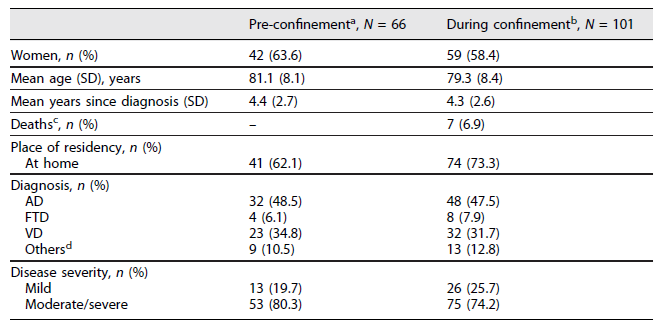
AD, Alzheimer’s disease; FTD, frontotemporal dementia; VD, vascular dementia.aRefers to data retrospectively retrieved from clinical files during confinement period 1.bRefers to data retrieved from clinical files during confinement period 1 and confinement period 2.cDeaths recorded during follow up.dIncludes Lewy body dementia, cortico-basal degeneration, normal pressure hydrocephalus, dementia in relation with Parkinson’s disease and dementia of non-specified aetiology.
Prescription data related with the pre-confinement period were collected during CP1, 75.8% of patients were taking psychoactive drugs (including antipsychotics, antidepressants, and benzodiazepines), the most being antidepressants (60.6%) (Table 2). A total of 21.1% of patients were taking antipsychotics before confinement, with a similar prevalence during both confinement periods (21.7%), mostly with small doses of atypical antipsychotics aiming sleep initiation (quetiapine 25 mg or 50 mg). We did not register cases of severe or refractory behavioural impairment with a need for higher doses of antipsychotics. No patient was medicated with typical antipsychotics.
Table 2 Characterization of psychoactive drug use before and during confinement
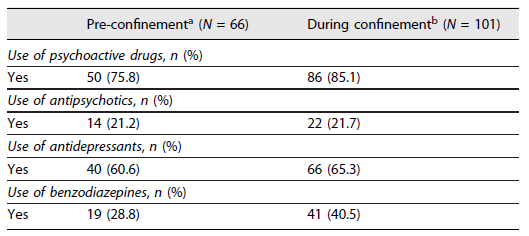
aRefers to data retrospectively retrieved from clinical files during confinement period 1.bRefers to data retrieved from clinical files during confinement period 1 and confinement period 2.
Concerning patients taking antipsychotics, most of them were living at home before and during confinement (64.3% vs. 77.3%) (Table 3), and having moderate to severe disease. There was a higher prevalence of vascular dementia patients taking antipsychotics before confinement (35.7% vs. 27.3%). Patients with frontotemporal dementia and other types of dementia had a higher prevalence of antipsychotic use during confinement (7.1% vs. 13.6%; 14.2% vs. 18.1%, respectively).
Table 3 Antipsychotic use characterization before and during confinement
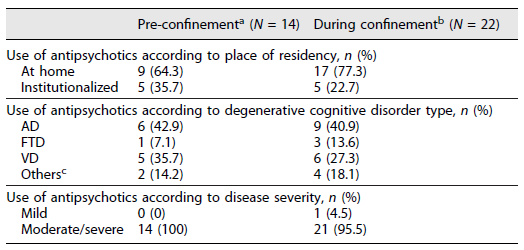
AD, Alzheimer’s disease; FTD, frontotemporal dementia; VD, vascular dementia.aRefers to data retrospectively retrieved from clinical files during confinement period 1.bRefers to data retrieved from clinical files during confinement period 1 and confinement period 2.cIncludes Lewy body dementia, cortico-basal degeneration, normal pressure hydrocephalus, dementia in relation with Parkinson’s disease and dementia of non-specified aetiology.
Prevalence of use of antidepressants was quite similar between groups (60.6% vs. 65.3%). According to each patient’s clinical file, in a quarter of cases, these drugs were used to obtain a sedative effect (trazodone 50 mg and mirtazapine 15 mg once a day).
Before confinement, nearly a third of patients (28.8%) registered medication with benzodiazepines. During confinement, this number increased to 40.5% of patients, with small doses (clonazepam 0.5 mg or lorazepam 1 mg once a day) mostly aiming at sleep initiation and maintenance.
A detailed analysis of both confinement periods was carried out. CP1 included a total of 66 patients, and CP2 included a total of 35 patients. Demographics of CP1 and CP2 are outlined in Table 4. There were no relevant differences when it came to clinical diagnosis in both groups. Moderate to severe disease was more prevalent than mild disease in both groups, as well as in all dementia subtypes, despite no relevant statistical difference.
Table 4 Patient demographics during both confinement periods
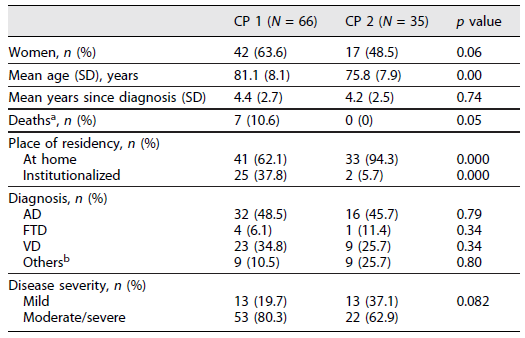
AD, Alzheimer’s disease; CP, confinement period; FTD, frontotemporal dementia; VD, vascular dementia.aDeaths recorded during follow-up in both confinement periods.bIncludes Lewy body dementia, cortico-basal degeneration, normal pressure hydrocephalus, dementia in relation with Parkinson’s disease and dementia of non-specified aetiology.
CP1 had more prevalence of use of psychoactive drugs with significant statistical difference to CP2 (p = 0.04). Use of antipsychotics was quite similar between both confinement groups (Tables 5, 6) with no significant differences. Only 6 patients registered an increase or introduction of antipsychotic medication in comparison with a pre-confinement period, 2 of them during CP1 and 4 in the CP2. All patients were living at home in both periods. Four of these patients had their dose increased due to behavioural changes and 2 patients had an increase in a small dose aiming sleep control. A detailed characterization of patients who needed antipsychotic dose increase or introduction (including antipsychotic type and dose) during both periods is summarized in Table 7.
Table 5 Characterization of psychoactive drug use during both confinement periods
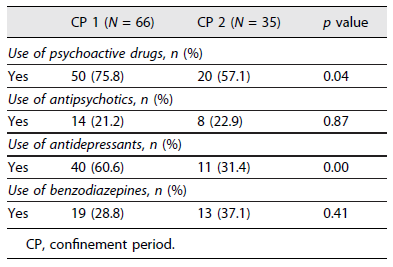
CP, confinement period.
Table 6 Characterization of antipsychotic use according to subgroups in both confinement periods
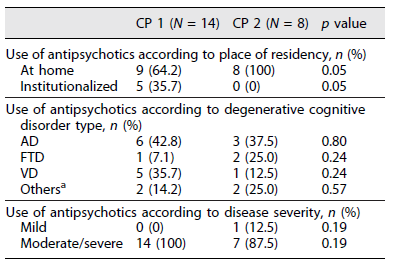
AD, Alzheimer’s disease; CP, confinement period; FTD, frontotemporal dementia; VD, vascular dementia.aIncludes Lewy body dementia, cortico-basal degeneration, normal pressure hydrocephalus, dementia in relation with Parkinson’s disease and dementia of non-specified aetiology.
Table 7 Characterization of patients that registered antipsychotic dose increase or introduction during the first and second confinement periods
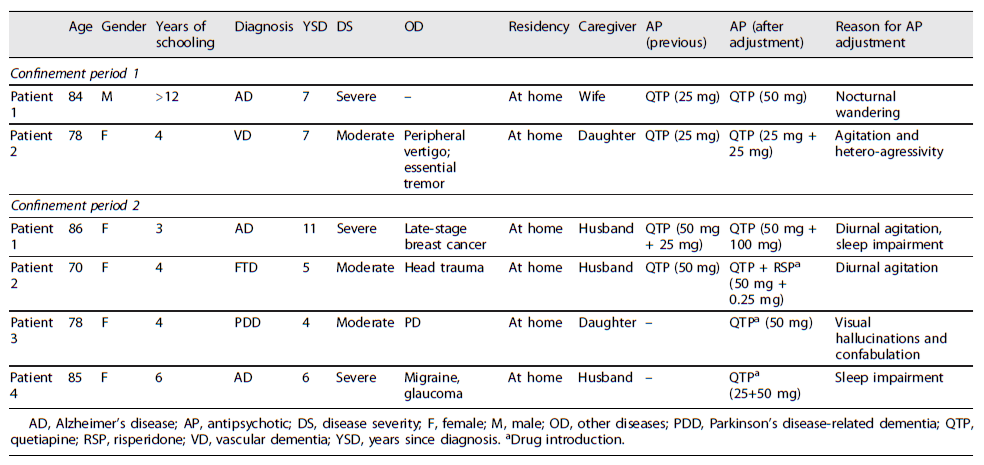
AD, Alzheimer’s disease; AP, antipsychotic; DS, disease severity; F, female; M, male; OD, other diseases; PDD, Parkinson’s disease-related dementia; QTP, quetiapine; RSP, risperidone; VD, vascular dementia; YSD, years since diagnosis.a Drug introduction.
On the other hand, 2 patients had a decrease on their antipsychotic dose: one of them during CP1 and one of them during CP2. Both patients were living at home.
Two patients had an increase in the dose of antidepressants during CP1, for sedative effects, at night time. We did not register an increase in the dose of antidepressants during CP2. No patient had their antidepressant dose reduced in both confinement periods.
There were no significant differences between the two groups in relation to benzodiazepine use. Two patients had an increase in doses, one during each CP. Four patients had a decrease, all of them also during CP1.
Discussion
In our cohort, we found that restrictive confinement measures due to COVID was not associated with a relevant change, namely an increase, of antipsychotic prescription in PLD followed in an outpatient clinic setting when compared with a pre-confinement period. About 20% of patients were medicated with antipsychotic drugs in both scenarios, in line with pre-pandemic descriptions of PLD 15,16.
Our work has obvious limitations, namely because it was a retrospective study, but also because it concerns to a specific PLD population. Not all PLD followed in our centre are assigned to the dementia’s outpatient clinic, mostly due to a logistical inability to answer to a high volume of requests. This fact contributes to a selection and referral bias, preventing us to generalize this work results. There are differences between the sample sizes of the analysed groups; the first group had approximately double the number of patients as the second group. Furthermore, due to the retrospective nature of this study, we could not register possible confounders such as daily life changes due to the pandemic, such as leaving a day centre to be at home. Moreover, we categorized disease stage according to independence on daily living tasks based on the clinic’s judgement, using no standardized scale or proforma for this assessment. Nevertheless, the current study is one of the first available to characterize the effect of the pandemic restrictions on medication use, namely antipsychotics, in a sample of Portuguese PLD. There are very few data published on the usual approach of PLD concerning medication use, and in the absence of clear guidelines on the subject, we believe that these types of studies are highly relevant. We selected all consecutively patients with appointments during both time periods, trying to reduce selection bias. Studying different groups, one during pre-confinement and the remaining in two different confinement periods, led to a better understanding on how different restrictive measures affected these patients. Moreover, decisions in clinical practice in the outpatient clinic were maintained as usual despite confinement, representing the usual practice according to the Portuguese national norm and not influenced by the present research question of this paper 10. AD was the most frequent diagnosis in the total group (including pre-confinement), in line with previous data on dementia prevalence in the Portuguese population 17.
During the 3 months of the first confinement period in Portugal, there was approximately the double of dementia consultations when compared to a year later second confinement period. This was probably related to the fact that the first confinement period was a very strict one, where people were not able to leave their homes, unless for urgent or primary-need reasons, but appointments were all provided by telephone, making them quicker and easier for the clinician to reach out for the patient, whether living at home or institutionalized. The second confinement period was a less strict one, with only in-person medical visits. Despite this, institutionalized patients had many limitations when it came to leaving the institution, due to local pandemic restricting measures.
One could expect milder disease forms to be observed during the second confinement period, due to less fear of contagion and easier ways for caregivers to bring the patient to the clinic, but moderate to severe stage disease patients were the majority in both analysed groups. More than half of patients in both groups were on psychoactive drugs, mostly for sleep disorders control, probably reflecting advanced disease stages. Most of them had moderate to severe disease stages and were living at home.
During both confinement periods, only 6 (101) patients registered an increase in antipsychotic dose, and in two of them, the reason was sleep disturbances and not behavioural changes. All patients were living at home and being taken care of by family members. A dose decrease was seen in 2 patients in the first confinement and only in one during the second confinement. We believe that the reason for these results may be multifactorial, and with this study, we could not control for all possible involved confounders. We admit that this tendency to a neutral effect of confinement might have been due to a less intrusive daily care of patients suffering from dementia, probably due to more time spent with caregivers, absence of routine changes, lack of awareness of changes imposed by the pandemic and less inputs from the outside world, contributing to fewer, or at least, not worse behaviour impairment rates. This does not support possible common sense assumptions that more time spent with caregivers/family could lead to more expressed emotions and, thus, be detrimental.
A high prevalence of antidepressant use was also noted. A residual number of patients needed increasing doses of sedative antidepressants. This was due to sleeping impairment reasons in patients with moderate to severe disease stages, most of them during the first confinement period. This was probably in relation to more time spent at home and sleep cycle variations.
Benzodiazepine use was also common, with few reports of dosing changes and, if needed, only during the first confinement period. Again, this could be in favour that confinement led to a neutral effect on neuropsychiatric symptoms of people with dementia.
Conclusion
The COVID-19 pandemic restrictions and social isolation had a major impact on society worldwide. We witnessed a residual effect on the need for antipsychotic dosing adjustments during confinement in two groups of Portuguese PLD compared with a pre-confinement period. We believe that changes in behavioural symptoms in PLD during confinement may have a multifactorial origin that cannot be explained solely by our study. We hope our work may help clarify issues related to the need for antipsychotic medication in behavioural symptoms during confinement in this group of patients. Other aspects, such as the effect of possible confounders, should be addressed with future research.
Acknowledgments
The authors would like to thank Prof. José M. Ferro and Prof. Alexandre de Mendonça for their suggestions for this manuscript.
Statement of Ethics
This study was conducted in accordance with the Declaration of Helsinki and the EU General Data Protection Regulations. This study protocol was reviewed and approved by Comissão de Ética do Centro Académico de Medicina de Lisboa, Approval No. (293/22), with the need for written informed consent waived.
Author Contributions
M.D.C.: conceptualization, data curation, formal analysis, investigation, methodology, validation, writing - original draft, and writing - review and editing; A.V.: conceptualization, methodology, formal analysis, investigation, validation, and writing - review and editing, and supervision.

