<?xml version="1.0" encoding="ISO-8859-1"?><article xmlns:mml="http://www.w3.org/1998/Math/MathML" xmlns:xlink="http://www.w3.org/1999/xlink" xmlns:xsi="http://www.w3.org/2001/XMLSchema-instance">
<front>
<journal-meta>
<journal-id>1645-4464</journal-id>
<journal-title><![CDATA[Revista de Gestão dos Países de Língua Portuguesa]]></journal-title>
<abbrev-journal-title><![CDATA[Rev. Portuguesa e Brasileira de Gestão]]></abbrev-journal-title>
<issn>1645-4464</issn>
<publisher>
<publisher-name><![CDATA[INDEG-IUL - ISCTE Executive Education ]]></publisher-name>
</publisher>
</journal-meta>
<article-meta>
<article-id>S1645-44642014000300004</article-id>
<title-group>
<article-title xml:lang="en"><![CDATA[Social tourism and senior university in Portugal: a research proposal]]></article-title>
<article-title xml:lang="pt"><![CDATA[Turismo social e Universidades da Terceira Idade: uma proposta de investigação]]></article-title>
<article-title xml:lang="es"><![CDATA[Turismo Social y Universidades de la Tercera Edad: Una propuesta de investigación]]></article-title>
</title-group>
<contrib-group>
<contrib contrib-type="author">
<name>
<surname><![CDATA[Dahab]]></surname>
<given-names><![CDATA[Sonia]]></given-names>
</name>
<xref ref-type="aff" rid="A01"/>
</contrib>
<contrib contrib-type="author">
<name>
<surname><![CDATA[Mannebach]]></surname>
<given-names><![CDATA[Teresa]]></given-names>
</name>
<xref ref-type="aff" rid="A01"/>
</contrib>
</contrib-group>
<aff id="A01">
<institution><![CDATA[,Universidade Nova de Lisboa School of Business and Economics ]]></institution>
<addr-line><![CDATA[Lisbon ]]></addr-line>
<country>Portugal</country>
</aff>
<pub-date pub-type="pub">
<day>00</day>
<month>09</month>
<year>2014</year>
</pub-date>
<pub-date pub-type="epub">
<day>00</day>
<month>09</month>
<year>2014</year>
</pub-date>
<volume>13</volume>
<numero>3</numero>
<fpage>26</fpage>
<lpage>37</lpage>
<copyright-statement/>
<copyright-year/>
<self-uri xlink:href="http://scielo.pt/scielo.php?script=sci_arttext&amp;pid=S1645-44642014000300004&amp;lng=en&amp;nrm=iso"></self-uri><self-uri xlink:href="http://scielo.pt/scielo.php?script=sci_abstract&amp;pid=S1645-44642014000300004&amp;lng=en&amp;nrm=iso"></self-uri><self-uri xlink:href="http://scielo.pt/scielo.php?script=sci_pdf&amp;pid=S1645-44642014000300004&amp;lng=en&amp;nrm=iso"></self-uri><abstract abstract-type="short" xml:lang="en"><p><![CDATA[This paper aims to fill a literature gap and to analyze empirically senior universities in Portugal related to the impact of experimental learning on courses offered. Focus will be given to the elderly population motivations to experiment new cultural expressions and the impact this process may have on their cognitive abilities/culture intelligence. Social tourism becomes increasingly important given the lack of elderly economic means to support travel expenses and ways to save for leisure time after retirement. Senior university and social tourism can together offer this possibility. The first part represents an introduction to the topic of social travel. The second part focuses on the major conceptual aspects - culture, experimental knowledge, cultural intelligence adapted to senior universities courses - to support and justify the hypotheses to be tested.]]></p></abstract>
<abstract abstract-type="short" xml:lang="pt"><p><![CDATA[O trabalho tem como objetivo preencher uma lacuna na literatura sobre o impacto do ensino experimental nas universidades da terceira idade em Portugal, através do estudo empírico dos cursos oferecidos. Será dado particular relevo às motivações do segmento sénior em experimentar novas expressões e experiências culturais e ao impacto que estas possam ter na sua capacidade cognitiva/inteligência cultural. O turismo social tem-se tornado particularmente importante, tendo em conta as crescentes carências económicas dos mais idosos em financiarem as suas viagens e pouparem para atividades de lazer. As universidades seniores e o turismo sénior podem ser uma maneira de viabilizar estas novas formas de aprendizagem cultural. O trabalho faz uma introdução ao tópico do turismo social e de seguida trata dos principais conceitos: cultura, conhecimento experimental, inteligência cultural adaptados aos cursos das universidades seniores para fundamentar e justificar as hipóteses testadas.]]></p></abstract>
<abstract abstract-type="short" xml:lang="es"><p><![CDATA[Este trabajo tiene como objetivo llenar un vacío en la literatura sobre el impacto de la enseñanza experimental en las universidades de la tercera edad en Portugal, a través del estudio empírico de los cursos ofrecidos. Se prestará especial atención a las motivaciones del segmento de la tercera edad en probar nuevas expresiones y experiencias culturales y el impacto que pueden tener en su capacidad cognitiva/inteligencia cultural. El turismo social es cada vez particularmente más importante, dadas las crecientes dificultades económicas de las personas mayores en financiar su viaje y ahorrar para las actividades de ocio. Las universidades y el turismo de la tercera edad pueden ser una manera de permitir estas nuevas formas de aprendizaje cultural. Este trabajo hace una introducción al tema del turismo social y luego se dirige a los conceptos centrales: la cultura, el conocimiento experimental y la inteligencia cultural, adaptados a los cursos de las universidades de la tercera edad, para fundamentar y justificar las hipótesis probadas.]]></p></abstract>
<kwd-group>
<kwd lng="en"><![CDATA[Portuguese Senior University]]></kwd>
<kwd lng="en"><![CDATA[Culture and Travel]]></kwd>
<kwd lng="en"><![CDATA[Social Tourism]]></kwd>
<kwd lng="en"><![CDATA[Experimental Learning]]></kwd>
<kwd lng="pt"><![CDATA[Universidade Sénior]]></kwd>
<kwd lng="pt"><![CDATA[Cultura]]></kwd>
<kwd lng="pt"><![CDATA[Turismo Social]]></kwd>
<kwd lng="pt"><![CDATA[Aprendizagem Experimental]]></kwd>
<kwd lng="es"><![CDATA[Universidad Tercera Edad]]></kwd>
<kwd lng="es"><![CDATA[Cultura]]></kwd>
<kwd lng="es"><![CDATA[Turismo Social]]></kwd>
<kwd lng="es"><![CDATA[Aprendizaje Experimental]]></kwd>
</kwd-group>
</article-meta>
</front><body><![CDATA[ <p align="right"><font size="2" face="Verdana"><b>CONFER&Ecirc;NCIA</b></font></p>     <p>&nbsp;</p>     <p><font size="4" face="Verdana"><b>Social   tourism and senior university in Portugal: a research proposal</b> </font></p>     <p>&nbsp;</p>     <p><font size="3" face="Verdana"><b>Turismo social   e Universidades da Terceira Idade: uma proposta de investiga&#231;&#227;o</b></font></p>     <p>&nbsp;</p>     <p><font face="Verdana"><b>Turismo Social y Universidades de la Tercera Edad: Una propuesta de   investigaci&#243;n</b></font></p>     <p>&nbsp;</p>     <p>&nbsp;</p>     <p><font size="2" face="Verdana"><b>Sonia Dahab<sup>I</sup>; Teresa Mannebach<sup>II</sup></b></font></p>     ]]></body>
<body><![CDATA[<p><font size="2" face="Verdana"><sup>I</sup>PhD   in Economics, Economics Department, Yale University. Associate Professor,   Universidade Nova de Lisboa, School of Business and Economics, Travessa Estev&#227;o Pinto, s/n, 1099-032 Lisbon, Portugal. E-mail: <a href="mailto:sdahab@novasbe.pt">sdahab@novasbe.pt    <br> </a></font><font size="2" face="Verdana"><sup>II</sup>Master   in Management, Universidade Nova de Lisboa, School of Business and Economics, 1099-032 Lisbon, Portugal. E-mail: <a href="mailto:moana.mannebach@gmail.com">moana.mannebach@gmail.com</a></font></p>     <p>&nbsp;</p>     <p>&nbsp;</p> <hr noshade size="1">     <p><font size="2" face="Verdana"><b>ABSTRACT</b></font></p>     <p><font size="2" face="Verdana">This   paper aims to fill a literature gap and to analyze empirically senior universities   in Portugal related to the impact of experimental learning on courses offered.   Focus will be given to the elderly population motivations to experiment new   cultural expressions and the impact this process may have on their cognitive   abilities/culture intelligence. Social tourism becomes increasingly important   given the lack of elderly economic means to support travel expenses and ways to   save for leisure time after retirement. Senior university and social tourism   can together offer this possibility. The first part represents an introduction   to the topic of social travel. The second part focuses on the major conceptual   aspects &#8211; culture, experimental knowledge, cultural intelligence adapted to   senior universities courses &#8211; to support and justify the hypotheses to be   tested.</font></p>     <p><font size="2" face="Verdana"><b>Key words:</b>   Portuguese Senior University, Culture and Travel, Social Tourism, Experimental Learning</font></p> <hr noshade size="1">     <p><font size="2" face="Verdana"><b>RESUMO</b></font></p>     <p><font size="2" face="Verdana">O trabalho tem como objetivo preencher uma lacuna na literatura sobre o impacto   do ensino experimental nas universidades da terceira idade em Portugal, atrav&#233;s   do estudo emp&#237;rico dos cursos oferecidos. Ser&#225; dado particular relevo &#224;s motiva&#231;&#245;es   do segmento s&#233;nior em experimentar novas express&#245;es e experi&#234;ncias culturais e ao   impacto que estas possam ter na sua capacidade cognitiva/intelig&#234;ncia cultural.   O turismo social tem-se tornado particularmente importante, tendo em conta as   crescentes car&#234;ncias econ&#243;micas dos mais idosos em financiarem as suas viagens   e pouparem para atividades de lazer. As universidades seniores e o turismo s&#233;nior   podem ser uma maneira de viabilizar estas novas formas de aprendizagem   cultural. O trabalho faz uma introdu&#231;&#227;o ao t&#243;pico do turismo social e de   seguida trata dos principais conceitos:   cultura, conhecimento experimental, intelig&#234;ncia cultural adaptados aos cursos   das universidades seniores para fundamentar e justificar as hip&#243;teses testadas.</font></p>     <p><font size="2" face="Verdana"><b>Palavras-chave</b>: Universidade S&#233;nior, Cultura, Turismo Social, Aprendizagem Experimental</font></p> <hr noshade size="1">     ]]></body>
<body><![CDATA[<p><font size="2" face="Verdana"><b>RESUMEN</b></font></p>     <p><font size="2" face="Verdana">Este trabajo tiene como objetivo llenar un vac&#237;o en la literatura sobre el   impacto de la ense&#241;anza experimental en las universidades de la tercera edad en   Portugal, a trav&#233;s del estudio emp&#237;rico de los cursos ofrecidos. Se prestar&#225;   especial atenci&#243;n a las motivaciones del segmento de la tercera edad en probar   nuevas expresiones y experiencias culturales y el impacto que pueden tener en   su capacidad cognitiva/inteligencia cultural. El turismo social es cada vez   particularmente m&#225;s importante, dadas las crecientes dificultades econ&#243;micas de   las personas mayores en financiar su viaje y ahorrar para las actividades de   ocio. Las universidades y el turismo de la tercera edad pueden ser una manera   de permitir estas nuevas formas de aprendizaje cultural. Este trabajo hace una   introducci&#243;n al tema del turismo social y luego se dirige a los conceptos   centrales: la cultura, el conocimiento experimental y la inteligencia cultural,   adaptados a los cursos de las universidades de la tercera edad, para   fundamentar y justificar las hip&#243;tesis probadas.</font></p>     <p><font size="2" face="Verdana"><b>Palabras clave</b>: Universidad Tercera Edad, Cultura, Turismo Social, Aprendizaje Experimental</font></p> <hr noshade size="1">     <p>&nbsp;</p>     <p>&nbsp;</p>     <p><font size="2" face="Verdana">One   way to deliver welfare results while reducing the costs of providing benefits   is through social tourism. Social tourism is a form of tourism that offers   tourism experiences to groups who cannot be part of regular tourism due to   several constraints (Carneiro et al., 2013). Over the years, a permanent   platform has been developed &#8211; International Social Tourism Organization (ISTO) &#8211;   where social tourism issues can be discussed on an international level. This   platform stresses the relevance of social tourism in general (B&#233;langer and Jolin,   2011). Additionally, social tourism has gained enormous momentum due to various   programs such as &#8220;Ch&#232;ques-Vacances&#8221; in France<a href="#_ftn1" name="_ftnref1" title="">[1]</a>,   IMSERSO in Spain<a href="#_ftn2" name="_ftnref2" title="">[2]</a>,   and Calypso of the European Commission (Minnaert et al., 2011).</font></p>     <p><font size="2" face="Verdana">In   general, the development of intercultural interaction, the stimulation of peace   and understanding, personal benefits, economic growth, and the prosperity for   tourism destinations are benefits of tourism (Carneiro et al., 2013). However,   social tourism is said to generate both social as well as economic benefits   (Minnaert et al., 2011). Particularly, social impact is reached through an   increase in self-esteem, improvement in family relations, widening of travel   horizon, more pro-active attitudes to life, participation in education and employment. </font></p>     <p><font size="2" face="Verdana">The   most frequent motivations for senior travelling in Portugal are relaxing   (including wellness), routine break (including shopping), social interactions   (relatives and broader circles), natural endowments (with physical activity or   not) and cultural reasons such as living different cultural experiences, heritage,   and monuments. Those motivations extend to senior students through a study of Portuguese senior universities in 2006 (Neves, 2009).</font></p>     <p><font size="2" face="Verdana">Specific   analysis of Portuguese senior motivations related to study travelling and   educational vacations are still missing in the literature. According to Ginevi&#232;ius   et al. (2007), they are very popular among German seniors. They reveal enormous   motivation to learn a high range of topics and a strong desire to experiment   new cultural environments. This segment is characterized by a high level of   income with wide previous experience on travelling. It is considered a high   demanding market in quality on several levels: comfortable and friendly   hospitality, good social environment, pleasant climate, and educational/cultural   content. Nimrod and Rotem&#180;s (2010) study about Israeli seniors highlight the   cultural interest and find that major motivations are educational experience, city visits with cultural interest, spiritual experience, and entertainment.</font></p>     <p><font size="2" face="Verdana">Also,   the European Commission&#180;s (2011) analysis of European seniors&#180; (above 55 years   old) motivations to choose a destination are mostly related to tangible   cultural heritage/monuments but also intangible cultural aspects such gastronomy. They prefer traditional destinies, mostly within Europe.</font></p>     ]]></body>
<body><![CDATA[<p>&nbsp;</p>     <p><font size="3" face="Verdana"><b>Seniors travel motivations and socio-economic impact </b></font></p>     <p><font size="2" face="Verdana">As   remarked by Neves (2009) and Niron (2008) senior motivations vary according to   the level of health and literacy and the overlapping of interests are conceptually   explained by Uriely (2005) in an analysis of tourist experience. Recently, Carneiro   et al. (2013) identified several motivations of elderly to participate in   social tourism programs, such as getting away from daily routines, to rest and   relax, to improve health and wellness, enjoying novelty seeking, cultural   enrichment, living new experiences, socializing, physical outdoor activities, and other nostalgic reasons. </font></p>     <p><font size="2" face="Verdana">Especially   for disadvantaged groups, social tourism can have severe consequences since those   groups may regard tourism experiences as a temporary mean of escaping their   negative conditions or as a basic human right, which enormously enhance their   quality of life. Consequently, it can be stated that the senior market is heterogeneous   regarding motivations, with a relevant percentage motivated by cultural and   educational experiences, others focused on entertainment and relaxation. It is   also important to highlight that hedonistic motives are not detached from   intellectual/social life motivations as analyzed by Macker and Ballantyme (2014) and by McCabe and Johnson (2012). </font></p>     <p><font size="2" face="Verdana">However,   economic benefits are represented by sustaining jobs in low seasons and by   generating income for host communities. It is important to distinguish between   two varying forms of social tourism: visitor-related and host-related. The   former is related to an increase of the participation in tourism for   disadvantaged groups whereas the latter is aiming at increasing economic benefits of tourism (Minnaert et al., 2009). </font></p>     <p><font size="2" face="Verdana">More   precisely, four different interpretations of social tourism exist which are translated into four models:</font></p> <ul>       <li><font size="2" face="Verdana">Participation Model: a standard     product or service is being offered to social tourism users only;</font></li>       <li><font size="2" face="Verdana">Inclusion Model: a standard     product or service is being offered to social tourism users in addition to     other users;</font></li>       <li><font size="2" face="Verdana">Adaptation Model: instead     of a standard product or service, a specific provision is being offered to     social tourism users only;</font></li>       <li><font size="2" face="Verdana">Stimulation Model: a specific     provision is being offered to social tourism users in addition to other users.</font></li>     ]]></body>
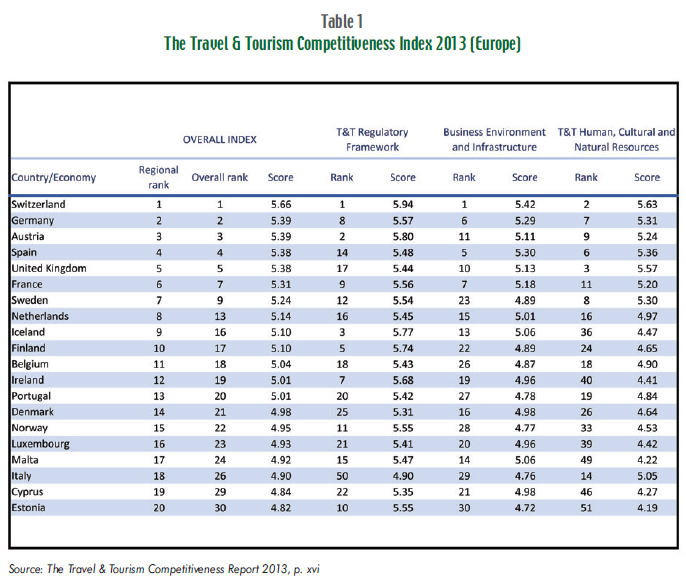
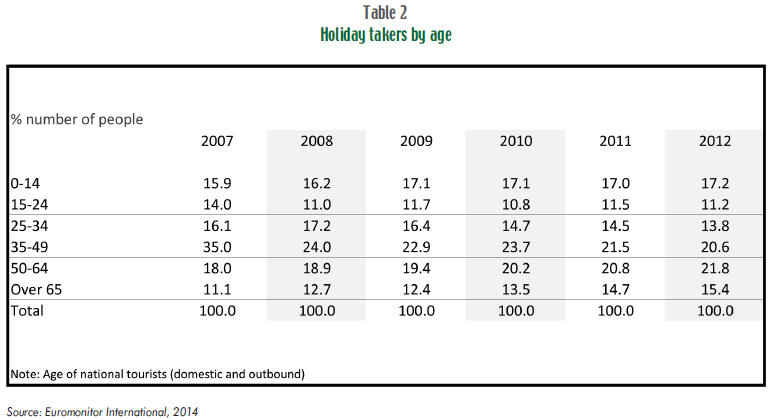
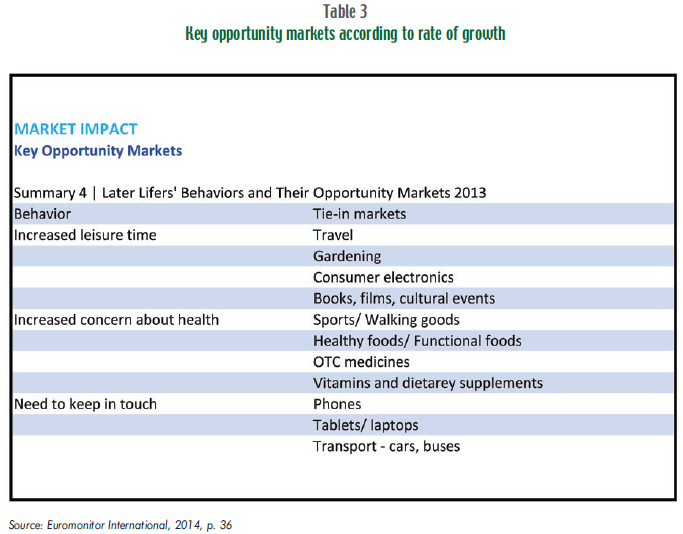
<body><![CDATA[</ul>     <p><font size="2" face="Verdana">One   example of a disadvantaged group, which could take advantage of social tourism,   is elderly. The increasing amount of elderly in Portugal is a trend that should   not be taken lightly. In 2011, 19.1% of the Portuguese population was above 65   years old opposed to 13.6% in 1991 (Eurostat, 2014). Common problems among   elderly are represented by failing health, economic insecurity, isolation,   fear, idleness, abuse, loss of control and lowered self-esteem (Helpageindiaprogramme,   2014). Going further, due to being a common source of distress and hence, an   impaired quality of life, loneliness or idleness is the second greatest cause of death among elderly.</font></p>     <p><font size="2" face="Verdana">Besides,   according to Euromonitor (2014, p. 16) and based on OECD data, only 10.5% of   the Portuguese seniors above 65 years are below the &#8220;50% of the median   equalized income&#8221;. This shining scenario is quite tortuous since it does not   define clearly what type of income measure is used, and eliminates the income   concentration effect measured in terms of median. In fact, Portuguese seniors   have progressively decreasing disposable income through cuts in pension   earnings, social welfare/health programs, and increasing cost in private services for this segment, especially in the health insurance plans.</font></p>     <p><font size="2" face="Verdana">Besides,   the unemployment rate in the segment of over 55 years old is very high and   formed by a high level of literacy, INE (2014). Usually a job loss in this age   means unforeseen perspective on a new regular placement and the impossibility   to retire given that the retirement age is 65 years old. Therefore, this group   lives between two difficult dilemmas: young to be capable to produce and yet old, with difficult possibilities to insert itself in society productively.</font></p>     <p><font size="2" face="Verdana">Senior   universities, as a form of social tourism can narrow the bridge between the   cultural tourism needs of this segment and add individual and social value to   society by offering travelling as a learning tool. This is also the basis for the senior university as a stimulation model.</font></p>     <p><font size="2" face="Verdana">Senior   universities have been establishing all over the world to further counteract the   problems faced by the elderly. Among others, common motivational factors for   elderly to attend senior university courses are to broaden their scope by   learning and acting, to promote self-fulfillment through engagement, to capture   the opportunity for inter-age culture, to receive support, and to use feedback   for further development (Arnold and Costa, 1994). Moreover, senior universities   can be positioned along a continuum ranging from autonomous self-organized   models in which the third-agers are both teachers and students because they run   classes with topics of their own choice to inter-generational study options which represent pre-shaped study programs. </font></p>     <p><font size="2" face="Verdana">Portugal   can be a very attractive place to foreign senior travellers. It ranks the 13<sup>th</sup> country in Europe for Travel and Tourism (T&T) including Cultural Tourism   and 20<sup>th</sup> in the world ranking (see <a href="/img/revistas/rpbg/v13n3/13n3a04t1.jpg">Table 1</a>). Besides, the market for   late lifers is one of the most promising ones in terms of growth (see <a href="/img/revistas/rpbg/v13n3/13n3a04t2.jpg">Tables 2</a>  and <a href="/img/revistas/rpbg/v13n3/13n3a04t3.jpg">3</a>). This may allow an interest and opportunity for international senior   travel with intercultural programs. The role of Portuguese senior universities programs can be crucial to the economic success of this activity.</font></p>     
<p><font size="2" face="Verdana">To   sum up, combining senior universities with social tourism represents a mixture   of the adaptation and stimulation model. Offering study trips to places of   class topics in senior universities is a provision especially designed for   elderly who suffer from immobility and economical weakness. However, those   programs will not only benefit the visitors but also the host communities of   the destinations. Consequently, while increasing the subjective well-being and   hence, the quality of life of elderly, the economic situation of destinations will be enhanced. </font></p>     <p><font size="2" face="Verdana">The potential and social impact that   senior cultural travel market can justify a deeper study of the following items:   cultural tourism concept to better understand cultural tourism as a learning tool in the Portuguese senior universities.</font></p>     <p>&nbsp;</p>     ]]></body>
<body><![CDATA[<p><font size="3" face="Verdana"><b>Senior universities: culture concept toward cultural tourism and learning</b></font></p>     <p><font size="2" face="Verdana"><i><b>Culture concept</b></i></font></p>     <p><font size="2" face="Verdana">According to  Hofstede (1980) culture is  the collective programing of the mind which   distinguishes the members of one human group from another, giving shape to the   interactive aggregate of common characteristics that influences a group&#8217; s   response to its environment. This programing process is based on a system of   values and norms that are shared among a group of people and that when taken together constitute a design for living.</font></p>     <p><font size="2" face="Verdana">For Tylor (1871), the most complete anthropological   work on culture, analysis of  cultural   expressions are a complex whole of tangible and intangible human constructs   which include knowledge, belief, art, law, morals, customs and any capabilities and habits acquired by man as a member of society.</font></p>     <p><font size="2" face="Verdana">Given the broadness of cultural expressions, the   International Commission on Monuments and Sites (ICOMOS) extended the concept   to embrace &#8220;a combination of natural as well as the cultural environment which   encompasses landscapes, historic places, sites and built environments, as well   as bio-diversity, collections, past and continuing cultural practices, knowledge, and living experiences.&#8221; (International Council on Monuments and Sites, 2008).</font></p>     <p><font size="2" face="Verdana"> According to   Maslow (1943), learning is understood as techniques of human survival and continuous   learning is a precondition for self-actualization. The human life cycle requires   different needs, and seniors learning responds not only to self-esteem needs but   also to adaptation to new survival techniques. &#8220;Acquiring knowledge and   systematizing the universe have been considered as, in part, techniques for the   achievement of basic safety in the world, or for the intelligent man, expressions of self-actualization&#8221; (Maslow, 1943, p. 376). </font></p>     <p><font size="2" face="Verdana">Pedagogical approaches to senior learning should then   be viewed in a broad context of learning experiences. Cultural and educational   travels can be an important pedagogical tool. Based on the definition of   learning above, senior cultural education is a need to reshape life according to new needs of its life cycle in order to be able to survive socially. </font></p>     <p><b><font size="2" face="Verdana"><i>Methodological approach to senior cultural travel and learning</i></font></b></p>     <p><font size="2" face="Verdana">According to Uriely (2005), the academic interest   regarding this issue concerns the existential dimension of tourists&#8217; valuations   of their personal experiences. Specifically, such analysis focus on tourism   motivations and meanings that participants assign to their experiences in light   of everyday life in &#8216;&#8216;advanced&#8217;&#8217; industrialized societies. The focus here is on   identifying and evaluating major developments in the conceptualization of the experience. </font></p>     <p><font size="2" face="Verdana">Specifically, by reviewing relevant literature across   various topics, including the definition of the tourist role, typologies, authenticity, post modern, and heritage tourism, four developments emerge:</font></p> <ul>       ]]></body>
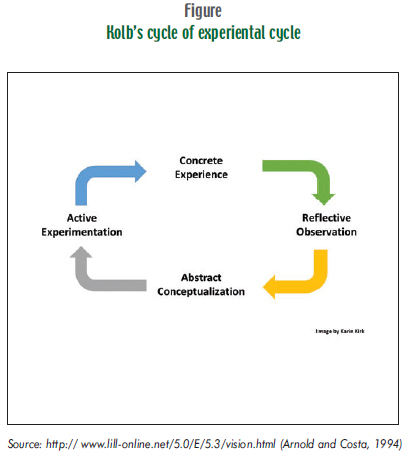
<body><![CDATA[<li><font size="2" face="Verdana">A reconsideration of the distinctiveness of tourism from everyday life     experiences;</font></li>       <li><font size="2" face="Verdana">A shift from homogenizing portrayals of the tourist as a general type to     pluralizing depictions that capture the multiplicity of the experience;</font></li>       <li><font size="2" face="Verdana">Shifted focus from the displayed objects provided by the industry to the     subjective negotiation of meanings as a determinant of the experience and </font></li>       <li><font size="2" face="Verdana">A movement from contradictory and decisive academic discourse, which     conceptualizes the experience in terms of absolute truths, toward relative and     complementary interpretations.</font></li>     </ul>     <p><font size="2" face="Verdana">This framework can be very useful to qualify and   quantify the impact that cultural and educational travels can have on the   experience of senior students through courses offered by senior universities that   offer the possibility to organize cultural and educational travels to turn the   academic knowledge acquired into a holistic experience. </font></p>     <p><font size="2" face="Verdana">Experiential learning theory was largely diffused by   Kolb (1984) (see <a href="#f1">Figure</a>). The author argues that globalization presents a   scenario in which individuals feel the impact of global events, encounter rapid   change, and come across more knowledge. Thus, individuals experience increased   haste to adapt to this environment. Similar to Maslow&#180;s argument, Kolb (1984)   argues that to persist an individual must adapt, and continuous experimental   learning is the process to achieve this mean. According to experiential learning   theory (ELT), the individual   performs or engages in activities by which to respond to the environment in a holistic process. </font></p>     <p><a name="f1"></a></p>     <p>&nbsp;</p>     <p align="center"><img src="/img/revistas/rpbg/v13n3/13n3a04f1.jpg" width="408" height="456"></p>     
]]></body>
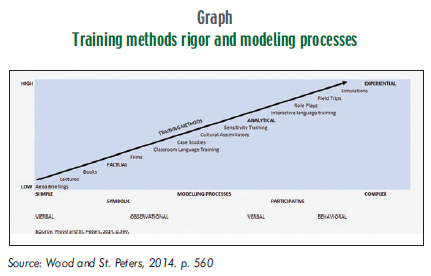
<body><![CDATA[<p>&nbsp;</p>     <p><font size="2" face="Verdana">Learning from experience requires that an individual   attends to or examines the experience and then converts it into knowledge. Two   divergent or dialectic dimensions influence the adaptation process: </font></p> <ul>       <li><font size="2" face="Verdana">Concrete experience (CE) and abstract conceptualization (AC) associated     with comprehension and</font></li>       <li><font size="2" face="Verdana">Active experimentation (AE) and reflective observation (RO) associated with     transformation.</font></li>     </ul>     <p><font size="2" face="Verdana">Therefore, the evolution of the learning/training   process from a factual to an experimental methodology can be graphically showed as follows:</font></p>     <p>&nbsp;</p>     <p align="center"><img src="/img/revistas/rpbg/v13n3/13n3a04g1.jpg" width="431" height="276"></p>     
<p>&nbsp;</p>     <p><font size="2" face="Verdana">Wood and St. Peters (2014) empirical research on experimental   learning was directed to groups of MBA students with the objective of learning   about their cultural intelligence and the impact that short studying trips have   on their better management leadership and    the role of cultural intelligence on their professional performance. </font></p>     ]]></body>
<body><![CDATA[<p><font size="2" face="Verdana">Although our focus group is composed of senior   students and the analysis centers around the impact that cultural educational   trips may have on the acquisition of experimental knowledge through courses   given by senior universities, the paper methodology and sampling criteria can be adapted to our purpose. </font></p>     <p><font size="2" face="Verdana">However, to the purpose of our study, holistic knowledge   has to contemplate both the academic aspects of the learning process but also   the impact of the experimental learning on their behaviour change toward   enlargement of social life experience and adaptation, extremely necessary given   our concept of culture and senior needs of cultural continuous learning and updating.</font></p>     <p><font size="2" face="Verdana"><i><b>Cultural intelligence adapted to senior university courses</b></i></font></p>     <p><font size="2" face="Verdana">Cultural intelligence (CQ) represents an individual&#8217;s   ability to function in various cultural contexts (Earley and Ang, 2003). CQ   reflects a set of capabilities that include metacognition, cognition,   motivation and behavior (Ang and Van Dyne, 2008). Metacognition represents a   way of thinking that fosters the development of coping strategies; cognition   reflects cultural knowledge; motivation consists of efficacy to persist; and   behavior is demonstrated in a repertoire of behavioral patterns (Earley and Peterson, 2004; Ng and Earley, 2006; Ang and Inkpen, 2008). </font></p>     <p><font size="2" face="Verdana">Cognitive CQ combines knowledge attained through   education and experience which represent normalized values, behavioral patterns   and customs held in various cultures defined by pronounced differences and to   exert the effort necessary to learn in an intercultural encounter (Ang and Inkpen, 2008; Ng et al., 2009). </font></p>     <p><font size="2" face="Verdana">Behavioral CQ represents the ability to respond to   various cultural situations by drawing from a well developed repertoire of behavior so as to demonstrate verbal and non verbal proficiency (Ng et al., 2009; Van Dyne et al., 2010).</font></p>     <p><font size="2" face="Verdana">Recent research pertaining to CQ indicates that CQ is   positively and significantly related to all forms of adjustments (Van Dyne and Ang, 2008; Koh and   Ng, 2004; Anget al., 2006). Moreover, CQ facilitates cultural judgment and   decision-making, well-being, and task performance (Ang et al., 2007;   Koh et al., 2010). CQ also   alleviates emotional exhaustion and burnout (Tay et al., 2008). Applying CQ to   CCT via ELT provides the ability to see whether or how much seniors learn and benefit from cultural and experimental learning. </font></p>     <p><font size="2" face="Verdana">To employ CQ to experiential learning, Livermore   (2008) suggests a model that includes the following: focus or observation as   part of metacognitive CQ; action-reflection wherein individuals act on familiar   or unfamiliar cues and attempt to make sense; support-feedback that includes   affirmation and encouragement to learn from the cultural experience; debrief to   deliberately discuss and evaluate the experience; and learning transfer to apply the lessons to different contexts.</font></p>     <p><font size="2" face="Verdana">Oddou et al. (2000, p. 161) define five global competencies that are responsive to well planned travel experiences:</font></p> <ul>       <li><font size="2" face="Verdana">Understanding different viewpoints &#8211; seeing things from a new perspective;</font></li>       ]]></body>
<body><![CDATA[<li><font size="2" face="Verdana">Managing uncertainty;</font></li>       <li><font size="2" face="Verdana">Being inquisitive and having curiosity or interest in people who are     different to oneself;</font></li>       <li><font size="2" face="Verdana">Being willing to stretch one&#8217;s mental maps; and</font></li>       <li><font size="2" face="Verdana">Being perceptive and sensitive to cultural differences. </font></li>     </ul>     <p><font size="2" face="Verdana">An individual can enhance CQ through formal   preparation (e.g. training) and various types of cross-cultural experiences. Metacognitive   CQ reflects a higher order process associated with thinking about thinking (Ang   et al. 2007). This capability permits the acquisition and understanding of   cultural knowledge to make sense of novel cultural experiences (Van Dyne et al.,   2007; Ng et al., 2009; Ng et al., 2009). Short-term cross-cultural study tours   should provide opportunity to examine cultural assumptions in light of the observed behavioral patterns exhibited by others.</font></p>     <p><font size="2" face="Verdana">Research Question</i></font></p>     <p><font size="2" face="Verdana">Based on the literature review, we can summarize that:</font></p> <ul>       <li><font size="2" face="Verdana">Senior universities are a need for elderly groups, especially given the     income concentrating tendency in Portugal.</font></li>       <li><font size="2" face="Verdana">Social tourism can be a stimulation and adaptation model benefiting both elders&#8217;     quality of life and society, mostly through dynamization of tourism     destinations.</font></li>       ]]></body>
<body><![CDATA[<li><font size="2" face="Verdana">Elders need to experiment new cultural realities with social interaction.</font></li>       <li><font size="2" face="Verdana">Cultural experimentation, through structured course given by senior universities,     associated with tourism, may be a very suitable pedagogical tool for this age     segment.</font></li>     </ul>     <p><font size="2" face="Verdana">Therefore: How far do   cultural trips affect experimental learning on courses offered at senior universities&#8204; </font></p>     <p><font size="2" face="Verdana">Five hypotheses are initially being proposed:</font></p>     <p>&nbsp;</p>     <p><font size="3" face="Verdana"><b>Hypothesis 1: The experiential learning resulting from short-term cross-cultural study tours will enhance metacognitive CQ</b></font></p>     <p><font size="2" face="Verdana">Cognitive CQ combines knowledge attained through   education and experience that represent normalized values, behavioral patterns   and customs held in various cultures (Ang and Inkpen, 2008). An individual uses   schemes or mind maps to ascertain both similarities and differences among   cultures and to search for cultural cues to develop accurate expectations (Van   Dyne et al., 2007; Koh et al., 2010; Ng et al., 2009). Short-term cross-cultural   study tours should provide information as to the similarities and differences among cultures using existing schemes.</font></p>     <p>&nbsp;</p>     <p><font size="3" face="Verdana"><b>Hypothesis 2: The experiential learning resulting from short-term cross-cultural study tours will enhance cognitive CQ</b></font></p>     ]]></body>
<body><![CDATA[<p><font size="2" face="Verdana">An individual with a strong sense of self-efficacy often reveals a greater   willingness to engage with the unfamiliar and avoid withdrawal after facing   impediments (Earley, 2002; Earley and Peterson, 2004; Van Dyne et al., 2010).   Moreover, this individual also possesses a curiosity toward another culture   that functions as a driving force (Ang et al., 2007). Short-term cross-cultural   study tours should permit positive, though limited, experiences to build confidence and reinforce a curiosity to pursue additional interactions (Ballantyne and Packer, 2011; Ballantyne et al.,  2011).</font></p>     <p>&nbsp;</p>     <p><font size="3" face="Verdana"><b>Hypothesis 3:  The experiential   learning resulting from short-term cross-cultural study tours will enhance motivational CQ</b></font></p>     <p><font size="2" face="Verdana">Ng et al. (2009) argued that behavioral CQ represents a critical factor   toward effectiveness, as an individual must possess a broad range of behaviors   from which to select. Behavioral CQ is exhibited through the response to   cultural stimuli, drawing from learned, and practiced behaviors. Short-term   cross-cultural study tours are expected to provide the means by which   participants can observe and practice these behaviors, resulting in a broader &#8220;repertoire&#8221; of behaviors upon which to draw.</font></p>     <p>&nbsp;</p>     <p><font size="3" face="Verdana"><b>Hypothesis 4: The experiential learning resulting from short-term cross-cultural study tours will enhance behavioral CQ</b></font></p>     <p><b><font size="2" face="Verdana"><i>Hypothesis related strictly to cultural tourism in senior universities</i></font></b></p>     <p><font size="2" face="Verdana">The literature review specifically to justify hypothesis   5 and 6 is the result of the analysis of senior motivations to travel and to   undertake cultural trips. Several authors who were already cited are implicitly included. </font></p>     <p>&nbsp;</p>     <p><font size="3" face="Verdana"><b>Hypothesis 5: Cultural tourism improves the learning process related to   theoretical courses</b></font></p>     ]]></body>
<body><![CDATA[<p><font size="2" face="Verdana">There is no relationship between cultural tourism and the learning process related to theoretical courses (H0)</font></p> <ul>       <li><font size="2" face="Verdana">Question: I can remember the theory learned at my university better if I     have a practical relation to it &#8211; totally disagree to totally agree</font></li>       <li><font size="2" face="Verdana">Test: one-sample t-test (one sided) &#8211; &#181; <= 3</font></li>       <li><font size="2" face="Verdana">Cultural tourism is a positive aspect to attract people to senior     universities in Portugal</font></li>     </ul>     <p>&nbsp;</p>     <p><font size="3" face="Verdana"><b>Hypothesis 6: Seniors are neutral or less likely to attend senior   universities in Portugal when cultural tourism is part of the university&#180;s   schedule</b></font></p> <ul>       <li><font size="2" face="Verdana">Question: I would attend senior universities in Portugal when cultural     tourism is offered &#8211; totally disagree to totally agree</font></li>       <li><font size="2" face="Verdana">Test: one-sample t-test (one sided) &#8211; &#181; <= 3</font></li>       <li><font size="2" face="Verdana">Senior university cultural tourism promotes social and knowledge     interactions among seniors</font></li>     ]]></body>
<body><![CDATA[</ul>     <p><font size="2" face="Verdana">            There   is no relationship between senior university cultural tourism and social/knowledge interactions among seniors</font></p> <ul>       <li><font size="2" face="Verdana">Question: I find it easier to communicate with my university colleagues on     a trip than within the walls of the university &#8211; totally disagree to totally     agree</font></li>       <li><font size="2" face="Verdana">Test:  one-sample t-test (one sided)     &#8211; &#181; <= 3</font></li>       <li><font size="2" face="Verdana">Senior travel culture tourism has a positive impact on the development of     the cultural area visited </font></li>     </ul>     <p><font size="2" face="Verdana">            Seniors   are neutral or less likely to spend money on a coffee, etc. at the area visited during a trip organized by senior universities</font></p> <ul>       <li><font size="2" face="Verdana">Question: I would spend money on a coffee, etc. at the area visited during     a trip organized by my senior university &#8211; totally disagree to totally agree</font></li>       <li><font size="2" face="Verdana">Test: one-sample t-test (one-sided) - &#181; <= 3</font></li>     </ul>     ]]></body>
<body><![CDATA[<p>&nbsp;</p>     <p><font size="3" face="Verdana"><b>Methodology</b></font></p>     <p><font size="2" face="Verdana">The purpose of this research from hypothesis 1 to 4 is   to investigate experiential learning methods for cultivating the four CQ   constructs. Specifically, this research investigates the impact of short-term cultural   study tours on each of the four CQ constructs. Hypothesis 5 and 6 investigate   the importance of adopting experimental learning in senior universities and its   socialization effect. Likert scales will be used as well as continuous data.   Therefore, structural equations such as Tobit equations will be used. Story   (2010) also applies multi-level analysis to methodology to test the impact of global mindset on positive organizations outcomes. </font></p>     <p>&nbsp;</p>     <p><font size="3" face="Verdana"><b>Sampling method</b></font></p>     <p><font size="2" face="Verdana">The universe of this study comprised individuals   taking courses in Portuguese senior universities that offer experimental learning   as part of their pedagogical system. Courses in senior universities that offer   the experimental learning methodology will be contacted and interviews will be applied to teacher and students.</font></p>     <p><font size="2" face="Verdana">The characteristics of the samples will follow a   normal distribution of the universe, and personal characterization based on   age, sex, occupation and socio-economic situation will first be built. The   sampling procedure will obey two basic criteria: age group (up to 55; above 55) and income level (if the information is available).</font></p>     <p><font size="2" face="Verdana">Two questionnaires will be distributed, before and   after travelling. A model of structural equations with Likert scale, binary and   continuous variables will be used. A pilot questionnaire will be applied to   test the consistency of the model and correlation among variables. We hope that   a minimum of 400 valid questionnaires will be available to the significance and robustness of the results.</font></p>     <p>&nbsp;</p>     <p><font size="3" face="Verdana"><b>Conclusion</b></font></p>     ]]></body>
<body><![CDATA[<p><font size="2" face="Verdana">This paper is a review of the literature and a   proposal for future empirical research. Given time constrains; it was not   possible to apply the questionnaires to this scholar period. Nevertheless, the   need to study empirically the Portuguese and world-wide elderly segment is of major importance to our society. </font></p>     <p><font size="2" face="Verdana">The longer the life cycle, the greater the need to   built mechanisms to maintain an active and healthy mind. The new challenges due   to family structure transformations, labor market structure, and urbanization   urge to new forms to occupy an elderly growing population eager to learn and   enjoy life. Senior universities can be a solution to the problems of socialization and the basic need of culture updating as pointed by Maslow. </font></p>     <p>&nbsp;</p>     <p><font size="3" face="Verdana"><b>References</b></font></p>     <!-- ref --><p><font size="2" face="Verdana">ANG, S. & VAN DYNE, L. (2008), &#8220;Conceptualization   of cultural intelligence: definition, distinctiveness, and nomological network&#8221;.   In S. Ang and L. Van Dyne (Eds.), <b>Handbook     of Cultural Intelligence: Theory, Measurement, and Applications</b>, M.E. Sharpe, Armonk, pp. 3-15.    &nbsp;&nbsp;&nbsp;&nbsp;&nbsp;&nbsp;&nbsp;&nbsp;[&#160;<a href="javascript:void(0);" onclick="javascript: window.open('/scielo.php?script=sci_nlinks&ref=000157&pid=S1645-4464201400030000400001&lng=','','width=640,height=500,resizable=yes,scrollbars=1,menubar=yes,');">Links</a>&#160;]<!-- end-ref --></font></p>     <!-- ref --><p><font size="2" face="Verdana">ANG, S. & INKPEN, C. (2008), &#8220;Cultural intelligence   and offshore outsourcing success: a framework of firm-level intercultural   capability&#8221;. <i>Decision Sciences</i>, 29, 3, pp. 337-358.    &nbsp;&nbsp;&nbsp;&nbsp;&nbsp;&nbsp;&nbsp;&nbsp;[&#160;<a href="javascript:void(0);" onclick="javascript: window.open('/scielo.php?script=sci_nlinks&ref=000159&pid=S1645-4464201400030000400002&lng=','','width=640,height=500,resizable=yes,scrollbars=1,menubar=yes,');">Links</a>&#160;]<!-- end-ref --></font></p>     <!-- ref --><p><font size="2" face="Verdana">ANG, S.; VAN DYNE, L. & KOH, C. (2006), &#8220;Personality   correlates of the four-factor model of cultural intelligence&#8221;. <b>Group and Organization Management</b>, 31, 1, pp. 100-123.    &nbsp;&nbsp;&nbsp;&nbsp;&nbsp;&nbsp;&nbsp;&nbsp;[&#160;<a href="javascript:void(0);" onclick="javascript: window.open('/scielo.php?script=sci_nlinks&ref=000161&pid=S1645-4464201400030000400003&lng=','','width=640,height=500,resizable=yes,scrollbars=1,menubar=yes,');">Links</a>&#160;]<!-- end-ref --></font></p>     ]]></body>
<body><![CDATA[<!-- ref --><p><font size="2" face="Verdana">ANG, S.; VAN DYNE, L.; KOH, C.; NG, K.-Y.; TEMPLER, K.   J.; TAY, C. & CHANDRASEKAR, N. A. (2007), &#8220;Cultural intelligence: its   measurement and effects on cultural judgment and decision making, cultural   adaptation, and task performance&#8221;. <i>Management and Organization Review</i>, 3, pp. 335-371.    &nbsp;&nbsp;&nbsp;&nbsp;&nbsp;&nbsp;&nbsp;&nbsp;[&#160;<a href="javascript:void(0);" onclick="javascript: window.open('/scielo.php?script=sci_nlinks&ref=000163&pid=S1645-4464201400030000400004&lng=','','width=640,height=500,resizable=yes,scrollbars=1,menubar=yes,');">Links</a>&#160;]<!-- end-ref --></font></p>     <!-- ref --><p><font size="2" face="Verdana">BALLANTYNE, R. & PACKER, J. (2011), &#8220;Using tourism   free choice learning experiences to promote environmentally sustainable behaviour: the role of post-visit action resources&#8221;. <i>Environmental Education Research</i>, 17(2), pp. 201-215.    &nbsp;&nbsp;&nbsp;&nbsp;&nbsp;&nbsp;&nbsp;&nbsp;[&#160;<a href="javascript:void(0);" onclick="javascript: window.open('/scielo.php?script=sci_nlinks&ref=000165&pid=S1645-4464201400030000400005&lng=','','width=640,height=500,resizable=yes,scrollbars=1,menubar=yes,');">Links</a>&#160;]<!-- end-ref --> </font></p>     <!-- ref --><p><font size="2" face="Verdana">BALLANTYNE, R.; PACKER, J. & FALK, J. (2011), &#8220;Visitors&#8217;   learning for environmental sustainability: testing short and long-term impacts   of wildlife tourism experiences using structural equation modelling&#8221;. Tourism Management</i>, 32(6), pp. 1243-1252.    &nbsp;&nbsp;&nbsp;&nbsp;&nbsp;&nbsp;&nbsp;&nbsp;[&#160;<a href="javascript:void(0);" onclick="javascript: window.open('/scielo.php?script=sci_nlinks&ref=000167&pid=S1645-4464201400030000400006&lng=','','width=640,height=500,resizable=yes,scrollbars=1,menubar=yes,');">Links</a>&#160;]<!-- end-ref --> </font></p>     <!-- ref --><p><font size="2" face="Verdana">B&#201;LANGER, C. & JOLIN, L. (2011), &#8220;The   International Organisation of Social Tourism (ISTO) working towards a right to   holidays and tourism for all&#8221;. <i>Current Issues in Tourism,</i> vol. 14, Issue 5.    &nbsp;&nbsp;&nbsp;&nbsp;&nbsp;&nbsp;&nbsp;&nbsp;[&#160;<a href="javascript:void(0);" onclick="javascript: window.open('/scielo.php?script=sci_nlinks&ref=000169&pid=S1645-4464201400030000400007&lng=','','width=640,height=500,resizable=yes,scrollbars=1,menubar=yes,');">Links</a>&#160;]<!-- end-ref --> </font></p>     <!-- ref --><p><font size="2" face="Verdana">CARNEIRO, M. J.; EUS&#201;BIO, C.;   KASTENHOLZ, E. & ALVELOS, H. (2013), &#8220;Motivations to participate in social   tourism programmes: a segmentation analysis of the senior market&#8221;. International Journal of Tourism and Hospitality Research</i>, vol. 24, no. 3, pp. 352-366.    &nbsp;&nbsp;&nbsp;&nbsp;&nbsp;&nbsp;&nbsp;&nbsp;[&#160;<a href="javascript:void(0);" onclick="javascript: window.open('/scielo.php?script=sci_nlinks&ref=000171&pid=S1645-4464201400030000400008&lng=','','width=640,height=500,resizable=yes,scrollbars=1,menubar=yes,');">Links</a>&#160;]<!-- end-ref --></font></p>     ]]></body>
<body><![CDATA[<!-- ref --><p><font size="2" face="Verdana">DONTHU, N. & BOONGHEE, Y. (1998), &#8220;Cultural influences   on service quality expectations&#8221;. <i>Journal of Service Research</i>, vol. 1(2), pp. 178-186.    &nbsp;&nbsp;&nbsp;&nbsp;&nbsp;&nbsp;&nbsp;&nbsp;[&#160;<a href="javascript:void(0);" onclick="javascript: window.open('/scielo.php?script=sci_nlinks&ref=000173&pid=S1645-4464201400030000400009&lng=','','width=640,height=500,resizable=yes,scrollbars=1,menubar=yes,');">Links</a>&#160;]<!-- end-ref --> </font></p>     <!-- ref --><p><font size="2" face="Verdana">EARLEY, P. C. (2002), &#8220;Redefining interactions across   cultures and organizations: moving forward with cultural intelligence.&#8221; Research Organization Behavior</i>, vol. 24, pp. 1-345.    &nbsp;&nbsp;&nbsp;&nbsp;&nbsp;&nbsp;&nbsp;&nbsp;[&#160;<a href="javascript:void(0);" onclick="javascript: window.open('/scielo.php?script=sci_nlinks&ref=000175&pid=S1645-4464201400030000400010&lng=','','width=640,height=500,resizable=yes,scrollbars=1,menubar=yes,');">Links</a>&#160;]<!-- end-ref --></font></p>     <!-- ref --><p><font size="2" face="Verdana">EARLEY, P. C. & PETERSON, R. S. (2004), &#8220;The elusive   cultural chameleon: cultural intelligence as a new approach to intercultural   training for the global manager&#8221;. <i>Academy of Management Learning and Education</i>, 3(1), pp. 100-115.    &nbsp;&nbsp;&nbsp;&nbsp;&nbsp;&nbsp;&nbsp;&nbsp;[&#160;<a href="javascript:void(0);" onclick="javascript: window.open('/scielo.php?script=sci_nlinks&ref=000177&pid=S1645-4464201400030000400011&lng=','','width=640,height=500,resizable=yes,scrollbars=1,menubar=yes,');">Links</a>&#160;]<!-- end-ref --></font></p>     <!-- ref --><p><font size="2" face="Verdana">EUROMONITOR INTERNATIONAL (2014), <b>The Global Later Lifers Market. How the Over 60s Are Coming in their Own. </b>May.    &nbsp;&nbsp;&nbsp;&nbsp;&nbsp;&nbsp;&nbsp;&nbsp;[&#160;<a href="javascript:void(0);" onclick="javascript: window.open('/scielo.php?script=sci_nlinks&ref=000179&pid=S1645-4464201400030000400012&lng=','','width=640,height=500,resizable=yes,scrollbars=1,menubar=yes,');">Links</a>&#160;]<!-- end-ref --> </font></p>     <!-- ref --><p><font size="2" face="Verdana">EUROMONITOR (2013), <b>The Travel & Tourism Competitiveness Report</b>.    &nbsp;&nbsp;&nbsp;&nbsp;&nbsp;&nbsp;&nbsp;&nbsp;[&#160;<a href="javascript:void(0);" onclick="javascript: window.open('/scielo.php?script=sci_nlinks&ref=000181&pid=S1645-4464201400030000400013&lng=','','width=640,height=500,resizable=yes,scrollbars=1,menubar=yes,');">Links</a>&#160;]<!-- end-ref --> </font></p>     ]]></body>
<body><![CDATA[<!-- ref --><p><font size="2" face="Verdana">EUROSTAT (2014).    &nbsp;&nbsp;&nbsp;&nbsp;&nbsp;&nbsp;&nbsp;&nbsp;[&#160;<a href="javascript:void(0);" onclick="javascript: window.open('/scielo.php?script=sci_nlinks&ref=000183&pid=S1645-4464201400030000400014&lng=','','width=640,height=500,resizable=yes,scrollbars=1,menubar=yes,');">Links</a>&#160;]<!-- end-ref --></font></p>     <!-- ref --><p><font size="2" face="Verdana">GINEVI&#200;IUS, R.; HAUSMANN, T. & SCHAFI, S. (2007), &#8220;Seniorentourismus &#8211; Die zielgruppe senioren ingastgewerbe und touristik&#8221;. <i>Business: Theory and Practice</i>, 8(1), pp.    &nbsp;&nbsp;&nbsp;&nbsp;&nbsp;&nbsp;&nbsp;&nbsp;[&#160;<a href="javascript:void(0);" onclick="javascript: window.open('/scielo.php?script=sci_nlinks&ref=000185&pid=S1645-4464201400030000400015&lng=','','width=640,height=500,resizable=yes,scrollbars=1,menubar=yes,');">Links</a>&#160;]<!-- end-ref --> 3-8.</font></p>     <!-- ref --><p><font size="2" face="Verdana">HELPAGEINDIAPROGRAMME (2014), <a href="http://www.helpageindiaprogramme.org/Elderly Issues/problems_of_the_elderly/index.html" target="_blank">http://www.helpageindiaprogramme.org/Elderly%20Issues/problems_of_the_elderly/index.html</a>.    &nbsp;&nbsp;&nbsp;&nbsp;&nbsp;&nbsp;&nbsp;&nbsp;[&#160;<a href="javascript:void(0);" onclick="javascript: window.open('/scielo.php?script=sci_nlinks&ref=000187&pid=S1645-4464201400030000400016&lng=','','width=640,height=500,resizable=yes,scrollbars=1,menubar=yes,');">Links</a>&#160;]<!-- end-ref --></font></p>     <!-- ref --><p><font size="2" face="Verdana">HOFSTEDE, G. (1980), &#8220;What is culture&#8204; A reply to   Baskerville accounting&#8221;. <b><i>Accounting, Organizations and Society</i>,</b> vol. 28, Issues 7-8, October-November, pp. 811-13.    &nbsp;&nbsp;&nbsp;&nbsp;&nbsp;&nbsp;&nbsp;&nbsp;[&#160;<a href="javascript:void(0);" onclick="javascript: window.open('/scielo.php?script=sci_nlinks&ref=000189&pid=S1645-4464201400030000400017&lng=','','width=640,height=500,resizable=yes,scrollbars=1,menubar=yes,');">Links</a>&#160;]<!-- end-ref --></font></p>     <!-- ref --><p><font size="2" face="Verdana">ICOMOS (2008), International Commission on Monuments and Sites<a></a>.    &nbsp;&nbsp;&nbsp;&nbsp;&nbsp;&nbsp;&nbsp;&nbsp;[&#160;<a href="javascript:void(0);" onclick="javascript: window.open('/scielo.php?script=sci_nlinks&ref=000191&pid=S1645-4464201400030000400018&lng=','','width=640,height=500,resizable=yes,scrollbars=1,menubar=yes,');">Links</a>&#160;]<!-- end-ref --></font></p>     ]]></body>
<body><![CDATA[<!-- ref --><p><font size="2" face="Verdana">INE (2014), <b>Relat&#243;rio da Receita Pessoa F&#237;sica por Escal&#227;o</b>.    &nbsp;&nbsp;&nbsp;&nbsp;&nbsp;&nbsp;&nbsp;&nbsp;[&#160;<a href="javascript:void(0);" onclick="javascript: window.open('/scielo.php?script=sci_nlinks&ref=000193&pid=S1645-4464201400030000400019&lng=','','width=640,height=500,resizable=yes,scrollbars=1,menubar=yes,');">Links</a>&#160;]<!-- end-ref --></font></p>     <!-- ref --><p><font size="2" face="Verdana">PACKER, J. & BALLANTYNE, R. (2004), &#8220;Is educational   leisure a contradiction in terms&#8204; Exploring the synergy of education and   entertainment&#8221;. <i>Annals of Leisure Research</i>, 7(1), pp. 54-71.    &nbsp;&nbsp;&nbsp;&nbsp;&nbsp;&nbsp;&nbsp;&nbsp;[&#160;<a href="javascript:void(0);" onclick="javascript: window.open('/scielo.php?script=sci_nlinks&ref=000195&pid=S1645-4464201400030000400020&lng=','','width=640,height=500,resizable=yes,scrollbars=1,menubar=yes,');">Links</a>&#160;]<!-- end-ref --></font></p>     <!-- ref --><p><font size="2" face="Verdana">KOH, C.; JOSEPH, D. & ANG, S. (2010), &#8220;Cultural intelligence   and global IT talent&#8221;. In H. Bidgoli (Ed.), <b>The Handbook of Technology Management</b>, John Wiley & Sons, New York, pp. 828-844.    &nbsp;&nbsp;&nbsp;&nbsp;&nbsp;&nbsp;&nbsp;&nbsp;[&#160;<a href="javascript:void(0);" onclick="javascript: window.open('/scielo.php?script=sci_nlinks&ref=000197&pid=S1645-4464201400030000400021&lng=','','width=640,height=500,resizable=yes,scrollbars=1,menubar=yes,');">Links</a>&#160;]<!-- end-ref --></font></p>     <!-- ref --><p><font size="2" face="Verdana">KOLB, D. A. (1984), <b>Experiential Learning: Experience as the Source of Learning and Development</b>, Prentice Hall PTR, Englewood Cliffs.    &nbsp;&nbsp;&nbsp;&nbsp;&nbsp;&nbsp;&nbsp;&nbsp;[&#160;<a href="javascript:void(0);" onclick="javascript: window.open('/scielo.php?script=sci_nlinks&ref=000199&pid=S1645-4464201400030000400022&lng=','','width=640,height=500,resizable=yes,scrollbars=1,menubar=yes,');">Links</a>&#160;]<!-- end-ref --></font></p>     <!-- ref --><p><font size="2" face="Verdana">KORPAN, C. A.; BISANZ, G. L.; BOEHME, C. & LYNCH,   M. A. (1997), &#8220;What did you learn outside of school today&#8204; Using structured   interviews to document home and community activities related to science and   technology&#8221;. <i>Science Education</i>, 81, pp. 651-662.    &nbsp;&nbsp;&nbsp;&nbsp;&nbsp;&nbsp;&nbsp;&nbsp;[&#160;<a href="javascript:void(0);" onclick="javascript: window.open('/scielo.php?script=sci_nlinks&ref=000201&pid=S1645-4464201400030000400023&lng=','','width=640,height=500,resizable=yes,scrollbars=1,menubar=yes,');">Links</a>&#160;]<!-- end-ref --></font></p>     ]]></body>
<body><![CDATA[<!-- ref --><p><font size="2" face="Verdana">LIVERMORE, D. (2008), &#8220;Culture intelligence and   short-term missions: the phenomenon of the fifteen-year-old missionary&#8221;. In S.   Ang and L. Van Dyne (Eds.), <b>Handbook of     Cultural Intelligence: Theory, Measurement, and Applications</b>, M.E. Sharpe, Armonk, NY, pp. 271-285.    &nbsp;&nbsp;&nbsp;&nbsp;&nbsp;&nbsp;&nbsp;&nbsp;[&#160;<a href="javascript:void(0);" onclick="javascript: window.open('/scielo.php?script=sci_nlinks&ref=000203&pid=S1645-4464201400030000400024&lng=','','width=640,height=500,resizable=yes,scrollbars=1,menubar=yes,');">Links</a>&#160;]<!-- end-ref --></font></p>     <!-- ref --><p><font size="2" face="Verdana">MASLOW, A. (1943), &#8220;A theory of human motivation&#8221;. Psychological Review</i>, 50, pp. 370-396.    &nbsp;&nbsp;&nbsp;&nbsp;&nbsp;&nbsp;&nbsp;&nbsp;[&#160;<a href="javascript:void(0);" onclick="javascript: window.open('/scielo.php?script=sci_nlinks&ref=000205&pid=S1645-4464201400030000400025&lng=','','width=640,height=500,resizable=yes,scrollbars=1,menubar=yes,');">Links</a>&#160;]<!-- end-ref --></font></p>     <!-- ref --><p><font size="2" face="Verdana">MCCABE, S. & JOHNSON, S. (2013), &#8220;The happiness   factor in tourism subjective well-being and social tourism&#8221;. Annals of Tourism Research</i>, vol. 41, April, pp. 42-65.    &nbsp;&nbsp;&nbsp;&nbsp;&nbsp;&nbsp;&nbsp;&nbsp;[&#160;<a href="javascript:void(0);" onclick="javascript: window.open('/scielo.php?script=sci_nlinks&ref=000207&pid=S1645-4464201400030000400026&lng=','','width=640,height=500,resizable=yes,scrollbars=1,menubar=yes,');">Links</a>&#160;]<!-- end-ref --></font></p>     <!-- ref --><p><font size="2" face="Verdana">MINNAERT, L.; MAITLAND, R. & MILLER, G. (2009), &#8220;Tourism and social policy: the value of social tourism&#8221;. <i>Annals of Tourism Research</i>, 36(2), pp. 316-334.    &nbsp;&nbsp;&nbsp;&nbsp;&nbsp;&nbsp;&nbsp;&nbsp;[&#160;<a href="javascript:void(0);" onclick="javascript: window.open('/scielo.php?script=sci_nlinks&ref=000209&pid=S1645-4464201400030000400027&lng=','','width=640,height=500,resizable=yes,scrollbars=1,menubar=yes,');">Links</a>&#160;]<!-- end-ref --> </font></p>     <!-- ref --><p><font size="2" face="Verdana">NEVES, J. M. O. (2009), <b>Estudo das Motiva&#231;&#245;es Tur&#237;sticas e do Comportamento em Turismo dos   Seniores Portugueses no Mercado Interno: O Caso do INATEL e das Universidades Portuguesas da Terceira Idade</b>. Funda&#231;&#227;o INATEL.    &nbsp;&nbsp;&nbsp;&nbsp;&nbsp;&nbsp;&nbsp;&nbsp;[&#160;<a href="javascript:void(0);" onclick="javascript: window.open('/scielo.php?script=sci_nlinks&ref=000211&pid=S1645-4464201400030000400028&lng=','','width=640,height=500,resizable=yes,scrollbars=1,menubar=yes,');">Links</a>&#160;]<!-- end-ref --></font></p>     ]]></body>
<body><![CDATA[<!-- ref --><p><font size="2" face="Verdana">NG, K.-Y.; VAN DYNE, L. & ANG, S. (2009b), &#8220;Developing   global leaders: the role of international experience and cultural intelligence&#8221;.   In W. H. Mobley, M. Li and Y. Wang (Eds.), <b>Advances in Global Leadership, </b>Emerald Group, Bingley, pp. 225-250.    &nbsp;&nbsp;&nbsp;&nbsp;&nbsp;&nbsp;&nbsp;&nbsp;[&#160;<a href="javascript:void(0);" onclick="javascript: window.open('/scielo.php?script=sci_nlinks&ref=000213&pid=S1645-4464201400030000400029&lng=','','width=640,height=500,resizable=yes,scrollbars=1,menubar=yes,');">Links</a>&#160;]<!-- end-ref --> </font></p>     <!-- ref --><p><font size="2" face="Verdana">NG, K.-Y. & EARLEY, P. C. (2006), &#8220;Culture and intelligence:   old constructs, new frontiers&#8221;. <i>Group and Organization Management</i>, 31, pp. 4-19.    &nbsp;&nbsp;&nbsp;&nbsp;&nbsp;&nbsp;&nbsp;&nbsp;[&#160;<a href="javascript:void(0);" onclick="javascript: window.open('/scielo.php?script=sci_nlinks&ref=000215&pid=S1645-4464201400030000400030&lng=','','width=640,height=500,resizable=yes,scrollbars=1,menubar=yes,');">Links</a>&#160;]<!-- end-ref --></font></p>     <!-- ref --><p><font size="2" face="Verdana">NG, K.-Y.; VAN DYNE, L. & ANG, S. (2009a), &#8220;Beyond   international experience: the strategic role of cultural intelligence for   executive selection in IHRM&#8221;. In P. R. Sparrow (Ed.), <b>Handbook     of International Human Resource Management</b>,  John Wiley, West Sussex,  pp. 97-113.    &nbsp;&nbsp;&nbsp;&nbsp;&nbsp;&nbsp;&nbsp;&nbsp;[&#160;<a href="javascript:void(0);" onclick="javascript: window.open('/scielo.php?script=sci_nlinks&ref=000217&pid=S1645-4464201400030000400031&lng=','','width=640,height=500,resizable=yes,scrollbars=1,menubar=yes,');">Links</a>&#160;]<!-- end-ref --></font></p>     <!-- ref --><p><font size="2" face="Verdana">NIMROD, G. (2008), &#8220;Retirement and tourism &#8211; themes in   retirees&#8217; narratives&#8221;. <i>Annals of Tourism Research</i>, 35(4), pp. 859-878.    &nbsp;&nbsp;&nbsp;&nbsp;&nbsp;&nbsp;&nbsp;&nbsp;[&#160;<a href="javascript:void(0);" onclick="javascript: window.open('/scielo.php?script=sci_nlinks&ref=000219&pid=S1645-4464201400030000400032&lng=','','width=640,height=500,resizable=yes,scrollbars=1,menubar=yes,');">Links</a>&#160;]<!-- end-ref --></font></p>     <!-- ref --><p><font size="2" face="Verdana">NIMROD, G. & ROTEM, A. (2010), &#8220;Between relaxation and excitement: activities and benefits in retirees&#8221;. <i>Tourism International Journal of Tourism Research</i>, 12(1), pp. 65-78.    &nbsp;&nbsp;&nbsp;&nbsp;&nbsp;&nbsp;&nbsp;&nbsp;[&#160;<a href="javascript:void(0);" onclick="javascript: window.open('/scielo.php?script=sci_nlinks&ref=000221&pid=S1645-4464201400030000400033&lng=','','width=640,height=500,resizable=yes,scrollbars=1,menubar=yes,');">Links</a>&#160;]<!-- end-ref --></font></p>     ]]></body>
<body><![CDATA[<!-- ref --><p><font size="2" face="Verdana">ODDOU, G.; MARK, E.; MENDENHALL, M. E. & RITCHIE, B. J. (2000), &#8220;Leveraging travel as a tool for global leadership development&#8221;. Human Resource Management. </i>39(2-3), pp. 159-72.    &nbsp;&nbsp;&nbsp;&nbsp;&nbsp;&nbsp;&nbsp;&nbsp;[&#160;<a href="javascript:void(0);" onclick="javascript: window.open('/scielo.php?script=sci_nlinks&ref=000223&pid=S1645-4464201400030000400034&lng=','','width=640,height=500,resizable=yes,scrollbars=1,menubar=yes,');">Links</a>&#160;]<!-- end-ref --></font></p>     <!-- ref --><p><font size="2" face="Verdana">STORY, J. (2010), <b>Testing   the Impact of Global Mindset on Positive Organizational Outcomes: A Multi-Level Analysis</b>. University of Nebraska, Lincoln.    &nbsp;&nbsp;&nbsp;&nbsp;&nbsp;&nbsp;&nbsp;&nbsp;[&#160;<a href="javascript:void(0);" onclick="javascript: window.open('/scielo.php?script=sci_nlinks&ref=000225&pid=S1645-4464201400030000400035&lng=','','width=640,height=500,resizable=yes,scrollbars=1,menubar=yes,');">Links</a>&#160;]<!-- end-ref --></font></p>     <!-- ref --><p><font size="2" face="Verdana">TAY, C.; WESTMAN, M. & CHIA, A. (2008),   &#8220;Antecedents and consequences of cultural intelligence among short-term   business travellers&#8221;. In S. Ang and L. Van Dyne (Eds.), <b>Handbook of Cultural Intelligence: Theory, Measurement, and Applications</b>, M. E. Sharpe, Armonk, NY, pp. 126-144.    &nbsp;&nbsp;&nbsp;&nbsp;&nbsp;&nbsp;&nbsp;&nbsp;[&#160;<a href="javascript:void(0);" onclick="javascript: window.open('/scielo.php?script=sci_nlinks&ref=000227&pid=S1645-4464201400030000400036&lng=','','width=640,height=500,resizable=yes,scrollbars=1,menubar=yes,');">Links</a>&#160;]<!-- end-ref --></font></p>     <!-- ref --><p><font size="2" face="Verdana">TYLOR, E. B. (1871), &#8220;Primitive culture: researches into the development of mythology, philosophy, religion, art, and custom&#8221;. <a href="http://www.books.google.com" target="_blank">www.books.google.com</a>.    &nbsp;&nbsp;&nbsp;&nbsp;&nbsp;&nbsp;&nbsp;&nbsp;[&#160;<a href="javascript:void(0);" onclick="javascript: window.open('/scielo.php?script=sci_nlinks&ref=000229&pid=S1645-4464201400030000400037&lng=','','width=640,height=500,resizable=yes,scrollbars=1,menubar=yes,');">Links</a>&#160;]<!-- end-ref --></font></p>     <!-- ref --><p><font size="2" face="Verdana">URIELY, N. (2005), &#8220;The tourist experience: conceptual   developments&#8221;. <i>Annals of Tourism Research</i>, 32(1), pp. 199-216.    &nbsp;&nbsp;&nbsp;&nbsp;&nbsp;&nbsp;&nbsp;&nbsp;[&#160;<a href="javascript:void(0);" onclick="javascript: window.open('/scielo.php?script=sci_nlinks&ref=000231&pid=S1645-4464201400030000400038&lng=','','width=640,height=500,resizable=yes,scrollbars=1,menubar=yes,');">Links</a>&#160;]<!-- end-ref --></font></p>     ]]></body>
<body><![CDATA[<!-- ref --><p><font size="2" face="Verdana">VAN DYNE, L.; ANG, S. & KOH, C. (2008),   &#8220;Development and validation of the CQs: the cultural intelligence scale&#8221;. In S.   Ang and L. Van Dyne (Eds.), <b>Handbook of     Cultural Intelligence: Theory, Measurement, and Applications</b>. M. E. Sharpe, Armonk, NY, pp. 16-38.    &nbsp;&nbsp;&nbsp;&nbsp;&nbsp;&nbsp;&nbsp;&nbsp;[&#160;<a href="javascript:void(0);" onclick="javascript: window.open('/scielo.php?script=sci_nlinks&ref=000233&pid=S1645-4464201400030000400039&lng=','','width=640,height=500,resizable=yes,scrollbars=1,menubar=yes,');">Links</a>&#160;]<!-- end-ref --></font></p>     <!-- ref --><p><font size="2" face="Verdana">VAN DYNE, L.; ANG, S. & LIVERMORE, D. (2010),   &#8220;Cultural intelligence: a pathway for leading in a rapidly globalizing world&#8221;. In   K. M. Hannum, B. McFeeters, and L. Booysen (Eds.), <b>Leadership Across Differences</b>. Pfeiffer, San Francisco, pp. 131-138.    &nbsp;&nbsp;&nbsp;&nbsp;&nbsp;&nbsp;&nbsp;&nbsp;[&#160;<a href="javascript:void(0);" onclick="javascript: window.open('/scielo.php?script=sci_nlinks&ref=000235&pid=S1645-4464201400030000400040&lng=','','width=640,height=500,resizable=yes,scrollbars=1,menubar=yes,');">Links</a>&#160;]<!-- end-ref --> </font></p>     <!-- ref --><p><font size="2" face="Verdana">VAN DYNE, L.; ANG, S. & NIELSEN, T. M. (2007), &#8220;Cultural   Intelligence&#8221;. In S. Clegg and J. Bailey (Eds.), <b>International Encyclopedia of Organization Studies. </b>Sage, Thousand Oaks, CA, pp. 345-350.    &nbsp;&nbsp;&nbsp;&nbsp;&nbsp;&nbsp;&nbsp;&nbsp;[&#160;<a href="javascript:void(0);" onclick="javascript: window.open('/scielo.php?script=sci_nlinks&ref=000237&pid=S1645-4464201400030000400041&lng=','','width=640,height=500,resizable=yes,scrollbars=1,menubar=yes,');">Links</a>&#160;]<!-- end-ref --></font></p>     <!-- ref --><p><font size="2" face="Verdana">WOOD, E. D. & ST. PETERS, H. Y. Z. (2014), &#8220;Short-term   cross-cultural study tours: impact on cultural intelligence&#8221;. The International Journal of Human Resource Management, </i>vol. 25, Issue 4.    &nbsp;&nbsp;&nbsp;&nbsp;&nbsp;&nbsp;&nbsp;&nbsp;[&#160;<a href="javascript:void(0);" onclick="javascript: window.open('/scielo.php?script=sci_nlinks&ref=000239&pid=S1645-4464201400030000400042&lng=','','width=640,height=500,resizable=yes,scrollbars=1,menubar=yes,');">Links</a>&#160;]<!-- end-ref --></font></p>     <p>&nbsp;</p>     <p>&nbsp;</p>     ]]></body>
<body><![CDATA[<p><font size="2"><b><font face="Verdana">NOTES</font></b></font></p> <font face="Verdana">    <p><font size="2"><a href="#_ftnref1" name="_ftn1" title="">[1]</a> Agence   Nationale pour les <i>Ch&#232;ques-Vacances (N. E.).</i></i>    </font></p>     <p><font size="2"><a href="#_ftnref2" name="_ftn2" title="">[2]</a> Instituto   de Mayores y Servicios Sociales (N. E.).    </font></p> </font>      ]]></body><back>
<ref-list>
<ref id="B1">
<nlm-citation citation-type="book">
<person-group person-group-type="author">
<name>
<surname><![CDATA[ANG]]></surname>
<given-names><![CDATA[S.]]></given-names>
</name>
<name>
<surname><![CDATA[VAN DYNE]]></surname>
<given-names><![CDATA[L.]]></given-names>
</name>
</person-group>
<article-title xml:lang="en"><![CDATA[Conceptualization of cultural intelligence: definition, distinctiveness, and nomological network]]></article-title>
<person-group person-group-type="editor">
<name>
<surname><![CDATA[Ang]]></surname>
<given-names><![CDATA[S.]]></given-names>
</name>
<name>
<surname><![CDATA[Van Dyne]]></surname>
<given-names><![CDATA[L.]]></given-names>
</name>
</person-group>
<source><![CDATA[Handbook of Cultural Intelligence: Theory, Measurement, and Applications]]></source>
<year>2008</year>
<page-range>3-15</page-range><publisher-loc><![CDATA[Armonk ]]></publisher-loc>
<publisher-name><![CDATA[M.E. Sharpe]]></publisher-name>
</nlm-citation>
</ref>
<ref id="B2">
<nlm-citation citation-type="journal">
<person-group person-group-type="author">
<name>
<surname><![CDATA[ANG]]></surname>
<given-names><![CDATA[S.]]></given-names>
</name>
<name>
<surname><![CDATA[INKPEN]]></surname>
<given-names><![CDATA[C.]]></given-names>
</name>
</person-group>
<article-title xml:lang="en"><![CDATA[Cultural intelligence and offshore outsourcing success: a framework of firm-level intercultural capability]]></article-title>
<source><![CDATA[Decision Sciences]]></source>
<year>2008</year>
<volume>29</volume>
<numero>3</numero>
<issue>3</issue>
<page-range>337-358</page-range></nlm-citation>
</ref>
<ref id="B3">
<nlm-citation citation-type="journal">
<person-group person-group-type="author">
<name>
<surname><![CDATA[ANG]]></surname>
<given-names><![CDATA[S.]]></given-names>
</name>
<name>
<surname><![CDATA[VAN DYNE]]></surname>
<given-names><![CDATA[L.]]></given-names>
</name>
<name>
<surname><![CDATA[KOH]]></surname>
<given-names><![CDATA[C.]]></given-names>
</name>
</person-group>
<article-title xml:lang="en"><![CDATA[Personality correlates of the four-factor model of cultural intelligence]]></article-title>
<source><![CDATA[Group and Organization Management]]></source>
<year>2006</year>
<volume>31</volume>
<numero>1</numero>
<issue>1</issue>
<page-range>100-123</page-range></nlm-citation>
</ref>
<ref id="B4">
<nlm-citation citation-type="journal">
<person-group person-group-type="author">
<name>
<surname><![CDATA[ANG]]></surname>
<given-names><![CDATA[S.]]></given-names>
</name>
<name>
<surname><![CDATA[VAN DYNE]]></surname>
<given-names><![CDATA[L.]]></given-names>
</name>
<name>
<surname><![CDATA[KOH]]></surname>
<given-names><![CDATA[C.]]></given-names>
</name>
<name>
<surname><![CDATA[NG]]></surname>
<given-names><![CDATA[K.-Y.]]></given-names>
</name>
<name>
<surname><![CDATA[TEMPLER]]></surname>
<given-names><![CDATA[K.]]></given-names>
</name>
<name>
<surname><![CDATA[TAY]]></surname>
<given-names><![CDATA[C.]]></given-names>
</name>
<name>
<surname><![CDATA[CHANDRASEKAR]]></surname>
<given-names><![CDATA[N. A.]]></given-names>
</name>
</person-group>
<article-title xml:lang="en"><![CDATA[Cultural intelligence: its measurement and effects on cultural judgment and decision making, cultural adaptation, and task performance]]></article-title>
<source><![CDATA[Management and Organization Review]]></source>
<year>2007</year>
<volume>3</volume>
<page-range>335-371</page-range></nlm-citation>
</ref>
<ref id="B5">
<nlm-citation citation-type="journal">
<person-group person-group-type="author">
<name>
<surname><![CDATA[BALLANTYNE]]></surname>
<given-names><![CDATA[R.]]></given-names>
</name>
<name>
<surname><![CDATA[PACKER]]></surname>
<given-names><![CDATA[J.]]></given-names>
</name>
</person-group>
<article-title xml:lang="en"><![CDATA[Using tourism free choice learning experiences to promote environmentally sustainable behaviour: the role of post-visit action resources]]></article-title>
<source><![CDATA[Environmental Education Research]]></source>
<year>2011</year>
<volume>17</volume>
<numero>2</numero>
<issue>2</issue>
<page-range>201-215</page-range></nlm-citation>
</ref>
<ref id="B6">
<nlm-citation citation-type="journal">
<person-group person-group-type="author">
<name>
<surname><![CDATA[BALLANTYNE]]></surname>
<given-names><![CDATA[R.]]></given-names>
</name>
<name>
<surname><![CDATA[PACKER]]></surname>
<given-names><![CDATA[J.]]></given-names>
</name>
<name>
<surname><![CDATA[FALK]]></surname>
<given-names><![CDATA[J.]]></given-names>
</name>
</person-group>
<article-title xml:lang="en"><![CDATA[Visitors&#8217; learning for environmental sustainability: testing short and long-term impacts of wildlife tourism experiences using structural equation modelling]]></article-title>
<source><![CDATA[Tourism Management]]></source>
<year>2011</year>
<volume>32</volume>
<numero>6</numero>
<issue>6</issue>
<page-range>1243-1252</page-range></nlm-citation>
</ref>
<ref id="B7">
<nlm-citation citation-type="journal">
<person-group person-group-type="author">
<name>
<surname><![CDATA[BÉLANGER]]></surname>
<given-names><![CDATA[C.]]></given-names>
</name>
<name>
<surname><![CDATA[JOLIN]]></surname>
<given-names><![CDATA[L.]]></given-names>
</name>
</person-group>
<article-title xml:lang="en"><![CDATA[The International Organisation of Social Tourism (ISTO) working towards a right to holidays and tourism for all]]></article-title>
<source><![CDATA[Current Issues in Tourism]]></source>
<year>2011</year>
<volume>14</volume>
<numero>5</numero>
<issue>5</issue>
</nlm-citation>
</ref>
<ref id="B8">
<nlm-citation citation-type="journal">
<person-group person-group-type="author">
<name>
<surname><![CDATA[CARNEIRO]]></surname>
<given-names><![CDATA[M. J.]]></given-names>
</name>
<name>
<surname><![CDATA[EUSÉBIO]]></surname>
<given-names><![CDATA[C.]]></given-names>
</name>
<name>
<surname><![CDATA[KASTENHOLZ]]></surname>
<given-names><![CDATA[E.]]></given-names>
</name>
<name>
<surname><![CDATA[ALVELOS]]></surname>
<given-names><![CDATA[H.]]></given-names>
</name>
</person-group>
<article-title xml:lang="en"><![CDATA[Motivations to participate in social tourism programmes: a segmentation analysis of the senior market]]></article-title>
<source><![CDATA[International Journal of Tourism and Hospitality Research]]></source>
<year>2013</year>
<volume>24</volume>
<numero>3</numero>
<issue>3</issue>
<page-range>352-366</page-range></nlm-citation>
</ref>
<ref id="B9">
<nlm-citation citation-type="journal">
<person-group person-group-type="author">
<name>
<surname><![CDATA[DONTHU]]></surname>
<given-names><![CDATA[N.]]></given-names>
</name>
<name>
<surname><![CDATA[BOONGHEE]]></surname>
<given-names><![CDATA[Y.]]></given-names>
</name>
</person-group>
<article-title xml:lang="en"><![CDATA[Cultural influences on service quality expectations]]></article-title>
<source><![CDATA[Journal of Service Research]]></source>
<year>1998</year>
<volume>1</volume>
<numero>2</numero>
<issue>2</issue>
<page-range>178-186</page-range></nlm-citation>
</ref>
<ref id="B10">
<nlm-citation citation-type="journal">
<person-group person-group-type="author">
<name>
<surname><![CDATA[EARLEY]]></surname>
<given-names><![CDATA[P. C.]]></given-names>
</name>
</person-group>
<article-title xml:lang="en"><![CDATA[Redefining interactions across cultures and organizations: moving forward with cultural intelligence.]]></article-title>
<source><![CDATA[Research Organization Behavior]]></source>
<year>2002</year>
<volume>24</volume>
<page-range>1-345</page-range></nlm-citation>
</ref>
<ref id="B11">
<nlm-citation citation-type="journal">
<person-group person-group-type="author">
<name>
<surname><![CDATA[EARLEY]]></surname>
<given-names><![CDATA[P. C.]]></given-names>
</name>
<name>
<surname><![CDATA[PETERSON]]></surname>
<given-names><![CDATA[R. S.]]></given-names>
</name>
</person-group>
<article-title xml:lang="en"><![CDATA[The elusive cultural chameleon: cultural intelligence as a new approach to intercultural training for the global manager]]></article-title>
<source><![CDATA[Academy of Management Learning and Education]]></source>
<year>2004</year>
<volume>3</volume>
<numero>1</numero>
<issue>1</issue>
<page-range>100-115</page-range></nlm-citation>
</ref>
<ref id="B12">
<nlm-citation citation-type="">
<collab>EUROMONITOR INTERNATIONAL</collab>
<source><![CDATA[The Global Later Lifers Market: How the Over 60s Are Coming in their Own]]></source>
<year>2014</year>
</nlm-citation>
</ref>
<ref id="B13">
<nlm-citation citation-type="">
<collab>EUROMONITOR</collab>
<source><![CDATA[The Travel & Tourism Competitiveness Report]]></source>
<year>2013</year>
</nlm-citation>
</ref>
<ref id="B14">
<nlm-citation citation-type="">
<collab>EUROSTAT</collab>
<source><![CDATA[]]></source>
<year>2014</year>
</nlm-citation>
</ref>
<ref id="B15">
<nlm-citation citation-type="journal">
<person-group person-group-type="author">
<name>
<surname><![CDATA[GINEVIÈIUS]]></surname>
<given-names><![CDATA[R.]]></given-names>
</name>
<name>
<surname><![CDATA[HAUSMANN]]></surname>
<given-names><![CDATA[T.]]></given-names>
</name>
<name>
<surname><![CDATA[SCHAFI]]></surname>
<given-names><![CDATA[S.]]></given-names>
</name>
</person-group>
<article-title xml:lang="en"><![CDATA[Seniorentourismus: Die zielgruppe senioren ingastgewerbe und touristik]]></article-title>
<source><![CDATA[Business: Theory and Practice]]></source>
<year>2007</year>
<volume>8</volume>
<numero>1</numero>
<issue>1</issue>
<page-range>3-8</page-range></nlm-citation>
</ref>
<ref id="B16">
<nlm-citation citation-type="">
<collab>HELPAGEINDIAPROGRAMME</collab>
<source><![CDATA[]]></source>
<year>2014</year>
</nlm-citation>
</ref>
<ref id="B17">
<nlm-citation citation-type="journal">
<person-group person-group-type="author">
<name>
<surname><![CDATA[HOFSTEDE]]></surname>
<given-names><![CDATA[G.]]></given-names>
</name>
</person-group>
<article-title xml:lang="en"><![CDATA[What is culture&#8204; A reply to Baskerville accounting]]></article-title>
<source><![CDATA[Accounting, Organizations and Society]]></source>
<year>1980</year>
<volume>28</volume>
<numero>7-8</numero>
<issue>7-8</issue>
<page-range>811-13</page-range></nlm-citation>
</ref>
<ref id="B18">
<nlm-citation citation-type="">
<collab>ICOMOS</collab>
<source><![CDATA[International Commission on Monuments and Sites]]></source>
<year>2008</year>
</nlm-citation>
</ref>
<ref id="B19">
<nlm-citation citation-type="">
<collab>INE</collab>
<source><![CDATA[Relatório da Receita Pessoa Física por Escalão]]></source>
<year>2014</year>
</nlm-citation>
</ref>
<ref id="B20">
<nlm-citation citation-type="journal">
<person-group person-group-type="author">
<name>
<surname><![CDATA[PACKER]]></surname>
<given-names><![CDATA[J.]]></given-names>
</name>
<name>
<surname><![CDATA[BALLANTYNE]]></surname>
<given-names><![CDATA[R.]]></given-names>
</name>
</person-group>
<article-title xml:lang="en"><![CDATA[Is educational leisure a contradiction in terms&#8204; Exploring the synergy of education and entertainment]]></article-title>
<source><![CDATA[Annals of Leisure Research]]></source>
<year>2004</year>
<volume>7</volume>
<numero>1</numero>
<issue>1</issue>
<page-range>54-71</page-range></nlm-citation>
</ref>
<ref id="B21">
<nlm-citation citation-type="book">
<person-group person-group-type="author">
<name>
<surname><![CDATA[KOH]]></surname>
<given-names><![CDATA[C.]]></given-names>
</name>
<name>
<surname><![CDATA[JOSEPH]]></surname>
<given-names><![CDATA[D.]]></given-names>
</name>
<name>
<surname><![CDATA[ANG]]></surname>
<given-names><![CDATA[S.]]></given-names>
</name>
</person-group>
<article-title xml:lang="en"><![CDATA[Cultural intelligence and global IT talent]]></article-title>
<person-group person-group-type="editor">
<name>
<surname><![CDATA[Bidgoli]]></surname>
<given-names><![CDATA[H.]]></given-names>
</name>
</person-group>
<source><![CDATA[The Handbook of Technology Management]]></source>
<year>2010</year>
<page-range>828-844</page-range><publisher-loc><![CDATA[New York ]]></publisher-loc>
<publisher-name><![CDATA[John Wiley & Sons]]></publisher-name>
</nlm-citation>
</ref>
<ref id="B22">
<nlm-citation citation-type="book">
<person-group person-group-type="author">
<name>
<surname><![CDATA[KOLB]]></surname>
<given-names><![CDATA[D. A.]]></given-names>
</name>
</person-group>
<source><![CDATA[Experiential Learning: Experience as the Source of Learning and Development]]></source>
<year>1984</year>
<publisher-loc><![CDATA[Englewood Cliffs ]]></publisher-loc>
<publisher-name><![CDATA[Prentice Hall PTR]]></publisher-name>
</nlm-citation>
</ref>
<ref id="B23">
<nlm-citation citation-type="journal">
<person-group person-group-type="author">
<name>
<surname><![CDATA[KORPAN]]></surname>
<given-names><![CDATA[C. A.]]></given-names>
</name>
<name>
<surname><![CDATA[BISANZ]]></surname>
<given-names><![CDATA[G. L.]]></given-names>
</name>
<name>
<surname><![CDATA[BOEHME]]></surname>
<given-names><![CDATA[C.]]></given-names>
</name>
<name>
<surname><![CDATA[LYNCH]]></surname>
<given-names><![CDATA[M. A.]]></given-names>
</name>
</person-group>
<article-title xml:lang="en"><![CDATA[What did you learn outside of school today&#8204; Using structured interviews to document home and community activities related to science and technology]]></article-title>
<source><![CDATA[Science Education]]></source>
<year>1997</year>
<volume>81</volume>
<page-range>651-662</page-range></nlm-citation>
</ref>
<ref id="B24">
<nlm-citation citation-type="book">
<person-group person-group-type="author">
<name>
<surname><![CDATA[LIVERMORE]]></surname>
<given-names><![CDATA[D.]]></given-names>
</name>
</person-group>
<article-title xml:lang="en"><![CDATA[Culture intelligence and short-term missions: the phenomenon of the fifteen-year-old missionary]]></article-title>
<person-group person-group-type="editor">
<name>
<surname><![CDATA[Ang]]></surname>
<given-names><![CDATA[S.]]></given-names>
</name>
<name>
<surname><![CDATA[Van Dyne]]></surname>
<given-names><![CDATA[L.]]></given-names>
</name>
</person-group>
<source><![CDATA[Handbook of Cultural Intelligence: Theory, Measurement, and Applications]]></source>
<year>2008</year>
<page-range>271-285</page-range><publisher-loc><![CDATA[Armonk^eNY NY]]></publisher-loc>
<publisher-name><![CDATA[M.E. Sharpe]]></publisher-name>
</nlm-citation>
</ref>
<ref id="B25">
<nlm-citation citation-type="journal">
<person-group person-group-type="author">
<name>
<surname><![CDATA[MASLOW]]></surname>
<given-names><![CDATA[A.]]></given-names>
</name>
</person-group>
<article-title xml:lang="en"><![CDATA[A theory of human motivation]]></article-title>
<source><![CDATA[Psychological Review]]></source>
<year>1943</year>
<volume>50</volume>
<page-range>370-396</page-range></nlm-citation>
</ref>
<ref id="B26">
<nlm-citation citation-type="journal">
<person-group person-group-type="author">
<name>
<surname><![CDATA[MCCABE]]></surname>
<given-names><![CDATA[S.]]></given-names>
</name>
<name>
<surname><![CDATA[JOHNSON]]></surname>
<given-names><![CDATA[S.]]></given-names>
</name>
</person-group>
<article-title xml:lang="en"><![CDATA[The happiness factor in tourism subjective well-being and social tourism]]></article-title>
<source><![CDATA[Annals of Tourism Research]]></source>
<year>2013</year>
<volume>41</volume>
<page-range>42-65</page-range></nlm-citation>
</ref>
<ref id="B27">
<nlm-citation citation-type="journal">
<person-group person-group-type="author">
<name>
<surname><![CDATA[MINNAERT]]></surname>
<given-names><![CDATA[L.]]></given-names>
</name>
<name>
<surname><![CDATA[MAITLAND]]></surname>
<given-names><![CDATA[R.]]></given-names>
</name>
<name>
<surname><![CDATA[MILLER]]></surname>
<given-names><![CDATA[G.]]></given-names>
</name>
</person-group>
<article-title xml:lang="en"><![CDATA[Tourism and social policy: the value of social tourism]]></article-title>
<source><![CDATA[Annals of Tourism Research]]></source>
<year>2009</year>
<volume>36</volume>
<numero>2</numero>
<issue>2</issue>
<page-range>316-334</page-range></nlm-citation>
</ref>
<ref id="B28">
<nlm-citation citation-type="book">
<person-group person-group-type="author">
<name>
<surname><![CDATA[NEVES]]></surname>
<given-names><![CDATA[J. M. O.]]></given-names>
</name>
</person-group>
<source><![CDATA[Estudo das Motivações Turísticas e do Comportamento em Turismo dos Seniores Portugueses no Mercado Interno: O Caso do INATEL e das Universidades Portuguesas da Terceira Idade]]></source>
<year>2009</year>
<publisher-name><![CDATA[Fundação INATEL]]></publisher-name>
</nlm-citation>
</ref>
<ref id="B29">
<nlm-citation citation-type="book">
<person-group person-group-type="author">
<name>
<surname><![CDATA[NG]]></surname>
<given-names><![CDATA[K.-Y.]]></given-names>
</name>
<name>
<surname><![CDATA[VAN DYNE]]></surname>
<given-names><![CDATA[L.]]></given-names>
</name>
<name>
<surname><![CDATA[ANG]]></surname>
<given-names><![CDATA[S.]]></given-names>
</name>
</person-group>
<article-title xml:lang="en"><![CDATA[Developing global leaders: the role of international experience and cultural intelligence]]></article-title>
<person-group person-group-type="editor">
<name>
<surname><![CDATA[Mobley]]></surname>
<given-names><![CDATA[W. H.]]></given-names>
</name>
<name>
<surname><![CDATA[Li]]></surname>
<given-names><![CDATA[M.]]></given-names>
</name>
<name>
<surname><![CDATA[Wang]]></surname>
<given-names><![CDATA[Y.]]></given-names>
</name>
</person-group>
<source><![CDATA[Advances in Global Leadership]]></source>
<year>2009</year>
<page-range>225-250</page-range><publisher-loc><![CDATA[Bingley ]]></publisher-loc>
<publisher-name><![CDATA[Emerald Group]]></publisher-name>
</nlm-citation>
</ref>
<ref id="B30">
<nlm-citation citation-type="journal">
<person-group person-group-type="author">
<name>
<surname><![CDATA[NG]]></surname>
<given-names><![CDATA[K.-Y.]]></given-names>
</name>
<name>
<surname><![CDATA[EARLEY]]></surname>
<given-names><![CDATA[P. C.]]></given-names>
</name>
</person-group>
<article-title xml:lang="en"><![CDATA[Culture and intelligence: old constructs, new frontiers]]></article-title>
<source><![CDATA[Group and Organization Management]]></source>
<year>2006</year>
<volume>31</volume>
<page-range>4-19</page-range></nlm-citation>
</ref>
<ref id="B31">
<nlm-citation citation-type="book">
<person-group person-group-type="author">
<name>
<surname><![CDATA[NG]]></surname>
<given-names><![CDATA[K.-Y.]]></given-names>
</name>
<name>
<surname><![CDATA[VAN DYNE]]></surname>
<given-names><![CDATA[L.]]></given-names>
</name>
<name>
<surname><![CDATA[ANG]]></surname>
<given-names><![CDATA[S.]]></given-names>
</name>
</person-group>
<article-title xml:lang="en"><![CDATA[Beyond international experience: the strategic role of cultural intelligence for executive selection in IHRM]]></article-title>
<person-group person-group-type="editor">
<name>
<surname><![CDATA[Sparrow]]></surname>
<given-names><![CDATA[P. R.]]></given-names>
</name>
</person-group>
<source><![CDATA[Handbook of International Human Resource Management]]></source>
<year>2009</year>
<page-range>97-113</page-range><publisher-loc><![CDATA[West Sussex ]]></publisher-loc>
<publisher-name><![CDATA[John Wiley]]></publisher-name>
</nlm-citation>
</ref>
<ref id="B32">
<nlm-citation citation-type="journal">
<person-group person-group-type="author">
<name>
<surname><![CDATA[NIMROD]]></surname>
<given-names><![CDATA[G.]]></given-names>
</name>
</person-group>
<article-title xml:lang="en"><![CDATA[Retirement and tourism: themes in retirees&#8217; narratives]]></article-title>
<source><![CDATA[Annals of Tourism Research]]></source>
<year>2008</year>
<volume>35</volume>
<numero>4</numero>
<issue>4</issue>
<page-range>859-878</page-range></nlm-citation>
</ref>
<ref id="B33">
<nlm-citation citation-type="journal">
<person-group person-group-type="author">
<name>
<surname><![CDATA[NIMROD]]></surname>
<given-names><![CDATA[G.]]></given-names>
</name>
<name>
<surname><![CDATA[ROTEM]]></surname>
<given-names><![CDATA[A.]]></given-names>
</name>
</person-group>
<article-title xml:lang="en"><![CDATA[Between relaxation and excitement: activities and benefits in retirees]]></article-title>
<source><![CDATA[Tourism International Journal of Tourism Research]]></source>
<year>2010</year>
<volume>12</volume>
<numero>1</numero>
<issue>1</issue>
<page-range>65-78</page-range></nlm-citation>
</ref>
<ref id="B34">
<nlm-citation citation-type="journal">
<person-group person-group-type="author">
<name>
<surname><![CDATA[ODDOU]]></surname>
<given-names><![CDATA[G.]]></given-names>
</name>
<name>
<surname><![CDATA[MARK]]></surname>
<given-names><![CDATA[E.]]></given-names>
</name>
<name>
<surname><![CDATA[MENDENHALL]]></surname>
<given-names><![CDATA[M. E.]]></given-names>
</name>
<name>
<surname><![CDATA[RITCHIE]]></surname>
<given-names><![CDATA[B. J.]]></given-names>
</name>
</person-group>
<article-title xml:lang="en"><![CDATA[Leveraging travel as a tool for global leadership development]]></article-title>
<source><![CDATA[Human Resource Management]]></source>
<year>2000</year>
<volume>39</volume>
<numero>2-3</numero>
<issue>2-3</issue>
<page-range>159-72</page-range></nlm-citation>
</ref>
<ref id="B35">
<nlm-citation citation-type="book">
<person-group person-group-type="author">
<name>
<surname><![CDATA[STORY]]></surname>
<given-names><![CDATA[J.]]></given-names>
</name>
</person-group>
<source><![CDATA[Testing the Impact of Global Mindset on Positive Organizational Outcomes: A Multi-Level Analysis]]></source>
<year>2010</year>
<publisher-loc><![CDATA[Lincoln ]]></publisher-loc>
<publisher-name><![CDATA[University of Nebraska]]></publisher-name>
</nlm-citation>
</ref>
<ref id="B36">
<nlm-citation citation-type="book">
<person-group person-group-type="author">
<name>
<surname><![CDATA[TAY]]></surname>
<given-names><![CDATA[C.]]></given-names>
</name>
<name>
<surname><![CDATA[WESTMAN]]></surname>
<given-names><![CDATA[M.]]></given-names>
</name>
<name>
<surname><![CDATA[CHIA]]></surname>
<given-names><![CDATA[A.]]></given-names>
</name>
</person-group>
<article-title xml:lang="en"><![CDATA[Antecedents and consequences of cultural intelligence among short-term business travellers]]></article-title>
<person-group person-group-type="editor">
<name>
<surname><![CDATA[Ang]]></surname>
<given-names><![CDATA[S.]]></given-names>
</name>
<name>
<surname><![CDATA[Van Dyne]]></surname>
<given-names><![CDATA[L.]]></given-names>
</name>
</person-group>
<source><![CDATA[Handbook of Cultural Intelligence: Theory, Measurement, and Applications]]></source>
<year>2008</year>
<page-range>126-144</page-range><publisher-loc><![CDATA[Armonk^eNY NY]]></publisher-loc>
<publisher-name><![CDATA[M. E. Sharpe]]></publisher-name>
</nlm-citation>
</ref>
<ref id="B37">
<nlm-citation citation-type="">
<person-group person-group-type="author">
<name>
<surname><![CDATA[TYLOR]]></surname>
<given-names><![CDATA[E. B.]]></given-names>
</name>
</person-group>
<source><![CDATA[Primitive culture: researches into the development of mythology, philosophy, religion, art, and custom]]></source>
<year>1871</year>
</nlm-citation>
</ref>
<ref id="B38">
<nlm-citation citation-type="journal">
<person-group person-group-type="author">
<name>
<surname><![CDATA[URIELY]]></surname>
<given-names><![CDATA[N.]]></given-names>
</name>
</person-group>
<article-title xml:lang="en"><![CDATA[The tourist experience: conceptual developments]]></article-title>
<source><![CDATA[Annals of Tourism Research]]></source>
<year>2005</year>
<volume>32</volume>
<numero>1</numero>
<issue>1</issue>
<page-range>199-216</page-range></nlm-citation>
</ref>
<ref id="B39">
<nlm-citation citation-type="book">
<person-group person-group-type="author">
<name>
<surname><![CDATA[VAN DYNE]]></surname>
<given-names><![CDATA[L.]]></given-names>
</name>
<name>
<surname><![CDATA[ANG]]></surname>
<given-names><![CDATA[S.]]></given-names>
</name>
<name>
<surname><![CDATA[KOH]]></surname>
<given-names><![CDATA[C.]]></given-names>
</name>
</person-group>
<article-title xml:lang="en"><![CDATA[Development and validation of the CQs: the cultural intelligence scale]]></article-title>
<person-group person-group-type="editor">
<name>
<surname><![CDATA[Ang]]></surname>
<given-names><![CDATA[S.]]></given-names>
</name>
<name>
<surname><![CDATA[Van Dyne]]></surname>
<given-names><![CDATA[L.]]></given-names>
</name>
</person-group>
<source><![CDATA[Handbook of Cultural Intelligence: Theory, Measurement, and Applications]]></source>
<year>2008</year>
<page-range>16-38</page-range><publisher-loc><![CDATA[Armonk^eNY NY]]></publisher-loc>
<publisher-name><![CDATA[M. E. Sharpe]]></publisher-name>
</nlm-citation>
</ref>
<ref id="B40">
<nlm-citation citation-type="book">
<person-group person-group-type="author">
<name>
<surname><![CDATA[VAN DYNE]]></surname>
<given-names><![CDATA[L.]]></given-names>
</name>
<name>
<surname><![CDATA[ANG]]></surname>
<given-names><![CDATA[S.]]></given-names>
</name>
<name>
<surname><![CDATA[LIVERMORE]]></surname>
<given-names><![CDATA[D.]]></given-names>
</name>
</person-group>
<article-title xml:lang="en"><![CDATA[Cultural intelligence: a pathway for leading in a rapidly globalizing world]]></article-title>
<person-group person-group-type="editor">
<name>
<surname><![CDATA[Hannum]]></surname>
<given-names><![CDATA[K. M.]]></given-names>
</name>
<name>
<surname><![CDATA[McFeeters]]></surname>
<given-names><![CDATA[B.]]></given-names>
</name>
<name>
<surname><![CDATA[Booysen]]></surname>
<given-names><![CDATA[L.]]></given-names>
</name>
</person-group>
<source><![CDATA[Leadership Across Differences]]></source>
<year>2010</year>
<page-range>131-138</page-range><publisher-loc><![CDATA[San Francisco ]]></publisher-loc>
<publisher-name><![CDATA[Pfeiffer]]></publisher-name>
</nlm-citation>
</ref>
<ref id="B41">
<nlm-citation citation-type="book">
<person-group person-group-type="author">
<name>
<surname><![CDATA[VAN DYNE]]></surname>
<given-names><![CDATA[L.]]></given-names>
</name>
<name>
<surname><![CDATA[ANG]]></surname>
<given-names><![CDATA[S.]]></given-names>
</name>
<name>
<surname><![CDATA[NIELSEN]]></surname>
<given-names><![CDATA[T. M.]]></given-names>
</name>
</person-group>
<article-title xml:lang="en"><![CDATA[Cultural Intelligence]]></article-title>
<person-group person-group-type="editor">
<name>
<surname><![CDATA[Clegg]]></surname>
<given-names><![CDATA[S.]]></given-names>
</name>
<name>
<surname><![CDATA[Bailey]]></surname>
<given-names><![CDATA[J.]]></given-names>
</name>
</person-group>
<source><![CDATA[International Encyclopedia of Organization Studies]]></source>
<year>2007</year>
<page-range>345-350</page-range><publisher-loc><![CDATA[Thousand Oaks^eCA CA]]></publisher-loc>
<publisher-name><![CDATA[Sage]]></publisher-name>
</nlm-citation>
</ref>
<ref id="B42">
<nlm-citation citation-type="journal">
<person-group person-group-type="author">
<name>
<surname><![CDATA[WOOD]]></surname>
<given-names><![CDATA[E. D.]]></given-names>
</name>
<name>
<surname><![CDATA[ST. PETERS]]></surname>
<given-names><![CDATA[H. Y. Z.]]></given-names>
</name>
</person-group>
<article-title xml:lang="en"><![CDATA[Short-term cross-cultural study tours: impact on cultural intelligence]]></article-title>
<source><![CDATA[The International Journal of Human Resource Management]]></source>
<year>2014</year>
<volume>25</volume>
<numero>4</numero>
<issue>4</issue>
</nlm-citation>
</ref>
</ref-list>
</back>
</article>