Comparação de sistemas alternativos para o envelhecimento de aguardente vínica. efeito da forma e da espécie botânica da madeira
Sara Canas*, Ilda Caldeira, A. Pedro Belchior
INRB, L-INIA/Dois Portos, Quinta d'Almoinha, 2565-191 Dois Portos, Portugal
*Corresponding author: Tel.: +351 261712106; Fax: +351 261712426, E-mail: evn.sara.canas@mail.net4b.pt
(Manuscrito recebido em 17.11.09 . Aceite para publicação em 02.12.09)
SUMMARY
]]> During the first year of ageing, the dissolved oxygen, dry extract, total polyphenol index and colour of Lourinhã wine brandies were analysed with regard to the kind of ageing system: 650-L wooden barrels (traditional system) and 40-L stainless-steel tanks with wood staves or wood tablets (alternative systems). In each system two different kinds of wood were used: Portuguese chestnut (Castanea sativa Mill.) or Limousin oak (Quercus robur L.), with heavy toasting level. The quantity of staves and tablets was calculated in order to reproduce the surface/volume ratio of a 650-L barrel. The results obtained show that the wood shape has a very significant effect on the chemical composition and colour of the aged brandies. The wood staves promote the greatest enrichment in wood extractable compounds and the lowest oxygen consumption in the brandies, while the wood tablets cause the fastest evolution of the colour of brandies. This fact indicates that modifications observed in the aged brandies are closely related to the kind of ageing system, suggesting that many constituents and phenomena governed by several ageing factors should be involved. Concerning the wood botanical species, chestnut is the most interesting wood for the ageing of the studied brandies, allowing their greater enrichment in wood extractable compounds and their faster evolution, independently of the ageing system, and thus contributing to improve their quality and to shorten the ageing period.Palavras-chave: aguardente vínica envelhecida, forma da madeira, espécie botânica da madeira, composição química, cor.
RESUMO
Durante o primeiro ano de envelhecimento, procedeu-se à análise do oxigénio dissolvido, extracto seco, índice de polifenóis totais e cor de aguardentes vínicas Lourinhã envelhecidas em diferentes sistemas: vasilhas de madeira de 650 L (sistema tradicional) e depósitos de aço inoxidável de 40 L com aduelas ou dominós de madeira (sistemas alternativos). Em cada sistema foram utilizadas duas madeiras diferentes: castanheiro português (Castanea sativa Mill.) ou carvalho Limousin (Quercus robur L.), com queima forte. A quantidade de aduelas e de dominós foi calculada de modo a reproduzir a relação superfície/volume de uma vasilha de 650 L. Os resultados obtidos revelam que a forma da madeira exerce um efeito muito significativo na composição química e na cor das aguardentes envelhecidas. As aduelas promovem o maior enriquecimento da aguardente em compostos da madeira e o menor consumo de oxigénio, enquanto os dominós originam uma mais rápida evolução da cor da aguardente. Este facto indica que as modificações observadas nas aguardentes envelhecidas se encontram estreitamente relacionadas com o tipo de sistema de envelhecimento, sugerindo o envolvimento de muitos constituintes e fenómenos, governados por diversos factores. Relativamente à espécie botânica, a madeira de castanheiro revela-se a mais interessante para o envelhecimento das aguardentes estudadas, por proporcionar o seu maior enriquecimento em compostos da madeira e evolução mais célere, independentemente do sistema de envelhecimento, contribuindo assim para melhorar a sua qualidade e encurtar o período de envelhecimento.
Key words: aged wine brandy, wood shape, wood botanical species, chemical composition, colour.
INTRODUCTION
During the traditional ageing process in wooden barrels the wine brandy undergoes important chemical and sensory modifications that determine its final quality. These changes are the consequence of several phenomena, such as the slow and continuous diffusion of oxygen through the wood (Belchior and San- Romão, 1982; Moutounet et al., 1998) and the release of wood extractable compounds into the brandy (Puech et al., 1985; Canas et al., 1999). Among the wood extractable compounds, those of low molecular weight and hydrolysable tannins are of great importance due to their influence on the colour, astringency, bitterness, flavour and aroma of the aged brandy (Viriot et al., 1993; Canas et al., 1998; Canas et al., 2000a; Belchior et al., 2001; Caldeira et al., 2006a; Alañón et al., 2010).
Studies made in wine have shown that the use of wood pieces in stainless-steel tanks seems to be the available solution to solve this problem, ensuring the quality of wine (Arapitsas et al. 2004; Del Álamo Sanza et al., 2004; Frangipane et al., 2007; Del Álamo et al., 2008). There are several wood products that make possible these alternative ageing systems. These products differ in shape, size, toasting level and wood botanical species. Furthermore, the quality of the final product depends on the dosage used and the ageing period, since these aspects can influence the kinetics of extraction/oxidation and diffusion of wood extractable compounds (Gutiérrez Afonso, 2002; Fan et al., 2006). Concerning the ageing of wine brandies, there is only a first approach to the study of alternative systems performed in our laboratory (Belchior et al., 2003).
]]> Regarding the wood botanical species, our previous studies (Canas et al., 1998, 1999, 2000a; Belchior et al., 2001; Canas et al., 2002; Caldeira et al., 2006a) demonstrated significant differences in the chemical composition and sensory properties between brandies aged in chestnut and oak wooden barrels. Limousin oak wood is traditionally used in the ageing of brandies, and chestnut wood has been showing interesting qualities for this purpose (Canas et al., 1998, 1999; Belchior et al., 2001; Caldeira et al., 2006a).The work reported here is part of a wider investigation of wine brandies ageing in different systems (wooden barrels, stainless-steel tanks with wood staves or tablets with or without oxygenation). Some of the results obtained have already been published (Caldeira et al., 2009; Canas et al., 2009). This article focuses on the effects of wood shape (barrels, staves and tablets) and wood botanical species (Limousin oak and chestnut) on the dissolved oxygen, dry extract, total polyphenol index and colour of Lourinhã wine brandy during the first year of ageing.
MATERIALS AND METHODS
Experimental design and brandy sampling
The same Lourinhã wine distillate (78.7 % v/v) was aged in three different ageing systems: 650-L new barrels (B); 40-L stainless-steel tanks with wood staves (S); 40-L stainless-steel tanks with wood tablets (T). Every ageing system was used in duplicate. In each system two different kinds of wood were used: Portuguese chestnut (Castanea sativa Mill.) - CT or Limousin oak (Quercus robur L.) - L. The barrels and wood pieces were manufactured by JM Gonçalves cooperage (Palaçoulo, Portugal) with heavy toasting level. The barrels and the staves were heated over a fire of wood offcuts and the tablets were heated in an oven. The quantity of staves (two staves of 40 cm length x 10 cm width x 3 cm thickness and one stave of 17 cm length x 10 cm width x 3 cm thickness) and tablets (47 tablets of 7 cm length x 3 cm width x 0.8 cm thickness) was calculated in order to reproduce the surface area to volume ratio of a 650-L barrel (57 cm2/L). The wooden barrels and the stainless steel tanks were placed at Adega Cooperativa de Lourinhã in similar cellar conditions. The brandies were sampled and analysed after 6, 30, 90, 180 and 360 days of ageing; a total of 60 samples were taken.
Determination of dry extract
The dry extract of brandies was analyzed according to the usual method of OIV (OIV, 1994).
Determination of total polyphenol index
The total polyphenol content of the brandies was determined by the absorbance at 280 nm (Ribéreau-Gayon, 1970). Brandies were diluted with ethanol/ water 75:25.
]]> Determination of colour parametersThe colour parameters (CIELab) were determined with a Varian Cary 100 Bio spectrophotometer (Palo Alto, USA) and a 10-mm glass cell, by measuring the transmittance of the brandy every 10 nm from 380 to 770 nm, using a D65 illuminant and a 10º standard observer. The colour parameters measured were: lightness (L*); saturation (c*); chromaticity coordinates (a* and b*). Coordinate a* takes positive values for reddish colours and negative values for greenish ones, whereas coordinate b* takes positive values for yellowish colours and negative values for bluish ones. In addition, the brown colour of the brandies was measured by the absorbance at 470 nm (Martins and Van Boekel, 2003), which was calculated from the value of transmittance at 470 nm provided by CIELab output.
Statistical analysis
The three-way analysis of variance (ANOVA) was performed to evaluate the effects of the wood shape, the wood botanical species and the ageing time. Calculation of least significant difference (LSD) was applied for comparison of the different averages. All the calculations were carried out using Statistica vs '98 edition (Statsoft Inc., Tulsa, USA).
RESULTS AND DISCUSSION
Wood shape effect
The wood shape caused very significant differences on the chemical composition and colour of the brandies during the first year of ageing (Table I). The wood staves induced the greatest enrichment of the brandies in dry extract, followed by the wood tablets and finally the wooden barrels. The brandies aged with wood staves also present higher polyphenol content than the brandies aged with tablets and in wooden barrels, which are similar.
Wood shape effect on the chemical composition and colour of the aged brandies
Efeito da forma da madeira na composição química e na cor das aguardentes envelhecidas
]]>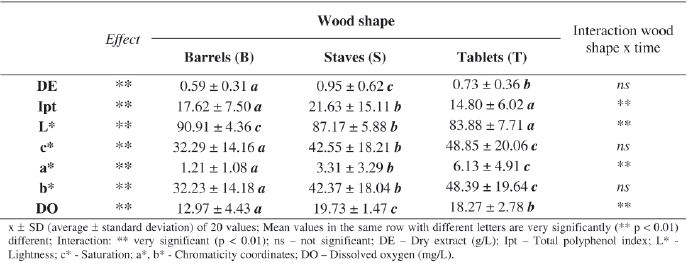
Concerning the colour, the brandies aged with wood tablets exhibit higher colour evolution than the other brandies, that corresponds to a very significantly lower lightness (higher colour intensity), higher saturation, and higher coordinates a* (stronger red hue) and b* (stronger yellow hue) - Table I. The brandies aged with staves and those aged in wooden barrels have an intermediate and lower colour evolution, respectively. Complementarily, the results obtained in the sensory analysis of these brandies after 180 days of ageing show that the brandies aged with tablets present the highest intensities of topaz and greenish, while the brandies aged in wooden barrels show the highest intensity of golden (Caldeira et al., 2009). Contrary to what was observed in our previous studies on brandies aged in the traditional system (Canas et al., 2000a; Belchior et al., 2001), the chromatic characteristics are not positively correlated with the dry extract and the total polyphenol index. The relation between the chemical composition and the colour is also different from that observed in red wines aged in different systems (Del Álamo et al., 2008; De Beer et al., 2009). This fact suggests that other compounds not quantified by the total polyphenol index or by the dry extract can determine the colour of the brandies, being their effect more evident in the brandies aged with tablets.
It is interesting to note that the highest, the intermediate and the lowest level of dissolved oxygen was found in the brandies aged with staves, with tablets and in wooden barrels, respectively. Since there is a slow and continuous diffusion of oxygen into the wooden barrel, through the bunghole and the staves (Vivas and Glories, 1993; Moutounet et al., 1998; Kelly and Wollan, 2003) that does not exist in the stainless-steel tank (Vivas and Glories, 1993), then the lower level of dissolved oxygen found in the brandies aged in wooden barrels seems to indicate higher consumption of oxygen in this situation (Canas et al., 2009). Given that the brandies aged with staves are also the richest in dry extract and total polyphenols, followed by the brandies aged with tablets and lastly the brandies aged in barrels, the results seems to indicate that oxygen is a determining factor of the chemical composition of these brandies, being implicated in the alteration of non-phenolic compounds (quantified by dry extract) and phenolic compounds. Mosedale and Puech (1998) stated that oxidations are the most important reactions occurring during ageing (oxidations, esterifications, Maillard reactions, polymerizations and polycondensations), involving both compounds present in the raw distillate and wood-derived compounds. Specifically, the ellagitannins released from the wooden barrel (Viriot et al., 1993) or wood pieces (Wilker and Gallander, 1988) can be degraded by oxidation in the brandy during ageing (Viriot et al., 1993; Puech et al., 1998), as is the case with phenolic aldehydes and phenolic acids derived from wood lignin (Nishimura et al., 1983; Puech, 1984; Viriot et al., 1993). In addition, the acetaldehyde resulting from the oxidation of ethanol during ageing (Reazin, 1981; Nishimura et al., 1983) may also promote condensation reactions between phenolic compounds and between phenolic compounds and furanic derivatives of the brandy, as observed in red wine (Timberlake and Bridle, 1976; Es-Safi et al., 2000).
However, if oxygen were the key determining factor for the observed chemical changes in these brandies, the brandies aged with staves should present the most evolved colour and this is not the case. On the basis of these results, it appears that many constituents and phenomena governed by several ageing factors are implicated in such alterations, which are specific for each kind of ageing system. So, in spite of having the same surface/volume ratio and to have been used the same wood botanical species, the brandy condition differs between the studied ageing systems. These differences may be related to the extraction rate of wood components and their further transformations in the brandy, depending on the size of the wood (Arapitsas et al., 2004; Del Álamo et al., 2004; De Beer et al., 2008) and heat treatment of the wood (Campbell et al., 2005; Fan et al., 2006; Guchu et al., 2006; Bozalongo et al., 2007; Van Jaarsveld et al., 2009).
Concerning the heat treatment, theoretically the barrels, the staves and the tablets used have the same toasting level, but in the practice the tablets seem to have a stronger toasting throughout the thickness of the wood. Two aspects should be considered to explain this fact: i) the process of wood toasting was not the same; ii) the different shape of the wood may have conditioned the toasting effect in both the structure and chemical composition of the wood (Fengel and Wegener, 1989). The greater intensity of the toasting process applied to the tablets and their lower dimensions should have favoured the degradation of phenolic compounds formed under toasting effect (Sarni et al., 1990; Rabier and Moutounet, 1991; Canas et al., 2000c; Canas et al., 2007), as well as a more intense alteration of wood structure (Hale et al., 1999), that could have contributed to the lower polyphenol content found in the brandies aged with wood tablets. Furthermore, some authors have proven that Maillard reactions occurring during toasting were responsible for the formation of several volatile (Cutzach et al., 1997) and nonvolatile compounds (Alañón et al., 2010) in toasted oak wood. Some research made with model solutions under food-relevant conditions (Hofmann, 1998) and with different foods (Gokmen and Senyuva, 2006), including aged wine brandies (Avakiants, 1992), pointed out that Maillard reactions have great influence on colour development of foods and beverages. It is known that among the multiplicity of non-volatile Maillard reaction products there are some key chromophores (compounds with highest colour impact) that evoke the colours yellow, orange, red and brown (Hofmann, 1998; Gokmen and Senyuva, 2006). The melanoidins belong to this group of chromophores and are closely related to the brown colour of foods (Gokmen and Senyuva, 2006). According to Martins and Van Boekel (2003) the absorbance at 470 nm is a reliable measure of the brown colour, which reflects the concentration of melanoidins. Comparing the absorbance at 470 nm of the studied brandies we observe very significant differences, with higher values in the brandies aged with tablets (0.27 ± 0.14) than in the brandies aged with staves (0.21 ± 0.11) or in wooden barrels (0.14 ± 0.08). These results lead us to suppose that melanoidins, and possibly other coloured compounds formed by the Maillard reactions, are also present in the toasted wood and can be released into the brandy during the ageing process, affecting its colour. On the basis of this hypothesis, the highest toasting intensity (Gokmen and Senyuva, 2006) may have favoured the formation and accumulation of such compounds in the wood tablets and corresponding aged brandies, whose concentration did not significantly affect the dry extract, but contributed to their most evolved colour.
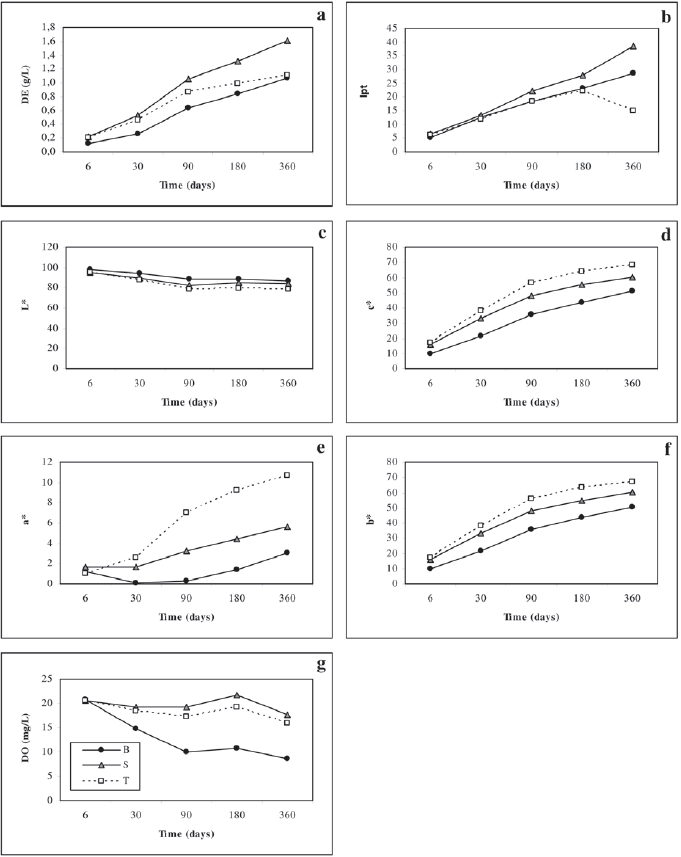
Regarding the evolution of the chemical composition and colour of the brandies over the time (Figure 1), the interaction analysis shows that total polyphenol index, lightness, coordinate a* and dissolved oxygen of the brandies in each ageing system depend very significantly on the ageing time (Table I).
In the initial stage the different brandies presented similar dry extract (Figure 1a), which increased gradually up to 90 days. After that there was a clear differentiation between the brandies aged with staves, which presented higher dry extract, and those aged with tablets or in wooden barrels. The behaviour observed in the brandies aged with tablets possibly derives from a faster exhaustion of the wood.
The total polyphenol index of the brandies in the initial stage was similar (Figure 1b). After 30 days there was a greater increase in the brandies aged with staves that have become progressively more different from the others. There is little difference between the brandies aged in wooden barrels and with tablets until 180 days, but thereafter the total polyphenol content of the latter decreases considerably.
The lightness of the brandies decreases along with the rise of saturation during the first year of ageing (Figure 1c,d).
The coordinate a* is differently affected by the wood shape during the first year of ageing (Figure 1e): there is a continuous increase in the brandies aged with tablets, while in the other brandies, especially in those aged in wooden barrels, there is a decrease in the first month followed by a gradual increase. These different behaviours promote a clear separation between the brandies aged with tablets and the others at the end of the first year.
]]> The evolution of the coordinate b* is similar in the different brandies during the first year of ageing (Figure 1f).The dissolved oxygen of the brandies trends to decrease during the first year of ageing (Figure 1g), with a marked separation between the brandies aged in wooden barrels and those aged in the alternative systems. This separation is mainly due to the strong decrease of the dissolved oxygen in the first 90 days in the brandies aged in wooden barrels. The observed behaviour in the beginning of the ageing process in wooden barrels should result from the participation of oxygen in several reactions, namely in degradation reactions of non-phenolic compounds and of some phenolic compounds (Canas et al., 2009).
Botanical species effect
There is a very significant effect of the botanical species on the chemical composition and colour of the studied brandies, independently of the ageing system (Table II). Frangipane et al. (2007) pointed out analogous results in a study with red wine aged in 225-L barrels and with oak chips of different geographical origins.
Fig. 1 - Plot of means interaction between wood shape and ageing time for (a) Dry extract, (b) Total polyphenol index, (c) Lightness, (d)Saturation, (e) Coordinate a*, (f) Coordinate b*, (g) Dissolved oxygen.B - Barrel; S - Staves; T - Tablets.
Representação gráfica da interacção entre forma da madeira e tempo de envelhecimento para (a) Extracto seco, (b) Índice de polifenóis totais, (c) Luminosidade, (d) Saturação, (e) Coordenada a*, (f) Coordenada b*, (g) Oxigénio dissolvido. B - Vasilha; S - Aduelas; T -Dominós.
The brandies aged with chestnut wood present higher dry extract and higher total polyphenol index than the brandies aged with Limousin oak wood. Correspondingly, the colour of the brandies aged with chestnut wood is more evolved (lower lightness higher saturation and higher coordinates a* and b*) than that of the brandies aged with Limousin oak wood, as observed in our previous studies with wooden barrels (Canas et al., 2000a; Belchior et al., 2001). In addition, the sensory analysis of these brandies also demonstrated that topaz and greenish are the main colours of the brandies aged with chestnut wood, while golden is the dominant colour of the brandies aged with Limousin oak wood (Caldeira et al., 2009).
It is observed that the dissolved oxygen in the brandies is not dependent on the botanical species, although the slightly lower level found in the brandies aged with chestnut wood. Because chestnut wood presents more porous structure (width of growth rings, proportion of early wood vessels and fibres) that poses lower resistance to oxygen diffusion through the wood (Carvalho, 1998), the lower level of dissolved oxygen in the corresponding brandies possibly results from higher oxygen consumption.
]]> Analyzing the evolution of dry extract (Figure 2a), total polyphenol index (Figure 2b), saturation (Figure 2d) and coordinate b* (Figure 2f) it is noticed an increasing differentiation of the brandies aged with chestnut wood from the beginning to the end of the ageing period. For coordinate a*(Figure 2e) and lightness (Figure 2c) this differentiation becomes significant only after 30 and 90 days of ageing, respectively.Despite the significant interaction between the botanical species and the ageing time, the characteristics induced by chestnut wood in the brandies remain throughout the first year of ageing (Figure 2), making this wood more advantageous in any ageing system studied.
TABLE II
Wood botanical species effect on the chemical composition and colour of the aged brandies
Efeito da espécie botânica da madeira na composição química e na cor das aguardentes envelhecidas

CONCLUSIONS
Under the current experimental conditions, the wood shape had a very significant effect on the chemical composition and colour of the aged brandies. The wood staves promoted the greatest enrichment in wood extractable compounds and the lowest oxygen consumption in the brandies, but the wood tablets caused the fastest evolution of the colour of brandies. These results indicate that modifications observed in the brandies are closely related to the kind of ageing system, suggesting that many constituents and phenomena governed by several ageing factors should be involved.
Regarding the wood botanical species, chestnut is the most interesting wood for the ageing of studied brandies, allowing their greater enrichment in wood extractable compounds and their faster evolution, independently of the ageing system. This conclusion reinforces those of our previous studies, which demonstrated that chestnut wood is suited for cooperage (Carvalho, 1998) and it also has positive effects on the chemical composition (Canas et al., 1999; Belchior et al., 2001), and on the nutraceutical (Canas et al., 2008b) and sensory properties (Caldeira et al., 2002) of the corresponding aged brandies, thus contributing to increase their quality and to shorten the ageing period.
]]>
Fig. 2 - Plot of means interaction between botanical species and ageing time for (a) Dry extract, (b) Total polyphenol index, (c) Lightness,(d) Saturation, (e) Coordinate a*, (f) Coordinate b*, (g) Dissolved oxygen.CT - Chestnut wood; L - Limousin oak wood.
Representação gráfica da interacção entre espécie botânica da madeira e tempo de envelhecimento para (a) Extracto seco, (b) Índice de polifenóis totais, (c) Luminosidade, (d) Saturação, (e) Coordenada a*, (f) Coordenada b*, (g) Oxigénio dissolvido. CT - Madeira de castanheiro; L - Madeira de carvalho Limousin.
Very little information is available about other chemical reactions beyond the thermolysis of cellulose, hemicelluloses and lignin occurring in wood during toasting in cooperage, as well as on the reactions occurring in brandy during aging. Future research on these reactions and their end-products is needed to understand more fully the ageing chemistry of wine brandies and their effects on the composition and sensory properties. The results thus obtained may contribute to the knowledge on the specific phenomena occurring in each kind of ageing system and their relationship with the different ageing factors (wood toasting, oxygen, …), and can therefore help to optimize the alternative systems for the production of quality brandies in more favourable economic conditions.
ACKNOWLEDGEMENTS
The authors thank Amélia Soares for technical assistance, and the financial support of Adega Cooperativa de Lourinhã
REFERENCES
Alañón M.E., Rubio H., Díaz-Maroto M.C., Pérez-Coello M.S., 2010. Monosaccharide anhydrides, new markers of toasted oak wood used for ageing wines and distillates. Food Chem., 119, 505-512.
Arapitsas P., Antonopoulos A., Stefanou E., Dourtoglou V.G., 2004. Artificial ageing of wines using oak chips. Food Chem., 86, 563-570.
]]> Avakiants S., 1992. Régulation des processus de vieillissement des eaux-de-vie. In: Élaboration et connaissance des spiritueux. 595-600, Cantagrel R. (ed.), Lavoisier - TEC & DOC, Paris.Belchior A.P., Almeida T.G.T., Mateus A.M., Canas S., 2003. Ensaio laboratorial sobre a cinética de extracção de compostos de baixa massa molecular da madeira pela aguardente. Ciência Téc. Vitiv., 18, 29-41.
[ Links ]Belchior A.P., Caldeira I., Costa S., Tralhão G., Ferrão A., Mateus A.M., Carvalho E., 2001. Evolução das características fisicoquímicas e organolépticas de aguardentes Lourinhã ao longo de cinco anos de envelhecimento em madeira de carvalho e de castanheiro. Ciência Téc. Vitiv., 16, 81-94.
[ Links ]Belchior A.P., San-Romão V., 1982. Influence de l'oxygène et de la lumière sur l'évolution de la composition phénolique des eauxde-vie vieillis en bois de chêne. Bull. Liasion Groupe Polyphenols, 11, 598-604.
Bozalongo R., Carrillo J.D., Torroba M.A.F., Tena M.T., 2007. Analysis of French and American oak chips with different toasting degrees by headspace solid-phase microextraction-gas chromatography-mass spectrometry. J. Chromat. A, 1173, 10-17.
Caldeira I., Anjos O., Portal V., Belchior A.P., Canas S. (2009). Sensory and chemical modifications of wine-brandy aged with chestnut and oak wood fragments in comparison to wooden barrels. Anal. Chim. Acta, dói: 10.1016/j.aca.2009.10.059.
Caldeira I., Belchior A.P., Clímaco M.C., Bruno de Sousa R., 2002. Aroma profiles of Portuguese brandies aged in chestnut and oak woods. Anal. Chim. Acta, 458, 55-62.
Caldeira I., Clímaco M.C., Bruno de Sousa R., Belchior A.P., 2006b. Volatile composition of oak and chestnut woods used in brandy ageing: modification induced by heat treatment. J. Food Eng., 76, 202-211.
Caldeira I., Mateus A.M., Belchior A.P., 2006a. Flavour and odour profile modifications during the first five years of Lourinhã brandy maturation on different wooden barrels. Anal. Chim. Acta, 563, 264-273.
Campbell J.I., Sykes M., Sefton M.A., Pollnitz A.P., 2005. The effects of size, temperature and air contact on the outcome of heating oak fragments. Aust. J. Grape Wine Res., 11, 348-354.
]]>Canas S., Belchior A.P., Caldeira I., Spranger M.I., Bruno de Sousa R., 2000a. La couleur et son évolution dans les eaux-de-vie Lourinhã pendant les trois premières années du vieillissement. Ciência Tec. Vitiv., 15, 1-14.
[ Links ]Canas S., Belchior A.P., Falcão A., Gonçalves J.A., Spranger M.I., Bruno de Sousa R., 2007. Effect of heat treatment on the thermal and chemical modifications of oak and chestnut wood used in brandy ageing. Ciência Tec. Vitiv., 22, 5-14.
[ Links ]Canas S., Belchior A.P., Mateus A.M., Spranger M.I., Bruno de Sousa R., 2002. Kinetics of impregnation/evaporation and release of phenolic compounds from wood to brandy in experimental model. Ciência Tec. Vitiv., 17, 1-14.
[ Links ]Canas S., Caldeira I., Belchior A.P., 2009. Comparison of alternative systems for the ageing of wine brandy. Oxygenation and wood shape effect. Ciência. Tec. Vitiv., 24, 33-40.
[ Links ]Canas S., Caldeira I., Leandro M.C., Spranger M.I., Climaco M.C., Belchior A.P., 1998. Phenolic compounds in a Lourinhã brandy extracted from different woods. In: Polyphenols Communications 98. Vol. 2, 373-374. Lille, France.
Canas S., Casanova V., Belchior A.P., 2008b. Antioxidant activity and phenolic content of Portuguese wine aged brandies. J. Food Compos. Anal., 21, 626-633.
Canas S., Grazina N., Spranger M.I., Belchior A.P., 2000c. Modelisation of heat treatment of Portuguese oak wood (Quercus pyrenaica Willd.). Analysis of the behaviour of low molecular weight phenolic compounds. Ciência Tec. Vitiv., 15, 75-94.
[ Links ]Canas S., Leandro M.C., Spranger M.I., Belchior A.P., 1999. Low molecular weight organic compounds of chestnut wood (Castanea sativa L.) and corresponding aged brandies. J. Agric. Food Chem., 47, 5023-5030.
Canas S., Leandro M.C., Spranger M.I., Belchior A.P., 2000b. Influence of botanical species and geographical origin on the content of low molecular weight phenolic compounds of woods used in Portuguese cooperage. Holzforschung, 54, 255-261.
Canas S., Vaz M., Belchior A.P., 2008a. Influence de la dimension du fût dans les cinétiques d'extraction/oxydation des composés phénoliques du bois pour les eaux-de-vie Lourinhã. In: Les eaux-de-vie traditionnelles d'origine viticole. 143-146. Bertrand A. (ed.), Lavoisier - TEC & DOC, Paris.
]]>Carvalho A., 1998. Identificação anatómica e caracterização física e mecânica das madeiras utilizadas no fabrico de quartolas para produção de aguardentes velhas de qualidade - denominação Lourinhã. Ciência Tec. Vitiv., 13, 71-105.
[ Links ]Cutzach I., Chatonnet P., Henry R., Dubourdieu D., 1997. Identification of volatile compounds with a "toasty" aroma in heated oak used in barrelmaking. J. Agric. Food Chem., 45, 2217-2224.
De Beer D., Joubert E., Marais J., du Toit W., Fourie B., Manley M., 2009. Characterisation of pinotage wine during maturation on different oak products. S. Afr. J. Enol. Vitic., 29, 39-49.
Del Álamo M., Nevares I., Gallego L., Martin C., Merino S., 2008. Ageing markers from bottled red wine aged with chips, staves and barrels. Anal. Chim. Acta, 621, 86-99.
Del Álamo Sanza M., Domínguez I.N., Cárcel L.M.C., Navas Gracia L., 2004. Analysis for low molecular weight phenolic compounds in a red wine aged in oak chips. Anal. Chim. Acta, 513, 229-237.
Es-Safi N., Cheynier V., Moutounet M., 2000. Study of the reactions between (+)-catechin and furfural derivatives in the presence or absence of anthocyanins and their implication in food color change. J. Agric. Food Chem., 48, 5946-5954.
Fan W., Xu Y., Yu A., 2006. Influence of oak chips geographical origin, toast level, dosage and aging time on volatile compounds of apple cider. J. Inst. Brew., 112, 255-263.
Fengel D., Wegner G., 1989. Wood. Chemistry, Ultrastructure, Reactions. Walter de Gruyter, Berlin.
Frangipane M.T., De Santis D., Ceccarelli A., 2007. Influence of oak woods of different geographical origins on quality of wines aged in barriques and using oak chips. Food Chem., 103, 46-54.
Gokmen V., Senyuva H.Z., 2006. Study of colour and acrylamide formation in coffee, wheat flour and potato chips during heating. Food Chem., 99, 238-243.
]]> Guchu E., Díaz-Maroto M.C., Díaz-Maroto I., Pérez-Coello M.S., González-Viñas M.A., Ibáñez M.D.C., 2006. Volatile composition and sensory characteristics of Chardonnay wines treated with American and Hungarian oak chips. Food Chem., 99, 350-359.Gutiérrez Afonso V.L., 2002. Sensory descriptive analysis between white wines fermented with oak chips and in barrels. J. Food Sci., 67, 2415-2419.
Hale M.D., McCafferty K., Larmie E., Newton J., Swan J.S., 1999. The influence of oak seasoning and toasting parameters on the composition and quality of wine. Am. J. Enol.Vitic., 50, 495-502.
Hofmann T., 1998. Characterization of the most intense coloured compounds from Maillard reactions of pentoses by application of colour dilution analysis. Carbohydr. Res., 313, 203-213.
Kelly M., Wollan D., 2003. Micro-oxygenation of wine in barrels. Aust. & N. Z. Grap. Wine, Annual Technical Issue, 45-50.
Marco J., Artajona J., Larremi M.S., Rius F.X., 1994. Relationship between geographical origin and chemical composition of wood for oak barrels. Am. J. Enol.Vitic., 45, 192-200.
Martins S.I.F.S., Van Boekel M.A.J.S., 2003. Melanoidins extinction coefficient in the glucose/glycine Maillard reaction. Food Chem., 83, 135-142.
Mosedale J.R., Puech J.-L., 1998. Wood maturation of distilled beverages. Trends Food Sci. Technol., 9, 95-101.
Moutounet M., Mazauric J.P., Saint-Pierre B., Hanocq J.F., 1998. Gaseous exchange in wines stored in barrels. J. Sci. Tech. Tonnellerie, 4, 115-129.
Nishimura K., Ohnishi M., Masahiro M., Kunimasa K., Ryuichi M., 1983. Reactions of wood components during maturation. In: Flavour of distilled beverages: origin and development. 241-255. Piggott, J.R. (ed.), Ellis Horwood Limited, Chichester.
]]> OIV, 1994. Recueil des méthodes internationales d'analyse des boissons spiritueuses, des alcools et de la fraction aromatique des boissons. 311 p. OIV, ParisPuech J-L., 1984. Characteristics of oak wood and biochemical aspects of Armagnac aging. Am. J. Enol. Vit., 35, 77-81.
Puech J.-L., Feuillat M., Boulet J.C., Feuillat F., Keller R., Masson G., Moutounet M., Naudin R., Peyron D., 1998. Élevage des vins. In: Oenologie. Fondements Scientifiques et Technologiques.1002-1052. Flanzy C. (ed.), Lavoisier - TEC & DOC, Paris.
Puech J.-L., Jouret C., Goffinet B., 1985. Évolution des composés phénoliques du bois de chêne au cours du vieillissement de l'armagnac. Sci. Alim., 5, 379-392.
Rabier Ph., Moutounet M., 1991. Evolution d'extractibles de bois de chêne dans une eau-de-vie de vin. Incidence du thermotraitement des barriques. In: Les eaux-de-vie traditionnelles d'origine viticole. 220-230. Bertrand A. (ed.), Lavoisier - TEC & DOC, Paris.
Reazin G.H., 1981. Chemical mechanisms of whiskey maturation. Am. J. Enol. Vit., 32, 283-289.
Ribéreau-Gayon P., 1970. Le dosage des composés phénoliques totaux dans les vins rouges. Chimique Analytique, 52, 627-631.
Sarni F., Moutounet M., Puech J.-L., Rabier Ph., 1990. Effect of heat treatment of oak wood extractable compounds. Holzforschung, 44, 461-466.
Snakkers G., Nepveu G., Guilley E., Cantagrel R., 2000. Variabilités géographique, sylvicole et individuelle de la teneur en extractibles de chênes sessiles français (Quercus petraea Liebl.): polyphénols, octalactones et phénols volatils. Ann. For. Sci., 57, 251-260.
Timberlake C.F., Bridle P., 1976. Interactions between anthocyanins, phenolic compounds, and acetaldehyde and their significance in red wines. Am. J. Enol. Vit., 27, 97-105.
]]> Van Jaasveld F.P., Hattingh S., Minnaar P., 2009. Rapid induction of ageing character in brandy products - Part III. Influence of toasting. S. Afr. J. Enol. Vitic., 30, 24-37.Viriot C., Scalbert A., Lapierre C., Moutounet M., 1993. Ellagitannins and lignins in ageing of spirits in oak barrels. J. Agric. Food Chem., 41, 1872-1879.
Vivas N., Glories Y., 1993. Les phénomènes d'oxydoréduction lies a l'élevage en barrique des vins rouges: aspects technologiques. R. F. Oenol., 142, 33-38.
Wilker K.L., Gallander J.F., 1988. Comparison of seyval blanc wines aged in barrels and stainless steel tanks with oak chips. Am. J. Enol. Vit., 39, 38-43.
]]>