<?xml version="1.0" encoding="ISO-8859-1"?><article xmlns:mml="http://www.w3.org/1998/Math/MathML" xmlns:xlink="http://www.w3.org/1999/xlink" xmlns:xsi="http://www.w3.org/2001/XMLSchema-instance">
<front>
<journal-meta>
<journal-id>0430-5027</journal-id>
<journal-title><![CDATA[Finisterra - Revista Portuguesa de Geografia]]></journal-title>
<abbrev-journal-title><![CDATA[Finisterra]]></abbrev-journal-title>
<issn>0430-5027</issn>
<publisher>
<publisher-name><![CDATA[Centro de Estudos Geográficos]]></publisher-name>
</publisher>
</journal-meta>
<article-meta>
<article-id>S0430-50272019000100004</article-id>
<article-id pub-id-type="doi">10.18055/Finis16035</article-id>
<title-group>
<article-title xml:lang="en"><![CDATA["I have children and thus I drive": perceptions and motivations of modal choice among suburban commuting mothers]]></article-title>
<article-title xml:lang="pt"><![CDATA["Tenho filhos e por isso conduzo": percepções e motivações da opção modal de mães trabalhadoras residentes nos subúrbios]]></article-title>
<article-title xml:lang="fr"><![CDATA[«J’ai des enfants c’est pourquoi je conduis»: perceptions et motivations des options modales des mères travailleuses résidentes dans la banlieue]]></article-title>
<article-title xml:lang="es"><![CDATA["Tengo hijos y por eso conduzco": percepciones y motivaciones de la elección modal de las madres con un desplazamiento suburbano al trabajo]]></article-title>
</title-group>
<contrib-group>
<contrib contrib-type="author">
<name>
<surname><![CDATA[Maciejewska]]></surname>
<given-names><![CDATA[Monika]]></given-names>
</name>
<xref ref-type="aff" rid="A01"/>
</contrib>
<contrib contrib-type="author">
<name>
<surname><![CDATA[Miralles-Guasch]]></surname>
<given-names><![CDATA[Carme]]></given-names>
</name>
<xref ref-type="aff" rid="A01"/>
</contrib>
</contrib-group>
<aff id="A01">
<institution><![CDATA[,Universitat Autònoma de Barcelona  ]]></institution>
<addr-line><![CDATA[Bellaterra ]]></addr-line>
<country>España</country>
</aff>
<aff id="A">
<institution><![CDATA[,Barcelona  ]]></institution>
<addr-line><![CDATA[Barcelona ]]></addr-line>
</aff>
<pub-date pub-type="pub">
<day>00</day>
<month>04</month>
<year>2019</year>
</pub-date>
<pub-date pub-type="epub">
<day>00</day>
<month>04</month>
<year>2019</year>
</pub-date>
<numero>110</numero>
<fpage>55</fpage>
<lpage>74</lpage>
<copyright-statement/>
<copyright-year/>
<self-uri xlink:href="http://scielo.pt/scielo.php?script=sci_arttext&amp;pid=S0430-50272019000100004&amp;lng=en&amp;nrm=iso"></self-uri><self-uri xlink:href="http://scielo.pt/scielo.php?script=sci_abstract&amp;pid=S0430-50272019000100004&amp;lng=en&amp;nrm=iso"></self-uri><self-uri xlink:href="http://scielo.pt/scielo.php?script=sci_pdf&amp;pid=S0430-50272019000100004&amp;lng=en&amp;nrm=iso"></self-uri><abstract abstract-type="short" xml:lang="en"><p><![CDATA[The mobility of mothers is often overloaded with a number of trips. The aim of this study is to understand the modal choice of mothers who commute to a suburban destination. The analysis takes into account trips related to all daily activities they are engaged in, and not just the commuting. However, the fact of having an intermunicipal trip to work is crucial since it conditions other travels. Using 15 in-depth interviews, we focus on feelings, perceptions and beliefs expressed by the respondents about their regular modal choice and the existing transportation alternatives. All participants commute to a suburban activity node in the Barcelona Metropolitan Region (Spain). Understanding the experience of this particular population segment may be useful to policymakers in creating effective programs and policies aimed at replacing car usage with more sustainable modes of transport.]]></p></abstract>
<abstract abstract-type="short" xml:lang="pt"><p><![CDATA[A mobilidade das mães é muitas vezes sobrecarregada pelo número de viagens. O objetivo deste estudo é compreender a escolha modal das mães que viajam para um destino suburbano. A análise tem em considera ção as viagens relacionadas com todas as atividades diárias realizadas e não apenas as viagens casa-trabalho. No entanto, o facto de se realizar uma viagem intermunicipal para o trabalho é crucial, pois condiciona outras viagens. Realizadas e analisadas 15 entrevistas em profundidade, focamos os sentimentos, percepções e crenças expressas pelas entrevistadas sobre as suas escolhas modais habituais e alternativas de transporte existentes. Todas as pessoas entrevistadas viajam para um nó de atividade suburbana na Região Metropolitana de Barcelona (Espanha). Entender a experiência deste segmento populacional revela-se útil para os decisores políticos na criação de programas e políticas eficazes destinadas a substituir o uso do automóvel por modos de transporte mais sustentáveis.]]></p></abstract>
<abstract abstract-type="short" xml:lang="fr"><p><![CDATA[La mobilité des mères est souvent surchargée par le nombre de voyages. L’objective de cette étude est de comprendre le choix modal des mères qui se déplacent vers un destin suburbain. L’analyse prend en compte les voyages liés à toutes les activités réalisées pendant la journée et non seulement ceux liés aux déplacements domicile-travail. Pourtant, le fait de se faire un déplacement inter-municipal vers le lieu de travail est crucial, une fois qu’il conditionne autres déplacements. Après réalisés et analysés 15 entretiens à fond, l’étude se concentre dans les sentiments, perceptions et croyances exprimés par les femmes interviewées sur les choix modaux usuels et les alternatifs de transport existants. Toutes les personnes interviewés voyagent vers un nœud d’activité suburbaine dans la Région Métropolitaine de Barcelone Espagne). Comprendre l’expérience de ce segment de la population est utile pour les décideurs politiques dans la création de programmes et politiques efficaces destinés à remplacer l’usage automobile par des moyens de transport plus durables.]]></p></abstract>
<abstract abstract-type="short" xml:lang="es"><p><![CDATA[La movilidad de las madres a menudo está sobrecargada de número de desplazamientos. El objetivo de este estudio es comprender la elección modal de las madres que viajan por trabajo a un lugar suburbano. El análisis toma en cuenta los viajes relacionados con todas las actividades diarias que realizan y no solo los viajes al trabajo. Sin embargo, el hecho de tener un viaje intermunicipal al trabajo es crucial ya que condiciona otros viajes. Utilizando 15 entrevistas en profundidad, nos centramos en los sentimientos, percepciones y creencias expresados por los encuestados sobre su habitual elección modal y las alternativas de transporte existentes. Todos los participantes viajan a un nodo de actividad suburbano en la Región Metropolitana de Barcelona (España). Comprender la experiencia de este particular grupo de población puede ser útil para los políticos en la creación de programas y políticas efectivas orientadas a reemplazar el uso de automóviles con modos de transporte más sostenibles.]]></p></abstract>
<kwd-group>
<kwd lng="en"><![CDATA[Modal choice]]></kwd>
<kwd lng="en"><![CDATA[women]]></kwd>
<kwd lng="en"><![CDATA[determinants]]></kwd>
<kwd lng="en"><![CDATA[mobility behaviour]]></kwd>
<kwd lng="en"><![CDATA[qualitative]]></kwd>
<kwd lng="en"><![CDATA[Barcelona Metropolitan Region]]></kwd>
<kwd lng="pt"><![CDATA[Escolha modal]]></kwd>
<kwd lng="pt"><![CDATA[mulheres]]></kwd>
<kwd lng="pt"><![CDATA[determinantes]]></kwd>
<kwd lng="pt"><![CDATA[comportamento de mobilidade]]></kwd>
<kwd lng="pt"><![CDATA[qualitativo]]></kwd>
<kwd lng="pt"><![CDATA[Região Metropolitana de Barcelona]]></kwd>
<kwd lng="fr"><![CDATA[Choix modal]]></kwd>
<kwd lng="fr"><![CDATA[femmes]]></kwd>
<kwd lng="fr"><![CDATA[déterminants]]></kwd>
<kwd lng="fr"><![CDATA[comportement de voyage]]></kwd>
<kwd lng="fr"><![CDATA[qualitatif]]></kwd>
<kwd lng="fr"><![CDATA[Région Métropolitaine de Barcelone]]></kwd>
<kwd lng="es"><![CDATA[Elección modal]]></kwd>
<kwd lng="es"><![CDATA[mujeres]]></kwd>
<kwd lng="es"><![CDATA[determinantes]]></kwd>
<kwd lng="es"><![CDATA[comportamiento de viaje]]></kwd>
<kwd lng="es"><![CDATA[cualitativo]]></kwd>
<kwd lng="es"><![CDATA[Región Metropolitana de Barcelona]]></kwd>
</kwd-group>
</article-meta>
</front><body><![CDATA[ <p align="right"><b>ARTIGO ORIGINAL</b></p> <br/>     <p>      <p><b>&nbsp;</b></p>     <p><b>&nbsp;</b></p>     <p><b>"I have children and thus I drive": perceptions and motivations of modal    choice among suburban commuting mothers</b></p>     <p><b>&nbsp;</b></p>     <p><b>"Tenho filhos e por isso conduzo": percep&ccedil;&otilde;es e motiva&ccedil;&otilde;es    da op&ccedil;&atilde;o modal de m&atilde;es trabalhadoras residentes nos sub&uacute;rbios</b></p>     <p><b>&nbsp;</b></p>     <p><b>&laquo;J&rsquo;ai des enfants c&rsquo;est pourquoi je conduis&raquo;: perceptions    et motivations des options modales des m&egrave;res travailleuses r&eacute;sidentes    dans la banlieue</b></p>     <p><b>&nbsp;</b></p>     ]]></body>
<body><![CDATA[<p><b>"Tengo hijos y por eso conduzco&rdquo;: percepciones y motivaciones de la    elecci&oacute;n modal de las madres con un desplazamiento suburbano al trabajo</b></p>     <p><b>&nbsp;</b></p>     <p><b>&nbsp;</b></p>     <p><b>Monika Maciejewska<sup>1</sup>; Carme Miralles-Guasch<sup>2</sup></b></p>     <p><sup><sup>1</sup></sup> PhD candidate at Universitat Aut&ograve;noma de Barcelona,    Barcelona, Espa&ntilde;a. E-mail: <a href="mailto:monika.maciejewska@uab.cat">monika.maciejewska@uab.cat</a></p>     <p><sup>2</sup>&nbsp;Professor at Universitat Aut&ograve;noma de Barcelona, Campus    de la UAB, Pla&ccedil;a C&iacute;vica, 08193 Bellaterra, Barcelona, Espa&ntilde;a.    E-mail: <a href="mailto:carme.miralles@uab.cat">carme.miralles@uab.cat</a></p>     <p><b>&nbsp;</b></p>     <p><b>&nbsp;</b></p>     <p><b>ABSTRACT</b></p>     <p>The mobility of mothers is often overloaded with a number of trips. The aim    of this study is to understand the modal choice of mothers who commute to a    suburban destination. The analysis takes into account trips related to all daily    activities they are engaged in, and not just the commuting. However, the fact    of having an intermunicipal trip to work is crucial since it conditions other    travels. Using 15 in-depth interviews, we focus on feelings, perceptions and    beliefs expressed by the respondents about their regular modal choice and the    existing transportation alternatives. All participants commute to a suburban    activity node in the Barcelona Metropolitan Region (Spain). Understanding the    experience of this particular population segment may be useful to policymakers    in creating effective programs and policies aimed at replacing car usage with    more sustainable modes of transport.</p>     ]]></body>
<body><![CDATA[<p><b>Key words:</b> Modal choice; women; determinants; mobility behaviour; qualitative;    Barcelona Metropolitan Region.</p>     <p><b>&nbsp;</b></p>     <p><b>RESUMO</b></p>     <p>A mobilidade das m&atilde;es &eacute; muitas vezes sobrecarregada pelo n&uacute;mero    de viagens. O objetivo deste estudo &eacute; compreender a escolha modal das    m&atilde;es que viajam para um destino suburbano. A an&aacute;lise tem em considera    &ccedil;&atilde;o as viagens relacionadas com todas as atividades di&aacute;rias    realizadas e n&atilde;o apenas as viagens casa-trabalho. No entanto, o facto    de se realizar uma viagem intermunicipal para o trabalho &eacute; crucial, pois    condiciona outras viagens. Realizadas e analisadas 15 entrevistas em profundidade,    focamos os sentimentos, percep&ccedil;&otilde;es e cren&ccedil;as expressas    pelas entrevistadas sobre as suas escolhas modais habituais e alternativas de    transporte existentes. Todas as pessoas entrevistadas viajam para um n&oacute;    de atividade suburbana na Regi&atilde;o Metropolitana de Barcelona (Espanha).    Entender a experi&ecirc;ncia deste segmento populacional revela-se &uacute;til    para os decisores pol&iacute;ticos na cria&ccedil;&atilde;o de programas e pol&iacute;ticas    eficazes destinadas a substituir o uso do autom&oacute;vel por modos de transporte    mais sustent&aacute;veis.</p>     <p><b>Palavras-chave:</b> Escolha modal; mulheres; determinantes; comportamento    de mobilidade; qualitativo; Regi&atilde;o Metropolitana de Barcelona.</p>     <p><b>&nbsp;</b></p>     <p><b>R&Eacute;SUM&Eacute;</b></p>     <p>La mobilit&eacute; des m&egrave;res est souvent surcharg&eacute;e par le nombre    de voyages. L&rsquo;objective de cette &eacute;tude est de comprendre le choix    modal des m&egrave;res qui se d&eacute;placent vers un destin suburbain. L&rsquo;analyse    prend en compte les voyages li&eacute;s &agrave; toutes les activit&eacute;s    r&eacute;alis&eacute;es pendant la journ&eacute;e et non seulement&nbsp;ceux    li&eacute;s&nbsp;aux d&eacute;placements domicile-travail. Pourtant, le fait    de se faire un d&eacute;placement inter-municipal vers le lieu de travail est    crucial, une fois qu&rsquo;il conditionne autres d&eacute;placements. Apr&egrave;s    r&eacute;alis&eacute;s et analys&eacute;s 15 entretiens &agrave; fond, l&rsquo;&eacute;tude    se concentre dans les sentiments, perceptions et croyances exprim&eacute;s par    les femmes&nbsp;interview&eacute;es&nbsp;sur les choix modaux usuels et les    alternatifs de transport existants. Toutes les personnes interview&eacute;s    voyagent vers un n&oelig;ud d&rsquo;activit&eacute; suburbaine dans la R&eacute;gion    M&eacute;tropolitaine de Barcelone Espagne). Comprendre l&rsquo;exp&eacute;rience    de ce segment de la population est utile pour les d&eacute;cideurs politiques    dans la cr&eacute;ation de programmes et politiques efficaces destin&eacute;s    &agrave; remplacer l&rsquo;usage automobile par des moyens de transport plus    durables.</p>     <p><b>Mots cl&eacute;s:</b>&nbsp;Choix modal; femmes; d&eacute;terminants; comportement    de voyage; qualitatif; R&eacute;gion M&eacute;tropolitaine de Barcelone.</p>     <p><b>&nbsp;</b></p>     ]]></body>
<body><![CDATA[<p><b>RESUMEN</b></p>     <p>La movilidad de las madres a menudo est&aacute; sobrecargada de n&uacute;mero    de desplazamientos. El objetivo de este estudio es comprender la elecci&oacute;n    modal de las madres que viajan por trabajo a un lugar suburbano. El an&aacute;lisis    toma en cuenta los viajes relacionados con todas las actividades diarias que    realizan y no solo los viajes al trabajo. Sin embargo, el hecho de tener un    viaje intermunicipal al trabajo es crucial ya que condiciona otros viajes. Utilizando    15 entrevistas en profundidad, nos centramos en los sentimientos, percepciones    y creencias expresados por los encuestados sobre su habitual elecci&oacute;n    modal y las alternativas de transporte existentes. Todos los participantes viajan    a un nodo de actividad suburbano en la Regi&oacute;n Metropolitana de Barcelona    (Espa&ntilde;a). Comprender la experiencia de este particular grupo de poblaci&oacute;n    puede ser &uacute;til para los pol&iacute;ticos en la creaci&oacute;n de programas    y pol&iacute;ticas efectivas orientadas a reemplazar el uso de autom&oacute;viles    con modos de transporte m&aacute;s sostenibles.</p>     <p><b>Palabras clave:</b> Elecci&oacute;n modal; mujeres; determinantes; comportamiento    de viaje; cualitativo; Regi&oacute;n Metropolitana de Barcelona.</p>     <p><b>&nbsp;</b></p>     <p><b>&nbsp;</b></p>     <p><b>I. INTRODUCTION </b></p>     <p>A review of the existent literature on mobility patterns from a gender perspective    shows that women tend to use more often the modes of transport that are considered    as more environmentally and socially sustainable. That is, they carry out a    greater proportion of walking trips and use public transport more often, while    men tend to rely more on private modes of transport (Polk, 2003; Levy, 2013;    Scheiner, 2014; BasariÄ‡ VujiÄiÄ‡, SimiÄ‡, BogdanoviÄ‡, SauliÄ‡, 2016; Mahadevia    &amp; Advani, 2016). Women, however, are not a homogenous group and depending    on their life situation and territorial context, their mobility habits may differ    (Goddard, Handy, Cao, &amp; Mokhtarian, 2006). Middle-aged women, in particular,    are in a life stage which usually corresponds to being active in both professional    and domestic areas, and have been found to have mobility habits that are closer    to the traditionally male, car-oriented model (Miralles-Guasch, Melo, &amp;    Marquet, 2015). Among them, middle-aged women with young children to take care    of, tend to be even more car-dependent in order to accommodate home, work and    childcare obligations (Vance &amp; Iovanna, 2013). Female modal choice is also    strongly determined by built environment attributes. Suburbs, characterized    by low density and poor diversity, generally do not have enough public transport    supply to meet the needs of individuals who may depend on it. These circumstances,    along with street design, induce reliance on a private vehicle. In consequence,    women who either live in a suburban, low-density area or who have to move within    these areas are more likely to move by car, which provides them with more flexibility    to accomplish their every day trip-chains (Dowling, 2000).</p>     <p>In addition to individual variables (such as gender, age) and environmental    variables (infrastructure, facilities), there are also subjective factors that    play an important role in choosing the mode of transport. A better understanding    of the motivation that leads women with a specific profile to certain mobility    behaviours &ndash; such as choice of a mode of transport &ndash; is necessary    to design effective public policies aimed at reducing car use. This paper provides    information about the reasoning suburban-commuting mothers are guided by, in    their daily modal choice. This new understanding should lead to strategies to    encourage women to replace the car with an alternative. In consequence, besides    redirection of the current use of transport to more sustainable modes, as simultaneous    effect, children raised in a non-car-dependent model might naturally adopt it    as their own and follow it in the future (P&eacute;rez &amp; Capron, 2018).    Switching the model sometimes can take a generation, so the current mission    is to start educating children according to the new principles (Sattlegger &amp;    Rau, 2016).</p>     <p>The present study used a mix of quantitative and qualitative methods. Using    a representative survey as background data and carrying out face to face interviews    for the in-depth analysis. The following section starts with an overview of    the existing research on determinants of Modal Choice, focusing on the special    case of mothers with suburban commuting. Next, section III introduces the spatial    context, as well as explaining the study design. Results are organized in two    sections: the quantitative context data are presented in section IV, followed    by the qualitative analysis of interviews in chapter V. Finally, the article    concludes pointing out the most important findings and highlighting the contributions    of the paper in section VI.</p>     <p><b>II. BACKGROUND </b></p>     ]]></body>
<body><![CDATA[<p><b>1. Suburban commuting and car dependence</b></p>     <p>Commuting, generally understood as a regular trip to work, is an integral part    of everyday mobility (Sandow, 2008). The main characteristic of this particular    trip is the fixation in time and space. This fact is related to both rigidity    schedule on workdays, and lower flexibility to choose a job than to decide where    to go shopping or which activities to engage in (McGuckin &amp; Srinivasan,    2005). When the workplace is located in peripheral areas, sprawl or suburbs,    travel to these destinations is characterized by long distance and long travel    time. To describe its extended duration, literature has developed the concept    of intensive commuting (Ravalet, Vincent-Geslin, &amp; Dubois, 2016), however,    its temporal definition varies significantly between places. In the context    of European metropolitan areas such as Paris, London (Jones, Massot, &amp; Orfeuil,    2008) or Barcelona (Delcl&ograve;s-Ali&oacute; &amp; Miralles-Guasch, 2017),    it has been set from 60 minutes for a round trip onwards. In terms of distance,    it greatly exceeds the range of active travel and thus forces employees to rely    on motorized modes of transport.</p>     <p>Within the constrained modal choice of motorized transport, the choice between    private vehicle and public transport is influenced by a combination of location,    density and morphology (Garc&iacute;a-Palomares, 2010; Delbosc &amp; Currie,    2011) of the environment around both the residence and the workplace, as well    as on the infrastructure and services available. Over the last decades, many    studies have argued that in out-of-city work-related trips, the use of car tends    to prevail. The switch from public transport to car was observed in the late    1980s caused by the relocation of jobs from the downtown to the suburbs of San    Francisco (Cervero &amp; Landis, 1992). Aguilera and Mignot (2002) studied car    reliance in France, and found that the car was needed in nine out of ten intermunicipal    work trips. According to Limtanakool, Dijst, and Schwanen&rsquo;s (2006) findings    from Netherlands, 85% of commuting trips with a suburban destination are undertaken    by automobile. In a case study from Lisbon, commuters were found to increase    car travel after their workplace had been relocated to a suburban area (Vale,    2013). This general car-reliance phenomenon can be explained with different    arguments. First, in large part it can be attributed to the prioritization of    road infrastructure in the current shape of the metropolitan areas and to the    fact that suburbs are generally supplied by public transport in much lower extents    than the city (Rodr&iacute;guez Moya &amp; Garc&iacute;a-Palomares, 2012). Second,    the use of a car is also conditioned by social and economic factors. During    the now decade long world economic recession, Spain and France -two countries    where car ownership among intensively mobile people is over 90%- experienced    a growing willingness to accept long-distance commuting in order to get a job    (Schleith &amp; Horner, 2014; Ravalet <i>et al</i>., 2016). In other studies,    the willingness to engage in private car suburban commuting has been associated    with optimization of time (Vega &amp; Reynolds-Feighan, 2009). Since private    car is expected to be the fastest way of travel, people generally choose this    mode in order to shorten time invested in traveling (Mackett, 2014). This need    arises especially for those who have an intensive commuting because it affects    other trips of the day.</p>     <p><b>2. Beyond commuting. Beyond built environment determinants</b></p>     <p>Besides the conditions imposed by the built environment, mobility patterns    depend heavily also on individual attributes, and because of that, they vary    between different social groups, as a result of people&rsquo;s particular needs    and resources (Oakil, Nijland, &amp; Dijst, 2016). Gender and age are among    the personal characteristics most often examined. Scholars have found that travel    behaviour differs between age groups and is deeply gendered (Queir&oacute;s    &amp; Marques de Costa, 2012; Peters, 2013), as it reflects power relation dynamics    existing in society. Gender asymmetries are evident in both the frequency of    trips made for different purposes and in the use of transport modes. Women&rsquo;s    personal mobility tends to be more complex than men&rsquo;s, due to the abundance    of obligations which generate many maintenance and care-related trips (Roberts,    Hodgson, &amp; Dolan, 2011). The combination of intensive commuting determining    the characteristics of trips made throughout the day, and the fact that women    tend to engage in more trips per day, makes the outcomes of intensive commuting    to be deeply gendered. Regarding transport modes, women, in contrast to men,    are more likely to use public transport and walking, at the same time that they    rely less on private vehicles (Miralles-Guasch <i>et al</i>., 2015). This can    be the result of both, limited access to a private automobile, as traditionally    the man has priority in using it (Boarnet &amp; Hsu, 2015; Sol&aacute;, 2016),    or female preferences towards the alternative modes (Scheiner &amp; Holz-Rau,    2012; Vance &amp; Peistrup, 2012).</p>     <p>However, women are not a homogenous group. Their mobility patterns evolve throughout    the life, adapting to the needs of subsequent life-stages (Goddard <i>et al</i>.,    2006). Middle-aged women are characterized by particular practices that often    are a result of their mobility behaviour being dependent to a greater extent    than that of others. They usually have to combine the role of employee with    that of caregiver of children (and often also of senior parents), and they have    been identified by some authors as the generation of support (Camarero &amp;    Oliva, 2008; Camarero, Cruz, &amp; Oliva, 2016). Despite the current trend of    convergence in the distribution of family care, women are still charged with    a disproportionate responsibility for children care (Hanson &amp; Pratt, 1995;    Best &amp; Lanzendorf, 2005). Therefore, in addition to the everyday commute    to work, mothers are also usually responsible of a wide range of mobility for    care reasons such as household-related trips, escorting dependents, grocery    shopping etc. (S&aacute;nchez de Madariaga, 2013). As proved by Motte-Baumvol,    Bonin, and Belton-Chevallier (2017) two thirds of the shuttling travels fall    to mothers. Due to this chauffeuring mobility, middle-aged women tend to increase    their car-use and car-dependence (Cresswell &amp; Uteng, 2008), especially while    children in their charge are below 10 years old (Scheiner, 2014).</p>     <p>In addition to personal attributes and features of the built environment, subjective    motivations, perceptions and beliefs may also play a decisive role in modal    choice (Garcia-Sierra, van den Bergh, &amp; Miralles-Guasch, 2015). Schneider    (2013) proposes a Theory of Routine Mode Choice Decision which takes into account    those determinants. The model describes a decision-making process consisting    of the following elements: 1) availability of options; 2) perception of security;    3) beliefs about convenience; 4) enjoyment (such as comfort perception) and    5) habit. Each of these steps, strongly depends on individual attributes such    as gender, especially those related to individual perceptions given how gender    sensitive these are. Overall, however, more research is needed to understand    the factors behind employed mother&rsquo;s car dependency. Literature has not    yet provided evidence on the gendered relationship between motherhood, specific    life-stage and travel behaviour, especially in the constrained context of a    suburban commute.</p>     <p>Aiming at this gap, the present study attempts to provide a deeper understanding    of subjective motivations that may be influencing the modal choice of employed    mothers who commute to a suburban workplace. In the following section, the methodology    of the study is explained. Afterwards, the results section is structured through    1) a brief quantitative introduction and some background data &ndash; in order    to present the modal split of the female Autonomous University of Barcelona    employees while commuting &ndash; and, 2) findings from fifteen face-to-face    interviews aimed at exploring the issue of their relations with modes of transport.    Lastly, the paper ends with a conclusion.</p>     <p><b>&nbsp;</b></p>     <p><b>III. METHODOLOGY</b></p>     ]]></body>
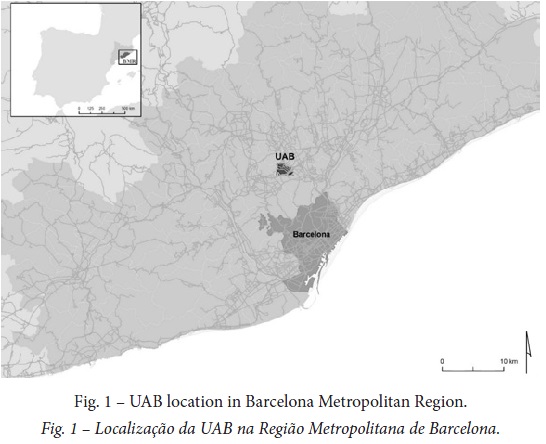
<body><![CDATA[<p><b>1. Location context and UAB community </b></p>     <p>The study focuses on the Autonomous University of Barcelona (UAB) and its employees.    The campus is an example of a suburban activity node, which generates a large    number of round trips. It is located in the border between the first and second    metropolitan ring of the Barcelona Metropolitan Region (BMR), 23km from the    capital city (<a href="#f1">fig. 1</a>). The polygon is located in an intersection    between two major motorways and has a wide range of public transportation connecting    other localities in the area: there are three railway stations and several interurban    bus lines (Miralles-Guasch, Avellaneda, &amp; Cebollada i Frontera, 2001). The    UAB&rsquo;s population is approximately 40&nbsp;000 individuals, of which 16,5%    corresponds to faculty and administrative staff. Living in different, near or    distant, municipalities makes their commuting consist of an inter-municipal    trip. Among this group high car ownership that exceeds 75% of members has been    detected. Most of them are car commuters and many have an intensive commute    (GEMOTT, 2017).</p>     <p>&nbsp;</p> <a name="f1"></a> <img src="/img/revistas/fin/n110/n110a04f1.jpg">      
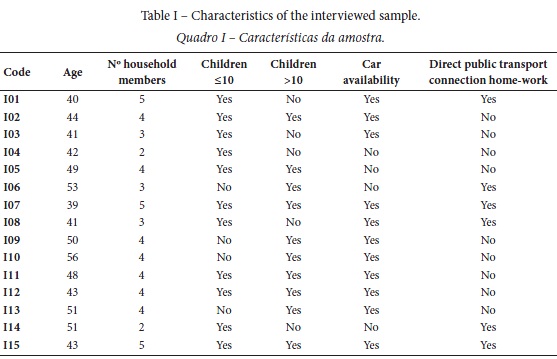
<p>&nbsp;</p>     <p><b>2. Study design: survey and interviews</b></p>     <p>The aim of this study is to understand how certain profiles of women explain    their relations with the modes of transport they use. The subjective factors    that condition modal choice were identified among intensive commuter working    mothers, selected as a specified-profile homogeneous group with similar needs    (Wedel &amp; Kamakura, 1998). Quantitative background data allows the detection    of patterns of a social group, but it is not enough to deepen understanding    of the issue. For an open research process giving the participants the opportunity    to express their opinion, perceptions and explanatory reasons for their behaviour    and choices, the use of qualitative methods was needed. Once the specific group    was identified and its behaviour was measured quantitatively, individual interviews    provided information about their decision-making process of modal choice.</p>     <p>The quantitative data comes from the 9<sup>th</sup> edition of the University    Community Mobility Habits Survey (hereinafter UCMHS) from UAB held among the    university community in spring 2017 (previous editions used by (Miralles-Guasch    &amp; Domene, 2010; Miralles-Guasch, Martinez-Melo, &amp; Marquet, 2014; Delcl&ograve;s-Ali&oacute;    &amp; Miralles-Guasch, 2017). It was designed in order to understand community    members&rsquo; commuting travel patterns. A total of 3&nbsp;554 questionnaires    were selected through stratified group sampling. The confidence level was set    at 95.5% with a relative error of &plusmn;1.57%. The present study focuses on    female staff respondents, so the final sample comprises 694 participants. The    analysis of descriptive statistics was performed in IBM SPSS version 19.</p>     <p>Next, in order to achieve depth of analysis, a total of 15 interviews were    carried out with women employed at the UAB Campus in spring 2017. Regarding    the sociodemographic and cultural profile, it is a fairly homogeneous group.    They are middle-aged, with a double role as mothers and workers. In addition,    they share commuting trip characteristics: the same purpose, the same suburban    destination and the need to use motorized transport. On the other hand, to avoid    the location bias, the sample is composed of staff from different areas of the    campus, living in different municipalities and having different access characteristics    (<a href="#t1">table I</a>). Most of them are married or in stable relationships;    two are single mothers. Eleven of have children who are ten years old or younger,    considered as dependent who need care in all their trips. Except for the two    women from lone parent households, all participants declared car availability.    However, during the conversation it turned out that two shared the car with    their partner since they travel to the same workplace and two did not usually    use the car because it was mostly used by their partners. To ensure confidentiality,    each person was given a number to encode their personal data. In order to be    able to compare the answers, the conversations were based on a semi-structured    discussion guide with key open-ended questions (as in Noack, 2011) regarding    mobility patterns and took 30 minutes on average. With the permission of the    participants, the conversations were audio recorded. The collected material    has been transcribed verbatim, coded according to the emerging concepts, and    analysed. The qualitative research software MAXQDA&copy; Plus v10.9.8.1 was    used to facilitate coding and data analysis. The analysis is based on the constant    comparative grounded theory technique (Glaser &amp; Strauss, 1967). The number    of interviews was based on two criteria: 1) the saturation concept (Guest, Bunce,    &amp; Johnson, 2006) and 2) the minimum number of interviews in other studies    (Guggenheim &amp; Taubman - Ben-Ari, 2013; Mitra, Siva, &amp; Kehler, 2015;    Sattlegger &amp; Rau, 2016).</p>     <p>&nbsp;</p> <a name="t1"></a> <img src="/img/revistas/fin/n110/n110a04t1.jpg">      
<p>&nbsp;</p>     ]]></body>
<body><![CDATA[<p><b>&nbsp;</b></p>     <p><b>IV. BACKGROUND DATA</b></p>     <p>An average woman from BMR invests 46 minutes per day in commuting (EMEF2015),    while one who works at UAB spends 78 minutes (2.6 times more). This longer work-related    travel along with a highly demanding mobility of care -especially common among    mothers- affect their daily time budget and can be the source of a constant    hurry. Therefore, the time pressure can be reflected in the mobility strategies    and the choice of mode of transport. Indeed, a 62% majority of the UAB women    workers reaches the campus in a private vehicle, while 35% declare to get there    on public transport (GEMOTT, 2017). This high car reliance brings women closer    to the traditional male trend. However, even when women rely more often on the    car, they use it differently than men. As women are more likely to combine commuting    with escorting or other household-related trips, their travel to work is more    complex, and therefore more time consuming, than males (Dobbs, 2005). Given    this use of modes of transport among targeted women, it was considered appropriate    to deepen our understanding of how they make their modal choice.</p>     <p><b>&nbsp;</b></p>     <p><b>V. QUALITATIVE FINDINGS</b></p>     <p>Due to the space-time dispersion of activities of women under study, a great    part of their daily mobility is characterized by the use of motorized transport,    public or private. The mode of transport they mainly use conditions their perception    on both this mode and other existent options. Habitual car drivers and regular    public transport users express different argumentation about the mode they use    and show a different attitude towards the alternative, hence their experience    is presented separately in the following 1 and 2 sections.</p>     <p><b>1. Car users</b></p>     <p>First of all, a noteworthy fact is that all the interviewed women who have    access to the car for their own use, declare to use it regularly. They do not    consider travelling by transit as feasible. It seems that car availability makes    women blind to public transport as an option. Whereas it had been found so far    in rural areas, for example in Scotland by Noack (2011), it seems that the same    happens in metropolitan areas, even with a dense public transport network. However,    during the conversation about their usual modal choice, a sense of guilt appears.    As these women rely on a private vehicle despite being aware of harmful consequences    of this mode for the environment, it seems that admitting to car use evokes    embarrassment, remorse and the need to justify that behaviour.</p>     <p>In consequence, the interviewees indicate the causes of this car-dependent    state of affairs. The main condition to which they attribute the blame for it    is the presence of children in the household. It contributes to the claim that    mobility does not depend only on oneself but also on other members of the household    (Plaut, 2006). Moreover, identifying children as a direct determinant of adults&rsquo;    modal choice is in line with findings of Rau and Manton (2016). Apparently,    "when you're a mother, your habits change a lot. So now we use the car much    more" (I08). As described in the following paragraphs, not all but many arguments    in favour of car use are related to children. What is more, driving mothers    are convinced that currently they cannot change their habits, but they mention    hypothetical scenarios of change in the future: "Now we use the car much more    than I would really like according to my way of understanding of life (I08)    I hope we can change when the children grow up" (I01). The following paragraphs    show the four main arguments used by the interviewed mothers, which induce them    to use the car: time, comfort, habit and economic issues.</p>     <p><i>1.1. A matter of time consumption</i></p>     ]]></body>
<body><![CDATA[<p>"When I did not have children, I always came [to work] by train, because I    was not in a hurry" (I13). This statement suggests that, in fact, relating driving    with children is due to time pressure, caused by many obligations related to    coordination of dual roles as mother and earner (Best &amp; Lanzendorf, 2005;    Wheatley, 2014). Time perception has appeared to be the most-mentioned explanatory    factor of modal choice and is related to many different issues. The link between    time and children is frequent in the context of the justification for the use    of a car, mainly in context of multi-person and multi-destination trips, commented    below.</p>     <p>Accompanying the children to the nursery or school during the travel to work    makes it became a trip chain (Rosenbloom, 1989; Greed, 2005; Pitombo, Kawamoto,    &amp; Sousa, 2011). Many mothers stress that they need a car due to the complexity    of the trip chains (Dobbs, 2005). As they articulate, the afternoon route is    often even more complex than the morning one. It consists of picking up children,    taking them where appropriate, to their extracurricular activities, which are    located in different places and have an established schedule. "There are quite    a few trips. I do not chauffeur the two kids to the music class and I pick them    both up. No, I escort one of them, after an hour I drop off the other picking    up the first one, and then I back to pick him up too" (I15). Making the trip    chain even more complex, mothers usually take advantage of the time that the    after-school class lasts for shopping or other errands. If they go to the supermarket    they appreciate the role of the car so as not to have to carry weight.</p>     <p>The reliance on the car is thus due to the multitude of trips women execute    during the day and due to the stress of having to arrive on time. The following    is a typical statement highlighting the essentiality of the car, otherwise it    would be not feasible to get anywhere: "Our children depend on us, depend on    we can get there. (I02) You drive, or you do not arrive on time" (I01).</p>     <p>Women explain that they are less willing to use public transport while traveling    with children because this way the ride is not door to door and it is necessary    to walk to and from the station. Walking with small children "is slow, it lasts    as long as they need" (I01), so in order to save time, they often decide to    make these family trips by car. In many cases, the parent who takes the children,    carries the car. "The car belongs to kids (I15). If I go alone, I go fast by    train" (I01). However, in fact, not always more than one seat in the car is    occupied. That is justified with an argument opposed to what has been said above.    Some mothers, reminisce than when their children were babies, they also used    the car when travelling alone. They justify this behaviour with the quickness    of the round trip and then having more time for the little ones.</p>     <p>As many mothers feel under pressure to comply with all activities, they seek    to optimize time wherever is possible. Car users seem to be convinced that,    in terms of time, they cannot afford to move on public transport. They express    opinions such as "In weekdays, we go with a timer &ndash; as I often say - so    we drive (I01). It's faster by car" (I07). &ldquo;If I had time, for me going    by public transport would be a luxury because you are sitting without having    to worry about traffic lights, parking&hellip; But I can&rsquo;t!" (I12). Actually,    some car users, who recognize the advantages of going on public transport but    do not use it, need to justify their actions and try to find advantages to what    they do: "On the train you have time to read a lot, and in the car, you can&rsquo;t    do it. But hey, I've gotten used to the radio, I catch up with the news. You    are finding advantages, as you have no choice&hellip;" (I09). It is surprising    that precisely car drivers talk about having no choice, when they are the ones    who can really choose from the existing alternatives.</p>     <p>Another time-related determinant of car use is the lack of direct public transport    connection with destination. Several women mention it as a barrier. They perceive    that travel time is extended even if the transfer is short. Moreover, it seems    that they do not want to do it, more as a precaution, as travel time could be    potentially extended in case of desynchronization, than by the real inconvenience    that it entails. "The transfer is not bad, it is short. You have to wait a bit.    But if something happens&hellip;" (I09). It is striking that they do not mention    the possibility of travel time extension due to a traffic jam or accident, when    driving. In fact, there are suspicions that the transfer-related extension in    time may be just a perception issue. "I don't know if it's a real or mental    thing. It provokes us a kind of distortion (...). We feel much calmer and free    having the car parked right here" (I10).</p>     <p><i>1.2. As comfortable as possible</i></p>     <p>Having said so, it seems evident that beyond time, there is a kind of comfort    perception in question. "There are 15 minutes of difference. But take the three    children to the station then climb the hill to school&hellip; I think it's that,    both, but rather comfort than time" (I15). Women often rely on car because they    consider going by public transport as tiring. The concept of comfort is connected    to a subjective perception of convenience. The interviewees reveal that the    car provides the comfort of not having to pay attention to connection combinations    and to check schedules. Moreover, as several mothers state, the car is more    convenient especially when traveling with babies in a stroller or when toddlers    get tired and "if they fell asleep in the car, no worries" (I02) while if it    happens in public means women see it as "very complicated (I08). Moving kids    by metro was a show" (I10). This explanation contributes to the findings about    convenience pointed out as the main argument in favor of the car among UAB staff    in (Miralles-Guasch <i>et al</i>., 2014).</p>     <p><i>1.3. Habit as difficulty to change repeated actions </i></p>     <p>Attributing the cause of the use of the car to the fact that the children are    very small and traveling with them in alternative modes is difficult, suggests    anticipation of change once these circumstances pass away. As aforementioned,    some mothers of small children explicitly express desire to resign from the    car in the future. Nonetheless, the interviewees with older children indicate    the habit as key factor in their modal choice. "I've already gotten used to    driving. And now it would cost me a lot [of effort] to get back to the train"    (I09). As a result, that attachment to the car tends to grow instead of decreasing    as beliefs and habits intensify over time (Scheiner, 2014). It seems that drivers    regular practice becomes such a deep-rooted habit that even when children are    not small any longer, they still try to blame them: "when you have teenage children,    time is also very important for them. If I were alone with my partner, maybe    we would go by train" (I10). As shown, they keep making excuses, but always    leaving room for potential change if the circumstances are different. The explanation    of these circumstances partly responds to the need of deep exploration of the    formation of driving habits suggested by Garcia-Sierra, Miralles-Guasch, Mart&iacute;nez-Melo,    and Marquet (2018).</p>     ]]></body>
<body><![CDATA[<p><i>1.4. Economic issue &ndash; what is the real price? </i></p>     <p>Another type of determinant in the decision-making process of using one mode    or another is the economic issue. Car users often underestimate the real cost    of their use, especially in relation to the price of public transport (Garcia-Sierra    <i>et al</i>., 2015). That happens because this kind of argument often appears    linked to the price comparison of a singular trip, without taking into account    maintenance, insurance, car revision and repairs. The interviewees have relied    on this reasoning referring to multi-person trips. It has been possible to hear    comments like the following: "The ticket is very expensive. You calculate and    paying the parking is almost more economic" (I02).</p>     <p>When it comes to travelling alone, for example to work, many women do take    into account other factors beyond the cost of petrol. They are aware of investing    more money in total, but they immediately contrast it with the information about    benefits provided by the car. "By car, I spend more. Ok, because you have gas    and everything that happens in the car, it breaks down or something comes up.    The train, well... it's economic and not economic... [I spend] More money but    I save time" (I03). This reasoning is in line with the trend of putting time    value over economic cost mentioned by Carmo, Santos and Ferreira (2017).</p>     <p>As the literature states, once reached the resources to afford the purchase    of the car, it is difficult to resign from using it (Dargay, 2001), even though    the interviewed users feel obligated to justify their behaviour. This reliance    could be related to the factors mentioned beforehand as habit, comfort and deep    conviction of saving time. Car users tend to overuse this mode, relying on it    not only as a substitute for public transport, but even for short, walking distances    (Loukopoulos &amp; G&auml;rling, 2005).</p>     <p><b>2. Public transport users </b></p>     <p>Everyday passengers of public transport show a different attitude than drivers    talking about their patterns. They do not feel obliged to justify themselves,    rather they talk about their experience.</p>     <p>An outstanding distinguishing point is, that these women do not mention children    as an obstacle that hinders the use of public transportation. They have traveled    with children in different means of public transport and they express satisfaction    with this practice: "Even with small children it's more convenient. Driving    is a stress and then, parking..." (I06).</p>     <p>The interviewees who usually go on public transport do not seem to have similar    feelings to drivers about the indispensability of the private vehicle. An exception    is the vision of an emergency situation: "If they call from the school saying    that my child has been sick, in that moment, I wish I had a car." (I05).</p>     <p>Women accustomed to being passengers of public transport are aware of some    weak points of this mode, but do not consider their own experience as negative.    They do not complain about not having a private vehicle available for themselves.    Also, contrary to the findings from the UK, reported by Wheatley (2014), about    lower job satisfaction by public transport users compared to drivers, no similar    phenomenon was noted in the present study.</p>     <p>Nevertheless, besides some contrasts there are also some similarities. It is    noteworthy that this group uses the same categories of arguments &ndash; economy,    comfort/convenience, habit and time &ndash; in favour of their mode choice,    but from a different, sometimes opposed perspective.</p>     ]]></body>
<body><![CDATA[<p>In their case, the lack of car has different causes. One of them is the economic    factor - they cannot afford to run it or they think it is an unnecessary expense.    As they claim: "Having children at charge, the salary does not allow me to have    a car on my own" (I05) and "Day-to-day I don&rsquo;t need it and just for some    weekends it is better renting it. And there is no parking. Oh no, it is an expense,    in my case, quite senseless" (I14). Other reason is just not like driving, so    the car does not look like a comfortable option: "I have a driver's license,    but I do not use it, because I find it less convenient. Parking in the city    centre is complicated" (I06). Another reason for not wanting nor missing the    car is the simple fact of not being used to that alternative and not having    created a dependency: "I've never had a car" (I04).</p>     <p>Not being contaminated by the tendency to idealize the car, and especially    by knowing public transport firsthand, its users value this mode positively:    "The public transport is fast, there are usually no problems" (I06). Public    transport travellers do not consider their trip as a waste of time at all, but    take advantage to carry out productive or enjoyable activities (Sattlegger &amp;    Rau, 2016) such as reading, writing emails, using social networks, making plans    or sleeping: "On the train I do many things. I read a lot, people usually cannot    do that. I sleep (I05). I use the time to read or answer emails" (I04). The    last is in line with Gripsrud and Hjorthol's (2012) findings about the positive    effect of the use of information and communication technology, while travelling    by train, on the perception of travel as a useful time.</p>     <p>It is noticeable that this group mentions disadvantages of driving, while the    regular drivers do not reveal a similar perception: "The car provides you more    freedom (&hellip;), but you can get stuck in a traffic jam on the motorway (I06).    I would take more by car than by public transport. I would have to leave at    6.30 in the morning or at 7 to avoid traffic jams (I14)".</p>     <p><b>&nbsp;</b></p>     <p><b>VI. CONCLUSIONS </b></p>     <p>A 62% majority of the UAB female workers reaches their place of work in a private    vehicle. In order to understand that behaviour we asked mothers with suburban    commuting about their modal choice and found that it depends on different kinds    of factors. The accessibility to different transport modes -car availability    and public transport supply- is undeniably the primary condition to be able    to use them. Besides, the modal choice is conditioned by individual perceptions    and habits. It has been found that most of perception-based explanations for    car use have to do with time and comfort. Routines, which become habits, have    also been found to be an important determinant. It especially works for drivers,    as -according to them- once one gets used to a car it is hard to change the    pattern. Security issues do not appear as an argument in favour of this mode,    positioning the car above the alternative. This silence means that public transportation    in BMR is perceived as safe &ndash; an issue which might have come to light    negatively in many other contexts (Delbosc &amp; Currie, 2012; Rozas Balbont&iacute;n    &amp; Salazar Arredondo, 2015).</p>     <p>A similarity detected among both interviewed groups is that the users of a    given mode of transport refer to the disadvantages of the other mode, not mentioned    by their own users. Namely, drivers remark on possible delays of transit due    to breakdowns or uncoordinated transfers, while public transport passengers    indicate the traffic jams and the need to implement strategies such as leaving    home very early to avoid them.</p>     <p>The analysis also revealed how the point of view differs between those two    groups. First, it turns out that car users are more likely than public transport    passenger to miss the mode they do not use. They show it expressing their concern    about the environment -a common female concern (Matthies, Kuhn, &amp; Klockner,    2002)-, as well as the desire of taking advantage of the time of the journey    instead of having to pay attention to the road. However, they are convinced    they cannot switch. Secondly, the interviewees who choose the car emphasize    and prioritize the quickness of travel by this mode, although -as they recognize-    travelling by bus or train they could do something in the meantime. Transit    passengers, instead, focus on advantages of the mode they use valuating their    experience as more convenient and less stressful than driving. Moreover, while    the latter don&rsquo;t mention children as a factor which hinder trips in this    mode, car enthusiasts tend to state that public transport trips with kids becomes    slow, tiring and annoying.</p>     <p>It seems like having children is a perfect excuse for using the car. Sometimes,    even if the mothers drive alone, they still say it is due to the children, for    saving time and spending it with them. Anti- public transportation arguments    related to the children are evolving depending on the age of the children: from    the fatigue of the stroller, little ability of pre-schoolers to walk quickly,    the need to make multiple escort trips and arrive on time -of those who are    not yet independent-, to the reluctance towards public transport of teenagers.</p>     <p>There have appeared voices that the cars are for children and it does not matter    which of the parents drive them. But, as mothers usually make more escorting    trips (Motte-Baumvol <i>et al</i>., 2017), children strongly condition female    mobility behaviour. From the argumentation of interviewed drivers, it turns    out that they, as working mothers, are overwhelmed by responsibilities and pressed    for time (Rosenbloom &amp; Burns, 1994). It reflects the still present gender    differences in the division of reproductive labour, which results in women having    a second, unpaid, shift at home (Hochschild, 1989). Although the dynamics of    division of domestic work has a convergent tendency among genders (Bianchi,    Robinson, &amp; Milkie, 2006), the traditional model continues to have negative    repercussions for women (Sayer, 2010).</p>     ]]></body>
<body><![CDATA[<p>At this point, it is worthy to pay attention to the two participants characterized    by the intersectional element of being single mothers. Their situation assumes    shouldering alone the full burden of domestic and professional work, which strongly    stresses their time and economic resources, at the same time that they deal    with the additional burden of daily travel (Lee, Vojnovic, &amp; Grady, 2018).    In line with the idea that time pressure forces women to use the car, it would    be the single mothers the ones who would travel in this mode more often. In    this case, however, it is exactly the opposite, which in part may result from    not having a car available, likely to happen in one-earner household. However,    the interviewed single mothers do not appear to miss driving, but rather consider    public transport as an efficient mode for them.</p>     <p>Without denying the fact that mothers juggle a lot of parenting tasks (even    if shared), it is important to notice that part of the problem may rise from    the choice of activities of their children and assumption that having a car    will grant them quick access everywhere. From this point of view, it is understandable    why they consider having no alternative to using the car. However, they could    have structured the everyday activities (theirs and those of their children)    considering accessibility based on public transport, just like other mothers,    who do not have a car. While the house and the workplace are "fixed" destinations,    all the rest are destinations that they or their families have in part chosen.    Thinking that they have no other option than using the car is self-serving bias.    However, another possibility is that in some cases more convenient -in terms    of access- alternatives were not available, so they could only access those    activities thanks to the car.</p>     <p>The study contributes to the growing academic literature based on qualitative    approaches. Through interviews, it has been possible to explore in depth specific    profiles and women's motivation for their choices. The findings corroborate    working mothers' time constraints due to their engagement in double shifts,    which brings many of them to use a car as a tool which enables managing all    activities throughout the day (Dowling, 2000). Moreover, it has been shown that    regardless of the mode of transport people use, they are convinced of the convenience    of their choice. Gaining knowledge on this subject can be useful to the policymakers    in creating effective programs and policies aimed at replacing the car with    more sustainable alternatives. These interventions are expected to have double-dimensional    outcomes. On the one hand, they would redirect working mothers&rsquo; patterns    and would make them take advantage of the benefits of using public transport.    On the other hand, as long-term effects, children raised in a non-car-dependent    model might naturally adopt the more sustainable transport options as their    own patterns and follow them in the future (Mackett, 2002).</p>     <p>Given that the outcomes of intensive commuting are deeply gendered due to imbalanced    share of household-related duties, there is also no doubt that political agendas    should address family-work issues (Stanfors, 2015) in order to provide equal    opportunities to both men and women. However, additionally there is a need for    gender equality social campaigns to normalize the adaption of a gender-equal    household model. As an example, in Spain, despite of the existence of the right    to reconciling work and family life, only a marginal percentage of fathers use    it -less than 8% of all cases in 2017 (IMIO, 2018)- because this practice is    currently not sufficiently socially embedded. As a result, mothers are often    those who have to combine work with daily family care, including mobility.</p>     <p><b>&nbsp;</b></p>     <p><b>ACKNOWLEDGMENTS</b></p>     <p>This research was supported by the pre-doctoral contract FPU 2016 awarded by    The Ministry of Science, Innovation and Universities of Spain. The research    has been also possible thanks to financial support received from the Project    CSO2016-74904-R.</p>     <p><b>&nbsp;</b></p>     <p><b>REFERENCES</b></p>     <p>Aguilera, A., &amp; Mignot, D. (2002). Structure des localisations intra-urbaines    et mobilit&eacute; domicile-travail. <i>Recherche Transport S&eacute;curit&eacute;</i>,    <i>77</i>, 311&ndash;325.</p>     ]]></body>
<body><![CDATA[<p>BasariÄ‡, V., VujiÄiÄ‡, A., SimiÄ‡, J. M., BogdanoviÄ‡, V., &amp; SauliÄ‡,    N. (2016). Gender and Age Differences in the Travel Behavior - A Novi Sad Case    Study. <i>Transportation Research Procedia</i>, <i>14</i>, 4324&ndash;4333.    doi: 10.1016/j.trpro.2016.05.354</p>     <p>Best, H., &amp; Lanzendorf, M. (2005a). Division of labour and gender differences    in metropolitan car use. An empirical study in Cologne, Germany. <i>Journal    of Transport Geography</i>, <i>13</i>(2), 109&ndash;121. doi: 10.1016/j.jtrangeo.2004.04.007</p>     <p>Best, H., &amp; Lanzendorf, M. (2005b). Division of labour and gender differences    in metropolitan car use. An empirical study in Cologne, Germany. <i>Journal    of Transport Geography</i>, <i>13</i>, 109&ndash;121. doi: 10.1016/j.jtrangeo.2004.04.007</p>     <!-- ref --><p>Bianchi, S. M., Robinson, J. P., &amp; Milkie, M. A. (2006). <i>Changing rhythms    of American family life</i>. New York: Russell Sage.    &nbsp;&nbsp;&nbsp;&nbsp;&nbsp;&nbsp;&nbsp;&nbsp;[&#160;<a href="javascript:void(0);" onclick="javascript: window.open('/scielo.php?script=sci_nlinks&ref=301747&pid=S0430-5027201900010000400005&lng=','','width=640,height=500,resizable=yes,scrollbars=1,menubar=yes,');">Links</a>&#160;]<!-- end-ref --></p>     <p>Boarnet, M. G., &amp; Hsu, H. P. (2015). The gender gap in non-work travel:    The relative roles of income earning potential and land use. <i>Journal of Urban    Economics</i>, <i>86</i>, 111&ndash;127. doi: 10.1016/j.jue.2015.01.005</p>     <p>Camarero, L. A., &amp; Oliva, J. (2008). Exploring the social face of urban    mobility: Daily mobility as part of the social structure in Spain. <i>International    Journal of Urban and Regional Research</i>, <i>32</i>(2), 344&ndash;362. doi:    10.1111/j.1468-2427.2008.00778.x</p>     <p>Camarero, L., Cruz, F., &amp; Oliva, J. (2016). Rural sustainability, intergenerational    support and mobility. <i>European Urban and Regional Studies</i>, <i>23</i>(4),    734&ndash;749. doi: 10.1177/0969776414539338</p>     <p>Cervero, R., &amp; Landis, J. (1992). Suburbanization of jobs and the journey    to work: A submarket analysis of commuting in the San Francisco bay area. <i>Journal    of Advanced Transportation</i>, <i>26</i>(3), 275&ndash;297. doi: 10.1002/atr.5670260305</p>     <!-- ref --><p>Cresswell, T., &amp; Uteng, T. P. (2008). Gendered Mobilities: Towards an Holistic    Understanding. In T. P. Uteng and T. Cresswell (Eds), <i>Gendered Mobilities</i>    (pp. 1-12). Farnham: Ashgate.    &nbsp;&nbsp;&nbsp;&nbsp;&nbsp;&nbsp;&nbsp;&nbsp;[&#160;<a href="javascript:void(0);" onclick="javascript: window.open('/scielo.php?script=sci_nlinks&ref=301753&pid=S0430-5027201900010000400010&lng=','','width=640,height=500,resizable=yes,scrollbars=1,menubar=yes,');">Links</a>&#160;]<!-- end-ref --></p>     <p>Dargay, J. M. (2001). The effect of income on car ownership: evidence of asymmetry.    <i>Transportation Research Part A: Policy and Practice</i>, <i>35</i>(9), 807&ndash;821.    doi: 10.1016/S0965-8564(00)00018-5</p>     <p>Delbosc, A., &amp; Currie, G. (2011). The spatial context of transport disadvantage,    social exclusion and well-being. <i>Journal of Transport Geography</i>, <i>19</i>,    1130&ndash;1137. doi: 10.1016/j.jtrangeo.2011.04.005</p>     <p>Delbosc, A., &amp; Currie, G. (2012). Modelling the causes and impacts of personal    safety perceptions on public transport ridership. <i>Transport Policy</i>, <i>24</i>,    302&ndash;309. doi: 10.1016/j.tranpol.2012.09.009</p>     <!-- ref --><p>Delcl&ograve;s-Ali&oacute;, X., &amp; Miralles-Guasch, C. (2017). Suburban    travelers pressed for time: Exploring the temporal implications of metropolitan    commuting in Barcelona. <i>Journal of Transport Geography, 65, 165-174.</i>    doi: 10.1016/j.jtrangeo.2017.10.016&nbsp;&nbsp;&nbsp;&nbsp;&nbsp;&nbsp;&nbsp;&nbsp;[&#160;<a href="javascript:void(0);" onclick="javascript: window.open('/scielo.php?script=sci_nlinks&ref=301758&pid=S0430-5027201900010000400014&lng=','','width=640,height=500,resizable=yes,scrollbars=1,menubar=yes,');">Links</a>&#160;]<!-- end-ref --><p>Carmo, R. M., Santos, S., &amp; Ferreira, D. (2017). &ldquo;Unequal mobilities&rdquo;    in the Lisbon metropolitan area: Daily travel choices and private car use. <i>Finisterra    - Revista Portuguesa de Geografia</i>, <i>LII</i>(106), 29&ndash;48. doi: 10.18055/Finis10102</p>     <p>Dobbs, L. (2005). Wedded to the car: Women, employment and the importance of    private transport. <i>Transport Policy</i>, <i>12</i>(3), 266&ndash;278. doi:    10.1016/j.tranpol.2005.02.004</p>     <p>Dowling, R. (2000). Cultures of mothering and car use in suburban Sydney: a    preliminary investigation. <i>Geoforum</i>, <i>31</i>, 345&ndash;353.</p>     <p>Garc&iacute;a-Palomares, J. C. (2010). Urban sprawl and travel to work: the    case of the metropolitan area of Madrid. <i>Journal of Transport Geography</i>,    <i>18</i>(2), 197&ndash;213. doi: 10.1016/j.jtrangeo.2009.05.012</p>     <p>Garcia-Sierra, M., Miralles-Guasch, C., Mart&iacute;nez-Melo, M., &amp; Marquet,    O. (2018). Empirical analysis of travellers&rsquo; routine choice of means of    transport in Barcelona, Spain. <i>Transportation Research Part F: Traffic Psychology    and Behaviour </i>, <i>55</i>, 365&ndash;379. doi: 10.1016/J.TRF.2018.02.018</p>     ]]></body>
<body><![CDATA[<p>Garcia-Sierra, M., van den Bergh, J. C. J. M., &amp; Miralles-Guasch, C. (2015).    Behavioural economics, travel behaviour and environmental-transport policy.    <i>Transportation Research Part D: Transport and Environment</i>, <i>41</i>,    288&ndash;305. doi: 10.1016/j.trd.2015.09.023</p>     <p>Glaser, B., &amp; Strauss, A. (1967). <i>Discovery of Grounded Theory</i> (Aldine).    Chicago: Aldine Transaction. Retrieved from <a href="http://www.sxf.uevora.pt/wp-content/uploads/2013/03/Glaser_1967.pdf" target="_blank">http://www.sxf.uevora.pt/wp-content/uploads/2013/03/Glaser_1967.pdf</a></p>     <p>Goddard, T., Handy, S., Cao, X., &amp; Mokhtarian, P. (2006). Voyage of the    SS Minivanâ€¯: Women&rsquo;s Travel Behavior in Traditional and Suburban Neighborhoods.    <i>Transportation Research Record</i>, <i>1956</i>(1), 141&ndash;148. doi: 10.3141/1956-18  </p>     <p>Greed, C. (2005). Overcoming the Factors Inhibiting the Mainstreaming of Gender    into Spatial Planning Policy in the United Kingdom. <i>Urban Studies</i>, <i>42</i>(4),    719&ndash;749. doi: 10.1080=00420980500060269</p>     <p>Gripsrud, M., &amp; Hjorthol, R. (2012). Working on the train: from &lsquo;dead    time&rsquo; to productive and vital time. <i>Transportation</i>, <i>39</i>(5),    941&ndash;956. doi: 10.1007/s11116-012-9396-7</p>     <p>Grup d&rsquo;Estudis en Mobilitat Transport i Territori. (GEMOTT). (2017).    <i>Enquesta d&rsquo;H&agrave;bits de Mobilitat de la comunitat universit&agrave;ria    de la UAB 2017</i> [Mobility Habits Survey of the UAB university community 2017].    Retrieved from <a href="http://www.uab.cat/doc/resum_executiu_EHMUAB2017" target="_blank">http://www.uab.cat/doc/resum_executiu_EHMUAB2017</a></p>     <p>Guest, G., Bunce, A., &amp; Johnson, L. (2006). How Many Interviews Are Enough?    An Experiment with Data Saturation and Variability and a good number of journals    in the. <i>Field Methods</i>, <i>18</i>(1), 59&ndash;882. doi: 10.1177/1525822X05279903</p>     <p>Guggenheim, N., &amp; Taubman-Ben-Ari, O. (2013). Women who DARE: driving attitudes    and road experiences among ultraorthodox women in Israel. <i>Gender, Place &amp;    Culture</i>, <i>21</i>(5), 533&ndash;549. doi: 10.1080/0966369X.2013.802670</p>     <!-- ref --><p>Hanson, S., &amp; Pratt, G. (1995). <i>Gender, work and space</i>. London:    Routledge.    &nbsp;&nbsp;&nbsp;&nbsp;&nbsp;&nbsp;&nbsp;&nbsp;[&#160;<a href="javascript:void(0);" onclick="javascript: window.open('/scielo.php?script=sci_nlinks&ref=301772&pid=S0430-5027201900010000400028&lng=','','width=640,height=500,resizable=yes,scrollbars=1,menubar=yes,');">Links</a>&#160;]<!-- end-ref --></p>     ]]></body>
<body><![CDATA[<!-- ref --><p>Hochschild, A. R. (1989). <i>The second shift: Working parents and the revolution    at home.</i> New York: Viking Penguin.    &nbsp;&nbsp;&nbsp;&nbsp;&nbsp;&nbsp;&nbsp;&nbsp;[&#160;<a href="javascript:void(0);" onclick="javascript: window.open('/scielo.php?script=sci_nlinks&ref=301774&pid=S0430-5027201900010000400029&lng=','','width=640,height=500,resizable=yes,scrollbars=1,menubar=yes,');">Links</a>&#160;]<!-- end-ref --></p>     <p>Instituto de la Mujer y para la Igualdad de Oportunidades. (IMIO). <i>Mujeres    en Cifras - Conciliaci&oacute;n - Excedencias, permisos y reducciones de jornadas:    Excedencia por cuidado de hijas/os.</i> <a href=" http://www.inmujer.es/estadisticasweb/6_Conciliacion/6_2_ExcedenciasPermisosyReduccionesdeJornada/w121.xls" target="_blank">http://www.inmujer.es/estadisticasweb/6_Conciliacion/6_2_ExcedenciasPermisosyReduccionesdeJornada/w121.xls</a>    Accessed February 18<sup>th</sup> 2019</p>     <!-- ref --><p>Jones, M.-H., Massot, J.-P., &amp; Orfeuil, L. P. (2008). <i>Links between    Daily Travel Times and Lifestyles of Families</i>. Paris and London, Rapport    Final de Contrat Pour La F&eacute;d&eacute;ration Internationale Automobile    (FIA Foundation), f&eacute; vrier (2008).    &nbsp;&nbsp;&nbsp;&nbsp;&nbsp;&nbsp;&nbsp;&nbsp;[&#160;<a href="javascript:void(0);" onclick="javascript: window.open('/scielo.php?script=sci_nlinks&ref=301777&pid=S0430-5027201900010000400030&lng=','','width=640,height=500,resizable=yes,scrollbars=1,menubar=yes,');">Links</a>&#160;]<!-- end-ref --></p>     <p>Lee, J., Vojnovic, I., &amp; Grady, S. C. (2018). The &ldquo;transportation    disadvantaged&rdquo;: Urban form, gender and automobile versus non-automobile    travel in the Detroit region. <i>Urban Studies Journal Limited</i>, <i>55</i>(11),    2470&ndash;2498. doi: 10.1177/0042098017730521</p>     <p>Levy, C. (2013). Travel choice reframed: &ldquo;deep distribution&rdquo; and    gender in urban transport. <i>Environment and Urbanization</i>, <i>25</i>(1),    47&ndash;63. doi: 10.1177/0956247813477810</p>     <p>Limtanakool, N., Dijst, M., &amp; Schwanen, T. (2006). The influence of socioeconomic    characteristics, land use and travel time considerations on mode choice for    medium and longer-distance trips. <i>Journal of Transport Geography</i>, <i>14</i>(5),    327 &ndash;341. doi: 10.1016/j.jtrangeo.2005.06.004</p>     <p>Loukopoulos, P., &amp; G&auml;rling, T. (2005). Are Car Users Too Lazy to Walk?:    The Relationship of Distance Thresholds for Driving to the Perceived Effort    of Walking. <i>Transportation Research Record</i>, <i>1926</i>(1), 206&ndash;211.    doi: 10.3141/1926-24</p>     <p>Mackett, R. L. (2002). Increasing car dependency of children: should we be    worried? <i>Proceedings of the Institution of Civil Engineers - Municipal Engineer</i>,    <i>151</i>(1), 29&ndash;38. doi: 10.1680/muen.2002.151.1.29</p>     ]]></body>
<body><![CDATA[<p>Mackett, R. L. (2014). The health implications of inequalities in travel. <i>Journal    of Transport &amp; Health</i>, <i>1</i>, 202&ndash;209. doi: 10.1016/j.jth.2014.07.002</p>     <p>Mahadevia, D., &amp; Advani, D. (2016). Gender differentials in travel pattern    - The case of a mid-sized city, Rajkot, India. <i>Transportation Research Part    D: Transport and Environment</i>, <i>44</i>(February), 292&ndash;302. doi: 10.1016/j.trd.2016.01.002</p>     <p>Matthies, E., Kuhn, S., &amp; Klockner, C. A. (2002). Travel Mode Choice of    Women: The Result of Limitation, Ecological Norm, or Weak Habit? <i>Environment    and Behavior</i>, <i>34</i>(2), 163&ndash;177. doi: 10.1177/0013916502034002001</p>     <p>McGuckin, N., &amp; Srinivasan, N. (2005). The Journey-to-Work in the Context    of Daily Travel. In <i>Presented for the Census Data for Transportation Planning    Conference, Transportation Research Board</i>. Irvine, California. Retrieved    from <a href=" http://www.travelbehavior.us/documents/5.pdf" target="_blank">http://www.travelbehavior.us/documents/5.pdf</a></p>     <!-- ref --><p>Miralles-Guasch, C., Avellaneda, P. G., &amp; Cebollada i Frontera, A. (2001).    <i>Los condicionantes de la movilidad en un nodo de la ciudad metropolitana:    el caso de la universitat aut&ograve;noma de Barcelona</i>. Alicante: Biblioteca    Virtual Miguel de Cervantes.    &nbsp;&nbsp;&nbsp;&nbsp;&nbsp;&nbsp;&nbsp;&nbsp;[&#160;<a href="javascript:void(0);" onclick="javascript: window.open('/scielo.php?script=sci_nlinks&ref=301788&pid=S0430-5027201900010000400040&lng=','','width=640,height=500,resizable=yes,scrollbars=1,menubar=yes,');">Links</a>&#160;]<!-- end-ref --></p>     <p>Miralles-Guasch, C., &amp; Domene, E. (2010). Sustainable transport challenges    in a suburban university: The case of the Autonomous University of Barcelona.    <i>Transport Policy</i>, <i>17</i>, 454&ndash;463. doi: 10.1016/j.tranpol.2010.04.012</p>     <p>Miralles-Guasch, C., Martinez-Melo, M., &amp; Marquet, O. (2014). On user perception    of private transport in Barcelona Metropolitan area: an experience in an academic    suburban space. <i>Journal of Transport Geography</i>, <i>36</i>, 24&ndash;31.    doi: &nbsp;10.1016/j.jtrangeo.2014.02.009</p>     <p>Miralles-Guasch, C., Melo, M. M., &amp; Marquet, O. (2015). A gender analysis    of everyday mobility in urban and rural territories: from challenges to sustainability.    <i>Gender, Place &amp; Culture</i>, <i>23</i>(3), 398&ndash;417. doi: 10.1080/0966369X.2015.1013448</p>     <p>Mitra, R., Siva, H., &amp; Kehler, M. (2015). Walk-friendly suburbs for older    adults? Exploring the enablers and barriers to walking in a large suburban municipality    in Canada. <i>Journal of Aging Studies</i>, <i>35</i>, 10&ndash;19. doi: 10.1016/j.jaging.2015.07.002</p>     ]]></body>
<body><![CDATA[<p>Motte-Baumvol, B., Bonin, O., &amp; Belton-Chevallier, L. (2017). Who escort    children: mum or dad? Exploring gender differences in escorting mobility among    parisian dual earner couples. <i>Transportation</i>, <i>44</i>, 139&ndash;157.    doi: 10.1007/s11116-015-9630-1</p>     <p>Noack, E. (2011). Are Rural Women Mobility Deprived? - A Case Study from Scotland.    <i>Sociologia Ruralis</i>, <i>51</i>(1), 79&ndash;97. doi: 10.1111/j.1467-9523.2010.00527.x</p>     <p>Oakil, A. T. M., Nijland, L., &amp; Dijst, M. (2016). Rush hour commuting in    the Netherlands: Gender-specific household activities and personal attitudes    towards responsibility sharing. <i>Travel Behaviour and Society</i>, <i>4</i>,    79&ndash;87. doi: 10.1016/j.tbs.2015.10.003</p>     <p>P&eacute;rez, R., &amp; Capron, G. (2018). Movilidad cotidiana, din&aacute;micas    familiares y roles de g&eacute;nero: an&aacute;lisis del uso del autom&oacute;vil    en una metr&oacute;poli latinoamericana [Daily mobility, family dynamics and    gender roles: analysis of car use in a Latin American metropolis]. <i>QUID</i>,    <i>16</i>(10), 102&ndash;128.</p>     <!-- ref --><p>Peters, D. (2013). <i>Gender and Sustainable Urban Mobility. Thematic study    prepared for Global Report on Human Settlements 2013.</i> Retrieved from <a href="http://www.unhabitat.org/grhs/2013" target="_blank">http://www.unhabitat.org/grhs/2013</a>&nbsp;&nbsp;&nbsp;&nbsp;&nbsp;&nbsp;&nbsp;&nbsp;[&#160;<a href="javascript:void(0);" onclick="javascript: window.open('/scielo.php?script=sci_nlinks&ref=301798&pid=S0430-5027201900010000400049&lng=','','width=640,height=500,resizable=yes,scrollbars=1,menubar=yes,');">Links</a>&#160;]<!-- end-ref --><p>Pitombo, C. S., Kawamoto, E., &amp; Sousa, A. J. (2011). An exploratory analysis    of relationships between socioeconomic, land use, activity participation variables    and travel patterns. <i>Transport Policy</i>, <i>18</i>(2), 347&ndash;357. doi:    10.1016/j.tranpol.2010.10.010</p>     <p>Plaut, P. O. (2006). The intra-household choices regarding commuting and housing.    <i>Transportation Research Part A: Policy and Practice</i>, <i>40</i>, 561&ndash;571.    doi: 10.1016/j.tra.2005.10.001</p>     <p>Polk, M. (2003). Are women potentially more accommodating than men to a sustainable    transportation system in Sweden? <i>Transportation Research Part D: Transport    and Environment</i>, <i>8</i>(2), 75&ndash;95. doi: 10.1016/S1361-9209(02)00034-2</p>     <p>Queir&oacute;s, M., &amp; Marques de Costa, N. (Eds.). (2012). Gender Dimensions    of Transportation in Portugal. <i>Dialogue and Universalism Journal</i>, <i>3</i>(1),    47&ndash;69.</p>     <p>Rau, H., &amp; Manton, R. (2016). Life events and mobility milestones: Advances    in mobility biography theory and research. <i>Journal of Transport Geography</i>,    <i>52</i>, 51&ndash;60. doi: 10.1016/j.jtrangeo.2016.02.010</p>     ]]></body>
<body><![CDATA[<p>Ravalet, E., Vincent-Geslin, S., &amp; Dubois, Y. (2016). Job-related &ldquo;high    mobility&rdquo; in times of economic crisis: Analysis from four European countries.    <i>Journal of Urban Affairs</i>, <i>39</i>(4)<i>, 563-580</i>. doi: 10.1080/07352166.2016.1251170</p>     <p>Roberts, J., Hodgson, R., &amp; Dolan, P. (2011). &ldquo;It&rsquo;s driving    her mad&rdquo;: Gender differences in the effects of commuting on psychological    health. <i>Journal of Health Economics</i>, <i>30</i>(5), 1064&ndash;1076. doi:    10.1016/j.jhealeco.2011.07.006</p>     <p>Rodr&iacute;guez Moya, J. M., &amp; Garc&iacute;a-Palomares, J. C. (2012).    Diversidad de g&eacute;nero en la movilidad cotidiana en la comunidad de madrid    [Gender diversity in daily mobility in the community of madrid]. <i>Bolet&iacute;n    de La Asociaci &oacute;n de Ge&oacute;grafos Espa&ntilde;oles</i>, <i>58</i>,    105&ndash;132.</p>     <p>Root, A., &amp; Schinder, L. (1999a). Women, motorization and the environment.    <i>Transportation Research Part D: Transport and Environment</i>, <i>4</i>,    353&ndash;355. doi: 10.1016/S1361-9209(99)00012-7</p>     <p>Root, A., &amp; Schinder, L. (1999b). Women, motorization and the environment.    <i>Transportation Research Part D: Transport and Environment</i>, <i>4</i>(5),    353&ndash;355. doi: 10.1016/S1361-9209(99)00012-7</p>     <!-- ref --><p>Rosenbloom, S. (1989). Trip chaining behaviour: a comparative and cross cultural    analysis of the travel patterns of working mothers, gender. In M. Grieco, L.    Pickup &amp; R. Whipp (Eds.), <i>Transport and Employment: the Impact of Travel    Constraints</i> (pp. 75-87). Avebury: Aldershot.    &nbsp;&nbsp;&nbsp;&nbsp;&nbsp;&nbsp;&nbsp;&nbsp;[&#160;<a href="javascript:void(0);" onclick="javascript: window.open('/scielo.php?script=sci_nlinks&ref=301809&pid=S0430-5027201900010000400060&lng=','','width=640,height=500,resizable=yes,scrollbars=1,menubar=yes,');">Links</a>&#160;]<!-- end-ref --></p>     <p>Rosenbloom, S., &amp; Burns, E. (1994). Why Working Women Drive Alone: Implications    for Travel Reduction Programs. <i>Transportation Research Record</i>, <i>1459</i>(274),    39&ndash;45.</p>     <!-- ref --><p>Rozas Balbont&iacute;n, P., &amp; Salazar Arredondo, L. (2015). <i>Violencia    de g&eacute;nero en el transporte p&uacute;blico. Una regulaci&oacute;n pendiente.</i>    <i>Serie Recursos Naturales e Infraestructura</i> [Gender violence in public    transport. A pending regulation. Natural Resources and Infrastructure Series].    Santiago de Chile: Cepal. Retrieved from <a href="https://repositorio.cepal.org/bitstream/handle/11362/38862/S1500626_es.pdf?sequence=1&amp;isAllowed=y" target="_blank">https://repositorio.cepal.org/bitstream/handle/11362/38862/S1500626_es.pdf?sequence=1&amp;isAllowed=y</a>&nbsp;&nbsp;&nbsp;&nbsp;&nbsp;&nbsp;&nbsp;&nbsp;[&#160;<a href="javascript:void(0);" onclick="javascript: window.open('/scielo.php?script=sci_nlinks&ref=301812&pid=S0430-5027201900010000400062&lng=','','width=640,height=500,resizable=yes,scrollbars=1,menubar=yes,');">Links</a>&#160;]<!-- end-ref --><p>S&aacute;nchez de Madariaga, I. (2013). The mobility of care. Introducing new    concepts in Urban Transport. In I. S. Madariaga (Ed.), <i>Fair shared cities.    The impact of gender planning in Europe</i> (pp. 49&ndash;69). Aldershot-Nueva    York: Ashgate.</p>     ]]></body>
<body><![CDATA[<p>Sandow, E. (2008). Commuting behaviour in sparsely populated areas: evidence    from northern Sweden. <i>Journal of Transport Geography</i>, <i>16</i>, 14&ndash;27.    doi: 10.1016/j.jtrangeo.2007.04.004</p>     <p>Sattlegger, L., &amp; Rau, H. (2016). Carlessness in a carâ€centric world:    A reconstructive approach to qualitative mobility biographies research. <i>Journal    of Transport Geography</i>, <i>53</i>, 22&ndash;31. doi: 10.1016/j.jtrangeo.2016.04.003</p>     <p>Sayer, L. (2010). Trends in Housework. In <i>Dividing the Domestic: Men, Women,    and Household Work in Cross-National Perspective</i>. Stanford: Stanford University    Press. doi: 10.11126/stanford/9780804763578.001.0001</p>     <p>Scheiner, J. (2014). Gendered key events in the life course: Effects on changes    in travel mode choice over time. <i>Journal of Transport Geography</i>, <i>37</i>,    47&ndash;60. doi: 10.1016/j.jtrangeo.2014.04.007</p>     <p>Scheiner, J., &amp; Holz-Rau, C. (2012). Gendered travel mode choice: a focus    on car deficient households. <i>Journal of Transport Geography</i>, <i>24</i>,    250&ndash;261. doi: 10.1016/j.jtrangeo.2012.02.011</p>     <p>Schleith, D., &amp; Horner, M. (2014). Commuting, Job Clusters, and Travel    Burdens. <i>Transportation Research Record: Journal of the Transportation Research    Board</i>, <i>2452</i>, 19&ndash;27. doi: 10.3141/2452-03</p>     <p>Schneider, R. J. (2013). Theory of routine mode choice decisions: An operational    framework to increase sustainable transportation. <i>Transport Policy</i>, <i>25</i>,    128&ndash;137. doi: 10.1016/j.tranpol.2012.10.007</p>     <p>Sol&aacute;, A. G. (2016). Constructing work travel inequalities: The role    of household gender contracts. <i>Journal of Transport Geography Journal</i>,    <i>53</i>, 32&ndash;40. doi: 10.1016/j.jtrangeo.2016.04.007</p>     <p>Stanfors, M. (2015). Family Life on the Fast Track? Gender and Work&ndash;Family    Tradeoffs Among Highly Educated Professionals: A Cross-Cultural Exploration.    In M. J. Mills (Ed.), <i>Gender and the Work Family Experience</i> (pp. 329&ndash;350).    New York: Springer.</p>     <p>Vale, D. S. (2013). Does commuting time tolerance impede sustainable urban    mobility? Analysing the impacts on commuting behaviour as a result of workplace    relocation to a mixed-use centre in Lisbon. <i>Journal of Transport Geography    Journal</i>, <i>32 </i>, 38&ndash;48. doi: 10.1016/j.jtrangeo.2013.08.003</p>     ]]></body>
<body><![CDATA[<p>Vance, C., &amp; Peistrup, M. (2012). She&rsquo;s got a ticket to ride: Gender    and public transit passes. <i>Transportation</i>, <i>39</i>(6), 1105&ndash;1119.    doi: 10.1007/s11116-011-9381-6</p>     <p>Vega, A., &amp; Reynolds-Feighan, A. (2009). A methodological framework for    the study of residential location and travel-to-work mode choice under central    and suburban employment destination patterns. <i>Transportation Research Part    A</i>, <i>43</i>, 401 &ndash;419.</p>     <!-- ref --><p>Wedel, M., &amp; Kamakura, W. A. (1998). <i>Market Segmentationâ€¯: Conceptual    and Methodological Foundations</i>. Dordrecht: Kluwer Academic Publishers.    &nbsp;&nbsp;&nbsp;&nbsp;&nbsp;&nbsp;&nbsp;&nbsp;[&#160;<a href="javascript:void(0);" onclick="javascript: window.open('/scielo.php?script=sci_nlinks&ref=301826&pid=S0430-5027201900010000400076&lng=','','width=640,height=500,resizable=yes,scrollbars=1,menubar=yes,');">Links</a>&#160;]<!-- end-ref --></p>     <p>Wheatley, D. (2014). Travel-to-work and subjective well-being: A study of UK    dual career households. <i>Journal of Transport Geography</i>, <i>39</i>, 187&ndash;196.    doi: 10.1016/j.jtrangeo.2014.07.009</p>     <p><b>&nbsp;</b></p>     <p>Recebido: dezembro 2018. Aceite: fevereiro 2019.</p>      ]]></body><back>
<ref-list>
<ref id="B1">
<nlm-citation citation-type="journal">
<person-group person-group-type="author">
<name>
<surname><![CDATA[Aguilera]]></surname>
<given-names><![CDATA[A.]]></given-names>
</name>
<name>
<surname><![CDATA[Mignot]]></surname>
<given-names><![CDATA[D.]]></given-names>
</name>
</person-group>
<article-title xml:lang="en"><![CDATA[Structure des localisations intra-urbaines et mobilité domicile-travail]]></article-title>
<source><![CDATA[Recherche Transport Sécurité]]></source>
<year>2002</year>
<volume>77</volume>
<page-range>311-325</page-range></nlm-citation>
</ref>
<ref id="B2">
<nlm-citation citation-type="journal">
<person-group person-group-type="author">
<name>
<surname><![CDATA[BasariÄ]]></surname>
<given-names><![CDATA[V.]]></given-names>
</name>
<name>
<surname><![CDATA[VujiÄiÄ]]></surname>
<given-names><![CDATA[A.]]></given-names>
</name>
<name>
<surname><![CDATA[SimiÄ]]></surname>
<given-names><![CDATA[J. M.]]></given-names>
</name>
<name>
<surname><![CDATA[BogdanoviÄ]]></surname>
<given-names><![CDATA[V.]]></given-names>
</name>
<name>
<surname><![CDATA[SauliÄ]]></surname>
<given-names><![CDATA[N.]]></given-names>
</name>
</person-group>
<article-title xml:lang="en"><![CDATA[Gender and Age Differences in the Travel Behavior - A Novi Sad Case Study]]></article-title>
<source><![CDATA[Transportation Research Procedia]]></source>
<year>2016</year>
<volume>14</volume>
<page-range>4324-4333</page-range></nlm-citation>
</ref>
<ref id="B3">
<nlm-citation citation-type="journal">
<person-group person-group-type="author">
<name>
<surname><![CDATA[Best]]></surname>
<given-names><![CDATA[H.]]></given-names>
</name>
<name>
<surname><![CDATA[Lanzendorf]]></surname>
<given-names><![CDATA[M.]]></given-names>
</name>
</person-group>
<article-title xml:lang="en"><![CDATA[Division of labour and gender differences in metropolitan car use: An empirical study in Cologne, Germany]]></article-title>
<source><![CDATA[Journal of Transport Geography]]></source>
<year>2005</year>
<month>a</month>
<volume>13</volume>
<numero>2</numero>
<issue>2</issue>
<page-range>109-121</page-range></nlm-citation>
</ref>
<ref id="B4">
<nlm-citation citation-type="journal">
<person-group person-group-type="author">
<name>
<surname><![CDATA[Best]]></surname>
<given-names><![CDATA[H.]]></given-names>
</name>
<name>
<surname><![CDATA[Lanzendorf]]></surname>
<given-names><![CDATA[M.]]></given-names>
</name>
</person-group>
<article-title xml:lang="en"><![CDATA[Division of labour and gender differences in metropolitan car use: An empirical study in Cologne Germany]]></article-title>
<source><![CDATA[Journal of Transport Geography]]></source>
<year>2005</year>
<month>b</month>
<volume>13</volume>
<page-range>109-121</page-range></nlm-citation>
</ref>
<ref id="B5">
<nlm-citation citation-type="book">
<person-group person-group-type="author">
<name>
<surname><![CDATA[Bianchi]]></surname>
<given-names><![CDATA[S. M.]]></given-names>
</name>
<name>
<surname><![CDATA[Robinson]]></surname>
<given-names><![CDATA[J. P.]]></given-names>
</name>
<name>
<surname><![CDATA[Milkie]]></surname>
<given-names><![CDATA[M. A.]]></given-names>
</name>
</person-group>
<source><![CDATA[Changing rhythms of American family life]]></source>
<year>2006</year>
<publisher-loc><![CDATA[New York ]]></publisher-loc>
<publisher-name><![CDATA[Russell Sage]]></publisher-name>
</nlm-citation>
</ref>
<ref id="B6">
<nlm-citation citation-type="journal">
<person-group person-group-type="author">
<name>
<surname><![CDATA[Boarnet]]></surname>
<given-names><![CDATA[M. G.]]></given-names>
</name>
<name>
<surname><![CDATA[Hsu]]></surname>
<given-names><![CDATA[H. P.]]></given-names>
</name>
</person-group>
<article-title xml:lang="en"><![CDATA[The gender gap in non-work travel: The relative roles of income earning potential and land use]]></article-title>
<source><![CDATA[Journal of Urban Economics]]></source>
<year>2015</year>
<volume>86</volume>
<page-range>111-127</page-range></nlm-citation>
</ref>
<ref id="B7">
<nlm-citation citation-type="journal">
<person-group person-group-type="author">
<name>
<surname><![CDATA[Camarero]]></surname>
<given-names><![CDATA[L. A.]]></given-names>
</name>
<name>
<surname><![CDATA[Oliva]]></surname>
<given-names><![CDATA[J.]]></given-names>
</name>
</person-group>
<article-title xml:lang="en"><![CDATA[Exploring the social face of urban mobility: Daily mobility as part of the social structure in Spain]]></article-title>
<source><![CDATA[International Journal of Urban and Regional Research]]></source>
<year>2008</year>
<volume>32</volume>
<numero>2</numero>
<issue>2</issue>
<page-range>344-362</page-range></nlm-citation>
</ref>
<ref id="B8">
<nlm-citation citation-type="journal">
<person-group person-group-type="author">
<name>
<surname><![CDATA[Camarero]]></surname>
<given-names><![CDATA[L.]]></given-names>
</name>
<name>
<surname><![CDATA[Cruz]]></surname>
<given-names><![CDATA[F.]]></given-names>
</name>
<name>
<surname><![CDATA[Oliva]]></surname>
<given-names><![CDATA[J.]]></given-names>
</name>
</person-group>
<article-title xml:lang="en"><![CDATA[Rural sustainability, intergenerational support and mobility]]></article-title>
<source><![CDATA[European Urban and Regional Studies]]></source>
<year>2016</year>
<volume>23</volume>
<numero>4</numero>
<issue>4</issue>
<page-range>734-749</page-range></nlm-citation>
</ref>
<ref id="B9">
<nlm-citation citation-type="journal">
<person-group person-group-type="author">
<name>
<surname><![CDATA[Cervero]]></surname>
<given-names><![CDATA[R.]]></given-names>
</name>
<name>
<surname><![CDATA[Landis]]></surname>
<given-names><![CDATA[J.]]></given-names>
</name>
</person-group>
<article-title xml:lang="en"><![CDATA[Suburbanization of jobs and the journey to work: A submarket analysis of commuting in the San Francisco bay area]]></article-title>
<source><![CDATA[Journal of Advanced Transportation]]></source>
<year>1992</year>
<volume>26</volume>
<numero>3</numero>
<issue>3</issue>
<page-range>275-297</page-range></nlm-citation>
</ref>
<ref id="B10">
<nlm-citation citation-type="book">
<person-group person-group-type="author">
<name>
<surname><![CDATA[Cresswell]]></surname>
<given-names><![CDATA[T]]></given-names>
</name>
<name>
<surname><![CDATA[Uteng]]></surname>
<given-names><![CDATA[T. P]]></given-names>
</name>
</person-group>
<article-title xml:lang="en"><![CDATA[Gendered Mobilities: Towards an Holistic Understanding]]></article-title>
<person-group person-group-type="editor">
<name>
<surname><![CDATA[Uteng]]></surname>
<given-names><![CDATA[T. P]]></given-names>
</name>
<name>
<surname><![CDATA[Cresswell]]></surname>
<given-names><![CDATA[T]]></given-names>
</name>
</person-group>
<source><![CDATA[Gendered Mobilities]]></source>
<year>2008</year>
<page-range>1-12</page-range><publisher-loc><![CDATA[Farnham ]]></publisher-loc>
<publisher-name><![CDATA[Ashgate]]></publisher-name>
</nlm-citation>
</ref>
<ref id="B11">
<nlm-citation citation-type="journal">
<person-group person-group-type="author">
<name>
<surname><![CDATA[Dargay]]></surname>
<given-names><![CDATA[J. M.]]></given-names>
</name>
</person-group>
<article-title xml:lang="en"><![CDATA[The effect of income on car ownership: evidence of asymmetry]]></article-title>
<source><![CDATA[Transportation Research Part A: Policy and Practice]]></source>
<year>2001</year>
<volume>35</volume>
<numero>9</numero>
<issue>9</issue>
<page-range>807-821</page-range></nlm-citation>
</ref>
<ref id="B12">
<nlm-citation citation-type="journal">
<person-group person-group-type="author">
<name>
<surname><![CDATA[Delbosc]]></surname>
<given-names><![CDATA[A.]]></given-names>
</name>
<name>
<surname><![CDATA[Currie]]></surname>
<given-names><![CDATA[G.]]></given-names>
</name>
</person-group>
<article-title xml:lang="en"><![CDATA[The spatial context of transport disadvantage, social exclusion and well-being]]></article-title>
<source><![CDATA[Journal of Transport Geography]]></source>
<year>2011</year>
<volume>19</volume>
<page-range>1130-1137</page-range></nlm-citation>
</ref>
<ref id="B13">
<nlm-citation citation-type="journal">
<person-group person-group-type="author">
<name>
<surname><![CDATA[Delbosc]]></surname>
<given-names><![CDATA[A.]]></given-names>
</name>
<name>
<surname><![CDATA[Currie]]></surname>
<given-names><![CDATA[G.]]></given-names>
</name>
</person-group>
<article-title xml:lang="en"><![CDATA[Modelling the causes and impacts of personal safety perceptions on public transport ridership]]></article-title>
<source><![CDATA[Transport Policy]]></source>
<year>2012</year>
<volume>24</volume>
<page-range>302-309</page-range></nlm-citation>
</ref>
<ref id="B14">
<nlm-citation citation-type="journal">
<person-group person-group-type="author">
<name>
<surname><![CDATA[Delclòs-Alió]]></surname>
<given-names><![CDATA[X.]]></given-names>
</name>
<name>
<surname><![CDATA[Miralles-Guasch]]></surname>
<given-names><![CDATA[C.]]></given-names>
</name>
</person-group>
<article-title xml:lang="en"><![CDATA[Suburban travelers pressed for time: Exploring the temporal implications of metropolitan commuting in Barcelona]]></article-title>
<source><![CDATA[Journal of Transport Geography]]></source>
<year>2017</year>
<volume>65</volume>
<page-range>165-174</page-range></nlm-citation>
</ref>
<ref id="B15">
<nlm-citation citation-type="journal">
<person-group person-group-type="author">
<name>
<surname><![CDATA[Carmo]]></surname>
<given-names><![CDATA[R. M.]]></given-names>
</name>
<name>
<surname><![CDATA[Santos]]></surname>
<given-names><![CDATA[S.]]></given-names>
</name>
<name>
<surname><![CDATA[Ferreira]]></surname>
<given-names><![CDATA[D.]]></given-names>
</name>
</person-group>
<article-title xml:lang="en"><![CDATA[“Unequal mobilities” in the Lisbon metropolitan area: Daily travel choices and private car use]]></article-title>
<source><![CDATA[Finisterra - Revista Portuguesa de Geografia]]></source>
<year>2017</year>
<volume>LII</volume>
<numero>106</numero>
<issue>106</issue>
<page-range>29-48</page-range></nlm-citation>
</ref>
<ref id="B16">
<nlm-citation citation-type="journal">
<person-group person-group-type="author">
<name>
<surname><![CDATA[Dobbs]]></surname>
<given-names><![CDATA[L.]]></given-names>
</name>
</person-group>
<article-title xml:lang="en"><![CDATA[Wedded to the car: Women, employment and the importance of private transport]]></article-title>
<source><![CDATA[Transport Policy]]></source>
<year>2005</year>
<volume>12</volume>
<numero>3</numero>
<issue>3</issue>
<page-range>266-278</page-range></nlm-citation>
</ref>
<ref id="B17">
<nlm-citation citation-type="journal">
<person-group person-group-type="author">
<name>
<surname><![CDATA[Dowling]]></surname>
<given-names><![CDATA[R.]]></given-names>
</name>
</person-group>
<article-title xml:lang="en"><![CDATA[Cultures of mothering and car use in suburban Sydney: a preliminary investigation]]></article-title>
<source><![CDATA[Geoforum]]></source>
<year>2000</year>
<volume>31</volume>
<page-range>345-353</page-range></nlm-citation>
</ref>
<ref id="B18">
<nlm-citation citation-type="journal">
<person-group person-group-type="author">
<name>
<surname><![CDATA[García-Palomares]]></surname>
<given-names><![CDATA[J. C.]]></given-names>
</name>
</person-group>
<article-title xml:lang="en"><![CDATA[Urban sprawl and travel to work: the case of the metropolitan area of Madrid]]></article-title>
<source><![CDATA[Journal of Transport Geography]]></source>
<year>2010</year>
<volume>18</volume>
<numero>2</numero>
<issue>2</issue>
<page-range>197-213</page-range></nlm-citation>
</ref>
<ref id="B19">
<nlm-citation citation-type="journal">
<person-group person-group-type="author">
<name>
<surname><![CDATA[Garcia-Sierra]]></surname>
<given-names><![CDATA[M.]]></given-names>
</name>
<name>
<surname><![CDATA[Miralles-Guasch]]></surname>
<given-names><![CDATA[C.]]></given-names>
</name>
<name>
<surname><![CDATA[Martínez-Melo]]></surname>
<given-names><![CDATA[M.]]></given-names>
</name>
<name>
<surname><![CDATA[Marquet]]></surname>
<given-names><![CDATA[O.]]></given-names>
</name>
</person-group>
<article-title xml:lang="en"><![CDATA[Empirical analysis of travellers’ routine choice of means of transport in Barcelona, Spain]]></article-title>
<source><![CDATA[Transportation Research Part F: Traffic Psychology and Behaviour]]></source>
<year>2018</year>
<volume>55</volume>
<page-range>365-379</page-range></nlm-citation>
</ref>
<ref id="B20">
<nlm-citation citation-type="journal">
<person-group person-group-type="author">
<name>
<surname><![CDATA[Garcia-Sierra]]></surname>
<given-names><![CDATA[M.]]></given-names>
</name>
<name>
<surname><![CDATA[van den Bergh]]></surname>
<given-names><![CDATA[J. C. J. M.]]></given-names>
</name>
<name>
<surname><![CDATA[Miralles-Guasch]]></surname>
<given-names><![CDATA[C.]]></given-names>
</name>
</person-group>
<article-title xml:lang="en"><![CDATA[Behavioural economics, travel behaviour and environmental-transport policy]]></article-title>
<source><![CDATA[Transportation Research Part D: Transport and Environment]]></source>
<year>2015</year>
<volume>41</volume>
<page-range>288-305</page-range></nlm-citation>
</ref>
<ref id="B21">
<nlm-citation citation-type="book">
<person-group person-group-type="author">
<name>
<surname><![CDATA[Glaser]]></surname>
<given-names><![CDATA[B]]></given-names>
</name>
<name>
<surname><![CDATA[Strauss]]></surname>
<given-names><![CDATA[A]]></given-names>
</name>
</person-group>
<source><![CDATA[Discovery of Grounded Theory]]></source>
<year>1967</year>
<publisher-loc><![CDATA[Chicago ]]></publisher-loc>
<publisher-name><![CDATA[Aldine Transactionhttp://www.sxf.uevora.pt/wp-content/uploads/2013/03/Glaser_1967.pdf]]></publisher-name>
</nlm-citation>
</ref>
<ref id="B22">
<nlm-citation citation-type="journal">
<person-group person-group-type="author">
<name>
<surname><![CDATA[Goddard]]></surname>
<given-names><![CDATA[T.]]></given-names>
</name>
<name>
<surname><![CDATA[Handy]]></surname>
<given-names><![CDATA[S.]]></given-names>
</name>
<name>
<surname><![CDATA[Cao]]></surname>
<given-names><![CDATA[X.]]></given-names>
</name>
<name>
<surname><![CDATA[Mokhtarian]]></surname>
<given-names><![CDATA[P.]]></given-names>
</name>
</person-group>
<article-title xml:lang="en"><![CDATA[Voyage of the SS Minivan: Women’s Travel Behavior in Traditional and Suburban Neighborhoods]]></article-title>
<source><![CDATA[Transportation Research Record]]></source>
<year>2006</year>
<volume>1956</volume>
<numero>1</numero>
<issue>1</issue>
<page-range>141-148</page-range></nlm-citation>
</ref>
<ref id="B23">
<nlm-citation citation-type="journal">
<person-group person-group-type="author">
<name>
<surname><![CDATA[Greed]]></surname>
<given-names><![CDATA[C.]]></given-names>
</name>
</person-group>
<article-title xml:lang="en"><![CDATA[Overcoming the Factors Inhibiting the Mainstreaming of Gender into Spatial Planning Policy in the United Kingdom]]></article-title>
<source><![CDATA[Urban Studies]]></source>
<year>2005</year>
<volume>42</volume>
<numero>4</numero>
<issue>4</issue>
<page-range>719-749</page-range></nlm-citation>
</ref>
<ref id="B24">
<nlm-citation citation-type="journal">
<person-group person-group-type="author">
<name>
<surname><![CDATA[Gripsrud]]></surname>
<given-names><![CDATA[M.]]></given-names>
</name>
<name>
<surname><![CDATA[Hjorthol]]></surname>
<given-names><![CDATA[R.]]></given-names>
</name>
</person-group>
<article-title xml:lang="en"><![CDATA[Working on the train: from ‘dead time’ to productive and vital time]]></article-title>
<source><![CDATA[Transportation]]></source>
<year>2012</year>
<volume>39</volume>
<numero>5</numero>
<issue>5</issue>
<page-range>941-956</page-range></nlm-citation>
</ref>
<ref id="B25">
<nlm-citation citation-type="">
<collab>Grup d’Estudis en Mobilitat Transport i Territori</collab>
<source><![CDATA[Enquesta d’Hàbits de Mobilitat de la comunitat universitària de la UAB 2017]]></source>
<year>2017</year>
</nlm-citation>
</ref>
<ref id="B26">
<nlm-citation citation-type="journal">
<person-group person-group-type="author">
<name>
<surname><![CDATA[Guest]]></surname>
<given-names><![CDATA[G.]]></given-names>
</name>
<name>
<surname><![CDATA[Bunce]]></surname>
<given-names><![CDATA[A.]]></given-names>
</name>
<name>
<surname><![CDATA[Johnson]]></surname>
<given-names><![CDATA[L.]]></given-names>
</name>
</person-group>
<article-title xml:lang="en"><![CDATA[How Many Interviews Are Enough?: An Experiment with Data Saturation and Variability and a good number of journals in the]]></article-title>
<source><![CDATA[Field Methods]]></source>
<year>2006</year>
<volume>18</volume>
<numero>1</numero>
<issue>1</issue>
<page-range>59-882</page-range></nlm-citation>
</ref>
<ref id="B27">
<nlm-citation citation-type="journal">
<person-group person-group-type="author">
<name>
<surname><![CDATA[Guggenheim]]></surname>
<given-names><![CDATA[N.]]></given-names>
</name>
<name>
<surname><![CDATA[Taubman-Ben-Ari]]></surname>
<given-names><![CDATA[O.]]></given-names>
</name>
</person-group>
<article-title xml:lang="en"><![CDATA[Women who DARE: driving attitudes and road experiences among ultraorthodox women in Israel]]></article-title>
<source><![CDATA[Gender, Place & Culture]]></source>
<year>2013</year>
<volume>21</volume>
<numero>5</numero>
<issue>5</issue>
<page-range>533-549</page-range></nlm-citation>
</ref>
<ref id="B28">
<nlm-citation citation-type="book">
<person-group person-group-type="author">
<name>
<surname><![CDATA[Hanson]]></surname>
<given-names><![CDATA[S.]]></given-names>
</name>
<name>
<surname><![CDATA[Pratt]]></surname>
<given-names><![CDATA[G.]]></given-names>
</name>
</person-group>
<source><![CDATA[Gender, work and space]]></source>
<year>1995</year>
<publisher-loc><![CDATA[London ]]></publisher-loc>
<publisher-name><![CDATA[Routledge]]></publisher-name>
</nlm-citation>
</ref>
<ref id="B29">
<nlm-citation citation-type="book">
<person-group person-group-type="author">
<name>
<surname><![CDATA[Hochschild]]></surname>
<given-names><![CDATA[A. R.]]></given-names>
</name>
</person-group>
<source><![CDATA[The second shift: Working parents and the revolution at home]]></source>
<year>1989</year>
<publisher-loc><![CDATA[New York ]]></publisher-loc>
<publisher-name><![CDATA[Viking Penguin]]></publisher-name>
</nlm-citation>
</ref>
<ref id="B30">
<nlm-citation citation-type="book">
<person-group person-group-type="author">
<name>
<surname><![CDATA[Jones]]></surname>
<given-names><![CDATA[M.-H]]></given-names>
</name>
<name>
<surname><![CDATA[Massot]]></surname>
<given-names><![CDATA[J.-P]]></given-names>
</name>
<name>
<surname><![CDATA[Orfeuil]]></surname>
<given-names><![CDATA[L. P]]></given-names>
</name>
</person-group>
<source><![CDATA[Links between Daily Travel Times and Lifestyles of Families]]></source>
<year>2008</year>
<publisher-loc><![CDATA[ParisLondon ]]></publisher-loc>
<publisher-name><![CDATA[La Fédération Internationale Automobile]]></publisher-name>
</nlm-citation>
</ref>
<ref id="B31">
<nlm-citation citation-type="journal">
<person-group person-group-type="author">
<name>
<surname><![CDATA[Lee]]></surname>
<given-names><![CDATA[J.]]></given-names>
</name>
<name>
<surname><![CDATA[Vojnovic]]></surname>
<given-names><![CDATA[I.]]></given-names>
</name>
<name>
<surname><![CDATA[Grady]]></surname>
<given-names><![CDATA[S. C.]]></given-names>
</name>
</person-group>
<article-title xml:lang="en"><![CDATA[The “transportation disadvantaged”: Urban form, gender and automobile versus non-automobile travel in the Detroit region]]></article-title>
<source><![CDATA[Urban Studies Journal Limited]]></source>
<year>2018</year>
<volume>55</volume>
<numero>11</numero>
<issue>11</issue>
<page-range>2470-2498</page-range></nlm-citation>
</ref>
<ref id="B32">
<nlm-citation citation-type="journal">
<person-group person-group-type="author">
<name>
<surname><![CDATA[Levy]]></surname>
<given-names><![CDATA[C.]]></given-names>
</name>
</person-group>
<article-title xml:lang="en"><![CDATA[Travel choice reframed: “deep distribution” and gender in urban transport]]></article-title>
<source><![CDATA[Environment and Urbanization]]></source>
<year>2013</year>
<volume>25</volume>
<numero>1</numero>
<issue>1</issue>
<page-range>47-63</page-range></nlm-citation>
</ref>
<ref id="B33">
<nlm-citation citation-type="journal">
<person-group person-group-type="author">
<name>
<surname><![CDATA[Limtanakool]]></surname>
<given-names><![CDATA[N.]]></given-names>
</name>
<name>
<surname><![CDATA[Dijst]]></surname>
<given-names><![CDATA[M.]]></given-names>
</name>
<name>
<surname><![CDATA[Schwanen]]></surname>
<given-names><![CDATA[T.]]></given-names>
</name>
</person-group>
<article-title xml:lang="en"><![CDATA[The influence of socioeconomic characteristics, land use and travel time considerations on mode choice for medium and longer-distance trips]]></article-title>
<source><![CDATA[Journal of Transport Geography]]></source>
<year>2006</year>
<volume>14</volume>
<numero>5</numero>
<issue>5</issue>
<page-range>327 -341</page-range></nlm-citation>
</ref>
<ref id="B34">
<nlm-citation citation-type="journal">
<person-group person-group-type="author">
<name>
<surname><![CDATA[Loukopoulos]]></surname>
<given-names><![CDATA[P.]]></given-names>
</name>
<name>
<surname><![CDATA[Gärling]]></surname>
<given-names><![CDATA[T.]]></given-names>
</name>
</person-group>
<article-title xml:lang="en"><![CDATA[Are Car Users Too Lazy to Walk?: The Relationship of Distance Thresholds for Driving to the Perceived Effort of Walking]]></article-title>
<source><![CDATA[Transportation Research Record]]></source>
<year>2005</year>
<volume>1926</volume>
<numero>1</numero>
<issue>1</issue>
<page-range>206-211</page-range></nlm-citation>
</ref>
<ref id="B35">
<nlm-citation citation-type="journal">
<person-group person-group-type="author">
<name>
<surname><![CDATA[Mackett]]></surname>
<given-names><![CDATA[R. L.]]></given-names>
</name>
</person-group>
<article-title xml:lang="en"><![CDATA[Increasing car dependency of children: should we be worried?]]></article-title>
<source><![CDATA[Proceedings of the Institution of Civil Engineers - Municipal Engineer]]></source>
<year>2002</year>
<volume>151</volume>
<numero>1</numero>
<issue>1</issue>
<page-range>29-38</page-range></nlm-citation>
</ref>
<ref id="B36">
<nlm-citation citation-type="journal">
<person-group person-group-type="author">
<name>
<surname><![CDATA[Mackett]]></surname>
<given-names><![CDATA[R. L.]]></given-names>
</name>
</person-group>
<article-title xml:lang="en"><![CDATA[The health implications of inequalities in travel]]></article-title>
<source><![CDATA[Journal of Transport & Health]]></source>
<year>2014</year>
<volume>1</volume>
<page-range>202-209</page-range></nlm-citation>
</ref>
<ref id="B37">
<nlm-citation citation-type="journal">
<person-group person-group-type="author">
<name>
<surname><![CDATA[Mahadevia]]></surname>
<given-names><![CDATA[D.]]></given-names>
</name>
<name>
<surname><![CDATA[Advani]]></surname>
<given-names><![CDATA[D.]]></given-names>
</name>
</person-group>
<article-title xml:lang="en"><![CDATA[Gender differentials in travel pattern - The case of a mid-sized city, Rajkot, India]]></article-title>
<source><![CDATA[Transportation Research Part D: Transport and Environment]]></source>
<year>2016</year>
<volume>44</volume>
<numero>February</numero>
<issue>February</issue>
<page-range>292-302</page-range></nlm-citation>
</ref>
<ref id="B38">
<nlm-citation citation-type="journal">
<person-group person-group-type="author">
<name>
<surname><![CDATA[Matthies]]></surname>
<given-names><![CDATA[E.]]></given-names>
</name>
<name>
<surname><![CDATA[Kuhn]]></surname>
<given-names><![CDATA[S.]]></given-names>
</name>
<name>
<surname><![CDATA[Klockner]]></surname>
<given-names><![CDATA[C. A.]]></given-names>
</name>
</person-group>
<article-title xml:lang="en"><![CDATA[Travel Mode Choice of Women: The Result of Limitation, Ecological Norm, or Weak Habit?]]></article-title>
<source><![CDATA[Environment and Behavior]]></source>
<year>2002</year>
<volume>34</volume>
<numero>2</numero>
<issue>2</issue>
<page-range>163-177</page-range></nlm-citation>
</ref>
<ref id="B39">
<nlm-citation citation-type="">
<person-group person-group-type="author">
<name>
<surname><![CDATA[McGuckin]]></surname>
<given-names><![CDATA[N]]></given-names>
</name>
<name>
<surname><![CDATA[Srinivasan]]></surname>
<given-names><![CDATA[N]]></given-names>
</name>
</person-group>
<source><![CDATA[The Journey-to-Work in the Context of Daily Travel]]></source>
<year>2005</year>
</nlm-citation>
</ref>
<ref id="B40">
<nlm-citation citation-type="book">
<person-group person-group-type="author">
<name>
<surname><![CDATA[Miralles-Guasch]]></surname>
<given-names><![CDATA[C.]]></given-names>
</name>
<name>
<surname><![CDATA[Avellaneda]]></surname>
<given-names><![CDATA[P. G.]]></given-names>
</name>
<name>
<surname><![CDATA[Cebollada i Frontera]]></surname>
<given-names><![CDATA[A.]]></given-names>
</name>
</person-group>
<source><![CDATA[Los condicionantes de la movilidad en un nodo de la ciudad metropolitana: el caso de la universitat autònoma de Barcelona]]></source>
<year>2001</year>
<publisher-loc><![CDATA[Alicante ]]></publisher-loc>
<publisher-name><![CDATA[Biblioteca Virtual Miguel de Cervantes]]></publisher-name>
</nlm-citation>
</ref>
<ref id="B41">
<nlm-citation citation-type="journal">
<person-group person-group-type="author">
<name>
<surname><![CDATA[Miralles-Guasch]]></surname>
<given-names><![CDATA[C.]]></given-names>
</name>
<name>
<surname><![CDATA[Domene]]></surname>
<given-names><![CDATA[E.]]></given-names>
</name>
</person-group>
<article-title xml:lang="en"><![CDATA[Sustainable transport challenges in a suburban university: The case of the Autonomous University of Barcelona]]></article-title>
<source><![CDATA[Transport Policy]]></source>
<year>2010</year>
<volume>17</volume>
<page-range>454-463</page-range></nlm-citation>
</ref>
<ref id="B42">
<nlm-citation citation-type="journal">
<person-group person-group-type="author">
<name>
<surname><![CDATA[Miralles-Guasch]]></surname>
<given-names><![CDATA[C.]]></given-names>
</name>
<name>
<surname><![CDATA[Martinez-Melo]]></surname>
<given-names><![CDATA[M.]]></given-names>
</name>
<name>
<surname><![CDATA[Marquet]]></surname>
<given-names><![CDATA[O.]]></given-names>
</name>
</person-group>
<article-title xml:lang="en"><![CDATA[On user perception of private transport in Barcelona Metropolitan area: an experience in an academic suburban space]]></article-title>
<source><![CDATA[Journal of Transport Geography]]></source>
<year>2014</year>
<volume>36</volume>
<page-range>24-31</page-range></nlm-citation>
</ref>
<ref id="B43">
<nlm-citation citation-type="journal">
<person-group person-group-type="author">
<name>
<surname><![CDATA[Miralles-Guasch]]></surname>
<given-names><![CDATA[C.]]></given-names>
</name>
<name>
<surname><![CDATA[Melo]]></surname>
<given-names><![CDATA[M. M.]]></given-names>
</name>
<name>
<surname><![CDATA[Marquet]]></surname>
<given-names><![CDATA[O.]]></given-names>
</name>
</person-group>
<article-title xml:lang="en"><![CDATA[A gender analysis of everyday mobility in urban and rural territories: from challenges to sustainability]]></article-title>
<source><![CDATA[Gender]]></source>
<year>2015</year>
<volume>Place & Culture, 23</volume>
<numero>3</numero>
<issue>3</issue>
<page-range>398-417</page-range></nlm-citation>
</ref>
<ref id="B44">
<nlm-citation citation-type="journal">
<person-group person-group-type="author">
<name>
<surname><![CDATA[Mitra]]></surname>
<given-names><![CDATA[R.]]></given-names>
</name>
<name>
<surname><![CDATA[Siva]]></surname>
<given-names><![CDATA[H.]]></given-names>
</name>
<name>
<surname><![CDATA[Kehler]]></surname>
<given-names><![CDATA[M.]]></given-names>
</name>
</person-group>
<article-title xml:lang="en"><![CDATA[Walk-friendly suburbs for older adults? Exploring the enablers and barriers to walking in a large suburban municipality in Canada]]></article-title>
<source><![CDATA[Journal of Aging Studies]]></source>
<year>2015</year>
<volume>35</volume>
<page-range>10-19</page-range></nlm-citation>
</ref>
<ref id="B45">
<nlm-citation citation-type="journal">
<person-group person-group-type="author">
<name>
<surname><![CDATA[Motte-Baumvol]]></surname>
<given-names><![CDATA[B.]]></given-names>
</name>
<name>
<surname><![CDATA[Bonin]]></surname>
<given-names><![CDATA[O.]]></given-names>
</name>
<name>
<surname><![CDATA[Belton-Chevallier]]></surname>
<given-names><![CDATA[L.]]></given-names>
</name>
</person-group>
<article-title xml:lang="en"><![CDATA[Who escort children?: mum or dad: Exploring gender differences in escorting mobility among parisian dual earner couples]]></article-title>
<source><![CDATA[Transportation]]></source>
<year>2017</year>
<volume>44</volume>
<page-range>139-157</page-range></nlm-citation>
</ref>
<ref id="B46">
<nlm-citation citation-type="journal">
<person-group person-group-type="author">
<name>
<surname><![CDATA[Noack]]></surname>
<given-names><![CDATA[E.]]></given-names>
</name>
</person-group>
<article-title xml:lang="en"><![CDATA[Are Rural Women Mobility Deprived - A Case Study from Scotland]]></article-title>
<source><![CDATA[Sociologia Ruralis]]></source>
<year>2011</year>
<volume>51</volume>
<numero>1</numero>
<issue>1</issue>
<page-range>79-97</page-range></nlm-citation>
</ref>
<ref id="B47">
<nlm-citation citation-type="journal">
<person-group person-group-type="author">
<name>
<surname><![CDATA[Oakil]]></surname>
<given-names><![CDATA[A. T. M.]]></given-names>
</name>
<name>
<surname><![CDATA[Nijland]]></surname>
<given-names><![CDATA[L.]]></given-names>
</name>
<name>
<surname><![CDATA[Dijst]]></surname>
<given-names><![CDATA[M.]]></given-names>
</name>
</person-group>
<article-title xml:lang="en"><![CDATA[Rush hour commuting in the Netherlands: Gender-specific household activities and personal attitudes towards responsibility sharing]]></article-title>
<source><![CDATA[Travel Behaviour and Society]]></source>
<year>2016</year>
<volume>4</volume>
<page-range>79-87</page-range></nlm-citation>
</ref>
<ref id="B48">
<nlm-citation citation-type="journal">
<person-group person-group-type="author">
<name>
<surname><![CDATA[Pérez]]></surname>
<given-names><![CDATA[R.]]></given-names>
</name>
<name>
<surname><![CDATA[Capron]]></surname>
<given-names><![CDATA[G.]]></given-names>
</name>
</person-group>
<article-title xml:lang="es"><![CDATA[Movilidad cotidiana, dinámicas familiares y roles de género: análisis del uso del automóvil en una metrópoli latinoamericana]]></article-title>
<source><![CDATA[QUID]]></source>
<year>2018</year>
<volume>16</volume>
<numero>10</numero>
<issue>10</issue>
<page-range>102-128</page-range></nlm-citation>
</ref>
<ref id="B49">
<nlm-citation citation-type="">
<person-group person-group-type="author">
<name>
<surname><![CDATA[Peters]]></surname>
<given-names><![CDATA[D]]></given-names>
</name>
</person-group>
<source><![CDATA[Gender and Sustainable Urban Mobility: Thematic study prepared for Global Report on Human Settlements 2013]]></source>
<year>2013</year>
</nlm-citation>
</ref>
<ref id="B50">
<nlm-citation citation-type="journal">
<person-group person-group-type="author">
<name>
<surname><![CDATA[Pitombo]]></surname>
<given-names><![CDATA[C. S.]]></given-names>
</name>
<name>
<surname><![CDATA[Kawamoto]]></surname>
<given-names><![CDATA[E.]]></given-names>
</name>
<name>
<surname><![CDATA[Sousa]]></surname>
<given-names><![CDATA[A. J.]]></given-names>
</name>
</person-group>
<article-title xml:lang="en"><![CDATA[An exploratory analysis of relationships between socioeconomic, land use, activity participation variables and travel patterns]]></article-title>
<source><![CDATA[Transport Policy]]></source>
<year>2011</year>
<volume>18</volume>
<numero>2</numero>
<issue>2</issue>
<page-range>347-357</page-range></nlm-citation>
</ref>
<ref id="B51">
<nlm-citation citation-type="journal">
<person-group person-group-type="author">
<name>
<surname><![CDATA[Plaut]]></surname>
<given-names><![CDATA[P. O.]]></given-names>
</name>
</person-group>
<article-title xml:lang="en"><![CDATA[The intra-household choices regarding commuting and housing]]></article-title>
<source><![CDATA[Transportation Research Part A: Policy and Practice]]></source>
<year>2006</year>
<volume>40</volume>
<page-range>561-571</page-range></nlm-citation>
</ref>
<ref id="B52">
<nlm-citation citation-type="journal">
<person-group person-group-type="author">
<name>
<surname><![CDATA[Polk]]></surname>
<given-names><![CDATA[M.]]></given-names>
</name>
</person-group>
<article-title xml:lang="en"><![CDATA[Are women potentially more accommodating than men to a sustainable transportation system in Sweden?]]></article-title>
<source><![CDATA[Transportation Research Part D: Transport and Environment]]></source>
<year>2003</year>
<volume>8</volume>
<numero>2</numero>
<issue>2</issue>
<page-range>75-95</page-range></nlm-citation>
</ref>
<ref id="B53">
<nlm-citation citation-type="journal">
<person-group person-group-type="author">
<name>
<surname><![CDATA[Queirós]]></surname>
<given-names><![CDATA[M.]]></given-names>
</name>
<name>
<surname><![CDATA[Marques de Costa]]></surname>
<given-names><![CDATA[N.]]></given-names>
</name>
</person-group>
<article-title xml:lang="en"><![CDATA[Gender Dimensions of Transportation in Portugal]]></article-title>
<source><![CDATA[Dialogue and Universalism Journal]]></source>
<year>2012</year>
<volume>3</volume>
<numero>1</numero>
<issue>1</issue>
<page-range>47-69</page-range></nlm-citation>
</ref>
<ref id="B54">
<nlm-citation citation-type="journal">
<person-group person-group-type="author">
<name>
<surname><![CDATA[Rau]]></surname>
<given-names><![CDATA[H.]]></given-names>
</name>
<name>
<surname><![CDATA[Manton]]></surname>
<given-names><![CDATA[R.]]></given-names>
</name>
</person-group>
<article-title xml:lang="en"><![CDATA[Life events and mobility milestones: Advances in mobility biography theory and research]]></article-title>
<source><![CDATA[Journal of Transport Geography]]></source>
<year>2016</year>
<volume>52</volume>
<page-range>51-60</page-range></nlm-citation>
</ref>
<ref id="B55">
<nlm-citation citation-type="journal">
<person-group person-group-type="author">
<name>
<surname><![CDATA[Ravalet]]></surname>
<given-names><![CDATA[E.]]></given-names>
</name>
<name>
<surname><![CDATA[Vincent-Geslin]]></surname>
<given-names><![CDATA[S.]]></given-names>
</name>
<name>
<surname><![CDATA[Dubois]]></surname>
<given-names><![CDATA[Y.]]></given-names>
</name>
</person-group>
<article-title xml:lang="en"><![CDATA[Job-related “high mobility” in times of economic crisis: Analysis from four European countries]]></article-title>
<source><![CDATA[Journal of Urban Affairs]]></source>
<year>2016</year>
<volume>39</volume>
<numero>4</numero>
<issue>4</issue>
<page-range>563-580</page-range></nlm-citation>
</ref>
<ref id="B56">
<nlm-citation citation-type="journal">
<person-group person-group-type="author">
<name>
<surname><![CDATA[Roberts]]></surname>
<given-names><![CDATA[J.]]></given-names>
</name>
<name>
<surname><![CDATA[Hodgson]]></surname>
<given-names><![CDATA[R.]]></given-names>
</name>
<name>
<surname><![CDATA[Dolan]]></surname>
<given-names><![CDATA[P.]]></given-names>
</name>
</person-group>
<article-title xml:lang="en"><![CDATA[“It’s driving her mad”: Gender differences in the effects of commuting on psychological health]]></article-title>
<source><![CDATA[Journal of Health Economics]]></source>
<year>2011</year>
<volume>30</volume>
<numero>5</numero>
<issue>5</issue>
<page-range>1064-1076</page-range></nlm-citation>
</ref>
<ref id="B57">
<nlm-citation citation-type="journal">
<person-group person-group-type="author">
<name>
<surname><![CDATA[Rodríguez Moya]]></surname>
<given-names><![CDATA[J. M.]]></given-names>
</name>
<name>
<surname><![CDATA[García-Palomares]]></surname>
<given-names><![CDATA[J. C.]]></given-names>
</name>
</person-group>
<article-title xml:lang="es"><![CDATA[Diversidad de género en la movilidad cotidiana en la comunidad de madrid]]></article-title>
<source><![CDATA[Boletín de La Asociaci ón de Geógrafos Españoles]]></source>
<year>2012</year>
<volume>58</volume>
<page-range>105-132</page-range></nlm-citation>
</ref>
<ref id="B58">
<nlm-citation citation-type="journal">
<person-group person-group-type="author">
<name>
<surname><![CDATA[Root]]></surname>
<given-names><![CDATA[A.]]></given-names>
</name>
<name>
<surname><![CDATA[Schinder]]></surname>
<given-names><![CDATA[L.]]></given-names>
</name>
</person-group>
<article-title xml:lang="en"><![CDATA[Women, motorization and the environment]]></article-title>
<source><![CDATA[Transportation Research Part D: Transport and Environment]]></source>
<year>1999</year>
<month>a</month>
<volume>4</volume>
<page-range>353-355</page-range></nlm-citation>
</ref>
<ref id="B59">
<nlm-citation citation-type="journal">
<person-group person-group-type="author">
<name>
<surname><![CDATA[Root]]></surname>
<given-names><![CDATA[A.]]></given-names>
</name>
<name>
<surname><![CDATA[Schinder]]></surname>
<given-names><![CDATA[L.]]></given-names>
</name>
</person-group>
<article-title xml:lang="en"><![CDATA[Women, motorization and the environment]]></article-title>
<source><![CDATA[Transportation Research Part D: Transport and Environment]]></source>
<year>1999</year>
<month>b</month>
<volume>4</volume>
<numero>5</numero>
<issue>5</issue>
<page-range>353-355</page-range></nlm-citation>
</ref>
<ref id="B60">
<nlm-citation citation-type="book">
<person-group person-group-type="author">
<name>
<surname><![CDATA[Rosenbloom]]></surname>
<given-names><![CDATA[S]]></given-names>
</name>
</person-group>
<article-title xml:lang="en"><![CDATA[Trip chaining behaviour: a comparative and cross cultural analysis of the travel patterns of working mothers, gender]]></article-title>
<person-group person-group-type="editor">
<name>
<surname><![CDATA[Grieco]]></surname>
<given-names><![CDATA[M]]></given-names>
</name>
<name>
<surname><![CDATA[Pickup]]></surname>
<given-names><![CDATA[L]]></given-names>
</name>
<name>
<surname><![CDATA[Whipp]]></surname>
<given-names><![CDATA[R]]></given-names>
</name>
</person-group>
<source><![CDATA[Transport and Employment: the Impact of Travel Constraints]]></source>
<year>1989</year>
<page-range>75-87</page-range><publisher-loc><![CDATA[Avebury ]]></publisher-loc>
<publisher-name><![CDATA[Aldershot]]></publisher-name>
</nlm-citation>
</ref>
<ref id="B61">
<nlm-citation citation-type="journal">
<person-group person-group-type="author">
<name>
<surname><![CDATA[Rosenbloom]]></surname>
<given-names><![CDATA[S.]]></given-names>
</name>
<name>
<surname><![CDATA[Burns]]></surname>
<given-names><![CDATA[E.]]></given-names>
</name>
</person-group>
<article-title xml:lang="en"><![CDATA[Why Working Women Drive Alone: Implications for Travel Reduction Programs]]></article-title>
<source><![CDATA[Transportation Research Record]]></source>
<year>1994</year>
<volume>1459</volume>
<numero>274</numero>
<issue>274</issue>
<page-range>39-45</page-range></nlm-citation>
</ref>
<ref id="B62">
<nlm-citation citation-type="book">
<person-group person-group-type="author">
<name>
<surname><![CDATA[Rozas Balbontín]]></surname>
<given-names><![CDATA[P]]></given-names>
</name>
<name>
<surname><![CDATA[Salazar Arredondo]]></surname>
<given-names><![CDATA[L]]></given-names>
</name>
</person-group>
<source><![CDATA[Violencia de género en el transporte público: Una regulación pendiente. Serie Recursos Naturales e Infraestructura]]></source>
<year>2015</year>
<publisher-loc><![CDATA[Santiago de Chile ]]></publisher-loc>
<publisher-name><![CDATA[Cepal]]></publisher-name>
</nlm-citation>
</ref>
<ref id="B63">
<nlm-citation citation-type="book">
<person-group person-group-type="author">
<name>
<surname><![CDATA[Sánchez de Madariaga]]></surname>
<given-names><![CDATA[I]]></given-names>
</name>
</person-group>
<article-title xml:lang="en"><![CDATA[The mobility of care: Introducing new concepts in Urban Transport]]></article-title>
<person-group person-group-type="editor">
<name>
<surname><![CDATA[Madariaga]]></surname>
<given-names><![CDATA[I. S]]></given-names>
</name>
</person-group>
<source><![CDATA[Fair shared cities: The impact of gender planning in Europe]]></source>
<year>2013</year>
<page-range>49-69</page-range><publisher-loc><![CDATA[AldershotNueva York ]]></publisher-loc>
<publisher-name><![CDATA[Ashgate]]></publisher-name>
</nlm-citation>
</ref>
<ref id="B64">
<nlm-citation citation-type="journal">
<person-group person-group-type="author">
<name>
<surname><![CDATA[Sandow]]></surname>
<given-names><![CDATA[E.]]></given-names>
</name>
</person-group>
<article-title xml:lang="en"><![CDATA[Commuting behaviour in sparsely populated areas: evidence from northern Sweden]]></article-title>
<source><![CDATA[Journal of Transport Geography]]></source>
<year>2008</year>
<volume>16</volume>
<page-range>14-27</page-range></nlm-citation>
</ref>
<ref id="B65">
<nlm-citation citation-type="journal">
<person-group person-group-type="author">
<name>
<surname><![CDATA[Sattlegger]]></surname>
<given-names><![CDATA[L.]]></given-names>
</name>
<name>
<surname><![CDATA[Rau]]></surname>
<given-names><![CDATA[H.]]></given-names>
</name>
</person-group>
<article-title xml:lang="en"><![CDATA[Carlessness in a carâ€centric world: A reconstructive approach to qualitative mobility biographies research]]></article-title>
<source><![CDATA[Journal of Transport Geography]]></source>
<year>2016</year>
<volume>53</volume>
<page-range>22-31</page-range></nlm-citation>
</ref>
<ref id="B66">
<nlm-citation citation-type="book">
<person-group person-group-type="author">
<name>
<surname><![CDATA[Sayer]]></surname>
<given-names><![CDATA[L]]></given-names>
</name>
</person-group>
<article-title xml:lang="en"><![CDATA[Trends in Housework]]></article-title>
<person-group person-group-type="editor">
<name>
<surname><![CDATA[Treas]]></surname>
<given-names><![CDATA[J]]></given-names>
</name>
<name>
<surname><![CDATA[Drobni&#269;]]></surname>
<given-names><![CDATA[S]]></given-names>
</name>
</person-group>
<source><![CDATA[Dividing the Domestic: Men, Women, and Household Work in Cross-National Perspective]]></source>
<year>2010</year>
<page-range>19-38</page-range><publisher-loc><![CDATA[Stanford ]]></publisher-loc>
<publisher-name><![CDATA[Stanford University Press]]></publisher-name>
</nlm-citation>
</ref>
<ref id="B67">
<nlm-citation citation-type="journal">
<person-group person-group-type="author">
<name>
<surname><![CDATA[Scheiner]]></surname>
<given-names><![CDATA[J.]]></given-names>
</name>
</person-group>
<article-title xml:lang="en"><![CDATA[Gendered key events in the life course: Effects on changes in travel mode choice over time]]></article-title>
<source><![CDATA[Journal of Transport Geography]]></source>
<year>2014</year>
<volume>37</volume>
<page-range>47-60</page-range></nlm-citation>
</ref>
<ref id="B68">
<nlm-citation citation-type="journal">
<person-group person-group-type="author">
<name>
<surname><![CDATA[Scheiner]]></surname>
<given-names><![CDATA[J.]]></given-names>
</name>
<name>
<surname><![CDATA[Holz-Rau]]></surname>
<given-names><![CDATA[C.]]></given-names>
</name>
</person-group>
<article-title xml:lang="en"><![CDATA[Gendered travel mode choice: a focus on car deficient households]]></article-title>
<source><![CDATA[Journal of Transport Geography]]></source>
<year>2012</year>
<volume>24</volume>
<page-range>250-261</page-range></nlm-citation>
</ref>
<ref id="B69">
<nlm-citation citation-type="journal">
<person-group person-group-type="author">
<name>
<surname><![CDATA[Schleith]]></surname>
<given-names><![CDATA[D.]]></given-names>
</name>
<name>
<surname><![CDATA[Horner]]></surname>
<given-names><![CDATA[M.]]></given-names>
</name>
</person-group>
<article-title xml:lang="en"><![CDATA[Commuting, Job Clusters, and Travel Burdens]]></article-title>
<source><![CDATA[Transportation Research Record: Journal of the Transportation Research Board]]></source>
<year>2014</year>
<volume>2452</volume>
<page-range>19-27</page-range></nlm-citation>
</ref>
<ref id="B70">
<nlm-citation citation-type="journal">
<person-group person-group-type="author">
<name>
<surname><![CDATA[Schneider]]></surname>
<given-names><![CDATA[R. J.]]></given-names>
</name>
</person-group>
<article-title xml:lang="en"><![CDATA[Theory of routine mode choice decisions: An operational framework to increase sustainable transportation]]></article-title>
<source><![CDATA[Transport Policy]]></source>
<year>2013</year>
<volume>25</volume>
<page-range>128-137</page-range></nlm-citation>
</ref>
<ref id="B71">
<nlm-citation citation-type="journal">
<person-group person-group-type="author">
<name>
<surname><![CDATA[Solá]]></surname>
<given-names><![CDATA[A. G.]]></given-names>
</name>
</person-group>
<article-title xml:lang="en"><![CDATA[Constructing work travel inequalities: The role of household gender contracts]]></article-title>
<source><![CDATA[Journal of Transport Geography Journal]]></source>
<year>2016</year>
<volume>53</volume>
<page-range>32-40</page-range></nlm-citation>
</ref>
<ref id="B72">
<nlm-citation citation-type="book">
<person-group person-group-type="author">
<name>
<surname><![CDATA[Stanfors]]></surname>
<given-names><![CDATA[M]]></given-names>
</name>
</person-group>
<article-title xml:lang="en"><![CDATA[Family Life on the Fast Track?: Gender and Work-Family Tradeoffs Among Highly Educated Professionals: A Cross-Cultural Exploration]]></article-title>
<person-group person-group-type="editor">
<name>
<surname><![CDATA[Mills]]></surname>
<given-names><![CDATA[M. J]]></given-names>
</name>
</person-group>
<source><![CDATA[Gender and the Work Family Experience]]></source>
<year>2015</year>
<page-range>329-350</page-range><publisher-loc><![CDATA[New York ]]></publisher-loc>
<publisher-name><![CDATA[Springer]]></publisher-name>
</nlm-citation>
</ref>
<ref id="B73">
<nlm-citation citation-type="journal">
<person-group person-group-type="author">
<name>
<surname><![CDATA[Vale]]></surname>
<given-names><![CDATA[D. S.]]></given-names>
</name>
</person-group>
<article-title xml:lang="en"><![CDATA[Does commuting time tolerance impede sustainable urban mobility?: Analysing the impacts on commuting behaviour as a result of workplace relocation to a mixed-use centre in Lisbon]]></article-title>
<source><![CDATA[Journal of Transport Geography Journal]]></source>
<year>2013</year>
<volume>32</volume>
<page-range>38-48</page-range></nlm-citation>
</ref>
<ref id="B74">
<nlm-citation citation-type="journal">
<person-group person-group-type="author">
<name>
<surname><![CDATA[Vance]]></surname>
<given-names><![CDATA[C.]]></given-names>
</name>
<name>
<surname><![CDATA[Peistrup]]></surname>
<given-names><![CDATA[M.]]></given-names>
</name>
</person-group>
<article-title xml:lang="en"><![CDATA[She’s got a ticket to ride: Gender and public transit passes]]></article-title>
<source><![CDATA[Transportation]]></source>
<year>2012</year>
<volume>39</volume>
<numero>6</numero>
<issue>6</issue>
<page-range>1105-1119</page-range></nlm-citation>
</ref>
<ref id="B75">
<nlm-citation citation-type="journal">
<person-group person-group-type="author">
<name>
<surname><![CDATA[Vega]]></surname>
<given-names><![CDATA[A.]]></given-names>
</name>
<name>
<surname><![CDATA[Reynolds-Feighan]]></surname>
<given-names><![CDATA[A.]]></given-names>
</name>
</person-group>
<article-title xml:lang="en"><![CDATA[A methodological framework for the study of residential location and travel-to-work mode choice under central and suburban employment destination patterns]]></article-title>
<source><![CDATA[Transportation Research Part A]]></source>
<year>2009</year>
<volume>43</volume>
<page-range>401 -419</page-range></nlm-citation>
</ref>
<ref id="B76">
<nlm-citation citation-type="book">
<person-group person-group-type="author">
<name>
<surname><![CDATA[Wedel]]></surname>
<given-names><![CDATA[M.]]></given-names>
</name>
<name>
<surname><![CDATA[Kamakura]]></surname>
<given-names><![CDATA[W. A.]]></given-names>
</name>
</person-group>
<source><![CDATA[Market Segmentation: Conceptual and Methodological Foundations]]></source>
<year>1998</year>
<publisher-loc><![CDATA[Dordrecht ]]></publisher-loc>
<publisher-name><![CDATA[Kluwer Academic Publishers]]></publisher-name>
</nlm-citation>
</ref>
<ref id="B77">
<nlm-citation citation-type="journal">
<person-group person-group-type="author">
<name>
<surname><![CDATA[Wheatley]]></surname>
<given-names><![CDATA[D.]]></given-names>
</name>
</person-group>
<article-title xml:lang="en"><![CDATA[Travel-to-work and subjective well-being: A study of UK dual career households]]></article-title>
<source><![CDATA[Journal of Transport Geography]]></source>
<year>2014</year>
<volume>39</volume>
<page-range>187-196</page-range></nlm-citation>
</ref>
</ref-list>
</back>
</article>