Perceção dos pais sobre a sua experiência no programa ACT-Raising Safe Kids: Estudo qualitativo
Filipa Ramos1, Ana Isabel Pereira1, Teresa Marques1, Luísa Barros1
1Faculdade de Psicologia, Universidade de Lisboa, Lisboa, Portugal
ABSTRACT
The present study aimed to explore Portuguese parents’ perspective about their experience and participation in the ACT-Raising Safe Kids Program (RSK), a universal parenting program to prevent child maltreatment. The sample consisted of 9 mothers and 1 father of 3 to 8 years old children who completed the ACT-RSK. Parental perspectives were assessed through a semi-structured face-to-face interview. Content analysis and descriptive statistic procedures were used to analyze the data. Findings indicate that parents chose to participate because they needed help to solve specific problems, wanted to improve parenting abilities and knowledge, and share experiences. As results of participating in the ACT-RSK, parents reported an increased awareness of parenting behaviors, an adjustment of expectations and acquisition of information. They also perceived increased emotional self-regulation, self-efficacy and use of positive parenting practices. These changes led to the enhancement of their child’s self-regulation and awareness of rules, and a reduction in behavior problems. Regarding the implementation of the ACT-RSK, parents valued the contents addressed and belonging to a group. However, they identified personal and program barriers, including competing demands on parent’s time and considering some sessions less useful. Implications of these findings are discussed and future research questions are addressed.
Key words: Parenting interventions, ACT-RSK program, Parents’ perspectives, Parent’s change.
]]>RESUMO
A presente investigação teve como principal objetivo compreender a perspetiva dos pais acerca da sua experiência e participação no ACT-Raising Safe Kids (RSK), um programa parental universal que visa prevenir a violência na infância. Realizaram-se entrevistas semiestruturadas presenciais a 10 pais (9 mães e 1 pai) de crianças entre os 3 e os 8 anos. Recorreu-se à análise de conteúdo e a procedimentos de estatística descritiva para analisar os dados obtidos. Os resultados indicaram que os pais decidiram participar no programa porque necessitavam de resolver problemas específicos e pretendiam aumentar conhecimentos, melhorar competências parentais e partilhar experiências. Após a participação no ACT-RSK, os pais reportaram uma maior consciência do seu comportamento, adequação das suas expetativas e aquisição de informação. Os participantes percecionaram um aumento da capacidade de autorregulação e autoeficácia e do uso de práticas parentais positivas. A mudança parental resultou na melhoria da capacidade de autorregulação, consciência das regras e redução dos problemas de comportamento dos filhos. Relativamente à implementação do ACT-RSK, os pais valorizaram os conteúdos abordados e a pertença ao grupo. Contudo, os participantes identificaram barreiras pessoais e do programa, tais como a falta de disponibilidade e o facto de considerarem algumas sessões menos úteis. Neste estudo, são discutidas as implicações dos resultados e apresentadas futuras linhas de investigação.
Palavras-chave: Intervenção parental, Programa ACT-RSK, Perspetiva dos pais, Mudança parental.
Introduction
The quality of parent-child relationship and parenting practices have a significant impact on child’s development (Patterson, Mockford, & Stewart-Brown, 2005). Parenting practices characterized by high levels of support are associated with positive outcomes. For instance, a longitudinal study conducted by Waller, Gardner, Dishion, Sitnick, Shaw, Winter, and Wilson (2014) showed that higher levels of observed positive parenting behavior at age two were related to fewer externalizing problems and higher effortful control, social competence, and academic skills at age seven.
Children’s adaptation is also associated with positive and negative forms of parental discipline. A longitudinal study conducted by Choe, Olson and Sameroff (2013) found that mothers’ endorsement of inductive discipline in the preschool years predicted less parental use of physical discipline and fewer child’s externalizing problems in middle childhood. Over the same period, more child’s externalizing problems predicted more parental use of physical discipline, and conversely, more parental use of physical discipline in the preschool years predicted more of child’s externalizing problems in middle childhood. In addition, a recent meta-analysis conducted by Gershoff and Grogan-Kaylor (2016) revealed that parental physical discipline was associated with more children’ externalizing problems, internalizing problems and negative relationships with parents. Physical discipline was also significantly associated with lower moral internalization, cognitive ability and self-esteem.
Parenting practices play a critical role not only in the development of important child skills, but also in the development and maintenance of the child’s behavior problems. Conduct disorders are one of the main reasons school-age children are referred to the mental health system and represent a potential negative impact in their development (Homem, Gaspar, Seabra-Santos, Azevedo, & Canavarro, 2013). This evidence emphasizes the importance of early intervention with parents to promote children’s mental health and development.
Parenting programs have shown to be effective in preventing and reducing child behavior problems by promoting a positive parenting style, addressing parenting practices, and improving parents’ abilities and knowledge (e.g., Stoltz, van Londen, & Dekovic, 2015). The ACT-Raising Safe Kids (RSK) is a parenting program based on the social learning theory of Bandura and the social-cognitive framework (Pedro, Altafim, & Linhares, 2017). The main goal of the ACT-RSK program is to strengthen families’ resilience and improve parenting skills of caregivers of children from zero to eight years of age. Particularly, it aims to increase knowledge of child development; promote non-violent disciple strategies; help parents to manage their own and their children’s anger; enhance social problem-solving techniques; improve the knowledge of the effects of media on children; and promote methods to protect children from exposure to violence (Pedro et al., 2017; Weymouth & Howe, 2011).
]]> Studies have shown the impact of the ACT-RSK program in improving positive parenting skills and child pro-social behavior. A systematic review conducted by Altafim and Linhares (2016) revealed that, after participating in the ACT-RSK program, parents showed lower rates of psychological and physical aggressive behavior toward children (e.g., use of harsh words, spanking) and improvements in knowledge of child development, behaviors and beliefs related to violence prevention, media violence literacy, anger management, social problem solving, and nurturing behavior. Concerning child outcomes, the studies observed a reduction of behavior problems and bullying behavior. It should be noted that the World Health Organization has considered the ACT-RSK program one of the three effective parenting programs for use in the prevention of violence against children (NCPFCE, 2015).The principles underpinning parenting interventions are likely to benefit all parents, however its social impact is limited as only a minority of parents avail themselves of these services (Sanders, Markie-Dadds, Rinaldis, Firman, & Baig, 2007; Shapiro, Prinz, & Sanders, 2012). Thus, a key challenge for providers is to engage parents to participate and maintain their engagement throughout the program (Mytton, Ingram, Manns, & Thomas, 2014). Qualitative approaches have been used to explore parents’ motives for enrollment, as well as perceived benefits and barriers (Kane, Wood, & Barlow, 2007). This information may help to identify new approaches to improve parents’ adherence and engagement (Furlong & McGilloway, 2015; Kane et al., 2007). Additionally, parents’ descriptions regarding how change is experienced during parenting interventions offer a unique insight into how the process of change occurs, which is rather an unknown subject (Holtrop, Parra-Cardona, & Forgatch, 2014). Those first-person accounts can also contribute to enhance effectiveness and long-term effects of future programs (Sandler, Schoenfelder, Wolchik, & MacKinnon, 2011).
Some qualitative studies explored parents’ perspectives about their participation and experience in parenting programs (Triple P and Incredible Years) resorting to semi-structured individual interviews or focus-groups (Errázuriz, Cerfogli, Moreno, & Soto, 2016; Levac, McCay, Merka, & Reddon-D’Arcy, 2008; Mejia, Ulph, & Calam, 2016; Rahmqvist, Wells, & Sarkadi, 2014). These studies examined the reasons for enrollment in parenting interventions and how parents’ experiences lead to positive changes.
In relation to the motives, the results of the studies show that parents decided to attend because they were curious about the program curriculum, wanted to improve their parenting skills and perceived possible benefits from participating (Rahmqvist et al., 2014). Some of the parents expressed a need for help in solving specific problems and saw the program as an opportunity to pose questions to a neutral person (Rahmqvist et al., 2014). Participants also described a wish to be part of a group where parents could meet, discuss and exchange experiences (Rahmqvist et al., 2014).
Parents qualitatively described some changes in themselves, their children and family (Errázuriz et al., 2016; Levac et al., 2008; Mejia et al., 2016; Rahmqvist et al., 2014). First, parents mentioned improvements in self-efficacy, recognized themselves as the main subjects of change and became more aware of how their own behavior and decisions affect their child’s behavior and development (Errázuriz et al., 2016; Levac et al., 2008; Mejia et al., 2016). Participants also reported an improvement in emotional and behavioral self-regulation, as well as an increase in positive parenting strategies to deal with the child’s misbehavior (Errázuriz et al., 2016; Levac et al., 2008). Furthermore, parents reduced harsh parenting practices and began to encourage the child’s positive behaviors, communicate more effectively with their child and spend more quality time together (Levac et al., 2008; Rahmqvist et al., 2014). Likewise, parents began to pay more attention to their child’s skills, limitations and knowledge when interacting with the child (Rahmqvist et al., 2014).
Parents observed positive changes in their child, such as an increase in obedience, and capacity to manage their behavior and to participate in chores (Errázuriz et al. 2016; Levac et al., 2008; Mejia et al., 2016). Although parenting programs do not intervene directly with children, the enhanced parental emotional regulation as a result of the participation in the program, associated with less hostile parenting practices, and more positive discipline strategies might have led to the described changes in child’s behavior (Levac et al., 2008; Mejia et al., 2016). In addition, parents’ awareness of the child’s needs and positive behaviors could have contributed to the perceived improvements in their behavior (Errázuriz et al., 2016; Levac et al., 2008; Mejia et al., 2016).
Finaly, changes were perceived in terms of family dynamics. Parents described an improvement in the quality of family life associated with a family atmosphere of greater tranquility, control and dialog between parents and children (Errázuriz et al., 2016; Levac et al., 2008).
In addition to the study of the motives to enroll in parenting interventions and the perceived changes during these interventions, previous research has also examined the facilitators and barriers to parental engagement and parenting change, based on parents’ perspectives. With this purpose, two systematic reviews of studies using qualitative methods were conducted (Koerting et al., 2013; Mytton et al., 2014). These studies have described facilitators, such as being part of a group, a positive relation with the group leader, content tailored to parents’ needs, and accessibility. Parents valued the experience of being part of a parenting group where group leaders and parents shared similar challenges. Particularly, parents expressed feeling supported and understood, as well as being able to freely share their stories and experiences with the group (Koerting et al., 2013; Mytton et al., 2014).
The role of the group leaders, namely their ability to build a good relationship with parents and to enable good relationships between group members, is emphasized in the literature (Koerting et al., 2013; Mytton et al., 2014). Positive characteristics, such as being non-judgemental and empathic were also reported by parents as vital to their engagement (Koerting et al., 2013; Mytton et al., 2014). Additionally, tailoring the content of the parenting program to the actual needs and characteristics of the families (e.g., the child’s behavior/difficulties) was one the most important enablers mentioned by parents (Koerting et al., 2013; Mytton et al., 2014). In relation to accessibility, the program’s time and place are considered critical to promote parents’ participation and engagement (Mytton et al., 2014).
On the other hand, obstacles to engagement comprised barriers related to the implementation of the program and individual barriers. With regard to the implementation constraints, some parents considered the parenting program unhelpful because they felt they were already applying the strategies presented (Koerting et al., 2013). Individual constraints included parents’ difficulties in changing their own behavior and competing demands on parents’ time and resources (Mytton et al., 2014).
]]>The current study
Although a few studies qualitatively explored parents’ experiences and perspectives about the impact of parenting programs on themselves, their children and family, most studies are based on quantitative measures. Therefore, the main purpose of this study was to understand parents’ perspectives about their experience of participating in the ACT-RSK, a parenting prevention program of family violence and child maltreatment (Silva, 2011).
Particularly, the current study has several goals: a) to analyze parents’ motives to participate in the ACT-RSK program; b) to analyze the impact of the ACT-RSK program based on parents’ perceived changes; and c) to analyze the facilitators and barriers to engagement and parenting change.
Several quantitative studies have shown the positive effects of participating in the ACT-RSK program. However, only two studies have collected qualitative information about the parents’ views and experience (Portwood, Lambert, Abrams, & Nelson, 2011; Silva & Williams, 2016). Thus, the current study contributes a much-needed qualitative perspective. Moreover, the ACT-RSK program is being implemented for the first time in Portugal and it was important to examine what Portuguese parents thought about the intervention and how changes were experienced in various domains (i.e., parenting, child’ behavior, family dynamics). Overall, the study’s qualitative data can be used to further examine the impact of the ACT-RSK program and develop a more effective and adequate curriculum.
Method
Participants and recruitment
The participants were recruited to the ACT-RSK program through social media, flyers and parent-teacher meetings. The ACT-RSK program curriculum is organized in nine sessions of two hours each, once a week. During these sessions, the parents participated in different activities, such as role-play of defined scenarios and small group discussions. Each group was composed by six to twelve parents and the sessions were led by two professionals trained as ACT-RSK group leaders.
]]> Fifteen parents, who had completed the ACT-RSK program, were contacted and 10 parents (9 mothers and 1 father) of children 3 to 8 years of age (M=4.22 years, SD=1.79) agreed to participate in the study, signing the informed consent. These subjects enrolled in to two groups. One was conducted at the Faculty of Psychology of the University of Lisbon. The other group was conducted in a preschool located outside Lisbon, in Almada. For the parents that finished the program and participated in this study, high engagement and retention were achieved with four parents present in all sessions, five missing only one session and one missing three sessions.The parents who agreed to participate in the present study ranged in age from 31 to 52, with a mean age of 40. All the subjects were living together or married and two were a couple. Nine parents had a college degree and the remaining one had completed secondary education. All the participants’ children lived with their parents and fifty-five percent were male.
Data collection
Each semi-structured interview was conducted, approximately four weeks after parents’ participation in the ACT-RSK program and lasted for 50 minutes on average. The interviews were carried out by two of the authors of this study, when and where it was convenient for the parent.
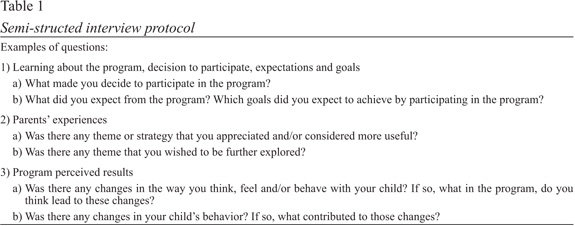
Semi-structured interviews were conducted to explore parent’s perceptions and experiences. An interview script with close and open-ended questions was developed by one of the authors of this study for this purpose (Table 1). Some materials created by the parents during the program and graphics based on parents’ evaluations of their behaviors and their child’s behavior were presented as prompts during the interview, to facilitate the recollection of specific aspects and the description of experiences, perspectives, thoughts and/or feelings (Galletta, 2013).
]]> A sociodemographic questionnaire was applied to collect information about the participants’ sociodemographic characteristics relevant to the study.
Analysis
The interviews were recorded, transcribed verbatim, and subjected to a content analysis procedure. Themes and subthemes were structured a priori based on the literature, although through the exploration of the data a new thematic map emerged. We relied on a general notion of data saturation, conceptualized as the point in data collection and analysis when new information produces little or no change to the thematic map (Guest, Bunce, & Johnson, 2006).
The development of the thematic map can be a subjective task since the conceptualization and significance given to the data could differ according to the researcher. Therefore, there is a risk of neglecting important elements and/or taking into account non-significant elements (Bardin, 2013). To help ensure the credibility and validity of the investigation (Miles & Huberman, 1994), raw data responses were grouped into themes and subthemes by the first author and checked by a second researcher until a consensus was reached. The QSR Nvivo 11 software was used to store, explore and organize the qualitative material.
To understand the importance given to themes referred by parents (Guest et al., 2006), descriptive statistic procedures were used, namely the calculation of the absolute and relative frequencies.
Results
The following results describe the themes and subthemes identified based on the parents’ interviews. The analysis yielded three main themes: motives that led parents to participate in the parenting program, perceived impact of the parenting program, and facilitators and barriers to parents’ engagement and parenting change.
]]> Motives to participate Four main themes concerning the motives for enrollment emerged from the analysis: needing help to solve specific problems, wanting to be a better parent, expecting to share experiences with other parents, and feeling that the opportunity for enrollment had arisen at the ideal moment.
All the parents in this study chose to attend the ACT-RSK program because they felt they needed help to solve specific problems related to three main topics: parenting, children and relational issues. Concerning parenting, the participants identified the use of negative parenting practices (80%), “I was yelling and smacking frequently” (M4), emotional dysregulation (60%), “I was not able to deal with my daughter’s difficult behavior and the only reactions I had, I felt were inadequate, but I was not able to control myself” (M10), and low self-efficacy (50%), “Sometimes we do not know when to set limits or ignore” (M1).
More than a half of the participants expressed needing help to solve problems regarding their children, such as behavior problems (30%), “At the beginning (of the program), she was being very difficult... Always starting fights, being rude and unpleasant whenever I requested something” (M5) and emotional dysregulation (20%), “I was worried about the intensity and frequency of the behavior because they were not occasional tantrums... It was happening almost every day and sometimes twice a day, and with a great intensity” (M8).
Participants also reported needing help to solve problems pertaining to relational issues. Particularly, conflicts with the child (30%), “I needed to solve some problems at home, specifically conflicts with one of my daughters” (M10), and conflicts between siblings (20%), “One has 5-year-old and the other is almost 9, and sometimes there are situations when they fight with each other” (M6).
The majority of participants decided to join the program to promote their parenting abilities and knowledge. The content was considered relevant by parents (90%), “The content caught my attention. I found the themes of the sessions extremely relevant” (M6), and many participants expressed a desire to improve their parenting skills (60%), “I wanted to become a better mother and improve this side of my life” (M4).
More than half of the parents were led to participate in the program expecting to share experiences with other parents (60%), “Since it was a group, I immediately thought the sharing between people would be a benefit to me” (M4).
Half of the participants enrolled because they perceived this opportunity had arisen at the perfect moment (50%), “It was the perfect timing because I needed help” (M10).
Impact
]]> Parents were asked about the program’s impact and the perceived changes as result of attending the parenting intervention. According to the analysis, participants observed changes in themselves, their children and the families.
Changes in parents. Parents were able to identify changes in themselves in four domains: cognitions, emotional self-regulation, parenting practices and self-efficacy.
In relation to parents’ cognitions, parents described: an increased awareness of their own parenting behaviors and of their impact on the child’s behavior and development; an adjustment of their expectations to accommodate the child’s characteristics; and the acquisition of new information, for example information regarding the child’s exposure to electronic media, that led them to change their parenting practices.
As mentioned above, all participants reported being more aware of their parenting behaviors and influence (100%), “I will never forget... It was morning, I was late, his father was late, and he was also late, and he said: ‘dad, mom is always yelling’. Now I say: ‘what an awful thing’, but I am able to say it because I participated in the program” (M2). Particularly, parents perceived that they are a role model for their children (50%), “Behavior generates behavior... If I yell, she is going to yell, if I hit, she is going to hit. Actually, there was a time when she was slapping me, and I would end up doing the same. Then I realized this was going nowhere. When she slaps me, I say: ‘you cannot do that because you are hurting me’. I try to explain rather than reciprocate in the same way” (M1).
Parents expressed an effort to adjust expectations and behaviors to the child’s characteristics (70%). Specifically, parents reported giving more attention to the child (30%), “I am a little more concerned. Now I am more focused and aware” (M2), and improving knowledge of child development (30%), “Understanding the characteristics of each development phase. For instance, I understand that in the phase in which X is, tantrums are normal, being egocentric is normal, some characteristics are normal. It is important to understand this side of the child, which is natural, to be able to understand that they are not being deviant from a pattern, he is not different” (M4).
Still, in relation to the cognitive dimension, it was reported a greater attention to electronic media (40%), “About the TV, I am more assertive because I am more aware, and I have been creating strategies to led her to other kind of play activities” (F7). Participants showed an increased awareness of the time children should be exposed to electronic media and the importance of providing alternative activities, such as playing with them. Furthermore, parents applied their knowledge and strategies to older children in the family.
A second dimension, emotional self-regulation, emerged as an important change domain for parents. They reported being calmer when dealing with difficult behaviors and/or conflicts with the child (80%), “There were changes at critical times. In other words, when he throws a tantrum and is out of control, I can control myself and reflect, even when I am very tired” (M4), and recurring to self-regulation strategies (70%), “In some situations when I am about to lose my temper, the ACT program comes to my mind and I think: ‘OK, calm down, breath and count to 10’. I feel it slows me down” (M6). Additionally, parents expressed feeling less guilty (20%), “Demystifying this feeling of remorse and understanding that being angry with the little ones is a valid feeling” (M3).
Changes were also reported in parenting practices. The majority of the parents reported using more positive parenting practices, such as: communication (90%), “I try to negotiate in a calm manner and through communication. It is not just: ‘if you do this, you lose that’. I try to explain and make him verbalize” (M9); ignoring (30%), “Usually, I try to ignore some behaviors, which sometimes it is difficult, but I think it works because it removes meaning from that behavior” (M9); and spending more quality time with the child (30%), “Since we started participating in the program we have been following this philosophy: ‘I do not care if the house needs some cleaning, let us go outside, let us play, let us be together’” (M1). Some parents expressed reinventing, adapting and/or innovating the positive parenting practices learned (40%), “When I say: ‘stay here’ it is an affront to him. He does the opposite, he is more likely to start running around the house. It can create more conflict, so it is better to adapt” (M9). On the other hand, more than half of the parents perceived a reduction of negative parenting practices (60%), “I was able to control the yelling and screaming. I also did it less frequently” (M8).
The last dimension of change in parents was an increase of self-efficacy reported by most of the participants (90%). Particularly, they suggested an improvement of problem-solving skills (60%), “In this program, we were able to organize our ideas” (M2).
]]>Changes in children. All participants perceived changes in their children, namely an increased child’s ability to self-regulate behaviors and emotions (60%), “She also learned to react like: ‘mom, you have to calm yourself, take a deep breath’” (M3), a reduction of child’s behavior problems (50%), “She does not call names to her sister anymore: ‘you are stupid, you are dumb, you are boring’ or says silly things: ‘leave me alone, get out’” (M10), and an improved child’s awareness of rules (50%), “She likes this TV channel, which I know it is for older kids and now she calls me and say: ‘mom, change the channel because it is not for kids my age’” (M5).
Changes in family dynamics. More than half of the parents reported changes in their family dynamics. Participants described a generalization of the positive results of the intervention to other family members (30%), “I think I became calmer when managing conflicts. Not only with my daughter but also with the remaining family members” (M10) and reported communicating with the family and the partner about the program (30%), “Even though the father could not attend, I tried to transmit the information as the difficulties were from both of us” (M9). Moreover, parents perceived a positive impact on the parent-child relationship (20%), “The program helped me with this friction between us that no longer exists” (M2).
Facilitators
The present study also aimed to understand the program’s features considered important by parents. This knowledge can clarify how interventions elicit parenting changes and can be used to enhance program’s effectiveness. The participants expressed their opinions about three main topics related to the program: content, process and relation.
Content. The content of the parenting program was mentioned by all parents as a facilitator of their engagement and of the change in their parenting. The quality of the presentation was highlighted, specifically the interesting materials and activities (100%), “We saw lots of videos, very amusing, with many contents” (M4), and the use of relevant case examples (50%), “We discussed real situations, such as tantrums in the supermarket, which is something that happens frequently” (M6). Some parents considered the themes of the sessions had a logic sequence (30%), “I think they were complementary to each other, they would not make sense without each other” (M9), and the content was presented clearly and objectively (20%).
Parents appreciated the contents related to children (80%), for instance, about the impact of violence (60%), “The session that touched me the most was the one we talked about verbal, physical, emotional violence” (M10), child development (40%), “We must understand that children react the way they do because they are developing and it is important for parents to be aware of it. Children see things differently than we do” (M8), and electronic media (30%), “I thought all sessions were interesting, but especially the one we talked about electronic media. It was important for us to learn when to establish limits and manage the time they spend in front of a TV or tablet” (M1).
]]> It was also considered important to address contents about parenting (70%), namely positive parenting practices (40%), “Talking about consequences and rewards is very useful” (M6), emotional regulation (30%), “This session was very important to me. We are both starting to be angry... We have to calm down and use strategies. By far, it was the one that had most impact on me. We talked a lot about strategies, which we continue to use” (M5), and parenting styles (30%), “Discussing values was important. The example we received and want to transmit, and what we received from our parents and want to be as a parent” (M10).
Process. Based on parents’ reports, the parenting program allowed them to reflect and discuss about relevant issues (80%), “It helps when we reflect and understand the reasons. I think reflection was the most important in all this information that we collected” (M4). More than half of the participants expressed being committed to change (70%), “I would stop and concentrate on those issues and even though I was not with my children, I felt I was doing something that would be positive for them too” (M6). For some parents, establishing goals contributed to this commitment (20%), “Being involved in establishing goals, understanding things and getting strategies to deal with them” (M5).
The parenting program enabled the systematization of knowledge and practices (60%), “I remember the suggestion: respond and do not react. Because it was addressed several times in the program, we assimilated and it became a principle to follow” (M5). The homework (50%) was described as a positive aspect, particularly because it allowed parents to reflect and/or observe the applicability of what was taught, “It made us recognize similar situations to those discussed and we applied the conclusions we had reached” (M3). Frequency and duration were also mentioned (40%), “I think those two hours was the right time to explore the themes” (M3).
Relation. All parents valued being part of a group, particularly being able to share without judgment (100%), “In parenting, it makes sense that people share opinions and experiences” (M6) and the normalization of experiences (60%), “We talk with other parents who are going through the same situations and we end up feeling: ‘well, we are not alone, they are all like us’” (M1).
More than half of the parents reported valuing the role of the group leaders (70%). They emphasized the development of an informal and proximal relation (40%), “It was a good relationship since the beginning. It was not distant or formal, but I think it was always very respectful” (M2) and the promotion of empathy and involvement by the group leaders, “Some themes are more difficult, heavier, others may even be related to our history and touch us particularly. The fact that you (group leader) could deal with that and that you promoted empathy, made the bond between us (group) became stronger” (M6). Interestingly, one participant felt the empathy showed by the group leaders was a barrier because it normalized inadequate parenting behaviors, “I felt the group leaders were concerned about us, which is pleasant. But it is also important to be aware that some behaviors are violent and although it is hard to be confronted with that, it brings benefits: ‘OK, maybe I am not spanking, but hold on! This (way of parenting) has long-term consequences’” (M5).
Barriers
Obstacles to the engagement in the program and to parent’s changes were also explored in the present study. This information can elucidate ways to overcome the barriers and improve program’s effectiveness. Two main themes emerged: participants and program constraints.
]]>Participants constraints. Most participants identified individual barriers, particularly: competing demands on parent’s time (70%), “Time is a complicated matter because of my job. I am not able to spend as much time as I would like with her” (M1); family context (40%), “I think a first child has a calmer life compared to a second or a third child. Our stress increases because we have more things to deal with”, M8); and difficulties in changing behaviors/low self-efficacy (20%), “I am a very “automatic person” and it is difficult for me to implement new techniques. I tend to implement them for a brief period of time and then I go back to old ways” (M8).
Program constraints. Parents perceived the content of some sessions inadequate to the group characteristics (50%), “The way the session (Children and Electronic Media) was structured was not so well directed to us” (M5), because these sessions were not seen as adding new information or they were seen inadequate to their children’s specific age.
Finally, participants suggested extending the duration of the program (50%), “I think the sessions should be half an hour or one-hour longer because topics were left undiscussed” (F7) to deepen and/or finish exploring the issues discussed.
Discussion
Parenting programs are designed to improve parenting skills and knowledge, hence preventing child maltreatment and promoting a healthy child development (Pedro et al., 2017). Among the available effective interventions, we chose the ACT-RSK program, which focuses on the prevention of abusive and violent parenting. The ACT-RSK program has shown to be effective in increasing parents’ nurturing behavior, decreasing harsh parenting and negative discipline, improving parenting practices regarding electronic media control and monitoring, as well as decreasing child behavior problems (e.g., Altafim, Pedro, & Linhares, 2016; Knox & Burkhart, 2014). Recently, a first pilot study with ACT-RSK program was conducted in Portugal (Howe et al., 2017). The present study is the first one aiming to understand Portuguese parents’ perspective about their experience and participation in the ACT-RSK program. A qualitative approach to examine parents’ experience is extremely important to comprehend the impact, acceptability and usefulness of the program from the participants’ perspective.
The present study aimed to explore parents’ motives to participate in a parenting program. Parenting programs have shown problems of low uptake rate and reduced continued parental engagement (Koerting et al., 2013). Qualitative approaches can be used to gather information concerning the reasons for low adherence, and how to effectively plan and target these services (Koerting et al., 2013). Consistently with previous research (e.g., Rahmqvist et al., 2014), the results of the present study showed that the motives to enroll in the program were related to the desire to improve parenting skills and knowledge and the opportunity to share feelings and experiences with other parents who were struggling with similar issues.
On the other hand, all parents reported the need to solve specific problems concerning parenting, their child or their family. These results indicate that it is important to become aware of specific problems in order to make the decision and to be motivated to attend a parenting program (Spitzer, Webber-Stratton, & Hollinsworth, 1991). Particularly, parents perceived some emotional and behavior problems in their child, which they felt they were not being able to deal with effectively. They also felt little control over their own emotions and behaviors, leading them to use negative parenting practices. Some parents were going through a peak of emotional dysregulation or of child’s difficult behaviors, so the opportunity to participate in the parenting program was described as arriving at the perfect time.
]]> Overall, parents are most likely to participate in parenting programs if they feel that their children are at risk to develop behavioral problems, believe that those problems will have an undesirable impact, perceive that parenting programs will be effective in reducing behavioral problems in their children and do not find major barriers to participation (e.g., Salari & Filus, 2017). Previous findings indicate that parenting stress, parents’ perceived severity of child behavioral problems, and low levels of confidence in their parenting skills increase the parents’ perception of intervention benefits and, consequently, the parents’ readiness to change and inclination to enroll in a preventive parenting program (Andrade, Browne, & Naber, 2015; Jones, Putt, Rabinovitch, Hubbard, & Snipes, 2016; Spoth & Redmond, 2000).Clinical implications and recommendations can be drawn from the results of the present study regarding the participants’ motives to enroll. To increase parents’ adherence, when advertising the parenting program, the contents addressed should be presented as well as describing how the intervention can benefit parents, children and families. The advantages of being part of a group-based program should also be highlighted. Finally, it should be explained that the parenting intervention can be tailored to the parents’ specific needs in addition to those of the child and family.
The present study also examined the impact of the ACT-RSK on parents, children and families. The parents exhibited a greater awareness of their parenting role and of the influence of their parenting on the child’s behavior and development. This specific change in parents’ cognitions was also reported by previous research (e.g., Mejia et al., 2016). The participants also described an adjustment of their expectations and behaviors which, in this study, seems to be partly caused by the acquisition of knowledge related to child development. Therefore, the participants started to recognize the children’s perspective, identify the reasons why they misbehave and consider the characteristics of their developmental phase.
The ACT-RSK teaches developmentally appropriate anger management and social problem-solving skills for both parent and child (Knox, Burkhart, & Hunter, 2010). Thereby, all participants expressed being more capable of regulating their emotions, as a result of using self-regulation strategies. Additionally, parents began to deal more peacefully and effectively with difficult behaviors and conflicts with the children. In parallel, parents perceived themselves as more self-efficient and capable of solving problems.
In this study, the participants emphasized the significance of having learned and developed the ability to self-regulate their emotions, and how vital it was to change their behavior and attitude towards their children. A recent study suggests that emotional self-regulation and self-efficacy are the psychological mechanisms responsible for changes in parenting within parenting programs (Mejia et al., 2016). However, this question needs to be further explored, given the scarcity of research examining these mechanisms (Sanders & Mazzucchelli, 2013).
Overall, these findings suggest that parents improved self-regulation is crucial to successful parenting and it should be a central goal of parenting interventions. Most parenting programs focus on providing knowledge of child development and on teaching positive parenting practices to manage the child’s difficult behavior. However, the generalization of these skills to the natural setting may be a challenge when parents’ emotions are aroused and they struggle to adequately regulate them (Ben-Porath, 2010). An important consideration for parenting programs and clinical practice is to discuss emotional dysregulation and teach parents how to regulate their emotions, which can benefit parents by helping them to successfully implement positive parenting practices, effectively deal with their child’s misbehavior and prevent negative parent-child interactions.
Positive changes were observed in children, with parents describing them to be better at regulating their emotions and behaviors. Parents attributed this improvement to changes in their parenting behaviors and their use of strategies to help children cope with emotions. Hence, this result can be explained by the enhancement of parents’ emotional self-regulation that enabled more positive strategies to manage the child’s negative emotions (e.g., facilitating emotion expression) and the modeling of parental positive behavior. These results support the significance of teaching parents how to skillfully regulate emotions and how this can provide the child with the opportunity to learn self-regulation strategies through observation.
Consistently with other studies (e.g., Errázuriz et al., 2016), parents noticed a reduction of child behavior problems and an increased child’s awareness of rules. Participants reported that their children improved behavior was a result of dealing effectively and calmly with difficult behaviors. Also, using more positive parenting practices, such as developmentally appropriate consequences and consistent limit setting through communication, contributed to children’s greater awareness of rules. In conclusion, the children’s increased capacity to regulate their own emotions and to be more aware of the rules may have contributed to a reduction of child behavior problems. Positive changes observed in the child’s behavior may encourage parents’ engagement and confidence, due to the perceived results of changing their own parenting and the perceived effectiveness of the program (Piotrowska et al., 2017). One strategy that can be implemented in future parenting programs is the weekly monitoring of the child’s behavior and their own parenting behavior to encourage parents’ engagement and confidence. This task might allow parents to acknowledge and reflect on the behavioral changes and evolutions throughout their participation in the program.
Positive changes in the family dynamics and parent-child relationship were also described. This improvement can be explained as a result of effective communication and of spending more quality time together, as well as a consequence of parents dealing effectively with difficult situations and behaviors, thus reducing the negative interaction between family members (Erráziriz et al., 2016; Levac et al., 2008). Additionally, the participants reported that they shared the contents of the program with the family and partner, for instance, teaching them new strategies. According to Piotrowska and colleges (2017), these findings highlight the role of a “parenting team” where both parents are involved, remain consistent and aim to achieve the same parenting goals. It also reflects the participants’ engagement, which can maximize the potential positive outcomes of participating in parenting programs (Piotrowska et al., 2017). Based on these results, we suggest clinicians should promote the sharing of experiences, knowledge and strategies learned within the parenting program, with the partner or close relatives (e.g., grandparents) who take part in the child’s rearing, through specific home assignments.
Regarding the implementation aspects of the program, the current study suggests the ACT-RSK content, process and interactions were considered vital to promote engagement and parenting change. The activities and materials such as videos, the use of relevant case examples that show situations parents could relate to, and providing “tools” to deal with those situations, helped parents understand the contents of the intervention. The parenting program was considered a space where parents could reflect and discuss relevant subjects related to parenting and children, which may have led to the parenting changes described above.
]]> The parents appreciated being able to share without being judged, and considered that the normalization of experiences contributed to the feeling of not being alone in parenting. Similar to the findings of other studies (e.g., Levac et al., 2008), some participants felt reassured when they understood that other parents deal with the same (or worse) situations and problems, becoming more confident in their parenting skills.Concerning the barriers, some parents suggested extending the duration of the program and considered certain contents of the parenting program not suitable to the characteristics of the group. With this in mind, Mytton and colleges (2014) recommend that parenting programs should be tailored, assessing beforehand families’ characteristics and needs so they can benefit from the intervention.
Some parents also reported difficulties associated with changing established parenting approaches. They believed they were not capable of implementing new strategies or simply lost their motivation. Focusing on the positives and having realistic expectations about improvements has been shown to help parents (Smith et al., 2014). To overcome these obstacles, the group leaders can help parents identify small and subtle changes and understand that strategies may not always work (Smith et al., 2014). Sharing successful strategies and experiences between parents can also help improve self-confidence, motivation and a feeling of being valued within the group (Smith et al., 2014).
Lastly, parents recognized multiple life contexts that influenced their experience with the ACT-RSK. For instance, participants’ family situation (e.g., having more than one child and the dynamics between siblings) was described as a barrier to achieve their goals, as it made family management even more challenging. Time demands associated with parents’ work was considered another obstacle, while other parents mentioned that their parental performance was negatively influenced by their being overwhelmed with parenting responsibilities.
Previous research has shown that stress related to the child (e.g., demandingness) and to the parents’ views of their own functioning (e.g., restrictions in the parental role) are likely to make participation in interventions more burdensome than it would otherwise be (Kazdin & Wassell, 2000). Research also indicates that lower levels of quality of life, including low quality of family relationships and poor organizational structure of the family environment, can predict the increase of parents’ perceived barriers (Kazdin & Wassell, 2000). In a more recent study, Holtrop and colleges (2014) highlighted the importance of considering the influence of life contexts, since the challenges found in the work and family contexts might negatively impact parents’ engagement and parenting change (e.g., having less time to be with the child and to implement the positive practices learned).
Even though research often do not consider the contribution of the family context and the role of both parents and their interactions (Piotrowska et al., 2017), it is crucial to acknowledge what parents bring to the intervention, and how this burden may place them at risk for particular experiences (Kazdin & Wassell, 2000). Therefore, the potential obstacles described above should be identified and addressed early on to better engage the family in the parenting program.
This research has several limitations. The sample was small, formed mostly by highly educated mothers, and only from two intervention groups, limiting the generalization of our findings. Further studies are needed, especially with population groups that are generally more vulnerable and hard-to-reach, such as single parents and/or parents with low social economic status.
In sum, the findings of the present study suggest the ACT-RSK program was positively received by Portuguese parents. The program was able to engage the participants in efforts to become a better parent, as they described being committed to change their parenting. From the parents’ perspectives, this research indicates the program had a positive impact for parents, children and families, and emphasizes the role of self-regulation as a critical process of change in parenting interventions. The results of this study can also be useful to promote parents’ adherence and engagement in the intervention, and ultimately the effectiveness of the program.
References
]]>Altafim, E. R., & Linhares, M. B. (2016). Universal violence and child maltreatment prevention programs for parents: A systematic review. Psychosocial Intervention, 25, 27-38. Retrieved from http://dx.doi.org/10.1016/j.psi.2015.10.003 [ Links ]
Altafim, E. R., Pedro, M. E., & Linhares, M. B. (2016). Effectiveness of ACT Raising Safe Kids Parenting program in a developing country. Children and Youth Services Review, 70, 315-323. Retrieved from http://dx.doi.org/10.1016/j.childyouth.2016.09.038 [ Links ]
Andrade, B. F., Browne, D. T., & Naber, A. R. (2015). Parenting skills and parent readiness for treatment are associated with child disruptive behavior and parent participation in treatment. Behavior Therapy, 46, 365-378. Retrieved from http://dx.doi.org/10.1016/j.beth.2015.01.004 [ Links ]
Bardin, L. (2013). Análise de conteúdo. Lisboa: Edições 70. [ Links ]
Ben-Porath, D. D. (2010). Dialectical behavior therapy applied to parent skills training: Adjunctive treatment for parents with difficulties in affect regulation. Cognitive and Behavioral Practice, 17, 458-465. Retrieved from http://dx.doi.org/10.1016/j.cbpra.2009.07.005 [ Links ]
Choe, D. E., Olson, S. L., & Sameroff, A. J. (2013). The interplay of externalizing problems and physical and inductive discipline during childhood. Developmental Psychology, 49, 2029-2039. Retrieved from http://dx.doi.org/10.1037/a0032054 [ Links ]
Errázuriz, P., Cerfogli, C., Moreno, G., & Soto, G. (2016). Perception of Chilean parents on the Triple P Program for improving parenting practices. Journal of Child and Family Studies, 25, 3440-3449. Retrieved from http://dx.doi.org/10.1007/s10826-016-0492-8 [ Links ]
Furlong, M., & McGilloway, S. (2015). Barriers and facilitators to implementing evidence-based parenting programs in disadvantaged settings: A qualitative study. Journal of Child and Family Studies, 24, 1809-1818. Retrieved from http://dx.doi.org/10.1007/s10826-014-9984-6 [ Links ]
Galletta, A. (2013). Mastering the semi-structured interview and beyond: From research design to analysis and publication. New York: NYU Press. Retrieved from http://dx.doi.org/10.18574/nyu/9780814732939.001.0001 [ Links ]
Gershoff, E. T., & Grogan-Kaylor, A. (2016). Spanking and child outcomes: Old controversies and new meta-analyses. Journal of Family Psychology, 30, 453-469. Retrieved from http://dx.doi.org/10.1037/fam0000191 [ Links ]
Guest, G., Bunce, A., & Johnson, L. (2006). How many interviews are enough? An experiment with data saturation and variability. Family Health International, 18, 59-82. Retrieved from http://dx.doi.org/10.1177/1525822X05279903 [ Links ]
Holtrop, K., Parra-Cardona, J. R., & Forgatch, M. S. (2014). Examining the process of change in an evidence-based parent training intervention: A qualitative study grounded in the experiences of participants. Prevention Science, 15, 745-756. Retrieved from http://dx.doi.org/10.1007/s11121-013-0401-y [ Links ]
Homem, T., Gaspar, M., Seabra-Santos, M., Azevedo, A., & Canavarro, M. (2013). Perturbações de comportamento externalizantes em idade pré-escolar: O caso específico da perturbação de oposição. Análise Psicológica, XXXI, 31-48. Recuperado de http://dx.doi.org/10.14417/ap.658 [ Links ]
Howe, T. R., Knox, M., Altafim, E. R. P., Linhares, M. B. M., Nishizawa, N., Fu, T. J., . . . Pereira, A. I. (2017). International child abuse prevention: Insights from ACT Raising Safe Kids. Child and Adolescent Mental Health, 22, 194-200. Retrieved from http://dx.doi.org/10.1111/camh.12238 [ Links ]
Jones, H. A., Putt, G. E., Rabinovitch, A. E., Hubbard, R., & Snipes, D. (2016). Parenting stress, readiness to change, and child externalizing behaviors in families of clinically referred children. Journal of Child and Family Studies, 26, 225-233. Retrieved from http://dx.doi.org/10.1007/s10826-016-0547-x [ Links ]
Kane, G. A., Wood, V. A., & Barlow, J. (2007). Parenting programmes: A systematic review and synthesis of qualitative research. Child: Care, Health and Development, 33, 784-793. Retrieved from http://dx.doi.org/10.1111/j.1365-2214.2007.00750.x [ Links ]
Kazdin, A. E., & Wassell, G. (2000). Predictors of barriers to treatment and therapeutic change in outpatient therapy for antisocial children and their families. Mental Health Services Research, 2, 27-40. Retrieved from http://dx.doi.org/10.1023/A:1010191807861 [ Links ]
Knox, M., & Burkhart, K. (2014). A multi-site study of the ACT Raising Safe Kids Program: Predictors of outcomes and attrition. Children and Youth Services Review, 39, 20-24. Retrieved from http://dx.doi.org/10.1016/j.childyouth.2014.01.006 [ Links ]
Knox, M., Burkhart, K., & Hunter, K. (2010). ACT Against Violence Parents Raising Safe Kids program: Effects on maltreatment-related parenting behaviors and beliefs. Journal of Family Issues, 32, 55-74. Retrieved from http://dx.doi.org/10.1177/0192513X10370112 [ Links ]
Koerting, J., Smith, E., Knowles, M. M., Latter, S., Elsey, H., McCann, D. C., . . . Sonuga-Barke, E. J. (2013). Barriers to, and facilitators of, parenting programmes for childhood behaviour problems: A qualitative synthesis of studies of parents’ and professionals’ perceptions. European Child and Adolescent Psychiatry, 22, 653-670. Retrieved from http://dx.doi.org/10.1007/s00787-013-0401-2
Levac, A. M., McCay, E., Merka, P., & Reddon-D’Arcy, M. L. (2008). Exploring parent participation in a parent training program for children’s aggression: Understanding and illuminating mechanisms of change. Journal of Child and Adolescent Psychiatric Nursing, 21, 78-88. Retrieved from http://dx.doi.org/10.1111/j.1744-6171.2008.00135.x
Mejia, A., Ulph, F., & Calam, R. (2016). Exploration of mechanisms behind changes after participation in a parenting intervention: A qualitative study in a low-resource setting. American Journal of Community Psychology, 57, 181-189. Retrieved from http://dx.doi.org/10.1002/ajcp.12020 [ Links ]
Miles, M. B., & Huberman, A. M. (1994). Qualitative data analysis: An expanded sourcebook (2nd ed.). Thousand Oaks, CA: SAGE Publications. [ Links ]
Mytton, J., Ingram, J., Manns, S., & Thomas, J. (2014). Facilitators and barriers to engagement in parenting programmes: A qualitative systematic review. Health Education and Behavior, 41, 127-137. Retrieved from http://dx.doi.org/10.1177/1090198113485755 [ Links ]
National Center for Parent, Family and Community Engagement [NCPFCE]. (2015). Compendium of parenting interventions. Washington, DC: National Center on Parent, Family, and Community Engagement, Office of Head Start, US Department of Health & Human Services. [ Links ]
Patterson, J., Mockford, C., & Stewart-Brown, S. (2005). Parents’ perceptions of the value of the Webster-Stratton Parenting Programme: A qualitative study of a general practice based initiative. Child: Care, Health and Development, 31, 53-64. Retrieved from http://dx.doi.org/10.1111/j.1365-2214.2005.00479.x
Pedro, M. E., Altafim, E. R., & Linhares, M. B. (2017). ACT Raising Safe Kids Program to promote positive maternal parenting practices in different socioeconomic contexts. Psychosocial Intervention, 26, 63-72. Retrieved from http://dx.doi.org/10.1016/j.psi.2016.10.003 [ Links ]
Piotrowska, P. J., Tully, L. A., Lenroot, R., Kimonis, E., Hawes, D., Moul, C., . . . Dadds, M. R. (2017). Mothers, fathers, and parental systems: A conceptual model of parental engagement in programmes for child mental health – Connect, Attend, Participate, Enact (CAPE). Clinical Child and Family Psychology Review, 20, 146-161. Retrieved from http://dx.doi.org/10.1007/s10567-016-0219-9
Portwood, S. G., Lambert, R. G., Abrams, L. P., & Nelson, E. B. (2011). An evaluation of the Adults and Children Together (ACT) Against Violence Parents Raising Safe Kids Program. The Journal of Primary Prevention, 32, 147-160. Retrieved from http://dx.doi.org/10.1007/s10935-011-0249-5 [ Links ]
Rahmqvist, J., Wells, M. B., & Sarkadi, A. (2014). Conscious parenting: A qualitative study on Swedish parents’ motives to participate in a parenting program. Journal of Child and Family Studies, 23, 934-944. Retrieved from http://dx.doi.org/10.1007/s10826-013-9750-1
Salari, R., & Filus, A. (2017). Using the health belief model to explain mothers’ and fathers’ intention to participate in universal parenting programs. Prevention Science, 18, 83-94. Retrieved from http://dx.doi.org/10.1007/s11121-016-0696-6
Sanders, M. R., Markie-Dadds, C., Rinaldis, M., Firman, D., & Baig, N. (2007). Using household survey data to inform policy decisions regarding the delivery of evidence-based parenting interventions. Child: Care, Health and Development, 33, 768-783. Retrieved from http://dx.doi.org/10.1111/j.1365-2214.2006.00725.x [ Links ]
Sanders, M. R., & Mazzucchelli, T. G. (2013). The promotion of self-regulation through parenting interventions. Clinical Child and Family Psychology Review, 16, 1-17. Retrieved from http://dx.doi.org/10.1007/s10567-013-0129-z [ Links ]
Sandler, I. N., Schoenfelder, E. N., Wolchik, S. A., & MacKinnon, D. P. (2011). Long-term impact of prevention programs to promote effective parenting: Lasting effects but uncertain processes. Annual Review of Psychology, 62, 299-329. Retrieved from http://dx.doi.org/10.1146/annurev.psych.121208.131619 [ Links ]
Shapiro, C. J., Prinz, R. J., & Sanders, M. R. (2012). Facilitators and barriers to implementation of an evidence-based parenting intervention to prevent child maltreatment: The Triple P – Positive Parenting Program. Child Maltreatment, 17, 86-95. Retrieved from http://dx.doi.org/10.1177/1077559511424774
Silva, J. (2011). ACT Raising Safe Kids Program. Washington, DC: American Psychological Association. [ Links ]
]]>Silva, J. A., & Williams, L. C. (2016). Um estudo de caso com o programa parental ACT para educar crianças em ambientes seguros. Temas em Psicologia, 24, 743-755. Recuperado de http://dx.doi.org/10.9788/TP2016.2-19Pt [ Links ]
Smith, E., Koerting, J., Latter, S., Knowles, M. M., Mccann, D. C., Thompson, M., & Sonuga-Barke, E. J. (2014). Overcoming barriers to effective early parenting interventions for Attention-Deficit Hyperactivity Disorder (ADHD): Parent and practitioner views. Child: Care, Health and Development, 41, 93-102. Retrieved from http://dx.doi.org/10.1111/cch.12146 [ Links ]
Spitzer, A., Webster-Stratton, C., & Hollinsworth, T. (1991). Coping with conduct-problem children: Parents gaining knowledge and control. Journal of Clinical Child Psychology, 20, 413-427. Retrieved from http://dx.doi.org/10.1207/s15374424jccp2004_10 [ Links ]
Spoth, R., & Redmond, C. (2000). Research on family engagement in preventive interventions: Toward improved use of scientific findings in primary prevention practice. The Journal of Primary Prevention, 21, 267-284. Retrieved from http://dx.doi.org/10.1023/A:1007039421026 [ Links ]
Stoltz, S., van Londen, M., & Dekovic, M. (2015). Effects of parent and child characteristics on participation and outcome of an individualized booster parent intervention for children with externalizing behaviour. European Journal of Developmental Psychology, 12, 395-411. Retrieved from http://dx.doi.org/10.1080/17405629.2015.1018172 [ Links ]
Waller, R., Gardner, F., Dishion, T., Sitnick, S. L., Shaw, D. S., Winter, C. E., & Wilson, M. (2014). Early parental positive behavior support and childhood adjustment: Addressing enduring questions with new methods. Social Development, 24, 304-322. Retrieved from http://dx.doi.org/10.1111/sode.12103 [ Links ]
Weymouth, L. A., & Howe, T. R. (2011). A multi-site evaluation of Parents Raising Safe Kids Violence Prevention Program. Children and Youth Services Review, 33, 1960-1967. Retrieved from http://dx.doi.org/10.1016/j.childyouth.2011.05.022 [ Links ]
Correspondence concerning this article should be addressed to: Ana Isabel Pereira, Faculdade de Psicologia, Universidade de Lisboa, Alameda da Universidade, 1649-013 Lisboa, Portugal. E-mail: ipereira@psicologia.ulisboa.pt
]]>This study was supported by a PhD one grant from Fundação para a Ciência e Tecnologia (SFRH/BD/100252/2014) and had the financial support of the Gulbenkian Human Development Program (Calouste Gulbenkian Foundation).
Submitted: 11/04/2018 Accepted: 05/10/2018
]]>