<?xml version="1.0" encoding="ISO-8859-1"?><article xmlns:mml="http://www.w3.org/1998/Math/MathML" xmlns:xlink="http://www.w3.org/1999/xlink" xmlns:xsi="http://www.w3.org/2001/XMLSchema-instance">
<front>
<journal-meta>
<journal-id>0871-018X</journal-id>
<journal-title><![CDATA[Revista de Ciências Agrárias]]></journal-title>
<abbrev-journal-title><![CDATA[Rev. de Ciências Agrárias]]></abbrev-journal-title>
<issn>0871-018X</issn>
<publisher>
<publisher-name><![CDATA[Sociedade de Ciências Agrárias de Portugal]]></publisher-name>
</publisher>
</journal-meta>
<article-meta>
<article-id>S0871-018X2015000400007</article-id>
<article-id pub-id-type="doi">10.19084/RCA15139</article-id>
<title-group>
<article-title xml:lang="en"><![CDATA[Soil management system effects on N availability and tree productivity in chestnut plantations under Mediterranean conditions]]></article-title>
<article-title xml:lang="pt"><![CDATA[Efeitos do sistema de gestão do solo na disponibilidade de N e produtividade de plantações de castanheiro em condições Mediterrâneas]]></article-title>
</title-group>
<contrib-group>
<contrib contrib-type="author">
<name>
<surname><![CDATA[Raimundo]]></surname>
<given-names><![CDATA[Fernando]]></given-names>
</name>
<xref ref-type="aff" rid="A01"/>
</contrib>
<contrib contrib-type="author">
<name>
<surname><![CDATA[Coutinho]]></surname>
<given-names><![CDATA[João]]></given-names>
</name>
<xref ref-type="aff" rid="A01"/>
</contrib>
<contrib contrib-type="author">
<name>
<surname><![CDATA[Martins]]></surname>
<given-names><![CDATA[Afonso]]></given-names>
</name>
<xref ref-type="aff" rid="A01"/>
</contrib>
<contrib contrib-type="author">
<name>
<surname><![CDATA[Madeira]]></surname>
<given-names><![CDATA[Manuel]]></given-names>
</name>
<xref ref-type="aff" rid="A02"/>
</contrib>
</contrib-group>
<aff id="A01">
<institution><![CDATA[,Universidade de Trás-os-Montes e Alto Douro  ]]></institution>
<addr-line><![CDATA[Vila Real ]]></addr-line>
<country>Portugal</country>
</aff>
<aff id="A02">
<institution><![CDATA[,Universidade de Lisboa Instituto Superior de Agronomia Centro de Estudos Florestais]]></institution>
<addr-line><![CDATA[Lisboa ]]></addr-line>
</aff>
<pub-date pub-type="pub">
<day>00</day>
<month>12</month>
<year>2015</year>
</pub-date>
<pub-date pub-type="epub">
<day>00</day>
<month>12</month>
<year>2015</year>
</pub-date>
<volume>38</volume>
<numero>4</numero>
<fpage>547</fpage>
<lpage>562</lpage>
<copyright-statement/>
<copyright-year/>
<self-uri xlink:href="http://scielo.pt/scielo.php?script=sci_arttext&amp;pid=S0871-018X2015000400007&amp;lng=en&amp;nrm=iso"></self-uri><self-uri xlink:href="http://scielo.pt/scielo.php?script=sci_abstract&amp;pid=S0871-018X2015000400007&amp;lng=en&amp;nrm=iso"></self-uri><self-uri xlink:href="http://scielo.pt/scielo.php?script=sci_pdf&amp;pid=S0871-018X2015000400007&amp;lng=en&amp;nrm=iso"></self-uri><abstract abstract-type="short" xml:lang="en"><p><![CDATA[Soil tillage with chisel ploughing is the conventional soil management system in chestnut stands for fruit production in Northern Portugal. A study was developed to assess the effects of three soil management systems on in situ soil N mineralization dynamics, tree nutrition status and fruit productivity, in a 50-yr old chestnut stand. The treatments were: conventional tillage with a chisel ploughing twice a year (CT), no-tillage with rainfed improved pasture with leguminous and grasses plants (NIP), and no-tillage with spontaneous herbaceous vegetation - natural pasture (NP). The CT treatment showed a strong increase of the soil N mineral concentration following soil disturbance by tillage, but the cumulative net N mineralized along the year was significantly lower (51.8 kg ha-1) than in the NIP (85.1 kg ha-1) treatment. The NP treatment (65.9 kg ha-1) did not cause a reduction in the soil N mineralization when compared to the CT treatment. The mineralization rate (g mineralized N kg-1 total N) in 2004 was about 26, 30 and 38 in the treatments CT, NP and NIP, respectively. Treatments showed different soil N dynamics, the proportion of mineralized NO3--N being lower in the NP (10-48%) than in CT and NIP treatments (53-74%). Our study indicates that no-tillage systems improve the tree nutrition status and enhance productivity.]]></p></abstract>
<abstract abstract-type="short" xml:lang="pt"><p><![CDATA[A escarificação do solo é o sistema de gestão tradicional das plantações de castanheiro para produção de fruto, no Norte de Portugal. Assim, foi desenvolvido um estudo para avaliar três sistemas de gestão do solo quanto à dinâmica da mineralização do N, ao estado de nutrição e produtividade, em plantações de castanheiro instaladas há 50 anos. Os tratamentos foram: mobilização tradicional com escarificador duas vezes por ano (MT); mobilização nula e instalação de pastagem melhorada, isto é, mistura de leguminosas e gramíneas (PM); e mobilização nula com vegetação herbácea espontânea - pastagem natural (PN). O tratamento MT mostrou grande acréscimo da concentração N mineral no solo a seguir à perturbação pela escarificação, mas a quantidade acumulada de N mineralizado ao longo do ano foi significativamente menor (51.8 kg ha-1) do que no tratamento PM (85.1 kg ha-1); a quantidade de N mineralizado no tratamento MT foi semelhante à determinada no tratamento PN (65.9 kg ha-1). A taxa de mineralização do N (g de N mineralizado por kg- 1 de N total N) em 2004 foi cerca de 26, 30 e 38, respectivamente nos tratamentos MT, PN e PM. A dinâmica da mineralização do N variou com os tratamentos, sendo a proporção de NO3- menor em NP (10-48%) do que em CT e NIP (53-74%). O estudo confirmou que os sistemas de mobilização nula melhoram a nutrição e a produtividade das árvores.]]></p></abstract>
<kwd-group>
<kwd lng="en"><![CDATA[NH4+-N]]></kwd>
<kwd lng="en"><![CDATA[NO3--N]]></kwd>
<kwd lng="en"><![CDATA[N mineralization]]></kwd>
<kwd lng="en"><![CDATA[No-tillage]]></kwd>
<kwd lng="en"><![CDATA[phosphorous]]></kwd>
<kwd lng="en"><![CDATA[tree nutrition]]></kwd>
<kwd lng="pt"><![CDATA[fósforo]]></kwd>
<kwd lng="pt"><![CDATA[mineralização do azoto]]></kwd>
<kwd lng="pt"><![CDATA[Mobilização nula-]]></kwd>
<kwd lng="pt"><![CDATA[N-NH4+]]></kwd>
<kwd lng="pt"><![CDATA[N-NO3]]></kwd>
<kwd lng="pt"><![CDATA[nutrição das árvores]]></kwd>
</kwd-group>
</article-meta>
</front><body><![CDATA[ <p align="right"><b>ARTIGO</b></p>     <p><b>Soil management system effects on N availability and tree productivity in chestnut plantations under Mediterranean conditions</b></p>     <p><b>Efeitos do sistema de gestão do solo na disponibilidade de N e produtividade de plantações de castanheiro em condições Mediterrâneas</b></p>     <p><b>Fernando Raimundo<sup>1</sup><sup>*</sup>, João Coutinho<sup>1</sup>, Afonso Martins<sup>1 </sup>and Manuel Madeira<sup>2</sup></b></p>     <p>&nbsp;</p>     <p><sup>1</sup>Universidade de Trás-os-Montes e Alto Douro - CITAB, Ap. 1013, 5001-801 Vila Real, Portugal. (*corresponding author. <i>E-mail:</i> <a href="mailto:fraimund@utad.pt">fraimund@utad.pt</a> )</p>     <p><sup>2</sup>Centro de Estudos Florestais,<sup> </sup>Instituto Superior de Agronomia, Universidade de Lisboa, Tapada da Ajuda, 1349-017 Lisboa</p>     <p>&nbsp;</p>     <p><b>ABSTRACT</b></p>     <p>Soil tillage with chisel ploughing is the conventional soil management system in chestnut stands for fruit production in Northern Portugal. A study was developed to assess the effects of three soil management systems on <i>in situ</i> soil N mineralization dynamics, tree nutrition status and fruit productivity, in a 50-yr old chestnut stand. The treatments were: conventional tillage with a chisel ploughing twice a year (CT), no-tillage with rainfed improved pasture with leguminous and grasses plants (NIP), and no-tillage with spontaneous herbaceous vegetation - natural pasture (NP). The CT treatment showed a strong increase of the soil N mineral concentration following soil disturbance by tillage, but the cumulative net N mineralized along the year was significantly lower (51.8 kg ha<sup>-1</sup>) than in the NIP (85.1 kg ha<sup>-1</sup>) treatment. The NP treatment (65.9 kg ha<sup>-1</sup>) did not cause a reduction in the soil N mineralization when compared to the CT treatment. The mineralization rate (g mineralized N kg<sup>-1</sup> total N) in 2004 was about 26, 30 and 38 in the treatments CT, NP and NIP, respectively. Treatments showed different soil N dynamics, the proportion of mineralized NO<sub>3</sub><sup>-</sup>-N being lower in the NP (10-48%) than in CT and NIP treatments (53-74%). Our study indicates that no-tillage systems improve the tree nutrition status and enhance productivity.</p>     ]]></body>
<body><![CDATA[<p><b>Keywords:</b> NH<sub>4</sub><sup>+</sup>-N, NO<sub>3</sub><sup>-</sup>-N, N mineralization, No-tillage, phosphorous, tree nutrition</p>     <p>&nbsp;</p>     <p><b>RESUMO</b></p>     <p>A escarificação do solo é o sistema de gestão tradicional das plantações de castanheiro para produção de fruto, no Norte de Portugal. Assim, foi desenvolvido um estudo para avaliar três sistemas de gestão do solo quanto à dinâmica da mineralização do N, ao estado de nutrição e produtividade, em plantações de castanheiro instaladas há 50 anos. Os tratamentos foram: mobilização tradicional com escarificador duas vezes por ano (MT); mobilização nula e instalação de pastagem melhorada, isto é, mistura de leguminosas e gramíneas (PM); e mobilização nula com vegetação herbácea espontânea - pastagem natural (PN). O tratamento MT mostrou grande acréscimo da concentração N mineral no solo a seguir à perturbação pela escarificação, mas a quantidade acumulada de N mineralizado ao longo do ano foi significativamente menor (51.8 kg ha<sup>-1</sup>) do que no tratamento PM (85.1 kg ha<sup>-1</sup>); a quantidade de N mineralizado no tratamento MT foi semelhante à determinada no tratamento PN (65.9 kg ha<sup>-1</sup>). A taxa de mineralização do N (g de N mineralizado por kg<sup>- 1</sup> de N total N) em 2004 foi cerca de 26, 30 e 38, respectivamente nos tratamentos MT, PN e PM. A dinâmica da mineralização do N variou com os tratamentos, sendo a proporção de NO<sub>3</sub><sup>-</sup> menor em NP (10-48%) do que em CT e NIP (53-74%). O estudo confirmou que os sistemas de mobilização nula melhoram a nutrição e a produtividade das árvores.</p>     <p><b>Palavras-chave: </b>fósforo, mineralização do azoto, Mobilização nula<sup>-</sup>, N-NH<sub>4</sub><sup>+</sup>, N-NO<sub>3</sub>, nutrição das árvores</p>     <p>&nbsp;</p>     <p><b>Introduction</b></p>     <p>Chestnut plantations (<i>Castanea sativa</i> Mill.) for fruit production are an important agroecosystem in Portugal, as they represent an essential source of income for rural areas, especially in the country Northern Region, where about 84% of the total national nut production is produced. In 2012 those plantations occupied about 34,814 ha and produced 19,130 Mg of fruit (INE, 2012). According to several authors (Fórum Florestal, 2012) such production is underestimated because the statistic data do not take into account the nut production associated with self-consumption.</p>     <p>Conventionally, chestnut plantations in Portugal are intensively managed and subjected to soil tillage operations with chisel plow, two or three times per year, aiming to control weeds and incorporate fertilizers, foliage and other residues into the soil, and to facilitate fruit collection (Portela <i>et al</i>., 1999; Martins <i>et al</i>., 2005). Besides to damage tree root system (Raimundo <i>et al</i>., 2001), such soil management may modify the soil organic matter status, mineral nitrogen concentration and dynamics, and tree nutrition status and productivity (Raimundo <i>et al</i>., 2009). Therefore, less intensive tillage systems have been experienced, including the no-tillage system with herbaceous vegetation cover, both natural and improved pastures. In the conventional tillage tree litterfall residues are incorporated into the soil, whereas in no-tillage systems they are maintained on the soil surface.</p>     <p>Organic residues on the soil surface have been reported to decompose at a slower rate than those incorporated (Blevins and Frye, 1993; Burgess <i>et al</i>., 2002; Diekow <i>et al</i>., 2005; Raimundo <i>et al</i>., 2008). However, the accumulation of organic residues on the soil surface in no-tillage systems may increase potential N mineralization (Franzluebbers <i>et al</i>., 1995; Kandeler <i>et al</i>., 1999; Soon <i>et al</i>., 2001; Balota <i>et al</i>., 2004; Wright <i>et al</i>., 2005), and may therefore affect the net N mineralization and the soil N supply. Nevertheless, a decrease in N mineralization was observed in incubations under field conditions in no-tillage systems (Brye <i>et al</i>., 2003), whereas in other study no effect was observed for such a mineralization (Oorts <i>et al</i>., 2006). In addition, organic residue placement modifies soil physical conditions and therefore water dynamics and solute transport in the soil (Blevins <i>et al</i>., 1983; Raimundo <i>et al</i>., 2002; Fuentes <i>et al</i>., 2004). Herbaceous vegetation cover, on the other hand, may increase competition for water and nutrients (José <i>et al</i>., 2004), may enhance soil biological activity (Steenwerth and Belina, 2008; Moreno <i>et al</i>., 2009; Ramos <i>et al</i>., 2010 and 2011) and may improve the soil nutrient status, particularly when it includes a considerable proportion of legumes (Pastor <i>et al</i>., 2000; Hernández <i>et al</i>., 2005; King and Berry, 2005).</p>     ]]></body>
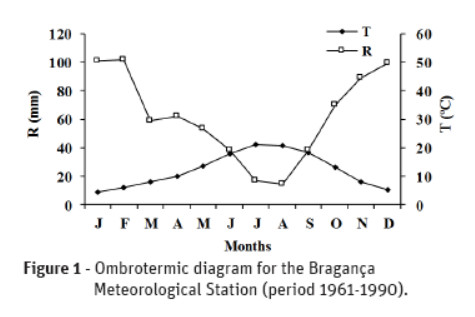
<body><![CDATA[<p>The soil ecological modifications associated with the converting conventional tillage to no-tillage system with herbaceous vegetation cover may affect nutrient availability (especially N) and fruit production. In fact, Pardini <i>et al</i>. (2002) reported that the cover cropping in vineyards and olive orchards under Mediterranean climate is a major problem regarding the competition for water and nutrients. In this context, cover crops should be mostly used in those areas where reduced yields have to be compensated by higher quality production (Pardini <i>et al</i>., 2002). In contrast, no significant differences were found regarding grapevine yield between soil tillage and no-tillage treatments (both improved pasture and natural vegetation) in vineyards (Monteiro and Lopes, 2007; Sweet and Schreiner, 2010) and in olive orchards (Hernández <i>et al</i>., 2005) under Mediterranean conditions.</p>     <p>Given the different trends reported for the effects of organic residues and herbaceous vegetation cover under Mediterranean conditions, it is crucial identifying the proper soil management system to improve soil quality and to assure ecosystem sustainability. Within this context, a field trial was installed in autumn 1995, in a 50 year-old chestnut stand, occurring under Mediterranean conditions, to assess the effects of no-tillage system (associated with natural or improved pastures) on soil nutrient status and chestnut stand productivity. The effect of three soil management systems (conventional tillage, no-tillage with spontaneous herbaceous vegetation and no-tillage with improved pasture) on soil N concentration and N mineralization dynamics were compared. It was hypothesized that the no-tillage system in chestnut stands leads to (i) an increase in soil N availability and to a different soil N mineralization dynamics, and (ii) to an improvement tree nutrition status and productivity; also, it was hypothesized that the improved pasture with legumes may have a major effect as compared with that exhibited by the natural pasture cover.</p>     <p>&nbsp;</p>     <p><b>Materials and methods</b></p>     <p><b>Site description</b></p>     <p>The experimental site was established in Northeast Portugal (41º 36' N, 6º 56' W; alt. 760 m), within the main chestnut stand region, and located in the natural and homogeneous Zone of Bragança (Agroconsultores and COBA, 1991). The climate is of Mediterranean type with cool wet winters and warm dry summers. Monthly rainfall and average temperature at the meteorological station of Bragança (1961-1990) are shown in the <a href="#f1">Figure 1</a>. At this meteorological station (about 30 km far from the study site), the mean annual rainfall is 743 mm, mainly concentrated from October to May (85 %) and the mean annual temperature is 12.2 ºC; the mean monthly temperature ranges from 4.5 ºC in winter (January) to 21.1 ºC in summer (August) (IM, 2007).</p>     <p>&nbsp;</p> <a name="f1"></a> <img src="/img/revistas/rca/v38n4/38n4a07f1.jpg">     
<p></p>     <p>&nbsp;</p>     <p>The landscape of the study site is flat to gently undulating with slopes varying from 0 to 4%. The landscape is made of metamorphic rocks (schists) of the Siluric formation (Pereira <i>et al</i>., 2000). The soils are mostly <i>Endoleptic</i> and <i>Haplic Regosols</i> (dystric) and <i>Endoleptic</i> and <i>Haplic Cambisols</i> (dystric) (WRB, 2006). They show a coarse fraction (&gt; 2 mm) concentration of about 30%, and a texture ranging from loam to silt loam; clay fraction mineralogy is mostly associated with the presence of illite and mica minerals. Selected soil properties down to 20 cm depth are shown in the <a href="/img/revistas/rca/v38n4/38n4a07t1.jpg" target="_blank">Table 1</a>. The surface soil layer (up to 20 cm depth), corresponding approximately to the Ah soil horizon, is strongly acid, with low organic carbon and extractable P concentrations, and high concentration of extractable K. Also, it is noteworthy the low soil capacity to retain cations, that is the effective cation exchange capacity at soil pH (1.93-2.84 cmol<sub>c</sub> kg<sup>-1</sup>); the aluminium saturation degree reach 30-47%.</p>     
]]></body>
<body><![CDATA[<p><b>Experiment design</b></p>     <p>The study was carried out in a field trial installed in a 50-year old chestnut stand. Treatments were applied in 30 m x 40 m plots and replicated three times. Trees were spaced about 12 x 12 m, and showed a diameter at breast height of 38.5 cm, a height of 8.8 m and a tree crown diameter of about 10 m; trees cover was about 50% of ground area. Organic fertilizers (adapted to the organic chestnut production system), rock phosphate (26.5% P<sub>2</sub>O<sub>5</sub>) and limestone were annually applied (in March) in all treatments during the study period (1995-2003), corresponding to 8.2, 15.3 and 102.8 kg ha<sup>-1</sup>, respectively, of N, P and Ca; amounts for K and Mg were about 2.5 kg ha<sup>-1</sup>.</p>     <p>Three treatments were used: (CT) conventional tillage with a chisel plow up to depth 15 cm, done twice in February-March and May-June; (NIP) no-tillage with rainfed improved pasture (sown leguminous and grass plants); and (NP) no-tillage with spontaneous herbaceous vegetation. In NIP plots, the pasture (a mixture of <i>Dactilis glomerata</i> L., <i>Lolium multiflorum</i> Lam., <i>Trifolium subterraneum</i> L., <i>Trifolium repens</i> L. and <i>Trifolium pratense</i> L.) was sown in September 1998. Spontaneous herbaceous vegetation of the NP treatment was mainly composed by <i>Bromus diandrus</i> Roth<i>, Chamaemelum mixtum</i> L.,<i> Cynosurus cristatus</i> L.<i>, Hypochoeris radicata</i> L.<i>, </i>O<i>rnithopus compressus</i> L.<i>, Ornithopus perpusillus</i> L., <i>Rumex angiocarpus</i> Murb.<i>, Trifolium arvense</i> L.<i> </i>and <i>Vulpia bromoides</i> L<i>.</i> The herbaceous vegetation in NIP and NP treatments was partially controlled by extensive sheep grazing.</p>     <p><b>Samplings and measurements</b></p>     <p>The rainfall was daily recorded in the experimental area during the study period, using rain gauges (RG1, Delta-T Devices) and Logger (CR10X, Campbell Scientific).</p>     <p>Sampling to assess soil N and C concentrations in treatments was carried out at the beginning of each incubation period. Six samples per treatment (that is two in each plot) were collected in the 0-15 cm soil layer; each sample was a composite sample resulting from the mixture of four samples taken (approximately at the four cardinal points direction) beneath one tree crown, randomly chosen. To avoid the effect of soil spatial heterogeneity associated with the position relative to tree crown (Nunes, 2004) all samples were taken approximately at 50% of the distance between tree trunk and the limit of canopy vertical projection.</p>     <p>Soil moisture was determined by the gravimetric method, and the sampling design was similar to that performed for the N and C concentration determination). In the figures, it was decided to consider the soil moisture average content of the three treatments, given the similarity of values observed in a previous study (Raimundo, 2003).</p>     <p>Sampling for foliar analysis was carried out in three randomly chosen chestnut trees per plot (nine trees per treatment) in 2003 and 2004. A composite sample of fully developed leaves light exposed, from the middle third of canopy, were collected during the two first weeks of September. Leaves were dried at 60 ºC and ground to pass a 1-mm sieve before analysis for N and P.</p>     <p>Nut production was quantified through the total amount of fruits collected in two randomly chosen trees per plot (six trees per treatment) in 1999, 2000, 2002, 2003 and 2004 years. The results are expressed in grams of dray matter (DM) per m<sup>2 </sup>of the canopy projection area.</p>     <p><b>Field N incubations</b></p>     ]]></body>
<body><![CDATA[<p>The N study was carried out in two different periods: from March to November 1999, at an early development stage of the improved pasture (NIP treatment), and from March to December 2004, six years after this pasture has been installed. Field incubations were performed in two plots per treatment, using the sequential coring method described by Raison <i>et al</i>. (1987). For each treatment, six steel tubes (25 cm length and 5 cm diameter) were used for the <i>in situ</i> incubations and other six to take out the initial samples. The incubation tubes were sharp to minimize soil compaction during installation, and the upper extremity was covered with plastic to prevent leaching losses, but presenting two holes in the top to allow gas exchange. The roots were cut off when placing the incubation tubes, so the N loss by plant uptake was negligible. The tubes were incubated in the 0-15 cm soil layer, approximately at middle distance between the trunk and the limit of the canopy vertical projection area. In 1999, the samplings were carried out on 2 and 30 March, 28 April, 7 June, 5 July, 2 September, 11 October and 29 November, corresponding respectively, to the following Julian days of the year 61, 89, 118, 158, 186, 245, 284, 333. In 2004, samplings were carried out on 17 March, 15 April, 19 May, 17 June, 3 August, 7 September, 8 October, 12 November and 10 December, corresponding respectively, to the following Julian days 76, 105, 139, 173, 215, 250, 281, 316, 344. Sampling dates were chosen to cover all the growing season and to get the effect of soil disturbance after chisel ploughing.</p>     <p><b>Laboratory procedures</b></p>     <p>Soil analyses were made with the &lt; 2 mm fraction. Organic C concentration was determined by dry combustion at 1100 ºC using an elementary autoanalyzer (Skalar Primac<sup>cs</sup>). The total N of the soil was released by the Kjeldahl digestion (Horneck and Miller, 1998)<b> </b>and determined by molecular absorption spectrophotometry (SanPlus, Skalar, The Netherlands). The foliar N and P concentrations were determined by molecular absorption spectrophotometry, after digestion with H<sub>2</sub>SO<sub>4</sub> and H<sub>2</sub>O<sub>2 </sub>(Mills and Jones, 1996).</p>     <p>The samples corresponding to the field N incubations were sieved to 4 mm and divided in two subsamples: one for determining the gravimetric soil moisture and the other (8 g) was introduced in centrifuge tubes, added 40 mL of 2M KCl, shaken for one hour and centrifuged for 10 minutes. Soil extracts were subjected to dialysis and analysed for NH<sub>4</sub><sup>+</sup>-N and NO<sub>3</sub><sup>-</sup>-N by automated segmented-flow analyzer (Houba <i>et al</i>., 1994).</p>     <p>Assuming no N losses to leaching, plant uptake or gaseous efflux, net N-mineralization (NMIN) was calculated as follows:</p>     <p>NMIN = N <i>FINAL</i> &#8211; N <i>INITIAL</i></p>     <p><b>Statistical analysis</b></p>     <p>The analysis of variance ANOVA for foliar N and P concentration and nut production consider as source of variation the year and treatment effect, for soil mineral and mineralized N were only compared differences among treatments. In both cases it was used the JMP (SAS, Institute Inc.) software and for the post hoc the Tukey HSD multiple comparison test (for a significance level p&lt;0.05).</p>     <p>&nbsp;</p>     <p><b>Results</b></p>     ]]></body>
<body><![CDATA[<p><b>Soil organic C and total N</b></p>     <p>At the beginning of the two incubation periods, the organic C and total N concentrations (at 0-15 cm depth) were determined. For both samplings, these concentrations were not significantly different between treatments (<a href="/img/revistas/rca/v38n4/38n4a07t2.jpg" target="_blank">Table 2</a>).</p>     
<p><b>Soil mineral N concentration</b></p>     <p>In March to June 1999, soil NH<sub>4</sub><sup>+</sup>-N and NO<sub>3</sub><sup>-</sup>-N concentrations were the lowest in the NIP treatment (<a href="/img/revistas/rca/v38n4/38n4a07f3.jpg" target="_blank">Figure 3</a>). However, in September (245 Julian day), soil of NIP treatment showed the highest concentrations of NH<sub>4</sub><sup>+</sup>-N and NO<sub>3</sub><sup>-</sup>-N (2.3 and 3.0 mg kg<sup>-1 </sup>respectively), which were significantly higher than in the other treatments. These soil mineral N concentrations occurred after the herbaceous vegetation has dried and the August rainfall (65.7 mm between 4 and 9 August; <a href="/img/revistas/rca/v38n4/38n4a07f2.jpg" target="_blank">Figure 2</a>). The CT treatment showed the highest NO<sub>3</sub><sup>-</sup>-N concentrations, which peaked in samplings following tillage operations (when were significantly different than in the other treatments), that is in winter and late spring (Julian days 56 and 158 days) (<a href="/img/revistas/rca/v38n4/38n4a07f3.jpg" target="_blank">Figure 3</a>).</p>     
<p>In 2004, the NIP treatment showed the highest soil NH<sub>4</sub><sup>+</sup>-N concentrations along the study period, but only in some dates the differences were significantly higher than in other treatments (<a href="/img/revistas/rca/v38n4/38n4a07f5.jpg" target="_blank">Figure 5</a>). The soil NO<sub>3</sub><sup>-</sup>-N concentrations were higher in the CT treatment, especially in samplings following soil perturbation by tillage, which occurred in the 42 and 139 Julian days. The highest NO<sub>3</sub><sup>-</sup>-N concentration (7.4 mg kg<sup>-</sup><sup>1</sup>) was observed in the August sampling (Julian day 215), following a period in which low rainfall occurred (<a href="/img/revistas/rca/v38n4/38n4a07f4.jpg" target="_blank">Figure 4</a>).</p>     
<p>Average soil mineral N concentration throughout the chestnut vegetative cycle was higher in CT treatment in both study periods, but no significant differences were observed in relation to other treatments (<a href="/img/revistas/rca/v38n4/38n4a07t3.jpg" target="_blank">Table 3</a>). The CT treatment also showed the highest NO<sub>3</sub><sup>-</sup>-N concentrations, being significantly higher in relation to the NP in both years and to the NIP in 2004. The NIP treatment showed the highest average NH<sub>4</sub><sup>+</sup>-N concentration in 2004 study period, which was significantly higher than that measured for the NP treatment.</p>     
<p><b>Net N mineralization</b></p>     <p>As shown in <a href="/img/revistas/rca/v38n4/38n4a07f6.jpg" target="_blank">Figurse 6</a> and <a href="/img/revistas/rca/v38n4/38n4a07f7.jpg" target="_blank">7</a>, the in-situ N mineralization was more dependent on the soil moisture concentration than on the treatments. In all treatments, the NO<sub>3</sub><sup>-</sup>-N highest concentration occurred during the spring and NH<sub>4</sub><sup>+</sup>-N higher concentration occurred in spring and autumn.</p>     
<p>In 1999, significant differences among treatments occurred mainly in NO<sub>3</sub><sup>-</sup>-N mineralized during the late summer and autumn, and the highest values were observed in the NIP treatment (<a href="/img/revistas/rca/v38n4/38n4a07f6.jpg" target="_blank">Figure 6B</a>).</p>     
<p>In 2004, an increasing of NH<sub>4</sub><sup>+</sup>-N mineralized was observed, mainly in the NP treatment, reaching a maximum value of 0.26 mg kg<sup>-1</sup> day<sup>-</sup><sup>1</sup> in the third incubation period (<a href="/img/revistas/rca/v38n4/38n4a07f7.jpg" target="_blank">Figure 7A</a>). The NO<sub>3</sub><sup>-</sup>-N mineralized was higher in the spring, the highest values being presented by the NIP treatment (<a href="/img/revistas/rca/v38n4/38n4a07f7.jpg" target="_blank">Figure 7A</a>).</p>     
]]></body>
<body><![CDATA[<p>The cumulative amount of net N mineralized, at the end of the 1999 period (272 days), was 46.4, 71.7 and 58.3 kg ha<sup>-1</sup> for the CT, NIP and NP treatments, respectively, and value regarding NIP being significantly higher than in other treatments (<a href="/img/revistas/rca/v38n4/38n4a07t4.jpg" target="_blank">Table 4</a>); similar difference was observed for the amount of net NO<sub>3</sub><sup>-</sup>-N mineralized. The cumulative amount of net NH<sub>4</sub><sup>+</sup>-N mineralized was significantly higher in the PN (30.4 kg ha<sup>-1</sup>) than in the PIN (21.3 kg ha<sup>-1</sup>) and CT (12.2 kg ha<sup>-1</sup>) treatments. The proportion of NO<sub>3</sub><sup>-</sup>-N in soil mineral N was 74.2, 70.3 and 47.9% for the CT, NIP and NP treatments, respectively.</p>     
<p>At the end of 2004 study period (268 days), the cumulative amount of net N mineralized in the NIP (85.1 kg ha<sup>-1</sup>) was significantly higher than in the CT (51.8 kg ha<sup>-1</sup>) treatment (<a href="/img/revistas/rca/v38n4/38n4a07t4.jpg" target="_blank">Table 4</a>); the amount of cumulative net NO<sub>3</sub><sup>-</sup>-N mineralized was significantly higher the former than in the other treatments. In contrast, the highest cumulative amount of net NH<sub>4</sub><sup>+</sup>-N mineralized was observed in the PN (59.3 kg ha<sup>-1</sup>) treatment, being significantly higher than in the CT (22.0 kg ha<sup>-1</sup>) treatment. The proportion of NO<sub>3</sub><sup>-</sup>-N was 57.5, 53.1 and 10.0% of the soil N mineral, for the CT, NIP and NP treatments, respectively.</p>     
<p>The N mineralization rate (i.e., g mineralized N per kg total N), considering the total soil N up to 15 cm depth, was lower in the CT treatment (23.3 and 26.0 in 1999 and 2004, respectively) than in NIP (31.1 and 38.2) and NP (26.6 and 30.2) treatments.</p>     <p><b>Foliar N and P concentrations</b></p>     <p>The results corresponding to foliar N and P concentrations and to nut production are reported in the <a href="/img/revistas/rca/v38n4/38n4a07t5.jpg" target="_blank">Tables 5</a> and <a href="/img/revistas/rca/v38n4/38n4a07t6.jpg" target="_blank">6</a>. Regarding foliar N concentration, the greatest source of variation (37.8%) was associated with the years; the variation associated with the treatments was only 27.2%. In the case of foliar P concentration, the source of variation associated with treatments (41.5%) was much greater than that regarding the years (16.7%). In both cases a considerable error (variation associated with trees) was observed (35.1 and 41.8% for N and P, respectively) (<a href="/img/revistas/rca/v38n4/38n4a07t5.jpg" target="_blank">Table 5</a>).</p>     
<p>Significant differences between treatments and years on foliar N and P concentrations were observed (<a href="/img/revistas/rca/v38n4/38n4a07t6.jpg" target="_blank">Table 6</a>). For instance, the foliar N concentration in 2003 (15.5 mg g<sup>-1</sup>) was significantly lower than in 2004 (17.8 mg g<sup>-1</sup>). Foliage of trees from the CT treatment showed significantly lower N (15.1 mg g<sup>-1</sup>) and P (2.13 mg g<sup>-1</sup>) concentrations in relation to those measured in the NIP (17.6 and 2.59 mg g<sup>-1</sup>) and NP (17.3 and 2.63 mg g<sup>-1</sup>) treatments.</p>     
<p><b>Fruit production</b></p>     <p>The influence of the treatments as source of variation (<a href="/img/revistas/rca/v38n4/38n4a07t5.jpg" target="_blank">Table 5</a>) on nut production (13.8%) was higher than that associated with the years (6.5%), but a considerable error (variation associated with trees) was observed (79.7%).</p>     
<p>Significant differences between treatments regarding nut production were observed (<a href="/img/revistas/rca/v38n4/38n4a07t46.jpg" target="_blank">Table 6</a>). The CT treatment showed the lowest production (131.5 g m<sup>-2</sup>), which was significantly lower than that measured in the NIP (174.2 g m<sup>-2</sup>) and NP (183.9 g m<sup>-2</sup>) treatments. Despite the large differences of nut production observed between years, they were not significant.</p>     
<p>&nbsp;</p>     ]]></body>
<body><![CDATA[<p><b>Discussion</b></p>     <p><b>Mineral N dynamics</b></p>     <p>A strong variation on N soil mineralization along the year was observed in the present study, the amounts in spring and autumn being much greater than in winter and summer, suggesting a close relationship between soil N mineralization and temperature and moisture soil conditions. This variation seasonal pattern is in agreement with results reported by several authors in studies on N mineralization dynamics conducted in agroforestry (Gallardo <i>et al</i>., 2000; Nunes <i>et al</i>., 2012) and forestry (Rapp, 1990) systems under Mediterranean environment.</p>     <p>Despite similar soil N total content (see <a href="/img/revistas/rca/v38n4/38n4a07t2.jpg" target="_blank">Table 2</a>) observed in the conventional tillage and no-tillage (with natural or improved pastures) treatments, the amount of mineralized N was higher in the latter, especially in 2004. In addition, the amounts and proportion of NO<sub>3</sub><sup>-</sup>-N and NH<sub>4</sub><sup>+</sup>-N were quite different, especially five years after the experiment beginning (see <a href="/img/revistas/rca/v38n4/38n4a07t4.jpg" target="_blank">Table 4</a>). These trends indicate that the dynamics of N mineralization is also dependent on factors other than moisture and temperature conditions, such as the soil management system. This confirms the hypothesis that the non-tillage system leads to higher N availability and different N mineralization dynamics, which is in accordance with results reported by Nunes<i> et al</i>. (2012), who found that other relevant factors beyond water and temperature are involved in nitrification process in soils of Holm oak woodlands<i>.</i></p>     
<p>The amount of mineralized N was the lowest in the conventional tillage system, but the highest soil NO<sub>3</sub><sup>-</sup>-N concentrations throughout the chestnut vegetative cycle were observed in this treatment for few sampling dates, following tillage operations (mainly during spring). The soil NO<sub>3</sub><sup>-</sup>-N maximum concentration (7.4 mg kg<sup>-</sup><sup>1</sup>) was observed in 2004, when rainfall was very low (139-215 Julian days) (see <a href="/img/revistas/rca/v38n4/38n4a07f5.jpg" target="_blank">Figure 5</a>). This trend is in agreement with that reported by Steenwerth and Belina (2008) in a study which compared tillage and two cover crops (x<i>Triticosecale</i> and <i>Secale cereale</i>), in a vineyard in Mediterranean conditions; it also agrees with results regarding no-tillage effects on N availability for agricultural crops (Grandy <i>et al</i>., 2006; Gómez-Rey <i>et al</i>., 2012a) under temperate humid climate. Since the N mineralization in conventional tillage treatment was lower than in the others, the soil NO<sub>3</sub><sup>-</sup>-N concentration increasing following tillage may be related to the soil perturbation associated with tillage operations, and may be explained by the lower N absorption by the plants, because the damage of tree roots and herbaceous vegetation (Raimundo, 2001) following soil perturbation.</p>     
<p>In the year 1999, soil NH<sub>4</sub><sup>+</sup>-N and NO<sub>3</sub><sup>-</sup>-N showed the lowest concentration in improved pasture from 61 to 158 Julian days (see <a href="/img/revistas/rca/v38n4/38n4a07f3.jpg" target="_blank">Figure 3</a>). This result is probably due to the pasture installation in the previous autumn and <i>Rhizobium</i> would be in an early activity phase, thus it is expected a higher N absorption in the following spring due to the increase of herbaceous vegetation.</p>     
<p>The significantly higher amount of N mineralized in the no tillage treatment with improved pasture during the two incubation periods may be associated with the amount of legumes present in the plant cover. In fact, the biomass of legumes measured in the study site in 1999 (Raimundo, 2003) was 194.0 and 9.7 g m<sup>-</sup><sup>2 </sup>(dry weight) in improved and natural pasture treatments, respectively. The increment of N mineralized in the improved pasture treatment started during the first autumn after pasture installation. In a later stage of the experiment (2004), when the system was already stabilized, significant differences regarding the amount of mineralized N were observed mainly in the early spring. This trend agrees with that reported by Gómez-Rey <i>et al</i>. (2012b) for a Mediterranean agroforestry system (evergreen oak woodland), where improved pastures with high proportion of legumes strongly enhanced soil N availability during spring due to the greater net N mineralization. As in the present study the amount of soil N was similar among treatments, the higher amount of mineralized N in the treatment with improved pasture may be mostly associated with a different N dynamics, that is, with an higher N mineralization rate, as reported for improved pastures in southern Portugal (Gómez-Rey <i>et al</i>., 2012b).</p>     <p>The treatment with natural pasture cover also showed a higher mineralized N and N mineralization rate than in conventional cultivation system, suggesting that even in the presence of negligible amounts of legumes the soil N dynamics may be favoured. This trend agrees with the results reported by Steenwerth and Belina (2008), showing that soil cover crops other than legumes also enhanced the soil N dynamics and microbiological functions of N mineralization, nitri&#64257;cation and denitri&#64257;cation, as compared with cultivated soils in Mediterranean vineyard agroecosystems.</p>     <p>Besides differences related to the amounts of mineralized N, our results also indicate that treatments led to different proportions of NO<sub>3</sub><sup>-</sup>-N and NH<sub>4</sub><sup>+</sup>-N both seasonally and globally. In fact, the conventional tillage treatment showed the highest proportion of NO<sub>3</sub><sup>-</sup>-N (58%), while the no tillage with natural cover showed the lowest (10%); however, the latter showed the highest proportion of NH<sub>4</sub><sup>+</sup>-N (90%). These results suggest that the no tillage system with natural pasture may also contribute to reduce N losses by leaching especially during the wet season. In short, our results confirm the hypothesis that no tillage system determines different N soil dynamics and N availability.</p>     <p><b>Tree nutrition status and productivity</b></p>     ]]></body>
<body><![CDATA[<p>Differences in soil treatments regarding the pattern o N mineralization during the annual growing season also affected the N tree nutrition status. In fact, tree foliage in the conventional tillage treatment showed a significantly lower N concentration than in no tillage with both natural pasture and improved pasture treatments. Although this pattern correlates well with the higher N availability in no tillage treatments, it may be also associated with the damage of tree roots in the top soil layer caused by tillage operations, being predictable that in the months following soil disturbance less N should be absorbed by trees. Then, as reported by Raimundo (2003) and Raimundo <i>et al</i>. (2001), the root system of chest nut trees in conventional tillage system is mostly located below the depth affected by ploughing. This pattern is in accordance with Pastor (1991) who reported that, in Mediterranean conditions, the damage of olive tree root system is one of the main reasons for the lower fruit production in conventional tillage than in no-tillage system, especially in years when strong drought occurred.</p>     <p>It should be emphasized, however, that N availability in natural pasture was less than in improved pasture treatments (see <a href="/img/revistas/rca/v38n4/38n4a07t3.jpg" target="_blank">Table 3</a>), but N foliar concentration was similar, suggesting that improved foliar N concentration was not associated with legume biomass increment in the improved pasture (Raimundo, 2003). Such trend also indicates that improvement of tree nutrition status regarding N was mostly associated with the avoidance of root system damage by chisel ploughing. The improvement of N tree nutrition can be assured by no-tillage system along natural pasture cover, which seems to be an effective management strategy to enhance the soil N-supplying power over the long-term and to improve soil quality (Ramos <i>et al</i>., 2011). Such management system, as compared with improved pasture cover, may also minimize competition for water, a key factor for productivity under Mediterranean ecological conditions (Pardini, 2002).</p>     
<p>It is noteworthy that the increment of foliar N concentration was associated with improved P nutrition status in both non-tillage treatments. This may be associated with more mycorrhizal fungi in no-till treatments that enhance the absorbing surface of the tree root system. Indeed, Galvez <i>et al</i>. (2001) and Kabir (2005) reported that conservation tillage increases mycorrhizal fungi survival, consequently improving plant phosphorus uptake. Also, Martins <i>et al</i>. (2011) reported greater edible mushroom production and sporocarp biodiversity in no-till than in tillage treatments in chestnut plantations close the site of the present study. Therefore, the hypothesis that the no-tillage systems lead to an improvement of tree nutrition status in chestnut stands was fully confirmed.</p>     <p>Our results also show the positive effect on fruit yield by replacing the conventional tillage for the no-tillage system with herbaceous vegetation cover, which confirms the second study hypothesis. This trend is in agreement with the results reported by Martins <i>et al</i>. (2011) for a study developed in a similar site with adult chestnut stands, where the same treatments were applied, in which significantly lower yields were observed in the tillage treatment than in no-tillage with spontaneous herbaceous vegetation cover. Also, in similar Mediterranean conditions, Ferreira <i>et al</i>. (2013) reported greater production for the no tillage system in rainfed olive orchards. However, our findings are not in agreement with results obtained for the yield production in other systems: for example, in olive orchards Hernández <i>et al</i>. (2005) found no significant differences in the yields between soil tillage and the natural and improved pastures. Also, in a non-irrigated vineyard growing in a Mediterranean climate, Monteiro and Lopes (2007) reported that natural and improved pastures showed a signi&#64257;cant reduction in vine vegetative growth, but not affected grapevine yield or berry sugar accumulation compared with the tillage treatment. In an almond orchard, Ramos <i>et al</i>. (2010) reported that the cover crops in semiarid environments improve soil quality as compared with frequently tilled management, and that only high water extraction by the plants could affect the orchard development and/or productivity.</p>     <p>Despite the higher N availability in the no tillage system with improved pasture as compared with that with natural pasture, the nut production was even higher in the latter than in the former. Therefore, the possible positive effect of herbaceous cover on fruit productivity enhancement (Pulido <i>et al</i>., 2010) was not observed. This trend may be ascribed to the larger competition for water between chestnut trees and improved pasture under Mediterranean conditions, as competition for resources in agroforestry systems is a frequent phenomenon (José <i>et al</i>., 2004). In addition, foreseen strong changes in seasonal rainfall in Mediterranean climate (Miranda <i>et al</i>., 2002) may alter this pattern, as the length of rainfall and summer drought periods may influence resources availability and productivity (Schwinning and Ehleringer, 2001).</p>     <p>It seems clear that, for the conditions under which the study was conducted and to ensure the sustainability of chestnut stands, is of utmost importance to replace the conventional tillage with chisel plow by no-tillage with soil cover with herbaceous vegetation. The spontaneous vegetation maintenance (that is, natural pasture), due to its adaptation, is a system that can be recommended; however, to prevent eventual competition for water and possible yield losses, vegetation cover should be early removed. Despite the positive effect of improved pastures on N availability, these pastures are costly and enhance competition for water resources. Also, it should be taken into account that eventual risks can arise if the introduction of new herbaceous taxa is associated with improved pastures (Driscoll <i>et al</i>., 2015). The use of no-tillage system along with natural pasture cover may be an effective management strategy for enhancing the productive capacity and environmental quality of chestnut stands.</p>     <p>&nbsp;</p>     <p><b>Conclusions</b></p>     <p>The conventional soil tillage in chestnut plantations enhances the soil N mineral concentration after soil perturbation, but the cumulative amount of net N mineralized along the year is lower than that measured in the no-tillage system. The no-tillage system with improved pasture cover strongly increases the amount of mineralized N. Our results suggest that soil N dynamics depends on treatments, as the proportion of NO<sub>3</sub><sup>-</sup>-N in the natural pasture cover was the lowest among the treatments. Furthermore, they indicate that the replacement of the conventional soil tillage by the no-tillage system with herbaceous vegetation cover in chestnut stands is an indispensable management measure to improve plant nutrition status, productivity and system sustainability; also, the no-tillage system may improve soil quality and avoid the erosion process. This trend was observed in the no-tillage system with both natural and improved pasture cover. Improved pasture cover may strongly increase N atmospheric inputs, but its higher productivity may lead to stronger competition for water and nutrients and possible yield losses. Due to its adaptation and low costs involved, the natural pasture cover is a recommended soil management system for the chestnut stands, leading also to low competition problems and avoiding eventual environmental risks associated with nitrogen leaching and new pasture taxa. In short, ecological and economical benefits justify the no-tillage system, especially with natural pasture cover.</p>     <p>&nbsp;</p>     ]]></body>
<body><![CDATA[<p><b>Acknowledgments</b></p>     <p>The study was carried out within the activities of the projects PAMAF 4029 and PRAXIS, 3/3.2/FLOR/2123/95. Thanks are due to farmers João Xavier and Osório Araújo for the availability of chestnut stands to install and follow the experimental system. Thanks are also due to the staff of Soil Laboratory of the Trás-os-Montes e Alto Douro University for the analytical support, and to J. Pinheiro for field work assistance. Professor Ana Carla Madeira is acknowledged for English style improvement.</p>     <p>&nbsp;</p>     <p><b>References</b></p>     <!-- ref --><p>Agroconsultores and COBA. (1991) - <i>Carta de solos, carta de utilização actual da terra e carta da aptidão da terra do Nordeste de Portugal</i>. Vila Real, Universidade de Trás-os-Montes e Alto Douro, 311 p.    &nbsp;&nbsp;&nbsp;&nbsp;&nbsp;&nbsp;&nbsp;&nbsp;[&#160;<a href="javascript:void(0);" onclick="javascript: window.open('/scielo.php?script=sci_nlinks&ref=648278&pid=S0871-018X201500040000700001&lng=','','width=640,height=500,resizable=yes,scrollbars=1,menubar=yes,');">Links</a>&#160;]<!-- end-ref --></p>     <!-- ref --><p>Balota, E.; Filho, A.; Andrade, D. and Dick, R. (2004) - Long-term tillage and crop rotation effects on microbial biomass and C and N mineralization in a Brazilian Oxisol. <i>Soil &amp; Tillage Research</i>, vol. 77, p. 137&#8211;145.    &nbsp;&nbsp;&nbsp;&nbsp;&nbsp;&nbsp;&nbsp;&nbsp;[&#160;<a href="javascript:void(0);" onclick="javascript: window.open('/scielo.php?script=sci_nlinks&ref=648280&pid=S0871-018X201500040000700002&lng=','','width=640,height=500,resizable=yes,scrollbars=1,menubar=yes,');">Links</a>&#160;]<!-- end-ref --></p>     <!-- ref --><p>Blevins, R.L. and Frye, W.W. (1993) - Conservation tillage: an ecological approach to soil management. <i>Advances in Agronomy</i>, vol. 51, p. 33-78. <a href="http://dx.doi.org/10.1016/S0065-2113(08)60590-8"target="_blank">http://dx.doi.org/10.1016/S0065-2113(08)60590-8</a>&nbsp;&nbsp;&nbsp;&nbsp;&nbsp;&nbsp;&nbsp;&nbsp;[&#160;<a href="javascript:void(0);" onclick="javascript: window.open('/scielo.php?script=sci_nlinks&ref=648282&pid=S0871-018X201500040000700003&lng=','','width=640,height=500,resizable=yes,scrollbars=1,menubar=yes,');">Links</a>&#160;]<!-- end-ref --><!-- ref --><p>Blevins, R.L.; Thomas, G.W.; Smith, M.S. and Frye, W.W. (1983) - Changes in soil properties after 10 years of no-tillage and conventionally tilled corn. <i>Soil &amp; Tillage Research</i>, vol. 3, n. 2, p. 135-146. <a href="http://dx.doi.org/10.1016/0167-1987(83)90004-1"target="_blank">http://dx.doi.org/10.1016/0167-1987(83)90004-1</a>&nbsp;&nbsp;&nbsp;&nbsp;&nbsp;&nbsp;&nbsp;&nbsp;[&#160;<a href="javascript:void(0);" onclick="javascript: window.open('/scielo.php?script=sci_nlinks&ref=648283&pid=S0871-018X201500040000700004&lng=','','width=640,height=500,resizable=yes,scrollbars=1,menubar=yes,');">Links</a>&#160;]<!-- end-ref --><!-- ref --><p>Brye, K.R.; Norman, J.M.; Gower S.T. and Bundy, L.G. (2003) - Effects of management practices on annual net N-mineralization in a restored prairie and maize agroecosystems. <i>Biogeochemistry</i>, vol. 63, n. 2, p. 135&#8211;160. <a href="http://dx.doi.org/10.1023/A:1023304130514"target="_blank">http://dx.doi.org/10.1023/A:1023304130514</a>&nbsp;&nbsp;&nbsp;&nbsp;&nbsp;&nbsp;&nbsp;&nbsp;[&#160;<a href="javascript:void(0);" onclick="javascript: window.open('/scielo.php?script=sci_nlinks&ref=648284&pid=S0871-018X201500040000700005&lng=','','width=640,height=500,resizable=yes,scrollbars=1,menubar=yes,');">Links</a>&#160;]<!-- end-ref --><!-- ref --><p>Burgess, M.S.; Mehuys, G.R. and Madramootoo, C.A. (2002) - Nitrogen dynamics of decomposition corn residue components under three tillage systems. <i>Soil Science Society of America Journal</i>, vol. 66, n. 4, p. 1350-1358. <a href="http://dx.doi.org/10.2136/sssaj2002.1350"target="_blank">http://dx.doi.org/10.2136/sssaj2002.1350</a>&nbsp;&nbsp;&nbsp;&nbsp;&nbsp;&nbsp;&nbsp;&nbsp;[&#160;<a href="javascript:void(0);" onclick="javascript: window.open('/scielo.php?script=sci_nlinks&ref=648285&pid=S0871-018X201500040000700006&lng=','','width=640,height=500,resizable=yes,scrollbars=1,menubar=yes,');">Links</a>&#160;]<!-- end-ref --><!-- ref --><p>Diekow, J.; Mielniczuk, J.; Knicker, H.; Bayer, C.; Dick, D.P. and Kögel-Knabner, I. (2005) - Soil C and N stocks as affected by cropping systems and nitrogen fertilisation in a southern Brazil Acrisol managed under no-tillage for 17 years. <i>Soil &amp; Tillage Research</i>, vol. 81, n. 1, p. 87-95. <a href="http://dx.doi.org/10.1016/j.still.2004.05.003"target="_blank">http://dx.doi.org/10.1016/j.still.2004.05.003</a>&nbsp;&nbsp;&nbsp;&nbsp;&nbsp;&nbsp;&nbsp;&nbsp;[&#160;<a href="javascript:void(0);" onclick="javascript: window.open('/scielo.php?script=sci_nlinks&ref=648286&pid=S0871-018X201500040000700007&lng=','','width=640,height=500,resizable=yes,scrollbars=1,menubar=yes,');">Links</a>&#160;]<!-- end-ref --><!-- ref --><p>Driscoll, D.A.; Catford, J.A.; Barney, J.N.; Hulme, P.E.; Inderjit; Martin, T.G.; Pauchard, A.; Pysek, P.; Richardson, D.M.; Riley, S. and Visser, V. (2014) - New pastures plants intensify invasive species risk. <i>Proceedings of the National Academy of Sciences of the USA</i>, vol. 111, n. 46, p. 16622-27. <a href="http://dx.doi.org/10.1073/pnas.1409347111"target="_blank">http://dx.doi.org/10.1073/pnas.1409347111</a>&nbsp;&nbsp;&nbsp;&nbsp;&nbsp;&nbsp;&nbsp;&nbsp;[&#160;<a href="javascript:void(0);" onclick="javascript: window.open('/scielo.php?script=sci_nlinks&ref=648287&pid=S0871-018X201500040000700008&lng=','','width=640,height=500,resizable=yes,scrollbars=1,menubar=yes,');">Links</a>&#160;]<!-- end-ref --><!-- ref --><p>Ferreira, I.Q.; Arrobas, M.; Claro, A.M. and Rodrigues, M.A. (2013) - Soil management in rainfed olive orchards may result in conflicting effects on olive production and soil fertility. <i>Spanish Journal of Agricultural Research</i>, vol. 11, n. 2, p. 472-480. <a href="http://dx.doi.org/10.5424/sjar/2013112-3501"target="_blank">http://dx.doi.org/10.5424/sjar/2013112-3501</a>&nbsp;&nbsp;&nbsp;&nbsp;&nbsp;&nbsp;&nbsp;&nbsp;[&#160;<a href="javascript:void(0);" onclick="javascript: window.open('/scielo.php?script=sci_nlinks&ref=648288&pid=S0871-018X201500040000700009&lng=','','width=640,height=500,resizable=yes,scrollbars=1,menubar=yes,');">Links</a>&#160;]<!-- end-ref --><!-- ref --><p>Fórum Florestal (2012) - <i>Estudo económico do desenvolvimento da fileira da castanha</i>. Projecto nº 23070. Fórum Florestal. Available at: <a href="http://forumflorestal.pt/wp-content/uploads/2012/04/Relat%C3%B3rio-Global-Castanha-vers%C3%A3o-impress%C3%A3o.pdf"target="_blank">http://forumflorestal.pt/wp-content/uploads/2012/04/Relat%C3%B3rio-Global-Castanha-vers%C3%A3o-impress%C3%A3o.pdf</a> .    &nbsp;&nbsp;&nbsp;&nbsp;&nbsp;&nbsp;&nbsp;&nbsp;[&#160;<a href="javascript:void(0);" onclick="javascript: window.open('/scielo.php?script=sci_nlinks&ref=648289&pid=S0871-018X201500040000700010&lng=','','width=640,height=500,resizable=yes,scrollbars=1,menubar=yes,');">Links</a>&#160;]<!-- end-ref --></p>     <!-- ref --><p>Franzluebbers, A.J.; Hons, F.M. and Zuberer, D.A. (1995) - Tillage and crop effects on seasonal soil carbon and nitrogen dynamics. <i>Soil Science Society of America Journal</i>, vol. 59, p. 1618-1624. <a href="http://dx.doi.org/10.2136/sssaj1995.03615995005900060016x"target="_blank">http://dx.doi.org/10.2136/sssaj1995.03615995005900060016x</a>&nbsp;&nbsp;&nbsp;&nbsp;&nbsp;&nbsp;&nbsp;&nbsp;[&#160;<a href="javascript:void(0);" onclick="javascript: window.open('/scielo.php?script=sci_nlinks&ref=648291&pid=S0871-018X201500040000700011&lng=','','width=640,height=500,resizable=yes,scrollbars=1,menubar=yes,');">Links</a>&#160;]<!-- end-ref --><!-- ref --><p>Fuentes, J.P.; Flury, M. and Bezdicek, D.F. (2004) - Hydraulic properties in a silt loam under natural prairie, conventional till and no-till. <i>Soil Science Society of America Journal</i>, vol. 68, n. 5, p. 1679-1688. <a href="http://dx.doi.org/10.2136/sssaj2004.1679"target="_blank">http://dx.doi.org/10.2136/sssaj2004.1679</a>&nbsp;&nbsp;&nbsp;&nbsp;&nbsp;&nbsp;&nbsp;&nbsp;[&#160;<a href="javascript:void(0);" onclick="javascript: window.open('/scielo.php?script=sci_nlinks&ref=648292&pid=S0871-018X201500040000700012&lng=','','width=640,height=500,resizable=yes,scrollbars=1,menubar=yes,');">Links</a>&#160;]<!-- end-ref --><!-- ref --><p>Gallardo, A.; Rodríguez-Saucedo, J.J.; Covelo, F. and Fernández-Alés, R. (2000) - Soil nitrogen heterogeneity in a Dehesa ecosystem. <i>Plant and Soil</i>, vol. 222, n. 1, p. 71-82. <a href="http://dx.doi.org/10.1023/A:1004725927358"target="_blank">http://dx.doi.org/10.1023/A:1004725927358</a>&nbsp;&nbsp;&nbsp;&nbsp;&nbsp;&nbsp;&nbsp;&nbsp;[&#160;<a href="javascript:void(0);" onclick="javascript: window.open('/scielo.php?script=sci_nlinks&ref=648293&pid=S0871-018X201500040000700013&lng=','','width=640,height=500,resizable=yes,scrollbars=1,menubar=yes,');">Links</a>&#160;]<!-- end-ref --><!-- ref --><p>Galvez, L.; Douds, D.D.; Drinkwater, L.E. and Wagoner, P. (2001) - Effect of tillage and farming system upon VAM fungus populations and mycorrhizas and nutrient uptake of maize. <i>Plant and Soil</i>, vol. 228, n. 2, p. 299-308. <a href="http://dx.doi.org/10.1023/A:1004810116854"target="_blank">http://dx.doi.org/10.1023/A:1004810116854</a>&nbsp;&nbsp;&nbsp;&nbsp;&nbsp;&nbsp;&nbsp;&nbsp;[&#160;<a href="javascript:void(0);" onclick="javascript: window.open('/scielo.php?script=sci_nlinks&ref=648294&pid=S0871-018X201500040000700014&lng=','','width=640,height=500,resizable=yes,scrollbars=1,menubar=yes,');">Links</a>&#160;]<!-- end-ref --><!-- ref --><p>Gómez-Rey, M.X.; Couto-Vázquez, A. and González-Prieto, S.J. (2012a) - Nitrogen transformation rates and nutrient availability under conventional plough and conservation tillage. <i>Soil &amp; Tillage Research</i>, vol. 124, p. 144-152. <a href="http://dx.doi.org/10.1016/j.still.2012.05.010"target="_blank">http://dx.doi.org/10.1016/j.still.2012.05.010</a>&nbsp;&nbsp;&nbsp;&nbsp;&nbsp;&nbsp;&nbsp;&nbsp;[&#160;<a href="javascript:void(0);" onclick="javascript: window.open('/scielo.php?script=sci_nlinks&ref=648295&pid=S0871-018X201500040000700015&lng=','','width=640,height=500,resizable=yes,scrollbars=1,menubar=yes,');">Links</a>&#160;]<!-- end-ref --><!-- ref --><p>Gómez-Rey, M.X.; Garcês, A. and Madeira, M. (2012b) - Soil organic C accumulation and N availability under improved pastures established in Mediterranean oak woodlands. <i>Soil Use and Management</i>, vol. 28, n. 4, p. 497-507. <a href="http://dx.doi.org/10.1111/j.1475-2743.2012.00428.x"target="_blank">http://dx.doi.org/10.1111/j.1475-2743.2012.00428.x</a>&nbsp;&nbsp;&nbsp;&nbsp;&nbsp;&nbsp;&nbsp;&nbsp;[&#160;<a href="javascript:void(0);" onclick="javascript: window.open('/scielo.php?script=sci_nlinks&ref=648296&pid=S0871-018X201500040000700016&lng=','','width=640,height=500,resizable=yes,scrollbars=1,menubar=yes,');">Links</a>&#160;]<!-- end-ref --><!-- ref --><p>Grandy, A.S.; Loecke, T.D.; Parr, S. and Robertson, G.P. (2006) - Long-term trends in nitrous oxide emissions, soil nitrogen, and crop yields of till and no-till cropping systems. <i>Journal of Environmental Quality</i>, vol. 35, n. 4, p. 1487-1495.    &nbsp;&nbsp;&nbsp;&nbsp;&nbsp;&nbsp;&nbsp;&nbsp;[&#160;<a href="javascript:void(0);" onclick="javascript: window.open('/scielo.php?script=sci_nlinks&ref=648297&pid=S0871-018X201500040000700017&lng=','','width=640,height=500,resizable=yes,scrollbars=1,menubar=yes,');">Links</a>&#160;]<!-- end-ref --></p>     <!-- ref --><p>Hernández, A.J.; Lacasta, C. and Pastor, J. (2005) - Effects of different management practices on soil conservation and soil water in a rainfed olive orchard. <i>Agricultural Water Management</i>, vol. 77, n. 1-3, p. 232&#8211;248. <a href="http://dx.doi.org/10.1016/j.agwat.2004.09.030"target="_blank">http://dx.doi.org/10.1016/j.agwat.2004.09.030</a>&nbsp;&nbsp;&nbsp;&nbsp;&nbsp;&nbsp;&nbsp;&nbsp;[&#160;<a href="javascript:void(0);" onclick="javascript: window.open('/scielo.php?script=sci_nlinks&ref=648299&pid=S0871-018X201500040000700018&lng=','','width=640,height=500,resizable=yes,scrollbars=1,menubar=yes,');">Links</a>&#160;]<!-- end-ref --><!-- ref --><p>Horneck, D.A. and Miller, R.O. (1998) - Determination of total nitrogen in plant tissue. <i>In</i>: Karla, P. (Ed.) - <i>Handbook of reference methods for plant analysis</i>. Boca Raton, CRC, p. 75&#8211;83.    &nbsp;&nbsp;&nbsp;&nbsp;&nbsp;&nbsp;&nbsp;&nbsp;[&#160;<a href="javascript:void(0);" onclick="javascript: window.open('/scielo.php?script=sci_nlinks&ref=648300&pid=S0871-018X201500040000700019&lng=','','width=640,height=500,resizable=yes,scrollbars=1,menubar=yes,');">Links</a>&#160;]<!-- end-ref --></p>     <!-- ref --><p>Houba, V.J.S.; Novozamsky, I. and Termminghoff, E. (1994) - <i>Soil analysis procedures</i>. Wageningen, Netherlands, Wageningen Agricultural University.    &nbsp;&nbsp;&nbsp;&nbsp;&nbsp;&nbsp;&nbsp;&nbsp;[&#160;<a href="javascript:void(0);" onclick="javascript: window.open('/scielo.php?script=sci_nlinks&ref=648302&pid=S0871-018X201500040000700020&lng=','','width=640,height=500,resizable=yes,scrollbars=1,menubar=yes,');">Links</a>&#160;]<!-- end-ref --></p>     ]]></body>
<body><![CDATA[<!-- ref --><p>Instituto de Meteorologia (IM). (2007) - Normais climáticas do período de 1961 a 1990, Bragança. Available at: <a href="http://www.meteo.pt/resources/im/pdfs/clim_ac_61_90_Braganca.pdf"target="_blank">http://www.meteo.pt/resources/im/pdfs/clim_ac_61_90_Braganca.pdf</a> .    &nbsp;&nbsp;&nbsp;&nbsp;&nbsp;&nbsp;&nbsp;&nbsp;[&#160;<a href="javascript:void(0);" onclick="javascript: window.open('/scielo.php?script=sci_nlinks&ref=648304&pid=S0871-018X201500040000700021&lng=','','width=640,height=500,resizable=yes,scrollbars=1,menubar=yes,');">Links</a>&#160;]<!-- end-ref --></p>     <!-- ref --><p>INE. (2012) - <i>Estatísticas agrícolas</i> 2012. Lisboa, Portugal, Instituto Nacional de Estatística, I.P.    &nbsp;&nbsp;&nbsp;&nbsp;&nbsp;&nbsp;&nbsp;&nbsp;[&#160;<a href="javascript:void(0);" onclick="javascript: window.open('/scielo.php?script=sci_nlinks&ref=648306&pid=S0871-018X201500040000700022&lng=','','width=640,height=500,resizable=yes,scrollbars=1,menubar=yes,');">Links</a>&#160;]<!-- end-ref --></p>     <!-- ref --><p>José, S.; Gillespie, A. and Pallardy, S. (2004) - Interspecific interactions in temperate agroforestry. <i>Agroforest Systems</i>, vol. 61-62, n. 1-3, p. 237-255. <a href="http://dx.doi.org/10.1023/B:AGFO.0000029002.85273.9b"target="_blank">http://dx.doi.org/10.1023/B:AGFO.0000029002.85273.9b</a> <b></b>&nbsp;&nbsp;&nbsp;&nbsp;&nbsp;&nbsp;&nbsp;&nbsp;[&#160;<a href="javascript:void(0);" onclick="javascript: window.open('/scielo.php?script=sci_nlinks&ref=648308&pid=S0871-018X201500040000700023&lng=','','width=640,height=500,resizable=yes,scrollbars=1,menubar=yes,');">Links</a>&#160;]<!-- end-ref --><!-- ref --><p class="Default">Kabir, Z. (2005) - Tillage or no-tillage: Impact on mycorrhizae. <i>Canadian Journal Plant Science</i>, vol. 85, n. 1, p. 23-29. <a href="http://dx.doi.org/10.4141/P03-160"target="_blank">http://dx.doi.org/10.4141/P03-160</a>&nbsp;&nbsp;&nbsp;&nbsp;&nbsp;&nbsp;&nbsp;&nbsp;[&#160;<a href="javascript:void(0);" onclick="javascript: window.open('/scielo.php?script=sci_nlinks&ref=648309&pid=S0871-018X201500040000700024&lng=','','width=640,height=500,resizable=yes,scrollbars=1,menubar=yes,');">Links</a>&#160;]<!-- end-ref --><!-- ref --><p>Kandeler, E.; Tscherko, D. and Spiegel, H. (1999) - Long-term monitoring of microbial biomass N mineralization and enzyme activities of a Chernozem under different tillage managements. <i>Biology and Fertility of Soils,</i> vol. 28, n. 4, p. 343&#8211;351. <a href="http://dx.doi.org/10.1007/s003740050502"target="_blank">http://dx.doi.org/10.1007/s003740050502</a>&nbsp;&nbsp;&nbsp;&nbsp;&nbsp;&nbsp;&nbsp;&nbsp;[&#160;<a href="javascript:void(0);" onclick="javascript: window.open('/scielo.php?script=sci_nlinks&ref=648310&pid=S0871-018X201500040000700025&lng=','','width=640,height=500,resizable=yes,scrollbars=1,menubar=yes,');">Links</a>&#160;]<!-- end-ref --><!-- ref --><p>King, A.P. and Berry, A.M. (2005) - Vineyard &#948;<sup>15</sup>N, nitrogen and water status in perennial clover and bunch grass cover crop systems of California's central valley. <i>Ecosystems and Environment</i>, vol. 109, n. 3-4, p. 262&#8211;272. <a href="http://dx.doi.org/10.1016/j.agee.2005.03.002"target="_blank">http://dx.doi.org/10.1016/j.agee.2005.03.002</a>&nbsp;&nbsp;&nbsp;&nbsp;&nbsp;&nbsp;&nbsp;&nbsp;[&#160;<a href="javascript:void(0);" onclick="javascript: window.open('/scielo.php?script=sci_nlinks&ref=648311&pid=S0871-018X201500040000700026&lng=','','width=640,height=500,resizable=yes,scrollbars=1,menubar=yes,');">Links</a>&#160;]<!-- end-ref --><!-- ref --><p>Martins, A.; Linhares, I.; Raimundo, F.; Borges, O.; Coutinho, J.P.; Gomes-Laranjo, J. and Sousa, V. (2005) - The importance of deep soil layers to supply water to agro-forestry systems: a case study of a mature chestnut orchard in northern Portugal. <i>Acta Horticulturae</i>, vol. 693, p. 663-670. <a href="http://dx.doi.org/10.17660/ActaHortic.2005.693.89"target="_blank">http://dx.doi.org/10.17660/ActaHortic.2005.693.89</a>&nbsp;&nbsp;&nbsp;&nbsp;&nbsp;&nbsp;&nbsp;&nbsp;[&#160;<a href="javascript:void(0);" onclick="javascript: window.open('/scielo.php?script=sci_nlinks&ref=648312&pid=S0871-018X201500040000700027&lng=','','width=640,height=500,resizable=yes,scrollbars=1,menubar=yes,');">Links</a>&#160;]<!-- end-ref --><!-- ref --><p>Martins, A.; Marques, G.; Borges, O.; Portela, E.; Lousada, J.; Raimundo, F. and Madeira, M. (2011) - Management of chestnut plantations for a multifunctional land use under Mediterranean conditions: effects on productivity and sustainability. <i>Agroforest Systems</i>, vol. 81, n. 2, p. 175&#8211;189. <a href="http://dx.doi.org/10.1007/s10457-010-9355-2"target="_blank">http://dx.doi.org/10.1007/s10457-010-9355-2</a>&nbsp;&nbsp;&nbsp;&nbsp;&nbsp;&nbsp;&nbsp;&nbsp;[&#160;<a href="javascript:void(0);" onclick="javascript: window.open('/scielo.php?script=sci_nlinks&ref=648313&pid=S0871-018X201500040000700028&lng=','','width=640,height=500,resizable=yes,scrollbars=1,menubar=yes,');">Links</a>&#160;]<!-- end-ref --><!-- ref --><p>Mills, H.A. and Jones, J.B. (1996) - <i>Plant analysis handbook II</i>. Athens, Georgia, MicroMacro Publishing, 422 p.    &nbsp;&nbsp;&nbsp;&nbsp;&nbsp;&nbsp;&nbsp;&nbsp;[&#160;<a href="javascript:void(0);" onclick="javascript: window.open('/scielo.php?script=sci_nlinks&ref=648314&pid=S0871-018X201500040000700029&lng=','','width=640,height=500,resizable=yes,scrollbars=1,menubar=yes,');">Links</a>&#160;]<!-- end-ref --></p>     <!-- ref --><p>Miranda, P.M.A.; Coelho, F.E.S.; Tomé, A.R.; Valente, M.A.; Carvalho, A.; Pires, C.; Pires, H.O.; Pires, V.C. and Ramalho, C. (2002) - 20th century Portuguese climate and climate scenarios. <i>In</i>: Santos, F.D.; Forbes, K. and Moita, R. (Eds.) - <i>Climate change in Portugal: scenarios, impacts and adaptation measures</i> (SIAM project). Lisboa, Gradiva, p. 23-83.    &nbsp;&nbsp;&nbsp;&nbsp;&nbsp;&nbsp;&nbsp;&nbsp;[&#160;<a href="javascript:void(0);" onclick="javascript: window.open('/scielo.php?script=sci_nlinks&ref=648316&pid=S0871-018X201500040000700030&lng=','','width=640,height=500,resizable=yes,scrollbars=1,menubar=yes,');">Links</a>&#160;]<!-- end-ref --></p>     <!-- ref --><p>Monteiro, A. and Lopes, C.M. (2007) - Influence of cover crop on water use and performance of vineyard in Mediterranean Portugal. <i>Agriculture, Ecosystems and Environment</i>, vol. 121, n. 4, p. 336&#8211;342. <a href="http://dx.doi.org/10.1016/j.agee.2006.11.016"target="_blank">http://dx.doi.org/10.1016/j.agee.2006.11.016</a>&nbsp;&nbsp;&nbsp;&nbsp;&nbsp;&nbsp;&nbsp;&nbsp;[&#160;<a href="javascript:void(0);" onclick="javascript: window.open('/scielo.php?script=sci_nlinks&ref=648318&pid=S0871-018X201500040000700031&lng=','','width=640,height=500,resizable=yes,scrollbars=1,menubar=yes,');">Links</a>&#160;]<!-- end-ref --><!-- ref --><p>Moreno, B.; Garcia-Rodriguez, S.; Cañizares, R.; Castro, J. and Benítez, E. (2009) - Rainfed olive farming in south-eastern Spain: Long-term effect of soil management on biological indicators of soil quality. <i>Agriculture, Ecosystems and Environment</i>, vol. 131, n. 3-4, p. 333&#8211;339. <a href="http://dx.doi.org/10.1016/j.agee.2009.02.011"target="_blank">http://dx.doi.org/10.1016/j.agee.2009.02.011</a>&nbsp;&nbsp;&nbsp;&nbsp;&nbsp;&nbsp;&nbsp;&nbsp;[&#160;<a href="javascript:void(0);" onclick="javascript: window.open('/scielo.php?script=sci_nlinks&ref=648319&pid=S0871-018X201500040000700032&lng=','','width=640,height=500,resizable=yes,scrollbars=1,menubar=yes,');">Links</a>&#160;]<!-- end-ref --><!-- ref --><p>Nunes, J. (2004) - <i>Interacção solo-árvore isolada em montados de azinho</i> (<i>Quecus rotundifolia</i> Lam.): <i>processos fundamentais</i>. Dissertação de doutoramento. Évora, Universidade de Évora, 256 p.    &nbsp;&nbsp;&nbsp;&nbsp;&nbsp;&nbsp;&nbsp;&nbsp;[&#160;<a href="javascript:void(0);" onclick="javascript: window.open('/scielo.php?script=sci_nlinks&ref=648320&pid=S0871-018X201500040000700033&lng=','','width=640,height=500,resizable=yes,scrollbars=1,menubar=yes,');">Links</a>&#160;]<!-- end-ref --></p>     <!-- ref --><p>Nunes, J.; Madeira, M.; Gazarini, L.; Neves, J. and Vicente, H. (2012) - A data mining approach to improve multiple regression models of soil nitrate concentration predictions in Quercus rotundifolia montados (Portugal). <i>Agroforest Systems,</i> vol. 84, n. 1, p. 89-100. <a href="http://dx.doi.org/10.1007/s10457-011-9416-1"target="_blank">http://dx.doi.org/10.1007/s10457-011-9416-1</a>&nbsp;&nbsp;&nbsp;&nbsp;&nbsp;&nbsp;&nbsp;&nbsp;[&#160;<a href="javascript:void(0);" onclick="javascript: window.open('/scielo.php?script=sci_nlinks&ref=648322&pid=S0871-018X201500040000700034&lng=','','width=640,height=500,resizable=yes,scrollbars=1,menubar=yes,');">Links</a>&#160;]<!-- end-ref --><!-- ref --><p>Oorts, K.; Laurent, F.; Mary, B.; Thiébeau, P.; Labreuche, J. and Nicolardot, B. (2006) - Experimental and simulated soil mineral N dynamics for long-term tillage systems in northern France. <i>Soil &amp; Tillage Research</i>, vol. 94, n. 2, p. 441-456. <a href="http://dx.doi.org/10.1016/j.still.2006.09.004"target="_blank">http://dx.doi.org/10.1016/j.still.2006.09.004</a>&nbsp;&nbsp;&nbsp;&nbsp;&nbsp;&nbsp;&nbsp;&nbsp;[&#160;<a href="javascript:void(0);" onclick="javascript: window.open('/scielo.php?script=sci_nlinks&ref=648323&pid=S0871-018X201500040000700035&lng=','','width=640,height=500,resizable=yes,scrollbars=1,menubar=yes,');">Links</a>&#160;]<!-- end-ref --><!-- ref --><p>Pardini, A.; Faiello, C.; Longhi, F.; Mancuso, S. and Snowball, R. (2002) - Cover crop species and their management in vineyards and olive groves. <i>Advances in Horticultural Science</i>, vol. 16, p. 225-234.    &nbsp;&nbsp;&nbsp;&nbsp;&nbsp;&nbsp;&nbsp;&nbsp;[&#160;<a href="javascript:void(0);" onclick="javascript: window.open('/scielo.php?script=sci_nlinks&ref=648324&pid=S0871-018X201500040000700036&lng=','','width=640,height=500,resizable=yes,scrollbars=1,menubar=yes,');">Links</a>&#160;]<!-- end-ref --></p>     <!-- ref --><p>Pastor, J.; Lacasta, C. and Hernández, A.J. (2000) -<b> </b>Evaluación de las cubiertas vegetales en el olivar de una zona semiárida del centro de España. <i>Edafología</i>, vol. 7, n. 2, p. 165-175.    &nbsp;&nbsp;&nbsp;&nbsp;&nbsp;&nbsp;&nbsp;&nbsp;[&#160;<a href="javascript:void(0);" onclick="javascript: window.open('/scielo.php?script=sci_nlinks&ref=648326&pid=S0871-018X201500040000700037&lng=','','width=640,height=500,resizable=yes,scrollbars=1,menubar=yes,');">Links</a>&#160;]<!-- end-ref --></p>     <!-- ref --><p>Pastor, M. (1991) - <i>Estudio de diversos métodos de manejo del suelo alternativos al laboreo en el cultivo del olivo: no laboreo y laboreo reducido</i>. Jaén, Instituto de Estudios Giennenses, C.S.I.C., Diputación Provincial de Jaén.    &nbsp;&nbsp;&nbsp;&nbsp;&nbsp;&nbsp;&nbsp;&nbsp;[&#160;<a href="javascript:void(0);" onclick="javascript: window.open('/scielo.php?script=sci_nlinks&ref=648328&pid=S0871-018X201500040000700038&lng=','','width=640,height=500,resizable=yes,scrollbars=1,menubar=yes,');">Links</a>&#160;]<!-- end-ref --></p>     <!-- ref --><p>Pereira, E.; Ribeiro, A. and Castro, P. (2000) - <i>Notícia explicativa da folha 7-D da carta geológica de Portugal</i>. Lisboa, Instituto Geológico e Mineiro, 63 p.    &nbsp;&nbsp;&nbsp;&nbsp;&nbsp;&nbsp;&nbsp;&nbsp;[&#160;<a href="javascript:void(0);" onclick="javascript: window.open('/scielo.php?script=sci_nlinks&ref=648330&pid=S0871-018X201500040000700039&lng=','','width=640,height=500,resizable=yes,scrollbars=1,menubar=yes,');">Links</a>&#160;]<!-- end-ref --></p>     <!-- ref --><p>Portela, E.; Aranha, J.; Martins, A. and Pires, A.L. (1999) - Soil factors, farmer's practices and chestnut ink disease: some interactions. <i>Acta Horticulturae</i>, vol. 494, p. 433-441. <a href="http://dx.doi.org/10.17660/ActaHortic.1999.494.65"target="_blank">http://dx.doi.org/10.17660/ActaHortic.1999.494.65</a>&nbsp;&nbsp;&nbsp;&nbsp;&nbsp;&nbsp;&nbsp;&nbsp;[&#160;<a href="javascript:void(0);" onclick="javascript: window.open('/scielo.php?script=sci_nlinks&ref=648332&pid=S0871-018X201500040000700040&lng=','','width=640,height=500,resizable=yes,scrollbars=1,menubar=yes,');">Links</a>&#160;]<!-- end-ref --><!-- ref --><p>Pulido, F.; Garcia, E.; Obrador, J. and Moreno, G. (2010) - Multiple pathways for tree regeneration in anthropogenic savanas: incorporating biotic and abiotic drivers into management schemes. <i>Journal Applied Ecology</i>, vol. 47, n. 6, p. 1272-1281. <a href="http://dx.doi.org/10.1111/j.1365-2664.2010.01865.x"target="_blank">http://dx.doi.org/10.1111/j.1365-2664.2010.01865.x</a>&nbsp;&nbsp;&nbsp;&nbsp;&nbsp;&nbsp;&nbsp;&nbsp;[&#160;<a href="javascript:void(0);" onclick="javascript: window.open('/scielo.php?script=sci_nlinks&ref=648333&pid=S0871-018X201500040000700041&lng=','','width=640,height=500,resizable=yes,scrollbars=1,menubar=yes,');">Links</a>&#160;]<!-- end-ref --><!-- ref --><p>Raimundo, F. (2003) - <i>Sistemas de mobilização do solo em soutos. Influência na produtividade de castanha e nas características físicas e químicas do solo</i>. Dissertação de doutoramento. Vila Real, Universidade de Trás-os-Montes e Alto Douro, 235 p.    &nbsp;&nbsp;&nbsp;&nbsp;&nbsp;&nbsp;&nbsp;&nbsp;[&#160;<a href="javascript:void(0);" onclick="javascript: window.open('/scielo.php?script=sci_nlinks&ref=648334&pid=S0871-018X201500040000700042&lng=','','width=640,height=500,resizable=yes,scrollbars=1,menubar=yes,');">Links</a>&#160;]<!-- end-ref --></p>     <!-- ref --><p>Raimundo, F.; Branco, I.; Martins, A. and Madeira, M. (2001) - Efeito da intensidade de preparação do solo na biomassa radical, regime hídrico, potencial hídrico foliar e produção de castanha de soutos do Nordeste Transmontano. <i>Revista de Ciências Agrárias</i>, vol. 24, p. 415-423.    &nbsp;&nbsp;&nbsp;&nbsp;&nbsp;&nbsp;&nbsp;&nbsp;[&#160;<a href="javascript:void(0);" onclick="javascript: window.open('/scielo.php?script=sci_nlinks&ref=648336&pid=S0871-018X201500040000700043&lng=','','width=640,height=500,resizable=yes,scrollbars=1,menubar=yes,');">Links</a>&#160;]<!-- end-ref --></p>     <!-- ref --><p>Raimundo, F.; Madeira, M.; Coutinho, J. and Martins, A. (2002) - Simulação lisimétrica da gestão da folhada de Castanea sativa. Efeito na lixiviação de nutrientes e nas características químicas do solo. <i>Revista de Ciências Agrárias</i>, vol. 25, p. 101-119.    &nbsp;&nbsp;&nbsp;&nbsp;&nbsp;&nbsp;&nbsp;&nbsp;[&#160;<a href="javascript:void(0);" onclick="javascript: window.open('/scielo.php?script=sci_nlinks&ref=648338&pid=S0871-018X201500040000700044&lng=','','width=640,height=500,resizable=yes,scrollbars=1,menubar=yes,');">Links</a>&#160;]<!-- end-ref --></p>     <!-- ref --><p>Raimundo, F.; Martins, A. and Madeira, M. (2008) - Decomposition of chestnut litterfall and eight-year soil chemical changes under a no-tillage management system in Northern Portugal. <i>Annales of Forest Sciences</i>, vol. 65, n. 4, p. 408. <a href="http://dx.doi.org/10.1051/forest:2008021"target="_blank">http://dx.doi.org/10.1051/forest:2008021</a>&nbsp;&nbsp;&nbsp;&nbsp;&nbsp;&nbsp;&nbsp;&nbsp;[&#160;<a href="javascript:void(0);" onclick="javascript: window.open('/scielo.php?script=sci_nlinks&ref=648340&pid=S0871-018X201500040000700045&lng=','','width=640,height=500,resizable=yes,scrollbars=1,menubar=yes,');">Links</a>&#160;]<!-- end-ref --><!-- ref --><p>Raimundo, F.; Pires, A.L.; Fonseca, S.; Martins, A. and Madeira, M. (2009) - Produção de castanha e de folhada e concentração de nutrientes nas folhas de soutos submetidos a diferentes sistemas de mobilização do solo. <i>Revista de Ciências Agrárias</i>, vol. 32, p. 245-257.    &nbsp;&nbsp;&nbsp;&nbsp;&nbsp;&nbsp;&nbsp;&nbsp;[&#160;<a href="javascript:void(0);" onclick="javascript: window.open('/scielo.php?script=sci_nlinks&ref=648341&pid=S0871-018X201500040000700046&lng=','','width=640,height=500,resizable=yes,scrollbars=1,menubar=yes,');">Links</a>&#160;]<!-- end-ref --></p>     <!-- ref --><p>Raison, R.J.; Connell, M.J. and Khanna, P.K. (1987) - Methodology for studying fluxes of soil mineral-N in situ. <i>Soil Biology and Biochemistry</i>, vol. 19, n. 5, p. 521-530. <a href="http://dx.doi.org/10.1016/0038-0717(87)90094-0"target="_blank">http://dx.doi.org/10.1016/0038-0717(87)90094-0</a>&nbsp;&nbsp;&nbsp;&nbsp;&nbsp;&nbsp;&nbsp;&nbsp;[&#160;<a href="javascript:void(0);" onclick="javascript: window.open('/scielo.php?script=sci_nlinks&ref=648343&pid=S0871-018X201500040000700047&lng=','','width=640,height=500,resizable=yes,scrollbars=1,menubar=yes,');">Links</a>&#160;]<!-- end-ref --><!-- ref --><p>Ramos, M.E.; Benítez, E.; García, P.A. and Robles, A.B. (2010) - Cover crops under different managements vs. frequent tillage in almond orchards in semiarid conditions: Effects on soil quality. <i>Applied Soil Ecology</i>, vol. 44, n. 1, p. 6&#8211;14. <a href="http://dx.doi.org/10.1016/j.apsoil.2009.08.005"target="_blank">http://dx.doi.org/10.1016/j.apsoil.2009.08.005</a>&nbsp;&nbsp;&nbsp;&nbsp;&nbsp;&nbsp;&nbsp;&nbsp;[&#160;<a href="javascript:void(0);" onclick="javascript: window.open('/scielo.php?script=sci_nlinks&ref=648344&pid=S0871-018X201500040000700048&lng=','','width=640,height=500,resizable=yes,scrollbars=1,menubar=yes,');">Links</a>&#160;]<!-- end-ref --><!-- ref --><p>Ramos, M.E.; Robles, A.B.; Sánchez-Navarro, A. and González-Rebollar, J.L. (2011) - Vegetation cover in semiarid environments improves soil quality. <i>Soil &amp; Tillage Research</i>, vol. 112, n. 1, p. 85-91. <a href="http://dx.doi.org/10.1016/j.still.2010.11.007"target="_blank">http://dx.doi.org/10.1016/j.still.2010.11.007</a>&nbsp;&nbsp;&nbsp;&nbsp;&nbsp;&nbsp;&nbsp;&nbsp;[&#160;<a href="javascript:void(0);" onclick="javascript: window.open('/scielo.php?script=sci_nlinks&ref=648345&pid=S0871-018X201500040000700049&lng=','','width=640,height=500,resizable=yes,scrollbars=1,menubar=yes,');">Links</a>&#160;]<!-- end-ref --><!-- ref --><p>Rapp, M. (1990) - Nitrogen status and mineralization in natural and disturbed Mediterranean forests and coppices. <i>Plant and Soil</i>, vol. 128, n. 1, p. 21-30. <a href="http://dx.doi.org/10.1007/BF00009393"target="_blank">http://dx.doi.org/10.1007/BF00009393</a>&nbsp;&nbsp;&nbsp;&nbsp;&nbsp;&nbsp;&nbsp;&nbsp;[&#160;<a href="javascript:void(0);" onclick="javascript: window.open('/scielo.php?script=sci_nlinks&ref=648346&pid=S0871-018X201500040000700050&lng=','','width=640,height=500,resizable=yes,scrollbars=1,menubar=yes,');">Links</a>&#160;]<!-- end-ref --><!-- ref --><p>Schwinning, S. and Ehleringer, J. (2001) - Water use trade-offs and optimal adaptations to pulse-driven arid ecosystems. <i>Journal of Ecology</i>, vol. 89, n. 3, p. 464-480. <a href="http://dx.doi.org/10.1046/j.1365-2745.2001.00576.x"target="_blank">http://dx.doi.org/10.1046/j.1365-2745.2001.00576.x</a>&nbsp;&nbsp;&nbsp;&nbsp;&nbsp;&nbsp;&nbsp;&nbsp;[&#160;<a href="javascript:void(0);" onclick="javascript: window.open('/scielo.php?script=sci_nlinks&ref=648347&pid=S0871-018X201500040000700051&lng=','','width=640,height=500,resizable=yes,scrollbars=1,menubar=yes,');">Links</a>&#160;]<!-- end-ref --><!-- ref --><p>Soon, Y.K.; Clayton, G.W. and Rice, W.A. (2001) - Tillage and previous crop effect on dynamics of nitrogen in a wheat &#8211; soil system. <i>Agronomy Journal</i>, vol. 93, n. 4, p. 842&#8211;849. <a href="http://dx.doi.org/10.2134/agronj2001.934842x"target="_blank">http://dx.doi.org/10.2134/agronj2001.934842x</a>&nbsp;&nbsp;&nbsp;&nbsp;&nbsp;&nbsp;&nbsp;&nbsp;[&#160;<a href="javascript:void(0);" onclick="javascript: window.open('/scielo.php?script=sci_nlinks&ref=648348&pid=S0871-018X201500040000700052&lng=','','width=640,height=500,resizable=yes,scrollbars=1,menubar=yes,');">Links</a>&#160;]<!-- end-ref --><!-- ref --><p>Steenwerth, K. and Belina, K.M. (2008) - Cover crops and cultivation: Impacts on soil N dynamics and microbiological function in a Mediterranean vineyard agroecosystem. <i>Applied Soil Ecology</i>, vol. 40, n. 2, p. 370-380. <a href="http://dx.doi.org/10.1016/j.apsoil.2008.06.004"target="_blank">http://dx.doi.org/10.1016/j.apsoil.2008.06.004</a>&nbsp;&nbsp;&nbsp;&nbsp;&nbsp;&nbsp;&nbsp;&nbsp;[&#160;<a href="javascript:void(0);" onclick="javascript: window.open('/scielo.php?script=sci_nlinks&ref=648349&pid=S0871-018X201500040000700053&lng=','','width=640,height=500,resizable=yes,scrollbars=1,menubar=yes,');">Links</a>&#160;]<!-- end-ref --><!-- ref --><p>Sweet, R.M. and Schreiner, R.P. (2010) - Alleyway cover crops have little influence on Pinot noir Grapevines (<i>Vitis vinifera </i>L.) in two Western Oregon Vineyards. <i>American Journal of Enology and Viticulture</i>, vol. 61, n. 2, p. 240-252.    &nbsp;&nbsp;&nbsp;&nbsp;&nbsp;&nbsp;&nbsp;&nbsp;[&#160;<a href="javascript:void(0);" onclick="javascript: window.open('/scielo.php?script=sci_nlinks&ref=648350&pid=S0871-018X201500040000700054&lng=','','width=640,height=500,resizable=yes,scrollbars=1,menubar=yes,');">Links</a>&#160;]<!-- end-ref --></p>     <!-- ref --><p>WRB (IUSS Working Group WRB). (2006) - <i>World reference base for soil resources</i>, 2<sup>nd</sup> edition. World Soil Resources Reports 103. Rome, FAO, 128 p.    &nbsp;&nbsp;&nbsp;&nbsp;&nbsp;&nbsp;&nbsp;&nbsp;[&#160;<a href="javascript:void(0);" onclick="javascript: window.open('/scielo.php?script=sci_nlinks&ref=648352&pid=S0871-018X201500040000700055&lng=','','width=640,height=500,resizable=yes,scrollbars=1,menubar=yes,');">Links</a>&#160;]<!-- end-ref --></p>     ]]></body>
<body><![CDATA[<!-- ref --><p>Wright, A.L.; Hons, F.M. and Matocha Jr, J.E. (2005) - Tillage impacts on microbial biomass and soil carbon and nitrogen dynamics of corn and cotton rotations<b><i>. </i></b><i>Applied</i><b> </b><i>Soil</i> <i>Ecology</i>, vol. 29, n. 1, p. 85&#8211;92. <a href="http://dx.doi.org/10.1016/j.apsoil.2004.09.006"target="_blank">http://dx.doi.org/10.1016/j.apsoil.2004.09.006</a>&nbsp;&nbsp;&nbsp;&nbsp;&nbsp;&nbsp;&nbsp;&nbsp;[&#160;<a href="javascript:void(0);" onclick="javascript: window.open('/scielo.php?script=sci_nlinks&ref=648354&pid=S0871-018X201500040000700056&lng=','','width=640,height=500,resizable=yes,scrollbars=1,menubar=yes,');">Links</a>&#160;]<!-- end-ref --><p>&nbsp;</p>     <p>Recebido/Received: 2015.05.11</p>     <p>Aceite/Accepted: 2015.09.30</p>      ]]></body><back>
<ref-list>
<ref id="B1">
<nlm-citation citation-type="book">
<collab>Agroconsultores and COBA</collab>
<source><![CDATA[Carta de solos, carta de utilização actual da terra e carta da aptidão da terra do Nordeste de Portugal]]></source>
<year>1991</year>
<publisher-loc><![CDATA[Vila Real ]]></publisher-loc>
<publisher-name><![CDATA[Universidade de Trás-os-Montes e Alto Douro]]></publisher-name>
</nlm-citation>
</ref>
<ref id="B2">
<nlm-citation citation-type="journal">
<person-group person-group-type="author">
<name>
<surname><![CDATA[Balota]]></surname>
<given-names><![CDATA[E.]]></given-names>
</name>
<name>
<surname><![CDATA[Filho]]></surname>
<given-names><![CDATA[A.]]></given-names>
</name>
<name>
<surname><![CDATA[Andrade]]></surname>
<given-names><![CDATA[D.]]></given-names>
</name>
<name>
<surname><![CDATA[Dick]]></surname>
<given-names><![CDATA[R.]]></given-names>
</name>
</person-group>
<article-title xml:lang="en"><![CDATA[Long-term tillage and crop rotation effects on microbial biomass and C and N mineralization in a Brazilian Oxisol]]></article-title>
<source><![CDATA[Soil & Tillage Research]]></source>
<year>2004</year>
<volume>77</volume>
<page-range>137-145</page-range></nlm-citation>
</ref>
<ref id="B3">
<nlm-citation citation-type="journal">
<person-group person-group-type="author">
<name>
<surname><![CDATA[Blevins]]></surname>
<given-names><![CDATA[R.L.]]></given-names>
</name>
<name>
<surname><![CDATA[Frye]]></surname>
<given-names><![CDATA[W.W.]]></given-names>
</name>
</person-group>
<article-title xml:lang="en"><![CDATA[Conservation tillage: an ecological approach to soil management]]></article-title>
<source><![CDATA[Advances in Agronomy]]></source>
<year>1993</year>
<volume>51</volume>
<page-range>33-78</page-range></nlm-citation>
</ref>
<ref id="B4">
<nlm-citation citation-type="journal">
<person-group person-group-type="author">
<name>
<surname><![CDATA[Blevins]]></surname>
<given-names><![CDATA[R.L.]]></given-names>
</name>
<name>
<surname><![CDATA[Thomas]]></surname>
<given-names><![CDATA[G.W.]]></given-names>
</name>
<name>
<surname><![CDATA[Smith]]></surname>
<given-names><![CDATA[M.S.]]></given-names>
</name>
<name>
<surname><![CDATA[Frye]]></surname>
<given-names><![CDATA[W.W.]]></given-names>
</name>
</person-group>
<article-title xml:lang="en"><![CDATA[Changes in soil properties after 10 years of no-tillage and conventionally tilled corn]]></article-title>
<source><![CDATA[Soil & Tillage Research]]></source>
<year>198</year>
<volume>3</volume>
<numero>2</numero>
<issue>2</issue>
<page-range>135-146</page-range></nlm-citation>
</ref>
<ref id="B5">
<nlm-citation citation-type="journal">
<person-group person-group-type="author">
<name>
<surname><![CDATA[Brye]]></surname>
<given-names><![CDATA[K.R.]]></given-names>
</name>
<name>
<surname><![CDATA[Norman]]></surname>
<given-names><![CDATA[J.M.]]></given-names>
</name>
<name>
<surname><![CDATA[Gower]]></surname>
<given-names><![CDATA[S.T.]]></given-names>
</name>
<name>
<surname><![CDATA[Bundy]]></surname>
<given-names><![CDATA[L.G.]]></given-names>
</name>
</person-group>
<article-title xml:lang="en"><![CDATA[Effects of management practices on annual net N-mineralization in a restored prairie and maize agroecosystems]]></article-title>
<source><![CDATA[Biogeochemistry]]></source>
<year>2003</year>
<volume>63</volume>
<numero>2</numero>
<issue>2</issue>
<page-range>135-160</page-range></nlm-citation>
</ref>
<ref id="B6">
<nlm-citation citation-type="journal">
<person-group person-group-type="author">
<name>
<surname><![CDATA[Burgess]]></surname>
<given-names><![CDATA[M.S.]]></given-names>
</name>
<name>
<surname><![CDATA[Mehuys]]></surname>
<given-names><![CDATA[G.R.]]></given-names>
</name>
<name>
<surname><![CDATA[Madramootoo]]></surname>
<given-names><![CDATA[C.A.]]></given-names>
</name>
</person-group>
<article-title xml:lang="en"><![CDATA[Nitrogen dynamics of decomposition corn residue components under three tillage systems]]></article-title>
<source><![CDATA[Soil Science Society of America Journal]]></source>
<year>2002</year>
<volume>66</volume>
<numero>4</numero>
<issue>4</issue>
<page-range>1350-1358</page-range></nlm-citation>
</ref>
<ref id="B7">
<nlm-citation citation-type="journal">
<person-group person-group-type="author">
<name>
<surname><![CDATA[Diekow]]></surname>
<given-names><![CDATA[J.]]></given-names>
</name>
<name>
<surname><![CDATA[Mielniczuk]]></surname>
<given-names><![CDATA[J.]]></given-names>
</name>
<name>
<surname><![CDATA[Knicker]]></surname>
<given-names><![CDATA[H.]]></given-names>
</name>
<name>
<surname><![CDATA[Bayer]]></surname>
<given-names><![CDATA[C.]]></given-names>
</name>
<name>
<surname><![CDATA[Dick]]></surname>
<given-names><![CDATA[D.P.]]></given-names>
</name>
<name>
<surname><![CDATA[Kögel-Knabner]]></surname>
<given-names><![CDATA[I.]]></given-names>
</name>
</person-group>
<article-title xml:lang="en"><![CDATA[Soil C and N stocks as affected by cropping systems and nitrogen fertilisation in a southern Brazil Acrisol managed under no-tillage for 17 years]]></article-title>
<source><![CDATA[Soil & Tillage Research]]></source>
<year>2005</year>
<volume>81</volume>
<numero>1</numero>
<issue>1</issue>
<page-range>87-95</page-range></nlm-citation>
</ref>
<ref id="B8">
<nlm-citation citation-type="journal">
<person-group person-group-type="author">
<name>
<surname><![CDATA[Driscoll]]></surname>
<given-names><![CDATA[D.A.]]></given-names>
</name>
<name>
<surname><![CDATA[Catford]]></surname>
<given-names><![CDATA[J.A.]]></given-names>
</name>
<name>
<surname><![CDATA[Barney]]></surname>
<given-names><![CDATA[J.N.]]></given-names>
</name>
<name>
<surname><![CDATA[Hulme]]></surname>
<given-names><![CDATA[P.E.]]></given-names>
</name>
<name>
<surname><![CDATA[Inderjit]]></surname>
</name>
<name>
<surname><![CDATA[Martin]]></surname>
<given-names><![CDATA[T.G.]]></given-names>
</name>
<name>
<surname><![CDATA[Pauchard]]></surname>
<given-names><![CDATA[A.]]></given-names>
</name>
<name>
<surname><![CDATA[Pysek]]></surname>
<given-names><![CDATA[P.]]></given-names>
</name>
<name>
<surname><![CDATA[Richardson]]></surname>
<given-names><![CDATA[D.M.]]></given-names>
</name>
<name>
<surname><![CDATA[Riley]]></surname>
<given-names><![CDATA[S.]]></given-names>
</name>
<name>
<surname><![CDATA[Visser]]></surname>
<given-names><![CDATA[V.]]></given-names>
</name>
</person-group>
<article-title xml:lang="en"><![CDATA[New pastures plants intensify invasive species risk]]></article-title>
<source><![CDATA[Proceedings of the National Academy of Sciences of the USA]]></source>
<year>2014</year>
<volume>111</volume>
<numero>46</numero>
<issue>46</issue>
<page-range>16622-27</page-range></nlm-citation>
</ref>
<ref id="B9">
<nlm-citation citation-type="journal">
<person-group person-group-type="author">
<name>
<surname><![CDATA[Ferreira]]></surname>
<given-names><![CDATA[I.Q.]]></given-names>
</name>
<name>
<surname><![CDATA[Arrobas]]></surname>
<given-names><![CDATA[M.]]></given-names>
</name>
<name>
<surname><![CDATA[Claro]]></surname>
<given-names><![CDATA[A.M.]]></given-names>
</name>
<name>
<surname><![CDATA[Rodrigues]]></surname>
<given-names><![CDATA[M.A.]]></given-names>
</name>
</person-group>
<article-title xml:lang="en"><![CDATA[Soil management in rainfed olive orchards may result in conflicting effects on olive production and soil fertility]]></article-title>
<source><![CDATA[Spanish Journal of Agricultural Research]]></source>
<year>2013</year>
<volume>11</volume>
<numero>2</numero>
<issue>2</issue>
<page-range>472-480</page-range></nlm-citation>
</ref>
<ref id="B10">
<nlm-citation citation-type="book">
<person-group person-group-type="author">
<name>
<surname><![CDATA[Florestal]]></surname>
<given-names><![CDATA[Fórum]]></given-names>
</name>
</person-group>
<source><![CDATA[Estudo económico do desenvolvimento da fileira da castanha: Projecto nº 23070]]></source>
<year>2012</year>
<publisher-name><![CDATA[Fórum Florestal]]></publisher-name>
</nlm-citation>
</ref>
<ref id="B11">
<nlm-citation citation-type="journal">
<person-group person-group-type="author">
<name>
<surname><![CDATA[Franzluebbers]]></surname>
<given-names><![CDATA[A.J.]]></given-names>
</name>
<name>
<surname><![CDATA[Hons]]></surname>
<given-names><![CDATA[F.M.]]></given-names>
</name>
<name>
<surname><![CDATA[Zuberer]]></surname>
<given-names><![CDATA[D.A.]]></given-names>
</name>
</person-group>
<article-title xml:lang="en"><![CDATA[Tillage and crop effects on seasonal soil carbon and nitrogen dynamics]]></article-title>
<source><![CDATA[Soil Science Society of America Journal]]></source>
<year>1995</year>
<volume>59</volume>
<page-range>1618-1624</page-range></nlm-citation>
</ref>
<ref id="B12">
<nlm-citation citation-type="journal">
<person-group person-group-type="author">
<name>
<surname><![CDATA[Fuentes]]></surname>
<given-names><![CDATA[J.P.]]></given-names>
</name>
<name>
<surname><![CDATA[Flury]]></surname>
<given-names><![CDATA[M.]]></given-names>
</name>
<name>
<surname><![CDATA[Bezdicek]]></surname>
<given-names><![CDATA[D.F.]]></given-names>
</name>
</person-group>
<article-title xml:lang="en"><![CDATA[Hydraulic properties in a silt loam under natural prairie, conventional till and no-till]]></article-title>
<source><![CDATA[Soil Science Society of America Journal]]></source>
<year>2004</year>
<volume>68</volume>
<numero>5</numero>
<issue>5</issue>
<page-range>1679-1688</page-range></nlm-citation>
</ref>
<ref id="B13">
<nlm-citation citation-type="journal">
<person-group person-group-type="author">
<name>
<surname><![CDATA[Gallardo]]></surname>
<given-names><![CDATA[A.]]></given-names>
</name>
<name>
<surname><![CDATA[Rodríguez-Saucedo]]></surname>
<given-names><![CDATA[J.J.]]></given-names>
</name>
<name>
<surname><![CDATA[Covelo]]></surname>
<given-names><![CDATA[F.]]></given-names>
</name>
<name>
<surname><![CDATA[Fernández-Alés]]></surname>
<given-names><![CDATA[R.]]></given-names>
</name>
</person-group>
<article-title xml:lang="en"><![CDATA[Soil nitrogen heterogeneity in a Dehesa ecosystem]]></article-title>
<source><![CDATA[Plant and Soil]]></source>
<year>2000</year>
<volume>222</volume>
<numero>1</numero>
<issue>1</issue>
<page-range>71-82</page-range></nlm-citation>
</ref>
<ref id="B14">
<nlm-citation citation-type="journal">
<person-group person-group-type="author">
<name>
<surname><![CDATA[Galvez]]></surname>
<given-names><![CDATA[L.]]></given-names>
</name>
<name>
<surname><![CDATA[Douds]]></surname>
<given-names><![CDATA[D.D.]]></given-names>
</name>
<name>
<surname><![CDATA[Drinkwater]]></surname>
<given-names><![CDATA[L.E.]]></given-names>
</name>
<name>
<surname><![CDATA[Wagoner]]></surname>
<given-names><![CDATA[P.]]></given-names>
</name>
</person-group>
<article-title xml:lang="en"><![CDATA[Effect of tillage and farming system upon VAM fungus populations and mycorrhizas and nutrient uptake of maize]]></article-title>
<source><![CDATA[Plant and Soil]]></source>
<year>2001</year>
<volume>228</volume>
<numero>2</numero>
<issue>2</issue>
<page-range>299-308</page-range></nlm-citation>
</ref>
<ref id="B15">
<nlm-citation citation-type="journal">
<person-group person-group-type="author">
<name>
<surname><![CDATA[Gómez-Rey]]></surname>
<given-names><![CDATA[M.X.]]></given-names>
</name>
<name>
<surname><![CDATA[Couto-Vázquez]]></surname>
<given-names><![CDATA[A.]]></given-names>
</name>
<name>
<surname><![CDATA[González-Prieto]]></surname>
<given-names><![CDATA[S.J.]]></given-names>
</name>
</person-group>
<article-title xml:lang="en"><![CDATA[Nitrogen transformation rates and nutrient availability under conventional plough and conservation tillage]]></article-title>
<source><![CDATA[Soil & Tillage Research]]></source>
<year>2012</year>
<volume>124</volume>
<page-range>144-152</page-range></nlm-citation>
</ref>
<ref id="B16">
<nlm-citation citation-type="journal">
<person-group person-group-type="author">
<name>
<surname><![CDATA[Gómez-Rey]]></surname>
<given-names><![CDATA[M.X.]]></given-names>
</name>
<name>
<surname><![CDATA[Garcês]]></surname>
<given-names><![CDATA[A.]]></given-names>
</name>
<name>
<surname><![CDATA[Madeira]]></surname>
<given-names><![CDATA[M.]]></given-names>
</name>
</person-group>
<article-title xml:lang="en"><![CDATA[Soil organic C accumulation and N availability under improved pastures established in Mediterranean oak woodlands]]></article-title>
<source><![CDATA[Soil Use and Management]]></source>
<year>2012</year>
<volume>28</volume>
<numero>4</numero>
<issue>4</issue>
<page-range>497-507</page-range></nlm-citation>
</ref>
<ref id="B17">
<nlm-citation citation-type="journal">
<person-group person-group-type="author">
<name>
<surname><![CDATA[Grandy]]></surname>
<given-names><![CDATA[A.S.]]></given-names>
</name>
<name>
<surname><![CDATA[Loecke]]></surname>
<given-names><![CDATA[T.D.]]></given-names>
</name>
<name>
<surname><![CDATA[Parr]]></surname>
<given-names><![CDATA[S.]]></given-names>
</name>
<name>
<surname><![CDATA[Robertson]]></surname>
<given-names><![CDATA[G.P.]]></given-names>
</name>
</person-group>
<article-title xml:lang="en"><![CDATA[Long-term trends in nitrous oxide emissions, soil nitrogen, and crop yields of till and no-till cropping systems]]></article-title>
<source><![CDATA[Journal of Environmental Quality]]></source>
<year>2006</year>
<volume>35</volume>
<numero>4</numero>
<issue>4</issue>
<page-range>1487-1495</page-range></nlm-citation>
</ref>
<ref id="B18">
<nlm-citation citation-type="journal">
<person-group person-group-type="author">
<name>
<surname><![CDATA[Hernández]]></surname>
<given-names><![CDATA[A.J.]]></given-names>
</name>
<name>
<surname><![CDATA[Lacasta]]></surname>
<given-names><![CDATA[C.]]></given-names>
</name>
<name>
<surname><![CDATA[Pastor]]></surname>
<given-names><![CDATA[J.]]></given-names>
</name>
</person-group>
<article-title xml:lang="en"><![CDATA[Effects of different management practices on soil conservation and soil water in a rainfed olive orchard]]></article-title>
<source><![CDATA[Agricultural Water Management]]></source>
<year>2005</year>
<volume>77</volume>
<numero>1-3</numero>
<issue>1-3</issue>
<page-range>232-248</page-range></nlm-citation>
</ref>
<ref id="B19">
<nlm-citation citation-type="book">
<person-group person-group-type="author">
<name>
<surname><![CDATA[Horneck]]></surname>
<given-names><![CDATA[D.A.]]></given-names>
</name>
<name>
<surname><![CDATA[Miller]]></surname>
<given-names><![CDATA[R.O.]]></given-names>
</name>
</person-group>
<article-title xml:lang="en"><![CDATA[Determination of total nitrogen in plant tissue]]></article-title>
<person-group person-group-type="editor">
<name>
<surname><![CDATA[Karla]]></surname>
<given-names><![CDATA[P.]]></given-names>
</name>
</person-group>
<source><![CDATA[Handbook of reference methods for plant analysis]]></source>
<year>1998</year>
<page-range>75-83</page-range><publisher-loc><![CDATA[Boca Raton ]]></publisher-loc>
<publisher-name><![CDATA[CRC]]></publisher-name>
</nlm-citation>
</ref>
<ref id="B20">
<nlm-citation citation-type="book">
<person-group person-group-type="author">
<name>
<surname><![CDATA[Houba]]></surname>
<given-names><![CDATA[V.J.S.]]></given-names>
</name>
<name>
<surname><![CDATA[Novozamsky]]></surname>
<given-names><![CDATA[I.]]></given-names>
</name>
<name>
<surname><![CDATA[Termminghoff]]></surname>
<given-names><![CDATA[E.]]></given-names>
</name>
</person-group>
<source><![CDATA[Soil analysis procedures]]></source>
<year>1994</year>
<publisher-loc><![CDATA[Wageningen ]]></publisher-loc>
<publisher-name><![CDATA[Wageningen Agricultural University]]></publisher-name>
</nlm-citation>
</ref>
<ref id="B21">
<nlm-citation citation-type="">
<collab>Instituto de Meteorologia (IM)</collab>
<source><![CDATA[Normais climáticas do período de 1961 a 1990]]></source>
<year>2007</year>
<publisher-loc><![CDATA[Bragança ]]></publisher-loc>
</nlm-citation>
</ref>
<ref id="B22">
<nlm-citation citation-type="book">
<collab>INE</collab>
<source><![CDATA[Estatísticas agrícolas 2012]]></source>
<year>2012</year>
<publisher-loc><![CDATA[Lisboa ]]></publisher-loc>
<publisher-name><![CDATA[Instituto Nacional de Estatística, I.P.]]></publisher-name>
</nlm-citation>
</ref>
<ref id="B23">
<nlm-citation citation-type="journal">
<person-group person-group-type="author">
<name>
<surname><![CDATA[José]]></surname>
<given-names><![CDATA[S.]]></given-names>
</name>
<name>
<surname><![CDATA[Gillespie]]></surname>
<given-names><![CDATA[A.]]></given-names>
</name>
<name>
<surname><![CDATA[Pallardy]]></surname>
<given-names><![CDATA[S.]]></given-names>
</name>
</person-group>
<source><![CDATA[Agroforest Systems]]></source>
<year>2004</year>
<volume>61-62</volume>
<numero>1-3</numero>
<issue>1-3</issue>
<page-range>237-255</page-range></nlm-citation>
</ref>
<ref id="B24">
<nlm-citation citation-type="journal">
<person-group person-group-type="author">
<name>
<surname><![CDATA[Kabir]]></surname>
<given-names><![CDATA[Z.]]></given-names>
</name>
</person-group>
<article-title xml:lang="en"><![CDATA[Tillage or no-tillage: Impact on mycorrhizae]]></article-title>
<source><![CDATA[Canadian Journal Plant Science]]></source>
<year>2005</year>
<volume>85</volume>
<numero>1</numero>
<issue>1</issue>
<page-range>23-29</page-range></nlm-citation>
</ref>
<ref id="B25">
<nlm-citation citation-type="journal">
<person-group person-group-type="author">
<name>
<surname><![CDATA[Kandeler]]></surname>
<given-names><![CDATA[E.]]></given-names>
</name>
<name>
<surname><![CDATA[Tscherko]]></surname>
<given-names><![CDATA[D.]]></given-names>
</name>
<name>
<surname><![CDATA[Spiegel]]></surname>
<given-names><![CDATA[H.]]></given-names>
</name>
</person-group>
<article-title xml:lang="en"><![CDATA[Long-term monitoring of microbial biomass N mineralization and enzyme activities of a Chernozem under different tillage managements]]></article-title>
<source><![CDATA[Biology and Fertility of Soils]]></source>
<year>1999</year>
<volume>28</volume>
<numero>4</numero>
<issue>4</issue>
<page-range>343-351</page-range></nlm-citation>
</ref>
<ref id="B26">
<nlm-citation citation-type="journal">
<person-group person-group-type="author">
<name>
<surname><![CDATA[King]]></surname>
<given-names><![CDATA[A.P.]]></given-names>
</name>
<name>
<surname><![CDATA[Berry]]></surname>
<given-names><![CDATA[A.M.]]></given-names>
</name>
</person-group>
<article-title xml:lang="en"><![CDATA[Vineyard &#948;15N, nitrogen and water status in perennial clover and bunch grass cover crop systems of California's central valley]]></article-title>
<source><![CDATA[Ecosystems and Environment]]></source>
<year>2005</year>
<volume>109</volume>
<numero>3-4</numero>
<issue>3-4</issue>
<page-range>262-272</page-range></nlm-citation>
</ref>
<ref id="B27">
<nlm-citation citation-type="journal">
<person-group person-group-type="author">
<name>
<surname><![CDATA[Martins]]></surname>
<given-names><![CDATA[A.]]></given-names>
</name>
<name>
<surname><![CDATA[Linhares]]></surname>
<given-names><![CDATA[I.]]></given-names>
</name>
<name>
<surname><![CDATA[Raimundo]]></surname>
<given-names><![CDATA[F.]]></given-names>
</name>
<name>
<surname><![CDATA[Borges]]></surname>
<given-names><![CDATA[O.]]></given-names>
</name>
<name>
<surname><![CDATA[Coutinho]]></surname>
<given-names><![CDATA[J.P.]]></given-names>
</name>
<name>
<surname><![CDATA[Gomes-Laranjo]]></surname>
<given-names><![CDATA[J.]]></given-names>
</name>
<name>
<surname><![CDATA[Sousa]]></surname>
<given-names><![CDATA[V.]]></given-names>
</name>
</person-group>
<article-title xml:lang="en"><![CDATA[The importance of deep soil layers to supply water to agro-forestry systems: a case study of a mature chestnut orchard in northern Portugal]]></article-title>
<source><![CDATA[Acta Horticulturae]]></source>
<year>2005</year>
<volume>693</volume>
<page-range>663-670</page-range></nlm-citation>
</ref>
<ref id="B28">
<nlm-citation citation-type="journal">
<person-group person-group-type="author">
<name>
<surname><![CDATA[Martins]]></surname>
<given-names><![CDATA[A.]]></given-names>
</name>
<name>
<surname><![CDATA[Borges]]></surname>
<given-names><![CDATA[O.]]></given-names>
</name>
<name>
<surname><![CDATA[Raimundo]]></surname>
<given-names><![CDATA[F.]]></given-names>
</name>
<name>
<surname><![CDATA[Madeira]]></surname>
<given-names><![CDATA[M.]]></given-names>
</name>
</person-group>
<article-title xml:lang="en"><![CDATA[Management of chestnut plantations for a multifunctional land use under Mediterranean conditions: effects on productivity and sustainability]]></article-title>
<source><![CDATA[Agroforest Systems]]></source>
<year>2011</year>
<volume>81</volume>
<numero>2</numero>
<issue>2</issue>
<page-range>175-189</page-range></nlm-citation>
</ref>
<ref id="B29">
<nlm-citation citation-type="book">
<person-group person-group-type="author">
<name>
<surname><![CDATA[Mills]]></surname>
<given-names><![CDATA[H.A.]]></given-names>
</name>
<name>
<surname><![CDATA[Jones]]></surname>
<given-names><![CDATA[J.B.]]></given-names>
</name>
</person-group>
<source><![CDATA[Plant analysis handbook II]]></source>
<year>1996</year>
<publisher-loc><![CDATA[Athens ]]></publisher-loc>
<publisher-name><![CDATA[Georgia, MicroMacro Publishing]]></publisher-name>
</nlm-citation>
</ref>
<ref id="B30">
<nlm-citation citation-type="book">
<person-group person-group-type="author">
<name>
<surname><![CDATA[Miranda]]></surname>
<given-names><![CDATA[P.M.A.]]></given-names>
</name>
<name>
<surname><![CDATA[Coelho]]></surname>
<given-names><![CDATA[F.E.S.]]></given-names>
</name>
<name>
<surname><![CDATA[Tomé]]></surname>
<given-names><![CDATA[A.R.]]></given-names>
</name>
<name>
<surname><![CDATA[Valente]]></surname>
<given-names><![CDATA[M.A.]]></given-names>
</name>
<name>
<surname><![CDATA[Carvalho]]></surname>
<given-names><![CDATA[A.]]></given-names>
</name>
<name>
<surname><![CDATA[Pires]]></surname>
<given-names><![CDATA[C.]]></given-names>
</name>
<name>
<surname><![CDATA[Pires]]></surname>
<given-names><![CDATA[H.O.]]></given-names>
</name>
<name>
<surname><![CDATA[Pires]]></surname>
<given-names><![CDATA[V.C.]]></given-names>
</name>
<name>
<surname><![CDATA[Ramalho]]></surname>
<given-names><![CDATA[C.]]></given-names>
</name>
</person-group>
<article-title xml:lang="en"><![CDATA[20th century Portuguese climate and climate scenarios]]></article-title>
<person-group person-group-type="editor">
<name>
<surname><![CDATA[Santos]]></surname>
<given-names><![CDATA[F.D.]]></given-names>
</name>
<name>
<surname><![CDATA[Forbes]]></surname>
<given-names><![CDATA[K.]]></given-names>
</name>
<name>
<surname><![CDATA[Moita]]></surname>
<given-names><![CDATA[R.]]></given-names>
</name>
</person-group>
<source><![CDATA[Climate change in Portugal: scenarios, impacts and adaptation measures (SIAM project)]]></source>
<year>2002</year>
<page-range>23-83</page-range><publisher-loc><![CDATA[Lisboa ]]></publisher-loc>
<publisher-name><![CDATA[Gradiva]]></publisher-name>
</nlm-citation>
</ref>
<ref id="B31">
<nlm-citation citation-type="journal">
<person-group person-group-type="author">
<name>
<surname><![CDATA[Monteiro]]></surname>
<given-names><![CDATA[A.]]></given-names>
</name>
<name>
<surname><![CDATA[Lopes]]></surname>
<given-names><![CDATA[C.M.]]></given-names>
</name>
</person-group>
<article-title xml:lang="en"><![CDATA[Influence of cover crop on water use and performance of vineyard in Mediterranean Portugal]]></article-title>
<source><![CDATA[Agriculture, Ecosystems and Environment]]></source>
<year>2007</year>
<volume>121</volume>
<numero>4</numero>
<issue>4</issue>
<page-range>336-342</page-range></nlm-citation>
</ref>
<ref id="B32">
<nlm-citation citation-type="journal">
<person-group person-group-type="author">
<name>
<surname><![CDATA[Moreno]]></surname>
<given-names><![CDATA[B.]]></given-names>
</name>
<name>
<surname><![CDATA[Garcia-Rodriguez]]></surname>
<given-names><![CDATA[S.]]></given-names>
</name>
<name>
<surname><![CDATA[Cañizares]]></surname>
<given-names><![CDATA[R.]]></given-names>
</name>
<name>
<surname><![CDATA[Castro]]></surname>
<given-names><![CDATA[J.]]></given-names>
</name>
<name>
<surname><![CDATA[Benítez]]></surname>
<given-names><![CDATA[E.]]></given-names>
</name>
</person-group>
<article-title xml:lang="en"><![CDATA[Rainfed olive farming in south-eastern Spain: Long-term effect of soil management on biological indicators of soil quality]]></article-title>
<source><![CDATA[Agriculture, Ecosystems and Environment]]></source>
<year>2009</year>
<volume>131</volume>
<numero>3-4</numero>
<issue>3-4</issue>
<page-range>333-339</page-range></nlm-citation>
</ref>
<ref id="B33">
<nlm-citation citation-type="">
<person-group person-group-type="author">
<name>
<surname><![CDATA[Nunes]]></surname>
<given-names><![CDATA[J.]]></given-names>
</name>
</person-group>
<source><![CDATA[Interacção solo-árvore isolada em montados de azinho (Quecus rotundifolia Lam.): processos fundamentais]]></source>
<year>2004</year>
</nlm-citation>
</ref>
<ref id="B34">
<nlm-citation citation-type="journal">
<person-group person-group-type="author">
<name>
<surname><![CDATA[Nunes]]></surname>
<given-names><![CDATA[J.]]></given-names>
</name>
<name>
<surname><![CDATA[Madeira]]></surname>
<given-names><![CDATA[M.]]></given-names>
</name>
<name>
<surname><![CDATA[Gazarini]]></surname>
<given-names><![CDATA[L.]]></given-names>
</name>
<name>
<surname><![CDATA[Neves]]></surname>
<given-names><![CDATA[J.]]></given-names>
</name>
<name>
<surname><![CDATA[Vicente]]></surname>
<given-names><![CDATA[H.]]></given-names>
</name>
</person-group>
<article-title xml:lang="en"><![CDATA[A data mining approach to improve multiple regression models of soil nitrate concentration predictions in Quercus rotundifolia montados (Portugal)]]></article-title>
<source><![CDATA[Agroforest Systems]]></source>
<year>2012</year>
<volume>84</volume>
<numero>1</numero>
<issue>1</issue>
<page-range>89-100</page-range></nlm-citation>
</ref>
<ref id="B35">
<nlm-citation citation-type="journal">
<person-group person-group-type="author">
<name>
<surname><![CDATA[Oorts]]></surname>
<given-names><![CDATA[K.]]></given-names>
</name>
<name>
<surname><![CDATA[Laurent]]></surname>
<given-names><![CDATA[F.]]></given-names>
</name>
<name>
<surname><![CDATA[Mary]]></surname>
<given-names><![CDATA[B.]]></given-names>
</name>
<name>
<surname><![CDATA[Thiébeau]]></surname>
<given-names><![CDATA[P.]]></given-names>
</name>
<name>
<surname><![CDATA[Labreuche]]></surname>
<given-names><![CDATA[J.]]></given-names>
</name>
<name>
<surname><![CDATA[Nicolardot]]></surname>
<given-names><![CDATA[B.]]></given-names>
</name>
</person-group>
<article-title xml:lang="en"><![CDATA[xperimental and simulated soil mineral N dynamics for long-term tillage systems in northern France]]></article-title>
<source><![CDATA[Soil & Tillage Research]]></source>
<year>2006</year>
<volume>94</volume>
<numero>2</numero>
<issue>2</issue>
<page-range>441-456</page-range></nlm-citation>
</ref>
<ref id="B36">
<nlm-citation citation-type="">
<person-group person-group-type="author">
<name>
<surname><![CDATA[Pardini]]></surname>
<given-names><![CDATA[A.]]></given-names>
</name>
</person-group>
<source><![CDATA[]]></source>
<year></year>
</nlm-citation>
</ref>
<ref id="B37">
<nlm-citation citation-type="journal">
<person-group person-group-type="author">
<name>
<surname><![CDATA[Pastor]]></surname>
<given-names><![CDATA[J.]]></given-names>
</name>
<name>
<surname><![CDATA[Lacasta]]></surname>
<given-names><![CDATA[C.]]></given-names>
</name>
<name>
<surname><![CDATA[Hernández]]></surname>
<given-names><![CDATA[A.J.]]></given-names>
</name>
</person-group>
<article-title xml:lang="es"><![CDATA[Evaluación de las cubiertas vegetales en el olivar de una zona semiárida del centro de España]]></article-title>
<source><![CDATA[Edafología]]></source>
<year>2000</year>
<volume>7</volume>
<numero>2</numero>
<issue>2</issue>
<page-range>165-175</page-range></nlm-citation>
</ref>
<ref id="B38">
<nlm-citation citation-type="book">
<person-group person-group-type="author">
<name>
<surname><![CDATA[Pastor]]></surname>
<given-names><![CDATA[M.]]></given-names>
</name>
</person-group>
<source><![CDATA[Estudio de diversos métodos de manejo del suelo alternativos al laboreo en el cultivo del olivo: no laboreo y laboreo reducido]]></source>
<year>1991</year>
<publisher-name><![CDATA[Jaén, Instituto de Estudios Giennenses, C.S.I.C., Diputación Provincial de Jaén]]></publisher-name>
</nlm-citation>
</ref>
<ref id="B39">
<nlm-citation citation-type="book">
<person-group person-group-type="author">
<name>
<surname><![CDATA[Pereira]]></surname>
<given-names><![CDATA[E.]]></given-names>
</name>
<name>
<surname><![CDATA[Ribeiro]]></surname>
<given-names><![CDATA[A.]]></given-names>
</name>
<name>
<surname><![CDATA[Castro]]></surname>
<given-names><![CDATA[P.]]></given-names>
</name>
</person-group>
<source><![CDATA[Notícia explicativa da folha 7-D da carta geológica de Portugal]]></source>
<year>2000</year>
<publisher-loc><![CDATA[Lisboa ]]></publisher-loc>
<publisher-name><![CDATA[Instituto Geológico e Mineiro]]></publisher-name>
</nlm-citation>
</ref>
<ref id="B40">
<nlm-citation citation-type="journal">
<person-group person-group-type="author">
<name>
<surname><![CDATA[Portela]]></surname>
<given-names><![CDATA[E.]]></given-names>
</name>
<name>
<surname><![CDATA[Aranha]]></surname>
<given-names><![CDATA[J.]]></given-names>
</name>
<name>
<surname><![CDATA[Martins]]></surname>
<given-names><![CDATA[A.]]></given-names>
</name>
<name>
<surname><![CDATA[Pires]]></surname>
<given-names><![CDATA[A.L.]]></given-names>
</name>
</person-group>
<article-title xml:lang="en"><![CDATA[Soil factors, farmer's practices and chestnut ink disease: some interactions]]></article-title>
<source><![CDATA[Acta Horticulturae]]></source>
<year>1999</year>
<volume>494</volume>
<page-range>433-441</page-range></nlm-citation>
</ref>
<ref id="B41">
<nlm-citation citation-type="journal">
<person-group person-group-type="author">
<name>
<surname><![CDATA[Pulido]]></surname>
<given-names><![CDATA[F.]]></given-names>
</name>
<name>
<surname><![CDATA[Garcia]]></surname>
<given-names><![CDATA[E.]]></given-names>
</name>
<name>
<surname><![CDATA[Obrador]]></surname>
<given-names><![CDATA[J.]]></given-names>
</name>
<name>
<surname><![CDATA[Moreno]]></surname>
<given-names><![CDATA[G.]]></given-names>
</name>
</person-group>
<article-title xml:lang="en"><![CDATA[Multiple pathways for tree regeneration in anthropogenic savanas: incorporating biotic and abiotic drivers into management schemes]]></article-title>
<source><![CDATA[Journal Applied Ecology]]></source>
<year>2010</year>
<volume>47</volume>
<numero>6</numero>
<issue>6</issue>
<page-range>1272-1281</page-range></nlm-citation>
</ref>
<ref id="B42">
<nlm-citation citation-type="">
<person-group person-group-type="author">
<name>
<surname><![CDATA[Raimundo]]></surname>
<given-names><![CDATA[F.]]></given-names>
</name>
</person-group>
<source><![CDATA[Sistemas de mobilização do solo em soutos: Influência na produtividade de castanha e nas características físicas e químicas do solo]]></source>
<year>2003</year>
</nlm-citation>
</ref>
<ref id="B43">
<nlm-citation citation-type="journal">
<person-group person-group-type="author">
<name>
<surname><![CDATA[Raimundo]]></surname>
<given-names><![CDATA[F.]]></given-names>
</name>
<name>
<surname><![CDATA[Branco]]></surname>
<given-names><![CDATA[I.]]></given-names>
</name>
<name>
<surname><![CDATA[Martins]]></surname>
<given-names><![CDATA[A.]]></given-names>
</name>
<name>
<surname><![CDATA[Madeira]]></surname>
<given-names><![CDATA[M.]]></given-names>
</name>
</person-group>
<article-title xml:lang="pt"><![CDATA[Efeito da intensidade de preparação do solo na biomassa radical, regime hídrico, potencial hídrico foliar e produção de castanha de soutos do Nordeste Transmontano]]></article-title>
<source><![CDATA[Revista de Ciências Agrárias]]></source>
<year>2001</year>
<volume>24</volume>
<page-range>415-423</page-range></nlm-citation>
</ref>
<ref id="B44">
<nlm-citation citation-type="journal">
<person-group person-group-type="author">
<name>
<surname><![CDATA[Raimundo]]></surname>
<given-names><![CDATA[F.]]></given-names>
</name>
<name>
<surname><![CDATA[Madeira]]></surname>
<given-names><![CDATA[M.]]></given-names>
</name>
<name>
<surname><![CDATA[Coutinho]]></surname>
<given-names><![CDATA[J.]]></given-names>
</name>
<name>
<surname><![CDATA[Martins]]></surname>
<given-names><![CDATA[A.]]></given-names>
</name>
</person-group>
<article-title xml:lang="pt"><![CDATA[Simulação lisimétrica da gestão da folhada de Castanea sativa: Efeito na lixiviação de nutrientes e nas características químicas do solo]]></article-title>
<source><![CDATA[Revista de Ciências Agrárias]]></source>
<year>2002</year>
<volume>25</volume>
<page-range>101-119</page-range></nlm-citation>
</ref>
<ref id="B45">
<nlm-citation citation-type="journal">
<person-group person-group-type="author">
<name>
<surname><![CDATA[Raimundo]]></surname>
<given-names><![CDATA[F.]]></given-names>
</name>
<name>
<surname><![CDATA[Martins]]></surname>
<given-names><![CDATA[A.]]></given-names>
</name>
<name>
<surname><![CDATA[Madeira]]></surname>
<given-names><![CDATA[M.]]></given-names>
</name>
</person-group>
<article-title xml:lang="pt"><![CDATA[Decomposition of chestnut litterfall and eight-year soil chemical changes under a no-tillage management system in Northern Portugal]]></article-title>
<source><![CDATA[Annales of Forest Sciences]]></source>
<year>2008</year>
<volume>65</volume>
<numero>4</numero>
<issue>4</issue>
<page-range>408</page-range></nlm-citation>
</ref>
<ref id="B46">
<nlm-citation citation-type="journal">
<person-group person-group-type="author">
<name>
<surname><![CDATA[Raimundo]]></surname>
<given-names><![CDATA[F.]]></given-names>
</name>
<name>
<surname><![CDATA[Pires]]></surname>
<given-names><![CDATA[A.L.]]></given-names>
</name>
<name>
<surname><![CDATA[Martins]]></surname>
<given-names><![CDATA[A.]]></given-names>
</name>
<name>
<surname><![CDATA[Madeira]]></surname>
<given-names><![CDATA[M.]]></given-names>
</name>
</person-group>
<article-title xml:lang="pt"><![CDATA[Produção de castanha e de folhada e concentração de nutrientes nas folhas de soutos submetidos a diferentes sistemas de mobilização do solo]]></article-title>
<source><![CDATA[Revista de Ciências Agrárias]]></source>
<year>2009</year>
<volume>32</volume>
<page-range>245-257</page-range></nlm-citation>
</ref>
<ref id="B47">
<nlm-citation citation-type="journal">
<person-group person-group-type="author">
<name>
<surname><![CDATA[Raison]]></surname>
<given-names><![CDATA[R.J.]]></given-names>
</name>
<name>
<surname><![CDATA[Connell]]></surname>
<given-names><![CDATA[M.J.]]></given-names>
</name>
<name>
<surname><![CDATA[Khanna]]></surname>
<given-names><![CDATA[P.K.]]></given-names>
</name>
</person-group>
<article-title xml:lang="en"><![CDATA[Methodology for studying fluxes of soil mineral-N in situ]]></article-title>
<source><![CDATA[Soil Biology and Biochemistry]]></source>
<year>1987</year>
<volume>19</volume>
<numero>5</numero>
<issue>5</issue>
<page-range>521-530</page-range></nlm-citation>
</ref>
<ref id="B48">
<nlm-citation citation-type="journal">
<person-group person-group-type="author">
<name>
<surname><![CDATA[Ramos]]></surname>
<given-names><![CDATA[M.E.]]></given-names>
</name>
<name>
<surname><![CDATA[Benítez]]></surname>
<given-names><![CDATA[E.]]></given-names>
</name>
<name>
<surname><![CDATA[García]]></surname>
<given-names><![CDATA[P.A.]]></given-names>
</name>
<name>
<surname><![CDATA[Robles]]></surname>
<given-names><![CDATA[A.B.]]></given-names>
</name>
</person-group>
<article-title xml:lang="en"><![CDATA[Cover crops under different managements vs. frequent tillage in almond orchards in semiarid conditions]]></article-title>
<source><![CDATA[Applied Soil Ecology]]></source>
<year>2010</year>
<volume>44</volume>
<numero>1</numero>
<issue>1</issue>
<page-range>6-14</page-range></nlm-citation>
</ref>
<ref id="B49">
<nlm-citation citation-type="journal">
<person-group person-group-type="author">
<name>
<surname><![CDATA[Ramos]]></surname>
<given-names><![CDATA[M.E.]]></given-names>
</name>
<name>
<surname><![CDATA[Robles]]></surname>
<given-names><![CDATA[A.B.]]></given-names>
</name>
<name>
<surname><![CDATA[Sánchez-Navarro]]></surname>
<given-names><![CDATA[A.]]></given-names>
</name>
<name>
<surname><![CDATA[González-Rebollar]]></surname>
<given-names><![CDATA[J.L.]]></given-names>
</name>
</person-group>
<article-title xml:lang="en"><![CDATA[Vegetation cover in semiarid environments improves soil quality]]></article-title>
<source><![CDATA[Soil & Tillage Research]]></source>
<year>2011</year>
<volume>112</volume>
<numero>1</numero>
<issue>1</issue>
<page-range>85-91</page-range></nlm-citation>
</ref>
<ref id="B50">
<nlm-citation citation-type="journal">
<person-group person-group-type="author">
<name>
<surname><![CDATA[Rapp]]></surname>
<given-names><![CDATA[M.]]></given-names>
</name>
</person-group>
<article-title xml:lang="en"><![CDATA[Nitrogen status and mineralization in natural and disturbed Mediterranean forests and coppices]]></article-title>
<source><![CDATA[Plant and Soil]]></source>
<year>1990</year>
<volume>128</volume>
<numero>1</numero>
<issue>1</issue>
<page-range>21-30</page-range></nlm-citation>
</ref>
<ref id="B51">
<nlm-citation citation-type="journal">
<person-group person-group-type="author">
<name>
<surname><![CDATA[Schwinning]]></surname>
<given-names><![CDATA[S.]]></given-names>
</name>
<name>
<surname><![CDATA[Ehleringer]]></surname>
<given-names><![CDATA[J.]]></given-names>
</name>
</person-group>
<article-title xml:lang="en"><![CDATA[Water use trade-offs and optimal adaptations to pulse-driven arid ecosystems]]></article-title>
<source><![CDATA[Journal of Ecology]]></source>
<year>2001</year>
<volume>89</volume>
<numero>3</numero>
<issue>3</issue>
<page-range>464-480</page-range></nlm-citation>
</ref>
<ref id="B52">
<nlm-citation citation-type="journal">
<person-group person-group-type="author">
<name>
<surname><![CDATA[Soon]]></surname>
<given-names><![CDATA[Y.K.]]></given-names>
</name>
<name>
<surname><![CDATA[Clayton]]></surname>
<given-names><![CDATA[G.W.]]></given-names>
</name>
<name>
<surname><![CDATA[Rice]]></surname>
<given-names><![CDATA[W.A.]]></given-names>
</name>
</person-group>
<article-title xml:lang="en"><![CDATA[Tillage and previous crop effect on dynamics of nitrogen in a wheat: soil system]]></article-title>
<source><![CDATA[Agronomy Journal]]></source>
<year>2001</year>
<volume>93</volume>
<numero>4</numero>
<issue>4</issue>
<page-range>842-849</page-range></nlm-citation>
</ref>
<ref id="B53">
<nlm-citation citation-type="journal">
<person-group person-group-type="author">
<name>
<surname><![CDATA[Steenwerth]]></surname>
<given-names><![CDATA[K.]]></given-names>
</name>
<name>
<surname><![CDATA[Belina]]></surname>
<given-names><![CDATA[K.M.]]></given-names>
</name>
</person-group>
<article-title xml:lang="en"><![CDATA[Cover crops and cultivation: Impacts on soil N dynamics and microbiological function in a Mediterranean vineyard agroecosystem]]></article-title>
<source><![CDATA[Applied Soil Ecology]]></source>
<year>2008</year>
<volume>40</volume>
<numero>2</numero>
<issue>2</issue>
<page-range>370-380</page-range></nlm-citation>
</ref>
<ref id="B54">
<nlm-citation citation-type="journal">
<person-group person-group-type="author">
<name>
<surname><![CDATA[Sweet]]></surname>
<given-names><![CDATA[R.M.]]></given-names>
</name>
<name>
<surname><![CDATA[Schreiner]]></surname>
<given-names><![CDATA[R.P.]]></given-names>
</name>
</person-group>
<article-title xml:lang="en"><![CDATA[Alleyway cover crops have little influence on Pinot noir Grapevines (Vitis vinifera L.) in two Western Oregon Vineyards]]></article-title>
<source><![CDATA[American Journal of Enology and Viticulture]]></source>
<year>2010</year>
<volume>61</volume>
<numero>2</numero>
<issue>2</issue>
<page-range>240-252</page-range></nlm-citation>
</ref>
<ref id="B55">
<nlm-citation citation-type="book">
<collab>WRB (IUSS Working Group WRB)</collab>
<source><![CDATA[World reference base for soil resources]]></source>
<year>2006</year>
<edition>2</edition>
<publisher-loc><![CDATA[Rome ]]></publisher-loc>
<publisher-name><![CDATA[FAO]]></publisher-name>
</nlm-citation>
</ref>
<ref id="B56">
<nlm-citation citation-type="journal">
<person-group person-group-type="author">
<name>
<surname><![CDATA[Wright]]></surname>
<given-names><![CDATA[A.L.]]></given-names>
</name>
<name>
<surname><![CDATA[Hons]]></surname>
<given-names><![CDATA[F.M.]]></given-names>
</name>
<name>
<surname><![CDATA[Matocha Jr]]></surname>
<given-names><![CDATA[J.E.]]></given-names>
</name>
</person-group>
<article-title xml:lang="en"><![CDATA[Tillage impacts on microbial biomass and soil carbon and nitrogen dynamics of corn and cotton rotations]]></article-title>
<source><![CDATA[Applied Soil Ecology]]></source>
<year>2005</year>
<volume>29</volume>
<numero>1</numero>
<issue>1</issue>
<page-range>85-92</page-range></nlm-citation>
</ref>
</ref-list>
</back>
</article>