<?xml version="1.0" encoding="ISO-8859-1"?><article xmlns:mml="http://www.w3.org/1998/Math/MathML" xmlns:xlink="http://www.w3.org/1999/xlink" xmlns:xsi="http://www.w3.org/2001/XMLSchema-instance">
<front>
<journal-meta>
<journal-id>0871-018X</journal-id>
<journal-title><![CDATA[Revista de Ciências Agrárias]]></journal-title>
<abbrev-journal-title><![CDATA[Rev. de Ciências Agrárias]]></abbrev-journal-title>
<issn>0871-018X</issn>
<publisher>
<publisher-name><![CDATA[Sociedade de Ciências Agrárias de Portugal]]></publisher-name>
</publisher>
</journal-meta>
<article-meta>
<article-id>S0871-018X2019000200030</article-id>
<article-id pub-id-type="doi">10.19084/rca.15625</article-id>
<title-group>
<article-title xml:lang="en"><![CDATA[Ethno-knowledge of medicinal plants in a community in the eastern Amazon]]></article-title>
<article-title xml:lang="pt"><![CDATA[Etnoconhecimento de plantas medicinais em uma comunidade na Amazônia oriental]]></article-title>
</title-group>
<contrib-group>
<contrib contrib-type="author">
<name>
<surname><![CDATA[Moraes]]></surname>
<given-names><![CDATA[Luiz L. C.]]></given-names>
</name>
<xref ref-type="aff" rid="A1"/>
</contrib>
<contrib contrib-type="author">
<name>
<surname><![CDATA[Freitas]]></surname>
<given-names><![CDATA[João L.]]></given-names>
</name>
<xref ref-type="aff" rid="A2"/>
</contrib>
<contrib contrib-type="author">
<name>
<surname><![CDATA[Matos Filho]]></surname>
<given-names><![CDATA[João R.]]></given-names>
</name>
<xref ref-type="aff" rid="A1"/>
</contrib>
<contrib contrib-type="author">
<name>
<surname><![CDATA[Silva]]></surname>
<given-names><![CDATA[Raullyan B. L.]]></given-names>
</name>
<xref ref-type="aff" rid="A2"/>
</contrib>
<contrib contrib-type="author">
<name>
<surname><![CDATA[Borges]]></surname>
<given-names><![CDATA[César H. A.]]></given-names>
</name>
<xref ref-type="aff" rid="A1"/>
</contrib>
<contrib contrib-type="author">
<name>
<surname><![CDATA[Santos]]></surname>
<given-names><![CDATA[Adriano C.]]></given-names>
</name>
<xref ref-type="aff" rid="A3"/>
</contrib>
</contrib-group>
<aff id="AA1">
<institution><![CDATA[,Universidade do Estado do Amapá  ]]></institution>
<addr-line><![CDATA[Macapá Amapá]]></addr-line>
<country>Brazil</country>
</aff>
<aff id="AA2">
<institution><![CDATA[,Instituto de Pesquisas Científicas e Tecnológicas do Estado do Amapá  ]]></institution>
<addr-line><![CDATA[Macapá ]]></addr-line>
<country>Brazil</country>
</aff>
<aff id="AA3">
<institution><![CDATA[,Instituto de Florestas do Estado do Amapá  ]]></institution>
<addr-line><![CDATA[Macapá ]]></addr-line>
<country>Brazil</country>
</aff>
<pub-date pub-type="pub">
<day>00</day>
<month>06</month>
<year>2019</year>
</pub-date>
<pub-date pub-type="epub">
<day>00</day>
<month>06</month>
<year>2019</year>
</pub-date>
<volume>42</volume>
<numero>2</numero>
<fpage>291</fpage>
<lpage>300</lpage>
<copyright-statement/>
<copyright-year/>
<self-uri xlink:href="http://scielo.pt/scielo.php?script=sci_arttext&amp;pid=S0871-018X2019000200030&amp;lng=en&amp;nrm=iso"></self-uri><self-uri xlink:href="http://scielo.pt/scielo.php?script=sci_abstract&amp;pid=S0871-018X2019000200030&amp;lng=en&amp;nrm=iso"></self-uri><self-uri xlink:href="http://scielo.pt/scielo.php?script=sci_pdf&amp;pid=S0871-018X2019000200030&amp;lng=en&amp;nrm=iso"></self-uri><abstract abstract-type="short" xml:lang="en"><p><![CDATA[The Amazon has many plant species with potential for medicinal use and a vast traditional knowledge accumulated over the years by the traditional peoples that inhabit the region. The objective of this work was to document traditional knowledge regarding the use of medicinal plants by São Tomé community residents that had its physical area affected by the reservoir of a hydroelectric plant in the region of the Araguari river valley, Amapá, Brazil. Data were collected from May to October 2014. Non-probabilistic sampling (n = 15) and participant observation were used to select local experts who understood about the use of medicinal plants. Socio-demographic and ethnobotanical data were collected during semi-structured interviews. There were 45 species distributed in 31 botanical families, with indicative of medicinal use by local informants. The main parts used of the plants were bark and leaves.]]></p></abstract>
<abstract abstract-type="short" xml:lang="pt"><p><![CDATA[A Amazônia possui muitas espécies vegetais com potencial para uso medicinal e um vasto conhecimento tradicional acumulado ao longo dos anos pelos povos tradicionais que habitam a região. O objetivo deste estudo foi documentar as principais espécies de plantas medicinais utilizadas por uma comunidade que teve sua área física afetada pelo reservatório de uma hidrelétrica na região do vale do rio Araguari, Amapá, Brasil. A coleta de dados ocorreu no período de maio a outubro de 2014. Utilizou-se amostragem não probabilística (n = 15) e observação participante para selecionar especialistas locais que entendem sobre o uso de plantas medicinais. Os dados sociodemográficos e etnobotânicos foram coletados durante entrevistas semiestruturadas. Foram relatadas 45 espécies, distribuídas em 31 famílias botânicas, com indicativo de uso medicinal pelos informantes locais. As principais partes utilizadas das plantas foram cascas e folhas.]]></p></abstract>
<kwd-group>
<kwd lng="en"><![CDATA[rural communities]]></kwd>
<kwd lng="en"><![CDATA[ethnospecies]]></kwd>
<kwd lng="en"><![CDATA[hydroelectric]]></kwd>
<kwd lng="en"><![CDATA[ethnobotany]]></kwd>
<kwd lng="pt"><![CDATA[comunidades rurais]]></kwd>
<kwd lng="pt"><![CDATA[etnoespécie]]></kwd>
<kwd lng="pt"><![CDATA[hidrelétricas]]></kwd>
<kwd lng="pt"><![CDATA[etnobotânica]]></kwd>
</kwd-group>
</article-meta>
</front><body><![CDATA[ <p align = "right"><font face = "Verdana" size = "2"><b>ARTIGO</b></font></p>      <p><font face = "Verdana" size = "4"><b>Ethno-knowledge of medicinal plants in a community in the eastern Amazon</b></font></p>       <p><font face = "Verdana" size = "3"><b>Etnoconhecimento de plantas medicinais em uma comunidade na Amazônia oriental</b></font></p>       <p><font face = "Verdana" size = "2"><b>Luiz L. C. Moraes</b><sup>1</sup>, <b>João L. Freitas</b><sup>2</sup>, <b>João R. Matos Filho</b><sup>1</sup>, <b>Raullyan B. L. Silva</b><sup>2</sup>, <b>César H. A. Borges</b><sup>1</sup> and <b>Adriano C. Santos</b><sup>3,*</sup></font></p>      <p><font face = "Verdana" size = "2"><i><sup>1</sup> Universidade do Estado do Amapá-UEAP, Macapá, Amapá, Brazil</i></font></p>       <p><font face = "Verdana" size = "2"><i><sup>2</sup> Instituto de Pesquisas Científicas e Tecnológicas do Estado do Amapá - IEPA, Macapá, Brazil</i></font></p>      <p><font face = "Verdana" size = "2"><i><sup>3</sup> Instituto de Florestas do Estado do Amapá - IEF/AP, Macapá, Brazil</i></font></p>      <p><font face = "Verdana" size = "2"><i>(*E-mail: <a href = "mailto:adrianocasteloeng@gmail.com">adrianocasteloeng@gmail.com</a>)</i></font></p>    <hr noshade size = 1>      <p><font face = "Verdana" size = "3"><b>ABSTRACT</b></font></p>      <p><font face = "Verdana" size = "2">The Amazon has many plant species with potential for medicinal use and a vast traditional knowledge accumulated over the years by the traditional peoples that inhabit the region. The objective of this work was to document traditional knowledge regarding the use of medicinal plants by São Tomé community residents that had its physical area affected by the reservoir of a hydroelectric plant in the region of the Araguari river valley, Amapá, Brazil. Data were collected from May to October 2014. Non-probabilistic sampling (n = 15) and participant observation were used to select local experts who understood about the use of medicinal plants. Socio-demographic and ethnobotanical data were collected during semi-structured interviews. There were 45 species distributed in 31 botanical families, with indicative of medicinal use by local informants. The main parts used of the plants were bark and leaves.</font></p>       ]]></body>
<body><![CDATA[<p><font face = "Verdana" size = "2"><b>Keywords</b>: rural communities, ethnospecies, hydroelectric, ethnobotany</font></p>   <hr noshade size = 1>      <p><font face = "Verdana" size = "3"><b>RESUMO</b></font></p>      <p><font face = "Verdana" size = "2">A Amazônia possui muitas espécies vegetais com potencial para uso medicinal e um vasto conhecimento tradicional acumulado ao longo dos anos pelos povos tradicionais que habitam a região. O objetivo deste estudo foi documentar as principais espécies de plantas medicinais utilizadas por uma comunidade que teve sua área física afetada pelo reservatório de uma hidrelétrica na região do vale do rio Araguari, Amapá, Brasil. A coleta de dados ocorreu no período de maio a outubro de 2014. Utilizou-se amostragem não probabilística (n = 15) e observação participante para selecionar especialistas locais que entendem sobre o uso de plantas medicinais. Os dados sociodemográficos e etnobotânicos foram coletados durante entrevistas semiestruturadas. Foram relatadas 45 espécies, distribuídas em 31 famílias botânicas, com indicativo de uso medicinal pelos informantes locais. As principais partes utilizadas das plantas foram cascas e folhas.</font></p>      <p><font face = "Verdana" size = "2"><b>Palavras-chave:</b> comunidades rurais, etnoespécie, hidrelétricas, etnobotânica</font></p>  <hr noshade size = 1>      <p><font face = "Verdana" size = "3"><b>INTRODUCTION</b></font></p>      <p><font face = "Verdana" size = "2">The use of medicinal plants by the world population has been significant in recent years (Ribeiro <i>et al</i>., 2017). The elemental role played by trees seems evident by non-timber forest products such as food, medicines, fiber, fuels, animal feed and their cultural and spiritual value (Dawson <i>et al</i>., 2014).</font></p>      <p><font face = "Verdana" size = "2">The traditional knowledge has been increasingly valued in the search for effective ways to conserve biological diversity (Nardi-Santos <i>et al</i>., 2014; McCarter and Gavin, 2014; Casas Reátegui <i>et al</i>., 2018). These knowledges are of great importance for the use and conservation of forest species (Pereira <i>et al</i>., 2007; Oliveira <i>et al</i>., 2015; Jamba and Kumar, 2018).</font></p>       <p><font face = "Verdana" size = "2">Ethnobotany studies the relationship between plants and man and its practice is centered on the influence that human beings and plants exert each other (Pieroni <i>et al</i>., 2008; Pedrollo <i>et al</i>., 2016). Phytotherapy and the use of medicinal plants are part of the practice of popular medicine, constituting a set of knowledge internalized in the diverse users and practitioners. The knowledge of medicinal resources varies according to the characteristics of an individual and the category of plant uses, and may have a strong association between age and traditional knowledge (Laleye <i>et al</i>., 2015).</font></p>      <p><font face = "Verdana" size = "2">There are many ways to get information from a community about the plants used for therapeutic purposes, but before beginning any research it is necessary to know the people, how they live, their culture and their social organization (Albuquerque and Hanazaki, 2006). Many communities have their own management systems, a result of the experience accumulated during centuries of relationship with the resources that allow meeting their needs with minimal environmental damage (Albuquerque and Andrade, 2002).</font></p>      <p><font face = "Verdana" size = "2">The São Tomé community possessed this historical interaction of knowledge and use of plants for the cure and / or prevention of diseases and due to the construction of the hydroelectric plants Cachoeira Caldeirão and Ferreira Gomes Energia, the physical area of the community was flooded and its residents were relocated. Thus, the objective of this work was to document traditional knowledge about the use of medicinal plants by community residents.</font></p>      ]]></body>
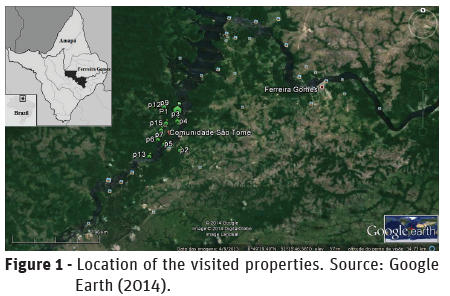
<body><![CDATA[<p><font face = "Verdana" size = "2">The work is important because it represents an opportunity to know the potential and diversity of plant species (ethnospecies) that were lost, due to the installation of hydroelectric plants in the Brazilian Amazon.</font></p>       <p><font face = "Verdana" size = "3"><b>MATERIALS AND METHODS</b></font></p>      <p><font face = "Verdana" size = "2"><i>Study area</i></font></p>      <p><font face = "Verdana" size = "2">The study was carried out in the area where the São Tomé community was located, in the municipality of Ferreira Gomes, Amapá, Brazil, on the left bank of the river Araguari, between coordinates N 00º 49&#8216;31 and W 051º 18&#8216;33 (<a href = "#f1">Figure 1</a>).</font></p>      <p>&nbsp;</p>  <a name = "f1"><img src = "/img/revistas/rca/v42n2/v42n2a30f1.jpg"></a>      
<p>&nbsp;</p>      <p><font face = "Verdana" size = "2">Regarding precipitation, the Araguari river basin presents a significant spatial variation ranging from slightly less than 2.300 mm/year to 2.900 mm/year. The climate has two well-defined seasons: summer, which extends from June to November and is characterized as the least rainy season; and winter, between December and May and characterized by a higher rainfall volume.</font></p>      <p><font face = "Verdana" size = "2">The predominant soils are Oxisols and Gleysols. The vegetation of the area combines terra firme forest and alluvial forest dense. The region is home to three hydroelectric power plants: Coaracy Nunes, Ferreira Gomes Energia and the Caldeirão Waterfall. These three ventures are located in the Araguari River Basin and located in nearby areas, exposing the surrounding communities to various social and environmental impacts.</font></p>       <p><font face = "Verdana" size = "2"><i>Data collect</i></font></p>      <p><font face = "Verdana" size = "2">Data collection took place from May to October 2014. Before the data collection, we used approximation strategies, by the &#34;rapport&#34; method, aiming for the involvement and confidence of community residents. The first informants were randomly selected from the community. We used non-probabilistic sampling (n = 15), such as the snowball technique proposed by Bailey (1994) to select local extraction experts who understood the use of medicinal plants. Ethnobotanical data were collected through semi-structured interviews and participant observation (Albuquerque <i>et al</i>., 2008). The sociodemographic and ethnobotanical data (vernacular name, uses, geographical origin, habit and part used) of the medicinal plants were collected during interviews. The informants&#8216; age ranged from 29 to 68 years. We applied semi-structured interview because it allows greater flexibility and is an effective tool for collecting descriptive data.</font></p>      ]]></body>
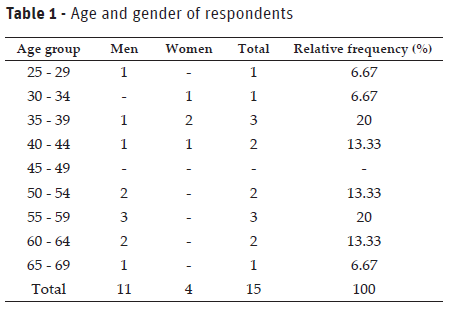
<body><![CDATA[<p><font face = "Verdana" size = "2">The Terms of Free and Informed Consent were obtained from those who offered to participate in the study, following the legal ethical standards. A survey of the household units was carried out.</font></p>      <p><font face = "Verdana" size = "2">The botanical collection was performed according to Pinheiro (2014), that is, the collected samples were processed in the field and each one received a collection number, marked on a previously prepared label, containing its vernacular name.</font></p>      <p><font face = "Verdana" size = "2">Photographic registration of the species was carried out to assist in their botanical identification. For the identification of families, the Angiosperm Phylogeny Group IV classification system was used (APG, 2016) and for the species, the identification was performed through dichotomic keys and with comparison of the deposited specimens in the Amapaense Herbarium (HAMAB). To confirm the spelling and synonymy, the database of the &quot;Missouri Botanical Garden&quot; and &quot;The Plant List&quot; were consulted.</font></p>      <p><font face = "Verdana" size = "2"><i>Data analysis</i></font></p>      <p><font face = "Verdana" size = "2">The data collected and recorded in the ethnobotanical Form were organized and systematized in tables containing the information on species occurrence, the most used by the informants and their type of use. Tables were originated to contain information on: the relation of forest species used, information of use, collection and availability in the area. We used mean and standard deviation for the variables that could be analyzed in this way, it was also used (simple and percentage rate) and Relative Frequency of Citation.</font></p>      <p><font face = "Verdana" size = "3"><b>RESULTS AND DISCUSSION</b></font></p>       <p><font face = "Verdana" size = "2">The sample universe covered a range between 29 and 68 years of age for the interviewees, of whom 11 were men, corresponding to 73.33% and 4 women (26.67%). The mean age was 47 years, with a standard deviation of 12.86 years for the total number of interviewees (<a href = "#t1">Table 1</a>). Considering the gender of respondents, the mean age was 37.75 (women) and 52.09 years for men, with a minimum and maximum age of 32 and 44 years for women, with 29 and 68 for men.</font></p>      <p>&nbsp;</p>  <a name = "t1"><img src = "/img/revistas/rca/v42n2/v42n2a30t1.jpg"></a>      
<p>&nbsp;</p>      <p><font face = "Verdana" size = "2">Popular knowledge of medicinal resources may vary according to the characteristics of an individual, such as: sex, age, educational level, income, social status and the economic roles played within the family. On the other hand, most ethnobiological studies associate age to traditional knowledge (Laleye <i>et al</i>., 2015). Gender clearly influences knowledge about plant resources because gender roles and occupations are differentiated and knowledge of men and women can be reflected in distinct patterns of plant ownership and use (Almeida <i>et al</i>., 2010).</font></p>      ]]></body>
<body><![CDATA[<p><font face = "Verdana" size = "2">From the study in the community, 45 species of plants used by the residents with indication of medicinal uses were indicated, distributed in 31 families. The botanical families that stood out for the greatest number of species were Fabaceae (five species), Lamiaceae (four species), Asteraceae and Bignoniaceae (three species each). The other families presented one species each (<a href = "/img/revistas/rca/v42n2/v42n2a30t2.jpg" target = "_blank">Table 2</a>).</font></p>      
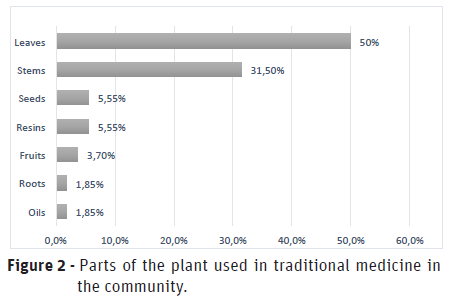
<p><font face = "Verdana" size = "2">The genera with the highest number of species were Citrus (seven species), Capsicum (three species), Annona, Artocarpus, Averrhoa, Hibiscus, Manilkara, Oenocarpus, Piper, Psidium, Theobroma (two species each), representing approximately 14% of the total, the others had frequency equal to one species.</font></p>       <p><font face = "Verdana" size = "2">In the eastern Amazon, Coelho-Ferreira (2009) identified 229 medicinal plants distributed in 81 families and 176 genus. The families with the highest number of species were Lamiaceae (15 species), Euphorbiaceae and Asteraceae (12), Fabaceae (11) and Caesalpiniaceae (9). In the western Amazon, to verify the most abundant environment in the supply of medicinal plants, Pedrollo <i>et al</i>. (2016) interviewed 62 informants, resulting in 119 documented botanical species that had their sites of occurrence cited.</font></p>      <p><font face = "Verdana" size = "2">In Alto Rio Negro, Frausin <i>et al</i>. (2015) found 55 species of neotropical plants, mainly native, 34 families, with indication of medicinal use. The detailed uses of these plants: 64.5% of plants for the specific treatment of malaria, 51 records (17.6%) of plants used in the treatment of liver problems and 29 records (10%) of plants used in control of fevers.</font></p>      <p><font face = "Verdana" size = "2">In the Amazon, some forest species have several uses and high potential for medicinal use, for example, the use of <i>Carapa guianensis</i>, andirobeira (Santos and Guerra, 2010; Sist <i>et al</i>., 2014; Nardi-Santos <i>et al</i>., 2016) and pracaxizeiro (<i>Pentaclethra macroloba</i>), whose bark is widely used by forest peoples in disease treatments (Dantas <i>et al</i>., 2017).</font></p>       <p><font face = "Verdana" size = "2">The São Tomé community used the most diverse components of vegetables in the preparation of medicines and with respect to the used part of the plant, the following results were found in order of indication: leaves, stems, seeds, resins, fruit, roots and oils (<a href = "#f2">Figure 2</a>).</font></p>      <p>&nbsp;</p>  <a name = "f2"><img src = "/img/revistas/rca/v42n2/v42n2a30f2.jpg"></a>      
<p>&nbsp;</p>      <p><font face = "Verdana" size = "2">In the Amazon region, Lima <i>et al. </i>(2016) reported that the most common plant parts were leaves (324 citations), followed by bark (162), whole plants (130), aerial parts (88), roots 80), fruits (76) and seeds (63).</font></p>       <p><font face = "Verdana" size = "2">In the eastern Amazon, Coelho-Ferreira (2009) identified a wide variety of plant parts used to prepare traditional medicines, especially leaves (98 citations), followed by roots (42), bark (29), fruits (27), whole plants (22), branches (18), latex, flowers, seeds (13 each), stems (12), wood and shoots (5 each) and others (4). According to this author, in the case of Amazonian trees, the bark is more commonly used, which can be attributed to the fact that it is easier to access than the leaves.</font></p>      ]]></body>
<body><![CDATA[<p><font face = "Verdana" size = "2">In a study in western Amazonia, Frausin <i>et al</i>. (2015) identified that stem bark was the most used part to the preparation of the medicines, (30% of total reported), followed by leaf (26%) and root bark (17%). Other preparations included seeds (5.1%), whole plant (4.7%) and fruits (1.6%).</font></p>      <p><font face = "Verdana" size = "2">Of the species registered in the community as medicinal, 66.67% were cultivated in backyards and in vegetable gardens and 33.33% were species that were born spontaneously in the environment, this being the yard itself, paths to the forest and the forest.</font></p>      <p><font face = "Verdana" size = "2">Different results were obtained by Coelho-Ferreira (2009), regarding the introduced plants, reporting that 49% of the species were native to the Amazon region and 39% were introduced. Among the native species, 78 were spontaneous, 25 were cultivated, being <i>Carapa guianensis</i>, <i>Brosimum acutifolium</i> and different copaífera species, native plants originating from flooded and terra firme forests, far from the city, making it difficult to access them.</font></p>      <p><font face = "Verdana" size = "2">In the Amazon, Pedrollo <i>et al.</i> (2016) have identified that the most prominent medicinal species are widely distributed and culturally recognized. Exotic species were 20% of the total and 37% of the species were cultivated. The authors further state that the plants in backyards were usually associated with the disease of children or women, 80% of the plants collected were native to the Amazon rainforest.</font></p>       <p><font face = "Verdana" size = "2">Almeida <i>et al</i>. (2010) identified that the vast majority of exotic plants in the rural communities studied was herbaceous, and these plants grow more easily near houses, consequently, this occurrence speeds up the collection process and may have influenced informants&#8216; preferences for the species they most used.</font></p>      <p><font face = "Verdana" size = "2">In Marudá-Pará, Coelho-Ferreira (2009) found 58.8% of cultivated species, 34.6% of spontaneous and 6.6% of both forms. This shows that the greatest quantities of medicinal species used in this traditional community were obtained through cultivation.</font></p>       <p><font face = "Verdana" size = "2">Regarding the importance of these species to the local populations, Ribeiro <i>et al.</i> (2016) reported that all 60 local experts interviewed in the riparian communities studied believed in the efficacy and use of medicinal plants in the treatment of diseases. In a study in a quilombola community, Santana <i>et al</i>. (2016) state that the community maintains a considerable knowledge of the medicinal value of the local flora.</font></p>      <p><font face = "Verdana" size = "2">However, little of this knowledge is derived from the ancient rainforests, with their pharmacopoeia presenting a hybrid blend of wild and cultivated, native and exotic species. In addition, medicinal plants also have cultural significance for locals and traditional belief systems of people (for example, protection against evil spirits) are intrinsically related to the use of medicinal plants (Jamba and Kumar, 2018).</font></p>      <p><font face = "Verdana" size = "2">Each site or region has a set of specific rituals and management in the use of ethnospecies that are transmitted over generations (Albuquerque <i>et al</i>., 2012; Ribeiro <i>et al</i>., 2016). Lima <i>et al</i>. (2013) emphasize = that the recognition of traditional knowledge should be considered in actions to value the cultural heritage of these places. In São Tomé, this relationship was also verified with a variety of medicinal plants and the community has shown that these plants were commonly used, there were a dependency of the Community in relation to natural medicines obtained from the forest and its backyards.</font></p>       <p><font face = "Verdana" size = "3"><b>CONCLUSIONS</b></font></p>      ]]></body>
<body><![CDATA[<p><font face = "Verdana" size = "2">Even with current technological advances, the population continued to be interested in using plants for medicinal purposes. Some of the factors that influenced this choice by natural remedies is that the population considered that these plants did not provoke undesirable reactions (for example, allergies) and produced satisfactory effects against diseases, and the knowledge of its benefits runs through previous generations.</font></p>      <p><font face = "Verdana" size = "2">In São Tomé, it was found that its population, although small, had access and knowledge to a wide variety of medicinal plants related to the cure or prevention of diseases that affected its inhabitants and that were lost due to hydroelectric plants installed in the region.</font></p>      <p><font face = "Verdana" size = "2">This study improves the understanding of botanical resources in Amazonian ecosystems, highlighting the use of different species of medicinal plants and the destruction of these environments can pose serious risks to traditional peoples, causing the loss of the empirical knowledge and the genetic heritage of these environments, as occurred in the São Tomé.</font></p>      <p>&nbsp;</p>      <p><font face = "Verdana" size = "3"><b>References</b></font></p>      <!-- ref --><p><font face = "Verdana" size = "2">Albuquerque, U.P.; Lucena, R.F.P. & Alencar, N.L. (2008) - Métodos e técnicas para uma coleta de dados etnobotânicos. <i>In</i>: Albuquerque, U.P.; Lucena, R.F.P. & Cunha, L.V.F.C. (Orgs) - <i>Métodos e técnicas na pesquisa etnobotânica</i>. Editora Comunigraf / NUPEEA, 2ª.edição. Recife, pp. 41-72.    &nbsp;&nbsp;&nbsp;&nbsp;&nbsp;&nbsp;&nbsp;&nbsp;[&#160;<a href="javascript:void(0);" onclick="javascript: window.open('/scielo.php?script=sci_nlinks&ref=700783&pid=S0871-018X201900020003000001&lng=','','width=640,height=500,resizable=yes,scrollbars=1,menubar=yes,');">Links</a>&#160;]<!-- end-ref --></font></p>       <!-- ref --><p><font face = "Verdana" size = "2">Albuquerque, U.P.; Ramos, M.A. & Melo, J.G. (2012) - New strategies for drug discovery in tropical forests based on ethnobotanical and chemical ecological studies. <i>Journal of Ethnopharmacology</i>, vol. 140, n. 1, p. 197-201. <a href = "https://doi.org/10.1016/j.jep.2011.12.042">https://doi.org/10.1016/j.jep.2011.12.042</a></font>&nbsp;&nbsp;&nbsp;&nbsp;&nbsp;&nbsp;&nbsp;&nbsp;[&#160;<a href="javascript:void(0);" onclick="javascript: window.open('/scielo.php?script=sci_nlinks&ref=700785&pid=S0871-018X201900020003000002&lng=','','width=640,height=500,resizable=yes,scrollbars=1,menubar=yes,');">Links</a>&#160;]<!-- end-ref --><!-- ref --><p><font face = "Verdana" size = "2">Albuquerque, U.P. & Andrade, L.H.C. (2002) - Conhecimento botânico tradicional e conservação em uma área de caatinga no Estado de Pernambuco, Nordeste do Brasil. <i>Acta Botânica Brasilica</i>, vol. 16, n. 3, p. 273-285. <a href = "http://dx.doi.org/10.1590/S0102-33062002000300004" target = "_blank">http://dx.doi.org/10.1590/S0102-33062002000300004</a></font>&nbsp;&nbsp;&nbsp;&nbsp;&nbsp;&nbsp;&nbsp;&nbsp;[&#160;<a href="javascript:void(0);" onclick="javascript: window.open('/scielo.php?script=sci_nlinks&ref=700786&pid=S0871-018X201900020003000003&lng=','','width=640,height=500,resizable=yes,scrollbars=1,menubar=yes,');">Links</a>&#160;]<!-- end-ref --><!-- ref --><p><font face = "Verdana" size = "2">Albuquerque, U.P. & Hanazaki, N. (2006) - As pesquisas etnodirigidas na descoberta de novos fármacos de interesse médico e farmacêutico: fragilidades e perspectivas.<i> Revista Brasileira de Farmacologia</i>, vol. 16, p. 678-689. <a href = "http://dx.doi.org/10.1590/S0102-695X2006000500015" target = "_blank">http://dx.doi.org/10.1590/S0102-695X2006000500015</a>&nbsp;    &nbsp;&nbsp;&nbsp;&nbsp;&nbsp;&nbsp;&nbsp;&nbsp;[&#160;<a href="javascript:void(0);" onclick="javascript: window.open('/scielo.php?script=sci_nlinks&ref=700787&pid=S0871-018X201900020003000004&lng=','','width=640,height=500,resizable=yes,scrollbars=1,menubar=yes,');">Links</a>&#160;]<!-- end-ref --></font></p>       <!-- ref --><p><font face = "Verdana" size = "2">Almeida, C.F.C.B.R.; Ramosa, M.A.; Amorim, E.L.C. & Albuquerque, U.P. (2010) - A comparison of knowledge about medicinal plants for three rural communities in the semi-arid region of northeast of Brazil. <i>Journal of Ethnopharmacology</i>, vol. 127, n. 3, p. 674-684. <a href = "https://doi.org/10.1016/j.jep.2009.12.005" target = "_blank">https://doi.org/10.1016/j.jep.2009.12.005</a></font>&nbsp;&nbsp;&nbsp;&nbsp;&nbsp;&nbsp;&nbsp;&nbsp;[&#160;<a href="javascript:void(0);" onclick="javascript: window.open('/scielo.php?script=sci_nlinks&ref=700789&pid=S0871-018X201900020003000005&lng=','','width=640,height=500,resizable=yes,scrollbars=1,menubar=yes,');">Links</a>&#160;]<!-- end-ref --><!-- ref --><p><font face = "Verdana" size = "2">Bailey, K. (1994) - <i>Methods of social research</i>. 4th ed. New York: The Free Press. 588p.    &nbsp;&nbsp;&nbsp;&nbsp;&nbsp;&nbsp;&nbsp;&nbsp;[&#160;<a href="javascript:void(0);" onclick="javascript: window.open('/scielo.php?script=sci_nlinks&ref=700790&pid=S0871-018X201900020003000006&lng=','','width=640,height=500,resizable=yes,scrollbars=1,menubar=yes,');">Links</a>&#160;]<!-- end-ref --></font></p>      <!-- ref --><p><font face = "Verdana" size = "2">Casas Reátegui, R.; Pawera, L.; Panduro, P.P.V. & Polesny, Z. (2018) - Beetles, ants, wasps, or flies? An ethnobiological study of edible insects among the Awajún Amerindians in Amazonas, Peru. <i>Journal of Ethnobiology and Ethnomedicine</i>, vol. 14, art. 53. <a href = "https://doi.org/10.1186/s13002-018-0252-5" target = "_blank">https://doi.org/10.1186/s13002-018-0252-5</a></font>&nbsp;&nbsp;&nbsp;&nbsp;&nbsp;&nbsp;&nbsp;&nbsp;[&#160;<a href="javascript:void(0);" onclick="javascript: window.open('/scielo.php?script=sci_nlinks&ref=700792&pid=S0871-018X201900020003000007&lng=','','width=640,height=500,resizable=yes,scrollbars=1,menubar=yes,');">Links</a>&#160;]<!-- end-ref --><!-- ref --><p><font face = "Verdana" size = "2">Coelho-Ferreira, M. (2009) - Medicinal knowledge and plant utilization in an Amazonian coastal community of Marudá, Pará State (Brazil). <i>Journal of Ethnopharmacology</i>, vol. 126, n. 1, p. 159-175. <a href = "https://doi.org/10.1016/j.jep.2009.07.016" target = "_blank">https://doi.org/10.1016/j.jep.2009.07.016</a></font>&nbsp;&nbsp;&nbsp;&nbsp;&nbsp;&nbsp;&nbsp;&nbsp;[&#160;<a href="javascript:void(0);" onclick="javascript: window.open('/scielo.php?script=sci_nlinks&ref=700793&pid=S0871-018X201900020003000008&lng=','','width=640,height=500,resizable=yes,scrollbars=1,menubar=yes,');">Links</a>&#160;]<!-- end-ref --><!-- ref --><p><font face = "Verdana" size = "2">Dantas, A.R.; Marangon, L.C.; Guedes, M.C.; Feliciano, A.L.P. & Lira-Guedes, A.C. (2017) - Spatial distribution of a population of <i>Pentaclethra macroloba</i> (Willd.) Kuntze in a floodplain forest of the Amazon estuary. <i>Revista Árvore</i>, vol. 41, n. 4, art. e410406. <a href = "http://dx.doi.org/10.1590/1806-90882017000400006" target = "_blank">http://dx.doi.org/10.1590/1806-90882017000400006</a></font>&nbsp;&nbsp;&nbsp;&nbsp;&nbsp;&nbsp;&nbsp;&nbsp;[&#160;<a href="javascript:void(0);" onclick="javascript: window.open('/scielo.php?script=sci_nlinks&ref=700794&pid=S0871-018X201900020003000009&lng=','','width=640,height=500,resizable=yes,scrollbars=1,menubar=yes,');">Links</a>&#160;]<!-- end-ref --><!-- ref --><p><font face = "Verdana" size = "2">Dawson, C.I.K.; Leakey, R.; Clement, C.R.; Weber, J.C.; Cornelius, J.P.; Roshetko, J.M.; Vinceti, B.; Kalinganire, A.; Tchoundjeu, Z.; Masters, E. & Jamnadass, R. (2014) - The management of tree genetic resources and the livelihoods of rural communities in the tropics: Non-timber forest products, smallholder agroforestry practices and tree commodity. <i>Forest Ecology and Management</i>, vol. 333, p. 9-21. <a href = "https://doi.org/10.1016/j.foreco.2014.01.021">https://doi.org/10.1016/j.foreco.2014.01.021</a></font>&nbsp;&nbsp;&nbsp;&nbsp;&nbsp;&nbsp;&nbsp;&nbsp;[&#160;<a href="javascript:void(0);" onclick="javascript: window.open('/scielo.php?script=sci_nlinks&ref=700795&pid=S0871-018X201900020003000010&lng=','','width=640,height=500,resizable=yes,scrollbars=1,menubar=yes,');">Links</a>&#160;]<!-- end-ref --><!-- ref --><p><font face = "Verdana" size = "2">Frausin, G.; Hidalgo, A.F.; Lima, R.B.S.; Kinupp, V.F.; Ming, L.C.; Pohlit, A.M. & Milliken, W. (2015) - An ethnobotanical study of anti-malarial plants among indigenous people on the upper Negro River in the Brazilian Amazon. <i>Journal of Ethnopharmacology</i>, vol. 174, p. 238-252. <a href = "https://doi.org/10.1016/j.jep.2015.07.033" target = "_blank">https://doi.org/10.1016/j.jep.2015.07.033</a></font>&nbsp;&nbsp;&nbsp;&nbsp;&nbsp;&nbsp;&nbsp;&nbsp;[&#160;<a href="javascript:void(0);" onclick="javascript: window.open('/scielo.php?script=sci_nlinks&ref=700796&pid=S0871-018X201900020003000011&lng=','','width=640,height=500,resizable=yes,scrollbars=1,menubar=yes,');">Links</a>&#160;]<!-- end-ref --><!-- ref --><p><font face = "Verdana" size = "2">Jamba, N. & Kumar, B.M. (2018) - Medicinal Plants in the Broad-Leaf Mixed Coniferous Forest of Tshothang Chiwog, Bhutan: Floristic Attributes, Vegetation Structure, Ethnobotany, and Socioeconomic Aspects. <i>Frontiers in Environmental Science</i>, vol. 5, art. 96. <a href = "https://doi.org/10.3389/fenvs.2017.00096" target = "_blank">https://doi.org/10.3389/fenvs.2017.00096</a></font>&nbsp;&nbsp;&nbsp;&nbsp;&nbsp;&nbsp;&nbsp;&nbsp;[&#160;<a href="javascript:void(0);" onclick="javascript: window.open('/scielo.php?script=sci_nlinks&ref=700797&pid=S0871-018X201900020003000012&lng=','','width=640,height=500,resizable=yes,scrollbars=1,menubar=yes,');">Links</a>&#160;]<!-- end-ref --><!-- ref --><p><font face = "Verdana" size = "2">Laleye, F.O.A.; Mensah, S.; Assogbadjo, A.E. & Ahissou, H. (2015) - Diversity, Knowledge, and Use of Plants in Traditional Treatment of Diabetes in the Republic of Benin. <i>Ethnobotany Research & Applications</i>, vol. 14, p. 231-257. <a href = "http://dx.doi.org/10.17348/era.14.0.231-257" target = "_blank">http://dx.doi.org/10.17348/era.14.0.231-257</a></font>&nbsp;&nbsp;&nbsp;&nbsp;&nbsp;&nbsp;&nbsp;&nbsp;[&#160;<a href="javascript:void(0);" onclick="javascript: window.open('/scielo.php?script=sci_nlinks&ref=700798&pid=S0871-018X201900020003000013&lng=','','width=640,height=500,resizable=yes,scrollbars=1,menubar=yes,');">Links</a>&#160;]<!-- end-ref --><!-- ref --><p><font face = "Verdana" size = "2">Lima, P.C.C.; Coelho–Ferreira, M. & Santos, R.S. (2016) - Perspectives on Medicinal Plants in Public Markets across the Amazon: A Review. <i>Economic Botany</i>, vol. 70, n. 1, p. 64-78. <a href = "https://doi.org/10.1007/s12231-016-9338-y" target = "_blank">https://doi.org/10.1007/s12231-016-9338-y</a></font>&nbsp;&nbsp;&nbsp;&nbsp;&nbsp;&nbsp;&nbsp;&nbsp;[&#160;<a href="javascript:void(0);" onclick="javascript: window.open('/scielo.php?script=sci_nlinks&ref=700799&pid=S0871-018X201900020003000014&lng=','','width=640,height=500,resizable=yes,scrollbars=1,menubar=yes,');">Links</a>&#160;]<!-- end-ref --><!-- ref --><p><font face = "Verdana" size = "2">Lima, P.G.C.; Silva, R.O.; Coelho-Ferreira, M.R. & Pereira, J.L.G. (2013) - Agrobiodiversidade e etnoconhecimento na Gleba Nova Olinda I, Pará: interações sociais e compartilhamento de germoplasma da mandioca (<i>Manihot esculenta</i> Crantz, Euphorbiaceae). <i>Boletim do Museu Paraense Emílio Goeldi. Ciências Humanas</i>, vol. 8, n. 2, p. 419-433. <a href = "http://dx.doi.org/10.1590/S1981-81222013000200012" target = "_blank">http://dx.doi.org/10.1590/S1981-81222013000200012</a></font>&nbsp;&nbsp;&nbsp;&nbsp;&nbsp;&nbsp;&nbsp;&nbsp;[&#160;<a href="javascript:void(0);" onclick="javascript: window.open('/scielo.php?script=sci_nlinks&ref=700800&pid=S0871-018X201900020003000015&lng=','','width=640,height=500,resizable=yes,scrollbars=1,menubar=yes,');">Links</a>&#160;]<!-- end-ref --><!-- ref --><p><font face = "Verdana" size = "2">McCarter, J. & Gavin, M. C. (2014) - Local Perceptions of Changes in Traditional Ecological Knowledge: A Case Study from Malekula Island, Vanuatu. <i>AMBIO</i>, vol. 43, n. 3, p. 288-296. <a href = "https://doi.org/10.1007/s13280-013-0431-5" target = "_blank">https://doi.org/10.1007/s13280-013-0431-5</a></font>&nbsp;&nbsp;&nbsp;&nbsp;&nbsp;&nbsp;&nbsp;&nbsp;[&#160;<a href="javascript:void(0);" onclick="javascript: window.open('/scielo.php?script=sci_nlinks&ref=700801&pid=S0871-018X201900020003000016&lng=','','width=640,height=500,resizable=yes,scrollbars=1,menubar=yes,');">Links</a>&#160;]<!-- end-ref --><!-- ref --><p><font face = "Verdana" size = "2">Nardi-Santos, M.; Cunha, H.F.A.; Lira-Guedes, A.C.; Gomes, S.C.P. & Guedes, M.C. (2014) - Saberes tradicionais em área de preservação ambiental (APA) localizada em ambiente de várzea periurbano: etnobotânica da andirobeira (<i>Carapa guianensis</i> Aublet.). <i>Boletim do Museu Paraense Emílio Goeldi</i>, vol. 9, p. 93-108. <a href = "http://www.scielo.br/pdf/bgoeldi/v9n1/07.pdf" target = "_blank">http://www.scielo.br/pdf/bgoeldi/v9n1/07.pdf</a></font>&nbsp;&nbsp;&nbsp;&nbsp;&nbsp;&nbsp;&nbsp;&nbsp;[&#160;<a href="javascript:void(0);" onclick="javascript: window.open('/scielo.php?script=sci_nlinks&ref=700802&pid=S0871-018X201900020003000017&lng=','','width=640,height=500,resizable=yes,scrollbars=1,menubar=yes,');">Links</a>&#160;]<!-- end-ref --><!-- ref --><p><font face = "Verdana" size = "2">Nardi-Santos, M.; Lira-Guedes, A.C.; Cunha, H.F.A.; Guedes, M.C.; Mustin, K. Gomes, S.C.P. (2016) - Artisanal Extraction and Traditional Knowledge Associated with Medicinal Use of Crabwood Oil (<i>Carapa guianensis</i> Aublet.) in a Peri-Urban Várzea Environment in the Amazon Estuary. <i>Evidence-Based Complementary and Alternative Medicine</i>, vol. 2016, art. 582802. <a href = "http://dx.doi.org/10.1155/2016/5828021" target = "_blank">http://dx.doi.org/10.1155/2016/5828021</a></font>&nbsp;&nbsp;&nbsp;&nbsp;&nbsp;&nbsp;&nbsp;&nbsp;[&#160;<a href="javascript:void(0);" onclick="javascript: window.open('/scielo.php?script=sci_nlinks&ref=700803&pid=S0871-018X201900020003000018&lng=','','width=640,height=500,resizable=yes,scrollbars=1,menubar=yes,');">Links</a>&#160;]<!-- end-ref --><!-- ref --><p><font face = "Verdana" size = "2">Oliveira, D.R.; Krettli, A.U.; Aguiar, A.C.C.; Leitão, G.G.; Vieira, M.N.; Martins, K.S. & Leitão, S.G. (2015) - Ethnopharmacological evaluation of medicinal plants used against malaria by quilombola communities from Oriximiná, Brazil. <i>Journal of Ethnopharmacology</i>, vol. 173, p. 424-434. <a href = "https://doi.org/10.1016/j.jep.2015.07.035" target = "_blank">https://doi.org/10.1016/j.jep.2015.07.035</a></font>&nbsp;&nbsp;&nbsp;&nbsp;&nbsp;&nbsp;&nbsp;&nbsp;[&#160;<a href="javascript:void(0);" onclick="javascript: window.open('/scielo.php?script=sci_nlinks&ref=700804&pid=S0871-018X201900020003000019&lng=','','width=640,height=500,resizable=yes,scrollbars=1,menubar=yes,');">Links</a>&#160;]<!-- end-ref --><!-- ref --><p><font face = "Verdana" size = "2">Pedrollo, C.T.; Kinupp, V.F.; Shepard JR., G. & Heinrich, M. (2016) - Medicinal plants at Rio Jauaperi, Brazilian Amazon: Ethnobotanical survey and environmental conservation. <i>Journal of Ethnopharmacology,</i> vol. 186, p. 111-124. <a href = "http://dx.doi.org/10.1016/j.jep.2016.03.055" target = "_blank">http://dx.doi.org/10.1016/j.jep.2016.03.055</a></font>&nbsp;&nbsp;&nbsp;&nbsp;&nbsp;&nbsp;&nbsp;&nbsp;[&#160;<a href="javascript:void(0);" onclick="javascript: window.open('/scielo.php?script=sci_nlinks&ref=700805&pid=S0871-018X201900020003000020&lng=','','width=640,height=500,resizable=yes,scrollbars=1,menubar=yes,');">Links</a>&#160;]<!-- end-ref --><!-- ref --><p><font face = "Verdana" size = "2">Pereira, L.A.; Silva, R.B.L.; Guimarães, G.F.; Almeida, M.Z.; Monteiro, E.C.Q. & Sobrinho, F.A.P. (2007) - Plantas medicinais de uma comunidade quilombola na Amazônia Oriental: Aspectos utilitários de espécies das famílias Piperaceae e Solanaceae. <i>Revista Brasileira de Agroecologia,</i> vol. 2, n. 2, p.1385-1388.    &nbsp;&nbsp;&nbsp;&nbsp;&nbsp;&nbsp;&nbsp;&nbsp;[&#160;<a href="javascript:void(0);" onclick="javascript: window.open('/scielo.php?script=sci_nlinks&ref=700806&pid=S0871-018X201900020003000021&lng=','','width=640,height=500,resizable=yes,scrollbars=1,menubar=yes,');">Links</a>&#160;]<!-- end-ref --></font></p>      ]]></body>
<body><![CDATA[<!-- ref --><p><font face = "Verdana" size = "2">Pieroni, A.; Sheikh, Q.; Ali, W. & Torry, B. (2008) - Traditional medicines used by Pakistani migrants from Mirpur living in Bradford, Northern England.<i> Complementary Therapies in Medicine</i>, vol. 16, n. 2, p. 81-86. <a href = "https://doi.org/10.1016/j.ctim.2007.03.005" target = "_blank">https://doi.org/10.1016/j.ctim.2007.03.005</a></font>&nbsp;&nbsp;&nbsp;&nbsp;&nbsp;&nbsp;&nbsp;&nbsp;[&#160;<a href="javascript:void(0);" onclick="javascript: window.open('/scielo.php?script=sci_nlinks&ref=700808&pid=S0871-018X201900020003000022&lng=','','width=640,height=500,resizable=yes,scrollbars=1,menubar=yes,');">Links</a>&#160;]<!-- end-ref --><!-- ref --><p><font face = "Verdana" size = "2">Pinheiro. A.L. (2014) - <i>Fundamentos em taxonomia aplicados no desenvolvimento da dendrologia tropical. </i>Viçosa-MG, Editora UFV. 278 p.    &nbsp;&nbsp;&nbsp;&nbsp;&nbsp;&nbsp;&nbsp;&nbsp;[&#160;<a href="javascript:void(0);" onclick="javascript: window.open('/scielo.php?script=sci_nlinks&ref=700809&pid=S0871-018X201900020003000023&lng=','','width=640,height=500,resizable=yes,scrollbars=1,menubar=yes,');">Links</a>&#160;]<!-- end-ref --></font></p>      <!-- ref --><p><font face = "Verdana" size = "2">Ribeiro, R.V.R.; Bieski, I.G.C.; Balogun, S.O. & Martins, D.T.O. (2017) - Ethnobotanical study of medicinal plants used by Ribeirinhos in the North Araguaia microregion, Mato Grosso, Brazil. <i>Journal of Ethnopharmacology</i>, vol. 205, p. 69-102. <a href = "https://doi.org/10.1016/j.jep.2017.04.023" target = "_blank">https://doi.org/10.1016/j.jep.2017.04.023</a></font>&nbsp;&nbsp;&nbsp;&nbsp;&nbsp;&nbsp;&nbsp;&nbsp;[&#160;<a href="javascript:void(0);" onclick="javascript: window.open('/scielo.php?script=sci_nlinks&ref=700811&pid=S0871-018X201900020003000024&lng=','','width=640,height=500,resizable=yes,scrollbars=1,menubar=yes,');">Links</a>&#160;]<!-- end-ref --><!-- ref --><p><font face = "Verdana" size = "2">Ribeiro, S.C.; Melo, N.D.P. & Barros, A.B. (2016) - Etnoconhecimento de pequenos agricultores tradicionais sobre plantas medicinais no tratamento de dores provocadas pelo trabalho. <i>Cadernos de Terapia Ocupacional</i>, vol. 24, n. 3, p. 563-574. <a href = "http://dx.doi.org/10.4322/0104-4931.ctoAO1249" target = "_blank">http://dx.doi.org/10.4322/0104-4931.ctoAO1249</a></font>&nbsp;&nbsp;&nbsp;&nbsp;&nbsp;&nbsp;&nbsp;&nbsp;[&#160;<a href="javascript:void(0);" onclick="javascript: window.open('/scielo.php?script=sci_nlinks&ref=700812&pid=S0871-018X201900020003000025&lng=','','width=640,height=500,resizable=yes,scrollbars=1,menubar=yes,');">Links</a>&#160;]<!-- end-ref --><!-- ref --><p><font face = "Verdana" size = "2">Santana, B.F.; Voeks, R.A. & Funch, L.S. (2016) - Ethnomedicinal survey of a maroon community in Brazil&#8216;s Atlantic tropical forest. <i>Journal of Ethnopharmacology</i>, vol. 181, p. 37-49. <a href = "https://doi.org/10.1016/j.jep.2016.01.014" target = "_blank">https://doi.org/10.1016/j.jep.2016.01.014</a></font>&nbsp;&nbsp;&nbsp;&nbsp;&nbsp;&nbsp;&nbsp;&nbsp;[&#160;<a href="javascript:void(0);" onclick="javascript: window.open('/scielo.php?script=sci_nlinks&ref=700813&pid=S0871-018X201900020003000026&lng=','','width=640,height=500,resizable=yes,scrollbars=1,menubar=yes,');">Links</a>&#160;]<!-- end-ref --><!-- ref --><p><font face = "Verdana" size = "2">Santos, A.J. & Guerra, F.G.P.Q. (2010) - Aspectos econômicos da cadeia produtiva dos óleos de andiroba (<i>Carapa guianensis</i> aubl.) e copaíba (<i>Copaifera multijuga</i> hayne) na floresta nacional do Tapajós – Pará. <i>FLORESTA</i>, vol. 40, n. 1, p. 23-28. <a href = "http://dx.doi.org/10.5380/rf.v40i1.17095" target = "_blank">http://dx.doi.org/10.5380/rf.v40i1.17095</a></font>&nbsp;&nbsp;&nbsp;&nbsp;&nbsp;&nbsp;&nbsp;&nbsp;[&#160;<a href="javascript:void(0);" onclick="javascript: window.open('/scielo.php?script=sci_nlinks&ref=700814&pid=S0871-018X201900020003000027&lng=','','width=640,height=500,resizable=yes,scrollbars=1,menubar=yes,');">Links</a>&#160;]<!-- end-ref --><!-- ref --><p><font face = "Verdana" size = "2">Sist, P.; Sablayrolles, P.; Barthelon, S.; Sousa-Ota, L.; Kibler, J.-F.; Ruschel, A.; Santos-Melo, M. & Ezzine-de-Blas, D. (2014) - The Contribution of Multiple Use Forest Management to Small Farmers Annual Incomes in the Eastern Amazon. <i>Forests,</i> vol. 5, n. 7, p. 1508-1531. <a href = "https://doi.org/10.3390/f5071508" target = "_blank">https://doi.org/10.3390/f5071508</a></font>&nbsp;&nbsp;&nbsp;&nbsp;&nbsp;&nbsp;&nbsp;&nbsp;[&#160;<a href="javascript:void(0);" onclick="javascript: window.open('/scielo.php?script=sci_nlinks&ref=700815&pid=S0871-018X201900020003000028&lng=','','width=640,height=500,resizable=yes,scrollbars=1,menubar=yes,');">Links</a>&#160;]<!-- end-ref --><p>&nbsp;</p>      <p><font face = "Verdana" size = "2">Received/recebido: 2018.11.19</font></p>      ]]></body>
<body><![CDATA[<p><font face = "Verdana" size = "2">Accepted/aceite: 2019.01.16</font></p>       ]]></body><back>
<ref-list>
<ref id="B1">
<nlm-citation citation-type="book">
<person-group person-group-type="author">
<name>
<surname><![CDATA[Albuquerque]]></surname>
<given-names><![CDATA[U.P.]]></given-names>
</name>
<name>
<surname><![CDATA[Lucena]]></surname>
<given-names><![CDATA[R.F.P.]]></given-names>
</name>
<name>
<surname><![CDATA[Alencar]]></surname>
<given-names><![CDATA[N.L.]]></given-names>
</name>
</person-group>
<article-title xml:lang="pt"><![CDATA[Métodos e técnicas para uma coleta de dados etnobotânicos]]></article-title>
<person-group person-group-type="editor">
<name>
<surname><![CDATA[Albuquerque]]></surname>
<given-names><![CDATA[U.P.]]></given-names>
</name>
<name>
<surname><![CDATA[Lucena]]></surname>
<given-names><![CDATA[R.F.P.]]></given-names>
</name>
<name>
<surname><![CDATA[Cunha]]></surname>
<given-names><![CDATA[L.V.F.C.]]></given-names>
</name>
</person-group>
<source><![CDATA[Métodos e técnicas na pesquisa etnobotânica]]></source>
<year>2008</year>
<edition>2ª</edition>
<page-range>41-72</page-range><publisher-loc><![CDATA[Recife ]]></publisher-loc>
<publisher-name><![CDATA[Editora Comunigraf / NUPEEA]]></publisher-name>
</nlm-citation>
</ref>
<ref id="B2">
<nlm-citation citation-type="journal">
<person-group person-group-type="author">
<name>
<surname><![CDATA[Albuquerque]]></surname>
<given-names><![CDATA[U.P.]]></given-names>
</name>
<name>
<surname><![CDATA[Ramos]]></surname>
<given-names><![CDATA[M.A.]]></given-names>
</name>
<name>
<surname><![CDATA[Melo]]></surname>
<given-names><![CDATA[J.G.]]></given-names>
</name>
</person-group>
<article-title xml:lang="en"><![CDATA[New strategies for drug discovery in tropical forests based on ethnobotanical and chemical ecological studies]]></article-title>
<source><![CDATA[Journal of Ethnopharmacology]]></source>
<year>2012</year>
<volume>140</volume>
<numero>1</numero>
<issue>1</issue>
<page-range>197-201</page-range></nlm-citation>
</ref>
<ref id="B3">
<nlm-citation citation-type="journal">
<person-group person-group-type="author">
<name>
<surname><![CDATA[Albuquerque]]></surname>
<given-names><![CDATA[U.P.]]></given-names>
</name>
<name>
<surname><![CDATA[Andrade]]></surname>
<given-names><![CDATA[L.H.C.]]></given-names>
</name>
</person-group>
<article-title xml:lang="pt"><![CDATA[Conhecimento botânico tradicional e conservação em uma área de caatinga no Estado de Pernambuco, Nordeste do Brasil]]></article-title>
<source><![CDATA[Acta Botânica Brasilica]]></source>
<year>2002</year>
<volume>16</volume>
<numero>3</numero>
<issue>3</issue>
<page-range>273-285</page-range></nlm-citation>
</ref>
<ref id="B4">
<nlm-citation citation-type="journal">
<person-group person-group-type="author">
<name>
<surname><![CDATA[Albuquerque]]></surname>
<given-names><![CDATA[U.P.]]></given-names>
</name>
<name>
<surname><![CDATA[Hanazaki]]></surname>
<given-names><![CDATA[N.]]></given-names>
</name>
</person-group>
<article-title xml:lang="pt"><![CDATA[As pesquisas etnodirigidas na descoberta de novos fármacos de interesse médico e farmacêutico: fragilidades e perspectivas]]></article-title>
<source><![CDATA[Revista Brasileira de Farmacologia]]></source>
<year>2006</year>
<volume>16</volume>
<page-range>678-689</page-range></nlm-citation>
</ref>
<ref id="B5">
<nlm-citation citation-type="journal">
<person-group person-group-type="author">
<name>
<surname><![CDATA[Almeida]]></surname>
<given-names><![CDATA[C.F.C.B.R.]]></given-names>
</name>
<name>
<surname><![CDATA[Ramosa]]></surname>
<given-names><![CDATA[M.A.]]></given-names>
</name>
<name>
<surname><![CDATA[Amorim]]></surname>
<given-names><![CDATA[E.L.C.]]></given-names>
</name>
<name>
<surname><![CDATA[Albuquerque]]></surname>
<given-names><![CDATA[U.P.]]></given-names>
</name>
</person-group>
<article-title xml:lang="en"><![CDATA[A comparison of knowledge about medicinal plants for three rural communities in the semi-arid region of northeast of Brazil]]></article-title>
<source><![CDATA[Journal of Ethnopharmacology]]></source>
<year>2010</year>
<volume>127</volume>
<numero>3</numero>
<issue>3</issue>
<page-range>674-684</page-range></nlm-citation>
</ref>
<ref id="B6">
<nlm-citation citation-type="book">
<person-group person-group-type="author">
<name>
<surname><![CDATA[Bailey]]></surname>
<given-names><![CDATA[K.]]></given-names>
</name>
</person-group>
<source><![CDATA[Methods of social research]]></source>
<year>1994</year>
<edition>4th</edition>
<publisher-loc><![CDATA[New York ]]></publisher-loc>
<publisher-name><![CDATA[The Free Press]]></publisher-name>
</nlm-citation>
</ref>
<ref id="B7">
<nlm-citation citation-type="journal">
<person-group person-group-type="author">
<name>
<surname><![CDATA[Casas Reátegui]]></surname>
<given-names><![CDATA[R.]]></given-names>
</name>
<name>
<surname><![CDATA[Pawera]]></surname>
<given-names><![CDATA[L.]]></given-names>
</name>
<name>
<surname><![CDATA[Panduro]]></surname>
<given-names><![CDATA[P.P.V.]]></given-names>
</name>
<name>
<surname><![CDATA[Polesny]]></surname>
<given-names><![CDATA[Z.]]></given-names>
</name>
</person-group>
<article-title xml:lang="en"><![CDATA[Beetles, ants, wasps, or flies?: An ethnobiological study of edible insects among the Awajún Amerindians in Amazonas, Peru]]></article-title>
<source><![CDATA[Journal of Ethnobiology and Ethnomedicine]]></source>
<year>2018</year>
<volume>14</volume>
<page-range>53</page-range></nlm-citation>
</ref>
<ref id="B8">
<nlm-citation citation-type="journal">
<person-group person-group-type="author">
<name>
<surname><![CDATA[Coelho-Ferreira]]></surname>
<given-names><![CDATA[M.]]></given-names>
</name>
</person-group>
<article-title xml:lang="en"><![CDATA[Medicinal knowledge and plant utilization in an Amazonian coastal community of Marudá, Pará State (Brazil)]]></article-title>
<source><![CDATA[Journal of Ethnopharmacology]]></source>
<year>2009</year>
<volume>126</volume>
<numero>1</numero>
<issue>1</issue>
<page-range>159-175</page-range></nlm-citation>
</ref>
<ref id="B9">
<nlm-citation citation-type="journal">
<person-group person-group-type="author">
<name>
<surname><![CDATA[Dantas]]></surname>
<given-names><![CDATA[A.R.]]></given-names>
</name>
<name>
<surname><![CDATA[Marangon]]></surname>
<given-names><![CDATA[L.C.]]></given-names>
</name>
<name>
<surname><![CDATA[Guedes]]></surname>
<given-names><![CDATA[M.C.]]></given-names>
</name>
<name>
<surname><![CDATA[Feliciano]]></surname>
<given-names><![CDATA[A.L.P.]]></given-names>
</name>
<name>
<surname><![CDATA[Lira-Guedes]]></surname>
<given-names><![CDATA[A.C.]]></given-names>
</name>
</person-group>
<article-title xml:lang="en"><![CDATA[Spatial distribution of a population of Pentaclethra macroloba (Willd.) Kuntze in a floodplain forest of the Amazon estuary]]></article-title>
<source><![CDATA[Revista Árvore]]></source>
<year>2017</year>
<volume>41</volume>
<numero>4</numero>
<issue>4</issue>
<page-range>e410406</page-range></nlm-citation>
</ref>
<ref id="B10">
<nlm-citation citation-type="journal">
<person-group person-group-type="author">
<name>
<surname><![CDATA[Dawson]]></surname>
<given-names><![CDATA[C.I.K.]]></given-names>
</name>
<name>
<surname><![CDATA[Leakey]]></surname>
<given-names><![CDATA[R.]]></given-names>
</name>
<name>
<surname><![CDATA[Clement]]></surname>
<given-names><![CDATA[C.R.]]></given-names>
</name>
<name>
<surname><![CDATA[Weber]]></surname>
<given-names><![CDATA[J.C.]]></given-names>
</name>
<name>
<surname><![CDATA[Cornelius]]></surname>
<given-names><![CDATA[J.P.]]></given-names>
</name>
<name>
<surname><![CDATA[Roshetko]]></surname>
<given-names><![CDATA[J.M.]]></given-names>
</name>
<name>
<surname><![CDATA[Vinceti]]></surname>
<given-names><![CDATA[B.]]></given-names>
</name>
<name>
<surname><![CDATA[Kalinganire]]></surname>
<given-names><![CDATA[A.]]></given-names>
</name>
<name>
<surname><![CDATA[Tchoundjeu]]></surname>
<given-names><![CDATA[Z.]]></given-names>
</name>
<name>
<surname><![CDATA[Masters]]></surname>
<given-names><![CDATA[E.]]></given-names>
</name>
<name>
<surname><![CDATA[Jamnadass]]></surname>
<given-names><![CDATA[R.]]></given-names>
</name>
</person-group>
<article-title xml:lang="en"><![CDATA[The management of tree genetic resources and the livelihoods of rural communities in the tropics: Non-timber forest products, smallholder agroforestry practices and tree commodity]]></article-title>
<source><![CDATA[Forest Ecology and Management]]></source>
<year>2014</year>
<volume>333</volume>
<page-range>9-21</page-range></nlm-citation>
</ref>
<ref id="B11">
<nlm-citation citation-type="journal">
<person-group person-group-type="author">
<name>
<surname><![CDATA[Frausin]]></surname>
<given-names><![CDATA[G.]]></given-names>
</name>
<name>
<surname><![CDATA[Hidalgo]]></surname>
<given-names><![CDATA[A.F.]]></given-names>
</name>
<name>
<surname><![CDATA[Lima]]></surname>
<given-names><![CDATA[R.B.S.]]></given-names>
</name>
<name>
<surname><![CDATA[Kinupp]]></surname>
<given-names><![CDATA[V.F.]]></given-names>
</name>
<name>
<surname><![CDATA[Ming]]></surname>
<given-names><![CDATA[L.C.]]></given-names>
</name>
<name>
<surname><![CDATA[Pohlit]]></surname>
<given-names><![CDATA[A.M.]]></given-names>
</name>
<name>
<surname><![CDATA[Milliken]]></surname>
<given-names><![CDATA[W.]]></given-names>
</name>
</person-group>
<article-title xml:lang="en"><![CDATA[An ethnobotanical study of anti-malarial plants among indigenous people on the upper Negro River in the Brazilian Amazon]]></article-title>
<source><![CDATA[Journal of Ethnopharmacology]]></source>
<year>2015</year>
<volume>174</volume>
<page-range>238-252</page-range></nlm-citation>
</ref>
<ref id="B12">
<nlm-citation citation-type="journal">
<person-group person-group-type="author">
<name>
<surname><![CDATA[Jamba]]></surname>
<given-names><![CDATA[N.]]></given-names>
</name>
<name>
<surname><![CDATA[Kumar]]></surname>
<given-names><![CDATA[B.M.]]></given-names>
</name>
</person-group>
<article-title xml:lang="en"><![CDATA[Medicinal Plants in the Broad-Leaf Mixed Coniferous Forest of Tshothang Chiwog, Bhutan: Floristic Attributes, Vegetation Structure, Ethnobotany, and Socioeconomic Aspects]]></article-title>
<source><![CDATA[Frontiers in Environmental Science]]></source>
<year>2018</year>
<volume>5</volume>
<page-range>96</page-range></nlm-citation>
</ref>
<ref id="B13">
<nlm-citation citation-type="journal">
<person-group person-group-type="author">
<name>
<surname><![CDATA[Laleye]]></surname>
<given-names><![CDATA[F.O.A.]]></given-names>
</name>
<name>
<surname><![CDATA[Mensah]]></surname>
<given-names><![CDATA[S.]]></given-names>
</name>
<name>
<surname><![CDATA[Assogbadjo]]></surname>
<given-names><![CDATA[A.E.]]></given-names>
</name>
<name>
<surname><![CDATA[Ahissou]]></surname>
<given-names><![CDATA[H.]]></given-names>
</name>
</person-group>
<article-title xml:lang="en"><![CDATA[Diversity, Knowledge, and Use of Plants in Traditional Treatment of Diabetes in the Republic of Benin]]></article-title>
<source><![CDATA[Ethnobotany Research & Applications]]></source>
<year>2015</year>
<volume>14</volume>
<page-range>231-257</page-range></nlm-citation>
</ref>
<ref id="B14">
<nlm-citation citation-type="journal">
<person-group person-group-type="author">
<name>
<surname><![CDATA[Lima]]></surname>
<given-names><![CDATA[P.C.C.]]></given-names>
</name>
<name>
<surname><![CDATA[Coelho-Ferreira]]></surname>
<given-names><![CDATA[M.]]></given-names>
</name>
<name>
<surname><![CDATA[Santos]]></surname>
<given-names><![CDATA[R.S.]]></given-names>
</name>
</person-group>
<article-title xml:lang="en"><![CDATA[Perspectives on Medicinal Plants in Public Markets across the Amazon: A Review]]></article-title>
<source><![CDATA[Economic Botany]]></source>
<year>2016</year>
<volume>70</volume>
<numero>1</numero>
<issue>1</issue>
<page-range>64-78</page-range></nlm-citation>
</ref>
<ref id="B15">
<nlm-citation citation-type="journal">
<person-group person-group-type="author">
<name>
<surname><![CDATA[Lima]]></surname>
<given-names><![CDATA[P.G.C.]]></given-names>
</name>
<name>
<surname><![CDATA[Silva]]></surname>
<given-names><![CDATA[R.O.]]></given-names>
</name>
<name>
<surname><![CDATA[Coelho-Ferreira]]></surname>
<given-names><![CDATA[M.]]></given-names>
</name>
<name>
<surname><![CDATA[Pereira]]></surname>
<given-names><![CDATA[J.L.G.]]></given-names>
</name>
</person-group>
<article-title xml:lang="pt"><![CDATA[Agrobiodiversidade e etnoconhecimento na Gleba Nova Olinda I, Pará: interações sociais e compartilhamento de germoplasma da mandioca (Manihot esculenta Crantz, Euphorbiaceae)]]></article-title>
<source><![CDATA[Boletim do Museu Paraense Emílio Goeldi. Ciências Humanas]]></source>
<year>2013</year>
<volume>8</volume>
<numero>2</numero>
<issue>2</issue>
<page-range>419-433</page-range></nlm-citation>
</ref>
<ref id="B16">
<nlm-citation citation-type="journal">
<person-group person-group-type="author">
<name>
<surname><![CDATA[McCarter]]></surname>
<given-names><![CDATA[J.]]></given-names>
</name>
<name>
<surname><![CDATA[Gavin]]></surname>
<given-names><![CDATA[M. C.]]></given-names>
</name>
</person-group>
<article-title xml:lang="en"><![CDATA[Local Perceptions of Changes in Traditional Ecological Knowledge: A Case Study from Malekula Island, Vanuatu]]></article-title>
<source><![CDATA[AMBIO]]></source>
<year>2014</year>
<volume>43</volume>
<numero>3</numero>
<issue>3</issue>
<page-range>288-296</page-range></nlm-citation>
</ref>
<ref id="B17">
<nlm-citation citation-type="journal">
<person-group person-group-type="author">
<name>
<surname><![CDATA[Nardi-Santos]]></surname>
<given-names><![CDATA[M.]]></given-names>
</name>
<name>
<surname><![CDATA[Cunha]]></surname>
<given-names><![CDATA[H.F.A.]]></given-names>
</name>
<name>
<surname><![CDATA[Lira-Guedes]]></surname>
<given-names><![CDATA[A.C.]]></given-names>
</name>
<name>
<surname><![CDATA[Gomes]]></surname>
<given-names><![CDATA[S.C.P.]]></given-names>
</name>
<name>
<surname><![CDATA[Guedes]]></surname>
<given-names><![CDATA[M.C.]]></given-names>
</name>
</person-group>
<article-title xml:lang="pt"><![CDATA[Saberes tradicionais em área de preservação ambiental (APA) localizada em ambiente de várzea periurbano: etnobotânica da andirobeira (Carapa guianensis Aublet.)]]></article-title>
<source><![CDATA[Boletim do Museu Paraense Emílio Goeldi]]></source>
<year>2014</year>
<volume>9</volume>
<page-range>93-108</page-range></nlm-citation>
</ref>
<ref id="B18">
<nlm-citation citation-type="journal">
<person-group person-group-type="author">
<name>
<surname><![CDATA[Nardi-Santos]]></surname>
<given-names><![CDATA[M.]]></given-names>
</name>
<name>
<surname><![CDATA[Lira-Guedes]]></surname>
<given-names><![CDATA[A.C.]]></given-names>
</name>
<name>
<surname><![CDATA[Cunha]]></surname>
<given-names><![CDATA[H.F.A.]]></given-names>
</name>
<name>
<surname><![CDATA[Guedes]]></surname>
<given-names><![CDATA[M.C.]]></given-names>
</name>
<name>
<surname><![CDATA[Mustin]]></surname>
<given-names><![CDATA[K.]]></given-names>
</name>
<name>
<surname><![CDATA[Gomes]]></surname>
<given-names><![CDATA[S.C.P.]]></given-names>
</name>
</person-group>
<article-title xml:lang="en"><![CDATA[Artisanal Extraction and Traditional Knowledge Associated with Medicinal Use of Crabwood Oil (Carapa guianensis Aublet.) in a Peri-Urban Várzea Environment in the Amazon Estuary]]></article-title>
<source><![CDATA[Evidence-Based Complementary and Alternative Medicine]]></source>
<year>2016</year>
<volume>2016</volume>
<page-range>582802</page-range></nlm-citation>
</ref>
<ref id="B19">
<nlm-citation citation-type="journal">
<person-group person-group-type="author">
<name>
<surname><![CDATA[Oliveira]]></surname>
<given-names><![CDATA[D.R.]]></given-names>
</name>
<name>
<surname><![CDATA[Krettli]]></surname>
<given-names><![CDATA[A.U.]]></given-names>
</name>
<name>
<surname><![CDATA[Aguiar]]></surname>
<given-names><![CDATA[A.C.C.]]></given-names>
</name>
<name>
<surname><![CDATA[Leitão]]></surname>
<given-names><![CDATA[G.G.]]></given-names>
</name>
<name>
<surname><![CDATA[Vieira]]></surname>
<given-names><![CDATA[M.N.]]></given-names>
</name>
<name>
<surname><![CDATA[Martins]]></surname>
<given-names><![CDATA[K.S.]]></given-names>
</name>
<name>
<surname><![CDATA[Leitão]]></surname>
<given-names><![CDATA[S.G.]]></given-names>
</name>
</person-group>
<article-title xml:lang="en"><![CDATA[Ethnopharmacological evaluation of medicinal plants used against malaria by quilombola communities from Oriximiná, Brazil]]></article-title>
<source><![CDATA[Journal of Ethnopharmacology]]></source>
<year>2015</year>
<volume>173</volume>
<page-range>424-434</page-range></nlm-citation>
</ref>
<ref id="B20">
<nlm-citation citation-type="journal">
<person-group person-group-type="author">
<name>
<surname><![CDATA[Pedrollo]]></surname>
<given-names><![CDATA[C.T.]]></given-names>
</name>
<name>
<surname><![CDATA[Kinupp]]></surname>
<given-names><![CDATA[V.F.]]></given-names>
</name>
<name>
<surname><![CDATA[Shepard JR.]]></surname>
<given-names><![CDATA[G.]]></given-names>
</name>
<name>
<surname><![CDATA[Heinrich]]></surname>
<given-names><![CDATA[M.]]></given-names>
</name>
</person-group>
<article-title xml:lang="en"><![CDATA[Medicinal plants at Rio Jauaperi, Brazilian Amazon: Ethnobotanical survey and environmental conservation]]></article-title>
<source><![CDATA[Journal of Ethnopharmacology]]></source>
<year>2016</year>
<volume>186</volume>
<page-range>111-124</page-range></nlm-citation>
</ref>
<ref id="B21">
<nlm-citation citation-type="journal">
<person-group person-group-type="author">
<name>
<surname><![CDATA[Pereira]]></surname>
<given-names><![CDATA[L.A.]]></given-names>
</name>
<name>
<surname><![CDATA[Silva]]></surname>
<given-names><![CDATA[R.B.L.]]></given-names>
</name>
<name>
<surname><![CDATA[Guimarães]]></surname>
<given-names><![CDATA[G.F.]]></given-names>
</name>
<name>
<surname><![CDATA[Almeida]]></surname>
<given-names><![CDATA[M.Z.]]></given-names>
</name>
<name>
<surname><![CDATA[Monteiro]]></surname>
<given-names><![CDATA[E.C.Q.]]></given-names>
</name>
<name>
<surname><![CDATA[Sobrinho]]></surname>
<given-names><![CDATA[F.A.P.]]></given-names>
</name>
</person-group>
<article-title xml:lang="pt"><![CDATA[Plantas medicinais de uma comunidade quilombola na Amazônia Oriental: Aspectos utilitários de espécies das famílias Piperaceae e Solanaceae]]></article-title>
<source><![CDATA[Revista Brasileira de Agroecologia]]></source>
<year>2007</year>
<volume>2</volume>
<numero>2</numero>
<issue>2</issue>
<page-range>1385-1388</page-range></nlm-citation>
</ref>
<ref id="B22">
<nlm-citation citation-type="journal">
<person-group person-group-type="author">
<name>
<surname><![CDATA[Pieroni]]></surname>
<given-names><![CDATA[A.]]></given-names>
</name>
<name>
<surname><![CDATA[Sheikh]]></surname>
<given-names><![CDATA[Q.]]></given-names>
</name>
<name>
<surname><![CDATA[Ali]]></surname>
<given-names><![CDATA[W.]]></given-names>
</name>
<name>
<surname><![CDATA[Torry]]></surname>
<given-names><![CDATA[B.]]></given-names>
</name>
</person-group>
<article-title xml:lang="en"><![CDATA[Traditional medicines used by Pakistani migrants from Mirpur living in Bradford, Northern England]]></article-title>
<source><![CDATA[Complementary Therapies in Medicine]]></source>
<year>2008</year>
<volume>16</volume>
<numero>2</numero>
<issue>2</issue>
<page-range>81-86</page-range></nlm-citation>
</ref>
<ref id="B23">
<nlm-citation citation-type="book">
<person-group person-group-type="author">
<name>
<surname><![CDATA[Pinheiro]]></surname>
<given-names><![CDATA[A.L.]]></given-names>
</name>
</person-group>
<source><![CDATA[Fundamentos em taxonomia aplicados no desenvolvimento da dendrologia tropical]]></source>
<year>2014</year>
<publisher-loc><![CDATA[Viçosa^eMG MG]]></publisher-loc>
<publisher-name><![CDATA[Editora UFV]]></publisher-name>
</nlm-citation>
</ref>
<ref id="B24">
<nlm-citation citation-type="journal">
<person-group person-group-type="author">
<name>
<surname><![CDATA[Ribeiro]]></surname>
<given-names><![CDATA[R.V.R.]]></given-names>
</name>
<name>
<surname><![CDATA[Bieski]]></surname>
<given-names><![CDATA[I.G.C.]]></given-names>
</name>
<name>
<surname><![CDATA[Balogun]]></surname>
<given-names><![CDATA[S.O.]]></given-names>
</name>
<name>
<surname><![CDATA[Martins]]></surname>
<given-names><![CDATA[D.T.O.]]></given-names>
</name>
</person-group>
<article-title xml:lang="en"><![CDATA[Ethnobotanical study of medicinal plants used by Ribeirinhos in the North Araguaia microregion, Mato Grosso, Brazil]]></article-title>
<source><![CDATA[Journal of Ethnopharmacology]]></source>
<year>2017</year>
<volume>205</volume>
<page-range>69-102</page-range></nlm-citation>
</ref>
<ref id="B25">
<nlm-citation citation-type="journal">
<person-group person-group-type="author">
<name>
<surname><![CDATA[Ribeiro]]></surname>
<given-names><![CDATA[S.C.]]></given-names>
</name>
<name>
<surname><![CDATA[Melo]]></surname>
<given-names><![CDATA[N.D.P.]]></given-names>
</name>
<name>
<surname><![CDATA[Barros]]></surname>
<given-names><![CDATA[A.B.]]></given-names>
</name>
</person-group>
<article-title xml:lang="pt"><![CDATA[Etnoconhecimento de pequenos agricultores tradicionais sobre plantas medicinais no tratamento de dores provocadas pelo trabalho]]></article-title>
<source><![CDATA[Cadernos de Terapia Ocupacional]]></source>
<year>2016</year>
<volume>24</volume>
<numero>3</numero>
<issue>3</issue>
<page-range>563-574</page-range></nlm-citation>
</ref>
<ref id="B26">
<nlm-citation citation-type="journal">
<person-group person-group-type="author">
<name>
<surname><![CDATA[Santana]]></surname>
<given-names><![CDATA[B.F.]]></given-names>
</name>
<name>
<surname><![CDATA[Voeks]]></surname>
<given-names><![CDATA[R.A.]]></given-names>
</name>
<name>
<surname><![CDATA[Funch]]></surname>
<given-names><![CDATA[L.S.]]></given-names>
</name>
</person-group>
<article-title xml:lang="en"><![CDATA[Ethnomedicinal survey of a maroon community in Brazil's Atlantic tropical forest]]></article-title>
<source><![CDATA[Journal of Ethnopharmacology]]></source>
<year>2016</year>
<volume>181</volume>
<page-range>37-49</page-range></nlm-citation>
</ref>
<ref id="B27">
<nlm-citation citation-type="journal">
<person-group person-group-type="author">
<name>
<surname><![CDATA[Santos]]></surname>
<given-names><![CDATA[A.J.]]></given-names>
</name>
<name>
<surname><![CDATA[Guerra]]></surname>
<given-names><![CDATA[F.G.P.Q.]]></given-names>
</name>
</person-group>
<article-title xml:lang="pt"><![CDATA[Aspectos econômicos da cadeia produtiva dos óleos de andiroba (Carapa guianensis aubl.) e copaíba (Copaifera multijuga hayne) na floresta nacional do Tapajós - Pará]]></article-title>
<source><![CDATA[FLORESTA]]></source>
<year>2010</year>
<volume>40</volume>
<numero>1</numero>
<issue>1</issue>
<page-range>23-28</page-range></nlm-citation>
</ref>
<ref id="B28">
<nlm-citation citation-type="journal">
<person-group person-group-type="author">
<name>
<surname><![CDATA[Sist]]></surname>
<given-names><![CDATA[P.]]></given-names>
</name>
<name>
<surname><![CDATA[Sablayrolles]]></surname>
<given-names><![CDATA[P.]]></given-names>
</name>
<name>
<surname><![CDATA[Barthelon]]></surname>
<given-names><![CDATA[S.]]></given-names>
</name>
<name>
<surname><![CDATA[Sousa-Ota]]></surname>
<given-names><![CDATA[L.]]></given-names>
</name>
<name>
<surname><![CDATA[Kibler]]></surname>
<given-names><![CDATA[J.-F.]]></given-names>
</name>
<name>
<surname><![CDATA[Ruschel]]></surname>
<given-names><![CDATA[A.]]></given-names>
</name>
<name>
<surname><![CDATA[Santos-Melo]]></surname>
<given-names><![CDATA[M.]]></given-names>
</name>
<name>
<surname><![CDATA[Ezzine-de-Blas]]></surname>
<given-names><![CDATA[D.]]></given-names>
</name>
</person-group>
<article-title xml:lang="en"><![CDATA[The Contribution of Multiple Use Forest Management to Small Farmers Annual Incomes in the Eastern Amazon]]></article-title>
<source><![CDATA[Forests]]></source>
<year>2014</year>
<volume>5</volume>
<numero>7</numero>
<issue>7</issue>
<page-range>1508-1531</page-range></nlm-citation>
</ref>
</ref-list>
</back>
</article>