<?xml version="1.0" encoding="ISO-8859-1"?><article xmlns:mml="http://www.w3.org/1998/Math/MathML" xmlns:xlink="http://www.w3.org/1999/xlink" xmlns:xsi="http://www.w3.org/2001/XMLSchema-instance">
<front>
<journal-meta>
<journal-id>0872-0754</journal-id>
<journal-title><![CDATA[Nascer e Crescer]]></journal-title>
<abbrev-journal-title><![CDATA[Nascer e Crescer]]></abbrev-journal-title>
<issn>0872-0754</issn>
<publisher>
<publisher-name><![CDATA[Centro Hospitalar do Porto]]></publisher-name>
</publisher>
</journal-meta>
<article-meta>
<article-id>S0872-07542018000100005</article-id>
<title-group>
<article-title xml:lang="en"><![CDATA[Sleep and Media Screens in Pediatric Ages]]></article-title>
<article-title xml:lang="pt"><![CDATA[Sono e Tempo de Ecrã em Idade Pediátrica]]></article-title>
</title-group>
<contrib-group>
<contrib contrib-type="author">
<name>
<surname><![CDATA[Cerca]]></surname>
<given-names><![CDATA[Filipe]]></given-names>
</name>
<xref ref-type="aff" rid="A01"/>
</contrib>
<contrib contrib-type="author">
<name>
<surname><![CDATA[Prior]]></surname>
<given-names><![CDATA[Catarina]]></given-names>
</name>
<xref ref-type="aff" rid="A02"/>
</contrib>
</contrib-group>
<aff id="A01">
<institution><![CDATA[,Agrupamento de Centros de Saúde do Grande Porto II - Gondomar Unidade de Saúde Familiar Valbom General and Family Medicine]]></institution>
<addr-line><![CDATA[Valbom ]]></addr-line>
<country>Portugal</country>
</aff>
<aff id="A02">
<institution><![CDATA[,Centro Hospitalar do Porto Centro Materno Infantil do Norte Department of Neuropediatrics]]></institution>
<addr-line><![CDATA[Porto ]]></addr-line>
<country>Portugal</country>
</aff>
<pub-date pub-type="pub">
<day>01</day>
<month>03</month>
<year>2018</year>
</pub-date>
<pub-date pub-type="epub">
<day>01</day>
<month>03</month>
<year>2018</year>
</pub-date>
<volume>27</volume>
<numero>1</numero>
<fpage>33</fpage>
<lpage>38</lpage>
<copyright-statement/>
<copyright-year/>
<self-uri xlink:href="http://scielo.pt/scielo.php?script=sci_arttext&amp;pid=S0872-07542018000100005&amp;lng=en&amp;nrm=iso"></self-uri><self-uri xlink:href="http://scielo.pt/scielo.php?script=sci_abstract&amp;pid=S0872-07542018000100005&amp;lng=en&amp;nrm=iso"></self-uri><self-uri xlink:href="http://scielo.pt/scielo.php?script=sci_pdf&amp;pid=S0872-07542018000100005&amp;lng=en&amp;nrm=iso"></self-uri><abstract abstract-type="short" xml:lang="en"><p><![CDATA[Introduction: Sleep plays an essential role in children’s physical, emotional and behavioral health. Understanding the sleep architecture, sleep duration requirements as well as the interference of media screens activity with sleep across pediatric ages is essential in order to provide an adequate anticipatory guidance for the children’s parents. Objectives: To review current knowledge on sleep physiology with a particular focus in sleep duration requirements across pediatric ages and on the influence of media screen activity on children and adolescent sleep. Methods: Revision of meta-analysis research studies, systematic reviews, standards of clinical orientation and original research published in Portuguese or English between 01/2000 and 08/2017 on Pubmed / Medline using the following MeSH terms: sleep; sleep requirements; sleep physiology; media screen; child and neurodevelopment. Development: Sleep architecture and sleep duration requirements undergo constant change with age. Despite interindividual differences, optimal sleep duration intervals as well as nap times, which constitute an essential component of children’s sleep, should be followed. Along children’s age progression, other parameters need to be considered in order to maintain optimal sleep quality. The restriction of media screen use at bedtime assumes special relevance, as there is growing evidence pointing towards an association between shortened sleep time and the misuse of screen devices. Adolescents represent a particularly vulnerable population to media screens effects. Importantly, screen overuse and media content may be responsible for higher propensity for obesity, risky behavior, depression, impaired academic performance, decreased social skills and attention difficulties. Conclusion: Anticipatory guidance for parents addressing sleep optimization and media exposure should be routinely provided as a part of health follow-up. Physicians should be capacitated to recognize symptoms or behaviors that may lead to the suspicion of screen misusing as well as to recognize children with high risk of media screen overuse.]]></p></abstract>
<abstract abstract-type="short" xml:lang="pt"><p><![CDATA[Introdução: O sono desempenha um papel essencial no bem-estar físico, emocional e comportamental das crianças. A compreensão das particularidades fisiológicas do sono das crianças e das suas necessidades no que diz respeito à duração do sono são essenciais para a adequada transmissão dos cuidados antecipatórios aos pais. Objetivos: Revisão da literatura científica relativa à fisiologia do sono dando particular destaque à duração ótima de sono nas diferentes idades pediátricas e à potencial influência da utilização de ecrãs multimédia na qualidade do sono. Métodos: Revisão de estudos de metanálises, revisões sistemáticas, normas de orientação clínica e estudos originais publicados em português ou inglês entre 01/2000 e 08/2017 na base de dados Pubmed / Medline usando os seguintes termos MeSH: sono; duração de sono; fisiologia do sono; ecrã multimédia; criança e neurodesenvolvimento. Desenvolvimento: Tanto a arquitetura do sono como a sua duração variam com a idade. Embora existam diferenças entre indivíduos, há intervalos de referência para a duração de sono noturno e de sestas que devem ser cumpridos. Com a progressão da idade, devem ser ainda equacionadas outras variáveis no sentido de otimizar a qualidade do sono. A restrição do uso de ecrãs multimédia, especialmente no período noturno, é essencial, dada a crescente evidência de associação entre o uso excessivo destes dispositivos e uma má qualidade de sono. Os adolescentes são o estrato etário mais vulnerável aos ecrãs multimédia. O uso excessivo destes dispositivos, bem como o próprio conteúdo acedido, podem ser responsáveis &#8203;&#8203;por uma maior propensão para obesidade, comportamentos de risco, depressão, desempenho escolar medíocre, diminuição das competências sociais e dificuldades de atenção. Conclusão: Os cuidados antecipatórios relacionados com a otimização do sono das crianças e com a utilização adequada de ecrãs multimédia devem ser rotineiramente abordados como parte integrante de uma consulta de promoção de saúde infantil e juvenil. O médico deverá ser capaz de reconhecer sintomas ou comportamentos sugestivos de um uso inadequado dos ecrãs multimédia, bem como identificar crianças com risco acrescido de uso excessivo destes dispositivos.]]></p></abstract>
<kwd-group>
<kwd lng="en"><![CDATA[Anticipatory guidance]]></kwd>
<kwd lng="en"><![CDATA[media screens]]></kwd>
<kwd lng="en"><![CDATA[sleep physiology]]></kwd>
<kwd lng="en"><![CDATA[sleep requirements]]></kwd>
<kwd lng="en"><![CDATA[sleep]]></kwd>
<kwd lng="pt"><![CDATA[Cuidados antecipatórios]]></kwd>
<kwd lng="pt"><![CDATA[ecrãs multimédia]]></kwd>
<kwd lng="pt"><![CDATA[fisiologia do sono]]></kwd>
<kwd lng="pt"><![CDATA[duração do sono]]></kwd>
<kwd lng="pt"><![CDATA[sono]]></kwd>
</kwd-group>
</article-meta>
</front><body><![CDATA[ <p align="right"><font size="2" face="Verdana"><b>REVIEW ARTICLES | ARTIGOS DE REVIS&Atilde;O</b></font></p> <font face="Verdana" size="2">    <p>&nbsp;</p> </font>     <p><font size="4" face="Verdana"><b>Sleep and Media Screens in Pediatric Ages</b></font></p> <font face="Verdana" size="2">     <p>&nbsp;</p> </font>     <p><font size="3" face="Verdana"><b>Sono e Tempo de Ecr&atilde; em Idade   Pedi&aacute;trica</b></font></p> <font face="Verdana" size="2">     <p>&nbsp;</p>     <p>&nbsp;</p>     <p><b>Filipe Cerca<sup>I</sup>; Catarina Prior<sup>II</sup></b></p>     <p><sup>I</sup> General and Family Medicine,   Unidade de Saúde Familiar Valbom, Agrupamento de Centros de Saúde do Grande Porto II - Gondomar. 4420-439 Valbom, Portugal. <a href="mailto:filipecerca@gmail.com">filipecerca@gmail.com    <br> </a><sup>II</sup> Neurodevelopment Unit, Department   of Neuropediatrics, Centro Materno Infantil do Norte, Centro Hospitalar do Porto. 4050-651 Porto, Portugal. <a href="mailto:acprior@hotmail.com">acprior@hotmail.com</a></p> <a href="#end">Correspondence to</a><a name="topo" id="topo"></a>     ]]></body>
<body><![CDATA[<p>&nbsp;</p>     <p>&nbsp;</p> </font> <hr noshade size="1"> <font face="Verdana" size="2">     <p><b>ABSTRACT</b></p>     <p><b>Introduction:</b> Sleep plays an   essential role in children’s physical, emotional and behavioral health.   Understanding the sleep architecture, sleep duration requirements as well as   the interference of media screens activity with sleep across pediatric ages is   essential in order to provide an adequate anticipatory guidance for the children’s parents. </p>     <p><b>Objectives:</b> To review   current knowledge on sleep physiology with a particular focus in sleep duration   requirements across pediatric ages and on the influence of media screen activity on children and adolescent sleep. </p>     <p><b>Methods:</b> Revision of   meta-analysis research studies, systematic reviews, standards of clinical   orientation and original research published in Portuguese or English between   01/2000 and 08/2017 on Pubmed / Medline using the following MeSH terms: sleep;   sleep requirements; sleep physiology; media screen; child and neurodevelopment.</p>     <p><b>Development:</b> Sleep   architecture and sleep duration requirements undergo constant change with age.   Despite interindividual differences, optimal sleep duration intervals as well   as nap times, which constitute an essential component of children’s sleep,   should be followed. Along children’s age progression, other parameters need to   be considered in order to maintain optimal sleep quality. The restriction of   media screen use at bedtime assumes special relevance, as there is growing   evidence pointing towards an association between shortened sleep time and the   misuse of screen devices. Adolescents represent a particularly vulnerable   population to media screens effects. Importantly, screen overuse and media   content may be responsible for higher propensity for obesity, risky behavior,   depression, impaired academic performance, decreased social skills and attention difficulties.</p>     <p><b>Conclusion:</b> Anticipatory   guidance for parents addressing sleep optimization and media exposure should be   routinely provided as a part of health follow-up. Physicians should be   capacitated to recognize symptoms or behaviors that may lead to the suspicion   of screen misusing as well as to recognize children with high risk of media screen overuse.</p>     <p><b>Keywords:</b> Anticipatory guidance; media screens; sleep physiology; sleep requirements; sleep</p> </font> <hr noshade size="1"> <font face="Verdana" size="2">     <p><b>RESUMO</b></p>     ]]></body>
<body><![CDATA[<p><b>Introdução:</b> O sono desempenha um papel essencial no bem-estar   físico, emocional e comportamental das crianças. A compreensão das   particularidades fisiológicas do sono das crianças e das suas necessidades no   que diz respeito à duração do sono são essenciais para a adequada transmissão   dos cuidados antecipatórios aos pais. </p>     <p><b>Objetivos:</b> Revisão da literatura científica relativa à   fisiologia do sono dando particular destaque à duração ótima de sono nas   diferentes idades pediátricas e à potencial influência da utilização de ecrãs multimédia na qualidade do sono.</p>     <p><b>Métodos:</b> Revisão de estudos de metanálises, revisões   sistemáticas, normas de orientação clínica e estudos originais publicados em   português ou inglês entre 01/2000 e 08/2017 na base de dados Pubmed / Medline   usando os seguintes termos MeSH: sono; duração de sono; fisiologia do sono; ecrã multimédia; criança e neurodesenvolvimento.</p>     <p><b>Desenvolvimento:</b> Tanto a arquitetura do sono   como a sua duração variam com a idade. Embora existam diferenças entre   indivíduos, há intervalos de referência para a duração de sono noturno e de   sestas que devem ser cumpridos. Com a progressão da idade, devem ser ainda equacionadas   outras variáveis no sentido de otimizar a qualidade do sono. A restrição do uso   de ecrãs multimédia, especialmente no período noturno, é essencial, dada a   crescente evidência de associação entre o uso excessivo destes dispositivos e   uma má qualidade de sono. Os adolescentes são o estrato etário mais vulnerável   aos ecrãs multimédia. O uso excessivo destes dispositivos, bem como o próprio   conteúdo acedido, podem ser responsáveis &#8203;&#8203;por uma maior propensão para   obesidade, comportamentos de risco, depressão, desempenho escolar medíocre, diminuição das competências sociais e dificuldades de atenção.</p>     <p><b>Conclusão:</b> Os cuidados antecipatórios relacionados com a   otimização do sono das crianças e com a utilização adequada de ecrãs multimédia   devem ser rotineiramente abordados como parte integrante de uma consulta de   promoção de saúde infantil e juvenil. O médico deverá ser capaz de reconhecer   sintomas ou comportamentos sugestivos de um uso inadequado dos ecrãs   multimédia, bem como identificar crianças com risco acrescido de uso excessivo destes dispositivos.</p>     <p><b>Palavras-chave:</b> Cuidados antecipatórios; ecrãs multimédia; fisiologia do sono; duração do sono; sono</p> </font> <hr noshade size="1"> <font face="Verdana" size="2">     <p>&nbsp;</p>     <p>&nbsp;</p> </font>     <p><font size="3" face="Verdana"><b>INTRODUCTION</b></font></p> <font face="Verdana" size="2">     <p>Human neurodevelopment, especially in the first years of life, occurs at   a rapid pace, remaining a challenge for health professionals to screen normal   development milestones, in physical, motor, cognitive, linguistic and   social-emotional domains, within the expected timeframe.  In addition to the early identification of   potential neurodevelopmental disorders, which allows a more effective   intervention in optimizing the child’s abilities, the importance of   anticipatory guidance for parents in promoting optimal neurodevelopmental   outcomes should also be highlighted. Primary care physicians play an essential   role in providing this guidance, as they constitute the most frequent   professionals sought out by parents for child-rearing advice. Among the various   topics that should comprise parent’s anticipatory guidance, sleep quality and   it´s duration as well as optimization of media screen activity are, definitely,   essential themes. Their relevance is given not only by its association with   different child and adolescent health domains but also due to being a frequently point raised by parents during health maintenance visits. </p>     ]]></body>
<body><![CDATA[<p>&nbsp;</p> </font>     <p><font size="3" face="Verdana"><b>OBJECTIVES</b></font></p> <font face="Verdana" size="2">     <p>This article aims to review the scientific knowledge on sleep physiology   with a particular focus on sleep duration requirements across pediatric ages and   the influence of media screen activity and content on children and adolescent sleep quality.</p>     <p>&nbsp;</p> </font>     <p><font size="3" face="Verdana"><b>METHODS</b></font></p> <font face="Verdana" size="2">     <p>Revision of meta-analysis research studies, systematic reviews, standards   of clinical orientation and original research published in Portuguese or English   between 01/2000 and 08/2017 on Pubmed / Medline using the following MeSH terms:   sleep; sleep requirements; sleep physiology; media screen; child; neurodevelopment.</p>     <p>&nbsp;</p> </font>     <p><font size="3" face="Verdana"><b>DEVELOPMENT</b></font></p> <font face="Verdana" size="2">     <p><b>Sleep disorders</b></p>     <p><i>Prevalence of sleep disorders</i></p>     ]]></body>
<body><![CDATA[<p>Overall prevalence of sleep disorders in childhood remains difficult to   estimate. While some reports present as few as 3.7% of youths (age 0 to   18-years-old) with formal sleep disorder diagnosed in Primary Care networks,   other authors have reported that up to 50% of all children experience sleep   problems.<sup>1,2</sup>  In Portugal,   recent studies assessing the prevalence of sleep disorders in childhood had also shown highly variable results with prevalence ranging from 10 to 75%.<sup>3-5</sup></p>     <p><i>Sleep disorders’ impact on health</i></p>     <p>There is cumulative evidence that inadequate sleep in childhood is   associated with reduced neurobehavioral functioning leading to attention   disturbs, poor decision-making and decreased memory, which may contribute to a   poorer academic success.<sup>6,7</sup> In agreement, a similar association was   reported in a Portuguese study evaluating a pediatric population (ages two to   ten-years-old) in which a higher academic success was related to an overall   lower sleep disturbance index.<sup>8</sup> Other reports have also found   associations between short or inadequate sleep duration and obesity, insulin   resistance and hypertension.<sup>9-11</sup> It is also important to highlight   that sleep deprivation in adolescents may confer increased risk of depression   and suicidal ideation, as well as misbehavior, as a consequence of impaired   emotional regulation.<sup>12-14</sup> Furthermore, children’s sleep disorders   and frequent night awakenings have also been associated with an higher risk of   maternal depression which, in turn, may increase inter-partner and parent-child conflicts, further contributing to sleep disturbs.<sup>15,16</sup></p>     <p><b>Sleep architecture and sleep duration requirements</b></p>     <p>Sleep architecture changes continuously and considerably with age   progression. The most prominent differences in children’s sleep architecture when compared with adults are the following:</p> <ul>       <li>         <p>an increased duration of Rapid Eye       Movement (REM) sleep - in the earlier months of life infants spend around 50%       of their sleep time in REM sleep, by the first year the proportion of REM sleep       lowers to 30% and, in adulthood, it decreases to 20%;<sup>17</sup> </p>   </li>       <li>         <p>sleep entrance through active REM sleep       - a process that gradually changes over the first year of life;<sup> 17</sup></p>   </li>       <li>         ]]></body>
<body><![CDATA[<p>a shorter REM/non-REM cycle duration -       in the earlier months of life each cycle lasts 40-60 minutes and progressively       increases until it reaches the 90-100 minute of the adult-cycle in adolescence.<sup>18</sup></p>   </li>     </ul>     <p>This particular sleep architecture accounts to the distinct pattern of   sleep and wakefulness within the first months of life. Around the age of three   months, circadian rhythms begin to establish, leading to sleep consolidation,   which results in a greater duration of wakefulness during the day and longer   periods of night sleep.<sup>19</sup> Therefore, anticipatory guidance for   parents is essential, in order optimize children sleep during the first months   of life and to promote healthy sleep routines.<sup>20</sup></p>     <p>In addition, sleep requirements also change across different ages.   Although significant interindividual differences exist, optimal sleep duration   intervals have been proposed for pediatric ages. The newest recommendations of the American Academy of Sleep Medicine state that:<sup>21</sup></p> <ul>       <li>         <p>Children age 4- to 12-months-old should       sleep 12 to 16 hours per day (including naps);</p>   </li>       <li>         <p>Children age 1- to 2-years-old should       sleep 11 to 14 hours per day (including naps);</p>   </li>       <li>         <p>Children age 3- to 5-years-old should       sleep 10 to 13 hours per day (including naps);</p>   </li>       ]]></body>
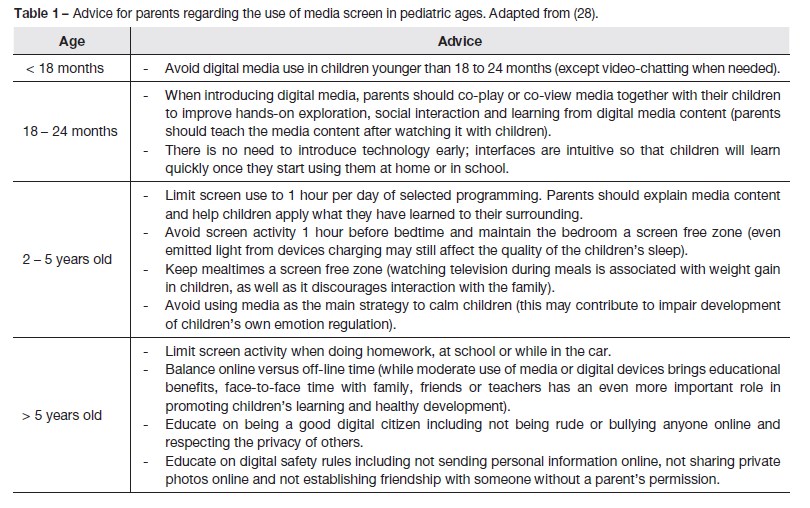
<body><![CDATA[<li>         <p>Schoolers age 6- to 12-years-old should       sleep 9 to 12 hours per day;</p>   </li>       <li>         <p>Teenagers age 13- to 18-years-old       should sleep 8 to 10 hours per day.</p>   </li>     </ul>     <p>An aspect that should be highlighted is the nap   time in newborns, toddlers, infants and preschoolers.  Children up to the age of two years-old   should fulfill part of their sleep needs by taking one or two daytime naps.   Napping progressively declines, so that at five years of age the majority of   children sleep only at night, although some still need a daytime nap.  A growing body of evidence points towards the   importance of napping in children neurodevelopment, namely in learning skills   and memory consolidation.<sup>22</sup> It has been recently suggested that   following a missed nap, toddlers experience a physiologically significant   homeostatic challenge in the subsequent night, resulting in a shorter sleep   latency, longer sleep duration and increased slow wave activity.<sup>23</sup>   Sleep-related anticipatory guidance for parents should therefore highlight   napping as an essential component of children’s sleep. </p>     <p><b>The influence of media screens activity on sleep </b></p>     <p><i>Birth to 5-years old</i></p>     <p>The use of media screens, either television,   computer screens, tablets, videogames or smartphones, is widely generalized in   the pediatric population from a very early age and it is becoming common to   find these devices in children’s bedroom.<sup>24</sup> An increasing number of   epidemiological studies suggest that screen-based activities in the bedroom are   the main environmental source accounting for delayed bedtime or shortened total   sleep time.<sup>25</sup> In agreement, a recent study on a Portuguese pediatric   population (ages two to ten-year-old) has shown that watching television or   playing videogames before falling asleep were related to an increased sleep   disturbance index.<sup>8</sup> The association between screen activity and   insufficient or low quality sleep may be explained by different mechanisms. In   addition to the fact that the time spent in front of screens determines less   time available to sleep, other factors, rather than time consumption, are also   involved in sleep disturbances. There is evidence that devices with light-emitting   diode (LED) screens (e.g. tablets), which are known to emit   short-wavelength-enriched light (blue light), reduce the release of the   sleep-promoting hormone melatonin, therefore attenuating the circadian drive   for sleep and contributing to sustained attention and alertness.<sup>26</sup>   It has also been shown that exposure to blue light close to bedtime delays   sleep onset, as it interferes with sleep architecture by increasing the   slow-wave latency or reducing REM sleep.<sup>27</sup> Taking into consideration   the exponential use of newer digital technologies by infants and young children   on a daily basis and its potential role on their well-being and   neurodevelopment, the American Academy of Pediatrics has recently released a   policy statement addressing guidance for parents in managing their young   children’s media use. Major recommendations, that go beyond the influence of screens on children’s sleep, are summarized in <a href="/img/revistas/nas/v27n1/27n1a05t1.jpg">Table 1</a>.<sup>28</sup> </p>     
<p><i>Adolescence</i></p>     ]]></body>
<body><![CDATA[<p>Adolescents are a particular population regarding the use of media   screens, as these devices have progressively become an integral part of their   daily lives and frequently skip parental control. Moreover, with the increasing   technology portability, these devices have commonly moved into bedrooms,   accounting for a prevalence of almost 100% regarding the use media screens near   bedtime in US adolescents.<sup>24</sup> Similar to the stated above for the   birth to five years-old age strata, there is accumulating evidence of a   negative association between media screen technology use and sleep in adolescents.   This association was recently shown both in a large population-based study with   near 10.000 adolescents and in a meta-analysis that evaluated the effect of   media devices on sleep outcomes in around 125.000 children aged from 6 to 19   years-old.<sup>29,30</sup> Regarding media use, it was further reported that in   a pool of 727 Portuguese adolescents (mean age of 13 years-old) internet   dependence was associated with self-perceived sleep problems, initial and   middle insomnia and excessive daytime sleepiness.<sup>31</sup> It is also   important to highlight that different media screen may have different outcomes   in adolescent sleep. Whereas conventional electronic devices such as   televisions, gaming consoles and computers are known to negatively impact   sleep, newer portable media devices, including smartphones and tablets, can   have an even greater impact due to their real-time interaction and therefore   continuous stimulation of children.<sup>25 </sup>Bedtime text messaging assumes a particular relevance regarding the latter.<sup>32,33</sup></p>     <p>Different sleep outcomes have been measured and positively related to   bedtime media screen use by adolescents, such as inadequate sleep quantity,   poor sleep quality, excessive daytime sleepiness or sleep onset latency.<sup>29,30</sup>   Other reports have focused on the consequences of media screen use in sleep   time and adolescent lifestyle changes. It has been showed that night-time use   of media screens is associated with shortened sleep duration and overweight and   obesity.<sup>34</sup> In addition, it was reported that higher periods of screen   time are associated with more sleep disturbances which, consequently, are   linked to higher levels of youth behavioral and health problems.<sup>35</sup>   Similarly, a study that evaluated a pool of near 3500 Portuguese students (mean   age of 14.9 years-old) found that risk behaviors, including alcohol and drug   consumption, hetero-aggressive and sexual behaviors, are significantly more   prevalent in sleep deprived adolescents.<sup>36</sup> In addition to obesity   and risk behaviors, the use of media screen and sleep deprivation in adolescents   have also been associated with a higher risk of depression, impaired academic   performance, decreased social skills and attention difficulties.<sup>37-40</sup></p>     <p>Besides to the media screen usage time, is it also of critical relevance   the media screen content. On one hand, media screens can be a useful source of   health information and education since, due to the anonymity of the internet,   adolescents may feel more comfortable in searching online for sensitive health   topics such as sexually transmitted diseases, depression, pregnancy or birth   control. Also, social networks can serve as a tool to strengthen existing   friendships and to establish new ones.<sup>41</sup> On the other hand, media   screen content can have a relevant negative impact on sleep and on modelling   adolescent behavior. It is known that the stimulating content of media may   result in heightened alertness, physiological arousal and difficulty in falling   asleep, as it has also been established that exposure to media violence, either   in television or videogames, or to media sexual content, associates with   increased real-life aggressive behavior and early sexual debut with increased risky sexual behaviors, respectively.<sup>42-44</sup>  </p>     <p>&nbsp;</p> </font>     <p><font size="3" face="Verdana"><b>CONCLUDING   REMARKS</b></font></p>     <p><font size="2" face="Verdana">Sleep plays an essential role in physical, emotional and behavior health   of children and adolescents. Understanding sleep architecture and sleep   duration requirements across pediatric ages remains essential to provide   adequate anticipatory guidance for parents. Parents should be made aware that   despite individual differences, optimal sleep duration intervals should be   followed, as well as nap times - an essential component of children sleep. With   children’s age progression, other issues should also be considered in order to   maintain optimal sleep quality. Taking into account the growing body of   evidence supporting an association between shortened total sleep time and the   use of bedtime media screens, parents should regulate screen use, as well as   maintain bedrooms a screen free zone. This goal can be more difficult to achieve   with adolescents, since mobile screen devices have progressively become an   integral part of their life and a main component of their social interactions.   Moreover, parents should be informed of the potential harms of excessive media   screens use, which include greater propensity for obesity, risky behaviors,   depression, impaired academic performance, decreased social skills and   attention problems. Physicians, in addition to routinely provide anticipatory   guidance addressing media exposure as a part of the health maintenance visit,   should also be able to recognize symptoms and behaviors evoking screen misusing. </font></p> <font face="Verdana" size="2">     <p>&nbsp;</p> </font>     <p><font size="3" face="Verdana"><b>REFERENCES</b></font></p> <font face="Verdana" size="2"> <ol>       <li>         <p>Meltzer LJ, Johnson C, Crosette J,       Ramos M, Mindell JA. Prevalence of diagnosed sleep disorders in pediatric       primary care practices. Pediatrics. 2010; 125:1410-e8.</p>   </li>       ]]></body>
<body><![CDATA[<li>         <p>Fricke-Oerkermann L, Plück J, Schredl       M, Heinz K, Mitschke A, Wiater A, <i>et al.</i> Prevalence and course of sleep       problems in childhood. Sleep. 2007; 30:1371-7. </p>   </li>       <li>         <p>Silva FG, Silva CR, Braga LB, Neto AS.       Hábitos e problemas do sono dos dois aos dez anos: estudo populacional. Acta       Pediatr Port. 2014; 44:196-202.</p>   </li>       <li>         <p>Klein JM, Gonçalves A. Problemas de       sono-vigília em crianças: um estudo da prevalência. Psico-USF. 2008; 13:51-8.</p>   </li>       <li>         <p>Lopes S, Almeida F, Jacob S, Figueiredo       M, Vieira C, Carvalho F. Diz-me como dormes: hábitos e problemas de sono em       crianças portuguesas em idade pré-escolar e escolar. Nascer e Crescer. 2016;       25:211-6.</p>   </li>       <li>         <p>Beebe DW. Cognitive, behavioral, and       functional consequences of inadequate sleep in children and adolescents. Pediatr       Clin North Am. 2011; 58:649-65. </p>   </li>       ]]></body>
<body><![CDATA[<li>         <p>Dewald JF, Meijer AM, Oort FJ, Kerkhof       GA, Bögels SM. The influence of sleep quality, sleep duration and sleepiness on       school performance in children and adolescents: A meta-analytic review. Sleep       Med Rev. 2010; 14:179-89. </p>   </li>       <li>         <p>Rangel MA, Baptista C, Pitta MJ, Anjo       S, Leite AL. Qualidade do sono e prevalência das perturbações do sono em       crianças saudáveis em Gaia: um estudo transversal. Rev Port Clin Geral. 2015;       31:256-64.</p>   </li>       <li>         <p>Patel SR, Hu FB. Short sleep duration       and weight gain: a systematic review. Obesity. 2008; 16:643-53. </p>   </li>       <li>         <p>Flint J, Kothare SV, Zihlif M, Suarez       E, Adams R, Legido A, <i>et al.</i> Association between inadequate sleep and       insulin resistance in obese children. J Pediatr. 2007; 150:364-9.</p>   </li>       <li>         <p>Javaheri S, Storfer-Isser A, Rosen CL,       Redline S. Sleep quality and elevated blood pressure in adolescents.       Circulation. 2008; 118:1034-40. </p>   </li>       ]]></body>
<body><![CDATA[<li>         <p>Clarke G, Harvey AG. The complex role       of sleep in adolescent depression. Child Adolesc Psychiatr Clin N Am. 2012; 21:385-400. </p>   </li>       <li>         <p>Goldstein TR, Bridge JA, Brent DA.       Sleep disturbance preceding completed suicide in adolescents. J Consult Clin       Psychol. 2008; 76:84. </p>   </li>       <li>         <p>Yoo S-S, Gujar N, Hu P, Jolesz FA,       Walker MP. The human emotional brain without sleep - a prefrontal amygdala       disconnect. Curr Biol. 2007; 17:R877-R8.</p>   </li>       <li>         <p>Karraker KH, Young M. Night waking in       6-month-old infants and maternal depressive symptoms. J Appl Dev Psychol 2007;       28:493-8.</p>   </li>       <li>         <p>El-Sheikh M, Kelly RJ, Bagley EJ,       Wetter EK. Parental depressive symptoms and children’s sleep: the role of       family conflict. J Child Psychol Psychiatry. 2012; 53:806-14. </p>   </li>       ]]></body>
<body><![CDATA[<li>         <p>Mindell JA, Owens JA, Carskadon MA,       Durand VM, Mindell J, Mapstone E, <i>et al.</i> Developmental features of       sleep. Child Adolesc Psychiatr Clin N Am. 1999; 8:695-725.</p>   </li>       <li>         <p>Sadeh A. Maturation of normal sleep       patterns from childhood through adolescence Lung Biol Health Dis. 2000;       147:63-78.</p>   </li>       <li>         <p>Heraghty JL, Hilliard TN, Henderson AJ,       Fleming PJ. The physiology of sleep in infants. Arch Dis Child. 2008; 93:982-5.</p>   </li>       <li>         <p>Dosman C, Andrews D. Anticipatory       guidance for cognitive and social-emotional development: Birth to five years.       Paediatr Child Health. 2012; 17:75-80. </p>   </li>       <li>         <p>Paruthi S, Brooks       LJ, D’Ambrosio C, Hall WA, Kotagal S, Lloyd RM, <i>et al.</i> Recommended       amount of sleep for pediatric populations: a consensus statement of the       American Academy of Sleep Medicine. J Clin Sleep Med. 2016; 12:785-6.</p>   </li>       ]]></body>
<body><![CDATA[<li>         <p>Kurdziel L, Duclos K, Spencer RMC.       Sleep spindles in midday naps enhance learning in preschool children. Proc Natl       Acad Sci. 2013; 110:17267-72. </p>   </li>       <li>         <p>Lassonde JM, Rusterholz T, Kurth S,       Schumacher AM, Achermann P, LeBourgeois MK. Sleep physiology in toddlers:       effects of missing a nap on subsequent night sleep. Neurobiol Sleep Circadian       Rhythms. 2016; 1:19-26. </p>   </li>       <li>         <p>Gradisar M, Wolfson AR, Harvey AG, Hale       L, Rosenberg R, Czeisler CA. The sleep and technology use of Americans:       findings from the national sleep foundation’s 2011 sleep in America poll. J       Clin Sleep Med. 2013; 9:1291-9. </p>   </li>       <li>         <p>Hale L, Guan S. Screen time and sleep       among school-aged children and adolescents: a systematic literature review.       Sleep Med Rev. 2015; 21:50-8. </p>   </li>       <li>         <p>Lockley SW, Evans EE, Scheer F,       Brainard GC, Czeisler CA, Aeschbach D. Short-wavelength sensitivity for the       direct effects of light on alertness, vigilance, and the waking       electroencephalogram in humans. Sleep. 2006; 29:161.</p>   </li>       ]]></body>
<body><![CDATA[<li>         <p>Münch M, Kobialka S, Steiner R,       Oelhafen P, Wirz-Justice A, Cajochen C. Wavelength-dependent effects of evening       light exposure on sleep architecture and sleep EEG power density in men. Am J       Physiol Regul Integr Comp Physiol. 2006; 290:R1421-R8. </p>   </li>       <li>         <p>Hill D, Ameenuddin N, Reid Chassiakos       Y, Cross C, Hutchinson J, Levine A, <i>et al.</i> Media and Young Minds.       Pediatrics. 2016; 138:e20162591</p>   </li>       <li>         <p>Hysing M, Pallesen S, Stormark KM,       Jakobsen R, Lundervold AJ, Sivertsen B. Sleep and use of electronic devices in       adolescence: results from a large population-based study. BMJ Open. 2015;5. </p>   </li>       <li>         <p>Carter B, Rees P, Hale L, Bhattacharjee       D, Paradkar M. A meta-analysis of the effect of media devices on sleep       outcomes. JAMA Pediatr. 2016; 170:1202-8. </p>   </li>       <li>         <p>Ferreira C, Ferreira H, Vieira MJ,       Costeira M, Branco L, Dias A, <i>et al. </i>Epidemiology of internet use by an       adolescent population and its relation with sleep habits. Acta Med Port. 2017;       30:524-33.</p>   </li>       ]]></body>
<body><![CDATA[<li>         <p>Van den Bulck J. Adolescent use of       mobile phones for calling and for sending text messages after lights out:       results from a prospective cohort study with a one-year follow-up. Sleep. 2007;       30:1220-3. </p>   </li>       <li>         <p>Van den Bulck J. Text messaging as a       cause of sleep interruption in adolescents, evidence from a cross-sectional       study. J Sleep Res. 2003; 12:263. </p>   </li>       <li>         <p>Chahal H, Fung C, Kuhle S, Veugelers       PJ. Availability and night-time use of electronic entertainment and       communication devices are associated with short sleep duration and obesity       among Canadian children. Pediatr Obes. 2013; 8:42-51. </p>   </li>       <li>         <p>Parent J, Sanders W, Forehand R. Youth       screen time and behavioral health problems: the role of sleep duration and       disturbances. J Dev Behav Pediatr. 2016; 37:277-84. </p>   </li>       <li>         <p>Paiva T, Gaspar T, Matos MG. Mutual       relations between sleep deprivation, sleep stealers and risk behaviors in       adolescents. Sleep Sci. 2016; 9:7-13. </p>   </li>       ]]></body>
<body><![CDATA[<li>         <p>Maras D, Flament MF, Murray M, Buchholz       A, Henderson KA, Obeid N, <i>et al.</i> Screen time is associated with       depression and anxiety in Canadian youth. Prev Med. 2015; 73:133-8. </p>   </li>       <li>         <p>Grover K, Pecor K, Malkowski M, Kang L,       Machado S, Lulla R, <i>et al.</i> Effects of instant messaging on school       performance in adolescents. J Child Neurol. 2016; 31:850-7. </p>   </li>       <li>         <p>Uhls YT, Michikyan M, Morris J, Garcia       D, Small GW, Zgourou E, <i>et al.</i> Five days at outdoor education camp       without screens improves preteen skills with nonverbal emotion cues. Comput       Human Behav. 2014; 39:387-92. </p>   </li>       <li>         <p>Swing EL, Gentile DA, Anderson CA,       Walsh DA. Television and video game exposure and the development of attention       problems. Pediatrics. 2010; 126:214-21. </p>   </li>       <li>         <p>Reid D, Weigle P. Social media use       among adolescents: benefits and risks. Adolesc Psychiatry. 2014; 4:73-80.</p>   </li>       ]]></body>
<body><![CDATA[<li>         <p>Cain N, Gradisar M. Electronic media       use and sleep in school-aged children and adolescents: a review. Sleep Med.       2010; 11:735-42. </p>   </li>       <li>         <p>Gentile DA, Coyne S, Walsh DA. Media       violence, physical aggression, and relational aggression in school age       children: a short-term longitudinal study. Aggress Behav. 2011; 37:193-206. </p>   </li>       <li>         <p>O’Hara RE, Gibbons FX, Gerrard M, Li Z,       Sargent JD. Greater exposure to sexual content in popular movies predicts       earlier sexual debut and increased sexual risk taking. Psychol. Sci. 2012;       23:984-93.</p>   </li>     </ol>     <p>&nbsp;</p>     <p>&nbsp;</p> <b><a name="end" id="topo2"></a><a href="#topo">CORRESPONDENCE TO</a></b>     <p>Filipe Cerca    ]]></body>
<body><![CDATA[<br>   General and Family Medicine,    <br> Unidade de Saúde Familiar Valbom,    <br> Agrupamento de Centros de Saúde    <br> do Grande Porto II -   Gondomar    <br> Rua Eça Queirós, 85,    <br> 4420-439 Valbom, Gondomar    <br> Email: <a href="mailto:filipecerca@gmail.com">filipecerca@gmail.com</a></p>     <p>Received for publication: 04.03.2017 Accepted in revised form: 26.10.2017</p> </font>      ]]></body><back>
<ref-list>
<ref id="B1">
<label>1</label><nlm-citation citation-type="journal">
<person-group person-group-type="author">
<name>
<surname><![CDATA[Meltzer]]></surname>
<given-names><![CDATA[LJ]]></given-names>
</name>
<name>
<surname><![CDATA[Johnson]]></surname>
<given-names><![CDATA[C]]></given-names>
</name>
<name>
<surname><![CDATA[Crosette]]></surname>
<given-names><![CDATA[J]]></given-names>
</name>
<name>
<surname><![CDATA[Ramos]]></surname>
<given-names><![CDATA[M]]></given-names>
</name>
<name>
<surname><![CDATA[Mindell]]></surname>
<given-names><![CDATA[JA]]></given-names>
</name>
</person-group>
<article-title xml:lang="en"><![CDATA[Prevalence of diagnosed sleep disorders in pediatric primary care practices]]></article-title>
<source><![CDATA[Pediatrics]]></source>
<year>2010</year>
<volume>125</volume>
<page-range>1410-e8</page-range></nlm-citation>
</ref>
<ref id="B2">
<label>2</label><nlm-citation citation-type="journal">
<person-group person-group-type="author">
<name>
<surname><![CDATA[Fricke-Oerkermann]]></surname>
<given-names><![CDATA[L]]></given-names>
</name>
<name>
<surname><![CDATA[Plück]]></surname>
<given-names><![CDATA[J]]></given-names>
</name>
<name>
<surname><![CDATA[Schredl]]></surname>
<given-names><![CDATA[M]]></given-names>
</name>
<name>
<surname><![CDATA[Heinz]]></surname>
<given-names><![CDATA[K]]></given-names>
</name>
<name>
<surname><![CDATA[Mitschke]]></surname>
<given-names><![CDATA[A]]></given-names>
</name>
<name>
<surname><![CDATA[Wiater]]></surname>
<given-names><![CDATA[A]]></given-names>
</name>
</person-group>
<article-title xml:lang="en"><![CDATA[Prevalence and course of sleep problems in childhood]]></article-title>
<source><![CDATA[Sleep]]></source>
<year>2007</year>
<volume>30</volume>
<page-range>1371-7</page-range></nlm-citation>
</ref>
<ref id="B3">
<label>3</label><nlm-citation citation-type="journal">
<person-group person-group-type="author">
<name>
<surname><![CDATA[Silva]]></surname>
<given-names><![CDATA[FG]]></given-names>
</name>
<name>
<surname><![CDATA[Silva]]></surname>
<given-names><![CDATA[CR]]></given-names>
</name>
<name>
<surname><![CDATA[Braga]]></surname>
<given-names><![CDATA[LB]]></given-names>
</name>
<name>
<surname><![CDATA[Neto]]></surname>
<given-names><![CDATA[AS]]></given-names>
</name>
</person-group>
<article-title xml:lang="pt"><![CDATA[Hábitos e problemas do sono dos dois aos dez anos: estudo populacional]]></article-title>
<source><![CDATA[Acta Pediatr Port]]></source>
<year>2014</year>
<volume>44</volume>
<page-range>196-202</page-range></nlm-citation>
</ref>
<ref id="B4">
<label>4</label><nlm-citation citation-type="journal">
<person-group person-group-type="author">
<name>
<surname><![CDATA[Klein]]></surname>
<given-names><![CDATA[JM]]></given-names>
</name>
<name>
<surname><![CDATA[Gonçalves]]></surname>
<given-names><![CDATA[A]]></given-names>
</name>
</person-group>
<article-title xml:lang="pt"><![CDATA[Problemas de sono-vigília em crianças: um estudo da prevalência]]></article-title>
<source><![CDATA[Psico-USF]]></source>
<year>2008</year>
<volume>13</volume>
<page-range>51-8</page-range></nlm-citation>
</ref>
<ref id="B5">
<label>5</label><nlm-citation citation-type="journal">
<person-group person-group-type="author">
<name>
<surname><![CDATA[Lopes]]></surname>
<given-names><![CDATA[S]]></given-names>
</name>
<name>
<surname><![CDATA[Almeida]]></surname>
<given-names><![CDATA[F]]></given-names>
</name>
<name>
<surname><![CDATA[Jacob]]></surname>
<given-names><![CDATA[S]]></given-names>
</name>
<name>
<surname><![CDATA[Figueiredo]]></surname>
<given-names><![CDATA[M]]></given-names>
</name>
<name>
<surname><![CDATA[Vieira]]></surname>
<given-names><![CDATA[C]]></given-names>
</name>
<name>
<surname><![CDATA[Carvalho]]></surname>
<given-names><![CDATA[F]]></given-names>
</name>
</person-group>
<article-title xml:lang="pt"><![CDATA[Diz-me como dormes: hábitos e problemas de sono em crianças portuguesas em idade pré-escolar e escolar]]></article-title>
<source><![CDATA[Nascer e Crescer]]></source>
<year>2016</year>
<volume>25</volume>
<page-range>211-6</page-range></nlm-citation>
</ref>
<ref id="B6">
<label>6</label><nlm-citation citation-type="journal">
<person-group person-group-type="author">
<name>
<surname><![CDATA[Beebe]]></surname>
<given-names><![CDATA[DW]]></given-names>
</name>
</person-group>
<article-title xml:lang="en"><![CDATA[Cognitive, behavioral, and functional consequences of inadequate sleep in children and adolescents]]></article-title>
<source><![CDATA[Pediatr Clin North Am]]></source>
<year>2011</year>
<volume>58</volume>
<page-range>649-65</page-range></nlm-citation>
</ref>
<ref id="B7">
<label>7</label><nlm-citation citation-type="journal">
<person-group person-group-type="author">
<name>
<surname><![CDATA[Dewald]]></surname>
<given-names><![CDATA[JF]]></given-names>
</name>
<name>
<surname><![CDATA[Meijer]]></surname>
<given-names><![CDATA[AM]]></given-names>
</name>
<name>
<surname><![CDATA[Oort]]></surname>
<given-names><![CDATA[FJ]]></given-names>
</name>
<name>
<surname><![CDATA[Kerkhof]]></surname>
<given-names><![CDATA[GA]]></given-names>
</name>
<name>
<surname><![CDATA[Bögels]]></surname>
<given-names><![CDATA[SM]]></given-names>
</name>
</person-group>
<article-title xml:lang="en"><![CDATA[The influence of sleep quality, sleep duration and sleepiness on school performance in children and adolescents: A meta-analytic review]]></article-title>
<source><![CDATA[Sleep Med Rev]]></source>
<year>2010</year>
<volume>14</volume>
<page-range>179-89</page-range></nlm-citation>
</ref>
<ref id="B8">
<label>8</label><nlm-citation citation-type="journal">
<person-group person-group-type="author">
<name>
<surname><![CDATA[Rangel]]></surname>
<given-names><![CDATA[MA]]></given-names>
</name>
<name>
<surname><![CDATA[Baptista]]></surname>
<given-names><![CDATA[C]]></given-names>
</name>
<name>
<surname><![CDATA[Pitta]]></surname>
<given-names><![CDATA[MJ]]></given-names>
</name>
<name>
<surname><![CDATA[Anjo]]></surname>
<given-names><![CDATA[S]]></given-names>
</name>
<name>
<surname><![CDATA[Leite]]></surname>
<given-names><![CDATA[AL]]></given-names>
</name>
</person-group>
<article-title xml:lang="pt"><![CDATA[Qualidade do sono e prevalência das perturbações do sono em crianças saudáveis em Gaia: um estudo transversal]]></article-title>
<source><![CDATA[Rev Port Clin Geral]]></source>
<year>2015</year>
<volume>31</volume>
<page-range>256-64</page-range></nlm-citation>
</ref>
<ref id="B9">
<label>9</label><nlm-citation citation-type="journal">
<person-group person-group-type="author">
<name>
<surname><![CDATA[Patel]]></surname>
<given-names><![CDATA[SR]]></given-names>
</name>
<name>
<surname><![CDATA[Hu]]></surname>
<given-names><![CDATA[FB]]></given-names>
</name>
</person-group>
<article-title xml:lang="en"><![CDATA[Short sleep duration and weight gain: a systematic review]]></article-title>
<source><![CDATA[Obesity]]></source>
<year>2008</year>
<volume>16</volume>
<page-range>643-53</page-range></nlm-citation>
</ref>
<ref id="B10">
<label>10</label><nlm-citation citation-type="journal">
<person-group person-group-type="author">
<name>
<surname><![CDATA[Flint]]></surname>
<given-names><![CDATA[J]]></given-names>
</name>
<name>
<surname><![CDATA[Kothare]]></surname>
<given-names><![CDATA[SV]]></given-names>
</name>
<name>
<surname><![CDATA[Zihlif]]></surname>
<given-names><![CDATA[M]]></given-names>
</name>
<name>
<surname><![CDATA[Suarez]]></surname>
<given-names><![CDATA[E]]></given-names>
</name>
<name>
<surname><![CDATA[Adams]]></surname>
<given-names><![CDATA[R]]></given-names>
</name>
<name>
<surname><![CDATA[Legido]]></surname>
<given-names><![CDATA[A]]></given-names>
</name>
</person-group>
<article-title xml:lang="en"><![CDATA[Association between inadequate sleep and insulin resistance in obese children]]></article-title>
<source><![CDATA[J Pediatr]]></source>
<year>2007</year>
<volume>150</volume>
<page-range>364-9</page-range></nlm-citation>
</ref>
<ref id="B11">
<label>11</label><nlm-citation citation-type="journal">
<person-group person-group-type="author">
<name>
<surname><![CDATA[Javaheri]]></surname>
<given-names><![CDATA[S]]></given-names>
</name>
<name>
<surname><![CDATA[Storfer-Isser]]></surname>
<given-names><![CDATA[A]]></given-names>
</name>
<name>
<surname><![CDATA[Rosen]]></surname>
<given-names><![CDATA[CL]]></given-names>
</name>
<name>
<surname><![CDATA[Redline]]></surname>
<given-names><![CDATA[S]]></given-names>
</name>
</person-group>
<article-title xml:lang="en"><![CDATA[Sleep quality and elevated blood pressure in adolescents]]></article-title>
<source><![CDATA[Circulation]]></source>
<year>2008</year>
<volume>118</volume>
<page-range>1034-40</page-range></nlm-citation>
</ref>
<ref id="B12">
<label>12</label><nlm-citation citation-type="journal">
<person-group person-group-type="author">
<name>
<surname><![CDATA[Clarke]]></surname>
<given-names><![CDATA[G]]></given-names>
</name>
<name>
<surname><![CDATA[Harvey]]></surname>
<given-names><![CDATA[AG]]></given-names>
</name>
</person-group>
<article-title xml:lang="en"><![CDATA[The complex role of sleep in adolescent depression]]></article-title>
<source><![CDATA[Child Adolesc Psychiatr Clin N Am]]></source>
<year>2012</year>
<volume>21</volume>
<page-range>385-400</page-range></nlm-citation>
</ref>
<ref id="B13">
<label>13</label><nlm-citation citation-type="journal">
<person-group person-group-type="author">
<name>
<surname><![CDATA[Goldstein]]></surname>
<given-names><![CDATA[TR]]></given-names>
</name>
<name>
<surname><![CDATA[Bridge]]></surname>
<given-names><![CDATA[JA]]></given-names>
</name>
<name>
<surname><![CDATA[Brent]]></surname>
<given-names><![CDATA[DA]]></given-names>
</name>
</person-group>
<article-title xml:lang="en"><![CDATA[Sleep disturbance preceding completed suicide in adolescents]]></article-title>
<source><![CDATA[J Consult Clin Psychol]]></source>
<year>2008</year>
<volume>76</volume>
<page-range>84</page-range></nlm-citation>
</ref>
<ref id="B14">
<label>14</label><nlm-citation citation-type="journal">
<person-group person-group-type="author">
<name>
<surname><![CDATA[Yoo]]></surname>
<given-names><![CDATA[S-S]]></given-names>
</name>
<name>
<surname><![CDATA[Gujar]]></surname>
<given-names><![CDATA[N]]></given-names>
</name>
<name>
<surname><![CDATA[Hu]]></surname>
<given-names><![CDATA[P]]></given-names>
</name>
<name>
<surname><![CDATA[Jolesz]]></surname>
<given-names><![CDATA[FA]]></given-names>
</name>
<name>
<surname><![CDATA[Walker]]></surname>
<given-names><![CDATA[MP]]></given-names>
</name>
</person-group>
<article-title xml:lang="en"><![CDATA[The human emotional brain without sleep: a prefrontal amygdala disconnect]]></article-title>
<source><![CDATA[Curr Biol]]></source>
<year>2007</year>
<volume>17</volume>
<page-range>R877-R8</page-range></nlm-citation>
</ref>
<ref id="B15">
<label>15</label><nlm-citation citation-type="journal">
<person-group person-group-type="author">
<name>
<surname><![CDATA[Karraker]]></surname>
<given-names><![CDATA[KH]]></given-names>
</name>
<name>
<surname><![CDATA[Young]]></surname>
<given-names><![CDATA[M]]></given-names>
</name>
</person-group>
<article-title xml:lang="en"><![CDATA[Night waking in 6-month-old infants and maternal depressive symptoms]]></article-title>
<source><![CDATA[J Appl Dev Psychol]]></source>
<year>2007</year>
<volume>28</volume>
<page-range>493-8</page-range></nlm-citation>
</ref>
<ref id="B16">
<label>16</label><nlm-citation citation-type="journal">
<person-group person-group-type="author">
<name>
<surname><![CDATA[El-Sheikh]]></surname>
<given-names><![CDATA[M]]></given-names>
</name>
<name>
<surname><![CDATA[Kelly]]></surname>
<given-names><![CDATA[RJ]]></given-names>
</name>
<name>
<surname><![CDATA[Bagley]]></surname>
<given-names><![CDATA[EJ]]></given-names>
</name>
<name>
<surname><![CDATA[Wetter]]></surname>
<given-names><![CDATA[EK]]></given-names>
</name>
</person-group>
<article-title xml:lang="en"><![CDATA[Parental depressive symptoms and children’s sleep: the role of family conflict]]></article-title>
<source><![CDATA[J Child Psychol Psychiatry]]></source>
<year>2012</year>
<volume>53</volume>
<page-range>806-14</page-range></nlm-citation>
</ref>
<ref id="B17">
<label>17</label><nlm-citation citation-type="journal">
<person-group person-group-type="author">
<name>
<surname><![CDATA[Mindell]]></surname>
<given-names><![CDATA[JA]]></given-names>
</name>
<name>
<surname><![CDATA[Owens]]></surname>
<given-names><![CDATA[JA]]></given-names>
</name>
<name>
<surname><![CDATA[Carskadon]]></surname>
<given-names><![CDATA[MA]]></given-names>
</name>
<name>
<surname><![CDATA[Durand]]></surname>
<given-names><![CDATA[VM]]></given-names>
</name>
<name>
<surname><![CDATA[Mindell]]></surname>
<given-names><![CDATA[J]]></given-names>
</name>
<name>
<surname><![CDATA[Mapstone]]></surname>
<given-names><![CDATA[E]]></given-names>
</name>
</person-group>
<article-title xml:lang="en"><![CDATA[Developmental features of sleep]]></article-title>
<source><![CDATA[Child Adolesc Psychiatr Clin N Am]]></source>
<year>1999</year>
<volume>8</volume>
<page-range>695-725</page-range></nlm-citation>
</ref>
<ref id="B18">
<label>18</label><nlm-citation citation-type="journal">
<person-group person-group-type="author">
<name>
<surname><![CDATA[Sadeh]]></surname>
<given-names><![CDATA[A]]></given-names>
</name>
</person-group>
<article-title xml:lang="en"><![CDATA[Maturation of normal sleep patterns from childhood through adolescence]]></article-title>
<source><![CDATA[Lung Biol Health Dis]]></source>
<year>2000</year>
<volume>147</volume>
<page-range>63-78</page-range></nlm-citation>
</ref>
<ref id="B19">
<label>19</label><nlm-citation citation-type="journal">
<person-group person-group-type="author">
<name>
<surname><![CDATA[Heraghty]]></surname>
<given-names><![CDATA[JL]]></given-names>
</name>
<name>
<surname><![CDATA[Hilliard]]></surname>
<given-names><![CDATA[TN]]></given-names>
</name>
<name>
<surname><![CDATA[Henderson]]></surname>
<given-names><![CDATA[AJ]]></given-names>
</name>
<name>
<surname><![CDATA[Fleming]]></surname>
<given-names><![CDATA[PJ]]></given-names>
</name>
</person-group>
<article-title xml:lang="en"><![CDATA[The physiology of sleep in infants]]></article-title>
<source><![CDATA[Arch Dis Child]]></source>
<year>2008</year>
<volume>93</volume>
<page-range>982-5</page-range></nlm-citation>
</ref>
<ref id="B20">
<label>20</label><nlm-citation citation-type="journal">
<person-group person-group-type="author">
<name>
<surname><![CDATA[Dosman]]></surname>
<given-names><![CDATA[C]]></given-names>
</name>
<name>
<surname><![CDATA[Andrews]]></surname>
<given-names><![CDATA[D]]></given-names>
</name>
</person-group>
<article-title xml:lang="en"><![CDATA[Anticipatory guidance for cognitive and social-emotional development: Birth to five years]]></article-title>
<source><![CDATA[Paediatr Child Health]]></source>
<year>2012</year>
<volume>17</volume>
<page-range>75-80</page-range></nlm-citation>
</ref>
<ref id="B21">
<label>21</label><nlm-citation citation-type="journal">
<person-group person-group-type="author">
<name>
<surname><![CDATA[Paruthi]]></surname>
<given-names><![CDATA[S]]></given-names>
</name>
<name>
<surname><![CDATA[Brooks]]></surname>
<given-names><![CDATA[LJ]]></given-names>
</name>
<name>
<surname><![CDATA[D’Ambrosio]]></surname>
<given-names><![CDATA[C]]></given-names>
</name>
<name>
<surname><![CDATA[Hall]]></surname>
<given-names><![CDATA[WA]]></given-names>
</name>
<name>
<surname><![CDATA[Kotagal]]></surname>
<given-names><![CDATA[S]]></given-names>
</name>
<name>
<surname><![CDATA[Lloyd]]></surname>
<given-names><![CDATA[RM]]></given-names>
</name>
</person-group>
<article-title xml:lang="en"><![CDATA[Recommended amount of sleep for pediatric populations: a consensus statement of the American Academy of Sleep Medicine]]></article-title>
<source><![CDATA[J Clin Sleep Med]]></source>
<year>2016</year>
<volume>12</volume>
<page-range>785-6</page-range></nlm-citation>
</ref>
<ref id="B22">
<label>22</label><nlm-citation citation-type="journal">
<person-group person-group-type="author">
<name>
<surname><![CDATA[Kurdziel]]></surname>
<given-names><![CDATA[L]]></given-names>
</name>
<name>
<surname><![CDATA[Duclos]]></surname>
<given-names><![CDATA[K]]></given-names>
</name>
<name>
<surname><![CDATA[Spencer]]></surname>
<given-names><![CDATA[RMC]]></given-names>
</name>
</person-group>
<article-title xml:lang="en"><![CDATA[Sleep spindles in midday naps enhance learning in preschool children]]></article-title>
<source><![CDATA[Proc Natl Acad Sci]]></source>
<year>2013</year>
<volume>110</volume>
<page-range>17267-72</page-range></nlm-citation>
</ref>
<ref id="B23">
<label>23</label><nlm-citation citation-type="journal">
<person-group person-group-type="author">
<name>
<surname><![CDATA[Lassonde]]></surname>
<given-names><![CDATA[JM]]></given-names>
</name>
<name>
<surname><![CDATA[Rusterholz]]></surname>
<given-names><![CDATA[T]]></given-names>
</name>
<name>
<surname><![CDATA[Kurth]]></surname>
<given-names><![CDATA[S]]></given-names>
</name>
<name>
<surname><![CDATA[Schumacher]]></surname>
<given-names><![CDATA[AM]]></given-names>
</name>
<name>
<surname><![CDATA[Achermann]]></surname>
<given-names><![CDATA[P]]></given-names>
</name>
<name>
<surname><![CDATA[LeBourgeois]]></surname>
<given-names><![CDATA[MK]]></given-names>
</name>
</person-group>
<article-title xml:lang="en"><![CDATA[Sleep physiology in toddlers: effects of missing a nap on subsequent night sleep]]></article-title>
<source><![CDATA[Neurobiol Sleep Circadian Rhythms]]></source>
<year>2016</year>
<volume>1</volume>
<page-range>19-26</page-range></nlm-citation>
</ref>
<ref id="B24">
<label>24</label><nlm-citation citation-type="journal">
<person-group person-group-type="author">
<name>
<surname><![CDATA[Gradisar]]></surname>
<given-names><![CDATA[M]]></given-names>
</name>
<name>
<surname><![CDATA[Wolfson]]></surname>
<given-names><![CDATA[AR]]></given-names>
</name>
<name>
<surname><![CDATA[Harvey]]></surname>
<given-names><![CDATA[AG]]></given-names>
</name>
<name>
<surname><![CDATA[Hale]]></surname>
<given-names><![CDATA[L]]></given-names>
</name>
<name>
<surname><![CDATA[Rosenberg]]></surname>
<given-names><![CDATA[R]]></given-names>
</name>
<name>
<surname><![CDATA[Czeisler]]></surname>
<given-names><![CDATA[CA]]></given-names>
</name>
</person-group>
<article-title xml:lang="en"><![CDATA[The sleep and technology use of Americans: findings from the national sleep foundation’s 2011 sleep in America poll]]></article-title>
<source><![CDATA[J Clin Sleep Med]]></source>
<year>2013</year>
<volume>9</volume>
<page-range>1291-9</page-range></nlm-citation>
</ref>
<ref id="B25">
<label>25</label><nlm-citation citation-type="journal">
<person-group person-group-type="author">
<name>
<surname><![CDATA[Hale]]></surname>
<given-names><![CDATA[L]]></given-names>
</name>
<name>
<surname><![CDATA[Guan]]></surname>
<given-names><![CDATA[S]]></given-names>
</name>
</person-group>
<article-title xml:lang="en"><![CDATA[Screen time and sleep among school-aged children and adolescents: a systematic literature review]]></article-title>
<source><![CDATA[Sleep Med Rev]]></source>
<year>2015</year>
<volume>21</volume>
<page-range>50-8</page-range></nlm-citation>
</ref>
<ref id="B26">
<label>26</label><nlm-citation citation-type="journal">
<person-group person-group-type="author">
<name>
<surname><![CDATA[Lockley]]></surname>
<given-names><![CDATA[SW]]></given-names>
</name>
<name>
<surname><![CDATA[Evans]]></surname>
<given-names><![CDATA[EE]]></given-names>
</name>
<name>
<surname><![CDATA[Scheer]]></surname>
<given-names><![CDATA[F]]></given-names>
</name>
<name>
<surname><![CDATA[Brainard]]></surname>
<given-names><![CDATA[GC]]></given-names>
</name>
<name>
<surname><![CDATA[Czeisler]]></surname>
<given-names><![CDATA[CA]]></given-names>
</name>
<name>
<surname><![CDATA[Aeschbach]]></surname>
<given-names><![CDATA[D]]></given-names>
</name>
</person-group>
<article-title xml:lang="en"><![CDATA[Short-wavelength sensitivity for the direct effects of light on alertness, vigilance, and the waking electroencephalogram in humans]]></article-title>
<source><![CDATA[Sleep]]></source>
<year>2006</year>
<volume>29</volume>
<page-range>161</page-range></nlm-citation>
</ref>
<ref id="B27">
<label>27</label><nlm-citation citation-type="journal">
<person-group person-group-type="author">
<name>
<surname><![CDATA[Münch]]></surname>
<given-names><![CDATA[M]]></given-names>
</name>
<name>
<surname><![CDATA[Kobialka]]></surname>
<given-names><![CDATA[S]]></given-names>
</name>
<name>
<surname><![CDATA[Steiner]]></surname>
<given-names><![CDATA[R]]></given-names>
</name>
<name>
<surname><![CDATA[Oelhafen]]></surname>
<given-names><![CDATA[P]]></given-names>
</name>
<name>
<surname><![CDATA[Wirz-Justice]]></surname>
<given-names><![CDATA[A]]></given-names>
</name>
<name>
<surname><![CDATA[Cajochen]]></surname>
<given-names><![CDATA[C]]></given-names>
</name>
</person-group>
<article-title xml:lang="en"><![CDATA[Wavelength-dependent effects of evening light exposure on sleep architecture and sleep EEG power density in men]]></article-title>
<source><![CDATA[Am J Physiol Regul Integr Comp Physiol]]></source>
<year>2006</year>
<volume>290</volume>
<page-range>R1421-R8</page-range></nlm-citation>
</ref>
<ref id="B28">
<label>28</label><nlm-citation citation-type="journal">
<person-group person-group-type="author">
<name>
<surname><![CDATA[Hill]]></surname>
<given-names><![CDATA[D]]></given-names>
</name>
<name>
<surname><![CDATA[Ameenuddin]]></surname>
<given-names><![CDATA[N]]></given-names>
</name>
<name>
<surname><![CDATA[Reid Chassiakos]]></surname>
<given-names><![CDATA[Y]]></given-names>
</name>
<name>
<surname><![CDATA[Cross]]></surname>
<given-names><![CDATA[C]]></given-names>
</name>
<name>
<surname><![CDATA[Hutchinson]]></surname>
<given-names><![CDATA[J]]></given-names>
</name>
<name>
<surname><![CDATA[Levine]]></surname>
<given-names><![CDATA[A]]></given-names>
</name>
</person-group>
<article-title xml:lang="en"><![CDATA[Media and Young Minds]]></article-title>
<source><![CDATA[Pediatrics]]></source>
<year>2016</year>
<volume>138</volume>
<page-range>e20162591</page-range></nlm-citation>
</ref>
<ref id="B29">
<label>29</label><nlm-citation citation-type="journal">
<person-group person-group-type="author">
<name>
<surname><![CDATA[Hysing]]></surname>
<given-names><![CDATA[M]]></given-names>
</name>
<name>
<surname><![CDATA[Pallesen]]></surname>
<given-names><![CDATA[S]]></given-names>
</name>
<name>
<surname><![CDATA[Stormark]]></surname>
<given-names><![CDATA[KM]]></given-names>
</name>
<name>
<surname><![CDATA[Jakobsen]]></surname>
<given-names><![CDATA[R]]></given-names>
</name>
<name>
<surname><![CDATA[Lundervold]]></surname>
<given-names><![CDATA[AJ]]></given-names>
</name>
<name>
<surname><![CDATA[Sivertsen]]></surname>
<given-names><![CDATA[B]]></given-names>
</name>
</person-group>
<article-title xml:lang="en"><![CDATA[Sleep and use of electronic devices in adolescence: results from a large population-based study]]></article-title>
<source><![CDATA[BMJ Open]]></source>
<year>2015</year>
<volume>5</volume>
</nlm-citation>
</ref>
<ref id="B30">
<label>30</label><nlm-citation citation-type="journal">
<person-group person-group-type="author">
<name>
<surname><![CDATA[Carter]]></surname>
<given-names><![CDATA[B]]></given-names>
</name>
<name>
<surname><![CDATA[Rees]]></surname>
<given-names><![CDATA[P]]></given-names>
</name>
<name>
<surname><![CDATA[Hale]]></surname>
<given-names><![CDATA[L]]></given-names>
</name>
<name>
<surname><![CDATA[Bhattacharjee]]></surname>
<given-names><![CDATA[D]]></given-names>
</name>
<name>
<surname><![CDATA[Paradkar]]></surname>
<given-names><![CDATA[M]]></given-names>
</name>
</person-group>
<article-title xml:lang="en"><![CDATA[A meta-analysis of the effect of media devices on sleep outcomes]]></article-title>
<source><![CDATA[JAMA Pediatr]]></source>
<year>2016</year>
<volume>170</volume>
<page-range>1202-8</page-range></nlm-citation>
</ref>
<ref id="B31">
<label>31</label><nlm-citation citation-type="journal">
<person-group person-group-type="author">
<name>
<surname><![CDATA[Ferreira]]></surname>
<given-names><![CDATA[C]]></given-names>
</name>
<name>
<surname><![CDATA[Ferreira]]></surname>
<given-names><![CDATA[H]]></given-names>
</name>
<name>
<surname><![CDATA[Vieira]]></surname>
<given-names><![CDATA[MJ]]></given-names>
</name>
<name>
<surname><![CDATA[Costeira]]></surname>
<given-names><![CDATA[M]]></given-names>
</name>
<name>
<surname><![CDATA[Branco]]></surname>
<given-names><![CDATA[L]]></given-names>
</name>
<name>
<surname><![CDATA[Dias]]></surname>
<given-names><![CDATA[A]]></given-names>
</name>
</person-group>
<article-title xml:lang="en"><![CDATA[Epidemiology of internet use by an adolescent population and its relation with sleep habits]]></article-title>
<source><![CDATA[Acta Med Port]]></source>
<year>2017</year>
<volume>30</volume>
<page-range>524-33</page-range></nlm-citation>
</ref>
<ref id="B32">
<label>32</label><nlm-citation citation-type="journal">
<person-group person-group-type="author">
<name>
<surname><![CDATA[Van den Bulck]]></surname>
<given-names><![CDATA[J]]></given-names>
</name>
</person-group>
<article-title xml:lang="en"><![CDATA[Adolescent use of mobile phones for calling and for sending text messages after lights out: results from a prospective cohort study with a one-year follow-up]]></article-title>
<source><![CDATA[Sleep]]></source>
<year>2007</year>
<volume>30</volume>
<page-range>1220-3</page-range></nlm-citation>
</ref>
<ref id="B33">
<label>33</label><nlm-citation citation-type="journal">
<person-group person-group-type="author">
<name>
<surname><![CDATA[Van den Bulck]]></surname>
<given-names><![CDATA[J]]></given-names>
</name>
</person-group>
<article-title xml:lang="en"><![CDATA[Text messaging as a cause of sleep interruption in adolescents, evidence from a cross-sectional study]]></article-title>
<source><![CDATA[J Sleep Res]]></source>
<year>2003</year>
<volume>12</volume>
<page-range>263</page-range></nlm-citation>
</ref>
<ref id="B34">
<label>34</label><nlm-citation citation-type="journal">
<person-group person-group-type="author">
<name>
<surname><![CDATA[Chahal]]></surname>
<given-names><![CDATA[H]]></given-names>
</name>
<name>
<surname><![CDATA[Fung]]></surname>
<given-names><![CDATA[C]]></given-names>
</name>
<name>
<surname><![CDATA[Kuhle]]></surname>
<given-names><![CDATA[S]]></given-names>
</name>
<name>
<surname><![CDATA[Veugelers]]></surname>
<given-names><![CDATA[PJ]]></given-names>
</name>
</person-group>
<article-title xml:lang="en"><![CDATA[Availability and night-time use of electronic entertainment and communication devices are associated with short sleep duration and obesity among Canadian children]]></article-title>
<source><![CDATA[Pediatr Obes]]></source>
<year>2013</year>
<volume>8</volume>
<page-range>42-51</page-range></nlm-citation>
</ref>
<ref id="B35">
<label>35</label><nlm-citation citation-type="journal">
<person-group person-group-type="author">
<name>
<surname><![CDATA[Parent]]></surname>
<given-names><![CDATA[J]]></given-names>
</name>
<name>
<surname><![CDATA[Sanders]]></surname>
<given-names><![CDATA[W]]></given-names>
</name>
<name>
<surname><![CDATA[Forehand]]></surname>
<given-names><![CDATA[R]]></given-names>
</name>
</person-group>
<article-title xml:lang="en"><![CDATA[Youth screen time and behavioral health problems: the role of sleep duration and disturbances]]></article-title>
<source><![CDATA[J Dev Behav Pediatr]]></source>
<year>2016</year>
<volume>37</volume>
<page-range>277-84</page-range></nlm-citation>
</ref>
<ref id="B36">
<label>36</label><nlm-citation citation-type="journal">
<person-group person-group-type="author">
<name>
<surname><![CDATA[Paiva]]></surname>
<given-names><![CDATA[T]]></given-names>
</name>
<name>
<surname><![CDATA[Gaspar]]></surname>
<given-names><![CDATA[T]]></given-names>
</name>
<name>
<surname><![CDATA[Matos]]></surname>
<given-names><![CDATA[MG]]></given-names>
</name>
</person-group>
<article-title xml:lang="en"><![CDATA[Mutual relations between sleep deprivation, sleep stealers and risk behaviors in adolescents]]></article-title>
<source><![CDATA[Sleep Sci]]></source>
<year>2016</year>
<volume>9</volume>
<page-range>7-13</page-range></nlm-citation>
</ref>
<ref id="B37">
<label>37</label><nlm-citation citation-type="journal">
<person-group person-group-type="author">
<name>
<surname><![CDATA[Maras]]></surname>
<given-names><![CDATA[D]]></given-names>
</name>
<name>
<surname><![CDATA[Flament]]></surname>
<given-names><![CDATA[MF]]></given-names>
</name>
<name>
<surname><![CDATA[Murray]]></surname>
<given-names><![CDATA[M]]></given-names>
</name>
<name>
<surname><![CDATA[Buchholz]]></surname>
<given-names><![CDATA[A]]></given-names>
</name>
<name>
<surname><![CDATA[Henderson]]></surname>
<given-names><![CDATA[KA]]></given-names>
</name>
<name>
<surname><![CDATA[Obeid]]></surname>
<given-names><![CDATA[N]]></given-names>
</name>
</person-group>
<article-title xml:lang="en"><![CDATA[Screen time is associated with depression and anxiety in Canadian youth]]></article-title>
<source><![CDATA[Prev Med]]></source>
<year>2015</year>
<volume>73</volume>
<page-range>133-8</page-range></nlm-citation>
</ref>
<ref id="B38">
<label>38</label><nlm-citation citation-type="journal">
<person-group person-group-type="author">
<name>
<surname><![CDATA[Grover]]></surname>
<given-names><![CDATA[K]]></given-names>
</name>
<name>
<surname><![CDATA[Pecor]]></surname>
<given-names><![CDATA[K]]></given-names>
</name>
<name>
<surname><![CDATA[Malkowski]]></surname>
<given-names><![CDATA[M]]></given-names>
</name>
<name>
<surname><![CDATA[Kang]]></surname>
<given-names><![CDATA[L]]></given-names>
</name>
<name>
<surname><![CDATA[Machado]]></surname>
<given-names><![CDATA[S]]></given-names>
</name>
<name>
<surname><![CDATA[Lulla]]></surname>
<given-names><![CDATA[R]]></given-names>
</name>
</person-group>
<article-title xml:lang="en"><![CDATA[Effects of instant messaging on school performance in adolescents]]></article-title>
<source><![CDATA[J Child Neurol]]></source>
<year>2016</year>
<volume>31</volume>
<page-range>850-7</page-range></nlm-citation>
</ref>
<ref id="B39">
<label>39</label><nlm-citation citation-type="journal">
<person-group person-group-type="author">
<name>
<surname><![CDATA[Uhls]]></surname>
<given-names><![CDATA[YT]]></given-names>
</name>
<name>
<surname><![CDATA[Michikyan]]></surname>
<given-names><![CDATA[M]]></given-names>
</name>
<name>
<surname><![CDATA[Morris]]></surname>
<given-names><![CDATA[J]]></given-names>
</name>
<name>
<surname><![CDATA[Garcia]]></surname>
<given-names><![CDATA[D]]></given-names>
</name>
<name>
<surname><![CDATA[Small]]></surname>
<given-names><![CDATA[GW]]></given-names>
</name>
<name>
<surname><![CDATA[Zgourou]]></surname>
<given-names><![CDATA[E]]></given-names>
</name>
</person-group>
<article-title xml:lang="en"><![CDATA[Five days at outdoor education camp without screens improves preteen skills with nonverbal emotion cues]]></article-title>
<source><![CDATA[Comput Human Behav]]></source>
<year>2014</year>
<volume>39</volume>
<page-range>387-92</page-range></nlm-citation>
</ref>
<ref id="B40">
<label>40</label><nlm-citation citation-type="journal">
<person-group person-group-type="author">
<name>
<surname><![CDATA[Swing]]></surname>
<given-names><![CDATA[EL]]></given-names>
</name>
<name>
<surname><![CDATA[Gentile]]></surname>
<given-names><![CDATA[DA]]></given-names>
</name>
<name>
<surname><![CDATA[Anderson]]></surname>
<given-names><![CDATA[CA]]></given-names>
</name>
<name>
<surname><![CDATA[Walsh]]></surname>
<given-names><![CDATA[DA]]></given-names>
</name>
</person-group>
<article-title xml:lang="en"><![CDATA[Television and video game exposure and the development of attention problems]]></article-title>
<source><![CDATA[Pediatrics]]></source>
<year>2010</year>
<volume>126</volume>
<page-range>214-21</page-range></nlm-citation>
</ref>
<ref id="B41">
<label>41</label><nlm-citation citation-type="journal">
<person-group person-group-type="author">
<name>
<surname><![CDATA[Reid]]></surname>
<given-names><![CDATA[D]]></given-names>
</name>
<name>
<surname><![CDATA[Weigle]]></surname>
<given-names><![CDATA[P]]></given-names>
</name>
</person-group>
<article-title xml:lang="en"><![CDATA[Social media use among adolescents: benefits and risks]]></article-title>
<source><![CDATA[Adolesc Psychiatry]]></source>
<year>2014</year>
<volume>4</volume>
<page-range>73-80</page-range></nlm-citation>
</ref>
<ref id="B42">
<label>42</label><nlm-citation citation-type="journal">
<person-group person-group-type="author">
<name>
<surname><![CDATA[Cain]]></surname>
<given-names><![CDATA[N]]></given-names>
</name>
<name>
<surname><![CDATA[Gradisar]]></surname>
<given-names><![CDATA[M]]></given-names>
</name>
</person-group>
<article-title xml:lang="en"><![CDATA[Electronic media use and sleep in school-aged children and adolescents: a review]]></article-title>
<source><![CDATA[Sleep Med]]></source>
<year>2010</year>
<volume>11</volume>
<page-range>735-42</page-range></nlm-citation>
</ref>
<ref id="B43">
<label>43</label><nlm-citation citation-type="journal">
<person-group person-group-type="author">
<name>
<surname><![CDATA[Gentile]]></surname>
<given-names><![CDATA[DA]]></given-names>
</name>
<name>
<surname><![CDATA[Coyne]]></surname>
<given-names><![CDATA[S]]></given-names>
</name>
<name>
<surname><![CDATA[Walsh]]></surname>
<given-names><![CDATA[DA]]></given-names>
</name>
</person-group>
<article-title xml:lang="en"><![CDATA[Media violence, physical aggression, and relational aggression in school age children: a short-term longitudinal study]]></article-title>
<source><![CDATA[Aggress Behav]]></source>
<year>2011</year>
<volume>37</volume>
<page-range>193-206</page-range></nlm-citation>
</ref>
<ref id="B44">
<label>44</label><nlm-citation citation-type="journal">
<person-group person-group-type="author">
<name>
<surname><![CDATA[O’Hara]]></surname>
<given-names><![CDATA[RE]]></given-names>
</name>
<name>
<surname><![CDATA[Gibbons]]></surname>
<given-names><![CDATA[FX]]></given-names>
</name>
<name>
<surname><![CDATA[Gerrard]]></surname>
<given-names><![CDATA[M]]></given-names>
</name>
<name>
<surname><![CDATA[Li]]></surname>
<given-names><![CDATA[Z]]></given-names>
</name>
<name>
<surname><![CDATA[Sargent]]></surname>
<given-names><![CDATA[JD]]></given-names>
</name>
</person-group>
<article-title xml:lang="en"><![CDATA[Greater exposure to sexual content in popular movies predicts earlier sexual debut and increased sexual risk taking]]></article-title>
<source><![CDATA[Psychol. Sci]]></source>
<year>2012</year>
<volume>23</volume>
<page-range>984-93</page-range></nlm-citation>
</ref>
</ref-list>
</back>
</article>