Noreen Antony,1 H. Benita Sherine,2,* Susai Rajendran3
1 Holy Cross College Department of ChemistryDepartment of Chemistry, Holy Cross College, Trichirapalli-620002, Tamil Nadu, India
2 Department of Chemistry, Holy Cross College, Trichirapalli-620002, Tamil Nadu, India
3 GTN Arts College Corrosion Research Centre, Department of Chemistry, GTN Arts College, Dindigul-624005,Tamil Nadu, India
Abstract
The inhibition efficiency of sodium dodecyl sulfate (SDS) in controlling corrosion of carbon steel in aqueous solution containing 120 ppm of Cl− in the presence and absence of Zn2+ has been evaluated by weight loss method. The formulation consisting of 300 ppm of SDS and 75 ppm of Zn2+ gives 93 % inhibition efficiency. A synergistic effect exists between SDS and Zn2+. As the immersion period increases, the inhibition efficiency of SDS-Zn2+ decreases. Polarization study reveals that this formulation controls both the anodic and cathodic reactions. AC impedance spectra reveal that a protective film is formed on the metal surface.
Keywords: corrosion inhibitor, biocide carbon steel, synergistic effect, SDS.
]]>Introduction
Most of the industries require water for cooling purpose. The major problems in the industrial use of the cooling water systems are: i) corrosion of the metal equipment; ii) contamination of the circulating water with microorganisms; iii) scale formation. To solve the above problems, complex treatment of the water in the system is required. This includes addition of a) corrosion inhibitors, b) biocides, and c) antiscalants. Review of literature reveals that several surfactants that functions as corrosion inhibitors have biocidal properties 1-4. Houyi Ma et al. 5 have investigated the inhibitive action of CTAB, SDS, sodium oleate and polyoxyethylene sorbitan monooleate on the corrosion behaviour of Cu by electron impedance spectroscopy. CTAB was found to be the most efficient inhibitor due to the synergistic effect between bromide anions and the positive quaternary ammonium ions. Suguna et al. 6 have determined the corrosion rates of carbon steel in the absence and presence of sodium dodecyl sulfate and Zn2+ in aqueous solutions. Rong Guo 7 has studied the effects of sodium dodecylsulphate (SDS) and some alcohols (ethanol / n-butanol) on the inhibition of the corrosion of Ni. Abd-El-Rehim et al. 8 have reported that the inhibition of corrosion of Al alloy in 1 M HCl in the temperature range 10-60º C occurs through the adsorption of the anionic surfactant SDS on the metal surface without modifying the mechanism of the corrosion process. The effect of SDS and Cu corrosion has been studied in the absence and presence of benzotriazole using electrochemical impedance and surface tension measurements9,10. Susai Rajendran et al. 11 have evaluated the inhibition efficiency of SDS in controlling the corrosion of carbon steel immersed in 60 ppm of NaCl in the absence and presence of Zn2+. FTIR spectrum has revealed the presence of a film containing iron-SDS complex and Zn(OH)2. Monticelli et al. 12 have investigated the corrosion inhibition of Al alloy (AA 6351) in 0.01 M NaCl using inhibitors such as sodium salts of N- dodecanoyl-N-methylglycine (NLS), dodecyl sulfate (LS), N-dodecanoyl-N- methyltaurine (NLT) and dodecylbenzene sulfonate (DBS). The existence of synergism and antagonism in mild steel corrosion inhibition by sodium dodecylbenzene sulfonate and hexamethylenetetramine has been ascribed to the formation of hemi-micellar aggregation that provokes inhibitor desorption from the metal/solution interface at higher concentration13. Susai Rajendran et al. 14 have reported the mutual influence of HEDP and SDS on the corrosion inhibition of carbon steel immersed in rain water in the presence of Zn2+.
The present work is undertaken
(i) to evaluate the inhibition efficiency and the biocidal efficiency of SDS - Zn2+ system for the corrosion of the carbon steel in 120 ppm chloride solution;
(ii) to study the biocidal efficiency of N-cetyl-N,N,N-trimethylammonium bromide [CTAB]; and N-cetyl pyridinium chloride [CPC] in the presence of the inhibitor system and their influence on the IE of SDS-Zn2+ system;
(iii) to analyze the protective film on carbon steel by FTIR spectra and UV spectra;
(iv) to understand the mechanistic aspects of corrosion inhibition by AC impedance analysis and potentiodynamic polarization studies;
(v) to propose a suitable mechanism for corrosion inhibition.
]]> Experimental
Preparation of the specimens
Carbon steel specimens (0.1% C, 0.026% S, 0.06% P, 0.4% Mn and the rest Fe) of dimensions 1.0×4.0×0.2 cm were polished to mirror finish and degreased with trichloroethylene.
Weight loss method
Carbon steel specimens in duplicate were immersed in 100 mL of the solutions containing various concentrations of the inhibitor in the absence and presence of Zn2+ for one day. The weight of the specimens before and after immersion were determined, using an ACCULAB Electronic top loading balance, with readability/sensitivity of 0.1 mg in 210 g range. The inhibition efficiency (IE) was then calculated using the equation
IE = 100 [1 - W2 / W1] %
where W1 and W2 are the corrosion rate in the absence and in the presence of inhibitor, respectively.
]]> Surface examination study
The carbon steel specimens were immersed in various test solutions for a period of one day. After exposure, the specimens were removed and dried. The nature of the film formed on the surface of the metal specimens was analyzed by various surface analysis techniques.
FTIR spectra
The film formed on the metal surface was carefully removed and mixed thoroughly with KBr. The FTIR spectra (KBr pellet) were recorded using a Perkin -Elmer 1600 FTIR spectrophotometer.
UV-visible spectra
The possibility of formation of Zn-inhibitor complex and also Fe2+-inhibitor complex in solution was examined by mixing the respective solutions and recording their UV-visible absorption spectra, using a Systronix UV-Visible Spectrophotometer 119, which is a PC controlled single beam scanning spectrophotometer. It covers wavelength range from 200 nm to 1000 nm with a setting accuracy of ± 1 nm.
Potentiostatic polarization study
]]> Potentiostatic polarization studies were carried out using CHI electrochemical impedance analyzer, model 6310. A three-electrode cell assembly was used. The working electrode was carbon steel. A saturated calomel electrode (SCE) was used as the reference electrode and a rectangular platinum foil was used as the counter electrode.
AC impedance measurements
The instrument used for polarization study was used for AC impedance measurements too. The cell set up was the same as that used for polarization measurements. The real part Z’ and imaginary part Z” of the cell impedance were measured in Ohms at various frequencies. The values of the charge transfer resistance Rt and the double layer capacitance Cdl were calculated.
Determination of biocidal efficiency of the system
The biocidal efficiency of the system was determined using Zobell medium and calculating the numbers of colony forming units per mL using a bacterial colony counter. SDS -Zn2+ system was selected. The biocidal efficiencies of CTAB and CPC were determined. Various concentrations of CTAB and CPC namely 50 ppm, 100 ppm, 150 ppm, 200 ppm, 250 ppm and 300 ppm, were added to the formulation consisting of the inhibitor system. Polished and degreased mild steel specimens in duplicate were immersed in these environments for a period of one day. After one day, 1 mL each of test solutions from environments was pipetted out into sterile Petri dishes, each containing about 20 mL of the sterilized Zobell medium. The Petri dishes were then kept in a sterilized environment inside the laminar flow system fabricated and supplied by CECRI-Pilani, for 48 hours. The total viable heterotropic bacterial colonies were counted using a bacterial colony counter. The corrosion inhibition efficiencies of the formulation consisting of the inhibitor in the presence of various concentrations of CTAB and CPC were also determined.
Results and discussions
]]> Analysis of results of weight loss method
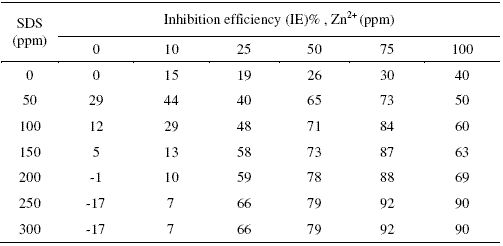
The corrosion rates of carbon steel immersed in 120 ppm of Cl- in the presence and absence of inhibitor systems and inhibition efficiencies are given in Tables 1 and 2.
Table 1. Inhibition efficiencies (IE) of carbon steel in aqueous solution containing 120 ppm Cl− in the presence of Zn2+ obtained by the weight loss method. Inhibitor: SDS + Zn2+.
Table 2. Corrosion rates (cr) of carbon steel in aqueous solution containing 120 ppm Cl- in presence of Zn2+ obtained by weight loss method. Inhibitor: SDS + Zn2+.
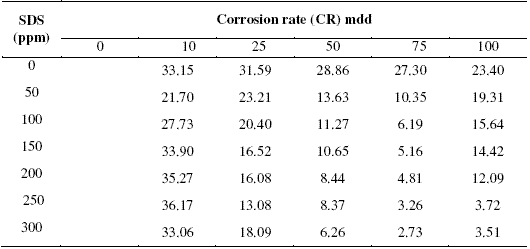
When carbon steel was immersed in aqueous environment containing 120 ppm of Cl-, the corrosion rate was 39.00 mdd. Upon addition of various concentrations of SDS, the corrosion rate increased. There was protection of the metal from corrosion when 300 ppm of SDS and 75 ppm Zn2+ were added, offering a maximum of 93% inhibition efficiency.
]]>Influence of Zn2+ on the inhibition efficiency of SDS
The influence of a divalent metal ion Zn2+, on the inhibition efficiency of SDS in controlling corrosion of carbon steel, is given in Table 1. The inhibition efficiencies of various concentrations of Zn2+, namely 10, 25, 50, 75 and 100 ppm were 15, 19, 26, 30 and 40%, respectively. It is seen from Table 1 that at 10 ppm of Zn2+ there is a decrease in the IE of the SDS system. This may be due to the fact that SDS is not transported towards the metal surface, i.e., SDS- Zn2+ complex is precipitated in the bulk of the solution. In the presence of higher concentration of Zn2+ (75 ppm) the IE increases (Table 2). For example 300 ppm of SDS has 93% IE in the presence of 75 ppm of Zn2+. This suggests that a synergism exists between Zn2+ and SDS 15-17.
Influence of duration of immersion on the IE of SDS - Zn2+ system
As the duration of immersion increases the IE decreases (Table 3). This may be due to the fact that, as the period of immersion increases, the protective film formed on the metal surface, namely, Fe2+-SDS complex, is broken by the aggressive chloride ions present in the solution. Hence there is a competition between formation of FeCl2 (and also FeCl3) and the formation of Fe2+-SDS complex. As the immersion period increases, the formation of FeCl2 is more favoured than the formation of Fe2+-SDS complex at the anodic sites of the metal. Hence, a decrease in the IE is noticed as the period of immersion increases 18.
Table 3. Influence of immersion period on the inhibition efficiency of SDS (300 ppm) -Zn2+ (75 ppm).

]]> Influence of pH on the IE ofSDS - Zn2+ system
At pH 5 the system shows 98% IE (Table 4). In the acidic medium (addition of dil.H2SO4) better inhibition efficiency is observed. But in the basic medium, i.e., above pH 7, a sudden increase in CR is noticed. This is due to the fact that in the basic medium, Zn2+ is precipitated as Zn(OH)2. As Zn2+ ions are responsible for the transport of inhibitor to the metal surface, the amount of inhibitor transported to the metal surface is reduced and hence the increase in CR is noticed 19.
Table 4. Influence of pH on the inhibition efficiency of SDS (300 ppm) -Zn2+ (75 ppm).

Influence of CTAB and CPC on the IE of SDS - Zn2+ system
The CR of carbon steel immersed in Cl- ion solution containing Zn2+-SDS inhibitor formulation for various concentrations of CTAB and CPC and the inhibition efficiencies are tabulated in Tables 5 and 6, respectively. From Table 5 it is noted that the IE decreases with the increase in the concentration of CTAB up to 150 ppm beyond which an increase in IE is observed. The decrease in IE is due to the formation of precipitate on the addition of CTAB. The increase in IE above 150 ppm of CTAB may be due to the corrosion inhibition property of CTAB with Zn2+ 20. It is observed from the Table 6 that the IE of SDS -Zn2+ system is reduced from 93 % to 65%, on the addition of the surfactant CPC. This is due to the precipitation of SDS that occurs as a result of the interaction between CPC and SDS.
Table 5. Influence of CTAB and CPC on the inhibition efficiency of the SDS (300 ppm)- Zn2+ (75 ppm) system. Inhibitor system: SDS, Zn2+, CTAB and CPC. Immersion period: one day.
]]>
Table 6. Electrochemical corrosion parameters for carbon steel in chloride solution in presence and absence of SDS and Zn2+.

Analysis of FTIR spectra
FTIR spectra (KBr) of pure SDS are shown in Fig.1a . The peaks at 2854.13 cm-1 and 2921.63 cm-1 are due to the aliphatic -C-H stretching frequency. -S=O stretching frequency appears at 1222.65 cm-1.and -S-O stretching frequency occurs at 588.18 cm-1. The peaks due to -S-O-C- appear at 995.09 cm-1 and 831.17 cm-1. The bands at 1471.42 cm-1, 1375.00 cm-1 and 717.39 cm-1 are due to bending -C-H of methyl and methylene groups. The band at 1079.94 cm-1 represents the characteristic group frequency of SO42- group 21.
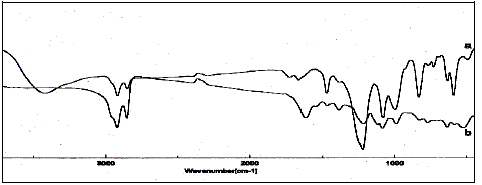
Figure 1. FTIR spectra of (a) pure SDS and (b) film formed on the surface of the carbon steel immersed in chloride ion solution containing SDS and Zn2+.
]]>The FTIR spectrum (KBr) of the film formed on the surface of the carbon steel after immersion in the solution containing 120 ppm of Cl-1 ion , 75 ppm of Zn2+ and 300 ppm of SDS is shown in Fig. 1b. The -S-O stretching frequency has decreased from 1222.65 to 1213.01 cm-1. nS-O has shifted from 588.18 cm-1 to 576.61 cm-1. The bands due to S-O-C are shifted from 995.09 cm-1 and 831.17 cm-1 to 983.52 cm-1 and 827.31 cm-1, respectively. These shifts indicate that the e- clouds of -S=O and -S-O are shifted towards Fe2+resulting in the formation of Fe2+-SDS complex on the metal surface 11. The bands at 777.17 cm-1 and 894.81 cm-1 may be due to Zn-O bending vibration and stretching frequency, respectively 22. The band at 522.61 cm-1 may be due to Fe-O stretching vibration 23.
Analysis of UV-visible spectra
The UV -visible spectra of Zn2+ions, Fe 2+ ions, SDS, Zn2+-SDS, and Fe2+-SDS in 120 ppm of Cl- solution are given in Fig. 2a-e. From Fig. 2c, it is observed that the absorbance of the solution containing 300 ppm of SDS is 0.883 at 200 nm and it decreases with increase in l and reaches a value of 0.413 at 319 nm. Fig. 2a shows that the absorbance of 75 ppm of Zn2+ is 0.126 at 200 nm and it decreases with increase in l, and reaches 0.038 at 329 nm. It is evident from Fig. 2d that the addition of 75 ppm of Zn2+to a solution of 300 ppm of SDS decreases the absorbance value from 883 to 835 at 200 nm, and it reaches 0.403 at 319 nm. This clearly indicates the existence of interaction between Zn2+ and SDS. From Fig. 2b it is noted that Fe2+ gives an absorbance of 0.169 at 200 nm. When Fe2+ ions are added to 300 ppm of SDS, the absorbance changes to 0.488 at 200 nm and reaches 0.005 at 897 nm (Fig. 2e). The change in absorbance value indicates the occurrence of reaction between Fe2+ with SDS.
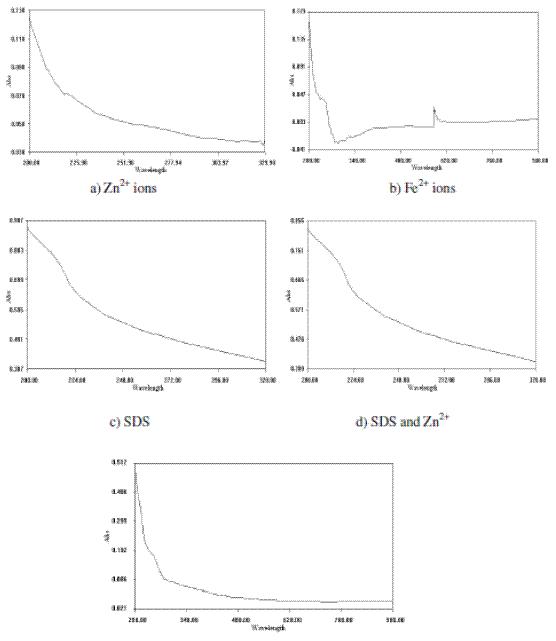
Figure 2. UV-visible absorption spectra of the test solutions in DD water.
Analysis of polarization curves
]]> The potentiodynamic polarization curves of carbon steel immersed in aqueous solution containing 120 ppm Cl- are shown in Fig. 3. The corrosion parameters are given in Table 6.
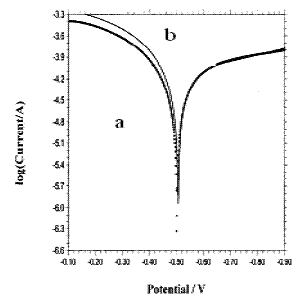
Figure 3. Polarization curves of carbon steel immersed in various test solutions. (a) Cl- (120 ppm) in DD water, (b) Cl- (120 ppm) + Zn2+(75 ppm) + SDS (300 ppm) in DD water.
When carbon steel is immersed in aqueous solution containing 120 ppm Cl-, the corrosion potential (Ecorr) is -505 mV vs. SCE. When 75 ppm of Zn2+ and 300 ppm of SDS are added to the above system, the corrosion potential shifted to anodic side (-500 mV vs. SCE). As there is not much change in the corrosion potential value, it is concluded that the inhibitor system behaves as a mixed inhibitor and this formation controls the anodic reaction predominantly. The corrosion current is 8.090 ´10-5 A/cm2 when carbon steel is immersed in chloride ion solution and it decreases to 6.361´10-5 A/cm2 when immersed along with inhibitor formulation. This suggests the inhibitive nature of this inhibitor system. The cathodic slope is found to change from 464 to 368 mV/decade and the anodic slope from 224 to 231 mV/decade. The linear polarization resistance has increased from 8.113´102 to 9.706´102 Ω cm2. This shows that the formulation functions as mixed inhibitor, controlling both anodic and cathodic processes, but predominantly the cathodic one 24-27. Higher polarization of anode at low current densities indicates film formation at anodic sites. This infers that the protective effect of SDS appears to be due to the formation of an insoluble SDS- Zn2+ film. Hence the mechanism of inhibition is due to the blockage of the anodic sites first by adsorption which enables the formation of a protective insoluble film 28.
Analysis of the AC Impedance Spectra
The AC impedance spectra of carbon steel immersed in aqueous solution containing 120 ppm Cl- in the presence and absence of inhibitors are shown in Fig. 4.
]]>
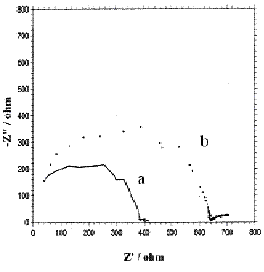
Figure 4. AC impedance of carbon steel immersed in various test solutions: (a) Cl- (120 ppm) in DD water; (b) Cl- (120 ppm) + Zn2+ (75 ppm) + SDS (300 ppm) in DD water.
The AC impedance parameters namely charge transfer resistance and the double layer capacitance are given in Table 7. It is found that, when carbon steel is immersed in 120 ppm Cl-, the Rt value is 352.02 Ω cm2 and the Cdl value is 1.4475´10-8 μ F/cm2. When 75 ppm of Zn2+ and 300 ppm of SDS have been added, the Rt value has increased from 352.02 Ω cm2 to 581.67 Ω cm2 and the Cdl value decreases from 1.4475´10-8 μ F/cm2 to 0.8760 ´10-8. μ F/cm2. This behavior means that the film obtained acts as a barrier to the corrosion process that clearly proves the formation of the film 29.
Table 7. AC impedance measurements for carbon steel in chloride solution in presence and absence of SDS-Zn2+ system.

Biocidal efficiency of CTAB and CPC in SDS - Zn2+ system
Biocidal efficiencies of CTAB and CPC in the presence and absence of SDS - Zn2+ formulation after immersion of carbon steel in 120 ppm Cl- solution for 24 hours are given in Tables 8 and 9. It is seen from Table 8 that 10 ppm of SDS alone in chloride ions solution show biocidal efficiency of 19 %. Increase in the concentration of SDS increases the BE and 100 ppm of SDS give 100 % BE. This clearly indicates that SDS itself is acting as a biocide.
]]>Table 8. Biocidal efficiencies of CTAB for SDS-Zn2+ system in 120 ppm of chloride solution.

Table 9. Biocidal efficiencies of CPC for SDS-Zn2+ system in 120 ppm of chloride solution.
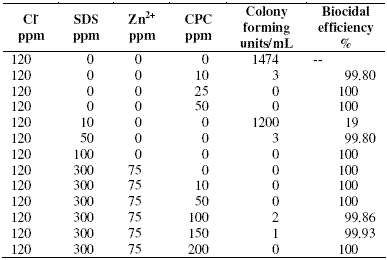
Table 9 shows that the addition of CTAB does not alter the biocidal efficiency of SDS and the biocidal nature of CTAB is well known 30. Table 9 shows that 25 ppm of CPC alone are sufficient to achieve 100 % BE for 120 ppm of chloride solution. However, when 100 ppm of CPC are added to the SDS-Zn2+ system the biocidal efficiency decreases. This may be due to the reaction between SDS and CPC that results in the reduction in the concentration of both. It is also evident from the table that even in the absence of CTAB or CPC, the inhibitor formulation offers 100 % BE. This suggests that SDS alone can act as biocide.
Mechanism of corrosion inhibition
]]> Weight loss study reveals that the formulation consisting of 120 ppm Cl-, 300 ppm of SDS and 75 ppm of Zn2+ offers 93 % IE to carbon steel immersed in aqueous solution containing 120 ppm Cl-. A synergistic effect exists between SDS- Zn2+. Polarization study reveals that this formulation behaves as a mixed inhibitor. AC impedance spectra reveal that the protective film is formed on the metal surface. FTIR spectra reveal that the protective film consists of SDS- Zn2+ and Zn(OH)2.In order to explain the above facts in a holistic way the following mechanism of corrosion inhibition is proposed:
- when the formulation consisting of 120 ppm Cl-, 300 ppm of SDS and 75 ppm of Zn2+ is prepared, there is formation of Zn2+ -SDS complex in solution;
- when carbon steel is immersed in the solution, the Zn2+ -SDS diffuses from the bulk of the solution towards the metal surface;
- on the metal surface, Zn2+ -SDS complex is converted to Fe2+-SDS complex, and Zn2+ is released;
- the released Zn2+ combines with OH- to form Zn(OH)2 on the cathodic sites Zn2++ OH- → Zn(OH)2
- thus the protective film consists of Zn2+ -SDS complex and Zn(OH)2. This accounts for the synergistic effect.
Conclusions
The present study leads to the following conclusions:
]]> - the formulation consisting of 120 ppm Cl- , 300 ppm of SDS and 75 ppm of Zn2+ offers 93 % IE to carbon steel immersed in aqueous solution containing 120 ppm Cl;- a synergistic effect exists between SDS and Zn2+;
- polarization study reveals that this formulation behaves as mixed inhibitor controlling both the anodic and cathodic reactions;
- AC impedance spectra and FTIR spectra reveal that a protective film is formed on the metal surface.
Acknowledgement
The authors are thankful to their respective managements and University Grants Commission, India, for their help and encouragement.
References
1. S. Ramesh, S. Rajeswari, Corrosion Sci. 47 (2005) 151. 10.1016/j.corsci.2004.05.013
]]> 2. S. Rajendran, B.V. Apparao, N. Palaniswamy, Journal Electrochemical Society India 48 (1999) 89-93.3. S. Rajendran, B.V. Apparao, N. Palaniswamy, Anti-CorrosionMethods and Materials 44 (1997) 308-313. 10.1108/00035599710177583
4. G.H.Y. Lin, K.A. Voss, T.J. Davidson, Food and Chemical Toxicology 29 (1991) 851. 10.1016/0278-6915(91)90113-L
5. H. Ma, S. Chen, B. Yin, S. Zhao, X. Liu, Corrosion Sci. 45 (2003) 867-882. 10.1016/S0010-938X(02)00175-0
6. G. Suguna, N. Anthony, S. Rajendran, 11th National Convention of Electrochemists, (NCC-11) 26-27 .Dec (2003) org by SAEST, CECRI and BHC, p.35,Abs.No.3.29.
7. R. Guo, T. Liu, X. Wei, Colloids and Surfaces-APhysicochemical and Engineering Aspects 209 (2002) 37. 10.1016/S0927-7757(02)00032-8
8. S.S. Abd El Rehim, H.H. Hassan, M.A. Amin, Materials Chemistry and Physics 78 (2003) 337. 10.1016/S0254-0584(01)00602-2
9. R.F.V. Villamil, G.G.O. Cordeiro, J. Matos, E.D. Elia, S.M.L. Agostinho, Materials Chemistry and Physics 78 (2003) 448. 10.1016/S0254-0584(02)00347-4
10. R.F.V. Vilamil, P. Coria, S.M.L. Agostinho, J.C. Rubin, Journal of Electroanalytical Chemistry, 472 (1999) 112. 10.1016/S0022-0728(99)00267-3
11. S. Rajendran, S.M. Reenkala, N. Anthony, R. Ramaraj, Corrosion Science 44 (2002) 2243. 10.1016/S0010-938X(02)00052-5
]]> 12. C. Monticelli, G. Brunoro, A. Frignani, F. Zucchi, Corrosion Science 32 (1991) 693. 10.1016/0010-938X(91)90084-313. M. Hoseini, S.F.L. Mertens, M.R. Arshadi, Corrosion Science 45 (2003) 1473. 10.1016/S0010-938X(02)00246-9
14. S. Rajendran, A.J. Amalraj, J.W. Sahayaraj, R.J. Rathish, N. Anthony, N. Palaniswamy, Transactions of the SAEST 40 (2005) 35.
15. Y. Zhang, L. Shouchun, T. Li, IDPA -“A New Multifunctional Inhibitor for Cooling Waters,” ‘Proc. 6th Europ. Symp. Corr. Inhibitors, (6SEIC), Ann.Univ. Ferrara, Italy’, N.S. Sez V. Suppl. N 8 (1985) 999.
16. M.A. Pech-Canual, P. Bartolo-Perez, Surface and CoatingsTechnology 184 (2004) 133. 10.1016/j.surfcoat.2003.11.018
17. S. Rajendran, A.J. Amalraj, M.J. Joice, N. Anthony, D.C. Trivedi, M. Sundaravadivelu, Corrosion Reviews 22 (2004) 233.
18. S.K. Selvaraj, A.J. Kennedy, A.J. Amalraj, S. Rajendran, N. Palaniswamy, Corrosion Reviews 22 (2004) 219.
19. R.H. Florence, A.N. Anthony, J.W. Sahayaraj, A.J. Amalraj, S. Rajendran, Indian Journal of Chemical Technology, 12 (2005) 472.
20. P. Manjula, S. Manonmani, P.Jayaram and S. Rajendran, Corrosion inhibition by N-cetyl-N,N,N-trimethylammonium bromide, ‘Tenth National Congress on Corrosion Control,’ Organised by NCC of India, Madurai, 6-8th September (2000) 227-233.
21. R.M. Silverstein, Bassler and Morrill, Spectrometric Identification of OrganicCompounds, 4th Ed., John Wiley and Sons, 1981. p.120,133
]]> 22. D.B. Powell, A. Woollins, Spectrochimica ActaPart A 41 (1985) 1023. 10.1016/0584-8539(85)80001-523. E.S. Prochaska, L .Andrews, Journal Chemical Physics 72 (1980) 6782. 10.1063/1.439169
24. C. Das, H.S. Gadiyar, Journal Electrochemical Society India 42 (1993) 225. [ Links ]
25. V.S. Shastri, Corrosion Inhibitors - Principles and Applications, John Wiley and Sons, 1998. p. 866.
26. S. Verma, P.K. Srivastava, V.B. Singh, Transactions of theSAEST 37(2) (2002) 71.
27. A. Jaiswal, R.A. Singh, R.S. Dubey, “Corrosion Protection of Mild Steel by LB-Film in Saline environment,” ‘Ninth National Congress on Corrosion Control,’ 16-18 Sep. (1999), organised by NCC of India, Karaikudi, p.146-152.
28. D. Prasad, G.S. Jha, B.P. Choudhary and S. Sanyal, Journal Indian Chemical Society 79 (2002) 264.
29. L.J. Berchmans, V.S.S.V. Iyer, Influence of Triazoles Derivatives on the Inhibition of Corrosion of Cu in 3.5 % NaCl, 8th National Congress on Corrosion Control, Kochi, Sep.9-11(1998) 3.2.1-3.2.5.
30. S.P. Denyer, Int. Biodeterioration, 26 (1990) 89. 10.1016/0265-3036(90)90050-H
]]> Received 27 April 2009; accepted 06 April 2010
* Corresponding author: beni2@rediffmail.com
]]>