<?xml version="1.0" encoding="ISO-8859-1"?><article xmlns:mml="http://www.w3.org/1998/Math/MathML" xmlns:xlink="http://www.w3.org/1999/xlink" xmlns:xsi="http://www.w3.org/2001/XMLSchema-instance">
<front>
<journal-meta>
<journal-id>0872-1904</journal-id>
<journal-title><![CDATA[Portugaliae Electrochimica Acta]]></journal-title>
<abbrev-journal-title><![CDATA[Port. Electrochim. Acta]]></abbrev-journal-title>
<issn>0872-1904</issn>
<publisher>
<publisher-name><![CDATA[Sociedade Portuguesa de Electroquímica]]></publisher-name>
</publisher>
</journal-meta>
<article-meta>
<article-id>S0872-19042014000100002</article-id>
<article-id pub-id-type="doi">10.4152/pea.201401021</article-id>
<title-group>
<article-title xml:lang="en"><![CDATA[Tuning the Initial Electronucleation Mechanism of Palladium on Glassy Carbon Electrode]]></article-title>
</title-group>
<contrib-group>
<contrib contrib-type="author">
<name>
<surname><![CDATA[Alemu]]></surname>
<given-names><![CDATA[Tibebu]]></given-names>
</name>
<xref ref-type="aff" rid="A01"/>
</contrib>
<contrib contrib-type="author">
<name>
<surname><![CDATA[Assresahegn]]></surname>
<given-names><![CDATA[Birhanu D]]></given-names>
</name>
<xref ref-type="aff" rid="A01"/>
</contrib>
<contrib contrib-type="author">
<name>
<surname><![CDATA[Soreta]]></surname>
<given-names><![CDATA[Tesfaye R]]></given-names>
</name>
<xref ref-type="aff" rid="A01"/>
</contrib>
</contrib-group>
<aff id="A01">
<institution><![CDATA[,Jimma University College of Natural Sciences Department of Chemistry]]></institution>
<addr-line><![CDATA[ ]]></addr-line>
</aff>
<pub-date pub-type="pub">
<day>00</day>
<month>01</month>
<year>2014</year>
</pub-date>
<pub-date pub-type="epub">
<day>00</day>
<month>01</month>
<year>2014</year>
</pub-date>
<volume>32</volume>
<numero>1</numero>
<fpage>21</fpage>
<lpage>33</lpage>
<copyright-statement/>
<copyright-year/>
<self-uri xlink:href="http://scielo.pt/scielo.php?script=sci_arttext&amp;pid=S0872-19042014000100002&amp;lng=en&amp;nrm=iso"></self-uri><self-uri xlink:href="http://scielo.pt/scielo.php?script=sci_abstract&amp;pid=S0872-19042014000100002&amp;lng=en&amp;nrm=iso"></self-uri><self-uri xlink:href="http://scielo.pt/scielo.php?script=sci_pdf&amp;pid=S0872-19042014000100002&amp;lng=en&amp;nrm=iso"></self-uri><abstract abstract-type="short" xml:lang="en"><p><![CDATA[Electrochemical metal nucleation is the method for the formation of metal nanoparticles on the electrode surface. Studying the early stage of electronucleation is simpler than other methods as the driving force for nucleation is achieved by changing deposition potentials and concentration of metal ions. In this work, the potential step electrochemical deposition of palladium was studied from its chloride solution at room temperature on glassy carbon electrode surface. The nucleation mechanism was studied by analysis of the resulting current transients. Accordingly, the initial electro-nucleation mechanism of palladium nanoparticles was found to be varying depending on deposition conditions such as deposition potential and palladium concentration. It can be changed from 3D instantaneous (for all deposition potentials studied and in higher electrolytic concentration) to 3D progressive nucleation mechanism (for lower deposition potential and lower electrolytic concentration). In addition, the nucleation rate for each deposition potential as well as the concentration has been determined. The nucleation rate in this research is used to calculate the nuclei density and found to decrease from more negative deposition potential to more positive deposition potential in agreement with the observed shift in electronucleation mechanism.]]></p></abstract>
<kwd-group>
<kwd lng="en"><![CDATA[nanoparticles]]></kwd>
<kwd lng="en"><![CDATA[palladium]]></kwd>
<kwd lng="en"><![CDATA[initial nucleation]]></kwd>
<kwd lng="en"><![CDATA[electrodeposition]]></kwd>
<kwd lng="en"><![CDATA[glassy carbon electrode]]></kwd>
</kwd-group>
</article-meta>
</front><body><![CDATA[   <!--     <p>&nbsp;</p>     <p>doi: 10.4152/pea.201401021</p> -->      <p><b>Tuning the Initial Electronucleation Mechanism of Palladium on Glassy Carbon Electrode</b></p>      <p> <b>Tibebu Alemu</b> , <b>Birhanu D. Assresahegn</b>  and <b>Tesfaye R. Soreta</b><sup><i><a href="#0">*</a></i></sup> </p>      <p><i> Jimma University, College of Natural Sciences, Department of Chemistry, P.O. Box 378, Jimma, Ethiopia</i></p>       <p>&nbsp;</p>     <p><b>Abstract</b></p>      <p>Electrochemical metal nucleation is the method for the formation of metal nanoparticles  on the electrode surface. Studying the early stage of electronucleation is simpler than  other methods as the driving force for nucleation is achieved by changing deposition  potentials and concentration of metal ions. In this work, the potential step  electrochemical deposition of palladium was studied from its chloride solution at room  temperature on glassy carbon electrode surface. The nucleation mechanism was studied  by analysis of the resulting current transients. Accordingly, the initial electro-nucleation  mechanism of palladium nanoparticles was found to be varying depending on  deposition conditions such as deposition potential and palladium concentration. It can  be changed from 3D instantaneous (for all deposition potentials studied and in higher  electrolytic concentration) to 3D progressive nucleation mechanism (for lower  deposition potential and lower electrolytic concentration). In addition, the nucleation  rate for each deposition potential as well as the concentration has been determined. The  nucleation rate in this research is used to calculate the nuclei density and found to  decrease from more negative deposition potential to more positive deposition potential  in agreement with the observed shift in electronucleation mechanism.</p>      <p><b><i>Keywords:</i></b> nanoparticles, palladium, initial nucleation, electrodeposition, glassy carbon electrode.</p>       ]]></body>
<body><![CDATA[<p>&nbsp;</p>     <p><b>Introduction</b></p>      <p>Metal nanoparticles are expected to play a major role in future nanotechnologies.  The physical and chemical properties of the nanosized materials differ  significantly from their bulk counterparts as a result of small size effects. The  properties of deposited metal nanoparticles on substrates are in turn strongly  determined by the final surface structure which is also determined by the early  stages of nucleation [1, 2]. The surface structure and properties of deposited  metal nanoparticles are governed by a competition between the rate of nucleation  and the crystal growth [1]. For the conditions that favor the rapid formation of  crystal nuclei at initial stage of deposition, the surface structure of deposited  metal will be fine grained and highly applicable in nanotechnology. However, if  the conditions favor the nuclei to grow rapidly, relatively large crystals will be  formed and the deposited structure becomes rough in appearance and less  applicable in nanotechnology. Thus, the detailed knowledge of such correlations  is helpful for optimizing metal nanoparticles fabrication processes.  Electrochemical nucleation of metals is an easy, rapid, flexible and effective tool  for structuring and modification of solid state surfaces [1, 3-5]. Electrochemical  nucleation is a phase formation process in which an electric current passing  through an electrochemical cell from an external source causes a redox reaction  (especially reduction of electro active species) resulting in the formation of  deposited atoms on an electrode surface. This technique allows the formation of  several grain sizes on which many chemical and physical properties of  nanostructured materials depend. The deposit exhibits surface structure without  domination by voids which is a major limitation to other deposition methods  such as physical vapor deposition methods. Due to these advantages,  electrodeposition becomes greatly significant for the development of micro and  nano system technologies. On an electrode surface, the electrochemical  deposition process involves at least three steps: (a) transfer of hydrated metal  ions or complexes from bulk of solution to the electrode-electrolyte interphase,  (b) adsorption of this metal ions/complex on the surface, and finally (c) charge  transfer at the surface leads to the reduced atom [2]. Metal deposition and  dissolution takes place at defects which act as the preferred sites for nucleation  and growth on a substrate since these are active sites (step and kink sites).  The final size distribution and property of the electrodeposits, strongly depends  on the nucleation and growth mechanism. The nucleation mechanism is again  influenced by the presence of organic additives, applied overpotential and the  nature of the substrate. Depending on the above factors, an initial stage of  electronucleation involves either an instantaneous or a progressive nucleation  mechanism [6-10]. In the case of instantaneous nucleation mechanism, all the  electrode active sites are occupied by the nuclei at early stages. The nuclei  formed are widely spaced and the crystals grow as time of deposition prolonged  with non overlapping (individual nuclei size increased without increased in  nuclei density) as there is no interaction between each nucleus. However, the  number of nuclei that are formed is a function of electrodeposition time in the  progressive nucleation mechanism. In such cases, early established nuclei  gradually grow and overlap while other new nuclei are formed. Therefore, the  progressive nucleation process exhibits zones of reduced nucleation rate around  the growing stable nuclei [11, 12].</p>      <p>The study of initial electrocrystalization of metals is an important area of study  [7-10, 13-35]. A number of studies have been reported for the investigation of the  initial nucleation of cobalt [32], copper [14, 22, 25, 27, 29, 33], palladium [7, 13,  16-19, 21, 23, 34, 36], platinum [20, 28] and silver [31] on various substrates.  Initial electro-nucleation studies are important as it provides a mechanistic study  with simple approach that can be used to approximate the actual initial nucleation  without the help of expensive instruments such as atomic force microscopy and  other nano-imaging tools.</p>      <p>Palladium is a well known catalyst for many reactions such as electrocatalytic  oxidation of formaldehyde [37, 38], hydrogenation of unsaturated hydrocarbons  [39], oxidation of alcohols, and is routinely used in the automobile industry in  catalytic converters to reduce the amounts of nitrogen oxides, carbon monoxide,  and un-burned hydrocarbons [40].</p>      <p>Palladium is used in electronic industry, in view of its excellent resistance to  corrosion and wear, good solderability and lower density, in the development of  biosensors, and has been exploited as a component in an enzymatic glucose  biosensor [41] as well as for detection of catecholamine [42] and DNA [43].  The initial electronucleation of a metal is dependent on parameters such as type  and source of metal ion, concentration of metal ion, electrolyte and the substrate  on which deposition takes place. Hence, with the variation of these parameters,  independet independent study has to be carried out to understand the mechanism  the initial nucleation. In this paper, a comprehensive investigation was performed  to understand the initial electrochemical nucleation process of palladium (Pd) on  glassy carbon electrode (GCE). The effects of overpotentials and concentrations  of palladium precursor on the initial nucleation and growth mechanisms of Pd  were investigated. In addition, nucleation rate at the studied conditions was  calculated to gain deeper insights of the electrodeposition process.</p>       <p>&nbsp;</p>     <p><b>Experimental</b></p>      <p><b><i>Chemicals</i></b></p>      <p>Palladium dichloride (PdCl<sub>2</sub>, 99.9%, Aldrich), potassium nitrate (KNO3, 99%,  Nice), potassium hexacyanoferrate (K<sub>3</sub>[Fe(CN)<sub>6</sub>], 97%, Labmerk Chemicals) and  sodium perchlorate (NaClO4, 98%, Aldrich), citric acid (C6H8O7, 99.5%, Wardle  Chemicals LTD), hydrochloric acid (HCl, 37%, Riedel-de Haen), sodium  chloride (NaCl, 99.8%, Uni-Chem), potassium hydroxide (KOH, 96%, BDH)  were used for this work as recieved. Double distilled water was used to prepare  all aqueous solutions.</p>       ]]></body>
<body><![CDATA[<p><b><i>Instrumentation</i></b></p>      <p><i>Electrochemical measurements</i></p>      <p>Cyclic voltammetry and amperometric experiments were carried out using BAS  Epsilion EC-Version 1.40.67 voltammetric analyzer (Bio-analytical Systems,  USA) controlled with basic epsilon software. A conventional three-electrode  setup was used with a 3 mm diameter glassy carbon electrode (GCE, BASi, MF  2012) as the working electrode and a platinum wire counter electrode (BASi,  MW-1032). An Ag/AgCl electrode (BASi MF-2042) served as a reference  electrode. All potentials were reported with respect to this reference electrode.  The solution of PdCl<sub>2</sub> was stirred with a magnetic stirrer during palladium  deposition using BASi C3 Cell Stand at 500 rpm. All experiments were  conducted at room temperature.</p>       <p><b><i>Methods</i></b></p>      <p><i>Solution preparation</i></p>      <p>For the study of Pd concentration effects on nucleation mechanism, a 7.5 mM  PdCl<sub>2</sub> deposition bath was prepared by adding 6.65 mg of PdCl<sub>2</sub> to a 50 mL of  pH 2 citrate buffer. The solution was homogenized by shaking and left overnight  in the dark after which a clear wine-red solution was obtained [44]. Finally, the  pH of the solution was adjusted to 3 by addition of diluted KOH. This solution  was used as stock solution to prepare other lower concentrations of PdCl<sub>2</sub>. For  electrode area determination, a 0.1 mM K<sub>3</sub>[Fe(CN)<sub>6</sub>] in 0.1 M NaClO4 was used.</p>       <p><i>Electrode preparation</i></p>      <p>The cleaning procedure for the GCE included polishing and electrochemical  conditioning steps similar to the procedure reported by Soreta et al. [44]. For  polishing, 0.05 Î¼m alumina slurry (BASi CF-1050) was used. Upon polishing,  the electrodes were carefully rinsed with deionized water. Then, the electrodes  were conditioned by potential scanning from 0 V to 1.4 V in 1 M NaClO4 for at  least six complete scans at 50 mV/s, where the high background current due to  glassy carbon oxidation diminished, and a reproducible cyclic voltammogram  was obtained. The background current of the bare electrode was measured by  cyclic voltammetry within the potential window of 0 to 0.7 V. Electrodes with a  high background current above a selected reference were re-polished and  conditioned. The electrodes were used immediately following the cleaning and  conditioning steps.</p>       <p><i>Determination of electrode area</i></p>      <p>The real electrode area of the bare GCE was determined by chronocoulometry for  duration of 250 milliseconds. It was estimated in 0.1 M NaClO4 using 0.1 mM  potassium hexacyanoferrate (K<sub>3</sub>[Fe(CN)<sub>6</sub>], diffusion coefficient 7.6 &times; 10<sup>-6</sup> cm<sup>2</sup> s<sup>-1</sup>)  using Anson's equation [45].</p>       ]]></body>
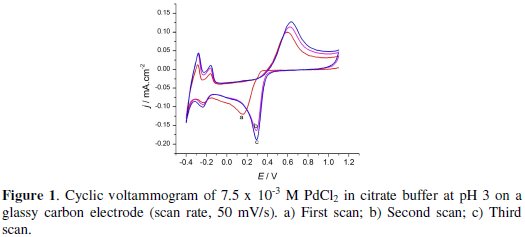
<body><![CDATA[<p><i>Electrodeposition of palladium and study of nucleation mechanism</i></p>      <p>Pd was electrodeposited on GCE from the deposition bath, by applying the  potentials from the rest potential of 1.1 V to all deposition potentials studied for  duration of 1 s to determine nucleation models. The palladium deposition bath  concentrations studied were 0.75 M, 1.5 M and 7.5 M. The nucleation  mechanisms were studied using mathematical models developed by Scharifker  and Hills [11, 12]. The experimental current transients obtained at different  deposition potentials were inserted to those equations, and dimensionless current  (i/imax)2 with their corresponding instantaneous as well as progressive values were  calculated. Then the values obtained from experimental dimensionless current  versus dimensionless time (t/tmax) were plotted using Microcal origin software.  Finally they were compared to each other for determination of nucleation  mechanism whether the experimental curves best fit to instantaneous or  progressive. The nucleation rate also was calculated using their corresponding  mathematical equations which have been previously developed [46] to explain  the nucleation rate.</p>       <p>&nbsp;</p>     <p><b>Results and discussion</b></p>      <p><b><i>Cyclic voltammetry</i></b></p>      <p>The cyclic voltammogram for the electrochemical deposition of Pd from the  deposition bath is given in <a href="#f1">Fig. 1</a>.</p>      <p>&nbsp;</p> <a name="f1"> <img src="/img/revistas/pea/v32n1/32n1a02f1.jpg">     
<p>&nbsp;</p>      <p>The potential scan was started at +1.1 V.  Palladium started to deposit at +0.3 V for the first reduction scan and at +0.6 V  for the second and third scans.</p>      <p>The cathodic peak at +0.15 V for the first scan is due to the palladium deposition.  The peak observed at -0.20 V in all scans is due to hydrogen adsorption to the  electrode surface resulting in PdHx [44]. At the potentials more negative than  0.30 V, the peak observed is due to hydrogen evolution. On the return scan,  hydrogen is stripped off at a potential of -0.30 V, while the peak at -0.15 V  observed next to hydrogen oxidation was due to the desorption of already  adsorbed hydrogen, and finally palladium started dissolution from the electrode  at +0.38 V. The residual anodic current observed at the anodic limit suggests the  passivation of the Pd particles [47]. As a result for the second and third  voltammetric cycle a lower overpotential is required to initiate the nucleation and  growth of Pd deposits. The cross over indicates that there is a formation of  nucleation on GCE. The general behavior of the CV depicted in <a href="#f1">Fig. 1</a> is in good  agreement with the one reported by Soreta et al. [44].</p>       ]]></body>
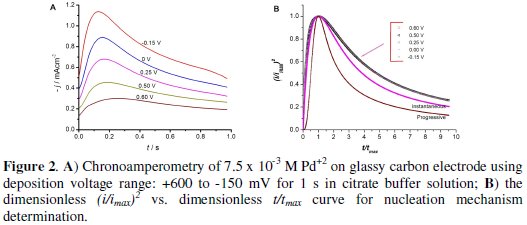
<body><![CDATA[<p><b><i>Nucleation and growth of palladium</i></b></p>      <p><i>Current-time transients</i></p>      <p>In order to analyze the nucleation and growth processes of electrochemical  deposition, either of the two mechanisms, charge-transfer-controlled or masstransfer- controlled, has to be suppressed. A set of potentiostatic current transients  was obtained by stepping the potential, with chronoamperometric technique,  from E = 1.1 V to different potential values E, ranged between 0.60 &le; E /V &le; 0.15,  that can make the deposition process mass-transfer-controlled according to  the voltammogram recorded, for 1 s in stirred citrate pH 3 buffered solution (<a href="#f2">Fig. 2</a>).</p>      <p>&nbsp;</p> <a name="f2"> <img src="/img/revistas/pea/v32n1/32n1a02f2.jpg">     
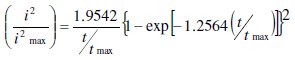
<p>&nbsp;</p>      <p>Initially, the current increases due to the formation and growth of palladium  nanoparticles. At later stages of the nucleation process the individual diffusion  zones grow and the current reaches a maximum peak and then decays. This  behavior indicates that the reaction kinetics is controlled by diffusion of  electroactive ions to the electrode surface [47].</p>      <p>The trend in these transients indicates that the Pd deposition follows the three- dimensional nucleation mechanism with mass-transfer-controlled growth [47].  The maximum current (Imax) and the time at which Imax appears (tmax) change as a  function of the applied potential.</p>       <p><i>Analysis of current-time transients</i></p>      <p>The current-time transients was analyzed using the mathematical model that  Scharifker and Hills have derived (here after, SH theory) [12]. The SH theory  describes the three-dimensional nucleation process based on the current-time  transients. According to the SH theory, the mathematical expressions in a non- dimensional form are given by:</p>      <p>&nbsp;</p> <a name="e1"> <img src="/img/revistas/pea/v32n1/32n1a02e1.jpg">     
]]></body>
<body><![CDATA[<p>&nbsp;</p>      <p>for instantaneous nucleation, and</p>      <p>&nbsp;</p> <a name="e2"> <img src="/img/revistas/pea/v32n1/32n1a02e2.jpg">     
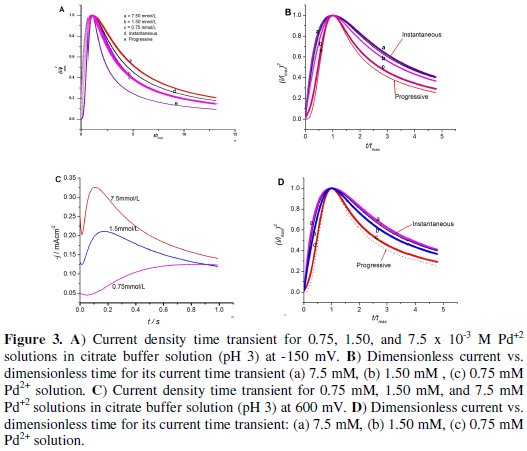
<p>&nbsp;</p>      <p>for progressive nucleation [11, 12].</p>      <p><a href="#f2">Fig. 2</a> depicts the (I/I<sub>max</sub>)<sup>2</sup> versus (t/t<sub>max</sub>) plots of the experimental data at the  different potentials for the analysis of the nucleation and growth mode of Pd on  GCE.</p>      <p>The initial nucleation mechanism from all experimental plots representing  the dimensionless current transient best describes the three-dimensional  hemispherical instantaneous nucleation mechanism. Further increase in the  deposition time would only increase the size of the nanocrystals and not their  number density because no new nucleation sites are created.</p>      <p>Although some experimental data are deviated from the theoretical lines at longer  times (t/t<sub>max</sub> &gt; 1), these deviations are often reported in the literature [48].  Radisic et al. [48] demonstrated that the hydrogen evolution could induce such  deviations. We believe that the adsorption of hydrogen ions can also cause  deviations during the Pd deposition process with large overpotentials. However,  the reasons for the deviations from the SH theory have not yet been elucidated  thoroughly.</p>       <p><i>Effect of concentration on the nucleation mechanism of palladium</i></p>      <p>The concentration effects were studied using 0.75 M, 1.50 M, and 7.5 &times; 10<sup>-3</sup> M  Pd<sup>+2</sup> solutions in citrate buffer solution (pH 3) at two different and previously  studied deposition potentials,-150 mV and 600 mV. The results are presented in  <a href="#f3">Fig. 3</a>.</p>      ]]></body>
<body><![CDATA[<p>&nbsp;</p> <a name="f3"> <img src="/img/revistas/pea/v32n1/32n1a02f3.jpg">     
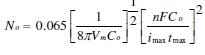
<p>&nbsp;</p>      <p>According to the result observed from the graphs below, the nucleation  mechanism was instantaneous for -150 mV up to t/tmax being equal to 1, but as  the reaction proceeds, it slightly deviated from instantaneous with increasing  concentration of palladium ion which can be attributed to the adsorption of  hydrogen.</p>      <p>The nucleation models observed for 600 mV, <a href="#f3">Fig. 3 (b)</a>, were different from the  first one depicted in <a href="#f2">Fig. 2 (a)</a>. In fact it was progressive at low concentration but  changed to instantaneous as the concentration of palladium ion was increased to  1.5 and 7.5 &times; 10<sup>-3</sup> M. This is the most interesting result obtained as it gives an  option to tailor the nucleation mechanism of Pd on the GC electrode surface by  optimizing the concentration of the metal and the deposition potential as needed.  The 600 mV potential could give low current density for 0.75 &times; 10<sup>-3</sup> M Pd<sup>2+</sup>,  which results in slow discharge of ions. The nuclei grow faster before the  formation of other new nuclei because this potential is less energetic to produce  new nucleation sites as compared to high deposition potential [12]. In general, in  these conditions, the rate of growth of the nuclei exceed the rate at which a new  one is formed; the deposits obtained under these conditions should be coarsely  crystalline. As the current density is raised (1.5 and 7.5 &times; 10<sup>-3</sup> M Pd<sup>2+</sup>), the rate of  formation of nuclei will be greater than the rate of growth of the nuclei  (instantaneous nucleation) and hence deposited morphology should appear fine  grained [49].</p>       <p><i>The nucleation rate</i></p>      <p>The nucleation rate (J) of the metal on the GCE surface was calculated using the  equation developed by Scharifker-Hills [11, 12]. This model developes the  following equation to calculate the nuclei density, N<sub>o</sub>.</p>      <p>&nbsp;</p> <a name="e3"> <img src="/img/revistas/pea/v32n1/32n1a02e3.jpg">     
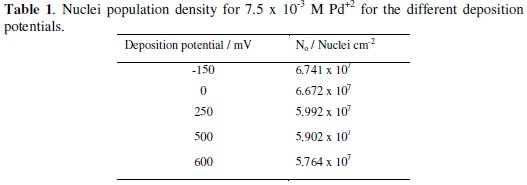
<p>&nbsp;</p>      <p>Here, Co is the concentration of metal ion in bulk of solution, Vm the molar  volume, F the Faraday constant and n is the number of electrons transferred. And  for the same experimental set up in this work, the number density of active  nucleation sites for different deposition potentials were calculated and  summarized in <a href="#t1">Table 1</a>.</p>      <p>&nbsp;</p> <a name="t1"> <img src="/img/revistas/pea/v32n1/32n1a02t1.jpg">     
]]></body>
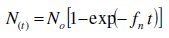
<body><![CDATA[<p>&nbsp;</p>      <p>The time dependence of the number density of nuclei N<sub>(t)</sub> formed on a substrate  exhibiting equally active nucleation sites N<sub>o</sub> has been described as [12, 26]</p>      <p>&nbsp;</p> <a name="e4"> <img src="/img/revistas/pea/v32n1/32n1a02e4.jpg">     
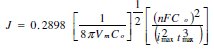
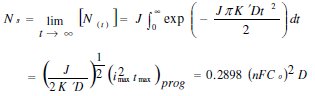
<p>&nbsp;</p>      <p>where f<sub>n</sub> represents the frequency of nucleation per nucleation site. For very high  nucleation frequencies, f<sub>n</sub>, all nucleation sites, N<sub>o</sub>, instantaneously convert to  nuclei; each nuclei growth independently, with non-overlapping, and with  constant number density throughout the reaction, so that the nucleation rate J =  N<sub>(t)</sub> = N<sub>o</sub> [46], and the process would be instantaneous nucleation.  At relatively low f<sub>n</sub> however, the nucleation sites convert to a nuclei progressively  with a stationary nucleation rate J = N<sub>o</sub> f<sub>n</sub> and the process should be progressive  nucleation. In such processes an already formed nuclei will grow by over-lapping  with the others and new nuclei will be formed so that there is an increasing in  number of nuclei as a function of time but the nucleation rate is small as  compared to instantaneous nucleation mechanism [46].</p>      <p>For a three-dimentional hemispherical progressive nucleation mechanism, the  nucleation rate can be calculated as [12]:</p>      <p>&nbsp;</p> <a name="e5"> <img src="/img/revistas/pea/v32n1/32n1a02e5.jpg">     
<p>&nbsp;</p>      <p>The saturated number density of nuclei N<sub>s</sub> corresponding to this nucleation rate  and diffusion coefficient can be estimated from the equation below:</p>      <p>&nbsp;</p> <a name="e6"> <img src="/img/revistas/pea/v32n1/32n1a02e6.jpg">     
]]></body>
<body><![CDATA[<p>&nbsp;</p>      <p>whereas K' is a constant and is equals to  <img src="/img/revistas/pea/v32n1/32n1a02e7.jpg">  and D is the diffusion  coefficient.</p>      
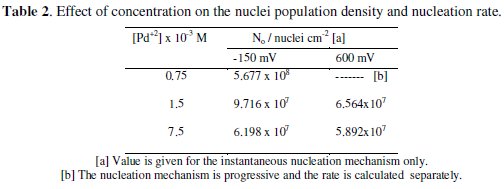
<p>Based on this SH theoretical models, the effects of different concentrations of Pd  on the nuclei population density were evaluated and summarized in <a href="#t2">Table 2</a>.</p>      <p>&nbsp;</p> <a name="t2"> <img src="/img/revistas/pea/v32n1/32n1a02t2.jpg">     
<p>&nbsp;</p>      <p>In both deposition potentials, when the mechanism of nucleation is instantaneous,  the nuclei number density decreases with increasing concentration of the metal.  In the case of the progressive nucleation mechanism obtained at a concentration  of 0.75 &times; 10<sup>-3</sup> M Pd<sup>2+</sup>, the nucleation rate J can be extracted from the coordinates  of the current maximum using the SH mode [12]. From the transient  experimental current maximum, obtained above 600 mV, results a value of J =  3.704 &times; 10<sup>8</sup> s<sup>-1</sup> cm<sup>-2</sup> and a diffusion coefficient equal to 7.412 &times; 10<sup>-6</sup> s<sup>-1</sup> cm<sup>2</sup>. From these values the saturated nuclei number density can be predicted to be 2.47 &times; 10<sup>7</sup>  nuclei/cm<sup>-2</sup>. This value is less than N<sub>o</sub> for larger palladium concentration because  progressive nucleation has reduced the nucleation rate as compared to  instantaneous nucleation.</p>        <p>&nbsp;</p>     <p><b>Conclusions</b></p>      <p>In this work the initial nucleation mechanism of palladium on GCE was studied.  It has been confirmed that the experimental curves fit better to the threedimentional  instantaneous nucleation mechanism for all deposition potentials  using 7.5 &times; 10<sup>-3</sup> M Pd<sup>2+</sup>, but it was changed to three-dimentional progressive  nucleation mechanism for low concentration of the metal and more positive  deposition potentials. This provides an option to taylor the mechanism of initial  nucleation and grain size of the nuclei by optimizing only the concentration of  palladium and its deposition potentials on the surface of glassy carbon electrode.</p>       <p>&nbsp;</p>     ]]></body>
<body><![CDATA[<p><b>References</b></p>      <!-- ref --><p>1. Penner R M. Metal Deposition, Elsevier, 2007.    &nbsp;&nbsp;&nbsp;&nbsp;&nbsp;&nbsp;&nbsp;&nbsp;[&#160;<a href="javascript:void(0);" onclick="javascript: window.open('/scielo.php?script=sci_nlinks&ref=000094&pid=S0872-1904201400010000200001&lng=','','width=640,height=500,resizable=yes,scrollbars=1,menubar=yes,');">Links</a>&#160;]<!-- end-ref --></p>     <!-- ref --><p>2. Paunovic M, Schlesinger M. Fundamentals of Electrochemical Deposition. USA: Wiley; 2006.    &nbsp;&nbsp;&nbsp;&nbsp;&nbsp;&nbsp;&nbsp;&nbsp;[&#160;<a href="javascript:void(0);" onclick="javascript: window.open('/scielo.php?script=sci_nlinks&ref=000096&pid=S0872-1904201400010000200002&lng=','','width=640,height=500,resizable=yes,scrollbars=1,menubar=yes,');">Links</a>&#160;]<!-- end-ref --></p>     <!-- ref --><p>3. Jovic V D, Jovic B M, Pavlovic M G. Electrochim Acta. 2006;51:5468.    &nbsp;&nbsp;&nbsp;&nbsp;&nbsp;&nbsp;&nbsp;&nbsp;[&#160;<a href="javascript:void(0);" onclick="javascript: window.open('/scielo.php?script=sci_nlinks&ref=000098&pid=S0872-1904201400010000200003&lng=','','width=640,height=500,resizable=yes,scrollbars=1,menubar=yes,');">Links</a>&#160;]<!-- end-ref --></p>     <!-- ref --><p>4. Gorer S, Liu H T, Stiger R M, et al. Metal Nanoparticles: Synthesis, Characterization, and Applications. 2002, 237-259.    &nbsp;&nbsp;&nbsp;&nbsp;&nbsp;&nbsp;&nbsp;&nbsp;[&#160;<a href="javascript:void(0);" onclick="javascript: window.open('/scielo.php?script=sci_nlinks&ref=000100&pid=S0872-1904201400010000200004&lng=','','width=640,height=500,resizable=yes,scrollbars=1,menubar=yes,');">Links</a>&#160;]<!-- end-ref --></p>     <!-- ref --><p>5. Zoval J V, Lee J, Gorer S, et al. J Phys Chem B. 1998;102:1166.    &nbsp;&nbsp;&nbsp;&nbsp;&nbsp;&nbsp;&nbsp;&nbsp;[&#160;<a href="javascript:void(0);" onclick="javascript: window.open('/scielo.php?script=sci_nlinks&ref=000102&pid=S0872-1904201400010000200005&lng=','','width=640,height=500,resizable=yes,scrollbars=1,menubar=yes,');">Links</a>&#160;]<!-- end-ref --></p>     <!-- ref --><p>6. Radisic A, Vereecken P M, Hannon J B, et al. Nano Letters. 2006;6:238.    &nbsp;&nbsp;&nbsp;&nbsp;&nbsp;&nbsp;&nbsp;&nbsp;[&#160;<a href="javascript:void(0);" onclick="javascript: window.open('/scielo.php?script=sci_nlinks&ref=000104&pid=S0872-1904201400010000200006&lng=','','width=640,height=500,resizable=yes,scrollbars=1,menubar=yes,');">Links</a>&#160;]<!-- end-ref --></p>     <!-- ref --><p>7. Quayum M E, Ye S, Uosaki K. J Electroanal Chem. 2002;520:126.    &nbsp;&nbsp;&nbsp;&nbsp;&nbsp;&nbsp;&nbsp;&nbsp;[&#160;<a href="javascript:void(0);" onclick="javascript: window.open('/scielo.php?script=sci_nlinks&ref=000106&pid=S0872-1904201400010000200007&lng=','','width=640,height=500,resizable=yes,scrollbars=1,menubar=yes,');">Links</a>&#160;]<!-- end-ref --></p>     <!-- ref --><p>8. Milchev A, Staikov G. Indian J Chem. Inorg Bio-Inorg Phys Theor Anal Chem. 2005;44:899.    &nbsp;&nbsp;&nbsp;&nbsp;&nbsp;&nbsp;&nbsp;&nbsp;[&#160;<a href="javascript:void(0);" onclick="javascript: window.open('/scielo.php?script=sci_nlinks&ref=000108&pid=S0872-1904201400010000200008&lng=','','width=640,height=500,resizable=yes,scrollbars=1,menubar=yes,');">Links</a>&#160;]<!-- end-ref --></p>     <!-- ref --><p>9. Milchev A, Heerman L. Electrochim Acta. 2003;48:2903.    &nbsp;&nbsp;&nbsp;&nbsp;&nbsp;&nbsp;&nbsp;&nbsp;[&#160;<a href="javascript:void(0);" onclick="javascript: window.open('/scielo.php?script=sci_nlinks&ref=000110&pid=S0872-1904201400010000200009&lng=','','width=640,height=500,resizable=yes,scrollbars=1,menubar=yes,');">Links</a>&#160;]<!-- end-ref --></p>     <!-- ref --><p>10. Budevski E, Staikov G, Lorenz W J. Electrochim Acta. 2000;45:2559&nbsp;&nbsp;&nbsp;&nbsp;&nbsp;&nbsp;&nbsp;&nbsp;[&#160;<a href="javascript:void(0);" onclick="javascript: window.open('/scielo.php?script=sci_nlinks&ref=000112&pid=S0872-1904201400010000200010&lng=','','width=640,height=500,resizable=yes,scrollbars=1,menubar=yes,');">Links</a>&#160;]<!-- end-ref --><!-- ref --><p>11. Scharifker B R, Mostany J, Palomar-Pardave M, et al. J Electrochem Soc. 1999;146:1005.    &nbsp;&nbsp;&nbsp;&nbsp;&nbsp;&nbsp;&nbsp;&nbsp;[&#160;<a href="javascript:void(0);" onclick="javascript: window.open('/scielo.php?script=sci_nlinks&ref=000113&pid=S0872-1904201400010000200011&lng=','','width=640,height=500,resizable=yes,scrollbars=1,menubar=yes,');">Links</a>&#160;]<!-- end-ref --></p>     <!-- ref --><p>12. Scharifker B, Hills G. Electrochim Acta. 1983;28:879.    &nbsp;&nbsp;&nbsp;&nbsp;&nbsp;&nbsp;&nbsp;&nbsp;[&#160;<a href="javascript:void(0);" onclick="javascript: window.open('/scielo.php?script=sci_nlinks&ref=000115&pid=S0872-1904201400010000200012&lng=','','width=640,height=500,resizable=yes,scrollbars=1,menubar=yes,');">Links</a>&#160;]<!-- end-ref --></p>     <!-- ref --><p>13. Gimeno Y, Creus A H, Carro P, et al. J Phys Chem B. 2002;106:4232.    &nbsp;&nbsp;&nbsp;&nbsp;&nbsp;&nbsp;&nbsp;&nbsp;[&#160;<a href="javascript:void(0);" onclick="javascript: window.open('/scielo.php?script=sci_nlinks&ref=000117&pid=S0872-1904201400010000200013&lng=','','width=640,height=500,resizable=yes,scrollbars=1,menubar=yes,');">Links</a>&#160;]<!-- end-ref --></p>     <!-- ref --><p>14. Schneeweiss M A, Kolb D M. Phys Status Solidi. 1999;173:51.    &nbsp;&nbsp;&nbsp;&nbsp;&nbsp;&nbsp;&nbsp;&nbsp;[&#160;<a href="javascript:void(0);" onclick="javascript: window.open('/scielo.php?script=sci_nlinks&ref=000119&pid=S0872-1904201400010000200014&lng=','','width=640,height=500,resizable=yes,scrollbars=1,menubar=yes,');">Links</a>&#160;]<!-- end-ref --></p>     <!-- ref --><p>15. Kibler L A, Kleinert M, Lazarescu V, et al. Surf Sci. 2002;498:175.    &nbsp;&nbsp;&nbsp;&nbsp;&nbsp;&nbsp;&nbsp;&nbsp;[&#160;<a href="javascript:void(0);" onclick="javascript: window.open('/scielo.php?script=sci_nlinks&ref=000121&pid=S0872-1904201400010000200015&lng=','','width=640,height=500,resizable=yes,scrollbars=1,menubar=yes,');">Links</a>&#160;]<!-- end-ref --></p>     ]]></body>
<body><![CDATA[<!-- ref --><p>16. Hoyer R, Kibler L A, Kolb D M. Electrochim Acta. 2003;49:63.    &nbsp;&nbsp;&nbsp;&nbsp;&nbsp;&nbsp;&nbsp;&nbsp;[&#160;<a href="javascript:void(0);" onclick="javascript: window.open('/scielo.php?script=sci_nlinks&ref=000123&pid=S0872-1904201400010000200016&lng=','','width=640,height=500,resizable=yes,scrollbars=1,menubar=yes,');">Links</a>&#160;]<!-- end-ref --></p>     <!-- ref --><p>17. Robach Y, Abel M, Porte L. Surf Sci. 2003;526:248.    &nbsp;&nbsp;&nbsp;&nbsp;&nbsp;&nbsp;&nbsp;&nbsp;[&#160;<a href="javascript:void(0);" onclick="javascript: window.open('/scielo.php?script=sci_nlinks&ref=000125&pid=S0872-1904201400010000200017&lng=','','width=640,height=500,resizable=yes,scrollbars=1,menubar=yes,');">Links</a>&#160;]<!-- end-ref --></p>     <!-- ref --><p>18. Kibler L A, Kleinert M, R. Randler R, et al. Surf Sci. 1999;443:19.    &nbsp;&nbsp;&nbsp;&nbsp;&nbsp;&nbsp;&nbsp;&nbsp;[&#160;<a href="javascript:void(0);" onclick="javascript: window.open('/scielo.php?script=sci_nlinks&ref=000127&pid=S0872-1904201400010000200018&lng=','','width=640,height=500,resizable=yes,scrollbars=1,menubar=yes,');">Links</a>&#160;]<!-- end-ref --></p>     <!-- ref --><p>19. Kibler L A, Kleinert M, Kolb D M. Surf Sci. 2000;461:155.    &nbsp;&nbsp;&nbsp;&nbsp;&nbsp;&nbsp;&nbsp;&nbsp;[&#160;<a href="javascript:void(0);" onclick="javascript: window.open('/scielo.php?script=sci_nlinks&ref=000129&pid=S0872-1904201400010000200019&lng=','','width=640,height=500,resizable=yes,scrollbars=1,menubar=yes,');">Links</a>&#160;]<!-- end-ref --></p>     <!-- ref --><p>20. Andreazza P, Andreazza-Vignolle C, Rozenbaum J P, et al. Surf Coat Tech. 2002;151:122.    &nbsp;&nbsp;&nbsp;&nbsp;&nbsp;&nbsp;&nbsp;&nbsp;[&#160;<a href="javascript:void(0);" onclick="javascript: window.open('/scielo.php?script=sci_nlinks&ref=000131&pid=S0872-1904201400010000200020&lng=','','width=640,height=500,resizable=yes,scrollbars=1,menubar=yes,');">Links</a>&#160;]<!-- end-ref --></p>     ]]></body>
<body><![CDATA[<!-- ref --><p>21. Tong X Q, Aindow M, Farr J P G. J Electroanal Chem. 1995;395:117.    &nbsp;&nbsp;&nbsp;&nbsp;&nbsp;&nbsp;&nbsp;&nbsp;[&#160;<a href="javascript:void(0);" onclick="javascript: window.open('/scielo.php?script=sci_nlinks&ref=000133&pid=S0872-1904201400010000200021&lng=','','width=640,height=500,resizable=yes,scrollbars=1,menubar=yes,');">Links</a>&#160;]<!-- end-ref --></p>     <!-- ref --><p>22. Huang L, Lee E-S, Kim K-B. Colloids Surf A: Physicochem Eng Asp. 2005;262:125.    &nbsp;&nbsp;&nbsp;&nbsp;&nbsp;&nbsp;&nbsp;&nbsp;[&#160;<a href="javascript:void(0);" onclick="javascript: window.open('/scielo.php?script=sci_nlinks&ref=000135&pid=S0872-1904201400010000200022&lng=','','width=640,height=500,resizable=yes,scrollbars=1,menubar=yes,');">Links</a>&#160;]<!-- end-ref --></p>     <!-- ref --><p>23. Lau P P, Wong C C, Chan L, et al. J Electrochem Soc. 2004;151:C436.    &nbsp;&nbsp;&nbsp;&nbsp;&nbsp;&nbsp;&nbsp;&nbsp;[&#160;<a href="javascript:void(0);" onclick="javascript: window.open('/scielo.php?script=sci_nlinks&ref=000137&pid=S0872-1904201400010000200023&lng=','','width=640,height=500,resizable=yes,scrollbars=1,menubar=yes,');">Links</a>&#160;]<!-- end-ref --></p>     <!-- ref --><p>24. Tian M, Wang J, Kurtz J, et al. Nano Letters. 2003;3:919.    &nbsp;&nbsp;&nbsp;&nbsp;&nbsp;&nbsp;&nbsp;&nbsp;[&#160;<a href="javascript:void(0);" onclick="javascript: window.open('/scielo.php?script=sci_nlinks&ref=000139&pid=S0872-1904201400010000200024&lng=','','width=640,height=500,resizable=yes,scrollbars=1,menubar=yes,');">Links</a>&#160;]<!-- end-ref --></p>     <!-- ref --><p>25. Huang J F, Luo H M, Dai S. J Electrochem Soc. 2006;153:J9.    &nbsp;&nbsp;&nbsp;&nbsp;&nbsp;&nbsp;&nbsp;&nbsp;[&#160;<a href="javascript:void(0);" onclick="javascript: window.open('/scielo.php?script=sci_nlinks&ref=000141&pid=S0872-1904201400010000200025&lng=','','width=640,height=500,resizable=yes,scrollbars=1,menubar=yes,');">Links</a>&#160;]<!-- end-ref --></p>     ]]></body>
<body><![CDATA[<!-- ref --><p>26. Eliaz N, Eliyahu M. Electrochemical processes of nucleation and growth of hydroxyapatite on titanium supported by real-time electrochemical  atomic force microscopy. 2007.    &nbsp;&nbsp;&nbsp;&nbsp;&nbsp;&nbsp;&nbsp;&nbsp;[&#160;<a href="javascript:void(0);" onclick="javascript: window.open('/scielo.php?script=sci_nlinks&ref=000143&pid=S0872-1904201400010000200026&lng=','','width=640,height=500,resizable=yes,scrollbars=1,menubar=yes,');">Links</a>&#160;]<!-- end-ref --></p>     <!-- ref --><p>27. Lee J J, Miller B, Shi X, et al. J Electrochem Soc. 2001;148:C183.    &nbsp;&nbsp;&nbsp;&nbsp;&nbsp;&nbsp;&nbsp;&nbsp;[&#160;<a href="javascript:void(0);" onclick="javascript: window.open('/scielo.php?script=sci_nlinks&ref=000145&pid=S0872-1904201400010000200027&lng=','','width=640,height=500,resizable=yes,scrollbars=1,menubar=yes,');">Links</a>&#160;]<!-- end-ref --></p>     <!-- ref --><p>28. Teranishi T, Hosoe M, Miyake M. Adv Mater. 1997;9:65.    &nbsp;&nbsp;&nbsp;&nbsp;&nbsp;&nbsp;&nbsp;&nbsp;[&#160;<a href="javascript:void(0);" onclick="javascript: window.open('/scielo.php?script=sci_nlinks&ref=000147&pid=S0872-1904201400010000200028&lng=','','width=640,height=500,resizable=yes,scrollbars=1,menubar=yes,');">Links</a>&#160;]<!-- end-ref --></p>     <!-- ref --><p>29. Vereecken P M, Strubbe K, Gomes W P. J Electroanal Chem. 1997;433:19.    &nbsp;&nbsp;&nbsp;&nbsp;&nbsp;&nbsp;&nbsp;&nbsp;[&#160;<a href="javascript:void(0);" onclick="javascript: window.open('/scielo.php?script=sci_nlinks&ref=000149&pid=S0872-1904201400010000200029&lng=','','width=640,height=500,resizable=yes,scrollbars=1,menubar=yes,');">Links</a>&#160;]<!-- end-ref --></p>     <!-- ref --><p>30. Kibler L A, Kleinert M, Randler R, et al. Surf Sci. 1999;443:19.    &nbsp;&nbsp;&nbsp;&nbsp;&nbsp;&nbsp;&nbsp;&nbsp;[&#160;<a href="javascript:void(0);" onclick="javascript: window.open('/scielo.php?script=sci_nlinks&ref=000151&pid=S0872-1904201400010000200030&lng=','','width=640,height=500,resizable=yes,scrollbars=1,menubar=yes,');">Links</a>&#160;]<!-- end-ref --></p>     ]]></body>
<body><![CDATA[<!-- ref --><p>31. Li W, Virtanen J A, Penner R M. Appl Phys Lett. 1992;60:1181.    &nbsp;&nbsp;&nbsp;&nbsp;&nbsp;&nbsp;&nbsp;&nbsp;[&#160;<a href="javascript:void(0);" onclick="javascript: window.open('/scielo.php?script=sci_nlinks&ref=000153&pid=S0872-1904201400010000200031&lng=','','width=640,height=500,resizable=yes,scrollbars=1,menubar=yes,');">Links</a>&#160;]<!-- end-ref --></p>     <!-- ref --><p>32. Mendoza-Huizar L H, Robles J, Palomar-Pardave M. J Electroanal Chem. 2003;545:39.    &nbsp;&nbsp;&nbsp;&nbsp;&nbsp;&nbsp;&nbsp;&nbsp;[&#160;<a href="javascript:void(0);" onclick="javascript: window.open('/scielo.php?script=sci_nlinks&ref=000155&pid=S0872-1904201400010000200032&lng=','','width=640,height=500,resizable=yes,scrollbars=1,menubar=yes,');">Links</a>&#160;]<!-- end-ref --></p>     <!-- ref --><p>33. Milchev A, Zapryanova T. Electrochim Acta. 2006;51:4916.    &nbsp;&nbsp;&nbsp;&nbsp;&nbsp;&nbsp;&nbsp;&nbsp;[&#160;<a href="javascript:void(0);" onclick="javascript: window.open('/scielo.php?script=sci_nlinks&ref=000157&pid=S0872-1904201400010000200033&lng=','','width=640,height=500,resizable=yes,scrollbars=1,menubar=yes,');">Links</a>&#160;]<!-- end-ref --></p>     <!-- ref --><p>34. Diculescu V C, Chiorcea-Paquim A M, Corduneanu O, et al. J Solid State Electrochem. 2007;11:887.    &nbsp;&nbsp;&nbsp;&nbsp;&nbsp;&nbsp;&nbsp;&nbsp;[&#160;<a href="javascript:void(0);" onclick="javascript: window.open('/scielo.php?script=sci_nlinks&ref=000159&pid=S0872-1904201400010000200034&lng=','','width=640,height=500,resizable=yes,scrollbars=1,menubar=yes,');">Links</a>&#160;]<!-- end-ref --></p>     <!-- ref --><p>35. Penner R M. Metal Deposition. Elsevier;2007.    &nbsp;&nbsp;&nbsp;&nbsp;&nbsp;&nbsp;&nbsp;&nbsp;[&#160;<a href="javascript:void(0);" onclick="javascript: window.open('/scielo.php?script=sci_nlinks&ref=000161&pid=S0872-1904201400010000200035&lng=','','width=640,height=500,resizable=yes,scrollbars=1,menubar=yes,');">Links</a>&#160;]<!-- end-ref --></p>     ]]></body>
<body><![CDATA[<!-- ref --><p>36. Corduneanu O, Diculescu V C, Chiorcea-Paquim A-M, et al. J Electroanal Chem. 2008;624:97.    &nbsp;&nbsp;&nbsp;&nbsp;&nbsp;&nbsp;&nbsp;&nbsp;[&#160;<a href="javascript:void(0);" onclick="javascript: window.open('/scielo.php?script=sci_nlinks&ref=000163&pid=S0872-1904201400010000200036&lng=','','width=640,height=500,resizable=yes,scrollbars=1,menubar=yes,');">Links</a>&#160;]<!-- end-ref --></p>     <!-- ref --><p>37. Gao G-Y, Guo D-J, Li H-L. J Power Sources. 2006;162:1094.    &nbsp;&nbsp;&nbsp;&nbsp;&nbsp;&nbsp;&nbsp;&nbsp;[&#160;<a href="javascript:void(0);" onclick="javascript: window.open('/scielo.php?script=sci_nlinks&ref=000165&pid=S0872-1904201400010000200037&lng=','','width=640,height=500,resizable=yes,scrollbars=1,menubar=yes,');">Links</a>&#160;]<!-- end-ref --></p>     <!-- ref --><p>38. Safavi A, Maleki N, Farjami F, et al. J Electroanal Chem. 2009;626:75.    &nbsp;&nbsp;&nbsp;&nbsp;&nbsp;&nbsp;&nbsp;&nbsp;[&#160;<a href="javascript:void(0);" onclick="javascript: window.open('/scielo.php?script=sci_nlinks&ref=000167&pid=S0872-1904201400010000200038&lng=','','width=640,height=500,resizable=yes,scrollbars=1,menubar=yes,');">Links</a>&#160;]<!-- end-ref --></p>     <!-- ref --><p>39. Mukherjee D. J Nanoparticle Res. 2008;10:429.    &nbsp;&nbsp;&nbsp;&nbsp;&nbsp;&nbsp;&nbsp;&nbsp;[&#160;<a href="javascript:void(0);" onclick="javascript: window.open('/scielo.php?script=sci_nlinks&ref=000169&pid=S0872-1904201400010000200039&lng=','','width=640,height=500,resizable=yes,scrollbars=1,menubar=yes,');">Links</a>&#160;]<!-- end-ref --></p>     <!-- ref --><p>40. Nishihata Y, Mizuki J, Akao T, et al. Nature. 2002;418:164.    &nbsp;&nbsp;&nbsp;&nbsp;&nbsp;&nbsp;&nbsp;&nbsp;[&#160;<a href="javascript:void(0);" onclick="javascript: window.open('/scielo.php?script=sci_nlinks&ref=000171&pid=S0872-1904201400010000200040&lng=','','width=640,height=500,resizable=yes,scrollbars=1,menubar=yes,');">Links</a>&#160;]<!-- end-ref --></p>     ]]></body>
<body><![CDATA[<!-- ref --><p>41. Santhosh P, Manesh K M, Uthayakumar S, et al. Bioelectrochem. 2009;75:61.    &nbsp;&nbsp;&nbsp;&nbsp;&nbsp;&nbsp;&nbsp;&nbsp;[&#160;<a href="javascript:void(0);" onclick="javascript: window.open('/scielo.php?script=sci_nlinks&ref=000173&pid=S0872-1904201400010000200041&lng=','','width=640,height=500,resizable=yes,scrollbars=1,menubar=yes,');">Links</a>&#160;]<!-- end-ref --></p>     <!-- ref --><p>42. Thiagarajan S, Yang R-F, Chen S-M. Bioelectrochem. 2009;75:163.    &nbsp;&nbsp;&nbsp;&nbsp;&nbsp;&nbsp;&nbsp;&nbsp;[&#160;<a href="javascript:void(0);" onclick="javascript: window.open('/scielo.php?script=sci_nlinks&ref=000175&pid=S0872-1904201400010000200042&lng=','','width=640,height=500,resizable=yes,scrollbars=1,menubar=yes,');">Links</a>&#160;]<!-- end-ref --></p>     <!-- ref --><p>43. Chang Z, Fan H, Zhao K, et al. Electroanalysis. 2008;20:131.    &nbsp;&nbsp;&nbsp;&nbsp;&nbsp;&nbsp;&nbsp;&nbsp;[&#160;<a href="javascript:void(0);" onclick="javascript: window.open('/scielo.php?script=sci_nlinks&ref=000177&pid=S0872-1904201400010000200043&lng=','','width=640,height=500,resizable=yes,scrollbars=1,menubar=yes,');">Links</a>&#160;]<!-- end-ref --></p>     <!-- ref --><p>44. Soreta T R, Strutwolf J, O'Sullivan CK. Langmuir. 2007;23:10823.    &nbsp;&nbsp;&nbsp;&nbsp;&nbsp;&nbsp;&nbsp;&nbsp;[&#160;<a href="javascript:void(0);" onclick="javascript: window.open('/scielo.php?script=sci_nlinks&ref=000179&pid=S0872-1904201400010000200044&lng=','','width=640,height=500,resizable=yes,scrollbars=1,menubar=yes,');">Links</a>&#160;]<!-- end-ref --></p>     <!-- ref --><p>45. Anson F C. Anal Chem. 1966;38:54.    &nbsp;&nbsp;&nbsp;&nbsp;&nbsp;&nbsp;&nbsp;&nbsp;[&#160;<a href="javascript:void(0);" onclick="javascript: window.open('/scielo.php?script=sci_nlinks&ref=000181&pid=S0872-1904201400010000200045&lng=','','width=640,height=500,resizable=yes,scrollbars=1,menubar=yes,');">Links</a>&#160;]<!-- end-ref --></p>     ]]></body>
<body><![CDATA[<!-- ref --><p>46. Abyaneh M Y. J Electroanal Chem. 2002;530:82.    &nbsp;&nbsp;&nbsp;&nbsp;&nbsp;&nbsp;&nbsp;&nbsp;[&#160;<a href="javascript:void(0);" onclick="javascript: window.open('/scielo.php?script=sci_nlinks&ref=000183&pid=S0872-1904201400010000200046&lng=','','width=640,height=500,resizable=yes,scrollbars=1,menubar=yes,');">Links</a>&#160;]<!-- end-ref --></p>     <!-- ref --><p>47. Alvarez A E, Salinas D R. Electrochemically Deposited Palladium Nanocrystals on Vitreous Carbon. In 2nd Mercosur Congress on Chemical  Engineering4th Mercosur Congress on Process Systems Engineering. Rio de Janeiro, Brazil; 2005.    &nbsp;&nbsp;&nbsp;&nbsp;&nbsp;&nbsp;&nbsp;&nbsp;[&#160;<a href="javascript:void(0);" onclick="javascript: window.open('/scielo.php?script=sci_nlinks&ref=000185&pid=S0872-1904201400010000200047&lng=','','width=640,height=500,resizable=yes,scrollbars=1,menubar=yes,');">Links</a>&#160;]<!-- end-ref --></p>     <p>48. Staikov G, Milchev A. In The Impact of Electrocrystallization on Nanotechnology. Wiley-VCH Verlag GmbH &amp; Co. KGaA;2007. P. 1-29.</p>     <p>49. E. Guaus E, Torrent-Burgues J. Port Electrochim Acta. 2007;25:139.</p>       <p>&nbsp;</p>     <p><b>Acknowledgements</b></p>      <p>The authors gratefully acknowledge Jimma University, School of Graduate Studies for  funding the research project as well as Department of Chemistry of Jimma University  for providing laboratory facility.</p>        <p>&nbsp;</p>     ]]></body>
<body><![CDATA[<p><a name=0></a><sup><a href="#top">*</a></sup>Corresponding author. E-mail address: <a href="mailto:tesfaye.refera@ju.edu.et">tesfaye.refera@ju.edu.et</a></p>      <p>Received 22 May 2013; accepted 20 January 2014</p>      <p><a href="http://www.peacta.org" target="_blank">www.peacta.org</a> </p>        ]]></body><back>
<ref-list>
<ref id="B1">
<label>1</label><nlm-citation citation-type="book">
<person-group person-group-type="author">
<name>
<surname><![CDATA[Penner]]></surname>
<given-names><![CDATA[R M]]></given-names>
</name>
</person-group>
<source><![CDATA[Metal Deposition]]></source>
<year>2007</year>
<publisher-name><![CDATA[Elsevier]]></publisher-name>
</nlm-citation>
</ref>
<ref id="B2">
<label>2</label><nlm-citation citation-type="book">
<person-group person-group-type="author">
<name>
<surname><![CDATA[Paunovic]]></surname>
<given-names><![CDATA[M]]></given-names>
</name>
<name>
<surname><![CDATA[Schlesinger]]></surname>
<given-names><![CDATA[M]]></given-names>
</name>
</person-group>
<source><![CDATA[Fundamentals of Electrochemical Deposition]]></source>
<year>2006</year>
<publisher-name><![CDATA[Wiley]]></publisher-name>
</nlm-citation>
</ref>
<ref id="B3">
<label>3</label><nlm-citation citation-type="journal">
<person-group person-group-type="author">
<name>
<surname><![CDATA[Jovic]]></surname>
<given-names><![CDATA[V D]]></given-names>
</name>
<name>
<surname><![CDATA[Jovic]]></surname>
<given-names><![CDATA[B M]]></given-names>
</name>
<name>
<surname><![CDATA[Pavlovic]]></surname>
<given-names><![CDATA[M G]]></given-names>
</name>
</person-group>
<source><![CDATA[Electrochim Acta]]></source>
<year>2006</year>
<volume>51</volume>
<page-range>5468</page-range></nlm-citation>
</ref>
<ref id="B4">
<label>4</label><nlm-citation citation-type="">
<person-group person-group-type="author">
<name>
<surname><![CDATA[Gorer]]></surname>
<given-names><![CDATA[S]]></given-names>
</name>
<name>
<surname><![CDATA[Liu]]></surname>
<given-names><![CDATA[H T]]></given-names>
</name>
<name>
<surname><![CDATA[Stiger]]></surname>
<given-names><![CDATA[R M]]></given-names>
</name>
</person-group>
<source><![CDATA[Metal Nanoparticles: Synthesis, Characterization, and Applications]]></source>
<year>2002</year>
<page-range>237</page-range></nlm-citation>
</ref>
<ref id="B5">
<label>5</label><nlm-citation citation-type="journal">
<person-group person-group-type="author">
<name>
<surname><![CDATA[Zoval]]></surname>
<given-names><![CDATA[J V]]></given-names>
</name>
<name>
<surname><![CDATA[Lee]]></surname>
<given-names><![CDATA[J]]></given-names>
</name>
<name>
<surname><![CDATA[Gorer]]></surname>
<given-names><![CDATA[S]]></given-names>
</name>
</person-group>
<source><![CDATA[J Phys Chem B]]></source>
<year>1998</year>
<volume>102</volume>
<page-range>1166</page-range></nlm-citation>
</ref>
<ref id="B6">
<label>6</label><nlm-citation citation-type="journal">
<person-group person-group-type="author">
<name>
<surname><![CDATA[Radisic]]></surname>
<given-names><![CDATA[A]]></given-names>
</name>
<name>
<surname><![CDATA[Vereecken]]></surname>
<given-names><![CDATA[P M]]></given-names>
</name>
<name>
<surname><![CDATA[Hannon]]></surname>
<given-names><![CDATA[J B]]></given-names>
</name>
</person-group>
<source><![CDATA[Nano Letters]]></source>
<year>2006</year>
<volume>6</volume>
<page-range>238</page-range></nlm-citation>
</ref>
<ref id="B7">
<label>7</label><nlm-citation citation-type="journal">
<person-group person-group-type="author">
<name>
<surname><![CDATA[Quayum]]></surname>
<given-names><![CDATA[M E]]></given-names>
</name>
<name>
<surname><![CDATA[Ye]]></surname>
<given-names><![CDATA[S]]></given-names>
</name>
<name>
<surname><![CDATA[Uosaki]]></surname>
<given-names><![CDATA[K]]></given-names>
</name>
</person-group>
<source><![CDATA[J Electroanal Chem]]></source>
<year>2002</year>
<volume>520</volume>
<page-range>126</page-range></nlm-citation>
</ref>
<ref id="B8">
<label>8</label><nlm-citation citation-type="journal">
<person-group person-group-type="author">
<name>
<surname><![CDATA[Milchev]]></surname>
<given-names><![CDATA[A]]></given-names>
</name>
<name>
<surname><![CDATA[Staikov]]></surname>
<given-names><![CDATA[G]]></given-names>
</name>
</person-group>
<source><![CDATA[Indian J Chem. Inorg Bio-Inorg Phys Theor Anal Chem]]></source>
<year>2005</year>
<volume>44</volume>
<page-range>899</page-range></nlm-citation>
</ref>
<ref id="B9">
<label>9</label><nlm-citation citation-type="journal">
<person-group person-group-type="author">
<name>
<surname><![CDATA[Milchev]]></surname>
<given-names><![CDATA[A]]></given-names>
</name>
<name>
<surname><![CDATA[Heerman]]></surname>
<given-names><![CDATA[L]]></given-names>
</name>
</person-group>
<source><![CDATA[Electrochim Acta]]></source>
<year>2003</year>
<volume>48</volume>
<page-range>2903</page-range></nlm-citation>
</ref>
<ref id="B10">
<nlm-citation citation-type="journal">
<person-group person-group-type="author">
<name>
<surname><![CDATA[Budevski]]></surname>
<given-names><![CDATA[E]]></given-names>
</name>
<name>
<surname><![CDATA[Staikov]]></surname>
<given-names><![CDATA[G]]></given-names>
</name>
<name>
<surname><![CDATA[Lorenz]]></surname>
<given-names><![CDATA[W J]]></given-names>
</name>
</person-group>
<source><![CDATA[Electrochim Acta]]></source>
<year>2000</year>
<volume>45</volume>
<page-range>2559</page-range></nlm-citation>
</ref>
<ref id="B11">
<nlm-citation citation-type="journal">
<person-group person-group-type="author">
<name>
<surname><![CDATA[Scharifker]]></surname>
<given-names><![CDATA[B R]]></given-names>
</name>
<name>
<surname><![CDATA[Mostany]]></surname>
<given-names><![CDATA[J]]></given-names>
</name>
<name>
<surname><![CDATA[Palomar-Pardave]]></surname>
<given-names><![CDATA[M]]></given-names>
</name>
</person-group>
<source><![CDATA[J Electrochem Soc]]></source>
<year>1999</year>
<volume>146</volume>
<page-range>1005</page-range></nlm-citation>
</ref>
<ref id="B12">
<label>12</label><nlm-citation citation-type="journal">
<person-group person-group-type="author">
<name>
<surname><![CDATA[Scharifker]]></surname>
<given-names><![CDATA[B]]></given-names>
</name>
<name>
<surname><![CDATA[Hills]]></surname>
<given-names><![CDATA[G]]></given-names>
</name>
</person-group>
<source><![CDATA[Electrochim Acta]]></source>
<year>1983</year>
<volume>28</volume>
<page-range>879</page-range></nlm-citation>
</ref>
<ref id="B13">
<label>13</label><nlm-citation citation-type="journal">
<person-group person-group-type="author">
<name>
<surname><![CDATA[Gimeno]]></surname>
<given-names><![CDATA[Y]]></given-names>
</name>
<name>
<surname><![CDATA[Creus]]></surname>
<given-names><![CDATA[A H]]></given-names>
</name>
<name>
<surname><![CDATA[Carro]]></surname>
<given-names><![CDATA[P]]></given-names>
</name>
</person-group>
<source><![CDATA[J Phys Chem B]]></source>
<year>2002</year>
<volume>106</volume>
<page-range>4232</page-range></nlm-citation>
</ref>
<ref id="B14">
<label>14</label><nlm-citation citation-type="journal">
<person-group person-group-type="author">
<name>
<surname><![CDATA[Schneeweiss]]></surname>
<given-names><![CDATA[M A]]></given-names>
</name>
<name>
<surname><![CDATA[Kolb]]></surname>
<given-names><![CDATA[D M]]></given-names>
</name>
</person-group>
<source><![CDATA[Phys Status Solidi]]></source>
<year>1999</year>
<volume>173</volume>
<page-range>51</page-range></nlm-citation>
</ref>
<ref id="B15">
<label>15</label><nlm-citation citation-type="journal">
<person-group person-group-type="author">
<name>
<surname><![CDATA[Kibler]]></surname>
<given-names><![CDATA[L A]]></given-names>
</name>
<name>
<surname><![CDATA[Kleinert]]></surname>
<given-names><![CDATA[M]]></given-names>
</name>
<name>
<surname><![CDATA[Lazarescu]]></surname>
<given-names><![CDATA[V]]></given-names>
</name>
</person-group>
<source><![CDATA[Surf Sci]]></source>
<year>2002</year>
<volume>498</volume>
<page-range>175</page-range></nlm-citation>
</ref>
<ref id="B16">
<label>16</label><nlm-citation citation-type="journal">
<person-group person-group-type="author">
<name>
<surname><![CDATA[Hoyer]]></surname>
<given-names><![CDATA[R]]></given-names>
</name>
<name>
<surname><![CDATA[Kibler]]></surname>
<given-names><![CDATA[L A]]></given-names>
</name>
<name>
<surname><![CDATA[Kolb]]></surname>
<given-names><![CDATA[D M]]></given-names>
</name>
</person-group>
<source><![CDATA[Electrochim Acta]]></source>
<year>2003</year>
<volume>49</volume>
<page-range>63</page-range></nlm-citation>
</ref>
<ref id="B17">
<label>17</label><nlm-citation citation-type="journal">
<person-group person-group-type="author">
<name>
<surname><![CDATA[Robach]]></surname>
<given-names><![CDATA[Y]]></given-names>
</name>
<name>
<surname><![CDATA[Abel]]></surname>
<given-names><![CDATA[M]]></given-names>
</name>
<name>
<surname><![CDATA[Porte]]></surname>
<given-names><![CDATA[L]]></given-names>
</name>
</person-group>
<source><![CDATA[Surf Sci]]></source>
<year>2003</year>
<volume>526</volume>
<page-range>248</page-range></nlm-citation>
</ref>
<ref id="B18">
<label>18</label><nlm-citation citation-type="journal">
<person-group person-group-type="author">
<name>
<surname><![CDATA[Kibler]]></surname>
<given-names><![CDATA[L A]]></given-names>
</name>
<name>
<surname><![CDATA[Kleinert]]></surname>
<given-names><![CDATA[M R]]></given-names>
</name>
<name>
<surname><![CDATA[Randler]]></surname>
<given-names><![CDATA[R]]></given-names>
</name>
</person-group>
<source><![CDATA[Surf Sci]]></source>
<year>1999</year>
<volume>443</volume>
<page-range>19</page-range></nlm-citation>
</ref>
<ref id="B19">
<label>19</label><nlm-citation citation-type="journal">
<person-group person-group-type="author">
<name>
<surname><![CDATA[Kibler]]></surname>
<given-names><![CDATA[L A]]></given-names>
</name>
<name>
<surname><![CDATA[Kleinert]]></surname>
<given-names><![CDATA[M]]></given-names>
</name>
<name>
<surname><![CDATA[Kolb]]></surname>
<given-names><![CDATA[D M]]></given-names>
</name>
</person-group>
<source><![CDATA[Surf Sci]]></source>
<year>2000</year>
<volume>461</volume>
<page-range>155</page-range></nlm-citation>
</ref>
<ref id="B20">
<label>20</label><nlm-citation citation-type="journal">
<person-group person-group-type="author">
<name>
<surname><![CDATA[Andreazza]]></surname>
<given-names><![CDATA[P]]></given-names>
</name>
<name>
<surname><![CDATA[Andreazza-Vignolle]]></surname>
<given-names><![CDATA[C]]></given-names>
</name>
<name>
<surname><![CDATA[Rozenbaum]]></surname>
<given-names><![CDATA[J P]]></given-names>
</name>
</person-group>
<source><![CDATA[Surf Coat Tech]]></source>
<year>2002</year>
<volume>151</volume>
<page-range>122</page-range></nlm-citation>
</ref>
<ref id="B21">
<label>21</label><nlm-citation citation-type="journal">
<person-group person-group-type="author">
<name>
<surname><![CDATA[Tong]]></surname>
<given-names><![CDATA[X Q]]></given-names>
</name>
<name>
<surname><![CDATA[Aindow]]></surname>
<given-names><![CDATA[M]]></given-names>
</name>
<name>
<surname><![CDATA[Farr]]></surname>
<given-names><![CDATA[J P G]]></given-names>
</name>
</person-group>
<source><![CDATA[J Electroanal Chem]]></source>
<year>1995</year>
<volume>395</volume>
<page-range>117</page-range></nlm-citation>
</ref>
<ref id="B22">
<label>22</label><nlm-citation citation-type="journal">
<person-group person-group-type="author">
<name>
<surname><![CDATA[Huang]]></surname>
<given-names><![CDATA[L]]></given-names>
</name>
<name>
<surname><![CDATA[Lee]]></surname>
<given-names><![CDATA[E-S]]></given-names>
</name>
<name>
<surname><![CDATA[Kim]]></surname>
<given-names><![CDATA[K-B]]></given-names>
</name>
</person-group>
<source><![CDATA[Colloids Surf A: Physicochem Eng Asp]]></source>
<year>2005</year>
<volume>262</volume>
<page-range>125</page-range></nlm-citation>
</ref>
<ref id="B23">
<label>23</label><nlm-citation citation-type="journal">
<person-group person-group-type="author">
<name>
<surname><![CDATA[Lau]]></surname>
<given-names><![CDATA[P P]]></given-names>
</name>
<name>
<surname><![CDATA[Wong]]></surname>
<given-names><![CDATA[C C]]></given-names>
</name>
<name>
<surname><![CDATA[Chan]]></surname>
<given-names><![CDATA[L]]></given-names>
</name>
</person-group>
<source><![CDATA[J Electrochem Soc]]></source>
<year>2004</year>
<volume>151</volume>
<page-range>C436</page-range></nlm-citation>
</ref>
<ref id="B24">
<label>24</label><nlm-citation citation-type="journal">
<person-group person-group-type="author">
<name>
<surname><![CDATA[Tian]]></surname>
<given-names><![CDATA[M]]></given-names>
</name>
<name>
<surname><![CDATA[Wang]]></surname>
<given-names><![CDATA[J]]></given-names>
</name>
<name>
<surname><![CDATA[Kurtz]]></surname>
<given-names><![CDATA[J]]></given-names>
</name>
</person-group>
<source><![CDATA[Nano Letters]]></source>
<year>2003</year>
<volume>3</volume>
<page-range>919</page-range></nlm-citation>
</ref>
<ref id="B25">
<label>25</label><nlm-citation citation-type="journal">
<person-group person-group-type="author">
<name>
<surname><![CDATA[Huang]]></surname>
<given-names><![CDATA[J F]]></given-names>
</name>
<name>
<surname><![CDATA[Luo]]></surname>
<given-names><![CDATA[H M]]></given-names>
</name>
<name>
<surname><![CDATA[Dai]]></surname>
<given-names><![CDATA[S]]></given-names>
</name>
</person-group>
<source><![CDATA[J Electrochem Soc]]></source>
<year>2006</year>
<volume>153</volume>
<page-range>J9</page-range></nlm-citation>
</ref>
<ref id="B26">
<label>26</label><nlm-citation citation-type="">
<person-group person-group-type="author">
<name>
<surname><![CDATA[Eliaz]]></surname>
<given-names><![CDATA[N]]></given-names>
</name>
<name>
<surname><![CDATA[Eliyahu]]></surname>
<given-names><![CDATA[M]]></given-names>
</name>
</person-group>
<source><![CDATA[Electrochemical processes of nucleation and growth of hydroxyapatite on titanium supported by real-time electrochemical atomic force microscopy]]></source>
<year>2007</year>
</nlm-citation>
</ref>
<ref id="B27">
<label>27</label><nlm-citation citation-type="journal">
<person-group person-group-type="author">
<name>
<surname><![CDATA[Lee]]></surname>
<given-names><![CDATA[J J]]></given-names>
</name>
<name>
<surname><![CDATA[Miller]]></surname>
<given-names><![CDATA[B]]></given-names>
</name>
<name>
<surname><![CDATA[Shi]]></surname>
<given-names><![CDATA[X]]></given-names>
</name>
</person-group>
<source><![CDATA[J Electrochem Soc]]></source>
<year>2001</year>
<volume>148</volume>
<page-range>C183</page-range></nlm-citation>
</ref>
<ref id="B28">
<label>28</label><nlm-citation citation-type="journal">
<person-group person-group-type="author">
<name>
<surname><![CDATA[Teranishi]]></surname>
<given-names><![CDATA[T]]></given-names>
</name>
<name>
<surname><![CDATA[Hosoe]]></surname>
<given-names><![CDATA[M]]></given-names>
</name>
<name>
<surname><![CDATA[Miyake]]></surname>
<given-names><![CDATA[M]]></given-names>
</name>
</person-group>
<source><![CDATA[Adv Mater]]></source>
<year>1997</year>
<volume>9</volume>
<page-range>65</page-range></nlm-citation>
</ref>
<ref id="B29">
<label>29</label><nlm-citation citation-type="journal">
<person-group person-group-type="author">
<name>
<surname><![CDATA[Vereecken]]></surname>
<given-names><![CDATA[P M]]></given-names>
</name>
<name>
<surname><![CDATA[Strubbe]]></surname>
<given-names><![CDATA[K]]></given-names>
</name>
<name>
<surname><![CDATA[Gomes]]></surname>
<given-names><![CDATA[W P]]></given-names>
</name>
</person-group>
<source><![CDATA[J Electroanal Chem]]></source>
<year>1997</year>
<volume>433</volume>
<page-range>19</page-range></nlm-citation>
</ref>
<ref id="B30">
<label>30</label><nlm-citation citation-type="journal">
<person-group person-group-type="author">
<name>
<surname><![CDATA[Kibler]]></surname>
<given-names><![CDATA[L A]]></given-names>
</name>
<name>
<surname><![CDATA[Kleinert]]></surname>
<given-names><![CDATA[M]]></given-names>
</name>
<name>
<surname><![CDATA[Randler]]></surname>
<given-names><![CDATA[R]]></given-names>
</name>
</person-group>
<source><![CDATA[Surf Sci]]></source>
<year>1999</year>
<volume>443</volume>
<page-range>19</page-range></nlm-citation>
</ref>
<ref id="B31">
<label>31</label><nlm-citation citation-type="journal">
<person-group person-group-type="author">
<name>
<surname><![CDATA[Li]]></surname>
<given-names><![CDATA[W]]></given-names>
</name>
<name>
<surname><![CDATA[Virtanen]]></surname>
<given-names><![CDATA[J A]]></given-names>
</name>
<name>
<surname><![CDATA[Penner]]></surname>
<given-names><![CDATA[R M]]></given-names>
</name>
</person-group>
<source><![CDATA[Appl Phys Lett]]></source>
<year>1992</year>
<volume>60</volume>
<page-range>1181</page-range></nlm-citation>
</ref>
<ref id="B32">
<label>32</label><nlm-citation citation-type="journal">
<person-group person-group-type="author">
<name>
<surname><![CDATA[Mendoza-Huizar]]></surname>
<given-names><![CDATA[L H]]></given-names>
</name>
<name>
<surname><![CDATA[Robles]]></surname>
<given-names><![CDATA[J]]></given-names>
</name>
<name>
<surname><![CDATA[Palomar-Pardave]]></surname>
<given-names><![CDATA[M]]></given-names>
</name>
</person-group>
<source><![CDATA[J Electroanal Chem]]></source>
<year>2003</year>
<volume>545</volume>
<page-range>39</page-range></nlm-citation>
</ref>
<ref id="B33">
<label>33</label><nlm-citation citation-type="journal">
<person-group person-group-type="author">
<name>
<surname><![CDATA[Milchev]]></surname>
<given-names><![CDATA[A]]></given-names>
</name>
<name>
<surname><![CDATA[Zapryanova]]></surname>
<given-names><![CDATA[T]]></given-names>
</name>
</person-group>
<source><![CDATA[Electrochim Acta]]></source>
<year>2006</year>
<volume>51</volume>
<page-range>4916</page-range></nlm-citation>
</ref>
<ref id="B34">
<label>34</label><nlm-citation citation-type="journal">
<person-group person-group-type="author">
<name>
<surname><![CDATA[Diculescu]]></surname>
<given-names><![CDATA[V C]]></given-names>
</name>
<name>
<surname><![CDATA[Chiorcea-Paquim]]></surname>
<given-names><![CDATA[A M]]></given-names>
</name>
<name>
<surname><![CDATA[Corduneanu]]></surname>
<given-names><![CDATA[O]]></given-names>
</name>
</person-group>
<source><![CDATA[J Solid State Electrochem]]></source>
<year>2007</year>
<volume>11</volume>
<page-range>887</page-range></nlm-citation>
</ref>
<ref id="B35">
<label>35</label><nlm-citation citation-type="book">
<person-group person-group-type="author">
<name>
<surname><![CDATA[Penner]]></surname>
<given-names><![CDATA[R M]]></given-names>
</name>
</person-group>
<source><![CDATA[Metal Deposition]]></source>
<year>2007</year>
<publisher-name><![CDATA[Elsevier]]></publisher-name>
</nlm-citation>
</ref>
<ref id="B36">
<label>36</label><nlm-citation citation-type="journal">
<person-group person-group-type="author">
<name>
<surname><![CDATA[Corduneanu]]></surname>
<given-names><![CDATA[O]]></given-names>
</name>
<name>
<surname><![CDATA[Diculescu]]></surname>
<given-names><![CDATA[V C]]></given-names>
</name>
<name>
<surname><![CDATA[Chiorcea-Paquim]]></surname>
<given-names><![CDATA[A-M]]></given-names>
</name>
</person-group>
<source><![CDATA[J Electroanal Chem]]></source>
<year>2008</year>
<volume>624</volume>
<page-range>97</page-range></nlm-citation>
</ref>
<ref id="B37">
<label>37</label><nlm-citation citation-type="journal">
<person-group person-group-type="author">
<name>
<surname><![CDATA[Gao]]></surname>
<given-names><![CDATA[G-Y]]></given-names>
</name>
<name>
<surname><![CDATA[Guo]]></surname>
<given-names><![CDATA[D-J]]></given-names>
</name>
<name>
<surname><![CDATA[Li]]></surname>
<given-names><![CDATA[H-L]]></given-names>
</name>
</person-group>
<source><![CDATA[J Power Sources]]></source>
<year>2006</year>
<volume>162</volume>
<page-range>1094</page-range></nlm-citation>
</ref>
<ref id="B38">
<label>38</label><nlm-citation citation-type="journal">
<person-group person-group-type="author">
<name>
<surname><![CDATA[Safavi]]></surname>
<given-names><![CDATA[A]]></given-names>
</name>
<name>
<surname><![CDATA[Maleki]]></surname>
<given-names><![CDATA[N]]></given-names>
</name>
<name>
<surname><![CDATA[Farjami]]></surname>
<given-names><![CDATA[F]]></given-names>
</name>
</person-group>
<source><![CDATA[J Electroanal Chem]]></source>
<year>2009</year>
<volume>626</volume>
<page-range>75</page-range></nlm-citation>
</ref>
<ref id="B39">
<label>39</label><nlm-citation citation-type="journal">
<person-group person-group-type="author">
<name>
<surname><![CDATA[Mukherjee]]></surname>
<given-names><![CDATA[D]]></given-names>
</name>
</person-group>
<source><![CDATA[J Nanoparticle Res]]></source>
<year>2008</year>
<volume>10</volume>
<page-range>429</page-range></nlm-citation>
</ref>
<ref id="B40">
<label>40</label><nlm-citation citation-type="journal">
<person-group person-group-type="author">
<name>
<surname><![CDATA[Nishihata]]></surname>
<given-names><![CDATA[Y]]></given-names>
</name>
<name>
<surname><![CDATA[Mizuki]]></surname>
<given-names><![CDATA[J]]></given-names>
</name>
<name>
<surname><![CDATA[Akao]]></surname>
<given-names><![CDATA[T]]></given-names>
</name>
</person-group>
<source><![CDATA[Nature]]></source>
<year>2002</year>
<volume>418</volume>
<page-range>164</page-range></nlm-citation>
</ref>
<ref id="B41">
<label>41</label><nlm-citation citation-type="journal">
<person-group person-group-type="author">
<name>
<surname><![CDATA[Santhosh]]></surname>
<given-names><![CDATA[P]]></given-names>
</name>
<name>
<surname><![CDATA[Manesh]]></surname>
<given-names><![CDATA[K M]]></given-names>
</name>
<name>
<surname><![CDATA[Uthayakumar]]></surname>
<given-names><![CDATA[S]]></given-names>
</name>
</person-group>
<source><![CDATA[Bioelectrochem]]></source>
<year>2009</year>
<volume>75</volume>
<page-range>61</page-range></nlm-citation>
</ref>
<ref id="B42">
<label>42</label><nlm-citation citation-type="journal">
<person-group person-group-type="author">
<name>
<surname><![CDATA[Thiagarajan]]></surname>
<given-names><![CDATA[S]]></given-names>
</name>
<name>
<surname><![CDATA[Yang]]></surname>
<given-names><![CDATA[R-F]]></given-names>
</name>
<name>
<surname><![CDATA[Chen]]></surname>
<given-names><![CDATA[S-M]]></given-names>
</name>
</person-group>
<source><![CDATA[Bioelectrochem]]></source>
<year>2009</year>
<volume>75</volume>
<page-range>163</page-range></nlm-citation>
</ref>
<ref id="B43">
<label>43</label><nlm-citation citation-type="journal">
<person-group person-group-type="author">
<name>
<surname><![CDATA[Chang]]></surname>
<given-names><![CDATA[Z]]></given-names>
</name>
<name>
<surname><![CDATA[Fan]]></surname>
<given-names><![CDATA[H]]></given-names>
</name>
<name>
<surname><![CDATA[Zhao]]></surname>
<given-names><![CDATA[K]]></given-names>
</name>
</person-group>
<source><![CDATA[Electroanalysis]]></source>
<year>2008</year>
<volume>20</volume>
<page-range>131</page-range></nlm-citation>
</ref>
<ref id="B44">
<label>44</label><nlm-citation citation-type="journal">
<person-group person-group-type="author">
<name>
<surname><![CDATA[Soreta]]></surname>
<given-names><![CDATA[T R]]></given-names>
</name>
<name>
<surname><![CDATA[Strutwolf]]></surname>
<given-names><![CDATA[J]]></given-names>
</name>
<name>
<surname><![CDATA[O'Sullivan]]></surname>
<given-names><![CDATA[C K]]></given-names>
</name>
</person-group>
<source><![CDATA[Langmuir]]></source>
<year>2007</year>
<volume>23</volume>
<page-range>10823</page-range></nlm-citation>
</ref>
<ref id="B45">
<label>45</label><nlm-citation citation-type="journal">
<person-group person-group-type="author">
<name>
<surname><![CDATA[Anson]]></surname>
<given-names><![CDATA[F C]]></given-names>
</name>
</person-group>
<source><![CDATA[Anal Chem]]></source>
<year>1966</year>
<volume>38</volume>
<page-range>54</page-range></nlm-citation>
</ref>
<ref id="B46">
<label>46</label><nlm-citation citation-type="journal">
<person-group person-group-type="author">
<name>
<surname><![CDATA[Abyaneh]]></surname>
<given-names><![CDATA[M Y]]></given-names>
</name>
</person-group>
<source><![CDATA[J Electroanal Chem]]></source>
<year>2002</year>
<volume>530</volume>
<page-range>82</page-range></nlm-citation>
</ref>
<ref id="B47">
<label>47</label><nlm-citation citation-type="confpro">
<person-group person-group-type="author">
<name>
<surname><![CDATA[Alvarez]]></surname>
<given-names><![CDATA[A E]]></given-names>
</name>
<name>
<surname><![CDATA[Salinas]]></surname>
<given-names><![CDATA[D R]]></given-names>
</name>
</person-group>
<article-title xml:lang="en"><![CDATA[Electrochemically Deposited Palladium Nanocrystals on Vitreous Carbon]]></article-title>
<source><![CDATA[]]></source>
<year></year>
<conf-name><![CDATA[ 2nd Mercosur Congress on Chemical Engineering, 4th Mercosur Congress on Process Systems Engineering]]></conf-name>
<conf-date>2005</conf-date>
<conf-loc>Rio de Janeiro </conf-loc>
</nlm-citation>
</ref>
<ref id="B48">
<label>48</label><nlm-citation citation-type="book">
<person-group person-group-type="author">
<name>
<surname><![CDATA[Staikov]]></surname>
<given-names><![CDATA[G]]></given-names>
</name>
<name>
<surname><![CDATA[Milchev]]></surname>
<given-names><![CDATA[A]]></given-names>
</name>
</person-group>
<source><![CDATA[The Impact of Electrocrystallization on Nanotechnology]]></source>
<year>2007</year>
<page-range>1</page-range><publisher-name><![CDATA[Wiley-VCH Verlag GmbH & Co]]></publisher-name>
</nlm-citation>
</ref>
<ref id="B49">
<label>49</label><nlm-citation citation-type="journal">
<person-group person-group-type="author">
<name>
<surname><![CDATA[Guaus]]></surname>
<given-names><![CDATA[E E]]></given-names>
</name>
<name>
<surname><![CDATA[Torrent-Burgues]]></surname>
<given-names><![CDATA[J]]></given-names>
</name>
</person-group>
<source><![CDATA[Port Electrochim Acta]]></source>
<year>2007</year>
<volume>25</volume>
<page-range>139</page-range></nlm-citation>
</ref>
</ref-list>
</back>
</article>