<?xml version="1.0" encoding="ISO-8859-1"?><article xmlns:mml="http://www.w3.org/1998/Math/MathML" xmlns:xlink="http://www.w3.org/1999/xlink" xmlns:xsi="http://www.w3.org/2001/XMLSchema-instance">
<front>
<journal-meta>
<journal-id>0872-3419</journal-id>
<journal-title><![CDATA[Sociologia]]></journal-title>
<abbrev-journal-title><![CDATA[Sociologia]]></abbrev-journal-title>
<issn>0872-3419</issn>
<publisher>
<publisher-name><![CDATA[Faculdade de Letras da Universidade do Porto]]></publisher-name>
</publisher>
</journal-meta>
<article-meta>
<article-id>S0872-34192013000200009</article-id>
<title-group>
<article-title xml:lang="en"><![CDATA[The Vale do Amanhecer: Healing and spiritualism in a globalized Brazilian new religious movement]]></article-title>
<article-title xml:lang="pt"><![CDATA[O Vale do Amanhecer: Cura e espiritualismo num novo movimento religioso brasileiro globalizado]]></article-title>
<article-title xml:lang="fr"><![CDATA[Le Vale do Amanhecer: Guérison et spiritualisme dans un nouveau mouvement religieux brésilien globalisé]]></article-title>
<article-title xml:lang="es"><![CDATA[El Vale do Amanhecer: Curación y espiritualismo en un nuevo movimiento religioso brasileño globalizado]]></article-title>
</title-group>
<contrib-group>
<contrib contrib-type="author">
<name>
<surname><![CDATA[Introvigne]]></surname>
<given-names><![CDATA[Massimo]]></given-names>
</name>
<xref ref-type="aff" rid="A01"/>
</contrib>
</contrib-group>
<aff id="A01">
<institution><![CDATA[,Center for Studies on New Religions  ]]></institution>
<addr-line><![CDATA[Turin ]]></addr-line>
<country>Italy</country>
</aff>
<pub-date pub-type="pub">
<day>00</day>
<month>12</month>
<year>2013</year>
</pub-date>
<pub-date pub-type="epub">
<day>00</day>
<month>12</month>
<year>2013</year>
</pub-date>
<volume>26</volume>
<fpage>189</fpage>
<lpage>200</lpage>
<copyright-statement/>
<copyright-year/>
<self-uri xlink:href="http://scielo.pt/scielo.php?script=sci_arttext&amp;pid=S0872-34192013000200009&amp;lng=en&amp;nrm=iso"></self-uri><self-uri xlink:href="http://scielo.pt/scielo.php?script=sci_abstract&amp;pid=S0872-34192013000200009&amp;lng=en&amp;nrm=iso"></self-uri><self-uri xlink:href="http://scielo.pt/scielo.php?script=sci_pdf&amp;pid=S0872-34192013000200009&amp;lng=en&amp;nrm=iso"></self-uri></article-meta>
</front><body><![CDATA[ <p align="right"><b>     FORUM</b> </p>      <p><font face="Verdana" size="4"><b>     The Vale do Amanhecer. Healing and spiritualism in a globalized Brazilian new religious movement</b></font> </p><font face="Verdana" size="2">     <p><b>     O Vale do Amanhecer. Cura e espiritualismo num novo movimento religioso brasileiro globalizado</b> </p>     <p><b>     Le Vale do Amanhecer. Gu&eacute;rison et spiritualisme dans un nouveau mouvement religieux br&eacute;silien globalis&eacute;</b> </p>     <p><b>     El Vale do Amanhecer. Curaci&oacute;n y espiritualismo en un nuevo movimiento religioso brasile&ntilde;o globalizado</b> </p>     <p><b>     Massimo Introvigne</b><a href="#1"><sup>1</sup></a><a name="top1"></a> </p></font>     <p>     Center for Studies on New Religions </p><hr size="1" noshade>    <p>&nbsp;</p>      <p><b>     ABSTRACT</b> <br/>     In 2011, the author conducted fieldwork at the Vale do Amanhecer (Valley of Dawn), an incorporated township located four miles near Planaltina, one of the     so called satellite towns of the Brazilian capital Brasilia and the center of the largest Brazilian new religious movement, the Spiritualist Christian     Order (Ordem Espiritualista Crista, OEC). OEC, founded by Neiva Chaves Zelaya (1925-1985), know to her followers as Tia Neiva (Aunt Neiva), has currently     some 500,000 members and 680 temples in Brazil, and several thousand abroad. The group is an offshoot of Kardecist Spiritualism/Spiritism, which is quite     well-represented in Brazil, and among the spirits channeled by the OEC mediums are spiritual doctors, gypsies, and African American slaves. Several     thousand OEC mediums operate in the Vale do Amanhecer, and they have attracted there millions of pilgrims, most of them seeking healing from the spirits. </p>     <p><b>     Keywords</b>: Vale do Amanhecer; Ordem Espiritualista Crista; Neiva Chaves Zelaya (Tia Neiva); New religious movements. </p><hr size="1" noshade>    ]]></body>
<body><![CDATA[<p>&nbsp;</p>     <p><b>     RESUMO</b> <br/>     Em 2011, o autor realizou trabalho de campo no Vale do Amanhecer, municipio localizado a 6 quil6metros de Planaltina, uma das chamadas cidades-satelites de     Brasilia, e o centro do maior novo movimento religioso brasileiro, a Ordem Espiritualista Crista (OEC). A EC, fundada por Neiva Chaves Zelaya (1925-1985),     conhecida entre os seus seguidores como Tia Neiva, tern atualmente cerca de 500 mil membros e 680 templos no Brasil, e varios milhares no estrangeiro. 0     grupo e urn desdobramento do Espiritualismo/Espiritismo Kardecista, o qual esta muito bern representado no Brasil, e entre os espiritos canalizados pelos     mediuns da OEC estao medicos espirituais, ciganos e escravos afro-americanos. Varios milhares de mediuns da OEC actuam no Vale do Amanhecer, atraindo ao     local milhoes de peregrinos, a maioria deles em busca de uma cura pelos espiritos. </p>     <p><b>     Palavras-chave</b>: Vale do Amanhecer; Ordem Espiritualista Crista; Neiva Chaves Zelaya (Tia Neiva); Novos movimentos religiosos. </p><hr size="1" noshade>    <p>&nbsp;</p>      <p><b>     RESUM&Eacute;</b> <br/>     En 2011, l’auteur r&eacute;alisa une enqu&ecirc;te de terrain chez le Vale do Amanhecer (Vall&eacute;e de l’Aurore), une petite ville &agrave; six kilom&egrave;tres de Planaltina, une des     “villes satellites” de la capitale br&eacute;silienne Brasilia, et le centre du plus grand nouveau mouvement religieux br&eacute;silien, l’Ordre Spiritualiste Chr&eacute;tien     (Ordem Espiritualista Crist&atilde;, OEC). L’OEC, fond&eacute; par Neiva Chaves Zelaya (1925-1985), que ses disciples appellent Tia Neiva (Tante Neiva) compte     aujourd’hui quelques 500.000 membres et 680 temples au Br&eacute;sil, et plusieurs milliers dans des autres pays. Le mouvement est une d&eacute;rivation du spiritisme     kard&eacute;ciste, qui a toujours &eacute;t&eacute; tr&egrave;s pr&eacute;sent au Br&eacute;sil, et parmi les esprits &eacute;voqu&eacute;s par les m&eacute;diums de l’OEC il y a des “docteurs spirites”, des tziganes,     et des esclaves afro-am&eacute;ricains. Plusieurs milliers de m&eacute;diums de l’OEC “travaillent” au Vale do Amanhecer, o&ugrave; ils re&ccedil;oivent des millions de p&egrave;lerins, qui     cherchent surtout une gu&eacute;rison apport&eacute;e par les esprits. </p>     <p><b>     Mots-cl&eacute;s</b>: Vale do Amanhecer; Ordem Espiritualista Crist&atilde;; Neiva Chaves Zelaya (Tia Neiva); Nouveaux mouvements religieux. </p><hr size="1" noshade>    <p>&nbsp;</p>     <p><b>     RESUMEN</b> <br/>     En 2011, el autor realiz&oacute; trabajo de campo en el Vale do Amanhecer, un peque&ntilde;o pueblo a seis kil&oacute;metros de Planaltina, llame a una de las ciudades sat&eacute;lite     de Brasilia, y el centro del nuevo movimiento religioso m&aacute;s grande de Brasil, la Orden Espiritual Cristiana (OEC). La OEC, fundada por Neiva Chaves Zelaya     (1925-1985), conocido entre sus seguidores como T&iacute;a Neiva, en la actualidad cuenta con cerca de 500.000 miembros y 680 templos en Brasil y varios millares     en el extranjero. El grupo es una rama del Espiritualismo/Espiritismo Kardecista, que est&aacute; muy bien representado en el Brasil, y entre los esp&iacute;ritus     canalizados por los m&eacute;diuns de OEC se encuentran doctores espirituales, gitanos y esclavos afroamericanos. Varios millares de m&eacute;diuns de OEC “trabajan” en     el Vale do Amanhecer, atrayendo millones de peregrinos al sitio, la mayor&iacute;a de ellos en busca de una cura por esp&iacute;ritus. </p>     <p><b>     Palabras clave</b>: Vale do Amanhecer; Orden Espiritual Cristiana; Neiva Chaves Zelaya (T&iacute;a Neiva); Nuevos movimientos religiosos. </p><hr size="1" noshade>    <p>&nbsp;</p>     ]]></body>
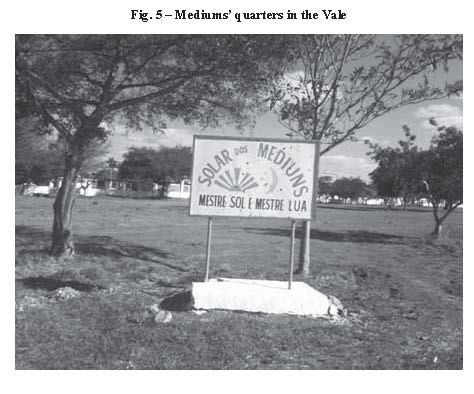
<body><![CDATA[<p>         In June 2011, I visited the Vale do Amanhecer (Valley of Dawn), an incorporated township located four miles near Planaltina, one of the so called satellite             towns of the Brazilian capital Brasilia, and the center of the largest Brazilian new religious movement, the Spiritualist Christian Order (Ordem         Espiritualista Crist&atilde;, OEC). OEC has currently some 500,000 members and 680 temples in Brazil, and several thousand abroad, where temples are maintained in         Bolivia (2), Ecuador, Uruguay, the United States, Portugal (2), Germany, and Japan. 150,000 Brazilian members live in the Federal District, and the Vale         has a population of 20,000, although it now also hosts Catholic and Pentecostal families. I also spent time in Planaltina, where I counted some 30         Pentecostal houses of worship – there are probably more. I was told by a Catholic priest in Brasilia that in Planaltina Pentecostals do outnumber Catholics         in term of Sunday practice, although the majority of the population has still been baptized in the Catholic Church.         <br/>         Neiva Chaves Zelaya (1925-1985), know to her followers as Tia Neiva (Aunt Neiva), was born in Propri&aacute; (Sergipe) on October 30, 1925 and received no formal     ]]></body>
<body><![CDATA[    education. A widow with four sons, she started working in 1955 as a truck driver – reportedly, the first woman in Brazil to work in this capacity – and in         1956 moved to Brasilia, where many trucks were employed in the construction of the new capital. In              1958, she started experiencing visions of spirits, but as a pious Catholic she rejected them. In 1959, however, she met a reputed Spiritualist – or         Spiritist, since the large Brazilian Spiritualist movement mostly follows the French variety called Spiritism –, Dona Nen&eacute;m (whose biographical details I         did not uncover). Nen&eacute;m interpreted Neiva's phenomena through the lenses of Brazilian Spiritism, and persuaded her that she was a powerful medium, able to         channel Pai Seta Branca (Father White Arrow), a powerful Native American spirit. Neiva went into full time mediumship and in 1959 founded with Nen&eacute;m the         Uni&atilde;o Espiritualista Seta Branca in Nucleo Bandeirante, near Brasilia. The messages of Pai Seta Branca quickly became popular, since they included a         millennial element connected with the Third Millennium, which resounded with the many prophecies associated with the building of Brasilia.         <br/>         The spirit ordered his followers to go live communally in the Serra de Ouro, sixty miles from Brasilia. The commune was however plagued by Neiva's frequent     ]]></body>
<body><![CDATA[    illnesses and by disagreements between the two founders. In retrospect, it appears that Nen&eacute;m conceived the Order as a portion of the larger Brazilian         Spiritist movement, while Neiva had in mind a genuine new religious movement with several original features. In 1964, the two women parted company. Nen&eacute;m         took her followers to Goi&acirc;nia, while Neiva incorporated the OEC and moved to Taguatinga. In 1968, however, the OEC lost the title to the land in         Taguatinga, and the some 250 followers moved to the present location near Planaltina, thus starting the creation of the Vale do Amanhecer.         <br/>         In the meantime, in 1965 in Taguatinga, Neiva had met M&aacute;rio Sassi (1921-         1994), a PR officer for the University of Brasilia and a leader of the Catholic left-wing movement JOC (Catholic Youth Workers). Eventually, Sassi left his         wife, a sociologist, five children and his job, and went to live with Neiva in the Vale (the two could not marry, since Brazil at that time had no divorce         law). Sassi, a city intellectual, became the twin leader of the Vale, and elaborated its complex doctrine based on Neiva's visions. He became also the         administrative leader, and his very effective leadership assured the growth of the Vale community from a few hundred to several thousand members when Neiva     ]]></body>
<body><![CDATA[    died on November 15, 1985. After Neiva's death, the OEC was led by a three-member directorate which included Sassi. Soon, however, a disagreement arose         between Sassi and the rest of the leadership, which included Neiva's sons, about the legal incorporation of the Vale as a township. This would grant         significant advantages in terms of receiving services from the government, but would mean that non-members of the OEC could no longer be prevented from         settling in the village. Eventually those favorable to the incorporation prevailed, and Sassi left the Vale trying without great success to establish a         smaller movement of his own, the Universal Order of the Great Initiates. He died in 1994 and, possibly also because his group never represented serious         competition for the OEC, is remembered in the Vale with no hard feelings. In fact, his historical contribution is acknowledged and celebrated, and his         portrait is often displayed in present-day's Vale.         <br/>         The Vale township appears to be poor, although not very poor by Brazilian standards. Most houses appear simple but decent, and there are no favelas. The         visitor cannot but notice that a good part of the population wear quite fancy dresses, which are typical of the OEC and make it a well photographed     ]]></body>
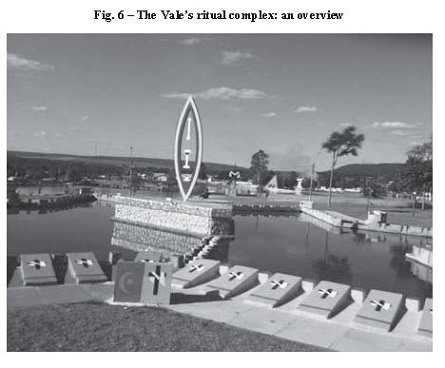
<body><![CDATA[    religious movement in any media reportage about Brazilian religious diversity. Apart from shops selling literature of the movement, religious objects and         sacred dresses, there are two main religious centers of the township, the temple and the Estrela Candente (Burning Star: not to be confused with “estrela         cadente”, i.e. shooting star) complex, located something less than one mile from the temple. The Estrela Candente is the main center for the internal         activities of the OEC, while outsiders (called “clients”) seeking cure for physical or spiritual problems are mostly received in the temple.         <br/>         I was able to attend two rituals in the Estrela Candente and to interview several members including one of the most senior “doutrinadores” leading the         rite. Although I did explain that I was already familiar with the main beliefs and practices of the OEC based on its literature, he insisted and explained         them from scratch. He started from the Estrela Candente ritual, which is called a “work of disintegration” on behalf of humanity as a whole. Negative         energies are disintegrated and imperfect spirits who harass the living are helped to complete their passage to the higher spheres of the spiritual kingdom.         The Estrela Candente is an impressive complex, centered on an artificial lake built by the OEC in the shape of a six-point star with the water of the small     ]]></body>
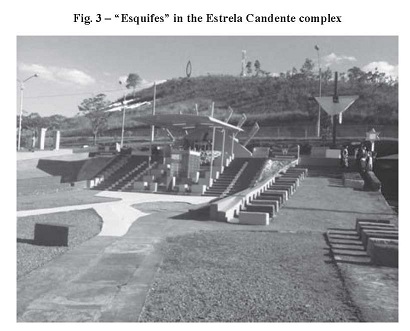
<body><![CDATA[    river Coatis. Around the lake there are huge carton images of the spiritual entities guiding the movement, crosses and other symbols, portraits of the         founders, and several constructions.         <br/>         The “doutrinador” insisted on the importance of the “esquifes” for the work of disintegration. These are 108 large parallelepipeds, each surrounded by a         cylinder. Half of these are in blue and half in yellow. Although their ensemble strangely resembles the modernistic art prevailing in Brasilia, my         informant insisted that they are of the utmost importance for first calling and then disintegrating negative energies, and for helping wandering spirits in         their transition to the light.         <br/>         There are different Estrela Candente rituals. I saw two of them, including the loud singing of hymns and collective ritual movements, all aimed at the work         of disintegration. Around the lake there are also photographs of the founders (including Sassi) and a small pyramid, where visitors are welcome except     ]]></body>
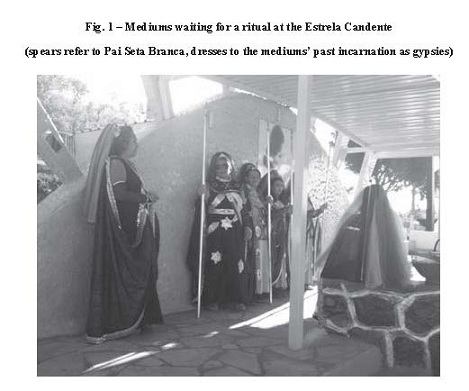
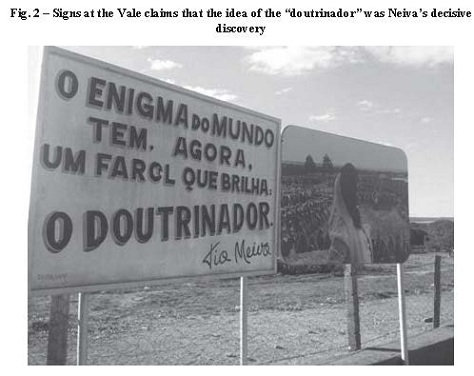
<body><![CDATA[    during some rituals strictly reserved to members. Inside the pyramid visitors are offered holy salt to be put on the tip of the tongue, and are shown         images of several benign entities coming from a variety of traditions, including classical French Spiritism and Theosophy. A large sign not far from the         lake reminds the visitor that, according to the founder Tia Neiva, the mystery of the world now has an answer, the “doutrinador”.         <br/>         Before asking what exactly a “doutrinador” is, however, the casual visitor is likely to be impressed by the variety of fancy dresses. They are also         comparatively expensive, which explains why the very poor are rare among residing members, since they are expected to pay for them. Many members also bring         an arrow spear, a symbol of the main spiritual entity still in touch with the OEG, the same Pai Seta Branca (Father White Arrow) which was channeled by         Neiva at the beginning of her career as a medium (and ever since), who is now said to have been Saint Francis of Assisi in an earlier incarnation and to         have later reincarnated as a warrior cacique along Lake Titicaca.         <br/>     ]]></body>
<body><![CDATA[    The dresses may appear quite casual, but in fact they respect an elaborate code and identify different roles within the OEC and its hierarchy. The senior         “doutrinator” and other members I interviewed all insisted that the main distinctive feature of the OEC, differentiating the movement from the many others         which exist within the larger milieu of Brazilian Spiritism, is the difference between two kinds of mediums, the “apar&aacute;s” and the “doutrinadores”. The         apar&aacute; is the classic trance medium, who is able to incorporate or channel both benign and evil spirits. The doutrinador does not go into trances, but is         able to dialogue with the spirits channeled by the apar&aacute; and to interpret what the apar&aacute; – or, rather, the spirits – say. The dresses reflect the         respective relationship of the apar&aacute;s with the Moon and of the doutrinadores with the Sun. The apar&aacute;s are mostly female and the doutrinadores mostly male.         The latter's dresses are much more sober. Within the two classes of apar&aacute;s and doutrinadores different dresses identify the seniority. All mediums are         called to become masters after a few years of activity within the OEC, but only some become instructors, authorized to teach new mediums.         <br/>         My informants insisted unanimously that everybody is a natural medium and that I, too, am without doubt a medium, even if I do not realize it. Not     ]]></body>
<body><![CDATA[    everybody, however, is a trance medium, or apar&aacute;. When one joins the movement and starts the training, he or she will try to incorporate spirits as apar&aacute;,         but may end up without success and be trained as a doutrinador instead. The fact that Tia Neiva was an apar&aacute; may lead to the assumption that, as it happens         in other Spiritist and Spiritualist movements, trance mediums are at the top of the OEC hierarchy. In fact, this is not the case. Apar&aacute;s are mostly         uneducated women, and those middle-class men who have joined the movement are almost all doutrinadores. When interviewing apar&aacute;s, in case of questions they         regarded as difficult, I was constantly referred to a doutrinador, since they “know better the doctrine”. All top leadership positions are held by         doutrinadores.         <br/>         It is also recommended that apar&aacute;s do not marry another apar&aacute; but a doutrinador, since in a family emergence of a spontaneous outburst of spirits at least         one doutrinador will be needed to control them.         <br/>     ]]></body>
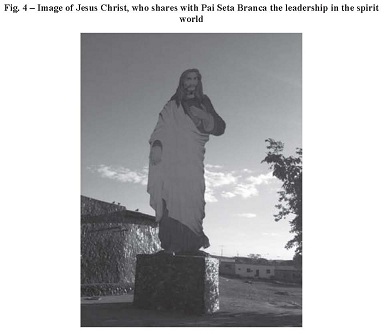
<body><![CDATA[    Symbols on the dresses also refer to the guiding spirit of each medium. At the top of the spirit hierarchy are Pai Seta Branca (aka St. Francis of Assisi)         and Jesus Christ. Only Tia Neiva was able to channel Pai Seta Branca. If somebody channels Jesus Christ, I found no evidence of this either in the visit or         in the literature. The mediums are in touch with four categories of spirits, which shows the eclectic references of the movements. The first includes the         pretos velhos, also found in most Afro-Brazilian cults and in the Umbanda, a syncretism of Candombl&eacute; and French Spiritism which is an important reference         for the OEC. Pretos velhos are the wise spirits of former African slaves brought to Brazil. In the OEC they also have the important function of bringing         visitors, “clients”, and perspective members to the Vale. I was assured that, whatever the circumstances, most assuredly a preto velho instigated my own         visit to the township.         <br/>         The second category of benign spirits includes the caboclos, i.e. Native Brazilians and other Native Americans of old, another recurring group of spirits         in Umbanda. Among these are the caboclos of Pai Seta Branca's old tribe. Some of them live in the spirit world, while others have reincarnated twice, first     ]]></body>
<body><![CDATA[    as part of a gypsy tribe and now as members of the OEC. Tia Neiva herself was a leader of that gypsy tribe under the name of Natacha and was at that time         initiated by two African slaves, Pai Jo&atilde;o and Pai Z&eacute; Pedro – now functioning as leading pretos velhos –, who also prophesied the birth of the doutrinadores         in the 20th century, a recurring episode in the OEC's iconography.         <br/>         There are two additional categories of spirits of light. One includes spiritual doctors, who may or may not have physically incarnated on Earth. Some of         their names, such as “Dr. Fritz” or “Dr. Ralph”, recur in other Brazilian Spiritist movements. The other group includes extraterrestrials, particularly         those of a planet called Capela, a name also found in the UFO cults literature.         <br/>         Finally, there are benign spirits outside these categories. They include M&atilde;e Yara, a protector for the whole movement, who incarnated as St. Clare of         Assisi, and the often depicted princesses: the white Janaina and the dark-skinned Jurema, Janara, Jandaia and Iracema. The four black princesses were     ]]></body>
<body><![CDATA[    slaves who escaped from a Brazilian fazenda with the help of the fazendeiro's daughter, Janaina. They are guiding spirits only of the doutrinadores, and         are never channeled.         <br/>         In order to understand how the spirits work, one need to visit the temple, a large construction divided into three main areas known as castles, with         lateral spaces devoted to preparation for the mediums and instruction. Outside the temple, there is a monument to Pai Seta Branca, a six-pointed star with         an arrow. I was offered a detailed tour with rich explanations on the doctrine by an apar&aacute;, which confirms that there are exceptions to the general rule         that those conversant with doctrinal matters are normally the doutrinadores only. While the third area is reserved for curing the most serious illnesses,         and a big statue of Pai Seta Branca and a large fresco of Jesus both catch the attention, it is in the first two castles that I saw more action. “Clients”         are attended by a couple including an apar&aacute; and a doutrinador (sometime, they are husband and wife).         <br/>     ]]></body>
<body><![CDATA[    The apar&aacute; channels his or her spirit guide, a preto velho or caboclo, who after a few words of greeting leaves the apar&aacute;'s body, making room for the spirit         disturbing the client, which possesses the medium and explain who he or she is. There is a whole hierarchy of dangerous spirits, from the truly evil to the         simply confused, again with similarities to both Brazilian Spiritism and Umbanda. Once the spirit passes from the body of the client to that of the apar&aacute;,         the doutrinador teaches him or her the doctrine, and guides the spirit to cease disturbing the client and go on toward the realm of light, where good         principles will continue to be taught. The client is freed from one or more spirits, and can proceed to the second castle, where the apar&aacute; channels again         his or her benign spirit guide, whose words are interpreted by the doutrinador for the benefit of the client. While pretos velhos appear to be good         conversationists, caboclos limit themselves to a few words.         <br/>         The client receives common sense advise, and the OEC emphasizes that in case of physical illnesses is always counseled to see also an “earthly” doctor and         follow the corresponding prescriptions. But to the client it is also normally suggested to come again – one session is rarely enough to solve the problem     ]]></body>
<body><![CDATA[    –, and to consider developing the mediumship which everybody naturally has. The final solution of all the client's problems lies in fact in joining the         movement, which automatically means becoming a medium, either apar&aacute; or doutrinador. All my informants were keen to insist that no money changes hands         during the cure. In fact, offers by clients are refused, since the doctrine teaches that they come to the Vale to receive and not to give. Members, on the         other hand, are expected to contribute a percentage of their earnings. Some of the doutrinadores have well-paid jobs outside the movement, and this         contribute to the OEC's financial stability.         <br/>         The fact that donations by clients are neither solicited nor accepted, and that clients are advised to also cooperate with medical doctors, has largely         shielded the OEC from the secular criticism directed at other spiritual healing groups in Brazil. Criticism by Christian churches is, however, a different         matter. The vitriolic criticism of the Catholic Church typical of other Brazilian Spiritist movements is not apparent in the Vale. One informant insisted         that Pope John Paul II studied the doctrine for fourteen years, after which he received Tia Neiva and gave her his blessing, a circumstance which is     ]]></body>
<body><![CDATA[    however not confirmed by the records and biographies of the beloved Polish Pope.         <br/>         I have gathered different opinions from Catholic priests in Brasilia about the Vale. Some believe it will disappear after Neiva's death, an opinion         apparently not supported by the movement's numbers, at least so far. Others think that the Vale and similar movements, while obviously not orthodox from a         Catholic point of view, should be considered a logical consequence of the Brazilian Church's own mistakes. An excessive focus on social action led many of         those seeking mysticism and otherworldly spirituality either to Spiritist groups such as the OEC or to the Pentecostals.         <br/>         It is precisely the Pentecostals which appears to be the harshest critics of the Vale. Planaltina, where Tia Neiva's grave is in the local cemetery –         although well attended, it is not a specially important place of pilgrimage for a movement which does not regard bodies as very important –, is now a         hotbed of Pentecostal activities. Some ministers would denounce Neiva as a witch and the Vale's work as the work of the devil. What they, however, do not     ]]></body>
<body><![CDATA[    realize is the similarity between the cures in the Vale and the healing rituals in some of their own churches. In both, evil spirits are named and         exorcised, although the names are different. Pentecostalism, at least in its most recent wave largely centered in miracles and deliverance, and the Vale         appears to cater to the same audience. Both represent fascinating alternatives for these Catholics feeling that the Brazilian Church, for all its good         works, has somewhat lost touch with the miracles and the marvelous.     </p>     <p>&nbsp;</p> 	<a name="f1"> 	<img src="/img/revistas/soc/v26/v26a09f1.jpg"> 	    
<p>&nbsp;</p>      <p>&nbsp;</p> 	<a name="f2"> 	<img src="/img/revistas/soc/v26/v26a09f2.jpg"> 	    
<p>&nbsp;</p> 	     <p>&nbsp;</p> 	<a name="f3"> 	<img src="/img/revistas/soc/v26/v26a09f3.jpg"> 	    
]]></body>
<body><![CDATA[<p>&nbsp;</p> 	     <p>&nbsp;</p> 	<a name="f4"> 	<img src="/img/revistas/soc/v26/v26a09f4.jpg"> 	    
<p>&nbsp;</p> 	     <p>&nbsp;</p> 	<a name="f5"> 	<img src="/img/revistas/soc/v26/v26a09f5.jpg"> 	    
<p>&nbsp;</p> 	     <p>&nbsp;</p> 	<a name="f6"> 	<img src="/img/revistas/soc/v26/v26a09f6.jpg"> 	    
<p>&nbsp;</p>     <p>     <b>Notas</b> </p>     <p>     <a href="#top1">1</a><a name="1"></a>Center for Studies on New Religions (CESNUR) (Turin, Italy). Direct correspondence to: Massimo Introvigne I CESNUR I Via Confienza, 19 110121 Torino I Italy. E-mail: <a href="mailto:maxintrovigne@gmail.com">maxintrovigne@gmail.com</a> </p>     ]]></body>
</article>