Catherine Moury*
Abstract
In this article, I look at the dialectic between parties and government to understand the extent to which ministers are bound by the coalition agreement. I first observe that considering the coalition agreement as a contract written by the parties for the government to avoid “agency losses” is an oversimplification. In almost all cases the main ministers have participated in the negotiations, with, or as, party leaders. I also observe that the government follows to a large extent the coalition agreement in Belgium and in the Netherlands and also, although to a lesser extent in Italy, in where the coalition agreement are drafted before the elections. Moreover, if ministers have to fulfil the coalition agreement, they will do it better if they have participated in its draft. The transfer of the program only tells one part of the extent to which ministers are bound by the coalition agreement: measuring the proportion of ministerial decision based on the coalition agreement is also significant. The results of this measurement enlighten once more the importance of the coalition agreement for ministers, as at least one third (and up to two thirds) of the governmental bills originate in the coalition agreement. We observe much more variation on this second dimension and the crucial variable explaining a high proportion of agreement-based decisions is the absence of party leaders in the government. This finding suggests that party leaders will tend to accept more non agreement-based ministerial initiatives when they are themselves ministers.
Key-words party government, coalition, Belgium, Italy, The Netherlands, Fuzzy sets.
Resumo
Governo de coligação e mandatos partidários: explicando a margem de manobra ministerial vis-à-vis aos acordos de coligação
Neste artigo, analiso a relação entre os partidos e o governo, procurando perceber a extensão da vinculação dos ministros a acordos de coligação. Primeiro observo que considerar os acordos de coligação como um contrato escrito entre partidos em proveito do governo com intuito de evitar “perdas agenciais” é uma banalização. Na maioria dos casos, os principais ministros participam nas negociações, a par, ou enquanto líderes de partido. Observo também que o governo cumpre em larga medida os acordos de coligação na Bélgica e na Holanda. Em Itália também, embora com menor expressão, sendo de mencionar que neste país a redacção dos acordos de coligação se faz antes das eleições. Não é de menosprezar, em caso de cumprimento do acordo de coligação por parte dos ministros, que esta será encadeada se os mesmos participarem activamente na sua redacção. A transferência do programa revela apenas uma parte do vínculo dos ministros ao acordo de coligação: é igualmente significativo medir a proporção da decisão ministerial com base nos acordos de coligação. Os resultados obtidos a partir dessa análise esclarecem uma vez mais a importância dos acordos de coligação, para os ministros e atendo ao facto de um terço (até dois terços) das contas públicas e propostas governamentais derivarem de acordos de coligação. Deparamo-nos com variações muito mais acentuadas nesta segunda dimensão, assim como as variáveis cruciais que explicam a maior proporção de decisões com base em acordos se deve à ausência de líderes de partido no governo. Deste modo, os resultados sugerem que os líderes partidários revelam maior tendência a não adoptar iniciativas ministeriais com base em acordos, quando são eles próprios ministros.
]]> Palavras-chave governo de partidos, coligação, Bélgica, Itália, Holanda, Fuzzy sets.
Résumé
Gouvernement de coalition et mandats partisans: expliquant la marge de manoeuvre ministérielle vis-à-vis des accords de coalition
Cet article analyse les rapports entre les partis et le gouvernement, afin de comprendre à quel point les ministres sont liés par les accords de coalition. Il commence par observer qu’il est banal de considérer les accords de coalition comme un contrat écrit entre partis au profit du gouvernement dans le but d’éviter les “pertes agentielles”. Dans la plupart des cas, les principaux ministres participent aux négociations avec les leaders des partis ou en tant que leaders eux-mêmes. L’auteur constate également que le gouvernement respecte en grande partie les accords de coalition en Belgique et aux Pays-Bas, ainsi qu’en Italie, même si c’est un peu moins (dans ce pays, les accords de coalition sont rédigés avant les élections). Il ne faut pas négliger le fait qu’en cas d’exécution de l’accord de coalition par les ministres, celle-ci sera mise en œuvre s’ils ont participé activement à sa rédaction. Le transfert du programme révèle seulement une partie de l’engagement des ministres par l’accord de coalition: il est aussi important de mesurer le pourcentage de décisions ministérielles fondées sur les accords de coalition. Les résultats obtenus à partir de cette analyse révèlent une fois de plus l’importance des accords de coalition pour les ministres, dans la mesure où un tiers (voire deux tiers) des comptes publics et des projets gouvernementaux dérivent d’accords de coalition. On observe des variations beaucoup plus accentuées dans cette seconde dimension et les variables cruciales relevées expliquent le plus grand pourcentage de décisions fondées sur ces accords, lorsque les leaders des partis ne sont pas au gouvernement. Les résultats suggèrent que les leaders des partis ont tendance à ne pas prendre d’initiatives ministérielles fondées sur les accords lorsqu’ils sont eux-mêmes ministres.
Mots-clés gouvernement de partis, coalition, Belgique, Italie, Hollance, Fuzzy sets.
Resumen
Gobierno de coligación y mandatos partidarios: explicando el margen de maniobra ministerial cara a cara a los acuerdos de coligación
En este artículo analizo la relación entre los partidos y el gobierno, procurando entender la extensión de la vinculación de los ministros y acuerdos de coligación. En primer lugar, se observa que la consideración de los acuerdos de coligación como un contrato escrito entre partidos en provecho del gobierno con la intención de evitar “pérdidas en la capacidad de acción” es una banalización. En la mayoría de los casos, los principales ministros participan en las negociaciones, a la par, o mientras son líderes del partido. Observo también que el gobierno cumple en gran medida los acuerdos de coligación en Bélgica y Holanda. En Italia también, pero con menor expresión, siendo importante mencionar que en este país la redacción de los acuerdos de coligación se hace antes de las elecciones. Es importante mencionar que en caso de cumplimiento del acuerdo de coligación por parte de los ministros que esta será inter-ligada si los mismos participaran activamente en su redacción. La transferencia del programa revela sólo una parte del vínculo de los ministros al acuerdo de coligación: es igualmente significativo medir la proporción de la decisión ministerial con base en los acuerdos de coligación. Los resultados obtenidos a partir de este análisis esclarecen una vez más la importancia de los acuerdos de coligación, para los ministros y entendiendo el hecho de que un tercio (hasta dos tercios) de las cuentas públicas y propuestas gubernamentales se derivan de los acuerdos de coligación. Nos encontramos con variaciones más acentuadas en esta segunda dimensión, así como las variables cruciales que explican la mayor proporción de decisiones con base en acuerdos, se debe a la ausencia de líderes de partido en el gobierno. De este modo, los resultados sugieren que los líderes partidarios revelan una mayor tendencia a adoptar iniciativas ministeriales con base en acuerdos, cuando son ministros.
]]> Palabras-llave gobierno de partidos, coligación, Bélgica, Italia, Holanda, Fuzzy sets.
Introduction
In systems of party government, parties are at the core of the democratic process. It comes then as no surprise that much attention has been given to them: the organisation of parties, their goals and behaviour have been extensively studied and normatively evaluated. What is surprising is the fact that the specific role of the government in these party government systems has been hardly studied. How do ministers1 behave in party government? What motivates their actions? To what extent are they constrained by party lines when deciding on policies? To what extent should they be constrained by these party lines for party government to be democratic? These are certainly interesting questions, but we must note that very little is known about the answer. At the root of this is probably the fact that the role of government in party government systems has been considered so obvious that studying it was seen as unnecessary. Government has simply been seen as the arena used by parties to implement their policies and there has been little discussion as to whether this model was justified.
However strong evidence collected by Blondel and Cotta (1996) suggests that government is, to an important extent, autonomous from the parties, either because party leadership consciously allows substantial freedom of manoeuvre to the government, or because governments are composed of leading politicians who control the supporting political parties. This autonomy is above all important in decision-making (rather than patronage and appointments). This view also holds in countries traditionally seen as “partitocratic” (Belgium, Italy), or where parties usually draft a long and detailed coalition agreement (Belgium, the Netherlands, etc.)2
Despite this recognition, the relative disinterest for the government is also visible in coalition studies. Since the sixties, comparative research has mainly addressed the questions of who gets into the government and how portfolios would be allocated. This is even more so for pre-electoral coalitions. Indeed, as Golder (2006: 194-195) points out, since Duverger’s discussion of pre-electoral coalitions in the fifties, little theoretical or empirical research on this has been published. The recent literature reflects a greatly enhanced interest in coalition governance once the cabinet has been formed (see for example Müller and Strøm, 2000a; Timmermans, 2003); but even there the government is seen only as an arena in which coalition partners interact. No acknowledgment is made of government as an institution as such, potentially able to influence (or define) the ministers’ preferences. Generally parties are assumed to be unitary actors and, if they are not,3 the dialectic between party and government is not recognised.
In consequence, the coalition agreement has only been considered as an instrument for “pre-cooking” decision-making between parties with different preferences (Timmermans, 2003; Timmermans and Moury, 2006). I propose to look at coalition government from a different perspective: rather than focusing on the parties, I want to concentrate in the relationship between parties and government. Since most coalition governments have written a coalition agreement (Müller and Strøm 2000b, pp. 573), which has been negotiated amongst the party leaders4 before the government formally comes into existence, these agreements could be considered as an instrument linking parties and government together. In this article, I will identify whether (or when) it is appropriate to consider the coalition agreement as a channel by which parties control the government. I will also look at the extent to which ministers are constrained by the coalition agreement and the extent to which they are free from it. This measurement, to be complete should be done at two levels. I will calculate how far the coalition agreement is implemented, but also the proportion of ministerial decisions which do originate from the coalition agreement (“agreement-based decisions”). Indeed, it is not enough to look at the first dimension: you may, for example, find ministers implementing all the coalition agreement and nothing else, while other ministers may implement all pledges in the document but also make several other important decisions. In both cases, obviously, the extent to which ministers are constrained by the coalition agreement varies, and this variation might tell a great deal about the party-government relationship. My third research question will be concerned with explaining variation of the ministerial autonomy vis-à-vis coalition agreement.
Coalitions in a party government perspective: theoretical framework and hypotheses
I assume it is necessary to consider governmental decision-making in parliamentary systems as the result of interactions between party actors and governmental actors. It is therefore useful to look at the literature on party governments in order to make our assumptions more explicit and to identify hypotheses explaining variations in the extent of ministerial autonomy vis-à-vis the coalition agreement.
]]> Party governmentThe relationship between parties and government concerns not only policy-making, but also appointments and patronage. This relationship has been summarised by the expression “party government”, a notion which only in the eighties was clearly defined by Katz (1986).5 The author presents an ideal type of party government, which can be approximated more or less closely, and one which gave rise to the concept of “partyness of government”. This concept is a continuous variable indicating the degree to which any particular system fulfils the requirement of the party government ideal type, which is a government where: 1) “Decisions are made by elected party officials or by those under their control”; 2) “Policies are decided within parties which then act cohesively to enact it”; 3) “Officials are recruited and held accountable through party” (Katz 1986: 7). The great value of Katz’s work is to have systematised for the first time the concept of party government; its main limitation is not to have acknowledged the fact that “parties in government” and “supporting parties” may have diverging interests.
This possible divergence has been for first recognised by Blondel and Cotta (Blondel and Cotta, 1996, and Cotta, 2000), who see the party as a complex system where three principal components interact: the parliamentary party, the extra-parliamentary party organisation and the party in government. These three components share many points in common (name, symbols, tradition, personal links, etc.) but possibly have diverse interests, resources and constraints. The existence of these three party components reflects the existence of a certain type of intra-party relationship, though parties in government are a special part of the party:
In fact these intra-party relationships are significant precisely because the government is more than just a part of the party and is an independent source of resources, responsibilities and constraints for that component of the party which is government. The “party in government” is still “party”, although it is at the same time somewhat less “party” than the other components. (Cotta, 2000: 200)
Blondel and Cotta have shown that the parties in government play a highly significant part in policy-making6 particularly in the initiation of policies, even in countries that are normally considered “partitocratic”. Moreover, they have shown that the intervention of supporting parties increased during policy elaboration, which suggests that their role is more reactive than proactive. Therefore the party, disposing of broad ideological orientations and supported by activists and electorate, is likely to promote continuity rather than change. Innovation, on the other hand, is more often driven by government, as the government has “the institutional obligation” to solve problems arising during its mandate, and is under pressure from bureaucracies, interest groups, international obligations, etc.7 The governmental orientation towards problem-solving has empirically been supported by Timmermans and Moury (2006), who showed that intra-party conflicts tended to initiate outside of the cabinet (from the party organization or parliamentary party) and to be solved inside of it.
Party government as a process of delegation
The fact that party and government may have diverging preferences has also been analysed by the principal-agent literature, which sees party government as a process of delegation, where principals and agents have diverging priorities. Strøm (2000) considers party government as a process of delegation from the party-principal to the government-agent. Delegation to the government from the parties occurs because the government is presumed to have more resources and competencies to draft legislative policy initiatives than parliamentary parties or party organisations. Andeweg (2000) also correctly points out that ministers are “double agents” of the government and of political parties.
Müller (2000) proposes an application of the principal-agent theory for party government which integrates the two concepts presented above. The author considers party government as a chain of delegation, whereby each link attaches a principal to an agent (voters to the MPs, MPs to government, government to individual ministers and ministers to civil servants) and where the interaction of parties structures each step of the delegation. Moreover, Müller underlines that there is, in parallel to the delegation from MPs to government, a delegation between the party in government and the party organisation. Indeed generally party leaders, at the formation of a new government, either enter the government themselves or delegate to the government party representatives.8 Depending on which of these possibilities is chosen, the direction of delegation would change: in the former case the government would be the principal and the party organisation the agent, while in the later it would be the contrary. Nevertheless, in the end, leadership selection remains a party choice (leaders are elected by party rank and files) and ministers (including party leaders who would have joined the government) ultimately remain the agents of extra-parliamentary party organisations. Müller’s model is very useful because it stresses the fact that participation of the party leader into the government might have an influence on the autonomy of ministers. However, we should recall that party leadership is not always elected by, and belongs to, the party organisation. In the Netherlands, for example, party leaders are elected by, and amongst, the parliamentary party, and it is the later (rather than the party organisation) that controls governmental appointments. If it is true that parties structure the interaction between MPs and government, the party in question might be either the party organisation or the parliamentary party.
The well-known problem about delegation is known as “agency loss” — in our case the possibility that ministers, rather than obeying to their parties, may also focus on their own priorities. In order to face potential agency problems, parties have several mechanisms to make sure that the ministers will respect the party preferences. One of these is the possibility of the party to reward/sanction ministers if they act according to/against party preferences. A minister may restrain from deviating too much from the party’s preferences if he wants to continue his career in the party. The same applies to a party leader who entered the government: he would not tend to deviate too much from his supporting party’s line, knowing that his re-election depends ultimately on the party. As noted by Müller, this might be less the case for ministers who have reached the end of their careers (Müller, 2000). Another device consists in establishing procedures that require ministers to report relevant information and action they have made. Examples of this are intra-party meetings, where ministers meet with their party leaders (Müller, 2000). Then, political systems with these kinds of institutional checks are likely to reduce ministerial autonomy.9
Coalition agreement as a tool to limit agency losses
]]> Governmental declarations and coalition agreements are not only an inter-party tool to pre-cook decisions and reduce conflicts10 (Timmermans, 2003; Timmermans and Moury, 2006), they may also serve to reduce agency-loss, as they stipulate the legitimate expectations of the principal vis-à-vis the agent. For example, Blondel and Cotta write:[In coalition governments] the life and authority of the cabinet depend… on agreements negotiated among the parties which typically cover policy issues. The existence in some countries […] of detailed coalition agreements means that cabinet action is strongly determined by party guidelines. (Blondel and Cotta, 1996: 255)
Similarly, Weller states that the government is constrained by the coalition agreement:
In European coalition governments, the more binding coalition agreement provides parties with an initial detailed input. They clearly restrain the freedom of action of core executives to a greater extent. (Weller, 1997: 57)
Some empirical facts support these hypotheses: the coalition agreement is generally voted on by the congress of the party organisation and a negative vote would mean the failure of the negotiations. A coalition agreement is also a contract between the government and the Parliament, as the governmental declaration (often a summary of the coalition agreement) is presented to the Parliament. On the basis of this document, Parliament chooses to support (explicitly or implicitly), or not, the new government (De Winter, 2001). However coalition agreements may be in certain circumstances (such as the renewal of the same governmental team) drafted by experts or department representatives rather than by party leaders. In this case, these negotiators may promote the governmental obligations rather than those of the party and then the coalition agreement would more likely be a tool used by the government to ensure the discipline of its supporting parties. As argued by Andeweg (2000: 386), the coalition agreement will be a party tool to reduce governmental autonomy under two conditions. First, the ministers must not have drafted the agreement themselves, and second the coalition agreement must be sufficiently comprehensive and detailed. To answer our first research question (“Is it appropriate to consider the coalition agreement as a channel by which parties control the government?”), I will check to what extent these two conditions are fulfilled.
The fulfilment of these two conditions has an influence on my third research question (“What can explain variation in the ministerial autonomy vis-à-vis the coalition agreement?”). When ministers draft the coalition agreement together with party leaders, the divergence of preferences between party negotiators and ministers will be reduced. As a consequence, and as suggested by Timmermans (2003), the participation of ministers in negotiations may increase the intention of ministers to respect the coalition agreement. We could follow its argument saying that this participation also reduces the ministers’ incentives to make non agreement-based decisions. Then we have: The more ministers have participated in the drafting of the coalition agreement, the greater will be the fulfilment of the coalition agreement and the proportion of agreement-based decisions.
But even if ministers’ preferences are perfectly reflected in the coalition agreement, several factors may induce them to make non agreement-based decisions. Coalition agreement may not include some policies, either because these policies were not considered as important enough to be written into the coalition agreement (De Winter, 2001) or because they were so contentious that agreement was not found on the matter (Klingemann, Hofferbert and Budge, 1994). Given this, it is reasonable to test that: The more complete the coalition agreement, the greater the proportion of agreement-based decisions.
Moreover, government may have to answer to external pressures which were not predicted at the moment of the draft of the coalition agreement. This theme has been developed by Walgrave, Varone and Dumont (2006). Analysing policy agendas in Belgium, they tried to test whether these would be influenced by party programmes or by external pressures. They found out that the party programmes and coalition agreements are good predictors of the legislative attention an issue will receive during the governmental term but that external pressures are good indicators of change in this legislative attention. It is not possible in this article to check for the occurrence of all external pressures to ministers, but in order to keep this variable constant we will choose cases where no unexpected event obliged the government to reconsider totally its previous program. For example, we will exclude the Belgian government Deheane II (1995-1999) from our analysis, which had to draft a new governmental program after an unprecedented civil movement (“La Marche Blanche”), following the murders of several little girls by paedophile Marc Dutroux, obliged the government to reconsider most of its governmental priorities.
Finally, we have to come back to Muller’s model detailed above which assumes that participation of the party leader into the government strengthens the cabinet and therefore increases the autonomy of ministers from the party mandate. Then we should check for the following hypothesis: The most party leaders enter the government, the less the proportion of agreement-based decisions.
Coalition agreement as an inter-party tool
]]> We should include variables regarding to inter-party relationships to prevent from neglecting important explanations. If I take a party-government perspective, I am of course aware that coalition agreement also, and perhaps mainly, serve intra-party purposes. They pre-cook policies and help contain controversy (Klingemann, Hofferbert and Budge, 1994; Keman, 2002; Timmermans, 2003) and they make sure that a solution will always be pursued on a controversial policy if this policy is included in the document (Moury, 2005). I will not discuss the literature on coalition governance here, it has been done elsewhere (see for example Timmermans, 2003), but I will present very briefly the variables identified by Timmermans, (2003), the only author who presents hypotheses accounting for the implementation of the coalition agreement. The author proposed the following variables, which we can also test to explain the ability of ministers to make decisions not based on the coalition agreement: the good economic condition, a limited number of parties and the good relationships between parties.11 Then we have the following hypotheses: The better the economic situation, the more limited the number of parties, the greater the wish to govern together, then the better the fulfilment of the coalition agreement and the less the proportion of agreement-based decisions.Four ideal types of party government
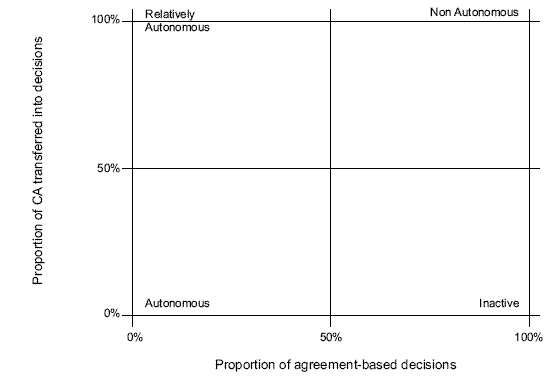
Combining the two measurements (proportion of coalition agreement transferred into governmental decisions and proportion of agreement-based decisions), I propose a typology of four ideal types of party governments.
The first ideal type of government is the Relatively Autonomous government, which transfers all of the coalition agreement into governmental decisions, but for which the proportion of agreement-based is nevertheless close to 0%.12 This is a government which respects the coalition agreement but for which only a very small proportion of the decisions are based on the document.
The second ideal type of government, the one best representing the pure delegation model of party government is the Non Autonomous13 government. The Non Autonomous government is one that transfers all of the coalition agreement into governmental decisions and only makes decisions implementing the document. If the parties draft a coalition agreement to control the government, then the Non Autonomous government is a perfect-delegate government, and the efficiency of the contract to reduce “agency loss” is maximum.
The third ideal type government is the Autonomous government, which does not transfer any of the coalition agreement into governmental decisions, and for which none of the decisions made are based on the coalition agreement. In such a coalition, the role of the coalition agreement is inexistent, and its drafting was probably a “ritual dance” (Luebbert, 1986), not intended to determine policy-making. The government where no coalition agreement has been drafted also belongs to this category, as no coalition agreement and a coalition agreement without significance might be considered equivalent.
The last ideal type is the Inactive government, or the government which neither transfers the coalition agreement into governmental decisions nor makes other decisions than the ones based on the coalition agreement. This extreme case is basically a government that does not make decisions at all. This is a pathological case of government, maybe close to some governments of the Italian First Republic, which were, according to Di Palma (1977) “surviving without governing”.
Democratic theories tell us little about which of these government types should be considered more democratic. We can deduce it from Frognier’s normative theory of the party government (2000). The author states that party government should receive an “outline mandate” from the parties, which means that the government should follow broadly the party lines, because the parties are the fundamental democratic links between the electorate and the government, but should also be able to adapt to changing circumstances:
If cabinet leaders have little room for manoeuvre with respect to the party program, the result is “immobilism” (failure to act) and government is not able to adapt to new circumstances and to respond to new challenges […]. On the other hand, if leaders are not constrained at all by the program […] power becomes personal and the overall function is not fulfilled adequately. (Frognier, 2000: 29)
Figure 1
]]> Ideal types of party governments
Governments, then, should have some room of manoeuvre with regard to party lines. If the coalition agreement represents the party lines, that is if it is closely inspired by the party programs of the coalition parties, then the ideal democratic type of party government would approximate to the Relatively Autonomous government. In this research, I will try to determine the proximity of several governments to this ideal case, checking for two conditions out of the four presented by Frognier. I will try to determine to what extent the coalition agreement is implemented and what is the percentage of agreement-based decisions made in six cases of party governments, and which variables can explain variation. The two other conditions, pursuit of common good by ministers and proximity of the coalition agreement to party programs, would not be checked here.
Selection of case studies
In order to test these hypotheses I decided to choose the cases from amongst the cabinets in Belgium, the Netherlands and Italy (Second Republic) in the nineties.
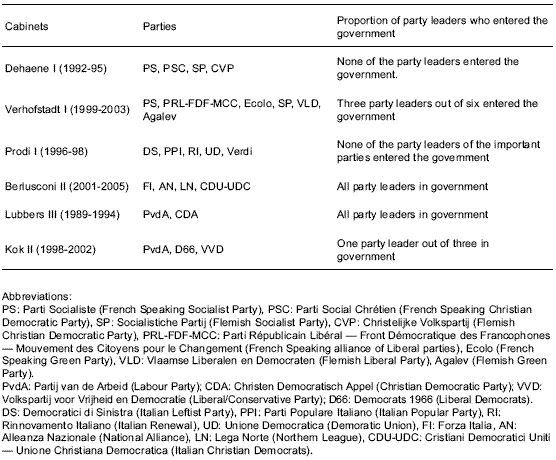
These three countries are chosen because they are three parliamentary democracies of Western Europe, where no single party can manage to get a majority in the government, and where coalitions are formed by several parties of similar electoral weight. Furthermore, the choice of countries allows possible variation in the dependent variables, as it contrasts two countries (Belgium and the Netherlands) where the coalition agreement is traditionally drafted, and always after the elections, and another (Italy) where there is no culture of drafting a coalition agreement, but where it has been occasionally done before the elections (for Prodi I, Berlusconi II and Prodi II). In order to have comparable cases, governments in Belgium and in the Netherlands will be chosen in the same two decades than the two concluded Italian government, Prodi I and Berlusconi II. As written above, I will exclude cases where very exceptional events occurred which made the coalition agreement completely out of date. Given this, I tried to choose governments allowing for variation of what might be an important variable in a party-government perspective, the participation of party leaders in the government.
Table 1
Cases selected and proportion of party leaders who entered the government
Methodology
Proportion of the coalition agreement transferred into governmental decisions
In order to evaluate the implementation of the coalition agreement I intend to calculate the proportion of pledges it contains that have been translated into governmental decisions. The method I employ is the same as the one used by Royed (1996) and subsequently by Thomson (1999) to calculate the proportion of electoral pledges fulfilled. This technique has proved to be very reliable and consists in identifying pledges in the electoral program (for us the coalition agreement) and checking for their fulfilment. Regarding the pledges identification, Royed distinguished between ”definite” pledges (pledges objectively and directly testable), “difficult definite” pledges14 (pledges for which testing is objective but requires further analysis) and “rhetorical” pledges (pledges which are not objectively testable). She tested the fulfilment of the two former types of pledges, which are objectively testable. The selection of testable pledges is a key point of the analysis, as it is crucial to get objective measures of fulfilment. Thomson, for his part, distinguishes between pledges about actions and pledges about outcomes, and considers, as I will do, only pledges about actions in his analysis.
After identifying the pledges, the authors propose to check the fulfilment looking at each pledge and checking whether we could find a governmental decision that was congruent with the proposal supported in the pledge. For example, if I wanted to check the transfer into governmental decision of the pledge “proposing a bill on equal opportunities at work”, I would first read analyses of the legislature made by journalists and political scientists. If these documents mentioned the presentation of such a bill by the government, I would then consider the pledge as fulfilled. About half of the pledges fulfilled were mentioned in such reports: very often observers (above all journalists before the election) draft reports about the pledges fulfilled by each government. If no information were found in such experts’ and journalists’ reports, I would then search in the CD-ROM database provided by the government (collecting all ministerial decisions of the legislature), using key words (in our example, “equal opportunities”, “gender”, “female”, “work”, etc.). If I found in the database a bill on equal opportunities at work, the pledge was considered as fulfilled. If, after having tried with several key words, I could not, then the pledge was considered as having not been fulfilled.
For budgetary pledges, I would rely more on summaries of financial bills as presented by the Council of Ministers to the press and as experts’ reviews to their public, in order to see whether the budgetary pledges were congruent with governmental decisions.
I decided to consider that a pledge had been transferred into governmental decisions when it was either “fully fulfilled” or “partially fulfilled” by the government and this for two reasons. The first reason had to do with the reliability of the coding. As it appeared to me during the research, Thomson found that the two-category distinction between “fully fulfilled or partially fulfilled” and “not fulfilled” was more reliable than the three-category distinction between “not fulfilled”, “partially fulfilled” and “fully fulfilled”.15 The second motivation is related to my research question: I do not aim to check the extent to which parties respect their electoral pledges; rather I want to find out what is the importance for the government of a document negotiated in advance between the parties. A partial fulfilment then, even without fully realising the pledges, is still an indicator of the importance (even if only symbolical) of the document for the government. In other words, what was important to me was to find out whether the government is bound by the coalition agreement, not whether the government respects its pledges regarding the citizens (or the Parliament). In the first case, what matters is that the bill fulfilling the coalition agreement is passed by Parliament, in the second it is that the bill really provides the desired outcome.
For the same reason, I did not carry out a qualitative assessment of the quality of each governmental decision. In the example above, if the coalition agreement mentioned a bill on equal opportunities at work, and the government subsequently presented such a bill, the pledge was considered as fulfilled, without considering whether the bill was really efficient in increasing equal opportunities at work or not. Similarly, I did not consider whether the bill has been implemented or not, and I stopped my analysis at the presentation by the government of a bill, without following its outcome in the Parliament. Since a very great majority of the bills are made by government which lasted their entire duration, it is less the case for government which fall prior to their legal term, above all for the Prodi government.16 Looking at the positive vote (or amendments) of bills in the Parliament, and at the implementation of bills, will introduce several other variables which fall above the scope of this article. We are conscious that it is a limitation, that implementation and vote in Parliament are crucial steps too, but we believe that looking at the importance of the coalition agreement for ministers could be well estimated looking at the presentation of ministerial bills.
In sum, I am very “generous” with governments: I consider a pledge transferred into governmental decision when a decision has been made by the government, in the direction indicated by the pledge and without controlling whether the desired outcome has been reached or not. Here I contrast with Royed and Thomson, who have been testing the mandate theory.
Table 2
]]> Examples of pledges included in the coalition agreement and of their transfer into governmental decisions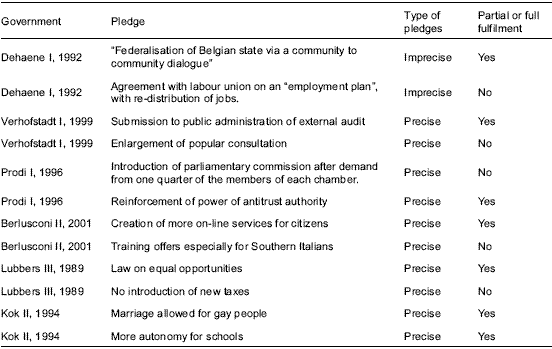
The main plausible criticisms of this method are that it does not attribute any index of importance to the pledges. This defect however is much less important than it seems, because usually the more pledges on an issue, the more the issue can be considered as salient for parties. For example, the important reform of the public administration promised in Verhofstadt I’s coalition agreement was made by 17 pledges (out of 200), for Dehaene, the reduction of deficit was made by 19 pledges (out of 143), for Berlusconi’s the tax reforms were made by 25 pledges out of 183 pledges, etc.
There are some exceptions however, as it may occur that very sensitive policies are not described at length in the coalition agreement, but are still very important reforms, such as the “devolution reform” (further federalisation) in Berlusconi’s coalition agreement (three pledges only out of 183), the reform of health insurance for Lubbers III (only one pledge out of 157), and the reform of work disability measures for Kok II (four pledges out of 244). I even argue that this is not a problem at all, because what we want to calculate is the extent to which the government is bound by the party program. If an important reform is promised in the coalition agreement, but there are no concrete plans on how to implement this reform, then the government is less bound by the program than when all details of implementation are described.
Proportion of agreement-based decisions
The second question concerns the possibility (or not) of ministers taking decisions other than those based on the coalition agreement. For this purpose I will calculate which proportion of laws proposed by the Council of Ministers to the Parliament is based on the coalition agreement.17 The governmental decisions taken into account in my analysis are government bills, that is governmental decisions that would become law (or which would have a value superior to the law, such as a revision of the constitution). In consequence, I exclude implementing acts from my analysis (i. e. measures decided by the executive under the authority of the law). Using a “value of law” criterion might introduce a bias into the research, because in some countries (e. g. in Italy) the law is commonly used even for routine decisions, contrary to Belgium, for example. In order to avoid this bias, I have decided not to include in my data base legislative decisions relating to routine decisions for the functioning of the state (such as the automatic renewal of a budget for an institution, etc.). Furthermore, I exclude from the bills studied all ratifications of international agreements. Scholars studying legislation commonly use this exclusion, because such ratifications are often of “high specificity and technicity but without any political value”, such as the agreement on the mercantile navy with Gabon, or on cinematographical co-production with New Zealand (Capano and Giulani, 2003). Finally, I exclude bills implementing European directives, because ministers are obliged to implement them and they do not tell much about ministerial autonomy from party lines.18
It often occurs that a single bill includes several important decisions. A financial law is a clear example of a “mega-law” where diverse decisions of considerable importance are made. In that case, I divide the bill into its main parts, each of which is considered to be a decision. In order to identify the main points of the bill, I rely on summaries provided in the official reports from the Council of Ministers, which divide the major bills into their main points.
All such decisions are available from the weekly reports of the Council of Ministers, which list all bills made by the government and provide a summary of each of these bills. Such reports are available on the internet for the most recent legislatures, on CD-ROM (for the Dutch and Italian case) and in the governmental official review Faits/Feiten (for the Deheane I government).
Following the identification of the decisions to analyse, I will compare the governmental decisions to the list of real pledges of the coalition agreement (that is the pledges which are objectively testable), and check whether these decisions are based on these real pledges.19 Looking only at testable pledges allows to make a link with the first measurement, but above all to increase the objectivity of the testing (and to prevent that any bill could be related to any vague point of the coalition agreement). Concretely, I would first check for each decision (all bills made by the Council of Ministers), what was said about it in the coalition agreement. This data collection consisted therefore in a continuous process of looking at the bill, reading the chapter of the coalition agreement dealing with the point, and going back to the decision in order to assess whether it was based on the coalition agreement or not.
]]>Table 3
Examples of decisions and their origin
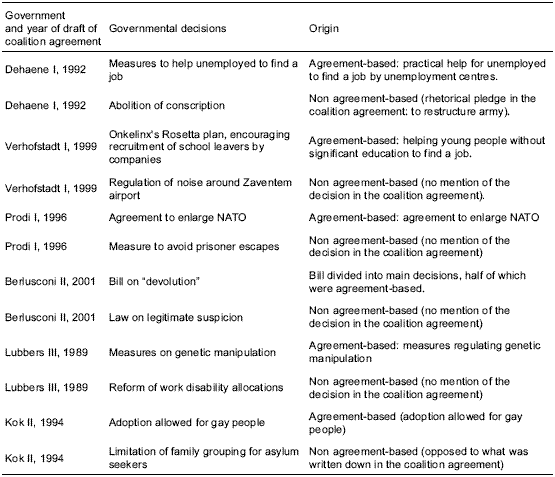
If the coalition agreement does not mention at all the policy field of the decision (for example, if a bill regulates the circulation of airplanes and the coalition agreement does not mention air regulation) then the decision is considered as not being based on the coalition agreement. This first selection, very clear-cut, has concerned approximately 40% of the governmental decisions studied. If, on the contrary, the coalition agreement mentioned the policy field of the governmental decision, I had to determine whether the decision was really based on the document or not. When a decision fully fulfilled a precise pledge (for example, when the coalition agreement mentioned the creation of a centre to promote the fight against aids and when such a centre was created), then undoubtedly the decision was considered as finding its origin in the coalition agreement. This concerned around 25% of the decisions. Finally, the most delicate selection task, concerning roughly one third of the decisions, has been to determine whether a governmental decision finds its origin in the coalition agreement, when the decision does not fulfil precise pledges but when the policy field to which the decision belongs is treated in the coalition agreement. For these decisions, it was sometimes necessary to read the law, or experts’ comments on the law, in order to judge in the light of all this information whether the decisions concerned were based on real pledges of the coalition agreement or not. Of course, if a decision concerned a policy field mentioned in the coalition agreement, but contradicted what was written, I would not consider that this decision was based on the coalition agreement. On the contrary, a decision which only partially implements a pledge from the coalition agreement, which goes further than what was written in the coalition agreement, or precise actions taken to fulfil imprecise pledges will be considered as a decision which is based on the coalition agreement.
Main findings
I have measured the extent to which ministers are bound by the coalition agreement on two levels: the extent to which the coalition agreement is transferred into governmental decisions on the one hand, and the extent to which ministers make decisions which are based on the coalition agreement on the other hand. As we can see in table 4, an important number of pledges are transferred into governmental decisions in all cases. Indeed at least 50% of pledges were transferred into governmental decisions for all cases, including governments which did not reach their entire possible duration (Prodi I and Dehaene I). This proportion varies across and within countries, with the Belgian cases being those that transferred most of their pledges into governmental decisions (more than 75% in both cases), followed by the Dutch (more than 67%) and the Italians (more than 50%). We must note that Italian coalition agreements, drafted before the elections (six months before for Prodi I), are on average less fulfilled that their Dutch and Belgian counterparts but considering that Prodi government lasted only two years, its degree of fulfilment (58%) is impressively high. Interestingly, we can also observe that precise pledges do not have a higher probability of being made than imprecise ones. This contradicts Timmermans’ expectations (which are not confirmed by his own results either) that implicit deals are more likely to be made than explicit deals. As observed elsewhere, the differences between precise and imprecise pledges are the conflicts they involve: conflicts are more likely to happen over the fulfilment of imprecise pledges than of precise ones (see Timmermans and Moury, 2006).
Table 4
]]> Pledges transferred into governmental decisions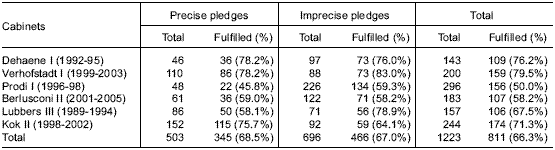
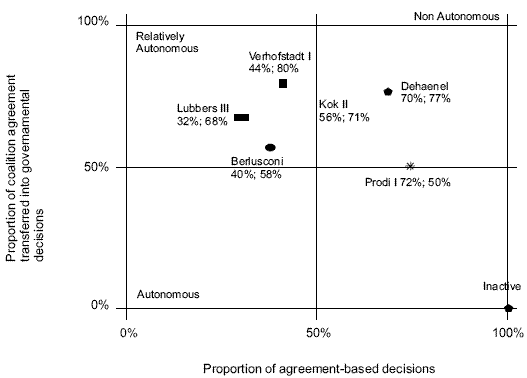
It is noteworthy that we can observe in figure 2 a far greater variation across and within countries for the proportions of agreement-based decisions. If we classify governments starting by those who make a bigger proportion of agreement-based decisions, we find the following list: Prodi I (71.5%), Dehaene I (69.5%), Kok II (55.7%), Verhofstadt I (44.1%), Berlusconi (39.2%) and Lubbers III (32.0%). Despite the variation, these findings support the positive view according to which the coalition agreement matters: in all cases, at least one third of governmental bills20 are based on the coalition agreement. In figure 2, we can also see that Dehaene I and Kok II are closer to the Non Autonomous government, Lubbers III, Verhofstadt I and Berlusconi II are closer to the Relatively Autonomous and Prodi is at equal distance between the Non Autonomous and Inactive government.
Figure 2
Ideal type of government to which case study approximates
Potential explanatory variables
The calculation of our results led to interesting and sometimes puzzling observations. How can we explain that the Berlusconi government, composed of fewer parties, and more compact on the left-right axis, has implemented in five years only 5% more of the coalition agreement than Prodi I in two years? How can we elucidate that the Verhofstadt I and Kok II governments, allying together Liberals and Socialists in government respectively, implemented slightly more pledges than their national counterparts formed of less parties and ideologically more cohesive? Regarding the proportion of non agreement-based decisions, the puzzles are even more intriguing. Why are there so many important differences (sometimes from simple to double) within countries and without clear links with the first measurements?
]]> In order to answer to this puzzle, we will present indicators of several variables which might explain the dependent variables. To recall, we identified earlier the following hypotheses:21H1: The more ministers have participated in the draft of the coalition agreement, the greater will be the fulfilment of the coalition agreement and the proportion of agreement-based decisions.
H2: The better the economic situation, the greater the fulfilment of the CA and the lower the proportion of agreement-based decisions.
H3: The more the wish to govern together, the greater the fulfilment of the CA and the lower the proportion of agreement-based decisions.
H4: The more complete the coalition agreement, the greater the proportion of agreement-based decisions.
H5: When party leaders enter the government, the less the proportion of agreement-based decisions.
In order to evaluate clearly to what extent the variables cited above influence the dependent variables, it is useful to run Ragin’s Fuzzy set tests. I will not enter into details of the benefits of such method for studying coalition, as I have done it elsewhere (Moury, 2004), nor will I detail the procedure (see Ragin, 2000 and 2006). In a nutshell, Fuzzy set is based on Boolean logics. When in all cases the independent variable (for Ragin “conditions”) is less than or equal to the dependent variable (“outcome”), the former will be considered necessary for explaining the later. Once these necessary independent variables are identified, the method allows checking how these necessary variables combine with other variables to form different sufficient causes. Combinations of necessary variables which are equal to the outcome will be considered as necessary and sufficient. It distinguishes itself from the later by the fact that cases can have varying degrees of membership in sets, with membership scores ranging from 0.0 to 1.0, and that it proposes ways to measure how often and how well the independent variables explain the dependent variables. In the following points, I will present how I build the Fuzzy set scores for each independent variables, and identify which variables are relevant to keep for further tests.
Participation of ministers in the negotiations
In order to build a value for the variable “participation of ministers in the negotiations”, the simplest is to identify which proportion of ministers22 participated in the negotiations. The Fuzzy set scores are attributed according to the percentage of ministers who participated in the negotiations (1 if all ministers participated, 0.5 if half, 0 if none, etc.). As I agree with Blondel (1993) that the Prime Minister, the deputy Prime Ministers and the Finance Ministers are key players on the governmental scene, I will also build a Fuzzy set score on the participation of these “super-ministers” in the negotiations.
As we can see in table 5, an important number of ministers had participated in the negotiations in all our cases, to a lesser extent for Berlusconi II and Lubbers III. All governments score high in the participation of important ministers. These findings strongly nuance the idea according to which party leaders might reduce ministerial autonomy by writing down in the coalition agreement a list of things ministers could do: instead ministers participate in the draft of the coalition agreement and certainly inject into it some of their own preferences. These preferences could be independent from party lines, particularly if ministers have already been ministers and/or anticipate needs deriving from their ministerial position.
]]>Dependent variables and potential explanatory variables for a high proportion of pledges transferred into governmental decisions
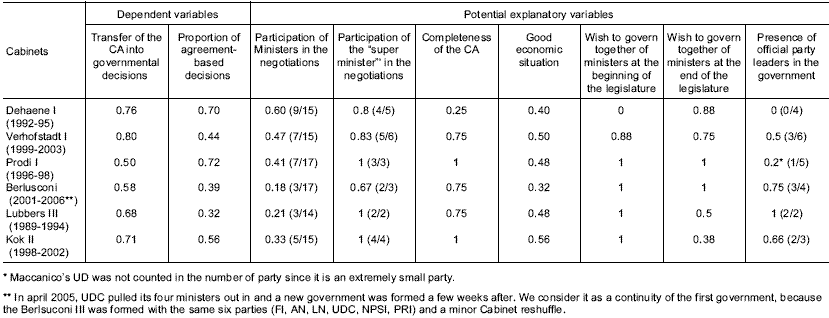
Table 5 also shows that the participation of ministers have an influence on the transfer of the coalition agreement into governmental decisions. Keeping apart Prodi I’s government, which term was only two years (out of five years), we observe that the three governments with the lower score of participation of ministers in the negotiations are also the three with the lower transfer of the coalition agreement into governmental actions (in order). Looking at the scores for the “super-ministers”, we see that less “super-ministers” participated in the draft of the coalition agreement for Berlusconi II and the government fulfilled much less pledges than other governments having reached their entire duration. We also observe a link between the proportion of ministers who participated in the draft of the coalition agreement and the proportion of agreement-based decisions. This link is stronger when we compare each legislature within the same country (the greater the proportion of ministers who participated in the negotiations, the greater also the proportion of agreement-based decisions), but this is less valid on a cross-country basis.
Good economic conditions
As assumed by Timmermans (2003), good economic conditions may encourage a better transfer of pledges into governmental decisions. The good economic conditions of a country are indicated by percentage of growth of GDP from the previous year (sources: OECD).23 The in-between score (0.5) is the average growth (from 1990 to 2004) in the European countries (2%). Economic growth did not appear to influence neither the fulfilment of the coalition agreement nor the proportion of agreement-based decisions. This means that ministers tend to respect their economic pledges even if the economic growth is bad or disappointing.
Good relationship between ministers
It is difficult to create an indicator of “good relationship between ministers” without being tautological, as an indicator of good relationship between ministers is their ability to make decisions together. In order to avoid this tautology, we looked at the declarations of the most important ministers (as defined above) in the press or in their memoirs to check whether they were willing to govern (at the beginning of the legislature) or to govern again (at the end of the legislature) with their partners in the coalition. The score 1 was attributed when all these ministers made declarations about their will to form a coalition government with their partners, and 0 was they all made declarations against this coalition. 0.5 was attributed when no declarations about preferences where done.24 In cases of pre-electoral coalitions, the “good relationship” indicator was scored 1. Doing so, we develop a dynamic indicator of the will of parties to govern together. We can see in table 5 that there is no clear relationship between the wish to govern together (at the beginning and at the end of the legislature) and our two dependent variables. It is an interesting finding: ministers’ will to govern together does not influence their ability to implement the coalition agreement, and to make non agreement-based decisions.
]]> Completeness of the Coalition agreementMy measure for completeness25 is the range of policy fields included in the agreement, relative to the scope of government action. Though this is not a perfect indicator, the scope may be related to the set of cabinet portfolios which represent fields of government policy. Thus we speak of a broad scope if the coalition agreement contains intentions in all or most fields of government policy to which portfolios are associated. The score on this variable thus is contingent on cabinet properties: the scope of action and the set of ministerial portfolios. Examples of complete coalition agreements are the cases of Prodi I and Kok II. Not surprisingly, these agreements also were the longest ever made. We give such complete agreements the value of 1. Agreements covering some part of the range of policy fields are given the value 0.75, 0.50, or 0.25. 0 will be attributed when there is no coalition agreement. These scores are relative scores, taking into account the competences of each country (federal/non federal). We can see in table 5 that in all cases except for Dehaene I the coalition agreement is rather complete, which means that almost always every policy fields are covered by the coalition agreement.
Surprisingly the completeness of the coalition agreement did not contribute to a lower fulfilment, despite the fact that it is more difficult and time consuming to implement a larger programme. Even more surprising is the fact that a complete coalition agreement is not related to a higher percentage of agreement-based decisions. In other words, ministers may be strictly bound by the coalition agreement even if it is very incomplete (such as for Dehaene I), or may be able to make many non agreement-based decisions even if the coalition agreement is complete (Lubbers III and Kok II).
Participation of party leaders in the government
By party leader, we mean the highest and most influential formal leadership position within political parties. It is generally easy to assess the identity of the party leader: there is always, for each party, one person (or more in the case of a duo or troika, such as for the Belgian Greens, for example) who officially represents the party as a whole and controls the appointment of ministers. This person may be leader of the party organisation (such as in Belgium and Italy), leader of the parliamentary group (such as in the Netherlands) or a very important minister (in some cases in Italy and the Netherlands). In order to identify such an official party leader, one simply has to look at the power structure presented by the party itself, which identifies clearly who is the leader.26
We can see in table 5 that there is considerable variation in the proportion of party leaders who entered the government.27 Very interestingly, we can also see that there is a clear negative relationship between the presence of party leaders in the government and the proportion of agreement-based decisions.
Fuzzy set tests
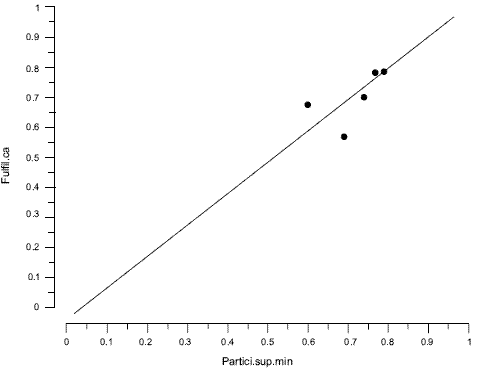
I will now run the Fuzzy set tests with the variables identified above, “participation of ministers in the draft of the coalition agreement” and “participation of super-ministers in the draft of the coalition agreement” for the proportion of the coalition agreement transferred into governmental actions and “participation of ministers in the draft of the coalition agreement” and “participation of party leaders in government” for the proportion of non-agreement decisions. Regarding the first dependent variable, the Fuzzy set tests show that the participation of ”super-ministers” in the draft of the coalition agreement is necessary for the fulfilment of the coalition agreement. Indeed, the consistency is 0.99 but the coverage is 0.28 In other words, the participation of ministers is necessary for the fulfilment in all cases (consistency) but does not account for much of the dependent variable (coverage). In figure 3 and looking in table 5, we can see that the participation of “super-ministers” approximates to the proportion of the coalition agreement transferred into governmental decisions in three cases out of six.
Figure 3
Coalition agreement transferred into governmental decisions against the participation of “super-ministers”
]]>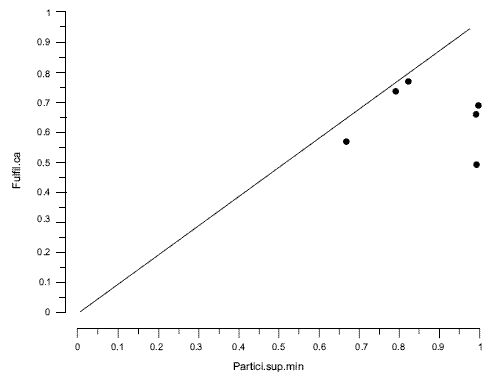
The three cases which do not approximate to the proportion of ministers are Prodi I and the two Dutch cases. For Prodi I, the explanation is easy to find out, given the fact that the government did not last its entire duration. For the Dutch case, the explanation must come from the fact that the Dutch government is much more collegial than the Belgian and Italian ones. Indeed in the Netherlands, the voice of each minister has equal weight, despite the existence of deputy Prime Ministers. On the contrary, in Belgium and more recently in Italy each partner of the coalition (generally receiving the title of deputy Prime Minister) forms with the PM the inner cabinet, where major important decisions are made and major conflicts are resolved. Once the inner cabinet has made decisions, the other ministers do not generally have veto power over these decisions. Then, the proportion of “super-ministers” who participated in the draft of the coalition agreement explains less of the dependent variable in the Netherlands than for the two counterparts in Belgium and in Italy. If we take an average between the participation of “super-ministers” and of all ministers for the Dutch cases, and that we consider only government which reached their entire duration (all except Prodi I), we get points approaching much closer to the lines. The consistency is very high (0.99) and the coverage is higher (0.55). This result is interesting, and is very logical: when ministers (most important ones in Belgium and in Italy) participate in the drafting of the coalition agreement, they have more probabilities to influence it towards their own preferences, and the implementation of the agreement will be higher.
Figure 4
Participation of ministers (“super-ministers” in Belgium and in Italy) against the proportion of the Coalition agreement transferred into governmental decisions (excluding Prodi)
If we turn to the second dependent variable (Ragin’s outcome) — the proportion of the agreement-based decisions —, the Fuzzy set analysis shows that the participation of ministers scores 0.76 as consistency but 0 as a coverage to explain the proportion of agreement-based decisions. In other words, the participation of ministers is often necessary to explain a high proportion of agreement-based decisions (consistency) but is it not explaining it well alone (coverage). Very interestingly, we can see that the absence of party leaders in the government (the negation of the variable “presence of party leaders”) has a consistency of 0.78 and a coverage of 0.86, which means that is it necessary and sufficient for explaining the proportion of agreement-based decisions (it explains it relatively often and relatively well). Combining the two variables does not increase significantly the coverage.
Figure 5
]]> Proportion of agreement-based decisions against the absence of party leaders in government
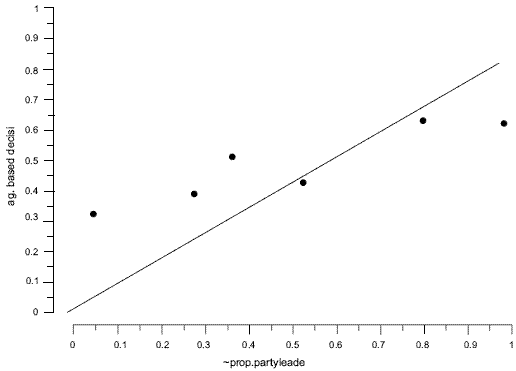
It means that when party leaders stay outside of the government, the government would make a higher percentage of agreement-based decisions. Perhaps, then, party leaders which stay outside of the government would prevent ministers from taking other decisions that the one written in the coalition agreement. This prevention could be direct (when party leaders oppose ministerial initiatives) or indirect (when ministers do not dare to propose such initiatives). On the contrary, when party leaders are in the government, ministers make a lower percentage of agreement-based decisions. In consequence, having the party leader inside of the government is a resource allowing ministers to derail from the coalition agreement. This is a remarkable finding, because this would mean that party leaders behave differently according to their entrance or not in government. If they stay outside, they would tend to block any new initiatives. If they enter it, they would “interiorize” the governmental priority of making decisions and answering to new demands, and government would be allowed to take some freedom regarding the coalition agreement. This is also true when party leaders are replaced, as in Belgium, probably because the one still controlling the party is the ex-party leader and not the new one.
Table 6
Types of government according to the two crucial explanatory variables

Two variables are therefore crucial in explaining the types of government: the participation of “super-ministers” (Belgium and Italy) and of all ministers29 (Netherlands) in the draft of the coalition agreement explains a high transfer of the coalition agreement into governmental decisions, and the non-participation of party leaders in the government accounts for a high proportion of agreement-based decisions. I identified earlier a democratic party government as a government drafting a coalition agreement-based on the manifestos of majority parties, which implements the coalition agreement and which is also able to make non agreement-based decisions to respond to the minority’s demands and to unexpected events, as far as it pursues “the common good” and the demands of the minority, not the personal interests of ministers. We can assume then, that when ministers participated in the drafting of the coalition and that the party leaders entered the government, the government will be “Relatively Autonomous” and we will be closer to the democratic ideal type. If the ministers participated in the draft of the coalition agreement, but the party leaders stayed outside of the government, we are likely to find a government close to the Non Autonomous ideal type. On the other hand, if ministers did not participate in the draft of the coalition agreement but the party leaders entered the government, the government is likely to be close to the “Autonomous” ideal type. Finally, the government where ministers did not participate in the negotiations and from which party leaders are absent, is likely to be close to the Inactive government.
Conclusions and prospects for research
]]> In this article, I proposed to look at the dialectic between parties and government to understand the extent to which ministers are bound by the coalition agreement. I tested whether it is true to consider the coalition agreement as a party mandate and I measured the extent to which ministers are constrained by the coalition agreement in deciding on policies. I first observed that the assumption according to which the coalition agreement is a contract written by the parties for the government to avoid “agency losses” is an oversimplification. In almost all cases the main ministers have participated in the negotiations, with, or as, party leaders. An interesting research would be to investigate to what extent (and when) do future ministers anticipate their ministerial position and inject their department’s preferences into the coalition agreement. We might for example check whether this would be more true when ministers are renewed in their position, or are at the end of their career.I also observed that the government follows to a large extent the coalition agreement in Belgium and in the Netherlands and also, although to a lesser extent, in Italy where the government has no culture of drafting such agreements and where the rare coalition agreements are drafted before the elections. This finding supports the view which sees the coalition agreement as an important determinant of policy-making, and shows that ministers in coalition are to some important extent constrained when deciding on policies. However, if ministers have to fulfil the coalition agreement, they will do it better if they have participated in its draft. In consequence, party leadership may have learned that the best way to have a coalition agreement transferred into governmental decisions is to place the negotiators in key positions in the government.
Moreover, the transfer of the program only tells one part of the extent to which ministers are bound by the coalition agreement: measuring the proportion of ministerial decision based on the coalition agreement is also significant. The results of this measurement enlighten once more the importance of the coalition agreement for ministers, as at least one third (and up to two thirds) of the governmental bills30 originate in the coalition agreement. Again, Italy, where coalition agreements are pre-electoral does not stand apart. However, we observe much more variation on this second dimension and the crucial variable explaining a high proportion of agreement-based decisions is not the completeness of the coalition agreement, as we might have expected, but the absence of party leaders in the government. To understand this, it is worth recalling Luebbert, according to which party leaders are above all motivated by the desire to stay party leaders. They fear dissatisfaction of the party members around their choices and then are not inclined to make concrete compromises (Luebbert, 1986: 42-56). If Luebbert’s assumption was true, this would lead to a paradox: in party government no policies would ever be decided, and this would surely contradict party interests. At the opposite of Luebbert’s expectations, an answer to this paradox may be the draft of the coalition agreement, a moment during which party leaders have the opportunity to make policy whilst avoiding disunity. The fact that party leaders can possibly become ministers and that others eligible for ministerial posts are not it yet, the absence of an audience during the negotiations, the limited time, and the possibility of package deals enable party leaders to make deals more easily acceptable for their supporting base.31
Taking non agreement-based decisions does not benefit from the same conditions as the making of policies based in the coalition agreement. In consequence, the veto of party leaders on these items is likely to be higher than on the agreement-based ones except, as we have seen before, when the party leaders enter the government. The later is a noteworthy finding, as it implies that party leaders, if they belong to the government, might to some extent internalize governmental priority of decision-making and enables their ministers to make non agreement-based decisions.32 This shift of preferences according to what institution one belongs to has been developed by the Constructivists. Since almost all coalition studies are based on the rational-choice theory, future research should try to embrace different perspective to understand governmental decision-making. Introducing a dynamic perspective might be interesting, too, to understand to what extent successful opposition to non agreement-based decisions is evolving with time. We might hypothesize that ministers get stronger with time, as they acquire expertise and information which might be useful against party vetoes. I also have to acknowledge that I did not address the numerous cases where no coalition agreement is drafted. This does not imply of course an absence of party mandate, but certainly this mandate takes other forms. It would be interesting to look closely at these cases.
To summarize my findings, I will say that the drafting of the coalition agreement is both a constraint and a resource for ministers. It is a constraint because ministers are under the institutional obligation to fulfil it: if conflict occurs over an item based on the coalition agreement, a consensus has to be found; otherwise this threatens the government’s own survival. This can also be a resource because ministers, if they have participated in the negotiations, are able to introduce some of their preferences into the coalition agreement, and are protected to a certain extent against the veto of parties on the decisions based on the coalition agreement. Obviously, the relationship between coalition parties is also important. The variables identified above are not always explaining well the dependent variable, and other variables matter. However any models of governmental decision-making that fail to recognise the dialectic between parties and government run the risk of missing an important part of reality. It is urgent therefore to consider this dialectic whilst considering democratic theory and coalition governance.
References
Andeweg, R. B. (2000), “Ministers as double agents? The delegation process between cabinets and ministers”, European Journal of Political Research, 37 (3), pp. 377-395.
Blondel, J. (1993), “Individual ministers and their role in decision-making”, in J. Blondel and F. Müller-Rommel (eds.), Governing Together. The Extent and Limits of Joint Decision-Making in Western European Cabinets, London, Macmillan.
Blondel, J., and M. Cotta (1996), “Conclusions”, in J. Blondel e M. Cotta (eds.), Party and Government. An Inquiry into the Relationship between Governments and Supporting Parties in Liberal Democracies, London, Macmillan.
]]> Capano, G., and M. Giuliani (2003), “Il parlamento italiano fra logica di governo e logica istituzionale: molto fumo per quale arrosto?”, in J. Blondel and P. Segatti (eds.), Politica in Italia. I Fatti del Anno e le Interpretazioni, Bologna, Il Mulino.Cotta, M. (2000), “Defining party and government”, in J. Blondel and M. Cotta (eds.), The Nature of Party Government. A Comparative European Perspective, London, Macmillan.
De Winter, L. (2001), “Living up to one’s promises: government declarations and law production”, in H. Doring (ed.), Legislatures and Policies. A Cross-National Exploration of Labour Market Flexibilisation, New York, St. Martin’s Press.
Di Palma, G. (1977), Surviving without Governing. The Italian Parties in Parliament, Berkeley, University of California Press.
Frognier, A. P. (2000), “The normative foundations of party government”, in J. Blondel and M. Cotta (eds.), The Nature of Party Government. A Comparative European Perspective, London, Macmillan.
Golder, S. Nadenichek (2006), “Pre-electoral coalition formation in parliamentary democracies”, British Journal of Political Science, 36, pp. 193-212.
Katz, R. S. (1986), “Party government: a rationalistic conception”, in F. G. Castles and R. Wildenmann (eds.), Visions and Realities of Party Government, Berlin, De Gruyter.
Katz, R. S., and P. Mair (1995), “Changing models of party organization and party democracy: the emergence of the cartel party”, Party Politics, 1 (1), pp. 5-28.
Keman, H. (2002), “The low countries: confrontation and coalition in segmented societies”, in J. Colomer (ed.), Political Institutions in Europe, London, Routledge.
Klingemann, H. D., R. Hofferbert, and I. Budge (1994), Parties, Policies and Democracy, Boulder, Westview.
]]> Laver, M., and N. Schofield (1990), Multiparty Government. The Politics of Coalition in Europe, Oxford, Oxford University Press.Luebbert, G. (1986), Comparative Democracy. Policy-Making and Governing Coalitions in Europe and Israel, New York, Columbia University Press.
Maor, M. (1995), “Intra-party determinants of coalition bargaining”, Journal of Theoretical Politics, 7 (1), pp. 65-91.
Mitchell, P. (1999), “Coalition discipline, enforcement mechanisms and intra-party politics in S. Bowler, D. Farrell and R. Katz (eds.), Party Discipline and Parliamentary Government, Columbus, OH, Ohio State University Press.
Moury, C. (2004), “Les ensembles flous pour y voir plus clair: décoder les caractéristiques des accords de coalition en Europe occidentale”, Revue Internationale de Politique Comparée, 11 (1), pp. 101-115.
Moury, C. (2005), Coalition Agreement and Party Mandate. Is the Government Bound by the Coalition Agreement?, Phd thesis, Siena University.
Müller, W. C., and K. Strøm (eds.) (2000a), Coalition Governments in Western Europe, Oxford, Oxford University Press.
Müller, W. C., and K. Strøm (2000b), “Coalition governance in Western Europe”, in W. C. Müller and K. Strøm (eds.), Coalition Governments in Western Europe, Oxford, Oxford University Press.
Müller, W. C. (2000), “Political parties in parliamentary democracies: making delegation and accountability work”, European Journal of Political Research, 37 (3), pp. 309-333.
Peterson, R., M. De Ridder, J. Hobbs, and E. F. McClellan (1983), “Government formation and policy formulation: patterns in Belgium and the Netherlands”, ResPublica, 25 (1), pp. 49-82. [ Links ]
Ragin, C. C. (2000), Fuzzy-Set Social Science, Chicago and London, The University of Chicago Press.
Ragin, C. C. (2006), “Set relations in social research: evaluating their consistency and coverage”, Political Analysis, 14 (3), pp. 291-310.
Rose, R. (1974), The Problem of Party Government, London, Macmillan.
Royed, T. (1996), “Testing the mandate model in Britain and the United States: evidence from Reagan and Thatcher eras”, British Journal of Political Science, 26 (1), pp. 45-80.
Rüdig, W., and B. Rihoux (eds.) (2006), “Analyzing greens in power: setting the agenda”, European Journal of Political Research, 45, pp. 1-33.
Strøm, K. (2000), “Delegation and accountability in parliamentary democracies”, European Journal of Political Research, 37 (3), pp. 261-289.
Thomson, R. (1999), The Party Mandate. Elections Pledges and Government Actions in the Netherlands, 1986-1998, doctoral dissertation, Thela, Thesis Publishers.
Thomson, R. (2001), “The programme to policy linkage: the fulfilment of election pledges on socio-economic policy in the Netherlands, 1986-1998”, European Journal of Political Research, 40 (6), pp. 171-197.
Timmermans, A. (2003), High Politics in the Low Countries. Functions and Effects of Coalition Agreements in Belgium and the Netherlands, Aldershot, Ashgate.
Timmermans, A., and C. Moury (2006), “Coalition governance in Belgium and the Netherlands: rising electoral stability against all electoral odds”, Acta Politica, 41 (4), pp. 389-407. [ Links ]
Walgrave S., F. Varone, and P. Dumont (2006), “Policy with or without parties? A comparative analysis of policy priorities and policy changes in Belgium, 1991 to 2000”, Journal of European Public Policy, 13 (7), pp. 1021-1038.
Weller, P. (1997), “Political parties and the core executives”, in P. Weller, H. Bakvis and R.A.W. Rhodes (eds.), The Hollow Crown. Countervailing Trends in Core Executives, London, Macmillan.
1 The concept “government” has different meanings: 1) a group of individuals (ministers and junior ministers, top officials, possibly a President of the Republic) — the representative face of the government; and 2) an institution composed of a bureaucratic structure—the “state” face of the government (Cotta, 2000: 83). These two faces of the state obviously interact with each other, and the government could better be defined as a system than an unitary actor (idem: 75). As our point of departure is decisions made by ministerswe will focus more in this study on the representative face of the government.
2 Cotta (2000: 215-217).
3 See for example Laver and Schofield, (1990), Maor, (1995), Mitchell, (1999).
4 We will rely on Müller’s definition of party leaders, i. e. “those who internalise the collective interest of the party and monitor the party’s other office holders” (Müller, 2000: 317).
5 The firstwork to use the expressionwas Rose’s The Problem of Party Government (1974). The book however does not explore the relationship between party and government, but is instead concerned with the problems of parties. Rose argues that the problems of British parties were the problems of government, because “British government is party government” (Rose, 1974: XV), without giving an explicit definition of such a concept.
6 The book also presents findings about appointments and patronage, whichwere not presented here, because they are not directly relevant to the research questions.
]]> 7 In that vein, some research has recently addressed the question of the impact of government on parties, and has found that government indeed has an impact on the organisational structure of parties (Katz and Mair, 1995; Rüdig and Rihoux, 2006).8 Sometimes “technical ministers” (that is ministers not specifically belonging to any party) are appointed by the party leaders, but these ministers remain accountable to the party.
9 We will keep this variable constant, as we will choice three countries where these institutional checks exist.
10 Timmermans and Moury (2006) have shown that coalition agreement reduces conflicts only when the item has been precisely defined.
11 Timmermans also proposed to check for the variable “presence of a Prime Minister acting as a guardian of the coalition agreement”.We will not include it, because it is difficult to operationalize without being tautological.
12 It could not be 100% given the fact that decisions would have to be made to fulfill the coalition agreement.
13 I thank R. Heffernan for suggesting the name of the ideal types.
14 That we will call precise and imprecise respectively
15 The dichotomous fulfilment was identified as strongly reliable and the three-category fulfilmentwas only identified as satisfactory. “Subject area specialistswere asked to judge the fulfilment of 110 of the pledges made prior to the 1994 elections in the Netherlands. On the basis of the three-category measurement of fulfilment, there was inter-coder reliability, measured by Cohen’s Kappa, of 0.70. For the dichotomous fulfilment variable there was a Cohen’s Kappa of 0.78. As a rule of thumb, Kappa values of around 0.60 are generally considered to be satisfactory, where values of around 0.80 is strongly reliable” (Thomson, 2001: 195).
16 More than 95% of bills have been made in Parliament for the Belgian and Dutch cases which lasted their entire duration, 85% for Dehaene I which fall after three years (85%), 75% for Berlusconi and 45% for Prodi I. Source: Moury (2005).
]]> 17 We will not consider the laws that deal with the daily functioning of the state and the ratifications of international treaties. Moreover, “mega-bills” will be divided into their main points (each point is considered a decision).18 This codingwas straightforward, as all governments studied explicitly signal in the report of the Council of Ministers when a bill was made because of an European directive.
19 This decision to not consider rhetorical pledges as a potential basis of decisions is made for two reasons: 1) to maintain continuity with the first dimension (which looks only at the fulfilment of real pledges) and 2) to obtain a more reliable system of classification between agreement-based and non agreement-based items (it is difficult to assess to what extent a decision is based on a rhetorical pledge, for example to assess if the decision “constructing new game areas in poor suburbs” had its origins in ”reducing poverty”).
20 With the exception described above.
21 As noted just above, a quick look at the data’s discredit the hypothesis according to with, the less parties, the better the fulfillment of the CA.
22 I consider only ministers with portfolios. If a minister has been replaced, I count him or her according to the average between 0 (has not participated in the negotiations) and 1 (has participated in the negotiations).
23 http://www.oecd.org/dataoecd/6/27/2483806.xls, consulted on November 2006.
24 We developed a system of coding taking into accounts cases such as some ministers are willing to form a government with some members of the coalition, and not others. Complete coding will be send upon request.
25 Developed in Moury (2004), and Timmermans and Moury (2006).
26 In Belgium party leaders are replaced.
]]> 27 Further research should identify why some party leaders enter the government.28 Consistency assesses the degree to which the cases sharing a given condition or combination of conditions agree in displaying the outcome in question. Coverage, by contrast, assesses the degree to which a cause or causal combination “accounts for” instances of an outcome; see Ragin (2006).
29 Average between participation of “super-ministers” and all ministers.
30 With the exceptions cited earlier, i. e. ratification of international agreements, routine decisions and implementation of European directives.
31 The three latter conditions identified by Peterson et al. in 1983 to explain easier intra-party decision- making.
32 In that vein, I have shown that coalition agreement tend to be shorter when party leaders enter the government (Moury, 2004).
* Catherine Moury. CIES, ISCTE-IUL.
E-mail: catherine.moury@iscte.pt.
]]>