<?xml version="1.0" encoding="ISO-8859-1"?><article xmlns:mml="http://www.w3.org/1998/Math/MathML" xmlns:xlink="http://www.w3.org/1999/xlink" xmlns:xsi="http://www.w3.org/2001/XMLSchema-instance">
<front>
<journal-meta>
<journal-id>0873-6561</journal-id>
<journal-title><![CDATA[Etnográfica]]></journal-title>
<abbrev-journal-title><![CDATA[Etnográfica]]></abbrev-journal-title>
<issn>0873-6561</issn>
<publisher>
<publisher-name><![CDATA[Centro em Rede de Investigação em Antropologia - CRIA]]></publisher-name>
</publisher>
</journal-meta>
<article-meta>
<article-id>S0873-65612014000300007</article-id>
<title-group>
<article-title xml:lang="en"><![CDATA[Lévi-Strauss as a protagonist in his ethnographic prose: a cosmopolitan view of Tristes tropiques and its contemporary interpretations]]></article-title>
<article-title xml:lang="pt"><![CDATA[Lévi-Strauss como protagonista na sua prosa etnográfica: uma visão cosmopolita sobre Tristes Trópicos e as suas interpretações contemporâneas]]></article-title>
</title-group>
<contrib-group>
<contrib contrib-type="author">
<name>
<surname><![CDATA[Kubica]]></surname>
<given-names><![CDATA[Gra&#380;yna]]></given-names>
</name>
<xref ref-type="aff" rid="A01"/>
</contrib>
</contrib-group>
<aff id="A01">
<institution><![CDATA[,Institute of Sociology of the Jagiellonian University  ]]></institution>
<addr-line><![CDATA[Krakow ]]></addr-line>
<country>Poland</country>
</aff>
<pub-date pub-type="pub">
<day>00</day>
<month>10</month>
<year>2014</year>
</pub-date>
<pub-date pub-type="epub">
<day>00</day>
<month>10</month>
<year>2014</year>
</pub-date>
<volume>18</volume>
<numero>3</numero>
<fpage>599</fpage>
<lpage>624</lpage>
<copyright-statement/>
<copyright-year/>
<self-uri xlink:href="http://scielo.pt/scielo.php?script=sci_arttext&amp;pid=S0873-65612014000300007&amp;lng=en&amp;nrm=iso"></self-uri><self-uri xlink:href="http://scielo.pt/scielo.php?script=sci_abstract&amp;pid=S0873-65612014000300007&amp;lng=en&amp;nrm=iso"></self-uri><self-uri xlink:href="http://scielo.pt/scielo.php?script=sci_pdf&amp;pid=S0873-65612014000300007&amp;lng=en&amp;nrm=iso"></self-uri><abstract abstract-type="short" xml:lang="en"><p><![CDATA[Inscribed into the intellectual tradition of anthropology as literature, the article offers a critical view on an iconic (albeit problematic) text of the discipline, Tristes tropiques, by Claude Lévi-Strauss. The frame of reference is broadened to make the analysis more cosmopolitan, more biographical, and more historical. In accordance with the methodological principles of the anthropology of art, this approach focuses not just on the work itself, but also on its author and reception. Firstly, Tristes tropiques is situated in the broader context of ethnographic prose, thus showing the working of disciplining practices of academia (following Michel Foucault), which kept literary writings of anthropologists outside the profession. These observations are confirmed by the biographical context of the origin of Tristes tropiques. Next, applying James Clifford&#8217;s categories, the analysis of the way the author presents himself in his text shows that he describes himself consistently as an anthropologist, not only rhetorically but also on a deeper level of his professional habitus. The reception of Tristes tropiques and its hero in various places and times - by the French public and anthropological community, a reaction to it in Brazil, where the author&#8217;s journeys took place, and in Poland at the time of the post-Stalinist &#8220;thaw&#8221;, where the book was published for the first time in the Soviet bloc - shows how differentiated the process of reading is. These interpretations are finally put in its historical context and reasons for the unwavering popularity of Tristes tropiques are suggested: in addition to criticism, it inspires profound reflection and a broader interpretation of the modern world.]]></p></abstract>
<abstract abstract-type="short" xml:lang="pt"><p><![CDATA[Inscrevendo-se na tradição intelectual da antropologia como literatura, o artigo apresenta uma visão crítica sobre um texto emblemático (embora problemático) da disciplina, Tristes Trópicos, de Claude Lévi-Strauss. Ao alargar o quadro de referência, a análise torna-se mais cosmopolita, biográfica e histórica. Respeitando os princípios metodológicos da antropologia da arte, centra-se não apenas na obra, mas também no autor e na receção. Tristes Trópicos é situado no contexto mais amplo da prosa etnográfica, evidenciando a ação das práticas disciplinadoras da academia (seguindo Michel Foucault) que mantiveram a escrita literária dos antropólogos separada da sua profissão. Estas observações são confirmadas pelo contexto biográfico de origem da obra analisada. Com recurso às categorias propostas por James Clifford, verifica-se que o autor se apresenta na obra descrevendo-se clara e consistentemente como antropólogo, não só em termos retóricos, mas ainda a um nível mais profundo do seu habitus profissional. A receção de Tristes Trópicos e do seu herói em diferentes tempos e lugares - pelo público francês e pela comunidade antropológica, uma reação no Brasil, onde as viagens do autor decorreram, e na Polónia no tempo do &#8220;degelo&#8221; pós-estalinista, onde o livro teve a primeira edição no bloco soviético - mostra como o processo de leitura é diferenciado. Por fim, estas interpretações são situadas no próprio contexto histórico e são sugeridas razões para a incessante popularidade da obra: para além de criticismo, inspira reflexões profundas e uma interpretação mais lata do mundo moderno.]]></p></abstract>
<kwd-group>
<kwd lng="en"><![CDATA[Tristes tropiques]]></kwd>
<kwd lng="en"><![CDATA[Lévi-Strauss]]></kwd>
<kwd lng="en"><![CDATA[travel writing]]></kwd>
<kwd lng="en"><![CDATA[literary anthropology]]></kwd>
<kwd lng="en"><![CDATA[history of anthropology]]></kwd>
<kwd lng="pt"><![CDATA[Tristes Trópicos]]></kwd>
<kwd lng="pt"><![CDATA[Lévi-Strauss]]></kwd>
<kwd lng="pt"><![CDATA[literatura de viagens]]></kwd>
<kwd lng="pt"><![CDATA[antropologia literária]]></kwd>
<kwd lng="pt"><![CDATA[história da antropologia]]></kwd>
</kwd-group>
</article-meta>
</front><body><![CDATA[ <p align="right"><font size="2" face="Verdana"><b>ARTIGOS</b></font></p>     <p>&nbsp;</p>     <p><font size="4" face="Verdana"><b>L&#233;vi-Strauss as a protagonist   in his ethnographic prose: a cosmopolitan view of <i >Tristes tropiques</i> and its contemporary   interpretations</b></font></p>     <p>&nbsp;</p>     <p><b><font size="3" face="Verdana">L&#233;vi-Strauss como protagonista na sua prosa etnogr&#225;fica: uma   vis&#227;o cosmopolita sobre <i >Tristes Tr&#243;picos</i> e as suas interpreta&#231;&#245;es contempor&#226;neas</font></b></p>     <p>&nbsp;</p>     <p>&nbsp;</p>     <p><b><font size="2" face="Verdana">Gra&#380yna Kubica<sup>1</sup></font></b></p>     <p><font size="2" face="Verdana"><sup>1</sup>Institute of Sociology of the Jagiellonian University, Krakow, Poland. <i>E-mail:</i> <a href="mailto:grazyna.kubica-heller@uj.edu.pl">grazyna.kubica-heller@uj.edu.pl</a></font></p>     <p>&nbsp;</p>     ]]></body>
<body><![CDATA[<p>&nbsp;</p> <hr noshade size="1">     <p><font size="2" face="Verdana"><b>ABSTRACT</b></font></p>     <p><font size="2" face="Verdana">Inscribed into the intellectual tradition of   anthropology as literature, the article offers a critical view on an iconic   (albeit problematic) text of the discipline, <i >Tristes tropiques</i>, by Claude L&#233;vi-Strauss. The   frame of reference is broadened to make the analysis more cosmopolitan, more   biographical, and more historical. In accordance with the methodological   principles of the anthropology of art, this approach focuses not just on the   work itself, but also on its author and reception. Firstly, <i >Tristes tropiques</i> is situated in the broader   context of ethnographic prose, thus showing the working of disciplining   practices of academia (following Michel Foucault), which kept literary writings   of anthropologists outside the profession. These observations are confirmed by   the biographical context of the origin of <i >Tristes tropiques</i>. Next, applying James   Clifford&#8217;s categories, the analysis of the way the author presents himself in   his text shows that he describes himself consistently as an anthropologist, not   only rhetorically but also on a deeper level of his professional habitus. The   reception of <i >Tristes tropiques </i>and   its hero in various places and times &#8211; by the French public and anthropological   community, a reaction to it in Brazil, where the author&#8217;s journeys took place,   and in Poland at the time of the post-Stalinist &#8220;thaw&#8221;, where the book was   published for the first time in the Soviet bloc &#8211; shows how differentiated the   process of reading is. These interpretations are finally put in its historical   context and reasons for the unwavering popularity of <i >Tristes tropiques</i> are suggested: in addition to   criticism, it inspires profound reflection and a broader interpretation of the   modern world. </font></p>     <p><font size="2" face="Verdana"><b>Keywords: </b><i >Tristes   tropiques</i>, L&#233;vi-Strauss, travel writing, literary anthropology, history of anthropology</font></p> <hr noshade size="1">     <p><font size="2" face="Verdana"><b>RESUMO</b></font></p>     <p><font size="2" face="Verdana">Inscrevendo-se na tradi&#231;&#227;o intelectual da antropologia como   literatura, o artigo apresenta uma vis&#227;o cr&#237;tica sobre um texto emblem&#225;tico   (embora problem&#225;tico) da disciplina, <i >Tristes     Tr&#243;picos</i>, de Claude L&#233;vi-Strauss. Ao alargar o quadro de refer&#234;ncia, a   an&#225;lise torna-se mais cosmopolita, biogr&#225;fica e hist&#243;rica. Respeitando os   princ&#237;pios metodol&#243;gicos da antropologia da arte, centra-se n&#227;o apenas na obra,   mas tamb&#233;m no autor e na rece&#231;&#227;o. <i >Tristes Tr&#243;picos</i> &#233; situado no contexto mais amplo da prosa   etnogr&#225;fica, evidenciando a a&#231;&#227;o das pr&#225;ticas disciplinadoras da academia   (seguindo Michel Foucault) que mantiveram a escrita liter&#225;ria dos antrop&#243;logos   separada da sua profiss&#227;o. Estas observa&#231;&#245;es s&#227;o confirmadas pelo contexto   biogr&#225;fico de origem da obra analisada. Com recurso &#224;s categorias propostas por   James Clifford, verifica-se que o autor se apresenta na obra descrevendo-se   clara e consistentemente como antrop&#243;logo, n&#227;o s&#243; em termos ret&#243;ricos, mas   ainda a um n&#237;vel mais profundo do seu <i >habitus</i> profissional. A rece&#231;&#227;o de <i >Tristes     Tr&#243;picos</i> e do seu her&#243;i em diferentes tempos e lugares &#8211; pelo p&#250;blico   franc&#234;s e pela comunidade antropol&#243;gica, uma rea&#231;&#227;o no Brasil, onde as viagens   do autor decorreram, e na Pol&#243;nia no tempo do &#8220;degelo&#8221; p&#243;s-estalinista, onde o   livro teve a primeira edi&#231;&#227;o no bloco sovi&#233;tico &#8211; mostra como o processo de   leitura &#233; diferenciado. Por fim, estas interpreta&#231;&#245;es s&#227;o situadas no pr&#243;prio   contexto hist&#243;rico e s&#227;o sugeridas raz&#245;es para a incessante popularidade da   obra: para al&#233;m de criticismo, inspira reflex&#245;es profundas e uma interpreta&#231;&#227;o   mais lata do mundo moderno.</font></p>     <p><font size="2" face="Verdana"><b>Palavras-chave: </b><i >Tristes   Tr&#243;picos</i>, L&#233;vi-Strauss, literatura de viagens, antropologia liter&#225;ria, hist&#243;ria da antropologia</font></p> <hr noshade size="1">     <p>&nbsp;</p>     <p>&nbsp;</p>     <p><font size="2" face="Verdana">In the title of her   renowned essay &#8220;The anthropologist as hero&#8221;, Susan Sontag (1994) placed   L&#233;vi-Strauss on a high pedestal of human and intellectual recognition.<a href="#_ftn1" name="_ftnref1" title=""><sup><sup>&#91;1&#93;</sup></sup></a> The   anthropologist is a hero because he struggles with the difficulties and dangers   of his travel adventure, which he takes on in a search for alleviation of the   alienation experienced in the modern Western world. But he is also a hero for   grappling with the philosophical aporia of the   known/unknown. And he does all this in a way that shows literary mastery.</font></p>     ]]></body>
<body><![CDATA[<p><font size="2" face="Verdana">My intention is not to distance myself from   Sontag&#8217;s enthusiasm, but I hope to look at the anthropologist from a different   perspective. I want to examine him as a literary hero and place him in a   certain interpretive context in which he has previously not been seen (at least   in anthropological terms). In this essay I present the results of my analysis   of <i >Tristes tropiques</i> (L&#233;vi-Strauss 1973 &#91;1955&#93;) as a representative of the literary genre which I call ethnographic prose.</font></p>     <p><font size="2" face="Verdana">It is not easy to consider the question of the   genre of writing that characterises L&#233;vi-Strauss&#8217;s work. Clifford Geertz (1988) settled this   issue in his important essay &#8220;The world in a text: how to read &#8216;Tristes tropiques&#8217;&#8221;, in which he   claims that we are dealing not with one text, but with several overlapping   ones: above all, this is a travel book (comparable to works by Burton,   T. S. Lawrence, Gide, Loti, Malraux), but at the same time it is   ethnographic (the mystique of fieldwork and a neat presentation of   structuralism), philosophical (references to Rousseau), a reformist treatise   (radical critique of colonialism), while not ceasing to be a symbolic literary   text (in the tradition of Baudelaire, Mallarm&#233; and   Rimbaud). And all this to create the myth of the History of a Quest and the   myth of the Anthropologist as Adventurer. In his essay, Geertz discusses the   various narrative levels in L&#233;vi-Strauss&#8217;s work, but I am interested in it mostly as an anthropological travel book.</font></p>     <p><font size="2" face="Verdana">It is important to note that the pioneer of   critical-literary interpretation of L&#233;vi-Strauss&#8217;s oeuvre was James Boon in his   1972 book <i >From Symbolism to     Structuralism: L&#233;vi-Strauss and Literary Tradition</i>. In one of his later   texts, he tackled the topic of &#8220;heroism&#8221;, which is particularly interesting to me here. According to Boon (1990: 161, 163):</font></p>     <blockquote>       <p><font size="2" face="Verdana">&#8220;<i>Tristes Tropiques</i> was     an autobiography dissolving its &#8216;self&#8217; in the act of discovering a     cross-cultural, transhistorical &#8216;language&#8217;, a method.     It was a quest <i>en texte</i> that metaphorically     figured the world&#8217;s forms, experienced across its tribal vestiges, its wartime     outcast in their degraded circumstances. &#91;&#8230;&#93; It was and is a book of its     culture (France, the West) and against it, a book of its century and against     it, and also against those few other centuries of the West&#8217;s political mission     to dominate the world&#8217;s differences.&#8221;</font></p> </blockquote>     <p><font size="2" face="Verdana">Boon&#8217;s important observations emphasise the ambiguity of L&#233;vi-Strauss&#8217;s work, as Sontag also indicates.</font></p>     <p><font size="2" face="Verdana"><i >Tristes tropiques</i> is   discussed in many contexts and discourses. To name but a few: in the framework   of the French tradition of ethnographic writing (e.g. Debaene 2010a), together with anthropologists&#8217; &#8220;academic&#8221;   works (e.g. &#173;Clifford 1997; Geertz 1988), or in the context of the popularisation of anthropology or its being engaged   (e.g. MacClancy and McDonaugh   1996; &#173;Eriksen 2006). Furthermore, in the context of   ethnographic heroism (Doja 2005; &#173;Hartman 2007),   anthropology of tourism (Graburn 1983; Crick 1995);   various views on colonialism and racism (Bastos 1998;   Douglass 2003; Visweswaran 2010), and many others. I will refer to these works in later parts of my paper.</font></p>     <p>&nbsp;</p>     <p><font size="3" face="Verdana"><b>Ethnographic   prose: characteristic qualities</b></font></p>     <p><font size="2" face="Verdana">More or less until the 1970s, the academic discourse binding in   anthropology did not allow for ethnographers&#8217; own experiences, besides not   leaving much room for their literary creativity. In order to express their   experiences, doubts and fascinations and portray the background of their fieldwork,   as well as to fulfil their literary ambitions, some of them wrote prose in addition to their regular monographs.</font></p>     ]]></body>
<body><![CDATA[<p><font size="2" face="Verdana">By the term &#8220;ethnographic prose&#8221; I understand   various forms of literary works written on the basis of researchers&#8217; experience   in the field. This category includes travel books, novels, memoirs,   autobiographies and diaries. In other words, both fact and fiction.   Characteristic is the interesting literary form (vivid, riveting and providing   readers with aesthetic pleasure) as well as the wide readership to which these   works are addressed. In contrast to ethnographic prose, formal field monographs   are usually written for other anthropologists, often in a hermetic language, as   a stage in the author&#8217;s academic career. The main difference here, then, is the   virtual reader (wide audience or professional anthropologists) as well as the resultant form (&#8220;literary&#8221; or &#8220;academic&#8221;).</font></p>     <p><font size="2" face="Verdana">When I examined the biographies of the authors   of ethnographic prose, it turned out that almost all of them produced their   literary works while outside of academia. They worked in museums, research   institutions and other places. Good examples are: Adolph Bandelier, working for   the Archaeological Institute of America; Michel Leiris,   Jacques Soustelle and Georges Balandier   for Mus&#233;e de l&#8217;Homme; Maria   Czaplicka, who wrote her travelogue as a Siberian   explorer before taking a lectureship at Oxford, and many others. There were   very few active academics among ethnographic authors: only Melville Herskovits   (who wrote his memoir with his wife, Frances), Christoph   von F&#252;rer-Haimendorf, Hilda Kuper and David H. P. Maybury-Lewis.</font></p>     <p><font size="2" face="Verdana">Some anthropologists, before becoming involved   in this discipline, were interested in literature, which they also often practised (such are the cases of Maria Czaplicka,   Zora Neale Hurston, Michel Leiris,   Hilda Kuper and Alicja Iwa&#324;ska).   For these authors, the experience of fieldwork, just like any other, was a   potential literary material. Without doubt they were interested in how to   describe their meetings with native culture not only from an academic point of   view, but in other ways too. This might mean subjective, authorial, personal,   and introspective writings. The researcher&#8217;s experience, in a natural way, became the axis of the narrative.</font></p>     <p><font size="2" face="Verdana">This illustrates very well the fact that   writing was (and still is) one of the more important disciplining practices   reinforcing the &#8220;scientific character&#8221; of the ethnographic enterprise in   academic discourse (I recall here Michel &#173;Foucault&#8217;s concept of discipline, as   presented in Foucault 1975). This clear division of literature and science also   shows a typical motif of modernist thinking involving organising   and classifying (the later, postmodernist thinking permitted a &#8220;blurring&#8221; and   mixing of genres). James Clifford (1986: 13) adds that in the writing of   anthropologists the subjectivity of the author was separated from the   objectivity of the text, although some works (e.g. <i >Tristes tropiques</i>) were &#8220;disturbances, but they   were kept marginal&#8221;. According to him, it was only later that a sub-genre of   ethnographic writing, the reflexive field report, appeared. I do not agree with   Clifford in this matter, as I believe that both the authors and the readers of   the ethnographers&#8217; literary enterprises in the classical period of the   discipline&#8217;s development clearly defined their &#8220;genre&#8221; and distinguished it   from academic writing. This is evident when one reads prefaces to the works of   ethnographic prose, as well as the reviews of them written by anthropologists   for professional journals.<a href="#_ftn2" name="_ftnref2" title=""><sup><sup>&#91;2&#93;</sup></sup></a> Ethnographic works of prose, then, were no &#8220;disturbance&#8221;, as Clifford has put   it, but a separate genre with a specific poetics. It could be said that   anthropologists wrote literary works with their &#8220;other hand&#8221;, not the one used   for their academic works. They changed their stylistic code as if changing between linguistic codes.</font></p>     <p><font size="2" face="Verdana">In this article I am particularly interested   in one genre of ethnographic prose: travel books written by anthropologists. I   will begin by attempting to describe the &#8220;travelogue pact&#8221; formed by the author   and his/her readers. Here I refer to the concept of the French   literary scholar Philippe Lejeune (1975) and his term &#8220;autobiographical pact&#8221;,   which assumes that in the narrative about him/herself the author   describes facts from his/her life which really happened, as   opposed to the &#8220;novel pact&#8221; (where the author can and should &#8220;make things up&#8221;).   What elements of the &#8220;travelogue pact&#8221; can we distinguish&#63; Above all, readers   expect the author to describe what he/she really saw. The   narration takes place in the first person, which translates into   self-reflection and self-expression. It is therefore a kind of account by a   witness who constitutes a filter between the reader and the reality described (Douglass 2003: 128).</font></p>     <p><font size="2" face="Verdana">Readers also harbour   hopes that the author&#8217;s literary talent will ensure them aesthetic pleasure, as   well as illusions that they themselves are participating in the described   events, impatiently waiting to see what will happen next. The narration must   therefore be lively, dynamic, appealing to the senses, describing adventures and not shunning moral judgements (see Wheeler 1986).</font></p>     <p><font size="2" face="Verdana">The anthropologist writing a travel book takes   into account a certain fundamental distinction connected with the writing   methods: the anthropologist should pass on &#8220;knowledge&#8221; about the reality   studied, i. e. &#8220;hard&#8221; facts gathered in the   field and put in his/her theoretical system, whereas the traveller above all describes his/her   &#8220;impressions&#8221; as a representative of a civilisation   encountering the exotic. To put it somewhat simplistically, works of ethnographic   prose combine these two writing methods; they attempt to transmit knowledge in   a literary way. The objective of the exercise therefore remains &#8220;scientific&#8221;,   although the style is often impressionistic and appeals to a wider range of readers.</font></p>     <p><font size="2" face="Verdana">The tradition of French ethnographic prose   constitutes a particular case, as shown clearly by the literature scholar   Vincent Debaene (2010a) in his study <i >L&#8217;adieu au voyage: L&#8217;ethnologie     fran&#231;aise entre science et litt&#233;rature</i>.   His inspiration for writing this book was his observation that the   representatives of the first generation of French ethnographers, who were all   pupils of Marcel Mauss, usually wrote two books after   returning from the field: an academic monograph and a literary book. This was   the case with Michel Leiris, Maurice Griaule, Jacques Soustelle,   Alfred M&#233;traux, Georges Balandier and, of course, Claude L&#233;vi-Strauss.</font></p>     <p><font size="2" face="Verdana">According to Debaene,   the reason for these ethnographers writing two works of different genres was   the nature of French anthropological theory, and in particular its connection   with philosophy and nostalgia for the Enlightenment, or even the Renaissance.<a href="#_ftn3" name="_ftnref3" title=""><sup><sup>&#91;3&#93;</sup></sup></a> This   could be seen, for instance, in the choice of subjects or perception of   society. For Mauss this meant the atmosphere, moral   climate and way of thinking. Social fact had a moral nature. And it was here,   according to Debaene, that the problem appeared,   because ethnography did not produce good methods for documenting non-material   reality. It is impossible to describe the &#8220;atmosphere&#8221; or &#8220;moral climate&#8221; of a   culture in a scientific way. In order to do so, anthropologists reverted to literary techniques.</font></p>     <p><font size="2" face="Verdana">The specificity of the French tradition, then,   would consist in anthropological theory itself pushing ethnographers into the   arms of literature, and I would add that this was all the easier as those   concerned were mostly scholars associated with museums and research   institutions. French anthropology was and continues to be unique from an   institutional point of view insofar as it has always been conducted mostly in   research institutes, which are also educational centres   (see Rogers 2001: 485). Their mission is to promote academic training through   research. </font></p>     ]]></body>
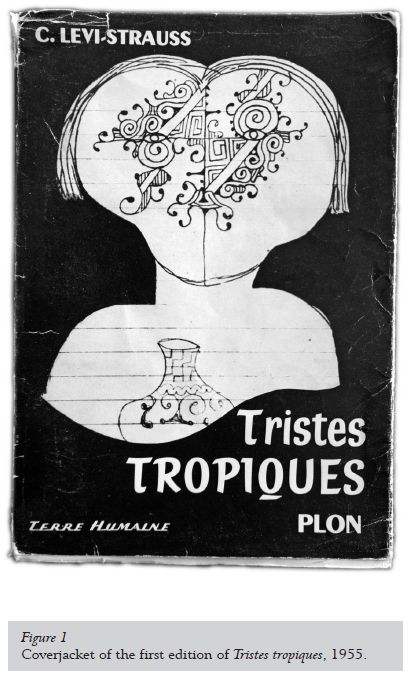
<body><![CDATA[<p>&nbsp;</p>     <p><font face="Verdana"><b><font size="3"><i >Tristes tropiques</i> as an example of ethnographic prose</font></b></font></p>     <p><font size="3" face="Verdana"></font><font size="2" face="Verdana">How does L&#233;vi-Strauss&#8217;s work fare against   this background&#63; On the one hand, it is an obvious example of what Debaene describes: this stylistic duality of the writing of   French anthropologists, and, one might say, the outstanding example of it.   Furthermore, its author had direct links with philosophy as a result of his   education and made frequent references to the classics, especially the   Enlightenment as an ideal of thought (Rousseau in particular). L&#233;vi-Strauss   himself, in the chapter &#8220;How I became an anthropologist&#8221; near the beginning of   the book, emphatically shows his individual intellectual path: from the   futility of philosophy to the neolithic extensiveness   of anthropology: &#8220;My mind was able to escape from the claustrophobic,   Turkish-bath atmosphere in which it was being imprisoned by the practice of   philosophical reflection. Once it had got out into the open air, it felt refreshed and renewed&#8221; (L&#233;vi-Strauss 1973 &#91;1955&#93;: 59).</font></p>     <p><font size="2" face="Verdana">On the other hand, though, L&#233;vi-Strauss does   not fit the model of the 1930s&#8217; French anthropology. Firstly, his area of   research was South America, where he searched for the most primitive natives.   Most of his colleagues did not share this fascination, choosing instead to   study the French colonies in Africa, which had already been subjected to the   process of modernisation (this is discussed, with reference to Leiris, by Price 2004: 28).</font></p>     <p><font size="2" face="Verdana">Secondly, L&#233;vi-Strauss was not a pupil of Mauss, although in later years he emphasised   his affinity with him. He was influenced by American anthropologists, however,   which he expressed emphatically: &#8220;the authors to whom I willingly proclaim my debt, Lowie, Kroeber, Boas&#8221; (L&#233;vi-Strauss 1973 &#91;1955&#93;: 59).</font></p>     <p><font size="2" face="Verdana">Furthermore, L&#233;vi-Strauss was not a   particularly active participant in the French intellectual and artistic life of   the 1930s (described so thoroughly by James Clifford 1988), as for most of this   period he was on the other side of the Atlantic. The atmosphere of the time   did, however, pervade <i >Tristes tropiques</i>, as   is especially visible in the surrealist practice of making familiarity alien,   as well as in the use of collages and paradoxical juxtapositions. This   surrealist value of the book is rendered well by the illustration that   decorates the dust coverjacket of the first edition   of <i >Tristes tropiques</i> from 1955 (<a href="#f1">figure 1</a>). It makes use of a drawing done by a Caduveo   woman depicting the image of a native woman who, instead of a face, has a   subtle and complicated arabesque. This picture brings forth associations with   1930s&#8217; art, which draws inspiration from the artistic creativity of &#8220;primitive&#8221;   peoples. In this case it is a work of &#8220;primitive&#8221; art, and the surrealist effect is thus strengthened further.</font></p>     <p><a name="f1"></a></p>     <p>&nbsp;</p>     <p align="center"><img src="/img/revistas/etn/v18n3/18n3a07f1.jpg"></p>     
<p>&nbsp;</p>     ]]></body>
<body><![CDATA[<p><font size="2" face="Verdana">Another circumstance that distinguished L&#233;vi-Strauss from other French   anthropologists of the time was his several years experience of emigration,   first in S&#227;o Paulo, and during the war in New York (the significance of this   period in his life is discussed by Debaene 2010b); as   well as his later work in French diplomacy and for UNESCO (Stoczkowski   2009). We should also stress that L&#233;vi-Strauss&#8217;s book, unlike other texts of   French ethnographic prose, was written not immediately after his return from   the field, but only over a dozen years later, and moreover following an external   impetus.</font></p>     <p><font size="2" face="Verdana">The biographical context of the work was presented by the author himself in a discussion with Didier Eribon:</font></p>     <blockquote>       <p><font size="2" face="Verdana">&#8220;After this double misfortune I was     certain that I would never again do what is known as a career. I made a break     with my past, rebuilt my private life and wrote <i>Tristes       tropiques</i>, which I never would have dared publish     if I had been involved in applying for any university job whatsoever. &#91;&#8230;&#93; I     loosened myself up too much &#91;<i>se d&#233;boutonner</i>&#93;     as M&#233;traux liked to say&#8221; (L&#233;vi-Strauss and Eribon 1994 &#91;1988&#93;: 64, 75).<a href="#_ftn4" name="_ftnref4" title=""><sup><sup>&#91;4&#93;</sup></sup></a></font></p> </blockquote>     <p><font size="2" face="Verdana">However, L&#233;vi-Strauss&#8217;s biographer   Patrick Wilcken (2011: 82) shows that, in spite of   these pessimistic visions at the time, his career was then developing very   promisingly, as in late 1950 he became director of research at the Section 5 of   the Ecole pratique des hautes &#233;tudes, which carried out studies in religion.</font></p>     <p><font size="2" face="Verdana">What led L&#233;vi-Strauss to write <i >Tristes tropiques</i>&#63; He told Eribon:</font></p>     <blockquote>       <p><font size="2" face="Verdana">&#8220;At first, the proposal of Jean Malaurie &#91;&#8230;&#93;,     who had created the series <i>Terre humaine</i>. The     idea of writing about my travels had never crossed my mind before. In the end,     with time, I acquired a certain distance. It was no longer about copying out a     diary of the expedition of sorts. I had to rethink my old adventures; I had to     think about them and philosophise about them, form     conclusions. &#91;&#8230;&#93; I suffered from a guilty conscience that I wasn&#8217;t working on a     second volume about the complex structures of kinship &#91;&#8230;&#93;. I thought I was     committing a sin against science. You can see that in the book, especially the first     edition, which was full of serious mistakes&#8221; (L&#233;vi-Strauss and Eribon 1994 &#91;1988&#93;: 73).<a href="#_ftn5" name="_ftnref5" title=""><sup><sup>&#91;5&#93;</sup></sup></a></font></p> </blockquote>     <p><font size="2" face="Verdana">L&#233;vi-Strauss&#8217;s words show clearly the workings of academic disciplining, of which he himself was aware.</font></p>     <p><font size="2" face="Verdana">This self-image needs more contextualisation,   which can be found in Pierre Bourdieu&#8217;s <i >Homo Academicus</i> (1984), where Claude L&#233;vi-Strauss is presented as an example of an alternative   career trajectory. He points out that the Coll&#232;ge de   France has occupied a unique position in the French academic field from the very   beginning, as it was established against the Sorbonne and academic   conformities. Professors at the Coll&#232;ge were   &#8220;consecrated heretic&#8221;, many of them lacking any power in university   institutions. But at the same time the Coll&#232;ge was   (and still is) a very prestigious and dynamic institution, enjoying more   freedom and encouragement for ambitious projects. Thus we can imagine that his   writing of <i >Tristes tropiques</i> was   more acceptable for a future Coll&#232;ge de France professor than for a professor at the Sorbonne.</font></p>     ]]></body>
<body><![CDATA[<p><font size="2" face="Verdana">As for the literary qualities of the book, the   author himself did not place his work in the tradition of ethnographic prose.   He did not refer either to Leiris, or to Griaule, or even to his friend M&#233;traux   or American authors. One name, Mac Orlan, mentioned   by L&#233;vi-Strauss as a source of his literary inspiration, comes from outside of   this tradition (L&#233;vi-Strauss and Eribon 1994 &#91;1988&#93;:   74). Pierre Mac Orlan (1881-1970) was a very popular   French writer, maker of reportages, songwriter and author of pornographic   novels (under various pseudonyms), film critic and visual artist, member of the   Montmartre artistic <i >boh&#232;me</i>,   World War One veteran and war correspondent. Of him it was written that he   tried to bring forth a new era of Jules Verne by discovering with a fresh eye   the geography of the world in which he found himself. And also that he was   particularly interested in the opposition between, on the one hand, eternal   ways of life and people in the margins such as travelling jugglers, and on the   other, the rationalism of the modern world (Lykiard   n. d.). We can surmise that this inspiration from an author looking with   a &#8220;fresh eye&#8221; at the world around him matched the approach of the   anthropologist, who in just the same way attempted to view the Amazonian Indians, the architectural chaos of S&#227;o Paulo, or Asian cities.</font></p>     <p><font size="2" face="Verdana">However, although L&#233;vi-Strauss did not refer   to the literary works of his anthropological colleagues &#8211; or perhaps because of   this &#8211; it seems as if certain parts were directly addressed to them. (While   reading, I sometimes had the impression that, after one of his stylist   fireworks, the author seems to be saying &#8220;That&#8217;s how to write, Michel Leiris!&#8221;) Although <i >Tristes tropiques</i> is an extremely original work, its author   drew much from his contemporaries, and the book sits well in the tradition of   the writings of French intellectuals leaving the metropolis to search for knowledge and enlightenment (Wilcken 2011: 207).</font></p>     <p><font size="2" face="Verdana">The book more than fulfils the &#8220;travelogue   pact&#8221;. We assume that L&#233;vi-Strauss really was everywhere that he claims he was.   We would be disappointed if it turned out that, for example, he described the Tupi-Kawahib using other sources, and never in fact reached   them himself. He also made the book engrossing, and we are impatient in   &#8220;waiting for the savages&#8221;. We find enchanting his descriptions using fresh and   bold metaphors. <i >Tristes tropiques</i> also fits the bill of travelogue insofar as its author-protagonist described   his &#8220;impressions&#8221;. On the other hand, the book does not fulfil the requirements   of travel literature popularly understood as vivid descriptions of natural and   cultural exotica &#8211; instead, we find an image of a tropical world as &#8220;a seedy   and decrepit version of Western civilisation   converted into a corrupting global force&#8221; (Douglass 2003: 115). The book is a   good example of an ethnographic travelogue, as it presents not only   &#8220;adventures&#8221;, but also the scientific results of the enterprise as well as an outline of structural theory. </font></p>     <p>&nbsp;</p>     <p><font size="3" face="Verdana"><b>L&#233;vi-Strauss as a protagonist of   his prose, i.e. a travelling anthropologist</b></font></p>     <p><font size="2" face="Verdana">What, though, defines this particular type of travel book written by an   anthropologist&#63; Above all, the author distances himself from the concept of the   journey as an objective in itself, which I suspect results from the logic of   scientific disciplining. L&#233;vi-Strauss lays his cards on the table right at the   start of the book in the famous and often quoted sentences &#8220;I hate travelling   and explorers. Yet here I am proposing to tell the story of my expeditions&#8221;   (L&#233;vi-Strauss 1973 &#91;1955&#93;: 17). This line has been interpreted by various   authors on a number of occasions; I would like to focus on its &#8220;distancing&#8221;   meaning. Anthropologists travel the world, L&#233;vi-Strauss seems to be suggesting,   but they do not do this out of a tacky desire to travel and search for exotic   tourist sights. They travel because they must, but they do not like to. It is   just like with writing: true literature, claim writers, emerges only from   travails and suffering; only hacks write with pleasure. In this first line of <i >Tristes tropiques</i>,   then, at one fell swoop the author distances himself from &#8220;ordinary&#8221; travellers (as he explains in the next paragraphs), creates   an attention-grabbing paradox, presenting himself here as an &#8220;ornery and ironic   persona&#8221; and expresses a certain elitist vision of his profession (Narayan   2007: 133).<a href="#_ftn6" name="_ftnref6" title=""><sup><sup>&#91;6&#93;</sup></sup></a> This   coincided with a negative evaluation of tourism as inauthentic activity, which   was characteristic of anthropologists until recently (Graburn 1983).</font></p>     <p><font size="2" face="Verdana">However, the negative image of travellers is not only about their voyages being an   objective in themselves, but about the fact that they personify certain cultural characteristics which according to L&#233;vi-Strauss are mythologised by society. He wrote provocatively that</font></p>     <blockquote>       <p><font size="2" face="Verdana">&#8220;It is obvious that this &#8216;quest for     power&#8217; &#91;typical of young people in native societies&#93; enjoys a renewed vogue in     contemporary French society, in the unsophisticated form of the relationship     between the public and &#8216;its&#8217; explorers. &#91;&#8230;&#93; &#91;they&#93; are all, in their different     ways, enemies of our society, which pretends to itself that it is investing     them with nobility at the very time when it is completing their destruction,     &#91;&#8230;&#93; I refuse to be the dupe of a kind of magic&#8221; (L&#233;vi-Strauss 1973 &#91;1955&#93;:     40-41).</font></p> </blockquote>     <p><font size="2" face="Verdana">This can be understood as follows: the   traditional model of heroic manhood, aggressive and seeking adventures (see   Connell 1995), is today dysfunctional in Western society, and can only be   fulfilled outside of it, for example during exotic and dangerous expeditions.   According to L&#233;vi-Strauss, the enthusiastic public adoration of travellers who embody this mythical model might give the impression that it continues to be socially desirable, which is not the case.</font></p>     ]]></body>
<body><![CDATA[<p><font size="2" face="Verdana">L&#233;vi-Strauss&#8217;s book does, however, present the   narrator-protagonist as just that, a heroic researcher struggling with various   problems in a bid to gain knowledge and experience. Sontag (1994: 74) noted   that anthropology &#8220;is one of the rare intellectual vocations which do not   demand a sacrifice of one&#8217;s manhood&#8221;. One can also encounter the opinion that   fieldwork is popularly viewed as a form of adventure, and the role of the   anthropologist merges with that of the traveller (see   Lutkehaus 2010: 235). In my opinion, both were modal realisations of the model of heroic manhood: different   incarnations of the same myth. In the protagonist of <i >Tristes tropiques</i>, we can thus see   manifestations of that traditional active masculinity in a new, &#8220;scientific&#8221; version.</font></p>     <p><font size="2" face="Verdana">On a number of occasions in <i >Tristes tropiques</i>,   L&#233;vi-Strauss criticises travellers   and their literature for dazzling readers with descriptions of &#8220;barbarian&#8221;   customs, and for ethnocentrism, resulting mainly from the fact that they made   no attempt to live like the locals. The narrator-protagonist did do so, and was able to note that:</font></p>     <blockquote>       <p><font size="2" face="Verdana">&#8220;at that moment I understood the alleged gluttony of savages,     which is mentioned by so many travellers as a proof     of their uncouthness. One only had to share their diet to experience similar     pangs of hunger; to eat one&#8217;s fill in such circumstances produces not merely a     feeling of repletion but a positive sensation of bliss&#8221; (L&#233;vi-Strauss 1973     &#91;1955&#93;: 322).</font></p> </blockquote>     <p><font size="2" face="Verdana">At the same time, though, he often describes   himself as a &#8220;European traveller&#8221; or a &#8220;conscientious tourist&#8221;. This ambivalence (or perhaps duality) is present throughout the book.</font></p>     <p><font size="2" face="Verdana">Marc Aug&#233; (1995: 86)   adds one more dimension to this picture by writing that travel constructs a   fictional relationship between the looking and the landscape and where the   position of the viewer established the nature of the spectacle. For Aug&#233;, L&#233;vi-Strauss&#8217;s hatred for travel is an expression of his disagreement with the formation of &#8220;non-places&#8221;.</font></p>     <p><font size="2" face="Verdana">But there is also another view of the problem   expressed by contemporary researchers of tourism. They claim that there is not   much difference between anthropologists and tourists. They are both direct   descendants of colonialism, and they benefit from the encounter with the Other;   they also share a material infrastructure offered for travellers,   their romantic motives and exoticising of the Other. Tourists   and anthropologists have structurally overlapping identities (Crick 1995: 211).   One has to add here that the authors have mainly Western tourists and Western anthropologists in mind.</font></p>     <p><font size="2" face="Verdana">Let us now examine the narrator-protagonist of     <i >Tristes tropiques</i> in   order to establish whether, aside from direct declarations, he presents himself   to readers as a disciplined ethnographer, or rather as a typical traveller. This analysis will be helped by James Clifford&#8217;s   essay on spatial practices in which he analyses the ways of describing   anthropologists&#8217; research situation and professional habitus in classical field   monographs (often created in negative reference to travel literature; see Clifford 1997).</font></p>     <p><font size="2" face="Verdana">Firstly, &#8220;being there&#8221; is more important for   the anthropologist than the journey that leads to the field. For L&#233;vi-Strauss   this is definitely the case, as I have already written. The fact that he also   describes his travels and the adventures that went with them can be seen as a   concession to the &#8220;travelogue&#8221; category of writing, but this genre was   transformed by him artistically, gaining a philosophical depth and stylistic excellence.</font></p>     <p><font size="2" face="Verdana">Secondly, according to Clifford,   anthropological texts tend to marginalise emotions,   and especially negative feelings towards the society being studied; only a   balanced affinity is permitted. L&#233;vi-Strauss does not hide his emotions,   particularly in the early parts of the book, which locate the figure of the   narrator and his ambivalent position as a Jew seeking refuge from war-torn   Europe (L&#233;vi-Strauss 1973 &#91;1955&#93;: 24). Later, though, his uncompromising   criticism of colonialism and descriptions of Asian cities betray deep feelings,   often of an aesthetic nature. Meanwhile, the ethnographic parts, in which the   author describes the cultures of various tribes in depth, are &#8220;disciplined&#8221; and express at most a &#8220;balanced affinity&#8221;.</font></p>     ]]></body>
<body><![CDATA[<p><font size="2" face="Verdana">The next characteristic of ethnographic texts   according to Clifford is the asexuality of the researcher: his/her   sex does not exist as an intervening category. <i >Tristes tropiques</i> is no exception in this   respect either: L&#233;vi-Strauss does not problematize this issue, but neither does   he deny that the fact that he was a man had some significance in the field   (e.g. when he mentions he was sometimes aroused by the sight of young   women, the physiological results of which he had to hide, L&#233;vi-Strauss 1973 &#91;1955&#93;: 286).</font></p>     <p><font size="2" face="Verdana">At the same time, according to Clifford, in   the classical model of ethnographic practice we find a strong sexual taboo   concerning field researchers, who were not permitted to enter intimate   relations with native women, in contrast to travellers,   who were open to this type of experience. L&#233;vi-Strauss makes no single   reference to this aspect (apart from one enigmatic excerpt about his wartime escape from Europe and two German women, L&#233;vi-Strauss 1973 &#91;1955&#93;: 29).</font></p>     <p><font size="2" face="Verdana">Another characteristic of the anthropologist&#8217;s   habitus was his/her &#8220;professional appearance&#8221;. The academic   community held a negative view of people &#8220;going native&#8221; and indulging in the   dressing up that was popular among travellers. <i >Tristes tropiques</i>   does not tell us how the ethnographer looked: nowhere is his attire described,   and neither is there a photograph depicting the author. There are such photos   (albeit few of them), however, in the album <i >Saudades do Brasil</i> (L&#233;vi-Strauss 1996). One of   them shows part of the camp: right by the river bank stands a table made of   quite thick sticks, and on them are some blackened pots and a plate. Next to it   is the ethnographer: dark-haired, bearded, bespectacled; in a baggy grey linen   trousers, a shirt of the same kind and high trapper&#8217;s boots, with a monkey   hanging off his calf (L&#233;vi-Strauss 1995: 191). He looks like a true   ethnographer should. So why did he not include an image of himself in <i >Tristes tropiques</i>&#63; In   this way, I suspect that he aimed to distance himself from travel books, which   tended to include a picture of the author even in the frontispiece. The lack of such a photo, then, could be evidence of the scientific nature of the text.</font></p>     <p><font size="2" face="Verdana">According to Clifford (1997: 69-71), among the   factors shaping the professional habitus of anthropologists is their criticism   of racism and essential understanding of race. This was manifested in the term   being denied its central theoretical meaning, but also in the subject of race   not being conceived as a historical formation. The problem of race was   therefore purged from ethnography, but remained in travel literature, whose   authors often paid attention to skin colour, were   more aware of the problem, and were sometimes simply racists. In this context   too, L&#233;vi-Strauss is a typical anthropologist. Although he would of course   later tackle the issue of race in a remarkably clear way (see L&#233;vi-Strauss   1952), in <i >Tristes tropiques</i> one   searches for any such reflections in vain. Intuitively, however, it is present,   especially when the author writes at the very beginning that he is a Jew   fleeing Europe (read: a Europe rife with racism), or in his fierce and   uncompromising criticism of colonialism. The word &#8220;race&#8221; itself, though, only   appears as a popular linguistic <i >calque</i>,   or in the description of the &#8220;diversity of races&#8221; that can be encountered at a Brazilian market (L&#233;vi-Strauss 1973 &#91;1955&#93;: 110).</font></p>     <p><font size="2" face="Verdana">The next important characteristic that for   Clifford distinguished travellers from   anthropologists was the acquisition of a contextualised,   deeper understanding of culture by   the latter, as opposed to the superficial impressions of the former. On each   page of his book, L&#233;vi-Strauss gives evidence of the &#8220;deepness&#8221; of his   approach: in terms both of his understanding of the natives and of his position   towards the hidden structures at the basis of social life, which formed the   principle of his anthropological theory. This was all possible thanks to the   efforts of field research (e.g. L&#233;vi-Strauss 1973 &#91;1955&#93;: 375). This   picture of the activity of the protagonist-narrator showed the wider public   what fieldwork meant, and justified anthropology&#8217;s claims to &#8220;deeper&#8221;   understanding of the studied culture, particularly in comparison with the descriptions that resulted from the flying visits of travellers.</font></p>     <p><font size="2" face="Verdana">It is clear, then, that L&#233;vi-Strauss presents   himself consistently in his work as a professional anthropologist, although at   times he transgresses his professional habitus. This concerned above all the   emotions shown in the text, which in classical ethnographies were reined in and   could appear only in tightly rationed situations and limited intensity and   directions. A further &#173;transgressive element was the descriptions of the   &#8220;impressions&#8221; of the protagonist at various stages of the journey. This   intentional subjectivity and uncovering, rather than concealing, of feelings put the text in the bounds of literature.</font></p>     <p><font size="2" face="Verdana">What else can we say about the persona of the   protagonist of <i >Tristes tropiques</i>&#63;   Above all, it is a dominant and overpowering figure, to the extent that we in   fact do not know who accompanied L&#233;vi-Strauss in the expeditions. The   information about his wife, with whom he was conducting the research, appears   only once, and this in a note saying that he had to discontinue the trip as she   had a serious eye infection threatening her with blindness (L&#233;vi-Strauss 1973   &#91;1955&#93;: 301). This nameless and silent wife was Dina Dreyfus, who in S&#227;o Paulo   gave a series of lectures on &#8220;The Science of Ethnography&#8221; &#8211; physical   anthropology, linguistics, archaeology and carrying out fieldwork &#8211; besides   founding the Brazilian Ethnological Society (see Wilcken   2011: 55). She was also one of the organisers of   expeditions to Mato Grosso.   The exhibits collected at the time were presented in the Mus&#233;e   de l&#8217;Homme in 1937 as the results of the &#8220;mission of   Claude and Dina L&#233;vi-Strauss&#8221;.<a href="#_ftn7" name="_ftnref7" title=""><sup><sup>&#91;7&#93;</sup></sup></a> The   second expedition, this time to the west of Mato Grosso, was made up of four people: Claude and Dina along   with the anthropologist Lu&#237;s de Castro Faria and the doctor Jehan Vollard (Wilcken 2011: 81). L&#233;vi-Strauss completed his last trip without his wife (who stayed in France).</font></p>     <p><font size="2" face="Verdana">This concealment of the presence of other   participants on the expeditions shows not so much the author&#8217;s inflated ego as   a literary device intended to render the loneliness of the protagonist during   the Amazonian trips as well as other travels he undertook later. Marc Aug&#233; (1995) sees this solitude in the context of changing images as a figure of modernity.</font></p>     <p><font size="2" face="Verdana">Returning to the protagonist, though, he is   also characterised by omniscience and a lack of   doubt. He leads the reader by the hand in a manner that is authoritative and   does not tolerate opposition. At times, the book&#8217;s narration resembled the   ethnographic films of the time: the eye of the camera records only that which   is visual, what can be seen. We do not hear the natives, but only the intrusive   and all-knowing voice of the narrator from off camera. This is the impression   given by the part of <i >Tristes tropiques</i> on   the Caduveo: the author describes only what he sees &#8211;   i.e. mostly the body paint &#8211; and analyses its   homology with the social structure. Only in the next parts of the book does the situation change: we begin to &#8220;hear&#8221; the Indians too.</font></p>     <p><font size="2" face="Verdana">The protagonist-narrator is also a man of his   time, not immune to prejudices. We can find examples of what we would today   call sexist, such as the repeated use of the phrase (or rather <i >bon mot</i>) &#8220;shop girl&#8217;s philosophy&#8221; (on   existentialism); homophobic &#8211; a remark about infertile couples in an infertile   district (on the first gay/lesbian town in America, Cherry   Grove); and finally ethnocentric &#8211; in an argument on Muslim societies with   undisguised antipathy (in the chapter Taxila). The   author&#8217;s orientalising is often <i >&#224; rebours</i>, as in his description of   overpopulated cities, which finishes with the sentence &#8220;What frightens me in   Asia is the vision of our own future which it is already experiencing&#8221; (L&#233;vi-Strauss 1973 &#91;1955&#93;: 150).</font></p>     ]]></body>
<body><![CDATA[<p><font size="2" face="Verdana">More than anything else, though, he is a   decided and uncompromising critic of colonialism, in both its economic   dimension (globalisation) and its cultural one   (e.g. his embarrassment in India in finding himself &#8220;in the shoes&#8221; of the British coloniser). L&#233;vi-Strauss wrote that:</font></p>     <blockquote>       <p><font size="2" face="Verdana">&#8220;Being human signifies, for each one of us, belonging to a class,     a society, a country, a continent, a civilization; and for us European     earth-dwellers, the adventure played out in the heart of the New World     signifies in the first place that it was not our world and that we bear     responsibility for the crime of its destruction; and secondly, that there will     never be another New World: since the confrontation between the Old World and     the New makes us thus conscious of ourselves, let us at least express it in its     primary terms &#8211; in the place where, and by referring back to a time when, our world     missed the opportunity offered to it of choosing between its various missions&#8221;     (L&#233;vi-Strauss 1973 &#91;1955&#93;: 393). </font></p> </blockquote>     <p>&nbsp;</p>     <p><font size="3" face="Verdana"><b>Reception then and now</b></font></p>     <p><font size="2" face="Verdana">Edmund Leach (1974: 86) believed that the   great success of <i >Tristes tropiques</i> in   France in 1955 was connected with the moods of the Parisian intellectual   circles at the time, as well as the fall in popularity of Sartre, who, like   L&#233;vi-Strauss, combined literature with philosophy. The anthropologist&#8217;s biographer describes these moods:</font></p>     <blockquote>       <p><font size="2" face="Verdana">&#8220;By the mid-1950s the     colonial paradigm, which had shaped not just geopolitical arrangements, but     French attitudes and culture, was beginning to fall apart. Post-war France was     gripped by a renewed sense of pathos and disillusionment, but it was coupled     with a growing interest in the non-Western cultures then emerging from beneath     the imperial boot. Anthropologists became well-placed witness to this moment of     revelation&#8221; (Wilcken 2011: 194-195).</font></p> </blockquote>     <p><font size="2" face="Verdana">The book came out at the right moment, then:   the French were ready to question colonialism and began to take a new kind of interest in other cultures.</font></p>     <p><font size="2" face="Verdana"><i >Tristes tropiques</i> was rated   highly by critics, who compared it to &#173;Montesquieu&#8217;s <i >Persian Letters</i> and the works of Cervantes and Chateaubriand (Dosse 1997: 133).<a href="#_ftn8" name="_ftnref8" title=""><sup><sup>&#91;8&#93;</sup></sup></a>   Many readers became interested in anthropology, some of them even making a   career out of it, as was the case with Emmanuel Terray   and Luc de Heusch. Yet French anthropologists, who were more established, did not respond with the same enthusiasm.</font></p>     ]]></body>
<body><![CDATA[<p><font size="2" face="Verdana">The second wave of interest in the book   arrived after the publication of the English translation and Susan Sontag&#8217;s   famous essay, which I referred to at the beginning of this article. According to Sontag (1994: 72),</font></p>     <blockquote>       <p><font size="2" face="Verdana">&#8220;the greatness of <i>Tristes     Tropiques</i> lies not simply in this sensitive     reportage, but in the way L&#233;vi-Strauss uses his experience &#8211; to reflect on the     nature of landscape, on the meaning of physical hardship, on the city in the     Old World and the New, on the idea of travel, on sunsets, on modernity, on the     connection between literacy and power.&#8221;</font></p> </blockquote>     <p><font size="2" face="Verdana">She sees the stylistic   aspect of the prose as a mixture of pathos and coolness, like with the   formalists of the &#8220;new novel&#8221; and film: &#8220;Sometimes the result is a masterpiece   like <i >Tristes tropiques</i>.   The very title is an understatement. The tropics are not merely sad. They are in agony&#8221; (Sontag 1994: 80).<a href="#_ftn9" name="_ftnref9" title=""><sup><sup>&#91;9&#93;</sup></sup></a></font></p>     <p><font size="2" face="Verdana">The reception of L&#233;vi-Strauss&#8217;s work in the   anthropological community until the 1970s was summarised   succinctly by Paul Rabinow (1977: 4): &#8220;The book was   treated by anthropologists either as a fine piece of French literature or,   snidely and true to form, as an overcompensation for the author&#8217;s shortcomings   in the bush&#8221;. And only after the publication of Geertz&#8217;s essay &#8220;The world in a   text&#8230;&#8221; (in Geertz 1988) did it begin to be treated &#8220;seriously&#8221; (see Deli&#232;ge and Scott 2004). The change in attitude was the   result of the &#8220;literary turn&#8221; in anthropology and its focus on the problem of   representation. Until then anthropological texts were by most practitioners   supposed to report a studied reality, and were often treated as transparent   windows onto other cultures. The change in perspective came about in the   mid-1980s with such publications as <i >Writing     Culture</i> (Clifford and Marcus 1986), <i >Works       and Lives</i> (Geertz 1988) and <i >Anthropology         as Cultural Critique</i> (Marcus and Fischer 1986), which tackled the problem   of anthropological writing itself and launched the willingness to experiment   (Rapport and Overing 2000: 236). It also caused   certain texts, until then excluded from the anthropological canon because of   their &#8220;unscientific&#8221; form, to start to be treated as legitimate parts of the   corpus of anthropology. <i >Tristes tropiques</i> is probably the best example of the process.</font></p>     <p><font size="2" face="Verdana">In addition to enthusiastic exegeses, I would   also like to present critical views.<a href="#_ftn10" name="_ftnref10" title=""><sup><sup>&#91;10&#93;</sup></sup></a> One of these appeared in Alan Campbell&#8217;s ironically titled essay &#8220;Tricky   tropes: styles of the popular and the pompous&#8221;. Campbell expresses the view that L&#233;vi-Strauss&#8217;s books are good   examples of the fact that a muddled text, masking trite ideas, can be viewed as   profound writing. He claims (1996: 69) that <i >Tristes tropiques</i> is not a boring book, but he   is surprised by all the commotion over it. He acknowledges that there are a few   inspired extracts, but sees the ethnographic parts as superficial. The book cannot be recommended to Muslim students &#8220;because of the scandalous &#8216;Taxila&#8217; chapter&#8221;:</font></p>     <blockquote>       <p><font size="2" face="Verdana">&#8220;If you&#8217;re not involved with anthropology, and if you&#8217;re not involved with     academic discourse (and if you&#8217;re not Islamic), <i>Tristes       Tropiques</i> will remain an interesting enough read     &#91;&#8230;&#93; Knowing first-hand about the disaster of structuralism, I find myself     reading <i>Tristes Tropiques</i>     in a different way. I find it a sinister book. It begins with an outburst of     hate and ends exchanging glances, in a gesture of involuntary understanding,     with a cat. In between are visits to Brazil and India, where all human     encounters are like mime shows or silent movies. <i>Hauteur</i> is the tone:     the condescending regard of the privileged outsider, who, having completed his     observations, turns to apostrophize his elegant Parisian public&#8221; (Campbell     1996: 70).</font></p> </blockquote>     <p><font size="2" face="Verdana">Although this is a good   example of what I once called &#8220;reluctant reading&#8221;, it is hard to disagree with   Campbell in many questions, especially in recognising the superior tone in which the protagonist-narrator speaks in the entire book.</font></p>     <p><font size="2" face="Verdana">Another critical view tackles the problem of   representation. Steven &#173;Rubenstein (2006) writes that L&#233;vi-Strauss in <i >Tristes tropiques</i> constantly mourns &#8220;the damage done by European colonialism&#8221; (2006: 244) and criticises adventurers for their delusion that the Old   World had not contaminated the New, and thus their power coming through   misrepresentation. But Rubenstein observes that in fact the Western travelogue   is not that much the result of the authors&#8217; sense of discovery, but rather of   their compulsion to talk about it: &#8220;Contrary to L&#233;vi-Strauss&#8217;s critique, the   power of travelogue comes not from misrepresentation but from representation   itself&#8221; (2006: 244). It is a Western habit to describe what one is seeing.   Rubenstein also observes that the style of <i >Tristes tropiques</i> &#8220;invited deconstruction&#8221;, as was the case with &#173;Derrida (Rubenstein 2006: 251).</font></p>     ]]></body>
<body><![CDATA[<p><font size="2" face="Verdana">One of the most recent analyses of   L&#233;vi-Strauss&#8217;s book was made by the feminist anthropologist Kamala Visweswaran, who points to its diversity (being &#8220;part elegy   part disquisition&#8221;) and ambiguity: &#8220;&#91;it&#93; hovers between witnessing a   &#8216;primitive&#8217; world on the wane and acknowledging membership in a civilization   that has led to that world&#8217;s demise&#8221; (2010: 96). Cognitive criticism of   L&#233;vi-Strauss&#8217;s position concerns an important problem for him. Visweswaran notes that the cosmopolitanism of anthropology   is traditionally seen as a radically anti-racist approach. However, she argues   that cosmopolitanism is not an opposition to racism at all, various forms of   which can be taken from it. This particularly concerns cosmopolitanism being   seen as a universal ethic (e.g. in the case of human rights), which was   used to justify (neo-)imperialistic projects. According to Visweswaran,   in the history of anthropology there has been no suitable riposte to this   universal ethic &#8211; neither in &#8220;salvage ethnography&#8221; nor in the self-reflexive   structuralism of <i >Tristes tropiques</i> (Visweswaran 2010: 15-16). </font></p>     <p>&nbsp;</p>     <p><font size="3" face="Verdana"><b>Reception in   the other contexts</b></font></p>     <p><font size="2" face="Verdana">The translation of <i >Tristes tropiques</i> into Portuguese was   published in Brazil in 1957, only two years after the book appeared in France.   Eduardo Viveiros de Castro, in an interview   commemorating Claude L&#233;vi-Strauss, pointed out to the fact that the publication   made Brazilians realise that &#8220;they were important and   that they existed&#8221; (Kirsch and Castro 2009: 193), and he himself had learned   from the book that the Indians existed, because during his sociological studies   they appeared only as an element of a very distant past. From a certain point   of view one may say that Brazilian anthropology as a discipline started only in the 1960s (Kirsch and Castro 2009: 200).</font></p>     <p><font size="2" face="Verdana">In recent years, several texts have appeared   that refer to <i >Tristes tropiques</i>.   The authors of one of them consider the role of Indians and the field in the   work of L&#233;vi-Strauss, and conclude that it is because of them that his book is   still alive and continues to keep contemporary discussions alive. L&#233;vi-Strauss&#8217;s Americanist works   still continue to invigorate the contemporary debate (Souza and Fausto 2004). Fernanda Peixoto (1998) conducted thorough archival research   concerning the Brazilian period of the anthropologist&#8217;s biography, looking   through his local publications, classes he had and research he carried out.   Jos&#233; Magnani (1999) focused on the cities described   in <i >Tristes tropiques</i>. A   Portuguese anthropologist working in Brazil, Cristiana Bastos   (1998), made a comparative analysis of L&#233;vi-Strauss&#8217;s book and Gilberto Freyre&#8217;s travelogue <i >Aventura e Rotina</i>,<a href="#_ftn11" name="_ftnref11" title=""><sup><sup>&#91;11&#93;</sup></sup></a> as a   part of her project of re-examining Portuguese colonial and post-colonial   spaces, and especially the ideology of Lusotropicalism   and its impact on society and recent revival. The concept was coined by Freyre to denote the distinctive character of Portuguese   imperialism: more humane and adaptable to other climates and cultures, seeing   miscegenation positively. His travelogue is a report from his journey to Africa   in 1951-2 on an invitation of the Portuguese Overseas Ministry. Stylistically,   the books are quite alike. But <i >Tristes tropiques </i>is written, according to Bastos,   &#8220;from another universe: mental, social, political&#8221; (1998: 420). L&#233;vi-Strauss&#8217;s   approach is based on seeing otherness as the foundation of the social and the   real, while Freyre proposes an implicit similarity.   L&#233;vi-Strauss orientalises the tropics, Freyre tropicalises the world   (even if restricted to the Lusophone world). According   to Bastos, L&#233;vi-Strauss&#8217;s   interjection &#8220;I hate travelling!&#8221; is not just a paradox and a literary device,   but a sign of an attitude of aloofness and detachment, which is present   throughout the book. His tropics are sad peripheries. On the contrary, Freyre&#8217;s language is not hegemonic; the tropics are the   place <i >par excellence</i>, not only different and unique but in many aspects more humane and universal.<a href="#_ftn12" name="_ftnref12" title=""><sup><sup>&#91;12&#93;</sup></sup></a></font></p>     <p><font size="2" face="Verdana">To sum up, <i >Tristes tropiques</i> was a kind of a mirror in   which Brazilians could look at themselves and their Indians. On the other hand,   their colonial ideology enabled the critic to perceive L&#233;vi-Strauss&#8217;s   privileging of alterity despite the anti-colonial mission of the book.</font></p>     <p><font size="2" face="Verdana">On the other side of the world, behind the   Iron Curtain, the reception of L&#233;vi-Strauss&#8217;s book was obviously different. The   Polish edition of <i >Tristes tropiques</i> came out quite early, in 1960. It was translated by Aniela Steinsberg   (1896-1988), one of the first female Polish lawyers, a Holocaust survivor, in   the communist era a defence counsel in political   trials, an underground activist who was finally prevented by the authorities   from working as a lawyer. Her translation faithfully renders the literary   beauty of the original, although the title itself underwent a small change &#8211; the Polish version, <i >Smutek tropik&#243;w</i> &#91;&#8220;Sorrow of the tropics&#8221;&#93;, sounds more poetic.</font></p>     <p><font size="2" face="Verdana">The book was published during the post-Stalin &#8220;thaw&#8221; in the very popular and prestigious series &#8220;Rodowody Cywilizacji&#8221; &#91;&#8220;The Origins of Civilisations&#8221;&#93;, and was   received with enthusiasm by reviewers of   cultural weeklies as a &#8220;remarkably   interesting, written with huge narrative talent and typical French charm&#8221; (quoted in Zaj&#261;czkowski 1960: 872). Marcin Czerwi&#324;ski   (1960), an eminent sociologist of culture and columnist, noted the matters about   which Clifford and Geertz would write years later, and he did this in the   refined style of the work he was reviewing. Czerwi&#324;ski distinguished several   layers of L&#233;vi-Strauss&#8217;s   book, writing that <i >Tristes tropiques</i> &#8220;gleans   its authority above all from its remarkably matter-of-fact &#8211; albeit processed by a great imagination &#8211; academic work&#8221;, while at   the same time being &#8220;a diary of an explorer-philosopher who   knows the thrill of poetic revelation&#8221; (1960: 4). The Polish sociologist also found a layer that we would today call reflexive:</font></p>     <blockquote>       <p><font size="2" face="Verdana">&#8220;Inevitable becomes the question of the role of one&#8217;s own cultural     conditioning in encountering foreign cultures. This leads not so much into the     maze of gnoseology as sociology of cognition. In this maze L&#233;vi-Strauss wages arduous battles on the pages of his book&#8221; (Czerwi&#324;ski     1960: 4, my translation).</font></p> </blockquote>     ]]></body>
<body><![CDATA[<p><font size="2" face="Verdana">Czerwi&#324;ski also   finds in <i >Tristes tropiques</i> issues of a &#8220;general theory of culture&#8221;: what   are the historical prospects for freedom of society, the verifiability of its   cultural ideals&#63; According to him, L&#233;vi-Strauss shows that &#8220;these prospects   present themselves &#8211; always as a fleeting moment &#8211; one by one in the history of   various societies. They are not guaranteed   by any mechanism of automatic progress&#8221; (Czerwi&#324;ski 1960: 4). I can imagine how, in the eyes of Polish readers,   L&#233;vi-Strauss&#8217;s pessimism must have provided a refreshing contrast to the   officially dominant optimism of Marxism and official propaganda, and made it   clear that that time was probably not the &#8220;fleeting moment of freedom&#8221;, but a totalitarian period.</font></p>     <p><font size="2" face="Verdana">Another reviewer, Andrzej Zaj&#261;czkowski, also a sociologist   and anthropologist, was more restrained, writing that as a collection of   ethnographic materials the book did not hold a great deal of value, and   sarcastically pointing to the nature of French academia, which it embodied: &#8220;An   eminent scholar, wanting to find general recognition for his eminence, must   write in a beautiful (crucial) style a book read with interest by the cultural,   but non-specialist, elite&#8221; (1960: 874). The popularity of <i >Tristes tropiques </i>in Poland, meanwhile, he put   down to the snobbism of the &#8220;undiscriminating public&#8221;, grabbing the &#8220;latest shout of Western fashion&#8221;.</font></p>     <p><font size="2" face="Verdana">The doyenne of Polish ethnology, Zofia Sokolewicz, recalls that</font></p>     <blockquote>       <p><font size="2" face="Verdana">&#8220;what was important then was the very     fact of the book&#8217;s publication. After the drought &#91;of Stalinism&#93; it was like a     flower in the desert. We welcomed it with enthusiasm. Professor Dynowski enthused about the description of the sunset, and     told us to be enthused, and caught structuralism from the aesthetic side. But     the &#8216;structuralist revolution&#8217; began only with &#91;the     publication of the Polish edition of&#93; <i>Totemism       &#91;Today&#93;</i>&#8221; &#91;private communication, my translation&#93;.</font></p> </blockquote>     <p><font size="2" face="Verdana">None of the academic   journals included a review of <i >Tristes tropiques</i>. In later years, translations of   L&#233;vi-Strauss&#8217;s major works were published, and structuralism turned out to be   not just an intellectual fashion, but also an alternative to the Marxism or   mere idiographism dominant at the time in sociology and ethnology.</font></p>     <p><font size="2" face="Verdana">The reception of <i >Tristes tropiques</i> in Poland looked rather similar   to that in the West, then, although it took place in radically contrasting   socio-&#173;political conditions. The difference was in the fact that Polish readers   did not see in it mostly a critique of colonialism (they were used to this as a   result of their communist media&#8217;s heated attacks on Western imperialism), but   rather a &#8220;metanarrative&#8221; competing with Marxism, in addition written in a   beautiful style, which must have seemed like a breath of fresh air after the   choking social realism of the 1950s. Not until the 1990s, though, did <i >Tristes tropiques</i>   make it into the courses of socio-cultural anthropology that were traditionally taught in sociology and ethnology departments.</font></p>     <p><font size="2" face="Verdana">In recent years, <i >Tristes tropiques </i>has also inspired two Polish   conceptual artists, Miros&#322;aw Ba&#322;ka   and Janek Simon, who gave their exhibitions the same   title as L&#233;vi-Strauss&#8217;s book. One of them was related to the memory of the   Holocaust, another to post-colonial sensibility (Kubica   2013). It seems to me that the common denominator of these exhibitions could be   the critical relationship of artists with modernity with its quest for &#8220;barbarians&#8221;, and the ambivalent position of the observer. </font></p>     <p>&nbsp;</p>     <p><font size="3" face="Verdana"><b>Conclusions</b></font></p>     ]]></body>
<body><![CDATA[<p><font size="2" face="Verdana">For historians of anthropology, L&#233;vi-Strauss   is a particularly important figure as he was the first anthropologist to make a   theoretical equation between the &#8220;civilised&#8221; and the   &#8220;savage&#8221; man in such a distinct way. Structuralism flattened the previous   hierarchies of cultures and treated Amazonian and European myths just the same,   seeing common, universal features in both. Moreover, <i >Tristes tropiques</i> is a radical and unambiguous   condemnation of colonialism. In a television interview, Pierre Bourdieu said   that L&#233;vi-Strauss&#8217;s books were a &#8220;powerful guide against racism&#8221;. Wiktor Stoczkowski stresses that   the anthropologist &#8220;never hesitated to utilise the   very same academic authority to vilify the faults of modern societies and   assign to ethnology the mission of transmitting to the West the lessons of wisdom provided by that part of humanity known as primitive&#8221; (2008: 348).</font></p>     <p><font size="2" face="Verdana">However, this historical and contextualised view of L&#233;vi-Strauss does not have to   correspond to the perspective of the contemporary reader, who might mainly see   in the work a Eurocentric description of exotic cultures. In their book <i >Anthropology as Cultural Critique</i>,   Marcus and Fischer (1986) pointed to the fact that the most important   anthropological ideas were usually critical of the status quo at the time of   their conception. For example evolutionism, which included the &#8220;savage&#8221; in one   line of development with &#8220;civilised man&#8221;, was a   radical concept breaking with the multilinearity of   evolution, which perceived individual races as ontologically different   creatures. Later, however, this evolutionist way of perceiving humans was seen   as unjust. A similar situation is reported by James Clifford about Raymond   Firth, who in the early 1970s in a conversation with him said: &#8220;Not so long ago   we were radicals. We thought of ourselves as gadflies and reformers, advocates   for the value of indigenous cultures, defenders of our people. Now, all of a   sudden, we&#8217;re handmaidens of empire!&#8221; (cited in Clifford 2012: 419). For   Clifford this is to &#8220;feel historical&#8221;. I remember my own conversation with   Firth while lunching in his London club on Pall Mall (in the basement, the only   place where women were allowed) in the mid-1980s: coming from communist Poland   just after martial law I also &#8220;felt historical&#8221;, but I was a part of another history, a subaltern one.</font></p>     <p><font size="2" face="Verdana">Let us return to L&#233;vi-Strauss&#8217;s work: a text which   in 1955 was perceived in France as a radical break with colonialism is today   often interpreted as an example of &#8220;intellectual imperialism&#8221; (Douglass), &#8220;protectionalism of the privileged outsider&#8221; (Campbell), an   insufficiently anti-racist stance (Visweswaran), or   privileging of alterity (Bastos).   The times have changed, but there is more to that. The book was written with   the &#8220;other hand&#8221;, successfully fulfilling the &#8220;travelogue pact&#8221; locating itself   outside academic discourse. But in the meantime it changed its position from   the niche of ethnographic prose to the main corpus of anthropological texts,   and started to be treated &#8220;seriously&#8221; by anthropologists. Another reason is the   fact that <i >Tristes tropiques</i>,   being a work of ethnographic prose, allows the author-protagonist to be   revealed, as well as the interior of an ethnographer&#8217;s workshop. They both can be scrutinised, and thus are prone to criticism.</font></p>     <p><font size="2" face="Verdana">The protagonist of <i >Tristes tropiques</i> &#8211; as I hope I have been able   to show &#8211; does not for a moment cease to be an anthropologist, taking care to   tend to his image as a researcher who travels &#8220;as he must&#8221;, writes   &#8220;reluctantly&#8221; and philosophises &#8220;spontaneously&#8221;. What   he does with attention and concentration is to observe the world &#8220;outside&#8221;, to   save it before it is gone, as well as to accuse his own world, responsible for this disappearance.</font></p>     <p><font size="2" face="Verdana">In this article I was trying to look   underneath this L&#233;vi-Straussian mask of   self-creation, or rather look beyond it. Take a look at the interesting and   ambiguous character who was the book&#8217;s protagonist, as well as at the book   itself, which I read this time with a mixture of delight and embarrassment.   While understanding and sharing the critical views, I must stress that <i >Tristes tropiques</i> does not serve today&#8217;s anthropologists and artists solely as a pretext for   accusations and distancing from it, but rather as a starting point for deeper   reflection and wider interpretation of the modern world. This became possible,   as it is not a one-dimensional and homogeneous book, but one full of   ambivalence and aporia. It is   a book of its times and against   them (Boon), a work that invites deconstruction (Rubenstein), written with great imagination and reflexivity (Czerwi&#324;ski).   And it is from the peripheries that one can see   the Western concept of otherness as the foundation of the social and the real (Bastos) present in the book, as well as   the subversive potential of it,   making the readers   attentive to the &#8220;fleeting moments of freedom&#8221; (Czerwi&#324;ski), and continue to invigorate the contemporary debate (Souza and Fausto).</font></p>     <p><font size="2" face="Verdana">For all these reasons it should perhaps come   as no surprise to us that a protagonist who hated travelling came to embody the European traveller.</font></p>     <p>&nbsp;</p>     <p><font size="3" face="Verdana"><b>BIBLIOGRAFIA</b></font></p>     <!-- ref --><p><font size="3" face="Verdana"></font><font size="2" face="Verdana">AUG&#201;, Marc, 1995, <i >Non-Places: Introduction to an Anthropology of Supermodernity</i>.   London and New York, Verso, translated by   J. Howe.    &nbsp;&nbsp;&nbsp;&nbsp;&nbsp;&nbsp;&nbsp;&nbsp;[&#160;<a href="javascript:void(0);" onclick="javascript: window.open('/scielo.php?script=sci_nlinks&ref=000141&pid=S0873-6561201400030000700001&lng=','','width=640,height=500,resizable=yes,scrollbars=1,menubar=yes,');">Links</a>&#160;]<!-- end-ref --></font></p>     ]]></body>
<body><![CDATA[<!-- ref --><p><font size="2" face="Verdana">BASTOS, Cristiana, 1998, &#8220;Tristes tr&#243;picos   e alegres luso-tropicalismos: das notas de viagem em L&#233;vi-Strauss e Gilberto   Freyre&#8221;, <i >An&#225;lise Social</i>, XXXIII (146-147): 415-432.    &nbsp;&nbsp;&nbsp;&nbsp;&nbsp;&nbsp;&nbsp;&nbsp;[&#160;<a href="javascript:void(0);" onclick="javascript: window.open('/scielo.php?script=sci_nlinks&ref=000143&pid=S0873-6561201400030000700002&lng=','','width=640,height=500,resizable=yes,scrollbars=1,menubar=yes,');">Links</a>&#160;]<!-- end-ref --></font></p>     <!-- ref --><p><font size="2" face="Verdana">BOON, James A., 1972, <i >From Symbolism to Structuralism: L&#233;vi-Strauss in a Literary Tradition</i>. Oxford, Blackwell.    &nbsp;&nbsp;&nbsp;&nbsp;&nbsp;&nbsp;&nbsp;&nbsp;[&#160;<a href="javascript:void(0);" onclick="javascript: window.open('/scielo.php?script=sci_nlinks&ref=000145&pid=S0873-6561201400030000700003&lng=','','width=640,height=500,resizable=yes,scrollbars=1,menubar=yes,');">Links</a>&#160;]<!-- end-ref --></font></p>     <!-- ref --><p><font size="2" face="Verdana">BOON, James A., 1990, &#8220;Claude   L&#233;vi-Strauss&#8221;, in Q. Skinner (ed.), <i >The Return of Grand Theory in the Human Sciences</i>. Cambridge, Canto, 159-176.    &nbsp;&nbsp;&nbsp;&nbsp;&nbsp;&nbsp;&nbsp;&nbsp;[&#160;<a href="javascript:void(0);" onclick="javascript: window.open('/scielo.php?script=sci_nlinks&ref=000147&pid=S0873-6561201400030000700004&lng=','','width=640,height=500,resizable=yes,scrollbars=1,menubar=yes,');">Links</a>&#160;]<!-- end-ref --></font></p>     <!-- ref --><p><font size="2" face="Verdana">BOURDIEU, Pierre, 1984, <i >Homo Academicus</i>. Stanford, Stanford University Press, translated by P. Collier.    &nbsp;&nbsp;&nbsp;&nbsp;&nbsp;&nbsp;&nbsp;&nbsp;[&#160;<a href="javascript:void(0);" onclick="javascript: window.open('/scielo.php?script=sci_nlinks&ref=000149&pid=S0873-6561201400030000700005&lng=','','width=640,height=500,resizable=yes,scrollbars=1,menubar=yes,');">Links</a>&#160;]<!-- end-ref --></font></p>     <!-- ref --><p><font size="2" face="Verdana">CAMPBELL, Alan, 1996, &#8220;Tricky tropes:   styles of the popular and the pompous&#8221;, in J. MacClancy and C. McDonaugh (eds.), <i >Popularizing Anthropology</i>. London, Routledge, 58-82.    &nbsp;&nbsp;&nbsp;&nbsp;&nbsp;&nbsp;&nbsp;&nbsp;[&#160;<a href="javascript:void(0);" onclick="javascript: window.open('/scielo.php?script=sci_nlinks&ref=000151&pid=S0873-6561201400030000700006&lng=','','width=640,height=500,resizable=yes,scrollbars=1,menubar=yes,');">Links</a>&#160;]<!-- end-ref --></font></p>     ]]></body>
<body><![CDATA[<!-- ref --><p><font size="2" face="Verdana">CLIFFORD, James, 1986, &#8220;Introduction:   partial truth&#8221;, in J. Clifford and G. E. Marcus (eds.),<i > Writing Culture: The Poetics and Politics of Ethnography</i>. Berkeley, University of California Press, 1-26.    &nbsp;&nbsp;&nbsp;&nbsp;&nbsp;&nbsp;&nbsp;&nbsp;[&#160;<a href="javascript:void(0);" onclick="javascript: window.open('/scielo.php?script=sci_nlinks&ref=000153&pid=S0873-6561201400030000700007&lng=','','width=640,height=500,resizable=yes,scrollbars=1,menubar=yes,');">Links</a>&#160;]<!-- end-ref --></font></p>     <!-- ref --><p><font size="2" face="Verdana">CLIFFORD, James, 1988, &#8220;On ethnographic   surrealism&#8221;, in James Clifford, <i >The Predicament of Culture: Twentieth-Century Ethnography, Literature, and Art</i>. Harvard and London, &#173;Harvard University Press, 117-151.    &nbsp;&nbsp;&nbsp;&nbsp;&nbsp;&nbsp;&nbsp;&nbsp;[&#160;<a href="javascript:void(0);" onclick="javascript: window.open('/scielo.php?script=sci_nlinks&ref=000155&pid=S0873-6561201400030000700008&lng=','','width=640,height=500,resizable=yes,scrollbars=1,menubar=yes,');">Links</a>&#160;]<!-- end-ref --></font></p>     <!-- ref --><p><font size="2" face="Verdana">CLIFFORD, James, 1997, <i >Routes: Travel and Translation in the Late Twentieth Century</i>. Harvard, Harvard University Press.    &nbsp;&nbsp;&nbsp;&nbsp;&nbsp;&nbsp;&nbsp;&nbsp;[&#160;<a href="javascript:void(0);" onclick="javascript: window.open('/scielo.php?script=sci_nlinks&ref=000157&pid=S0873-6561201400030000700009&lng=','','width=640,height=500,resizable=yes,scrollbars=1,menubar=yes,');">Links</a>&#160;]<!-- end-ref --></font></p>     <!-- ref --><p><font size="2" face="Verdana">CLIFFORD, James, 2012, &#8220;Feeling   historical&#8221;, <i >Cultural Anthropology</i>, 27 (3): 417-426.    &nbsp;&nbsp;&nbsp;&nbsp;&nbsp;&nbsp;&nbsp;&nbsp;[&#160;<a href="javascript:void(0);" onclick="javascript: window.open('/scielo.php?script=sci_nlinks&ref=000159&pid=S0873-6561201400030000700010&lng=','','width=640,height=500,resizable=yes,scrollbars=1,menubar=yes,');">Links</a>&#160;]<!-- end-ref --></font></p>     <!-- ref --><p><font size="2" face="Verdana">CLIFFORD, James, and George E. MARCUS   (eds.), 1986, <i >Writing Culture: The Poetics and Politics of Ethnography</i>. Berkeley, University of California Press.    &nbsp;&nbsp;&nbsp;&nbsp;&nbsp;&nbsp;&nbsp;&nbsp;[&#160;<a href="javascript:void(0);" onclick="javascript: window.open('/scielo.php?script=sci_nlinks&ref=000161&pid=S0873-6561201400030000700011&lng=','','width=640,height=500,resizable=yes,scrollbars=1,menubar=yes,');">Links</a>&#160;]<!-- end-ref --></font></p>     ]]></body>
<body><![CDATA[<!-- ref --><p><font size="2" face="Verdana">CONNELL, R.W., 1995, <i >Masculinities</i>. Santa Cruz, University of California Press.    &nbsp;&nbsp;&nbsp;&nbsp;&nbsp;&nbsp;&nbsp;&nbsp;[&#160;<a href="javascript:void(0);" onclick="javascript: window.open('/scielo.php?script=sci_nlinks&ref=000163&pid=S0873-6561201400030000700012&lng=','','width=640,height=500,resizable=yes,scrollbars=1,menubar=yes,');">Links</a>&#160;]<!-- end-ref --></font></p>     <!-- ref --><p><font size="2" face="Verdana">CRICK, Malcolm, 1995, &#8220;The anthropologist   as tourist: an identity in question&#8221;, in M.-F. Lanfant,   J. B. Allcock and E. M. Bruner (eds.), <i >International Tourism: Identity and Change</i>. London, Sage, 205-223.    &nbsp;&nbsp;&nbsp;&nbsp;&nbsp;&nbsp;&nbsp;&nbsp;[&#160;<a href="javascript:void(0);" onclick="javascript: window.open('/scielo.php?script=sci_nlinks&ref=000165&pid=S0873-6561201400030000700013&lng=','','width=640,height=500,resizable=yes,scrollbars=1,menubar=yes,');">Links</a>&#160;]<!-- end-ref --></font></p>     <!-- ref --><p><font size="2" face="Verdana">CZERWI&#323;SKI, Marcin, 1960, &#8220;Smutek etnologii&#8221;, <i >Przegl&#261;d Kulturalny</i>, 9 (25): 4.    &nbsp;&nbsp;&nbsp;&nbsp;&nbsp;&nbsp;&nbsp;&nbsp;[&#160;<a href="javascript:void(0);" onclick="javascript: window.open('/scielo.php?script=sci_nlinks&ref=000167&pid=S0873-6561201400030000700014&lng=','','width=640,height=500,resizable=yes,scrollbars=1,menubar=yes,');">Links</a>&#160;]<!-- end-ref --></font></p>     <!-- ref --><p><font size="2" face="Verdana">DEBAENE, Vincent, 2010a,<i > L&#8217;adieu au voyage: L&#8217;ethnologie fran&#231;aise entre science et litt&#233;rature</i>. Paris, Gallimard.    &nbsp;&nbsp;&nbsp;&nbsp;&nbsp;&nbsp;&nbsp;&nbsp;[&#160;<a href="javascript:void(0);" onclick="javascript: window.open('/scielo.php?script=sci_nlinks&ref=000169&pid=S0873-6561201400030000700015&lng=','','width=640,height=500,resizable=yes,scrollbars=1,menubar=yes,');">Links</a>&#160;]<!-- end-ref --></font></p>     <!-- ref --><p><font size="2" face="Verdana">DEBAENE, Vincent, 2010b, &#8220;&#8216;Like Alice   through the looking glass&#8217;: Claude L&#233;vi-Strauss in New York&#8221;, <i >French Politics, Culture & Society</i>, 28 (1): 46-57.    &nbsp;&nbsp;&nbsp;&nbsp;&nbsp;&nbsp;&nbsp;&nbsp;[&#160;<a href="javascript:void(0);" onclick="javascript: window.open('/scielo.php?script=sci_nlinks&ref=000171&pid=S0873-6561201400030000700016&lng=','','width=640,height=500,resizable=yes,scrollbars=1,menubar=yes,');">Links</a>&#160;]<!-- end-ref --></font></p>     ]]></body>
<body><![CDATA[<!-- ref --><p><font size="2" face="Verdana">DELI&#200;GE, Robert, and Nora SCOTT, 2004, <i >L&#233;vi-Strauss Today: An Introduction to Structural Theory</i>. Oxford, Berg.    &nbsp;&nbsp;&nbsp;&nbsp;&nbsp;&nbsp;&nbsp;&nbsp;[&#160;<a href="javascript:void(0);" onclick="javascript: window.open('/scielo.php?script=sci_nlinks&ref=000173&pid=S0873-6561201400030000700017&lng=','','width=640,height=500,resizable=yes,scrollbars=1,menubar=yes,');">Links</a>&#160;]<!-- end-ref --></font></p>     <!-- ref --><p><font size="2" face="Verdana">DOJA, Albert, 2005, &#8220;The advent of heroic   anthropology in the History of Ideas,&#8221; <i >Journal     of the History of Ideas</i>, 66 (4): 633-650.    &nbsp;&nbsp;&nbsp;&nbsp;&nbsp;&nbsp;&nbsp;&nbsp;[&#160;<a href="javascript:void(0);" onclick="javascript: window.open('/scielo.php?script=sci_nlinks&ref=000175&pid=S0873-6561201400030000700018&lng=','','width=640,height=500,resizable=yes,scrollbars=1,menubar=yes,');">Links</a>&#160;]<!-- end-ref --></font></p>     <!-- ref --><p><font size="2" face="Verdana">DOSSE, Fran&#231;ois, 1997, <i >History of Structuralism</i>, vol. 1, Minneapolis, University of Minnesota Press, translated by D. Glassman.    &nbsp;&nbsp;&nbsp;&nbsp;&nbsp;&nbsp;&nbsp;&nbsp;[&#160;<a href="javascript:void(0);" onclick="javascript: window.open('/scielo.php?script=sci_nlinks&ref=000177&pid=S0873-6561201400030000700019&lng=','','width=640,height=500,resizable=yes,scrollbars=1,menubar=yes,');">Links</a>&#160;]<!-- end-ref --></font></p>     <!-- ref --><p><font size="2" face="Verdana">DOUGLASS, William A., 2003, &#8220;Witness in   the wilderness: the tropical tryst of Claude L&#233;vi-Strauss and Theodore   Roosevelt&#8221;, in A. Douglass and T. A. Vogler   (eds.), <i >Witness and Memory: The Discourse of Trauma</i>. New York, Routledge, 109-128.    &nbsp;&nbsp;&nbsp;&nbsp;&nbsp;&nbsp;&nbsp;&nbsp;[&#160;<a href="javascript:void(0);" onclick="javascript: window.open('/scielo.php?script=sci_nlinks&ref=000179&pid=S0873-6561201400030000700020&lng=','','width=640,height=500,resizable=yes,scrollbars=1,menubar=yes,');">Links</a>&#160;]<!-- end-ref --></font></p>     <!-- ref --><p><font size="2" face="Verdana">ERIKSEN, Thomas H., 2006, <i >Engaging Anthropology: The Case for a Public Presence</i>. Oxford, Berg.    &nbsp;&nbsp;&nbsp;&nbsp;&nbsp;&nbsp;&nbsp;&nbsp;[&#160;<a href="javascript:void(0);" onclick="javascript: window.open('/scielo.php?script=sci_nlinks&ref=000181&pid=S0873-6561201400030000700021&lng=','','width=640,height=500,resizable=yes,scrollbars=1,menubar=yes,');">Links</a>&#160;]<!-- end-ref --></font></p>     ]]></body>
<body><![CDATA[<!-- ref --><p><font size="2" face="Verdana">FOUCAULT, Michel, 1975, <i >Discipline and Punish</i>. New York, Pantheon.    &nbsp;&nbsp;&nbsp;&nbsp;&nbsp;&nbsp;&nbsp;&nbsp;[&#160;<a href="javascript:void(0);" onclick="javascript: window.open('/scielo.php?script=sci_nlinks&ref=000183&pid=S0873-6561201400030000700022&lng=','','width=640,height=500,resizable=yes,scrollbars=1,menubar=yes,');">Links</a>&#160;]<!-- end-ref --></font></p>     <!-- ref --><p><font size="2" face="Verdana">GEERTZ, Clifford, 1988, <i >Works and Lives: The Anthropologist as Author</i>. Stanford, Stanford University Press.    &nbsp;&nbsp;&nbsp;&nbsp;&nbsp;&nbsp;&nbsp;&nbsp;[&#160;<a href="javascript:void(0);" onclick="javascript: window.open('/scielo.php?script=sci_nlinks&ref=000185&pid=S0873-6561201400030000700023&lng=','','width=640,height=500,resizable=yes,scrollbars=1,menubar=yes,');">Links</a>&#160;]<!-- end-ref --></font></p>     <!-- ref --><p><font size="2" face="Verdana">GRABURN, Nelson, 1983, &#8220;The anthropology   of tourism&#8221;, <i >Annals of Tourism Research</i>, 10 (1): 9-33.    &nbsp;&nbsp;&nbsp;&nbsp;&nbsp;&nbsp;&nbsp;&nbsp;[&#160;<a href="javascript:void(0);" onclick="javascript: window.open('/scielo.php?script=sci_nlinks&ref=000187&pid=S0873-6561201400030000700024&lng=','','width=640,height=500,resizable=yes,scrollbars=1,menubar=yes,');">Links</a>&#160;]<!-- end-ref --></font></p>     <!-- ref --><p><font size="2" face="Verdana">HARTMAN, Tod, 2007, &#8220;Beyond Sontag as a reader of L&#233;vi-Strauss: anthropologist as hero&#8221;, <i >Anthropology Matters</i>, 9 (1): 1-11.    &nbsp;&nbsp;&nbsp;&nbsp;&nbsp;&nbsp;&nbsp;&nbsp;[&#160;<a href="javascript:void(0);" onclick="javascript: window.open('/scielo.php?script=sci_nlinks&ref=000189&pid=S0873-6561201400030000700025&lng=','','width=640,height=500,resizable=yes,scrollbars=1,menubar=yes,');">Links</a>&#160;]<!-- end-ref --></font></p>     <!-- ref --><p><font size="2" face="Verdana">KIRSCH, Marc, and Eduardo Viveiros de CASTRO, 2009,   &#8220;Claude L&#233;vi-Strauss por Eduardo Viveiros de Castro&#8221;, interview with Eduardo Viveiros de Castro by Marc Kirsch, <i >Estudos Avan&#231;ados</i>, 23 (67): 193-202.    &nbsp;&nbsp;&nbsp;&nbsp;&nbsp;&nbsp;&nbsp;&nbsp;[&#160;<a href="javascript:void(0);" onclick="javascript: window.open('/scielo.php?script=sci_nlinks&ref=000191&pid=S0873-6561201400030000700026&lng=','','width=640,height=500,resizable=yes,scrollbars=1,menubar=yes,');">Links</a>&#160;]<!-- end-ref --></font></p>     ]]></body>
<body><![CDATA[<p><font size="2" face="Verdana">KUBICA, Gra&#380yna, 2013, &#8220; Smutek tropik&#243;w i smutni arty&#347;ci: Klasyczne dzie&#322;o Claude&#8217;a Levi-Straussa jako inspiracja wsp&#243;&#322;czesnej polskiej sztuki konceptualnej&#8221;, <i >Kultura Wsp&#243;&#322;czesna</i>, 3 (78): 248-262.</font></p>     <!-- ref --><p><font size="2" face="Verdana">LEACH, Edmund, 1974, &#8220;Impressionistic   ethnographer: <i >Tristes tropiques</i> by   Claude L&#233;vi-Strauss&#8221;, review, <i >New Scientist</i>, 61 (880): 86.    &nbsp;&nbsp;&nbsp;&nbsp;&nbsp;&nbsp;&nbsp;&nbsp;[&#160;<a href="javascript:void(0);" onclick="javascript: window.open('/scielo.php?script=sci_nlinks&ref=000194&pid=S0873-6561201400030000700028&lng=','','width=640,height=500,resizable=yes,scrollbars=1,menubar=yes,');">Links</a>&#160;]<!-- end-ref --></font></p>     <!-- ref --><p><font size="2" face="Verdana">LEJEUNE, Philippe, 1975, <i >Le pacte autobiographique.</i> Paris, Seuil.    &nbsp;&nbsp;&nbsp;&nbsp;&nbsp;&nbsp;&nbsp;&nbsp;[&#160;<a href="javascript:void(0);" onclick="javascript: window.open('/scielo.php?script=sci_nlinks&ref=000196&pid=S0873-6561201400030000700029&lng=','','width=640,height=500,resizable=yes,scrollbars=1,menubar=yes,');">Links</a>&#160;]<!-- end-ref --></font></p>     <!-- ref --><p><font size="2" face="Verdana">L&#201;VI-STRAUSS, Claude, 1952, <i >Race and History</i>. Paris, UNESCO.    &nbsp;&nbsp;&nbsp;&nbsp;&nbsp;&nbsp;&nbsp;&nbsp;[&#160;<a href="javascript:void(0);" onclick="javascript: window.open('/scielo.php?script=sci_nlinks&ref=000198&pid=S0873-6561201400030000700030&lng=','','width=640,height=500,resizable=yes,scrollbars=1,menubar=yes,');">Links</a>&#160;]<!-- end-ref --></font></p>     <!-- ref --><p><font size="2" face="Verdana">L&#201;VI-STRAUSS, Claude, 1973 &#91;1955&#93;, <i >Tristes Tropiques</i>. New York, Atheneum, translated by J. and D. Weightman.    &nbsp;&nbsp;&nbsp;&nbsp;&nbsp;&nbsp;&nbsp;&nbsp;[&#160;<a href="javascript:void(0);" onclick="javascript: window.open('/scielo.php?script=sci_nlinks&ref=000200&pid=S0873-6561201400030000700031&lng=','','width=640,height=500,resizable=yes,scrollbars=1,menubar=yes,');">Links</a>&#160;]<!-- end-ref --></font></p>     <!-- ref --><p><font size="2" face="Verdana">L&#201;VI-STRAUSS, Claude, 1996, <i >Saudades do Brasil:   A Photographic Memoir</i>. Seattle and &#173;London, University of Washington Press, translated by S. Modelski.    &nbsp;&nbsp;&nbsp;&nbsp;&nbsp;&nbsp;&nbsp;&nbsp;[&#160;<a href="javascript:void(0);" onclick="javascript: window.open('/scielo.php?script=sci_nlinks&ref=000202&pid=S0873-6561201400030000700032&lng=','','width=640,height=500,resizable=yes,scrollbars=1,menubar=yes,');">Links</a>&#160;]<!-- end-ref --></font></p>     <!-- ref --><p><font size="2" face="Verdana">L&#201;VI-STRAUSS, Claude, and Didier ERIBON, 1994 &#91;1988&#93;, <i >Z bliska   i z oddali. </i>&#321;&#243;d&#378;, Wydawnictwo Opus, translated by K. Kocjan.    &nbsp;&nbsp;&nbsp;&nbsp;&nbsp;&nbsp;&nbsp;&nbsp;[&#160;<a href="javascript:void(0);" onclick="javascript: window.open('/scielo.php?script=sci_nlinks&ref=000204&pid=S0873-6561201400030000700033&lng=','','width=640,height=500,resizable=yes,scrollbars=1,menubar=yes,');">Links</a>&#160;]<!-- end-ref --></font></p>     <!-- ref --><p><font size="2" face="Verdana">LOWIE, Robert, 1937, <i >The History of Ethnological Theory</i>. New York, Rinehart & Company.    &nbsp;&nbsp;&nbsp;&nbsp;&nbsp;&nbsp;&nbsp;&nbsp;[&#160;<a href="javascript:void(0);" onclick="javascript: window.open('/scielo.php?script=sci_nlinks&ref=000206&pid=S0873-6561201400030000700034&lng=','','width=640,height=500,resizable=yes,scrollbars=1,menubar=yes,');">Links</a>&#160;]<!-- end-ref --></font></p>     <!-- ref --><p><font size="2" face="Verdana">LUTKEHAUS, Nancy C., 2010, <i >Margaret Mead: The Making of an American Icon</i>. Princeton, Princeton University Press.    &nbsp;&nbsp;&nbsp;&nbsp;&nbsp;&nbsp;&nbsp;&nbsp;[&#160;<a href="javascript:void(0);" onclick="javascript: window.open('/scielo.php?script=sci_nlinks&ref=000208&pid=S0873-6561201400030000700035&lng=','','width=640,height=500,resizable=yes,scrollbars=1,menubar=yes,');">Links</a>&#160;]<!-- end-ref --></font></p>     <!-- ref --><p><font size="2" face="Verdana">LYKIARD, Alexis, n.d., &#8220;Mac Orlan&#8221;, available at     <<a href="http://www.pennilesspress.co.uk/prose/mac_orlan.htm" target="_blank">http://www.pennilesspress.co.uk/prose/mac_orlan.htm</a>> (accessed 1 April 2011, last access September 2014).    &nbsp;&nbsp;&nbsp;&nbsp;&nbsp;&nbsp;&nbsp;&nbsp;[&#160;<a href="javascript:void(0);" onclick="javascript: window.open('/scielo.php?script=sci_nlinks&ref=000210&pid=S0873-6561201400030000700036&lng=','','width=640,height=500,resizable=yes,scrollbars=1,menubar=yes,');">Links</a>&#160;]<!-- end-ref --></font></p>     <!-- ref --><p><font size="2" face="Verdana">MacCLANCY, Jeremy, and Chris McDONAUGH (eds.), 1996, <i >Popularizing Anthropology</i>. London, Routledge.    &nbsp;&nbsp;&nbsp;&nbsp;&nbsp;&nbsp;&nbsp;&nbsp;[&#160;<a href="javascript:void(0);" onclick="javascript: window.open('/scielo.php?script=sci_nlinks&ref=000212&pid=S0873-6561201400030000700037&lng=','','width=640,height=500,resizable=yes,scrollbars=1,menubar=yes,');">Links</a>&#160;]<!-- end-ref --></font></p>     <!-- ref --><p><font size="2" face="Verdana">MAGNANI, Jos&#233;, 1999, &#8220;As cidades de <i >Tristes Tr&#243;picos</i>&#8221;, <i >Revista de Antropologia</i>, 42 (1-2): 97-111.    &nbsp;&nbsp;&nbsp;&nbsp;&nbsp;&nbsp;&nbsp;&nbsp;[&#160;<a href="javascript:void(0);" onclick="javascript: window.open('/scielo.php?script=sci_nlinks&ref=000214&pid=S0873-6561201400030000700038&lng=','','width=640,height=500,resizable=yes,scrollbars=1,menubar=yes,');">Links</a>&#160;]<!-- end-ref --></font></p>     <!-- ref --><p><font size="2" face="Verdana">MARCUS, George E., and Michael M. J.   FISCHER, 1986, <i >Anthropology as Cultural     Critique: An Experimental Moment in the Human Sciences</i>. Chicago, The University of Chicago Press.    &nbsp;&nbsp;&nbsp;&nbsp;&nbsp;&nbsp;&nbsp;&nbsp;[&#160;<a href="javascript:void(0);" onclick="javascript: window.open('/scielo.php?script=sci_nlinks&ref=000216&pid=S0873-6561201400030000700039&lng=','','width=640,height=500,resizable=yes,scrollbars=1,menubar=yes,');">Links</a>&#160;]<!-- end-ref --></font></p>     <!-- ref --><p><font size="2" face="Verdana">MAYBURY-LEWIS, David, 1965, <i >The Savage and the Innocent: Life with the   Primitive Tribes of Brazil.</i> Cleveland and New York, The World Publishing Company.    &nbsp;&nbsp;&nbsp;&nbsp;&nbsp;&nbsp;&nbsp;&nbsp;[&#160;<a href="javascript:void(0);" onclick="javascript: window.open('/scielo.php?script=sci_nlinks&ref=000218&pid=S0873-6561201400030000700040&lng=','','width=640,height=500,resizable=yes,scrollbars=1,menubar=yes,');">Links</a>&#160;]<!-- end-ref --></font></p>     <!-- ref --><p><font size="2" face="Verdana">NARAYAN, Kirin, 2007, &#8220;Tools to shape texts: what creative nonfiction can offer Ethnography&#8221;, <i >Anthropology and Humanism</i>, 32 (2): 130-144.    &nbsp;&nbsp;&nbsp;&nbsp;&nbsp;&nbsp;&nbsp;&nbsp;[&#160;<a href="javascript:void(0);" onclick="javascript: window.open('/scielo.php?script=sci_nlinks&ref=000220&pid=S0873-6561201400030000700041&lng=','','width=640,height=500,resizable=yes,scrollbars=1,menubar=yes,');">Links</a>&#160;]<!-- end-ref --></font></p>     <!-- ref --><p><font size="2" face="Verdana">PEIXOTO, Fernanda, 1998, &#8220;L&#233;vi-Strauss no   Brasil: a forma&#231;&#227;o do etn&#243;logo&#8221;, <i >Mana</i>, 4 (1): 79-107.    &nbsp;&nbsp;&nbsp;&nbsp;&nbsp;&nbsp;&nbsp;&nbsp;[&#160;<a href="javascript:void(0);" onclick="javascript: window.open('/scielo.php?script=sci_nlinks&ref=000222&pid=S0873-6561201400030000700042&lng=','','width=640,height=500,resizable=yes,scrollbars=1,menubar=yes,');">Links</a>&#160;]<!-- end-ref --></font></p>     <!-- ref --><p><font size="2" face="Verdana">PRICE, Sally, 2004, &#8220;Michel Leiris, French anthropology, and a side trip to the   Antilles&#8221;, <i >French Politics, Culture & Society</i>, 22 (1): 23-35.    &nbsp;&nbsp;&nbsp;&nbsp;&nbsp;&nbsp;&nbsp;&nbsp;[&#160;<a href="javascript:void(0);" onclick="javascript: window.open('/scielo.php?script=sci_nlinks&ref=000224&pid=S0873-6561201400030000700043&lng=','','width=640,height=500,resizable=yes,scrollbars=1,menubar=yes,');">Links</a>&#160;]<!-- end-ref --></font></p>     <!-- ref --><p><font size="2" face="Verdana">QUINTAS, F&#225;tima, 2000, &#8220;Tristes tr&#243;picos ou alegres tr&#243;picos&#63; O lusotropicalismo em Gilberto Freyre&#8221;, <i >Ci&#234;ncia & Tr&#243;pico</i>, 28 (1): 21-44.    &nbsp;&nbsp;&nbsp;&nbsp;&nbsp;&nbsp;&nbsp;&nbsp;[&#160;<a href="javascript:void(0);" onclick="javascript: window.open('/scielo.php?script=sci_nlinks&ref=000226&pid=S0873-6561201400030000700044&lng=','','width=640,height=500,resizable=yes,scrollbars=1,menubar=yes,');">Links</a>&#160;]<!-- end-ref --></font></p>     <!-- ref --><p><font size="2" face="Verdana">RABINOW, Paul, 1977, <i >Reflections on Fieldwork in Morocco</i>. Berkeley, Los Angeles and London, University of California Press.    &nbsp;&nbsp;&nbsp;&nbsp;&nbsp;&nbsp;&nbsp;&nbsp;[&#160;<a href="javascript:void(0);" onclick="javascript: window.open('/scielo.php?script=sci_nlinks&ref=000228&pid=S0873-6561201400030000700045&lng=','','width=640,height=500,resizable=yes,scrollbars=1,menubar=yes,');">Links</a>&#160;]<!-- end-ref --></font></p>     <!-- ref --><p><font size="2" face="Verdana">RAPPORT, Nigel, and Joana OVERING, 2000, <i >Social and Cultural Anthropology: The Key Concepts.</i> London, Routledge.    &nbsp;&nbsp;&nbsp;&nbsp;&nbsp;&nbsp;&nbsp;&nbsp;[&#160;<a href="javascript:void(0);" onclick="javascript: window.open('/scielo.php?script=sci_nlinks&ref=000230&pid=S0873-6561201400030000700046&lng=','','width=640,height=500,resizable=yes,scrollbars=1,menubar=yes,');">Links</a>&#160;]<!-- end-ref --></font></p>     <!-- ref --><p><font size="2" face="Verdana">ROGERS, Susan C., 2001, &#8220;Anthropology in   France&#8221;, <i >Annual Review of Anthropology</i>, 30: 481-504.    &nbsp;&nbsp;&nbsp;&nbsp;&nbsp;&nbsp;&nbsp;&nbsp;[&#160;<a href="javascript:void(0);" onclick="javascript: window.open('/scielo.php?script=sci_nlinks&ref=000232&pid=S0873-6561201400030000700047&lng=','','width=640,height=500,resizable=yes,scrollbars=1,menubar=yes,');">Links</a>&#160;]<!-- end-ref --></font></p>     <!-- ref --><p><font size="2" face="Verdana">RUBENSTEIN, Steven, 2006, &#8220;A head for   adventure&#8221;, in L.A. Vivanco and R.J.   Gordon (eds.), <i >Tarzan Was an Eco-Tourist&#8230;   and Other Tales</i> <i >in the Anthropology of Adventure</i>. Oxford, Berghahn Books, 235-254.    &nbsp;&nbsp;&nbsp;&nbsp;&nbsp;&nbsp;&nbsp;&nbsp;[&#160;<a href="javascript:void(0);" onclick="javascript: window.open('/scielo.php?script=sci_nlinks&ref=000234&pid=S0873-6561201400030000700048&lng=','','width=640,height=500,resizable=yes,scrollbars=1,menubar=yes,');">Links</a>&#160;]<!-- end-ref --></font></p>     <!-- ref --><p><font size="2" face="Verdana">SALEMINK, Oscar, 2000, &#8220;Ethnography as   martial art: ethnicizing Vietnam&#8217;s montagnards, 1930-1954&#8221;, in P. Pels   and O. Salemink (eds.),<i > Colonial Subjects: Essays on the Practical History of Anthropology</i>. Ann Arbor, The University of Michigan Press, 282-325.    &nbsp;&nbsp;&nbsp;&nbsp;&nbsp;&nbsp;&nbsp;&nbsp;[&#160;<a href="javascript:void(0);" onclick="javascript: window.open('/scielo.php?script=sci_nlinks&ref=000236&pid=S0873-6561201400030000700049&lng=','','width=640,height=500,resizable=yes,scrollbars=1,menubar=yes,');">Links</a>&#160;]<!-- end-ref --></font></p>     <!-- ref --><p><font size="2" face="Verdana">SONTAG, Susan, 1994, &#8220;The anthropologist   as hero&#8221;, in Susan Sontag, <i >Against Interpretation</i>. London, Vintage, 69-81.    &nbsp;&nbsp;&nbsp;&nbsp;&nbsp;&nbsp;&nbsp;&nbsp;[&#160;<a href="javascript:void(0);" onclick="javascript: window.open('/scielo.php?script=sci_nlinks&ref=000238&pid=S0873-6561201400030000700050&lng=','','width=640,height=500,resizable=yes,scrollbars=1,menubar=yes,');">Links</a>&#160;]<!-- end-ref --></font></p>     <!-- ref --><p><font size="2" face="Verdana">SOUZA, Marcela   Coelho de, and Carlos FAUSTO, 2004, &#8220;Reconquistando o campo perdido: o que   L&#233;vi-Strauss deve aos amer&#237;ndios&#63;&#8221;, <i >Revista     de Antropologia</i>, 47 (1): 87-131.    &nbsp;&nbsp;&nbsp;&nbsp;&nbsp;&nbsp;&nbsp;&nbsp;[&#160;<a href="javascript:void(0);" onclick="javascript: window.open('/scielo.php?script=sci_nlinks&ref=000240&pid=S0873-6561201400030000700051&lng=','','width=640,height=500,resizable=yes,scrollbars=1,menubar=yes,');">Links</a>&#160;]<!-- end-ref --></font></p>     <!-- ref --><p><font size="2" face="Verdana">STOCZKOWSKI, Wiktor, 2008, &#8220;The &#8216;fourth aim&#8217; of anthropology: between knowledge and ethics&#8221;, <i >Anthropological Theory</i>, 8: 345-356.    &nbsp;&nbsp;&nbsp;&nbsp;&nbsp;&nbsp;&nbsp;&nbsp;[&#160;<a href="javascript:void(0);" onclick="javascript: window.open('/scielo.php?script=sci_nlinks&ref=000242&pid=S0873-6561201400030000700052&lng=','','width=640,height=500,resizable=yes,scrollbars=1,menubar=yes,');">Links</a>&#160;]<!-- end-ref --></font></p>     <!-- ref --><p><font size="2" face="Verdana">STOCZKOWSKI, Wiktor, 2009, &#8220;Portret   L&#233;vi-Straussa jako demografa: esej z antropologii nauki&#8221;, <i >Konteksty: Polska Sztuka Ludowa</i>, 286 (3): 177-187.    &nbsp;&nbsp;&nbsp;&nbsp;&nbsp;&nbsp;&nbsp;&nbsp;[&#160;<a href="javascript:void(0);" onclick="javascript: window.open('/scielo.php?script=sci_nlinks&ref=000244&pid=S0873-6561201400030000700053&lng=','','width=640,height=500,resizable=yes,scrollbars=1,menubar=yes,');">Links</a>&#160;]<!-- end-ref --></font></p>     <!-- ref --><p><font size="2" face="Verdana">VISWESWARAN, Kamala, 2010, <i >Un/Common Cultures: Racism and   the Rearticulation of Cultural Difference</i>. Durham, NC, Duke University Press.    &nbsp;&nbsp;&nbsp;&nbsp;&nbsp;&nbsp;&nbsp;&nbsp;[&#160;<a href="javascript:void(0);" onclick="javascript: window.open('/scielo.php?script=sci_nlinks&ref=000246&pid=S0873-6561201400030000700054&lng=','','width=640,height=500,resizable=yes,scrollbars=1,menubar=yes,');">Links</a>&#160;]<!-- end-ref --></font></p>     <!-- ref --><p><font size="2" face="Verdana">WHEELER, Valerie, 1986, &#8220;Travellers&#8217; tales: observations on the travel book and   ethnography&#8221;, <i >Anthropological Quarterly</i>, 59 (2): 52-63.    &nbsp;&nbsp;&nbsp;&nbsp;&nbsp;&nbsp;&nbsp;&nbsp;[&#160;<a href="javascript:void(0);" onclick="javascript: window.open('/scielo.php?script=sci_nlinks&ref=000248&pid=S0873-6561201400030000700055&lng=','','width=640,height=500,resizable=yes,scrollbars=1,menubar=yes,');">Links</a>&#160;]<!-- end-ref --></font></p>     <!-- ref --><p><font size="2" face="Verdana">WILCKEN, Patrick, 2011, <i >Claude L&#233;vi-Strauss: The Poet in the Laboratory</i>. London, Bloomsbury.    &nbsp;&nbsp;&nbsp;&nbsp;&nbsp;&nbsp;&nbsp;&nbsp;[&#160;<a href="javascript:void(0);" onclick="javascript: window.open('/scielo.php?script=sci_nlinks&ref=000250&pid=S0873-6561201400030000700056&lng=','','width=640,height=500,resizable=yes,scrollbars=1,menubar=yes,');">Links</a>&#160;]<!-- end-ref --></font></p>     <p><font size="2" face="Verdana">ZAJ&#260;CZKOWSKI, Andrzej, 1960, &#8220;Smutek tropik&#243;w&#8221;, <i >Nowe</i> <i >Ksi&#261;&#380ki</i>, 14: 872-874.</font></p>     ]]></body>
<body><![CDATA[<p>&nbsp;</p>     <p>&nbsp;</p>     <p><font size="3" face="Verdana"><b>NOTAS</b></font></p>     <p><font size="2" face="Verdana"><a href="#_ftnref1" name="_ftn1" title="">&#91;1&#93;</a>       I would   like to thank: Jadwiga and Jan Chroboczek,   Ricardo Nascimento, Agnieszka Pasieka, Wiktor Stoczkowski for their help in my research and their comments on this text, and Ben Koschalka (for improving my English).</font></p>     <p><font size="2" face="Verdana"><a href="#_ftnref2" name="_ftn2" title="">&#91;2&#93;</a>       A good example   is <i >The Savage     and the Innocent</i>, in the preface of which Maybury-Lewis (1965: 9) wrote: &#8220;This book is an account of our experiences; it is not an essay in anthropology. Indeed I have tried to put down here many of those things which never get told in technical anthropological writings&#8221;.</font></p>     <p><font size="2" face="Verdana"><a href="#_ftnref3" name="_ftn3" title="">&#91;3&#93;</a>       The connection   between French ethnological   tradition and philosophy has long been recognised (Lowie 1937: 196; Salemink 2000: 309).</font></p>     <p><font size="2" face="Verdana"><a href="#_ftnref4" name="_ftn4" title="">&#91;4&#93;</a> The &#8220;double misfortune&#8221; refers to the fact that, twice in succession, L&#233;vi-Strauss failed to be elected to the prestigious Coll&#232;ge de France.</font></p>     <p><font size="2" face="Verdana"><a href="#_ftnref5" name="_ftn5" title="">&#91;5&#93;</a> Jean Malaurie (born 1922) is a well-known geographer,   ethnohistorian and writer.   He participated in an expedition to Greenland. In the mid-1950s he proposed the   &#8220;Terre humaine&#8221; series to Plon publishers, the idea being that it would not be   &#8220;normal&#8221; travellers&#8217; reports that be published, but &#8220;voyages philosophiques&#8221;. Several literary books by anthropologists were published in this series.</font></p>     <p><font size="2" face="Verdana"><a href="#_ftnref6" name="_ftn6" title="">&#91;6&#93;</a>       He was   consistent in his attitude, as he   refused the Golden Pen prize for travel and exploration books (Dosse 1997: 135).</font></p>     <p><font size="2" face="Verdana"><a href="#_ftnref7" name="_ftn7" title="">&#91;7&#93;</a>       Excerpts   from the film made at the   time were included in the documentary <i >A propos de Tristes tropiques</i> by J. P. Beaurenaut, J. Bodanzky and P. Menguet (Zaradoc Films, 1990).</font></p>     ]]></body>
<body><![CDATA[<p><font size="2" face="Verdana"><a href="#_ftnref8" name="_ftn8" title="">&#91;8&#93;</a>       F. Dosse presents an   overview of reviews of <i >Tristes tropiques</i>   by eminent intellectuals: R. Aron, F.-R. Bastide, R. Etienible, J. Lacroix, J. Cazeneuve, G. Bataille, M. Chapsal (Dosse 1997).</font></p>     <p><font size="2" face="Verdana"><a href="#_ftnref9" name="_ftn9" title="">&#91;9&#93;</a> Sontag&#8217;s   essay inspired scholars exploring the topic of anthropological heroism (see Doja   2005; Hartman 2007; Lutkehaus 2010: 163).</font></p>     <p><font size="2" face="Verdana"><a href="#_ftnref10" name="_ftn10" title="">&#91;10&#93;</a>     Here   I am mostly interested in criticism within the profession, but it is also worth mentioning that done by Jacques Derrida (see Doja 2005).</font></p>     <p><font size="2" face="Verdana"><a href="#_ftnref11" name="_ftn11" title="">&#91;11&#93;</a>     Another   comparison of the two books was done by a Brazilian scholar, Fatima Quintas (2000).</font></p>     <p><font size="2" face="Verdana"><a href="#_ftnref12" name="_ftn12" title="">&#91;12&#93;</a>     This is   certainly not an exhaustive overview   of the Brazilian reception of <i >Tristes tropiques</i>, but rather an outline pointing out several problems.</font></p>      ]]></body><back>
<ref-list>
<ref id="B1">
<nlm-citation citation-type="book">
<person-group person-group-type="author">
<name>
<surname><![CDATA[AUGÉ]]></surname>
<given-names><![CDATA[Marc]]></given-names>
</name>
<name>
<surname><![CDATA[Howe]]></surname>
<given-names><![CDATA[J.]]></given-names>
</name>
</person-group>
<source><![CDATA[Non-Places: Introduction to an Anthropology of Supermodernity]]></source>
<year>1995</year>
<publisher-loc><![CDATA[LondonNew York ]]></publisher-loc>
<publisher-name><![CDATA[Verso]]></publisher-name>
</nlm-citation>
</ref>
<ref id="B2">
<nlm-citation citation-type="journal">
<person-group person-group-type="author">
<name>
<surname><![CDATA[BASTOS]]></surname>
<given-names><![CDATA[Cristiana]]></given-names>
</name>
</person-group>
<article-title xml:lang="pt"><![CDATA[Tristes trópicos e alegres luso-tropicalismos: das notas de viagem em Lévi-Strauss e Gilberto Freyre]]></article-title>
<source><![CDATA[Análise Social]]></source>
<year>1998</year>
<volume>XXXIII</volume>
<numero>146-147</numero>
<issue>146-147</issue>
<page-range>415-432</page-range></nlm-citation>
</ref>
<ref id="B3">
<nlm-citation citation-type="book">
<person-group person-group-type="author">
<name>
<surname><![CDATA[BOON]]></surname>
<given-names><![CDATA[James A.]]></given-names>
</name>
</person-group>
<source><![CDATA[From Symbolism to Structuralism: Lévi-Strauss in a Literary Tradition]]></source>
<year>1972</year>
<publisher-loc><![CDATA[Oxford ]]></publisher-loc>
<publisher-name><![CDATA[Blackwell]]></publisher-name>
</nlm-citation>
</ref>
<ref id="B4">
<nlm-citation citation-type="book">
<person-group person-group-type="author">
<name>
<surname><![CDATA[BOON]]></surname>
<given-names><![CDATA[James A.]]></given-names>
</name>
</person-group>
<article-title xml:lang="en"><![CDATA[Claude Lévi-Strauss]]></article-title>
<person-group person-group-type="editor">
<name>
<surname><![CDATA[Skinner]]></surname>
<given-names><![CDATA[Q.]]></given-names>
</name>
</person-group>
<source><![CDATA[The Return of Grand Theory in the Human Sciences]]></source>
<year>1990</year>
<page-range>159-176</page-range><publisher-loc><![CDATA[Cambridge ]]></publisher-loc>
<publisher-name><![CDATA[Canto]]></publisher-name>
</nlm-citation>
</ref>
<ref id="B5">
<nlm-citation citation-type="book">
<person-group person-group-type="author">
<name>
<surname><![CDATA[BOURDIEU]]></surname>
<given-names><![CDATA[Pierre]]></given-names>
</name>
<name>
<surname><![CDATA[Collier]]></surname>
<given-names><![CDATA[P.]]></given-names>
</name>
</person-group>
<source><![CDATA[Homo Academicus]]></source>
<year>1984</year>
<publisher-loc><![CDATA[Stanford ]]></publisher-loc>
<publisher-name><![CDATA[Stanford University Press]]></publisher-name>
</nlm-citation>
</ref>
<ref id="B6">
<nlm-citation citation-type="book">
<person-group person-group-type="author">
<name>
<surname><![CDATA[CAMPBELL]]></surname>
<given-names><![CDATA[Alan]]></given-names>
</name>
</person-group>
<article-title xml:lang="en"><![CDATA[Tricky tropes: styles of the popular and the pompous]]></article-title>
<person-group person-group-type="editor">
<name>
<surname><![CDATA[MacClancy]]></surname>
<given-names><![CDATA[J.]]></given-names>
</name>
<name>
<surname><![CDATA[McDonaugh]]></surname>
<given-names><![CDATA[C.]]></given-names>
</name>
</person-group>
<source><![CDATA[Popularizing Anthropology]]></source>
<year>1996</year>
<page-range>58-82</page-range><publisher-loc><![CDATA[London ]]></publisher-loc>
<publisher-name><![CDATA[Routledge]]></publisher-name>
</nlm-citation>
</ref>
<ref id="B7">
<nlm-citation citation-type="book">
<person-group person-group-type="author">
<name>
<surname><![CDATA[CLIFFORD]]></surname>
<given-names><![CDATA[James]]></given-names>
</name>
</person-group>
<article-title xml:lang="en"><![CDATA[Introduction: partial truth]]></article-title>
<person-group person-group-type="editor">
<name>
<surname><![CDATA[Clifford]]></surname>
<given-names><![CDATA[J.]]></given-names>
</name>
<name>
<surname><![CDATA[Marcus]]></surname>
<given-names><![CDATA[G. E.]]></given-names>
</name>
</person-group>
<source><![CDATA[Writing Culture: The Poetics and Politics of Ethnography]]></source>
<year>1986</year>
<page-range>1-26</page-range><publisher-loc><![CDATA[Berkeley ]]></publisher-loc>
<publisher-name><![CDATA[University of California Press]]></publisher-name>
</nlm-citation>
</ref>
<ref id="B8">
<nlm-citation citation-type="book">
<person-group person-group-type="author">
<name>
<surname><![CDATA[CLIFFORD]]></surname>
<given-names><![CDATA[James]]></given-names>
</name>
</person-group>
<article-title xml:lang="en"><![CDATA[On ethnographic surrealism]]></article-title>
<person-group person-group-type="editor">
<name>
<surname><![CDATA[Clifford]]></surname>
<given-names><![CDATA[James]]></given-names>
</name>
</person-group>
<source><![CDATA[The Predicament of Culture: Twentieth-Century Ethnography, Literature, and Art]]></source>
<year>1988</year>
<page-range>117-151</page-range><publisher-loc><![CDATA[HarvardLondon ]]></publisher-loc>
<publisher-name><![CDATA[­Harvard University Press]]></publisher-name>
</nlm-citation>
</ref>
<ref id="B9">
<nlm-citation citation-type="book">
<person-group person-group-type="author">
<name>
<surname><![CDATA[CLIFFORD]]></surname>
<given-names><![CDATA[James]]></given-names>
</name>
</person-group>
<source><![CDATA[Routes: Travel and Translation in the Late Twentieth Century]]></source>
<year>1997</year>
<publisher-loc><![CDATA[Harvard ]]></publisher-loc>
<publisher-name><![CDATA[Harvard University Press]]></publisher-name>
</nlm-citation>
</ref>
<ref id="B10">
<nlm-citation citation-type="journal">
<person-group person-group-type="author">
<name>
<surname><![CDATA[CLIFFORD]]></surname>
<given-names><![CDATA[James]]></given-names>
</name>
</person-group>
<article-title xml:lang="en"><![CDATA[Feeling historical]]></article-title>
<source><![CDATA[Cultural Anthropology]]></source>
<year>2012</year>
<volume>27</volume>
<numero>3</numero>
<issue>3</issue>
<page-range>417-426</page-range></nlm-citation>
</ref>
<ref id="B11">
<nlm-citation citation-type="book">
<person-group person-group-type="author">
<name>
<surname><![CDATA[CLIFFORD]]></surname>
<given-names><![CDATA[James]]></given-names>
</name>
<name>
<surname><![CDATA[MARCUS]]></surname>
<given-names><![CDATA[George E.]]></given-names>
</name>
</person-group>
<source><![CDATA[Writing Culture: The Poetics and Politics of Ethnography]]></source>
<year>1986</year>
<publisher-loc><![CDATA[Berkeley ]]></publisher-loc>
<publisher-name><![CDATA[University of California Press]]></publisher-name>
</nlm-citation>
</ref>
<ref id="B12">
<nlm-citation citation-type="book">
<person-group person-group-type="author">
<name>
<surname><![CDATA[CONNELL]]></surname>
<given-names><![CDATA[R.W.]]></given-names>
</name>
</person-group>
<source><![CDATA[Masculinities]]></source>
<year>1995</year>
<publisher-loc><![CDATA[Santa Cruz ]]></publisher-loc>
<publisher-name><![CDATA[University of California Press]]></publisher-name>
</nlm-citation>
</ref>
<ref id="B13">
<nlm-citation citation-type="book">
<person-group person-group-type="author">
<name>
<surname><![CDATA[CRICK]]></surname>
<given-names><![CDATA[Malcolm]]></given-names>
</name>
</person-group>
<article-title xml:lang="en"><![CDATA[The anthropologist as tourist: an identity in question]]></article-title>
<person-group person-group-type="editor">
<name>
<surname><![CDATA[Lanfant]]></surname>
<given-names><![CDATA[M.-F.]]></given-names>
</name>
<name>
<surname><![CDATA[Allcock]]></surname>
<given-names><![CDATA[J. B.]]></given-names>
</name>
<name>
<surname><![CDATA[Bruner]]></surname>
<given-names><![CDATA[E. M.]]></given-names>
</name>
</person-group>
<source><![CDATA[International Tourism: Identity and Change]]></source>
<year>1995</year>
<page-range>205-223</page-range><publisher-loc><![CDATA[London ]]></publisher-loc>
<publisher-name><![CDATA[Sage]]></publisher-name>
</nlm-citation>
</ref>
<ref id="B14">
<nlm-citation citation-type="journal">
<person-group person-group-type="author">
<name>
<surname><![CDATA[CZERWI&#323;SKI]]></surname>
<given-names><![CDATA[Marcin]]></given-names>
</name>
</person-group>
<article-title xml:lang="pl"><![CDATA[Smutek etnologii]]></article-title>
<source><![CDATA[Przegl&#261;d Kulturalny]]></source>
<year>1960</year>
<volume>9</volume>
<numero>25</numero>
<issue>25</issue>
<page-range>4</page-range></nlm-citation>
</ref>
<ref id="B15">
<nlm-citation citation-type="book">
<person-group person-group-type="author">
<name>
<surname><![CDATA[DEBAENE]]></surname>
<given-names><![CDATA[Vincent]]></given-names>
</name>
</person-group>
<source><![CDATA[L&#8217;adieu au voyage: L&#8217;ethnologie française entre science et littérature]]></source>
<year>2010</year>
<publisher-loc><![CDATA[Paris ]]></publisher-loc>
<publisher-name><![CDATA[Gallimard]]></publisher-name>
</nlm-citation>
</ref>
<ref id="B16">
<nlm-citation citation-type="journal">
<person-group person-group-type="author">
<name>
<surname><![CDATA[DEBAENE]]></surname>
<given-names><![CDATA[Vincent]]></given-names>
</name>
</person-group>
<article-title xml:lang="en"><![CDATA[&#8216;Like Alice through the looking glass&#8217;: Claude Lévi-Strauss in New York]]></article-title>
<source><![CDATA[French Politics, Culture & Society]]></source>
<year>2010</year>
<volume>28</volume>
<numero>1</numero>
<issue>1</issue>
<page-range>46-57</page-range></nlm-citation>
</ref>
<ref id="B17">
<nlm-citation citation-type="book">
<person-group person-group-type="author">
<name>
<surname><![CDATA[DELIÈGE]]></surname>
<given-names><![CDATA[Robert]]></given-names>
</name>
<name>
<surname><![CDATA[SCOTT]]></surname>
<given-names><![CDATA[Nora]]></given-names>
</name>
</person-group>
<source><![CDATA[Lévi-Strauss Today: An Introduction to Structural Theory]]></source>
<year>2004</year>
<publisher-loc><![CDATA[Oxford ]]></publisher-loc>
<publisher-name><![CDATA[Berg]]></publisher-name>
</nlm-citation>
</ref>
<ref id="B18">
<nlm-citation citation-type="journal">
<person-group person-group-type="author">
<name>
<surname><![CDATA[DOJA]]></surname>
<given-names><![CDATA[Albert]]></given-names>
</name>
</person-group>
<article-title xml:lang="en"><![CDATA[The advent of heroic anthropology in the History of Ideas]]></article-title>
<source><![CDATA[Journal of the History of Ideas]]></source>
<year>2005</year>
<volume>66</volume>
<numero>4</numero>
<issue>4</issue>
<page-range>633-650</page-range></nlm-citation>
</ref>
<ref id="B19">
<nlm-citation citation-type="book">
<person-group person-group-type="author">
<name>
<surname><![CDATA[DOSSE]]></surname>
<given-names><![CDATA[François]]></given-names>
</name>
<name>
<surname><![CDATA[Glassman]]></surname>
<given-names><![CDATA[D.]]></given-names>
</name>
</person-group>
<source><![CDATA[History of Structuralism]]></source>
<year>1997</year>
<volume>1</volume>
<publisher-loc><![CDATA[Minneapolis ]]></publisher-loc>
<publisher-name><![CDATA[University of Minnesota Press]]></publisher-name>
</nlm-citation>
</ref>
<ref id="B20">
<nlm-citation citation-type="book">
<person-group person-group-type="author">
<name>
<surname><![CDATA[DOUGLASS]]></surname>
<given-names><![CDATA[William A.]]></given-names>
</name>
</person-group>
<article-title xml:lang="en"><![CDATA[Witness in the wilderness: the tropical tryst of Claude Lévi-Strauss and Theodore Roosevelt]]></article-title>
<person-group person-group-type="editor">
<name>
<surname><![CDATA[Douglass]]></surname>
<given-names><![CDATA[A.]]></given-names>
</name>
<name>
<surname><![CDATA[Vogler]]></surname>
<given-names><![CDATA[T. A.]]></given-names>
</name>
</person-group>
<source><![CDATA[Witness and Memory: The Discourse of Trauma]]></source>
<year>2003</year>
<page-range>109-128</page-range><publisher-loc><![CDATA[New York ]]></publisher-loc>
<publisher-name><![CDATA[Routledge]]></publisher-name>
</nlm-citation>
</ref>
<ref id="B21">
<nlm-citation citation-type="book">
<person-group person-group-type="author">
<name>
<surname><![CDATA[ERIKSEN]]></surname>
<given-names><![CDATA[Thomas H.]]></given-names>
</name>
</person-group>
<source><![CDATA[Engaging Anthropology: The Case for a Public Presence]]></source>
<year>2006</year>
<publisher-loc><![CDATA[Oxford ]]></publisher-loc>
<publisher-name><![CDATA[Berg]]></publisher-name>
</nlm-citation>
</ref>
<ref id="B22">
<nlm-citation citation-type="book">
<person-group person-group-type="author">
<name>
<surname><![CDATA[FOUCAULT]]></surname>
<given-names><![CDATA[Michel]]></given-names>
</name>
</person-group>
<source><![CDATA[Discipline and Punish]]></source>
<year>1975</year>
<publisher-loc><![CDATA[New York ]]></publisher-loc>
<publisher-name><![CDATA[Pantheon]]></publisher-name>
</nlm-citation>
</ref>
<ref id="B23">
<nlm-citation citation-type="book">
<person-group person-group-type="author">
<name>
<surname><![CDATA[GEERTZ]]></surname>
<given-names><![CDATA[Clifford]]></given-names>
</name>
</person-group>
<source><![CDATA[Works and Lives: The Anthropologist as Author]]></source>
<year>1988</year>
<publisher-loc><![CDATA[Stanford ]]></publisher-loc>
<publisher-name><![CDATA[Stanford University Press]]></publisher-name>
</nlm-citation>
</ref>
<ref id="B24">
<nlm-citation citation-type="journal">
<person-group person-group-type="author">
<name>
<surname><![CDATA[GRABURN]]></surname>
<given-names><![CDATA[Nelson]]></given-names>
</name>
</person-group>
<article-title xml:lang="en"><![CDATA[The anthropology of tourism]]></article-title>
<source><![CDATA[Annals of Tourism Research]]></source>
<year>1983</year>
<volume>10</volume>
<numero>1</numero>
<issue>1</issue>
<page-range>9-33</page-range></nlm-citation>
</ref>
<ref id="B25">
<nlm-citation citation-type="journal">
<person-group person-group-type="author">
<name>
<surname><![CDATA[HARTMAN]]></surname>
<given-names><![CDATA[Tod]]></given-names>
</name>
</person-group>
<article-title xml:lang="en"><![CDATA[Beyond Sontag as a reader of Lévi-Strauss: anthropologist as hero]]></article-title>
<source><![CDATA[Anthropology Matters]]></source>
<year>2007</year>
<volume>9</volume>
<numero>1</numero>
<issue>1</issue>
<page-range>1-11</page-range></nlm-citation>
</ref>
<ref id="B26">
<nlm-citation citation-type="journal">
<person-group person-group-type="author">
<name>
<surname><![CDATA[KIRSCH]]></surname>
<given-names><![CDATA[Marc]]></given-names>
</name>
<name>
<surname><![CDATA[CASTRO]]></surname>
<given-names><![CDATA[Eduardo Viveiros de]]></given-names>
</name>
</person-group>
<article-title xml:lang="pt"><![CDATA[Claude Lévi-Strauss por Eduardo Viveiros de Castro]]></article-title>
<source><![CDATA[Estudos Avançados]]></source>
<year>2009</year>
<volume>23</volume>
<numero>67</numero>
<issue>67</issue>
<page-range>193-202</page-range></nlm-citation>
</ref>
<ref id="B27">
<nlm-citation citation-type="journal">
<person-group person-group-type="author">
<name>
<surname><![CDATA[KUBICA]]></surname>
<given-names><![CDATA[Gra&#380;yna]]></given-names>
</name>
</person-group>
<article-title xml:lang="pl"><![CDATA[Smutek tropików i smutni arty&#347;ci: Klasyczne dzie&#322;o Claude&#8217;a Levi-Straussa jako inspiracja wspó&#322;czesnej polskiej sztuki konceptualnej]]></article-title>
<source><![CDATA[Kultura Wspó&#322;czesna]]></source>
<year>2013</year>
<volume>3</volume>
<numero>78</numero>
<issue>78</issue>
<page-range>248-262</page-range></nlm-citation>
</ref>
<ref id="B28">
<nlm-citation citation-type="journal">
<person-group person-group-type="author">
<name>
<surname><![CDATA[LEACH]]></surname>
<given-names><![CDATA[Edmund]]></given-names>
</name>
</person-group>
<article-title xml:lang="en"><![CDATA[Impressionistic ethnographer: Tristes tropiques by Claude Lévi-Strauss]]></article-title>
<source><![CDATA[New Scientist]]></source>
<year>1974</year>
<volume>61</volume>
<numero>880</numero>
<issue>880</issue>
<page-range>86</page-range></nlm-citation>
</ref>
<ref id="B29">
<nlm-citation citation-type="book">
<person-group person-group-type="author">
<name>
<surname><![CDATA[LEJEUNE]]></surname>
<given-names><![CDATA[Philippe]]></given-names>
</name>
</person-group>
<source><![CDATA[Le pacte autobiographique]]></source>
<year>1975</year>
<publisher-loc><![CDATA[Paris ]]></publisher-loc>
<publisher-name><![CDATA[Seuil]]></publisher-name>
</nlm-citation>
</ref>
<ref id="B30">
<nlm-citation citation-type="book">
<person-group person-group-type="author">
<name>
<surname><![CDATA[LÉVI-STRAUSS]]></surname>
<given-names><![CDATA[Claude]]></given-names>
</name>
</person-group>
<source><![CDATA[Race and History]]></source>
<year>1952</year>
<publisher-loc><![CDATA[Paris ]]></publisher-loc>
<publisher-name><![CDATA[UNESCO]]></publisher-name>
</nlm-citation>
</ref>
<ref id="B31">
<nlm-citation citation-type="book">
<person-group person-group-type="author">
<name>
<surname><![CDATA[LÉVI-STRAUSS]]></surname>
<given-names><![CDATA[Claude]]></given-names>
</name>
<name>
<surname><![CDATA[Weightman]]></surname>
<given-names><![CDATA[J. and D.]]></given-names>
</name>
</person-group>
<source><![CDATA[Tristes Tropiques]]></source>
<year>1973</year>
<publisher-loc><![CDATA[New York ]]></publisher-loc>
<publisher-name><![CDATA[Atheneum]]></publisher-name>
</nlm-citation>
</ref>
<ref id="B32">
<nlm-citation citation-type="book">
<person-group person-group-type="author">
<name>
<surname><![CDATA[LÉVI-STRAUSS]]></surname>
<given-names><![CDATA[Claude]]></given-names>
</name>
<name>
<surname><![CDATA[Modelski]]></surname>
<given-names><![CDATA[S.]]></given-names>
</name>
</person-group>
<source><![CDATA[Saudades do Brasil: A Photographic Memoir]]></source>
<year>1996</year>
<publisher-loc><![CDATA[Seattle­London ]]></publisher-loc>
<publisher-name><![CDATA[University of Washington Press]]></publisher-name>
</nlm-citation>
</ref>
<ref id="B33">
<nlm-citation citation-type="book">
<person-group person-group-type="author">
<name>
<surname><![CDATA[LÉVI-STRAUSS]]></surname>
<given-names><![CDATA[Claude]]></given-names>
</name>
<name>
<surname><![CDATA[ERIBON]]></surname>
<given-names><![CDATA[Didier]]></given-names>
</name>
<name>
<surname><![CDATA[Kocjan]]></surname>
<given-names><![CDATA[K.]]></given-names>
</name>
</person-group>
<source><![CDATA[Z bliska i z oddali]]></source>
<year>1994</year>
<publisher-loc><![CDATA[&#321;ód&#378; ]]></publisher-loc>
<publisher-name><![CDATA[Wydawnictwo Opus]]></publisher-name>
</nlm-citation>
</ref>
<ref id="B34">
<nlm-citation citation-type="book">
<person-group person-group-type="author">
<name>
<surname><![CDATA[LOWIE]]></surname>
<given-names><![CDATA[Robert]]></given-names>
</name>
</person-group>
<source><![CDATA[The History of Ethnological Theory]]></source>
<year>1937</year>
<publisher-loc><![CDATA[New York ]]></publisher-loc>
<publisher-name><![CDATA[Rinehart & Company]]></publisher-name>
</nlm-citation>
</ref>
<ref id="B35">
<nlm-citation citation-type="book">
<person-group person-group-type="author">
<name>
<surname><![CDATA[LUTKEHAUS]]></surname>
<given-names><![CDATA[Nancy C.]]></given-names>
</name>
</person-group>
<source><![CDATA[Margaret Mead: The Making of an American Icon]]></source>
<year>2010</year>
<publisher-loc><![CDATA[Princeton ]]></publisher-loc>
<publisher-name><![CDATA[Princeton University Press]]></publisher-name>
</nlm-citation>
</ref>
<ref id="B36">
<nlm-citation citation-type="">
<person-group person-group-type="author">
<name>
<surname><![CDATA[LYKIARD]]></surname>
<given-names><![CDATA[Alexis]]></given-names>
</name>
</person-group>
<source><![CDATA[Mac Orlan]]></source>
<year></year>
</nlm-citation>
</ref>
<ref id="B37">
<nlm-citation citation-type="book">
<person-group person-group-type="author">
<name>
<surname><![CDATA[MacCLANCY]]></surname>
<given-names><![CDATA[Jeremy]]></given-names>
</name>
<name>
<surname><![CDATA[McDONAUGH]]></surname>
<given-names><![CDATA[Chris]]></given-names>
</name>
</person-group>
<source><![CDATA[Popularizing Anthropology]]></source>
<year>1996</year>
<publisher-loc><![CDATA[London ]]></publisher-loc>
<publisher-name><![CDATA[Routledge]]></publisher-name>
</nlm-citation>
</ref>
<ref id="B38">
<nlm-citation citation-type="journal">
<person-group person-group-type="author">
<name>
<surname><![CDATA[MAGNANI]]></surname>
<given-names><![CDATA[José]]></given-names>
</name>
</person-group>
<article-title xml:lang="pt"><![CDATA[As cidades de Tristes Trópicos]]></article-title>
<source><![CDATA[Revista de Antropologia]]></source>
<year>1999</year>
<volume>42</volume>
<numero>1-2</numero>
<issue>1-2</issue>
<page-range>97-111</page-range></nlm-citation>
</ref>
<ref id="B39">
<nlm-citation citation-type="book">
<person-group person-group-type="author">
<name>
<surname><![CDATA[MARCUS]]></surname>
<given-names><![CDATA[George E.]]></given-names>
</name>
<name>
<surname><![CDATA[FISCHER]]></surname>
<given-names><![CDATA[Michael M. J.]]></given-names>
</name>
</person-group>
<source><![CDATA[Anthropology as Cultural Critique: An Experimental Moment in the Human Sciences]]></source>
<year>1986</year>
<publisher-loc><![CDATA[Chicago ]]></publisher-loc>
<publisher-name><![CDATA[The University of Chicago Press]]></publisher-name>
</nlm-citation>
</ref>
<ref id="B40">
<nlm-citation citation-type="book">
<person-group person-group-type="author">
<name>
<surname><![CDATA[MAYBURY-LEWIS]]></surname>
<given-names><![CDATA[David]]></given-names>
</name>
</person-group>
<source><![CDATA[The Savage and the Innocent: Life with the Primitive Tribes of Brazil]]></source>
<year>1965</year>
<publisher-loc><![CDATA[ClevelandNew York ]]></publisher-loc>
<publisher-name><![CDATA[The World Publishing Company]]></publisher-name>
</nlm-citation>
</ref>
<ref id="B41">
<nlm-citation citation-type="journal">
<person-group person-group-type="author">
<name>
<surname><![CDATA[NARAYAN]]></surname>
<given-names><![CDATA[Kirin]]></given-names>
</name>
</person-group>
<article-title xml:lang="en"><![CDATA[Tools to shape texts: what creative nonfiction can offer Ethnography]]></article-title>
<source><![CDATA[Anthropology and Humanism]]></source>
<year>2007</year>
<volume>32</volume>
<numero>2</numero>
<issue>2</issue>
<page-range>130-144</page-range></nlm-citation>
</ref>
<ref id="B42">
<nlm-citation citation-type="journal">
<person-group person-group-type="author">
<name>
<surname><![CDATA[PEIXOTO]]></surname>
<given-names><![CDATA[Fernanda]]></given-names>
</name>
</person-group>
<article-title xml:lang="pt"><![CDATA[Lévi-Strauss no Brasil: a formação do etnólogo]]></article-title>
<source><![CDATA[Mana]]></source>
<year>1998</year>
<volume>4</volume>
<numero>1</numero>
<issue>1</issue>
<page-range>79-107</page-range></nlm-citation>
</ref>
<ref id="B43">
<nlm-citation citation-type="journal">
<person-group person-group-type="author">
<name>
<surname><![CDATA[PRICE]]></surname>
<given-names><![CDATA[Sally]]></given-names>
</name>
</person-group>
<article-title xml:lang="en"><![CDATA[Michel Leiris, French anthropology, and a side trip to the Antilles]]></article-title>
<source><![CDATA[French Politics, Culture & Society]]></source>
<year>2004</year>
<volume>22</volume>
<numero>1</numero>
<issue>1</issue>
<page-range>23-35</page-range></nlm-citation>
</ref>
<ref id="B44">
<nlm-citation citation-type="journal">
<person-group person-group-type="author">
<name>
<surname><![CDATA[QUINTAS]]></surname>
<given-names><![CDATA[Fátima]]></given-names>
</name>
</person-group>
<article-title xml:lang="pt"><![CDATA[Tristes trópicos ou alegres trópicos? O lusotropicalismo em Gilberto Freyre]]></article-title>
<source><![CDATA[Ciência & Trópico]]></source>
<year>2000</year>
<volume>28</volume>
<numero>1</numero>
<issue>1</issue>
<page-range>21-44</page-range></nlm-citation>
</ref>
<ref id="B45">
<nlm-citation citation-type="book">
<person-group person-group-type="author">
<name>
<surname><![CDATA[RABINOW]]></surname>
<given-names><![CDATA[Paul]]></given-names>
</name>
</person-group>
<source><![CDATA[Reflections on Fieldwork in Morocco]]></source>
<year>1977</year>
<publisher-loc><![CDATA[BerkeleyLos AngelesLondon ]]></publisher-loc>
<publisher-name><![CDATA[University of California Press]]></publisher-name>
</nlm-citation>
</ref>
<ref id="B46">
<nlm-citation citation-type="book">
<person-group person-group-type="author">
<name>
<surname><![CDATA[RAPPORT]]></surname>
<given-names><![CDATA[Nigel]]></given-names>
</name>
<name>
<surname><![CDATA[OVERING]]></surname>
<given-names><![CDATA[Joana]]></given-names>
</name>
</person-group>
<source><![CDATA[Social and Cultural Anthropology: The Key Concepts]]></source>
<year>2000</year>
<publisher-loc><![CDATA[London ]]></publisher-loc>
<publisher-name><![CDATA[Routledge]]></publisher-name>
</nlm-citation>
</ref>
<ref id="B47">
<nlm-citation citation-type="journal">
<person-group person-group-type="author">
<name>
<surname><![CDATA[ROGERS]]></surname>
<given-names><![CDATA[Susan C.]]></given-names>
</name>
</person-group>
<article-title xml:lang="en"><![CDATA[Anthropology in France]]></article-title>
<source><![CDATA[Annual Review of Anthropology]]></source>
<year>2001</year>
<volume>30</volume>
<page-range>481-504</page-range></nlm-citation>
</ref>
<ref id="B48">
<nlm-citation citation-type="book">
<person-group person-group-type="author">
<name>
<surname><![CDATA[RUBENSTEIN]]></surname>
<given-names><![CDATA[Steven]]></given-names>
</name>
</person-group>
<article-title xml:lang="en"><![CDATA[A head for adventure]]></article-title>
<person-group person-group-type="editor">
<name>
<surname><![CDATA[Vivanco]]></surname>
<given-names><![CDATA[L.A.]]></given-names>
</name>
<name>
<surname><![CDATA[Gordon]]></surname>
<given-names><![CDATA[R.J.]]></given-names>
</name>
</person-group>
<source><![CDATA[Tarzan Was an Eco-Tourist&#8230; and Other Tales in the Anthropology of Adventure]]></source>
<year>2006</year>
<page-range>235-254</page-range><publisher-loc><![CDATA[Oxford ]]></publisher-loc>
<publisher-name><![CDATA[Berghahn Books]]></publisher-name>
</nlm-citation>
</ref>
<ref id="B49">
<nlm-citation citation-type="book">
<person-group person-group-type="author">
<name>
<surname><![CDATA[SALEMINK]]></surname>
<given-names><![CDATA[Oscar]]></given-names>
</name>
</person-group>
<article-title xml:lang="en"><![CDATA[Ethnography as martial art: ethnicizing Vietnam&#8217;s montagnards, 1930-1954]]></article-title>
<person-group person-group-type="editor">
<name>
<surname><![CDATA[Pels]]></surname>
<given-names><![CDATA[P.]]></given-names>
</name>
<name>
<surname><![CDATA[Salemink]]></surname>
<given-names><![CDATA[O.]]></given-names>
</name>
</person-group>
<source><![CDATA[Colonial Subjects: Essays on the Practical History of Anthropology]]></source>
<year>2000</year>
<page-range>282-325</page-range><publisher-loc><![CDATA[Ann Arbor ]]></publisher-loc>
<publisher-name><![CDATA[The University of Michigan Press]]></publisher-name>
</nlm-citation>
</ref>
<ref id="B50">
<nlm-citation citation-type="book">
<person-group person-group-type="author">
<name>
<surname><![CDATA[SONTAG]]></surname>
<given-names><![CDATA[Susan]]></given-names>
</name>
</person-group>
<article-title xml:lang="en"><![CDATA[The anthropologist as hero]]></article-title>
<person-group person-group-type="editor">
<name>
<surname><![CDATA[Sontag]]></surname>
<given-names><![CDATA[Susan]]></given-names>
</name>
</person-group>
<source><![CDATA[Against Interpretation]]></source>
<year>1994</year>
<page-range>69-81</page-range><publisher-loc><![CDATA[London ]]></publisher-loc>
<publisher-name><![CDATA[Vintage]]></publisher-name>
</nlm-citation>
</ref>
<ref id="B51">
<nlm-citation citation-type="journal">
<person-group person-group-type="author">
<name>
<surname><![CDATA[SOUZA]]></surname>
<given-names><![CDATA[Marcela Coelho de]]></given-names>
</name>
<name>
<surname><![CDATA[FAUSTO]]></surname>
<given-names><![CDATA[Carlos]]></given-names>
</name>
</person-group>
<article-title xml:lang="pt"><![CDATA[Reconquistando o campo perdido: o que Lévi-Strauss deve aos ameríndios?]]></article-title>
<source><![CDATA[Revista de Antropologia]]></source>
<year>2004</year>
<volume>47</volume>
<numero>1</numero>
<issue>1</issue>
<page-range>87-131</page-range></nlm-citation>
</ref>
<ref id="B52">
<nlm-citation citation-type="journal">
<person-group person-group-type="author">
<name>
<surname><![CDATA[STOCZKOWSKI]]></surname>
<given-names><![CDATA[Wiktor]]></given-names>
</name>
</person-group>
<article-title xml:lang="en"><![CDATA[The &#8216;fourth aim&#8217; of anthropology: between knowledge and ethics]]></article-title>
<source><![CDATA[Anthropological Theory]]></source>
<year>2008</year>
<volume>8</volume>
<page-range>345-356</page-range></nlm-citation>
</ref>
<ref id="B53">
<nlm-citation citation-type="journal">
<person-group person-group-type="author">
<name>
<surname><![CDATA[STOCZKOWSKI]]></surname>
<given-names><![CDATA[Wiktor]]></given-names>
</name>
</person-group>
<article-title xml:lang="pl"><![CDATA[Portret Lévi-Straussa jako demografa: esej z antropologii nauki]]></article-title>
<source><![CDATA[Konteksty: Polska Sztuka Ludowa]]></source>
<year>2009</year>
<volume>286</volume>
<numero>3</numero>
<issue>3</issue>
<page-range>177-187</page-range></nlm-citation>
</ref>
<ref id="B54">
<nlm-citation citation-type="book">
<person-group person-group-type="author">
<name>
<surname><![CDATA[VISWESWARAN]]></surname>
<given-names><![CDATA[Kamala]]></given-names>
</name>
</person-group>
<source><![CDATA[Un/Common Cultures: Racism and the Rearticulation of Cultural Difference]]></source>
<year>2010</year>
<publisher-loc><![CDATA[Durham^eNC NC]]></publisher-loc>
<publisher-name><![CDATA[Duke University Press]]></publisher-name>
</nlm-citation>
</ref>
<ref id="B55">
<nlm-citation citation-type="">
<person-group person-group-type="author">
<name>
<surname><![CDATA[WHEELER]]></surname>
<given-names><![CDATA[Valerie]]></given-names>
</name>
</person-group>
<article-title xml:lang="en"><![CDATA[Travellers&#8217; tales: observations on the travel book and ethnography]]></article-title>
<source><![CDATA[]]></source>
<year>1986</year>
</nlm-citation>
</ref>
<ref id="B56">
<nlm-citation citation-type="book">
<person-group person-group-type="author">
<name>
<surname><![CDATA[WILCKEN]]></surname>
<given-names><![CDATA[Patrick]]></given-names>
</name>
</person-group>
<source><![CDATA[Claude Lévi-Strauss: The Poet in the Laboratory]]></source>
<year>2011</year>
<publisher-loc><![CDATA[London ]]></publisher-loc>
<publisher-name><![CDATA[Bloomsbury]]></publisher-name>
</nlm-citation>
</ref>
<ref id="B57">
<nlm-citation citation-type="journal">
<person-group person-group-type="author">
<name>
<surname><![CDATA[ZAJ&#260;CZKOWSKI]]></surname>
<given-names><![CDATA[Andrzej]]></given-names>
</name>
</person-group>
<article-title xml:lang="pl"><![CDATA[Smutek tropików]]></article-title>
<source><![CDATA[Nowe Ksi&#261;&#380;ki]]></source>
<year>1960</year>
<volume>14</volume>
<page-range>872-874</page-range></nlm-citation>
</ref>
</ref-list>
</back>
</article>
