Cristiana Pena*1, João Manuel de Oliveira*2 e Teresa Furtado*3
CEMRI da Universidade Aberta, Portugal; Goldsmiths, Universidade de Londres, RU / CP da Universidade do Porto, Portugal / CHAIA da Universidade de Évora, Portugal
A última década foi bastante importante para o reconhecimento da influência dos feminismos na arte contemporânea já que alguns dos museus com maior notoriedade – MoMa (Nova Iorque), Centro Pompidou (Paris), Museu de Arte Contemporânea (Los Angeles), entre outros – albergaram exposições dedicadas a esta temática e o mesmo aconteceu com algumas das principais revistas da especialidade e com publicações de editoras especializadas. Apesar de terem passado mais de 40 anos sobre o início duma vaga de artistas – Judy Chicago, Mary Kelly, Suzanne Lacy, Catherine Opie, Valie Export, Barbara Kruger, etc. – que produziu intencionalmente trabalho influenciado pelas políticas dos movimentos feministas que invadiam as ruas e se instalavam na academia, nunca antes lhes havia sido concedido espaço onde as suas obras pudessem ser vistas pela generalidade dos públicos.
O feminismo pós-estruturalista e queer privilegiou muitas vezes as artes visuais e performativas como meio para representar as problemáticas relacionadas com a mulheres e com os feminismos. Como sugere Peggy Phelan (2001), as artes visuais e performativas passam a significar uma forma de ação e o feminismo uma forma de linguagem, ou seja, de atos de linguagem através dos quais se colocam questões e se procede a uma revisão de questões quer políticas quer pessoais.
Durante os anos 1990 o feminismo iniciou uma fase de políticas de aliança porque outros projetos políticos, para além do combate contra o patriarcado e a opressão sexista, foram inseridos na agenda feminista. Devido à crise da SIDA que estigmatizou brutalmente as comunidades LGBT em todo o mundo, as feministas viram-se confrontadas com novas realidades que contribuíram para problematizar as políticas de género de uma forma mais complexa enriquecendo o debate feminista. Para além das questões relacionadas com a sexualidade e o género, autoras feministas negras, latino-americanas e asiáticas ajudaram igualmente a reconfigurar o discurso feminista trazendo para o debate uma perspetiva pós-colonial que denunciava a hegemonia branca e ocidental do movimento. Durante este período o corpo sexualizado e racializado passava a ser o lugar a partir do qual, artistas e ativistas, excluídas pelas feministas heterossexuais brancas, passavam a falar.
É importante mencionar também a relevância da teoria queer, em particular a publicação da obra de Judith Butler (1990) que marcou toda uma linha de pensamento pelas suas propostas de reposicionamento conceptual do género como performatividade e pelas implicações desta posição para pensar as questões ligadas à sexualidade, a partir de uma perspetiva crítica, simultaneamente feminista e queer.
A teoria queer e os estudos de género trouxeram determinados grupos marginais para o centro da academia criando uma fonte de material discursivo extremamente útil para que artistas, ativistas e audiências possam, ainda hoje, falar sobre si mesmos na sua própria linguagem. Um dos vocabulários utilizados por ativistas feministas e queer para reclamar direitos e visibilizar grupos excluídos das representações e dos discursos dominantes foram denominados por Butler de «enraged public queerness happenings» que poderíamos traduzir como «happenings públicos queers enraivecidos» (Butler, 1993: 23).
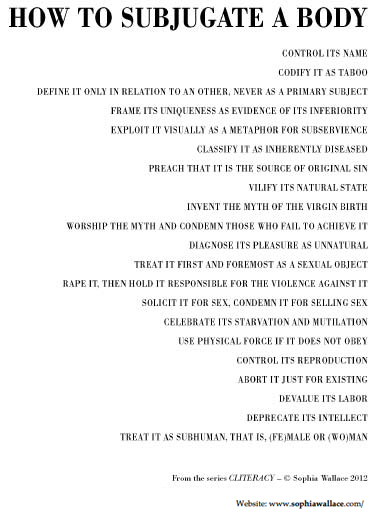
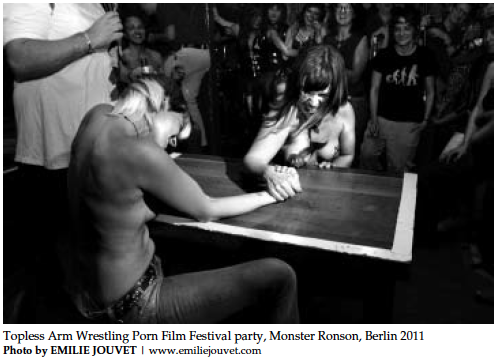
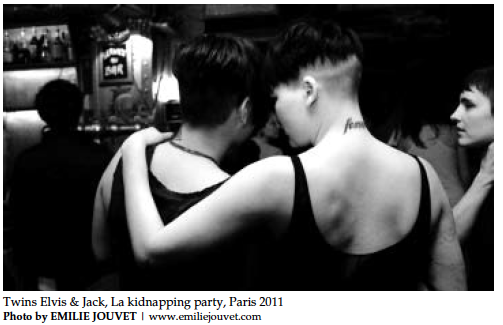
]]> Dando continuidade ao debate iniciado nos anos 1970, por feministas e artistas norte-americanas e inglesas sobre o «sexo», a sexualidade, o género, a «raça»/etnia, classe, público/privado e reconhecendo a sua atualidade decidimos organizar este dossier para que as práticas artísticas, as teorias feministas, os estudos queer e de género continuem a ser um espaço de questionamento, de ação política e de reflexão pessoal. Sendo assim, neste número, para além do habitual pedido de submissão de artigos lançámos também o desafio a artistas – Carla Cruz e Miguel Bonneville (Portugal), Emilie Jouvet (França), Kathryn Fisher (Alemanha/ EUA) e Sophia Wallace (EUA) – que consideramos importantes por representarem uma nova geração que integra as políticas feministas e queer no seu trabalho artístico.
As artes influenciadas pelos feminismos e pelas posições queer aparecem assim como espaços de ação onde a intenção de intervir para transformar a sociedade patriarcal, sexista, classista, racista e homofóbica são um dos objetivos que artistas e coletivos têm quando criam ou exibem as suas obras. Uma das contribuições mais relevantes do feminismo foi precisamente a elaboração de instrumentos conceptuais críticos e de uma prática social ativista, partindo de um modo não dualista de pensar corpo e mente, como entidades inter-relacionadas, uma vez que os sujeitos pensam e experienciam a vida através dos seus corpos. Sendo assim, nas artes visuais, inúmeras mulheres utilizaram os seus corpos como condutores de mensagens políticas, críticas e reivindicativas, rompendo e questionando os discursos sociais onde se constrói a diferença, a hierarquia e a dominação entre os indivíduos.
O recente caso das Pussy Riot é perfeito para ilustrar como as políticas feministas, as artes visuais e performativas podem desestabilizar as estruturas de poder instituídas (ver http://freepussyriot.org/). Este coletivo feminista russo que usa a performance pública como meio e a cultura punk/riot grrrl como forma conseguiu em 2012 criar não só uma ato de protesto contra a reeleição fraudulenta de Vladimir Putin, a relação do Estado com a igreja Ortodoxa e a detenção de vários/as ativistas políticos como também projetar internacionalmente o feminismo como forma de ação política rebelde, determinada e inconformada que consegue estremecer uma das menos democráticas democracias do hemisfério norte.
Neste dossier interessa-nos sobretudo debater a relação entre artes feministas ou queer e a transformação social, política e cultural, operada ao nível das representações de género, dos corpos e das sexualidades na atualidade por considerarmos que existem determinadas práticas artísticas subversivas que são estigmatizadas como «abjetas» no quadro heteronormativo e consequentemente silenciadas. Os efeitos, os modos de ver, e as subjetividades facultadas aos espectadores pelas imagens, nas narrativas, nos olhares e nos espaços da composição produzem masculinidades, feminilidades e outras sexualidades que se constituem como lugares de resistência e desafio ao sistema escópico dominante e à própria hierarquia de género da ordem patriarcal (ver anexo Carla Cruz).
Pretendemos destacar reflexões e obras que proponham novas formas de sensibilidade e afeto; refletir sobre as categorias de masculinidade e feminilidade através de representações onde a plasticidade tecnológica do género possibilita a constituição de multitudes de corpos que questionam os limites discursivos do sexo e da sexualidade (ver anexo Miguel Bonneville).
As representações criadas sobre e por estas subculturas feministas e queer revelam o que Beatriz Preciado (2002, 2004) denominou como hipermodernidade punk, visto que denunciam os processos técnicos, culturais e políticos através dos quais o corpo visto como objeto atinge o seu estatuto natural. Através de imagens e performances podemos não só observar como os géneros são tecnologicamente produzidos e reconhecidos como corpos e simultaneamente perceber o modo artistas feministas e queer criticam a domesticação dos corpos e a ficção somato-política do binarismo hegemónico de género. A criação de obras conscientemente críticas e conceptualmente informadas pela teoria feminista e pela teoria queer constroem outras representações com as quais públicos habitualmente excluídos conseguem estabelecer relações de identificação e empatia.
J. Jack Halberstam (2005, 2011) introduz novas formas de pensarmos as temporalidades e geografias queer tal como nos convida a refletir sobre o papel da tecnologia na transformação das representações ao nível dos discursos visuais sobre o corpo, o género e a sexualidade (ver anexo Kathryn Fisher). Se considerarmos os desenvolvimentos ocorridos na última década ao nível dos meios de comunicação, em particular das redes sociais, poderemos compreender melhor as transformações nas relações entre as práticas artísticas, as políticas feministas e queer, a constituição de diversos públicos e o aparecimento de subculturas que se vêm representadas em discursos visuais reconfigurados.
]]>
Os textos deste dossier consubstanciam uma relevante contribuição para esta área, mostrando a forma como as políticas radicais do pensamento feminista polinizaram as artes contemporâneas e nos proporcionaram outras legibilidades para compreender a própria teoria feminista. Este dossier apresenta quatro contributos vindos de vários países – Portugal, Reino Unido, Espanha e França – mostrando que esta investigação sobre estes objetos de estudo ainda é incipiente no nosso país. É, contudo, importante salientar que estes contributos têm em comum uma aplicação das teorias e movimentos feministas numa lógica política de questionamento radical e de crítica que muito nos satisfaz.
No texto de Armando Pinho e João Manuel de Oliveira são traçadas algumas das principais coordenadas teóricas da relação entre teorias feministas e a performance artística autobiográfica. Um texto de síntese que mostra como determinados aspetos de uma política radical feminista são incorporadas na performance. Este trabalho articula as várias mudanças dentro deste diálogo com o trabalho da performer Carlota Lagido, analisando o modo como a autora recorre à sua autobiografia como manancial criativo para o seu trabalho. Igualmente este texto é uma referência importante por traçar a história deste diálogo, mostrando o efeito de diferentes correntes feministas na análise que é feita da performance e nas próprias práticas artísticas.
No artigo de Giulia Casalini, a autora convoca o trabalho da artista guatemalteca Regina José Galindo para entender o modo como a performance recorre ao trauma e ao silêncio como forma de dar testemunho da violência política. Através do recurso a obras muito significativas, quer da teoria feminista, quer da teoria crítica, a autora constrói um texto que analisa o modo como o silêncio é utilizado como uma importante arma no trabalho de Galindo, evidenciando o modo como a performance permite uma visibilidade ao que é inaudível ou dificilmente expresso por palavras. Assim, Regina José Galindo faz da sua performance um modo de suscitar reações no público, pela via do silêncio, como maneira de ativar determinadas memórias traumáticas que assim podem ser partilhadas.
O trabalho de Veronica Perales procede a um reposicionamento do conceito de amor. Tentando pensar o amor para lá da sua aceção romântica, a autora analisa o conceito em diversas fontes, aproximando-se do objeto de estudo através do ecofeminismo e da crítica ao antropocentrismo. A autora percorre uma série de obras e de artistas, cujo trabalho é relevante para proceder a uma abertura deste conceito, reposicionando-o. Assim, esse trajeto que o texto percorre permite revisitar outras maneiras, mais livres, de pensar o amor fora dos limites impostos pelas ideologias de género e do antropocentrismo hegemónico.
O texto de Marie-Emilie Lorenzi foca um happening feminista queer em Lille, na França, que envolveu a estátua equestre de Joana d’Arc. A autora procede a uma análise do modo como este happening permite detetar linhas de fratura entre ativismos mais tradicionais LGBT e ativismos queer, enunciando como este happening pode ser lido a partir de diferentes posicionamentos militantes. Particularmente, a cor rosa com que a estátua foi pintada é alvo de uma análise que evidencia as diferentes apropriações desta cor por parte dos movimentos LGBT e queer. Esta análise aborda também a formação de um Pink Bloc, que recorrendo a pressupostos feministas queer, baseia a sua intervenção política na performance de rua e happenings.
Este dossier reforça a importância da investigação na área da arte contemporânea sob influência das políticas feministas. Estes artigos permitem traçar alguns desses percursos e entender os modos de incorporação dessas influências.
]]> Bibliografia
Butler, Judith (1990), Gender Trouble: Feminism and the subversion of identity, New York, Routledge. [ Links ]
Butler, Judith (1993), «Critically queer», GLQ – Journal of Lesbian and Gay Studies, 1, pp. 17-31. [ Links ]
Butler, Judith (2004), Undoing Gender, New York, Routledge. [ Links ]
Halberstam, Judith (2005), In a Queer Time and Space – Transgender Bodies, Subcultural Lives, New York and London, New York University Press. [ Links ]
Halberstam, Judith (2011), The Art of Queer Failure, Durham & London, Duke University Press. [ Links ] [ Links ] Preciado, Beatriz (2002), Manifiesto Contra-Sexual, Madrid, Opera Prima. [ Links ]
Preciado, Beatriz (2004), «Multitudes Queer: Notas para una política de los «Anormales», Multitudes, 12. [ Links ]
Reckitt, Helena e Phellan, Peggy (2001), Art and Feminism, London, Phaidon. [ Links ]
Notas:
*1É investigadora do Centro de Estudos das Migrações e das Relações Interculturais – CEMRI, da Universidade Aberta. Mestre em Estudos sobre as Mulheres e em Cultura Visual. Atualmente é doutoranda na área dos estudos feministas, estudos queer e cultura visual na Goldsmiths, Universidade de Londres.
]]> *2É investigador em pós-doutoramento no Centro de Psicologia da Universidade do Porto. Email: joao.m.oliveira@gmail.com*3É videoartista. Assistente no Curso de Artes Visuais-Multimédia, doutoranda na área da videoarte feminina e investigadora no Centro de História de Arte e Investigação Artística da Universidade de Évora.
1The exhibition was held at the SMS Gallery – a space for contemporary art organised by Lígia Araão in the Archaeological Museum, Sociedade Martins Sarmento – Guimarães, Portugal.
2All My Independent Women is also the recuperation of a ‘post-feminist’ title of a song by the North American girls-band Destiny’s Child, from the 2001 album Survivor, which inspired the title of my project; and in spite of being titled ‘All My Independent Women’, the project was never an all-women show.
3AMARAL, Ana Luísa and MACEDO, Ana Gabriela. 2005. Dicionário da Critica Feminista. Edições Afrontamento.
4BARRENO, Isabel; HORTA, Maria Teresa, VELHO DA COSTA, Maria. 1994. New Portuguese Letters. London, Readers International.
5The original NPL text, which I converted into ‘what can art do?’ reads: «My Sisters, But what can Literature do? Or rather: what can words do?» (Barreno et al., 1994: 210).
6Amaral and Macedo, 2005: 107.
Anexos
]]> Carla Cruz
All My Independent Women
AMIW is an exhibition project rooted in feminist/gender debates that aspired to bring to light feminist practices under-represented in the Portuguese context. I initiated it in 2005 at the SMS Gallery – Portugal to respond, to a then, growing concern about the representation of women artists in Portuguese institutional exhibitions and collections1. My proposition was to organise a collective exhibition that could represent simultaneously all the artists – women and men – that somehow were part of the context of my own art production and who, through their practice, either problematise gender constructions and the hierarchy present in sexual difference, and/or work from a feminist perspective/ methodology2.
From its conception phase, AMIW had to assert itself against those who claimed the feminist political project as outdated, exaggerated, self-victimising, aggressive, man-hating, etc., and also attempt to drop some clichés about art with feminist readings. Clichés that demonstrate the contempt held against art with feminist constructions, denigrating its historical importance and influence on contemporary art. Thus, AMIW became a project that aims, simultaneously, to account for practices that were underrepresented and also establish a discussion about feminist practices and methodologies in the Portuguese art discourses, not only challenging the idea of feminine art – and perhaps even feminist art – but also the idea of a universal artistic subject.
I invited artists that had either collaborated with me in art projects or with whom I had previously exhibited, studied, and shared a studio. AMIW's goal was to make their work visible, but concurrently it built its own agenda – it problematised the feminine and masculine subjects. During its preparation I came into contact with the Dicionário da Crítica Feminista3, which became the red thread of the exhibition. To each artwork one or two entries of the dictionary were assigned. The entries were used, thus, to connect different artworks but also to expand the reading and meanings of each artwork and to create paths for feminist critiques of each one. AMIW was subsequently presented six other times; taking each time a different guise and enlarging the initial group of participants. In 2006 AMIW was at 100ª Página bookstore, Braga; at the invitation of Ana Gabriela Macedo for the launch of the Dicionário da Crítica Feminista. In the bookshop, with the art works closer to packed bookshelves than each other, the exhibition appears more than before as my personal collection. In the same year the show was presented at EIRA 33 Space for contemporary dance, Lisbon, at the invitation of João Manuel de Oliveira. The dance studio is based on the assembly room of a fire station, and the exhibition coexisted during a month with different Eira 33’s rehearsals. In 2007, at the invitation of its cultural director Antónia Serra, AMIW travels with a small delegation of eleven artists to Casa da Cultura da Trofa; occupying the exhibition space but also the toilets and the Internet room. Every single time the show was supported by the good will of the participants (and friends), that lent equipment to display the works, transported them to the different venues, and most of the times produced new work without any monetary compensation. AMIW comes back in 2010, reading the New Portuguese Letters4 and with a stronger awareness of itself and its role by asking, as the NPL authors did, ‘what can art do?’, in so doing raising broader political questions regarding the relationship of artistic practices and feminism5. But it was only in its aftermath, through the preparation of the 2011 AMIW – Or Rather, What Can Words Do? at the Austrian Association of Women Artist (VBKÖ) in Vienna, and more aware that the author’s of the NPL had – much ahead of their time – contributed to the dissolution of the ‘eternal’ myth of individual artistic genius, that a key concern of AMIW was challenged: visibility. This year, 2012, it is presented at the Women's Art Library, London focusing on alternative modes of distribution and preservation of art works.
Visibility was a central question when I initiated AMIW in 2005; especially at the time by acknowledging that a latent type of discrimination was in operation in the Portuguese art world: ‘glass ceiling’ – or invisibility. The term concerns the «barriers women in intermediate command positions are faced with and that obstruct their rise to positions of leadership»6, and for AMIW it meant the muddy waters of the progression of women artists’ careers. I felt I needed to contribute to the inscription of the works I chose for the exhibition in the art world and consequently to name the artists and inscribe them in the visible. I hoped, we would change the unequal gender ratio in the arts. It was only after AMIW 2010 instantiation that the prospect of our feminist discourses being peacefully absorbed by the mainstream art discourse, without bringing any real change, became manifest. I began to reflect on the following question: Visibility, yes! But in which ‘archive’? Thus, in 2011 I asked, what does it mean to want to inscribe feminist art practices in the ‘visible’ art arena, knowing that the very constructions of what is render visible and what is not, is what we actually need to figure out?
Today AMIW continues to revise its aims and tactics. For this it needs to experiment with modes of engaging, not only with those people/venues in partnership with us, but also with broader audiences – crossing our network with others, expanding its reach and focus – experimenting with (re)presentation formats. Needing to be a platform for the artists in its network to express themselves through their practices, AMIW needs to open up its production processes to even more collaborative modes of working, where the renunciation of the isolation of individual practices in favour of a collective endeavour has to be reaffirmed again and again. Simultaneously, the affirmation of the network instead of its individuals, without alienating their singularity, has to be brought to practice.
Miguel Bonneville ]]> http://www.miguelbonneville.com/
Notas sobre porque é que eu sou feminista.
Notas sobre porque é que o meu trabalho é feminista.
1. Tradição.
Kronos castrou o pai, Urano. Zeus cortou Kronos, seu pai, em mil pedaços. Édipo matou o pai. Certo. Mas eu não quis matar o pai porque desejava ficar com a mãe. Nessa idade, se eu quisesse, a mãe já era minha. Mas o que eu desejava era ser a mãe, para poder acabar com o pai. Édipo transforma-se na mãe. Édipo transexual comete o parricídio a solo e com testemunhas.
2. Abandono e Violação.
Desde muito cedo fiquei a saber, por experiência própria, que os homens de quem estamos próximos, ou nos abandonam, ou nos violam. Se regressam é só para nos torturar.
3. Barbie
Ao contrário do que se possa pensar, para mim, a Barbie era o modelo da mulher independente. Ela era a dona da casa, do carro, dos cavalos e das roupas. Não tinha que dar satisfações a ninguém. Era loira e estava sozinha como a minha mãe. E se era como a minha mãe, era uma sobrevivente. Aguentaria tudo.
]]> 4. Bissexualidade.Aos nove anos: depois de me ter apaixonado por todas as raparigas da turma, apaixonei-me pelo James. Tinha um coração de papel com o nome dele. Aos nove anos: tornei-me melhor amigo de dois rapazes que gostavam da mesma rapariga que eu – uma espécie de quadrado amoroso. Aos nove anos: as sessões de masturbação com o A. Aos nove anos: percebi que podia gostar de quem eu quisesse, independentemente do resto.
5. Androginia.
Aos dez ou onze anos: à ida para a escola havia um arrumador de carros que me perguntava: és menino ou és menina? Nunca usei o cabelo comprido, mas sempre tive mamas. Um rapaz na escola perguntou-me porque é que eu tinha mamas. E nessa altura usava uns botins com um bocado de salto, que eu adorava. Ao sair da escola uma vez ouvi atrás de mim: olha para a forma de andar deste miúdo. O que é que eles me queriam dizer? Que ser como uma mulher era ser-se fraco?
6. Marguerite Duras
Aos quinze anos partilhei o meu diário e disseram-me: tens que ler Duras. E eu li Duras. E nunca mais parei de ler Duras. A Duras que dizia: não vale a pena. A Duras que dizia que: ‘antes de serem canalizadores ou escritores ou taxistas ou desempregados ou jornalistas, antes de tudo, homens são homens. Quer sejam heterossexuais ou homossexuais. A única diferença é que há uns que nos recordam disso assim que os conhecemos, enquanto outros esperam um bocadinho.’. E se alguém neuroticamente encarnou Duras, durante muito tempo, fui eu.
7. 1970s
Obsessão pela década anterior à do meu nascimento. Os anos da explosão da performance. Performances feministas que trabalhavam a autobiografia, o corpo, o género, a sexualidade, a intimidade. A performance como destruidora das estruturas conservadoras, do poder. A performance como procura da liberdade. A procura de uma presença real sem intermediários.
8. Simone de Beauvoir
Encontro absolutamente fulcral com a obra de Simone de Beauvoir. Encontro que transformou por completo as minhas noções de politica e de feminismo. Transformou no sentido de desvendar todos os meus pensamentos e todas as minhas angústias, no sentido de eu poder dizer: tudo isso que escreves é aquilo que eu penso, mas que nunca tive a clareza de perceber completamente. A sensação de não estar sozinho. A sensação de ter havido alguém capaz de descrever detalhadamente, de viver detalhadamente, aquilo que eu vivi. Com todas as suas qualidades e todos os seus defeitos, Simone de Beauvoir, sim, a responsável pela minha consciencialização politica, filosófica, social.
]]> 9. Feminismo RadicalDurante uma conferencia sobre as feministas durante a ditadura em Portugal, comecei a perceber que essas mulheres são muito diferentes, e estão muito longe, do que eu imaginei que elas poderiam ser. Os cabelos armados, os fatos impecáveis, os discursos modernos e a exaltação dos seus casamentos duradouros, fizeram-me notar que talvez eu seja muito mais radical do que elas. Abolir o patriarcado, sim. Acentuar as diferenças, sim. Exterminar a opressão baseada na raça, no género, na classe social, na orientação sexual, sim.
O pessoal é político.
Miguel Bonneville
Dezembro 2012
Kathryn Fisher
ALIVEness
Being physically apart is not so very different from what it’s like to be together. –This is how we generations are learning to understand love and sex, community and communication. And yet we are still yearning, still urgently tearing and needing the physical, the visceral, the sex. The blood even.
]]> >>>>>>>>>>>>>>>>>>>>>>>>>>ALIVEness. To what extent are we alive in each other’s lives – physically, emotionally, electronically, living or dead – taking into account our contemporary context of virtual interaction, shape-shifting and poly-physical interpretations of our own identities? What does it mean to be present when the terms of our own existence are relative to how we interact physically and virtually with those most close to us? This is our exploration and praxis.
<<<<<<<<<<<<<<<<<<<<<<<<<<<
I began to think about how a sense of ALIVEness – the extent to which we envision someone or something to be «alive in our lives» – does not always have to do with physical death. In other words, ALIVEness is irrespective of the location of a person’s physical aliveness in time. Nor does ALIVEness have to do with physical distance; it is irrespective of the location of a person in space. Since my father’s death, one thing has changed radically – I think about him almost every day and I have spent a considerable amount of time writing about him and even writing to him. To compare, some other relationships with people who are physically alive nevertheless feel distant, remote, waning. We often speak of how if we lived closer, organized more coffee dates, telephones more, Skyped more, if were online more, our relationship would be different. We have put the onus of our ALIVEness (in each other’s lives) on details of measurement like time and distance. But a relationship of ALIVEness is about envisioning. It is something that cannot quite be touched (and yet also yearns for physical touch).
Our digital contemporary is theoretically helping us to develop an advanced sense of ALIVEness: It is helping us to break down imagined borders; to challenge our obsession with measurement; to view each other as wildly unique and yet unified. We see distant lands on television – they become less mysterious and more ALIVE. We see people protesting in streets far away – we perhaps can imagine that they are down the block from us, that they are our neighbors and friends (read: more ALIVE). Our digital age is challenging our terms of measurement – it is making everything seem closer and the world seem smaller; it is bringing to light the illusion of time and space. This is the obvious. But the less obvious is that it is pushing us to think BEYOND measurement – to transgress measurement – and ideally, to develop a new imagination of unity and expand our notion of immediate community. Still it seems that the digital age cannot push us as far as we need to go – to a place where everyone and everything is ALIVE to us, so much so that we cannot help but to think of each other with respect and inclusion in our sense of community. What short of the power of our own mental imagination – a flip of the mental switch – will help us to take what we learn virtually into real life practice?
Our contemporary digital context presents to us more tangibly the kind of «sociological imagination» that CW Mills envisions; it presents to us new possibilities for ALIVEness that don’t seem so obvious. Can an Afghani farmer be more ALIVE to me because he is, theoretically, my friend on Facebook? Will the virtual relationship help me to care more about the potentiality of his death if I get to know him? Will it motivate me to fight for his life? What about Nationalism? Will a virtual global world help me to broaden my ideas of neighbor and compatriot and put less importance on PLACE and BIRTHRIGHT? How can it help to us to imagine how our bodies as linked to each other when they are not about PLACE but rather about imagined place? Will the CLOUD begin to push us to understand our data, our memories, our histories, our families as more similar than distinct? Will a collective memory that’s created in the «Tweetosphere» help me to lose a sense of ego and gather a more collective consciousness of memory (can all memories be «my memories»)? Will it help me to mourn the loss of life due to structural and direct violence in a more empathetic way, thereby making us all better activists? Will it strengthen our sense of urgency, not just about keeping our own families safe and healthy, but about keeping our global families safe and healthy? Can virtual sex help me to imagine a body with multiple genitalia – will it help me to reimagine my lover’s body when we’re having sex in the physical and help her feel more complete in the body that she has; will it help me to dissolve the imagined limitations of my own body?
The practice of ALIVEness is directly related to queer identity because queer pioneers and the practice of queer sex itself has already asked some of the essential questions of ALIVEness: Is our hand not so very different from our cock? Is our cock not so very different from our cunt? These associations may seem at first sight to be far-fetched, especially for those who do not think of their bodies or identities as queer. But if queers are willing to imagine bodies as poly-singular, there is no body that cannot or should not be included; we all have queer bodies.
And we can’t stop there. Queer identity is about much more than just sex and/or how we decorate or manipulate our gendered bodies. If we have already asked the question, is our hand not so very different from our cunt?, we can just as easily pose the question, is this place on earth («my birth land) not so very different from another place on earth («your» birth land)? Is «my» mother tongue not so very different from «your» mother tongue? Is «my» memory not so very different from «your» memory?
]]> Moreover, our technological practice is already providing the framework for throwing off the internalized sense of our bodies as bordered (by gender, by physical ability, between self and other), and many of us, even without knowing it, have jumped in with our whole bodies and our minds as we take on our various avatars and pseudonyms. The missing link is how we can carry this «queer envisioning» into transformative daily practice in real life.ALIVEness asks to queer our relationship with the global community. It asks us to discard the binary borders of here or there, illegal or legal, compatriot or foreigner, my language or yours, even alive or dead. ALIVEness is a theoretical bridge, a point of inclusion that imagines all of us as queer bodies and all of our sexualities as queer sexualities. It imagines all of our ethnicities as queer ethnicities; our origins as queer origins; our birth places and our socio-economic classes as queer – because they are built on complicated webs of multiple factors and interwoven stories. We are all singular (unique) – but we are part of one queer body. How can we internalize this?
Our technological context provides us with the possibility to envision and even create new types of bodies – transgendered bodies, multi-sexed bodies, bodies with multiple and mixed genitalia. Some of us are encountering and learning new ways of queering our sexual lives with these new physical and virtual bodies. ALIVEness takes us beyond where technology assists – to a place where we envision multigendered bodies and multisexual bodies without having to «see them» or even «virtually experience them.» Put another way, we can think in terms of methodologies: medical sciences allow us to «see in waking life» our bodies differently by manipulating them physically. Computer sciences allow us to «virtually see» our bodies differently by manipulating them virtually. ALIVEness – a mental practice of transformative action – takes us beyond seeing and into the realm of imagination.
In the poly queer world that many of us are in the process of defining and understanding increasingly day by day, we are beginning to understand this realm of imagination: man is not man, woman is not woman, husband is not husband, girlfriend is not girlfriend and boy is not girl is not trans is not homogenous is not homosexual. We queers are dealing with a new idea of «multiple» that is beyond poly-gendered or poly-sexual. This multiplicity sublimates the ego and allows for transformative and revolutionary thinking on a personal and political level. It is a queering of our bodies personally and invites the possibility of queering all our bodies globally. That is, me is not me, it is you; American is not American it is Afghani, birthplace is not birthplace is not foreign space is not unknown. Your violence is my violence is our violence.
Practice of ALIVEness queers our entire identity, including imagined borders between bodies. In this new envisioning – beyond vision – we can imagine global community without having to be everyone’s friend on Facebook. We can imagine a global consciousness without having to identify it as a trend on Twitter. We can imagine stories which are not our «own.» We can possess the knowledge of starvation, repression and poverty without experiencing those things directly and use this knowledge as motivation for action. This is a flip of the imagination but it is nothing short of revolutionary.
The fact is, however, we are still living in a transitional time. Even within radical queer communities, we still do not always make the link between revolutionary sex and revolutionary global identities. We are still concerned with questions of semantics – understandably – about whether a person is or is not gay, trans, he, she or them. How closely do we pass or not pass? What are the terms of our bodies, how do we/should we manipulate them? What shall we wear on them? How do we subvert them? We are still looking to the visual to understand how to transgress our own bodies.
We are still not beyond measurement and we still long to see and touch what we believe in: the multiplicity of our lovers’ gender; the nearness of our families, the tangibility of things and people and music of the past. Technology aids us in «seeing» and «touching» those things and concepts (though we understand them as virtual, virtual feels so REAL). Technology is aiding us in our need to see. What we haven’t moved yet into is beyond seeing. In our transitional time, we are, on the one hand, understanding and seeing the possibilities for a new imagination because of the very tools that we have created. On the other hand, we are still stuck in the human – the need for real world touch. To see in order to believe, to touch in order to feel, to measure in order to feel certain.
ALIVEness is tantamount to queering our global identities because it unites our bodies as queer and links us as one queer body through time and space. Is a mental future wherein which we trust and feel our wider community, where everyone is ALIVE to us in an urgent sense – not because we see them on TV, not because they are our friends on Facebook, but because we know it to be true, because we mentally have tapped our own power to see ourselves as everyone else. ALIVEness is lived and understood through a «body of flesh and body of knowledge» These bodies relate to each other out of limitation and freedom – the intellectual limitation of how we understand and experience our body as contained within its own flesh and yet the yearning for a freedom which will allow us to relate as unbounded BODIES of flesh and one BODY of humanity.
Kathryn Fischer aka Mad Kate
]]>