The First World War in Portuguese East Africa: Civilian and Military Encounters in the Indian Ocean
Ana Paula Pires1
1 Institute of Contemporary History, Faculty of Social Sciences and Humanities, New University of Lisbon, 1069-061, Lisbon, Portugal and Stanford University, Stanford, USA. E-Mail: asoarespires@gmail.com . This article is part of the Project SFRH/BPD/111782/2015.
ABSTRACT
The Great War witnessed the most important military operation carried out by Portuguese troops outside the country’s borders during the first half of the twentieth Century. Portugal was the only country involved in the conflict which, between 1914 and 1916, was able to preserve a position of undeclared neutrality in Europe and, simultaneously, wage war against Germany in Africa. The defense of the Portuguese colonial empire’s integrity has often been signaled by historians as one of the factors which justified the declaration of war against Germany in March 1916 and Portugal’s participation in the European theatre of operations alongside its ally, Great Britain, from early 1917 onwards. This article seeks to analyze the way in which the Great War was considered by the colonies, especially Mozambique, by discussing the Portuguese military intervention and the way it was understood and witnessed by civilian and military figures alike.
Keywords: East Africa; World War One; Mozambique; Empire; Mobilization.
]]> RESUMO
A Grande Guerra foi a maior operação militar no exterior em que participaram tropas portuguesas durante a primeira metade do século XX. Portugal foi o único país envolvido no conflito que, entre 1914 e 1916, conseguiu manter uma posição de neutralidade não declarada na Europa e travar, simultaneamente, uma guerra em África contra a Alemanha. A defesa da integridade do império colonial português, tem sido apontada pela historiografia como um dos factores apresentados para justificar a declaração de guerra à Alemanha, em Março de 1916, e a participação portuguesa no teatro de guerra europeu, ao lado da aliada Grã-Bretanha, no início de 1917. Este artigo procura analisar o modo como a Grande Guerra foi encarada pelas colónias, nomeadamente, por Moçambique, discutindo a intervenção militar portuguesa e a forma como esta foi entendida e acompanhada por civis e militares.
Palavras-chave: África Oriental; Primeira Guerra Mundial; Moçambique; Império; Mobilização
‘The European, civilized and educated, must nevertheless copy the loyalty and character displayed by coloured soldiers. This truth cannot be denied, however difficult it may be for many puritans to swallow’.2
Crossroads
East Africa’s strategic importance grew from the late nineteenth century onwards. The British Ultimatum of 1890 – by which London demanded the removal of the military forces commanded by Major Serpa Pinto from the territory that links Mozambique to Angola – was an example of the global reach of European imperialism during the late 1800s; it would eventually force Portugal into having to fight to preserve its place in the political geography of both Europe and Africa. When analyzing the Republic’s mobilization for the war in Africa, it should be kept in mind that the generation in power when the conflict began in Europe, in the summer of 1914, had already experienced the ultimatum and had subsequently publicly criticized the policy of acquiescence to British interests undertaken by King D. Carlos, considering it nothing short of a national humiliation. According to republican propaganda, the idea of the indispensability of a single and indivisible empire, whose defense must be assured at all costs, rested, from the start, on a much wider and complex question: that of ensuring that the change in political regime at home resulted in a revitalization of the empire. In a recent work, Filipe Ribeiro de Meneses asserts that it was “the sight of others fighting over Africa […] which had finally awoken […] Portugal from its colonial lethargy” (Meneses, 2014: 333-334).
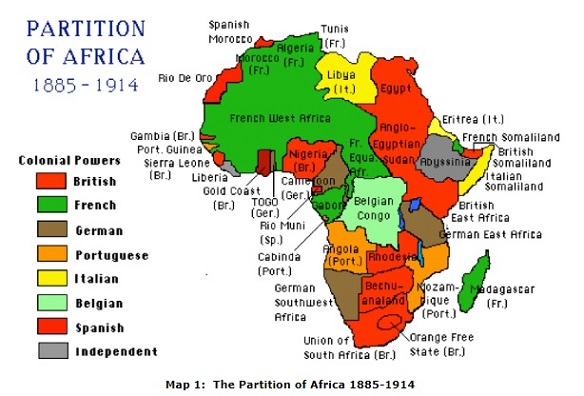
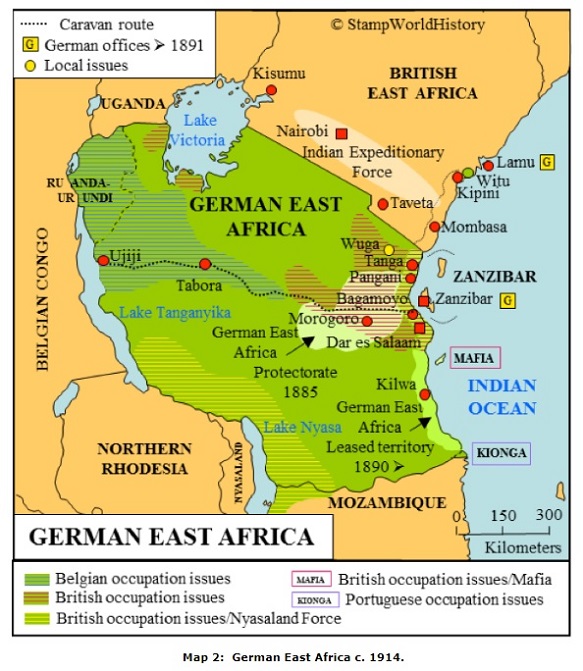
]]> East Africa’s strategic importance for the British Empire resided in the fact that it controlled the safety of the Suez Canal and therefore the shortest route to India and the Far East. As World War I began, East Africa was a mosaic of European colonies and protectorates. To the north, there were French Somaliland, the British Protectorate of Somaliland, and Italian Somaliland. The British East Africa Protectorate and the British Protectorate of Uganda were at the center, and to the south were German East Africa (Tanganyika) and Portuguese East Africa (Mozambique). Two states remained as independent entities, Abyssinia and the Sultanate of Zanzibar. The whole region had been crisscrossed by Portuguese sailors and merchants for over 400 years.
Immigration from western India into East Africa was sizable and encouraged informally by Indian employers and British agents. The German and British railways, inland shipping, postal and telegraph corporations, banking and government administrative developments brought hundreds of Goanese men to East Africa where, by 1911, their wives and families had begun to join them in the city coast, notably in Zanzibar, Mombasa, Tanga, and Dar-es-Salaan. Indian emigration to East Africa was incentivized and even encouraged, informally, by both the Indians and the British (Hawley, 2008). During the Anglo-Boer War, the British commander, Lord Roberts, had requested permission from the Portuguese government for his forces to cross Mozambique in order to facilitate an attack on the Transvaal from the north. Many Boers, as a result of this conflict, eventually settled in Mozambique, where they remained even after peace was restored.
When Archduke Franz Ferdinand, heir to the Austro-Hungarian imperial throne, was murdered in Sarajevo, little more than 10,500 Portuguese whites lived in Mozambique. The overall population of the colony hovered around the 2.8 million mark.3 The district of Mozambique was home to 296 whites, 312 Asians, and 4,634 blacks.4 The greatest concentration of the white population was to be found in the city of Lourenço Marques, with its wealthiest members residing in the Ponta Vermelha and Polana neighborhoods, close to the shore. Tram and train lines linked them to the city center.5
A census published two years earlier noted the presence of a little over a thousand foreigners living in Lourenço Marques (Costa, 1934: 39). A German consulate had been opened in 1889 and throughout the 1890s diplomatic representations were established on the island of Mozambique and in Beira, Chinde, and Quelimane. In 1907, a cultural center was inaugurated in Lourenço Marques, whose objective was to “foment social relations between German residents in Lourenço Marques and to promote the use of the German language and the preservation of the national spirit” (Carvalho, 2015: 39). The presence of British and South African citizens was also significant, notably in the ports of Beira and Lourenço Marques.
Mozambique. Foreign Population 1912
|
| Lourenço Marques | ]]> Beira | Chinde |
| British | 668 | 268 | 31 |
| Germans | 106 | 45 | 24 |
| ]]> Chinese | 300 | - | - |
| Italians | 80 | 47 | - |
| Greeks | 149 | ]]> 123 | - |
Source: A Manual of Portuguese East Africa (1920). London: His Majesty’s Stationery Office. [ Links ]88.
Colonial authorities were worried about both the number of white Portuguese living in the territory, which they considered insufficient, and their lack of capital, which limited their ability to invest in the development of Mozambique. Nine tenths of the total capital invested in Lourenço Marques was British, with only three tenths of one percent originating in Portugal. As a result, the war’s outbreak had a very powerful impact on the European population living in Africa. Men of military age were incorporated into the units stationed in the continent or sent to fight on the Western Front. This situation resulted in an exodus of Europeans and, therefore, a very significant drop in the number of civil servants and clerks in commercial houses. From a religious point of view, the war would determine the end of the hegemony exercised by Christian missions: once peace was restored, the work of German missionaries would be carried out by Africans.
The actual demarcation of the borders continued to be part of the agenda. The Bernardino Machado government assigned 94,000 escudos in the fiscal year 1914-1915 for this for this purpose across the colonies. The precise limits of Mozambique’s northern border were not well known, in great measure because of the disputes between Portugal and Germany over the Quionga Triangle, now in German hands. Despite possessing a vast colonial empire, the Portuguese, on the eve of war, were not familiar with Africa and the Africans. African soils and mines were still, for the most part, unexplored, and native languages remain unstudied. Most colonial ministers did not really generate policy; they were content to supervise, from Lisbon, territories they never visited. Contemporary literature and the circulation of books provide a snapshot of this ignorance: “[…] Africa did not read Africa!”6 Even at the start of the 1930s, the best-selling books on Mozambique remained the reports drawn up by António Enes and Mouzinho de Albuquerque at the close of the nineteenth century.
Not a single Minister of the Colonies had visited any overseas territory between 1911 and 1914. World War I contributed to overcoming this lack of knowledge, bringing about a deepening of the political, social, and cultural relations between metropolitan Portugal and colonial realities (Pires and Rollo, 2015). Europeans and Africans learned about one another through their military exchanges, in relationships of marked inequality, but always through complex processes with far-reaching consequences. The Great War was one of those moments.
The Final Scramble
The growing rivalry between European powers as they extended their colonial empires, especially in Africa, caused tensions between British, French, and Germans, but these pressures were not strong enough to justify the outbreak of a European War. Ironically, in 1914, Africa ended up being the trigger that transformed, in the early days of August, a local war into a World War. This argument gains credence if we keep in mind that the first British shots in the First World War were fired in Togoland, not in Europe.
]]> Although it was never declared on the African continent, the Great War had its beginning in East Africa, with the British attack on the port of Dar-es-Salaan on 8 August 1914. Great Britain tried to reach an agreement that might preserve the neutrality of the African continent in the face of war in Europe, but without success (Killingray, 1998: 92). The general expectation was that the terms of the 1885 Treaty of Berlin relating to the neutrality of the Congo basin would prevent the spreading of the war to West and Central Africa (Samson, 2006: 33). As the summer of 1914 began, there were no tensions between British and German settlers, and both empires’ military garrisons were very small, numbering, respectively, 2,400 officers and Askaris and 216 officers and 2,540 Askaris. As for Mozambique, the decree that determined its military organization had been published in November 1901 and the military presence was limited to a cavalry squadron and a few poorly drilled indigenous companies. It was known, however, that other European forces had modern artillery at their disposal; airplanes and long-range radio communications.Although the start of the conflict in Europe created a climate of tension and suspicion among the German and British residents of Mozambique, the spread of the war to the African continent was neither questioned nor debated (Pires and Fogarty, 2014). Not much thought was given to the nature or the consequences of this development, despite some newspaper articles allowing already for a glimpse of the consequences the conflict would have on the continent’s geography.7 The South African Union’s autonomy from the British Crown was growing daily. This represented a mounting danger and threat to regional stability and Portuguese interests, with Mozambique being the most affected (Arrifes, 2004). South Africa’s concerns were dual in nature. One the one hand, the Union believed that Germans were using Mozambique to engage in the smuggling of goods to their own colonies; on the other, it longed to take possession of the Portuguese colony once the war was over.
The spread of the war to Africa was not, however, a prospect which pleased Germany. William II’s strategy rested on achieving swift military victory in Europe which might in turn open up the possibility of establishing a geostrategic region – Mittelafrika – stretching from Cameroon to East Africa. The main objective of this strategy was to put an end to the old British dream of establishing a corridor linking Cape Town to Cairo. In Togoland, Major Von Doering, a military commander who also served as governor of this German colony, tried, as early as 5 August, to reach an understanding with his British neighbors in the Gold Coast and the French in Dahomey which might allow his territory to remain neutral, “[…] so as not to give Africans the spectacle of whites waging war on whites.” 8 Von Doering’s initiative was interpreted as a ploy to ensure the continued functioning of the wireless station at Kamina. The following day, the Gold Coast’s military commander, F. C. Bryant, issued Von Doering an ultimatum regarding the surrender of the Togoland garrison. The governor of German East Africa, Heinrich Schnee, had a similar view to Von Doering and favored the preservation of neutrality when, in the first days of August, two British ships shelled his capital, Dar-es-Salaam. His intentions clashed with the aggressive stance of Paul Lettow-Vorbeck, commander of the Schutztruppe, who from the start argued for retaliation against the British action. In a gesture of clear disobedience to Schnee, Lettow-Vorbeck, at the head of an army composed of 260 Germans and 2,500 Askaris, invaded British East Africa, heading for Uganda. On 5 August 1914, the troops of this British Protectorate attacked German forward posts near Lake Victoria. In South Africa, Prime Minister Louis Botha and Minister of Defense Jan Smuts quickly affirmed their support for the British government. Both men understood that in order to preserve its naval supremacy, the United Kingdom had to control both the means of communications and Germany’s principal ports in Africa.
After the British declaration of war on Germany, on 4 August 1914, one of London’s main priorities was to harness the strategic potential of German interests and colonies, scattered across the world. This led to particularly strong action in Latin America and Africa, which consisted of capturing harbor installations and submarine cables. This was one of the objectives recorded in a memorandum, written by British consul Erroll Macdonell, on the subject of a British takeover of German economic affairs in Portuguese Africa, especially Mozambique (Pires and Fogarty, 2014). Shortly after the outbreak of war in Europe, the Foreign Office stated that it was no longer possible to afford protection to Portugal’s land borders on the African continent. The dispatch of military expeditions to Africa, notably Mozambique, acquires great importance when we add to the equation the already alluded to growing threat represented by South Africa (Arrifes, 2004). Portugal’s minister in London, Teixeira Gomes, stated that the sending of troops to Africa was the sole means at his country’s disposal “[…] to make ourselves respected […] by our neighbors.”9 Lourenço Marques had long been seen as a desirable point of access to the sea by Transvaal.
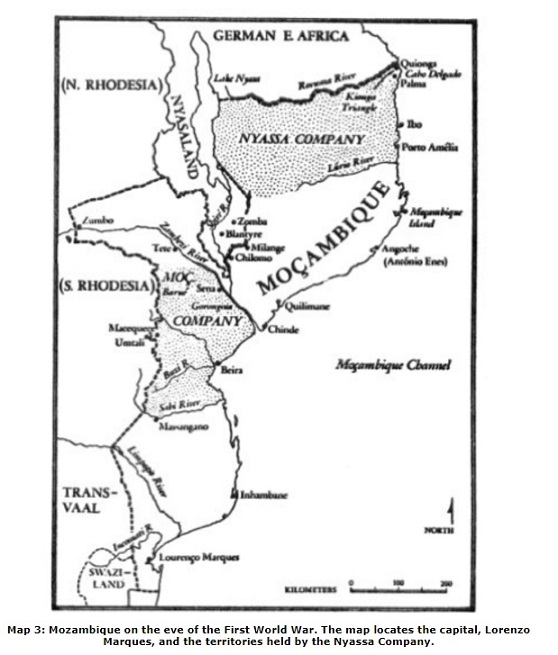
Britain’s minister in Lisbon, Lancelot Carnegie, requested of the Portuguese government that it allow the passage of troops through Chinde, in Mozambique, on their way to Nyassaland, today’s Malawi.10 Reacting to this request, Teixeira Gomes insinuated to Eyre Crowe, of the Foreign Office, that Portugal still aspired to recover Quionga, a small territory on the border with German East Africa that had been seized by a German naval force on 16 June 1894, without, however “[…] showing that it was our intention to ask for compensation for the favor granted.” 11
Going to War
On 21 August 1914, Prime Minister Bernardino Machado decreed the organization and sending of two mixed groups (composed of mountain artillery, cavalry, infantry, and machine guns), one each to Angola and Mozambique.12 In the decree’s preamble, the government recognized the need to “[…] in the current circumstances, garrison properly some points on the southern border of Angola and the northern border of Mozambique.” All told, 1,525 men were sent to Angola and 1,477 to Mozambique. At the time, the Portuguese army had a little over 31,000 men.
One must underscore the importance and significance of this measure, placing it in a wider context that takes into consideration the ambiguous position in which Portugal found itself since the outbreak of hostilities. It could not, as a result of a British request, declare either its neutrality or its belligerency. As a result, the expeditions were organized by the Ministry of the Colonies and not the Ministry of War. The measures adopted by Portugal, with British approval, were presented as merely preventive and aimed at colonial defense; they did not result in a declaration of war by Germany or its allies. In a round-robin letter sent to his colleagues in government and the Portuguese ministers in London and Madrid, the minister of Foreign Affairs, Freire de Andrade, showed himself opposed to Portugal’s intervention on the Western Front, mentioned the difficulties that might arise should Portugal’s stance result in an insult to Germany, and denounced what he consider to be the use of a “[…] language which is sometimes offensive and even insulting to Germans and Germany’s leaders by part of the press […] especially since it might be construed that the government approves of it, consenting to it without the least reproach.”13
]]> On 23 August 1914, the German Undersecretary of State for Foreign Affairs tried, using the services of the United States ambassador in Berlin, to ensure the neutrality of Cameroon, French Equatorial Africa, German East Africa, Uganda, Nyassaland, and parts of Rhodesia. However, the proposal was eventually rejected by both the British and the French (O’Neill, 2013).Under the cloak of an undeclared neutrality, Mozambique soon became a buffer zone between British and German territory, a crossing point for essential goods (contraband) and foodstuffs, and a privileged platform for the acquisition of intelligence (through espionage) vital for both British and Germans throughout the war. Alfredo Lisboa de Lima, the then Minister for the Colonies, charged the governor of Niassa with controlling the Rovuma border and placed all German ships at anchor in the colony under the strictest of supervisions (Carvalho, 2015: 39). Great Britain wanted Portugal to remain neutral, without announcing its intention; behind the British government’s stance lay an understanding of the strategic importance of Portugal’s Atlantic and African ports, which might yet be used by the Royal Navy, as well as the possibility of requesting the passage of British troops through Portuguese colonial territories. Through their legation in Lisbon, the British had already ordered the garrisoning, with indigenous forces, of the territories held by the old Niassa Company. Carnegie had alerted the Foreign Secretary, Edward Grey, of the transport by the Empresa Nacional de Navegação of “[…] correspondence for enemy subjects resident both in Portuguese East Africa and in the neighboring German colony […].” Carnegie also expressed the wish to the Portuguese Foreign Minister, Augusto Soares, that “[…] mails from and to Portuguese East Africa carried by the Company’s ships would be able to reach their destination passing through the hands of the Censorship Authorities at Cape Town.”14
The first incident between Portugal and Germany in Africa occurred on 24 August at Maziúa, on the Rovuma river, when the commander of a border post was shot dead upon leaving his room, surprised by a night-time raid by German forces operating out of neighboring German East Africa.15 The Lisbon press closest to the Portuguese Republican Party quickly proclaimed the need to dispatch Portuguese troops to Africa:
It is natural that our alliance [with Britain] should, after an exchange of views between the governments of the two countries, serve to guarantee the integrity of the Portuguese possessions. But hoping to secure that guarantee while keeping our arms folded, without an efficient demonstration that we are capable, for our part, of making every possible effort to defend what is ours, is to place the country in a humiliating and depressing condition before the great English nation, a condition for which there is but one word: protectorate.16
Command of the Mozambique-bound troops was handed to Massano de Amorim, who would be subordinate to the General Government of the Province. The troops, loaded onto the British steamer Durham Castle, left Lisbon without great enthusiasm on 11 September 1914, reaching Lourenço Marques on 16 October, during the rainy season.17
The colony’s military garrison was small and badly prepared; most of its members had not frequented any military establishment. To this was added the faulty military training received by the recently sent forces, as well as the deficient constitution of the men who made them up, and who, for the most part, proved unable to withstand the rigors of the tropical climate. Many men even arrived ill in Africa, having failed to withstand the terrible hygiene conditions which characterized the journey. The local press noted the disorganized nature and delays of the disembarkation process: “This ill-fated expedition surpassed everything we had seen until now […] the journey, which should have lasted 23 days, lasted 35 […] the troops, it should be noted, leave much to be desired when it comes to disciple, bearing and cleanliness […].”18 Towards the end of the war, the South African commander-in-chief of the allied forces, Van Deventer, would be highly critical of the performance of the Portuguese troops, stating that they were “[…] totally unreliable, and a source of grave danger to their Allies. The personnel, both European and African, is of the poorest possible quality.”19
The British ships that transported the expeditionary forces to Africa went as far as to drop their respective loads into the sea, close to the beach, before departing, since they could not wait for a disembarkation which had not been properly prepared. Alberto Simões, in his memoirs, described the episode in detail:
The ship lay at anchor at the center of the bay, static, an apocalyptic colossus, out of all proportion […] enormous blacks, naked but for a piece of cloth tied around their kidneys, entered the water, their teeth shining from open mouths, to carry men on their backs. There was some hesitation among the white troops who arrived only to be received in such grotesque fashion; but the bravest among them climbed on to the back of the blacks, while carrying their own gear, and then clung desperately to the hair of the blacks, who whined like pursued rats but who ferried them to dry land. There were no personal disasters nor forced baths. One, two, three long hours this mardi gras procession went on, to great laughter and some scares, of little consequence […] The unloading of the Mozambique expedition, be it at the new base in Mocimboa da Praia, be it in the old bases of Porto Amélia and Palma, was carried out in this rudimentary fashion.20
Accounts such as these are common in the memoirs of officers who fought in Africa after the conflict’s end. Some of the publications designed to inform delegations during the Peace Conference noted the unflattering way in which Portugal looked upon its native populations: “[…The…] Portuguese seldom know much of the natives, neither studying their ethnology scientifically nor regarding their customs sympathetically, and rarely taking pains to learn their language.”21 Van Deventer went as far as to say that the natives of East Africa hated the Portuguese “to such an extent that we can get no help from them, when we act in conjunction with the Portuguese troops. When acting alone, removed from the Portuguese sphere of influence, the natives help us freely.”22
On 5 November 1914, in an article published in República, António José de Almeida, leader of the Evolutionist Republican Party, justified the mobilization of Portuguese troops for the African continent, stating,
]]> They are going to Africa for a single purpose: to defend the land left to us by our elders. They go to fight so that this land, ossuary of our martyrs and tomb of our heroes, is kept under our flag. They are not going to destroy, wipe out, or conquer foreign territory; they are going to defend their own soil. They do not want to subjugate anyone; they seek only to fight so that we are not ourselves subjugated. They do not covet what belongs to others; they wish only to keep for the Portuguese what belongs to them, since they inherited it legitimately from those who conquered it with the strength of their arms and the blood of their bodies.23For his part Unionist leader Brito Camacho, who had shown himself opposed to Portugal’s participation in the fighting in Europe, explained the differences between military campaigns in the two continents in the following manner: “Should we fight in Africa? There we would make payments in Banco de Portugal bills, in Banco Ultramarino bills, and Jewish financiers would not have the profit margin they aspire to. The same would not occur should we fight in France; there we would have to make payments in gold, and since the State does not possess it, we would have to borrow” (Camacho, 1934: 170). Despite this apparent consensus, there emerge doubts from the pages of newspapers like O Africano, a daily published in Lourenço Marques and founded by Mozambican João dos Santos Albasini, as to the necessity of sending troops to the colony: “Since we have not yet understood the undoubtedly powerful reasons which led the government to send both to Angola and to this province the military expeditions, somebody thought of sending us a clipping from a Lisbon newspaper […].”24 These doubts and uncertainties could still be found in this press by year’s end: “Six or eight thousand armed and equipped men came to the colonies, and to what end? To defend our colonial sovereignty, isn’t that what we are told? Well, where exactly is that defense? The troops which months ago came to this province are still to be found, according to our information, in Porto Amélia! What are they waiting for?”25
Africa and the War in Europe
In the aftermath of Great Britain’s declaration of war against Germany and the Austro-Hungarian Empire, 734 German ships sought refuge in neutral waters; of these, some seventy, amounting to 242,000 tons, were to be found in Portuguese ports. At the end of December 1915, Portugal’s merchant marine was composed of a mere 471 vessels, for a total of 91,859 tons, and the yearly output of the country’s shipyards, the largest of which was to be found in Viana do Castelo, was a mere 4,600 tons (Pires, 2011). On 23 February 1916, the Portuguese navy sent a party of men to seize German and Austrian vessels laying at anchor on the Tagus and, with full military honors, replaced their respective flags with that of Portugal.
On 9 March 1916, Germany declared war on Portugal. Days later, the Province of Mozambique’s military called to the colors all reservists living in the district of Lourenço Marques. The Governing Council also ordered the suspension of constitutional guarantees across Mozambique; the press was subjected to censorship; and all newspaper supplements in the Landim language were banned. In a telegram sent to the Minister of the Colonies, the Governor General stated that the declaration of war had been received “with calm and serenity,”26 but the press made clear the distrust of the German community through reminders of what had occurred during the December 1914 battle of Naulila, in Angola:
To protect a German, to help him, to aid his freedom of action within our territory, is a crime against the fatherland, and, if we are to be permitted a small criticism of the law, we would say that the conditional freedom of the enemy nations’ subjects should be granted solely and exclusively by the Governor General […] Let there be no weakness or excessive pity on our part, because it has been shown time and time again that the Germans have not consideration or respect for us, no greater proof being required than the repugnant and brutal way in which they treated our prisoners after Naulila […] War cannot be waged gently and we must absolutely and immediately take to heart that the Germans are our enemies. 27
It was in this spirit that the Foreign Office pressured the Portuguese Government to arrest all German residents of military age in Portugal and its colonies, recommending as well that all others be kept under strict and relentless vigilance.28 Nevetheless one should not overlook the opportunist drive behind this initiative, which foretold the ambition of the British authorities and their desire to strangle all German economic activity, commercial or otherwise. Afonso Costa assured Lancelot Carnegie that the British authorities could count on the support of Portugal, even if, to that end, “the interests of Portuguese citizens were temporarily affected.”29
On 14 March, the Society for Preparatory Military Training30 met in the headquarters of the Lourenço Marques Association of Commercial and Industrial Employees.31 During the meeting, “its support for our government’s attitude to Germany, the Allies’ cause and above all the defense of our fatherland was loudly proclaimed.”32 Moreover, a proposal was made for a demonstration of support for the Governor General and the consuls of the Allied nations. The directors of the Goan Institute 33 also held a general assembly, whose main purpose was to demonstrate that “all of the children of India here resident and apt for military service […] were at the disposal […] of the government for all tasks that might contribute to the defense of the Portuguese Fatherland.” 34 In Lourenço Marques, rumors had begun to spread about the alleged pro-German sentiments of the Indian colony and the circulation of German propaganda aimed at its Muslim population: “We have been informed that in the mosques of the Indianized natives one can hear songs in praise of the Turkish Army and its allies, alongside denunciations of the opposing cause.”35 It should be noted that in North Africa, the European conflagration stimulated the development of nationalism, making possible the appearance of jihadi‘religious wars’ against Europe.
Six days later, the Minister of the Interior, António Pereira Reis, placed all German citizens “under the discrete vigilance of the police” 36 and gave instructions to the Civil Governors to make those same Germans appear before their districts’ administrative authorities in order to declare their name, age, place of birth, profession, and civil state.37 Sometime later, the use of passports was regulated and the entry into Portugal of the subjects of Germany and its allies was banned.38 This strategic orientation resulted, some days later, in the expulsion order promulgated by Afonso Costa.39
The distrust and critical tone originally reserved for the dispatch of Portuguese troops to the colonies since 1914 now gave way to support for the option taken by the Republic’s leadership: “While war remains a calamity, it is nevertheless a necessity, and all Portuguese should be in no doubt that we could no longer remain in the dubious and intolerable position in which we have found ourselves since war was declared between England and Germany.”40 On 24 May 1916, the Minister of War, Norton de Matos, published a decree which ordered the military registration of all citizens between the ages of 20 and 45, without exception. Later came the creation of the Corpo Expedicionário Português [Portuguese Expeditionary Corps, CEP] and the Corpo de Artilharia Pesada Independente [Independent Heavy Artillery Corps, CAPI] as Portugal left behind the ambiguous position it had found itself in since 1914, definitively taking its place alongside the Allies and putting an end to the Iberian Peninsula’s ‘neutrality’ (Pires, 2015). The departure of troops from Lisbon to Africa was watched by a resigned population:
]]> One afternoon, at the start of June, the battalion marched from Campolide to the Areia dock. The troops marched in a resigned and fatalistic mood towards the unknown. Neither enthusiasm nor despair. And from the public, throughout the long crossing of the city, the most complete indifference, as if it were a regiment on its way to manoeuvers in the city’s outskirts. No interest, not even curiosity: a vacuum more painful even than mere hostility (Lima, 1933: 7).Another consequence of the declaration of war was the establishment in Mozambique of a preparatory school for temporary officers.41 The training period was fixed at nine weeks and since it was found that Portuguese troops sent to Africa found it difficult to adapt to the climate, suffering countless casualties as a result, ten indigenous companies were hastily assembled during the third expedition. Their training period was short – only four months – when it was already known that the minimum time needed to produce a good indigenous soldier was four years (Martins, 1934: 151). Portuguese residents in South Africa also presented themselves at the Army Headquarters in Lourenço Marques, enlisting as volunteers to defend the colony from German attack. 42 It should be noted that since the start of the war, the whole of East Africa was coveted not only by Germany but also by the government of India, which had ambitions of establishing its own colony there.
Between 1914 and 1918, some two and a half million Africans were mobilized as soldiers, workers, or porters, a number which corresponds roughly to one percent of the continent’s population (Das, 2011: 4). The mass recruitment of porters had immediate effects, especially on agricultural production; despite the fact that women continued to sow and harvest, without men to plough, production fell and it was quickly realized that it would be insufficient to meet the nutritional needs of the population. The price of scarce crops increased quickly and hunger began to be experienced throughout the whole continent, only being alleviated, in part, by the importation of foodstuffs from India and South Africa. Mozambique suffered from a lack of labor “in factories and estates, with recruitment even provoking mass flight among the population. Private firms protested, one of them complaining that the prazo Luabo was being depopulated by recruitment carried out at gunpoint.”43
It should be noted that at this stage of the war the supply of porters, who were still volunteers but/yet available to integrate and meet the needs of the armies on the move, quickly began to decline. During the war years, some 100,000 porters died in East Africa alone. Álvaro Rosas compared them to slaves and left an account, in his memoirs, of the conditions in which they participated in the war: “From the eyes of those macabre rows of porters, with hollow stomachs and bones as if puncturing their skin, walking black specters, a wire collar around their neck, and guarded like animals by ferocious soldiers, could be seen the desire to escape in search of freedom. They form a horrible tableau which will attach itself indelibly in the memory of any sensitive man (Rosas, 1935).”
The press lamented the military disorganization of the Portuguese colonies and questioned the role of indigenous troops: “If the indigenous troops are necessary – as we believe them to be – then nothing is more important than their organization. If this is not taken care of and the present farce is maintained merely to preserve the mummifying overseas table, which is reminiscent of a legendary past, then it would be best just to abolish them.”44
Racial prejudice and racism played an important part in the modes of colonial governance of the European empires, and Portugal was no exception. As Robert McNamara highlighted, despite the theories of equality, which underpinned the French brand of republicanism, having been applied since 1910 to the Portuguese colonial possessions, the truth is that racism continued to be widely disseminated (Mcnamara, 2011: 74). Colonial authorities had a very pragmatic understanding of the black population: “the Portuguese, throughout the centuries of their occupation of East Africa, have never viewed him [the African] in any but a proper and practical light: for them is first and last the mão de obra (labouring hand).”45
According to a note drawn up by the Secretary of State for the Colonies, Vasconcelos e Sá, Portugal supplied some 30,000 porters to Great Britain 46 . In a process that was beset with difficulty, given the growing needs for labor felt by the Portuguese military forces to deal with the revolt that had, in the meantime, broken out in the Barué region – as the Ministry of Foreign Affairs made clear to Lancelot Carnegie. 47 Simões Alberto, in his memoirs of the Mozambican campaign, praised the bravery of the African soldiers and described the difficult conditions in which they were made to operate: “He fought the whole campaign barefoot, his legs exposed; he never complained of fatigue, even though at times were bloodshot, as if wanting to burst from such a violent effort; and when, his bones bent over on the hard earth, he rested his weary, sweaty, and smelly body, he still looked fondly at his commander, not hesitating to sacrifice his own life so that the life of his ‘senhoro,’ his ‘mesugo,’ might be spared (Alberto, 1933: 143).” Close to the coast, they were paid 15 cents per day, whereas in the interior regions the received only 5 cents per day.48
Conclusions
The armistice marked the end of the German colonial experience and led to the redrawing of the continent’s map. Although the African Empire was part of the national imaginary and Portugal defined itself as a colonial power, from January 1917 onwards the Portuguese military intervention on the African battlefield always played second fiddle to the sending of troops to Flanders,. This reality was described by some combatants, like António de Cértima, who voiced his discontent in a small work published in 1925: “Look at what’s going on outside! It’s the ‘9 April,’ the apotheosis of your brother who died in Flanders, richer and nobler than you, covered with honors, medals, and glorious citations, serving, no doubt, a better Fatherland than you […] Soldier of Africa! How many medals were pinned to your chest?” (Cértima, 1925: xi).
In truth, whatever consensus the sending of troops to Africa generated was restricted to the political elite, provoking grave doubts among the colonial and metropolitan population regarding its necessity, doubts which fueled many debates in the press. This attitude changed in March 1916 when Germany declared war on Portugal and thus began the preparations for the dispatch of the CEP to France. Portugal’s entry into the conflict brought about a change by politicians and industrialists in regards to the hows and whys of the defense and the need for a closer relationship between the metropolitan territory and the colonial space, taking advantage of possibilities and resources that were proving decisive in the attempt to feed a growing war effort. Or, in the words of the engineer Lisboa de Lima, the Portuguese could only rise to the challenge of the war “combining the efforts of one and all […] be it in the metropole or in the colonies, all pulling in the same direction and not seeking to safeguard either colonial or metropolitan interests, because they are all Portuguese.”49
]]>REFERENCES
A Manual of Portuguese East Africa (1920). London, His Majesty’s Stationery Office.
Anuário de Lourenço Marques (1914). Lourenço Marques: A.W. Bayly & C. Editores. [ Links ]
Arrifes, Marco Fortunato (2004), A Primeira Grande Guerra na África Portuguesa. Angola e Moçambique (1914-1918) . Lisbon: Edições Cosmos/Instituto de Defesa Nacional. [ Links ]
Camacho, Manuel de Brito (1934), Portugal na Guerra. Lisboa: Guimarães & C.ª Editores. [ Links ]
Carvalho, Manuel (2015), A Guerra que Portugal Quis Esquecer. Oporto: Porto Editora. [ Links ]
Castro, Álvaro de (ND), África Oriental Portuguesa. Notas & Impressões. Lisbon: Livraria Académica. [ Links ]
Cértima, António (1925), Legenda Dolorosa do Soldado Desconhecido de África. Lisbon: NP. [ Links ]
Costa, Mário (1932), É o Inimigo que Fala. Subsídios Inéditos para o Estudo da Campanha da África Oriental 1914-1918. Lourenço Marques: Imprensa Nacional. [ Links ]
Costa, Mário (1934), Cartas de Moçambique (De Tudo Um Pouco). Lisbon: NP. [ Links ]
Crowder, Michael (2010), “A Primeira Guerra Mundial e suas Consequências”. In Albert Bohen (ed.),História Geral da África sob dominação colonial Vol. 7 1880-1935. Brasília: Organização das Nações Unidas para a Educação, a Ciência e a Cultura, 324-340. [ Links ]
Das, Santanu (ed.) (2013), Race, Empire and First World War Writing, Cambridge/New York: Cambridge University Press. [ Links ]
Hawley, John C. (ed.) (2008), India in Africa. Africa in India. Indian Ocean Cosmopolitanisms. Bloomington and Indianapolis: Indiana University Press. [ Links ]
Killingray, David (1998), “The War in Africa”. In Hew Strachan (ed.), The Oxford Illustrated History of the First World War. Oxford/New York: Oxford University Press, 92-103. [ Links ]
Lima, Américo Pires de (1933), Na Costa d’África. Memórias de um Expedicionário. Gaia: Edições Pátria. [ Links ]
Maguire, Anna (2015), “Colonial Encounters”. History Today, vol. 65 n. 12, 39-44. [ Links ]
Martins, Ferreira General (ed.) (1934), Portugal na Grande Guerra, vol. 2. Lisboa: Editorial Ática. [ Links ]
Mcnamara, Robert (2011), “Os Impérios Europeus Ultramarinos durante a Primeira República Portuguesa”. In Filipe Ribeiro de Meneses, and Pedro Aires Oliveira, (eds), A I República Portuguesa. Diplomacia Guerra e Império. Lisbon: Tinta da China, 267-297. [ Links ]
Meneses, Filipe Ribeiro de (2014), ‘O Império Português’. In Robert Gerwarth and Erez Menela (eds), Impérios em Guerra (1911-1923). Lisbon: Dom Quixote, 331-360. [ Links ]
Mozambique (1920).London: H.M. Stationery Office. [ Links ]
Newitt, Malyn (1995), História de Moçambique. Mem-Martins: Publicações Europa-América. [ Links ]
O’Neill, Herbert Charles (2013), The War in Africa and the Far East, 1914-17. Yardley: Welstholme Publishing. [ Links ]
Palavras Claras. Razões da Intervenção Militar de Portugal na Guerra Europeia. Relatório publicado no Diário do Governo n.º 9, 1.ª série de 17 de Janeiro de 1917 (1917). Lisbon: Imprensa Nacional. [ Links ]
Pires, Ana Paula; Fogarty, Richard S. (2014), “África e a Primeira Guerra Mundial”.Ler História n.66, 41-61. [ Links ]
Pires, Ana Paula (2015), “Between War and Peace: The Portuguese Experience in the Great War”. In Sánchez, José Leonardo Ruiz, Oliveiro, Inmaculada Cordero, and Sanz, Carolina García (eds), Shaping Neutrality throughout the First World War.Seville: Editorial Universidad de Sevilla, 207-220. [ Links ]
Pires, Ana Paula; Rollo, Maria Fernanda (2015), “War and Empire: Portugal and the Portuguese Colonies in Africa in a Global War”. In Antonello Biagini, and Giovanna Motta, (eds), The First World War: Analysis and Interpretation.Vol. II, Newcastle Upon Tyne: Cambridge Scholars Publishing, 311-323. [ Links ]
Pires, Ana Paula; Pinto, António Costa; Duarte, António Paulo; Reis, Bruno Cardoso and Rollo, Maria Fernanda (eds) (2015), “Uma Pequena Potência É uma Potência? O Papel e a Resiliência das Pequenas e Médias Potências na Grande Guerra de 1914-1918”. Cadernos do Instituto de Defesa Nacional n.18. [ Links ]
Portugal na Primeira Guerra Mundial (1914-1918) , vol. 1 As Negociações Diplomáticas Até à Declaração de Guerra (1997). Lisbon: Ministério dos Negócios Estrangeiros. [ Links ]
Rollo, Maria Fernanda; Pires, Ana Paula (2015). Manuel de Brito Camacho. Um intelectual republicano no Parlamento. Lisbon: Assembleia da República. [ Links ]
Rosas, Álvaro (1935), Terras Negras (Impressões de uma Campanha. Oporto: Empresa Industrial do Porto. [ Links ]
Samson, Anne (2006), Britain, South Africa and the East Africa Campaign, 1914-1918. London/New York: Tauris Academic Studies. [ Links ]
Selvagem, Carlos (1924), Tropa d’África. Paris/Lisbon: Livrarias Aillaud e Bertrand. [ Links ]
Simões, Alberto M. (1933), Condenados. A Grande Guerra Vivida às Portas do Degredo. Aveiro: Tipografia Lusitânia. [ Links ]
Received for publication: 14 October 2016
Accepted in revised form: 13 April 2017
Recebido para publicação: 14 de Outubro de 2016
Aceite após revisão: 13 de Abril de 2017
]]>NOTES
2 ‘O europeu, civilizado e culto, ainda tem de ir copiar as atitudes leais e os rasgos de caracter do soldado de cor. Embora isso lhe pese, não pode negar esta verdade, dura de mais para que muitos puritanos a possam engolir em seco.’ Simões, 1933: 143-144.
3 A Manual of Portuguese East Africa (1920), 86.
4 National Archives of the United Kingdom [NAUK], WO 106/587, Notes on Mozambique District, Portuguese East Africa, 10-11.
5 Anuário de Lourenço Marques (1914). Lourenço Marques: A.W. Bayly & C. Editores.
6 ‘…África não lia África!’. Costa, 1934: 3.
7 ‘A Guerra e Nós’, O Africano, 16 September 1914.
8 ‘[...] para não dar aos africanos o espectáculo de brancos fazerem a guerra a brancos’. Crowder, 2010: 324.
]]> 9 ‘[…] de impor no futuro algum respeito aos […] vizinhos’. Biblioteca Nacional de Portugal, Arquivo de Cultura Portuguesa Contemporânea, Manuel Teixeira Gomes private papers, Esp.46., Box 14, Manuel Teixeira Gomes to the Minister of Foreign Affairs, 4 September 1916.10 Portugal na Primeira Guerra Mundial (1914-1918). As Negociações Diplomáticas Até à Declaração de Guerra, Vol. 1 (1997), From the Minister of Foreign Affairs to the British Minister at Lisbon, 14 August 1914, 32.
11 ‘[...] mostrar ser intenção nossa pedir compensação pelo favor dispensado’. Portugal na Primeira Guerra Mundial (1914-1918). As Negociações Diplomáticas Até à Declaração de Guerra, Vol. 1 (1997), From the Portuguese Minister at London to the Minister of Foreign Affairs,15 August 1914, 34.
12 Ordem do Exército, n.º 19, First Series, 21 August 1914.
13 ‘[...] linguagem por vezes ofensiva e até insultuosa de parte da imprensa contra os alemães e os dirigentes da Alemanha (...) sobretudo porque se pode pensar que o Governo com eles seja cúmplice ou os consinta sem qualquer reparo’. Portugal na Primeira Guerra Mundial (1914-1918). As Negociações Diplomáticas Até à Declaração de Guerra, Volume I (1997), 26.
14 NAUK, FO 371/2598, Lancelot Carnegie to Edward Grey, 7 February 1917.
15 Palavras Claras. Razões da Intervenção Militar de Portugal na Guerra Europeia. Relatório publicado no Diário do Governo n.º 9, 1.ª série de 17 de Janeiro de 1917 (1917). Lisbon: Imprensa Nacional, 19.
16 ‘É natural que a nossa aliança, sobretudo, depois de algumas afirmações trocadas entre os governos dos dois países sirva, de facto, para garantir a integridade das possessões portuguesas. Mas querer alcançar essa garantia de braços cruzados, sem se mostrar de um modo efectivo que somos capazes, por nossa parte, de empregar todos os possíveis esforços para defendermos aquilo que possuímos, é colocar o País numa situação humilhante e deprimente em face da grande nação inglesa que só há uma palavra para a traduzir: - protectorado’. ‘A Partida das Expedições Militares’, in A Capital, 17 August 1914.
17 ‘Pró-Pátria. A Expedição Portuguesa’, in O Africano, 15 October 1914.
18 ‘O que se tem passado com a malfadada expedição ultrapassou tudo quanto até aqui se tinha visto [...] A expedição que devia gastar 23 dias gastou 35 [...] depois de muito passeadas as tropas que, seja dito de passagem, deixam muito a desejar a respeito de correcção, porte e estado de asseio [...]’. Regras, João das, ‘A Expedição’, in O Africano, 24 October 1914.
]]> 19 NAUK, WO 158/474, General Van Deventer to ‘Troopers’, 24 June 1918.20 ‘O barco ficou ao largo, no centro da baía, esbezerrado, como bizarma apocalíptica, descomunal. [...] foi nesta altura que começaram a avançar pela água dentro pretalhões nús com um pedaço de pano sujo enrolado nos rins, de dentuça a luzir e bocarra aberta, para passarem os homens às costas. Houve uma indecisão na tropa branca que chegava e era recebida tão grotescamente; mas os mais animosos montaram ao dorso dos pretalhões, com a trangalhada às costas, agarrados desesperadamente à carapinha dos pretos que guinchavam como ratazanas perseguidas, mas que os iam colocar em terra enxuta. Não houve desastres pessoais nem banhos forçados. Uma, duas ou três horas bem puxadas durou esta cavalgada de entrudo, que provocou grande risota e alguns sustos sem consequências [...]. A descarga dos transportes da expedição a Moçambique, tanto na nova base de Mocimboa da Praia, como nas anteriores bases de Porto Amélia e de Palma, foi feita por este rudimentar processo.’ Simões,1933: 27.
21 A Manual of Portuguese East Africa (1920): 129.
22 NAUK, WO 158/474, General Van Deventer to ‘Troopers’, 24 June 1918.
23 ‘Eles vão a África para um efeito único: defender a terra que nos legaram os nossos maiores. Vão combater para que permaneça sob a nossa bandeira a terra que é o ossuário dos nossos mártires e túmulo dos nossos heróis. Eles não vão talar, arrasar, conquistar o solo alheio; vão defender a própria terra. Eles não querem avassalar ninguém; querem apenas bater-se para que ninguém nos avassale. Eles não se sentem animados pela cobiça do que é dos outros; desejam apenas guardar para os portugueses aquilo que é deles, porque legitimamente o herdaram de quem o conquistou com a força dos seus braços e o sangue do seu corpo.’ ALMEIDA, António José de, ‘Boa Sorte!’ in República, 5 November 1914. See also, by António José de Almeida, ‘Em Plena Carnifícina’, República, 7 November 1914.
24 ‘Porque também ainda não chegamos a compreender as razões poderosas decerto que levaram o governo a mandar para esta província e para a de Angola as expedições militares, alguém se lembrou de nos enviar um recorte de um jornal de Lisboa [...]’. ‘Para a Guerra. As Expedições Portuguesas’, in O Africano, 4 November 1914, 2.
25 ‘Vieram para as colónias 6 ou 8 mil homens armados e equipados, para quê ? Para defender a nossa soberania colonial, não é isso que dizem ? Pois vão ver onde está essa defesa: as tropas que há meses vieram para esta província, ainda hoje se conservam, segundo as informações que temos, em Porto Amélia! Esperando o quê?’ ‘Sempre Neutros ! Portugal e a Alemanha’, in O Africano, 30 December 1914.
26 ‘com calma e serenidade (...)’. ‘Um Telegrama para Lisboa’, in O Africano, 15 March 1916.
27 ‘Proteger um alemão, auxiliá-lo, facilitar a sua liberdade de acção dentro do nosso território, é um crime de lesa-pátria, e, se nos for permitido criticar uma pequena disposição da lei, diremos que relativamente à liberdade condicional dos súbditos das nações inimigas deve tal liberdade ser concedida única e exclusivamente pelo Governador Geral [...] Que não haja tibiezas nem sentimentos piegas da nossa parte porque está mais do que provado que os alemães não tem tido a mínima consideração ou respeito por nós, e bastará citar a forma repugnante e brutal como eles trataram os nossos prisioneiros de Naulila. [...] Não é com branduras que se faz a guerra e é indispensável que nos compenetremos desde já da ideia de que os alemães todos são nossos inimigos’. ‘Portugal na Guerra. A Situação – Notas e Comentários – Notícias Diversas’, in O Africano, 15 March 1916.
28 NAUK, FO 371/2761, Lancelot Carnegie to Edward Grey, 20 March 1916. In October the Portuguese Legation in Spain gave notice of the German Government’s desire to reach a deal with Portugal on this issue. Arquivo Histórico Diplomático do Ministério dos Negócios Estrangeiros [AHDMNE], ‘Requisição dos Navios Alemães’, Third Floor, Closet 7, Stack 24, From the Spanish Legation at Lisbon to the Minister of Foreign Affairs, Augusto Soares, 24 October 1916.
]]> 29 Ibid.30 ‘Sociedade de Instrução Militar Preparatória’.
31 ‘Associação dos Empregados do Comércio e Indústria’.
32 ‘proclamou-se bem alto o seu apoio à atitude do nosso Governo perante a Alemanha, à causa dos aliados e sobretudo à defesa da nossa Pátria’. ‘A Manifestação de Ontem à Noite. Uma Sessão Histórica’, in O Africano, 15 March 1916.
33 ‘Instituto Goano’.
34 ‘todos os filhos da Índia aqui residentes e aptos para o serviço militar [...] estavam à disposição [...] do Governo para tudo que possam ser úteis na defesa da Pátria Portuguesa’. ‘A Colónia Indiana desta Cidade Oferece os Seus Serviços ao Governo’, in O Africano, 18 March 1916.
35 ‘Disseram-nos que nas mesquitas dos indígenas amonhesados se vêm entoando cânticos em louvor do Exército Turco e dos seus aliados, ao mesmo tempo que anatematisa a causa dos contrários’. ‘A Quem Competir’, in A Cidade, 28 March 1916.
36 ‘sob vigilância discreta da polícia’.
37 See the register of German subjects resident in Portugal, Direção Geral de Arquivos – Torre do Tombo, Ministério do Interior, Direção Geral da Administração Política e Civil, 1st Bureau, 1st Section (Segurança Pública), Stack 66, From the Diretor Geral da Administração Política e Civil to the Civil Governors, 20 March 1916.
38 Decree n. 2313, Diário do Governo, First Series, n. 64, 4 April 1916.
]]> 39 Males between the ages of sixteen and forty-five subject to mobilization by the Portuguese Government were not covered by this piece of legislation. Decree n. 2350, Supplement to Diário do Governo, n. 77, 20 April 1916.40 ‘Se a guerra é uma calamidade não deixa por isso de ser uma necessidade, e não deve restar dúvida a nenhum português, que nós não podíamos permanecer na atitude dúbia e intolerável em que temos estado desde que a guerra foi declarada entre a Inglaterra e a Alemanha.’ ‘Portugal na Guerra. A Situação – Notas e Comentários – Notícias Diversas’ in O Africano, 15 March 1916.
41 Decree n. 3120 - A, Boletim Oficial de Moçambique, 4 August 1917; Decree n. 3165, Boletim Oficial de Moçambique, 4 August 1917.
42 See ‘Umas Perguntas’, in A Cidade, 28 March 1916, and ‘Pela Defesa da Pátria ! Oferecimentos Patrióticos. Voluntários que Pedem para se Alistar’, in O Africano, 18 March 1916.
43 ‘nas fábricas e nas fazendas, e o recrutamento provoca mesmo a fuga das populações. As companhias reclamam, e uma delas queixa-se que o prazo Luabo está sendo despovoado, devido a fazer-se o recrutamento à mão armada’. AHDMNE, 3rd Floor, Closet 6, Stack 18, File n. 2, From Ernesto Vilhena to the British Minister at Lisbon, Lancelot Carnegie, 5 December 1917.
44 ‘Se a tropa indígena é necessária – como nos parece que é – nada mais urgente do que a sua organização. Se não é e se se mantém essa fantochada apenas para justificar o mumificante quadro do ultramar que lembra um passado de lenda, o melhor é acabar-se com ela’. ‘Recrutamento Militar’, in O Africano, 23 February 1916, 1.
45 A Manual of Portuguese East Africa (1920), 129.
46 AHDMNE, 3rd Floor, Closet 6, Stack 18, File n. 2, Note writte by the Secretary of State for the Colonies, Alexandre José Botelho de Vasconcelos e Sá, November 1918.
47 AHDMNE, 3rd Floor, Closet 6, Stack 18, File n. 2, Ernesto Vilhena to the British Minister at Lisbon, Lancelot Carnegie, 5 December 1917.
48 NAUK, WO 106/587, Notes on Mozambique District, Portuguese East Africa.
]]> 49 ‘Conferência na Sociedade de Geografia de Lisboa em 8 de Maio de 1916 Feita por Lisboa de Lima’, in Revista Colonial, Year 4, n. 41, 25 May 1916, 120-121.
Copyright 2017, ISSN 1645-6432
e-JPH, Vol. 15, number 1, June 2017
]]>