<?xml version="1.0" encoding="ISO-8859-1"?><article xmlns:mml="http://www.w3.org/1998/Math/MathML" xmlns:xlink="http://www.w3.org/1999/xlink" xmlns:xsi="http://www.w3.org/2001/XMLSchema-instance">
<front>
<journal-meta>
<journal-id>1646-107X</journal-id>
<journal-title><![CDATA[Motricidade]]></journal-title>
<abbrev-journal-title><![CDATA[Motri.]]></abbrev-journal-title>
<issn>1646-107X</issn>
<publisher>
<publisher-name><![CDATA[Edições Desafio Singular]]></publisher-name>
</publisher>
</journal-meta>
<article-meta>
<article-id>S1646-107X2017000600002</article-id>
<title-group>
<article-title xml:lang="en"><![CDATA[Cardiovascular risk factors in adolescents: a study with high school students]]></article-title>
</title-group>
<contrib-group>
<contrib contrib-type="author">
<name>
<surname><![CDATA[Aguiar]]></surname>
<given-names><![CDATA[Jaina Bezerra de]]></given-names>
</name>
<xref ref-type="aff" rid="A01"/>
</contrib>
<contrib contrib-type="author">
<name>
<surname><![CDATA[Silveira]]></surname>
<given-names><![CDATA[Marcos Augusto Araújo]]></given-names>
</name>
<xref ref-type="aff" rid="A01"/>
</contrib>
<contrib contrib-type="author">
<name>
<surname><![CDATA[Soares]]></surname>
<given-names><![CDATA[Edson Silva]]></given-names>
</name>
<xref ref-type="aff" rid="A01"/>
</contrib>
<contrib contrib-type="author">
<name>
<surname><![CDATA[Loureiro]]></surname>
<given-names><![CDATA[Adriano César Carneiro]]></given-names>
</name>
<xref ref-type="aff" rid="A01"/>
</contrib>
</contrib-group>
<aff id="A01">
<institution><![CDATA[,State University of Ceará  ]]></institution>
<addr-line><![CDATA[Fortaleza ]]></addr-line>
<country>Brazil</country>
</aff>
<pub-date pub-type="pub">
<day>00</day>
<month>12</month>
<year>2017</year>
</pub-date>
<pub-date pub-type="epub">
<day>00</day>
<month>12</month>
<year>2017</year>
</pub-date>
<volume>13</volume>
<fpage>07</fpage>
<lpage>13</lpage>
<copyright-statement/>
<copyright-year/>
<self-uri xlink:href="http://scielo.pt/scielo.php?script=sci_arttext&amp;pid=S1646-107X2017000600002&amp;lng=en&amp;nrm=iso"></self-uri><self-uri xlink:href="http://scielo.pt/scielo.php?script=sci_abstract&amp;pid=S1646-107X2017000600002&amp;lng=en&amp;nrm=iso"></self-uri><self-uri xlink:href="http://scielo.pt/scielo.php?script=sci_pdf&amp;pid=S1646-107X2017000600002&amp;lng=en&amp;nrm=iso"></self-uri><abstract abstract-type="short" xml:lang="en"><p><![CDATA[The purpose of the study was to investigate cardiovascular risk factors (CRF) found in adolescents from a public school in Fortaleza / Ceará / Brazil. The sample consisted of 180 students from the State High School Justiniano de Serpa, which is covered by sub-project of the course of Physical Education of the Institutional Program Initiation Grant for Teaching from the State University of Ceará. For data collection, it was used a questionnaire which included objective questions related to gender, age, alcohol consumption, smoking, physical activity level, and family history. Besides that, a physical evaluation was conducted in which it was collected height, weight, and waist circumference. For data analysis, it was used the absolute and relative frequency to characterize the participants as well as chi-square test for the variables gender and level of physical activity. Results showed the percentage of overweight and obesity was 22.2% and 12.2%, respectively. Furthermore, 16.7% of adolescents had abdominal obesity, 6% reported alcohol consumption, and 1% smoking. In family history, highlighted the presence of diabetes, hypertension, and high cholesterol levels, which together amounted to 65.4%. The results also showed 79.4% of adolescents had insufficient levels of physical activity. It is concluded that the main CRF found were family history, physical activity, and overweight.]]></p></abstract>
<kwd-group>
<kwd lng="en"><![CDATA[cardiovascular diseases]]></kwd>
<kwd lng="en"><![CDATA[school health]]></kwd>
<kwd lng="en"><![CDATA[physical education and training]]></kwd>
</kwd-group>
</article-meta>
</front><body><![CDATA[  <font face="Verdana" size="2">     <p align="right"><b>ORIGINAL ARTICLE</b></p>      <p>&nbsp;</p> </font>     <p><font size="4" face="Verdana"><b>Cardiovascular risk factors in adolescents: a study with high school students</b></font></p> <font face="Verdana" size="2">     <p>&nbsp;</p>     <p>&nbsp;</p>     <p><b>Jaina   Bezerra de Aguiar<sup>1,</sup><a href="#end"><sup>*</sup></a><i><a name="top" id="top"></a></i>;   Marcos   Augusto Araújo Silveira<sup>1</sup>; Edson   Silva Soares<sup>1</sup>;   Adriano César Carneiro Loureiro<sup>1</sup></b></p>     <p><sup>1</sup><i> State University of Ceará, Fortaleza, Brazil.</i></p>     <p>&nbsp;</p>     <p>&nbsp;</p> </font> <hr noshade size="1"> <font face="Verdana" size="2">     ]]></body>
<body><![CDATA[<p><b>ABSTRACT</b></p>     <p>The purpose of the study was to   investigate cardiovascular risk factors (CRF) found in adolescents from a   public school in Fortaleza / Ceará / Brazil. The sample consisted of 180   students from the State High School Justiniano de Serpa, which is covered by   sub-project of the course of Physical Education of the Institutional Program   Initiation Grant for Teaching from the State University of Ceará. For data   collection, it was used a questionnaire which included objective questions   related to gender, age, alcohol consumption, smoking, physical activity level,   and family history. Besides that, a physical evaluation was conducted in which   it was collected height, weight, and waist circumference. For data analysis, it   was used the absolute and relative frequency to characterize the participants   as well as chi-square test for the variables gender and level of physical   activity. Results showed the percentage of overweight and obesity was 22.2% and   12.2%, respectively. Furthermore, 16.7% of adolescents had abdominal obesity,   6% reported alcohol consumption, and 1% smoking. In family history, highlighted   the presence of diabetes, hypertension, and high cholesterol levels, which   together amounted to 65.4%. The results also showed 79.4% of adolescents had   insufficient levels of physical activity. It is concluded that the main CRF found were family history, physical activity, and overweight.</p>     <p><b>Keywords:</b> cardiovascular diseases, school health, physical education and training.</p> </font> <hr noshade size="1">     <p>&nbsp;</p>     <p>&nbsp;</p>     <p><font size="3" face="Verdana"><b><b>INTRODUCTION</b></b></font></p> <font face="Verdana" size="2">     <p>The sedentary   lifestyle is a huge damage for society, becoming a determining factor for the   great increase of cardiovascular diseases (CVD), as well as other chronic   non-communicable diseases. Therefore, there is an incessant search for the   population to become, more and more, physically active. Physical activity (PA),   as well as physical exercise, is today considered synonym of quality of life (Mendonça, 2012).</p>     <p>Nowadays, a study   showed that not only adults are affected by CVD, but also children and adolescents   (Burgos et al, 2013). There has been a recent increase in the diagnosis of   systemic arterial hypertension in young population. In addition, childhood   obesity has been identified as an important risk factor in the development of CVD (Burgos et al, 2013).</p>     <p>This phenomenon   is undoubtedly due to a significant decrease in PA, sedentary lifestyle,   combined with poor diet and the new behavioural routine of the human being,   which has led to an increase in the incidence of various diseases related to   this lifestyle, such as stress, anxiety, cancer, hypertension, diabetes,   dyslipidaemias, obesity and, consequently, CVD (Mendes, Alves, Alves, Siqueira, &amp; Freire, 2006).</p>     <p>In contrast, the   practice of AF provides several benefits, such as increased self-esteem and   well-being, stress relief, full functioning of the immune system, and others   (World Health Organization [WHO], 2015). Moreover, it is a relevant protection   factor against obesity, diabetes and CVD, some cancers and mental disorders, in   other words, being impactful in health promotion and disease prevention (WHO, 2015).</p>     ]]></body>
<body><![CDATA[<p>In this context,   the present study is justified by the need to investigate the presence of   Cardiovascular Risk Factors (CRF) in high school students in the city of   Fortaleza. The results of this study can be subsidies for the physical   education professional's view within the school context. Besides of   contributing for the development of more attentive professionals, who assess   the health status of the students as well as orienting / stimulating the   changes of lifestyle, seeking in fact the adoption of a healthy lifestyle by the students.</p>     <p>The relevance of   this study is to contribute for the teaching practice of the physical education   professional through health education: alerting him about the social and   epidemiological reality of high school students, aiming to improve the quality   of life and health promotion, as well as providing clinical data of high school   students and their relationship with a major Public Health problem, which are CVD.</p>     <p>Thus, it was   intended to answer in the study the question: what are the CRF found in   adolescents from a high school institution of the capital city of the state of   Ceará? Therefore, the objective of this study was to investigate and analyse   the CRF found in adolescents, from a public school in the city of Fortaleza/Ceará.</p> </font>     <p>&nbsp;</p>     <p><font size="3" face="Verdana"><b>METHOD</b></font></p> <font face="Verdana" size="2">     <p>The study was   characterized by quantitative and qualitative field research, through a data   collection under an objective character, in a closed questionnaire of opinion research and physical evaluation, both of which were cross-sectional.</p> <b><b>Participants</b></b>      <p>This study was   based on the database of a survey conducted in 2015 at the State Public High   School Justiniano de Serpa, Fortaleza, Ceará, Brazil, which is covered by the   subproject of the course of Physical Education of the Institutional Program   Initiation Grant for Teaching (PIGT) of the State University of Ceará. The   sample of the present research was constituted by 180 students, of both genders   and who were present in the classes of physical education of the mentioned   school. Only those students who were voluntarily interested in participating of the program and who were regularly enrolled in the school were included.</p> <b><b>Instruments and Procedures</b></b>      <p>The physical   evaluation collected data regarding to height and weight (Petroski protocol,   2011), and waist circumference (WC) (protocol of Callaway et al., 1991). The WC   values allowed characterizing the amount of body fat located in the abdominal   region (according to the critical values proposed by Taylor, Jones, Williams,   &amp; Goulding, 2000). For the identification of the nutritional profile of the   sample, the body mass index (BMI) was calculated, given by the formula weight   (kg) divided by the square of the height (m). The diagnosis of different   nutritional status was investigated by BMI for age. The cut point used was   provided by the World Health Organization (World Health Organization [WHO],   2006). The questionnaire had objective questions related to gender, age,   alcohol consumption, smoking, physical activity level, and family history for CRF.</p>     <p>The participants   were formally invited and during the study the objectives of the research and   the ethical aspects involving human beings were explained. Data collection   techniques and procedures were consultations to the physical evaluations and   the questionnaires applied in the school, which occurred in the period from   March to June of 2015. The physical evaluations happened in a classroom of the   school. They were conducted by the scholarship holders of the program who were   trained by one of the researcher professors. The questionnaires were completed   by the participants at the same location as the physical assessment data collection.</p>     <p>For the use of   the documentary data, the authorization of the coordination of the PIGT was   requested through a declaration of faithful depositary, which allowed the use of data already collected.</p>     ]]></body>
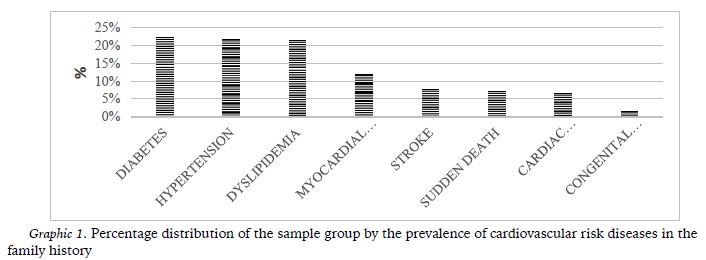
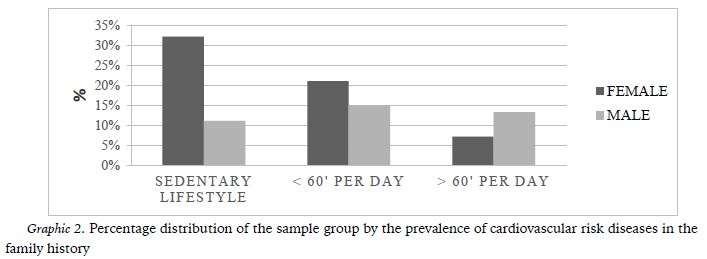
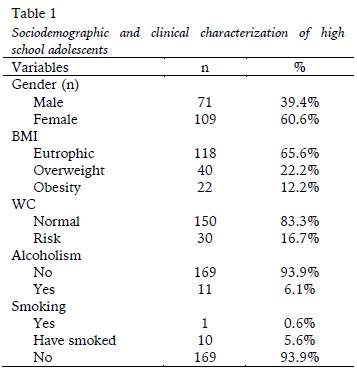
<body><![CDATA[<p>The research is   in accordance with the Resolution No. 466/12 of the Brazilian National Health   Council, which establishes guidelines and norms regulating research involving human beings (Brasil, 2012).</p> <b><b>Statistical analysis</b></b>      <p>The questionnaire   and the data collected were numbered and quantified. The data were analysed through   descriptive statistics using SPSS software version 22.0, and presented in   tables and graphs. The absolute and relative frequency was used to characterize   the participants and Chi-Square test to observe the possible associations   between the variables gender and level of physical activity, adopting as criterion of statistical significance p &lt;0.05.</p> </font>     <p>&nbsp;</p>     <p><font size="3" face="Verdana"><b><b>RESULTS</b></b></font></p>      <p><font size="2" face="Verdana">The sample was   composed in its totality by adolescents, with age between 13 and 17 years and   average age of 15.1 ± 0.73. In the <a href="#t1">Table 1</a>, there is their sociodemographic and   clinical-epidemiological characterization. The hereditary factor exerts a strong influence on the   onset of CVD and other diseases (Walter et al., 2004). After analysing the   data, the presence of some diseases that represent a risk to the cardiovascular   system can be verified through the family history of adolescents (<a href="/img/revistas/mot/v13s1/13s1a02g1.jpg">Graph 1</a>).   Only 12.2% of the students reported having no disease in the family history. O   <a href="/img/revistas/mot/v13s1/13s1a02g2.jpg">Graph II</a> shows the distribution of the sample by gender, classification   of the physical activity level, obtaining a high prevalence of adolescents with   insufficient levels of physical activity (79.4%). Likewise, it is worth   mentioning that the levels of physical activity below the recommended level are   higher in female adolescents (53.3%) than in the male (16.1%). However, levels   above the recommended are higher in male adolescents (13.3%) than in female (7.2%).</font></p>     
<p><a name="t1"></a></p>     <p>&nbsp;</p>     <p align="center"><font size="2" face="Verdana"><img src="/img/revistas/mot/v13s1/13s1a02t1.jpg" width="357" height="380"></font><font size="2" face="Verdana">   </font> </p>     
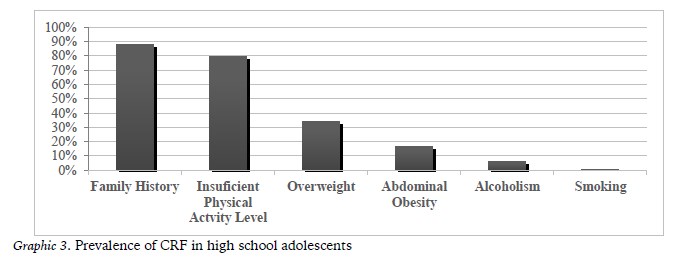
<p>&nbsp;</p>     <p><font size="2" face="Verdana">By the chi-square   test, we can report the difference between male and female adolescents is   statistically significant (p &lt;0.001). This shows that there is a   relationship between gender and the level of physical activity. In other words,   male adolescents have a more active lifestyle compared to females.   By checking and analysing the different variables of the study, it was   possible to generate a graph (<a href="/img/revistas/mot/v13s1/13s1a02g3.jpg">Graph 3</a>) with the prevalence of CRF. The   variables described consider behavioural health habits and the possible inherited genetic load. </font></p>     
]]></body>
<body><![CDATA[<p>&nbsp;</p> <font face="Verdana" size="2"></font><font size="3" face="Verdana"><b><b>DISCUSSION</b></b></font><font face="Verdana" size="2">      <p>The sample group   of adolescents was evaluated to investigate the presence of CRF in these   individuals, since there is a strong correlation between the existence and   severity of CVD and the presence of their factors in the early stages of life   (Quadros, Gordia, Silva, Silva, &amp; Mota, 2016). In conjunction with other   studies (Brito et al., 2016, Quadros et al., 2016), we also obtained a higher   participation of female adolescents (60.6%). We believe that this fact is   related to demographic issues that according to the Brazilian Institute of Geography and Statistics - IBGE (2010a) the female population is more numerous.</p>     <p>By characterized   the adolescents through BMI, it was verified that the percentage of overweight   and obesity is of 22.2% and 12.2%, respectively. This data corroborates with   the findings of Ribas and Silva (2014), in which the number of adolescents with   BMI classified as normal is prevalent when compared to the number with excess   weight. However, this number of overweight adolescents is a concern, since BMI   in young population is considered a risk for possible coronary diseases in adult life.</p>     <p>It was also   verified the WC, since it is known that the fat accumulated and located in the   central region has contributed to the development of diseases (Pereira et al.,   2010). Table 1 shows that 16.7% of adolescents in the sample had abdominal   obesity. This value generates concern since several studies in children and   adolescents have observed a significant association between WC and CRF   (Bitsori, Linardakis, Tabakaki, &amp; Kafatos, 2009; Pereira et al., 2010;).   Other investigated risk factors, such as alcoholism (6%) and smoking (1%)   presented a small number of cases, and similar results were found by Farias   Júnior, Mendes, Barbosa, and Lopes (2011). Through these results it is possible   to suggest that the populations studied seem to be aware of the harm that these   habits cause to health and may be a result of health education campaigns and actions carried out in the last decades in Brazil.</p>     <p>It is possible to   verify through the <a href="/img/revistas/mot/v13s1/13s1a02g2.jpg">graph II</a>, some DCVs related to the family history of the   sample group. Diabetes, hypertension, and dyslipidaemia, which together account   for 65.4%, representing a high risk to cardiovascular health. Against this   genetic tendency, verified through family history, adherence to and maintenance   of healthy lifestyle is recommended - with adequacy of physical exercise; rich   diet in fruits and vegetables; access to active leisure; no ingestion of   alcoholic beverages; among other protective situations for cardiovascular risk (Gomes et al, 2012).</p>     
<p>The results of   the study showed a high presence of adolescents with insufficient levels of   physical activity (79.4%), with a significantly higher prevalence in female   adolescents (53.3% vs 16.1%), so the boys in the present study may be   considered more active than the girls (Chart 2). However, their level of   physical activity is still considered low, considering that only 13% reached   the level of physical activity recommended by the WHO (2015). Insufficient practice   of physical activity was also observed as a prevalent CRF in studies such as   that of Quadros, Gordia, Silva, Silva, and Mota. (2016) and Farias Junior et   al. (2011), being the insufficient practice present in 64.3% and 59.5% of the samples, respectively.</p>     <p>Thus, even   physical activity is considered one of the most important actions to prevent   the development of obesity and chronic diseases (Brito et al., 2016), it is a   practice still little experienced in school life, especially in the female   gender (Fermino et al. 2010). Among the main barriers reported for involvement   in physical activity during childhood, there is a rise of passive leisure   (television and video game) and decline of active leisure (jumping rope,   elastic and cycling); in the period of adolescence, the environmental and   socio-cultural factors are mentioned (Fermino et al., 2010; Santos, Hino, Reis, &amp; Rodriguez-Añez, 2010).</p>     <p>It has been   observed strong associations between the physical activity variables and   cardiac risk, indicating an increase in risk as the level of physical activity   reduces (Ekelund et al., 2012). The study of Gopinath, Hardy, Kifley, Baur and   Mitchell (2014) reports that it is possible that the higher prevalence of high   blood pressure among adolescents is related to longer exposure to unhealthy   behaviours, such as inadequate eating habits and insufficient activity practice   physical. Accordingly, it is considered relevant to develop actions to promote   physical activity in school to confront this CRF in the researched population (Quadros et al., 2016).</p>     <p>It was emphasized   that the insufficient level of physical activity was the second most prevalent   risk factor among all the factors studied in the present study, behind only the   family history (<a href="/img/revistas/mot/v13s1/13s1a02g3.jpg">Graph 3</a>). This highlights the importance of interventions on the level of physical activity of children and adolescents.</p>     
<p>Related to the   presence of overweight, the present study found a higher prevalence (34%) than   other national studies, such as Ribas and Silva (2014) (20.4%), Farias Junior   et al. (2011) (10%) and 29.4% of Gomes et al. (2012). Despite the consequences,   obesity is considered the fastest growing problem in the world. In Brazil,   between 1974 and 2009, excess weight among adults almost tripled, culminating   in 49% of overweight and 14.6% with obesity. The prevalence of overweight in   children (47.8%) and adolescents (21.5%) was highlighted, which presented   increases of three and four times, respectively, over the referred time frame (IBGE, 2010b).</p>     ]]></body>
<body><![CDATA[<p>Central obesity,   due to WC measurement, was present in 17% of the analysed sample. This result   is superior to the finding by Romanzini, Pelegrini, and Petroski (7%) and   resembles that found by Gomes et al. 2012 (14.8%). In relation to gender, a   higher proportion of girls (6.7%) with abdominal obesity were found in a sample   of adolescents from the Northeast region when compared to boys (4.9%)   (Cavalcanti et al., 2010). These evidences indicate an increase in abdominal   obesity in adolescents, and knowing the factors associated with abdominal obesity are important to subsidize intervention programs in adolescents.</p> </font>     <p>&nbsp;</p>     <p><font size="3" face="Verdana"><b><b>CONCLUSION</b></b></font></p> <font face="Verdana" size="2">     <p>The presence of   several cardiovascular diseases in the family history of the students analysed   demonstrated a strong genetic tendency for CVD. Against this genetic tendency   it is necessary to adhere to a healthy lifestyle. However, it was verified   through the study a prevalence of young students with insufficient levels of   physical activity and with a relevant number of them with overweight and   obesity. Therefore, it is important that public policies aimed at young   population should orient and stimulate healthy habits of life, such as the   importance of physical activity and healthy eating choices, contributing to the adhesion of a healthy lifestyle in this population.</p>     <p>It is suggested   that studies be carried out to provide longitudinal follow-up with the young   students, verifying and monitoring not only genetic and behavioural factors,   but also environmental and psychological factors, so as make it possible to direct public intervention policies in the school environment.</p> </font>     <p>&nbsp;</p>     <p><font size="3" face="Verdana"><b><b>REFERENCES</b></b></font></p> <font face="Verdana" size="2">     <!-- ref --><p>Brasil. (2012). <i>Resolução 466/2012</i>.   Brasília: Ministério da Saúde, Conselho Nacional de Saúde.    &nbsp;&nbsp;&nbsp;&nbsp;&nbsp;&nbsp;&nbsp;&nbsp;[&#160;<a href="javascript:void(0);" onclick="javascript: window.open('/scielo.php?script=sci_nlinks&ref=370942&pid=S1646-107X201700060000200001&lng=','','width=640,height=500,resizable=yes,scrollbars=1,menubar=yes,');">Links</a>&#160;]<!-- end-ref --></p>     <!-- ref --><p>Bitsori, M., Linardakis, M., Tabakaki,   M., &amp; Kafatos, A. (2009). Waist circumference as a screening tool for the   identification of adolescents with the metabolic syndrome phenol type. <i>International Journal Of Pediatric Obesity, 4</i>(4), 325-331. doi: 10.3109/17477160902914597&nbsp;&nbsp;&nbsp;&nbsp;&nbsp;&nbsp;&nbsp;&nbsp;[&#160;<a href="javascript:void(0);" onclick="javascript: window.open('/scielo.php?script=sci_nlinks&ref=370944&pid=S1646-107X201700060000200002&lng=','','width=640,height=500,resizable=yes,scrollbars=1,menubar=yes,');">Links</a>&#160;]<!-- end-ref --><!-- ref --><p>Brito, B., Leal, J., Formiga, L.,   Frota, K., Silva, A., &amp; Lima, L. (2016). Doenças cardiovasculares: fatores   de risco em adolescentes. <i>Cogitare Enfermagem</i>, <i>2</i>(21), 1-8. doi: 10.5380/ce.v21i2.41848&nbsp;&nbsp;&nbsp;&nbsp;&nbsp;&nbsp;&nbsp;&nbsp;[&#160;<a href="javascript:void(0);" onclick="javascript: window.open('/scielo.php?script=sci_nlinks&ref=370945&pid=S1646-107X201700060000200003&lng=','','width=640,height=500,resizable=yes,scrollbars=1,menubar=yes,');">Links</a>&#160;]<!-- end-ref --><!-- ref --><p>Burgos, M. S., Burgos, L. T., Camargo,   M. D., Franke, S. I. R., Prá, D., Silva, A. M. V. da., Borges, T. S., Todendi,   P. F., Reckziegel, M. B., &amp; Reuter, C. P. (2013). Associação entre medidas   antropométricas e fatores de risco cardiovascular em crianças e adolescentes. <i>Arquivos     Brasileiros de Cardiologia</i>, <i>101</i>(4), 288-296. Epub August 27, 2013. doi: 10.5935/abc.20130169&nbsp;&nbsp;&nbsp;&nbsp;&nbsp;&nbsp;&nbsp;&nbsp;[&#160;<a href="javascript:void(0);" onclick="javascript: window.open('/scielo.php?script=sci_nlinks&ref=370946&pid=S1646-107X201700060000200004&lng=','','width=640,height=500,resizable=yes,scrollbars=1,menubar=yes,');">Links</a>&#160;]<!-- end-ref --><!-- ref --><p>Callaway, C. W., Chumlea, W. C.,   Bouchard, C., Himes, J. H., Lohman, M., A. D, Mitchell, C. D, Mueller, W. H,   Roche, A. F. &amp; Seefeldt, V. D. (1991). Circumferences. In. T. G. Lohman, A. F. Roche &amp; R. Martorell, (Eds.), <i>Anthropometric standardization reference manual</i>.   Champaign, IL: Human Kinetics.    &nbsp;&nbsp;&nbsp;&nbsp;&nbsp;&nbsp;&nbsp;&nbsp;[&#160;<a href="javascript:void(0);" onclick="javascript: window.open('/scielo.php?script=sci_nlinks&ref=370947&pid=S1646-107X201700060000200005&lng=','','width=640,height=500,resizable=yes,scrollbars=1,menubar=yes,');">Links</a>&#160;]<!-- end-ref --></p>     <!-- ref --><p>Cavalcanti, C. B. dos S., Barros, M.   V. G. de., Menêses, A. L., Santos, C. M., Azevedo, A. M. P., &amp; Guimarães,   F. J. de S. P. (2010). Abdominal obesity in adolescents: prevalence and   association with physical activity and eating habits. <i>Arquivos     Brasileiros de Cardiologia</i>, <i>94</i>(3), 371-377. doi: 10.1590/S0066782X2010000300015&nbsp;&nbsp;&nbsp;&nbsp;&nbsp;&nbsp;&nbsp;&nbsp;[&#160;<a href="javascript:void(0);" onclick="javascript: window.open('/scielo.php?script=sci_nlinks&ref=370949&pid=S1646-107X201700060000200006&lng=','','width=640,height=500,resizable=yes,scrollbars=1,menubar=yes,');">Links</a>&#160;]<!-- end-ref --><!-- ref --><p>Ekelund, U., Luan, J., Sherar, L.,   Esliger, D., Griew, P., &amp; Cooper, A. (2012). Moderate to Vigorous Physical Activity   and Sedentary Time and Cardiometabolic Risk Factors in Children and   Adolescents. <i>Journal of the American Medical Association,</i> <i>307</i>(7), 704. doi: 10.1001/jama.2012.156&nbsp;&nbsp;&nbsp;&nbsp;&nbsp;&nbsp;&nbsp;&nbsp;[&#160;<a href="javascript:void(0);" onclick="javascript: window.open('/scielo.php?script=sci_nlinks&ref=370950&pid=S1646-107X201700060000200007&lng=','','width=640,height=500,resizable=yes,scrollbars=1,menubar=yes,');">Links</a>&#160;]<!-- end-ref --><!-- ref --><p>Farias Júnior, J. C., Mendes, J. K.   F., Barbosa, D. B. M., &amp; Lopes, A. da S. (2011). Fatores de risco cardiovascular em adolescentes: prevalência e   associação com fatores sociodemográficos. <i>Revista Brasileira de Epidemiologia</i>, <i>14</i>(1), 50-62. doi: 10.1590/S1415790X201100010005&nbsp;&nbsp;&nbsp;&nbsp;&nbsp;&nbsp;&nbsp;&nbsp;[&#160;<a href="javascript:void(0);" onclick="javascript: window.open('/scielo.php?script=sci_nlinks&ref=370951&pid=S1646-107X201700060000200008&lng=','','width=640,height=500,resizable=yes,scrollbars=1,menubar=yes,');">Links</a>&#160;]<!-- end-ref --><!-- ref --><p>Fermino, R., Rech, C., Hino, A.,   Rodriguez Añez, C., &amp; Reis, R. (2010). Atividade física e fatores   associados em adolescentes do ensino médio de Curitiba, Brasil. <i>Revista De Saúde Pública</i>, <i>44</i>(6), 986-995. doi: 10.1590/s0034-89102010000600002&nbsp;&nbsp;&nbsp;&nbsp;&nbsp;&nbsp;&nbsp;&nbsp;[&#160;<a href="javascript:void(0);" onclick="javascript: window.open('/scielo.php?script=sci_nlinks&ref=370952&pid=S1646-107X201700060000200009&lng=','','width=640,height=500,resizable=yes,scrollbars=1,menubar=yes,');">Links</a>&#160;]<!-- end-ref --><!-- ref --><p>Gomes, E. B., Moreira, T. M. M.,   Pereira, H. C. V., Sales, I. B., Lima, F. E. T., Freitas, C. H. A. de., &amp;   Rodrigues, D. P. (2012). Fatores de risco cardiovascular em adultos jovens de   um município do Nordeste brasileiro. <i>Revista Brasileira de Enfermagem</i>, <i>65</i>(4), 594-600. doi: 10.1590/S0034-71672012000400007&nbsp;&nbsp;&nbsp;&nbsp;&nbsp;&nbsp;&nbsp;&nbsp;[&#160;<a href="javascript:void(0);" onclick="javascript: window.open('/scielo.php?script=sci_nlinks&ref=370953&pid=S1646-107X201700060000200010&lng=','','width=640,height=500,resizable=yes,scrollbars=1,menubar=yes,');">Links</a>&#160;]<!-- end-ref --><!-- ref --><p>Gopinath, B., Hardy, L., Kifley, A.,   Baur, L., &amp; Mitchell, P. (2014). Activity Behaviors in Schoolchildren and   Subsequent 5-yr Change in Blood Pressure. <i>Medicine &amp; Science In Sports &amp; Exercise</i>, <i>46</i>(4), 724-729. doi: 10.1249/mss.0000000000000166&nbsp;&nbsp;&nbsp;&nbsp;&nbsp;&nbsp;&nbsp;&nbsp;[&#160;<a href="javascript:void(0);" onclick="javascript: window.open('/scielo.php?script=sci_nlinks&ref=370954&pid=S1646-107X201700060000200011&lng=','','width=640,height=500,resizable=yes,scrollbars=1,menubar=yes,');">Links</a>&#160;]<!-- end-ref --><!-- ref --><p>Instituto Brasileiro de Geografia e   Estatística. (2010<i>). Características da população e dos domicílios: resultados do universo</i>. Rio de Janeiro: IBGE.    &nbsp;&nbsp;&nbsp;&nbsp;&nbsp;&nbsp;&nbsp;&nbsp;[&#160;<a href="javascript:void(0);" onclick="javascript: window.open('/scielo.php?script=sci_nlinks&ref=370955&pid=S1646-107X201700060000200012&lng=','','width=640,height=500,resizable=yes,scrollbars=1,menubar=yes,');">Links</a>&#160;]<!-- end-ref --></p>     <!-- ref --><p>Instituto Brasileiro de Geografia e   Estatística. (2010). <i>Pesquisa de orçamentos familiares 2008-2009</i>. Rio de Janeiro: IBGE.    &nbsp;&nbsp;&nbsp;&nbsp;&nbsp;&nbsp;&nbsp;&nbsp;[&#160;<a href="javascript:void(0);" onclick="javascript: window.open('/scielo.php?script=sci_nlinks&ref=370957&pid=S1646-107X201700060000200013&lng=','','width=640,height=500,resizable=yes,scrollbars=1,menubar=yes,');">Links</a>&#160;]<!-- end-ref --></p>     <!-- ref --><p>Mendes, M. J. F. de L., Alves, J. G.   B., Alves, A. V., Siqueira, P. P., &amp; Freire, E. F. de C. (2006). Associação   de fatores de risco para doenças cardiovasculares em adolescentes e seus pais. <i>Revista Brasileira de Saúde Materno Infantil</i>, <i>6</i>(Supll. 1), s49-s54. doi: 10.1590/S1519-38292006000500007&nbsp;&nbsp;&nbsp;&nbsp;&nbsp;&nbsp;&nbsp;&nbsp;[&#160;<a href="javascript:void(0);" onclick="javascript: window.open('/scielo.php?script=sci_nlinks&ref=370959&pid=S1646-107X201700060000200014&lng=','','width=640,height=500,resizable=yes,scrollbars=1,menubar=yes,');">Links</a>&#160;]<!-- end-ref --><!-- ref --><p>Mendonça, A. (2012). <i>Promoção da   saúde e processo de trabalho dos profissionais de educação física do núcleo de   apoio à saúde da família </i>(Mestrado em Saúde Coletiva). Universidade Estadual de Londrina.    &nbsp;&nbsp;&nbsp;&nbsp;&nbsp;&nbsp;&nbsp;&nbsp;[&#160;<a href="javascript:void(0);" onclick="javascript: window.open('/scielo.php?script=sci_nlinks&ref=370960&pid=S1646-107X201700060000200015&lng=','','width=640,height=500,resizable=yes,scrollbars=1,menubar=yes,');">Links</a>&#160;]<!-- end-ref --></p>     <!-- ref --><p>Pereira, P. F., Serrano, H. M. S.,   Carvalho, G. Q., Lamounier, J. A., Peluzio, M. do C. G., Franceschini, S. do C.   C., &amp; Priore, S. E. (2010). Circunferência da cintura como indicador de   gordura corporal e alterações metabólicas em adolescentes: comparação entre   quatro referências. <i>Revista da Associação Médica Brasileira</i>, <i>56</i>(6), 665-669. doi: 10.1590/S010442302010000600014&nbsp;&nbsp;&nbsp;&nbsp;&nbsp;&nbsp;&nbsp;&nbsp;[&#160;<a href="javascript:void(0);" onclick="javascript: window.open('/scielo.php?script=sci_nlinks&ref=370962&pid=S1646-107X201700060000200016&lng=','','width=640,height=500,resizable=yes,scrollbars=1,menubar=yes,');">Links</a>&#160;]<!-- end-ref --><!-- ref --><p>Petroski, E. (2011). <i>Antropometria:   técnicas e padronizações </i>(ed. 5). Porto Alegre: Palotti.    &nbsp;&nbsp;&nbsp;&nbsp;&nbsp;&nbsp;&nbsp;&nbsp;[&#160;<a href="javascript:void(0);" onclick="javascript: window.open('/scielo.php?script=sci_nlinks&ref=370963&pid=S1646-107X201700060000200017&lng=','','width=640,height=500,resizable=yes,scrollbars=1,menubar=yes,');">Links</a>&#160;]<!-- end-ref --></p>     ]]></body>
<body><![CDATA[<!-- ref --><p>Quadros, T. M. B. de, Gordia, A. P,   Silva, L. R, Silva, D. A. S, &amp; Mota, J. (2016). Inquérito epidemiológico em   escolares: determinantes e prevalência de fatores de risco cardiovascular. <i>Cadernos     de Saúde Pública</i>, <i>32</i>(2), 1-17, e00181514. EpubMarch 04, 2016. doi: 10.1590/0102-311X00181514&nbsp;&nbsp;&nbsp;&nbsp;&nbsp;&nbsp;&nbsp;&nbsp;[&#160;<a href="javascript:void(0);" onclick="javascript: window.open('/scielo.php?script=sci_nlinks&ref=370965&pid=S1646-107X201700060000200018&lng=','','width=640,height=500,resizable=yes,scrollbars=1,menubar=yes,');">Links</a>&#160;]<!-- end-ref --><!-- ref --><p>Ribas, S. A., &amp; Silva, L. C. S.   da. (2014). Fatores de risco cardiovascular e fatores associados em escolares do Município de Belém, Pará, Brasil. <i>Cadernos de Saúde Pública</i>, <i>30</i>(3), 577-586. doi: 10.1590/0102-311X00129812&nbsp;&nbsp;&nbsp;&nbsp;&nbsp;&nbsp;&nbsp;&nbsp;[&#160;<a href="javascript:void(0);" onclick="javascript: window.open('/scielo.php?script=sci_nlinks&ref=370966&pid=S1646-107X201700060000200019&lng=','','width=640,height=500,resizable=yes,scrollbars=1,menubar=yes,');">Links</a>&#160;]<!-- end-ref --><!-- ref --><p>Romanzini, M., Pelegrini, A., &amp;   Petroski, E. L. (2011). Prevalência e fatores associados à obesidade abdominal   em adolescentes. <i>Revista Paulista de Pediatria</i>, <i>29</i>(4), 546-552. doi: 10.1590/S010305822011000400012&nbsp;&nbsp;&nbsp;&nbsp;&nbsp;&nbsp;&nbsp;&nbsp;[&#160;<a href="javascript:void(0);" onclick="javascript: window.open('/scielo.php?script=sci_nlinks&ref=370967&pid=S1646-107X201700060000200020&lng=','','width=640,height=500,resizable=yes,scrollbars=1,menubar=yes,');">Links</a>&#160;]<!-- end-ref --><!-- ref --><p>Santos, M. S., Hino, A. A. F., Reis,   R. S., &amp; Rodriguez-Añez, C. R. (2010). Prevalência de barreiras para a   prática de atividade física em adolescentes. <i>Revista Brasileira de     Epidemiologia</i>, <i>13</i>(1), 94-104. doi: 10.1590/S1415-790X2010000100009&nbsp;&nbsp;&nbsp;&nbsp;&nbsp;&nbsp;&nbsp;&nbsp;[&#160;<a href="javascript:void(0);" onclick="javascript: window.open('/scielo.php?script=sci_nlinks&ref=370968&pid=S1646-107X201700060000200021&lng=','','width=640,height=500,resizable=yes,scrollbars=1,menubar=yes,');">Links</a>&#160;]<!-- end-ref --><!-- ref --><p>Taylor, R. W, Jones, J. E, Williams,   S. M, &amp; Goulding, A. (2000). Evaluation of waist circumference,   waist-to-hip, and the conicity index as screening tools for high trunk fat   mass, as measured by dual energy X rayabsorptiometry in children aged 3–19y. <i>The American Journal of Clinical Nutrition,</i> <i>72</i>, 490-495.    &nbsp;&nbsp;&nbsp;&nbsp;&nbsp;&nbsp;&nbsp;&nbsp;[&#160;<a href="javascript:void(0);" onclick="javascript: window.open('/scielo.php?script=sci_nlinks&ref=370969&pid=S1646-107X201700060000200022&lng=','','width=640,height=500,resizable=yes,scrollbars=1,menubar=yes,');">Links</a>&#160;]<!-- end-ref --></p>     <!-- ref --><p>Walter, F., Emery, J., Braithwaite,   D., &amp; Marteau, T. (2004). Lay Understanding of Familial Risk of Common   Chronic Diseases: A Systematic Review and Synthesis of Qualitative Research. <i>The Annals of Family Medicine</i>, <i>2</i>(6), 583-594. doi: 10.1370/afm.242&nbsp;&nbsp;&nbsp;&nbsp;&nbsp;&nbsp;&nbsp;&nbsp;[&#160;<a href="javascript:void(0);" onclick="javascript: window.open('/scielo.php?script=sci_nlinks&ref=370971&pid=S1646-107X201700060000200023&lng=','','width=640,height=500,resizable=yes,scrollbars=1,menubar=yes,');">Links</a>&#160;]<!-- end-ref --><!-- ref --><p>World Health Organization [WHO]. (2006). Multi centre Growth Reference Study Group.   Assessment of differences in linear growth among populations in the WHO Multi   centre Growth Reference Study. <i>Acta Pediatrical</i>, <i>95</i>, 56–65. doi: 10.1111/apa.13112&nbsp;&nbsp;&nbsp;&nbsp;&nbsp;&nbsp;&nbsp;&nbsp;[&#160;<a href="javascript:void(0);" onclick="javascript: window.open('/scielo.php?script=sci_nlinks&ref=370972&pid=S1646-107X201700060000200024&lng=','','width=640,height=500,resizable=yes,scrollbars=1,menubar=yes,');">Links</a>&#160;]<!-- end-ref --><!-- ref --><p>World Health Organization [WHO]. (2015). <i>Physical activity strategy for the WHO   European Region 2016–2025</i>. Geneva: WHO Global Report.    &nbsp;&nbsp;&nbsp;&nbsp;&nbsp;&nbsp;&nbsp;&nbsp;[&#160;<a href="javascript:void(0);" onclick="javascript: window.open('/scielo.php?script=sci_nlinks&ref=370973&pid=S1646-107X201700060000200025&lng=','','width=640,height=500,resizable=yes,scrollbars=1,menubar=yes,');">Links</a>&#160;]<!-- end-ref --> </p>     ]]></body>
<body><![CDATA[<p>&nbsp;</p>     <p><b>Acknowledgments:    <br>   </b>Nothing to declare.    <br>   <b>Conflict of interests:    <br>       </b>Nothing to declare.    <br>   <b>Funding:    <br>       </b>Nothing to declare.</p>     <p>&nbsp;</p>     <p>&nbsp;</p> <a href="#top"><sup>*</sup></a><i><a name="end"></a> Corresponding Author:   </i>State University of Ceará, Dr. Silas Munguba Av., 1700, Campus do Itaperi, 60714-903, Fortaleza – Ceará, Brazil.<i> Email: </i><a href="mailto:jaina.bezerra@uece.br">jaina.bezerra@uece.br</a></font>      ]]></body><back>
<ref-list>
<ref id="B1">
<nlm-citation citation-type="book">
<collab>Brasil</collab>
<source><![CDATA[Resolução 466/2012]]></source>
<year>2012</year>
<publisher-loc><![CDATA[Brasília ]]></publisher-loc>
<publisher-name><![CDATA[Ministério da Saúde, Conselho Nacional de Saúde]]></publisher-name>
</nlm-citation>
</ref>
<ref id="B2">
<nlm-citation citation-type="journal">
<person-group person-group-type="author">
<name>
<surname><![CDATA[Bitsori]]></surname>
<given-names><![CDATA[M.]]></given-names>
</name>
<name>
<surname><![CDATA[Linardakis]]></surname>
<given-names><![CDATA[M.]]></given-names>
</name>
<name>
<surname><![CDATA[Tabakaki]]></surname>
<given-names><![CDATA[M.]]></given-names>
</name>
<name>
<surname><![CDATA[Kafatos]]></surname>
<given-names><![CDATA[A.]]></given-names>
</name>
</person-group>
<article-title xml:lang="en"><![CDATA[Waist circumference as a screening tool for the identification of adolescents with the metabolic syndrome phenol type]]></article-title>
<source><![CDATA[International Journal Of Pediatric Obesity]]></source>
<year>2009</year>
<volume>4</volume>
<numero>4</numero>
<issue>4</issue>
<page-range>325-331</page-range></nlm-citation>
</ref>
<ref id="B3">
<nlm-citation citation-type="journal">
<person-group person-group-type="author">
<name>
<surname><![CDATA[Brito]]></surname>
<given-names><![CDATA[B.]]></given-names>
</name>
<name>
<surname><![CDATA[Leal]]></surname>
<given-names><![CDATA[J.]]></given-names>
</name>
<name>
<surname><![CDATA[Formiga]]></surname>
<given-names><![CDATA[L.]]></given-names>
</name>
<name>
<surname><![CDATA[Frota]]></surname>
<given-names><![CDATA[K.]]></given-names>
</name>
<name>
<surname><![CDATA[Silva]]></surname>
<given-names><![CDATA[A.]]></given-names>
</name>
<name>
<surname><![CDATA[Lima]]></surname>
<given-names><![CDATA[L.]]></given-names>
</name>
</person-group>
<article-title xml:lang="pt"><![CDATA[Doenças cardiovasculares: fatores de risco em adolescentes]]></article-title>
<source><![CDATA[Cogitare Enfermagem]]></source>
<year>2016</year>
<volume>2</volume>
<numero>21</numero>
<issue>21</issue>
<page-range>1-8</page-range></nlm-citation>
</ref>
<ref id="B4">
<nlm-citation citation-type="journal">
<person-group person-group-type="author">
<name>
<surname><![CDATA[Burgos]]></surname>
<given-names><![CDATA[M. S.]]></given-names>
</name>
<name>
<surname><![CDATA[Burgos]]></surname>
<given-names><![CDATA[L. T.]]></given-names>
</name>
<name>
<surname><![CDATA[Camargo]]></surname>
<given-names><![CDATA[M. D.]]></given-names>
</name>
<name>
<surname><![CDATA[Franke]]></surname>
<given-names><![CDATA[S. I. R.]]></given-names>
</name>
<name>
<surname><![CDATA[Prá]]></surname>
<given-names><![CDATA[D.]]></given-names>
</name>
<name>
<surname><![CDATA[Silva]]></surname>
<given-names><![CDATA[A. M. V. da]]></given-names>
</name>
<name>
<surname><![CDATA[Borges]]></surname>
<given-names><![CDATA[T. S.]]></given-names>
</name>
<name>
<surname><![CDATA[Todendi]]></surname>
<given-names><![CDATA[P. F.]]></given-names>
</name>
<name>
<surname><![CDATA[Reckziegel]]></surname>
<given-names><![CDATA[M. B.]]></given-names>
</name>
<name>
<surname><![CDATA[Reuter]]></surname>
<given-names><![CDATA[C. P.]]></given-names>
</name>
</person-group>
<article-title xml:lang="pt"><![CDATA[Associação entre medidas antropométricas e fatores de risco cardiovascular em crianças e adolescentes]]></article-title>
<source><![CDATA[Arquivos Brasileiros de Cardiologia]]></source>
<year>2013</year>
<month>Au</month>
<day>gu</day>
<volume>101</volume>
<numero>4</numero>
<issue>4</issue>
<page-range>288-296</page-range></nlm-citation>
</ref>
<ref id="B5">
<nlm-citation citation-type="book">
<person-group person-group-type="author">
<name>
<surname><![CDATA[Callaway]]></surname>
<given-names><![CDATA[C. W.]]></given-names>
</name>
<name>
<surname><![CDATA[Chumlea]]></surname>
<given-names><![CDATA[W. C.]]></given-names>
</name>
<name>
<surname><![CDATA[Bouchard]]></surname>
<given-names><![CDATA[C.]]></given-names>
</name>
<name>
<surname><![CDATA[Himes]]></surname>
<given-names><![CDATA[J. H.]]></given-names>
</name>
<name>
<surname><![CDATA[Lohman]]></surname>
<given-names><![CDATA[M., A. D]]></given-names>
</name>
<name>
<surname><![CDATA[Mitchell]]></surname>
<given-names><![CDATA[C. D]]></given-names>
</name>
<name>
<surname><![CDATA[Mueller]]></surname>
<given-names><![CDATA[W. H]]></given-names>
</name>
<name>
<surname><![CDATA[Roche]]></surname>
<given-names><![CDATA[A. F.]]></given-names>
</name>
<name>
<surname><![CDATA[Seefeldt]]></surname>
<given-names><![CDATA[V. D.]]></given-names>
</name>
</person-group>
<article-title xml:lang="en"><![CDATA[Circumferences]]></article-title>
<person-group person-group-type="editor">
<name>
<surname><![CDATA[Lohman]]></surname>
<given-names><![CDATA[T. G.]]></given-names>
</name>
<name>
<surname><![CDATA[Roche]]></surname>
<given-names><![CDATA[A. F.]]></given-names>
</name>
<name>
<surname><![CDATA[Martorell]]></surname>
<given-names><![CDATA[R.]]></given-names>
</name>
</person-group>
<source><![CDATA[Anthropometric standardization reference manual]]></source>
<year>1991</year>
<publisher-loc><![CDATA[Champaign^eIL IL]]></publisher-loc>
<publisher-name><![CDATA[Human Kinetics]]></publisher-name>
</nlm-citation>
</ref>
<ref id="B6">
<nlm-citation citation-type="journal">
<person-group person-group-type="author">
<name>
<surname><![CDATA[Cavalcanti]]></surname>
<given-names><![CDATA[C. B. dos S.]]></given-names>
</name>
<name>
<surname><![CDATA[Barros]]></surname>
<given-names><![CDATA[M. V. G. de.]]></given-names>
</name>
<name>
<surname><![CDATA[Menêses]]></surname>
<given-names><![CDATA[A. L.]]></given-names>
</name>
<name>
<surname><![CDATA[Santos]]></surname>
<given-names><![CDATA[C. M.]]></given-names>
</name>
<name>
<surname><![CDATA[Azevedo]]></surname>
<given-names><![CDATA[A. M. P.]]></given-names>
</name>
<name>
<surname><![CDATA[Guimarães]]></surname>
<given-names><![CDATA[F. J. de S. P.]]></given-names>
</name>
</person-group>
<article-title xml:lang="en"><![CDATA[Abdominal obesity in adolescents: prevalence and association with physical activity and eating habits]]></article-title>
<source><![CDATA[Arquivos Brasileiros de Cardiologia]]></source>
<year>2010</year>
<volume>94</volume>
<numero>3</numero>
<issue>3</issue>
<page-range>371-377</page-range></nlm-citation>
</ref>
<ref id="B7">
<nlm-citation citation-type="journal">
<person-group person-group-type="author">
<name>
<surname><![CDATA[Ekelund]]></surname>
<given-names><![CDATA[U.]]></given-names>
</name>
<name>
<surname><![CDATA[Luan]]></surname>
<given-names><![CDATA[J.]]></given-names>
</name>
<name>
<surname><![CDATA[Sherar]]></surname>
<given-names><![CDATA[L.]]></given-names>
</name>
<name>
<surname><![CDATA[Esliger]]></surname>
<given-names><![CDATA[D.]]></given-names>
</name>
<name>
<surname><![CDATA[Griew]]></surname>
<given-names><![CDATA[P.]]></given-names>
</name>
<name>
<surname><![CDATA[Cooper]]></surname>
<given-names><![CDATA[A.]]></given-names>
</name>
</person-group>
<article-title xml:lang="en"><![CDATA[Moderate to Vigorous Physical Activity and Sedentary Time and Cardiometabolic Risk Factors in Children and Adolescents]]></article-title>
<source><![CDATA[Journal of the American Medical Association]]></source>
<year>2012</year>
<volume>307</volume>
<numero>7</numero>
<issue>7</issue>
<page-range>704</page-range></nlm-citation>
</ref>
<ref id="B8">
<nlm-citation citation-type="journal">
<person-group person-group-type="author">
<name>
<surname><![CDATA[Farias Júnior]]></surname>
<given-names><![CDATA[J. C.]]></given-names>
</name>
<name>
<surname><![CDATA[Mendes]]></surname>
<given-names><![CDATA[J. K. F.]]></given-names>
</name>
<name>
<surname><![CDATA[Barbosa]]></surname>
<given-names><![CDATA[D. B. M.]]></given-names>
</name>
<name>
<surname><![CDATA[Lopes]]></surname>
<given-names><![CDATA[A. da S.]]></given-names>
</name>
</person-group>
<article-title xml:lang="pt"><![CDATA[Fatores de risco cardiovascular em adolescentes: prevalência e associação com fatores sociodemográficos]]></article-title>
<source><![CDATA[Revista Brasileira de Epidemiologia]]></source>
<year>2011</year>
<volume>14</volume>
<numero>1</numero>
<issue>1</issue>
<page-range>50-62</page-range></nlm-citation>
</ref>
<ref id="B9">
<nlm-citation citation-type="journal">
<person-group person-group-type="author">
<name>
<surname><![CDATA[Fermino]]></surname>
<given-names><![CDATA[R.]]></given-names>
</name>
<name>
<surname><![CDATA[Rech]]></surname>
<given-names><![CDATA[C.]]></given-names>
</name>
<name>
<surname><![CDATA[Hino]]></surname>
<given-names><![CDATA[A.]]></given-names>
</name>
<name>
<surname><![CDATA[Rodriguez Añez]]></surname>
<given-names><![CDATA[C.]]></given-names>
</name>
<name>
<surname><![CDATA[Reis]]></surname>
<given-names><![CDATA[R.]]></given-names>
</name>
</person-group>
<article-title xml:lang="pt"><![CDATA[Atividade física e fatores associados em adolescentes do ensino médio de Curitiba, Brasil]]></article-title>
<source><![CDATA[Revista De Saúde Pública]]></source>
<year>2010</year>
<volume>44</volume>
<numero>6</numero>
<issue>6</issue>
<page-range>986-995</page-range></nlm-citation>
</ref>
<ref id="B10">
<nlm-citation citation-type="journal">
<person-group person-group-type="author">
<name>
<surname><![CDATA[Gomes]]></surname>
<given-names><![CDATA[E. B.]]></given-names>
</name>
<name>
<surname><![CDATA[Moreira]]></surname>
<given-names><![CDATA[T. M. M.]]></given-names>
</name>
<name>
<surname><![CDATA[Pereira]]></surname>
<given-names><![CDATA[H. C. V.]]></given-names>
</name>
<name>
<surname><![CDATA[Sales]]></surname>
<given-names><![CDATA[I. B.]]></given-names>
</name>
<name>
<surname><![CDATA[Lima]]></surname>
<given-names><![CDATA[F. E. T.]]></given-names>
</name>
<name>
<surname><![CDATA[Freitas]]></surname>
<given-names><![CDATA[C. H. A. de]]></given-names>
</name>
<name>
<surname><![CDATA[Rodrigues]]></surname>
<given-names><![CDATA[D. P.]]></given-names>
</name>
</person-group>
<article-title xml:lang="pt"><![CDATA[Fatores de risco cardiovascular em adultos jovens de um município do Nordeste brasileiro]]></article-title>
<source><![CDATA[Revista Brasileira de Enfermagem]]></source>
<year>2012</year>
<volume>65</volume>
<numero>4</numero>
<issue>4</issue>
<page-range>594-600</page-range></nlm-citation>
</ref>
<ref id="B11">
<nlm-citation citation-type="journal">
<person-group person-group-type="author">
<name>
<surname><![CDATA[Gopinath]]></surname>
<given-names><![CDATA[B.]]></given-names>
</name>
<name>
<surname><![CDATA[Hardy]]></surname>
<given-names><![CDATA[L.]]></given-names>
</name>
<name>
<surname><![CDATA[Kifley]]></surname>
<given-names><![CDATA[A.]]></given-names>
</name>
<name>
<surname><![CDATA[Baur]]></surname>
<given-names><![CDATA[L.]]></given-names>
</name>
<name>
<surname><![CDATA[Mitchell]]></surname>
<given-names><![CDATA[P.]]></given-names>
</name>
</person-group>
<article-title xml:lang="en"><![CDATA[Activity Behaviors in Schoolchildren and Subsequent 5-yr Change in Blood Pressure]]></article-title>
<source><![CDATA[Medicine & Science In Sports & Exercise]]></source>
<year>2014</year>
<volume>46</volume>
<numero>4</numero>
<issue>4</issue>
<page-range>724-729</page-range></nlm-citation>
</ref>
<ref id="B12">
<nlm-citation citation-type="book">
<collab>Instituto Brasileiro de Geografia e Estatística</collab>
<source><![CDATA[Características da população e dos domicílios: resultados do universo]]></source>
<year>2010</year>
<publisher-loc><![CDATA[Rio de Janeiro ]]></publisher-loc>
<publisher-name><![CDATA[IBGE]]></publisher-name>
</nlm-citation>
</ref>
<ref id="B13">
<nlm-citation citation-type="book">
<collab>Instituto Brasileiro de Geografia e Estatística</collab>
<source><![CDATA[Pesquisa de orçamentos familiares 2008-2009]]></source>
<year>2010</year>
<publisher-loc><![CDATA[Rio de Janeiro ]]></publisher-loc>
<publisher-name><![CDATA[IBGE]]></publisher-name>
</nlm-citation>
</ref>
<ref id="B14">
<nlm-citation citation-type="journal">
<person-group person-group-type="author">
<name>
<surname><![CDATA[Mendes]]></surname>
<given-names><![CDATA[M. J. F. de L.]]></given-names>
</name>
<name>
<surname><![CDATA[Alves]]></surname>
<given-names><![CDATA[J. G. B.]]></given-names>
</name>
<name>
<surname><![CDATA[Alves]]></surname>
<given-names><![CDATA[A. V.]]></given-names>
</name>
<name>
<surname><![CDATA[Siqueira]]></surname>
<given-names><![CDATA[P. P.]]></given-names>
</name>
<name>
<surname><![CDATA[Freire]]></surname>
<given-names><![CDATA[E. F. de C.]]></given-names>
</name>
</person-group>
<article-title xml:lang="pt"><![CDATA[Associação de fatores de risco para doenças cardiovasculares em adolescentes e seus pais]]></article-title>
<source><![CDATA[Revista Brasileira de Saúde Materno Infantil]]></source>
<year>2006</year>
<volume>6</volume>
<numero>^s1</numero>
<issue>^s1</issue>
<supplement>1</supplement>
<page-range>s49-s54</page-range></nlm-citation>
</ref>
<ref id="B15">
<nlm-citation citation-type="">
<person-group person-group-type="author">
<name>
<surname><![CDATA[Mendonça]]></surname>
<given-names><![CDATA[A.]]></given-names>
</name>
</person-group>
<source><![CDATA[Promoção da saúde e processo de trabalho dos profissionais de educação física do núcleo de apoio à saúde da família]]></source>
<year>2012</year>
</nlm-citation>
</ref>
<ref id="B16">
<nlm-citation citation-type="journal">
<person-group person-group-type="author">
<name>
<surname><![CDATA[Pereira]]></surname>
<given-names><![CDATA[P. F.]]></given-names>
</name>
<name>
<surname><![CDATA[Serrano]]></surname>
<given-names><![CDATA[H. M. S.]]></given-names>
</name>
<name>
<surname><![CDATA[Carvalho]]></surname>
<given-names><![CDATA[G. Q.]]></given-names>
</name>
<name>
<surname><![CDATA[Lamounier]]></surname>
<given-names><![CDATA[J. A.]]></given-names>
</name>
<name>
<surname><![CDATA[Peluzio]]></surname>
<given-names><![CDATA[M. do C. G.]]></given-names>
</name>
<name>
<surname><![CDATA[Franceschini]]></surname>
<given-names><![CDATA[S. do C. C.]]></given-names>
</name>
<name>
<surname><![CDATA[Priore]]></surname>
<given-names><![CDATA[S. E.]]></given-names>
</name>
</person-group>
<article-title xml:lang="pt"><![CDATA[Circunferência da cintura como indicador de gordura corporal e alterações metabólicas em adolescentes: comparação entre quatro referências]]></article-title>
<source><![CDATA[Revista da Associação Médica Brasileira]]></source>
<year>2010</year>
<volume>56</volume>
<numero>6</numero>
<issue>6</issue>
<page-range>665-669</page-range></nlm-citation>
</ref>
<ref id="B17">
<nlm-citation citation-type="book">
<person-group person-group-type="author">
<name>
<surname><![CDATA[Petroski]]></surname>
<given-names><![CDATA[E.]]></given-names>
</name>
</person-group>
<source><![CDATA[Antropometria: técnicas e padronizações]]></source>
<year>2011</year>
<edition>5</edition>
<publisher-loc><![CDATA[Porto Alegre ]]></publisher-loc>
<publisher-name><![CDATA[Palotti]]></publisher-name>
</nlm-citation>
</ref>
<ref id="B18">
<nlm-citation citation-type="journal">
<person-group person-group-type="author">
<name>
<surname><![CDATA[Quadros]]></surname>
<given-names><![CDATA[T. M. B. de]]></given-names>
</name>
<name>
<surname><![CDATA[Gordia]]></surname>
<given-names><![CDATA[A. P]]></given-names>
</name>
<name>
<surname><![CDATA[Silva]]></surname>
<given-names><![CDATA[L. R]]></given-names>
</name>
<name>
<surname><![CDATA[Silva]]></surname>
<given-names><![CDATA[D. A. S]]></given-names>
</name>
<name>
<surname><![CDATA[Mota]]></surname>
<given-names><![CDATA[J.]]></given-names>
</name>
</person-group>
<article-title xml:lang="pt"><![CDATA[Inquérito epidemiológico em escolares: determinantes e prevalência de fatores de risco cardiovascular]]></article-title>
<source><![CDATA[Cadernos de Saúde Pública]]></source>
<year>2016</year>
<month>Ma</month>
<day>rc</day>
<volume>32</volume>
<numero>2</numero>
<issue>2</issue>
<page-range>1-17</page-range></nlm-citation>
</ref>
<ref id="B19">
<nlm-citation citation-type="journal">
<person-group person-group-type="author">
<name>
<surname><![CDATA[Ribas]]></surname>
<given-names><![CDATA[S. A.]]></given-names>
</name>
<name>
<surname><![CDATA[Silva]]></surname>
<given-names><![CDATA[L. C. S. da]]></given-names>
</name>
</person-group>
<article-title xml:lang="pt"><![CDATA[Fatores de risco cardiovascular e fatores associados em escolares do Município de Belém, Pará, Brasil]]></article-title>
<source><![CDATA[Cadernos de Saúde Pública]]></source>
<year>2014</year>
<volume>30</volume>
<numero>3</numero>
<issue>3</issue>
<page-range>577-586</page-range></nlm-citation>
</ref>
<ref id="B20">
<nlm-citation citation-type="journal">
<person-group person-group-type="author">
<name>
<surname><![CDATA[Romanzini]]></surname>
<given-names><![CDATA[M.]]></given-names>
</name>
<name>
<surname><![CDATA[Pelegrini]]></surname>
<given-names><![CDATA[A.]]></given-names>
</name>
<name>
<surname><![CDATA[Petroski]]></surname>
<given-names><![CDATA[E. L.]]></given-names>
</name>
</person-group>
<article-title xml:lang="pt"><![CDATA[Prevalência e fatores associados à obesidade abdominal em adolescentes]]></article-title>
<source><![CDATA[Revista Paulista de Pediatria]]></source>
<year>2011</year>
<volume>29</volume>
<numero>4</numero>
<issue>4</issue>
<page-range>546-552</page-range></nlm-citation>
</ref>
<ref id="B21">
<nlm-citation citation-type="journal">
<person-group person-group-type="author">
<name>
<surname><![CDATA[Santos]]></surname>
<given-names><![CDATA[M. S.]]></given-names>
</name>
<name>
<surname><![CDATA[Hino]]></surname>
<given-names><![CDATA[A. A. F.]]></given-names>
</name>
<name>
<surname><![CDATA[Reis]]></surname>
<given-names><![CDATA[R. S.]]></given-names>
</name>
<name>
<surname><![CDATA[Rodriguez-Añez]]></surname>
<given-names><![CDATA[C. R.]]></given-names>
</name>
</person-group>
<article-title xml:lang="pt"><![CDATA[Prevalência de barreiras para a prática de atividade física em adolescentes]]></article-title>
<source><![CDATA[Revista Brasileira de Epidemiologia]]></source>
<year>2010</year>
<volume>13</volume>
<numero>1</numero>
<issue>1</issue>
<page-range>94-104</page-range></nlm-citation>
</ref>
<ref id="B22">
<nlm-citation citation-type="journal">
<person-group person-group-type="author">
<name>
<surname><![CDATA[Taylor]]></surname>
<given-names><![CDATA[R. W]]></given-names>
</name>
<name>
<surname><![CDATA[Jones]]></surname>
<given-names><![CDATA[J. E]]></given-names>
</name>
<name>
<surname><![CDATA[Williams]]></surname>
<given-names><![CDATA[S. M]]></given-names>
</name>
<name>
<surname><![CDATA[Goulding]]></surname>
<given-names><![CDATA[A.]]></given-names>
</name>
</person-group>
<article-title xml:lang="en"><![CDATA[Evaluation of waist circumference, waist-to-hip, and the conicity index as screening tools for high trunk fat mass, as measured by dual energy X rayabsorptiometry in children aged 3-19y]]></article-title>
<source><![CDATA[The American Journal of Clinical Nutrition]]></source>
<year>2000</year>
<volume>72</volume>
<page-range>490-495</page-range></nlm-citation>
</ref>
<ref id="B23">
<nlm-citation citation-type="journal">
<person-group person-group-type="author">
<name>
<surname><![CDATA[Walter]]></surname>
<given-names><![CDATA[F.]]></given-names>
</name>
<name>
<surname><![CDATA[Emery]]></surname>
<given-names><![CDATA[J.]]></given-names>
</name>
<name>
<surname><![CDATA[Braithwaite]]></surname>
<given-names><![CDATA[D.]]></given-names>
</name>
<name>
<surname><![CDATA[Marteau]]></surname>
<given-names><![CDATA[T.]]></given-names>
</name>
</person-group>
<article-title xml:lang="en"><![CDATA[Lay Understanding of Familial Risk of Common Chronic Diseases: A Systematic Review and Synthesis of Qualitative Research]]></article-title>
<source><![CDATA[The Annals of Family Medicine]]></source>
<year>2004</year>
<volume>2</volume>
<numero>6</numero>
<issue>6</issue>
<page-range>583-594</page-range></nlm-citation>
</ref>
<ref id="B24">
<nlm-citation citation-type="journal">
<collab>World Health Organization</collab>
<article-title xml:lang="en"><![CDATA[Multi centre Growth Reference Study Group: Assessment of differences in linear growth among populations in the WHO Multi centre Growth Reference Study]]></article-title>
<source><![CDATA[Acta Pediatrical]]></source>
<year>2006</year>
<volume>95</volume>
<page-range>56-65</page-range></nlm-citation>
</ref>
<ref id="B25">
<nlm-citation citation-type="book">
<collab>World Health Organization</collab>
<source><![CDATA[Physical activity strategy for the WHO European Region 2016-2025]]></source>
<year>2015</year>
<publisher-loc><![CDATA[Geneva ]]></publisher-loc>
<publisher-name><![CDATA[WHO Global Report]]></publisher-name>
</nlm-citation>
</ref>
</ref-list>
</back>
</article>