


SciELO - Scientific Electronic Library Online

 
vol.13 número2Metodologias Ativas no Ensino do ODS 4: Um Estudo de Práticas DocentesIntegrando Aprendizado de Máquina e Robótica Educacional: A Plataforma Frankie para o Ensino de Inteligência Artificial no Ensino Médio índice de autoresíndice de assuntosPesquisa de artigos
Home Pagelista alfabética de periódicos  

Serviços Personalizados

Journal

Artigo

Indicadores

Links relacionados

  • Não possue artigos similaresSimilares em SciELO

Compartilhar


Sisyphus - Journal of Education

versão impressa ISSN 2182-8474versão On-line ISSN 2182-9640

Sisyphus vol.13 no.2 Lisboa out. 2025  Epub 30-Jul-2025

https://doi.org/10.25749/sis.39389 

Articles

Pedagogical Training of Higher Education Teachers and its Effects: A Scoping Review

Formação Pedagógica de Docentes no Ensino Superior e seus Efeitos: Uma Scoping Review

La Formación Pedagógica del Docente en la Educación Superior y sus Efectos: Una Scoping Review

1 UIDEF, Instituto de Educação, Universidade de Lisboa, Portugal (https://doi.org/10.54499/UIDB/04107/2020)


ABSTRACT

This study aimed to analyse the consequences of the pedagogical training of higher education teachers reported in scientific literature in the context of the transformations associated with the Bologna Process. The post-Bologna period has been marked by significant structural and pedagogical changes that required substantial adaptation to address the challenges of massification and increased student diversity. Pedagogical training has proven essential in fostering pedagogical innovations, updated assessment methods and the integration of emerging technologies while also contributing to developing professional teaching identity. This scoping review based on Clarke and Hollingsworth’s (2002) Interconnected Model of Professional Growth, examined three interconnected domains: pedagogical practices, student learning outcomes and teachers’ beliefs. The findings highlight the critical role of pedagogical training in improving teaching quality, enhancing the understanding of the teaching-learning process and strengthening teacher-student relationships. The study concludes that pedagogical training is essential for innovation and continuous improvement in higher education, emphasising the importance of policies prioritising professional development to meet current and future institutional demands.

KEY WORDS: teachers pedagogical training; teachers’ professional development; higher education.

RESUMO

Este estudo analisa os efeitos da formação pedagógica de docentes do ensino superior reportados na literatura científica no contexto das transformações associadas ao Processo de Bolonha. O período pós-Bolonha tem sido marcado por mudanças curriculares e pedagógicas significativas que exigiram uma adaptação substancial para enfrentar desafios da massificação e o aumento da diversidade de estudantes. A formação pedagógica tem-se revelado essencial para promover inovações pedagógicas, avaliação de estudantes adequada e a integração de tecnologias, contribuindo para o desenvolvimento da identidade profissional docente. Esta scoping review, baseada no Modelo Interconectado de Desenvolvimento Profissional de Clarke e Hollingsworth (2002), examinou três domínios interligados: práticas pedagógicas, resultados de aprendizagem dos alunos e crenças dos professores. Conclui-se que a formação pedagógica é crítica para a qualidade do ensino, melhorando a compreensão do processo de ensino-aprendizagem e fortalecendo as relações professor-aluno, sendo essencial para a inovação e a melhoria contínua no ensino superior. Enfatiza-se a importância de políticas que priorizem o desenvolvimento profissional para responder às exigências institucionais atuais e futuras.

PALAVRAS-CHAVE: formação pedagógica de professores; desenvolvimento profissional docente; ensino superior

RESUMEN

Este estudio analiza los efectos de la formación pedagógica de profesores de educación superior reportados en la literatura científica en el contexto de las transformaciones asociadas al Proceso de Bolonia. El período post-Bolonia ha estado marcado por importantes cambios curriculares y pedagógicos que requirieron una adaptación sustancial para enfrentar los desafíos de la masificación y el aumento de la diversidad estudiantil. La formación pedagógica ha sido fundamental para promover innovaciones pedagógicas, la evaluación adecuada y la integración de tecnologías, contribuyendo al desarrollo de la identidad profesional docente. Esta scoping review, basada en el Modelo Interconectado de Desarrollo Profesional de Clarke y Hollingsworth (2002), examinó tres dominios interconectados: prácticas, creencias de los docentes, y resultados de aprendizaje de los estudiantes. La formación pedagógica es crítica para la calidad de la enseñanza, mejorando la comprensión del proceso de enseñanza-aprendizaje y fortaleciendo las relaciones profesor-alumno, esencial para la innovación y la mejora continua. Se enfatiza la importancia de políticas para el desarrollo profesional para satisfacer las demandas institucionales actuales y futuras.

PALABRAS CLAVE: formación pedagógica de profesores; desarrollo profesional docente; educación superior

Introduction

The pedagogical training of higher education teachers has gained increasing importance in the global academic scenario, particularly in recent decades, in response to the requirements proposed by the Bologna Process. This milestone in European higher education, implemented in the early 2000s, aimed to create a European Higher Education Area (EHEA), promoting the harmonisation of higher education systems and the mobility of students and teachers. However, the Bologna Process not only provided the organisation of three cycles of studies (first degree, master degree, PhD) but also required a profound adaptation of teachers to new conditions, resulting mainly from the massification of higher education and the increasing diversification of the student body. In this context, the need to update pedagogical practices became evident, boosting the opening to formal training of higher education teachers, a practice that has been uncommon in many European countries.

Pedagogical training in higher education is structured professional learning designed to enhance teaching skills and align them with contemporary educational practices. Darling-Hammond et al. (2017) define effective professional development as structured learning that results in changes in teachers’ knowledge and practice, equipping educators to foster student engagement and improve learning outcomes. Desimone (2009) highlights key characteristics of effective professional development: a strong content focus, active learning, collaboration, alignment with curricula and policies and sufficient learning time. These principles are particularly relevant in higher education, where pedagogical training must adapt to various disciplines and institutional priorities. Professional development for academic staff in European higher education varies across national systems, institution types and disciplinary areas, although it seeks to respond to quality assurance requirements in higher education (ESG, 2015). Consequently, pedagogical training takes multiple forms, including workshops, seminars, coaching, and mentoring. Whether mandatory or voluntary, its goal remains consistent: to support instructors in refining their teaching skills and staying informed on best practices in higher education. By promoting continuous professional growth, pedagogical training enhances teaching quality, ensuring that educators are prepared to meet the evolving demands of higher education.

Several researchers (Gibbs & Coffey, 2004; Pickering, 2006; Postareff et al., 2007) highlight that the training of higher education teachers plays a crucial role in responding to new demands, namely facilitating the adaptation of teachers to the structural and pedagogical changes brought about by Bologna. This process not only required the reconfiguration of curricula and methodologies but also demanded the development of teachers’ skills, enabling them to deal with student heterogeneity and the intensification of educational responses to different needs. Formal pedagogical training, previously seen as optional or peripheral, began to be increasingly understood as essential to enable teachers to meet the expectations of pedagogical quality and innovation that characterise higher education in the post-Bologna period.

In fact, since the implementation of the Bologna Process, higher education institutions (HEIs) have experienced a true revolution in conceptions about teaching and learning, with considerable impacts on the work of teachers. The Bologna Process established that higher education students should not only be the focus of teaching but also active participants in building their learning processes (Jaiswal et al., 2020). To this end, it was stipulated to abandon the old system centred essentially on the acquisition of knowledge, in favour of a model that values ​​the acquisition of comprehensive skills with the active involvement of the student. Adapting teachers to this new paradigm has been a challenge, especially in Portugal, where the delay in adopting innovative pedagogical practices compared to other EHEA countries is notable (Ó et al., 2019). Thus, the continuing education and professional development of teachers emerge as essential pillars in addressing these questions, aiming to contribute to ensuring the quality of higher education.

The present study aims to explore and critically analyse the effects of formal training of higher education teachers, with an emphasis on the transformations required by the Bologna Process. The analysis will address how formal training has influenced teachers’ ability to innovate in their pedagogical models (Čirić, 2016), adapt to new student assessment dynamics (Gibbs & Coffey, 2004), integrate emerging technologies (Aveleyra & Proyetti Martino, 2022) or collaborate in interdisciplinary and international contexts (Pickering, 2006). Furthermore, it is essential to understand the effects of pedagogical training on curricular practices and professional relationships, as well as on teachers’ beliefs and conceptions (Almeida et al., 2022), in an increasingly interconnected and complex educational environment.

By reviewing existing literature, the article aims not only to map the most significant effects of formal pedagogical training reported by researchers but also to discuss its broader implications for teacher professional development in the post-Bologna era. This reflection seeks to contribute to the understanding of the contemporary needs and challenges of higher education, providing insights for the formulation of educational policies and institutional strategies that promote the continuous improvement of pedagogical practices and the quality of teaching. Thus, this study seeks to offer a relevant contribution to the debate on pedagogical training for higher education teachers, highlighting its growing importance as an essential path to meet the current evolutionary process and future adaptations of higher education, particularly in the European context.

Training of higher education teachers

Educational contexts have been undergoing transformations that require teachers to perform their duties differently and be more attentive to contextual and technological changes, particularly those that affect the school environment and its audiences. The attraction, retention, and professional development of teachers is a transversal concern, as several countries are faced with pressing difficulties in these areas, facing the ageing of the class and the lack of qualified human resources to meet all needs (OECD, 2005, 2024). Higher education is no exception, as institutions strive to keep pace with rapid change by offering more qualified training programmes. Thus, the process of teacher education in higher education emerges as a critical lever for advancing professional development, given its influence on educators’ beliefs and conceptions (Almeida et al., 2022). This transformative potential is expected to foster meaningful changes in pedagogical practice, ultimately contributing to enhanced teaching performance and increased job satisfaction.

However, teaching in higher education is seen as a complex, high-level activity (Altet, 2013), and in the context of the knowledge society it is required that teacher education combines knowledge and practice, considering theory and practice (Zabalza, 2007). In this sense, teacher education should focus on training programmes based on the experience, inquiry and needs of teachers (Vieira, 2009). Teacher professional development has come to be seen as a long-term process that encompasses a variety of opportunities and experiences, designed to stimulate the development and evolution of teachers in their pursuit of a professional identity. This identity is a construction of the professional self that develops over the course of a career. It can be shaped by the school environment, reforms and political contexts, and it is grounded in personal commitment, a willingness to learn to teach, reflections on concerns and values, and knowledge of the disciplines they teach (Marcelo, 2009). Pedagogical training programmes aimed at higher education teachers have been developed across countries (Fernandes, et al., 2023), but primarily in Anglo-Saxon nations since the 1960s. In this context, a study was carried out on higher education topics (Ó et al., 2019), which examines the representation of higher education pedagogy in research by analysing scholarly articles published between 2012 and 2018 in ten leading journals. It explicitly shows publication trends, the most prolific researchers and the geographical and institutional distribution of contributions. It highlights the prominence of teaching in the field of higher education and the predominance of articles from the United Kingdom, Australia, and the United States. It can be deduced that these countries value pedagogical training highly, which in many cases is a requirement for entry and progression into teaching careers.

In short, given the challenges of globalisation, massification, expansion of institutional networks and the Bologna declaration, in education there is a greater concern in meeting and understanding the needs of students, demonstrating the importance of pedagogical training for teachers at this level of education. More recently, there is evidence that the pandemic has sparked a reinforced interest in pedagogy among higher education teachers (Alves & Gonçalves, 2024; Deem, 2021). It is, therefore, especially important to explore the research produced on the effects of pedagogical training on higher education teachers.

Methods

The present study aims to investigate literature on the pedagogical training of higher education teachers to answer the following research questions: How does the scientific literature describe the consequences, effects, or impact of the pedagogical training of higher education teachers? More specifically, how do higher education teachers who participate in pedagogical training transform their professional practices, notice changes in their relationship with students, or find their professional identity changing?

To this end, we conducted a scoping review of the literature (Arksey & O’Malley, 2005; Levac et al., 2010; Westphaln et al., 2021), adhering to the recommended steps and utilising the PRISMA framework as a reporting tool to systematically document the review process. This review includes identifying the research question and relevant studies, selecting representative studies from which data are extracted and interpreted, and disseminating the results.

It is important, in the scoping review, to adjust the research to the specific research objectives, maintaining flexibility while seeking to increase rigour and clarity in the methodological approach. In this sense, the authors contribute to defining the scoping review as an exploratory, flexible and useful approach to describing and mapping complex and multifaceted areas of knowledge, enabling the identification of gaps and offering a basis for future research and interventions. This framework was employed as an analytical tool to systematically organise evidence from scientific literature published between January 2000 and June 2024, corresponding to the post-Bologna period. Through subsequent thematic mapping, this approach enabled the identification of key trends and variations in the documented effects.

Higher education teacher training has been widely discussed (Ó et al., 2019; Postareff et al., 2007), and several examples confirm the benefits of using systematic review methodology (Huet & Casanova, 2022; Llewellyn, 2019; MacDonald et al., 2012) in higher education, already cited by Bearman et al. (2012), as being a clear, comprehensive and methodical approach to research, selection and synthesis of literature. Thematic analysis (Braun & Clarke, 2022) is also a useful technique for understanding and making sense of the literature review, since, by deepening the interpretation of the data found, it gives coherence to the reflection.

This study drew inspiration from Clarke and Hollingsworth’s (2002) Interconnected Model of Professional Growth to identify the key themes for analysis. Adopting a deductive approach, we examined how teacher training in higher education fosters transformative learning, shaping pedagogical practices, student learning outcomes and educators’ professional beliefs. In this case, we initially sought a very broad coding of the data, seeking to fit them into the objectives of the research questions aligned with these four key themes.

Thus, a scoping review of the literature was conducted to investigate the relationship between the pedagogical training of higher education teachers and its effects or consequences during the post-Bologna period, based on evidence from published research. The search was conducted in the Scopus and Web of Science databases, using the search terms “pedagogical training” AND “higher education” AND “teacher”, with the filter applied to Article Title, Abstract and Keywords.

Data collection took place in July 2024, focusing on literature published from the year 2000 onwards, aligning with the entry into force of the Bologna process.

The inclusion criteria admitted peer-reviewed articles that presented findings concerning the themes under consideration in the research results, specifically the consequences or effects of pedagogical training. All duplicate articles were excluded from the analysis.

In the SCOPUS database, the search generated a total of 153 search results. In Web of Science, 159 search results were found. After combining the search results from the two databases, 312 records were gathered. Of this total, 79 duplicate articles were excluded, resulting in 233 articles eligible for analysis.

The analysis of the abstracts, introductions, and conclusions of the articles-carried out alongside the rigorous application of the inclusion criteria (i.e., articles that directly described or alluded to the effects, impacts, or consequences of the pedagogical training of higher education teachers)-led to the identification of 157 articles eligible for this study.

Figure 1 describes these methodological steps.
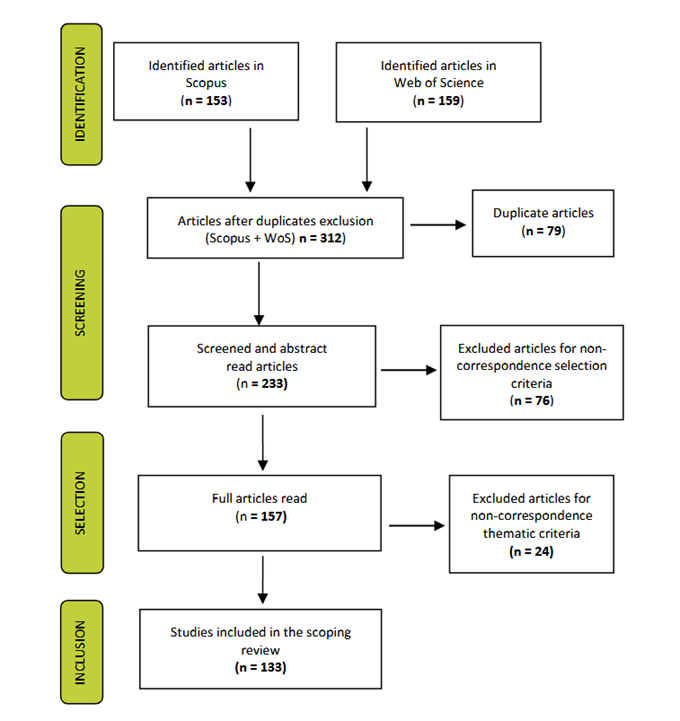
Figure 1: Prisma flowchart of the articles recovered in Scopus e Web of Science databases 

Finally, the full-text reading of these articles narrowed the study universe to 133 documents, as presented in the Appendix.

Afterwards, the problems and research questions within the articles were observed under the lens of the teaching professional growth model (explained ahead), to assess which aspects of that model were prevalent in each article.

The results of this analysis will be presented below, summarising the emerging lines of investigation.

Mapping the effects of pedagogical training for higher education teachers

The theoretical basis for analysis and interpretation of data was inspired by the Interconnected Model of Professional Growth (Clarke & Hollingsworth, 2002), which emphasises how teachers’ professional development drives changes in pedagogical practices, student learning outcomes and the pedagogical capabilities of teachers, as shown in Figure 2.

It also highlights the connections between the description of the higher education teacher training process and the resulting transformative learning, as it promotes reflection, validation and implementation of these same learnings in an academic context.
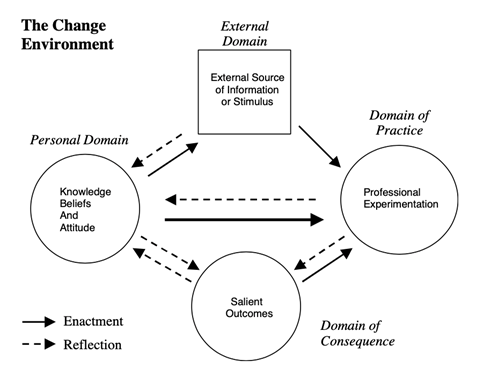
Source: Clarke and Hollingsworth (2002, p. 951).

Figure 2:  The Interconnected model of professional growth 

As described by the authors of the model (Clarke & Hollingsworth, 2002), this transformation can be revealed in pedagogical practices (which include new dynamics resulting from the application of models, innovation and inclusion of technologies); in student learning outcomes (which include student motivation and development and more active, student-centred participation); and in teachers’ beliefs and attitudes (with their professional teaching identity and the value of their intervention strategies). In summary, change can be observed in three interconnected domains: the domain of practices, which concerns the external environment; the external domain, related to student learning; and the personal domain. These domains are interconnected through reflection-action, which enhances investment in professional growth.

The analysis of the 133 articles was carried out using a deductive and reflective thematic approach (Braun & Clarke, 2021). The successive readings, initially exploratory and progressively more conclusive, first of the abstracts and then of the full articles, enabled the identification of recording units, followed by coding according to key themes derived from the model by Clarke and Hollingsworth (2002), which inspired the current research. In the analysis, a combination of inductive and deductive approaches was employed, involving an initial effort to observe the data and subsequently interpret it according to pre-defined categories.

The validity and consistency of the coding and categorisation process were ensured through continuous oversight by the authors, who acted as judges. The first author was responsible for coding and categorisation, with all decisions analysed and discussed incrementally to reach a consensus in cases of disagreement with the second author. The third author intervened as a judge in situations where uncertainties remained regarding the assignment of categories or subcategories, despite the joint discussion and analysis by the other two.

This analysis led to the development of a list of categories concerning the articles, as presented below in Table 1, and also already applied to the corpus detailed in the Appendix.
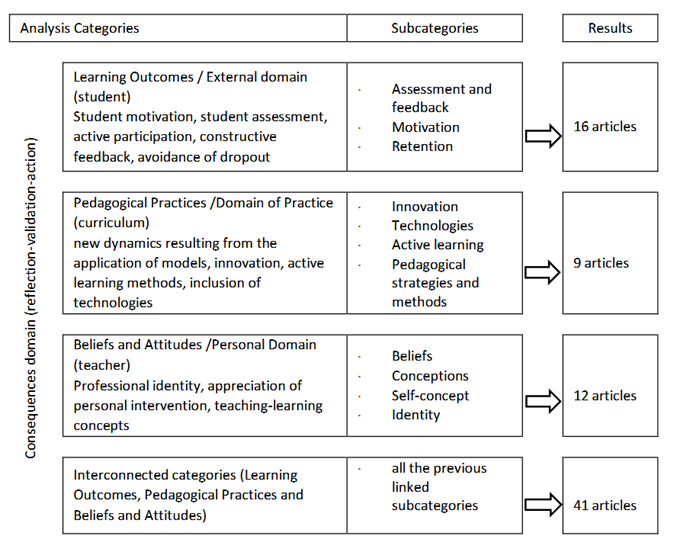
Table 1: Document corpus analysis procedure 

Applying these analytical categories to the data emerging from the literature review in the post-Bologna period provides a comprehensive view of how higher education teachers construct and express the consequences of the pedagogical training they received. These consequences reveal transformations in both their teaching practices and student learning outcomes, as well as in their underlying conceptions and beliefs. This allows for a deeper understanding of the dynamics of transformation that the pedagogical training of higher education teachers has revealed, as evidenced by the research. Also, a significant number of studies revealed neither a single category, but all three, in an interconnected way (41 articles).

In the selection and analysis of the literature, we verified a range of studies that converged on one conclusion: the imperative need for formal pedagogical training for higher education teachers. This was the first unexpected result in this research, but we considered not excluding it, as 55 articles retrieved corresponded to the thematic criteria. However, they did not focus exactly on one or another anticipated consequence of pedagogical training. Therefore, it was decided to dedicate an analysis to this category, corresponding to the additional theme of the institutional context domain, which includes governance and options on educational policies concerning pedagogical training at this level of education, as shown in Table 2.
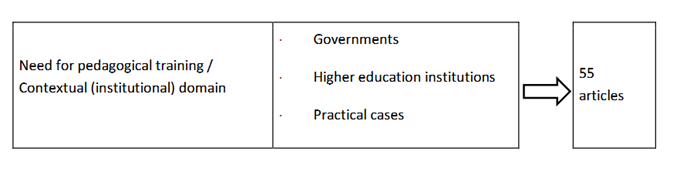
Table 2: Additional topic for analysis of the documentary corpus 

Another unexpected result was the difficulty in categorising a set of 41 articles whose themes were interconnected, making it difficult to allocate any of them to a single theme. For this reason, a section in the thematic analysis is also dedicated to this categorisation.

Evidence of the need for pedagogical training for higher education teachers

It was found that several studies are dedicated to reflecting, justifying and appealing to the design and implementation of pedagogical training for teachers in higher education. There are 55 articles that argue in this sense, highlighting this need. In summary, the research developed is based on four thematic areas, and an additional one with interconnect themes, that will now be described.

Case studies and specific observations of activities, programmes, or actions are particularly relevant, as they highlight the need to incorporate pedagogical training in the training of teachers who teach in higher education in the areas of STEM, tourism, secretariat, law, language teaching, health sciences, among others (Laffin & Gomes, 2014). The analysis of supervision practices or doctoral guidance, or the integration of technologies in university pedagogy also highlights this need.

Another theme focuses on studies about the processes of evaluating the quality of teaching and institutions, as well as on innovation, particularly from the point of view of administration and management of HEIs, which result in the need for pedagogical updating and the definition of public policies in line with these needs (Ferreira et al., 2018).

There is also a set of articles that focus on comparative studies between countries (see, for example, Paul & Adangnikou, 2010), which reveal contexts in which the higher education system imposes a formal requirement for teachers to obtain pedagogical qualifications (e.g., United Kingdom, Sweden, Norway, and Denmark), unlike others (Portugal, France, Brazil, Spain), where this requirement is not mandatory.

Additionally, there is also a reference to a reflection concerning differences in the pedagogical preparation of primary and secondary school teachers and higher education teachers (Jensen, 2011), as well as studies on inclusion, diversity, migration, conflicts and peacebuilding which reveal that partnerships between higher education institutions that offer pedagogical training and those in more vulnerable educational environments can be fruitful through direct collaboration, for both parties involved (for example, Pherali & Lewis, 2019).

Finally, another perspective addresses the individual paths of university teachers, in which training trajectories and personal, professional and institutional aspects are analysed, focusing on the need to learn to teach, and the concept of becoming a teacher, highlighting consequences in pedagogical performance and students’ perception (Souza et al., 2016).

In summary, the research highlights a clear need to promote pedagogical training in the context of higher education, whether due to concerns expressed by teachers, existence of concrete examples of these practices, including validated international perspectives, and the recognition that such training objectively constitutes a seal of quality for the development of higher education.

Results of mastery of learning outcomes

From the analysis of 16 articles, it was possible to identify the effects of pedagogical training on students’ learning results. It appears that pedagogical training drives teachers towards a more student-centred approach to teaching and learning, developing more student-centred strategies and dynamics, which is understood as a sign of greater teaching-learning quality (Yürekli Kaynardağ, 2019). This student-centred approach is associated with a decrease in student retention rates due to higher student achievement and involvement in learning.

Additionally, the teacher’s conception of assessment becomes more meaningful and assessment practices are adapted according to the teacher’s teaching approach. The organisation and planning of teaching, based on pedagogical training, is carried out according to the students and the context.

Another aspect that arises, given this analysis, is related to the evaluation and feedback from students regarding their perception of the teachers’ skills (Lutovac et al., 2017). This feedback becomes important for the teacher, since students, based on observation and the strategies implemented by the teacher, can perceive the teacher’s skills at different levels, such as lesson planning, implemented methodologies and assessment.

Finally, some articles, such as the study from Chadha (2022), show that this entire process is only possible with the institutional support and facilitation of networks of peers and teachers since, in many cases, additional trust is necessary to implement new practices that influence the entire learning process.

Results of mastering pedagogical practice

Analysing the 9 articles categorised under this subtheme made it possible to identify items related to the effects of pedagogical training on pedagogical practices. These effects are observed in several areas, such as curriculum planning and design, active methodologies, assessment and technological resources, all of which include pedagogical reflection.

The analysis of the articles suggests that the implementation of active methodologies and the use of technologies are the most evident effects. Within the implementation of active methodologies, the articles reveal that teachers aim to innovate their classes and motivate students to learn using teaching strategies in which they can actively participate in the construction of their knowledge (Vivas et al., 2023).

Another major effect of pedagogical training of higher education teachers focuses on the use of digital and technological resources and tools (Méndez Gijón, 2021). The articles analysed show a path towards technological innovation in higher education, with teachers, after training, resorting to trial and error using these tools and involving students in learning how to use them.

Also highlighted is the concern of teachers in redesigning the curriculum so that technologies can be integrated into these same courses and that these can be continuous (Dumitru, 2017). Other aspects highlighted in the studies show effects on curricular organisation linked to the use of assessment instruments acquired during pedagogical training. However, only a few studies clearly confirm this consequence of teachers’ pedagogical training.

In summary, in the domain of pedagogical practice, the most visible consequences focus on the adoption of active methodologies and the use of digital technologies in the classroom. Fewer studies confirm that practices are still developed in curriculum redesign and the implementation of new assessment instruments. However, in all these areas, a reflexive way of including the results acquired in pedagogical training permeates.

Results of the beliefs and attitudes domain

The analysis of the 12 articles referring to the effect of pedagogical training on the beliefs and attitudes of higher education teachers reveals that teachers tend to move towards an approach more centred on the student than on themselves, involving the student in the construction of their knowledge, and very clearly reducing the conception about learning as a capacity for memorisation. Furthermore, it is also clear that these teachers’ self-efficacy beliefs improve significantly after pedagogical training (Postareff et al., 2007; Postareff & Lindblom-Ylänne, 2011).

Within this set, some studies, such as Aškerc Veniger and Kočar (2018), show that teachers-particularly those in social sciences-focus more on the learning process becoming more emotional in a positive way. However, this shift comes at the expense of teaching itself; that is, they move from a more focused conception of the subject being taught as the object of attention, to one focused on how students should learn. On the other hand, exact science teachers, whose focus is more on content, are neutral about teaching, as the curricular material prevails over the learning process.

Studies in this group also suggest that social science teachers are more involved in pedagogical training programmes compared to exact science teachers. But that is not the only variable. Another aspect that we were able to verify refers to the effects of training based on its duration (Heinonen et al., 2023). In other words, some of the articles show that short-term training has a direct impact on how teachers start to view their role in teaching (Nguyen et al., 2024; Vilppu et al., 2019). However, long-term training effects seem to prevail in time and in the way it is incorporated into their attitudes, especially considering their professional identity, which includes developments in the pedagogical relationship with students and in their conceptions about teaching.

Results of interconnected categories

At the end of the categorisation exercise, it was noted that it was difficult to allocate several studies to a single subtheme. Thus, 41 articles were grouped, as these all point to the three previous interconnected categories, revealing multiple consequences of the pedagogical training of higher education teachers and an interrelationship of its effects.

In this context, there is a discussion about pedagogical training models with a focus on professional development, which is mainly based on three fundamental axes: the centrality of reflection, interaction and collaboration between participants in pedagogical training; the student-centred learning strategies and methodologies, especially based on active learning, which result from this; and the inclusion of technologies to support lectures, which provide opportunities for contextualised innovation and experimentation. It is also found that the effects of training activities organised to support teaching have a direct impact on instructors’ use of multiple assessment methods in their teaching practices (Zhuang et al., 2023).

In the experiences reported about teachers who participated in pedagogical training, it appears that their conceptions about pedagogy are centred on the adoption of a teaching approach focused on content or learning; in the transition from the teacher-centred concept to the student-centred concept, and in encouraging meaningful learning through fair formative and regulatory assessment strategies (Postareff et al., 2007). It can be observed that the contributions of pedagogical training are converted into the valorisation of teaching academic work and the strengthening of teachers’ autonomy, in parallel with the focus on the collective dimensions of their performance, which allows us to glimpse a balance in the tension between research and teaching, and the assumption of the academic profession as a public good, allowing teachers to face, with greater security and creativity, current curricular and pedagogical challenges (Alves & Gonçalves, 2024). In other words, pedagogical training provides transformation movements in terms of conceptions and identity perception, but also in the creation of experimental dynamics, which proves to influence their pedagogical practices.

Therefore, it is legitimate to mention that studies converge on the idea that teachers who have undergone pedagogical training are more effective and competent in facilitating teaching and learning than those who have not completed this training, precisely because they were able to reflect on their professional identity, transforming conceptions and practices. It is stated that, more than aiming at the mere acquisition of techniques, pedagogical training can prioritise spaces for joint reflection about the curriculum and teachers’ pedagogical options. Therefore, the participation of professors in pedagogical training that leads them to reflect, to be aware of their actions and their teaching history, tends to broaden their awareness and conceptions about teaching, allows them to build knowledge, and can generate significant changes in their teaching practice in the classroom (Junges & Behrens, 2016). The actions developed in the training experience generate significant changes in the use of innovative teaching strategies, in the learning and evaluation processes, and in the participants’ epistemological conceptions. This highlights the relevance of pedagogical training for university teaching, as well as the need for institutional policies that support ongoing professional development for higher education teachers (Ramos & Farias, 2018).

Discussion of results

In the analysis of the articles, the key idea prevails that there is an interconnection between the different effects caused by the pedagogical training of higher education teachers. This means that, subject to this type of training, teachers change not only their practices but also how they view student learning because they change their beliefs and attitudes in the field of education. This conclusion is compatible with the model proposal by Clarke and Hollingsworth (2002), which highlights the interdependence between different domains. The authors state that considering the contextual impulse, in this case, the Bologna process (the external domain), it is possible to group three aspects: the teacher’s beliefs, attitudes and knowledge (the personal domain); professional experimentation resulting from pedagogical training (the mastery of practice); and learning outcomes (the mastery of consequence). Thus, we confirm the viability of this model when applicable to the observation of research carried out in this context: the domain of pedagogical practice; mastery of learning outcomes; and the domain of beliefs and attitudes, which, in the literature, were more evident when combined. In fact, many articles explore these three aspects together as interdependent consequences that result from pedagogical training.

In short, as the external environment changes, it leads teachers to act adaptively as a result of the Bologna process, the emergence of technologies and new teaching strategies and methodologies. In turn, institutions seek to assert themselves through the quality and innovation they pursue, demonstrating a greater need for the pedagogical training of teachers. As a consequence of training, teachers reveal changes in the perception of their professional identity, assuming themselves as unavoidable agents of the transformations they desire for the higher education system, which is visible in the pedagogical practices in the classroom, in the results of student learning and in their pedagogical knowledge, which, in turn, affects their beliefs and attitudes, in a mutual influence towards quality design.

Conclusions

This study aimed to analyse the consequences of the pedagogical training of higher education teachers reported in the scientific literature, in the context of the transformations associated with the Bologna Process. Based on the Interconnected Model of Professional Growth (Clarke & Hollingsworth, 2002), a thematic analysis was designed that frames the study of literature, through categories that address pedagogical practices, learning outcomes of students and teachers’ pedagogical knowledge, beliefs and attitudes.

When mapping these consequences by thematic area, we discovered the existence of extensive literature which, without focusing on any of the announced categories, refers to the importance of carrying out pedagogical training, from a political-organisational point of view, validating the contributions of pedagogical training for the general quality of higher education institutions. Additionally, another highly relevant set was found in the scientific production analysed, where the three interconnected categories converged. As a result, it was not possible to divide and analyse all of them from a single thematic perspective. This convergence validates the observation proposed by the adopted model, as it specifically refers to the interconnection of the effects of pedagogical training of higher education teachers.

In general, the literature review allowed us to perceive that, from the perspective of teachers participating in pedagogical training, it is possible to assume or reinforce the teaching professional identity, understand teaching and learning more deeply, and, for this reason, better interact with students. Based on these conclusions, it can be stated that pedagogical training is essential for university teaching since disciplinary expertise alone does not necessarily make someone capable of teaching certain content. It is essential to reflect, adjust pedagogical models and strategies and create conditions for the student to be central in their learning, in a continuous and fruitful cycle of influences between the personal domain, the domain of pedagogical practices and the student’s domain of learning.

The present study has some limitations, namely a methodology highly focused on the deductive method, which potentiates biases that may occur in the studies reviewed (for example, overrepresentation of thematic areas and reliance on self-reported data). The inability to establish causal relationships based on the reviewed literature might be understood as another limitation of this study. Future research can be carried out by delving into unanswered or emerging questions from the scoping review, namely empirical studies, or potential theoretical advances exploration following this investigation.

In fact, the analysis conducted suggests that future studies about pedagogical training of higher education teachers would benefit from adopting a framework that considers its multiple interconnected effects. Additionally, the importance of exploring variations across teachers’ disciplinary and scientific domains also emerged. Furthermore, it might be relevant to deepen understanding of the effects and consequences for professional development associated with different models of pedagogical training, which was beyond the goal of the current analysis.

Overall, this work reinforces the idea defended by Postareff et al. (2007) and Gibbs and Coffey (2004) about understanding the contemporary needs and challenges of higher education, viewing pedagogical training as a valid strategic response that promotes continuous improvement in pedagogical practices and ensures improvement in the quality of teaching. However, this implies the formulation of educational policies and institutional decisions that defend this path. It is fair to say that, to meet the current evolutionary process and future adaptations of higher education, particularly in the European context, and according to the evidence in the literature, the pedagogical training of higher education teachers is indeed essential.

Aknowlegments

This work was supported by National Funds through FCT-Portuguese Foundation for Science and Technology, I.P., under the scope of UIDEF - Unidade de Investigação e Desenvolvimento em Educação e Formação, UIDB/04107/2020, https://doi.org/10.54499/UIDB/04107/2020.

References

Almeida, M. M., Viana, J., & Alves, M. G. (2022). Exploring Teaching Conceptions and Practices: A Qualitative Study with Higher Education Teachers in Portugal. Studia Paedagogica, 27(2), 35-53. https://doi.org/10.5817/SP2022-2-2 [ Links ]

Altet, M. (2013). Formas de resistência das práticas de formação de professores à prática reflexiva e condições de desenvolvimento da reflexividade. In M. Altet, J. Desjardins, R. Etienne, L. Paquay & P. Perrenoud (Dirs.), Formar professores reflexivos - Obstáculos e resistências (pp. 47-73). Edições Piaget [ Links ]

Alves, M. G., & Gonçalves, T. (2024). Construindo a docência na profissão académica: possibilidades da formação em pedagogia no ensino superior. Revista Portuguesa de Educação,37(1), e24015. https://doi.org/10.21814/rpe.29446 [ Links ]

Arksey, H., & O’Malley, L. (2005). Scoping Studies: towards a methodological framework. International Journal of Social Research Methodology, 8(1), 19-32. https://doi.org/https://doi.org/10.1080/1364557032000119616 [ Links ]

Aškerc Veniger, K., & Kočar, S. (2018). The impact of academic discipline on university teaching and pedagogical training courses.Croatian Journal of Education: Hrvatski časopis za odgoj i obrazovanje,20(4), 1261-1298. https://doi.org/10.15516/cje.v20i4.2718 [ Links ]

Aveleyra, E. E., & Proyetti Martino, M. A. (Coords.) (2022). Escenarios y recursos para la enseñanza con tecnología: desafíos y retos. Octaedro. https://doi.org/https://doi.org/10.36006/16361 [ Links ]

Bearman, M., Smith, C. D., Carbone, A., Slade, S., Baik, C., Hughes-Warrington, M., & Neumann, D. L. (2012). Systematic review methodology in higher education. Higher Education Research & Development, 31(5), 625-640. https://doi.org/10.1080/07294360.2012.702735 [ Links ]

Braun, V., & Clarke, V. (2021). One size fits all? What counts as quality practice in (reflexive) thematic analysis? Qualitative Research in Psychology, 18(3), 328-352. https://doi.org/10.1080/14780887.2020.1769238 [ Links ]

Braun, V., & Clarke, V. (2022). Conceptual and design thinking for thematic analysis. Qualitative Psychology, 9(1), 3-26. https://doi.org/10.1037/qup0000196 [ Links ]

Chadha, D. (2022). How do we prepare to teach: Exploring Science Lecturers’ Authentic Approaches to Teaching in Higher Education. Research in Science Education, 52, 635-653. https://doi.org/https://doi.org/10.1007/s11165-020-09972-4 [ Links ]

Čirić, N. (2016). Overview of Didactic Methodical Organization of University Teaching by Bologna Concept of Higher Education. Interdisciplinary Description of Complex Systems, 14(1), 52-60. https://doi.org/10.7906/indecs.14.1.5 [ Links ]

Clarke, D., & Hollingsworth, H. (2002). Elaborating a model of teacher professional growth. Teaching and Teacher Education, 18(8), 947-967. https://doi.org/10.1016/S0742-051X(02)00053-7 [ Links ]

Darling-Hammond, L., Hyler, M. E., & Gardner, M. (2017). Effective teacher professional development. Learning policy institute. https://eric.ed.gov/?id=ED606743Links ]

Deem, R. (2021). How are university teaching, students and academic staff affected by policy clusters? A case study of England, UK, 2010-2020. In I. Huet, T. Pessoa & F. Murta (Eds.), Excellence in teaching and learning in higher education: Institutional policies, research and practices in Europe (pp. 21-55). Imprensa da Universidade de Coimbra. https://doi.org/10.14195/978-989-26-2134-0 [ Links ]

Desimone, L. M. (2009). Improving impact studies of teachers’ professional development: Toward better conceptualizations and measures.Educational researcher,38(3), 181-199. https://doi.org/10.3102/0013189X08331140 [ Links ]

Dumitru, D. E. (2017). Reorienting higher education pedagogical and professional development curricula toward sustainability - a Romanian perspective. International Journal of Sustainability in Higher Education, 18(6), 894-907. https://doi.org/10.1108/IJSHE-03-2016-0046 [ Links ]

ESG (2015). Standards and guidelines for quality assurance in the European higher education area (ESG). EURASHE.https://www.eua.eu/publications/policy-input/standards-and-guidelines-for-quality-assurance-in-the-european-higher-education-area-esg.htmlLinks ]

Fernandes, S., Araújo, A. M., Miguel, I., & Abelha, M. (2023). Teacher professional development in higher education: The impact of pedagogical training perceived by teachers.Education Sciences,13(3), 309. https://doi.org/10.3390/educsci13030309 [ Links ]

Ferreira, C., Pinho-Lopes, M., & Huet, I. (2018). Evaluation of the quality of teaching and learning for 1st year engineering programmes - an initial contribution. IEEE Xplore. https://doi.org/10.1109/CISPEE.2018.8593473 [ Links ]

Gibbs, G., & Coffey, M. (2004). The Impact of Training of University Teachers on their Teaching Skills, their Approach to Teaching and the Approach to Learning of their Students. Active Learning in Higher Education, 5(1), 87-100. https://doi.org/10.1177/1469787404040463 [ Links ]

Heinonen, N., Katajavuori, N., Murtonen, M., & Södervik, I. (2023). Short pedagogical training in supporting university teachers’ professional vision: A comparison of prospective and current faculty teachers. Instructional Science, 51(2), 201-229. https://doi.org/10.1007/s11251-022-09603-7 [ Links ]

Huet, I., & Casanova, D. (2022). Exploring the professional development of doctoral supervisors through workplace learning: a literature review. Higher Education Research and Development, 41(3), 774-788. https://doi.org/10.1080/07294360.2021.1877629 [ Links ]

Jaiswal, P., Jaiswal, P., & Al-Hattami, A. (2020). Enhancing Learners’ Academic Performances Using Student Centered Approaches. International Journal of Emerging Technologies in Learning (IJET), 15(16), 4-16. https://doi.org/10.3991/ijet.v15i16.14875 [ Links ]

Jensen, J. L. (2011). Higher Education Faculty Versus High School Teacher: Does Pedagogical Preparation Make a Difference? Bioscene: Journal of College Biology Teaching, 37(2), 30-36. https://eric.ed.gov/?q=source%3a%22Bioscene%3a+Journal+of+College+Biology+Teaching%22&ff1=eduHigh+Schools&ff2=locUnited+States&id=EJ972012Links ]

Junges, K. dos S., & Behrens, M. A. (2016). Uma formação pedagógica inovadora como caminho para a construção de saberes docentes no Ensino Superior. Educar em Revista, 59, 211-229. https://doi.org/10.1590/0104-4060.42282 [ Links ]

Laffin, M., & Gomes, S. M. da S. (2014). The Pedagogical Training of Teachers in stricto sensu Programs in Accounting Sciences. Australian Journal of Basic and Applied Sciences, 8(18), 255-265. https://www.ajbasweb.com/old/ajbas/2014/December/255-265.pdfLinks ]

Levac, D., Colquhoun, H., & O’Brien, K. K. (2010). Scoping studies: advancing the methodology. Implementation Science, 5(69). https://doi.org/https://doi.org/10.1186/1748-5908-5-69 [ Links ]

Llewellyn, A. (2019). Innovations in Learning and Teaching in Academic Libraries: A Literature Review. New Review of Academic Librarianship, 25(2-4), 129-149. https://doi.org/10.1080/13614533.2019.1678494 [ Links ]

Lutovac, S., Kaasila, R., Komulainen, J., & Maikkola, M. (2017). University lecturers’ emotional responses to and coping with student feedback: a Finnish case study. European Journal of Psychology of Education, 32(2), 235-250. https://doi.org/10.1007/s10212-016-0301-1 [ Links ]

McDonald, J., Star, C., Burch, T., Cox, M., Nagy, J., Margetts, F., & Collins, E. (2012).Identifying, building and sustaining leadership capacity for communities of practice in higher education. Sydney. Australian Government Office for Learning and Teaching. [ Links ]

Marcelo, C. (2009). Professional Development of Teachers: past and future. Sísifo. Educational Sciences Journal, 8, 5-20. https://arquivo.pt/wayback/20090925074457/http://sisifo.fpce.ul.pt/?r=22&p=5Links ]

Méndez Gijón, F. (2021). Evaluación de competencias digitales docentes de profesores universitarios. Revista Conrado, 89(18), 289-298. http://scielo.sld.cu/pdf/rc/v18n89/1990-8644-rc-18-89-289.pdfLinks ]

Nguyen, T. T. T., Vilppu, H., Södervik, I., & Murtonen, M. (2024). The effect of a short online pedagogical course on university teachers' conceptions of learning and engaging students during lectures.Online learning,28(2). https://doi.org/10.24059/olj.v28i2.3695 [ Links ]

Ó, J. R. do, Almeida, M., Viana, J., Sanches, T., & Paz, A. (2019). Tendências recentes da investigação internacional sobre Pedagogia do ensino superior: Uma revisão da literatura. Revista Lusófona de Educação, 45, 205-221. https://doi.org/10.24140/issn.1645-7250.rle45.14 [ Links ]

OECD. (2024). Education at a Glance 2024: OECD Indicators. OECD Publishing. https://doi.org/https://doi.org/10.1787/c00cad36-en [ Links ]

OECD. (2005). Teachers matter: attracting, developing and retaining effective teachers. OECD Publishing. https://doi.org/https://doi.org/10.1787/9789264018044-en [ Links ]

Paul, J.-J., & Adangnikou, N. (2010). A Look at the French Experience in Faculty Development . In Building Teaching Capacities in Higher Education: A Comprehensive International Model. Routledge. [ Links ]

Pherali, T., & Lewis, A. (2019). Developing global partnerships in higher education for peacebuilding: a strategy for pathways to impact. Higher Education, 78(4), 729-744. https://doi.org/10.1007/s10734-019-00367-7 [ Links ]

Pickering, A. M. (2006). Learning about university teaching: Reflections on a research study investigating influences for change. Teaching in Higher Education, 11(3), 319-335. https://doi.org/10.1080/13562510600680756 [ Links ]

Postareff, L., & Lindblom-Ylänne, S. (2011). Emotions and confidence within teaching in higher education. Studies in Higher Education, 36(7), 799-813. https://doi.org/10.1080/03075079.2010.483279 [ Links ]

Postareff, L., Lindblom-Ylänne, S., & Nevgi, A. (2007). The effect of pedagogical training on teaching in higher education. Teaching and Teacher Education, 23(5), 557-571. https://doi.org/10.1016/j.tate.2006.11.013 [ Links ]

Ramos, E. M. O., & Farias, I. M. S. (2018). Formação de professores universitários: novos paradigmas epistemológicos, outras práticas. EccoS - Revista Científica, 47, 317-336. https://doi.org/10.5585/eccos.n47.7873 [ Links ]

Souza, K. S. M., Marquezan, F. F., Nunes, J., Bolzan, D. P. V., & Isaia, S. M. A. (2016). A aprendizagem de ser professor em início de carreira. Comunicações, 23(1), 41-63. http://educa.fcc.org.br/scielo.php?script=sci_abstract&pid=S2238-121X2016000100041&lng=en&nrm=iso&tlng=ptLinks ]

Vieira, F. (2009). Transformar a pedagogia na universidade - narrativas da prática. De Facto Editores. [ Links ]

Vilppu, H., Södervik, I., Postareff, L., & Murtonen, M. (2019). The effect of short online pedagogical training on university teachers’ interpretations of teaching-learning situations.Instructional science,47(6), 679-709. https://doi.org/10.1007/s11251-019-09496-z [ Links ]

Vivas, A., Silva-Narvaste, E., Barrera, E., & Campell, L. (2023). Teacher Training and Practices Scenario to Promote Educational Research in Higher Education. Revista on Line de Política e Gestão Educacional, 27, e023074. https://doi.org/https://doi.org/10.22633/rpge.v27i00.18892 [ Links ]

Westphaln, K. K., Regoeczi, W., Masotya, M., Vazquez-Westphaln, B., Lounsbury, K., McDavid, L., Lee, H. N., Johnson, J., & Ronis, S. (2021). From Arksey and O’Malley and Beyond: Customizations to enhance a team-based, mixed approach to scoping review methodology. MethodsX, 8, 1-4. https://doi.org/https://doi.org/10.1016/j.mex.2021.101375 [ Links ]

Yürekli Kaynardağ, A. (2019). Pedagogy in HE: does it matter? Studies in Higher Education, 44(1), 111-119. https://doi.org/10.1080/03075079.2017.1340444 [ Links ]

Zabalza, M. (2007). Competencias docentes del profesorado universitario: calidad y desarrollo profesional. Narcea. [ Links ]

Zhuang, T., Cheung, A. C. K., Lau, W. W. F., & Su, Y. (2023). What affects the teaching agency of university instructors? A social realist perspective. Asia Pacific Journal of Education, 1-20. https://doi.org/10.1080/02188791.2023.2167807 [ Links ]

Appendix

Document corpus (articles included in the scoping review) 

Authors Year Article Title
Need for pedagogical training (55 articles)
Ahtarieva RF; Mokshina NG; Rakhmanova AR 2015 Profession-oriented pedagogic training for future teachers under conditions of network interaction with school
Aranha FE; Rocha, MM 2016 Education Of Administrators: The Vision of Math Professors Teaching in A Business School
Aškerc K 2014 Legislative aspects of the pedagogical work of higher education teaching staff
Aškerc K; Kočar S 2015 Teaching and the Pedagogical Training of University Teaching Staff-Practice and Opinions under Slovenian Higher Education Legislation
Barr M; Wright P 2019 Training graduate teaching assistants: What can the discipline offer?
Barros, CDP; da Silva JNO; da Rocha LS 2020 Applied teaching by Executive Secretariat professor: What is the perception of the students?
Biku T; Demas T; Woldehawariat N; Getahun M; Mekonnen A 2018 The effect of teaching without pedagogical training in st. Paul’s hospital millennium medical college, Addis Ababa, Ethiopia
Chadha D 2021 Continual professional development for science lecturers: using professional capital to explore lessons for academic development
Curdt-Christiansen XL; Gao B; Sun B 2023 How to kill two birds with one stone: EMI teachers' needs in higher education in China
Damázio MFM; Campani A; Antunes KCV 2020 Dossier Presentation: Teaching in Higher Education
Espinar SR 2020 Lights and shadows in the pedagogical training of university faculty in Spain
Ferreira C; Pinho-Lopes M; Huet I 2018 Evaluation of the quality of teaching and learning for 1st year engineering programmes - An initial contribution
Fierro-Silva I; Bravo-Rojas M; Mondaca-Rojas C 2022 Formación inicial para docentes de la educación media técnico-profesional en Chile: grandes desafíos aún no resueltos
Florêncio TD; Cavalcante MMD 2021 A State of The Question: Civil Engineer and His Professionals as Teacher in Higher Education
Freitas DA; Santos EMD; Lima LVD; Miranda LN; Vasconcelos EL; Nagliate PD 2016 Teachers' knowledge about teaching-learning process and its importance for professional education in health
Gamboa AJP 2022 University Educational Guidance in Cuba: Current Situation in Non-Pedagogical Training
Garcia JB; da Cunha MI 2022 The context of stricto sensu postgraduate in the scope of pedagogical training and teaching training in Biological Sciences: what reveals academic production
Hauhio L; Mauno A 2008 Faculty teachers' didactic skills play an important role in creating a motivating studying environment
Hauhio L; Lahti P 2009 How to motivate faculty teachers to obtain some teaching qualification
Hauhio L; Keltikangas K; Paloheimo A; Pietikäinen P; Vilonen K.; Zitting E. 2010 Engineering education research strategies in the Aalto University
Ibáñez Coronado R; Villasana López PE 2022 Educational management: teaching-learning processes for the construction of knowledge
Jackson KL; Esparragoza I; Huff J; Lynch PC; Nozaki S; Ragonese AM; Ranalli J; Study NE 2021 Developing an Interdisciplinary Pathway for Engineering Education Master's Curriculum
Jasmina A; Alla B; Yulia T; Grosseck G; Živkov AM 2022 The Quality of Online Higher Education Teaching During the Covid-19 Pandemic
Jensen JL 2011 Higher education faculty versus high school teacher: Does pedagogical preparation make a difference?
Kersten S 2018 Approaches of Engineering Pedagogy to Improve the Quality of Teaching in Engineering Education
Kravchuk N; Kinakh N; Bortniuk T; Fedosenko K; Burlaka A 2021 Technologies Of Educational Activity Development: Theoretical Fundamentals
Lazzarin HC; Nakama L; Cordoni Júnior L 2010 Perceptions of dentistry teachers in the teaching and learning process
Leitinho MC; Moraes ED 2015 Teaching in higher education: reflections on educational training
Lucarelli E 2016 A regional perspective on university pedagogical advice and university teachers training: identity and diversity
Magalhães Júnior AG; Cavaignac MD 2018 Teacher education: Constraints and challenges in higher education
Michael NA; Libarkin JC 2016 Understanding by design: Mentored implementation of backward design methodology at the university level
Monteiro A; Moreira JA; Rodrigues AP; Barro DMV 2015 Environments in higher education
Montoya SF; Mosquera NGN; Triviño OLG 2017 Model Of Continuous Pedagogical Training for Teachers of the Metropolitan University of Ecuador
Myyry L; Karaharju-Suvanto T; Vesalainen M; Virtala A-M; Raekallio M; Salminen O; Vuorensola K; Nevgi A 2020 Experienced academics' emotions related to assessment
March AF; Félix EG; Carbonell AG; Benlloch-Dualde JV; Espinosa PB; Villarroya JO 2019 How to introduce research into university teaching: A training experience in the Universitat Politecnica de Valencia
Paul J-J; Adangnikou N; Timmermans J 2023 A Look at The French Experience in Faculty Development
Perales MJ; Sánchez P; Chiva I 2002 The "programme for initiation to university teaching": An experience of training beginning professors at the university of Valencia. A system of evaluation
Pherali T; Lewis A 2019 Developing global partnerships in higher education for peacebuilding: a strategy for pathways to impact
Poziomyck A; Guilherme A 2023 Good Researcher, Bad Teacher: The Elefant in The Room
Primon CSF; Arroio A 2016 Knowledge of teaching chemistry of higher education teachers
Riofrío MCO; Pinduisaca CJA; Riofrío MIP 2024 Information Skills in The University Teacher: A Systematic Review
Rocha JF; Karwoski AM; Carvallro LBDB 2021 Perceptions of teaching at bachelor's degree in civil engineering in a Brazilian federal university
Rysbekova S; Rysbekov T; Shintimirova B 2017 Training instructors in higher education: Kazakhstan context
Shaw L 2023 Preparing conservatoire students for the music education workforce: institutional and industrial perspectives on instrumental teacher education in England
Silva NG; Aguiar MDC 2017 Nature And Exact Sciences Teachers' Social Representations of Higher Education About the Definition of University Teaching
Silva FT 2019 Curriculum And Teaching of Bachelors in Private Higher Education: Challenges of Pedagogical Practice
Silva SHSC; Souza FCS 2017 Graduates Who Become Teachers: Insertion and Professional Practice of Engineers in Higher Education
Souza KSM; Marquezan FF; Nunes J; Bolzan DPV; Isaia SMD 2016 Learning to be a professor in the beginning of the career
Tiroli LG; Santos ARD 2024 Curricular training activities: challenges, possibilities and propositions for training teachers for legal education
Tripathi S; Sharma S; Subedi S 2019 Making the shifts to change the system implementing the semester system through pedagogical training in Tribhuvan University
Tuononen T; Hyytinen H; Kleemola K; Hailikari T; Toom A 2023 Generic skills in higher education-teachers’ conceptions, pedagogical practices and pedagogical training
Viana J; Gonçalves SP; Brandão C; Veloso A; Santos JVD 2023 The Challenges Faced by Higher Education Students and Their Expectations during COVID-19 in Portugal
Villamarín SMG; Moreta JFA; Borbor AMC; Moncayo JCN 2022 Teacher Training Focused on The Teaching of Research in The Health Sciences
Xavier ARC; Leite C 2019 Mapping of pedagogical training of university professors in Portuguese public universities
Zholdasbekova SA; Nurzhanbayeva ZO; Mamedov R; Saipov AB; Zhiyentayeva B; Tlemissova A 2016 Didactic conditions of improvement of pedagogical personnel training at higher education institutions to dual education in the system of VET
Learning Outcomes (16 articles)
Acosta T; Proaño A; Navas F; Luján-Mora S 2017 Pedagogical Factors Affecting Retention Rates of First-Year Engineering Students: A Systematic Mapping
Albuquerque HN; Albuquerque ICS; Cerqueira JS 2017 Praxis epistemological: The role of biology teachers in higher education
Fialho I; Cid M; Coppi M 2023 Grounding and improving assessment in higher education: a way of promoting quality education
Fontana MI 2020 Pedagogical Training of Professors and Assessment of Learning at University: Contributions Of Action Research
Freitas MAO; Cunha ICKO; Batista SHSS; Rossit RAS 2016 Teaching in health: Perceptions of graduates of a nursing specialization course
Godinho PA; Pasqualli R 2024 Teachers’ knowledge of Specialized Educational Service teachers at the Santa Catarina State University
Haarala-Muhonen A; Myyry L; Pyörälä E; Kallunki V; Anttila H; Katajavuori N; Kinnunen P; Tuononen T 2023 The impact of pedagogical and ICT training in teachers’ approaches to online teaching and use of digital tools
López-Maldonado D; García AJ 2021 Educational models used by university teaching staff in the Faculty of Education: student-centered vs. teacher-centered
Linnik EP; Ovchinnikova MV; Shilova LI; Zinenko IN 2021 One of the aspects of math teacher training to use the cloud technologies in professional activity
Lutovac S; Kaasila R; Komulainen J; Maikkola M 2017 University lecturers’ emotional responses to and coping with student feedback: a Finnish case study
Maia A; Lopes JB; Martins P; Pessoa T 2016 Reconceptualizing planning: Conceiving new ways of planning educational processes with authoring tools
Mora-Espinoza A; Cerdas-Montano V 2023 Pedagogical conditions required in current university teaching
Murtonen M; Aldahdouh TZ; Vilppu H; Trang NTT; Riekkinen J; Vermunt JD 2024 Importance of regulation and the quality of teacher learning in student-centred teaching
Sadera E; Suonio EEK; Chen JC-C; Herbert R; Hsu D; Bogdan B; Kool B 2024 Strategies and approaches for delivering sustainable training and professional development of graduate teaching assistants, teaching assistants, and tutors: a scoping review
Wilkesmann U; Lauer S 2015 What affects the teaching style of German professors? Evidence from two nationwide surveys
Yürekli Kaynardağ A 2019 Pedagogy in HE: does it matter?
Pedagogical Practices (9 articles)
Chadha D 2022 How Do We Prepare to Teach? Exploring Science Lecturers’ Authentic Approaches to Teaching in Higher Education
Dumitru DE 2017 Reorienting higher education pedagogical and professional development curricula toward sustainability - a Romanian perspective
Fauth F; González-Martínez J 2022 Trainees' Personal Characteristics in the Learning Transfer Process of Permanent Online ICT Teacher Training
Gumede PR; Sithole MP; Gumede D 2023 Lecturers' Perspectives of Pedagogical Training Initiatives at A University of Technology in Kwazulu-Natal, South Africa
Mimoso MJ; Anjos MR 2019 A Flipped Classroom in Law Teaching
Monzón NS; Jadán-Guerrero J; Mesa MLC; Andrade MVA 2021 Digital Transformation of Education: Technology Strengthens Creative Methodological Productions in Master's Programs in Education
Oliveira GA; Ferreira MBC; Nunes L.N.; Ribeiro M.F.M. 2019 Pedagogical training profile of basic health sciences faculty in biomedical and related fields at Brazilian public and private higher education institutions
Scott H; Smith M 2024 Innovation from necessity: digital technologies, teacher development and reciprocity with organisational innovation
Vivas A; Silva-Narvaste B; Barrera E; Campbell L 2023 Teacher Training and Practices: Scenario to Promote Educational Research in Higher Education
Beliefs and Attitudes (12 articles)
Fialho I; Cid M; Coppi M 2023 Pedagogical Assessment in Higher Education: The Importance of Training
Heinonen N; Katajavuori N; Murtonen M; Södervik I 2023 Short pedagogical training in supporting university teachers’ professional vision: A comparison of prospective and current faculty teachers
Kaasila R; Lutovac S; Komulainen J; Maikkola M 2021 From fragmented toward relational academic teacher identity: the role of research-teaching nexus
Kazakova UA; Alekhin IA 2020 Psychological and Pedagogical Training of Teachers of Engineering Universities in the Framework of Additional Professional Education
Nguyen T; Vilppu H; Södervik I; Murtonen M 2024 The Effects of Short Online Pedagogical Courses on University Teachers’ Conceptions of Learning and Engaging Students During Lectures
Oliveira Pires AL; Do Rosario Rodrigues M 2023 Pedagogical Training of Higher Education Teachers: Communication and Collaboration with Digital Technologies
Postareff L; Lindblom-Ylänne S 2011 Emotions and confidence within teaching in higher education
Postareff L; Lindblom-Ylänne S; Nevgi A 2007 The effect of pedagogical training on teaching in higher education
Timofeev S; Astahova A 2020 Pedagogical effectiveness of xenophobic prevention model for future teachers in the higher education system
Veniger KA; Kočar S 2018 The impact of academic discipline on university teaching and pedagogical training courses
Veniger KA 2016 University teachers’ opinions about higher education pedagogical training courses in Slovenia
Vilppu H; Södervik I; Postareff L; Murtonen M 2019 The effect of short online pedagogical training on university teachers’ interpretations of teaching-learning situations
Interconnected categories (41 articles)
Aldahdouh TZ; Holubek V; Korhonen V; Abou-dagga S; Al-Masri N 2023 Preparing university teachers for times of uncertainty: the role of a transnational pedagogical-development training in Palestinian higher education
Almeida MM 2020 Pedagogical training and professional development in higher education: Professor perspectives
Almeida MM; Viana J; Alves MG 2022 Exploring Teaching Conceptions and Practices: A Qualitative Study with Higher Education Teachers in Portugal
Alves MG; Gonçalves TNR 2024 Developing teaching within the academic profession: Possibilities arising from training in pedagogy in higher education
Baranovska L; Pohorila S; Tymchuk I; Baranovsky M 2020 Pedagogical Training of Masters in Ecology in Institutions of Higher Education
Bartels F; Vierbuchen M-C 2022 Teacher Training in Iraq-Approaches, Challenges, and Potentials in Building an Inclusive Education System
Clavert M; Björklund T; Nevgi A 2014 Developing as a teacher in the fields of science and technology
Coggi C; Ricchiardi P 2020 Empowerment in higher education: Training in teaching and assessment
Cruz G; Nascimento MM; Dominguez C 2019 With a little help from my peers: Professional development of higher education teachers to teach critical thinking
Delgado Orrillo YA; Ciraso-Calí A; Quesada-Pallarès C; Matos Nunes TC; Oliveira Figueiredo G; García-Orriols J; Rodrigues Guilam MC; Martínez-Fernández JR 2023 Learning patterns of postgraduate students in public health: relationships with identity, training and the work of teachers at Brazil
Duta N 2014 Importance of the Continuous Pedagogical Training of University Teaching Staff - Theoretical and Practical Implications on the Development of Digital Competence in the Information Society
Feixas M; Zellweger F 2019 University teacher training and innovation for a transformative education: reflexive inquiry and research as a requisit
Fernandes S 2019 Pedagogical training of teachers in higher education: Findings from the Centre for Excellence in Teaching (CET@UPT)
Fernandes S; Araújo AM; Miguel I; Abelha M 2023 Teacher Professional Development in Higher Education: The Impact of Pedagogical Training Perceived by Teachers
Gonçalves TNR; Alves MG 2024 From interruption to experimentation and transformation: pedagogical training of higher education teachers in Portugal
Junges KD; Behrens MA 2016 An innovative educational training as a way to build teaching knowledge in Higher Education
Marentič Požarnik B; Lavrič A 2015 Fostering the quality of teaching and learning by developing the “neglected half” of university teachers’ competencies
Marques J; Tinoca L; Pinto PR 2019 Contributions to the professional development of 1st cycle and integrated master coordinators at Universidade Nova de Lisboa: a case study
Marques J; Rosado-Pinto P 2017 Pedagogical professional development of medical teachers: The experience of NOVA Medical School / Universidade Nova de Lisboa
Mladenovici V; Ilie MD; Maricuțoiu LțP; Iancu DE 2022 Approaches to teaching in higher education: the perspective of network analysis using the revised approaches to teaching inventory
Muratova EI; Molotkova NV 2018 Pedagogical practice of technical university postgraduates: Tradition and innovations
Murtonen M; Laato S; Lipponen E; Salmento H; Vilppu H; Maikkola M; Vaskuri P; Mäkinen M; Naukkarinen J; Virkki-Hatakka T; Pajarre E; Selänne S; Skaniakos T 2019 Creating a national digital learning environment for enhancing university teachers' pedagogical expertise - The case UNIPS
Nagovitsyn RS; Osipov AY; Kudryavtsev MD; Markov KK; Savchuk AN; Zakharova LV; Orlova II 2020 Styles of professional activity of a teacher of higher education of a pedagogical profile
Nasre-Nasser RG; de Oliveira GA; Ribeiro MFM; Arbo BD 2022 Behind teaching-learning strategies in physiology: perceptions of students and teachers of Brazilian medical courses
Ndebele C 2022 Examining the efficacy of professionalising university teaching through formal teaching qualifications at a historically disadvantaged university in South Africa
Ó JR; Almeida MM; Viana J; Sanches T; Paz AL 2019 Recent trends of international research on higher education pedagogy: A literature review
Ödalen J; Brommesson D; Erlingsson GÓ; Schaffer JK; Fogelgren M 2019 Teaching university teachers to become better teachers: the effects of pedagogical training courses at six Swedish universities
Okolie UC; Igwe PA; Nwajiuba CA; Mlanga S; Binuomote MO; Nwosu HE; Ogbaekirigwe CO 2020 Does PhD qualification improve pedagogical competence? A study on teaching and training in higher education
Otegui X; Raimondi C 2024 Enhancing Pedagogical Practices in Engineering Education: Evaluation of a Training Course on Active Learning Methodologies
Paredes-Pérez MAJ; Ramírez-Arellano MA; Cardenas-Tapia VR; Palomino-Crispín AE; Alania-Contreras RD 2023 Investigative competences and teaching performance in pedagogical training centers of a department of Peru
Postareff L; Lindblom-Ylänne S; Nevgi A 2008 A follow-up study of the effect of pedagogical training on teaching in higher education
Rinfrette ES; Maccio EM; Coyle JP; Jackson KF; Hartinger-Saunders RM; Rine CM; Shulman L 2015 Content and Process in a Teaching Workshop for Faculty and Doctoral Students
Rivetta MS; Rodríguez-Conde MJ; Migueláñez SO 2018 European higher education: A comparative analysis to evaluate the pedagogical training of professors and to investigate the different models developed by universities
Ramos EMO; de Farias IMS 2018 Training Of University Teachers: New Epistemological Paradigms, Other Practices
Serbati A; Felisatti E; Da Re L; Coryell JE 2018 Modeling Professional Development Programs for Junior Faculty: Experiences and Reflections from Italian Universities
Smirnova E; Lazarou E; Vatolkina N; Dascalu M-I 2019 Preparation of PhD Students for Engineering Disciplines’ Teaching
Villao ASD; Ramírez ACG 2016 Pedagogical Training for Professors: The Case of Eloy Alfaro University at Bahia De Caraquez Campus, Manabi
Trowbridge D; Woodward J 2021 Pedagogy training among political scientists: Opportunities, interest, and obstacles
Wondem DT 2022 Higher diploma program: A centrally initiated and successfully institutionalized professional development program for teachers in Ethiopian public universities
Xavier ARC; Carrasco B; de Azevedo MAR; Maldonado E; Antonello J 2023 Teacher pedagogical training: experience from Brazil and Uruguay
Zhuang TT; Cheung ACK; Lau WWF; Su Y 2023 What affects the teaching agency of university instructors? A social realist perspective

Source: The authors.

Received: December 04, 2024; Accepted: April 22, 2025

Andreia Veiga Doutoranda em Formação de Professores e Supervisão, pelo Instituto de Educação da Universidade de Lisboa. Licenciou-se em Educação Básica, pela Escola Superior de Educação de Lisboa e concluiu o Mestrado em Ensino do 1.º Ciclo do Ensino Básico e de Português e História e Geografia no 2.º Ciclo do Ensino Básico. Colabora com a Unidade de Investigação e Desenvolvimento em Educação e Formação, do Instituto de Educação da Universidade de Lisboa. Ao abrigo da bolsa UI/BD/154482/2023, desenvolve o projeto (Re)Configurações do Ensino aprendizagem e das Organizações de Ensino Superior num Contexto de Mudança (STORM). Salienta-se o interesse na área da formação pedagógica dos docentes e do sistema educativo do ensino superior. e-mail: andreiaveiga@edu.ulisboa.pt address: Instituto de Educação da Universidade de Lisboa, Alameda da Universidade, 1649-013 Lisboa, Portugal

Tatiana Sanches Researcher and higher education teacher. She holds a Post-Doc in Information Science, a Ph.D. in Education, a Master’s in Education and Reading, and a Modern Languages ​​and Literature (Portuguese Studies) degree. She is also a postgraduate in Documentary Sciences, in Higher Education Pedagogy, and in Digital Education. She has also worked with public libraries and is currently Head Librarian in the Documentation Division at the Faculty of Psychology and Institute of Education (University of Lisbon). e-mail: tsanches@fpie.ulisboa.pt

Mariana Gaio Alves Full professor in Education at Instituto de Educação, Universidade de Lisboa (IE-ULisboa) and she is researcher at UIDEF - Education and Training Research and Development Unit (IE-ULisboa) in Portugal. Currently, she is coordinator of the area of research and teaching in Curriculum, Teacher Training and Technology at IE-ULisboa and link convenor of the Network "Research into Higher Education" (network 22) within the European Educational Research Association. Her research interests focus higher education, lifelong learning, as well as education and professional development of teachers. e-mail: mga@ie.ulisboa.pt

Conceptualization: M. G. A., T. S., A. V.; Methodology: A. V., T. S.; Validation: M. G. A.; Formal analysis: A. V., T. S.; Research: T. S., A. V., M. G. A.; Data curation: A. V; Writing of the original draft: T. S., A. V.; Writing - review and editing: M. G. A.

Creative Commons License This is an open-access article distributed under the terms of the Creative Commons Attribution License